Bloomberg

United Internet Pick Banks for IPO of Web-Hosting Business

(Bloomberg) — United Internet AG has picked a slew of banks for the planned initial public offering of its web hosting business Ionos Group, people familiar with the matter said. 

The German firm has selected JPMorgan Chase & Co., Deutsche Bank AG, Berenberg and BNP Paribas SA to lead the offering as joint global coordinators, the people said, asking not to be identified discussing confidential information. It plans to seek a market capitalization of around €4 billion ($4.1 billion) for Ionos, the people said. 

Goldman Sachs Group Inc., Morgan Stanley and Barclays Plc are working on the deal as joint bookrunners, while DZ Bank AG, Commerzbank AG and LBBW were selected as co-lead managers, the people said. Ionos is aiming to sell shares in the first half of next year, according to the people.

United Internet said in September it plans to engage an international group of banks as part of preparations for an IPO of Ionos in 2023. Buyout firm Warburg Pincus is a long-time backer of the business and owns almost 25%.

Shares of United Internet rose as much as 7.6% on Friday, the biggest intraday gain in more than a year. The stock was up 3.4% at 10:17 a.m. in Frankfurt, giving the company a market value of €3.9 billion.

Ionos is set to meet investors for a capital markets day on Nov. 15. Deliberations are ongoing, and details of the potential offering could change, the people said. 

Representatives for United Internet, Barclays, Berenberg, BNP, Commerzbank, Deutsche Bank, Goldman Sachs, JPMorgan, LBBW and Morgan Stanley declined to comment, while a spokesperson for DZ Bank didn’t immediately respond to a request for comment.

Ionos operates 32 data centers and has more than 6 million customers, with a focus on offering hosting and cloud services for small- and medium-sized enterprises in Europe, according to an October presentation. It’s growing faster than some competitors, increasing revenue 18% in the first half of this year, compared with a 10% rise for US rival GoDaddy Inc.

The potential listing will be a welcome addition to a market that’s seen tech listings all but disappear. IPO activity in Europe across sectors has slowed as investors turn risk-averse amid rising interest rates, heightened inflation and volatile stock markets. 

(Updates shares in fifth paragraph.)

More stories like this are available on bloomberg.com

©2022 Bloomberg L.P.

Elizabeth Holmes Asks for a Lenient 18-Month Sentence at Home

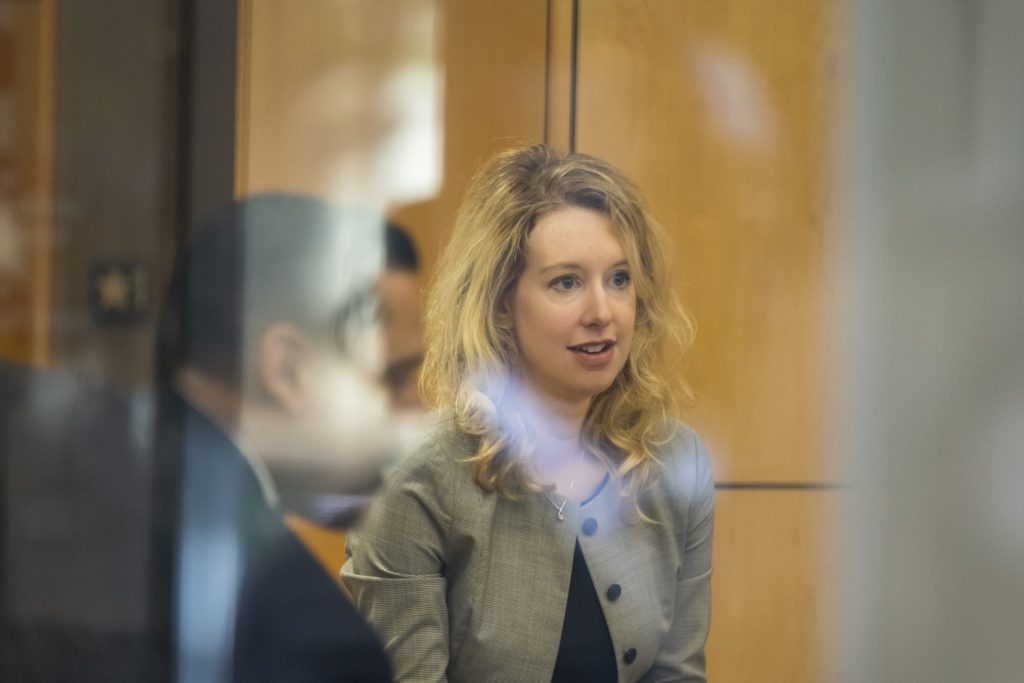
(Bloomberg) — Convicted Theranos Inc. founder Elizabeth Holmes said she deserves to spend 18 months in home confinement, not prison, asking the judge who will sentence her next week to look beyond the “mocked and vilified” caricature of her as a cheat, and to instead see her as a human being.

Ten months after she was found guilty of defrauding investors who lost hundreds of millions of dollars in her blood-testing startup, the 38-year-old filed a request for leniency late Thursday accompanied by letters from more than 130 friends, relatives, Theranos investors and former company employees who describe what her lawyers called “the real Elizabeth Holmes.”

Criminal defense lawyers have said US District Judge Edward Davila, who has handled her case since she was indicted in 2018, the year Theranos collapsed after once reaching a valuation of $9 billion, will use whatever sentence he imposes to send a message to Silicon Valley and beyond. 

The aim is not only to penalize Holmes for the fraud she was convicted of, experts said, but deter it in the technology sector, where the lines between hype and fraud are often blurred. But Holmes’s request subtracts 18 1/2 years from the maximum incarceration term she faces for her crimes — and says that time would be better served at home than in prison.

“We acknowledge that this may seem a tall order given the public perception of this case,” her lawyers said in the filing, urging Davila to see beyond the “media vitriol for Ms. Holmes.” 

Read More: The Spectacular Rise and Fall of Elizabeth Holmes and Theranos

The judge should not view Theranos as “a house of cards,” but as the “ambitious, inventive, and indisputably valuable enterprise it was,” they wrote. “The court’s difficult task is to look beyond those surface-level views when it fashions its sentence.”

Prosecutors will file their own sentencing recommendation for Davila. 

Holmes’s memo to the judge delves into her childhood and her years studying chemical engineering at Stanford University. It also revisits the traumas she testified about at trial, including details of a rape Holmes said she suffered in 2003 that haven’t been previously publicized. It occurred at a fraternity party when she was intoxicated and initially unconscious, according to the filing, which says she was assaulted by a friend and fraternity member.

The filing also revisits the “severe emotional, psychological, and sexual abuse” Holmes has said she endured in a decade-long relationship with Ramesh “Sunny” Balwani, who she made president of Theranos in 2009. The memo reprises Balwani’s allegedly controlling and prescriptive demeanor that Holmes told jurors about a year ago. Balwani has denied the accusations.

In July, Balwani, 57, was convicted of fraud at a separate trial and faces sentencing in December.

In the months since she was convicted, Holmes told the judge, she has become a certified rape crisis counselor, spending hundreds of hours volunteering to support survivors of sexual assault.

In calculating prison terms, judges rely on federal guidelines as a benchmark. For Holmes, the staggering sum of money investors lost in Theranos is likely a driver of her sentence. In one count alone, Holmes was convicted of defrauding the DeVos family of $100 million, which calls for a sentence under the guidelines ranging from nine years to slightly more than 11 years.

Read More: Elizabeth Holmes Will Likely Land in Cushy, Fenceless Prison

Lawyers for Holmes are attempting to sidestep the sentencing recommendations of the federal probation office. While the specifics of those recommendations are redacted in the filing, her attorneys argue they are unreliable.

“Because the circumstances of each investment were different, and because different investors received different information,” Holmes’s team argues, prosecutors can’t prove that the transactions it relied on at trial amount to fraud.

Holmes also objects to the federal probation office’s calculation of how many people were victims of her fraud. Those figures are also blacked out in the filing. Prosecutors issued a public announcement earlier this year encouraging victims to provide information for the judge to use in determining a sentence.

The letters from Holmes’s friends and family make clear that she has acknowledged her errors “with sincere reflection and remorse,” her lawyers told the judge. Incarceration isn’t required because, they said, the court of public opinion continues to weigh heavily on Holmes.

“The incessant drum of media criticism has ensured Ms. Holmes will be punished for the rest of her life,” according to the filing. “Ms. Holmes will never be able to seek another job or meet a new friend without the negative caricature acting as a barrier.”

More stories like this are available on bloomberg.com

©2022 Bloomberg L.P.

Plane Ticket Bookings Double in Hour as China Eases Covid Rules

(Bloomberg) — Bookings for flights into China doubled in the hour after the government announced an easing of restrictions for inbound travelers, including shorter quarantine, Ctrip.com said. 

Inbound reservations on the online travel agent’s platform were twice as high as the same hour Thursday, while international flight searches increased 200%, according to a statement Friday. 

Among other measures, mandatory hotel quarantine will drop to five days from seven, sparking the rush, though China’s National Health Commission didn’t say when the rules would take effect. A system that suspends airlines if they bring infected passengers into the country is also being scrapped.  

“The further easing reflects a balance between Covid control and economic development, and prepares for more opening up of the travel market,” Ctrip said in the statement.

Expectations for a loosening of curbs have been building, with searches for international flights rising 122% from Oct. 31 to Nov. 11 compared with the same period last year, according to Ctrip. China’s biggest airlines had also announced plans for more flights. Ctrip said the international flight schedule is now 1,300 a week, up 30% from the end of October. 

After China’s announcement, Hong Kong’s Cathay Pacific Airways Ltd. said it will increase flights to the mainland. The company’s shares jumped as much as 5.2% Friday, the biggest gain in four months. Other airlines and travel-related stocks also rallied on the news, along with Asian equity markets more broadly, as well as the yuan. 

–With assistance from Selina Xu.

More stories like this are available on bloomberg.com

©2022 Bloomberg L.P.

Crypto Hedge Fund Says Nobody Saw FTX Explosion Coming

(Bloomberg) —

FTX cryptocurrency exchange rattled the financial world this week when a crisis of investor confidence triggered a run, forcing the company to scramble for a buyer or bailout to avoid collapse. Joining the What Goes Up podcast to discuss the chaos that ensued are Sadie Raney, chief executive of the crypto hedge fund Strix Leviathan, and Nico Cordeiro, its chief investment officer.

The firm said it had a limited amount of funds with FTX frozen. “We’ve been through a number of market crashes,” says Raney. “We’ve used Voyager in the past. We also used BlockFi. And when there were some indicators that maybe they were, I guess you could say over their skis, we stopped trading with them.”

“This one,” Raney said, “I don’t think anyone saw coming.”

Cordeiro adds that while their firm has “some funds frozen there,” it was “a small portion of our portfolio allocated there—simply because this space is the wild west.”


More stories like this are available on bloomberg.com

©2022 Bloomberg L.P.

UAE to Start Carbon-Offset Trading Exchange in Abu Dhabi

(Bloomberg) —

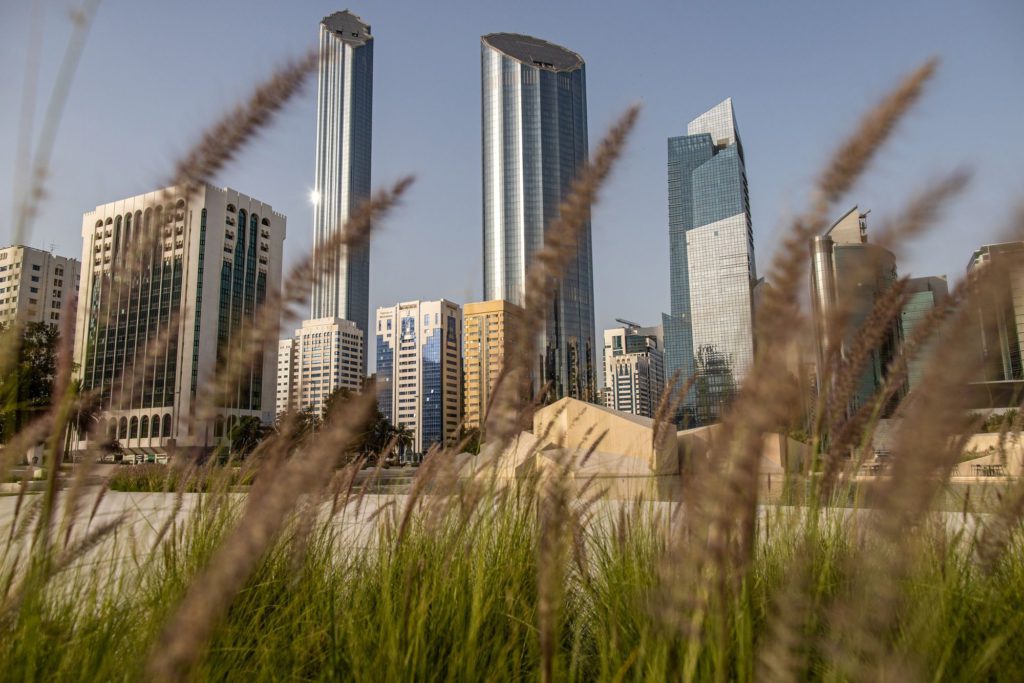
The United Arab Emirates will soon start its first carbon-credit exchange and is taking a tougher stance on ESG disclosure, as the country looks to achieve carbon neutrality by 2050 and prepares to host next year’s COP28 climate summit.

Abu Dhabi Global Market, based in the capital, is set to begin a voluntary carbon-offset exchange “in a matter of weeks,” Mercedes Vela Monserrate, the head of sustainable finance at ADGM, said at the COP27 talks in Sharm el-Sheikh, Egypt. “Several high profile financial institutions, commodities firms are planning to participate.”

It will be operated by AirCarbon, a Singapore-based digital exchange. Saudi Arabia launched the region’s first carbon-offset auction last month.

Companies can buy credits on exchanges to offset some of the emissions they produce. The global voluntary carbon market has grown rapidly in recent years, but so has skepticism that the credits avoid carbon emissions or remove them from the atmosphere.

Even as it invests billions of dollars to raise production of oil and gas, the UAE has pledged to be net-zero within its own borders by halfway through this century. The government’s planning about $165 billion of investments in clean energy to reach the target.

ADGM is also working with other UAE authorities on clearer requirements for environmental, social and governance funding tools, Vela Monserrate said in an interview.

“We have seen a proliferation of different standards in the market,” she said. “That’s leading to a lot of confusion as to what we actually mean by a green bond. That is leading to the concerns around greenwashing. There’s a huge appetite for this type of product, but there’s very little knowledge about it.”

The new rules could encourage the issuance of green bonds on the ADGM from next year, she said.

Dubai, the UAE’s business capital, is set to host next year’s COP summit. Monserrate said there’s no contradiction in the UAE being a major hydrocarbon producer and holding the UN-sponsored talks.

“Transition is not about punishing polluters, it’s about helping the polluter transition away,” she said.

More stories like this are available on bloomberg.com

©2022 Bloomberg L.P.

US to Brief Taiwan After Biden-Xi Meeting, Sullivan Says

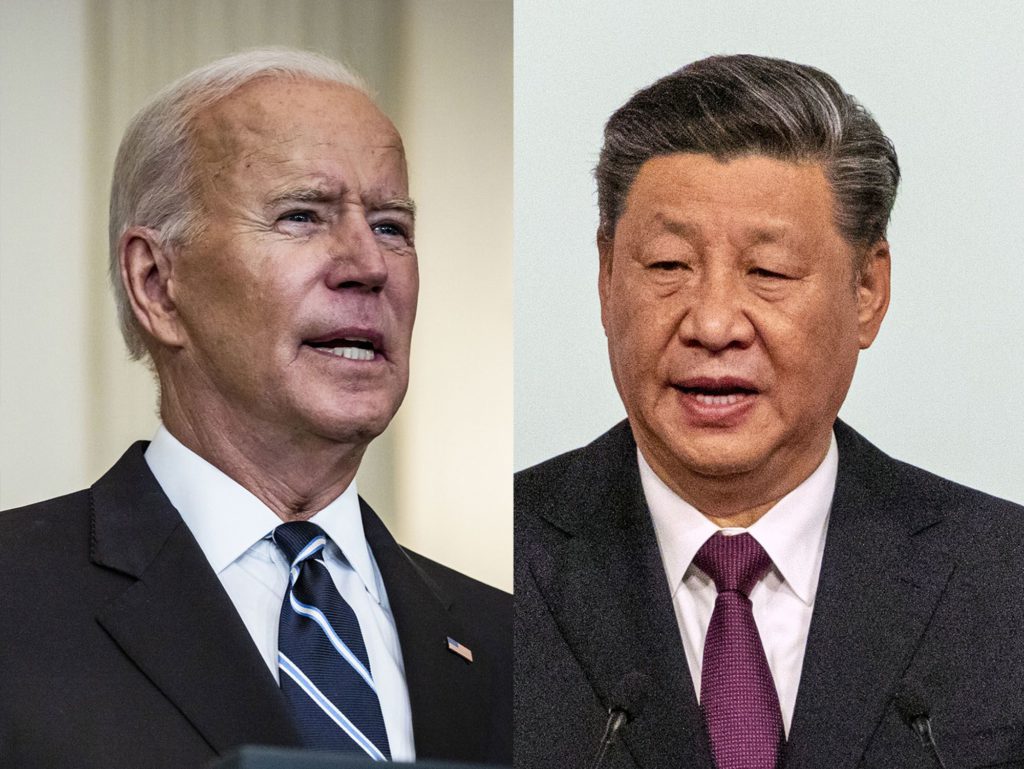
(Bloomberg) — President Joe Biden’s top national security aide said the US will brief Taiwanese officials on the president’s upcoming meeting with China’s Xi Jinping and expressed confidence that Taipei would feel secure about its support from the US.

“I’m confident that they will feel very secure and comfortable in the United States, his position when it comes to our support for peace and stability across the Taiwan Strait and our commitment to the Taiwan Relations Act, which does commit the United States to ensuring we’re providing the articles for Taiwan’s defense,” National Security Advisor Jake Sullivan told reporters Thursday.

Biden on Wednesday stopped short of committing to defending the island militarily, as he’s done several times in the past. When asked how Taiwan should interpret his comments, Sullivan said the president prefers not to preview what he tells foreign leaders before their meetings but instead “likes to actually go say it to them.”

Chinese Foreign Ministry spokesman Zhao Lijian said Friday at a regular press conference in Beijing that any briefing for Taiwan officials on the Xi-Biden talks would be “a great violation of the one-China principle.”  

Biden will seek to set a floor to prevent US-China ties from deteriorating further when he meets Xi on Nov. 14 in Bali, Indonesia, a senior Biden administration official said.

The official, who briefed reporters earlier Thursday, said the meeting’s main objective was for Biden and Xi to deepen their understanding of each other’s priorities and intentions — and to set so-called rules of the road.

That’s a goal that the White House has been seeking since the leaders’ first call in 2021. 

Taiwan is likely to loom large after Biden’s previous assurances to defend the island in the event of a Chinese attack, despite the US’s longstanding One China policy of maintaining “strategic ambiguity” about its commitment to intervene militarily. Biden said Wednesday he was “going to have that conversation” with Xi, adding that US policy toward Taiwan “has not changed at all.” 

The two leaders also will discuss the war in Ukraine, recent North Korean nuclear activity, efforts to curb climate change and other areas where the nations can work together, the official said. 

In the latest sign the White House isn’t expecting any tangible policy breakthroughs from Biden and Xi’s first face-to-face meeting, the official said the session during the Group of 20 summit in Indonesia was not being driven by a search for deliverables and that there would not be a joint statement from the event. 

Still, Sullivan said the leaders will direct their teams to work together on a range of issues with the goal of trying to bridge differences where possible. 

“That will include direction to the economic teams to address our concerns about Chinese economic practices, and to deal with some of the underlying differences of view and perspective on economic matters,” he said. “It will also involve giving direction to try to work on issues on which we do have common interest, whether it’s health, counter-narcotics, climate or other areas.”

Biden vowed Wednesday to make no “fundamental concessions” to Xi, reinforcing already low expectations for any major breakthrough in strained ties between the world’s two largest economies. 

Xi’s last meeting with a US leader came in June 2019, when he reached a truce with Donald Trump that led to a trade deal six months later — right before relations fell into a downward spiral as Covid-19 spread around the globe.

Biden said Wednesday that he expects to discuss contentious issues such as trade and Taiwan, which China has put under increased military pressure since US House Speaker Nancy Pelosi visited Taipei in August. His administration also imposed sweeping curbs on the sale of advanced chips to China, a move designed to maintain the US’s technological edge over Beijing.

Recent US measures to curb China’s access to semiconductors are not aimed more broadly at containing China, the official said, adding that it was a targeted approach to prevent Beijing from using high-end chips for advanced military applications.

The US and China have veered toward confrontation over the past few years even as they face greater calls to cooperate on trade and pressing issues like climate change, Covid-19 and Russia’s war in Ukraine. 

Both are increasingly suspicious of each other’s intentions: The National Security Strategy released by Biden last month cast China as trying to supplant the US as the world’s dominant power, while a defiant Xi declared that the “rejuvenation of the Chinese nation is now on an irreversible historical course.”

With relations between the two nations at their lowest point in decades, both presidents have put some domestic uncertainty behind them in recent weeks. 

Xi has secured a precedent-breaking third term as leader and stacked the Communist Party’s leadership with loyalists. Biden emerged stronger than expected from US midterm elections, telling reporters Wednesday that he plans to run for re-election in 2024, though he has yet to make a formal announcement. 

Sullivan touted the bipartisan support for the Biden team’s approach to China and said the president looks forward to working with the new Congress and both parties on the issue.

“He goes out on this trip feeling like the results from Tuesday show that the American people are sending him out onto the world stage and in a very strong position,” Sullivan said.

China so far hasn’t confirmed the Xi-Biden meeting, with Foreign Ministry spokesman Zhao Lijian saying Thursday that Beijing took the US proposal “seriously” and the two sides were in communication.

Beijing was “committed to realizing mutual respect, peaceful coexistence and win-win cooperation with the US,” he added.

–With assistance from Akayla Gardner, Jordan Fabian, Nancy Cook and Colum Murphy.

(Updates with comments from China’s Foreign Ministry.)

More stories like this are available on bloomberg.com

©2022 Bloomberg L.P.

FTX Latest: BlockFi Halt, SEC Probe, Asset Freeze Deepen Crisis

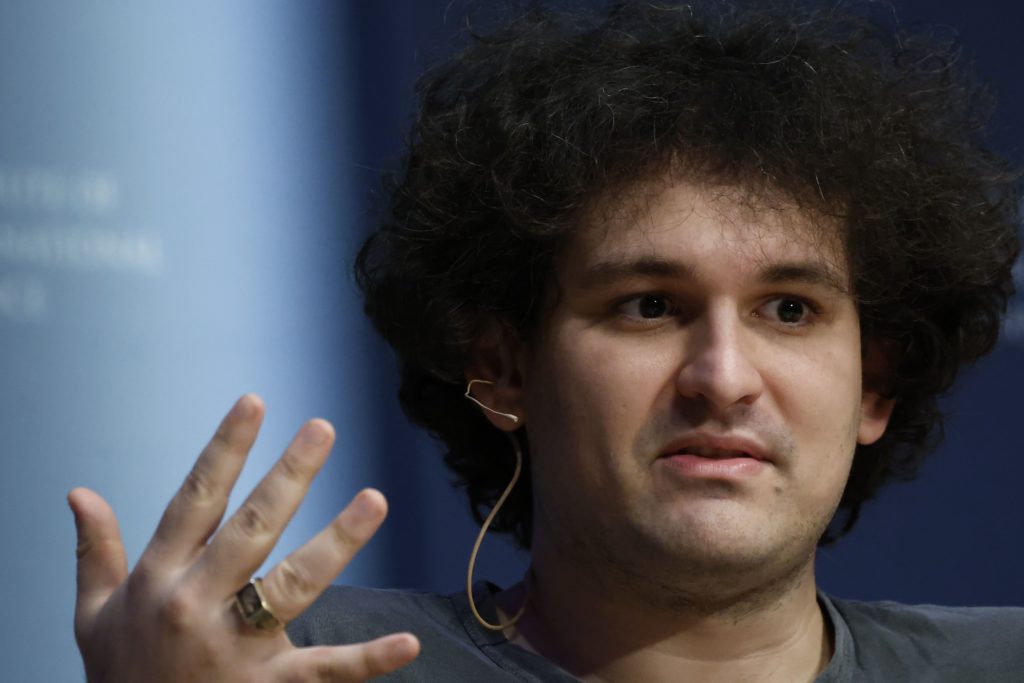
(Bloomberg) — Sam Bankman-Fried, founder of the embattled crypto exchange FTX, is being investigated by the US Securities and Exchange Commission for potential violations of securities rules. The Bahamas, where his FTX.com arm is based, froze the assets of a local trading subsidiary and “related parties.”

Troubled crypto lender BlockFi said it can no longer operate as usual, citing “a lack of clarity” in relation to FTX. Earlier, Bankman-Fried said he’s closing Alameda Research, the trading house at the center of speculation about whether his crypto exchange mishandled customer funds. 

Bankman-Fried has warned of bankruptcy if he can’t secure capital to cover a shortfall of as much as $8 billion. Trading may be halted in a few days on FTX US, which is a separate legal entity from FTX.com. 

Key stories and developments:

  • SoftBank Is Said to Expect About $100 Million Loss on FTX Stake
  • FTX’s Sam Bankman-Fried Faces SEC Probe as His Empire Crumbles
  • In Sam Bankman-Fried, Venture Capitalists Saw a Model Founder
  • FTX Retail Investors Fear Wipeout, Shaking Their Faith in Crypto

For crypto market prices: CRYP; for top crypto news: TOP CRYPTO

(Times are US Eastern Standard unless specified otherwise.)

Softbank Said to Expect About $100 Million Loss on FTX Stake (4:30 p.m. Hong Kong)

SoftBank Group invested just under $100 million in FTX.com and anticipates writing down the entire value of the stake, according to a person familiar with the matter. 

The Japanese company had put in a total of less than $100 million and had kept the investment marked close to cost, rather than boosting the valuation and recording a profit, the person said, asking not to be identified because the details are private. SoftBank will likely write down the holding in the December quarter.

Binance CEO Talks about Regulators’ Next Focus after Fresh Crypto Fallout (4 p.m. Hong Kong)

Regulators will look more closely at account balances and reserves at centralized crypto exchanges after the shocking unraveling of FTX.com, Binance CEO Zhao Changpeng said at a fintech event in Indonesia.

Binance decided to pull a proposal to take over FTX International within 24 hours of offering a letter of intent as it did not find much value in the deal, the CEO, known as CZ, said. The deal didn’t make sense in financial terms, number of users and technology, according to CZ, speaking for the first time in public after the deal collapsed. He added that Binance will look at improving transparency and disclosures.

Crypto Markets Retreat on Concerns About FTX Contagion (12:35 p.m. Hong Kong)

Virtual coins were in retreat Friday, with the largest token Bitcoin falling as much as 5.5% and second-ranked Ether sinking almost 8% at one point. The crisis engulfing FTX and signs of spreading contagion undid investor sentiment. 

Easing US inflation had delivered a fillip for risk assets generally on Thursday, propelling the biggest advance in a gauge of the top 100 crypto tokens since early September.

Crypto Lender Hodlnaut Uncertain About Recovery of Assets at FTX (noon Hong Kong)

About 72% of digital assets deployed by Hodlnaut on centralized exchanges were held with FTX, with an estimated market value of S$18.5 million ($13.3 million), its interim judicial managers said. The extent of the recovery of those digital assets is currently uncertain, they added.

Embattled Crypto Lender BlockFi Pauses Withdrawals (8:45 p.m.)

Troubled crypto lender BlockFi said in a statement on Twitter that the company can no longer operate business as usual, citing “a lack of clarity” on the status of FTX.com, FTX and Alameda Research. 

The company said it is limiting platform activity and pausing client withdrawals. BlockFi asked customers not to deposit funds at this time.

FTX US Legal Chief Tells Working to Preserve Platform (8 p.m.)

FTX US general counsel Ryne Miller said in an internal memo he’s working with advisers to preserve “whatever is preservable” of the crypto exchange.

“We should not be optimistic for an outcome that is positive,” Miller wrote. “I’m working with outside advisers to be best prepared to navigate FTX entities to next steps.”

Sponsor of Key US Crypto Bill That Empowers CFTC Is to Review Legislation (7 p.m.)

John Boozman, a lead co-sponsor on legislation that would give the Commodity Futures Trading Commission more power to oversee digital assets, said the bill’s backers are “taking a top-down look to ensure it establishes the necessary safeguards the digital commodities market desperately needs.”

“Chairwoman Stabenow and I remain committed to advancing a final version of the DCCPA that creates a regulatory framework that allows for international cooperation and gives consumers greater confidence that their investments are safe,” he added.

He was referring to Debbie Stabenow, a leader of the Senate Agriculture Committee along with Boozman. DCCPA refers to the bill, the Digital Commodities Consumer Protection Act of 2022.

Broker Genesis’ Derivatives Unit Has About $175 Million on FTX Platform (6:20 p.m.)

Crypto broker Genesis said its derivatives business has about $175 million “in locked funds” in the company’s FTX trading account.

“This does not impact our market-making activities,” the firm said in a Twitter thread, adding “our operating capital and net positions in FTX are not material to our business.”

The fallout from the collapse of the FTX empire has left investors on edge about the risk of contagion.

Bahamas Seeks to Place FTX.com Into Receivership (5:50 p.m.)

The Bahamas Securities Commission has frozen the assets of FTX Digital Markets “and related parties.” An asset freeze was “the prudent course of action” to preserve assets and stabilize the company, the agency said Thursday in a statement. 

An attorney has been appointed provisional liquidator as the Bahamas securities regulator seeks to place the beleaguered crypto exchange into receivership. 

“The commission is aware of public statements suggesting that clients’ assets were mishandled, mismanaged and/or transferred to Alameda Research. Based on the commission’s information, any such actions would have been contrary to normal governance, without client consent and potentially unlawful,” it said.

Junior Employees Try to Sell Assets With Bankman-Fried Away (2:20 p.m.)

Employees of the US-based crypto exchange are in talks about selling parts of the business, including some assets that Bankman-Fried amassed on a sweeping acquisition tear across the industry, according to two people with direct knowledge of the matter, who requested anonymity because the talks were private. 

White House Is Monitoring Crypto Markets (1:52 p.m.)

The Biden administration is aware of recent developments surrounding cryptocurrencies and will “continue to monitor the situation,” White House Press Secretary Karine Jean-Pierre told reporters on Thursday.

Jean-Pierre said the White House believes cryptocurrency markets require “proper oversight,” but declined to comment on specific steps regulators can or should take. 

“The most recent news further underscores these concerns and highlights why prudent regulation of cryptocurrencies is indeed needed,” Jean-Pierre said at her daily press briefing.

FTX US Says Trading May Be Halted in a Few Days (1:31 p.m.)

FTX US, the American entity of Bankman-Fried’s crypto exchange, said trading may be halted on it in a few days. FTX.com and FTX US are separate entities with separate management personnel, tech infrastructure, and licensing, but have similar owners and investors, representatives for the firms have said in the past.

Japan Cracks Down on Local FTX Unit; Freezes Exchange Activity (12:52 p.m.)

Japan’s government has ordered FTX.com’s local subsidiary to suspend some of its operations, saying it has no structure in place to properly offer cryptocurrency exchange services to users.

FTX Resumes Withdrawals After Two-Day Pause (12:28 p.m.)

FTX.com has resumed withdrawals on the platform, according to blockchain data, after halting such activities on Tuesday. Nansen and Kaiko, another blockchain data firm, both confirmed the resumed activities. FTX processed $8 million worth of withdrawals in an hour on Thursday, Nansen said.

Bankman-Fried Shuts Down Trading Firm (11:40 a.m.)

Bankman-Fried is shutting down Alameda Research, the trading house at the heart of his digital-asset empire, as he seeks last-ditch financing to save his troubled crypto exchange FTX.

–With assistance from Yueqi Yang, Muyao Shen, Jordan Fabian, Takashi Nakamichi, Nao Sano, Philip Lagerkranser and Derek Decloet.

More stories like this are available on bloomberg.com

©2022 Bloomberg L.P.

Equity Rally Deepens as China Adds to US Euphoria: Markets Wrap

(Bloomberg) — US index futures and European stocks rallied as the euphoria over falling inflation in the world’s largest economy extended into a second day and China relaxed some Covid restrictions.

December contracts on the S&P 500 and Nasdaq 100 indexes rose at least 0.6% each after US stocks surged the most since early 2020 on Thursday. Europe’s equity benchmark headed for the best week since March. The dollar was poised for a fourth week of losses, the longest streak since in more than two years. Treasury futures weakened with the cash market closed for a US holiday.

Risk sentiment has come back roaring into global markets after a sharper-than-forecast drop in US inflation improved the prospects of a dovish tilt by the Federal Reserve. However, some money managers warn that such expectations are misplaced as the central bank won’t consider its job done until inflation reaches its target of 2%, far below the October level of 7.7%.

“The Fed will want to see several consecutive months of tamer inflation before considering a pivot to a more dovish posture,” Mark Haefele, the chief investment officer of UBS Global Wealth Management, wrote in a note. “Services inflation remains a worry. The Fed needs to see signs of a cooling labor market.”

Europe’s Stoxx 600 Index rose for a second day, taking its weekly gain to 4.2%. This is the first time in a year that the gauge has risen for four consecutive weeks. Consumer, commodity and technology stocks, which are the most sensitive to economic activity, led the gains.

A gauge of Hong Kong-listed technology stocks surged 10% after China reduced the amount of time travelers and close contacts must spend in quarantine. The pivot came hot on heels of a call by leaders in Beijing for more precise and targeted virus control measures. The measures also validate persistent market expectations for an end to China’s Covid Zero policy, which officials have repeatedly denied.

Cryptocurrency resumed a selloff amid FTX’s deepening woes. OIl rallied on bets for improving demand from China.

Fed officials appeared to back a downshift in rate hikes after a stretch of four jumbo-sized increases. They also stressed the need for policy to remain tight. 

Dallas Fed President Lorie Logan said it may soon be appropriate to slow the pace to better assess economic conditions. San Francisco’s Mary Daly said the moderation was “good news,” but noted “pausing is not the discussion, the discussion is stepping down.” 

Key events this week:

  • US University of Michigan consumer sentiment, Friday

Some of the main moves in markets:

Stocks

  • The Stoxx Europe 600 rose 0.5% as of 8:39 a.m. London time
  • Futures on the S&P 500 rose 0.6%
  • Futures on the Nasdaq 100 rose 0.8%
  • Futures on the Dow Jones Industrial Average rose 0.6%
  • The MSCI Asia Pacific Index rose 4.6%
  • The MSCI Emerging Markets Index rose 4.7%

Currencies

  • The Bloomberg Dollar Spot Index fell 0.5%
  • The euro rose 0.4% to $1.0248
  • The Japanese yen fell 0.1% to 141.15 per dollar
  • The offshore yuan rose 0.6% to 7.1109 per dollar
  • The British pound was little changed at $1.1727

Cryptocurrencies

  • Bitcoin fell 2.4% to $17,376.33
  • Ether fell 3.3% to $1,277.92

Bonds

  • The yield on 10-year Treasuries was little changed at 3.81%
  • Germany’s 10-year yield advanced six basis points to 2.07%
  • Britain’s 10-year yield advanced four basis points to 3.34%

Commodities

  • Brent crude rose 2.4% to $95.91 a barrel
  • Spot gold rose 0.3% to $1,760.11 an ounce

This story was produced with the assistance of Bloomberg Automation.

–With assistance from Georgina Mckay, Masaki Kondo, Tassia Sipahutar and Farah Elbahrawy.

More stories like this are available on bloomberg.com

©2022 Bloomberg L.P.

Volocopter Wants to be Tesla of the Skies With Eye Toward an IPO

(Bloomberg) — Air-taxi pioneer Volocopter GmbH said it expects to remain independent until after its first commercial flights in 2024 despite regular interest from potential suitors, with a stock market listing likely the following year.

Commencing passenger services in time for the Paris Olympics could hand the German startup a lead over rivals and help give it a valuation of €10 billion ($10.2 billion) or more, according to Chief Executive Officer Dirk Hoke.

“Our shareholders invested with the target of an IPO,” Hoke said at the launch of a so-called vertiport near Paris, where trials will be conducted before the games. “We believe we can be a double-digit billion-euro company.”

Volocopter has eschewed a listing even though many of its closest rivals have gone down that path, with Britain’s Vertical Aerospace Ltd. and fellow German startup Lilium NV among a clutch of flying taxi companies to trade on New York’s Nasdaq exchange following mergers with blank-check companies.

Hoke said that Volocopter, which has so far raised cash solely through a series of funding rounds, is viewed as attractive by suitors seeking an easy way into a market that could become one of the most lucrative in aviation should it proliferate as forecast.

“We always get approached,” the CEO said. “For the moment we prefer to be independent. We want to have agility and we want to bring models into the market.”

Tesla Model

Chief Commercial Officer Christian Bauer, a former Daimler executive, said Volocopter will also be able to tap the potential of eVTOLs to be as revolutionary as Tesla Inc. cars once their size increases.

“Tesla started with a two-seater because the battery technology wasn’t there and now they are the most valuable car brand in the world,” he said. “That’s where we want to go.”

Launch financing at Volocopter, which has almost 700 staff, has surpassed €500 million and the company is still raising cash, tapping $182 million from Saudi Arabia’s Neom, which is building a futuristic city on the Red Sea, and a fund backed by Chinese carmaker Zhejiang Geely Holding Group Co.

“The best time for the IPO will be when we have the commercial license, when we have the first revenues, when we have the first profitability,” Bauer said. No venue has yet been picked, and the timing will depend on market conditions, though could be held as soon as 2025, he said.

–With assistance from William Wilkes.

More stories like this are available on bloomberg.com

©2022 Bloomberg L.P.
SoftBank Vision Fund Loses $7.2 Billion on Tech Writedowns

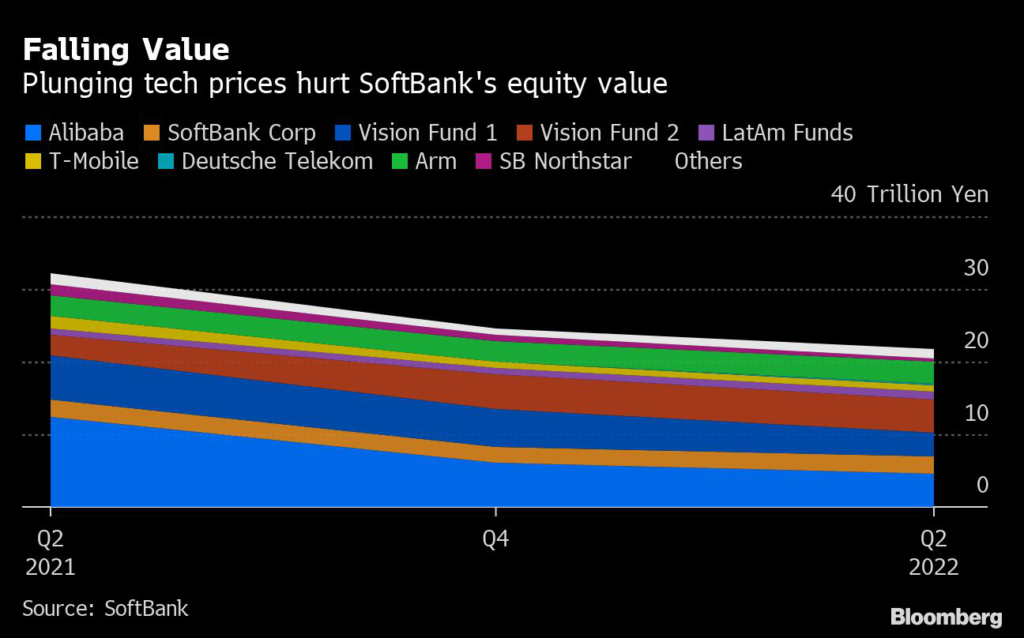
(Bloomberg) — SoftBank Group Corp.’s core Vision Fund arm posted a $7.2 billion quarterly loss as plunging startup valuations continue to hammer the company’s financial performance and forces it to slow investments.

The Vision Fund segment lost 1.02 trillion yen in July-September, following a 2.33 trillion yen loss in the June quarter. Overall, the Japanese conglomerate logged net income of 3.03 trillion yen in the last quarter, buoyed by the disposal of a chunk of its Alibaba Group Holding Ltd. stake. The company said its total profit on its disposal of Alibaba shares was 5.37 trillion yen.

Billionaire founder Masayoshi Son turned his telecom company into the world’s biggest startup investor, aiming to repeat his early success in backing the Chinese e-commerce pioneer. But the effort has been plagued by missteps and, more recently, a sharp downturn in technology valuations. 

SoftBank has been struggling with declines on public investments, with the Vision Fund recording net valuation losses totaling 1.19 trillion on its public holdings in the quarter just ended. Of those, China’s SenseTime Group Inc. accounted for 364 billion yen, while US food delivery firm Doordash Inc. accounted for 225 billion yen and Indonesian ride-hailing and e-commerce firm GoTo Group 108 billion yen, it said.

“We decided early on that we would strengthen our defenses and become more cautious on new investments,” Son said during an earnings results briefing. With interest rates and prices rising, the company will need to play defense “for a while,” he said.

Son said he would no longer helm quarterly results announcements in the near future, and would pass that role on to Chief Finanancial Officer Yoshimitsu Goto. Son will instead focus his time on taking its chip designer unit Arm Ltd. public, he said.

“Mr. Goto is more suitable than me for playing defense,” Son said. “Me, I’m an aggressive person, not a defensive person, and I’d like to concentrate on Arm for the time being.”

Other investment losses loom. SoftBank plans to write down its entire investment in FTX.com, which would amount to a little less than $100 million, a person familiar with the investment said. The company has declined to explain its exposure even as the crypto exchange’s co-founder Sam Bankman-Fried says he may file for bankruptcy. 

“I don’t think anyone can conclusively say that markets have bottomed,” said Kirk Boodry, an analyst at Redex Research.

Son and SoftBank have been trying to wait out the slump, selling off shares in Alibaba and Uber Technologies Inc. to raise cash and shore up its balance sheet. Much of its future investment strategy hinges its ability to make good on its $32 billion purchase of Arm and take it public next year.

Chipmaker sentiment has soured drastically in recent weeks, putting the onus on Arm’s finances to make any initial public offering successful. 

Arm’s income slid to 5.8 billion yen in the September quarter, down 77% from a year earlier, according to financial details released with SoftBank’s results. Revenue rose slightly in yen terms, but declined about 17% in dollars.

As attention turns to SoftBank’s balance sheet, SoftBank has been hurrying to offload assets to bolster its bottom line and fund a share repurchase spree that has vaulted its share price more than 40% since the start of this quarter. SoftBank’s total interest-bearing debt, excluding telecom arm SoftBank Corp., stood at 13.7 trillion yen, down from more than 17 trillion yen at the end of June.

The accelerated pace of its stock buybacks has sparked renewed speculation that Son may lead a management buyout of SoftBank — something that Son has talked internally about, Bloomberg News has reported.

Beyond Alibaba, SoftBank’s pipeline of asset sales that may fund future buybacks include UK online shopping group THG Plc, UK network provider Pelion Iot Ltd., distressed-debt specialist Fortress Investment Group and Indonesian ride-hailing and e-commerce firm GoTo Group, said Bloomberg Intelligence’s Marvin Lo.

–With assistance from Jeanny Yu.

(Adds CEO comments from earnings call, details on Arm, FTX from fifth paragraph)

More stories like this are available on bloomberg.com

©2022 Bloomberg L.P.
Close Bitnami banner
Bitnami