Bloomberg

Twitter Reinstates ‘Official’ Tags After Flood of Fake Accounts

(Bloomberg) — Twitter Inc. reinstated “official” badges for high-profile accounts to combat a growing problem of users impersonating major brands. 

The gray badge reappeared below the profiles of businesses and major media outlets Friday. The identification marker was rolled out earlier this week before being scrapped. 

Twitter is struggling with impostor accounts since the company allowed paying subscribers to get verified blue check marks. One account claiming to be Nintendo Inc. posted an image of Super Mario holding up a middle finger, while another posing as pharma giant Eli Lilly & Co. tweeted that insulin was now free — forcing the company to issue an apology. A purported Tesla Inc. account joked about the carmaker’s safety record.

Read More: Twitter’s Tesla Parody Mocks Musk’s Battle Against Fake Accounts

“To combat impersonation, we’ve added an ‘Official’ label to some accounts,” Twitter Support tweeted on Friday. 

Elon Musk tweeted the same day that all accounts engaged in parody must include “parody” in their name.

The world’s wealthiest man, who acquired Twitter last month for $44 billion, is facing a slew of challenges as top advertisers pull back from the platform amid concern over the company’s ability to tackle impostors and hate speech. Musk, who has also saw resignations among his leadership team, said this week in his first address to employees that the company could face bankruptcy, Bloomberg News previously reported.

–With assistance from Kurt Wagner and Sarah Frier.

More stories like this are available on bloomberg.com

©2022 Bloomberg L.P.

Ukraine Latest: Kyiv Counteroffensive Liberates Dozens of Towns

(Bloomberg) — Ukraine’s forces have liberated dozens of settlements during counteroffensives in the country’s northeast and south, President Volodymyr Zelenskiy said.

One of the main challenges facing Ukraine’s military now is clearing roughly 170,000 square kilometers (66,000 square miles) of retaken territory of Russian munitions, with Moscow’s forces mining everything from power lines, fields, forests and buildings, Zelenskiy said in an address late Thursday. 

The US also announced it was sending an additional weapons package to Ukraine that includes Avenger anti-aircraft systems made by Boeing Co.. The Pentagon said the weapons, drawn from US stocks, are valued at as much as $400 million.

(See RSAN on the Bloomberg Terminal for the Russian Sanctions Dashboard.)


Key Developments

  • South Korea Says Not Sending Ukraine Arms, Amid Artillery Report
  • US Adds Boeing Anti-Aircraft Missile System in New Ukraine Aid
  • Ukraine Cautious Over Russia’s Kherson Exit as Army Advances 
  • Ukraine Wants Russia to Pay for Climate Damage Wreaked by War
  • Russia Quietly Checks Its Bomb Shelters as War Fears Spread

On the Ground

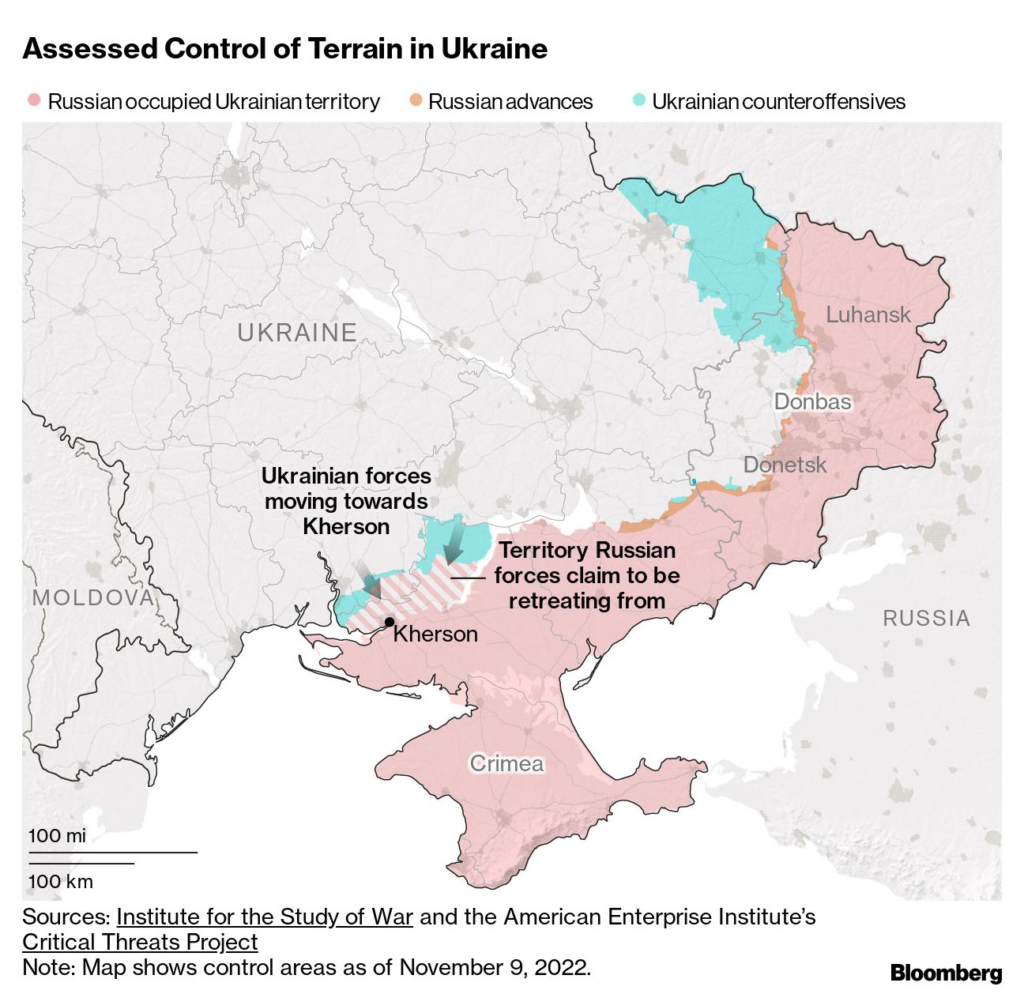
Ukrainian troops liberated 12 settlements in the southern Kherson region on Nov. 9, and the offensive is continuing, the Military Staff said in a statement. Retreating Russian troops are trying to damage power lines and critical transport and other infrastructure in the region, according to the statement. Russian troops appear to be withdrawing in an orderly fashion, and Kyiv’s forces have advanced as much as 7 km in some areas but without routing Moscow’s forces, according to the Institute for the Study of War. Fighting will continue in the coming weeks as Russia completes its retreat and as Ukrainian troops advance on its defensive lines around the city of Kherson. A Russian missile strike in the city of Mykolayiv killed five civilians, according to Zelenskiy’s office.

(All times CET)


(all times CET)

Kyiv Plans Emergency Power Blackouts Due to Attacks (9:11 a.m.)

Kyiv will implement emergency power outages Friday due to new attacks on energy infrastructure, the head of the local grid company Yasno, Serhiy Kovalenko, said on Facebook.

“Emergency shutdowns are applied in significant volumes in Kyiv today,” he said.

Poland Sends Ukraine Starlink Terminals for Use in Blackouts (8:40 a.m.)

Poland sent more than 1,570 Starlink satellite terminals to Ukraine, where authorities will create public wifi hotspots so that civilians can stay online during blackouts, Ukrainian Deputy Prime Minister Mykhailo Fedorov said on Twitter. 

IMF Begins Virtual Mission to Ukraine Friday (8:38 a.m)

The International Monetary Fund began policy discussions with Ukrainian authorities Friday following Kyiv’s request for a new multi-billion dollar aid program, the Washington-based lender said in a statement.

The discussions will happen virtually. Central bank Governor Andriy Pyshnyi early said the talks will take place from Nov. 11 to 17. Kyiv is seeking a non-cash monitoring arrangement from the IMF as a bridge to a full-fledged aid deal.

Retaken Settlements Achieved Through ‘Pain and Loss,’ Zelenskiy Says (8:13 a.m.)

Ukraine has retaken more than 40 settlements from Russian forces in the country’s northeast and south during its autumn counteroffensive, Zelenskiy said.

“It was achieved through courage, pain, and loss,” he said in a nightly address on Thursday. “It’s not the enemy leaving. It is the Ukrainians who are driving the occupiers out at a heavy cost.”

He also said that estimates predicting that it will take decades to demine Ukrainian territories from Russian explosives are far too long: “We can’t wait that long. We have to do in years what elsewhere in the world could have taken decades after hostilities.”

Ukraine Expected to Secure “Major Victory” in Kherson Region: ISW (8:06 a.m.)

Ukraine holds the initiative and is in the process of securing a major victory in the Kherson region, according to the Institute for The Study of War think tank.

Ukrainian strikes since August have successfully degraded Russian supply lines to force Russian President Vladimir Putin’s troops to withdraw from Kherson, and Ukraine’s army will liberate the whole region to the Dnipro River in the coming days or weeks, they said in an assessment.

South Korea Says It Is Not Sending Arms to Ukraine (5:30 a.m.)

South Korea’s military said the country has maintained its position of not sending lethal arms to Ukraine, after the Wall Street Journal reported Seoul had struck a secret deal with the US that would supply Kyiv with artillery.

The Defense Ministry said in a text message to reporters on Friday that negotiations were underway between a South Korean company and the US to export arms to help Washington stock up on its inventory of 155 mm artillery rounds, under the premise the US would be the end-user of the shells.

While Seoul has provided 4.7 billion won ($3.5 million) worth of non-lethal aid that includes bulletproof vests, blankets, helmets and medicine, it has not accepted multiple requests from Ukraine to supply weapons. President Volodymyr Zelenskiy even made a personal appeal for the military assistance when he spoke to the South Korean parliament in April. 

US Weapons Package to Total Up to $400 Million (9:30 p.m.)

The latest US weapons package for Ukraine, drawn from Pentagon inventories, is valued at as much as $400 million, according to the Defense Department.

The Avenger systems included in the package will help the Ukrainians defend against cruise missiles, helicopters and drones, Defense Department deputy press secretary Sabrina Singh told reporters at the Pentagon.

Zelenskiy tweeted his appreciation to President Joe Biden for the new package, calling it help in “building an air shield to protect civilians.”

More stories like this are available on bloomberg.com

©2022 Bloomberg L.P.

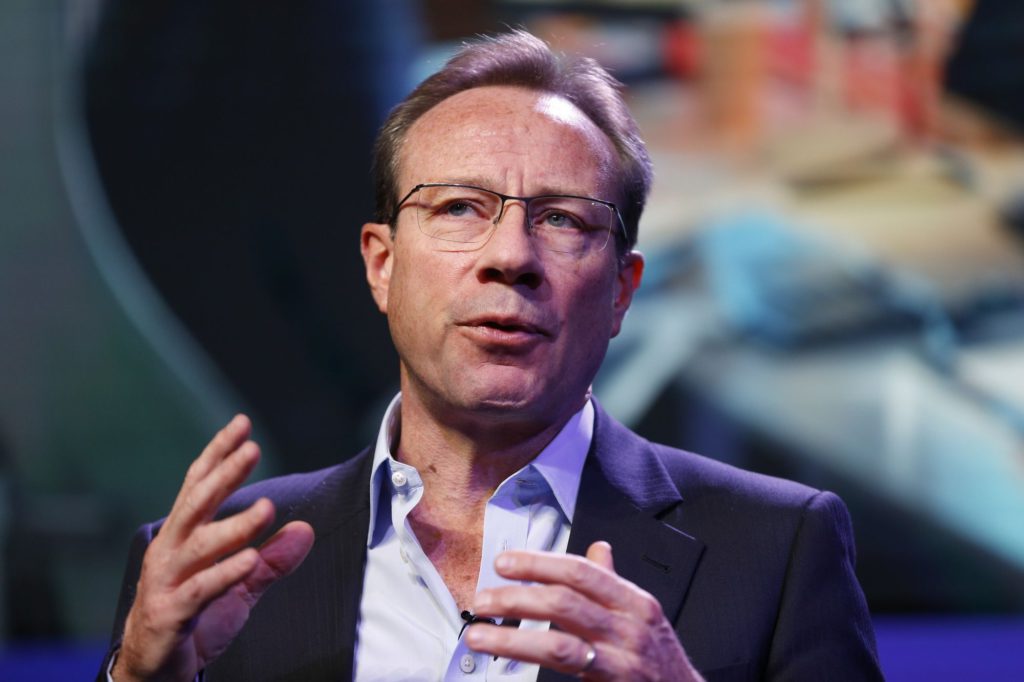
BT CEO Says Energy Subsidy Unlocks Talks for Extra Staff Support

(Bloomberg) — BT Group Plc could offer staff more financial support amid the cost-of-living squeeze and an ongoing dispute with its biggest union on pay, thanks to a government energy subsidy.

On a Wednesday all-staff video call, excerpts of which have been seen by Bloomberg, Chief Executive Officer Philip Jansen said BT could afford more following the UK’s Energy Bill Relief Scheme, launched in September, which capped business energy bills. The former state telecom monopoly uses close to 1% of Britain’s electricity.

That’s a change since a previous BT town hall in June, when Jansen said soaring energy costs following Russia’s invasion of Ukraine, alongside other expenses, meant BT couldn’t afford to pay workers more.

“Now that we know that the extra energy costs are capped at £200 million ($235 million) until end of March — I didn’t know that in April — I know we will do something,” he told the call for the 100,000-strong company. “It will be targeted at those who need it the most.”

The union is pushing for a pay rise, and a one-time payment is among options being considered, according to people familiar with the matter, who asked not to be identified because the discussions are confidential.

A BT spokesperson didn’t dispute the contents of the call when asked by Bloomberg, but declined to comment on what’s being considered. A spokesman for the Communication and Workers Union declined to comment.

“We have been in constant dialog with the CWU throughout this process,” a BT spokesman said. “We are currently talking to them about ways we might be able to help with a cost of living response and we remain hopeful that we can agree a way forward.”

BT has been locked in an acrimonious clash with the CWU since April, when talks over pay broke down and the company went ahead with a flat £1,500 pay increase for 58,000 staff, equating to an increase of 3% for the highest-paid in that range and 8% for the lowest.

UK inflation has moved above 10% and the union demanded more. It’s since held eight strikes — BT’s first nationwide walkouts since 1987 — which last month escalated to include BT’s “999” call handlers for the emergency services.

Regarding the unions’ reaction to proposals, Jansen said he was “reasonably optimistic they will agree, as it’s industry-leading, it’s affordable and fair.”

BT is meanwhile under pressure from the government to roll out more fiber optic broadband connections across the UK, and from investors to meet a full-year earnings target of £7.9 billion which Jansen said it would hit under “any imaginable scenario,” despite inflation and the economic downturn.

Shares of BT have fallen 30% in the year to date. The stock was down about 1% to 119 pence at 8:06 a.m. in London on Friday.

More stories like this are available on bloomberg.com

©2022 Bloomberg L.P.
Crypto Lender BlockFi Suspends Withdrawals in FTX Contagion

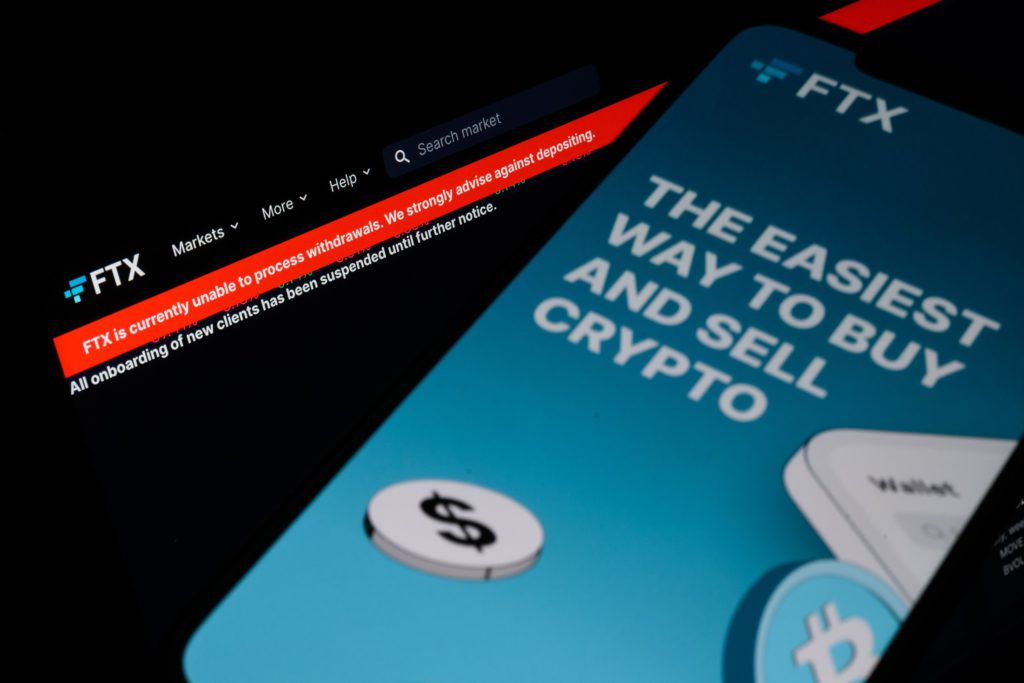
(Bloomberg) — The crisis sparked by the collapse of Sam Bankman-Fried’s FTX crypto empire ensnared BlockFi, a troubled digital-asset lender once worth $3 billion but which has now limited activity on its platform.

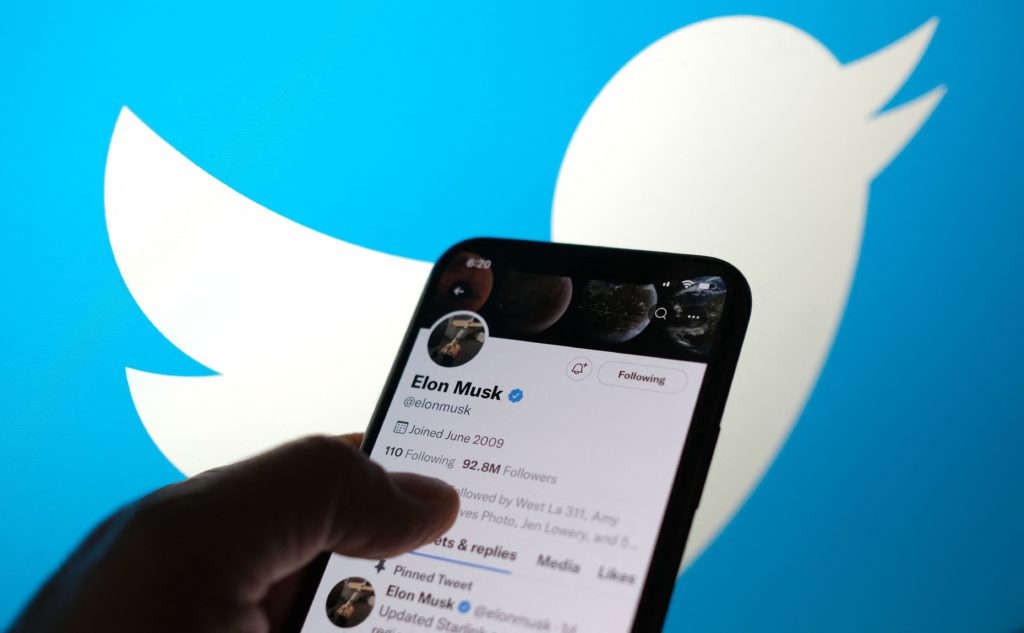
BlockFi on Twitter said it will pause client withdrawals, citing “a lack of clarity” over the status of onetime savior FTX US as well as the uncertainty afflicting FTX.com and sister trading house Alameda Research.

The Jersey City, New Jersey-based company asked customers to refrain from depositing funds into their BlockFi wallets or interest accounts. In a second-quarter report, BlockFi said the platform’s total deployable clients assets amounted to $3.9 billion. 

The developments at BlockFi underscore growing concerns about contagion from the toppling of crypto exchange FTX and trading house Alameda Research. Digital-asset lenders like BlockFi and Celsius Network, which is in bankruptcy, had already been buffeted by the rout in virtual coins over 2022.

BlockFi was in the process of moving its assets to FTX for custody, according to a person familiar with the matter. The majority of BlockFi’s assets had not been moved yet, the person added, asking not to be identified due to the sensitive nature of the matter. 

The crypto lender had given loans to Alameda Research, the person familiar said, without specifying an amount. 

The loans are over-collateralized with liquid assets — including Robinhood Inc. shares — but BlockFi is no longer certain about where the funding for its credit line with FTX US and the collateral for the Alameda loans came from, the person said, citing concerns that it could have originated with customer funds. 

FTX Probes

The US Securities and Exchange Commission and the Commodity Futures Trading Commission are looking into whether FTX.com mishandled customer funds. Bankman-Fried is also being investigated by the US Securities and Exchange Commission for potential violations of securities rules.

FTX US earlier in the year offered BlockFi a major lifeline by providing a $400 million revolving credit facility in an agreement that came with the option to purchase the company.

Originally valued at $3 billion in March 2021, BlockFi sought to raise money at a reduced valuation of about $1 billion in June. The firm also faced scrutiny from financial regulators over its interest account and paid $100 million in penalties to the SEC. 

BlockFi took an $80 million hit from the bad debt of crypto hedge fund Three Arrows Capital, which imploded after the TerraUSD stablecoin wipeout in May. 

Authorities in the Bahamas, where FTX.com is based, froze the assets of its local trading subsidiary and “related parties,” further signs that Bankman-Fried’s empire is teetering.

For crypto market prices: CRYP; for top crypto news: TOP CRYPTO.

(Updates from the fifth paragraph with explanation of halt.)

More stories like this are available on bloomberg.com

©2022 Bloomberg L.P.
SoftBank Is Said to Expect About $100 Million Loss on FTX Stake

(Bloomberg) — SoftBank Group Corp. invested just under $100 million in the crypto exchange FTX.com and anticipates writing down the entire value of the stake, according to a person familiar with the matter. 

The Japanese company’s exposure to FTX has been the subject of much debate in recent days after co-founder Sam Bankman-Fried warned that without a cash injection the company would need to file for bankruptcy. 

SoftBank had put in a total of less than $100 million and had kept the investment marked close to cost, rather than boosting the valuation and recording a profit, the person said, asking not to be identified because the details are private. SoftBank will likely write down the holding in the December quarter.

SoftBank hadn’t publicly detailed how much money it put into FTX or where it valued the stake in recent quarters. In contrast, Sequoia Capital, one of FTX’s primary backers, swiftly put out a statement reassuring investors its exposure was limited and saying it wrote down the full value.

 As FTX Melts, Analysts Race to Calculate SoftBank’s Exposure

SoftBank participated in a $900 million series B funding round last year and another $400 million this year, according to statements released by FTX. Multiple investors put down money in the two rounds, including Sequoia and Coinbase Ventures, and no breakdown was provided. 

More stories like this are available on bloomberg.com

©2022 Bloomberg L.P.
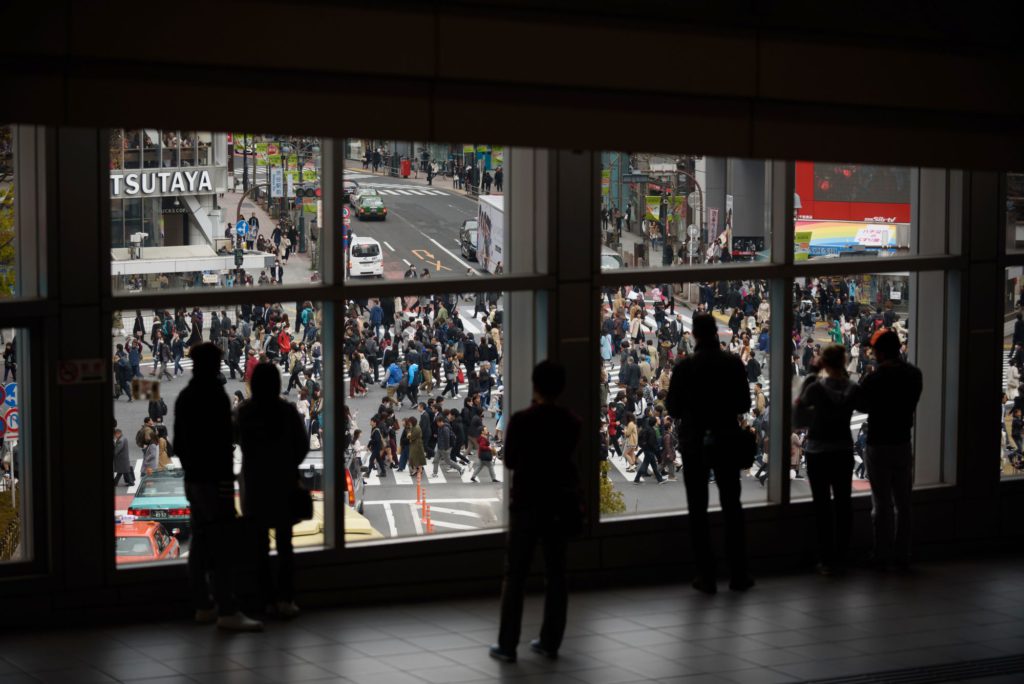
Fortress to Buy Japan’s Sogo & Seibu Stores in $1.8 Billion Deal

(Bloomberg) — Seven & i Holdings Co. will sell its Sogo & Seibu Co. department stores for an enterprise value of about 250 billion yen ($1.8 billion) to private equity firm Fortress Investment Group.

Fortress will team up with Japanese electronics and appliance retailer Yodobashi Holdings Inc. to bolster the value of the department stores, which are located in prime locations including Tokyo’s Shibuya and Ikebukuro shopping and nightlife districts, Seven & i said in a statement Friday. Blooomberg News had reported the acquisition earlier this week.

The deal is scheduled to close on February 1 and Seven & i reiterated that it will use the proceeds for shareholder return. The sale was a result of an ongoing “strategic review” by the Seven-Eleven convenience store operator to maximize profitability and shareholder value amid calls by activist investors including ValueAct. 

More stories like this are available on bloomberg.com

©2022 Bloomberg L.P.
Ghibli-Lucasfilm Collaboration Hinted at In Mystery Tweet

(Bloomberg) — Studio Ghibli Inc., creator of Spirited Away, My Neighbor Totoro and other iconic animated films, posted a tweet that suggested it’s working on a project with Star Wars franchise creator Lucasfilm Ltd.

The 15-second clip, posted Friday, shows only the names of the two studios, which have shaped entertainment culture on both sides of the Pacific Ocean, and globally. It wasn’t clear whether the tweet suggested a new film was in the works, or some other project.

A spokesperson for Studio Ghibli declined to comment on the post. A spokesperson for Lucasfilm didn’t immediately respond to a request for comment.

While there was no corresponding social media post from Lucasfilm, retweets by Star Wars’s official account and Walt Disney Pictures’s marketing executive Asad Ayaz raised speculation around potential joint projects.

Lucasfilm, bought by the Walt Disney Co. a decade ago for $4 billion, has become a global entertainment franchise spanning movies, TV shows, toys and theme parks since the first Star Wars film was released in 1977.

Studio Ghibli, led by Hayao Miyazaki, has been an ambassador for Japanese culture for decades with its films, which often feature young protagonists caught in fantastical worlds with mythical beasts. 

–With assistance from Thomas Buckley.

(Adds response from Studio Ghibli in third paragraph)

More stories like this are available on bloomberg.com

©2022 Bloomberg L.P.
China Quant Funds Seek Billions After Sidestepping Rout

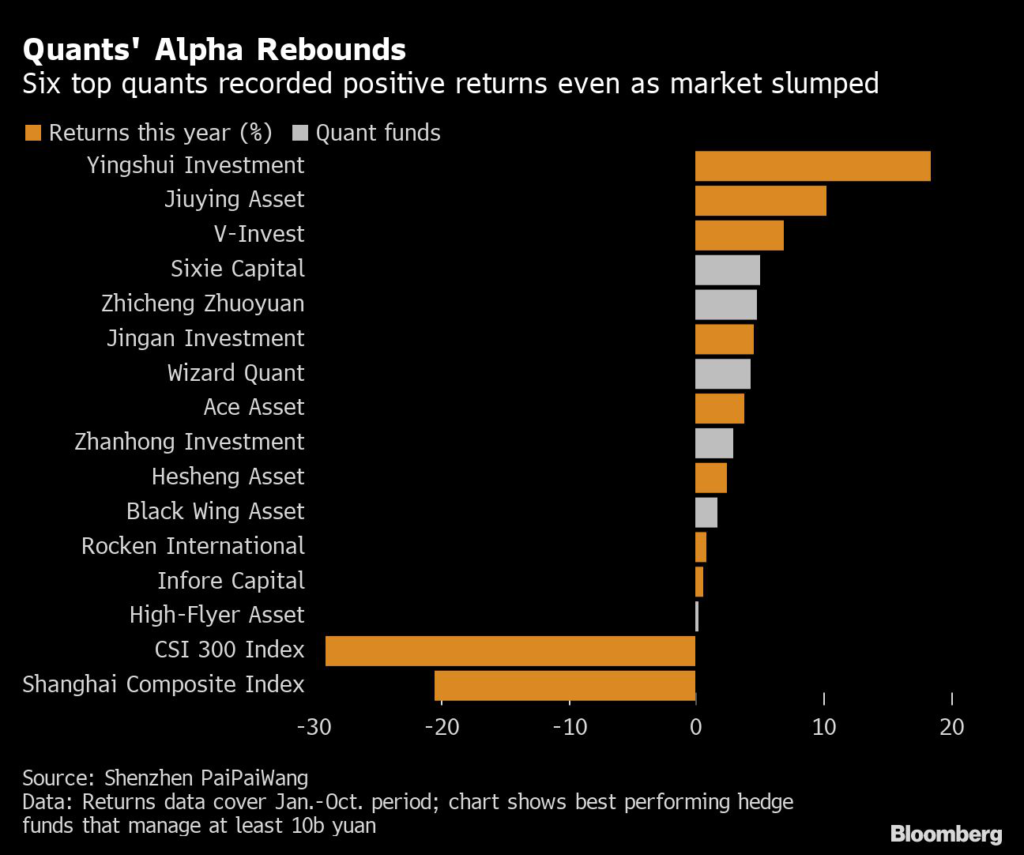
(Bloomberg) — China’s quantitative hedge funds are back raising billions, betting that their recent recovery from a bruising downturn will be enough to entice investors. 

Yanfu Investments, founded by former Two Sigma Investments analyst Gao Kang, has opened all products and said it’s now able to run 80 billion yuan ($11 billion), more than double its current size. Beijing-based Ubiquant is planning to raise 2 billion yuan by re-opening a strategy that aims to beat the CSI 1000 Index. They join Jin Ge Asset Management and others in ending a self-imposed freeze. 

The flurry of re-openings marks a reversal from late last year when many top quants suspended inflows. The industry’s rapid expansion drew regulatory scrutiny and weighed on performance. Their resilience now faces a new test: Whether they can entice enough investor interest, navigate China’s choppy markets, and avoid attracting further attention from regulators who’ve warned them for disrupting financial markets. 

Like their US counterparts Two Sigma and D.E Shaw & Co., Chinese quant funds deploy vast reams of data to build trading algorithms that outperform the market. A relatively new industry, assets at such funds in China have jumped tenfold in four years to exceed 1 trillion yuan as of 2021, according to Citic Securities Co. estimates. They compete with foreign hedge funds and technology giants including Alibaba Group Holding Ltd. and Bytedance Ltd. for talent in computer science and math. 

Turning Positive

“Quant funds’ alpha has gradually turned positive this year,” bolstering their appeal to investors, said Qu Tao, head of financial engineering at China Merchants Securities Co., the largest custodian bank of hedge funds in China. By alpha, he refers to the excess returns relative to benchmarks. 

The 28 private quants that each manage more than 10 billion yuan averaged a 2.3% loss this year through Sept. 23, outperforming the 22% slump in the benchmark CSI 300 Index, according to Shenzhen PaiPaiWang Investment & Management Co. They also beat their human-run rivals, which dropped 12%, the data showed. 

Zhejiang High-Flyer Asset Management, which apologized to investors in December due to performance and remains closed to inflows, dominated a list of 28 index-enhanced products that delivered positive returns through Sept. 2, with 13 of them averaging a 2.5% gain, according to PaiPaiWang. 

Index-enhanced products, which seek to beat indices, along with market neutral offerings, are the most popular strategies. They account for 71% of the 1.08 trillion yuan under management by the industry as of the end of last year, according to AMAC data. Institutional investors contributed about 70% of the money for quants.

China’s retail-investor-dominated market is fertile ground for algorithm-driven strategies that profit from mis-priced securities. That’s part of the reason why quant funds were able to rebound from a slump between September 2021 and March. Even though regulators scrutinized them for market disruption concerns, some funds refuted the idea by providing rare disclosures on strategies, including how they scooped up shares during the selloff. 

Quant firms’ tendency of keeping stock positions full — compared with human-run operations that can cut equity low — helped them capture the latest rally, said Hu Bo, a fund of hedge funds manager at Rongzhi Investment, PaiPaiWang’s private fund unit. It also helped that many of them focused on small-cap stocks, which outperformed the broader market after April.

Fundraising Again

To further appease regulators, quant firms have been submitting more data to authorities as required, and the past few months saw no further moves of policy tightening, according to fund managers who asked not to be named. 

That’s led to a revival in fundraising. Yanfu was among the top five hedge funds for product issuance in August, and Shanghai Sixie Capital Management Co. seized the top spot a month later. Yanfu, which has suspended inflow a few times in recent years, manages about 36 billion yuan, according to distributor Zhongzhi Fund. 

Others are joining the rush as well. Jin Ge, which stopped taking money since September last year, is now able to run about 30 billion yuan — double its current assets — without destabilizing performance, its founder told CSC Financial in August. Both Yanfu and Jin Ge declined to comment. 

Zhicheng-Zhuoyuan (Zhuhai) Investment Management Partnership said it has grown assets by 3 billion yuan this year to more than 10 billion yuan, but will ensure the increased size won’t disrupt its ability to beat benchmarks. Shanghai Goku Data Com Center, which partially froze inflows a year ago, expanded assets by about 2 billion yuan to 12 billion yuan.

Sixie Capital, which beat the CSI 500 Index by 27 percentage points in the first nine months to top PaiPaiWang rankings for quants, said it has expanded assets by about 35% to 13.5 billion yuan this year. 

The recent market rally has given a further boost to quants. More than 73% of the index-enhanced products beat gains in their underlying indices by at least 2 percentage points for the week ended Nov. 4, according to Haitong Securities Co.

Investors who are long-term optimistic about A-shares — stocks traded in mainland China — and can tolerate some fluctuations should focus on index-enhanced products to gain exposure at low costs, Sixie Capital said in a reply to Bloomberg. That way they can “reap considerable long-term returns.”

That said, quants are facing some stiff competition. Safer options like deposits and insurance are gaining popularity in recent months, said Hu.

“There’s still a lack of confidence and passion in the market, and fundraising remains a challenge.” Hu said. 

(Updates with more quant fundraising details in 14th paragraph and last week’s performance in 16th graph)

More stories like this are available on bloomberg.com

©2022 Bloomberg L.P.
Stocks Soar on US Inflation, China Quarantine Cuts: Markets Wrap

(Bloomberg) — Global stocks extended gains as China’s pullback on Covid curbs added fuel to the rally that began on Wall Street after slower-than-projected US inflation data.

US and European equity futures rose while a benchmark of Asian equities headed for the biggest advance in more than two years. 

A gauge of Hong Kong-listed technology stocks surged as much as 10% after China reduced the amount of time travelers and close contacts must spend in quarantine. The pivot came hot on heels of a call by leaders in Beijing for more precise and targeted virus control measures.

A Bloomberg gauge of the greenback resumed declines Friday, adding to a 2% slide on Thursday that was the biggest move since 2009. The yuan strengthened, along with emerging markets currencies.

Commodities from oil to iron ore to copper jumped on China’s Covid shift, with hopes for a demand recovery in the world’s second-biggest economy.  

Cryptocurrency prices retreated Friday as the knock-on effects from FTX’s downfall persisted, even as other risk assets surged after US inflation data and China news.

Government bonds rallied in Australia and New Zealand after Treasuries surged on Thursday in move that sent yields down by 20 to 30 basis points across the US curve. Following the US consumer price figures, rates traders downgraded the odds of another three-quarter-point rate increase by the Federal Reserve in December almost to nil. 

Headline US inflation came in at 7.7%, the lowest since January, before Russia’s war in Ukraine pushed up commodity prices. More important for the Fed, the core measure that excludes food and energy slowed more than anticipated. 

“Touch wood, we can kiss 75-basis-point hikes goodbye as long as incoming data allows, but with inflation likely to remain elevated, I suspect we’ll see rates above 5% next year,” said Matthew Simpson, senior market analyst at StoneX Financial. “And the Fed will want more data before hinting at a lower terminal rate, even if markets behaved like rates were cut overnight.”

Still, Thursday’s intense rally only partially claws back steep losses for risk assets hammered this year by the Fed’s tightening. The S&P 500 is still down 17% and the Nasdaq 100 is off nearly 30%, with both headed for their worst years since 2008. The MSCI World Index is down about 18% this year.

Fed officials appeared to back a downshift in rate hikes after a stretch of four jumbo-sized increases. They also stressed the need for policy to remain tight. 

Dallas Fed President Lorie Logan said it may soon be appropriate to slow the pace to better assess economic conditions. San Francisco’s Mary Daly said the moderation was “good news,” but noted “pausing is not the discussion, the discussion is stepping down.” 

Key events this week:

  • US University of Michigan consumer sentiment, Friday

Some of the main moves in markets:

Stocks

  • S&P 500 futures rose 0.7% as of 6:49 a.m. in London. The S&P 500 rose 5.5%
  • Nasdaq 100 futures rose 0.9%. The Nasdaq 100 rose 7.5%
  • Japan’s Topix Index rose 2.1%
  • Hong Kong’s Hang Seng Index rose 7.3%
  • China’s Shanghai Composite Index rose 1.7%
  • Australia’s S&P/ASX 200 Index rose 2.8%
  • Euro Stoxx 50 futures rose 0.9%

Currencies

  • The Bloomberg Dollar Spot Index fell 0.3%
  • The euro was little changed at $1.0213
  • The Japanese yen fell 0.5% to 141.70 per dollar
  • The offshore yuan rose 0.7% to 7.1035 per dollar

Cryptocurrencies

  • Bitcoin fell 3.2% to $17,230.76
  • Ether fell 4.4% to $1,262.94

Bonds

  • The yield on 10-year Treasuries fell 28 basis points to 3.81% on Thursday. Trading was closed for a holiday Friday
  • Australia’s 10-year yield declined six basis points to 3.65%

Commodities

  • West Texas Intermediate crude rose 2.2% to $88.34 a barrel
  • Spot gold was little changed

This story was produced with the assistance of Bloomberg Automation.

–With assistance from Georgina Mckay, Stephen Kirkland and Masaki Kondo.

More stories like this are available on bloomberg.com

©2022 Bloomberg L.P.

Twitter’s Tesla Parody Mocks Musk’s Battle Against Fake Accounts

(Bloomberg) — The issue of Twitter Inc. users impersonating big brands encroached on CEO Elon Musk’s personal space on Friday, when a purported Tesla Inc. account, complete with Blue verification check mark, started posting about the car company he runs.

The account, named Tesla and bearing the handle @TesIaReal, racked up tens of thousands of likes in an eight-hour spree that touched on the carmaker’s safety, stock price and solar panels.

One of the most popular posts read: “We will be offering 10 thousand vehicles to support the Ukrainian military. Our cars are the most advanced explosive devices on the market,” while another said: “Everyone’s talking about Twitter going up in flames but our cars did that before it was cool.”

While obviously a parody account — and marked as such after Musk warned the platform would ban those not “clearly identified” as being so — it nevertheless highlights Musk’s problem with brand impostors setting up fake-but-verified accounts. On Friday he tweeted: “Going forward, accounts engaged in parody must include “parody” in their name, not just in bio.”

Since offering paying subscribers blue check marks, Twitter has faced a host of impersonation problems. One account claiming to be Nintendo Inc. posted an image of Super Mario holding up a middle finger, while another posing as pharma giant Eli Lilly & Co. tweeted that insulin was now free — forcing the company to issue an apology.

The writing may be on the wall for rogue posters. In an email to Twitter staff Wednesday, Musk  wrote: “Over the next few days, the absolute top priority is finding and suspending any verified bots/trolls/spam.”  

The Tesla impostor, at least, senses the end is near. One post stated: “We ride this til it combusts like a Tesla battery.”


More stories like this are available on bloomberg.com

©2022 Bloomberg L.P.
Close Bitnami banner
Bitnami