Bloomberg

Musk Warns Twitter Bankruptcy Possible If Cash Burn Lingers

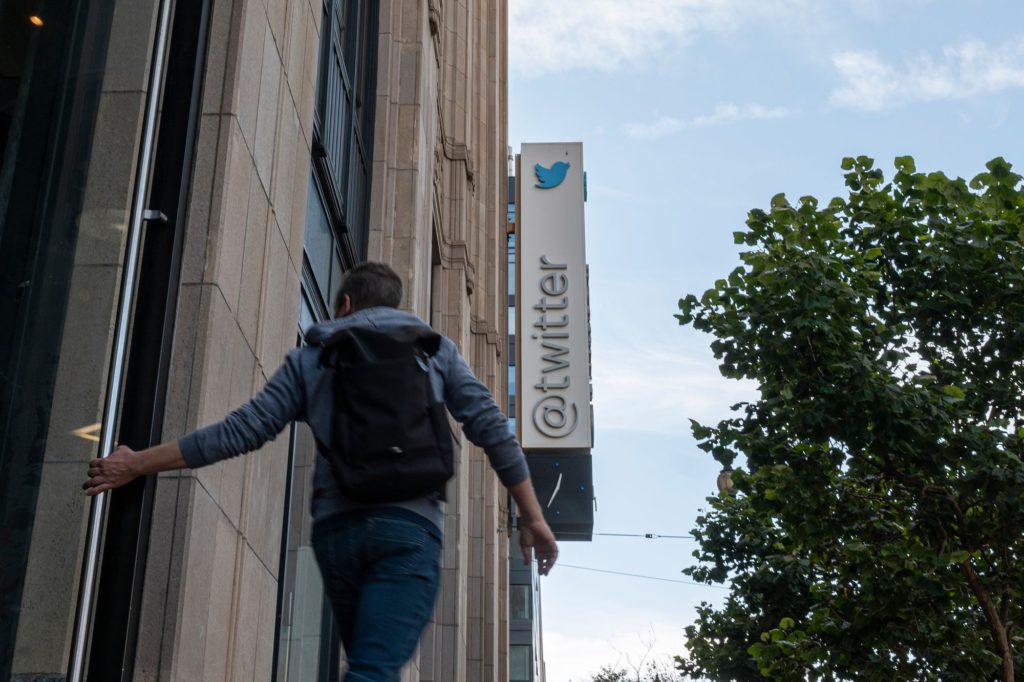
(Bloomberg) — Elon Musk, in his first address to Twitter Inc. employees since purchasing the company for $44 billion, said that bankruptcy was a possibility if it doesn’t start generating more cash, according to people familiar with the matter.

The warning came amid a tumultuous start to Musk’s reign at the social media company — a two-week period in which he has fired half of Twitter’s staff, ushered out most of the top executives and ordered the remaining employees to stop working from home. One executive who until Thursday had emerged as part of Musk’s new leadership team, Yoel Roth, departed, people familiar with the situation said. Another, Robin Wheeler, also resigned — but Musk persuaded her to stay on, said some of the people, who requested anonymity to protect personal and professional relationships.

While the buyout has removed Twitter from the scrutiny of public markets, Musk loaded the company with almost $13 billion of debt that’s now in the hands of seven Wall Street banks that have been unable to offload it to investors.

Confidence in the company has eroded so rapidly that, even before Musk’s bankruptcy comments, some funds were offering to buy the loans for as little as 60 cents on the dollar — a price typically reserved for companies deemed in financial distress, Bloomberg News reported on Thursday.

In his address to staff, Musk issued multiple dour warnings. Employees should brace for 80-hour work weeks. There will be fewer office perks like free food. And he ended the pandemic-era flexibility that allowed employees to work from home.

“If you don’t want to come, resignation accepted,” he said, according to a person familiar with the matter.

When he was asked about the prospect of attrition, Musk said, “We all need to be more hardcore.”

In discussing Twitter’s finances and future, Musk said the company needed to move with urgency to make its $8 subscription product, Twitter Blue, something users will want to pay for, given a pullback by advertisers who are concerned about harmful content.

Musk has in the past used the threat of financial ruin in an attempt to motivate workers, according to a person familiar with his management style. He’s trying to convey the notion that if people don’t work hard, Twitter will be left in a very difficult spot, this person said.

The Information and Platformer earlier reported Musk’s bankruptcy statement.

He also hinted at products he’d like to introduce, including payments, ads that are more conversational and interest-bearing checking accounts. Onboarding to the Twitter app should be smoother, as is the case with TikTok, he said.

Earlier Thursday, Twitter’s chief information security officer, chief privacy officer and chief compliance officer departed, raising concerns about the company’s ability to keep its platform secure and comply with regulations. Twitter is currently bound by a consent decree with the Federal Trade Commission that regulates how the company handles user data, and could be subject to fines for violations.

Roth had since taken over all of the social network’s Trust and Safety efforts, while Wheeler, a sales vice president, had recently stepped up to oversee relations with jittery advertisers. She hinted at her decision to stay in a tweet, as well as a post on an internal Slack channel.

The debt Twitter took on to finance Musk’s buyout is leaving it with interest costs that, by one estimate, will surge to $1.2 billion a year. 

The social network has seen a pullback from some advertisers that are concerned about Musk’s plans for content moderation. 

Debt investors and credit raters are also showing little confidence. The company’s banks have been quietly sounding out hedge funds and other asset managers for their interest in buying a chunk of the company’s debt. 

Discussions so far have centered around the $6.5 billion leveraged loan portion of the financing, people with knowledge of the talks said. Banks had seemed unwilling to sell for any price below 70 cents on the dollar, according to one of the people. Even at that level, losses could run into the billions of dollars, Bloomberg calculations show.

Moody’s Investors Service, meanwhile, recently cut Twitter’s credit rating deeper into junk territory. “Twitter’s governance risk is highly negative reflecting Moody’s expectation for aggressive financial policies and concentrated ownership by Elon Musk,” the ratings firm said.

Musk in an email late Wednesday warned employees of “difficult times ahead,” with “no way to sugarcoat the message” about the economic outlook for the company. He ended employees’ ability to work remotely unless he personally approved it.

–With assistance from Katie Roof, Davide Scigliuzzo, Gillian Tan, Claire Ruckin, Jill R. Shah and Lisa Lee.

(Adds detail on Wheeler’s decision to stay in second paragraph)

More stories like this are available on bloomberg.com

©2022 Bloomberg L.P.

Musk Warns Twitter Bankruptcy Possible as Senior Executives Exit

(Bloomberg) — Elon Musk, in his first address to Twitter Inc. employees since purchasing the company for $44 billion, said that bankruptcy was a possibility if it doesn’t start generating more cash, according to people familiar with the matter.

The warning came amid a tumultuous start to Musk’s reign at the social media company — a two-week period in which he has fired half of Twitter’s staff, ushered out most of the top executives and ordered the remaining employees to stop working from home. One executive who until Thursday had emerged as part of Musk’s new leadership team, Yoel Roth, departed, people familiar with the situation said. Another, Robin Wheeler, also resigned — but Musk persuaded her to stay on, said some of the people, who requested anonymity to protect personal and professional relationships.

While the buyout has removed Twitter from the scrutiny of public markets, Musk loaded the company with almost $13 billion of debt that’s now in the hands of seven Wall Street banks that have been unable to offload it to investors.

Confidence in the company has eroded so rapidly that, even before Musk’s bankruptcy comments, some funds were offering to buy the loans for as little as 60 cents on the dollar — a price typically reserved for companies deemed in financial distress, Bloomberg News reported on Thursday.

In his address to staff, Musk issued multiple dour warnings. Employees should brace for 80-hour work weeks. There will be fewer office perks like free food. And he ended the pandemic-era flexibility that allowed employees to work from home.

“If you don’t want to come, resignation accepted,” he said, according to a person familiar with the matter.

When he was asked about the prospect of attrition, Musk said, “We all need to be more hardcore.”

In discussing Twitter’s finances and future, Musk said the company needed to move with urgency to make its $8 subscription product, Twitter Blue, something users will want to pay for, given a pullback by advertisers who are concerned about harmful content.

Musk has in the past used the threat of financial ruin in an attempt to motivate workers, according to a person familiar with his management style. He’s trying to convey the notion that if people don’t work hard, Twitter will be left in a very difficult spot, this person said.

The Information and Platformer earlier reported Musk’s bankruptcy statement.

He also hinted at products he’d like to introduce, including payments, ads that are more conversational and interest-bearing checking accounts. Onboarding to the Twitter app should be smoother, as is the case with TikTok, he said.

Earlier Thursday, Twitter’s chief information security officer, chief privacy officer and chief compliance officer departed, raising concerns about the company’s ability to keep its platform secure and comply with regulations. Twitter is currently bound by a consent decree with the Federal Trade Commission that regulates how the company handles user data, and could be subject to fines for violations.

Roth had since taken over all of the social network’s Trust and Safety efforts, while Wheeler, a sales vice president, had recently stepped up to oversee relations with jittery advertisers. She hinted at her decision to stay in a tweet, as well as a post on an internal Slack channel.

The debt Twitter took on to finance Musk’s buyout is leaving it with interest costs that, by one estimate, will surge to $1.2 billion a year. 

The social network has seen a pullback from some advertisers that are concerned about Musk’s plans for content moderation. 

Debt investors and credit raters are also showing little confidence. The company’s banks have been quietly sounding out hedge funds and other asset managers for their interest in buying a chunk of the company’s debt. 

Discussions so far have centered around the $6.5 billion leveraged loan portion of the financing, people with knowledge of the talks said. Banks had seemed unwilling to sell for any price below 70 cents on the dollar, according to one of the people. Even at that level, losses could run into the billions of dollars, Bloomberg calculations show.

Moody’s Investors Service, meanwhile, recently cut Twitter’s credit rating deeper into junk territory. “Twitter’s governance risk is highly negative reflecting Moody’s expectation for aggressive financial policies and concentrated ownership by Elon Musk,” the ratings firm said.

Musk in an email late Wednesday warned employees of “difficult times ahead,” with “no way to sugarcoat the message” about the economic outlook for the company. He ended employees’ ability to work remotely unless he personally approved it.

–With assistance from Lisa Lee, Katie Roof, Davide Scigliuzzo, Gillian Tan, Claire Ruckin and Jill R. Shah.

(Adds detail on Wheeler’s decision to stay in second paragraph)

More stories like this are available on bloomberg.com

©2022 Bloomberg L.P.

Twitter Sales Executive Wheeler to Stay After Earlier Departure

(Bloomberg) — Robin Wheeler, Twitter Inc.’s top sales executive, has decided to stay at the company, at least for now, reversing an earlier decision to resign, people familiar with the matter said.

Wheeler had quit on Thursday, along with a handful of other senior leaders, but Twitter owner Elon Musk persuaded her to stay, the people said, requesting anonymity to protect personal and professional relationships.

“Team. I’m still here,” Wheeler posted to an internal Slack channel Thursday evening. “This is really hard right now. Thank you for what you are doing because you are the lifeblood of this company.”

Wheeler has been Twitter’s main liaison to key advertisers over the past two weeks since Musk fired most of the company’s other senior executives. On Wednesday she moderated a public Q&A with Musk on Twitter as part of a plan to soothe advertiser concerns that Musk isn’t doing enough to fight hate speech and misinformation.

More stories like this are available on bloomberg.com

©2022 Bloomberg L.P.

China Top Chipmaker Misses Earnings Estimates as Sanctions Bite

(Bloomberg) — Semiconductor Manufacturing International Corp.’s earnings missed projections, reflecting a global pullback in spending on devices and computers. 

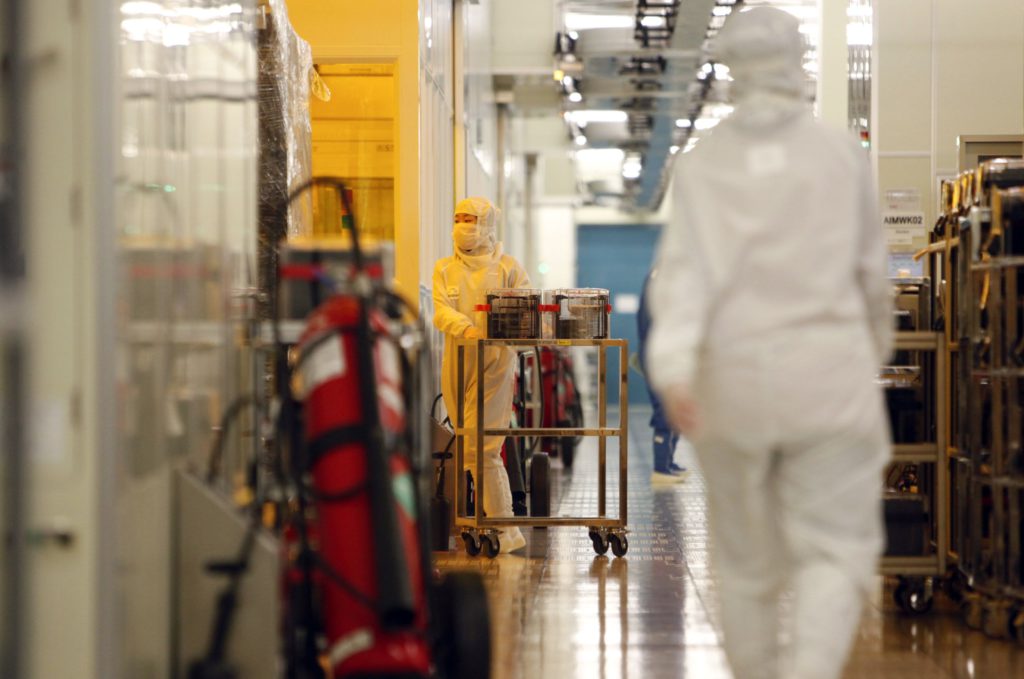
China’s largest chipmaker reported $470.8 million in net income for the third quarter, up 47% from a year earlier, versus the $489.7 million average estimate. Revenue of $1.91 billion also trailed the forecast for $1.93 billion.

The results underscore how SMIC is succumbing to US sanctions that’ve cut it off from critical American technology just as the market is slowing sharply. 

Washington in October enacted its most sweeping restrictions yet to try and counter China’s technological ambitions, hitting the country’s tech firms more broadly over the longer term. At the same time, sales of electronics from smartphones to computers are petering out as consumers curb spending to cope with a potential economic downturn.

SMIC Co-CEO Zhao Haijun cited weak demand in the mobile phone and consumer market, along with the US export control rules, for its expectation that revenue will decline as much as 15% sequentially in the fourth quarter.

“It could take a long time to recover from the sluggish cycle, which is caused by multiple factors,” Zhao said on a post-earnings call Friday. “The US chip curbs bring new challenges to the supply chain.”

The interconnected global semiconductor industry is reeling from the curbs. While the US export controls affect its American customers, who can no longer sell cutting-edge chips in China, SMIC’s tech capabilities and current expansion plans do not violate US rules, he said. The company is still evaluating the full impact of the US measures on the company, he said. 

Longer delivery times for production equipment forced the company to increase its capital spending budget by $1.5 billion to cover bigger down payments, he said. That was even as the utilization rate of its production lines fell in the third quarter. Zhao warned the usage rate is set to decline further in the current quarter. 

Shares in SMIC were little changed on Friday, despite a broad rally in tech stocks globally. SMIC’s Hong Kong stock has shed more than 10% of its value this year, while its Shanghai-listed shares have slid more than 20%.

Some industry players are faring better thanks to their technological edge. On Thursday, Taiwan Semiconductor Manufacturing Co. — the most advanced chipmaker — posted a 56% increase in sales for October. 

Washington in October unveiled a salvo of curbs on the way chip companies do business with China’s tech industry, a series of restrictions that together represent some of the strongest actions taken so far to contain the rise of a geopolitical rival.

The actions, which incensed Beijing and provoked accusations of unfair targeting, threaten to disrupt a global economy already dealing with a potential recession, soaring inflation and lingering supply snarls. Some analysts warn it could strike a further blow to companies from Nvidia Corp. and TSMC to Applied Materials Inc., as well as a raft of Chinese up-and-comers, that underpin the $550 billion chip industry.

Depending on how broadly Washington enforces the restrictions, the impact could extend well beyond semiconductors and into industries that rely on high-end computing, from electric vehicles and aerospace to gadgets like smartphones. 

On a personal level, the curbs may force SMIC’s non-Chinese staff to reconsider their employment. Tudor Brown, the former president of Arm Ltd., in August resigned after nine years on SMIC’s board.

SMIC is among a raft of Chinese semiconductor manufacturers contending with steadily tightening US export restrictions as Washington tries to contain Beijing’s technological rise. That’s on top of rapidly crumbling global electronics demand, as consumers leave a pandemic-era boom behind.

In response, homegrown firms have attempted to develop alternatives to American silicon. The Shanghai-based contract chipmaker has succeeded in advancing its production technology two generations this year to 7-nanometers, though industry experts caution that may not be based on the same standards employed by far larger rivals like TSMC. 

Also, that pre-dated Washington’s latest restrictions, which are expected to exact a heavier toll on China’s tech industry.

SMIC is critical to China’s ability to produce chips domestically as the US tries to undercut the country’s tech advancements. Beijing may be willing to subsidize losses at domestic competitors like SMIC — out of fear its companies won’t have access to key components.

But its blacklist status hurts its ability to develop sophisticated technologies. The company’s capability is severely curbed by its lack of access to ASML Holding NV’s extreme ultraviolet lithography (EUV) systems, which are required to make the most advanced chips. The Dutch firm has not shipped a single EUV machine to mainland China because of US pressure on the Dutch government.

The Trump administration blacklisted SMIC about two years ago on national security concerns, citing the company’s ties with the Chinese military, an allegation the chipmaker has denied.

–With assistance from Edwin Chan.

(Adds Co-CEO comments from earnings call from fifth paragraph)

More stories like this are available on bloomberg.com

©2022 Bloomberg L.P.

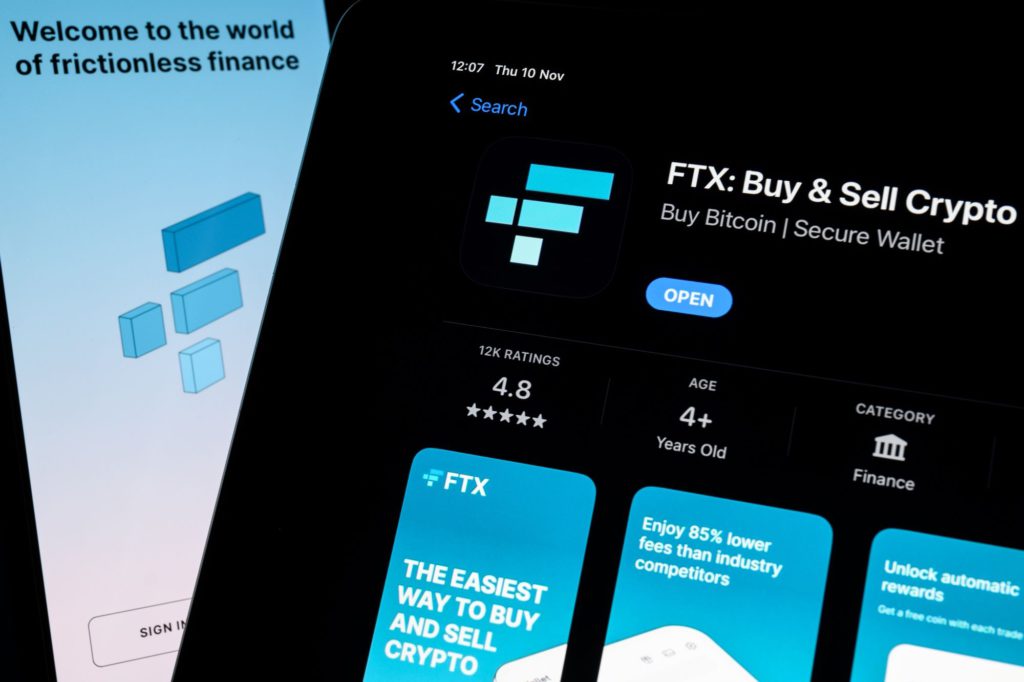
BlockFi Halts Withdrawals in Fresh Contagion From FTX Crisis

(Bloomberg) — The crisis sparked by the collapse of Sam Bankman-Fried’s FTX crypto empire ensnared BlockFi, a troubled crypto lender once worth $3 billion but which is now unable to operate business as usual.

BlockFi on Twitter said it will limit platform activity and pause client withdrawals. The firm cited “a lack of clarity” over the status of onetime savior FTX US as well as the uncertainty afflicting FTX.com and Alameda Research.

The Jersey City, New Jersey-based company asked customers to refrain from depositing funds into their BlockFi wallets or interest accounts.

FTX US once offered BlockFi a major lifeline over the summer by providing a $400 million revolving credit facility in an agreement that came with the option to purchase the company.

The developments at BlockFi underscore growing concerns about contagion from the toppling of crypto exchange FTX and its sister trading house Alameda Research.

Digital-asset lenders have been hit hard by the rout in virtual coins this year. The downfall of the TerraUSD stablecoin in May contributed to the implosion at hedge fund Three Arrows Capital. BlockFi has said it took an $80 million hit from the bad debt of Three Arrows. 

Originally valued at $3 billion in March 2021, BlockFi sought to raise money at a reduced valuation of about $1 billion in June. The firm also faced scrutiny from financial regulators over its interest account and paid $100 million in penalties to the US Securities and Exchange Commission. 

FTX’s financial troubles have led authorities in the Bahamas, where FTX.com is based, to freeze the assets of its local trading subsidiary and “related parties.” 

(Updates with more context from the first paragraph.)

More stories like this are available on bloomberg.com

©2022 Bloomberg L.P.

TSMC, Samsung Lead Asian Chip Stock Rally as Rate Concerns Fade

(Bloomberg) — Asia’s biggest chipmakers Taiwan Semiconductor Manufacturing Co. and Samsung Electronics Co. climbed as slower US inflation data sparked bets that the Federal Reserve’s rate hikes will moderate. 

TSMC surged as much as 8.5%, the most since July 2020, while Samsung rose 4.6%. The Bloomberg Asia Pacific Semiconductors Index jumped 7.6%, the most since March 2020, following a 10% advance in the US industry benchmark Philadelphia Semiconductor Index overnight.

Friday’s gains extended this month’s rebound for sector, but the Bloomberg Asia chip gauge is still down 37% so far in 2022. Semiconductor stocks and the broader tech sector were pummeled this year by concerns of rate hikes, global recession and valuations.

The rally may not last, as investors could look to take profits following the bounce, according to Diana Wu, senior manager at Capital Securities Corp. “As to the long-term, I think the global economy will slow down, as inflation remains at high levels which will hurt growth. In addition, the trade war between China and the US has increased manufacturing costs, with the supply-chain premium diminishing.”

TSMC also got a lift from its report Thursday that its October sales jumped 56% from a year ago, signaling that the world’s largest contract chipmaker is continuing to weather a slowdown in electronics demand. Still, even bad news didn’t seem to matter as chip-tool maker Tokyo Electron Ltd. gained nearly 10% after cutting its full-year outlook.

The rise in Tokyo Electron shares after its results “speaks volumes,” said Asymmetric Advisors’ Amir Anvarzadeh. “Bottom-up approach should be shelved for now and factors and momentum will be key for the rest of the year.”

More stories like this are available on bloomberg.com

©2022 Bloomberg L.P.

Studio Ghibli Tie In With Lucasfilm Hinted at In Twitter Clip

(Bloomberg) — Studio Ghibli Inc., creator of Spirited Away, My Neighbor Totoro and other iconic animated films, posted a tweet that suggested it’s working on a project with Star Wars franchise creator Lucasfilm Ltd.

The 15-second clip, posted Friday, shows only the names of the two studios, which have shaped entertainment culture on both sides of the Pacific Ocean, and globally. It wasn’t clear whether the tweet suggested a new film was in the works, or some other project.

A call to Ghibli studio wasn’t answered outside of regular business hours. A spokesperson for Lucasfilm didn’t immediately respond to a request for comment.

While there was no corresponding social media post from Lucasfilm, retweets by Star Wars’s official account and Walt Disney Pictures’s marketing executive Asad Ayaz raised speculation around potential joint projects.

Lucasfilm, bought by the Walt Disney Co. a decade ago for $4 billion, has become a global entertainment franchise spanning movies, TV shows, toys and theme parks since the first Star Wars film was released in 1977.

Studio Ghibli, led by Hayao Miyazaki, has been an ambassador for Japanese culture for decades with its films, which often feature young protagonists caught in fantastical worlds with mythical beasts. 

–With assistance from Thomas Buckley.

More stories like this are available on bloomberg.com

©2022 Bloomberg L.P.

FTX US Legal Chief Tells Staff He’s Working to Preserve Platform

(Bloomberg) — FTX US general counsel Ryne Miller said in an internal memo he’s working with advisers to preserve “whatever is preservable” of the crypto exchange.

“We should not be optimistic for an outcome that is positive,” Miller wrote. “I’m working with outside advisers to be best prepared to navigate FTX entities to next steps.”

Miller’s message was sent to staff on a Slack channel Wednesday night and later deleted by a member of the founding team, according to a person familiar with the matter. The general counsel said he hasn’t received much clear information from the founders, and has advised US regulators of his instruction to founders to turn off functionality of both the US and global platforms. 

“Folks should prepare to make their own choices as appropriate for their personal situation on next steps,” he wrote. “FTX US looks prepared to make payroll at least in the next cycle.”

FTX founder Sam Bankman-Fried said in a tweet Thursday that the firm is “100% liquid” and “not financially impacted” by FTX International’s problems. FTX US’s trading may be halted in a few days and users should close down any positions, according to a notice from the website. Withdrawals will remain open, it said.

The crisis engulfing FTX snowballed this week, after revelations that FTX.com can’t cover all customer funds due to a shortfall of as much as $8 billion. The Bahamas Securities Commission has frozen the assets of FTX Digital Markets “and related parties” as the crypto platform company teeters closer to collapse. 

FTX US, which shares similar owners and investors with FTX’s global exchange, was valued at $8 billion in a January round. In recent days, the Securities and Exchange Commission and the Commodity Futures Trading Commission have asked for details about the ownership structure of FTX US and FTX.com, and whether customer accounts were properly segregated, Bloomberg News has reported.

An FTX US representative didn’t immediately return a request for comment. 

Sequoia Capital has written down the full value of its $214 million investment in FTX, including holdings of FTX US, a spokeswoman for the firm said. 

For crypto market prices: CRYP; for top crypto news: TOP CRYPTO.

More stories like this are available on bloomberg.com

©2022 Bloomberg L.P.

Telehealth Giant Drew People With Addiction. Deaths, Overdoses Followed

(Bloomberg) — Greg Grant knew he was in danger. Just fired from a freelance gig, the 51-year-old Texan responded by drinking heavily, beginning in the morning and continuing for hours. By the time he reached out to his mental healthcare provider, he was a dozen drinks in.

“I need help,” he wrote in a chat log set up by Cerebral Inc., a startup that offers online only psychiatric services and was treating Grant for anxiety and depression. “Alcohol poison.”

On the other side of that July 2021 chat, employees wondered how dire his situation really was. “I know 12 drinks is a lot, but I am trying to gauge if he needs immediate assistance or not,” a member of the company’s crisis team wrote to colleagues who were not licensed clinicians. No medical professional weighed in as team members opted to do what they’d done in dozens of other urgent situations: call the cops. Grant was taken by ambulance to an emergency room.

It was only afterward that a nurse practitioner in charge of Grant’s treatment informed coworkers that he had been prescribed medications that carried “risk of negative interactions” with alcohol. Mental health advocates say one of the drugs, an antidepressant, might increase suicidal thoughts in patients who drink. The nurse wrote: “Avoiding drinking or other illicit substance is always mentioned during the session and will be on [patient]’s risk.”

In interviews, Grant’s family members and a psychiatrist who treated him previously said he suffered from alcoholism, but his Cerebral medical records don’t include any mention of that condition. They do show that Grant’s Cerebral nurse practitioner had increased his dosage of the antidepressant four days before his binge.

Less than a month later, he was found slumped under a tree in his back yard, dead by suicide.

The potential for suicide or self-harm among patients presents complicated challenges for mental-health caregivers, whether they operate in brick-and-mortar settings or by telehealth technology. Grant’s case and others illustrate how Cerebral, once the fastest-growing startup in mental telehealth, was ill-equipped to treat some of its most vulnerable patients: those who don’t disclose their substance-use disorders.

As it grew, Cerebral took on a number of patients with complicated conditions, despite concerns that former members of its medical staff say they harbored. At least a handful of cases, like Grant’s, ended in overdoses and deaths, according to internal company records and interviews with dozens of current and former employees. 

Those records and interviews show that tools frequently employed by addiction specialists, such as urine or breathalyzer tests, weren’t used by the telehealth provider even when addictive medications were administered. During appointments that clinicians say were often shorter than standard, the medical histories taken on some patients were incomplete — reflecting gaps that might have been closed if the nurse practitioners who serve as Cerebral’s prescribers had taken additional steps.

At a company that says it has treated more than 500,000 people since its inception, it’s impossible to say precisely how many adverse outcomes have occurred, in part because it’s unclear how complete Cerebral’s records are. In Grant’s case and three others, Cerebral learned of an overdose or death only after a patient’s family member — or in one instance, a pharmacy — notified the company. In that case, a Cerebral nurse practitioner had prescribed Xanax to the man, according to internal records seen by Bloomberg News. The patient, who had a history of substance abuse, later died in a recovery home after overdosing on fentanyl, according to a medical examiner’s report.

Like other healthcare organizations, the company attempts to track patient deaths; a “mortality log” listed more than two dozen of them as of early this year. Some, such as a motorcycle accident, may well have been unrelated to the patient’s mental health or care.

Such documentation is crucial to what David Mou, Cerebral’s chief executive officer, described as a culture of constant improvement. Cerebral executives, citing healthcare confidentiality requirements, declined to discuss any individual patient’s case. But in an interview, Mou said Cerebral’s nurse practitioners are empowered to employ patient-safety steps, including ordering drug screens, when they think they’re needed. The company declined to say how long that has been the case or how often such tests are used.

“I think what is most important here is that absolutely every incentive that we have here is aligned to quality,” said Mou, who had been Cerebral’s chief medical officer. He took the top post in May after a tumultuous period for the company.

Cerebral quickly expanded last year by promising to make mental healthcare widely available at a time when the Covid-19 pandemic had cut off many who desperately needed such help. That promise, along with enthusiastic investors including SoftBank and persistent social-media advertising, helped Cerebral achieve a $4.8 billion valuation.

Controversy soon followed. As Bloomberg Businessweek first reported in March, clinicians at the company said they felt pressured to prescribe controlled medications for attention deficit/hyperactivity disorder. After that story appeared, the Drug Enforcement Administration interviewed at least two Cerebral employees about its handling of controlled substances. In May, a federal grand jury served a subpoena on the company, and its board ousted founder Kyle Robertson. Cerebral also announced it would stop writing prescriptions for most controlled substances.

Before that, a company spokesman had said Cerebral could treat “almost all patients who suffer from mental health conditions.” Since then, its executives have charted a course for Cerebral to continue offering substance-abuse treatment, even as it has gone through rounds of cuts. The most recent came in late October, involving 20% of its staff and affecting all divisions, including operations, support and clinical care. 

For most of its history, the company delegated the delicate task of interacting with patients in emergency situations to front-line customer-care employees and mostly unlicensed personnel. In interviews, eight such employees, who asked not to be named in order to discuss internal company matters, said they felt ill-equipped to do their jobs. Company documents show that as of earlier this year, the time budgeted for their crisis training was about one hour, followed by a “condensed” 10-minute safety training video and a slide deck on managing suicidal clients.

Mou, a Harvard-educated psychiatrist, said the company has made recent improvements to address such issues. In April, it began shifting the responsibility for dealing with patients in crisis to a separate team of workers, who he said receive a week of training. 

During the hour-long interview, Mou largely declined to discuss the company’s previous policies or his predecessor, Robertson, who oversaw Cerebral’s aggressive growth. “I don’t want to talk about the past,” he said. Mou said Cerebral has strived to improve during his time as top executive. 

“All the evidence, I would say, would suggest that over the last five months, since I’ve been CEO, if you look at the things that have been done, we’re marching toward that at a speed that is very uncommon for healthcare companies,” he said.

But Mou’s 16-month stint as chief medical officer generated criticism too. Matthew Truebe, a former vice president, alleged in an April lawsuit that when patient overdoses or instances of suicidal ideation were reported, Cerebral was often slow to address the incidents and “sometimes failed to respond at all.” Truebe said in his lawsuit that he told the company’s former CEO that Mou “appeared more focused on business development than clinical safety.”

 In a statement, Cerebral said Truebe’s claims were “unfounded.” But his allegations reflect a tension that dozens of other former Cerebral employees cited in interviews: They said the company’s executives emphasized rapid growth over the need to achieve the highest quality of care, leading to such outcomes as appointments that were too short and follow-up sessions that were too infrequent.

Cerebral has rejected those statements as well, saying it has always sought the best care standards. Now, executives are reallocating some marketing spending to “clinical quality and safety, to compliance, to other initiatives that help with clinical care,” Mou said.

He said the company’s performance exceeds standards of care practiced at the average brick-and-mortar mental health clinic. The company cited features that include a 24/7 crisis response team and pay incentives it has created for nurses to reach out to suicidal patients.

But a patient advocacy group said such services are typically offered by traditional providers as well. “While we appreciate efforts including regular audits of clinical guidelines, dedicated crisis response teams, and internal care coordination, we note that these aspects of care are routinely provided by psychiatrists and mental health clinics across the country,” Physicians for Patient Protection said in a statement.

The bigger issue is that patients can suffer from high-volume corporate medicine if adequate safeguards aren’t in place, said Alyson Maloy, a Maine-based psychiatrist and neurologist and a member of the advocacy group’s board. Maloy said she was speaking generally — not about any particular company. 

“When corporations come in and they try to squeeze the practice of medicine into this corporate model of productivity and maximizing profit, there are many situations in which it doesn’t work,” she said. “And those tension points are where people get hurt.”

Greg Grant was the quietest one in a quiet family of hardworking Texans. He was often home alone, watching soccer with his rescue dog, Xena. But he could also be counted on to attend family gatherings, where seats next to Uncle Greg were prized for the chance to hear his soft-spoken quips. His sister Rhea Anne Teague describes him as kind, a good gift giver and fiercely loyal. Despite grappling with alcoholism and anxiety, he’d assembled a stable life, regularly seeing a psychiatrist he first met during a 2010 stint at an addiction recovery center. Grant worked as a live video engineer for an audio-visual company for more than two decades, a job that took him across the country to concert venues and conference centers.In 2020, he left that job and became a freelancer, just before the pandemic ended live concerts and conferences. By the end of the year, he’d sold his house and started renting. He dipped into savings from the sale, and his lack of income became anxiety-inducing, Teague said. In April 2021, he told his psychiatrist’s office he needed to take a break. He said he’d be back in six months. 

That’s when Grant sought help from Cerebral. He got access to a prescribing nurse, medication deliveries by mail and check-ins with a “care counselor,” a sort of life-coach position that doesn’t require licensure, for $85 a month at the time. By comparison, the cost of a single appointment with a licensed therapist in the US frequently falls between $100 and $200, according to Psychology Today.

Patients with alcoholism can be challenging: In the worst cases, weaning them off alcohol can trigger seizures and even death, sometimes requiring round-the-clock monitoring. Cerebral’s model, with no physical offices or clinics, makes that impossible, prompting concerns among a number of employees about fielding alcoholic patients at all. Even in less-dire situations, the remote appointments that telehealth depends on can mean practitioners miss important clues about patients’ wellbeing, such as the smell of alcohol.

Grant’s own longtime psychiatrist, Lenae White, says her addiction patients take drug and breathalyzer tests on every visit, helping her gauge her clients’ health so she can treat them effectively. She also collects “collateral” information — patients’ prior medical records and even interviews with family and friends. Such information gathering should come from “a variety of sources” and “at a minimum, data should include current and historic substance use” and “substance-related treatment histories,” according to a guide on addiction counseling published by the Substance Abuse and Mental Health Services Administration.

Mou said taking a medical history in patient interviews is standard at Cerebral. But the broader information-collecting is not, several nurse practitioners told Bloomberg. 

Grant’s Cerebral nurse merely asked him a few questions, and Grant wasn’t forthcoming about his alcoholism. During a 32-minute initial appointment — which clinicians have described as typical for Cerebral but is shorter than the standard at many physical clinics — Grant said he wasn’t suicidal, and that he had three or four beers a couple of times a month, according to medical records Cerebral furnished to Teague. The notes indicate that Grant was told his medication had a so-called black box warning stating that it was linked to “suicidal ideation.” He was advised against drinking while taking it and was given the drugs. 

“Telehealth is terrible for addicts,” said White, who practices in both brick-and-mortar and telehealth settings. “They can lie to you and they can lie to themselves. Addicts assess the literacy of the person they’re dealing with and act accordingly. You can’t do these very short online appointments unless you’re very well-trained and very well-versed in the patient.”

But Grant’s new caretaker was unfamiliar with him and relatively new to mental health. He’d spent most of his working life as a dental technician before getting his psychiatric nurse practitioner license seven months earlier.

Similar blind spots in Cerebral’s system were evident when a man in his 20s with a history of substance-use disorder received a Xanax prescription from the company, according to internal communications and public records reviewed by Bloomberg News.

The incident raises questions about how effectively Cerebral and similar companies can screen out patients with drug-seeking behavior — and properly track them when things go awry. As with Grant, this patient’s family members were aware of his condition. It’s unclear how much his Cerebral clinician knew about it, but records show the patient was living in a recovery home while his Cerebral Xanax prescription was active.

Xanax, a benzodiazepine used to treat anxiety, can present what addiction experts describe as a high potential for misuse, especially for people with substance-use disorders in their histories, according to research compiled by the National Library of Medicine.

The patient, whose identity Bloomberg News is not disclosing at the request of his family, died from a fentanyl overdose in November 2020.

Cerebral only learned of his death when the patient’s pharmacy contacted the company. A nurse practitioner had issued a Xanax refill prescription for the patient about a month after his death, and the pharmacy feared that someone was using the name of a deceased person to obtain the controlled substance, which has a significant street value. In fact, Cerebral’s nurse simply didn’t know he had fatally overdosed.

The incident drew the attention of Cerebral’s executive suite after the pharmacy raised its concerns. “There’s no foul play involved?” asked Cerebral’s then-chief medical officer in an internal message. “Trying to understand if this could have been prevented.” 

“I had no idea of the death,” the patient’s nurse practitioner responded. “Don’t think we can prevent a death.”

Another patient described to Bloomberg News how he used Cerebral appointments as part of a spiraling series of drug-seeking incidents that would eventually result in a non-fatal overdose in March of last year.

In the weeks leading up to that incident, the 36-year-old father, who suffered from bipolar disorder, was dealing with mounting financial stress, culminating in a joint bankruptcy filing with his wife.

The patient found Cerebral online after seeing an ad that promised medicines shipped to your door, and he took that to mean easy access to controlled substances. He described his experience as “customer-directed,” because he communicated what drugs he wanted, and got them.

“I knew what I was asking for, Ativan, and that hit a bit harder,” said the patient, whose prescription records indicate that he received a generic version of the benzodiazepine medication, a controlled substance that’s in the same class as Xanax, a week before he overdosed.

Still, he wanted more. A Covid-related downturn in work sent him to Craigslist for additional “benzos,” he said. He wasn’t sure what the Craigslist product he took was laced with, but he knows he responded to Narcan. He spent five days in a medically induced coma followed by 20 more in the hospital, he said. 

Cerebral staff learned of the incident when the man’s mother, whose credit card he’d used to sign up for the service, messaged the company asking to cancel, saying he was in a coma. Though he wasn’t dead, staff turned to protocols for handling patient deaths, including canceling the service and refunding charges.

In yet another case, even when a patient disclosed his concerns about his medications, Cerebral failed to adequately address them, and he later suffered an overdose. The patient, a finance professional in his early 30s, reached out twice to Cerebral in the weeks before an overdose, concerned about the side-effects of his antidepressant medication, according to a voicemail he left for Cerebral, as well as communications and records reviewed by Bloomberg News.

The patient’s script was still active at the time of the event because a customer care specialist failed to turn it off, according to former employees familiar with the matter. The overdose wasn’t fatal, and it isn’t clear what caused it. The patient didn’t respond to requests for comment.

The nurse practitioners who provided care to the four patients featured in this article were all fully licensed by their state nursing boards, and public records don’t show any disciplinary actions or grievances filed against them. None of these incidents triggered litigation; Cerebral patients are required to sign arbitration agreements that keep disputes out of court. A company spokesman said such agreements are standard in the industry.Cerebral’s operations are set up so that liability for any mistakes would fall largely on the nurse practitioners, who are independent contractors putting their own licenses on the line. Dozens of them have left the company in recent months, with many citing the liability issue as their reason. (Cerebral also employs psychiatrists, though they do not see patients. All prescribing is done by nurse practitioners.)In a July 2020 presentation prepared for investors, Cerebral had touted a corporate structure that “mitigates legal risks” as a selling point for potential backers. That presentation was accompanied by a chart showing how money flows through Cerebral while the actual process of providing appointments and prescriptions is undertaken by an affiliated medical group.

Before Cerebral can help patients in crisis, it needs to know they’re going through one. But until May, the company had no automated system for escalating inbound messages from patients in danger. Some of them could languish in customer care queues alongside more mundane queries about refills and scheduling for 24 hours or longer — in effect, leaving some patients to manage crises on their own.

Employees say that pleas to create an engineering fix — such as moving requests with crisis keywords to the top of queues — were ignored for months. Truebe, the former executive, alleged in his lawsuit that his product engineering department was instructed to focus exclusively on projects that boosted the company’s client base, at the expense of other endeavors. Cerebral disputed Truebe’s claims.

A fix to escalate crisis queries was rolled out in May, and it revealed the extent of the problem. Out of as many as 10,000 daily messages, about 400 were flagged as highly urgent, according to a person familiar with the figures.

The Cerebral spokesman said the “crisis escalation mechanism is far beyond the standard of care at a mental healthcare facility.”

That change came long after Greg Grant’s exchanges with Cerebral’s crisis team last year.

By July 13, 2021, his symptoms were growing worse. “I have anxiety about my anxiety,” he wrote to Cerebral, “and not sure I can handle it.” He initially received a response from “Answer Bot,” an automated feature that suggested articles including “Is Cerebral for Me?”

During a 15-minute appointment four days later, Grant’s nurse had an opportunity to reassess his patient’s relationship to alcohol when Grant described crippling anxiety attacks that would hit before he left for work, causing his hands to shake. To cope, Grant said, he would drink a can of beer before heading to his job.

The records don’t reflect any reassessment, follow-up questions or comments from the nurse about that revelation. They show instead that the nurse increased the dosage of Grant’s antidepressant.

It was the last time Grant met with his nurse. His binge-drinking episode came four days later.

In internal chats following the incident, Grant’s nurse practitioner still showed no sign of rethinking his patient’s situation and suggested that Grant had to police himself.

On July 30, Grant met with his unlicensed care counselor, who specialized in dance therapy, according to LinkedIn. Notes from the meeting give no indication whether the binge-drinking incident was discussed at all. One focus of the session was coping strategies for anxiety, including naming football teams or identifying colors in the room. Grant denied that he was currently contemplating suicide, according to the notes. While declining to comment on the case specifically, Mou said care counselors have access to patient records. (In early October, Mou told staff that Cerebral would discontinue its care counselor services.)

About two and a half weeks later, Grant received a message from “Eileen Davis,” a pseudonym that Cerebral’s customer care staff members were using at the time to engage with patients. The company has declined to discuss why its workers used the fake name, but in effect, it presented continuity to patients who were actually dealing with different workers. “Eileen” wrote to let Grant know she would “be shifting you over to another one of our coordinators,” part of Cerebral’s effort to retire the false identity.

Details from a medical examiner’s report suggest that Grant was almost certainly dead by the time that message was sent. His body was found two days later, on Aug. 18. 

“He signed up with them, they sent him some meds — it just seems so easy,” Teague, Grant’s sister, says now. “It struck me as colossally not a good situation for Greg.”

A coroner informed Cerebral of Grant’s death on Aug. 20, but the company’s messages continued to flood Grant’s phone and email. Over 23 days, according to documents Teague received, the company sent her brother nine missives, including four inviting him to check in. The last, a cancellation email, arrived on Sept. 12 with a farewell message: “Sorry to see you go!”

(Updates with additional detail on layoffs in 16th paragraph. A previous version of this story was corrected to reflect the number of people Cerebral says it has treated.)

More stories like this are available on bloomberg.com

©2022 Bloomberg L.P.

Asian Markets to Jump in ‘Sympathy Rally’ as Inflation Eases

(Bloomberg) — Investors are priming for a bounce across Asian equity markets Friday after slower-than-expected US inflation data indicated smaller Federal Reserve rate hikes and triggered the biggest jump for US shares in two years.

Analysts expect technology and other rate-sensitive stocks to jump, but caution that rising Covid-19 cases in China and the turmoil in cryptocurrencies may cap gains. A weaker dollar also offers a tailwind for emerging market equities.

‘Sympathy Rally’

“We’ll see a snap reaction in Asian equities and Australian equities will have a quick jump,” said Ned Bell, chief investment officer of Bell Asset Management. “You’ll get a sympathy rally but I’m not sure how much legs will be behind it. You’ll probably see a short-term kick in Chinese tech names,” he said. “In the background what is happening in crypto is weighing on risk appetite, so it’s hard to gauge.”

Asian Shares

“The downside surprise on US inflation and the surge in US shares points to a strong rebound in Asian share markets today,” said Shane Oliver, a head of investment strategy at AMP said. “The combination of a less hawkish Fed, less risk of a deep US recession and a peaking $US are all positive for Asian shares.”

Tech to Jump

“US sector performance should serve as a guide for Asian equities,” said Chamath De Silva, senior portfolio manager for Sydney-based BetaShares Holdings. “We saw outperformance from the most beaten up sectors of late, namely tech, consumer discretionary and rate sensitive exposures like REITs.” 

Hang Seng Bounce

“We’re cautiously bullish on the Hang Seng and see its potential to lift further from its 13-year low,” said Matthew Simpson, senior market analyst at at StoneX Financial. “The bearish move looks over-extended,” and “the HSI looks to benefit over the near-term from a higher HKD/CNY exchange rate,” he said. “We’re questioning how much doom and gloom is already priced in.”

Return to China

“The dollar’s rise over the past year has left Asian markets increasingly exposed to capital outflow, so with one fell inflation swoop, that external vulnerability has been eased and should open the door to inbound investment,” said Stephen Innes, a managing partner at SPI Asset Management said. “Given the move in global rates, the post-CPI first leg is likely to play out through tech, with the HSI Tech Index a significant beneficiary.”

New EM Cycle

“The number one takeaway from the CPI is that the dollar is moving lower,” said Thomas Hayes, chairman at Great Hill Capital. “Weak dollar is historically very good for emerging market equities. This could be the start of a new cycle for emerging market equities.”

Yen Effects

“In Japan’s market the resultant big drop in value of the dollar against the yen will prove problematic given how much the weaker yen has proved supportive of earnings,” said Amir Anvarzadeh, strategist at Asymmetric Advisors.

“Names like Sony, Epson and Nintendo are just a few in our short picks that could see that currency support pulled,” he said. “Even our long Subaru would be exposed to reversal of the currency although volume growth in production is why we think it looks strong for next term.”

Aussie, Kiwi Dollar Rallies

“We expect AUD and NZD to make further modest gains today, particularly if US equity futures increase further.” said Joseph Capurso, head of international economics at Commonwealth Bank of Australia in a note. But while inflation in the US is improving, the news from China is not amid weak lending data and rising Covid infections, he said. “The upshot for AUD and NZD is this morning’s surge are likely to fade over the following week.”

Spread Pressure

“While the lower-than-expected CPI print is clearly a step in the right direction, US rates are still going higher,” said Mark Reade, head of fixed-income desk research at Mizuho Securities Asia. “Such policy tightening, at a time of slowing global growth suggests that the path of least resistance for credit spreads including those of Asian dollar bonds remains wider.”

–With assistance from Georgina Mckay, Abhishek Vishnoi, Matthew Burgess, Tassia Sipahutar, Finbarr Flynn and Ishika Mookerjee.

More stories like this are available on bloomberg.com

©2022 Bloomberg L.P.

Close Bitnami banner
Bitnami