Bloomberg

Twitter Quickly Scraps ‘Official’ Badges for High-Profile Users

(Bloomberg) — Twitter Inc. rolled out a new “official” badge for high-profile accounts and then just as quickly scrapped the program, with Elon Musk saying the company would do further experiments under his ownership.

“Please note that Twitter will do lots of dumb things in coming months,” he tweeted after saying that he had killed the program. “We will keep what works & change what doesn’t.”

The short-lived “official” badge was used to label government figures, businesses, major media outlets and some public figures. Twitter users noticed it appearing on more accounts overnight, and it drew some puzzled reactions, with some suggesting it looked cluttered beneath the existing blue verified badge.

Musk, the chief executive officer of Tesla Inc., acquired Twitter last month for $44 billion and embarked on a flurry of changes. After unseating top management and the board, he laid off roughly half the company’s workers last week — though some employees were asked to come back.

His ideas for Twitter’s verified badges — known as blue checks — have drawn particular scrutiny. Musk plans to let users who pay $8 a month get the badges, which have been used to help celebrities, public figures and organizations protect their identities on the platform.

More stories like this are available on bloomberg.com

©2022 Bloomberg L.P.

Fentanyl Network Funded Through Cryptocurrency Is Sanctioned by US

(Bloomberg) — The US Treasury Department said it imposed sanctions on a trafficking network led by two Dutch nationals and one Briton for allegedly supplying fentanyl and other synthetic drugs to buyers through the Internet.

Wednesday’s move marked the first time Treasury imposed sanctions under a new authority that President Joe Biden granted in an executive order last year. It allowed Treasury to impose financial restrictions on anyone linked to “the international proliferation of illicit drugs or their means of production.”

It’s part of a broader effort by the administration to target the sale of illicit drugs online and through darknet marketplaces, Treasury said. 

“Treasury is identifying over 50 virtual wallet addresses associated with this network’s drug trafficking activities as we take further action to counter the abuse of virtual currency,” said Brian Nelson, the undersecretary for terrorism and financial intelligence. 

Treasury’s Office of Foreign Assets Control, which oversees sanctions policy, said the trafficking network generated millions of dollars in virtual currency by selling fentanyl analogues and other synthetic drugs to US consumers through the Internet.

Treasury also sanctioned several shell companies associated with the men.

More stories like this are available on bloomberg.com

©2022 Bloomberg L.P.

Singapore Wants Open Supply Chains as US Levels Chip Curbs

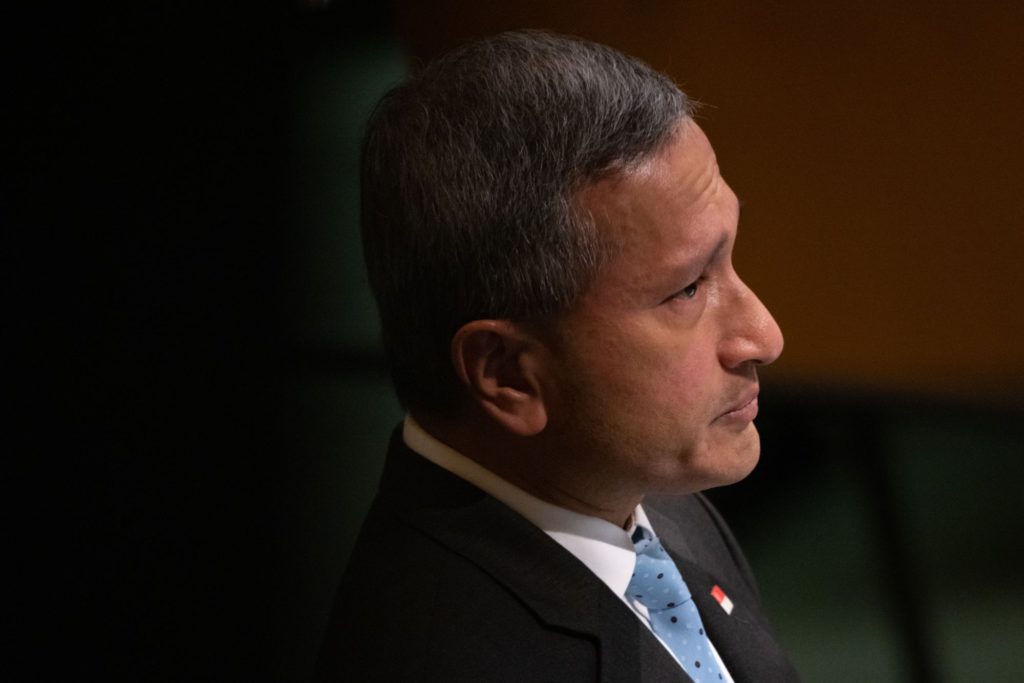
(Bloomberg) — Singapore’s top diplomat is pushing for “open, inclusive” tech supply chains to counteract accelerating economic bifurcation after the US moved to restrict China’s access to cutting-edge semiconductors.

Speaking at an event Wednesday, Minister of Foreign Affairs Vivian Balakrishnan said such divisions would be inflation, supply chain disruptions, slower technological progress and “further disrupt global systems.” The way forward would be a multilateral network for science, technology and supply chains.

“Our paradigm that we are offering is overlapping circles of friends,” Balakrishnan said.

The Biden administration last month expanded restrictions on China’s access to semiconductor technology, raising concerns among Asian countries that count China as a major economic partner. Southeast Asian countries, in particular Singapore, have become increasingly vocal over being made to choose between the competing powers.

Read: How Biden’s Chip Actions May Be Broadest China Salvo Yet

China has said that the US has politicized technology, economic and trade issues, and its intention behind the “technology blockade and de-coupling” efforts is obvious.

While Balakrishnan acknowledged the US concern that advancements in critical technologies can transform foreign militaries and ultimately threaten US national security, Washington’s latest controls amount to “all but a declaration of a technology war.”

“The absence of strategic trust will lead both sides to always assume the worst,” he said. This “will almost certainly lead to a mutually escalatory vicious downward spiral.”

(Updates with new quotes from minister’s speech after delivery)

More stories like this are available on bloomberg.com

©2022 Bloomberg L.P.

Sony’s God of War Ragnarok Is Set to Jump-Start Slow Year for Hits

(Bloomberg) — Sony Group Corp.’s God of War Ragnarok debuts Wednesday to positive early reviews, suggesting it could be the catalyst the Japanese gaming giant needs heading into the end of the year without a big hit.

Critics love God of War Ragnarok. The game has a 94 on the review aggregation website Metacritic, which makes it the second-best-scoring original game of the year, just below the transcendent Elden Ring. IGN’s reviewer called it “a complete work of art from top to bottom” and “an almighty achievement.”

After breaking records during the pandemic, the video game industry has slumped this year due to a lack of major titles, console shortages and the economic downturn. So the stakes are high for God of War Ragnarok, one of the fall’s few blockbuster games and the the latest entry in one of Sony’s most important franchises.

God of War kicked off in 2005 with a trilogy of lewd but fun games about murdering Greek gods such as Zeus and Hades. In 2018, Sony rebooted the series with a new entry that ditched the crude sex scenes and reimagined series protagonist Kratos as a gruff but loving father. That game won accolades and was widely considered one of the year’s best. It went on to sell 23 million copies on PlayStation and PC. Four years later, a sequel has arrived, one that Sony hopes will reach or surpass the highs of the last version.

Playing God of War Ragnarok is beautiful and rhythmic, sort of like playing an instrument—except at the end of the song you get to decapitate a worm demon with a giant ax.

Set in Norse mythology, the game unfolds a few years after its predecessor during Fimbulwinter, the period of endless snow that’s said to presage the end of the world. At the conclusion of the last game, Kratos and his son Atreus discovered a prophecy with two key pieces of information. The first is that Atreus is really Loki, the Norse god of mischief and the second is that Kratos is destined to die. That sets some grand stakes for God of War Ragnarok, and as the game begins, Kratos and Atreus are already grappling with big questions about their relationship, their purpose and what Ragnarok may bring.

I’ve played around 15 hours of God of War Ragnarok and although I’m not finished just yet, I’ve enjoyed every minute of it. The combat is brilliant and deep, full of interesting choices and combos that let you rip demons and monsters apart with abandon. Fans criticized the last game for the monotony of its enemies, which were mostly variations of zombies, and the developers responded by packing God of War Ragnarok full of drastically different creatures to slay. 

The battles are satisfying, highlighted once again by Kratos’ Leviathan Axe, which you can throw and summon back to your hand with the pleasant push of a button. You can customize gear and play around with different special abilities, using, for example, your frost weapon to chill an enemy and then swapping to your fire weapon to do extra damage. I’ve never tried meditation, but I imagine that the flow of combat in a game like this puts you in a similar state.

The designers at Sony Santa Monica, the studio behind the game, use all sorts of tricks to keep things engaging. There are meaningful side quests and plenty more great stories delivered by the talking head Mimir, the wisest of the Norse gods and a returning character from the previous game. There are various new twists on the gameplay that I won’t spoil but that make it clear after a few hours that God of War Ragnarok is trying to shake things up.

The story is also a highlight. God of War Ragnarok introduces villains that were only teased before, like the thunder god Thor, whose bitter demeanor is miles away from his Marvel Cinematic Universe counterpart, and the malevolent sage Odin, played to perfection by Richard Schiff, best known as The West Wing’s Toby Ziegler. Odin is the best part of this game. Whenever he’s not on screen, I find myself wishing that he’d come back. One early section, in which he takes one of the main characters on a West Wing-style walk-and-talk throughout Asgard, is a particular treat.

Fans have worried that God of War Ragnarok might feel too much like its predecessor. In some ways, it does. You’re still traveling to realms like Midgard and Alfheim, still throwing your ax to solve chain puzzles, still watching Kratos struggle to get past his stoicism and connect with his son. But Ragnarok is bigger, better and in some ways even more special than the 2018 game that won so much acclaim. It’s a triumphant experience that is well worth anyone’s time.The game is available on the PlayStation 5, which has been in short supply this year, and the older PlayStation 4. In its recent earnings results, Sony cut the forecast for its games segment and said players are reducing the number of titles they buy due to “global macroeconomic conditions.” But the company also called out God of War Ragnarok as a driver to bring players back. 

More stories like this are available on bloomberg.com

©2022 Bloomberg L.P.

Stocks Extend Drop in Early Trade After Midterms: Markets Wrap

(Bloomberg) — US stocks declined following midterm elections that failed to yield a Republican sweep. The dollar gained while Treasuries were mixed. 

The S&P 500 halted a three-day rally, with declines in big tech names including Apple Inc., Amazon.com Inc. and Nvidia Corp. weighing on the Nasdaq 100. Walt Disney Co. and News Corp. tumbled after posting disappointing results. 

A selloff in cryptocurrencies deepened, sending Bitcoin toward the biggest four-day slump since June. Oil extended losses after a report that crude stockpiles rose.

Investors had eyed prospects of a Republican comeback in Congress, with GOP taking control of both the House of Representatives and Senate. But US voters delivered a mixed verdict, with Republicans heading for control of the House by smaller margins than forecast and the race for Senate still wide open. That left Thursday’s inflation report the next catalyst for markets. 

Republicans made some gains in their drive to take control of Congress but many of the closest races had yet to be called. The final outcome may not be known for days or even weeks if the results are as close as polls have suggested and if losers challenge results. 

“It seems like we might end up essentially where we were before the elections,” Jim Paulsen, chief investment strategist at The Leuthold Group, said on Bloomberg TV. “As far as the economic and as far as the market ramifications (go), I don’t know if it will really change much. As long as there is gridlock, I think the markets are going to be okay with it.”

Read more on elections

GOP’s Gain Is Short of Wave as Biden Dodges Worst-Case 

Ron DeSantis Victory Sets Him on Collision Course With Trump

Every State in the US Has Finally Sent a Woman to Congress

Walt Disney lost 11% as quarterly results missed across the board, and News Corp. dropped 11% after posting first-quarter adjusted earnings that missed the average analyst estimate. Meta Platforms Inc. gained after Chief Executive Officer Mark Zuckerberg said the company will cut more than 11,000 jobs.

Of the 453 S&P 500 companies that have reported earnings so far this season, 111 have failed to meet analyst forecasts. Meanwhile, 12-month blended forward estimates for profit at the gauge’s companies have fallen 2.7% since mid-September.

In Europe, the equity benchmark fell for the first time in four days, dragged by travel- and automotive-industry shares. Chinese developers jumped the most in eight months as a regulator expanded financing support for the sector.

Cryptocurrencies slipped further as Binance Holdings Ltd.’s potential takeover of embattled rival exchange FTX.com highlighted how strains in the digital-asset industry are buffeting some of its top players. Bitcoin traded as much as 7.7% lower.

Thursday’s consumer-price-index data may be the next event risk for the Fed’s policy rate and comes on the heels of core consumer prices rising more than forecast to a 40-year high in September. Even if prices begin to moderate, the CPI is far above the central bank’s comfort zone.

“The market is still going to fixate on inflation, which is going to stay high and sticky at least over the next couple of quarters,” Luke Barrs, global head of fundamental equity client portfolio management at Goldman Sachs Asset Management, said on Bloomberg TV. 

Key events this week:

  • EIA oil inventory report, Wednesday
  • US wholesale inventories, MBA mortgage applications, Wednesday
  • Fed officials John Williams, Tom Barkin speak at events, Wednesday
  • US CPI, US initial jobless claims, Thursday
  • Fed officials Lorie Logan, Esther George, Loretta Mester speak at events, Thursday
  • US University of Michigan consumer sentiment, Friday

Some of the main moves in markets:

Stocks

  • The S&P 500 fell 0.8% as of 10:38 a.m. New York time
  • The Nasdaq 100 fell 1.1%
  • The Dow Jones Industrial Average fell 0.8%
  • The Stoxx Europe 600 fell 0.5%
  • The MSCI World index fell 0.8%

Currencies

  • The Bloomberg Dollar Spot Index rose 0.4%
  • The euro fell 0.4% to $1.0029
  • The British pound fell 1.4% to $1.1377
  • The Japanese yen fell 0.4% to 146.31 per dollar

Cryptocurrencies

  • Bitcoin fell 8% to $17,205.23
  • Ether fell 12% to $1,178.29

Bonds

  • The yield on 10-year Treasuries was little changed at 4.12%
  • Germany’s 10-year yield declined seven basis points to 2.22%
  • Britain’s 10-year yield declined six basis points to 3.50%

Commodities

  • West Texas Intermediate crude fell 2.3% to $86.85 a barrel
  • Gold futures were little changed

–With assistance from Vildana Hajric, Muyao Shen, Tassia Sipahutar and Srinivasan Sivabalan.

More stories like this are available on bloomberg.com

©2022 Bloomberg L.P.

Optimism on Dating Stocks Bumble, Match May Finally Be Rewarded

(Bloomberg) — Analysts unanimously missed the plunge in shares of Match Group Inc. and Bumble Inc. this year, and still don’t have a single sell rating on the online-dating companies. The difference is, now they have a much better chance of being proven right in their optimism. 

Investors fled the stocks as a weakening economy curbed subscription revenue and the strength in the dollar cut into international sales. Analysts have raced to keep up, slashing their earnings estimates and price targets on the stock. 

Bumble fell 4.5% on Wednesday, on track for its eighth straight negative session. Match fell 3.3%.

The setup now is favorable because so much of the bad news is priced in and there are early signs that businesses is stabilizing. Match, the owner of Tinder and OkCupid, last week topped quarterly revenue estimates and pledged to control costs. Bumble could do the same when it reports on Wednesday but will have a higher bar to surpass given the growth expectations embedded in the stock’s price, said Angelo Zino of CFRA Research. 

“Given Bumble is viewed as a high-growth name with limited profitability, meeting Q3 numbers and providing upbeat guidance will be key,” said Zino, who began covering both stocks last month with a buy rating on Match and a hold on Bumble. 

Bumble’s stock has slumped 38% for the year. Match is down 68% over the same period, making it one of the worst performing stocks in the Nasdaq 100 Index. 

While investors have punished the shares, analysts don’t have a single sell rating on the duo, and nor did they at the start of the year. Match has 16 buys and 5 holds, while Bumble has 10 buys and 7 holds, according to Bloomberg data.

Revenue growth for both companies has been slowing from the rate seen during the pandemic, when homebound users spent more time on their phones, and the immediate aftermath, when the economy was buoyant. 

Analysts expect Bumble’s revenue to rise by 21% this year, down from 32% last year, while they see 6.9% growth for Match, a decline from 25% in 2021, according to data compiled by Bloomberg. 

Bumble has fared relatively better than its larger rival because Match is dealing with company-specific issues. Its Tinder unit is dealing with issues including new brand campaigns, a search for a new CEO and a “new product roadmap that includes women’s experience, Gen Z-targeted product initiatives, virtual goods & coins,” said Shweta Khajuria, an analyst at Evercore ISI. 

But the pace of analyst estimate cuts has slowed, cheering some of the bulls. In fact, analysts have raised their 2022 and 2023 earnings projections for Bumble over the past month, while their revenue forecasts for Match this year have stopped going down. 

“For the first time this year, numbers have stabilized (for Match),” Morgan Stanley analyst Lauren Schenk wrote in a note. It’s one of the only internet stocks where the threat of reduced guidance for next year “has largely been removed, making it one of the safer names to own into year end,” she said.


Tech Chart of the Day

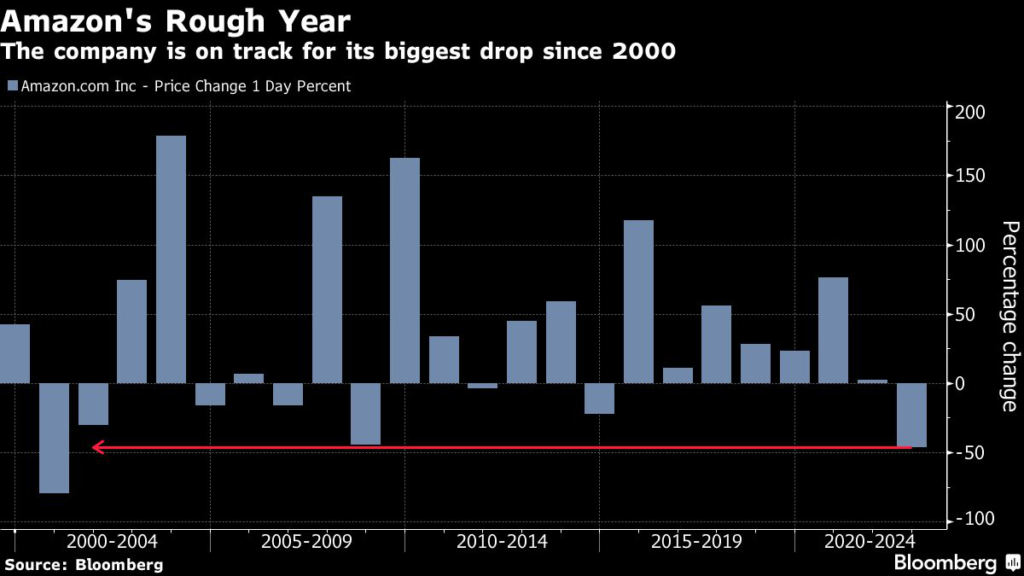
Amazon.com Inc. shares have been struggling of late, with the stock dropping in nine of the past 10 trading days. The decline has the e-commerce and cloud-computing company down 47% this year, putting it on track for its biggest annual percentage drop since 2000. Recent declines for Amazon followed its results, where it projected the slowest holiday-quarter growth in its history, as well as the Federal Reserve raising interest rates, a policy that has broadly weighed on internet and technology stocks.

Top Tech Stories

  • Meta Platforms Inc. Chief Executive Officer Mark Zuckerberg said the company will cut more than 11,000 jobs in the first major round of layoffs in the social media giant’s history.
  • The world’s biggest iPhone factory will continue to be subject to Covid restrictions, after authorities in China lifted a lockdown in the district where the plant is located but said some areas were still regarded as high risk.
  • Tesla Inc. Chief Executive Officer Elon Musk sold at least $3.95 billion of the electric-vehicle maker’s shares just days after closing his buyout of Twitter Inc.
    • Some users who opted not to see Twitter owner Musk’s tweets are saying the blocks they placed on his account have spontaneously lifted.
  • Shares of Chinese manufacturer GoerTek Inc. plunged the daily limit of 10% after the maker of Apple Inc.’s AirPods disclosed it suspended production of an audio product from “a major overseas customer.”
  • ByteDance Ltd.’s TikTok has slashed about $2 billion off its target for 2022 ad revenue, underscoring the fallout of a global downturn that’s hammered fellow internet giants from Google to Meta Platforms Inc.
  • Europe’s biggest car-parts maker is partnering with IBM to replace the rare and expensive metals needed to build electric vehicles. Robert Bosch GmbH plans to use more than twenty of IBM’s quantum computers to help identify alternatives to the metals and rare-earth elements used in electric motors and fuel cells.
  • Taiwan Semiconductor Manufacturing Co. is laying the groundwork for a second US plant next to a $12 billion complex it’s building, a major expansion that will boost American efforts to bring advanced chipmaking home if it goes ahead.
  • Salesforce Inc. has cut hundreds of workers from sales teams, seeking to improve profitability while facing slowing demand for its software products in a choppy economy.
  • Germany blocked the sale of Elmos Semiconductor SE’s wafer facility to a Swedish subsidiary of China’s Sai MicroElectronics Inc. in a further sign the government in Berlin is toughening its stance on Chinese access to strategic assets.

–With assistance from Ryan Vlastelica.

(Adds Wednesday trading.)

More stories like this are available on bloomberg.com

©2022 Bloomberg L.P.

South African Government Targets Greater Kenya Trade, Investment

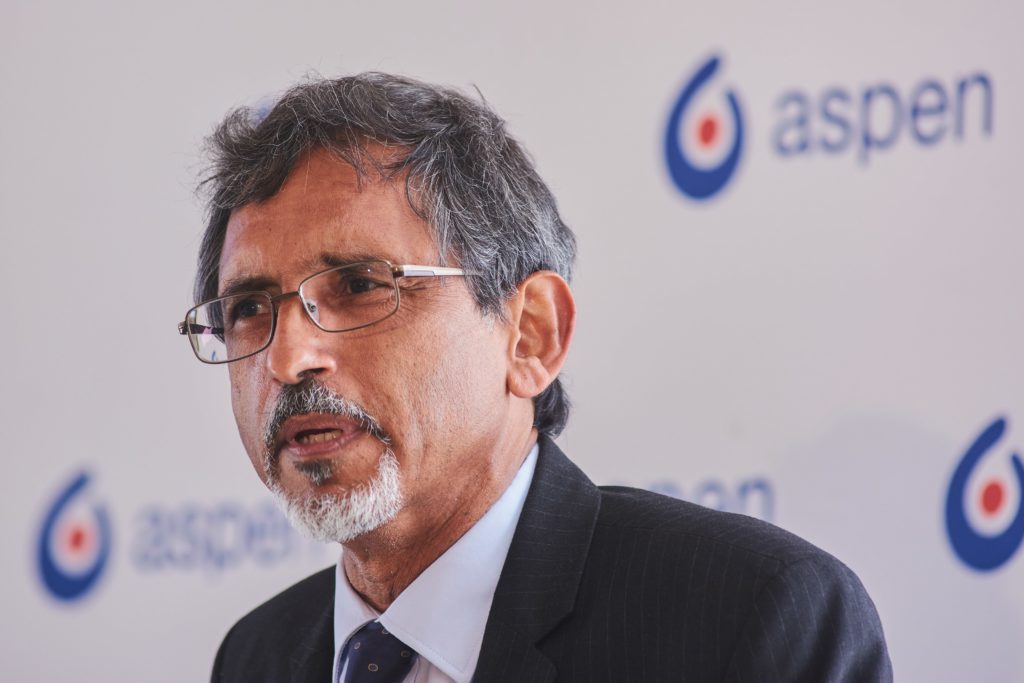
(Bloomberg) — South Africa plans to prioritize its economic relationship with Kenya to boost trade and investment, Trade, Industry and Competition Minister Ebrahim Patel said.

Trade between the two countries last year was only 6.5 billion rand ($366 million), which was “not sufficient,” Patel said at a business forum in the Kenyan capital, Nairobi, on Wednesday. He spoke after South African President Cyril Ramaphosa and his Kenyan counterpart, William Ruto, held talks about increased cooperation, including allowing visa-free travel by Kenyans to South Africa from Jan. 1.

Kenyan Trade and investment Secretary Moses Kuria urged South African companies to invest in private-public partnerships and the East African nation’s special economic zones. He also invited South African banks and telecommunications companies to participate in the Nairobi International Finance Centre and urged construction companies to take advantage of housing construction opportunities in his country.

More stories like this are available on bloomberg.com

©2022 Bloomberg L.P.

COP27 Latest: Al Gore Says Markets Are More Powerful Than GOP

(Bloomberg) — Al Gore, the former US vice president turned climate campaigner, said any Republican Party efforts to force through policies that penalize green investors would be at odds with market forces that are ultimately more powerful than politics.

“Markets are making a different decision,” Gore said in an interview with Bloomberg Television’s Francine Lacqua in Egypt on Wednesday. “We’re seeing a massive movement toward more climate friendly policies.”

Markets are “in the early stages of a sustainability revolution,” Gore said, repeating a line he’s used before to describe this point in history. “So whatever politicians in different countries want to opine on, we’re seeing business and investors and markets move towards solutions for the climate crisis.”

Gore made the comments on the COP27 climate summit’s Finance Day, which is a leaner affair than in Scotland last year after a number of prominent chief executives including BlackRock Inc.’s Larry Fink and Citigroup Inc.’s Jane Fraser opted to stay away. That’s as climate finance faces growing hurdles.

Earlier in the day, Mark Carney, the former Bank of England Governor and co-chair of the world’s biggest climate finance coalition, urged governments to “align financial regulation with net zero” by making net zero transition plans mandatory.

An energy crisis and a changing political landscape in the US are making it harder for banks and investors to turn their backs on fossil fuels. Financial firms are also increasingly nervous of the legal ramifications of joining net-zero alliances, with some in the US claiming that such goals are at odds with fiduciary duties. And in some cases, climate-finance alliances have even been likened to cartels.

Read More: Blackstone, Pimco Sidestep Net-Zero Group Even After Concessions

Those legal risks may intensify, depending on the outcome of midterm elections in the US. But there’s also a legal risk involved in making climate promises that firms don’t live up to.

“Firms should be wary of being caught in the riptide of unrealistic ambitions as it may expose them to both litigation and reputational risks if they don’t meet these commitments,” Sonali Siriwardena, partner and global head of ESG at Simmons & Simmons in London. 

(GFANZ is co-chaired by former Bank of England Governor Mark Carney and Michael R. Bloomberg, the founder of Bloomberg News parent Bloomberg LP.)

Read More: 10 things to watch at the COP27 summit

Highlights:

  • Click here to read the highlights from talks on Tuesday
  • China delivers blow to climate with new emissions deadline
  • Satellite spots methane cloud near Iran oil and gas facilities
  • Mark Carney sees ‘wall of opportunity’ for energy investors
  • UN panel calls out ‘greenwashers’ and seeks net-zero regulation
  • EU Lawmakers reach deal on climate goals outside carbon market
  • Click here to get read about Bloomberg Green at COP27

Here are the latest developments. All times Egypt. 

UAE’s Biggest Clean-Energy Firm to Look at Deals in US, Europe (4:00 pm)

The United Arab Emirates’ biggest renewable-energy company will make acquisitions and sell bonds as part of a plan to more than double its operations this decade and help the country achieve a net-zero target.

Masdar is interested in acquisitions of power firms in places such as the US and Europe, Chief Executive Officer Mohamed al Ramahi said in an interview at the COP27 climate summit.

“Our ambition is big,” al Ramahi said. “We will consider all possibilities when it comes to financial strategy. Green bonds, specifically, are something we might consider.”

EU Says Final COP27 Conclusions Must Mobilize Finance for 1.5C Goal (3:23 pm)

Any final deal reached at COP27 should contain a clear reference to the need to mobilize all finance toward the 1.5C goal, said Jacob Werksman, the EU’s lead negotiator. The EU failed to win an agenda item on this issue on Sunday. He said there’s “every expectation” that the Egyptian Presidency will try to come forward with a so-called cover decision, similar to last year’s arrangement in Glasgow.

“We need to look at how we can create changes in the world’s financial system making sure that all flows from the public and private sector are increasing in line with the Paris Agreement,” Werksman said. “The outcomes of that particular theme will have to be captured in the cover decision,” he said.

Countries Hit by Climate on Track to Get Built-In Debt Relief (2:30 pm)

The International Capital Market Association unveiled new language for debt instruments that would enable countries hit by climate change and natural disaster to defer payments.

So-called climate-resilient debt clauses have already been used in a small number of privately financed bond issuances and loans, ICMA said. A working group chaired by the UK Treasury and including the International Monetary Fund and World Bank has now created a standardized term sheet for broader use.

IAEA Expects ‘Much Higher’ Nuclear Role to Avert Climate Change (1:28 pm)

Emissions-free nuclear power will account for a “much higher” share of global electricity generation over the next decade, though it might not reach the 20% target that International Atomic Energy Agency Director General Rafael Mariano Grossi said is needed to ensure climate goals.

“Nuclear is not a magic bullet,” Grossi said Wednesday on a panel at the COP27 climate meeting in Sharm El-Sheikh, Egypt. “But without it, everything else will be extremely complicated.”

Atomic reactors currently generate about a tenth of the world’s power, but in many western countries old reactors are being shut down without new models coming on line. The first task is to keep more old reactors operating as long as they can be safely operated, according to Grossi.

“The unsung hero in the fight against global warming is long-term operation,” he said, adding that countries also need to boost investments in new infrastructure, including small-modular reactors. “Keeping nuclear in the equation is going to give us the energy, the solution to the climate problem.”

Grids Need Better Resiliency as More EVs Plug In, Edison CEO Says (12:45 pm)

Edison International CEO Pedro Pizarro said electric vehicles are “a big part of the solution,” to climate change, even as southern California residents were asked to refrain from charging their EVs during heat waves this year.

Electricity demand surged to record highs during a period of extremely high temperatures in the state. “There has been an increase in those kind of events,” Pizarro said in an interview with Bloomberg TV at COP27, adding that they were “better prepared” than the heat wave in 2020.

Southern California Edison, a subsidiary of Edison International, supplies electricity for much of southern California. Pizarro said the focus going forward should be “making the grid more resilient.” 

Gore Is ‘Optimistic’ Xi, Biden Will Restart Climate Dialogue (12:40 pm)

Former US Vice President Al Gore said he’s “optimistic” US President Joe Biden and Chinese President Xi Jinping will resume discussions about climate action at the G20 talks in Bali next week. “I’m optimistic that, in the wake of the Communist Party Congress, now China will get back into a cooperative relationship with all the countries that are trying to solve this climate crisis,” he said in a Bloomberg TV interview. 

“China’s being hit by it worse than almost any country,” he said. “The Yangtze is at its lowest level ever. It’s really having an impact on the Chinese economy and some fear on the stability of China — and that’s what the Chinese Communist Party pays closest attention to, so I hope that they will reengage with the world community.”

China Climate Envoy Xie Says He Met With John Kerry at COP27 (12:01 pm)

China Climate Envoy Xie Zhenhua says he met with John Kerry, US special climate envoy, for unofficial talks, during the COP27 climate summit in Egypt on Wednesday.

The meeting is a potential sign that relations are warming despite a formal suspension of bilateral negotiations on the issue earlier this year.

Beijing announced it was halting negotiations with the US over climate and several other issues in August, after US House Speaker Nancy Pelosi visited Taiwan, the self-governing island over which China claims sovereignty.

HSBC’s Quinn Tells Egypt Not to Be ‘Discouraged’ by Green Bond Cost (11:55 am)

HSBC CEO Noel Quinn responded to comments from Egypt’s finance minister, Mohamed Maait, that his country had to pay more to issue green debt than regular bonds. “Don’t be discouraged,” said Quinn, whose bank was one of the arrangers of the issuance.

Costs will go down with “familiarity” and with the establishment of global disclosure methodologies, he said. “When you put the label green next to a bond everyone wants reassurance,” he said.

NinetyOne CEO Says Emerging Markets in a Strong Position (11:40 am)

Emerging markets are in a strong position, according to Hendrik du Toit, CEO and founder of NinetyOne Plc. They stand to benefit from political and economic uncertainty in the developed world, which could cause a shift in available climate finance, he said in an interview with Bloomberg Television on Wednesday.

There’s also a “very exciting and relatively low risk opportunity in the debt that finances the energy transition,” he said. This is because most companies that need to transition are carbon heavy but cashflow strong, offering reasonably well-priced debt and the opportunity to play a positive role. “Transition debt is where we think the action will be,” du Toit said.

IEA Says OPEC+ Oil Cut is Hurting Emerging Markets (11:20 am)

Last month’s decision by OPEC+ to reduce oil production was “definitely not helpful,” according to the International Energy Agency, which advises rich countries.

“It is causing inflation and economic weakness, especially in developing economies,” Executive Director Fatih Birol said to Bloomberg TV. Energy-importing countries in Africa, Asia and Latin America will suffer, he said.

Europe’s managed to refill its natural gas storage sites for this winter, but next year will be tougher, Birol said. That’s because the continent may have to make do without any supplies from Russia and because demand in China could pick up as it eases coronavirus restrictions.

While the world needs to invest more in renewables, it must continue investing in fossil fuels to enhance energy security, he said.

Germany, France Sign Deal to Give South Africa $604 Million in Climate Finance (11:15 am)

South Africa’s government signed loan agreements with French and German public development banks to support its efforts to shift from coal toward cleaner energy sources.

Agence Française de Développement and Kreditanstalt für Wiederaufbau extended concessional loans of €300 million ($302 million) each to the South African government as part of an $8.5 billion climate finance deal it was offered by wealthy nations at the COP26 talks in Glasgow last year, the National Treasury said in a statement Wednesday.

The plan is seen as a blueprint for other coal-dependent developing nations to cut greenhouse-gas emissions.

ECB Urges Banks to ‘Step Up Their Game’ on Climate Risk (11:07 am)

The European Central Bank is aware of the need for “further action to incorporate the consequences of the ongoing climate and environmental crises into our work,” said Frank Elderson, ECB executive board member.

The ECB’s interactions with banks show they’re making progress, he said. But “despite the progress we have seen, I will continue to stress that the banks under our supervision need to step up their game and truly manage climate-related and environmental risks in the same way we expect them to manage any other material risk,” Elderson said.

Malpass Says Developing Countries Are Facing Economic Crisis (10:22 am)

David Malpass, president of the World Bank, said heavy debt burdens combined with inflation and the fallout from climate change are pushing the developing world into an economic crisis. 

The World Bank reached $32 billion in climate finance this year, which is a record and was “well above our Glasgow target,” he said. “We want to dramatically increase the number and size of projects that reduce greenhouse gas emissions.”

Georgieva Says Climate Success Depends on Finance ‘Incentives’ (10:15 am)

Kristalina Georgieva, managing director of the International Monetary Fund, said the finance needed to address climate change and the energy transition will not flow without changing the incentives for financiers. And “the best incentive we have to shift from high carbon intensity to low carbon intensity is to price carbon,” she said.

The average price of carbon globally is $5 but to be at the level that “changes investment and consumer behavior” it will have to go up to at least $75 a tonne by 2030, she said.

“Adam Smith, the founder of economics, said it: the butcher and the baker don’t feed you out of the generosity of their hearts, they feed you for self interest,” she said. “So we have to create the self interest for decarbonization.”

Conservative Estimate Puts 2030 Financing Gap at $2.4 Trillion (9:51 am)

There’s a gap in financing of around $2.4 trillion, compared with what’s needed by 2030, and that represents “the most conservative figure,” said Mahmoud Mohieldin, UN Climate Change High-Level Champion for COP27.

Serious debt reduction mechanisms are needed, while multilateral development banks and international finance institutions need to play a greater role in supporting such efforts, he said.

Mohieldin also said he is “very happy to see a chapter of GFANZ established for Africa with serious consideration of being practical and supporting a pipeline of projects.”

DTEK Needs ‘Billions’ of Dollars to Fix Power Grid (9:45 am)

Ukraine’s biggest private power producer, DTEK, said it’s running out of equipment to fix power stations damaged by Russian missile attacks.

“We need millions of dollars-worth of equipment for immediate fixes and billions for the long-term, deep repairs of the grid,” Chief Executive Officer Maxim Timchenko said in an interview at the COP27 climate conference in Egypt. “We appeal to countries and companies to help us.” DTEK has had to halt power exports to the rest of Europe to focus on maintaining domestic supplies, he said.

Africa Recognizes Need to Pursue Green Growth (8:43 am)

Africa’s common position at the COP27 summit recognizes the need for growth alongside the duty to provide electricity to its 600 million inhabitants who don’t have access to energy, UN Economic Commission for Africa acting Executive Secretary Antonio Pedro said. That energy shortfall is the reason the continent is promoting natural gas as a “transition fuel,” Pedro said in an interview with Bloomberg Television.

Net-Zero Asset Managers Group Says Alliance Has Grown to 291 (8:00 am)

The Net Zero Asset Managers initiative says 86 investors have set initial targets for the proportion of assets that will be managed in line with achieving net zero emissions by 2050 or sooner, with the total number of asset managers committing to net zero rising to 291.

That brings to 169 the total number of managers with such targets, collectively representing over $55 trillion in assets under management, according to a statement by NZAMi on Wednesday. New signatories include Capital Group, Northern Trust and AllianceBernstein.

Climate Change Could Cost Africa Two Thirds of Its GDP Growth (2:01 am)

Global warming could slash Africa’s economic growth by two thirds by the end of the century unless significant investment is made in climate adaptation, a new study shows.

Current climate policies will likely see temperatures exceed the pre-industrial average by 2.7C, curbing African growth rates 20% by 2050 and 64% by 2100, Christian Aid said in a report released Wednesday. Even a 1.5C rise in temperatures would reduce growth rates by 34% by the century’s end, it said. 

While Africa is responsible for about 4% of planet-warming emissions, it’s already being hit hard by a changing climate. Devastating cyclones and floods have battered southeast and West Africa this year while the Horn of Africa is in the midst of its worst drought in four decades.

–With assistance from Paul Richardson, Akshat Rathi, Nicholas Comfort, Antony Sguazzin, Paul Wallace, Salma El Wardany, John Ainger, Alfred Cang and Yousef Gamal El-Din.

More stories like this are available on bloomberg.com

©2022 Bloomberg L.P.

Mini-Splurges Decline as Shoppers Feel the Pinch of Inflation

(Bloomberg) — Less-affluent luxury shoppers are curtailing their once-frenzied purchases of entry-level products such as Gucci slippers and Balenciaga belts — a sign that the cooling of the global economy is extending to an industry that had repeatedly defied the tumult of the past couple of years. 

Among the “entry level or aspirational consumer, we’re certainly starting to see what I would say is a slowdown in the growth,” Marc Metrick, chief executive officer of Saks Fifth Avenue’s online operations, said in an interview. The pullback signals an end to the US luxury industry’s unprecedented pace of growth during the past two years. Demand was fueled by the wealthy, who stepped up their spending, and an influx of new shoppers who were able to access more high-end brands thanks to pandemic savings and stimulus checks.

“It was aberrational what was happening in the second half of 2020 and then certainly into last year,” Metrick said. “The aspirational consumer is supposed to be an ‘or’ consumer — ‘I can have this or I can have that.’ Maybe for a little while they were an ‘and’ consumer — ‘I can have this and I can have that.’ I think what you’re going to see is a little bit of a move back to ‘or.’”

Ishaeb Nicholson, who was heading into Macy’s Inc.’s Lexington Avenue Bloomingdale’s in New York recently, said he had been “obsessed” with accessories from brands such as Gucci and Balenciaga during the depths of the pandemic. His priorities started to shift earlier this year. “I was more so focused on going on trips and enjoying experiences other than just buying a $500 belt. I could buy a flight with that money,” said the 29-year-old singer and songwriter. Now, he’s spending more on high-end fragrances by brands including Kilian, owned by Estée Lauder Cos., and Maison Francis Kurkdjian, owned by LVMH, because they’re something he can use every day. 

Feeling Cautious

The trend has implications for the broader US economy, signaling that some high-end shoppers — whose resilience had surprised even the most bullish luxury executives — are feeling cautious about inflation and the uncertain economic outlook for the first time since the start of the pandemic.

The most exclusive luxury companies, including LVMH and Hermès International, reported robust sales of Lady Dior handbags and Arceau Le Temps Voyageur watches, respectively, in the most recent quarter. But brands that don’t have the same level of cachet are more vulnerable. Executives at Kering SA, whose brands include Gucci and Yves Saint Laurent, said in October they had seen some pressure on entry-price-point items in the most recent quarter. Investors and analysts are watching companies such as Tapestry Inc., owner of Coach and Kate Spade, and Ralph Lauren Corp. even more closely for signs of a slowdown. Both firms report earnings on Thursday.

Capri Holdings Ltd. on Wednesday trimmed its full-year revenue forecast because of weaker-than-expected sales of its Michael Kors brand at department stores. US shoppers are concerned about the rise in interest rates and higher costs for things like commuting and groceries,  CEO John Idol told analysts. 

The number of luxury scarves, card holders and key rings sold online in the US has fallen by one-quarter through October compared with the same 10-month period in 2021, according to data from Edited, a retail analytics company. 

Online sales of the most expensive luxury products grew by 11% year-over-year in the third quarter compared with 5% for midrange luxury items and 3% for entry-level products, according to data from software company Salesforce Inc. That was the first quarter in two years that there’s been a difference among the three categories.

Splintering Demand

“We are just starting to see a splintering of demand by price point, which is an indicator that the luxury market is likely the last domino to fall, as it relates to a softening of demand,” said Rob Garf, vice president of retail at Salesforce. The gap grew in October, with online sales of the most expensive luxury products up 10% and the least expensive falling by 9% year-over-year. “We’re anticipating the gap to further increase as we go through the holidays.”

The data appears to bolster the case made by some executives and economists that any US recession is likely to be mild rather than severe. Wealthier shoppers, in some cases, are accelerating their spending.  And “aspirational” luxury consumers are still buying — just less.

The lower echelons of Saks’s shoppers — who earn, on average, around $100,000 annually — represented in the “high 30s” as a percentage of the company’s sales in the second quarter, down from a peak of “the low 40s” in 2021, Metrick said. There’s also been a dip in the portion of Saks’s revenue that comes from buy-now-pay-later credit options — to around 6% now from a high of about 8% last year, Metrick added. 

Similarly, at online luxury retailer Mytheresa.com GmbH, the increase in the number of high-end customers and the amount they spend has outpaced that of less wealthy shoppers for the past several quarters. “The high end of luxury is clearly showing resilience,” said Michael Kliger, CEO of Mytheresa, which is based in Munich, Germany. 

There’s also been a slowdown in the growth of new, high-end shoppers at Neiman Marcus Group. “There is a customer who entered luxury during the pandemic or who participates in luxury from time to time,” CEO Geoffroy van Raemdonck told Bloomberg TV. “We’re seeing a relative decline of the new customers. That’s a normalization given that they were up so much over the last two years.”

Turning to Fakes

Mia Di Amico and Samantha Strohmeier, who were both heading into Nordstrom Inc.’s flagship New York store on a recent afternoon, said many of their fellow university students are turning to luxury fakes — also known as “dupes” — to get the look without the price tag.  They get tips from TikTok influencers, who might encourage them to buy on a website such as DHGate, or they head downtown to Canal Street, the women said. 

“In years prior, I was spending money pretty carelessly and aimlessly just because I had the luxury to do that,” said the 20-year-old Di Amico, who studies marketing and fashion at LIM College in New York. Now, “all of my basic necessities like food, water — all of that have gone up a lot,” she said. “I don’t have the opportunity to spend money on things that I actually want. Rather, I’m spending money on things I need.” 

Some of the customers who are curtailing their purchases at high-end retailers could end up shifting their spending to resale platforms, which offer used luxury items at more accessible price points, said Kristen Gall, president of Rakuten Rewards, which offers cash-back incentives and other deals to online shoppers. 

Other luxury consumers might be lured away by the major discounts that many midtier retailers are expected to offer during the holiday season to help them clear excess merchandise. High-end companies “don’t necessarily have inventory issues, but they may have demand issues,” Gall said. “Are they going to be forced to go lower than they would be comfortable with just because the market is doing that?”

More stories like this are available on bloomberg.com

©2022 Bloomberg L.P.
Disney Profit Misses Estimates as Streaming Costs Rise, Ad Sales Soften

(Bloomberg) — Walt Disney Co. shares fell to their lowest level since the early days of the pandemic after the entertainment giant said it’s evaluating costs and seeking “meaningful efficiencies” after earnings missed Wall Street estimates.

Losses at the company’s direct-to-consumer arm, driven by its Disney+ streaming service, more than doubled to $1.47 billion in its fiscal fourth quarter, due to higher programming expenses and the cost of global expansion. Weakness in cable-television advertising revenue also hurt Disney’s performance. 

Sales, at $20.2 billion, came up about $1 billion short of analysts’ projections. Earnings, excluding certain items, fell to 30 cents share, missing the average estimate of 51 cents from analysts surveyed by Bloomberg.

Disney shares fell as much as 12% on Wednesday to a low of $88.25. It’s the biggest intraday stock drop and lowest the shares have traded since March 2020.

Chief Executive Officer Bob Chapek, nearly three years into that position, faces a pivotal moment where the company’s massive investments in streaming need to pay off. Chapek reiterated his forecast that Disney+ will be profitable in fiscal 2024. He said price increases and the introduction of a new ad-supported version will help the company’s direct-to-consumer unit reach that goal.

“Our financial results this quarter represent a turning point as we reached peak DTC operating losses, which we expect to decline going-forward,” Chapek told investors on a call Tuesday.

Although spending on content will remain near $30 billion next year, the company is seeking to reduce expenses in other areas of its business, such as marketing. Core Disney+ subscribers will increase only slightly in the first quarter, Disney said, before accelerating in the second quarter. The company forecast high-single-digit growth in operating income and sales for fiscal 2023.


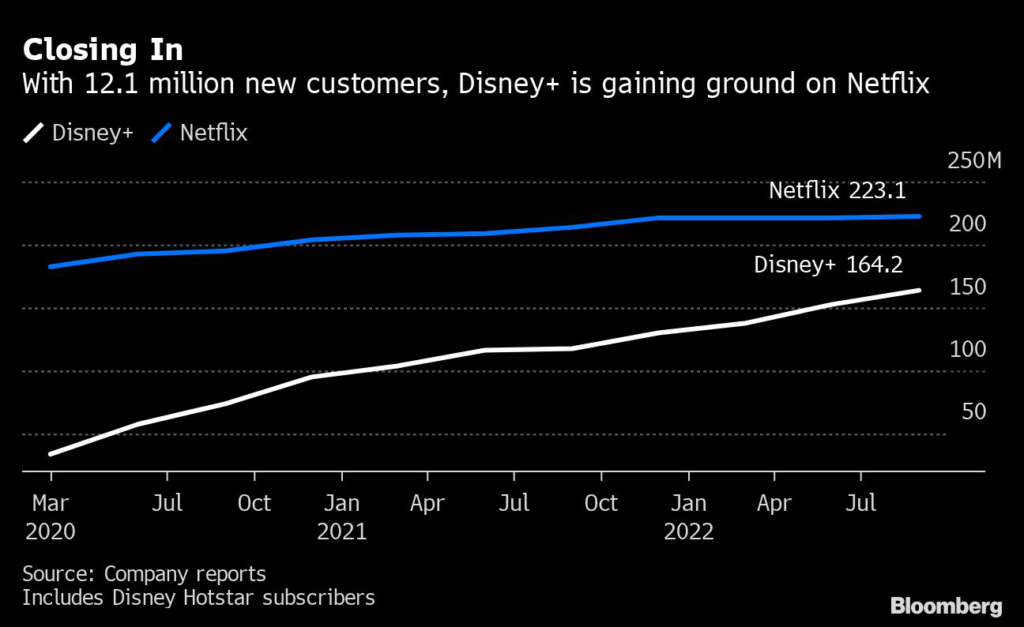
The company beat expectations for streaming subscriber additions in the fourth quarter, signing up 12.1 million new customers at its flagship Disney+ service alone. Total subscribers, including those for its Hulu and ESPN+ products, rose to almost 236 million. Those numbers come after rival Netflix Inc. beat internal forecasts as well as Wall Street expectations in the most recent quarter, adding 2.41 million customers. 


Disney has made streaming a major focus for growth. On Dec. 8, the company will begin selling the ad-supported version of Disney+ at a monthly price of $8. The price of its ad-free version will jump 38% to $11 per month. The company reported a decline in its average revenue per Disney+ subscriber, as more customers subscribed through a discounted bundle with the company’s other services. The bundled offering now makes up about 40% of domestic subscribers.

“Our experts say that ad-tiers can be more profitable for Disney+ than its traditional tier,” Third Bridge analyst Jamie Lumley said, adding that “Disney is in a better position than Netflix” because of existing ads infrastructure through Hulu and ABC.

Profit at Disney’s theme-park unit more than doubled to $1.51 billion, due to higher attendance and increased guest spending, but fell short of what analysts were projecting. Hurricane Ian reduced operating income by $65 million.

“The parks number is much lower than we expected,” Bloomberg Intelligence analyst Geetha Ranganathan said on Bloomberg TV. Inflation could be crimping consumer demand in what has been a strong growth area.

“These results don’t look that rosy anymore,” Ranganathan said.

Revenue from Disney’s traditional TV business, which includes networks such as ESPN and ABC, fell 5% in part due to ad sales weakness. Profit rose 6% to $1.74 billion due to lower programming costs in cable TV, particularly for sports. Disney reduced the number of Major League Baseball games it aired this season under a new contract.

(Updates shares in first and fourth paragraphs.)

More stories like this are available on bloomberg.com

©2022 Bloomberg L.P.

Close Bitnami banner
Bitnami