
Bloomberg

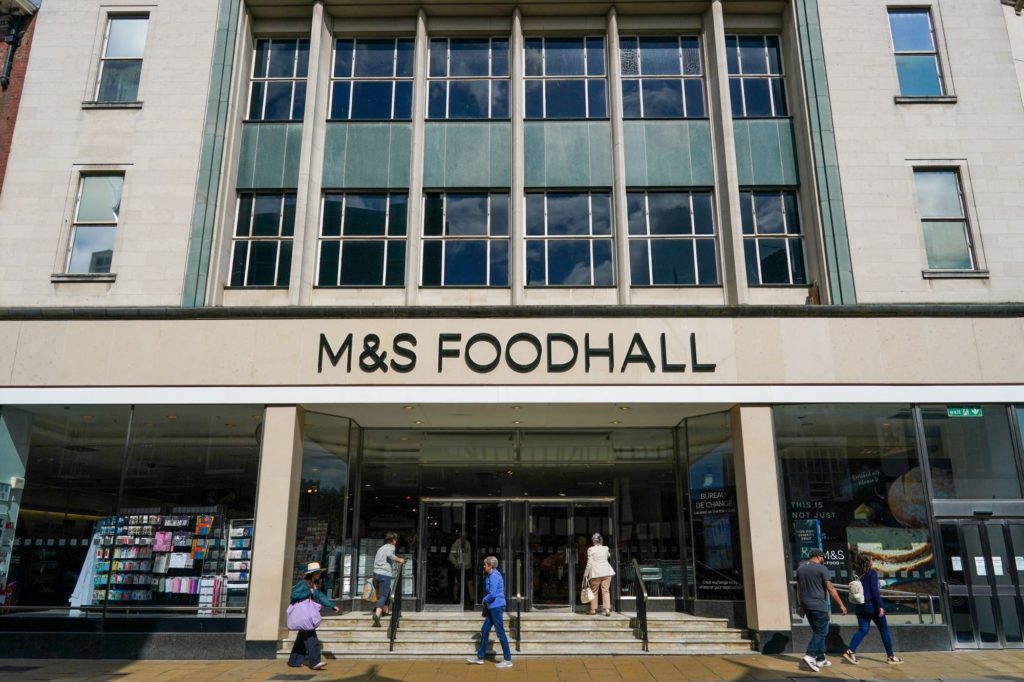
M&S Falls as Food Stores Knocked by Inflation and Margins Narrow

(Bloomberg) — Britain’s surging inflation is squeezing profit margins at Marks & Spencer Group Plc’s food division as the premium supermarket chain absorbs some cost increases to maintain sales.

The business, which has been the company’s growth driver in recent years, was faced with 11% inflation in its cost of goods in the first half, while its online joint venture with Ocado Group Plc recorded a loss as demand reverts to in-store shopping. Marks & Spencer shares fell as much as 7%. 

It’s the first earnings report under new Chief Executive Officer Stuart Machin and co-CEO Katie Bickerstaffe, who took over earlier this year from Steve Rowe. M&S warned in May that the cost-of-living crisis and an exit from Russia would prevent profit from rising this year.

M&S is still working through a turnaround after more than a decade of attempts to jumpstart the business. The biggest tasks are tackling the company’s expensive store portfolio, boosting online sales and staying competitive in clothing after being dismissed as old-fashioned, ill-fitting and pricey. 

“Our mandate is clear: step up the pace, accelerate change and drive a simpler, leaner business and invest in growth opportunities,” Machin said on a call with reporters. 

M&S is planning for a “material contraction” in demand in the market next year, though it said its customers may prove resilient as they have on average slightly higher incomes and are older. Last week the company said it was locking prices on more than 100 supermarket items until the end of January as it tries to compete with cheaper grocers that are gaining market share.

Tough Year

“Next year looks tough,” said Chief Financial and Strategy Officer Eoin Tonge. “The cost of doing business is going to get higher because of energy, it looks like the consumer is going to be struggling with the continued cost of living crisis and also higher interest rates.” 

M&S’s clothing and home unit, which has struggled of late, did better than food, with a 14% sales gain. The division has gained market share and grown in profitability, even as adjusted pretax profit fell by 24% across the whole business. The majority of M&S’s fashion offering isn’t highly discretionary, said Bickerstaffe, with large sales of pyjamas, underwear, tights and school uniforms, items that are still needed by shoppers even as income falls.

Still, the retailer said it’s deferring any decision about restarting a dividend to closer to the year-end, having skipped a payout to shareholders for two years. The stock has lost half its value this year. 

Like some of its rivals, M&S has boosted employee pay twice this year and is offering other incentives to staff including free meals and M&S vouchers. 

M&S is speeding up an overhaul of its stores with 67 of its bigger shops set to close within potentially three years instead of five. The business is planning to open 100 new format food stores with better access including parking. 

The retailer is looking to demolish and rebuild its Marble Arch store in London and, despite political opposition, its controversial plan has recently secured the backing of Selfridges and Ikea, which have large plots nearby.

The business suffered a blow to its top team in July when it was announced that Tonge is leaving to join Associated British Foods Plc, the owner of Primark. 

(Updates with share move, details from media call from fifth paragraph.)

More stories like this are available on bloomberg.com

©2022 Bloomberg L.P.
JLR Owner Posts Lower-Than-Expected Loss as Production Ramps Up

(Bloomberg) — Jaguar Land Rover’s Indian parent posted a lower-than-expected quarterly loss as production ramp up boosted margins and revenue despite some lingering semiconductor constraints.

Tata Motors Ltd.’s loss narrowed by 79% to 9.45 billion rupees ($116 million) for the three months ended Sept. 30, the Mumbai-based carmaker said in an exchange filing Wednesday. That was smaller than the average analyst estimate of 10.92 billion rupees loss, according to data compiled by Bloomberg. 

Revenue rose 30% to 796.1 billion rupees, beating analyst forecasts. Total costs surged 25% to 824.2 billion rupees compared to the year-ago period. Other income jumped 20%, the filing said.

JLR reported a quarterly loss before tax of £173 million ($198 million) compared with a deficit of £302 million a year earlier. Its revenue surged 36% to £5.26 billion.

The earnings show how Tata Motors has managed supply snarls that have crimped output across the global car industry, which now also faces a high inflation and a probable recession. The recent virus-related lockdowns in China have also curtailed car production and dampened sales. 

Tata Motors raised the price of passenger vehicles by 0.9% on average earlier this month in a bid to offset the elevated input costs and protect its margins. 

“Demand for our most profitable and desired vehicles remains strong and we expect to continue to improve our performance in the second half of the year, as new agreements with semiconductor partners take effect, enabling us to build and deliver more vehicles to our clients,”  Thierry Bollore, JLR’s chief executive officer, said in the post-earnings statement. 

The production ramp up of New Range Rover and New Range Rover Sport improved with wholesales of 13,537 units during the quarter, up from 5,790 units in the previous quarter.

Long-Term Agreements

Jaguar Land Rover is continuing to focus on signing long-term partnership agreements with chip suppliers which is improving visibility of future chip supply, it said in the filing. Its production and sales volumes are expected to improve in the October to March 2023 period and free cashflow could approach breakeven for the full financial year, it said.

But some headwinds continue for the Indian automaker whose shares have slipped almost 10% this year while the broader market benchmark S&P BSE Sensex has climbed. The British marque’s wholesale volume of 75,307 units during the quarter missed its guidance of 90,000 units due to supply problems. 

“Jaguar Land Rover’s loss of market share to peers like Mercedes, Audi and BMW may continue as the company tries to reinvent itself, impairing its ability to generate profit and reduce balance-sheet risks,” Bloomberg Intelligence analyst Joel Levington, wrote in an Oct. 6 note.

Automakers in UK have asked new Prime Minister Rishi Sunak and his government to improve the business environment after car production in the country declined 6% in September to 63,125 vehicles, roughly half of what companies produced prior to the pandemic. 

(Updates with CEO comments from seventh paragraph.)

More stories like this are available on bloomberg.com

©2022 Bloomberg L.P.
TSMC Prepares for Another US Plant as China Tensions Simmer

(Bloomberg) — Taiwan Semiconductor Manufacturing Co. is laying the groundwork for a second US plant next to a $12 billion complex it’s building, a major expansion that will boost American efforts to bring advanced chipmaking home if it goes ahead.

The world’s largest contract chipmaker has begun construction on a building that may eventually house its second fabrication facility in Arizona, employing resources already deployed for the current project, the company said in a statement. But it hasn’t made a final decision on whether to proceed with a new plant, TSMC said.

The Biden administration is trying to attract investments in US chipmaking, part of efforts to counter China’s ambitions and secure components vital to national security. That effort accelerated after widespread shortages that began around late 2020 and 2021 drove home how chips were central to the production of everything from cars to smartphones. 

But a second US fab would represent a major outlay at a time TSMC is reducing capital spending, as a global downturn deepens and hurts demand for electronics. The Wall Street Journal reported earlier that TSMC was set to unveil an investment in another American factory similar to its first, $12 billion project. 

“In light of the strong customer demand we are seeing in TSMC’s advanced technology, we will consider adding more capacity in Arizona with a second fab based on operating efficiency and cost economic considerations,” TSMC said in its statement. “This building enables us to remain flexible for future expansion, but we have not arrived on a final decision on a second fab.”

Read more: How ‘Chip War’ Puts Nations In Technology Arms Race: QuickTake

Washington, which is dangling incentives of some $50 billion for local projects, has hailed TSMC’s Arizona expansion as a triumph in endeavors to bring advanced chipmaking back to America. But the Taiwanese company has said it cost much more to fabricate semiconductors in the US, though that higher expense was manageable with state support.

TSMC, whose production sites are mostly in Taiwan, has started to diversify over the past year or so to help meet demand in major countries seeking to bolster domestic semiconductor production. It joins rivals such as Samsung Electronics Co., which is establishing a $17 billion fab in Texas.

TSMC is building a $7 billion facility in Japan, and is also in early talks with the German government about potentially establishing a plant in the European country, Bloomberg News has reported.

A major expansion to TSMC’s US plans would boost the Biden administration’s overall efforts to ensure the country remains ahead of China in the semiconductor race.

Apart from driving incentives for local chipmaking, the US has imposed a plethora of restrictions on the shipment of advanced technology to China, aiming to throttle the flow of chips that aid Beijing’s military and tech sector. 

Xi Jinping, in a landmark address last month, pledged tech self-reliance to prevail in a battle with the US for technological supremacy — which many took as a sign Beijing will redouble policy and financial support for sectors such as AI and chips.

Read more: The Global Fight Over Chips Is About to Get Even Worse

–With assistance from Vlad Savov and Ville Heiskanen.

More stories like this are available on bloomberg.com

©2022 Bloomberg L.P.

Artists Adapt as NFT Resale Royalties Trend Optional

  • Listen to Bloomberg Crypto on the iHeartRadio App
  • Listen to Bloomberg Crypto on Apple Podcasts
  • Listen to Bloomberg Crypto on Spotify  

(Bloomberg) — Evangelists of web3 – a term popularized by venture capitalist Chris Dixon – will often say that a big goal of the whole thing is giving more power to creators, and especially monetary power.Web3, these proponents say, allows artists, musicians, and creators of all stripes to cut out middlemen and intermediaries and to retain more of the financial benefits of their work. In other words, why pay a platform or an agent when you can keep all your royalties yourself?That’s where things get complicated. If you’re a musician or an artist and you sell your work as an NFT, you’ll definitely get paid the first time you sell that song or piece of art. But what happens if the person who bought it sells it to someone else? In the idealized world of web3, you’d get a royalty on that sale – automatically. In reality, most of these transactions aren’t setup that way.For more on the current state of NFTs, and how platforms are thinking about royalties, Bloomberg crypto reporter Olga Kharif and Lauren van Haaften-Schick join this episode. Lauren is an Andrew W. Mellon Postdoctoral Fellow at Wesleyan University’s Center for the Humanities.

Follow us on Twitter @crypto, and subscribe to the Bloomberg Crypto Newsletter at https://bloom.bg/cryptonewsletter

This  podcast  is produced by the Bloomberg  Crypto   Podcast  team: Supervising producer: Vicki Vergolina, Senior Producer: Janet Babin, Producers: Sharon Beriro and Muhammad Farouk, Associate Producers: Mo Andam and Ty Butler. Sound Design/Engineer:  Desta Wondirad.

More stories like this are available on bloomberg.com

©2022 Bloomberg L.P.
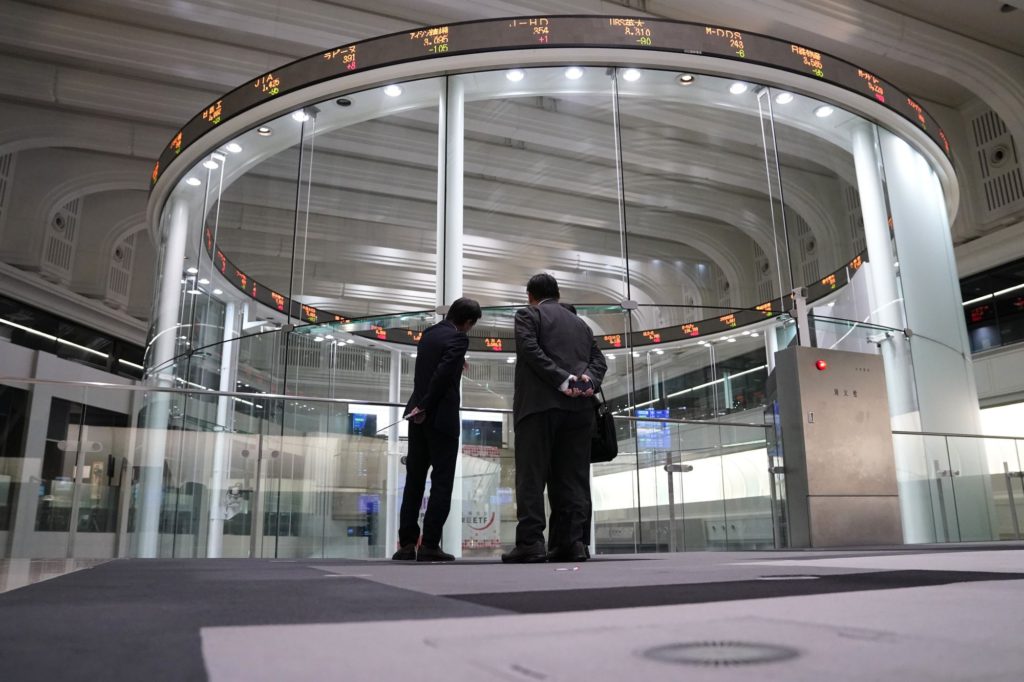
US Futures Fall as Midterms Return Mixed Verdict: Markets Wrap

(Bloomberg) — US equity-index futures fell as midterm elections threw up a mixed verdict, challenging expectations for a Republican sweep and a Congress gridlock. 

December contracts on the Nasdaq 100 and S&P 500 indexes retreated at least 0.3% each, a day after US stocks capped a three-day rally. Europe’s equity benchmark extended losses. A selloff in cryptocurrencies deepened, sending Bitcoin toward the biggest four-day slump since June. Treasuries fell and the dollar erased losses. Oil slid on a sluggish demand outlook from China.

Equity and bond investors have been hoping for a Republican comeback in Congress, with the best outcome seen as GOP control of both the House of Representatives and Senate. Dollar bulls, on the other hand, sought Democratic control continuing in both chambers. Trends so far suggest a mixed verdict, leaving little room for a rally or decisive selloff.

“The Republican aim of controlling both houses hangs by a thread,” Chris Beauchamp, the chief markets analyst at IG Group in London, wrote in a note. “A divided House might mean the partisan battles over spending and the debt ceiling are not quite as dramatic or vitriolic, but this is unlikely to brighten the policy outlook markedly. Instead, the focus will likely return to the Federal Reserve and the US economy.”


Republicans made gains in their drive to take control of Congress but many of the closest races had yet to be called. The final outcome may not be known for days or even weeks if the results are as close as polls have suggested and if losers challenge results. 

Optimism for shares has been helped by a history of robust performance following midterm results. Stocks have tended to flourish during times when government is constrained and polls suggest Republicans could make gains, placing a check on Democratic policies.

Treasuries fell across the curve, with the 10-year yield adding 2 basis points. Sovereign bonds in Europe trimmed their gains.

Shares of Chinese developers jumped the most in eight months as a regulator expanded financing support for the sector, bucking weakness in broader indexes in Hong Kong and the mainland.


Cryptocurrencies slipped further as Binance Holdings Ltd.’s potential takeover of embattled rival exchange FTX.com highlighted how strains in the digital-asset industry are buffeting some of its top players. Bitcoin traded 5.5% lower to trade below $17,700 apiece.

Thursday’s consumer-price-index data may be the next event risk for the Fed’s policy rate and comes on the heels of core consumer prices rising more than forecast to a 40-year high in September. Even if prices begin to moderate, the CPI is far above the central bank’s comfort zone.

“The market is still going to fixate on inflation, which is going to stay high and sticky at least over the next couple of quarters,” Luke Barrs, global head of fundamental equity client portfolio management at Goldman Sachs Asset Management, said on Bloomberg Television. 

Key events this week:

  • EIA oil inventory report, Wednesday
  • US wholesale inventories, MBA mortgage applications, Wednesday
  • Fed officials John Williams, Tom Barkin speak at events, Wednesday
  • US CPI, US initial jobless claims, Thursday
  • Fed officials Lorie Logan, Esther George, Loretta Mester speak at events, Thursday
  • US University of Michigan consumer sentiment, Friday

Some of the main moves in markets:

Stocks

  • The Stoxx Europe 600 fell 0.7% as of 9:52 a.m. London time
  • Futures on the S&P 500 fell 0.4%
  • Futures on the Nasdaq 100 fell 0.3%
  • Futures on the Dow Jones Industrial Average fell 0.4%
  • The MSCI Asia Pacific Index was little changed
  • The MSCI Emerging Markets Index rose 0.4%

Currencies

  • The Bloomberg Dollar Spot Index was little changed
  • The euro fell 0.1% to $1.0063
  • The Japanese yen was little changed at 145.70 per dollar
  • The offshore yuan fell 0.2% to 7.2478 per dollar
  • The British pound fell 0.6% to $1.1470

Cryptocurrencies

  • Bitcoin fell 5.5% to $17,664.44
  • Ether fell 9.6% to $1,208.05

Bonds

  • The yield on 10-year Treasuries advanced two basis points to 4.14%
  • Germany’s 10-year yield declined three basis points to 2.25%
  • Britain’s 10-year yield advanced one basis point to 3.57%

Commodities

  • Brent crude fell 0.5% to $94.88 a barrel
  • Spot gold fell 0.1% to $1,710.08 an ounce

–With assistance from Vildana Hajric and Muyao Shen.

More stories like this are available on bloomberg.com

©2022 Bloomberg L.P.

China iPhone Plant Remains in High-Risk Area as Lockdown Lifted

(Bloomberg) — The world’s biggest iPhone factory will continue to be subject to Covid restrictions, after authorities in China lifted a lockdown in the district where the plant is located but said some areas were still regarded as high risk.

The city of Zhengzhou ended a district-level lockdown order for the area around the airport, the government said in a statement Wednesday. Still, several areas within that district will remain classed as “high risk,” which under the city’s Covid rules means they will continue to be subject to lockdown-like curbs. That includes restrictions on people leaving their homes.

The list of high-risk areas encompasses the Foxconn Technology Group plant — known as ‘iPhone City.’ That means the flow of goods and people into and out of Apple’s main production base remains curtailed, potentially deepening a hit to iPhone shipments over the US holidays. The city’s ongoing restrictions have already prompted Apple to warn it would ship fewer premium devices than anticipated.

Read more: IPhone Supply Chain Gets Jolt From Xi’s Covid Zero Enforcers

It’s unclear if or when those restrictions will lift. For now, the factory will continue to operate under a so-called closed loop, or self-contained bubble, to keep production going, said a spokesperson for Foxconn, Apple’s key contract manufacturer in China.

The Wednesday statement, and its confusing impact on one of the China’s most closely-watched supply chains, reflects a trend of local officials attempting to keep Covid restrictions under the radar as public frustration with the punishing Covid Zero playbook grows. 

While Zhengzhou’s government aims to “better balance virus prevention and economic development,” according to the Wednesday statement, infections continue to rise in the city, making the easing of curbs a risky exercise. Zhengzhou reported 1,043 Covid cases for Tuesday, up from 733 a day earlier. 

China’s top health body has criticized some cities, including Zhengzhou, for excessive lockdown measures. At the same time, local authorities are at risk of being disciplined or fired whenever outbreaks spiral out of control, leaving them to chart a narrow path.  

Companies located in high-risk areas that make it to a white list can operate in a closed-loop system, which Foxconn has been in for a while now. But without movement being eased around the iPhone plant, it’s unlikely to see the supply shortages and logistical disruption that have been slowing production dissipate. 

Foxconn has worked with the local authorities to create enclosed lanes that allow workers to walk between off-campus dorms and the factory, the company said on its official WeChat account. 

China Covertly Shuts Cities as Covid Zero Resistance Rises

China’s commitment to Covid Zero has roiled the operations of some of the world’s biggest manufacturers and has served as a reminder of the risks of centering production in the country. Apple expects to produce at least 3 million fewer iPhone 14 handsets than originally anticipated this year, Bloomberg News reported, with softer demand for the models coinciding with the supply problems in Zhengzhou. 

The situation with Foxconn’s factory comes as Covid disrupts other Chinese cities, with two more districts of southern manufacturing hub Guangzhou locked down from Wednesday. Beijing is also at higher risk of escalating curbs after its tally of new infections jumped to the highest level in more than five months. 

–With assistance from Jin Wu.

(Adds map after third paragraph.)

More stories like this are available on bloomberg.com

©2022 Bloomberg L.P.
Crypto Markets Extend Drop as Doubts About FTX-Binance Deal Grow

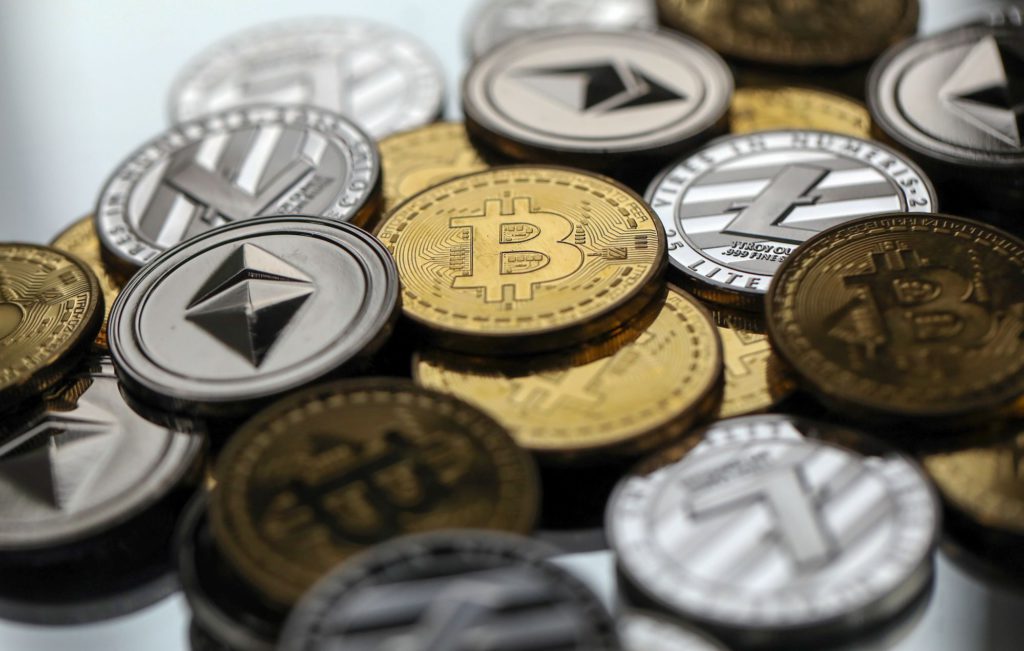
(Bloomberg) — Cryptocurrencies extended declines as Binance’s potential takeover of embattled rival exchange FTX highlighted how strains in the digital-asset industry are now buffeting some of its top players.

Bitcoin, the largest token by market value, fell as much as 5.4% on Wednesday after a near-10% decline a day earlier and was trading at about $17,700 as of 9:50 a.m. in London. Just about every digital coin was struggling: Ether, Solana, Polkadot, Avalanche, and meme token Dogecoin all dropped.

Binance Chief Executive Officer Changpeng “CZ” Zhao stunned the crypto world on Tuesday with an announcement that his firm was moving to take over rival FTX.com, which suffered a liquidity crunch after Zhao announced that he was selling a $530 million holding of FTX’s native token.  

Traders cited a Zhao tweet that a letter of intent between the two parties is nonbinding as contributing to the market turmoil. Investors are on edge about spreading contagion given the pivotal role FTX and its co-founder Sam Bankman-Fried played in the industry.

“Since I entered the crypto industry in 2016, very few periods tested its market infrastructure and participants like the last 24 hours did,” said crypto hedge fund manager Dan Liebau of Modular Asset Management.

FTT, the utility token of the FTX exchange, has collapsed by more than 75% in the past 24 hours and was trading around $4.20, according to CoinGecko data. 

“The letter of intent is non-binding, which means that further issues could still arise if CZ/Binance decide to back out of the deal,” said David Moreno Darocas, research associate at CryptoCompare.

The letter of acquisition intent by Zhao’s Binance Holdings came after a bitter feud between with Bankman-Fried spilled into the open. Zhao actively undermined confidence in FTX’s finances, helping spark an exodus of users from the three-year-old FTX.com exchange. 

A day before reaching a deal, Bankman-Fried said on Twitter that assets on FTX were “fine.” 

Terms of the emergency buyout were scant, with Binance saying the agreement came after “a significant liquidity crunch” befell FTX and the firm asked for its help. 

The price of Sol, the native token of the Solana blockchain — which is associated with both FTX and Bankman-Fried’s crypto trading house Alameda Research — posted dramatic declines alongside other tokens of Solana-based projects. Sol was down 27% on Wednesday, taking losses this year to 90%. 

“SBF and FTX were the biggest patrons of Solana,” Teng Yan, a researcher at digital-asset research firm Delphi Digital, said on Twitter. “This era is over. Binance has taken over, and they will heavily favor BNB chain over Solana. Alameda had ~$1B in locked and unlocked $SOL, which they’ll have to sell if insolvent. This puts a huge sell pressure on $SOL.” 

The FTX-Binance ordeal gave some traders flashbacks to the issues suffered by Celsius — the crypto lender that collapsed earlier this year — as well as those seen by other firms that were engulfed in this year’s crash in digital assets.

Teong Hng, CEO at crypto investment firm Satori Research, said the “situation is still very fluid” while adding “I am confident these two crypto giants will do the right thing to protect investors and the industry.”

–With assistance from Olga Kharif, David Pan, Yueqi Yang and Joanna Ossinger.

More stories like this are available on bloomberg.com

©2022 Bloomberg L.P.

Musk Ties Tesla’s Fortunes to the Ad Business It’s Long Eschewed

(Bloomberg) —

Elon Musk is fond of saying that fate loves irony. This go-to phrase now seems awfully prophetic.

The Technoking of Tesla has long eschewed advertising, arguing the electric-car company is better off spending on product. Besides, who needs a multimillion-dollar Super Bowl spot when you can blast your cherry-red Tesla Roadster into space to the soundtrack of David Bowie’s “Life on Mars”?

In addition to staging stunts like that 2018 maiden voyage of SpaceX’s Falcon Heavy rocket, Musk is a master at generating viral publicity for himself and Tesla using Twitter. Sure, his posts often can be counter-productive — he’s joked about the company going bankrupt, falsely claimed to have secured funding to take it private and talked down its stock price — but he also dominates news cycles and regularly engages with customers.

After spending $44 billion on the very platform he’s used to great effect to build Tesla’s brand, Musk now runs a company highly dependent on the clubby advertising world he never wanted his car company to go near. Charging users $8 a month for blue checkmarks isn’t going to meaningfully change this — the math just doesn’t work.

In one of his first acts as Chief Twit, Musk tried to assure advertisers that Twitter wouldn’t become, in his words, a “free-for-all hellscape.” He met and spoke with ad executives, activists and civil rights groups, then undercut his own charm offensive by tweeting a bunk conspiracy theory, gutting the company’s workforce and threatening a “thermonuclear name & shame” campaign against companies that pulled back from the service.

This week, Musk tweeted and then deleted masturbation jokes, and encouraged his followers the day before elections in the US to vote Republican. So much for his emphasis just six months ago on the need for Twitter to be politically neutral.

Times are tough enough for ad spending on social media — just ask Meta and Snap. And Musk’s antics are backfiring beyond Twitter, which he’s said is losing $4 million a day. By painting such a bleak picture, he stoked speculation he’d need to sell more of his Tesla shares to backstop the social media company.

Late Tuesday, those fears were realized: Musk disclosed having disposed of almost $4 billion worth of stock, bringing the total he’s dumped over the last year to $36 billion.

Whether Musk is done selling (he didn’t respond to an emailed request for comment) may depend on how Twitter copes with a debt load that’s swelled to about $13 billion. It’s facing annual interest payments approaching $1.2 billion, up from less than $100 million prior to Musk’s leveraged buyout.

Before Musk’s disclosure of another share sale, Tesla’s stock slumped to a 17-month low, having fallen 15% since the deal closed. The carmaker’s market fortunes are now tied like never before to the ad business its CEO snubbed.

Twists of fate don’t get any more ironic.

More stories like this are available on bloomberg.com

©2022 Bloomberg L.P.
Musk Sells $3.95 Billion of Tesla Stock After Buying Twitter

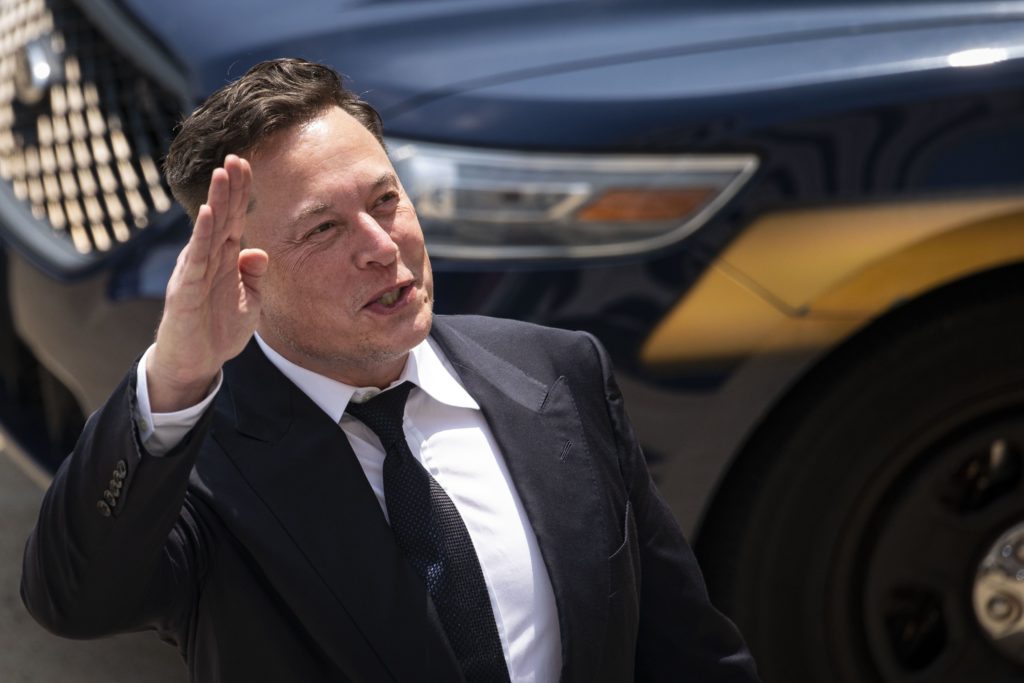
(Bloomberg) — Tesla Inc. Chief Executive Officer Elon Musk sold at least $3.95 billion of the electric-vehicle maker’s shares just days after closing his buyout of Twitter Inc.

Musk unloaded 19.5 million shares, according to regulatory filings on Tuesday in New York, his first disposals since August. The documents didn’t indicate that the transactions were pre-planned.

The world’s richest person followed through with his takeover of the social-media platform in October, after spending months trying to get out of it. In August, Musk had said he was done offloading Tesla stock and that it was important to avoid an “emergency sale” of the shares in case he was forced to close the Twitter acquisition and struggled to bring in additional equity partners.

Tesla shares gained 0.8% during pre-market trading in New York on Wednesday.

It’s not fully clear how the $44 billion deal ultimately was financed, beyond the roughly $13 billion of debt commitments from Wall Street banks. Several high-profile individuals promised to invest some $7 billion, though it isn’t known whether all of them stuck to their pledges. And Musk has never said publicly how he planned to gather his share of the cash needed to close the deal.

But one thing’s clear: Twitter is losing money and now faces annual interest payments of nearly $1.2 billion. Since Musk took over, several major companies have halted their ads on the platform, waiting to see how it evolves under the billionaire’s leadership.

“It looks like Musk is preparing for things to stay bad at Twitter for the next year,” said Gene Munster of Loup Ventures after the stock sales became public. “He’s preparing for Twitter to be a money hole.”

Musk, 51, and his financial right-hand man, Jared Birchall, did not respond to an emailed request for comment.

The billionaire’s drastic moves to cut costs — including firing half the staff and later asking some to come back — and overhaul of the platform’s operations have resulted in two tumultuous weeks at the social-media company, with some employees not being entirely clear on whether they are still employed there or not.

The deal has also sparked concern among some Tesla shareholders that the CEO is spreading himself too thin and would have to get rid of even more of his stock. 

He’s unloaded about $36 billion worth of shares in the carmaker in the past year — around half of that since he went public with the Twitter buyout plan, data compiled by Bloomberg show. Now the stock is down 53% from its peak last year, pushing Musk’s fortune to $179.5 billion from $340 billion at the high, according to the Bloomberg Billionaires Index. 

–With assistance from Dana Hull, Ed Ludlow, Tom Maloney and Esha Dey.

(Updates with Tesla shares in fourth paragraph.)

More stories like this are available on bloomberg.com

©2022 Bloomberg L.P.
Apple AirPods Maker Dives After Revealing Major Client Loss

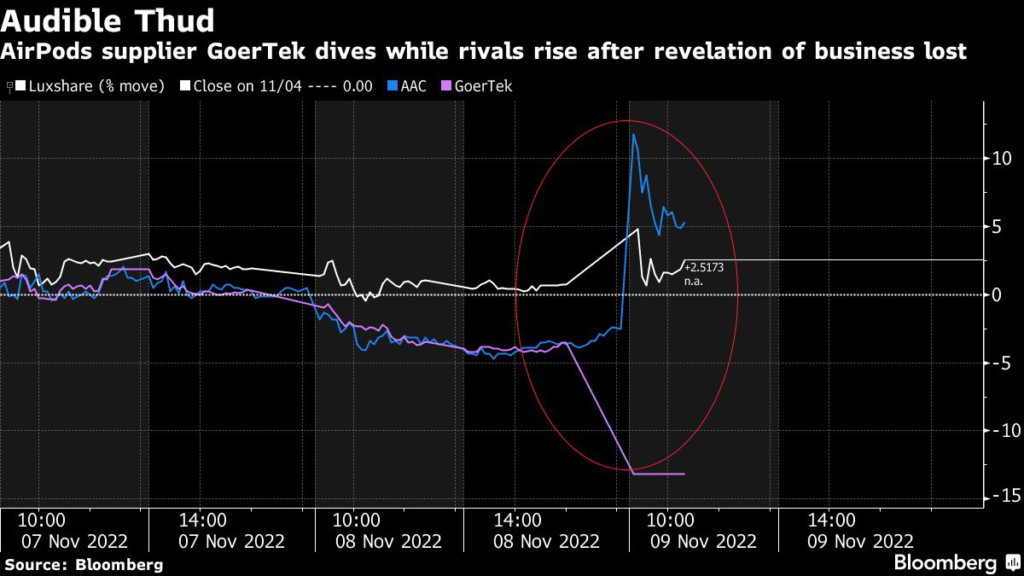
(Bloomberg) — GoerTek Inc. plunged its daily limit of 10% after the maker of Apple Inc.’s AirPods disclosed it suspended production of an audio product from “a major overseas customer.”

The Chinese company, which named neither the client nor its product, warned that decision could hit as much as 3.3 billion yuan ($456 million) of revenue in 2022. GoerTek, which also supplies Samsung Electronics Co. and Xiaomi Corp., said its relationship with other customers remain normal.

GoerTek’s revelation ignited speculation that Apple, which is grappling with both flagging electronics demand and production disruptions, may be retooling a vast supply chain centered on China. Speculation in the market has centered on whether GoerTek might have failed to meet Apple’s typically stringent specifications.

“We estimate this could be AirPods Pro 2 orders from Apple,” Citigroup Inc. analysts including Mark Li wrote in a note, double downgrading the stock to sell from buy. “We believe competitor Luxshare (our top pick) could conversely benefit from market-share gains, as we estimate it is a key supplier on this product.”

Luxshare Precision Industry Co. climbed as much as 4.6% before ending little changed on Wednesday. Another GoerTek rival AAC Technologies Holdings Inc. surged as much as 15% in Hong Kong before paring gains to 3.4% at the close. AirPods assembler GoerTek representatives didn’t immediately respond to requests for comment, while Apple wasn’t immediately available for comment after regular hours. 

Apple and its peers are grappling with faltering demand for electronics worldwide, as consumers cut spending in the face of a potential economic downturn. It expects to produce at least 3 million fewer iPhone 14 handsets than originally anticipated this year, Bloomberg News has reported.

The US company is also dealing with unexpected issues across its global supply chain, including a lockdown of its main iPhone production facility in central China.

“It is likely that the overseas customer is Apple, and the key product is AirPods Pro 2,” UOB Kay Hian analysts wrote. “Market rumours indicated that it was due to GoerTek missing the production yield target at the assembly plant,” they added, citing unverified speculation circulating among market participants.

Read more: Apple Trims New IPhone Output by 3 Million as Demand Cools

–With assistance from Catherine Ngai, Jeanny Yu, Mark Gurman and Abhishek Vishnoi.

(Adds Citigroup Inc.’s downgrade of GoerTek in the fourth paragraph and updates stock performance throughout)

More stories like this are available on bloomberg.com

©2022 Bloomberg L.P.

Close Bitnami banner
Bitnami
