Bloomberg

TikTok Slashes Ad Sales Target by $2 Billion After Tech Downturn

(Bloomberg) — ByteDance Ltd.’s TikTok has slashed about $2 billion off its target for 2022 ad revenue, underscoring the fallout of a global downturn that’s hammered fellow internet giants from Google to Meta Platforms Inc.

TikTok Chief Executive Officer Shou Zi Chew told a handful of employees during a recent meeting that the Chinese-owned app has slashed its ad forecast for 2022 to $10 billion from at least $12 billion previously, according to a person briefed on the matter. The revision didn’t include smaller business segments such as e-commerce, the person added, asking to not be identified discussing private information.

The downsized ambition reflects a pullback in marketing spending worldwide as companies and consumers tighten budgets and prepare to ride out a potential recession. Many of the world’s largest firms including Alphabet Inc., Amazon.com Inc., Meta and Microsoft Corp. have reported results that largely fell short of projections, shaving hundreds of millions to billions of dollars from their market valuations.

ByteDance grew into the world’s most valuable startup on the success of apps like TikTok and its Chinese counterpart Douyin, but it’s been squeezed between Beijing’s crackdown on internet firms at home and Washington’s suspicions of the services. Concerns around how TikTok stores US user data and manages information flows between employees in China and elsewhere have resurfaced among American lawmakers and politicians as they geared up for the mid-term elections.

Like most social media platforms, TikTok makes most of its revenue from advertising. 

Parent ByteDance has postponed plans for an initial public offering as investors flee riskier assets. In September, it offered to buy back as much as $3 billion of its own shares at a valuation of about $300 billion, giving existing backers a way to cash out. Douyin makes far more revenue but it’s unclear how the Chinese downturn is affecting that unit.

Representatives for TikTok didn’t immediately respond to a request for comment on the revenue target, which was first reported by the Financial Times.

More stories like this are available on bloomberg.com

©2022 Bloomberg L.P.

Bosch Taps IBM Quantum Computers in Hunt for New EV Materials

(Bloomberg) — Europe’s biggest car-parts maker is partnering with IBM to replace the rare and expensive metals needed to build electric vehicles.

Robert Bosch GmbH plans to use more than twenty of IBM’s quantum computers to help identify alternatives to the metals and rare-earth elements currently used in electric motors and fuel cells, the German company said Wednesday. The computers are to simulate the properties of the new materials.

Nickel and copper have become hotly contested commodities as auto and battery producers scour the planet for scarce supplies. Demand for lithium is so high that Chinese factories that typically make ceramics for bathroom tiles are now supplying the industry. Finding alternatives would be one way to keep costs in check.

Quantum computers can crunch in seconds vast amounts of data that take even the most powerful computers hours or days to process. Companies including Microsoft Corp., Alphabet Inc.’s Google, and Intel Corp. are devoting millions of research dollars to the technology. 

International Business Machines Corp. first made a quantum computer available to the public in 2016 and has rolled out regular upgrades. Bosch says it has around 30 people working in the field.

The partnership with IBM “underscores the importance that alliances have for Bosch’s digital transformation,” the parts maker said in a statement. “They are a way to pool the forces required for the rapid and successful development of promising areas.”

–With assistance from Monica Raymunt.

More stories like this are available on bloomberg.com

©2022 Bloomberg L.P.

Amazon’s Africa Flagship Campus Gets the Go-Ahead From Court

(Bloomberg) — The construction of Amazon.com Inc.’s planned offices in Cape Town should be allowed to go ahead, according to a South African court, in a setback for the indigenous people attempting to stop the development.  

The ruling from the Western Cape High Court said that those opposing the project could not “demonstrate that the right to heritage is at risk of suffering any harm,” while adding that the cultural value of the site is undisputed. “On the contrary, the papers indicated that the development might enhance the land’s resources having regard to the degraded state of the site when the authorizations were granted.”

A court had ruled in March that Liesbeek Leisure Properties Trust, which is building the site that Amazon is planning to use as a flagship office in Africa, should stop work while it reviewed whether the developer had properly consulted the relevant stakeholders. While Liesbeek had continued work after an appeal, it was an early victory for the the Khoisan group opposed to the development. 

Read more: Amazon’s New Africa Site Draws Ire in Indigenous People Protest

Leslie London, a professor at the University of Cape Town who’s been involved in the case and spoke on behalf of the group opposing the development, said that they had been “outmaneuvered legally because we do not have the deep pockets our opponents have.” They plan to take legal advice about next steps and don’t believe it changes their position in another court process that is reviewing the decision to build on the site, which the Khoisan deem a crucial part of their heritage.

“We don’t believe the outcome will change our case in the review,” said London. The Khoisan group filed an affidavit combating allegations against their case late, and it wasn’t accepted by the court. 

Amazon is planning to use the new offices to consolidate its employees in the city and host new hires for its growing operations. Amazon has been expanding on the continent by building data centers and opening additional offices in Johannesburg and Lagos. The current battles over the Liesbeek site have resulted in a number of project delays for the developer and the company. 

The judgment is a “major win for all Capetonians who stand to benefit from the 4.6 billion rand ($260 million) project,” Liesbeek said in a statement on Tuesday.  A representative for Amazon declined to comment. 

Africa has a fast-growing, young and tech-savvy population that makes it an attractive market, though problems such as spotty internet and power access in many countries have historically limited growth. The numbers of skilled workers and the infrastructure in South Africa, the most developed economy on the continent, has made it an attractive destination for international tech companies looking to expand, including Alphabet Inc.’s Google and Microsoft Corp. 

The court also said that the original judgment in March was induced by fraud. 

It said that the respondent misrepresented information relating to the Goringhaicona Khoi Khoin constitution, and did not have the authorization to start the proceedings that culminated in the original judgment. The Khoisan leader who filed the case further misrepresented the views of some indigenous leaders without consulting them, it said. 

“There was no fraud,” London said. The groups who said that they weren’t individually consulted were represented by a chief who spoke on behalf of a number of tribes, and the Khoisan leader who filed the evidence didn’t claim to speak to each one, he said. “All simply terrible that this could not be brought to the judge’s attention,” London said. 

(Updates with tribe’s response from third paragraph)

More stories like this are available on bloomberg.com

©2022 Bloomberg L.P.

COP27 Latest: Mark Carney Calls for Regulations Around Net Zero

(Bloomberg) — Mark Carney, the former Bank of England Governor and co-chair of the world’s biggest climate finance coalition, urged governments to create frameworks that encourage financial market participants to commit to slashing emissions.

Governments will play a key role in “unlocking” private funds, Carney said during a panel discussion at the COP27 climate summit in Egypt on Wednesday. Policy makers should “align financial regulation with net zero” by making net zero transition plans mandatory, he said.

Carney made the comments on the summit’s Finance Day, which will be a leaner affair than in Scotland last year after a number of prominent chief executives including BlackRock Inc.’s Larry Fink and Citigroup Inc.’s Jane Fraser opted to stay away. That’s as climate finance faces growing hurdles.

An energy crisis and a changing political landscape in the US are making it harder for banks and investors to turn their backs on fossil fuels. Financial firms are also increasingly nervous of the legal ramifications of joining net-zero alliances, with some in the US claiming that such goals are at odds with fiduciary duties. And in some cases, climate-finance alliances have even been likened to cartels.

Read More: Blackstone, Pimco Sidestep Net-Zero Group Even After Concessions

Those legal risks may intensify, depending on the outcome of midterm elections in the US. But there’s also a legal risk involved in making climate promises that firms don’t live up to.

“Firms should be wary of being caught in the riptide of unrealistic ambitions as it may expose them to both litigation and reputational risks if they don’t meet these commitments,” Sonali Siriwardena, partner and global head of ESG at Simmons & Simmons in London. 

GFANZ recently allowed members to ignore a UN-backed group, Race to Zero, which had proposed binding restrictions on fossil finance. It also reassured signatories that GFANZ sub-alliances are “only subject to their own governance structures.”

The alliance now numbers roughly 550 members representing about $150 trillion in assets. AllianceBernstein Holding LP, Northern Trust and Capital Group Inc. are among the latest to join the GFANZ sub-group for asset managers, according to a statement on Wednesday.  

(GFANZ is co-chaired by former Bank of England Governor Mark Carney and Michael R. Bloomberg, the founder of Bloomberg News parent Bloomberg LP.)

Read More: 10 things to watch at the COP27 summit

Highlights:

  • Click here to read the highlights from talks on Tuesday
  • China delivers blow to climate with new emissions deadline
  • Satellite spots methane cloud near Iran oil and gas facilities
  • Mark Carney sees ‘wall of opportunity’ for energy investors
  • UN panel calls out ‘greenwashers’ and seeks net-zero regulation
  • EU Lawmakers reach deal on climate goals outside carbon market
  • Click here to get read about Bloomberg Green at COP27

Here are the latest developments. All times Egypt. 

Malpass Says Developing Countries Are Facing Economic Crisis (10:22 am)

David Malpass, president of the World Bank, said heavy debt burdens combined with inflation and the fallout from climate change are pushing the developing world into an economic crisis. 

The World Bank reached $32 billion in climate finance this year, which is a record and was “well above our Glasgow target,” he said. “We want to dramatically increase the number and size of projects that reduce greenhouse gas emissions.”

Georgieva Says Climate Success Depends on Finance ‘Incentives’ (10:15 am)

Kristalina Georgieva, managing director of the International Monetary Fund, said the finance needed to address climate change and the energy transition will not flow without changing the incentives for financiers. And “the best incentive we have to shift from high carbon intensity to low carbon intensity is to price carbon,” she said.

The average price of carbon globally is $5 but to be at the level that “changes investment and consumer behavior” it will have to go up to at least $75 a tonne by 2030, she said.

“Adam Smith, the founder of economics, said it: the butcher and the baker don’t feed you out of the generosity of their hearts, they feed you for self interest,” she said. “So we have to create the self interest for decarbonization.”

Conservative Estimate Puts 2030 Financing Gap at $2.4 Trillion (9:51 am)

There’s a gap in financing of around $2.4 trillion, compared with what’s needed by 2030, and that represents “the most conservative figure,” said Mahmoud Mohieldin, UN Climate Change High-Level Champion for COP27.

Serious debt reduction mechanisms are needed, while multilateral development banks and international finance institutions need to play a greater role in supporting such efforts, he said.

Mohieldin also said he is “very happy to see a chapter of GFANZ established for Africa with serious consideration of being practical and supporting a pipeline of projects.”

Africa Recognizes Need to Pursue Green Growth (8:43 am)

Africa’s common position at the COP27 summit recognizes the need for growth alongside the duty to provide electricity to its 600 million inhabitants who don’t have access to energy, UN Economic Commission for Africa acting Executive Secretary Antonio Pedro said. That energy shortfall is the reason the continent is promoting natural gas as a “transition fuel,” Pedro said in an interview with Bloomberg Television.

Net-Zero Asset Managers Group Says Alliance Has Grown to 291 (8:00 am)

The Net Zero Asset Managers initiative says 86 investors have set initial targets for the proportion of assets that will be managed in line with achieving net zero emissions by 2050 or sooner, with the total number of asset managers committing to net zero rising to 291.

That brings to 169 the total number of managers with such targets, collectively representing over $55 trillion in assets under management, according to a statement by NZAMi on Wednesday. New signatories include Capital Group, Northern Trust and AllianceBernstein.

Climate Change Could Cost Africa Two Thirds of Its GDP Growth (2:01 am)

Global warming could slash Africa’s economic growth by two thirds by the end of the century unless significant investment is made in climate adaptation, a new study shows.

Current climate policies will likely see temperatures exceed the pre-industrial average by 2.7C, curbing African growth rates 20% by 2050 and 64% by 2100, Christian Aid said in a report released Wednesday. Even a 1.5C rise in temperatures would reduce growth rates by 34% by the century’s end, it said. 

While Africa is responsible for about 4% of planet-warming emissions, it’s already being hit hard by a changing climate. Devastating cyclones and floods have battered southeast and West Africa this year while the Horn of Africa is in the midst of its worst drought in four decades.

–With assistance from Salma El Wardany, Yousef Gamal El-Din, Paul Richardson, Akshat Rathi and Siobhan Wagner.

More stories like this are available on bloomberg.com

©2022 Bloomberg L.P.

M&S’s Food Stores Knocked by Inflation as Margins Narrow

(Bloomberg) — Britain’s surging inflation is squeezing profit margins at Marks & Spencer Group Plc’s food division as the premium supermarket chain absorbs some cost increases to maintain sales.

M&S’s food business, which has been the company’s growth driver in recent years, was faced with 11% inflation in its cost of goods in the first half, while its online joint venture with Ocado Group Plc recorded a loss as demand reverts to in-store shopping. The clothing and home unit, which has struggled of late, did better, with a 14% sales gain.

The shares fell 2.1% in early trading.

It’s the first earnings update under new Chief Executive Officer Stuart Machin and co-CEO Katie Bickerstaffe, who took over earlier this year from Steve Rowe. M&S warned in May that the cost-of-living crisis and a full exit from Russia would prevent profit from rising this year.

M&S is still working through a turnaround after more than a decade of attempts to jump-start the business. The biggest tasks are tackling the company’s expensive store portfolio, boosting online sales and staying competitive in clothing after being dismissed as old-fashioned, ill-fitting and pricey. 

M&S’s clothing division has gained market share and grown in profitability, even as profit before tax and adjusting items fell by 24% across the whole business from a year earlier. Overall trading is showing “the beginnings of a reshaped M&S,” Machin said.

Still, the retailer said it’s deferring any decision about restarting a dividend to closer to the year-end, having skipped a payout to shareholders for two years. The stock has lost half its value this year. 

M&S is planning for a “material contraction” in demand in the market next year though it said its customers may prove resilient as they have on average slightly higher incomes and age demographics. Last week the company said it was locking prices on more than 100 supermarket items until the end of January as it tries to compete with cheaper grocers that are gaining market share.

Like some of its rivals, M&S has boosted employee pay twice this year and is offering other incentives to staff including free meals and M&S vouchers. 

M&S is looking to demolish and rebuild its Marble Arch store in London and, despite political opposition, its controversial plan has recently secured the backing of Selfridges and Ikea which have large plots nearby.

The business suffered a blow to its top team in July when it was announced that Eoin Tonge, chief financial and strategy officer, is leaving to join Associated British Foods Plc, the owner of Primark. 

(Updates with share move, context from third paragraph.)

More stories like this are available on bloomberg.com

©2022 Bloomberg L.P.

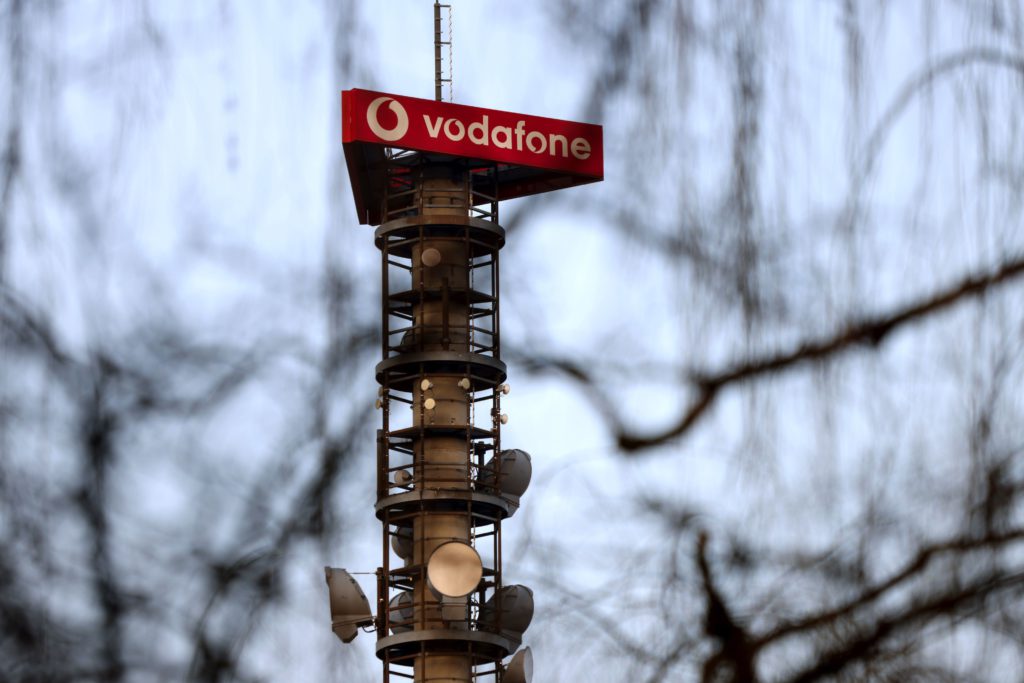
KKR, GIP Near Deal for Vodafone’s $15 Billion Tower Unit

(Bloomberg) — KKR & Co. and Global Infrastructure Partners are nearing a deal for Vodafone Plc’s listed towers arm, providing a rare bright spot for dealmakers in an otherwise slow market, people familiar with the matter said. 

The investment firms could announce a deal for a stake in Frankfurt-listed Vantage Towers AG as soon as Wednesday, the people said, asking not to be identified discussing confidential information. 

The consortium also includes Saudi Arabia’s Public Investment Fund as a minority investor, according to the people. The sovereign wealth fund, which is keen to invest in telecom infrastructure, will help fund a deal, they said.

Vantage shares were broadly flat in early trading Wednesday, giving the company a market value of €14.8 billion ($14.9 billion). Vodafone’s stock was also little changed in London. 

Vodafone holds 82% of the towers group. The British carrier’s Chief Executive Officer Nick Read said in February that it could sell down part of its stake while retaining “co-control.”

KKR and GIP have been competing with a host of other financial and strategic bidders for Vantage, including a consortium of Spanish telecommunications group Cellnex Telecom SA and Singapore’s sovereign wealth fund GIC Pte.

While talks are advanced, they could still be delayed or fall apart, they said. Spokespeople for KKR, Cellnex, PIF, Vodafone and Vantage declined to comment, while a representative for GIP didn’t immediately comment. 

Network towers are helping dealmakers defy a near-30% slowdown in global mergers and acquisitions activity this year. Telecom operators are shifting the assets to help raise funds for fiber-optic rollouts and wireless upgrades, and are finding willing buyers in the form of investment firms seeking predictable returns in volatile markets.

Bloomberg News reported this week that PIF is among suitors weighing a final bid for network towers being sold by Qatari telecom firm Ooredoo QPSC that could be valued at as much as $5 billion. And in Europe, private equity firm EQT AB is seen as the frontrunner to acquire a stake in French tower owner TDF. 

Earlier this year, KKR and GIP missed out an investment in Deutsche Telekom AG’s tower business, with a stake eventually being sold to Brookfield Asset Management Inc. and DigitalBridge Group Inc. 

(Adds details on PIF in third paragraph.)

More stories like this are available on bloomberg.com

©2022 Bloomberg L.P.

TSMC to Unveil Plans for Another US Chip Plant, WSJ Says

(Bloomberg) — Taiwan Semiconductor Manufacturing Co. aims to build another chipmaking plant in Arizona on top of a $12 billion complex it’s already committed to, the Wall Street Journal reported, citing people familiar with the plans.

The world’s largest contract chipmaker will announce its intention to establish another facility north of Phoenix, adjacent to the factory under construction, the Journal reported. The new investment should be similar to the first project’s, it added. Representatives for the company didn’t respond to requests for comment.

The Biden administration is trying to attract investments in US chipmaking, part of efforts to counter China’s ambitions and secure components vital to national security. That effort accelerated after widespread shortages that began around late 2020 and 2021 drove home how chips were central to the production of everything from cars to smartphones. 

Washington, which is dangling incentives of some $50 billion for local projects, has hailed TSMC’s Arizona expansion as a triumph in endeavors to bring advanced chipmaking back to America. But the Taiwanese company has said it cost much more to fabricate semiconductors in the US, though that higher expense was manageable with state support.

Read more: How ‘Chip War’ Puts Nations In Technology Arms Race: QuickTake

TSMC, whose production sites are mostly in Taiwan, has started to diversify over the past year or so to help meet demand in major countries seeking to bolster domestic semiconductor production. It joins rivals such as Samsung Electronics Co., which is also establishing a $17 billion fab in Texas.

The company is building a $7 billion facility in Japan, and is also in early talks with the German government about potentially establishing a plant in the European country, Bloomberg News has reported.

A major expansion to TSMC’s US plans would boost the Biden administration’s overall efforts to ensure the country remains ahead of China in the semiconductor race.

Apart from driving incentives for local chipmaking, the US has imposed a plethora of restrictions on the shipment of advanced technology to China, aiming to throttle the flow of chips that aid Beijing’s military and tech sector. 

Xi Jinping, in a landmark address last month, pledged tech self-reliance to prevail in a battle with the US for technological supremacy — which many took as a sign Beijing will redouble policy and financial support for sectors such as AI and chips.

The Global Fight Over Chips Is About to Get Even Worse

–With assistance from Vlad Savov.

(Updates with TSMC’s response from the fourth paragraph)

More stories like this are available on bloomberg.com

©2022 Bloomberg L.P.
COP27 Latest: AllianceBernstein Joins Net-Zero Finance Coalition

(Bloomberg) — AllianceBernstein Holding LP is among major investment firms adding its name to the world’s largest climate finance coalition, as the COP27 summit in Egypt turns its attention to the role played by banks and asset managers in steering capital toward a lower-carbon future.

Northern Trust and Capital Group Inc. also joined the Net Zero Asset Managers initiative, a sub-unit of the Glasgow Financial Alliance for Net Zero, according to a statement on Wednesday. The news was timed to coincide with COP27 Finance Day, which will be a leaner affair than in Scotland last year after a number of prominent chief executives including BlackRock Inc.’s Larry Fink and Citigroup Inc.’s Jane Fraser opted to stay away.

An energy crisis and a changing political landscape in the US are making it harder for banks and investors to turn their backs on fossil fuels. Financial firms are also increasingly nervous of the legal ramifications of joining net-zero alliances, with some in the US claiming that such goals are at odds with fiduciary duties. And in some cases, climate-finance alliances have even been likened to cartels. 

Read More: Blackstone, Pimco Sidestep Net-Zero Group Even After Concessions

Those legal risks may intensify, depending on the outcome of midterm elections in the US. Republican warnings that corporate ESG efforts could violate the nation’s antitrust laws are already prompting some companies to slow down their climate efforts. 

But there’s also a legal risk involved in making climate promises that firms don’t live up to.

“These may be voluntary commitments, but they are commitments nevertheless,” said Sonali Siriwardena, partner and global head of ESG at Simmons & Simmons in London. “So firms should be wary of being caught in the riptide of unrealistic ambitions as it may expose them to both litigation and reputational risks if they don’t meet these commitments.”

Meanwhile, there are more organizations policing climate promises. A UN-appointed group has defined a series of tests that determine whether net-zero pledges are genuine or “dishonest.” The expert group, which was appointed by UN Secretary General Antonio Guterres and is chaired by Canada’s former environment minister Catherine McKenna, lays out recommendations “to prevent net zero from being undermined by false claims, ambiguity and ‘greenwash.’”

In an effort to accommodate finance industry concerns, GFANZ recently allowed members to ignore a UN-backed group, Race to Zero, which had proposed binding restrictions on fossil finance. It also reassured signatories that GFANZ sub-alliances are “only subject to their own governance structures.”

(GFANZ is co-chaired by former Bank of England Governor Mark Carney and Michael R. Bloomberg, the founder of Bloomberg News parent Bloomberg LP.)

Read More: 10 things to watch at the COP27 summit

Highlights:

  • Click here to read the highlights from talks on Tuesday
  • China delivers blow to climate with new emissions deadline
  • Satellite spots methane cloud near Iran oil and gas facilities
  • Mark Carney sees ‘wall of opportunity’ for energy investors
  • UN panel calls out ‘greenwashers’ and seeks net-zero regulation
  • Click here to get read about Bloomberg Green at COP27

Here are the latest developments. All times Egypt. 

Africa Recognizes Need to Pursue Green Growth (8:43 am)

Africa’s common position at the COP27 summit recognizes the need for growth alongside the duty to provide electricity to its 600 million inhabitants who don’t have access to energy, UN Economic Commission for Africa acting Executive Secretary Antonio Pedro said. That energy shortfall is the reason the continent is promoting natural gas as a “transition fuel,” Pedro said in an interview with Bloomberg Television.

While seeking so-called loss and damage — compensation by rich countries for damages suffered by developing countries because of global warming — Africa is also promoting investment in renewable energy, Pedro said. He cited as an example the Great Blue Wall Initiative, which aims to protect 2 million square kilometers of protected and conserved areas along East Africa’s coast.

Egypt and Norway to Build 100MW Green Hydrogen Plant on Red Sea (8:12 am)

Egypt and Norway’s Scatec have signed an agreement on the sidelines of the climate talks in Sharm El-Sheikh to start the first phase of a project to build a green hydrogen plant on the red sea. Plant in Egypt will have a 100-megawatt capacity.

Net-Zero Asset Managers Group Says Alliance Has Grown to 291 (8:00 am)

The Net Zero Asset Managers initiative says 86 investors have set initial targets for the proportion of assets that will be managed in line with achieving net zero emissions by 2050 or sooner, with the total number of asset managers committing to net zero rising to 291.

That brings to 169 the total number of managers with such targets, collectively representing over $55 trillion in assets under management, according to a statement by NZAMi on Wednesday. New signatories include Capital Group, Northern Trust and AllianceBernstein.

Zimbabwe Signs Accord With SkyPower on 500MW Solar Plant (7:47 am)

Zimbabwe has signed an agreement with SkyPower Global to build a 500-megawatt solar-power plant, United Nations Economic Commission for Africa acting Executive Secretary Antonio Pedro said in an interview.

The accord was signed at the COP27 summit taking place in Sharm el-Sheikh, he said, without providing details.

World’s CO₂ Hotspots Pinpointed by Al Gore-Backed Project (7:00 am)

A consortium of dozens of research nonprofits on Wednesday launched a free online platform that details greenhouse gas emissions around the world across 20 economic sectors. 

Climate Trace, which can be viewed on a web browser, includes a zoomable world map that displays and ranks the dirtiest 72,000 power plants, oil refineries, airports, ships and more. The group used satellite imagery and machine learning as well as more conventional techniques to build what it says is the largest available source of greenhouse gas emissions data. 

Climate Change Could Cost Africa Two Thirds of Its GDP Growth (2:01 am)

Global warming could slash Africa’s economic growth by two thirds by the end of the century unless significant investment is made in climate adaptation, a new study shows.

Current climate policies will likely see temperatures exceed the pre-industrial average by 2.7C, curbing African growth rates 20% by 2050 and 64% by 2100, Christian Aid said in a report released Wednesday. Even a 1.5C rise in temperatures would reduce growth rates by 34% by the century’s end, it said. 

While Africa is responsible for about 4% of planet-warming emissions, it’s already being hit hard by a changing climate. Devastating cyclones and floods have battered southeast and West Africa this year while the Horn of Africa is in the midst of its worst drought in four decades.

–With assistance from Salma El Wardany, Yousef Gamal El-Din and Paul Richardson.

More stories like this are available on bloomberg.com

©2022 Bloomberg L.P.
US Stock Futures Seesaw With Midterms in Focus: Markets Wrap

(Bloomberg) — US equity futures fluctuated between gains and losses as midterm election results rolled in, with investors looking for signs of government gridlock, which may be positive for shares.

Euro Stoxx 50 futures declined and an Asian equity gauge was flat. Shares of Chinese developers jumped the most in eight months as a regulator expanded financing support for the sector, bucking weakness in broader indexes in Hong Kong and the mainland.

The dollar and Treasury yields were little changed. Cryptocurrencies slipped further as Binance Holdings Ltd.’s potential takeover of embattled rival exchange FTX.com highlighted how strains in the digital-asset industry are buffeting some of its top players. 

Optimism for shares has been helped by a history of robust performance following midterm results. Stocks have tended to flourish during times when government is constrained and polls suggest Republicans could make gains, placing a check on Democratic policies.

Republicans made gains in their drive to take control of Congress but many of the closest races had yet to be called. The final outcome may not be known for days or even weeks if the results are as close as polls have suggested and if losers challenge results. 

For many investors though, the bigger issue facing markets is the Federal Reserve’s monetary tightening.

“The stock market historically has performed well after midterm elections and during third years of presidential cycles,” according to a note from Yardeni Research. “But none of these positive political cyclical trends will make much difference if inflation remains elevated, which would force the Fed to cause a hard landing of the economy.”

Thursday’s consumer-price-index data may be the next event risk for the Fed’s policy rate and comes on the heels of core consumer prices rising more than forecast to a 40-year high in September. Even if prices begin to moderate, the CPI is far above the central bank’s comfort zone.

“The market is still going to fixate on inflation, which is going to stay high and sticky at least over the next couple of quarters,” Luke Barrs, global head of fundamental equity client portfolio management at Goldman Sachs Asset Management, said on Bloomberg Television. 

The turmoil in crypto markets came out of an unexpected development, with billionaire Changpeng “CZ” Zhao consolidating his position atop the crypto world on Tuesday with a move to take over FTX.com. Terms of the emergency buyout were scant, helping to send prices of cryptocurrencies tumbling after a brief rebound.

Oil dropped for a third day on the challenging outlook for Chinese demand and after an industry report pointed to rising US inventories. Gold also declined, after jumping the most in a month.

Key events this week:

  • EIA oil inventory report, Wednesday
  • US wholesale inventories, MBA mortgage applications, Wednesday
  • Fed officials John Williams, Tom Barkin speak at events, Wednesday
  • US CPI, US initial jobless claims, Thursday
  • Fed officials Lorie Logan, Esther George, Loretta Mester speak at events, Thursday
  • US University of Michigan consumer sentiment, Friday

Some of the main moves in markets:

Stocks

  • S&P 500 futures fell 0.3% as of 6:42 a.m. in London. The S&P 500 rose 0.6%.
  • Nasdaq 100 futures fell 0.1%. The Nasdaq 100 rose 0.8%
  • Euro Stoxx 50 futures fell 0.5%
  • Japan’s Topix index fell 0.4%
  • Hong Kong’s Hang Seng Index fell 1.7%
  • China’s Shanghai Composite Index fell 0.5%
  • Australia’s S&P/ASX 200 Index rose 0.6%

Currencies

  • The Bloomberg Dollar Spot Index was little changed
  • The euro fell 0.1% to $1.0062
  • The Japanese yen was little changed at 145.78 per dollar
  • The offshore yuan fell 0.3% to 7.2528 per dollar

Cryptocurrencies

  • Bitcoin fell 1.6% to $18,393.72
  • Ether fell 2.5% to $1,302.99

Bonds

  • The yield on 10-year Treasuries advanced two basis points to 4.15%
  • Australia’s 10-year yield declined 17 basis points to 3.87%

Commodities

  • West Texas Intermediate crude fell 0.1% to $88.80 a barrel
  • Spot gold fell 0.2% to $1,709.70 an ounce

–With assistance from Vildana Hajric and Muyao Shen.

More stories like this are available on bloomberg.com

©2022 Bloomberg L.P.
Fortress Close to Buying Japan’s Sogo & Seibu for Over $1.4 Billion

(Bloomberg) — Private equity firm Fortress Investment Group is nearing a deal to acquire Seven & i Holdings Co.’s Sogo & Seibu Co. chain of department stores in Japan for more than 200 billion yen ($1.4 billion), according to people familiar with the matter.

The discussions are in their final stage and an announcement could come as soon as Thursday, said the people, who asked not to be identified as the information is private. Fortress is set to team up with Japanese electronics and appliance retailer Yodobashi Holdings Inc., which could become tenants of some of the Sogo & Seibu department stores, the people said. The board of Seven & i is due to meet on Thursday, they said.

While talks are advanced, they could still be delayed or even fall apart, the people said. A representative for Seven & i declined to comment on the deal, reiterating that the company is carrying out a strategic review for the department store business as it has been. A representative for Fortress didn’t immediately respond to requests for comment before US business hours.

Seven & i has been looking to offload the Sogo & Seibu unit and focus on its convenience store and supermarket businesses. Earlier this year, it appointed a financial adviser to conduct a strategic review for Sogo & Seibu, including an option to sell the operation.

The department and specialty store operations reported 226 billion yen in revenues for the latest quarter, a 68% jump from a year earlier, thanks to the recovery in mainstream apparel and luxury brands sales. The unit’s operating income for the quarter was 465 million yen, compared to a loss for the same period in 2021.

SoftBank acquired Fortress in 2017, intending to use the New York-based firm’s expertise to help manage its behemoth Vision Fund. The firm, led by co-Chief Executive Officers Pete Briger and Wesley Edens, managed $44.4 billion as of June 30, according to its website. Mubadala Investment Co. was nearing a deal to buy Fortress from SoftBank in a purchase that could value the US asset manager at more than $2 billion, Bloomberg News reported in September.

More stories like this are available on bloomberg.com

©2022 Bloomberg L.P.
Close Bitnami banner
Bitnami