Bloomberg

Democrats Supercharged EV Investment While They Had the Chance

(Bloomberg) —

It looks increasingly likely that Democrats’ days controlling both chambers of Congress are numbered. While President Joe Biden and his party have been in charge, they’ve managed to fundamentally alter the auto industry playing field in ways Republicans are unlikely to drastically change.

Much of the focus on the Inflation Reduction Act (IRA) that Biden signed into law in mid-August has been on how it adjusts tax credits for electric-vehicle purchases, whether these new provisions are too stringent for manufacturers to meet, and if they unfairly discriminate against manufacturers based in ally countries including South Korea and Japan.

Getting less attention is the extent to which, as BloombergNEF put it in a recent report, this is an industrial policy first, and a climate policy second.

More than $13 billion of investment in battery raw material production and battery and EV manufacturing has been announced in the less than three months since Biden signed the IRA into law on Aug. 16. Volkswagen and Mercedes-Benz almost immediately sealed agreements to secure mining and refining resources from America’s neighbor to the north. Honda and Toyota earmarked almost $7 billion worth of EV battery plant investments within two days of one another. An Australian development company started up the first US cobalt mine in three decades. BMW said it would spend $1.7 billion expanding its South Carolina SUV factory, and that its battery supplier would build a new plant nearby.

Of course, big investments like these aren’t formulated overnight, and the larger forces of geopolitical risk and broken-down supply chains already were leading automakers to localize more. But the IRA will keep EV investments flowing to the US not just because of the perks awaiting consumers at the point of purchase. The bill also contained a less-talked-about manufacturing tax credit that subsidizes battery cell and pack production. Analysts at UBS believe this support “has the potential to make the US a global EV battery hub.”

The tax credit consists of $35 per kilowatt hour for battery cell assembly, and another $10 per kWh for battery packs. In a report authored by 21 analysts last month, UBS estimated that battery cell prices were hovering around $140 per kWH, meaning the tax credit will cover 25% to 30% of total cell manufacturing costs.

“With that, cell manufacturing in the US could be more profitable than in any other country,” the UBS analysts wrote in their Sept. 20 report. “The US administration obviously considers EV batteries as the oil of the 21st century, and is willing to pay a price for energy independence.”

Ford shed some light late last month on just how much of a boon this will be to the automaker and its battery partners starting next year. It’s expecting the tax credit to total more than $7 billion by 2026, and to step up even further in 2027 as its battery joint venture plants ramp up to full production.

For all the heat Senator Joe Manchin took for scuttling the Build Back Better bill that would have extended EV purchase tax credits in more lenient and generous ways, the battery and raw material sourcing provisions that the West Virginia Democrat insisted on working into the IRA also are good politics for Republicans, who’ve cheered new EV investments in their states. Taxpayers will only subsidize EVs that are assembled in North America, with batteries manufactured in North America, using raw materials sourced from North America. Vehicle price and income caps were put in place 

China has warned there will be no winner if the US cuts the country out of the battery supply chain. BMW CEO Oliver Zipse similarly has said that IRA risks leading to a “dangerous” sequence of trade barriers going up that thwarts EV adoption.

Biden’s Treasury Department has an opportunity to alleviate these concerns by giving the industry more clarity before year-end as to how the IRA will be implemented. Regardless of how this shakes out, the amount of investment since the act was signed that’s flowed to red states — Honda’s in Ohio, Toyota’s in North Carolina, BMW’s in South Carolina — will make it politically inexpedient for Republicans to rip it up.

“IRA is a brilliant piece of industrial policy,” said Julia Poliscanova, senior director for vehicles and e-mobility at the Brussels-based non-governmental organization Transport & Environment. “It’s a game-changer for the US as it has unleashed a wave of investment announcements into critical minerals and the battery value chain.”

More stories like this are available on bloomberg.com

©2022 Bloomberg L.P.

The Pace of Tech Job Cuts is Reaching Early Pandemic Levels

(Bloomberg) — Job cuts in the technology industry are accelerating, nearing levels seen in the early stages of the Covid-19 pandemic, as companies both large and small curtail ambitions and brace for tough times ahead.

In recent weeks, a spate of tech companies have said they will pause hiring or cut jobs outright in the face of sluggish consumer spending, spiraling inflation and a strong dollar undercutting sales overseas. Leaders in the industry, a major driver of the global economy for the last decade, sense that they’re in a higher-risk environment, making them less willing to spend to grow their businesses like in years past.  

Meta Platforms Inc., the owner of Facebook and Instagram, is poised to cut thousands of workers this week, the Wall Street Journal reported. That follows Elon Musk’s decision to halve Twitter Inc.’s staff last week after acquiring the social network. Apple Inc., Amazon.com Inc. and Alphabet Inc. have all slowed or paused hiring. 

Investments in more speculative technology will receive greater scrutiny, said Jo-Ellen Pozner, an assistant professor of management at Santa Clara University’s Leavey School of Business.

“For the big companies, it’s reasonable to assume that the rising tide that has been floating their boats for the past 15 years is just now a lot choppier,” Pozner said. “They clearly need to trim and to rationalize projects that they just haven’t had to do for a decade and a half because the environment was so munificent.”

With tech executives growing more pessimistic about the economy, the industry shed 9,587 jobs in October, the highest monthly total since November 2020, according to Challenger, Gray & Christmas Inc., a consulting firm. Challenger tallies job cuts announced or confirmed by companies across telecom, electronics, hardware manufacturing and software development.

The second quarter of 2020 still ranks as the worst three-month period for layoffs since the Covid-19 pandemic began, but this year is shaping up to be grimmer for job cuts than 2020 overall, according to Roger Lee of Layoffs.fyi. More than 104,000 startup workers have lost their jobs so far this year, surpassing the roughly 81,000 posts shed in 2020, said Lee, whose site tracks cuts at startups, which it defines as any firm formed after the dot-com bubble. Layoffs.fyi’s estimates differ from Challenger’s because they include numbers from media reports companies may not have confirmed.

The pandemic cuts may not compare to the current situation. As soon as people started working from home and isolating, they turned to tech companies’ products for remote work, food delivery and social connection, spurring significant growth. Now, the tech companies face a different economic reality. 

In recent earnings reports, Alphabet, Amazon, Meta, Microsoft Corp. and others fell short of projections, sending shares plunging and shaving hundreds of millions to billions of dollars from their market valuations. Meta, for instance, has lost more than 71% of its value so far this year, with investors uncomfortable with Chief Executive Officer Mark Zuckerberg’s invesments in an immersive digital world called the metaverse.

The predicament is more dire for startups, which likely will have to make more significant cuts to their staffs as soaring interest rates hinder their ability to raise capital, said Stephen Levy, director of the Center for Continuing Study of the California Economy, a research firm based in Palo Alto, California.

“It’s real, and it won’t go away until we get interest and inflation rates back to normal,” Levy said of startups’ woes.

To be sure, the scale of layoffs remains a far cry from the cuts made after the dot-com bubble burst. In 2001, the tech industry shed 168,395 jobs, followed by another 131,294 posts lost in 2002, according to Challenger.

The composition of the industry has changed greatly since those days. Many of the firms that survived the dot com bust are now sprawling enterprises, meaning that this contraction in the tech economy may be more a case of large firms tightening their belts, rather than small companies closing up shop.

“Most of the industry, and the jobs, are in the big companies now,” Levy said.

More stories like this are available on bloomberg.com

©2022 Bloomberg L.P.

Twitter, Meta Push Tech Job-Cut Pace Near Early Pandemic Levels

(Bloomberg) — Job cuts in the technology industry are accelerating, nearing levels seen in the early stages of the Covid-19 pandemic, as companies both large and small curtail ambitions and brace for tough times ahead.

In recent weeks, a spate of tech companies have said they will pause hiring or cut jobs outright in the face of sluggish consumer spending, spiraling inflation and a strong dollar undercutting sales overseas. Leaders in the industry, a major driver of the global economy for the last decade, sense that they’re in a higher-risk environment, making them less willing to spend to grow their businesses like in years past.  

Meta Platforms Inc., the owner of Facebook and Instagram, is poised to cut thousands of workers this week, the Wall Street Journal reported. That follows Elon Musk’s decision to halve Twitter Inc.’s staff last week after acquiring the social network. Apple Inc., Amazon.com Inc. and Alphabet Inc. have all slowed or paused hiring. 

Investments in more speculative technology will receive greater scrutiny, said Jo-Ellen Pozner, an assistant professor of management at Santa Clara University’s Leavey School of Business.

“For the big companies, it’s reasonable to assume that the rising tide that has been floating their boats for the past 15 years is just now a lot choppier,” Pozner said. “They clearly need to trim and to rationalize projects that they just haven’t had to do for a decade and a half because the environment was so munificent.”

With tech executives growing more pessimistic about the economy, the industry shed 9,587 jobs in October, the highest monthly total since November 2020, according to Challenger, Gray & Christmas Inc., a consulting firm. Challenger tallies job cuts announced or confirmed by companies across telecom, electronics, hardware manufacturing and software development.

The second quarter of 2020 still ranks as the worst three-month period for layoffs since the Covid-19 pandemic began, but this year is shaping up to be grimmer for job cuts than 2020 overall, according to Roger Lee of Layoffs.fyi. More than 104,000 startup workers have lost their jobs so far this year, surpassing the roughly 81,000 posts shed in 2020, said Lee, whose site tracks cuts at startups, which it defines as any firm formed after the dot-com bubble. Layoffs.fyi’s estimates differ from Challenger’s because they include numbers from media reports companies may not have confirmed.

The pandemic cuts may not compare to the current situation. As soon as people started working from home and isolating, they turned to tech companies’ products for remote work, food delivery and social connection, spurring significant growth. Now, the tech companies face a different economic reality. 

In recent earnings reports, Alphabet, Amazon, Meta, Microsoft Corp. and others fell short of projections, sending shares plunging and shaving hundreds of millions to billions of dollars from their market valuations. Meta, for instance, has lost more than 71% of its value so far this year, with investors uncomfortable with Chief Executive Officer Mark Zuckerberg’s invesments in an immersive digital world called the metaverse.

The predicament is more dire for startups, which likely will have to make more significant cuts to their staffs as soaring interest rates hinder their ability to raise capital, said Stephen Levy, director of the Center for Continuing Study of the California Economy, a research firm based in Palo Alto, California.

“It’s real, and it won’t go away until we get interest and inflation rates back to normal,” Levy said of startups’ woes.

To be sure, the scale of layoffs remains a far cry from the cuts made after the dot-com bubble burst. In 2001, the tech industry shed 168,395 jobs, followed by another 131,294 posts lost in 2002, according to Challenger.

The composition of the industry has changed greatly since those days. Many of the firms that survived the dot com bust are now sprawling enterprises, meaning that this contraction in the tech economy may be more a case of large firms tightening their belts, rather than small companies closing up shop.

“Most of the industry, and the jobs, are in the big companies now,” Levy said.

More stories like this are available on bloomberg.com

©2022 Bloomberg L.P.

Jumia Tumbles as Co-Founders Step Down From African E-Commerce Platform

(Bloomberg) — Jumia Technologies AG founders Sacha Poignonnec and Jeremy Hodara both quit as co- heads of the Africa-focused online retailer, which has struggled with persistent losses since a high-profile New York listing.

Poignonnec and Hodara, former colleagues at McKinsey & Co., founded Jumia in Lagos in 2012 as a way to introduce e-commerce to Nigeria and other African countries where widespread internet use was starting to take off. Often compared with Amazon.com Inc., the company attracted international investors such as Mastercard Inc. and French drinks maker Pernod Ricard SA to achieve unicorn status, and the stock surged 75% on its US stock market debut in 2019.

Yet a plan to progress to profitability hasn’t materialized. The company struggled with Africa-specific issues such as a lack of formal addresses and city mapping, while expansion into the likes of food delivery failed to yield a step change. And then there’s Amazon, which is considering expanding more on the continent.

Jumia’s stock has duly suffered, languishing 71% below its value at the initial public offering. The shares slumped further following the announcement of Poignonnec and Hodara’s departure, closing 14% lower in New York on Monday. 

‘More Focus’

“We want to bring more focus to the core e-commerce business as part of a more simplified and efficient organization with stronger fundamentals and a clearer path to profitability,” Jumia Chairman Jonathan Klein said in a statement on Monday. 

International e-commerce giants have been wary of expanding their reach into Africa, where postal and transportation services are often unreliable and doing business is made complicated by bureaucracy and graft. 

Amazon has offered cloud services from its base in Cape Town for some years, but is only now planning to venture into online retail — first in South Africa before approaching Nigeria, Africa’s most populous country, according to media reports.

While Jumia’s IPO at first attracted a surge of interest, a damning report by short sellers Citron, who alleged fraud, sent the stock into a downward spiral. The company later reported that it had identified improper transactions within the Nigerian sales force, where orders had been placed and subsequently canceled. 

Francis Dufay, who has held various leadership roles at Jumia since 2014, has been appointed acting CEO, according to a statement Monday. A search for a permanent replacement for the former leaders is underway. 

–With assistance from Loni Prinsloo.

More stories like this are available on bloomberg.com

©2022 Bloomberg L.P.

What’s the Howey Test and Why Does It Matter In Crypto?

  • Listen to Bloomberg Crypto on the iHeartRadio App
  • Listen to Bloomberg Crypto on Apple Podcasts
  • Listen to Bloomberg Crypto on Spotify  

(Bloomberg) — One of the bigger fights in crypto right now is over the definition of a security – what counts as a security, and who gets to decide – and therefore regulate – that. This isn’t just about semantics: the answer to that question affects trillions of dollars of assets in the United States, including crypto assets.In December 2020, the SEC accused Ripple Labs, issuers of the Ripple token, of having conducted “an unregistered, ongoing digital asset securities offering that raised $1.3 billion. Nearly two years later, that fight is still ongoing. Most recently, Ripple asked the court involved to dismiss the SEC’s complaint. Among other things, Ripple does not agree with the SEC’s assertion that its token counts as a security. Who’s right? And what are the consequences, either way?  Bloomberg reporters Matt Robinson and Chris Dolmetsch, along with attorney  Elizabeth Davis join this episode to explain. 

Follow us on Twitter @crypto, and subscribe to the Bloomberg Crypto Newsletter at https://bloom.bg/cryptonewsletter

This  podcast  is produced by the Bloomberg  Crypto   Podcast  team: Supervising producer: Vicki Vergolina, Senior Producer: Janet Babin, Producers: Sharon Beriro and Muhammad Farouk, Associate Producers: Mo Andam and Ty Butler. Sound Design/Engineer:  Desta Wondirad.

More stories like this are available on bloomberg.com

©2022 Bloomberg L.P.

COP27 Latest: Ireland Wants New Finance Tools for Weather Risks

(Bloomberg) — Ireland’s prime minister called for new financial tools to help countries deal with extreme weather.

“We also now have to look at adaptation, and create financial instruments in terms of dealing with catastrophic risk,” Micheal Martin said to Bloomberg TV in Egypt.

Greece wants to be an exporter of green energy and is working with Egypt on plans to build renewable-power infrastructure and connections with Africa, Prime Minister Kyriakos Mitsotakis said.

More than 100 world leaders are set to be in Sharm el-Sheikh over the next two weeks for the UN’s annual climate talks. They’re attempting to maintain momentum in the battle to curb planet-warming emissions.

This year, delegates are aiming harsh criticism at each other over issues ranging from climate reparations to funding for mitigation and adaptation in poorer countries.

Rising energy prices, accelerated by Russia’s war in Ukraine, have led many governments to prioritize security of supply over the transition to cleaner energy since the last COP summit in Glasgow.

German Chancellor Olaf Scholz, France’s Emmanuel Macron and British Prime Minister Rishi Sunak were among the biggest names to speak on Monday. US President Joe Biden and Brazil’s President-elect Luis Inacio Lula da Silva are due to appear later on.

The most notable no shows are China’s Xi Jinping and India’s Narendra Modi, leaders of the world’s largest and third-largest emitters.

Highlights:

  • Highlights from Monday
  • Is the 1.5C warming goal dead?
  • UK firms face new requirements to back up climate claims
  • Africa to expand the use of carbon offsets
  • Methane cloud spotted near New Mexico coal mine
  • South Africa launched an $8.5 billion plan to shift from coal to green energy
  • US to outline a CO2 credit plan for developing nations

Here are the latest developments. All times Egypt.

Poland Says Energy Transition Must Serve ‘Security’ (11:29)

Polish President Andrzej Duda used his plenary speech to stress the importance of energy security as the world grapples with higher prices.

“The transition is there to serve man, not the man to serve the transition,” he said in his address. “People are going to ask why the energy is so expensive. The transition has to serve energy security.”

Poland is the biggest coal producer in the European Union. It’s another example of an important theme in Sharm el-Sheikh. The idea that the transition can’t come at the expense of security of supply. Other argue that’s a false choice and cheaper renewables are the answer to the energy crunch.

Duda, one of Ukraine’s staunches allies, also took the opportunity to blame Russia’s aggression for the global energy crisis.

Botswana President Wants End to Project Financing (11:27 AM)

Botswana’s President Mokgweetsi Masisi called for an end to project-based climate adaptation funding, saying that the scale of the challenge necessitated direct contributions to national treasuries.

Masisi’s words echoes pronouncements made by politicians from South Africa to Barbados for a rethink on how climate finance is channeled to the developing world.

China to Working on Tighter Climate Laws (11:00 am)

China is pushing forward amendments to national laws to help cut carbin emissions, Wang Yi of the Chinese Academy of Sciences, said.

There could be changes to 20-30 laws in China, with work accelerating after the people’s congress in March next year, he said.

Irish PM Calls for New Financial Tools (11:00 am)

Adaptation to climate change requires new tools for helping countries deal with weather disasters, Ireland’s Prime Minister Micheal Martin said in an interview on Bloomberg TV.

“Along with all of the measures we must take to reduce emissions, we also now have to look at adaptation, and create financial instruments in terms of dealing with catastrophic risk,” he said.

African Nations to Expand Local Carbon Markets (10:30 am)

A group of African countries including Kenya, Malawi, Gabon, Nigeria and Togo, together with Standard Chartered, are backing a new initiative to “dramatically expand” the use of carbon offsets on the continent.

It aims to produce 300 million credits annually by 2030, and 1.5 billion by 2050. Each credit will represent a metric ton of reduced, removed or avoided greenhouse gas emissions. Even 75 million credits would be double the total number issued across the entire of Africa in 2021.

World Bank to Launch Climate Fund for Poorer Nations (10:00 am)

World Bank President David Malpass will on Tuesday unveil a fund aimed at helping developing countries to cope with climate change.

It’s “a big trust fund” called SCALE, Malpass said in an interview with Bloomberg TV. “I think of it as a giant resource need that can be filled by grants from the advanced economies.”

Poor nations are struggling with a confluence of challenges, from rising prices and interest rates to the effects of climate change to a shortage in fertilizer, he said. He added that Russia’s invasion of Ukraine has exacerbated the problems.

Greece Targets Role as Europe’s Green Power Hub (9:35 am)

Greece wants to become a net exporter of renewable electricity to the rest of Europe, Prime Minister Kyriakos Mitsotakis said.

The nation is backing a plan to build cables that will bring green power to Europe via the country from Egypt and the Middle East. If such a project is successful, it would go some way to help the European Union boost supplies as everything from transport to heavy industries will use more electricity in the future.

UAE and Egypt Ink Pact for 10GW of Solar Power (9:30 am)

Egypt and the United Arab Emirates have signed a deal to develop 10 gigawatts of onshore wind power in Egypt. Abu Dhabi-based renewable energy firm Masdar is leading consortium to build the plant.

UAE President Mohammed bin Zayed and Egyptian counterpart Abdel-Fattah el-Sisi attending the signing.

EU Signs Forest Partnership with Five Countries (9:00 am)

The European Union signed a memorandum of understanding to help preserve forests in Guyana, Mongolia, the Republic of Congo, Uganda and Zambia. The bloc is set to pass legislation banning the import of products whose manufacture causes deforestation. But its demand for rubber has been criticized by non-profit organizations for contributing to trees being cut down in Africa.

Read more: Europe’s Rubber Addiction Destroys Africa’s Tropical Forests

Apple, Pepsi Join Promise to Buy Near-Zero-Carbon Metal (8:45 am)

PepsiCo, Apple and Rio Tinto are among the newest members of a corporate buyers club that has committed $12 billion to purchasing near-zero-carbon steel, aluminum and other products. Members hope to create greener supply chains and accelerating the production of clean technology.

The First Movers Coalition is also growing with new corporate pledges from companies such as automaker General Motors and Swedish power provider Vattenfall to buy next-level-green cement and concrete — at least 10% of their needs in 2030.

Taiwan’s Gogoro Sees India as ‘Holy Grail’ for EV Technology (8:27 am)

Taiwanese startup Gogoro sees huge scale for its battery-swapping technology in India, joining the race to get a slice of an electric vehicle market which is expected to reach 400 times its current size by the end of the decade.

“India represents the holy grail,” said Horace Luke, the chief executive officer, said to Bloomberg TV. The electric-scooter and battery-swapping-station maker is going to get its technology “honed, fine-tuned and calibrated to the India condition.”

Countries Set to Bolster Global Methane Pledge at Climate Summit (8:00 am)

The EU and US put methane on the map at COP26 in Glasgow — declaring the potent greenhouse gas a threat to Paris Agreement temperature goals and insisting emissions of it must be slashed 30% by 2030.

In the year since, European countries and the US have successfully encouraged more than 120 countries to sign on to a formal methane-cutting pledge, and at Sharm El-Sheikh, about 40 of them are set to outline their plans for doing so, according to a senior State Department official.

PWC Says Emissions Reductions Must Speed Up (7:15 am)

The goals set at the 2021 COP summit in Glasgow aren’t being met fast enough, according to PwC Chairman Bob Moritz.

“We sit at the table today, a year later, not seeing speed and scale of change” required to meet climate targets, he said to Bloomberg TV. “We need to move much faster. We have a long way to go.”

According to the accounting and consulting firm’s own analysis, emissions reductions globally have to happen 11 times faster than what’s been the case in the past two decades.

Japan Delays Carbon Tax Reform (4:00 am)

Japan is delaying plans to revise how it taxes carbon, the Nikkei newspaper reported, potentially slowing efforts to wean the country off fossil fuels.

The government will postpone the introduction of a new carbon tax that was planned for the fiscal year starting April 2023, the Nikkei said Tuesday without attribution. Policy makers decided it would add to already surging living costs, it said.

It’s at least the second time the changes have been pushed back. The environment ministry had requested the introduction of a more substantial carbon levy in the previous annual tax revisions, but the government backed away amid industrial protests.

Banks Fall Dangerously Short of Pledges in New Net-Zero (2:01 am)

Most banks that have published net-zero emissions targets are failing to live up to those commitments, according to a fresh study by ShareAction.

The majority of the 43 largest financiers of fossil fuels in the Net Zero Banking Alliance “have climate targets that fall short of what’s needed to prevent the worst impacts of climate crisis,” the nonprofit said Tuesday. Only 16% of the banks analyzed have set interim, overarching net-zero goals, ShareAction concluded.

UK Firms Face New Requirements to Prove Climate Claims (2:01 am)

The UK is set to require companies to provide granular details to back up their decarbonization claims, under a fresh proposal intended to stamp out greenwashing. 

The government-backed Transition Plan Taskforce is seeking feedback on its disclosure framework, which requires firms to produce evidence of “concrete” short-term action taken to reduce their carbon footprints, according to a statement on Tuesday. 

–With assistance from Alfred Cang, Stephen Stapczynski, Paul Tugwell, David Malingha and Alastair Marsh.

More stories like this are available on bloomberg.com

©2022 Bloomberg L.P.

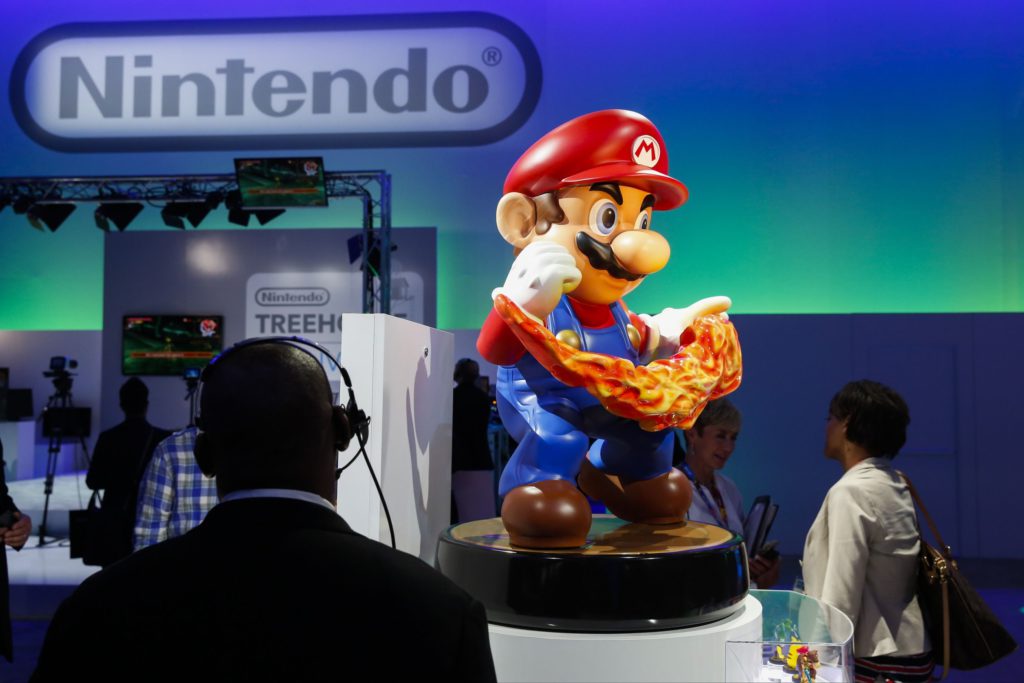
Nintendo Cuts Switch Sales Forecast After Chips Shortage

(Bloomberg) — Nintendo Co. cut its fiscal-year forecast for Switch console sales by 10% to 19 million after reporting earnings in line with expectations.

The Kyoto-based company said its operating profit was 118.7 billion yen ($809 million) in the quarter ended September, up from 100.2 billion yen in the same period a year ago. The consensus estimate was for a profit of 117.6 billion yen. The company revised up its net income forecast for the year, pointing to the weaker yen as a key reason, but kept its full-year operating profit forecast of 500 billion yen.

Nintendo said it sold fewer Switch consoles in the quarter than the year-ago period in part because of a prolonged chips shortage. The company says it’s now front-loading production to maximize delivery in the holiday shopping season and that production output is improving since September. President Shuntaro Furukawa said in a briefing after the results that demand for the console remains firm.

What Bloomberg Intelligence Says

Nintendo needs to drive software sales and live services to support long-term earnings growth as the Switch platform enters the mature phase of its cycle. Hardware sales could continue to decline as momentum from Animal Crossing fades further, barring a reported — but as yet unconfirmed — new Pro console.

— Nathan Naidu, BI analyst

Click here for the full research

Splatoon 3, the latest installment of a core Nintendo franchise, became the company’s fastest Switch software launch ever, with 3.45 million units sold domestically over its first three days. Its September launch gave a lift to the hit-driven sales of Nintendo’s five-year-old Switch console and that momentum is expected to be sustained by the Nov. 18 launch of the latest entries in the Pokemon series.

The company raised its net income forecast by 18% to 400 billion yen for the fiscal year. It kept its software sales outlook unchanged.

Nintendo also got a big boost from this year’s precipitous drop in the yen’s value. The currency trades at its lowest level against the US dollar in more than 30 years, and Nintendo gets four fifths of its sales from outside Japan while its software production costs are denominated mostly in the domestic currency.

Read more: Nintendo Surges After Record Debut of New Switch Game

Analysts are closely tracking the Switch console’s momentum heading into the year-end holiday season as supply chain constraints wane. Nintendo has consistently said demand for the handheld-hybrid console remains strong, despite the gadget’s age.

“It is strange that Nintendo cut its forecast of Switch shipments by 10% even though there is a broad consensus the chip shortage is easing,” said Tokyo-based industry analyst Serkan Toto. “I expect the next quarter to be another home run for Nintendo, largely thanks to the release of the new Pokemon title next week.”

–With assistance from Yuki Furukawa.

(Updates with BI analysis)

More stories like this are available on bloomberg.com

©2022 Bloomberg L.P.
US Futures Erase Losses as Focus Turns to Midterms: Markets Wrap

(Bloomberg) — US stock-index futures steadied as investors awaited Tuesday’s midterm elections and Thursday’s inflation print for cues on a nascent rally.

Contracts on the S&P 500 and Nasdaq 100 indexes erased losses, after US stocks posted a second-day rally on Monday. A selloff in Treasuries halted, while gold continued to trade lower. The dollar rebounded after a two-day slide. Take-Two Interactive Software Inc. tumbled in New York premarket trading after reducing its forecast for net bookings. 

Bulls have charged back into equity markets over the past two days amid expectations the midterm results could herald a near-term rally. While polls suggest Republicans could make gains, thereby placing a check on Democratic policies, investors are busy examining multiple scenarios. The best outcome for Treasuries could be a Republican control of both the House of Representatives and Senate, while the dollar could find support should Democrats keep both chambers.

“The US debt burden could stop the Democrats from putting in place many economic reforms that they would’ve otherwise, if Republicans are sufficiently crowded to block them moving forward,” Ipek Ozkardeskaya, a senior analyst at Swissquote Bank, wrote in a note. “Hence, slowing debt under GOP could slow growth.” 

Treasuries were little changed, with the 10-year yield steady at 4.21%. Tuesday’s two-way moves underscored the fragile sentiment in markets where the Federal Reserve’s monetary tightening remains the biggest headwind. Thursday’s consumer-price-index data may offer the next cue for traders even as money markets are raising their peak-rate wagers.  

The inflation reading is coming after the core consumer price index rose more than forecast to a 40-year high in September. Even if prices begin to moderate, the CPI is far above the Fed’s comfort zone.

“Inflation is going up. It may be coming down periodically. But it’s going up,” Richard Harris, chief executive of Port Shelter Investment Management, said on Bloomberg Television. “The market is kind of uncertain — it’s hoping for the best but really should be preparing for the worst.” 

Meanwhile, swaps markets are leaning toward a 50 basis-point Fed rate increase in December, after a fourth consecutive jumbo hike to a target range of 3.75% to 4% at last week’s meeting. Rates are expected to peak slightly above 5% around mid-2023. 

JPMorgan Chase & Co.’s Marko Kolanovic warned of the risk to stocks from ongoing Fed hawkishness, and Morgan Stanley’s Mike Wilson said companies will need to aggressively shrink expenses, including through layoffs, before he becomes more optimistic on US equities.

Already, signs of stress in US corporate performance are becoming visible. Of the 441 S&P 500 companies that have reported quarterly results, almost a quarter have missed profit forecasts.

Take-Two tumbled 17% in premarket trading after the company cut its forecast in the wake of an industry-wide spending slowdown. SolarEdge Technologies Inc. rose after posting strong quarterly results. NVidia Corp. gained as it began producing a processor for China.

Europe’s Stoxx 600 was little changed, after a weak open. Chinese equities halted a rally as traders considered a jump in virus infections and official comments defending Covid Zero.

China’s renewed commitment to keep strict pandemic controls sparked a decline in oil. West Texas Intermediate futures dropped below $91 a barrel, after easing almost 1% on Monday.

Key events this week:

  • Euro-zone retail sales, Tuesday
  • US midterm elections, Tuesday
  • EIA oil inventory report, Wednesday
  • China aggregate financing, PPI, CPI, money supply, new yuan loans, Wednesday
  • US wholesale inventories, MBA mortgage applications, Wednesday
  • Fed officials John Williams, Tom Barkin speak at events, Wednesday
  • US CPI, US initial jobless claims, Thursday
  • Fed officials Lorie Logan, Esther George, Loretta Mester speak at events, Thursday
  • US University of Michigan consumer sentiment, Friday

Some of the main moves in markets:

Stocks

  • The Stoxx Europe 600 rose 0.1% as of 9:27 a.m. London time
  • Futures on the S&P 500 were little changed
  • Futures on the Nasdaq 100 rose 0.2%
  • Futures on the Dow Jones Industrial Average were little changed
  • The MSCI Asia Pacific Index rose 0.7%
  • The MSCI Emerging Markets Index rose 0.2%

Currencies

  • The Bloomberg Dollar Spot Index rose 0.1%
  • The euro fell 0.3% to $0.9989
  • The Japanese yen rose 0.2% to 146.37 per dollar
  • The offshore yuan fell 0.5% to 7.2679 per dollar
  • The British pound fell 0.4% to $1.1472

Cryptocurrencies

  • Bitcoin fell 4.4% to $19,765.5
  • Ether fell 5.4% to $1,490.24

Bonds

  • The yield on 10-year Treasuries was little changed at 4.21%
  • Germany’s 10-year yield advanced one basis point to 2.35%
  • Britain’s 10-year yield advanced three basis points to 3.67%

Commodities

  • Brent crude fell 0.7% to $97.20 a barrel
  • Spot gold fell 0.4% to $1,668.99 an ounce

–With assistance from Jan-Patrick Barnert, Haidi Lun and Brett Miller.

More stories like this are available on bloomberg.com

©2022 Bloomberg L.P.

Evelyn De Rothschild, London Head of Banking Dynasty, Dies at 91

(Bloomberg) — Evelyn de Rothschild, who helped unite the British and French arms of his family’s famous banking group and counted Queen Elizabeth II among those who sought his financial advice, has died. He was 91.

He died “peacefully at home,” the UK’s Press Association reported, citing a statement from his family. 

Starting in 1976, Rothschild served 27 years as chairman of N.M. Rothschild & Sons, the London branch of the financial dynasty started by his great-great-great grandfather in the late 18th century. Among its many other roles, the bank known today as Rothschild & Co. helped finance the Duke of Wellington’s victory over Napoleon in 1815 at the battle of Waterloo.

Before stepping down in 2003, he achieved a long-planned goal of bringing together the London business with its French counterpart, Rothschild & Compagnie Banque. That was seen as a key step in remaining competitive with much younger — but also bigger — multinational banks.

“The first important strength of the family is unity,” he told the New York Times in 1996, as he and his cousin, David de Rothschild, head of the French house, announced their new partnership. 

From 1972 to 1989 he was chairman of the Economist magazine, which, in a 2002 interview with Bloomberg News, he called “probably the most independent publication in the world.”

The Rothschild firm was founded by Mayer Amschel, who started out buying and selling old coins in a Frankfurt ghetto. He took the family surname from the red shield — “rote Schild” in German — that was displayed above an ancestor’s house in the 1560s.

In the early 1800s, he sent his five sons to establish bases of Rothschild in London, Paris, Naples, Vienna and Frankfurt. London-based N.M. Rothschild carries the name of Nathan Mayer Rothschild, Evelyn’s great-great grandfather.

The family’s influence waned in the 20th century because European governments relied on American banks to finance both world wars against Germany. After World War II, Evelyn and his cousin Jacob refashioned N.M. Rothschild as a British merchant bank, which arranged international bond deals for such countries as Chile and Hungary.

The pair had a highly publicized split in 1980 over Jacob’s push to merge with S.G. Warburg & Co., in the hopes of expanding internationally and competing with Wall Street firms. When Evelyn refused, Jacob quit and founded an offshoot investment vehicle, RIT Capital Partners Plc. 

‘A Serious Rift’

“The preservation of family control took precedence over expansion,” British historian Niall Ferguson wrote in his second volume on the Rothschild clan. “It was a serious rift within the English branch of the family.”

For his part, Evelyn Rothschild rebuilt N.M. Rothschild by hiring a series of well-connected bankers. One of them was Michael Richardson, a partner at Cazenove. His friendship with Margaret Thatcher — British prime minister from 1979 to 1990 — helped the bank win the job of lead underwriter in the sales of shares in state-owned companies such as British Gas Plc and British Petroleum Plc.

Rothschild also helped the firm expand in China, where it opened an office in Beijing in 1999.

He was knighted in 1989 by Queen Elizabeth II. He was for many years one of the queen’s financial advisers. 

“No one is tighter at spending than the queen,” he told the London Evening Standard in 2017. “She grew up during the war. Very disciplined.”

Evelyn Robert Adrian de Rothschild was born on Aug. 29, 1931, the only son of Anthony Gustav de Rothschild and the former Yvonne Cahen d’Anvers, according to the website of the Rothschild Archive, an independent charitable trust.

Wartime Evacuation

Evacuated to the relative safety of the US during World War II, he worked the soda fountain at a drugstore in Westhampton on New York’s Long Island, he told the Financial Times for a 2017 profile.

He returned to the UK to be educated first at Harrow School in London, then at Cambridge University’s Trinity College. 

He joined his family’s bank in 1957. He was part of its expansion into media and telecommunications, joining the boards of Beaverbrook Newspapers, the Economist and the Telegraph, Ferguson wrote.

In the 2002 interview with Bloomberg News, Rothschild said of his job, “Every day something new pops up out of the woodwork and someone asks me if I can help. I don’t pretend to be a nuts and bolts person. I know quite a lot about certain things, but I’m not a lawyer, I’m not an engineer, I’m not an accountant. But that doesn’t stop you from using your common sense.”

An art collector, wine connoisseur and owner of thoroughbred racehorses who counted Bill and Hillary Clinton among his friends, Rothschild shuttled for many years between London and Ascott House, a country estate in Buckinghamshire acquired by his grandfather in 1876 and decorated with porcelain from Asia and paintings by old masters such as Rubens.

Rothschild’s first marriage, to Jeannette Ellen Dorothy Bishop, ended in divorce. With his second wife, Victoria Lou Schott, he had three children: Jessica, Anthony and David. That marriage also ended in divorce. In 2000, Rothschild married US-born Lynn Forester, co-founder of the telephone network company FirstMark Communications Europe SA. 

–With assistance from Stephanie Baker.

More stories like this are available on bloomberg.com

©2022 Bloomberg L.P.
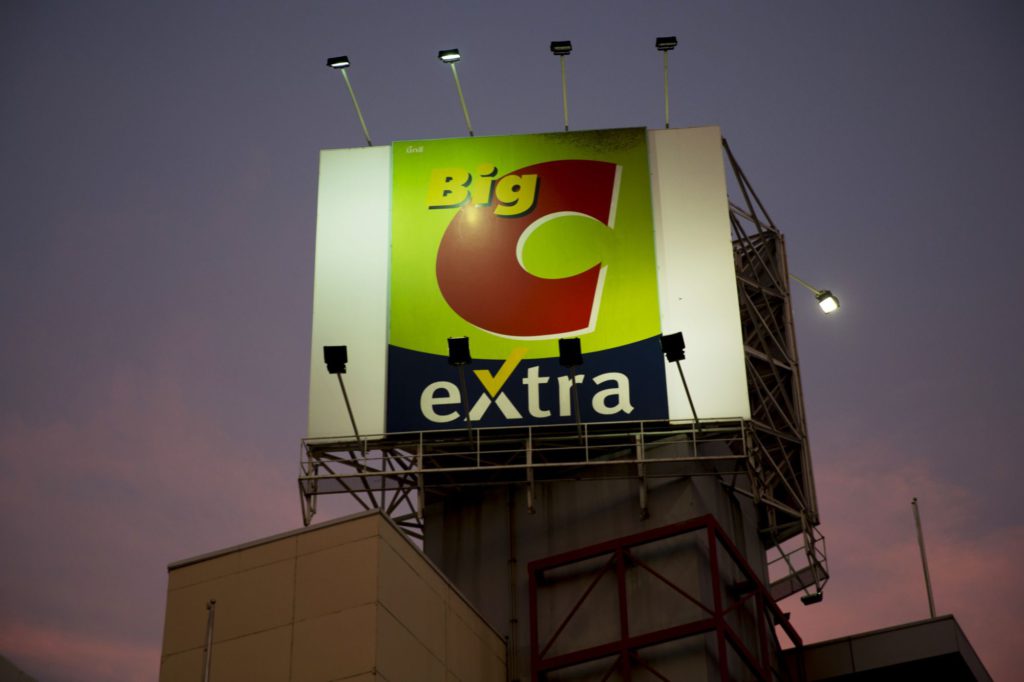
Grocery Retailer Big C Is Said to Weigh $500 Million Thai IPO

(Bloomberg) — Big C Supercenter Pcl, which runs supermarkets and convenience stores in Southeast Asia, is considering going public again in Bangkok through an initial public offering that could raise more than $500 million, according to people familiar with the matter.

The Bangkok-based company is sounding out investment banks for proposals for the share sale, which could happen as soon as next year, the people said, asking not to be identified as the information is private.

Discussions are ongoing and details of the potential offering such as fundraising size and timing could still change, the people said. An investor relations representative for Berli Jucker Pcl, the owner of Big C, said they have no information on the IPO plans so far.

Big C was founded by Thailand’s Central Group in 1993 and opened its first store on Chaengwattana Road. The company raised about 4.2 billion baht ($112 million) in a Thai IPO in 2012.

TCC Holding Co., controlled by Thai billionaire Charoen Sirivadhanabhakdi, in 2016 agreed to purchase a 58.6% stake in Big C for 3.1 billion euros from French retailer Casino Guichard Perrachon SA. Big C was delisted in 2017 after Berli Jucker, a subsidiary of TCC, took it private.

Big C operates 1,792 stores including convenience stores, supermarkets and hypermarkets in Thailand, Vietnam, Laos and Cambodia, according to its latest presentation. The company earlier this year acquired 18 Kiwi Mart stores in Cambodia and plans to rebrand them into Big C Mini stores.

–With assistance from Anuchit Nguyen.

More stories like this are available on bloomberg.com

©2022 Bloomberg L.P.

Close Bitnami banner
Bitnami