
Bloomberg

North Korea Again Denies US Charges of Selling Arms to Russia

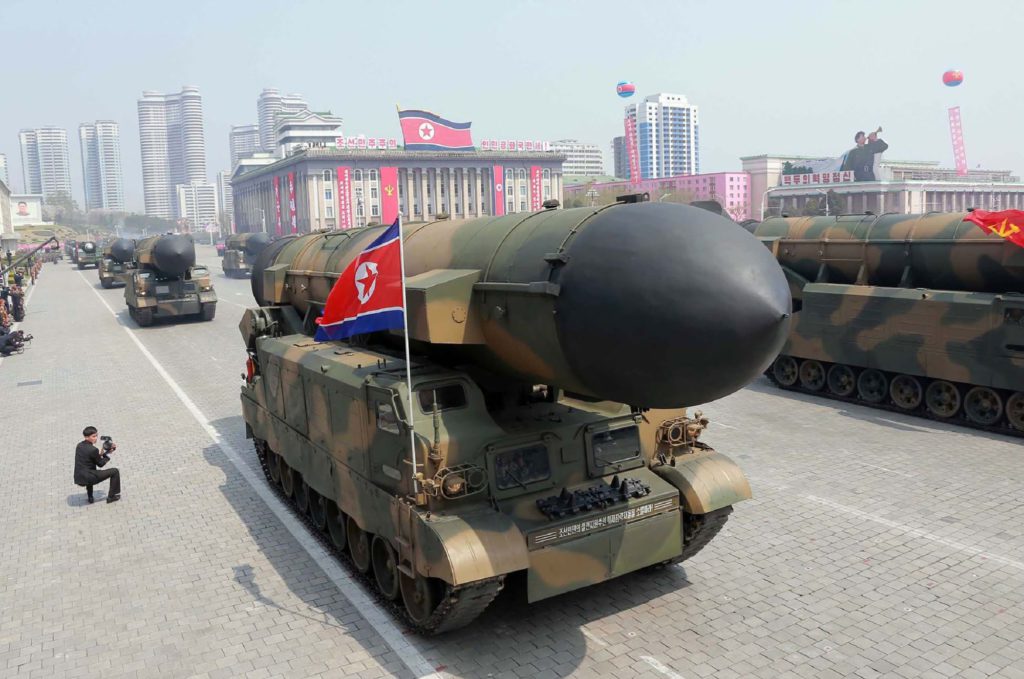
(Bloomberg) — North Korea denied US allegations it was selling arms to Russia for use in Ukraine, amid worries Pyongyang could be moving closer to Moscow as it faces criticism from Washington over its weapons tests.

“We once again make clear that we have never had ‘arms dealings’ with Russia and that we have no plan to do so in the future,” a North Korea Defense Ministry official said, according to a report from the state-run Korean Central News Agency on Tuesday.

The Biden administration last week accused North Korea of covertly supplying Russia with artillery shells for use in the Ukraine invasion despite previous denials that it planned to do so. It made similar accusations in September, which North Korea denied. The US hasn’t released any evidence that such sales have taken place.

Any weapons sales would represent a role reversal between Pyongyang and Moscow, after North Korea relied on the Soviet Union for support during the Cold War. An arms sale could potentially give Kim’s regime much-needed cash and oil and perhaps even technology to help with its nuclear weapons program.

If such sales did take place, the arms could be carried on the sole rail link between the two countries. The first train in more than two years crossed from North Korea into Russian on Friday — shortly after the US made its latest charge of an arms sale — satellite imagery released by the 38 North website showed. 

The link had been closed in February 2020 as Kim Jong Un sealed his borders against the emerging Covid-19 threat. Any arms shipment would be a violation of United Nations sanctions levied against North Korea with Russian support. 

Kim has stood by Russia since Vladimir Putin’s invasion of his neighbor and is one of the few countries that have recognized the Kremlin-controlled “People’s Republics” in Donetsk and Luhansk in eastern Ukraine.

Russia has used its veto power on the UN Security Council to thwart new attempts to increase sanctions on North Korea, which in 2022 has fired off its largest barrage of ballistic missiles in a year under Kim. The US, South Korea and Japan have said Kim may soon test a nuclear device, and North Korea may be counting on Russia to block any new measures.

–With assistance from Jessica Park.

More stories like this are available on bloomberg.com

©2022 Bloomberg L.P.
Toshiba Falls After Report JIP-Led Group Submits $15 Billion Bid

(Bloomberg) — Toshiba Corp. fell after the Nikkei reported that a consortium led by Japan Industrial Partners Inc. submitted a 2.2 trillion yen ($15 billion) offer for the Japanese conglomerate, a level in line with its market value.

Shares dropped as much as 2% in early Tokyo trading Tuesday even as the benchmark Topix index gained. The JIP-led group, the preferred bidder for Toshiba, will get around 1 trillion yen of the funds from Japanese firms, more than 10 of which have expressed an interest in participating in the buyout, the newspaper said. JIP itself will invest 100 billion yen, it said.

Toshiba had a market capitalization of $15.1 billion as of Monday’s close. 

Toshiba spokeswoman Midori Hara declined to comment, saying to do so would undermine fair process. A spokesperson for JIP declined to comment. 

JIP hadn’t received a commitment letter from financial institutions as of Monday, Nikkei reported. It’s in talks to complete the financing process by the end of this month if Toshiba accepts the offer, the paper said.

The JIP-led group was poised to miss Monday’s deadline for securing financing, Bloomberg reported last week.

–With assistance from Taro Fuse.

More stories like this are available on bloomberg.com

©2022 Bloomberg L.P.
Jokowi Readies G-20 Deals to Showcase Indonesia’s Growing Clout

(Bloomberg) — Indonesia is using the Group of 20 summit next week to power through deals ranging from infrastructure to carbon trading that spotlights its ambitions as a Southeast Asian economic powerhouse. 

Much is at stake for Indonesian President Joko Widodo, who is targeting $89 billion in investments next year while pushing ahead with a $34 billion new capital in Borneo. All these plans need funding and support from wealthier, developed nations.

“This message is mostly for the domestic audience to show that the G-20 forum running this whole time did result in some concrete projects,” said Yose Rizal Damuri, Executive Director at the Center for Strategic and International Studies. 

It’s also a way for Jokowi, as the president is popularly known, to leave behind a legacy of growth and investment, he added. Jokowi is currently in his second and final term in power.  

Indonesia has long been criticized by analysts for not punching above its own weight for economic and diplomatic influence given its domestic pressures and political elites. Clinching the G-20 presidency has been a way for Jokowi’s administration to showcase the country’s potential and his officials are not going to let that opportunity pass.  

Here’s a list of deals that Indonesia is looking to announce:

Coal Phaseout 

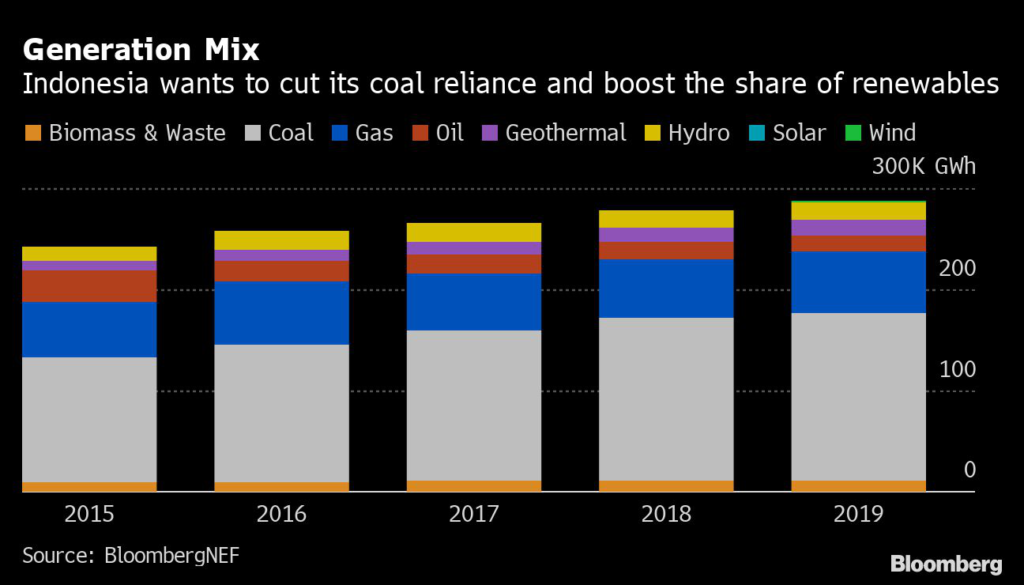
Indonesia aims to clinch a deal during the summit with rich countries to fund programs to phase out coal. Jokowi has pledged to shut all of the archipelago’s coal-fired power plants by 2050 and be 100% dependent on renewable sources five years later. However, his cabinet has been divided on how to phase out coal, which contributes over half of the country’s total power capacity.

The Asian Development Bank is studying similar plans for Vietnam and the Philippines, hoping to announce a concrete result during the summit.

Digital Money

Indonesia’s central bank along with Malaysia, Thailand, Singapore and Philippines aim to sign a deal this month to link their payment systems that will allow some 384 million people to pay for goods and services through QR code scanning. The system would allow for local currency settlements, bypassing the need for the US dollar as an intermediary. 

Just 51.8% of Indonesians have access to a financial account, one of the lowest among Southeast Asia’s major economies, according to World Bank data. This made financial inclusion a main focus for Indonesia during its G-20 presidency. 

Bank Indonesia also plans to release the conceptual design of digital rupiah by the end of this year, said Governor Perry Warjiyo. The central bank has been studying the digital rupiah since last year to get ahead of the global adoption of cryptocurrency as a payment method. 

Trains

Jokowi has invited President Xi Jinping to witness the trial run of a $8 billion Chinese-backed high-speed railway via Zoom videoconferencing from Bali on Nov. 16, according to Coordinating Maritime Affairs and Investment Minister Luhut Panjaitan. The train, which connects Jakarta to nearby cities, is backed by the Chinese Development Bank Corp. and China Railway International Co. Ltd. 

Indonesia also plans to sign deals with foreign investors for the 188 trillion rupiah ($12 billion) expansion of the Jakarta MRT train system, a project that Jokowi has claimed as his legacy when he was governor. Funding would come from Japan, South Korea and the UK, according to Transport Minister Budi Karya Sumadi.

Carbon Trading

Finance Ministry special staff Masyita Crystallin said the government would release a road map for carbon market, carbon tax and energy transition before the G-20 summit. This would be a prerequisite to issuing a long-awaited regulation on carbon tax and trading meant to help Southeast Asia’s largest economy attain net zero emissions by 2060.

Crystallin said the road map would outline the potential demand for such a market. The government already assigned the Indonesia Stock Exchange to set up a carbon exchange, which is expected to commence operations in 2025.

More stories like this are available on bloomberg.com

©2022 Bloomberg L.P.
TikTok Should Be Banned in US, FCC Member Carr Says

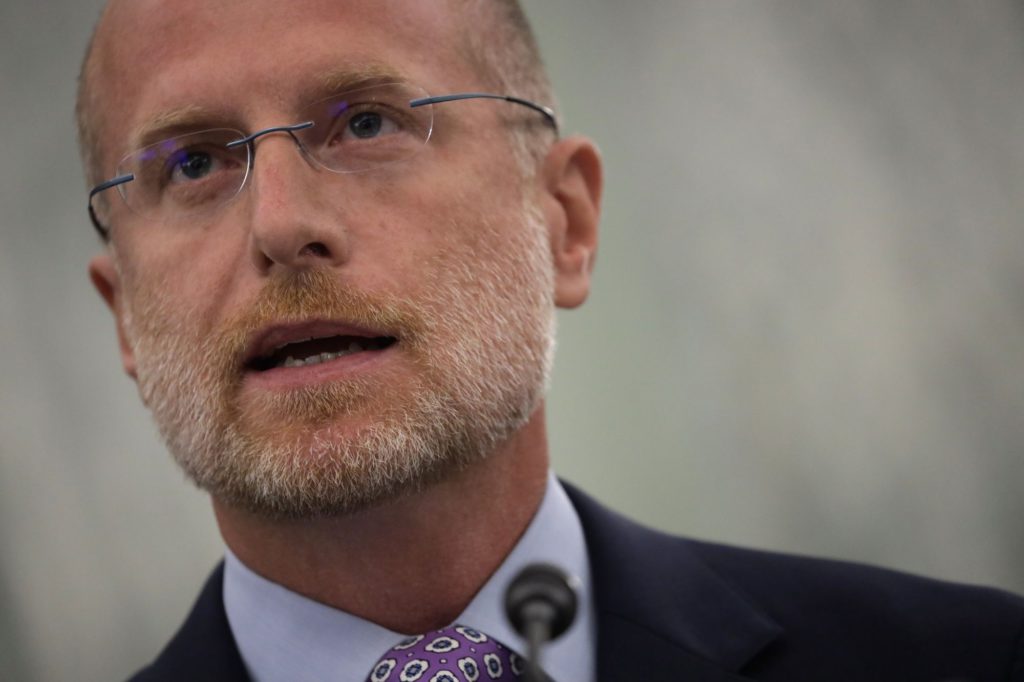
(Bloomberg) — Brendan Carr, a Republican member of Federal Communications Commission, said Chinese social media giant TikTok should be banned in the US.

Carr, speaking on Bloomberg TV on Monday, cited the possibility of data flows to China that could compromise national security. 

The FCC lacks jurisdiction over the matter and Carr, whose party lacks control of the commission, couldn’t do much to prevent the company from operating in the US. Other agencies are mulling restrictions on the app, however. Carr has been critical of the company for months. TikTok is a division of Beijing-based ByteDance Ltd.

The FCC is considering other initiatives, such as restricting the sale of telecommunications gear from China over data privacy concerns. Carr said he supported that as well. 

Carr also said he wants the social media app Twitter, now owned by billionaire Elon Musk, to protect political speech on its platform. The regulator said he thinks the government might have to intervene to accomplish that.

“I don’t think we need to rely on just the benevolence of Elon Musk or any other billionaire,” Carr said. “I do think we should put regulations in place that are going to protect political speech in the digital town square.”

More stories like this are available on bloomberg.com

©2022 Bloomberg L.P.
Rogers, Shaw Make Gains as High-Stakes Court Hearing Begins

(Bloomberg) — A lawyer for Shaw Communications Inc. accused a rival company of working with Canada’s competition czar to try to kill its sale to Rogers Communications Inc. and keep it at a competitive disadvantage.

The statement from Shaw lawyer Kent Thomson came in the first day of court hearings into the C$20 billion ($14.8 billion) deal. Competition Commissioner Matthew Boswell is suing to block the transaction, which would unite two of Canada’s largest telecommunications firms. 

Shaw competitor Telus Corp. “has promoted the commencement of these proceedings by the commissioner — in fact lobbied him to do so,” Thomson said Monday during opening arguments. “Telus is not seeking to enhance competition. It seeks to limit it.” A spokesperson for Telus did not reply to a request for comment. 

Rogers rose 1.5% and Shaw was up 0.6% in Toronto trading, while Telus and BCE Inc. both declined. 

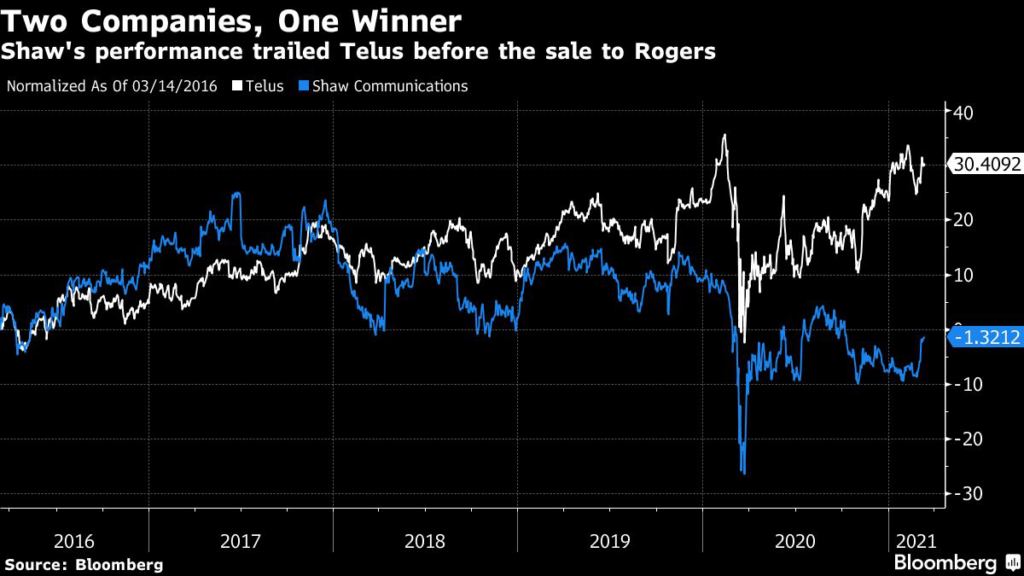
Shaw and Telus are the largest providers of cable television and internet service in the provinces of Alberta and British Columbia, but Telus has performed better and taken significant market share, leaving Shaw a weakened company. The Shaw family decided to sell to Toronto-based Rogers in March 2021. 

Thomson’s comments underscore a key argument Rogers and Shaw will make in court: that consumers will actually be better off once Shaw sells its cable division to Rogers and most of its wireless business to Montreal-based Quebecor Inc. in separate transactions. The deals will allow the companies to upgrade networks in Western Canada and offer better prices and service, they claim. 

Boswell, on the other hand, will have to prove to the Competition Tribunal that the deals are likely to reduce competition, rather than enhance it.

Read more: Rogers Finally Gets Its Day in Court to Rescue Shaw Takeover

“The case comes at a watershed moment for wireless competition in Canada and presents the following question: Will Canada continue to see the growth of strong regional facilities-based competitors like Shaw?” said John Tyhurst, a lawyer for the Competition Bureau. “Or will it see weakened and dependent wireless competition, in the form of the proposed divestiture of Freedom to Videotron?” 

Freedom Mobile is the name of the division that includes most of Shaw’s wireless assets. Quebecor does business under the Videotron brand.

Rogers’ lawyer Jonathan Lisus argued that the deal is in fact “pro-competitive,” adding: “I think we all agree that the stakes could not be higher.” 

The case continues Tuesday and will run for several weeks, with closing arguments scheduled for Dec. 13 and Dec. 14. 

More stories like this are available on bloomberg.com

©2022 Bloomberg L.P.
Activision Blizzard Beats Estimates, Boosted by Mobile Games

(Bloomberg) — Activision Blizzard Inc. beat analysts’ estimates for bookings and profit in the third quarter, boosted by its mobile gaming division. 

The video game publisher reported net bookings, which excludes deferred sales from online purchases, fell 2.6% to $1.83 billion. That was still ahead of the $1.7 billion average analyst forecast, according to data compiled by Bloomberg. Adjusted earnings per share were 68 cents, ahead of analysts’ estimates for 50 cents, according to data compiled by Bloomberg.

Activision said its mobile platform net bookings grew 20% in the period from a year earlier to about $1 billion, reflecting the enduring popularity of games like Candy Crush and Diablo Immortal, which launched in the US in June and in China– the world’s largest gaming market — in July. 

Diablo Immortal was Activision’s big release for the first half of the year and ranked among China’s top 10 highest-grossing mobile games, according to the company. Made in partnership with Chinese technology company Ne Tease Inc., the mobile iteration of Blizzard’s popular horror role-playing game franchise earned the top spot on Google’s Play Store and Apple’s App Store, receiving more than 20 million downloads across smartphones. However, the game has an average 4.1 review score on Android and 4.5 on Apple’s App Store, indicating that some fans have begun to cool on it. 

Concerns about a licensing deal covering several Blizzard titles in China that expires in January could weigh on the company’s success in the country going forward. “We are in discussions regarding the renewal of these agreements, but a mutually-satisfactory deal may not be reached,” Activision said, noting that the agreements contributed about 3% of net revenue in 2021. Diablo Immortal is covered by a “separate long-term agreement,” Activision said. 

Microsoft Corp. is in the process of acquiring Activision Blizzard for $69 billion, although regulators are heavily scrutinizing the deal for signs it could limit Call of Duty to Microsoft’s Xbox console, cutting out Sony Group Corp.’s PlayStation. Microsoft has disputed that it will limit the game to Xbox.

Activision’s current quarter is stacked with new releases, including the recent Call of Duty: Modern Warfare II. The latest title has been an overwhelming success, topping more than $1 billion in sales in the first 10 days of its release, the fastest pace of any game in the highly successful franchise. A separate mode of the game, the free-to-play Call of Duty: Warzone 2.0, will be released Nov. 16. Another hit, the popular hero-shooter Overwatch 2, also released in October, attracted 35 million players within its first month. Also coming this month, the next World of Warcraft expansion, Dragonflight. 

Investors will be focused on the success of these games, and particularly on their potential for repeatable revenue through 2023, when Activision Blizzard will skip its annual mainline Call of Duty release for the first time. A continuation of Modern Warfare II, developed by Foster City, California-based Sledgehammer Games, will be out next year in lieu of a brand new game and will be sold at a premium, according to people familiar with the studio’s plans.

Activision said Monday it’s planning the “most robust Call of Duty live operations to date” next year, the next full premium release in the annual series and more free-to-play experiences across platforms.

The next mainline Call of Duty game is planned for 2024 from its Treyarch studio.

Overwatch 2’s much-anticipated player-versus-environment mode — the game’s greatest deviation from its blockbuster 2016 predecessor — will release sometime in 2023 with the much-anticipated Diablo IV and Call of Duty: Warzone Mobile.

Activision shares closed at $71.10 in New York and have gained 6.9% this year, outperforming rivals due to the Microsoft purchase.

–With assistance from Jason Schreier.

(Updates with closing share price in the final paragraph.)

More stories like this are available on bloomberg.com

©2022 Bloomberg L.P.

Jeep Maker Stellantis Pauses Twitter Ads, Joining GM and VW

(Bloomberg) — Stellantis NV, owner of the Jeep and Ram vehicle brands, said it’s pausing paid advertising on Twitter until it can better assess how the platform will change under new owner Elon Musk.

“We’re pausing paid advertising posts until we have a clearer understanding of the future of the platform under its new leadership,” the company said in an emailed statement Monday.

The decision follows similar moves last week by Volkswagen AG and General Motors Co. Twitter relies on advertising for the bulk of its revenue. Reuters earlier reported on the Stellantis advertising pause.

More stories like this are available on bloomberg.com

©2022 Bloomberg L.P.
Take-Two Tumbles After Forecast for Bookings Misses Estimates

(Bloomberg) — Take-Two Interactive Software Inc. reduced its annual forecast for net bookings in the wake of an industrywide spending slowdown, particularly in mobile gaming. Shares plunged more than 15% in extended trading.

Net bookings, or the net amount of products and services sold globally, will be as much as $5.5 billion for the year ending in March, the company said Monday in a statement. Previously, Take-Two projected as much as $5.9 billion. Analysts, on average, estimated $5.91 billion.

Chief Executive Officer Strauss Zelnick said the company’s outlook was affected by production shifts, the strong dollar and “a more cautious view of the current macroeconomic backdrop, particularly in mobile.” Rival Electronic Arts Inc. said last week it had also been hurt by currency fluctuations.

Zelnick said on a call with investors that in-game purchases such as those in Zynga’s mobile games have taken a hit this year amid the uncertain economy and that the company has delayed some games.

In May, Take-Two closed its $11 billion acquisition of Zynga, the company behind popular mobile franchises such as FarmVille. In the statement, Zelnick said Take-Two is “highly optimistic about the vast, long-term growth potential” for mobile games.

“Despite these headwinds and their effect on our guidance for the year, we remain highly confident in our diverse and extensive development pipeline that we expect will deliver us sequential years of growth and record performance,” he said.

New York-based Take-Two, the parent company of video game publishers 2K Games and Rockstar Games, is known for franchises like BioShock and NBA 2K. Take-Two said its new entry in the annual basketball series, NBA 2K23, which came out in September, has sold almost 5 million units to date. 

After a boom during the pandemic, the video game industry has slumped this year due to the economic slowdown and a lack of big hits. Spending on games, hardware and accessories is down 8% through September from last year, according to NPD analyst Mat Piscatella. 

The company also reduced its profit forecast for the fiscal year. Earnings, excluding some items, will be as much as $4.10 a share, from a previous outlook of $4.85 a share. Analysts estimated $4.82.

Take-Two shares dropped to a low of $90 in extended trading after closing at $108.40 in New York. The stock has slumped about 40% this year.

Analysts and observers are eager for news on Rockstar’s Grand Theft Auto VI, which hasn’t been officially announced but was teased earlier this year. In September, hours of footage from an early, unfinished version of the game leaked online due to what Rockstar called a “network intrusion.” The previous entry, Grand Theft Auto V, is the second-best-selling game of all time at 170 million copies.

Take-Two will also release a new Marvel game, Midnight Suns, in December, although it does not yet have any major games announced for 2023.

Bookings in the fiscal second-quarter, which ended in September, were $1.5 billion. Analysts, on average, estimated $1.55 billion. 

(Updates with CEO comments in the fourth paragraph.)

More stories like this are available on bloomberg.com

©2022 Bloomberg L.P.
Twitter Engineer Files Retaliation Complaint Over Job Cuts

(Bloomberg) — A software engineer terminated last week by Twitter Inc. amid job cuts ordered by new owner Elon Musk complained to the US labor board that he was illegally targeted because of his efforts to help fellow employees preserve messages from their work email accounts.

In a Monday filing with the National Labor Relations Board, Emmanuel Cornet said he was terminated Nov. 1, the same day he used a company Slack channel to share a Google Chrome extension he’d published. It was designed to help employees preserve messages regarding performance reviews or stock accumulation, which could be useful to challenge layoffs or make compensation demands. Twitter removed the Slack channel link, he said.

“Mr. Cornet alleges that Twitter selected him to be one of the first employees let go in its mass layoff, in retaliation for having assisting his fellow employees to help protect themselves in the event that they were laid off,” according to the NLRB filing.

Twitter did not immediately respond to a request for comment.

Read More: Lawyer Suing Twitter Over Layoffs Says Musk Trying to Comply

Claims filed with the NLRB are investigated by regional officials, who if they find merit in the allegations and can’t secure a settlement, then issue a complaint on behalf of the labor board’s general counsel, which is considered by an agency judge. Those judges’ rulings can be appealed to the NLRB members in Washington, and then to federal court. The agency has the authority to order companies to reinstate fired workers and provide back pay, but generally can’t hold executives personally liable for alleged wrongdoing or issue any punitive damages.

Cornet is also the lead plaintiff in a class action filed Thursday by the same attorney, Shannon Liss-Riordan, accusing Twitter of violating federal and state laws requiring months of advance notice before mass layoffs at large companies.

Musk has said that all employees being terminated were offered three months of severance. Liss-Riordan said Monday that Cornet has not been guaranteed such compensation, and that it’s unclear which workers were.

(Updates with information from complaint)

More stories like this are available on bloomberg.com

©2022 Bloomberg L.P.

Bitcoin Miner Riot Blockchain’s Revenue Misses Estimates

(Bloomberg) — Riot Blockchain Inc.’s third-quarter loss widened and revenue was lower than estimated. 

The net loss widened to $36.6 million, or 24 cents a share, from $15.3 million, or 16 cents, in the year-earlier period, the Castle Rock, Colorado-based company said in a statement Monday. Revenue dropped 28% to $46.3 million, below the $54.2 million estimate of analysts in a Bloomberg survey.

Low Bitcoin prices, soaring energy costs and fierce competition among miners have battered Bitcoin miners this year. Other miners, such as Core Scientific Inc., Argo Blockchain PLC and Iris Energy have struggled to repay debt. Riot has $255 million cash and 6,766 Bitcoin, which is a relatively strong balance sheet compared to other miners that are in distressed with little liquidity on hand. That is in part due to its long-term fixed rate power contract to generate significant power credits.

Riot earned $13.1 million in power curtailment credits for the third quarter. The firm was able to sell power back to the Electric Reliability Council of Texas at a market-driven spot price and make a profit.

Riot expects the 400-megawatt expansion at its Rockdale, Texas, facility to be fully completed in the first quarter in 2023 and started building out another facility in the state with one-gigawatt capacity.

Share of Riot fell 2.3% in trading after regular exchange hours. They’ve dropped 74% this year. 

More stories like this are available on bloomberg.com

©2022 Bloomberg L.P.

Close Bitnami banner
Bitnami
