
Bloomberg

T-Mobile Seeks Fiber-Optic Venture Aimed at Home Internet

(Bloomberg) — T-Mobile US Inc., the nation’s second-largest wireless carrier, is exploring options to create a fiber-optic network, either through a joint venture or a commercial partnership, according to people familiar with the matter.

The company is working with Citigroup Inc. to find partners to build a fiber network targeting the home-broadband market that will require several billion dollars of investment, said the people, who asked not to be identified because the matter is private. One of the people said the joint-venture could be worth $4 billion and T-Mobile could chip in on a part of that. 

Terms aren’t finalized and could still change. The discussions with potential joint venture investors are preliminary and it’s possible no transaction will be reached. Representatives for T-Mobile and Citigroup declined to comment.

The significant landline investment would break new ground for T-Mobile, which, unlike wireless peers AT&T Inc. and Verizon Communications Inc., doesn’t own a fiber network and instead leases capacity for its mobile-phone network. 

While expensive to build, fiber networks offer an abundance of bandwidth that could open up new rounds of revenue growth for service providers. 

T-Mobile as well as numerous other telecommunications companies and infrastructure firms are eyeing the nearly $100 billion pool of federal money created to fund US broadband buildout. 

T-Mobile started a fiber-to-the-home pilot program in parts of New York City last year. The company also has been exploring partnerships with other fiber-to-the-home providers including cable and other phone companies, the people said.

The company sells a wireless home internet service that beams signals to WiFi routers. The service has attracted broadband customers from cable companies, but has bandwidth limitations that fiber networks don’t. With its own fiber network, T-Mobile would have the option to connect homes and businesses with high-speed fiber service and also reduce leasing costs for connections to cell sites. 

T-Mobile’s potential fiber partnership is similar to an effort by AT&T, which is working with Morgan Stanley to help launch a $10 billion to $15 billion fiber expansion JV with an infrastructure finance partner. 

More stories like this are available on bloomberg.com

©2022 Bloomberg L.P.
US Stocks Catch Bids in Volatile Day; Dollar Falls: Markets Wrap

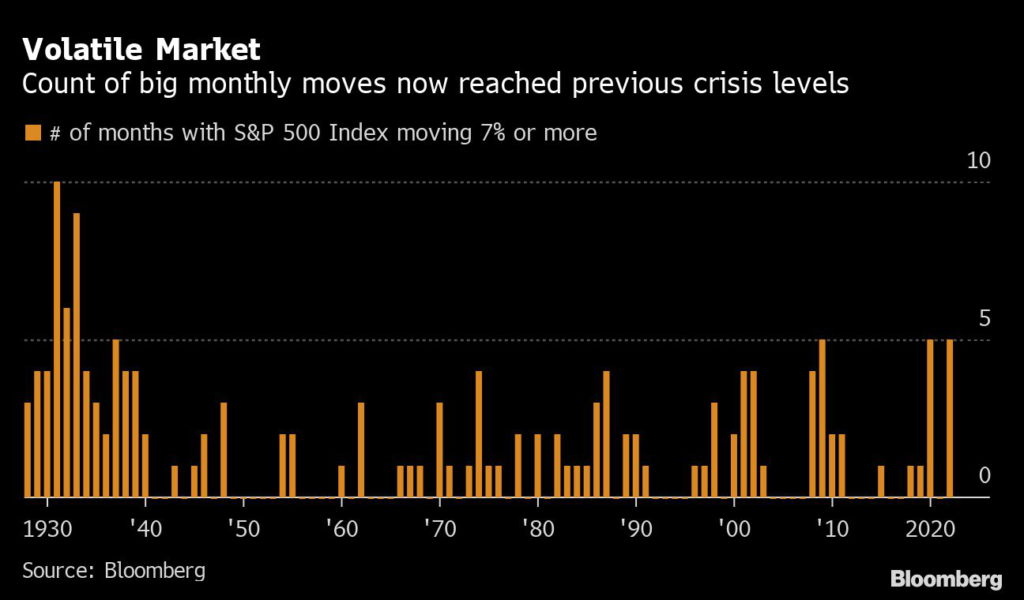
(Bloomberg) — US stocks rose in choppy trading as investors focused on midterm elections and inflation readings later this week. The dollar fell with Treasuries.

The S&P 500 ticked higher amid gains in eight of the 11 industry groups. The tech-heavy Nasdaq 100 also caught bids, while the Dow Jones Industrial Average outperformed, with health-care names topping the leaderboard. 

Facebook parent Meta Platforms Inc. advanced on plans for job cuts. Apple Inc. fell after a report saying it expected to produce at least three million fewer iPhone 14 handsets than originally anticipated this year. 

Stocks are poised for a second day of gains ahead of US midterms. Morgan Stanley’s Michael Wilson said polls pointing to Republicans winning at least one chamber of Congress provide a potential catalyst for lower bond yields and higher equity prices. 

“Has the stock market been voting early?” said Ed Yardeni, founder of his namesake research firm, referring to the S&P 500 bounce back from an October low. “Tomorrow’s midterm elections may further boost stock prices in coming months if history is a guide. Our soft-landing economic outlook, if it pans out (60% subjective odds), may be another wind at the stock market’s back.”

Read more: Wall Street Hopes History Repeats With a Post-Election Comeback

Optimism, for the moment, is outweighing concerns over the Federal Reserve’s resolute campaign against price surges, signs of stress in US corporate performance and China’s announcement it will “unswervingly” adhere to current Covid Zero policy. 

Stocks rose on Friday, paring the biggest weekly drop in the S&P 500 since September, after data showed strong hiring and wage increases along with higher unemployment. That offered a mixed picture for Fed officials debating how long to extend their campaign to curb elevated inflation. 

Swaps markets are leaning toward a 50 basis-point Fed rate increase in December, after a fourth consecutive jumbo hike to a target range of 3.75% to 4% at last week’s meeting. Rates are expected to peak slightly above 5% around mid-2023.

The latest US inflation reading due Thursday will be closely watched after the core consumer price index rose more than forecast to a 40-year high in September. Even if prices begin to moderate, the CPI is far above the Fed’s comfort zone.

“Since we might not know the answer to what the makeup of Congress will be this week, Thursday’s CPI number will be very important once again,” Matt Maley, chief market strategist at Miller Tabak + Co., said in a note. “Even if we get a better-than-expected CPI number later this week, the odds that it will only create a very short-term bounce are high. Before long, the stock market should roll-over once again.”

Key events this week:

  • Fed officials Susan Collins, Loretta Mester and Tom Barkin speak at events, Monday
  • Euro-zone retail sales, Tuesday
  • US midterm elections, Tuesday
  • EIA oil inventory report, Wednesday
  • China aggregate financing, PPI, CPI, money supply, new yuan loans, Wednesday
  • US wholesale inventories, MBA mortgage applications, Wednesday
  • Fed officials John Williams, Tom Barkin speak at events, Wednesday
  • US CPI, US initial jobless claims, Thursday
  • Fed officials Lorie Logan, Esther George, Loretta Mester speak at events, Thursday
  • US University of Michigan consumer sentiment, Friday

Some of the main moves in markets:

Stocks

  • The S&P 500 rose 0.4% as of 1:19 p.m. New York time
  • The Nasdaq 100 rose 0.3%
  • The Dow Jones Industrial Average rose 0.9%
  • The MSCI World index rose 0.8%

Currencies

  • The Bloomberg Dollar Spot Index fell 0.4%
  • The euro rose 0.7% to $1.0023
  • The British pound rose 1.2% to $1.1518
  • The Japanese yen was little changed at 146.51 per dollar

Cryptocurrencies

  • Bitcoin fell 2% to $20,697.97
  • Ether fell 1% to $1,587.47

Bonds

  • The yield on 10-year Treasuries advanced three basis points to 4.19%
  • Germany’s 10-year yield advanced five basis points to 2.34%
  • Britain’s 10-year yield advanced 10 basis points to 3.64%

Commodities

  • West Texas Intermediate crude fell 0.4% to $92.25 a barrel
  • Gold futures rose 0.2% to $1,679.30 an ounce

–With assistance from Michael G. Wilson, Tassia Sipahutar, Srinivasan Sivabalan and Isabelle Lee.

More stories like this are available on bloomberg.com

©2022 Bloomberg L.P.
Oracle to Sell $7 Billion of Bonds to Help Fund Cerner Purchase

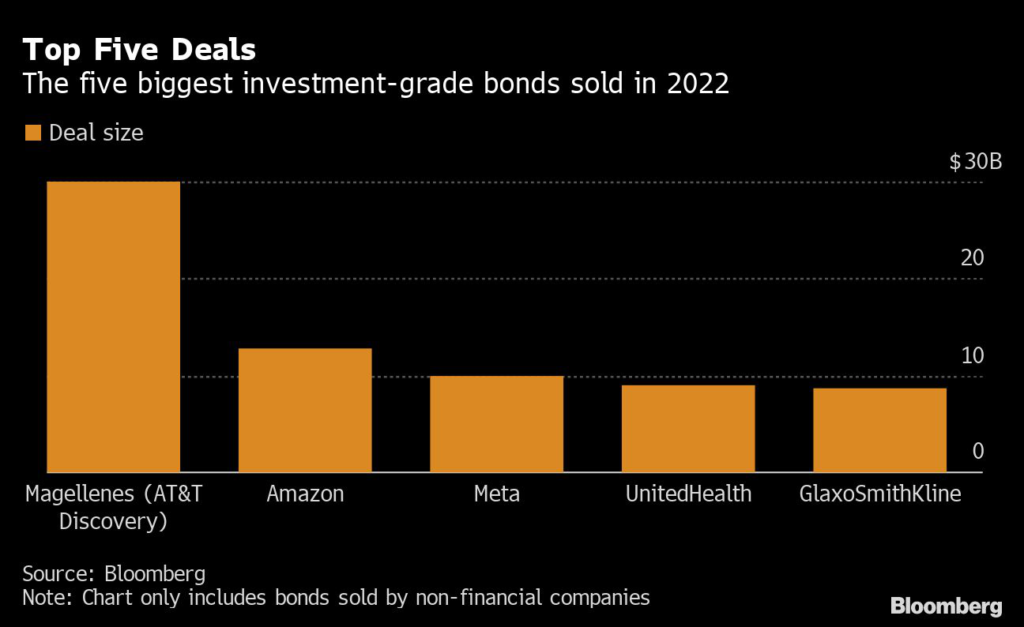
(Bloomberg) — Oracle Corp. is the latest company to seize the moment in a credit market recovery, bringing a $7 billion bond sale to help fund its acquisition of medical-records systems provider Cerner Corp.

The software-maker is selling bonds in as many as four parts, according to a person with knowledge of the matter. The longest portion of the offering, a 30-year note, will yield 2.55 percentage points above Treasuries after earlier discussions for about 3.1 percentage points, said the person, who asked not to be identified as the details are private. 

Oracle announced, along with the bond sale, that it also increased its previous $4.4 billion term loan by $1.3 billion. The added proceeds will help pay down a bridge loan used to fund the acquisition of Cerner, according to a filing. 

The Cerner acquisition was originally funded with about $15.7 billion of so-called bridge loan debt provided by a group of banks. Such debt is typically refinanced into longer-term bonds and loans. Oracle later borrowed about $4.4 billion through a term loan agreement, using that to reduce the bridge facility, which means it may have to raise less cash in the corporate bond market.

Proceeds of the bond sale will prepay its borrowings under the bridge facility it borrowed earlier this year to fund the deal. With the bond sale and the added proceeds of the term loan, there’s about $3 billion left to fund in the bond market from the bridge loan.

The Austin, Texas-based company originally agreed to buy Cerner for $28 billion in December, in an all-cash deal that would broaden its customer base within the health-care industry and bolster its cloud-computing and database businesses.

“Today’s Oracle deal has been anticipated for months, and we expect healthy participation from the buyside even though it’s a company that has been remarkably inattentive to maintaining its credit rating profile,” said Baylor Lancaster-Samuel, vice president of fixed income at Amerant Investments Inc., in an emailed response to questions. 

“As recently as 2020, Oracle was rated high A and with the Cerner deal, there was some threat that Oracle could flirt with a BBB- rating at the lowest rung of investment grade,” she said. 

Fitch Ratings downgraded Oracle to BBB from BBB+ on Monday. It assigned a BBB score to the new unsecured notes, as did S&P Global Ratings.  

“The initial pricing looks to have a decent concession compared to existing bonds, and mega cap tech is still a healthy sector from a credit perspective,” added Lancaster-Samuel. 

Citigroup Inc., Bank of America Corp., Goldman Sachs Group Inc., HSBC Holdings Plc and JPMorgan Chase & Co. are managing Oracle’s bond sale, the person said.

Oracle is one of 15 companies selling investment-grade debt on Monday, marking the busiest day in that market by number of deals since the days following Labor Day in September. 

Firms have been taking advantage of the ease in credit market volatility in recent weeks to launch new deals. Last week, several banks used the window to offload some of their most risky buyout and acquisition debt. 

On Friday, Canada’s Open Text Corp. kicked off a roughly $3.1 billion leveraged loan sale to help finance its purchase of British software business Micro Focus International Plc. Earlier that same week, banks launched a $2.4 billion debt sale to help fund Apollo Global Management Inc.’s buyout of auto-parts maker Tenneco Inc., which the group had previously resigned to funding itself.

(Updates with pricing starting in headline.)

More stories like this are available on bloomberg.com

©2022 Bloomberg L.P.

Vitol, German Energy Firm in Talks to Avoid €1 Billion Gas Cut

(Bloomberg) — Vitol Group is locked in talks with a German state-backed energy firm after the trading house moved to stop deliveries of crucial gas that could inflict around €1 billion ($1 billion) of losses.

The commodity giant is in discussions with SEFE Marketing & Trading Ltd. over a contractual dispute, in which Vitol argues it has the right to cancel gas flows because of SEFE’s change of ownership earlier this year. SEFE, formerly known as Gazprom Germania, has been controlled by the German government since Gazprom cut off the company in April. 

A London judge last week denied the urgent request by SEFE to block the move by Vitol, and said a hearing on the issue could be set for February or March.

“Negotiations are currently under way between SM&T and Vitol,” a SEFE spokesperson confirmed by email. “A suspension of gas supplies by Vitol is not imminent. SM&T refutes the validity of the announced suspension and will continue to contest it through all available channels.”

A Vitol spokesperson declined to comment.

If Vitol cuts off its gas supply, SEFE will have to replace those volumes at much higher prices than when the deliveries were agreed. That poses a risk for the German taxpayer, as well as for SEFE’s customers. Bloomberg News reported the potential losses last week.

The gas deliveries in question involve pipeline flows to the UK, according to two people familiar with the matter.

More stories like this are available on bloomberg.com

©2022 Bloomberg L.P.
Ex-Credit Suisse Trader’s Hedge Fund Wins Brazil Election Trade

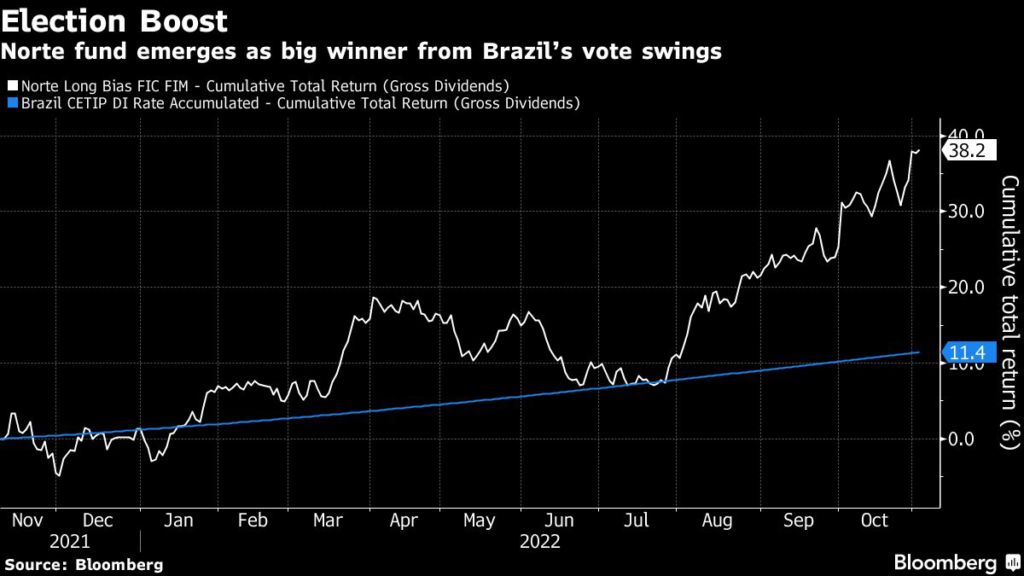
(Bloomberg) — An equity-focused hedge fund launched by a Credit Suisse Group AG veteran around the height of the coronavirus pandemic emerged as the winner from Brazil’s election swings.  

The Norte Long Bias fund, a 1.3 billion-real ($257 million) fund managed by Sao Paulo-based Norte Asset Management, had a 17% return after fees from the start of the campaign on Aug. 16 through Oct. 31, the day after Luiz Inacio Lula da Silva defeated Jair Bolsonaro in the presidential vote. That jump put it ahead of all its 205 peers, according to data compiled by Bloomberg. 

Norte was created by Gustavo Salomao, a computer engineer who spent about two decades at the Swiss bank, and Rafael Furlan, a former executive at HSBC Holdings Plc’s asset management unit in Brazil. They correctly predicted a surge in Sabesp — the water utility controlled by Sao Paulo state that gained on prospects for the gubernatorial race. They also expected low-income homebuilders Direcional Engenharia SA and Cury Construtora e Incorporadora SA to climb no matter who won. 

“This was a quite different electoral cycle from the one you usually get in Brazil, where markets have a clear favorite,” Salomao said in an interview. “Investors slightly favored Bolsonaro, but they were much more divided this time.” 

Although Bolsonaro and Lula disagree on key issues such as the role of state-owned companies, neither of them was expected to blow up the country’s finances in the near term — which helped keep markets relatively calm for most of the race. 

With the race done, many money managers expected Brazil to stand out among its main peers given some emerging markets were struggling with out-of-control inflation, more expensive imports and even exclusion from indexes. 

Brazil’s Top Hedge Fund Says Attractive Prices May Lure Inflows

Shares in Brazilian shoemaker Arezzo Industria e Comercio SA, pharmaceutical firm Hypera, oil juniors 3R Petroleum Oleo e Gas SA and PetroRio SA, and electronics equipment maker Intelbras also shored up returns at Norte, according to Furlan. 

The fund anticipated a tighter-than-expected race than most polls showed, so it scooped up some Petroleo Brasileiro SA call options ahead of the first-round vote. As the runoff round neared, it moved to buying put options, seeking protection for an eventual downturn. The fund is still betting on additional declines in Petrobras stock. 

Petrobras Wipes Out Year’s Gains as Lula Victory Spooks Traders

Salomao, who took over as the bank’s treasurer in Brazil in 2010, and Furlan were among traders who set up their own asset-management shops as interest rates plunged to record lows and Brazilians flocked to riskier products. Their fund usually has about 70% of its risk allocated in equities, but also trades assets such as currencies and rates. 

The fund was short on gilts, for instance, betting on higher rates in the UK. It cut positions after the selloff. On equities, it’s currently more negative on global markets, and bullish Brazil. 

“Lula will likely be more pragmatic — not ideological,” said Salomao. “If he loses control of the economy, he won’t be able to implement the social policies he’s pursuing.”

Brazil’s ‘Lula Basket’ Jumps While Currency Leads Global Gains

The second and third best performers on the electoral period were the Solana Equity Hedge and the Mar Absoluto funds, which gained 13% and 10% after fees, respectively. 

The data include only the so-called multi-market funds with more than 500 million reais in assets, and excludes those with single shareholders. Overall, the group’s average performance was positive in the span, with a 3.5% total return before fees. 

–With assistance from Sebastian Krieger and Ricardo Strulovici Wolfrid.

More stories like this are available on bloomberg.com

©2022 Bloomberg L.P.
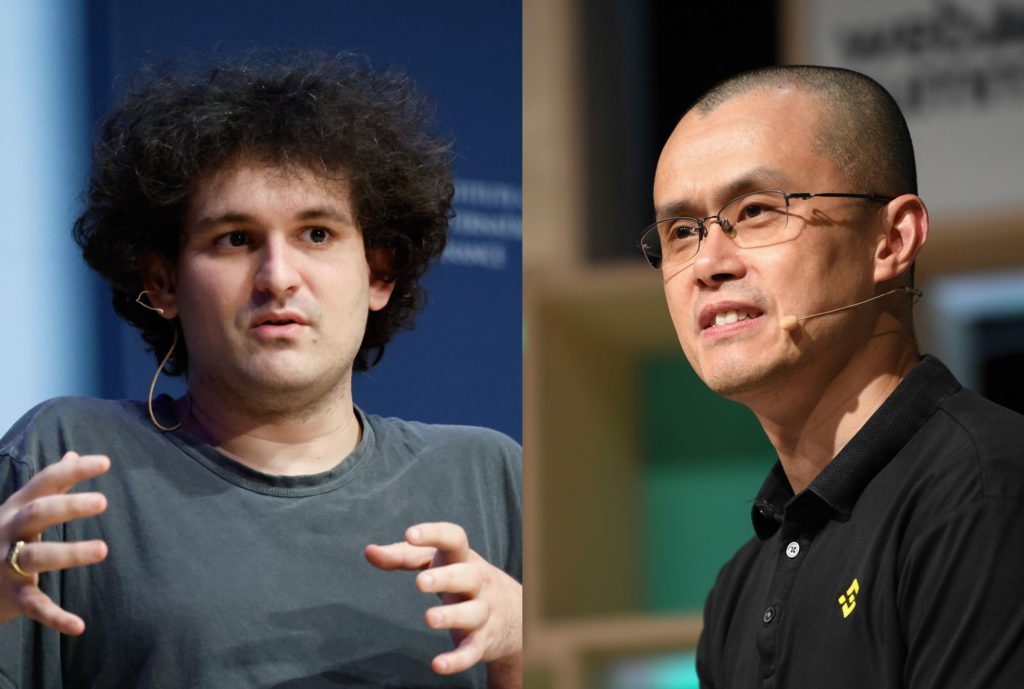
Binance’s CZ and FTX’s Sam Bankman-Fried Trade Barbs Over Twitter

(Bloomberg) — Simmering tensions between the crypto industry’s two richest executives are spilling over into the already battered digital-asset market. 

On Sunday, Zhao “CZ” Changpeng, the billionaire chief executive of Binance Holdings Ltd. took to Twitter to announce plans to sell Binance’s roughly $530 million holding of FTT, the native token of Sam Bankman-Fried’s FTX. Binance and FTX run the world’s largest and seventh-largest crypto exchanges.

Zhao said his decision was triggered by “recent revelations.” In a Nov. 2 article, news site CoinDesk said much of the balance sheet of Bankman-Fried’s trading house Alameda Research is comprised of the FTT token. FTT’s price fell in high trading volumes after Zhao’s announcement and traders rushed to withdraw funds from FTX. 

Caroline Ellison, CEO of Alameda, responded on Sunday to the CoinDesk story by saying “that specific balance sheet is for a subset of our corporate entities, we have >$10b of assets that aren’t reflected here.” Ellison later offered to buy all the FTT tokens from Binance at a price of $22. The coin was trading just above that level on Monday. 

Prices of most cryptocurrencies fell on Monday, even as equities advanced. Solana, a token backed by FTX and Alameda, was among the biggest decliners. FTT’s trading volume surged to the highest in more than a year, which “suggests market makers are working overtime to maintain liquidity amid high selling pressure,” Clara Medalie, head of research at analytics firm Kaiko, wrote in an email.

“Overall, FTT is a relatively illiquid token on open markets, so Binance’s plans to liquidate all FTT tokens they hold is quite a significant market event,” she added. “Alameda will likely dedicate considerable resources to ensure the price of FTT doesn’t crash.”

Zhao didn’t specify what “revelations” he was referring to. A Binance spokesperson declined to comment. FTX said on Monday it was “churning through” Bitcoin withdrawal transactions, making some changes to “help speed it up.”

“A competitor is trying to go after us with false rumors,” Bankman-Fried said in a tweet on Monday. “FTX is fine. Assets are fine.”

The dust-up between the two magnates comes at a fraught time for the industry, which has been rocked by a series of scandals this year, ranging from the implosion of the TerraUSD stablecoin to a string of bankruptcies among crypto lenders. The sector is “still suffering from PTSD,” said Anto Paroian, CEO of cryptocurrency hedge fund ARK36.

Supporting FTT

Binance’s holding of FTT is a legacy of its investment in FTX, which it sold last year for about $2.1 billion according to Zhao. The CEO said he’d try to sell the FTT tokens “in a way that minimizes market impact.” The process may take a couple of months to complete, he added. 

Zhao and Bankman-Fried have been trading barbs on Twitter in the past few months, feuding over issues ranging from lobbying US politicians to allegations of frontrunning trades. In a string of tweets on Sunday, Zhao first denied that selling FTT was a “move against a competitor,” although a later posting seemed to imply unhappiness with FTX. 

Zhao is worth $18.9 billion, according to the Bloomberg Billionaires Index, while Bankman Fried’s wealth stands at $15.4 billion.

Crypto lender Nexo withdrew around $177 million in Ether and $10.8 million in stablecoin USDC from FTX over 24 hours, while asset manager Arca withdrew more than $31 million in Ether and USDT, according to data from researcher Nansen. Nexo co-founder and managing partner Antoni Trenchev declined to comment, as did Arca.

In his Twitter thread on Monday, Bankman-Fried sought to allay investor concerns, saying that “FTX has enough to cover all client holdings” and that it’s processing all withdrawals “and will continue to be.” He ended it with an appeal to his longtime rival. 

(An earlier update corrected the title of Nexo’s Trenchev.)

More stories like this are available on bloomberg.com

©2022 Bloomberg L.P.
Mastodon Struggles to Keep Up With Flood of Twitter Defectors

(Bloomberg) — Mastodon, an open-source social network that markets itself as an alternative to Twitter Inc., has seen a surge in new sign-ups in recent days, overwhelming the site and its founder as the tiny operation struggles to keep up.

Since Elon Musk took over Twitter on Oct. 27, Mastodon has drawn 489,003 new users, bringing total monthly active users to more than 1 million, founder, lead developer and Chief Executive Officer Eugen Rochko said on his own Mastodon account Monday. That’s a tiny fraction compared to Twitter’s 238 million daily active users. But Musk’s purchase has seemingly been the incentive the German non-profit has been waiting for since its founding in 2016. 

“I don’t think Mastodon or the fediverse has ever received this much attention before,” Rochko wrote on his account two days ago. “It’s a great opportunity for people to finally see that social media can be done differently, that it can be a protocol not under control of any single company.”

Searches for Mastodon spiked on Google following the Twitter acquisition, especially in Europe where the social network is based. All of the new interest has caused strain on the platform, with Rochko saying he was overstretched. “While it’s nice to see your work finally taken seriously in the mainstream, the 12-14 hour workdays I’ve had to pull to handle everything is anything but,” Rochko posted on Oct. 31.

Rochko lamented that he was handling software development, accounting, customer support, project management, product design, public relations and moderation. He apologized to users for “processing delays until I can get my hands on more hardware. Sorry!”

On Monday, some people on the site were complaining about not receiving confirmation emails upon registering. Rochko said he was running into a daily email-sending limit with the company’s provider.

Rochko didn’t respond to requests for an interview. 

Mastodon’s pitch that it’s committed to keeping conversations on the site free from hate speech and bullying may be appealing to users concerned about Musk’s free-speech initiatives. Slurs and racist memes have already swelled on Twitter, highlighting the challenge Musk faces to balance a promise to restore people’s ability to speak freely with maintaining civility on the platform to appease advertisers. In an open letter to advertisers, Musk said that he doesn’t intend to let Twitter become a “free-for-all hellscape, where anything can be said with no consequences.”  

Read More: Can a Site Like Mastodon Solve a Problem Like Twitter? 

Mastodon calls itself a federated social network. Instead of signing up for an account on a website, users choose to join “servers.” Each server is independent, hosted by an individual or organization, and can have its own rules around moderation. 

Users can follow other Mastodon accounts, no matter which server they use, and people on the network can change servers whenever they want. Mastodon said it will only promote servers that “are consistently committed to moderation against racism, sexism, and transphobia.” 

But it’s far from clear whether the migration to Mastodon will have a lasting impact, on either that site or on Twitter. Many people were also griping on Twitter about Mastodon’s laborious and confusing platform. Musk himself is keeping an eye on the site and chimed in with a sarcastic plug for Mastodon. 

For now, Rochko seems to be charging forward.

“Would you believe me if I told you I was extremely tired?” he posted on Sunday. “But the release candidate for Mastodon 4.0 is finally out of the way, and I think it’s neat.” 

More stories like this are available on bloomberg.com

©2022 Bloomberg L.P.
Crypto Trading Firm Cumberland Sees ‘Budding Uptrend’ for Market

(Bloomberg) — There’s a “budding uptrend” taking shape in the cryptocurrency market as the macroeconomic backdrop improves, the dollar weakens and more digital-asset adoption gets underway.

That’s according to Cumberland, the crypto offshoot of Chicago-based trading giant DRW, which says the dollar’s “inexorable-seeming rally” earlier this year seems to have topped out after helping to suppress sentiment across major asset classes. Plus, disruptions at the start of 2022 — including Russia’s attack on Ukraine and supply-chain issues — “have reached a state of choppy equilibrium,” the company tweeted on Monday. “In the absence of new geopolitical developments, a reduction in volatility should result in higher asset prices.” 

Meanwhile, the crypto space could see “a less adversarial environment” in Washington DC should Republicans notch wins during the midterm elections, potentially creating a deadlock with different parties controlling the executive and legislative branches.

Finally, Cumberland points to certain crypto adoption milestones that in the past might have fueled “spectacular rallies.” 

“With all of this going on, prices are essentially unchanged since midsummer (roughly equivalent to the 2017 cycle highs) and do not yet reflect the shifting macroeconomic, political, geopolitical, and micro/fundamental winds,” the Cumberland tweet said. 

Crypto market watchers have been looking for green shoots all year as prices for coins remain mired in a prolonged bear market. Several have pointed to signs, using historical precedent or data, of a bottom forming for Bitcoin. Even relatively smaller rallies have recently spurred optimism that the worst is likely over. 

Still, the token is down 55% this year and has largely been hovering around $20,000 for weeks. Others say the selling is not over yet, with digital-assets researcher CryptoCompare pointing to historical data as proof the market could see further declines.

And while institutions may be more invested than they’ve been in the past, their embrace hasn’t been a catalyst to push prices higher, according to Leah Wald, chief executive officer of digital-asset investment firm Valkyrie Investments.

“Institutions have a longer time horizon. They also, as a fiduciary, cannot just jump in with a strategy,” Wald said on a recent episode of Bloomberg’s “What Goes Up” podcast. “There’s a lot of other hurdles that institutions have — whether it’s risk parameters, among others, and also just generally the vehicle that they need in order to buy it.”

Bitcoin fell as much as 2.5% on Monday to trade around $20,597. Other tokens also declined, with Binance Coin and Solana losing more than 6% each at one point.  

More stories like this are available on bloomberg.com

©2022 Bloomberg L.P.

BMW Opens New Designworks Studio in California

(Bloomberg) — BMW Group has moved the US headquarters of its design studio to Santa Monica, California. Designworks had been based in Newbury Park, about an hour’s drive northwest, since 1988. It has additional outposts in Munich and Shanghai.

The news comes as the innovation office for the automotive group celebrates the 50-year mark since Chuck Pelly founded it as DesignworksUSA in 1972. Pelly’s consultancy became a wholly owned subsidiary of BMW in 1995. It designs things for many clients, including a futuristic camper concept for North Face, business class cabins for EVA Air and the livery of David Letterman’s new hybrid BMW race car.  

Adrian Van Hooydonk, the design director of BMW Group, characterizes the move, which takes Designworks US square footage down from 70,000 square feet to 16,000 square feet in the new space, as a response to the demands of today’s work-life balance.

“Why go on the 101 at a certain time?” he says during a recent tour of the office building, referencing LA’s notorious highway traffic. “We’re not going to force people to do that. But I believe that with all the stuff we put in here—and coming out of the whole Covid home-office period of roughly three year—I think people will want to get together here.”

Opened Monday, Designworks’s 65 employees will be encouraged to use the studio at least three days a week, a spokesperson confirms.

The new space incorporates minimalistic Scandinavian-style furniture with warm wood tones, oranges and chocolate browns. It sports the hallmarks of hybrid office life: small booths, group tables, and individual work stations that can be used as standing or sitting desks. Such furniture as modular sofas, black marble tables and tall bar stools come from Muuro and Knoll.

What the new Designworks’s office doesn’t have is staging for the large clay models traditionally used in automotive design, which helps explains the radical downsizing. Van Hooydonk says that setting aside much space for clay modeling is no longer necessary.

“Basically, our design work is done in the computer,” he says. “If we want something milled, we can do that with outside companies. The space is still just large enough to put a car model in and to look at that if you want to do a check. But the ways of working that we have now are far more connected with Munich—far more digital. We felt that the footprint of the studio needed to reflect that.”

News of the move follows multiple significant announcements in recent weeks from the Munich-based automaker. On Oct. 15, BMW announced it would move manufacturing of its electric MINIs from the UK to China, citing production line inefficiencies. It also said it would invest an additional  $1.7 billion in its South Carolina facilities to build six new EV models by 2030.

Designworks will not be open to the public, although some events will be accessible to non-employees, a spokesperson says.

More stories like this are available on bloomberg.com

©2022 Bloomberg L.P.
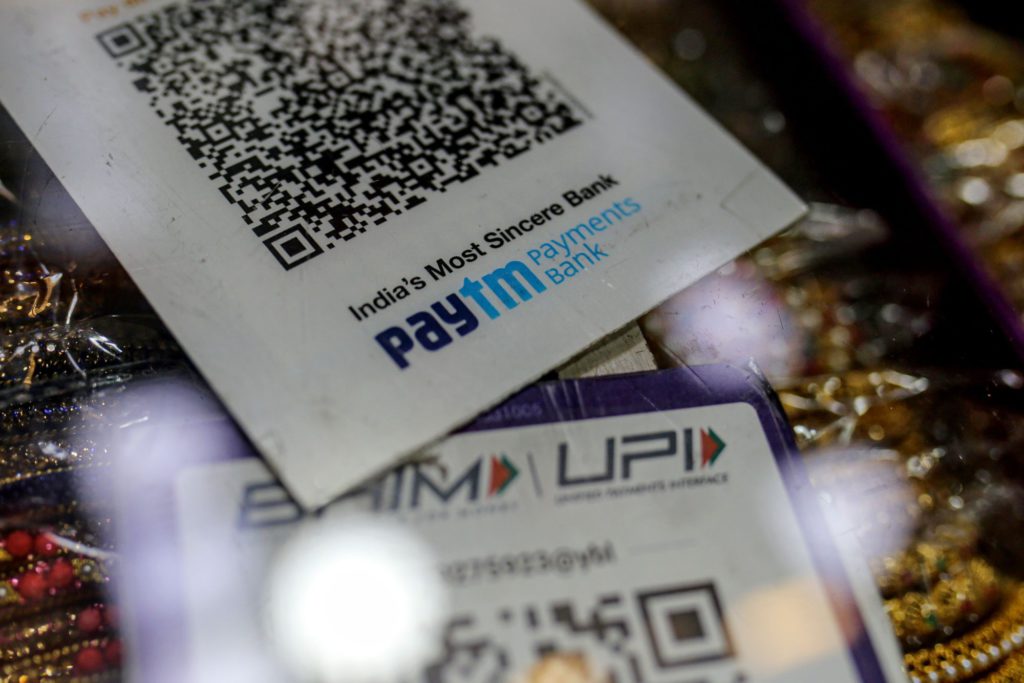
Paytm Loss Widens After Indian Fintech Firm Spends on Expansion

(Bloomberg) — Paytm, India’s leading digital payments brand, posted a wider second-quarter loss after it spent more to grow its business.

The net loss in the July-September period swelled to 5.71 billion rupees ($69.7 million) from 4.73 billion rupees a year earlier, the company said on Monday. Revenue rose 76% to 19.14 billion rupees, while total costs increased 60% to 25.61 billion rupees.

The company is expanding its product offering and signing up more users in a bid to convince investors of its earnings potential. Its shares have slumped about 70% since its high-profile $2.5 billion IPO a year ago over concerns of mounting losses and intensifying competition from Alphabet Inc.’s Google Pay, Amazon.com Inc.’s Amazon Pay and Walmart Inc.’s PhonePe, and a slew of smaller fintech startups.

Paytm, backed by Japan’s SoftBank Group Corp. and China’s Ant Group Co., reiterated that it expects to reach operating profitability by the quarter ending September 2023 amid continued revenue growth. In a July interview, founder Vijay Shekhar Sharma pledged a shift in focus from growth toward profitability.

The stock price has been volatile in the past weeks as a one-year lock-in for certain shareholders expires on Nov. 15, allowing them to sell shares in blocks.

The company said its loan-distribution business continued to grow at a rapid clip, adding 9.2 million loans during the quarter. The value of loans grew 482% from a year earlier to 7.31 billion rupees. 

More stories like this are available on bloomberg.com

©2022 Bloomberg L.P.

Close Bitnami banner
Bitnami
