Bloomberg

Fintech Uala Launches Cryptocurrency Trading in Argentina

(Bloomberg) — Argentine fintech Uala, which is backed by the likes of billionaires George Soros and Steve Cohen, ventured into crypto for the first time Friday, allowing customers to buy and sell Bitcoin and Ether with pesos through its app.

The move is another milestone for Ualá, which was valued at $2.5 billion in its latest funding round. The company already provides a slew of financial services based on a prepaid card managed through a mobile app. Uala, which has more than 5 million users in Argentina, Mexico and Colombia, created its own company called Uanex to manage the new products, founder and CEO Pierpaolo Barbieri said in interview.

“Argentina is the best market to make this investment, given that it’s one of the region’s countries where the adoption is growing fastest,” Barbieri said. About 4.5 million Uala clients are in Argentina, he said.

Due to strict capital controls and soaring inflation that could reach 100% annually this year, Argentines have been early and enthusiastic adopters of cryptocurrency technologies. The South American country is ranked #13 globally in crypto adoption, according to Chainalysis, a company specialized in blockchain analysis.

The company said in October that it plans to invest $150 million across the region over 18 months and aims to break even in Argentina in 2023. Uala expects to reach 25 million users in the next 5 years.

The crypto purchases and sales can be made with less than 250 pesos ($1.50), and initially the products will be switched on for a small number of select users. The remaining clients will be progressively enabled if they register on the Uala website. Currently, the Uala app also offers the ability to invest in mutual funds, dollars and Cedears. 

Uala is also backed by Japanese conglomerate SoftBank Group Corp. and Chinese Internet giant Tencent Holdings Ltd., as well as early investors including Goldman Sachs Group Inc., Ribbit Capital and Monashees.

“Users asked us to invest in crypto through our app a long time ago”, Andres Rodriguez Ledermann, Uala’s Wealth Management VP, said in the interview. 

More stories like this are available on bloomberg.com

©2022 Bloomberg L.P.

Twitter Latest: Musk Says Ad Losses Fuel ‘Massive’ Revenue Drop

(Bloomberg) — Twitter Inc. began notifying employees affected by a far-reaching round of job cuts, and some learned they’ll be paid for two months. As this was happening, the new owner, Elon Musk, said the business experienced a “massive drop” in revenue as many advertisers withdrew.

The week after the billionaire took over and promised sweeping changes, workers around the world were checking two email addresses to find out if they still have a job, according to an internal memo sent to employees and seen by Bloomberg. An email to their work account means they’ve been retained. A letter in their personal inbox means they’ve been fired.

Twitter promised to notify workers by 9 a.m. San Francisco time on Friday and temporarily closed offices and suspended badge access “to help ensure the safety of each employee as well as Twitter systems and customer data,” the memo said.

Musk plans to eliminate half of Twitter’s workforce to slash costs at the social media platform he acquired for $44 billion last month, people with knowledge of the matter have said. The company must also find ways to cope with interest costs on a massive debt pile. 

“In an effort to place Twitter on a healthy path, we will go through the difficult process of reducing our global workforce on Friday,” Twitter management said in an email reviewed by Bloomberg. “We recognize that this will impact a number of individuals who have made valuable contributions to Twitter, but this action is unfortunately necessary to ensure the company’s success going forward.”

The speed of the changes is having repercussions. Twitter has already been sued for not giving proper notice of the plan to eliminate about 3,700 jobs. 

Some advertisers are also wary of Musk’s plans to reexamine Twitter’s content moderation policy. Volkswagen AG, Europe’s largest carmaker, joined Pfizer Inc. and General Mills Inc. in temporarily pausing advertising on the platform.

Bloomberg News will capture the news flow here.

Twitter Has ‘Massive Drop in Revenue’ Musk Says (10:33 a.m. NY)

“Twitter has had a massive drop in revenue, due to activist groups pressuring advertisers, even though nothing has changed with content moderation and we did everything we could to appease the activists,” Musk said in a tweet. “Extremely messed up! They’re trying to destroy free speech in America.”

Some Employees Will Get Severance Pay for Two Months, Lawyer Says (10:26 a.m.)

“It looks like employees are getting their notices and at least some will be paid until January 4,” said Shannon Liss-Riordan, the attorney who filed a class-action lawsuit in California on Thursday. “I am pleased that Elon Musk learned something from the lawsuit we brought against him at Tesla and is making an effort to comply with the WARN Act. We filed this case preemptively to make sure a repeat of that violation did not happen.” 

Twitter Employees Join Unions Ahead of Job Cuts (12 p.m. London)

Twitter employees in the UK have been joining trade unions in an effort to better protect their employment rights during mass job cuts announced by the social media platform’s new owner Elon Musk.

“Twitter is treating its people appallingly,” said Mike Clancy, General Secretary of Prospect, a UK-based trade union that said it has seen an influx of sign-ups from Twitter employees over the last week. Clancy called on the UK government to ensure that Twitter doesn’t become a “digital P&O,” referring to the ferry company that cut 800 jobs in March.

“We are supporting our members at Twitter and will be working with them to defend them and their livelihoods,” he added.

Britain’s United Tech and Allied Workers labor group also condemned the way employees were treated and encouraged Twitter workers to join. 

The UK’s Advisory, Conciliation and Arbitration Service says businesses must generally consult on redundancies and inform the government’s Redundancy Payments Service. An ACAS spokesman didn’t immediately respond to a request for comment on the situation.

Ex-CEO Costolo Creates Twitter Alumni Network (11:30 a.m. London) 

Former Twitter Chief Executive Officer Dick Costolo, who left the company in 2015, said his latest company has put together a resource for former Twitter employees who want to connect and “figure out what’s next.” 

Costolo is founder of 01 Advisors, a venture capital and advisory firm for tech startups in San Francisco. 

Employees Notified in Dublin (11 a.m. London) 

Twitter’s Dublin office, which employs about 500 people, have begun notifying some employees via email, according to Irish news site RTE. 

Some employees in the UK also began to share on Twitter that they’d been locked out of their work systems. 

A representative for Twitter didn’t immediately respond to a request for comment. 

Volkswagen Tells Brands to Pause Spending (8:30 a.m. London) 

Volkswagen, Europe’s biggest carmaker, recommended that all of its brands pause their paid activities on Twitter until further notice, according to an emailed statement on Friday. 

Several advertisers have tapped the brakes on placing ads on the platform until they get a clearer idea of Musk’s plans. Musk has said he wants to remove some content moderation, giving rise to concerns that hate speech, misinformation and other potentially harmful material will flourish even more freely. General Mills said it’s temporarily pausing advertising on Twitter, joining General Motors Co. in rethinking their presence on the platform.

Twitter Sued for Mass Layoffs (10:43 p.m. SF)

Twitter was sued over Musk’s plan to eliminate jobs at the social-media platform, which workers say the company is doing without enough notice in violation of federal and California law. A class-action lawsuit was filed Thursday in San Francisco federal court.

Employees Start Losing Email Access (9:13 p.m. SF)

The company started cutting employee access to email and Slack on Thursday night. Some employees who were shut out of their work tools suspected their jobs were already cut, though they had received no official confirmation yet.

Job Cuts Begin

All told, Musk wants to cut about 3,700 jobs at San Francisco-based Twitter, people with knowledge of the matter said this week. The entrepreneur had begun dropping hints about his staffing priorities before the deal closed, saying he wants to focus on the core product. “Software engineering, server operations & design will rule the roost,” he tweeted in early October.

Security staff at Twitter’s San Francisco headquarters carried out preparations for layoffs, while an internal directory used to look up colleagues was taken off line Thursday afternoon, people with knowledge of the matter said. Employees have been girding for firings for weeks. In recent days, they raced to connect via LinkedIn and other non-Twitter avenues, offering each other advice on how to weather losing one’s job, the people said. Ex-Twitter engineers are also using social media to respond to former “Tweeps” looking to land jobs elsewhere.

Musk has also been huddling with advisers to come up with new ways to make money from the blogging platform, including charging for verifications, which can help delineate real users from fake accounts. He’s also considering reviving a long-since-discontinued short-video tool called Vine, a way to vie with popular video-sharing apps like TikTok. Another product under consideration, the New York Times reported, is paid direct messages, which would let the rank and file send private messages to high-profile users.

Read more: Musk to Restore Twitter Content Moderation Tools Before US Election

–With assistance from Kurt Wagner, Olivia Solon, Monica Raymunt, Morwenna Coniam and Thomas Seal.

More stories like this are available on bloomberg.com

©2022 Bloomberg L.P.

Ambani Taps Veteran Banker to Head Financial Services Unit

(Bloomberg) — Reliance Industries Ltd. has appointed veteran banker K.V. Kamath as the non-executive chairman of its unit Jio Financial Services that will be spun off and listed, according to a stock exchange filing Friday.

Kamath, who finished a five-year term as the head of the BRICS-backed New Development Bank in 2020, brokered a peace deal between billionaire Mukesh Ambani — chairman of Reliance Industries and the second-richest Asian currently — and his younger brother Anil Ambani more than 15 years ago.

The 75 year-old Kamath also headed private sector lender ICICI Bank Ltd. until 2009 when he retired as chief executive officer and was appointed as non-executive chairman. He recently headed a central bank-appointed panel that suggested ways to revamp debt among borrowers hit during the pandemic.

Read: India’s RBI Sets Debt Revamp Rules for Pandemic-Hit Firms 

Last month Reliance said it will separate and list the shadow-banking unit to feed its consumer businesses that are contributing an increasing share of profits to the retail-to-refining conglomerate. 

Jio Financial Services is Ambani’s latest attempt to establish a significant financial services business. In 2011, Reliance Industries had partnered D.E. Shaw Group for offering investment banking, derivatives trading and alternate asset management businesses. The alliance surrendered its exchange memberships, according to a Business Standard report in 2018. 

Jio Financial will lend to consumers and merchants based on proprietary data analytics and will eventually branch out to insurance, payments, digital broking and asset management, Reliance said.

Kamath would also join Reliance’s board as an independent director with a five-year term, the company said in the filing.   

(Adds appointment of Kamath to Reliance board in last paragraph)

More stories like this are available on bloomberg.com

©2022 Bloomberg L.P.

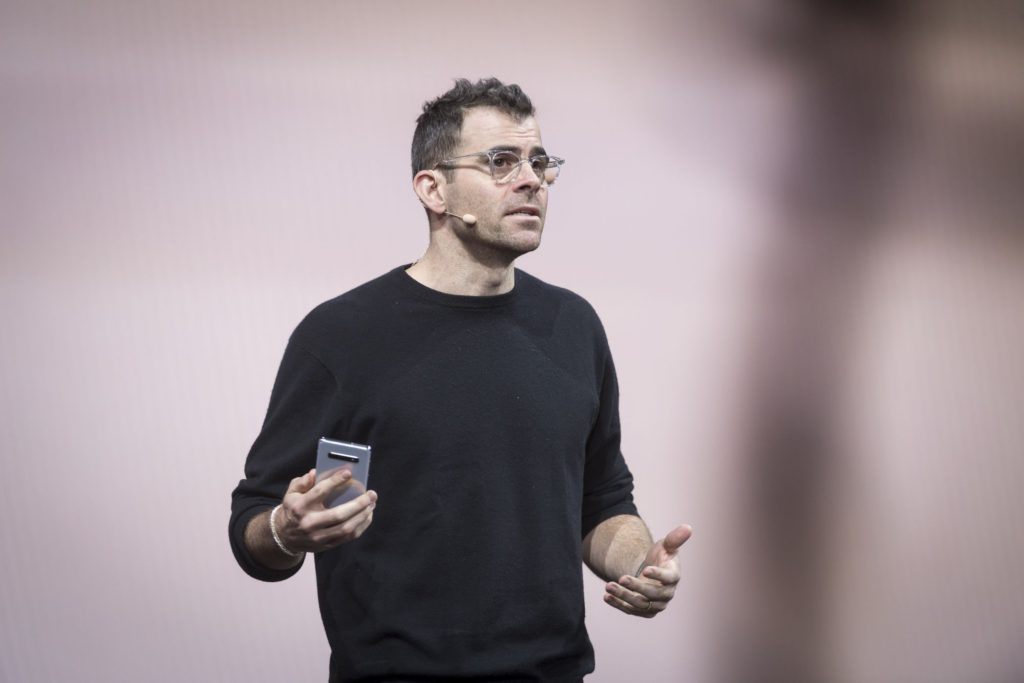
Meta’s Instagram Head Mosseri Feels ‘Urgency’ for Reels to Work

(Bloomberg) — As Meta Platforms Inc. pursues an expensive, unproven metaverse strategy, success will depend in part on whether Instagram can pay the bills.

Instagram is a major growth driver for the company, with 2 billion monthly active users worldwide, closing in on the 2.96 billion who use Meta’s Facebook. Meta’s stock is down more than 70% this year, with investors unsure about two major bets. There’s the long-term investment in the metaverse, creating hardware and software for a virtual reality-fueled future internet. And in the near-term, there’s the initiative for improving the company’s social media recommendation algorithm, to better highlight content from people you don’t know— especially in Reels, the video format taking over Instagram.

Driving more revenue via Reels depends on getting advertisers comfortable with the format, enticing creators to share there and improving the recommendations, Adam Mosseri, the head of Instagram, said in an interview. The longer that takes, the less patience investors have with the dollars going to the metaverse. So Instagram is facing “a fair amount of urgency,” Mosseri said. “I’m trying to balance that urgency with making sure we don’t make any mistakes by pushing too hard or too fast.”

Instagram is locked in a battle for relevance among current social media users, and those of the next generation. The app is leaning into its short-form video feature, Reels, as a way to get people to spend more time on the app, going head-to-head with Bytedance Ltd.’s TikTok, which popularized the format. Instagram’s move to stay relevant with the internet’s tastes is important for maintaining user growth and for convincing advertisers to spend on the platform, even when marketing budgets are shrinking, said James Lee, managing director at Mizuho Securities.

“Instagram, by far right now, is a probably strategically more important asset to Meta” than any of the rest of its family of apps, Lee said. The number of users on Meta’s legacy Facebook app has largely plateaued over the past 18 months, while the amount it makes for each user slid to the lowest in six quarters. 

But the wait to see if Instagram’s experiment pays off has been uncomfortable for investors. While Chief Executive Officer Mark Zuckerberg has said Reels will start contributing meaningfully to revenue in 12 to 18 months, for now it’s taking attention away from other parts of Facebook and Instagram that make more money – an opportunity cost of $500 million last quarter, as Meta spends heavily on experimentation in virtual reality and artificial intelligence. The stock lost almost a third of its value since the report to become the second-worst performing stock in the Nasdaq 100 this year.

Still, the fact that Reels is popular is promising, Mosseri said. Time spent perusing videos, he explained, is “milestone one.” People on Instagram re-share Reels 1 billion times a day through direct messages, the company said last week. That’s an important measure for Instagram as it blends the new, short videos from people you don’t follow, with friends’ posts.

Milestone two, he said, would be getting Reels ads to make money as quick as other places marketers can spend on the app. “We’ve hit milestone one — we are well on our way but not yet at milestone two.”

Instagram is moving away from exclusively showing photos and videos from friends and the accounts they follow, to those selected by an algorithm and what it gleans of a person’s interests. That’s required a massive investment in coding the artificial intelligence tools to make it happen, which is still a work in progress, and in the technology infrastructure to power it. Much of the expected growth in additional capital expenditures across Meta next year will go toward data centers and equipment.

“A ranking system that tries to surface what we call unconnected content of photos and videos from sources that you, or accounts that you do not yet follow is a very different technical problem than ranking photos and videos from accounts that you already follow,” Mosseri said. “I’ve been encouraged by the progress particularly in the last six months, but I think there’s a lot, lot more room to grow.”

Once that ranking system is improved, it won’t just help capture Instagram users’ attention – it will help inform the advertising business. Meta is trying to find new ways to target users with relevant promotions following privacy rules from Apple Inc. that have made it more difficult to gather user data on iPhones.

Some of Instagram’s path to increased relevance will also require luring the best talent to its platform. The company continues to try to win favor among influencers and professional content creators by offering more ways to make money, like selling NFTs or subscriptions to exclusive content. 

Those features were announced at an event in Los Angeles on Wednesday, with social media stars in attendance. The historic Victorian-style Lombardi House was transformed into a playground for video creation. Staff with “Content Crew” T-shirts captured video in various backdrops, including a basketball court decked out with the familiar Instagram colors, and walls formed by large speakers. 

“If they are able to fix the core business and things are turning around – IG reels is monetizing and they’re able to maintain the engagement – I think a lot of investors will start feeling better about the metaverse investment,” Lee said. “If they don’t fix it, then you know that that’s a bigger issue to come down.”

More stories like this are available on bloomberg.com

©2022 Bloomberg L.P.

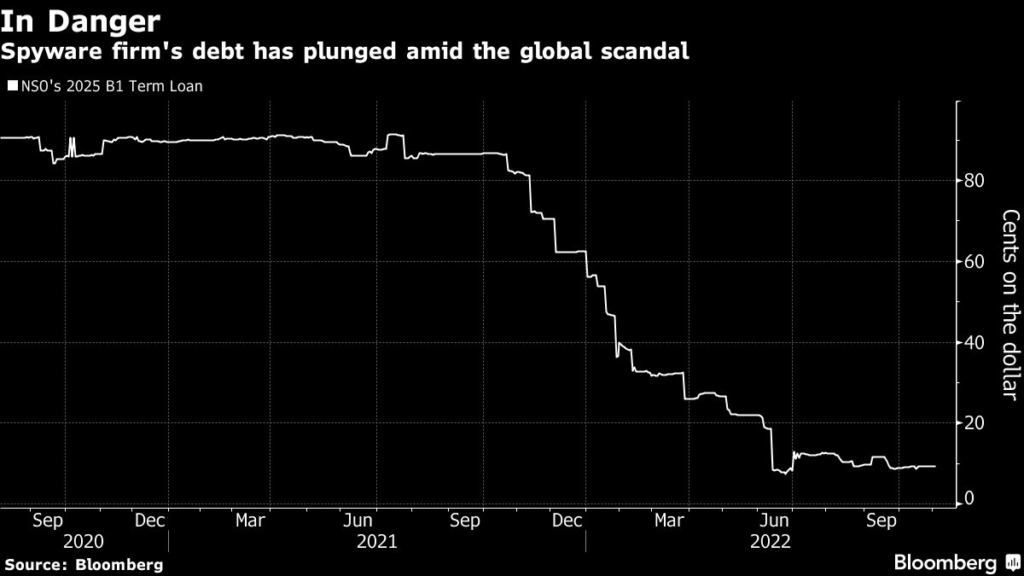
Israel’s Pegasus Spyware Maker Takes Drastic Measures to Survive Global Scandal

(Bloomberg) — Embattled spyware maker NSO Group is taking drastic steps to pacify creditors holding around $400 million in debt as it waits out a worldwide political scandal that still threatens its survival.

Blacklisted in the US on accusations its Pegasus phone-hacking tool was used by foreign governments to spy on dissidents, the Israeli company has cut 15% of its workforce and raised prices by about 20% to stem a cash bleed that was expected to run into the tens of millions of dollars this year, according to a person with knowledge of the matter.

The change in strategy comes months after the collapse of a potential sale to defense contractor L3Harris Technologies Inc. Such a transaction would have included NSO’s various non-Pegasus products and likely involved either shutting down Pegasus or converting it into strictly defensive technology, a separate person with knowledge of the discussions said.

The new measures are buying NSO some breathing room after it breached certain terms on its debt agreements, said the people, who asked not to be identified when discussing the company’s private financial information.

The firm lost or cut ties with many of its clients after reports starting in 2018 that its software had been used against civilians, including an associate of murdered journalist Jamal Khashoggi. It lost dozens more this year after Israel’s Ministry of Defense tightened restrictions on cybersecurity tools, according to one of the people.

The Israeli administration also played a key role in NSO’s canceled sale to L3Harris. The sale, which would have valued NSO at around $700 million to $800 million, stalled because of disagreements over whether a new owner would gain full access to NSO’s underlying code — which Israel wanted to prevent on security grounds — the relocation of key personnel and other knowledge transfer issues, the person said.

Executives expect the company to generate revenue of between $150 million and $170 million this year, down from earlier estimates of around $200 million, the person said. That’s significantly below the approximately $250 million it recorded in 2018, just before private equity firm Novalpina Capital and management acquired it in a leveraged buyout.

In a plan shared with debt holders, management said it expects to break even this year and to generate enough cash to continue to pay interest and principal amortization on obligations next year, according to the person. 

NSO remains out of compliance with some terms of its debt, as certain financial metrics fall outside of lender requirements. It hasn’t received an official forbearance agreement from the group, but given the nature of the assets, creditors’ ability to foreclose is limited. 

Cash Bleed

NSO has disputed certain abuse allegations and said that it shuts down service when clients misuse it. It has repeatedly stated that its technology was not associated in any way with the murder of Jamal Khashoggi. 

A spokesman for the company declined to comment for this story. Representatives for some of the creditors did not respond to requests for comment. A representative for L3Harris declined to comment. 

The firm in August dismissed around 120 of its employees and hiked prices for customers in the countries where it is still allowed to operate, the person said. Meanwhile it continues to pursue a sale of some of its non-Pegasus products in an effort to raise cash. 

Elections in Israel and the US are giving NSO executives hope that a sale process to a US entity could be revived, the people said. The new Israeli government could take a different approach to intelligence regulation while US midterm elections may change the composition of Congress and open up deal-making opportunities. 

More stories like this are available on bloomberg.com

©2022 Bloomberg L.P.

SoftBank’s Rally Draws Skeptics as Nasdaq Slumps

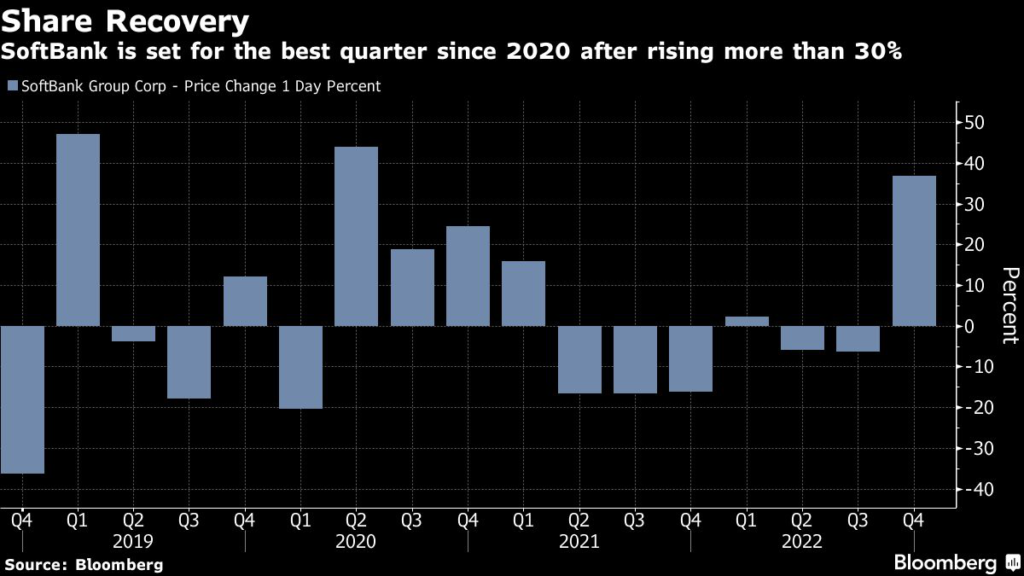
(Bloomberg) — A 34% rally has made SoftBank Group Corp. the best-performing stock in Japan’s Nikkei 225 Index this quarter. But if analysts are right, the tech investor’s shares may not have much upside left. 

Shares of the firm founded by Masayoshi Son rose this week to the highest in almost a year, thanks to cost-cutting efforts and a 1 trillion yen ($6.8 billion) share buyback program. The rally added $20 billion to the company’s market value from a recent low in late September.

Yet, problems loom. Softbank’s most-valuable holding, Chinese internet company Alibaba Group Holding Ltd., slumped on Monday to a fresh all-time low in Hong Kong before rebounding. More broadly, the selloff in US technology stocks — the Nasdaq 100 Index is in danger of notching up its biggest weekly loss of the year — is weighing on valuations of the kinds of companies that Softbank invests in. Meanwhile, the sluggish market for initial public offerings could weigh on Arm Ltd., the chipmaker that Softbank is trying to list. 

“One of the bigger parts of its valuation is Alibaba and it’s been coming down,” said Morningstar Inc. analyst Daniel Baker. “Usually when Alibaba goes down, the stock goes down. The macro factors that are driving this don’t appear to be changing too much.” 

Wall Street brokerages are already responding to those worries. This month, analysts cut their target price for Softbank stock, sending the average share price forecast to the lowest since August 2020, according to Bloomberg data. Just last week, Jefferies analyst Atul Goyal downgraded the stock to hold, citing “no upside” in shares after its investments plunged. 

In many ways, SoftBank’s shares and value is deeply tied to China’s economy, which is facing issues of its own under the weight of Covid Zero curbs and a stumbling property market. As of June, Alibaba still accounted for about one-fifth of the firm’s total equity value, according to filings. Its Vision Funds, which take stakes in “tech-enabled growth companies,” also are about 20% invested in China.

After touching a fresh low Monday, Alibaba’s Hong Kong-listed shares went on to have their biggest weekly gain since June, up 13%, as the Chinese stock market rallied on speculation that the government will pull back from the Covid Zero policy. The stock is still down 41% this year.

For now, the correlation between SoftBank and Alibaba’s shares have hit the lowest in a year, though that may not last long. For its part, SoftBank has been cutting its stake in the tech firm through the derivative market and has used those profits to pay down debts. 

The Japanese conglomerate will try to convince investors that cost discipline and further buybacks will help stave off potentially bad news during its earnings report next Friday. Last quarter, SoftBank posted a record loss following a global selloff. 

Still, there is some upside. Softbank is trading at 1.29 times book value, still well below its five-year average. That may provide a good opportunity for bargain hunters.

“In our view, if we actually look at these various value components, we feel that SoftBank Group shares are undervalued,” said Macquarie analyst Paul Golding.

Tech Chart of the Day

Amazon.com Inc. shares fell 3.1% Thursday for their seventh straight decline, the longest such streak for the stock since an eight-day rout that ended in August 2019. The e-commerce and cloud-computing company’s shares are lagging behind most of its megacap peers and the market overall this year. The stock was trading higher along with fellow tech companies on Friday on optimism about China’s speculated reopening plans.

Top Tech Stories

  • Twitter Inc. was sued over Elon Musk’s plan to eliminate about 3,700 jobs at the social-media platform, which workers say the company is doing without the notice required by federal and California law.
    • Volkswagen AG, Europe’s largest carmaker, joined Pfizer Inc. and General Mills Inc. in temporarily pausing advertising on Twitter as brands rethink their presence on the platform now that Musk has taken over and is making his mark on the social-media company.
  • US-listed Chinese stocks jumped anew on Friday as fresh optimism over a possible reopening in China and progress in a US audit of Chinese tech companies to prevent their delisting fueled appetite for beaten-down shares.
  • Apple Inc.’s latest iPhone generation is having a tough time in China, the world’s biggest smartphone market, where its most recent weekly sales were down by a third compared with last year, according to Jefferies.
    • Apple has paused hiring for many jobs outside of research and development, an escalation of an existing plan to reduce budgets heading into next year, according to people with knowledge of the matter.
    • Apple’s Taiwanese contract manufacturer, Pegatron Corp., has begun assembling the company’s latest iPhone 14 model in India.
  • A consortium considering a bid for Toshiba Corp. is poised to miss a Nov. 7 deadline to secure financing for what could be Asia’s biggest deal this year, according to people familiar with the matter.
  • Secretary of Commerce Gina Raimondo had a sobering message for US makers of chipmaking equipment this week: You’ll need to wait as long as nine months before Washington can reach an accord with US allies over strict new rules aimed at restricting China’s access to certain technologies.

–With assistance from Min Jeong Lee and Subrat Patnaik.

(Updates to market open.)

More stories like this are available on bloomberg.com

©2022 Bloomberg L.P.

Xi Tells Scholz China Opposes Nuclear Force in Message to Putin

(Bloomberg) — Chinese President Xi Jinping told German Chancellor Olaf Scholz he opposed the use of nuclear force in Europe, in his most direct remarks yet on the need to keep Russia’s war in Ukraine from escalating. 

During the two leaders’ first in-person talks on Friday in Beijing, Xi called on the international community to “reject the threat of nuclear weapons” and advocate against a nuclear war to prevent a “crisis on the Eurasian continent,” according to the official Xinhua News Agency.

The Chinese leader also spoke of the joint need to ensure the stability of food and energy supply chains, which have both been disrupted by Russian President Vladimir Putin’s invasion of Ukraine. Kremlin officials including former President Dmitry Medvedev have warned in recent months about the possible use of tactical nuclear weapons in Ukraine as Moscow’s faltering war enters its tenth month. 

Xi’s comments send a clear message to Putin that nuclear threats are a red line for China, giving Beijing some common ground with Brussels on a conflict that’s strained ties with the bloc. The Chinese leader’s declaration of a “no limits” friendship with Putin before the invasion prompted Europe to reexamine the security risks of expanding economic ties with Beijing. 

After a meeting in Muenster, Germany, foreign ministers of the Group of Seven nations said Friday that “Russia’s irresponsible nuclear rhetoric is unacceptable.” They added: “Any use of chemical, biological, or nuclear weapons by Russia would be met with severe consequences.”

Josef Gregory Mahoney, a professor of politics at East China Normal University in Shanghai, said Xi’s comments would please those in Europe who’d hoped China would use its position as a “friend of Russia” to deter Moscow against nuclear threats.

“Xi’s remarks are unambiguous here, against both the use and threats of use of nuclear weapons,” he said. “That will be interpreted by some as a very important message.”

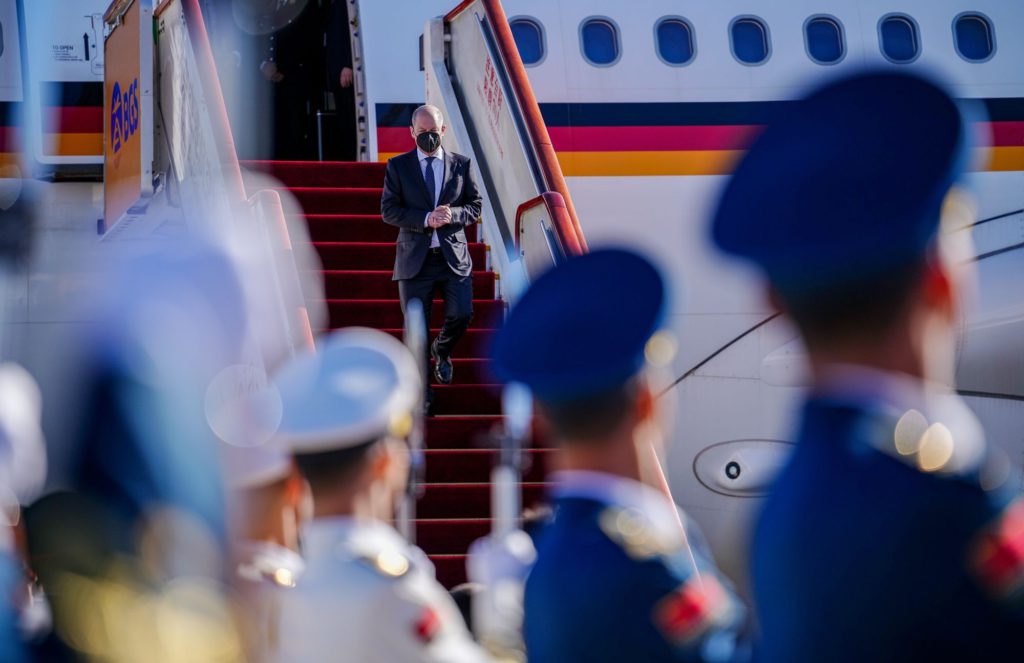
Scholz is the first major European leader to visit China in more than two years, as Xi returns to in-person diplomacy after his long spell of self-imposed Covid isolation stifled such exchanges. The German leader, who is joined on the one-day trip by top executives from BASF SE, Volkswagen AG, Deutsche Bank AG and BioNTech SE, is also the first from the bloc to meet Xi after he clinched a precedent-defying third term in office last month.

The German leader said his trip came at a “time of great tension,” as Russia’s war in Ukraine challenged the rules-based order, and stressed the importance of face-to-face dialogue. “We can now talk concretely and directly with each other to respond to the challenges the world is facing and the bilateral relations between Europe and China,” he said in a statement. 

“Destroying political trust is easy, but rebuilding it is difficult, so it requires both sides to take care of it,” Xi told Scholz, according to Xinhua. In a press briefing after meeting Premier Li Keqiang on Friday afternoon, Scholz said he’d urged China to use its influence over Russia to deter it from nuclear force. 

Xi has engaged in a flurry of diplomacy this week, hosting top foreign leaders from Vietnam, Pakistan and Tanzania as he begins a third term focused on increasing China’s global influence. The Chinese leader didn’t leave his nation for two years after Covid emerged, a period that saw Beijing’s ties with the West sour over Xi’s crackdown on Hong Kong, treatment of Muslims in Xinjiang and military pressure on Taiwan. 

Later this month, Xi is expected to expand that outreach campaign at major summits in Thailand and Indonesia, where he could sit down with President Joe Biden for the first time since the US leader took power. That meeting could ease hostilities between the world’s two largest economies, which have reached a new low during the pandemic.

While Xi seems to have eased his own virus restrictions, meeting dignitaries in person and appearing unmasked in public, the nation’s Covid Zero policy remains in play. The German delegation had to take two PCR tests before landing in Beijing, and another on arrival, while workers wearing hazmat suits were seen rolling out a red carpet for Scholz. 

Xi’s efforts to solidify ties with Germany this week are part of a broader push to prevent relations with the European Union from further deteriorating. Last year, the EU halted an investment agreement with China after both sides traded sanctions over Xinjiang, where the US has accused Beijing of genocide. China denies such allegations.   


For its part, Berlin is working to hone a new national strategy on China that aims to weaken reliance, diversify supply chains and enhance security, while reinforcing business ties. That handed Scholz the delicate balancing act of pushing trade ties in Beijing, while voicing concerns on sensitive issues. 

Noah Barkin, managing editor of the Rhodium Group’s China practice, said that while Scholz will likely view Xi’s warning to Moscow on nuclear force as a victory, the Chinese leader still hadn’t turned his back on Putin.

“The lessons of the past year are that Xi will stick with Putin through thick and thin,” Barkin said, adding that Scholz’s push to deepen economic ties with Beijing was at odds with his own government’s aims. “It will raise questions among Germany’s allies in Europe, the US and Asia about where Berlin really stands.”

–With assistance from Sarah Zheng and John Follain.

(Updates with G-7 statement in fifth paragraph)

More stories like this are available on bloomberg.com

©2022 Bloomberg L.P.

Every Politician Wants Green Jobs in This Bitter US Battleground

(Bloomberg) — Demand for carpeting lives and dies with the real-estate market, and that puts jobs in Dalton, Georgia, the self-proclaimed “carpet capital of the world” at risk whenever housing goes soft.

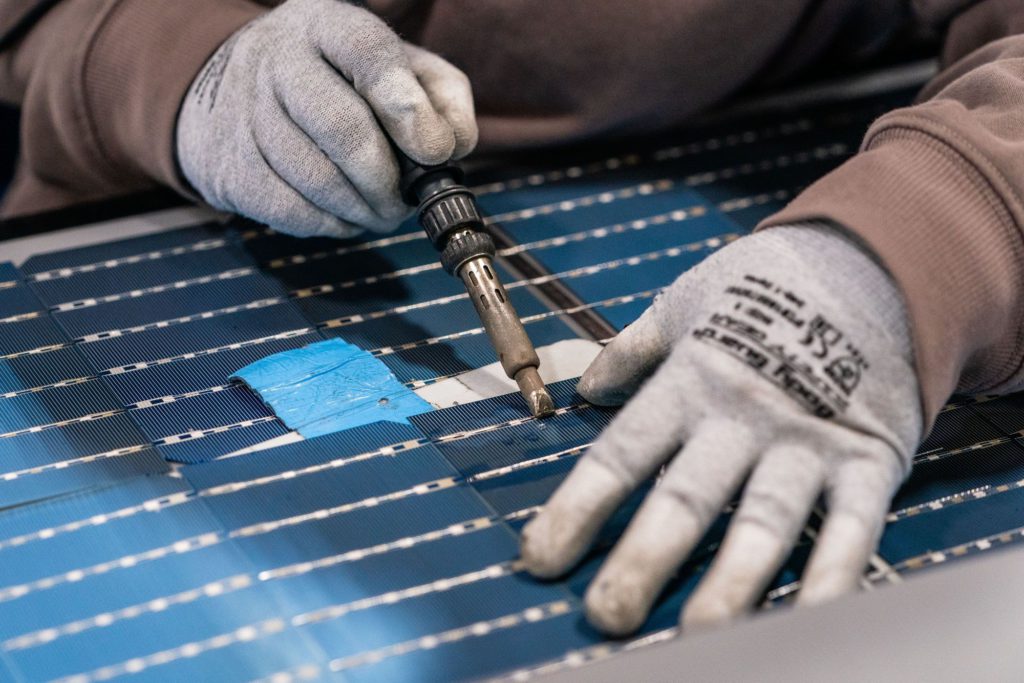
But instead of the blight and decline that’s come to characterize many rural US manufacturing towns, this city of 34,000 is on the upswing. After a successful push from state and local development authorities, Korean conglomerate Hanwha Group built a solar factory — the largest in the Western Hemisphere — in Dalton. It opened in 2019.

Solar may not seem an obvious fit for the region. Georgia doesn’t mandate clean-power installations, and few panels adorn rooftops in Dalton. “We’re not really into the whole solar thing,” says Diane Smith, a 64-year-old housewife in Dalton. But she’s pleased about the influx of jobs in a whole new industry. “We need something new — something besides carpet.”

Once a stronghold of the conservative South, Georgia has emerged as both a hub of so-called cleantech manufacturing and a political swing state. The two themes converged last year when Democrats Jon Ossoff and Raphael Warnock won the state’s US Senate seats, giving President Joe Biden’s party just enough votes to pass the Inflation Reduction Act. The landmark law features $374 billion in new climate-related spending — with a wave of new electric vehicle, battery and solar plants among the key beneficiaries — in part to reduce US dependence on Chinese supplies.

“Victory is not assured in this effort,” says Ossoff, a key player in the creation of the cleantech manufacturing credits in the climate law. “But what’s clear is that the Chinese domination of the solar-supply chain has become economically, strategically and ethically untenable.”

Next week, Georgians will once again play a pivotal role in charting the course of national energy policy, with a high-profile US Senate race pitting Warnock against Herschel Walker, a former football star endorsed by Donald Trump. The race could shift the balance of power in the closely divided Senate. Walker has taken a partisan line against the IRA, criticizing Warnock for “spending $1.5 billion on ‘urban forestry.’” Walker added in a tweet, “I have a problem with that.”

But a look beyond the Senate race points to a shift in the politics of clean energy. Georgia’s politicians are eager to associate with growing industries, and its green-jobs boom has been championed by Republican and Democratic leaders alike. As cleantech firms become reliable sources of local employment and political contributions, their priorities — including speeding the transition away from fossil fuels — may become more palatable even to staunch conservatives.

Tennessee, South Carolina, Ohio and other traditionally red states with automotive traditions have joined Georgia in vying for cleantech factories. “Red states are going to green up like the rest of the country. Their economic incentives are greater to do so,” says Kevin Book, managing director at ClearView Energy Partners. “For Georgians, climate policy might be a tough starter. But new jobs isn’t.”

Northwest Georgia is a deep Republican stronghold: Residents sent ultra-conservative Marjorie Taylor Greene to Congress with 75% of the vote. At the edge of Dalton’s downtown, Oakwood Cafe has a pair of campaign signs in the window for incumbent Republican Governor Brian Kemp and a note on the door explaining the recent 10% surcharge on all bills to help “offset the extreme inflation.”

Kemp has touted the surge in green jobs. There’s also SK Innovation Co.’s massive new battery factory in the city of Commerce that stretches a half-mile along the interstate northeast of Atlanta. Rivian Automotive Inc. is planning a Georgia factory, and Hyundai Motor Co. just broke ground on a $5.5 billion plant near Savannah.

The state’s leaders have a practiced sales pitch. Georgia is a strong logistics hub, with one of the world’s busiest airports, a port and a rail network. Electricity prices are relatively low. It’s a right-to-work state, which makes it harder for workers to unionize. Several technical schools promise a solid talent base, and the state offers workforce training. “I remember them saying they can train the burger-flipper at McDonald’s to work at your plant,” says Steve Jahng, director of external affairs at SK Battery America.

Even without a state-mandated quota for clean power, developers in Georgia have built massive solar farms, in part because big corporations are keen to buy the power. It’s now ranked seventh among US states in terms of solar-generating capacity. “We have a number of companies that have moved to Georgia in the last few years that want 100% renewables,” says Pat Wilson, the commissioner of the state’s department of economic development. “The utilities have facilitated it.” (Utility Georgia Power also has plans to add renewables resources).

It sounds like a laissez-faire dream. But manufacturing often depends on government help, and Georgia under Republicans or Democrats has long been eager to make it happen. Firms have taken advantage of property-tax abatements, site-clearing efforts, infrastructure improvements and other perks, mostly tied to the promise of jobs. 

The federal push for American-made cleantech supplies predates Biden’s election. A small but committed band of populists and protectionists as well as some unions, solar-panel makers and steel interests, found a surprising ally in the Trump administration, which was eager to escalate trade tensions with China.

China controls more than 70% of global capacity across 12 segments of the clean-energy industry, according to BloombergNEF. While there are plenty of jobs for solar panel installers in the US,  by the time Trump took office, almost all of those panels were being manufactured overseas.

About a year into his term, Trump imposed new solar duties, contributing to the decision of Hanwha unit Qcells to build its first US plant in Dalton. (The US has long been a key market for the manufacturer.) Today that factory produces 12,000 panels each day, has three production lines and employs 750 people, almost all of whom are new to solar.  Qcells is one of the biggest employers in the Dalton area and still growing, with a new facility on track to open within a year and eventually employ nearly 500 workers.

“For this town to be the leading producer of solar panels in the United States really speaks to what its role in the US and global economy is going to be,” says Scott Moskowitz, head of market strategy and public affairs at Qcells.

The new spending measures enacted by the midpoint of Biden’s term in the White House may prove to be the country’s biggest industrial policy since the 1950s. It’s not just the climate package that’s putting billions of dollars behind the clean-energy transition — there’s also the 2021 bipartisan infrastructure law, with support for power grids and electric vehicles, and the 2022 semiconductor act. It’s enough to bring a Dalton-style diversification to more local economies across the country.

That many of the states vying for new cleantech plants are, or were, Republican strongholds may have long-term implications for energy policy and climate politics. Not a single Republican supported Biden’s climate law but, like many issues in American politics, it hasn’t always been politically polarizing. The Environmental Protection Agency was established by President Richard Nixon, for example, and politicians have proven plenty flexible on energy policy.

Just as Democrats from oil-producing states such as Texas often supported favorable policies in Washington, there are plenty of Republicans in windy Midwest states who have backed tax credits for building wind farms. This bodes well for solar, battery and electric-vehicle technologies that are now being made in purple and red states.

In Georgia, “left or right, for economic-development purposes and manufacturing purposes, both sides of the aisle have been extremely supportive of our business,” says SK’s Jahng, who is often in touch with representatives for the governor and senators. “It’s an open dialogue.”

Driving to Commerce from Dalton takes about two-and-a-half hours, passing along orchards that hug the Appalachians. Trump got 60% of the vote here in 2020, and the region hasn’t sent a Democrat to Congress since 1993. Signs in the storefront window of local radio station WJJC 1270 AM read “Blue Lives Matter” and “Herschel for Senate.”

SK opened a three-person office in Commerce in the summer of 2019 and conducted drive-through interviews for prospective hires early in the pandemic. Now there are more than 2,000 employees at its 1.5-million-square-foot factory. Most Saturdays there are jobs fairs, as the company to hire 100 people — GEDs, PhDs, and everything in between are welcome — each week. The goal: 2,600 employees by year-end.

“It’s driven up wages across the board in our area,” says Commerce Mayor J. Clark Hill III. “When you start getting into paying people $20 to $25 an hour to start — a high school student, non-skilled — those people really have the opportunity to have a decent life.”

SK’s plant relies on humans and robots to manufacture battery cells for automakers including Ford and Volkswagen. Engineers at the facility design and manage the process. Another Korean company, Enchem, supplies electrolytes needed for the batteries at a nearby facility.  A second plant at SK’s Commerce site will more than double capacity. Mass production is expected to start early next year.

Trade tensions, human-rights concerns and pandemic-era supply snarls have underscored the value of domestic manufacturing. But the new federal support doesn’t guarantee long-run success in the effort to wean off Chinese suppliers. China President Xi Jinping has made cleantech manufacturing a core focus. “China is just years ahead of the US — decades ahead,” says Jenny Chase, head of solar analysis at BloombergNEF.

Back in Dalton, new kinds of jobs and technologies are winning the day. “Everyone is trying to move forward,” says Wayne Lock, who spent several years in carpeting and is now a quality engineer at the Qcells plant. “If we don’t change what we’re doing, we’re going to get left behind.”


–With assistance from Jennifer A Dlouhy, Dan Murtaugh and Brett Pulley.

More stories like this are available on bloomberg.com

©2022 Bloomberg L.P.

US Futures Climb, Yields Pare Advance After Jobs: Markets Wrap

(Bloomberg) — Stock futures climbed after a four-day equity rout, with traders brushing off concerns about a still strong labor market keeping the Federal Reserve on its aggressive hiking path.

A rebound in big tech helped lift stocks in early trading. Two-year US rates, which are more sensitive to imminent Fed moves, trimmed most of a surge that sent them to the highest level since 2007. The dollar fell.

Nonfarm payrolls increased 261,000 last month following an upwardly revised 315,000 gain in September, a Labor Department report showed Friday. The unemployment rate ticked up to 3.7% as participation edged lower, while average hourly earnings accelerated from the prior month.

Investors are fleeing to the safety of cash funds as the Fed remains firmly hawkish, according to strategists at Bank of America Corp.

The asset class had inflows of $62.1 billion in the week through Nov. 2, according to a note from the bank citing EPFR Global data. That’s contributed to $194 billion of inflows into cash from the start of October — the fastest start to a quarter since 2020.

In corporate news, US-listed Chinese stocks jumped as fresh optimism over an easing of Covid restrictions and progress in the US audit inspection of Chinese companies fueled appetite for beaten-down names. DoorDash Inc. reported revenue that beat estimates, a sign that customers are still ordering pricey takeout despite a squeeze from higher inflation.

Some of the main moves in markets:

Stocks

  • Futures on the S&P 500 rose 0.9% as of 8:57 a.m. New York time
  • Futures on the Nasdaq 100 rose 1.1%
  • Futures on the Dow Jones Industrial Average rose 0.7%
  • The Stoxx Europe 600 rose 1.6%
  • The MSCI World index rose 0.7%

Currencies

  • The Bloomberg Dollar Spot Index fell 1%
  • The euro rose 0.9% to $0.9837
  • The British pound rose 0.8% to $1.1254
  • The Japanese yen rose 0.7% to 147.26 per dollar

Cryptocurrencies

  • Bitcoin rose 2.2% to $20,686.57
  • Ether rose 3.9% to $1,600.19

Bonds

  • The yield on 10-year Treasuries advanced three basis points to 4.18%
  • Germany’s 10-year yield advanced five basis points to 2.29%
  • Britain’s 10-year yield advanced four basis points to 3.56%

Commodities

  • West Texas Intermediate crude rose 4.3% to $91.92 a barrel
  • Gold futures rose 1.9% to $1,661.60 an ounce

More stories like this are available on bloomberg.com

©2022 Bloomberg L.P.

Tech Startups Are Turning to Venture Debt to Survive Bear Market

(Bloomberg) — Tech startups are relying on debt to get them through a tumultuous period as equity valuations slump and the era of venture capital largesse draws to a close.

Credit, rather than equity, is helping tech companies keep their operations going while avoiding a damaging “down round”, investors and tech startup heads said at the Web Summit conference in Lisbon this week. 

The rising frequency of down rounds — whereby companies raise equity funding at reduced valuations — has increased tech firms’ appetite for debt, both conventional and convertible. High-profile revaluations of Swedish fintech Klarna Bank AB, which saw its value plummet by close to $40 billion, and payments giant Stripe, down 27%, have fueled the trend. 

“Startups want to avoid a down round and it’s the same for us as investors,” said Cynthia Nadal, founding partner and head of fintech at capital firm Reaction. “We want to limit the mark downs in our portfolios, so we’re also the first to encourage our own portfolio companies to consider debt as a valid option, much more than we used to.”

Venture debt, which refers to bonds and loans given to startups still short of profitability, has increased significantly over the past several years, according to data from PitchBook Data, Inc. Volumes in the US hit $17.1 billion in the first six months of 2022, up 7.5% from the same period in 2021. Meanwhile, venture capital funding is down 8% over the same period to $147.7 billion.

But debt financing comes at a cost. While deals are typically private, Kreos Capital told Bloomberg earlier this year that the coupon rate is 9%-10%, compared with conventional corporate bond markets with lower yields. Such arrangements weigh on the companies’ balance sheets, and could also impact their ability to reach profitability and obtain future funding rounds. 

Mood Music

Market leader Silicon Valley Bank is in the process of closing a $2 billion venture debt fund while big financial firms such as Blackstone Inc. and KKR & Co. are also entering the space.  

“Last year it was difficult competing with the amount of available equity capital,” Rosh Wijayarathna, head of corporate finance for EMEA at Silicon Valley Bank, told Bloomberg. “This year the mood music has changed with pressure on valuations, and debt capital is now a lot more attractive.” 

He said that SVB Capital’s funding has been across various structures including straight debt and convertible debt, a type of bonds that can be converted into shares after a given period of time, usually at a pre-agreed price.

One startup that has made use of debt is Laka, a UK tech firm operating in the insurance space. Co-founder and chief executive Tobia Taupitz told Bloomberg that the company had issued convertible debt to its existing backers and also taken on venture debt from Silicon Valley Bank. 

“We did a Series A funding round in January, but I don’t know what the market is going to look like in the next six months,” he said. “This debt gives us optionality.” 

Convertible Debt

Convertible debt has been something of a favorite for large tech companies in recent years, with the likes of Peloton Interactive Inc., Just Eat Takeaway.com NV and Affirm Holdings Inc. all issuing “zero coupon” convertible bonds during the pandemic era to a hungry investor base anticipating big gains in the underlying stock. 

In the current environment, however, it has become much more of a defensive deal, allowing investors to support their portfolio companies through the next few years until valuations recover, in theory. 

“As a company, you have a ticking clock of two, two-and-a-half-years before you need to do a funding round — and you don’t want that to be a down round,” said Brian Smiga, managing partner at Alpha Partners. “So what you do is you take on debt — and if you’re a cash generative company, you can even use it tactically to gain market share.” 

More stories like this are available on bloomberg.com

©2022 Bloomberg L.P.
Close Bitnami banner
Bitnami