

Bloomberg

Conspiracy Theorists Jump on Election Snafus to Sow Doubt

(Bloomberg) —  A nightmare scenario unfolded for election officials across Colorado last month.

A clerical error resulted in 30,000 non-citizens being sent postcards encouraging them to vote, according to Secretary of State Jena Griswold. She said her office took swift action, issuing press statements and sending letters to those impacted alerting them of the mistake. By then, a conspiracy theory had taken hold that the mailing was an intentional ploy by Griswold, a Democrat, to flood the ballot with illegal immigrant votes.

“Suddenly Donald Trump is pushing out this disinformation and then right-wing folks start talking about hanging me,” Griswold said.

The reaction to the blunder tells a wider story about politics ahead of the upcoming midterms, one that election officials and disinformation experts worry has the potential to undermine trust in the results nationwide. Fears about US adversaries waging cyberattacks or influence campaigns to influence the election remain. But administrative mistakes and other minor snafus may now be just as likely to undermine an election, according to cybersecurity and political experts.

“There’s going to be some amount of error in the process,” said Mike Caulfield, research scientist at the University of Washington’s Center for an Informed Public, referring to the US’s unique and complex voting system across more than 3,000 counties. This siloed nature is beneficial, however, as the election infrastructure is built in a way that “these errors are not the impactful ones.”

That said, Caulfield said he worries that a small voting machine or database glitch could “be leveraged and portrayed as a breach in the voting systems to the general public–and used to undermine the legitimacy of the election.”

The FBI and the Cybersecurity and Infrastructure Security Agency sent a note to election officials last month—a day before news of the Colorado incident broke—warning that foreign groups might spread false claims about such things as cyberattacks on election systems and ballot fraud to sow discord. “These foreign actors may create and knowingly disseminate false claims and narratives regarding voter suppression, voter or ballot fraud, and other false information intended to undermine confidence in the election processes and influence public opinion of the elections’ legitimacy,” the Oct. 6 memo stated.

But the homegrown disinformation may pose just as big of a threat, according to David Levine, elections integrity fellow at the Alliance for Securing Democracy and a former election official.

“What happened in Colorado demonstrates that those who believe elections are illegitimate are willing to go to almost any means to prove it, particularly when they are bad faith actors,” Levine said.

“If someone was questioning this in good faith, they would be asking officials what they are doing to prevent the problem,” he added. “But that’s not what folks are doing here – this is voter-fraud fearmongering.”

Several recent incidents have shown the potential for relatively minor incidents to quickly spin into viral conspiracies.

On October 27, Fox 10 television station in Phoenix stated that it mistakenly published mock election results from the Associated Press during a live news broadcast, showing Democratic gubernatorial candidate Katie Hobbs with 53% of the vote, over Republican candidate Kari Lake. The station tried to correct the mistake, saying on Twitter and Facebook it was  a test that never should have aired.

But Representative Paul Gosar, a Republican from Arizona who voted against certifying President Joe Biden’s victory in 2020, shared a photo of the screen on Twitter and asked, “Is this the same Fox News that called Arizona for Biden 5 minutes after the polls closed?” Thousands of others chimed in on social media, raising suspicions and expressing their lack of faith in elections and the media. 


In another instance, an election worker in Michigan was charged with two felonies in September after allegedly inserting a USB stick into a computer containing voter registration data. The arrest was connected to the alleged theft of registration data, not ballots, and there was no suggestion of vote tampering.

Nonetheless, it led to online claims that Michigan’s voting system was unsafe.

The Colorado faux pas occurred when officials at the Secretary of State’s office pulled data from the Division of Motor Vehicles database to find people who hadn’t signed up to vote, according to Griswold. Unbeknown to them, the database included immigrants who can live legally in the US but aren’t eligible to vote, she said.

In the days following the mishap, Senator Ted Cruz, a Republican from Texas, suggested on Twitter that the mistake was a deliberate act and articles appeared in Fox News and The Federalist making similar claims. On his Truth Social platform, former President Donald Trump shared a headline with quotation marks around the word “accidental” – a grammatical wink suggesting just the opposite.

Neither Cruz nor the Trump Organization responds to requests for comment.

In the three days after the incident was revealed, tweets mentioning Colorado registration mailers jumped from zero to 300 per hour, according to researchers at the University of Washington.

“It’s hard to stand up to these election conspiracy theory folks and to push for trust in the system,” said Chuck Broerman, the clerk and recorder for El Paso County, Colorado, who set up an emergency phone bank to debunk any myths.

“The episode with the registration cards did not help at all.”

Broerman was previously chair of his local Republican party but feels ostracized for refusing to deny the 2020 vote was legitimate.  Ahead of the midterms, he said he has security and stringent cybersecurity measures in place to ensure the voting infrastructure is secure. But he and other election officials are struggling to tackle the vulnerabilities created by social media-fueled rumors.

“People like Ted Cruz know exactly what they are doing,” said Griswold. “Even when folks know they are lies, they use them as a basis to strip eligible Americans, Republicans, Democrats and the unaffiliated of their constitutional right to vote.”

More stories like this are available on bloomberg.com

©2022 Bloomberg L.P.
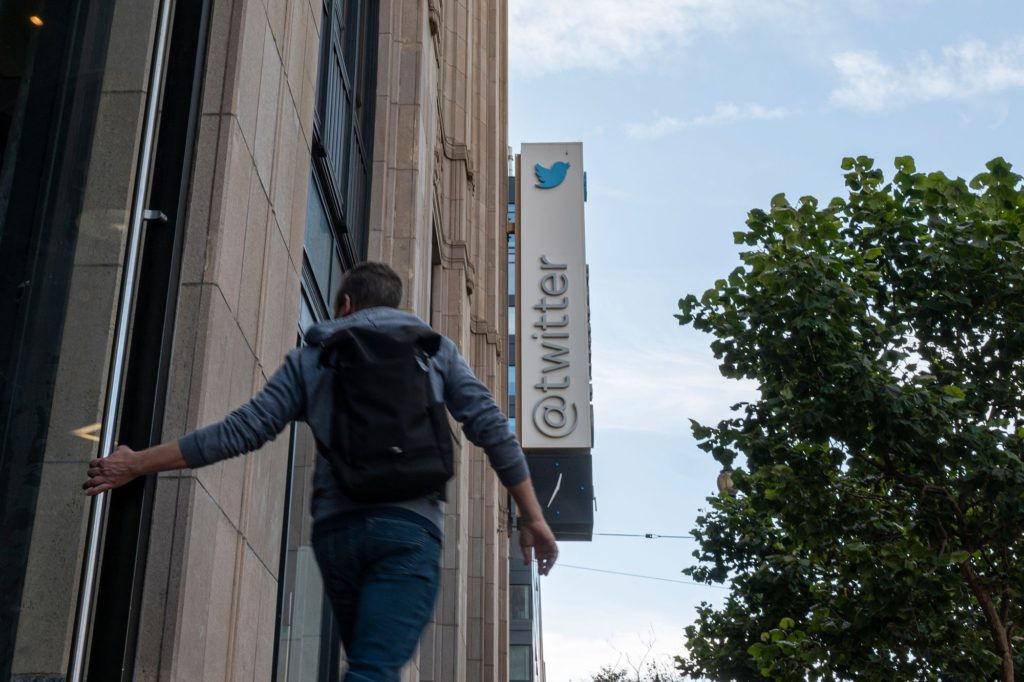
Twitter Latest: Layoffs, Lawsuits Begin After Musk Takes Helm

(Bloomberg) — Twitter Inc. employees around the world began getting notifications that they were locked out of their work accounts, a week after billionaire Elon Musk took over the company promising sweeping changes. 

Workers will have to check two email addresses to find out if they still have a job, according to an internal memo sent to employees and seen by Bloomberg. An email to their work account means they’ve been retained. A letter in their personal inbox means they’ve been fired. Twitter has promised to notify workers by 9 a.m. San Francisco time on Friday, and has temporarily closed offices and suspended badge access “to help ensure the safety of each employee as well as Twitter systems and customer data,” the memo said.

Musk plans to eliminate half of Twitter’s workforce to slash costs at the social media platform he acquired for $44 billion last month, people with knowledge of the matter have said. The company must also find ways to cope with interest costs on a massive debt pile. 

“In an effort to place Twitter on a healthy path, we will go through the difficult process of reducing our global workforce on Friday,” Twitter management said in an email reviewed by Bloomberg. “We recognize that this will impact a number of individuals who have made valuable contributions to Twitter, but this action is unfortunately necessary to ensure the company’s success going forward.”

The speed of the changes is having repercussions. Twitter has already been sued for not giving proper notice of the plan to eliminate about 3,700 jobs. 

Some advertisers are also wary of Musk’s plans to reexamine Twitter’s content moderation policy. Volkswagen AG, Europe’s largest carmaker, joined Pfizer Inc. and General Mills Inc. in temporarily pausing advertising on the platform.

Bloomberg News will capture the news flow here.

Twitter Employees Join Unions Ahead of Job Cuts (12 p.m. London)

Twitter employees in the UK have been joining trade unions in an effort to better protect their employment rights during mass job cuts announced by the social media platform’s new owner Elon Musk.

“Twitter is treating its people appallingly,” said Mike Clancy, General Secretary of Prospect, a UK-based trade union that said it has seen an influx of sign-ups from Twitter employees over the last week. Clancy called on the UK government to ensure that Twitter doesn’t become a “digital P&O,” referring to the ferry company that cut 800 jobs in March.

“We are supporting our members at Twitter and will be working with them to defend them and their livelihoods,” he added.

Britain’s United Tech and Allied Workers labor group also condemned the way employees were treated and encouraged Twitter workers to join. 

The UK’s Advisory, Conciliation and Arbitration Service says businesses must generally consult on redundancies and inform the government’s Redundancy Payments Service. An ACAS spokesman didn’t immediately respond to a request for comment on the situation.

Ex-CEO Costolo Creates Twitter Alumni Network (11:30 a.m. London) 

Former Twitter Chief Executive Officer Dick Costolo, who left the company in 2015, said his latest company has put together a resource for former Twitter employees who want to connect and “figure out what’s next.” 

Costolo is founder of 01 Advisors, a venture capital and advisory firm for tech startups in San Francisco. 

Employees Notified in Dublin (11 a.m. London) 

Twitter’s Dublin office, which employs about 500 people, have begun notifying some employees via email, according to Irish news site RTE. 

Some employees in the UK also began to share on Twitter that they’d been locked out of their work systems. 

A representative for Twitter didn’t immediately respond to a request for comment. 

Volkswagen Tells Brands to Pause Spending (8:30 a.m. London) 

Volkswagen, Europe’s biggest carmaker, recommended that all of its brands pause their paid activities on Twitter until further notice, according to an emailed statement on Friday. 

Several advertisers have tapped the brakes on placing ads on the platform until they get a clearer idea of Musk’s plans. Musk has said he wants to remove some content moderation, giving rise to concerns that hate speech, misinformation and other potentially harmful material will flourish even more freely. General Mills said it’s temporarily pausing advertising on Twitter, joining General Motors Co. in rethinking their presence on the platform.

Twitter Sued for Mass Layoffs (10:43 p.m. SF)

Twitter was sued over Musk’s plan to eliminate jobs at the social-media platform, which workers say the company is doing without enough notice in violation of federal and California law. A class-action lawsuit was filed Thursday in San Francisco federal court.

Employees Start Losing Email Access (9:13 p.m. SF)

The company started cutting employee access to email and Slack on Thursday night. Some employees who were shut out of their work tools suspected their jobs were already cut, though they had received no official confirmation yet.

Job Cuts Begin

All told, Musk wants to cut about 3,700 jobs at San Francisco-based Twitter, people with knowledge of the matter said this week. The entrepreneur had begun dropping hints about his staffing priorities before the deal closed, saying he wants to focus on the core product. “Software engineering, server operations & design will rule the roost,” he tweeted in early October.

Security staff at Twitter’s San Francisco headquarters carried out preparations for layoffs, while an internal directory used to look up colleagues was taken off line Thursday afternoon, people with knowledge of the matter said. Employees have been girding for firings for weeks. In recent days, they raced to connect via LinkedIn and other non-Twitter avenues, offering each other advice on how to weather losing one’s job, the people said. Ex-Twitter engineers are also using social media to respond to former “Tweeps” looking to land jobs elsewhere.

Musk has also been huddling with advisers to come up with new ways to make money from the blogging platform, including charging for verifications, which can help delineate real users from fake accounts. He’s also considering reviving a long-since-discontinued short-video tool called Vine, a way to vie with popular video-sharing apps like TikTok. Another product under consideration, the New York Times reported, is paid direct messages, which would let the rank and file send private messages to high-profile users.

Read more: Musk to Restore Twitter Content Moderation Tools Before US Election

–With assistance from Kurt Wagner, Olivia Solon, Monica Raymunt, Morwenna Coniam and Thomas Seal.

More stories like this are available on bloomberg.com

©2022 Bloomberg L.P.
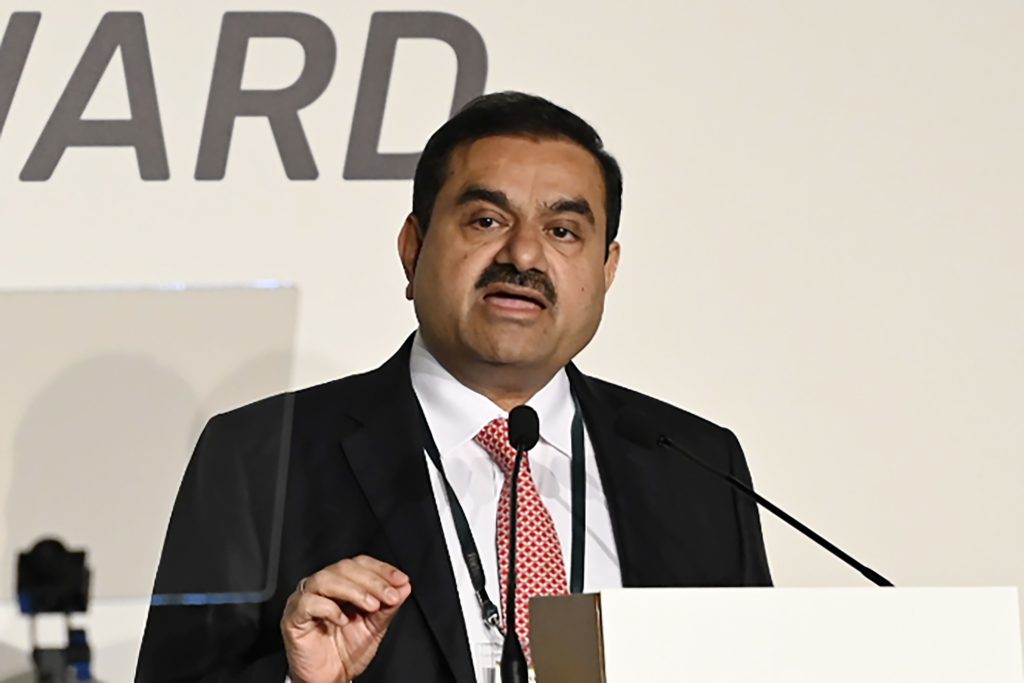
Adani’s Flagship Firm Near Record High After 117% Profit Surge

(Bloomberg) — Adani Enterprises Ltd.’s shares closed just short of a record high after its quarterly profit more than doubled and gave billionaire Gautam Adani’s flagship firm more firepower to boost its numerous new businesses.

The stock surged 6.8% on Friday to 3,833.25 rupees ($46.5) per share, almost touching the peak it reached in September when the company was added to the benchmark index Nifty 50. It has jumped 124% so far this year.

The Ahmedabad-based company reported a net income of 4.6 billion rupees for the quarter ended Sep. 30, it said in a filing Thursday, compared to 2.12 billion rupees in the same period last year. There were not enough brokerages issuing profit estimates for the company to derive an average forecast.

Revenue almost tripled to 381.8 billion rupees, the filing said, with multiple business divisions — from integrated resources management to mining and airports — surging in performance as the company’s push to dominate a slew of industries starts bearing fruit. Total costs ballooned 182% to 377.7 billion rupees in the latest quarter.

Runaway Rallies

Adani Enterprises, known for incubating new businesses for the ports-to-power group that are later spun off, has been at the forefront of the breakneck expansion spree being undertaken by Asia’s richest person. The conglomerate has diversified beyond coal-based businesses into green energy, cement, airports, data centers and media, spurring runaway rallies in Adani stocks. Adani Enterprises has surged more than 3,500% in the past five years. 

The company “has yet again validated its standing as India’s most successful new business incubator as it continues to build on exciting ideas,” Chairman Adani said in the post-earnings statement. 

Even though some credit watchers have flagged elevated debt at the group as a concern, the conglomerate has played down those fears saying it has been deleveraging.

Improving Credit Ratios at Tycoon Adani’s Flagship Allay Risks

The firm’s debt-equity ratio improved to 0.32 in the September quarter compared to 0.66 at the same period last year, according to the filing. Gross debt, as on Sep 30., was 400.2 billion rupees, marginally lower than 410.2 billion rupees at the end of March. 

But the net external debt — derived by deducting company founders’ debt — has climbed almost 18% to 335.17 billion rupees over the same period, implying growing indebtedness to external creditors. Debt Service Coverage Ratio, which is a marker of a company’s comfort in servicing its debt, has worsened slightly from a year-ago quarter.

Earnings were announced after the close of market trading hours in India on Thursday.

Mixed Bag

Other group companies have been a mixed bag in their quarterly earnings.

Earlier in the day, group company Adani Wilmar Ltd., posted a net income of 487.6 million rupees, down from 1.82 billion rupees a year ago while Adani Total Gas Ltd. reported a 1.3% rise in profit. 

Adani Ports & Special Economic Zone Ltd., with the highest number of brokerages tracking it among tycoon’s other companies, beat average profit and revenue forecast earlier this week. Power utility Adani Transmission Ltd. said Wednesday that its profit fell 25% to 2.06 billion rupees despite a 22% rise in revenue as costs surged.

Two more listed group companies — Adani Green Energy Ltd. and Adani Power Ltd. — are scheduled to report their earnings next week.

The rally in Adani Enterprises’ shares supported gains in group firms, all of which closed higher. Adani Ports rose 3.5%, while Adani Power advanced 3%.

–With assistance from Ashutosh Joshi, Ishika Mookerjee and Atul Prakash.

(Updates with closing share prices in the second paragraph.)

More stories like this are available on bloomberg.com

©2022 Bloomberg L.P.

Ukraine Latest: G-7 Agrees to Coordinate Reconstruction Help

(Bloomberg) — The Group of Seven nations has agreed to formally coordinate assistance in repairing, restoring and protecting Ukraine’s energy and water infrastructure. 

Discussions are ongoing regarding the appropriate funding mechanism, as well as the nature of each country’s contribution, a senior US State Department official told reporters on Friday in Germany. While there’ve been conversations about potentially using seized Russian assets to offset the costs of reconstruction, no decisions have been made.

Power rationing has widened in the capital as Ukrainian authorities seek to relieve pressure on the power grid. Kremlin troops escalated its shelling of civilian infrastructure last month as its troops were losing ground on the battlefield.

(See RSAN on the Bloomberg Terminal for the Russian Sanctions Dashboard.)

Key Developments

  • On NATO Front Lines, Slovaks Fight Advance of Russian Propaganda
  • Ukraine Seeks IT Investment at Web Summit as War Rages Back Home
  • US, Partners Opt to Set Fixed Crude Price For Russia Oil Cap
  • EU Studies Use of Russian Central Bank Assets to Rebuild Ukraine
  • How Ukrainians Are Protecting Their Centuries-Old Culture From Putin’s Invasion

On the Ground

Russian forces continue attacks near Bakhmut, Avdiyivka and Novopavlivka north-east of occupied Donetsk city, Ukraine’s General Staff said on Facebook. Ukraine downed three Shahed-136 drones over the past 24 hours, according to the statement. Russian troops tripled the number of attacks on certain areas of the front line — up to 80 per day, Ukrainian Commander-in-Chief Valeriy Zaluzhnyi said in a telephone phone call with General Christopher Cavoli, the head of US European Command on Thursday evening. Ukrainian aird defense shot down nine Shahed-136 single-attack drones overnight, defense ministry said on Telegram. This includes eight drones downed in the east,and one drone in western Ukraine.

(All times CET)

Ukraine in Talks to Set Up Weapon Repair Hubs Abroad (12:30 p.m.)

The hubs for advanced maintenance and repairs of western military equipment would be set up in partner countries such as Poland, Czech Republic or Slovakia, Defense Minister Oleksii Reznikov said during a video briefing Friday.

Ukraine has enough 155-caliber munitions for artillery from western partners while supplies of munitions for Himars and other types of key weapons used to resist Russian invasion also continue, he said.

Reznikov expects an air defense network to be created in order to protect Ukrainian skies, using various systems provided by allies.

EU Says Iran Must Stop Drone Deliveries to Russia (9:30 a.m.)

The European Union urged Iran to stop the alleged supply of drones to Russia as a violation of UN resolutions, the bloc’s foreign policy chief Josep Borrell said.

“Iran denies it but Ukrainians have been providing evidence of the use of drones,” Borrell told reporters on the sidelines of a meeting of Group of Seven foreign ministers in Muenster, Germany. 

Xi Calls on World to Oppose Use of Nuclear Weapons (9:10 a.m.)

The international community should “oppose the use or threat of use of nuclear weapons,” Chinese President Xi Jinping said in talks with German Chancellor Olaf Scholz that covered the fighting in Ukraine. “Nuclear war cannot be fought,” Xi added in the meeting Friday in Beijing, according to Chinese state media.

Scholz, on Twitter, said he had asked Xi “to exert his influence on Russia.” 

Kremlin officials have warned Russia could use tactical nuclear weapons in Ukraine, though President Vladimir Putin later denied intending to do that.

Russia Is Likely Deploying ‘Blocking Units,’ UK Says (8 a.m.)

Low morale and reluctance to fight probably mean Russian forces have started to deploy “barrier troops” or “blocking units” that threaten to shoot retreating soldiers, the UK defense ministry said in an update, without offering evidence.

“Recently, Russian generals likely wanted their commanders to use weapons against deserters, including possibly authorizing shooting to kill such defaulters after a warning had been given,” the UK said. “Generals also likely wanted to maintain defensive positions to the death.” 

Kyiv Urges China to Press Russia on Infrastructure Attacks (10:04 p.m.)

Kyiv called on China to push Russia to end attacks on Ukrainian infrastructure as some of it is leased by Chinese businesses, Foreign Ministry spokesman Oleg Nikolenko said on Facebook. 

Russian missiles hit Chinese-leased terminals in Ukraine’s Mykolayiv port last month causing a $26 million loss as thousands of tons of sunflower oils leaked. There are other potential targets that include a Chinese-owned terminal, the spokesman said. 

Sanctioned Superyacht Seized in Spain as Owner Stops Paying Fees (8:32 p.m.)

A Spanish court moved to seize a superyacht valued at $140 million that’s linked to a senior executive at a Russian defense conglomerate, after the owner stopped paying maintenance fees in June.

The court order to seize the 85meter (279-foot) Meridian A — formerly called Valerie — was handed down by a Barcelona judge on Wednesday, according to the Spanish maritime authorities.

The vessel, linked to Rostec State Corp.’s chief executive officer, Sergey Chemezov, was immobilized in mid-March by Spanish authorities while it was at a Barcelona shipyard for repairs. The European Union considers the vessel is formally owned by the stepdaughter of Chemezov.

More stories like this are available on bloomberg.com

©2022 Bloomberg L.P.

US-Listed Chinese Stocks Soar on Reopening Hopes, Tech Audit

(Bloomberg) — US-listed Chinese stocks jumped on Friday as fresh optimism over an easing of Covid restrictions and progress in the US audit inspection of Chinese companies fueled appetite for beaten-down names.

The KraneShares CSI China Internet Fund, an exchange-traded fund holding more than 40 Chinese stocks, soared 7.4%. Shares of internet giants Alibaba Group Holdings Ltd. JD.com Inc., Baidu Inc. and Pinduoduo Inc. climbed more than 8.5% each in US premarket trading, while electric vehicle stocks NIO Inc. and Li Auto Inc. advanced 9.2% and 12%, respectively. 

These moves tracked a frenzied rally in their Hong Kong traded peers, which drove the Hang Seng China Enterprise Index to its best weekly gain since 2015, after a steep drop the week before. 

The big reversal in China stocks follows days of speculation on the back of unverified social media posts that the country is preparing to ease its strict Covid Zero policy. What’s more, Bloomberg reported that China is working on plans to end a system that penalizes airlines for bringing virus cases into the country, while German Chancellor said China agrees to make BioNTech SE’s Covid-19 vaccine available to foreign residents, the first approval of mRNA vaccine in the country.

“Some easing has already taken place and more such measures are likely in the coming months,” said Adam Crisafulli, founder of Vital Knowledge. “Also keep in mind what’s happened to Chinese/HK stocks – these are some of the most hated, oversold, unowned equities on the planet – this is playing as much a role in the surge as reopening hopes.”

Meanwhile, US audit officials completed their first on-site inspection round of Chinese companies ahead of schedule, Bloomberg News reported, offering investors a much needed sign of progress in the closely watched process to prevent the delisting of hundreds of stocks from American exchanges.

READ: US Audit Inspectors Finish On-Site China Work Ahead of Plan (1)

The Nasdaq Golden Dragon Index of 65 Chinese stocks has climbed for the past three sessions and is up 7.5% on the week, rebounding after closing at its lowest level since 2013 last week in a record selloff amid worries over President Xi Jinping’s tightening control. 

Still, some fund managers remain cautious about the nation’s equities. Tiger Global Management, a long-time investor in China, has pulled back from the region and is pausing future stock investments, on concern that geopolitical tensions and China’s Zero Covid policy are all the more likely to persist after President Xi Jinping tightened his grip on power. 

–With assistance from Jan-Patrick Barnert.

(Updates chart, adds Hong Kong and Chinese trading in the third and penultimate paragraphs, Tiger Global Management in the last.)

More stories like this are available on bloomberg.com

©2022 Bloomberg L.P.
Nissan May Snub Renault Revamp Over Sharing Tech With Geely

(Bloomberg) — Nissan Motor Co. is willing to walk away from a deal with Renault SA to re-balance their alliance amid concerns the French carmaker wants to license hundreds of jointly developed patented technologies to other players, including new Chinese partner Geely, people familiar with the negotiations said.

While both sides appeared near a final agreement two weeks ago, Nissan’s board and management have recently expressed concern over Renault’s plans for the intellectual property, the people said, asking not to be identified as the information isn’t public. 

It includes some 500 joint technologies, one of the people said, among them expertise in areas such as autonomous driving, hybrid powertrains, solid-state batteries, safety systems, battery-management software and other know-how critical for developing self-driving, electrified vehicles.

Nissan sees risks in Renault Chief Executive Officer Luca de Meo’s plan to merge the French carmaker’s combustion-engine operations with China’s Zheijiang Geely Holding Group, the people said, and are seeking assurances that key technologies will be protected under any deal with the Hangzhou-based automaker, owner of Volvo and Lotus car brands.

Makoto Uchida, Nissan’s CEO, said he was “surprised” there is speculation the IP discussion may derail the wider deal, but acknowledged technology was a “very important core asset for the alliance.” Talks are ongoing, he added. 

“Of course there are areas where we have to say ‘this is our core technology,’ and that needs to be protected,” Uchida said in an interview with Bloomberg News Friday. “That’s my duty as CEO.”

Geely didn’t immediately respond to questions from Bloomberg. A representative for Renault declined to comment. Shares in the French carmaker declined as much as 1.9% in Paris before recovering to rise 1.1% at 1 p.m.

“This was always going to be contentious,” says RBC analyst Tom Narayan. “There’s politics involved, there’s shared technology, I understand Nissan’s concerns.”

Greater Control

Talks have been underway for months to reshape the two-decade-old alliance, which gives Renault greater control over its Japanese partner. Under the current plan, the French company will reduce its ownership of Nissan over time to 15% from the current 43%. In return, Nissan may be willing to invest $500 million to $750 million for a stake of about 15% in the new electric-vehicle unit that Renault plans to carve out, code-named Ampere. 

“There are things that we can say and we cannot say yet because we haven’t yet finalized,” Uchida said. “I’m having very close discussions with Luca. We respect each other, because I know that Luca has to make Renault much stronger, and he understands I have to make Nissan stronger. And of course most important is trust.”

Read more: Renault, Nissan Said to Near Deal to Reshape Alliance

Renault is scheduled to speak to investors on Nov. 8, when de Meo is expected to give an update on financial targets and the split-up plan.

“Renault, our partner, is going to have this capital markets day and that’s what we have to support,” Uchida said. “And I want that to be successful.”

Ghosn’s Arrest

The shift in ownership would alleviate an imbalance that’s been a source of friction for years. Despite Renault’s outsized stake, it’s the smaller carmaker with 2.7 million of vehicle sales in 2021, compared with 4 million for Nissan. 

The 2018 arrest of Carlos Ghosn, who was sent in to run the carmaking alliance when Renault rescued Nissan two decades ago, planted the early seeds for the re-balancing. The former chairman and chief executive officer, who denied the charges, escaped Japan in December 2019 while out on bail and is currently in Lebanon.

Although de Meo has indicated that he’s willing to split up Renault with or without a deal with Nissan, the Japanese company disengaging might make it harder to get the signoff of the French state — which owns 15% of Renault and holds double voting rights — for such a transformative move.

Nissan’s concerns mean it’s unlikely an agreement on the re-balancing will be announced as planned in mid-November, when directors from Renault, Nissan and Mitsubishi Motors Corp., the junior member of the three-way alliance, are scheduled to meet in Tokyo, the people said.

‘Great Technology, Great Assets’

Another sticking point is the valuation of Ampere. The lack of a specific figure backed by data is making it difficult for Nissan to determine how much to invest for a stake in the new entity, which Renault wants to list publicly, one of the people said. 

Uchida declined to comment on the timing of any announcement, or on the valuation of Ampere. 

Under Renault’s plans, Ampere would be based in France and employ about 10,000 people by 2023. The entity with Geely, code-named Horse, would also have a staff of about 10,000. 

“We have been discussing how we can make the alliance of each individual company stronger under the difficult circumstances we are facing,” Uchida said. “That’s how it started. We also wanted to speak about how the alliance could maximize the great technology and great assets that both companies have.”

–With assistance from Masatsugu Horie.

(Updates with analyst comment in 8th paragraph)

More stories like this are available on bloomberg.com

©2022 Bloomberg L.P.

UK Parliament Group Starts NFT Inquiry as Crypto Scrutiny Grows

(Bloomberg) — The UK parliament started an inquiry into nonfungible tokens, the digital collectibles for which Prime Minister Rishi Sunak has been a champion. 

The Digital, Culture, Media & Sport committee in the House of Commons announced the initiative in a statement on Friday, adding that it will also study the wider blockchain technology that underpins NFTs. 

“MPs are expected to consider whether NFT investors, especially vulnerable speculators, are put at risk by the market,” the DCMS committee said in the statement. “The inquiry may also look into the wider benefits that NFTs and the blockchain could provide the UK economy.”

NFTs rose into public consciousness in 2021, driven by the success of the Bored Ape Yacht Club collection that became a hit with celebrities. But interest in NFTs has dried up this year as crypto assets crashed, with trading tumbling more than 95% between January and September by one estimate.

Read more: Europe’s ‘First’ NFT Vending Machine Gets Cold London Reception

The DCMS committee’s statement cited fears that “overvalued assets may be dumped on ‘greater fool’ investors,” adding that “NFT regulation in the UK is largely non-existent.” It also made a reference to this year’s drop in NFT sales. 

Sunak, who took over as prime minister last month after Liz Truss’s brief and tumultuous reign, emerged as a key crypto champion while he was Chancellor of the Exchequer. In April, he announced that he’d instructed the Royal Mint to create an NFT. 


More stories like this are available on bloomberg.com

©2022 Bloomberg L.P.
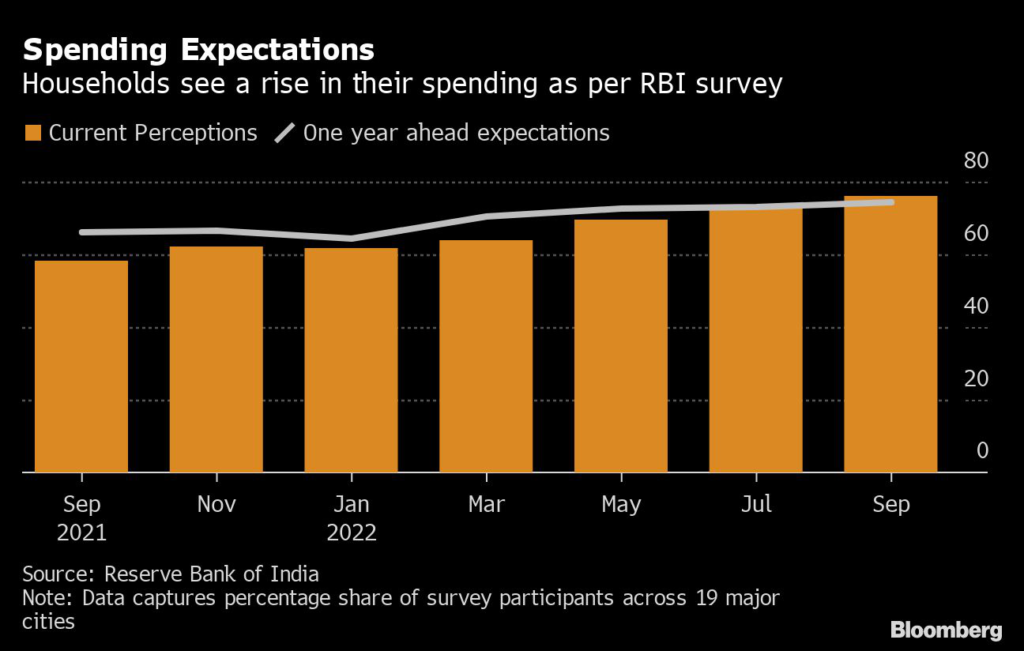
Samsung Sells Record $1.7 Billion of Phones Over India Holiday

(Bloomberg) — Samsung Electronics Co. clocked its best-ever Diwali festival sales in India, after demand for consumer electronics held up well despite mounting inflation.

The Korean company sold 144 billion rupees ($1.7 billion) of smartphones in the roughly two months that comprise India’s most important shopping season, often an indicator of broader domestic consumption. Sales rose across models from the Flip and Fold to the flagship S22, Aditya Babbar, head of product marketing at Samsung’s India mobile business, told Bloomberg News.

“This was our best-ever Diwali sale,” the executive said, without offering a comparison.

Apple sales by value in the same period were likely to have been similar to Samsung’s, while others like Xiaomi Corp. and Vivo shouldn’t have been too far behind, said Navkendar Singh of IDC India.

Read more: India’s Economy Lighting Up on Peak Festive Season Demand

Samsung, once the unrivaled leader in India’s fledgling smartphone market, has grappled with stiffening competition from Chinese brands such as Xiaomi, Oppo and Vivo, who sell seven of every 10 devices in the country.

To regain ground, the Korean company expanded a consumer credit program it launched in India three years ago, unveiled a credit card in partnership with a bank, and aggressively pushed sales via its own online stores. 

India’s smartphone shipments declined 11% in the September quarter, according to tech researcher Counterpoint. But Samsung was the only brand among the top five to clock annual growth, the research firm said.

More stories like this are available on bloomberg.com

©2022 Bloomberg L.P.
South Korea Indicates Crypto Fugitive Do Kwon May Be in Europe

(Bloomberg) — South Korean prosecutors indicated that crypto fugitive Do Kwon may be in Europe and that they are examining alleged evidence of price manipulation of the tokens he created.

The prosecutors’ office said Friday that local reports that officials have obtained chat histories pointing to price manipulation are “not false.” The office used the same phrasing when asked about the veracity of domestic articles placing Kwon somewhere in Europe.

Kwon’s Terraform Labs Pte created the TerraUSD stablecoin and sister token Luna. TerraUSD was meant to have a constant $1 value via a complex mix of algorithms and trader incentives involving Luna. The edifice suffered a $60 billion wipeout when confidence in the ecosystem evaporated in May, exacerbating this year’s rout in digital assets.

Read more: How Onetime Crypto Titan Do Kwon Became a Fugitive: QuickTake

Kwon’s location became unclear after prosecutors in Seoul sought his arrest on charges including breaches of capital-markets law. South Korea has said he’s the subject of an Interpol red notice.

Neither Kwon nor Terraform Labs immediately responded to a request for comment.

Kwon has previously denied wrongdoing or being on the run. On Twitter he poked fun at the saga surrounding him, trolling the “cops” and posting a picture of a gun with the words “pew pew.”

–With assistance from Joanna Ossinger.

More stories like this are available on bloomberg.com

©2022 Bloomberg L.P.

Hack or Safety Measure? Either Way, Crypto Holders Got Burned

(Bloomberg) — Was it yet another crypto hack? Or was it a “white hat” attempt to make sure a blockchain project is safe from the malicious actors stalking the digital-asset industry?

Either way, investors in the GALA cryptocurrency were taken for a wild ride on Friday, with the token plunging as much as 30% before recovering, based on aggregate exchange data from CoinGecko. On one crypto exchange, GALA plunged 99% at one point. 

Foul play or not, the incident underscores the nervous mood gripping the crypto industry after some $3 billion worth of exploits this year laid bare glaring security gaps. With their money at risk of getting pilfered by hackers, investors are dumping crypto assets at the merest hint of trouble. 

Read more: ‘Financial Hacking’ Plagues DeFi in Latest Setback for Crypto

The episode also illustrates the sometimes confounding complexity of crypto projects, involving a “wrapped” version of GALA called pGALA, a “liquidity pool” on a decentralized exchange and a “bridge” — the software protocols that allow tokens to be exchanged across blockchains, and which have become a prime target for hackers. 

The trouble started when over $2 billion worth of pGALA tokens appeared to have been created out of thin air on a single blockchain address. The mysterious address then started dumping those tokens on the decentralized exchange PancakeSwap, triggering fears of a hack and setting in motion the market cascade that sent GALA on its rollercoaster ride. 

GALA is the native token of the Gala Games, a platform for play-to-earn blockchain games. The “wrapped” version, pGALA, can be thought of as a derivative that allows Gala gamers to exchange coins they earn for other cryptocurrencies. 

Arbitrage Opportunity

When the price of pGALA tumbled on PancakeSwap, an arbitrage opportunity arose. Some crypto traders bought it there at rock-bottom prices, then swiftly sold the coin on centralized exchange Huobi, causing the price to crash there too. Because of its link to pGALA, the GALA coin was swept along.

It was then that the backers of pNetwork, the software bridge used to house pGala, added a fresh twist to the story by announcing on Twitter that it had created the fresh tokens as part of a “white hat” operation after discovering a security weakness. 

“We noticed pGALA wasn’t to be considered safe anymore and coordinated the white hat attack to prevent pGALA from being maliciously exploited. Funds are safe but users should NOT transfer or buy/sell pGALA on pancakeswap,” pNetwork wrote in another tweet.

Disgruntled traders, meanwhile, took to the social-media platform to voice their discontent. 

Yajin Zhou, chief executive of crypto security firm BlockSec, said pNetwork’s version of events is probably accurate — but even so, the initiative could have been better handled. 

“Even if this is the truth, they should publicly tell the owners and explain what will happen before minting and selling, otherwise it will cause panic and users will sell their tokens,” Zhou said in an interview over the Telegram chat app. 

PNetwork didn’t respond to requests for further comment. It said on its Telegram chat room that a more detailed postmortem will be released later.  

GALA was trading at around $0.034 at 10 a.m. in London, down 14% in the past 24 hours, according to CoinGecko. 

More stories like this are available on bloomberg.com

©2022 Bloomberg L.P.

Close Bitnami banner
Bitnami