
Bloomberg

Stocks Pare Weekly Loss on China Reopening Rally: Markets Wrap

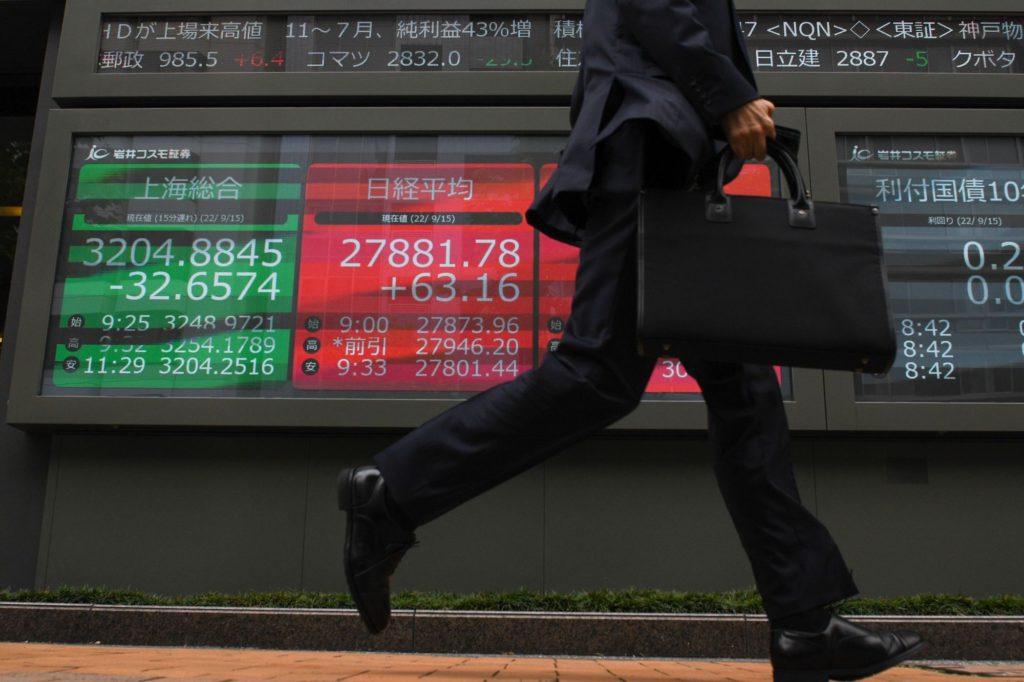
(Bloomberg) — Global equities trimmed a weekly loss as Chinese shares surged amid signs that authorities are trying harder to ease the impact of its Covid-Zero policy. Treasuries were little changed before US payrolls data. 

Miners led gains in Europe as commodities rallied, while luxury stocks also got a boost. Hong Kong’s benchmark Hang Seng Index was set for the biggest weekly jump since 2011 and US futures advanced, with US-listed Chinese stocks surging in premarket trading.

Investors were heartened by news that US audit officials were ahead of schedule in on-site inspections of Chinese companies, and that a system penalizing airlines for bringing virus cases into the country may be scrapped. 

Focus will turn to US payrolls data later on Friday for clues on the strength of the labor market and pace of Federal Reserve tightening. A key segment of the Treasury curve reached an extreme of inversion not seen since the 1980s on Thursday, an anomaly that historically preceded economic downturns.

“Today’s numbers need to be viewed in the light of other labor market statistics that shows labor demand holding up,” said Stuart Cole, head macro economist at Equiti Capital. “The concerns over still strong inflationary pressures will be trumping any meaningful easing that the labor market might be pointing to.” 

Swaps that reference future Federal Reserve meetings indicate an expected peak policy rate above 5.14% around mid-2023. 

“Our view has been for a while that the only way central banks can credibly tame inflation is through tighter financial conditions and slower growth,” Barclays analysts wrote in a note. “Chairman Powell made it clear that over tightening may be a less costly option over the long run than doing too little. So as it stands, we find few reasons to stop worrying about a hard landing.”

The Nasdaq 100 was poised to trim its biggest weekly drop since the start of the year, a slump driven by rate-hike concerns, amid optimism about China’s reopening. China’s CSI 300 Index capped its best week since mid-2020.

The dollar weakened, while the offshore yuan advanced.

The rally follows days of speculation on the back of unverified social media posts detailing a reopening plan. While similar Chinese rallies have all fizzled in recent months, bulls are now betting that some of the world’s lowest valuations have left the nation’s shares primed to surge on any hint of good news. 

Elsewhere, European gas and power prices jumped after Electricite de France SA issued yet another warning about its troubled nuclear fleet, adding to pressure on the region’s tight energy supplies this winter. 

Key events this week:

  • US nonfarm payrolls, unemployment, Friday

Some of the main moves in markets:

Stocks

  • The Stoxx Europe 600 rose 1.1% as of 9:55 a.m. London time
  • Futures on the S&P 500 rose 0.7%
  • Futures on the Nasdaq 100 rose 0.7%
  • Futures on the Dow Jones Industrial Average rose 0.5%
  • The MSCI Asia Pacific Index fell 1.6%
  • The MSCI Emerging Markets Index fell 1.4%

Currencies

  • The Bloomberg Dollar Spot Index fell 0.4%
  • The euro rose 0.3% to $0.9779
  • The Japanese yen rose 0.3% to 147.81 per dollar
  • The offshore yuan rose 0.9% to 7.2690 per dollar
  • The British pound rose 0.6% to $1.1222

Cryptocurrencies

  • Bitcoin rose 1.7% to $20,583.54
  • Ether rose 2.5% to $1,579.53

Bonds

  • The yield on 10-year Treasuries was little changed at 4.14%
  • Germany’s 10-year yield was little changed at 2.25%
  • Britain’s 10-year yield declined three basis points to 3.49%

Commodities

  • Brent crude rose 2.1% to $96.69 a barrel
  • Spot gold rose 1% to $1,645.31 an ounce

–With assistance from Sujata Rao, Tassia Sipahutar and Brett Miller.

More stories like this are available on bloomberg.com

©2022 Bloomberg L.P.

Tesla’s Former India Policy Chief To Join E-Scooter Startup

(Bloomberg) — Tesla Inc.’s former India policy chief is joining homegrown electric scooter startup Ather Energy Pvt, one of the best-funded fledgling firms in a sector attracting record investment.

Manuj Khurana, who quit his post as Tesla’s local head of policy and business development in June, will start next week at the firm based in the southern technology hub of Bangalore, a person with knowledge of the matter told Bloomberg News. Khurana will join as a vice president, though his specific role there is unclear, the person said, declining to be named as the matter is not public.

Ather, which competes with local rivals including Ola Electric, this year raised $128 million from investors including Hero MotoCorp Ltd. and India’s National Investment & Infrastructure Fund. It’s one of several players vying for a slice of a market expected to surpass $150 billion by the end of the decade — roughly 400 times its current size.

Representatives for the startup didn’t immediately respond to a request for comment.

Read more: Ola Unveils Mass Market Scooter, Eyes Exports to Europe, LatAm

Indian consumers are expected to gravitate toward electric vehicles as the nation combats some of the world’s worst pollution. Venture capital and private equity funding in Indian electric mobility firms is on track to exceed $1 billion for the first time in 2022 as sales rise steadily, according to Bloomberg New Energy Finance.

Khurana had joined Tesla in March 2021. The US electric automaker, run by billionaire Elon Musk, has faced a raft of challenges in India over import taxes and a local factory. It’s sought lower levies in India so it can test the market by selling cheaper imported electric vehicles before committing to a manufacturing base of its own.

–With assistance from Ragini Saxena.

More stories like this are available on bloomberg.com

©2022 Bloomberg L.P.
Adani’s Flagship Firm Set for Record High After 117% Profit Jump

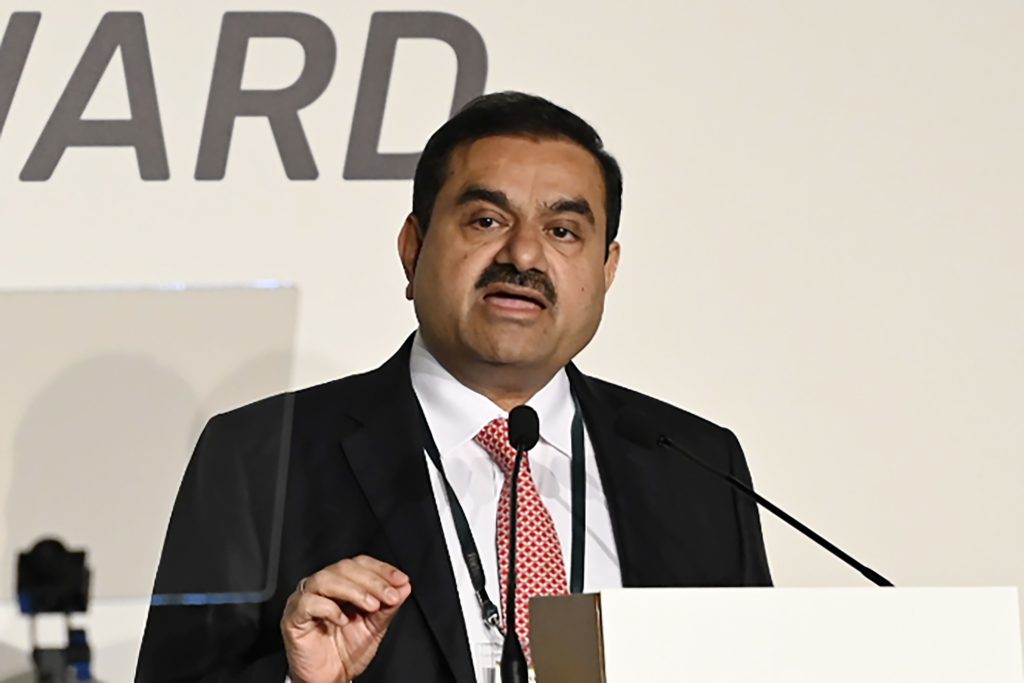
(Bloomberg) — Shares for Adani Enterprises Ltd. headed to a record high after the flagship firm for billionaire Gautam Adani’s conglomerate posted an almost 117% rise in quarterly profit that will give it more firepower to boost its numerous new businesses.

The stock surged as much as 7.2% on Friday to trade at 3,850 rupees ($46.7) per share and was set to overtake the peak it had scaled in September when the company was added to the benchmark gauge Nifty 50. It has jumped 124% so this year.

The Ahmedabad-based company reported a net income of 4.6 billion rupees for the quarter ended Sep. 30, it said in a filing Thursday, compared to 2.12 billion rupees in the same period last year. There were not enough brokerages issuing profit estimates for the company to derive an average forecast.

Revenue almost tripled to 381.8 billion rupees, the filing said, with multiple business divisions — from integrated resources management to mining and airports — surging in performance as the company’s push to dominate a slew of industries starts bearing fruit. Total costs ballooned 182% to 377.7 billion rupees in the latest quarter.

Runaway Rallies

Adani Enterprises, known for incubating new businesses for the ports-to-power group that are later spun off, has been at the forefront of the breakneck expansion spree being undertaken by Asia’s richest person. The conglomerate has diversified beyond coal-based businesses into green energy, cement, airports, data centers and media, spurring runaway rallies in Adani stocks. Adani Enterprises has surged more than 3,500% in the past five years. 

The company “has yet again validated its standing as India’s most successful new business incubator as it continues to build on exciting ideas,” Chairman Adani said in the post-earnings statement. 

Even though some credit watchers have flagged elevated debt at the group as a concern, the conglomerate has allayed those fears saying it has been deleveraging.

The firm’s debt-equity ratio has improved to 0.32 in the September quarter compared to 0.66 at the same period last year, according to the filing. Gross debt, as on Sep 30., was 400.2 billion rupees, marginally lower than 410.2 billion rupees at the end of March. 

But the net external debt — derived by deducting company founders’ debt — has climbed almost 18% to 335.17 billion rupees over the same period, implying growing indebtedness to external creditors. Debt Service Coverage Ratio, which is a marker of a company’s comfort in servicing its debt, has worsened slightly from a year-ago quarter.

Earnings were announced after the close of market trading hours in India on Thursday.

Mixed Bag

Other group companies have been a mixed bag in their quarterly earnings.

Earlier in the day, group company Adani Wilmar Ltd., posted a net income of 487.6 million rupees, down from 1.82 billion rupees a year ago while Adani Total Gas Ltd. reported a 1.3% rise in profit. 

Adani Ports & Special Economic Zone Ltd., with the highest number of brokerages tracking it among tycoon’s other companies, beat average profit and revenue forecast earlier this week. Power utility Adani Transmission Ltd. said Wednesday that its profit fell 25% to 2.06 billion rupees despite a 22% rise in revenue as costs surged.

Two more listed group companies — Adani Green Energy Ltd. and Adani Power Ltd. — are scheduled to report their earnings next week.

–With assistance from Ashutosh Joshi and Ishika Mookerjee.

More stories like this are available on bloomberg.com

©2022 Bloomberg L.P.

Ukraine Latest: Power Cutoffs Widen Amid Infrastructure Attacks

(Bloomberg) — Power rationing widened in Kyiv, as Ukrainian authorities sought to relieve pressure on energy infrastructure that has been targeted by Russia’s escalating attacks. 

More than 450,000 households in the capital were without electricity Friday morning. That’s 1.5 times more than the past several days, Mayor Vitali Klitschko said on Telegram.

In his nightly address, President Volodymyr Zelenskiy said that 4.5 million people in Kyiv and 10 other regions were without power as of Thursday evening. “Russian terror must get — and will definitely receive a powerful global response,” he said. 

(See RSAN on the Bloomberg Terminal for the Russian Sanctions Dashboard.)

Key Developments

  • On NATO Front Lines, Slovaks Fight Advance of Russian Propaganda
  • Ukraine Seeks IT Investment at Web Summit as War Rages Back Home
  • US, Partners Opt to Set Fixed Crude Price For Russia Oil Cap
  • EU Studies Use of Russian Central Bank Assets to Rebuild Ukraine
  • Wheat Futures Extend Losses as Ukraine Grain Ships Move Again
  • How Ukrainians Are Protecting Their Centuries-Old Culture From Putin’s Invasion

On the Ground

Russian forces continue attacks near Bakhmut, Avdiyivka and Novopavlivka north-east of occupied Donetsk city, Ukraine’s General Staff said on Facebook. Ukraine downed three Shahed-136 drones over the past 24 hours, according to the statement. Russian troops tripled the number of attacks on certain areas of the front line — up to 80 per day, Ukrainian Commander-in-Chief Valeriy Zaluzhnyi said in a telephone phone call with General Christopher Cavoli, the head of US European Command on Thursday evening. Ukrainian aird defense shot down nine Shahed-136 single-attack drones overnight, defense ministry said on Telegram. This includes eight drones downed in the east,and one drone in western Ukraine.

(All times CET)

EU Says Iran Must Stop Drone Deliveries to Russia (9:30 a.m.)

The European Union urged Iran to stop the alleged supply of drones to Russia as a violation of UN resolutions, the bloc’s foreign policy chief Josep Borrell said.

“Iran denies it but Ukrainians have been providing evidence of the use of drones,” Borrell told reporters on the sidelines of a meeting of Group of Seven foreign ministers in Muenster, Germany. 

Xi Calls on World to Oppose Use of Nuclear Weapons (9:10 a.m.)

The international community should “oppose the use or threat of use of nuclear weapons,” Chinese President Xi Jinping said in talks with German Chancellor Olaf Scholz that covered the fighting in Ukraine.

“Nuclear war cannot be fought,” Xi added in the meeting Friday in Beijing, according to Chinese state media.

Kremlin officials have warned Russia could use tactical nuclear weapons in Ukraine, though President Vladimir Putin later denied intending to do that.

Kyiv Urges China to Press Russia on Infrastructure Attacks (10:04 p.m.)

Kyiv called on China to push Russia to end attacks on Ukrainian infrastructure as some of it is leased by Chinese businesses, Foreign Ministry spokesman Oleg Nikolenko said on Facebook. 

Russian missiles hit Chinese-leased terminals in Ukraine’s Mykolayiv port last month causing a $26 million loss as thousands of tons of sunflower oils leaked. There are other potential targets that include a Chinese-owned terminal, the spokesman said. 

Russia escalated its shelling of Ukrainian civilian infrastructure since last month as its troops were losing ground on the battlefield.

Sanctioned Superyacht Seized in Spain as Owner Stops Paying Fees (8:32 p.m.)

A Spanish court moved to seize a superyacht valued at $140 million that’s linked to a senior executive at a Russian defense conglomerate, after the owner stopped paying maintenance fees in June.

The court order to seize the 85meter (279-foot) Meridian A — formerly called Valerie — was handed down by a Barcelona judge on Wednesday, according to the Spanish maritime authorities.

The vessel, linked to Rostec State Corp.’s chief executive officer, Sergey Chemezov, was immobilized in mid-March by Spanish authorities while it was at a Barcelona shipyard for repairs. The European Union considers the vessel is formally owned by the stepdaughter of Chemezov.

More stories like this are available on bloomberg.com

©2022 Bloomberg L.P.

PayPal Drops After Cutting Forecast on Spending Slowdown

(Bloomberg) — PayPal Holdings Inc. shares fell after the company trimmed its forecast for annual revenue amid a slowdown in spending growth on its platform. 

Payments volume on PayPal’s platforms jumped 14% to $337 billion in the third quarter, missing the $343.2 billion average estimates from analysts. PayPal said it now expects revenue for the year to jump 10% to $27.5 billion, compared with an earlier forecast of $27.85 billion.  

“Clearly, you’re seeing discretionary spending under pressure as people spend more and more of their disposable income on gas, food and rent,” Chief Executive Officer Dan Schulman said Thursday in an interview.  

Schulman is battling a slowdown in growth in spending on PayPal’s many platforms, spurred by the reopening of the US economy in the aftermath of the pandemic as well as once-in-a-generation levels of inflation.

PayPal shares fell about 6.9% in premarket trading before New York exchanges opened. The shares recovered some of their earlier losses on Thursday to close down 3.7% after PayPal announced a deal with Apple Inc. 

In response, the company has vowed to reduce expenses — including through job cuts and the shuttering of offices across the country — which it has said will result in $900 million in savings this year and $1.3 billion next year. Schulman has been vocal about his plans to improve operating leverage, or the ability to grow revenue faster than expenses.  

Costs for the third quarter climbed to $5.73 billion, well under the $5.92 billion average estimate of 9 analysts surveyed by Bloomberg. The company now expects the push to shave expenses will buoy adjusted profit for the year even as it trimmed its forecast for annual revenue. 

“We delivered strong third-quarter results,” Schulman said in a statement announcing the results. “We will continue to invest against our key priorities to advance our leading position in digital payments and commerce.”

Revenue during the quarter jumped 12% to $6.85 billion. That was ahead of the $6.81 billion analysts predicted and PayPal said it now expects adjusted profit to be as high as $4.09 a share, up from the $3.87 to $3.97 it previously expected. 

PayPal this year has revamped its marketing to focus on encouraging existing users to become even more active rather than adding new customers who might not be heavy users of the platform. Those efforts seem to be bearing fruit: Transactions per active account soared 13% to 50.1 in the quarter. 

“We continue to execute on our strategy to deliver long-term, profitable growth,” acting Chief Financial Officer Gabrielle Rabinovitch said in the statement. “Our strong third quarter results reflect both the diversification of our business and our ongoing focus on operating discipline.”

(Updates with premarket trading from first paragraph.)

More stories like this are available on bloomberg.com

©2022 Bloomberg L.P.

Twitter Advertiser Pause Widens as General Mills Taps the Brakes

(Bloomberg) — Volkswagen AG, Europe’s largest carmaker, joined Pfizer Inc. and General Mills Inc. in temporarily pausing advertising on Twitter as brands rethink their presence on the platform now that Elon Musk has taken over and is making his mark on the social media company.

Volkswagen said Friday that it had advised all of its brands to pause spending on the platform “until further notice” while it monitors how Twitter evolves. 

Brands are concerned that Twitter could host more-objectionable content as Musk rethinks his approach to content moderation, the Wall Street Journal reported, citing people familiar with the matter it didn’t name. Others are stepping back amid uncertainty at the top of the company, including the departure of some key executives. General Motors Co. said last week that it was suspending advertising on Twitter.

“We have paused advertising on Twitter,” said Kelsey Roemhildt, a spokesperson for General Mills. “As always, we will continue to monitor this new direction and evaluate our marketing spend.”

A spokesman for Twitter didn’t immediately respond to a request for comment from Bloomberg.

Advertising mogul Martin Sorrell, chairman of S4 Capital Plc, said his firm is advising clients to adopt a “wait-and-see” approach to the platform. Rivals such as agency holding company Interpublic Group of Cos. have advised pausing Twitter marketing, Variety reported earlier this week.

“Clients don’t want conflict, they don’t want controversy,” Sorrell said in a Bloomberg TV interview at the Web Summit in Lisbon on Thursday. “They want a stable environment, and what we’ve seen in the last week or so is too much inconsistency.” 

Twitter only accounts for about 1% of global digital media, Sorrell said. But Twitter relies on advertising for the bulk of its revenue. Last week Musk tweeted an open letter to marketers in which he said he wants to make Twitter “the most respected advertising platform in the world.”

–With assistance from Kurt Wagner, Deena Shanker, Gabrielle Coppola and Monica Raymunt.

(Updates with statement from Volkswagen in fourth paragraph)

More stories like this are available on bloomberg.com

©2022 Bloomberg L.P.

Cash Is Flowing From Stablecoins to Treasuries, Circle CEO Says

(Bloomberg) — Investment is flowing out of stablecoins into assets like US Treasuries in response to prevailing macroeconomic conditions, according to Circle Internet Financial Ltd.’s Chief Executive Officer Jeremy Allaire.

Rising interest rates have led institutions to rethink how much exposure they want to crypto and instead purchase lower-risk assets like US government bonds or money-market instruments, Allaire said in an interview Friday.

“This is just a macro phenomenon,” Allaire, whose company operates the USD Coin stablecoin, said on the sidelines of the Singapore FinTech Festival. “That’s not in our control really.”

The market capitalization of USD Coin, also known as USDC, has dropped from a recent peak of about $56 billion to just over $42 billion, data from CoinGecko shows. Circle says the token — the second-largest stablecoin and the fifth-largest cryptocurrency — is fully backed by cash and short-dated US Treasuries.

Stablecoins, which typically pledge a constant $1 value, shot up the regulatory agenda this year following the $60 billion wipeout in the algorithmic variant TerraUSD and its sister token Luna. The implosion exacerbated this year’s digital-asset rout and sparked blowups at a range of crypto outfits.

“We’ve been extremely skeptical of projects in algorithmic stablecoins,” Allaire said. “It’s kind of what I like to call financial alchemy.”

TerraUSD was meant to have a constant $1 value via a complex mix of algorithms and trader incentives involving Luna. The edifice crumbled when confidence in the ecosystem evaporated.

Circle’s plan for a merger with special purpose acquisition company Concord Acquisition Corp. has met with delays. Allaire said he’s optimistic Circle can become a public company in the “near future.”

Earlier in the week, Circle said it received a license from the Monetary Authority of Singapore to offer digital-token payment services. It had previously identified Singapore as its principal hub in Asia.

–With assistance from Yueqi Yang and Emily Nicolle.

More stories like this are available on bloomberg.com

©2022 Bloomberg L.P.
Waada Buys Rival to Become Pakistan’s Top Insurance-Tech Startup

(Bloomberg) — Pakistani online insurance startup Waada acquired a local rival to create the South Asian nation’s largest player in the field, seeking to benefit from growth in the burgeoning market.

The Karachi-based company took over MicroEnsure Pakistan, a unit of MIC Global operating in South Asia and Africa, in an all-stock deal, according to a statement Friday. The brands combined have 1.5 million active customers, Waada said, without disclosing the deal value. Waada also said it’s closed a seed round of $1.3 million from local angel investors and foreign venture capital firms.

Pakistan’s startup industry attracted record funding last year, but has languished since, as venture investors have become more cautious amid a global economic slowdown and slumping tech stocks. Airlift Technologies Pvt., which raised Pakistan’s largest round, has shut down, Vitol’s used-car venture VavaCars exited the market this year, and Dubai-based ride-hailing provider Swvl Holdings has suspended daily operations in the country.

“This is the first of many consolidations which the Pakistan market will experience,” said Nadeem Hussain, founder of Planet N, a Waada investor that helped to structure the transaction with MicroEnsure. “The global slowdown will make fundraising difficult.”

Pakistan has one of the world’s largest unbanked populations, giving its financial sector ample potential for growth. The nation’s insurance penetration is just 0.7%, trailing its neighbors in Asia.

Waada aims to add customers using online sign-ups and has a goal to distribute 10 million policies in three to five years. 

More stories like this are available on bloomberg.com

©2022 Bloomberg L.P.

This Week in Crypto: Elon Musk, Dogecoin, Zimbabwe

  • Listen to Bloomberg Crypto on the iHeartRadio App
  • Listen to Bloomberg Crypto on Apple Podcasts
  • Listen to Bloomberg Crypto on Spotify  

(Bloomberg) — It’s been another pretty unpredictable week in crypto. Now that Elon Musk is at the helm of Twitter, what do his plans for the social media company mean for digital assets? Why is Apple  tightening its rules on crypto transactions? Could Zimbabwe be the next nation to embrace a national digital currency?

Bloomberg crypto editor Dave Liedtka and deputy editor Beth Williams join this episode for a look at the top stories of the week in the cryptoverse. 

Follow us on Twitter @crypto, and subscribe to the Bloomberg Crypto Newsletter at https://bloom.bg/cryptonewsletter

This  podcast  is produced by the Bloomberg  Crypto  p odcast  team: Supervising producer: Vicki Vergolina, Senior Producer: Janet Babin, Producers: Sharon Beriro and Muhammad Farouk, Associate Producers: Mo Andam and Ty Butler, Sound Design/Engineer:  Desta Wondirad.

More stories like this are available on bloomberg.com

©2022 Bloomberg L.P.

Toshiba’s Preferred Bidder Said Set to Miss Finance Deadline

(Bloomberg) — A consortium considering a bid for Toshiba Corp. is poised to miss a Nov. 7 deadline to secure financing for what could be Asia’s biggest deal this year, according to people familiar with the matter.

Four banks including Sumitomo Mitsui Banking Corp. that were considering whether to issue commitment letters for loans to the consortium led by Japan Industrial Partners Inc. has decided not to proceed before the cutoff date set by Toshiba, the people said. The banks have not yet made a formal decision, one of the people said, asking not to be identified as the information is private. 

The lenders have been unable to make binding commitments as the potential bidding groups have not finalized details such as deciding on the lineup of their equity partners, people familiar with the matter have said.

JIP’s consortium, which is the preferred bidder, has been considering a takeover of Toshiba at a valuation of about 2.4 trillion yen ($16.2 billion), and is seeking about 1.4 trillion yen from banks, Bloomberg News has reported. The group continues to work on the takeover proposal, the people said.

State-backed investment fund Japan Investment Corp., which is leading a rival group, received approval from Japan’s Ministry of Economy, Trade and Industry on Oct. 27 to increase the size of the fund to 900 billion yen from 200 billion, JIC spokesperson Motoki Okumura said in response to a query from Bloomberg News. The raised fund size will enable JIC to respond to the recent increase in the number of large-scale buyout deals in Japan, and was not specifically granted with individual projects in mind, Okumura said.

The increase came after JIC informed METI it would need to contribute at least 500 billion yen to a Toshiba takeover because of METI’s requirement that the investor contribute a minimum of 50% of the equity in the bid, people familiar with the matter said.

Deliberations are ongoing and the lenders could still decide to issue the letters before the deadline, the people said. Representatives for JIP and SMBC declined to comment. A METI official confirmed the increase in JIC’s fund size and said METI did not receive an application from JIC for a specific project, declining to elaborate further.

Japan’s largest banks have been stung recently by soured lending, such as the financing commitments made to KKR & Co.-owned auto parts supplier Marelli Holdings Co., which entered court-led rehabilitation earlier this year when an alternative dispute resolution process failed. Deutsche Bank AG was set to buy about $690 million worth of the debt from a unit of SMFG, Bloomberg News reported in October.

JIP’s consortium is in talks to form a partnership with domestic companies including Orix Corp. and Chubu Electric Power Co. as well as global investment firms such as Baring Private Equity Asia and CVC Capital Partners, people familiar with the matter have said. CVC is considering reducing its planned contribution to the bid in order to avoid antitrust scrutiny from Chinese regulators, Bloomberg News reported last week. 

–With assistance from Yuki Furukawa.

(Updates with lender context in third paragraph.)

More stories like this are available on bloomberg.com

©2022 Bloomberg L.P.

Close Bitnami banner
Bitnami