Bloomberg

Twitter Sued for Mass Layoffs by Musk Without Enough Notice

(Bloomberg) — Twitter Inc. was sued over Elon Musk’s plan to eliminate about 3,700 jobs at the social-media platform, which workers say the company is doing without enough notice in violation of federal and California law.

A class-action lawsuit was filed Thursday in San Francisco federal court.

Twitter intends to start cutting staff Friday, the company said in an email to employees. Musk plans to get rid of half the workforce, making good on plans to slash costs at the platform he acquired for $44 billion last month, people with knowledge of the matter have said.

The federal Worker Adjustment and Retraining Notification Act restricts large companies from mounting mass layoffs without at least 60 days of advance notice.

Twitter Latest: Musk Begins Job Cuts as Ad Buyers Hit Pause

Twitter didn’t immediately respond to a request for comment.

The lawsuit asks the court to issue an order requiring Twitter to obey the WARN Act, and restricting the company from soliciting employees to sign documents that could give up their right to participate in litigation.

“We filed this lawsuit tonight in an attempt the make sure that employees are aware that they should not sign away their rights and that they have an avenue for pursuing their rights,” Shannon Liss-Riordan, the attorney who filed Thursday’s complaint, said in an interview.

Liss-Riordan sued Tesla Inc. over similar claims in June when the electric-car maker headed by Musk laid off about 10% of its workforce. 

Tesla won a ruling from a federal judge in Austin forcing the workers in that case to pursue their claims in closed-door arbitration instead of in open court.

Musk described the Tesla lawsuit as “trivial” during a discussion with Bloomberg Editor-In-Chief John Micklethwait at the Qatar Economic Forum in June.

“We will now see if he is going to continue to thumb his nose at the laws of this country that protect employees,” Liss-Riordan said of Musk. “It appears that he’s repeating the same playbook of what he did at Tesla.”

The case is Cornet v. Twitter Inc., 22-cv-06857, US District Court, Northern District of California (San Francisco).


(Updates with case citation, link to complaint.)

More stories like this are available on bloomberg.com

©2022 Bloomberg L.P.

Coinbase CEO Says Singapore’s Retail Crypto Curbs Jar With Web3

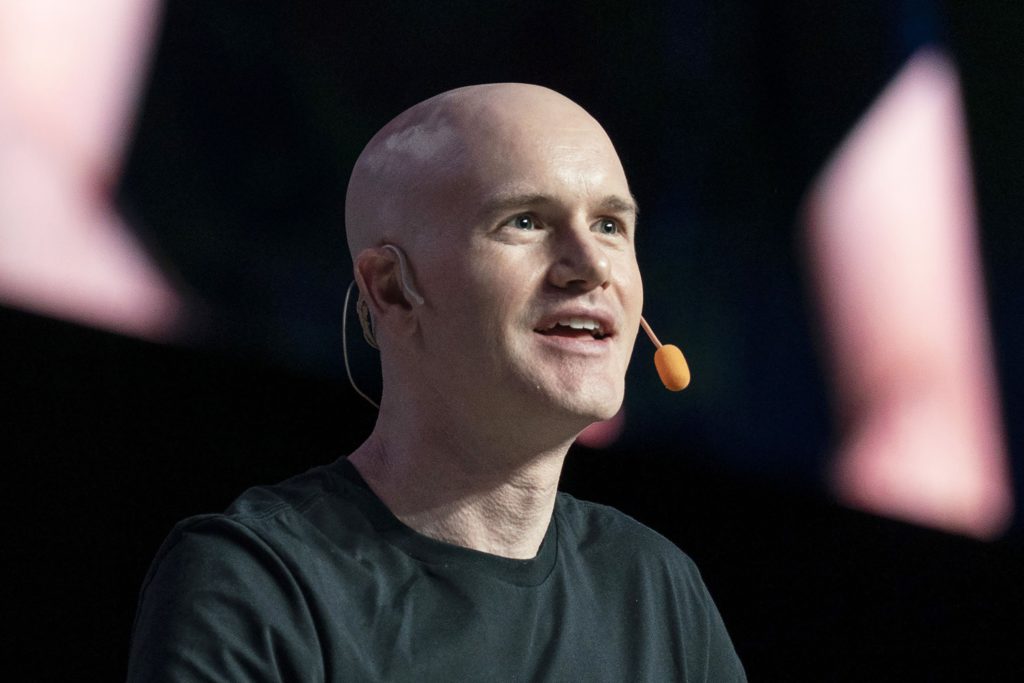
(Bloomberg) — Singapore’s desire to be a hub for the so-called web3 industry conflicts with the city-state’s proposed curbs on retail crypto trading, Coinbase Global Inc.’s Chief Executive Officer Brian Armstrong said.

“To say Singapore wants to be a web3 hub and then simultaneously say we aren’t really going to allow retail to trade” is “incompatible,” Armstrong said Friday on a panel at the Singapore FinTech Festival alongside Sopnendu Mohanty, the chief fintech officer at the island nation’s central bank.

Singapore is seeking to clamp down on retail-investor access to crypto trading to shield consumers from a volatile market that endured a $2 trillion rout over the past year. For instance, the city-state is moving toward banning leveraged retail token purchases.

Armstrong said he “would like to see Singapore embrace retail trading.” He added that both centralized crypto exchanges — of which Coinbase is an example — and custodians should be regulated like other financial institutions. 

The nebulous term “web3” refers to a vision of a decentralized internet built around blockchains, crypto’s underlying technology. Asian economies including Singapore, Hong Kong and Japan are jostling to be at the forefront of the technology, anticipating it can aid economic expansion.

Mohanty this week said Singapore is taking a long-term view on crypto regulation and is focused on utility. “The marketplace we are predicting is that in future, in the web3 construct, the way you buy assets is going to change,” he told Bloomberg Television in an interview.

Coinbase on Thursday reported a narrower third-quarter loss as the largest US crypto exchange reigned in expenses while bracing for potentially intensifying “macro headwinds” going into next year. 

(Updates with comments from the CEO in the second paragraph.)

More stories like this are available on bloomberg.com

©2022 Bloomberg L.P.

Global Stocks Pare Weekly Loss on China Tech Rally: Markets Wrap

(Bloomberg) — Global stocks trimmed a weekly loss as Chinese tech shares rebounded more than 10%, helping offset some of the drag on markets caused by Federal Reserve interest-rate hikes.

US and European equity futures rose and a gauge of Asian shares headed for the biggest weekly jump since July. The gains in Chinese stocks came as investors continued to speculate on the possibility of Beijing rolling back its Covid-Zero policy. News that US audit officials were ahead of schedule in on-site inspections of Chinese companies also supported sentiment. 

Treasury yields were steady ahead of a US jobs report. A key segment of the curve on Thursday reached an extreme of inversion not seen since the 1980s. Such curve inversions have a track record of preceding economic downturns, which is adding to market jitters before jobs data later Friday.

Swaps that reference future Fed meetings indicate an expected peak rate above 5.15% around mid-2023. 

Japanese shares were the biggest drag in Asia as investors in Tokyo played catchup after Thursday’s holiday. 

The dollar weakened against all major currencies and the offshore yuan jumped more than 1%.

Chinese stocks in Hong Kong headed for their best week since 2015 as a US audit of the nation’s companies showed signs of progress. A gauge of equities listed in the city was up about 12% for the week after unverified social media posts circulated earlier, claiming that a committee was being formed to assess scenarios on how to exit Covid Zero.

“What we are guessing is China in the future will model the reopening on the back of Hong Kong,” Jack Siu, Greater China chief investment officer at Credit Suisse Group AG, said on Bloomberg Television. “To fully reopen, we are still at least nine months away from today.”

Elsewhere, oil rose as investors weighed a tightening outlook for energy supply against persistent concerns over a global economic slowdown. Gold climbed.

Key events this week:

  • US nonfarm payrolls, unemployment, Friday

Some of the main moves in markets:

Stocks

  • S&P 500 futures rose 0.3% as of 2:41 p.m. in Tokyo. The S&P 500 fell 1.1% Thursday
  • Nasdaq 100 futures rose 0.5%. The Nasdaq 100 fell 2%
  • The Topix Index fell 1.4%
  • The Kospi Index rose 0.5%
  • The Hang Seng Index rose 6.7%
  • The Shanghai Composite Index rose 2.6%
  • Euro Stoxx 50 futures rose 0.6%
  • Australia’s S&P/ASX 200 Index rose 0.5%

Currencies

  • The Bloomberg Dollar Spot Index fell 0.4%
  • The euro rose 0.3% to $0.9782
  • The Japanese yen rose 0.2% to 147.94 per dollar
  • The offshore yuan rose 1% to 7.2591 per dollar

Cryptocurrencies

  • Bitcoin rose 0.7% to $20,387.36
  • Ether rose 0.7% to $1,552.09

Bonds

  • The yield on 10-year Treasuries was little changed at 4.14%
  • Australia’s 10-year yield declined seven basis points to 3.85%

Commodities

  • West Texas Intermediate crude rose 2.1% to $90.02 a barrel
  • Spot gold rose 1.1% to $1,647.53 an ounce

–With assistance from Tommi Utoslahti.

More stories like this are available on bloomberg.com

©2022 Bloomberg L.P.

Apple Adds New IPhone 14 Maker in India in Shift From China

(Bloomberg) — Apple Inc.’s Taiwanese contract manufacturer Pegatron Corp. has begun assembling the company’s latest iPhone 14 model in India.

That move makes Pegatron the second Apple supplier to produce the iPhone 14 in the country, people familiar with the matter told Bloomberg News, declining to be identified as the manufacturing plan is not public.

It comes at a time when Apple’s key iPhone Pro manufacturing hub in the Chinese city of Zhengzhou — operated by Foxconn Technology Group — was placed under an abrupt Covid-19 lockdown by authorities. That situation put a spotlight on Apple’s deep reliance on China, though the India expansion was in line with diversification plans already in place, the people said.

Apple and Pegatron representatives declined to comment.

Foxconn began making the iPhone 14 in India in September, mere weeks after its global unveiling and much closer to parity with the start of production in China, where the vast majority of iPhones are still made. Apple’s chief production partner still has exclusivity on the iPhone Pro models, which it assembles in Zhengzhou.

The Pegatron factory in India’s southern Tamil Nadu state, which employed more than 7,000 as of the end of September, also began making iPhone 12 handsets earlier this year. Pegatron generally gets orders for Apple’s entry-level models.

Cupertino, California-based Apple is seeking alternative production hubs amid a trade war between Washington and Beijing and tight enforcement of Xi Jinping’s Covid Zero policy in China. At the same time, New Delhi is positioning India as a competitor to China’s manufacturing prowess. Local Apple reseller Redington has surged in value since Foxconn’s coronavirus issues emerged over the past week. 

One big hurdle for more production shifting out of China is that the majority of iPhone components are still built there and have to be shipped to wherever devices are assembled, Counterpoint senior analyst Ivan Lam said.

Read more: Apple iPhone Exports From India Doubling in Boon to Modi’s Plan

All of Apple’s biggest Taiwanese suppliers — Foxconn, Pegatron and Wistron Corp. — have ramped up iPhone assembly in India, boosted by Prime Minister Narendra Modi’s financial incentives program. That has also helped to increase iPhone exports from the South Asian country.

Apple first began assembling iPhones in India in 2017 via Wistron after a yearslong effort to build manufacturing capabilities in the country. And while India is a small consumer market for Apple currently, the country of 1.4 billion offers the US giant huge headroom for growth as incomes and internet connectivity grow.

–With assistance from Mark Gurman.

(Updates with Pegatron’s response)

More stories like this are available on bloomberg.com

©2022 Bloomberg L.P.

Tech Audit, Reopening Bets Fuel Best China Stock Rally in Years

(Bloomberg) — Chinese stocks in Hong Kong headed for their best week since 2015 as a US audit of the nation’s companies showed signs of progress, adding to earlier optimism sparked by bets Beijing may ease its strict pandemic rules.

A gauge of equities listed in Hong Kong jumped as much as 8.8% in Friday’s session. The index is up about 12% for the week after unverified social media posts circulated earlier, claiming that a committee was being formed to assess scenarios on how to exit Covid Zero. That’s helped it erase losses suffered after last month’s Communist Party congress.

Tech stocks were the biggest gainers on Friday, with the Hang Seng Tech Index surging almost 11%. US audit officials completed their first on-site inspection round of Chinese companies ahead of schedule, according to people familiar with the matter, a sign of progress in the closely watched process to prevent the delisting of hundreds of stocks from Alibaba Group Holding Ltd. to Yum China Holdings Inc.

“With so many positive chatters in the market, the indexes are having a relief rally, said Willer Chen, an analyst at Forsyth Barr Asia Ltd. “A rumor of smooth talks between China-US over audits helped the sentiment as well” alongside growing talks about reopening, he added.

Rumor mills have infused strong optimism this week in embattled China markets, where traders have been seeking reasons to scoop up shares in one of the world’s worst-performing major markets. Stocks have rallied even as authorities have given no indication of a change in their stance on Covid Zero.

The CSI 300 Index, the benchmark for mainland stocks, also jumped more than 3% on Friday. The optimism spread to currency markets, with the offshore yuan rising more than 1%. Up more than 10% for the week, Hong Kong’s benchmark Hang Seng Index was set for the best gain since 2011.

Equities resumed gains on Friday after falling in the previous session as China’s top health body reiterated its commitment to the Covid Zero policy.

“There is still a tug of war going on between bulls and bears, bottom feeders and weary investors,” said Justin Tang, head of Asian research at United First Partners. “It will continue in the short term until we get a clearer idea whether there will be more pro-market policies under the new leadership.”

READ: Key Meetings to Offer Clues on China’s Economic Path Forward

–With assistance from Abhishek Vishnoi.

More stories like this are available on bloomberg.com

©2022 Bloomberg L.P.

US Audit Inspectors Finish On-Site China Work Ahead of Plan

(Bloomberg) — US audit officials completed their first on-site inspection round of Chinese companies ahead of schedule, according to people familiar with the matter, a sign of progress in the closely watched process to prevent the delisting of hundreds of stocks from Alibaba Group Holding Ltd. to Yum China Holdings Inc.

Dozens of US Public Company Accounting Oversight Board inspectors are set to leave Hong Kong as soon as this weekend, earlier than the original schedule of mid-November, said the people, who asked not to be identified because the information is private. The work has progressed despite requests from Chinese counterparts to redact certain information, the people added.

Chinese stocks in Hong Kong rallied as much as 8.5% on Friday, building on a 3.2% gain in the Nasdaq Golden Dragon China Index in New York. The offshore yuan rose more than 1%, tracking the equity gains. Shares of Alibaba surged as much as 21% in Hong Kong while Meituan and Tencent Holdings Ltd both up more than 10%.

“If the US-China audit woes are resolved, indeed it will be a positive for stocks, especially ADRs and tech,” said Hao Hong, a partner at Grow Investment Group. “This is the reason why they are doing well, despite a Hawkish Fed and plunging US stocks. The market often buys on hopes and sells on news.” 

Still, it’s too early to determine whether Chinese firms will pass muster. PCAOB may file an initial report on key findings over the coming weeks, which could point out deficiencies or room for improvements in areas such as internal controls and record keeping, said the people. 

The inspection got off to a tense start in September as Chinese officials asked to black out names, addresses and salary levels in company documents, people familiar with the matter have said. The US has said it will determine if the Chinese presence has hindered their access to audit papers and personnel, emphasizing they must have full access to documents without redactions.

A PCAOB spokesperson didn’t respond to an email sent outside US office hours. The China Securities Regulatory Commission didn’t immediately respond to a request for a comment.

Officials of the CSRC and the PCAOB will continue online communications after on-site check was completed, one of the people said.

Audit inspections of publicly traded firms in the US were mandated by law in 2002, but China had long denied giving full access despite there being hundreds of listed Chinese firms worth more than a $1 trillion combined. The US ratcheted up pressure with a new law in 2020 that threatened delistings, which forced a rare compromise by Beijing after years of insisting that allowing access to working papers could harm national security.

Still, the standoff has already had an impact. Two weeks before August’s agreement, five major state-owned firms, including China Life Insurance Co. and PetroChina Co., said they would delist, while ride-hailing giant Didi Global Inc. was forced to delist amid pressure from Chinese regulators who feared the firm’s vast troves of data would be exposed to foreign powers. Alibaba has said it would seek a primary listing in Hong Kong to hedge against the threat of getting kicked out of New York.

–With assistance from Zhang Dingmin, John Cheng, Cathy Chan and Catherine Ngai.

(Updates with market reaction and analyst comment in the third and fourth paragraphs.)

More stories like this are available on bloomberg.com

©2022 Bloomberg L.P.

Ukraine Latest: UN Atomic Agency Says No Sign of ‘Dirty Bomb’

(Bloomberg) — The UN’s nuclear safety agency inspected three facilities in Ukraine at Kyiv’s request after recent Russian allegations of possible “dirty bomb” production at the sites, and said it “found no indications of undeclared nuclear activities and materials.”  

Ukrainian President Volodymyr Zelenskiy said grain exports through the Black Sea safe-passage corridor would continue, as foreign ministers of the Group of Seven nations prepared to meet in Germany to discuss Ukraine’s plight, including Russian attacks on water and power supplies. Zelenskiy also said he’s unlikely to participate in the G-20 meeting in Bali, Indonesia, this month if Russian President Vladimir Putin attends.

A senior occupation official said Moscow’s troops will “most likely” pull out of the city of Kherson, which Russia captured early in its invasion, and move to the eastern bank of the Dnipro River. Russia and Ukraine conducted a prisoner swap, with each side handing over 107 POWs.   

(See RSAN on the Bloomberg Terminal for the Russian Sanctions Dashboard.)

Key Developments

  • US, Partners Opt to Set Fixed Crude Price For Russia Oil Cap
  • Turkey Unlikely to Sign Off on Swedish NATO Bid Before Year-End
  • EU Studies Use of Russian Central Bank Assets to Rebuild Ukraine
  • Bulgaria Breaks With Pro-Russia Past, Backs Ukraine Military Aid
  • Wheat Futures Extend Losses as Ukraine Grain Ships Move Again
  • How Ukrainians Are Protecting Their Centuries-Old Culture From Putin’s Invasion

On the Ground

Russian troops tripled the number of attacks on certain areas of the front line — up to 80 per day, Ukrainian Commander-in-Chief Valeriy Zaluzhnyi said in a telephone phone call with General Christopher Cavoli, the head of US European Command. The account of the call came from Zaluzhnyi’s Telegram statement. The areas of Bakhmut and Avdiyivka in the Donetsk region remain the most tense on the front line, Serhiy Cherevatyi, spokesman for eastern operational command, said on TV. Russia hit the town of Pokrovs’k in the Donetsk region with six missiles, destroying a school and private residencies Thursday afternoon, Kyrylo Tymoshenko, deputy head of Zelenskiy’s office said on Telegram without describing casualties.

(All times CET)

Russian regular attacks on Ukraine’s energy objects cause significant destructions, Ukrainian President Volodymyr Zelenskyi said in his night address. As of Thursday evening, 4.5 million people in Kyiv and 10 other regions were left without electricity, he said. “Russian terror must get – and will definitely receive a powerful global response,” Zelenskyi told. “The very fact that Russia terrors Ukrainian energy sector shows the weakness of the aggressor. They cannot defeat Ukraine on the battlefield, and try to humiliate Ukrainians, strike the spirit and resistance of Ukrainian people. I believe, Russia will not succeed.”


Kyiv Urges China to Press Russia on Infrastructure Attacks (10:04 p.m.)

Kyiv called on China to push Russia to end attacks on Ukrainian infrastructure as some of it is leased by Chinese businesses, Foreign Ministry spokesman Oleg Nikolenko said on Facebook. 

Russian missiles hit Chinese-leased terminals in Ukraine’s Mykolayiv port last month causing a $26 million loss as thousands of tons of sunflower oils leaked. There are other potential targets that include a Chinese-owned terminal, the spokesman said. 

Russia escalated its shelling of Ukrainian civilian infrastructure since last month as its troops were losing ground on the battlefield.

Sanctioned Superyacht Seized in Spain as Owner Stops Paying Fees (8:32 p.m.)

A Spanish court moved to seize a superyacht valued at $140 million that’s linked to a senior executive at a Russian defense conglomerate, after the owner stopped paying maintenance fees in June.

The court order to seize the 85meter (279-foot) Meridian A — formerly called Valerie — was handed down by a Barcelona judge on Wednesday, according to the Spanish maritime authorities.

The vessel, linked to Rostec State Corp.’s chief executive officer, Sergey Chemezov, was immobilized in mid-March by Spanish authorities while it was at a Barcelona shipyard for repairs. The European Union considers the vessel is formally owned by the stepdaughter of Chemezov.

Russia Says New Submarine Tests Bulava Missile (7:02 p.m.)

Russian’s new Borei-A-class submarine successfully fired a Bulava intercontinental ballistic missile from the White Sea to the Kamchatka area, Interfax reported, citing a Defense Ministry statement.

US Embassy Officials Visit Imprisoned Griner (6:02 p.m.)

The US State Department said embassy officials visited imprisoned US basketball star Brittney Griner in a Russian prison. The WNBA star was arrested in Moscow in February for carrying less than a gram of cannabis oil in her luggage and later sentenced to nine years in prison.

Zelenskiy Says Won’t ‘Participate’ in G-20 If Putin Attends (5:30 p.m.)

Ukraine’s president said he’s unlikely to participate in the G-20 meeting in Bali, Indonesia, this month if Russian President Vladimir Putin attends. 

Volodymyr Zelenskiy said he’d received a follow-up invitation to the gathering from Indonesia’s president when the pair spoke by phone on Thursday. Joko Widodo met separately with Zelenskiy and Putin in late June. 

“My position and that of Ukraine is the same — if the leader of the Russian Federation participates, Ukraine will not participate,” Zelenskiy said in Kyiv. It’s unclear whether Putin will travel from Moscow to the Nov. 15-16 meeting, or attend virtually. 

EU Studies Use of Russian Central Bank Assets to Rebuild Ukraine (4:26 p.m.)

The European Union is studying the feasibility of using billions of euros worth of Russian central bank assets already frozen by member states to help with Ukraine’s reconstruction efforts, according to people familiar with the matter.

Read more: EU Studies Use of Russian Central Bank Assets to Rebuild Ukraine

Zelenskiy Meets With Two US Senators (4 p.m.)

Ukraine’s president met Thursday with two US senators, Democrat Chris Coons of Delaware and Republican Rob Portman of Ohio. Both are members of the Senate Foreign Relations Committee. 

The meeting comes less than a week before US midterm elections, where Republicans may capture both chambers of Congress, potentially complicating White House efforts to provide assistance to Ukraine at the same level.  

UN Atomic Agency Says No Signs of ‘Dirty Bomb’ in Ukraine (3:32 p.m.)

Agency inspectors have completed in-field verification at three locations in Ukraine at the request of the Ukrainian government, with no indications of undeclared nuclear activities found, the UN’s International Atomic Energy Agency said. 

Ukraine requested the inspections after Russian Federation made allegations this month about possible production of “dirty bombs” at facilities in Kyiv, Zhovti Kody and Dnipro. 

Ukrainian Foreign Minister Dmytro Kuleba said on Twitter that the inspections “helped counter Russian falsehoods.”

Finland Says No Plan to Host Nuclear Warheads (3:34 p.m.)

Finland has no plan to host nuclear warheads on its territory when it joins the North Atlantic Treaty Organization, and no such offer has been made to the Nordic nation, Defense Minister Antti Kaikkonen and Foreign Minister Pekka Haavisto told reporters in Helsinki. 

The ministers reiterated that while Finland intends to join the alliance with no opt-outs, it has very specific laws when it comes to nuclear substances, and the government isn’t currently proposing any changes.  

Finland’s 1,340 kilometer (830 mile) border with Russia is the longest of any EU member. 

Russia, Ukraine Swap Another 107 Prisoners (2:58 p.m.)

Another 107 Ukrainian prisoners were released from Russian captivity on Thursday in a swap, Andriy Yermak, chief of staff to Ukraine’s president, said on Telegram.

The number includes 74 veterans of the siege of Mariupol, he said. One of the returning servicemen was wounded in an explosion in a POW camp in Olenivka in July. At least 50 Ukrainian prisoners were killed in the incident, which authorities in Kyiv and Moscow blame on each other. 

Russia’s Defense Ministry said 107 of its servicemen were handed over on Thursday, without offering details. Those released would be flown to Moscow for medical treatment and rehabilitation, it said on Telegram. 

Ukrainian Parliament Approves 2023 Budget (2:11 p.m.)

The budget was backed by 295 members of parliament in its second and final reading, lawmaker Yaroslav Zheleznyak said on Telegram. 

Ukraine’s cabinet cut its 2023 economic growth forecast to 3.2% from 4.6%, according to Prime Minister Denys Shmyhal. Inflation is seen at 28%, and the nation’s budget deficit will exceed 20% of the GDP. Ukraine seeks to attract $38 billion from international partners to help cover budget gap.

Ukrainian Grid Operator Seeks EBRD Financing for Urgent Repairs; Swiss Donation (1:56 p.m.)

Ukrenergo, the Ukrainian grid operator, has asked the European Bank for Reconstruction and Development to provide financing for emergency repairs of equipment damaged by Russian air strikes over the past month, the lender said by email.

Ukraine needs to purchase transformers and equipment to restore its high voltage transmission grid, some 40% of which has sustained damage from weeks of Kremlin missile and drone attacks. 

Separately, Switzerland plans to provide 100 million francs ($99 million) in aid “in particular for projects financing the urgent rehabilitation of Ukraine’s energy infrastructure” including the purchase of spare parts. 

Russian Forces ‘Likely’ to Leave Kherson, Occupation Official Says (1:40 p.m.)

Russian troops will “most likely” pull out of the annexed city of Kherson and move to the eastern bank of the Dnipro River, an occupation official said, as Ukrainian forces step up pressure in the area.

“Most likely, our units, our forces will move to the left bank part of the Kherson region and those people who haven’t already should get out of the city of Kherson as fast as possible,” Kirill Stremousov, deputy head of the Russian occupation administration, said in an online interview with state media.

Though he said Russia’s defensive line is holding, Kyiv’s forces have made steady gains there in recent weeks, cutting off bridges across the Dnipro River. The city of Kherson lies on the west, or right, bank, while the rest of the Kherson region is to the east. Kherson was captured by Kremlin troops in the early days of Russia’s invasion. 

Russian Central Bank Denies That Its Systems Were Hacked (1 p.m.) 

Bank of Russia said it had found no evidence that its systems had been hacked, pushing back on a claim made on Telegram by Mykhailo Fedorov, Ukraine’s deputy prime minister for digital transformation. 

“We checked the archive published by the hackers. All these documents were on the Internet in the public domain,” the central bank’s press service said in a statement. “No information systems of the Bank of Russia were  hacked.” 

Fedorov said earlier that Ukrainian cyberwarfare volunteers hacked into the central bank’s internal networks, and posted a link to what he said were 27,000 files obtained by the so-called IT Army of Ukraine. 

About 120 Ships Still in Queue for Grain Corridor (11:55 a.m.)

While the queue has shrunk, about 120 vessels are still waiting for inspections in order to transit the Ukrainian crop-export corridor, according to an update from the United Nations. Most are waiting to head inbound for loading in Ukraine.

The Black Sea crop-export deal requires ships to be inspected in Istanbul before and after transiting Ukraine ports. A delegation from Russia re-joined the checks on Thursday, the UN said, the day after its government opted to resume participation in the pact.

Ukraine Set for More EU Funds in January (11:40 a.m.)

Ukraine could receive a first payment of a new European Union financial package in January, according to a senior EU official. There is a broad support among member states to move quickly and to accelerate the national procedures to approve the funds as much as possible, said the official, who spoke on condition of anonymity because the discussions are private.

The European Commission, the EU’s executive arm, is expected to present next week a mechanism to provide around 18 billion euros ($17.5 billion) in liquidity support to Ukraine next year in a more predictable and stable manner. A total of three billion euros promised last May still need to be approved by member states, although they could be released as part of the new package, the official added.

More stories like this are available on bloomberg.com

©2022 Bloomberg L.P.

Profit at Adani’s Flagship Surges 117% on Rapid Expansion

(Bloomberg) — Adani Enterprises Ltd., the flagship firm for billionaire Gautam Adani’s conglomerate, posted an almost 117% rise in quarterly profit, giving it more firepower to boost investments in numerous new businesses it’s nurturing. 

The Ahmedabad-based company reported a net income of 4.6 billion rupees ($55.5 million) for the quarter ended Sep. 30, it said in a filing Thursday, compared to 2.12 billion rupees in the same period last year. There were not enough brokerages issuing profit estimates for the company to derive an average forecast.

Revenue almost tripled to 381.8 billion rupees, the filing said, with multiple business divisions — from integrated resources management to mining and airports — surging in performance as the company’s push to dominate a slew of industries starts bearing fruit. Total costs ballooned 182% to 377.7 billion rupees in the latest quarter.

Adani Flagship’s Shares Approach Record High Before Earnings 

Adani Enterprises, known for incubating new businesses for the ports-to-power group that are later spun off, has been at the forefront of the breakneck expansion spree being undertaken by Asia’s richest person. The conglomerate has diversified beyond coal-based businesses into green energy, cement, airports, data centers and media, spurring runaway rallies in Adani stocks. Adani Enterprises has surged more than 3,500% in the past five years. 

The company “has yet again validated its standing as India’s most successful new business incubator as it continues to build on exciting ideas,” Chairman Adani said in the post-earnings statement. 

Even though some credit watchers have flagged elevated debt at the group as a concern, the conglomerate has allayed those fears saying it has been deleveraging.

The firm’s debt-equity ratio has improved to 0.32 in the September quarter compared to 0.66 at the same period last year, according to the filing. Gross debt, as on Sep 30., was 400.2 billion rupees, marginally lower than 410.2 billion rupees at the end of March. 

But the net external debt — derived by deducting company founders’ debt — has climbed almost 18% to 335.17 billion rupees over the same period, implying growing indebtedness to external creditors. Debt Service Coverage Ratio, which is a marker of a company’s comfort in servicing its debt, has worsened slightly from a year-ago quarter.

Earnings were announced after the close of market trading hours in India on Thursday. The stock rose as much as 1.6% on Friday during trading in Mumbai, pushing this year’s surge to 111%.

Mixed Bag

Other group companies have been a mixed bag in their quarterly earnings.

Earlier in the day, group company Adani Wilmar Ltd., posted a net income of 487.6 million rupees, down from 1.82 billion rupees a year ago while Adani Total Gas Ltd. reported a 1.3% rise in profit. 

Adani Ports & Special Economic Zone Ltd., with the highest number of brokerages tracking it among tycoon’s other companies, beat average profit and revenue forecast earlier this week. Power utility Adani Transmission Ltd. said Wednesday that its profit fell 25% to 2.06 billion rupees despite a 22% rise in revenue as costs surged.

Two more listed group companies — Adani Green Energy Ltd. and Adani Power Ltd. — are scheduled to report their earnings next week.

(Updates with details on reasons for revenue surge in the third paragraph.)

More stories like this are available on bloomberg.com

©2022 Bloomberg L.P.
Global Stocks Set for Weekly Drop; China Rebounds: Markets Wrap

(Bloomberg) — Global stocks headed for a weekly loss amid fears that Federal Reserve interest-rate hikes may trigger a widespread recession.

US futures fluctuated in Asian trading after the S&P 500 saw its fourth straight decline. A rebound in Chinese equities amid reopening bets and a surge in Hong Kong-listed technology companies helped offset the broader weakness.

The MSCI World Index was on track to end the week down more than 3%. Japanese shares fell Friday as investors played catchup after Thursday’s holiday. 

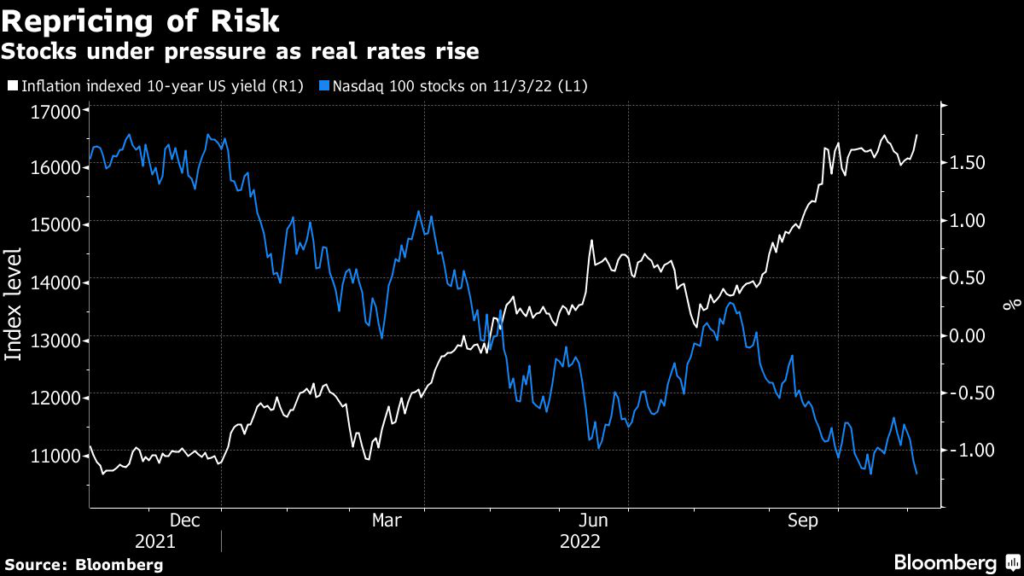
Treasuries held moves from the US session that saw a key segment of the yield curve reach new extremes of inversion, touching a level not seen since the 1980s when the Fed was aggressively tightening. Such curve inversions have a track record of preceding economic downturns, which is adding to market jitters before US jobs data later Friday. 

Swaps that reference future Fed meetings indicate an expected peak rate above 5.18% around mid-2023.

“That pivot is obviously going to happen,” Steve Brice, chief investment officer of wealth management at Standard Chartered Bank, said of Fed policy. “But we’re probably still some way from them actually moving from a tightening bias to an easing bias. We’re going to have to just live with that tightening policy for a while longer,” he said on Bloomberg Television. 

Apple Inc. shares tumbled over 4% and Amazon.com Inc. suffered its longest slide since 2019 as tech dragged on the US market. In corporate news, Moderna Inc. earnings offered a preview into the future of Covid-19 vaccine sales, and so far it doesn’t look pretty. Qualcomm Inc., the biggest maker of smartphone processors, gave a weaker forecast than expected.

Read: Deeper US Recession Looms as Resilient Labor Market Spurs Fed

Stock gauges in Hong Kong and the mainland were resilient in the face of news that Tiger Global Management, a long-time investor in China, decided to pull back from the region and pause future stock investments. 

The Hang Seng Tech Index was set to recover all of its losses from last week when President Xi Jinping’s move to stack his leadership ranks with loyalists triggered a selloff. News of a joint venture between Tencent Holdings Ltd. and China Unicom buoyed sentiment and investors continued to look for signs that the nation will exit its Covid-Zero policy as well. The yuan rose.

“What we are guessing is China in the future will model the reopening on the back of Hong Kong,” Jack Siu, Greater China chief investment officer at Credit Suisse, said on Bloomberg Television. “To fully reopen, we are still at least nine months away from today.”

The dollar declined. In government bond markets, Australian yields fell. 

Elsewhere, oil edged higher as investors weighed a tightening outlook for energy supply against persistent concerns over a global economic slowdown. Gold climbed.

Key events this week:

  • US nonfarm payrolls, unemployment, Friday

Some of the main moves in markets:

Stocks

  • S&P 500 futures were unchanged as of 12:15 p.m. in Tokyo. The S&P 500 fell 1.1% Thursday
  • Nasdaq 100 futures rose 0.2%. The Nasdaq 100 fell 2%
  • Japan’s Topix index fell 1.4%
  • South Korea’s Kospi index rose 0.1%
  • Hong Kong’s Hang Seng Index rose 5%
  • China’s Shanghai Composite Index rose 1.9%
  • Australia’s S&P/ASX 200 Index rose 0.4%

Currencies

  • The Bloomberg Dollar Spot Index fell 0.2%
  • The euro rose 0.2% to $0.9772
  • The Japanese yen rose 0.2% to 148.09 per dollar
  • The offshore yuan rose 0.6% to 7.2900 per dollar

Cryptocurrencies

  • Bitcoin rose 0.2% to $20,295.72
  • Ether fell 0.2% to $1,538.62

Bonds

  • The yield on 10-year Treasuries was little changed at 4.15%
  • Australia’s 10-year yield declined six basis points to 3.86%

Commodities

  • West Texas Intermediate crude rose 0.9% to $88.93 a barrel
  • Spot gold rose 0.6% to $1,638.86 an ounce

More stories like this are available on bloomberg.com

©2022 Bloomberg L.P.
Tech, Reopening Stocks Lead Best China Weekly Rally in Years

(Bloomberg) — Chinese stocks in Hong Kong headed for their best week since 2015, driven by reopening speculation and a surge in technology shares.

A gauge of the nation’s equities listed in the city jumped more than 6% in Friday’s session. It is up about 10% for the week after unverified social media posts circulated earlier that a committee was being formed to assess scenarios on how to exit Covid Zero. The Hang Seng Tech Index rallied over 8% on Friday.

Rumor mills have infused strong optimism this week in embattled China markets, where traders have been seeking reasons to scoop up shares in one of the world’s worst-performing major markets. Stocks have rallied even as authorities have given no indication of a change in their stance on Covid Zero.

“There is still a tug of war going on between bulls and bears, bottom feeders and weary investors,” said Justin Tang, head of Asian research at United First Partners. “It will continue in the short term until we get a clearer idea whether there will be more pro-market policies under the new leadership.” 

Equities resumed gains on Friday after falling in the previous session as China’s top health body reiterated its commitment to the Covid Zero policy. On the mainland, the benchmark CSI 300 Index has jumped more than 5% this week, on track for the largest gain since early 2021.

Alibaba Group Holding Ltd. rallied more than 12% to be the biggest contributor to gains on the Hang Seng China gauge Friday. Tencent Holdings Ltd. soared 10%.

“Market dynamics remain relatively subdued despite some short-lived excitement over chatter around Covid-Zero policy changes,” Morgan Stanley strategists including Laura Wang wrote in a note. “We expect near-term market volatility to stay high with complexity around Covid relaxation and potential policy vacuum ahead of the Central Economic Work Conference.”

READ: Key Meetings to Offer Clues on China’s Economic Path Forward

–With assistance from Abhishek Vishnoi.

More stories like this are available on bloomberg.com

©2022 Bloomberg L.P.
Close Bitnami banner
Bitnami