Bloomberg

China’s Covid Outbreak Worst Since May as Lockdowns Persist

(Bloomberg) — China’s daily local Covid infection rate soared to its highest level since early May, with lockdowns sweeping across the nation. 

There were 3,800 new cases reported for Thursday, a 22% jump from the day before and the highest since the country emerged from its biggest outbreak in the spring, according to the National Health Commission. A flareup in the southern factory hub Guangzhou continue to accelerate after at least one district in the city halted in-person schooling and dining-in, with 572 domestic infections reported on Friday.

A growing number of outbreaks have emerged despite the stealth shutdowns and targeted restrictions enacted in multiple regions as China continues to adhere to a Covid Zero policy. A top health official’s speech this week signaled no planned shift away from the zero-tolerance approach favored by President Xi Jinping, which includes tight border restrictions, mass testing and lockdowns whenever there’s a flareup. 

China Covertly Shuts Cities as Covid Zero Resistance Rises 

Inner Mongolia, which detected 764 infections, accounts for the highest number of cases currently among China’s provinces. Restrictions are in place for most of the northwest region, where outbreaks are hard to stamp out in the vast remote area. Most parts of Xinjiang have been locked down for more than 80 days, with signs on social media that local residents are becoming increasingly desperate about the indefinite home quarantine.

Zhengzhou, home to the world’s largest iPhone factory, locked down the zone around the Foxconn Technology Group’s facility on Wednesday after an outcry about an on-site outbreak. Scores of workers were seen fleeing the plant on foot to escape the “closed loop” system that paralyzed daily life. 

Production at the Foxconn plant is essentially back to normal, local officials said at a municipal press conference late Thursday.

More stories like this are available on bloomberg.com

©2022 Bloomberg L.P.

China’s Top PC Maker Boosts Profit After Cutting Costs

(Bloomberg) — Lenovo Group Ltd.’s earnings climbed 6% after China’s top PC maker relied on cost reductions and new businesses to weather an unprecedented slump in global computing demand.

Net income rose to $541 million in the quarter ended September, the company said Thursday. The average analyst estimate was $473 million. Sales declined for the first time in more than two years to $17.1 billion, but still beat the $16.8 billion analysts predicted.

Lenovo and its rivals Dell Technologies Inc. and HP Inc. are struggling with a global PC market that saw its steepest quarterly drop on record — the fourth straight decline in shipments. In Lenovo’s home market, Beijing appears to prioritize Covid Zero over the economy, triggering lockdowns in major cities, smothering retail demand and disrupting manufacturing.

Read more: Lenovo’s PC Woes to Weigh Despite Earnings Beat: Street Wrap

What Bloomberg Intelligence Says

An extended macroeconomic overhang will likely lead to another down year for the PC market in 2023, though there’s scope for a rebound later in the year and potential for a return to growth in 2024. We’ve trimmed our 2023 PC-shipment target by 1% to 281 million, which implies a 3% unit drop. 

– Woo Jin Ho, analyst

Click here for the research.

Beyond China, the global tech outlook is clouded by a plethora of restrictions Washington imposed on chip and technology exports to China last month, which threaten to further curtail shipments to the world’s largest PC and semiconductor market. Industry bellwether Intel Corp. is planning a major reduction in headcount, likely numbering in the thousands, Bloomberg News has reported.

Lenovo couldn’t sell some of its most advanced computers to clients in China because of the latest US chip curbs, Chairman Yang Yuanqing said in an interview. The impact to Lenovo’s sales is limited because such products are only a small part of the company’s China business, he said. “It will not impact our general-purpose server, storage or other infrastructure sales,” he added.

Cost management will be a priority for Lenovo in the coming quarters, according to Yang, as the global electronics market sees signs of contraction. Last quarter, Lenovo lowered spending on advertising and promotions to support its profit margins. It also spent less on employee benefits and rent. Yang however said Lenovo wasn’t contemplating large-scale layoffs, without elaborating.

“We must ensure the competitiveness of our business. We must ensure the expense to revenue is competitive,” Yang said.

Shares of Lenovo closed largely unchanged in Hong Kong. They have declined 33% this year.

The company has been counting on growth from businesses beyond its bread-and-butter division — such as in servers, cloud computing and data storage — to help offset worsening PC sales. But its core division still yields about four-fifths of revenue.

“Demand cracks are spreading to enterprise hardware end-markets, including PCs and data center infrastructure,” Morgan Stanley analysts wrote this month.

Read more: Global PC Sector Suffers Worst Drop as China Chip Curbs Loom

(Updates to add a tout to analysts’ comments. A previous version was corrected to remove a reference to R&D cuts in the deckhead.)

More stories like this are available on bloomberg.com

©2022 Bloomberg L.P.

Ant Digital Bank Expands in Singapore With Small Firm Loans

(Bloomberg) — Ant Group Co.’s Singapore digital wholesale bank will start offering loans to small and medium-sized businesses, as the Chinese fintech giant extends its reach in the city-state. 

ANEXT Bank, which started its services in June, said it will give smaller companies loans starting from S$5,000 ($3,530), and as much as S$100,000 if clients chose a revolving credit line. Customers can also apply for ANEXT Bank’s loans via IN Financial Technologies and Bizmann System. 

Ant is accelerating digital bank operations in Southeast Asia, replicating strategies in China that catapulted its fintech operations to becoming the country’s biggest. The move could help Ant diversify business and generate growth amid regulatory headwinds at home.

“We’re going to roll out our products progressively,” Toh Su Mei, chief executive of ANEXT Bank, told Bloomberg News, adding that the company is looking for more partners. “It’s really not about the number, but more about the value proposition.” 

The Chinese firm will be facing stiff competition. It’s entering an arena dominated by traditional incumbents including DBS Group Holdings Ltd. and Oversea-Chinese Banking Corp.

Compared with credit offered by traditional banks, ANEXT Bank’s baseline loan product doesn’t require collateral. For credit of S$30,000 and below, no documents are needed. The interest rate will start from 6.8% per annum. 

Ant was one of two groups to get a wholesale digital banking license in December 2020, allowing it to serve smaller firms and other non-retail segments. It required a capital commitment of S$100 million. That compares with a full digital bank license, which can serve all kinds of customers and eventually requires S$1.5 billion in capital as well as local control.

ANEXT Bank’s dual-currency deposit service went live in August. It takes US and Singapore dollars, and includes remote on-boarding and daily interest.

Ant also started offering a service known as Alipay+ D-store that allows businesses to build digital stores across platforms including Chope, AlipayHK and Touch ‘n Go.

–With assistance from Chanyaporn Chanjaroen.

(Updates with comment from ANEXT Bank CEO in graph four)

More stories like this are available on bloomberg.com

©2022 Bloomberg L.P.

Scholz Lands in Beijing for Talks With Xi Amid Europe Tensions

(Bloomberg) — German Chancellor Olaf Scholz has arrived in China with a major business delegation for his first in-person meeting with President Xi Jinping, as tensions rise between Beijing and Brussels.

Xi is welcoming the first major European leader to China in more than two years on the heels of a domestic political victory, having just secured a precedent-defying third term in office. The one-day visit on Friday also comes as China rebounds this week from a record market rout sparked by policies Xi laid out at last month’s congress. 

The Chinese leader’s efforts to solidify ties with Germany are part of a broader push to prevent relations with the European Union from further deteriorating, as Beijing faces an increasingly hostile environment in Washington. Ties between China and the West have been strained by Xi’s crackdown on Hong Kong, treatment of Muslims in Xinjiang and refusal to condemn Russia’s invasion of Ukraine. 

Berlin is working to hone a new national strategy on China that aims to weaken reliance, diversify supply chains and enhance security, while reinforcing business ties. That leaves Scholz walking a fine line between pushing trade ties in Beijing, while voicing concerns on sensitive allegations of human rights violations by China.

Last year, the EU halted an investment agreement with China after both sides traded sanctions over Xinjiang. A panel of UN experts in 2019 said an estimated 1 million people had been sent to counter-terrorism internment facilities in the far west region, part of a set of policies the US has said amount to genocide. Beijing denies such allegations.  

Scholz wrote in a guest article for German publication Frankfurter Allgemeine Zeitung on Wednesday that Berlin was seeking cooperation with China. “China remains an important economic and trading partner for Germany and Europe, even under changed circumstances,” he said. “We do not want decoupling.”

The German leader is accompanied by a powerhouse delegation expected to include top executives from BASF SE, Volkswagen AG, Deutsche Bank AG and BioNTech SE. China will be looking to reassure foreign business leaders that it’s open for investment and trade, despite a strict Covid Zero policy that’s weighed on the economy and effectively closed the nation’s borders for nearly three years.  

Xi has hosted a flurry of top foreign leaders from Vietnam, Pakistan and Tanzania this week, as he returns to in-person diplomacy after recently breaking a long spell of Covid isolation. Those meetings come ahead of the Chinese leader’s expected attendance of major summits in Indonesia and Thailand later in the month, where he could sit down with President Joe Biden. 

More stories like this are available on bloomberg.com

©2022 Bloomberg L.P.

Paul Pelosi Released From Hospital Nearly a Week After Attack

(Bloomberg) — Paul Pelosi has been released from a hospital almost a week after he was attacked in the San Francisco home he shares with his wife, House Speaker Nancy Pelosi.

“Paul remains under doctors’ care as he continues to progress on a long recovery process and convalescence,” the speaker’s office said in a statement on Thursday night. “He is now home surrounded by his family who request privacy.”

An intruder broke into the couple’s home early last Friday and struck Paul Pelosi, 82, with a hammer. He underwent surgery for a fractured skull and sustained injuries to his right arm and hands. 

The suspect in the case, David DePape, had been looking for Nancy Pelosi, according to the police. 

DePape, 42, told investigators that he planned to take the speaker hostage and break her kneecaps if she didn’t tell “the truth,” according to an FBI affidavit. San Francisco police recovered plastic ties, a roll of tape, rope, a hammer and rubber and cloth gloves.

DePape, who faces a variety of California and federal charges, has been linked to blog posts that railed against the government and technology giants, and espoused far-right conspiracy theories. 

He has pleaded not guilty.

Pelosi’s release from the hospital was reported earlier by CNN.

In a speech in Washington on Wednesday evening, President Joe Biden drew a line from former President Donald Trump’s refusal to accept his loss in the 2020 election and the attack on the US Capitol to the assault on Paul Pelosi. 

Biden implored Americans to consider the future of democracy when they vote in next week’s midterm elections, saying that Trump’s “big lie” about 2020 defeat had inspired extremism and violence. 

On Tuesday, the chief of the US Capitol Police said that rising political tension has greatly increased the danger for members of Congress and said the agency must bolster protection for lawmakers. 

On Wednesday, the Capitol Police announced the opening of an internal review investigating why no one was actively monitoring cameras watching the Pelosi home when the break-in occurred.

The statement from the speaker’s office said Paul Pelosi, a businessman, was “grateful to the 911 operator, emergency responders, trauma care team, ICU staff,” and the hospital’s medical teams “for their excellent and compassionate life-saving treatment he received after the violent assault in our home.”

–With assistance from Emily Wilkins, Jennifer Jacobs, Billy House and Josh Wingrove.

(Updates with CNN reporting release earlier.)

More stories like this are available on bloomberg.com

©2022 Bloomberg L.P.

Iran’s Weapons Are Slowly Dragging Israel to Ukraine’s Defense

(Bloomberg) — After months of reluctance, Israel is softening its opposition to providing military aid to Ukraine, as Iran’s deepening support for Russia’s invasion evolves into a threat to Israeli security.

A turning point came late last month, when Israeli Defense Minister Benny Gantz took a long-requested call from his Ukrainian counterpart Oleksii Reznikov. Israel committed to help Ukraine develop an early-warning system, similar to one that alerts Israelis to incoming fire from the Gaza Strip. 

Gantz also agreed to assess Ukraine’s air-defense alert needs, though Israel is declining to provide Ukraine the means to shoot down incoming drones and missiles. 

“These are weapons that we have to be prepared to confront — we are the only country in the world that knows how to do that,” said Yossi Kuperwasser, a former top Israeli military intelligence official. “Ukraine can be a testing ground for our counter-measures.”

While former Prime Minister Benjamin Netanyahu is poised to return to power after winning elections on Nov. 1, an Israeli government led by him won’t have significantly different security priorities from the current administration, Kuperwasser said.

In another new development, Israel has begun to share its intelligence, Ukrainian President Volodymyr Zelenskiy said on Oct. 26, welcoming what he called a “positive” trend. “I am pleased with the last few days, we started working,” he told reporters, citing information shared by Israel that he said confirmed Ukrainian intelligence.

“The Iranian collaboration with Russia was a big shift for us,” Ukraine’s ambassador to Israel, Yevgen Korniychuk, said at his country’s embassy in Tel Aviv last week. “We’d hoped Israel would choose to be on the right side of the war as a democratic country. But in the end, it happened because we have the same enemy, which is Iran.”

Spokespeople for Gantz and the Israeli prime minister’s office declined to comment for this story. Russia’s foreign ministry and the foreign ministry in Tehran didn’t immediately respond to requests for comment. Yuriy Sak, an adviser to the Ukrainian defense minister, said Ukraine needs help as soon as possible to counter Iranian weapons. He said Reznikov had requested air-defense support on the call with Gantz.

Battle Tested

Russia in the past few weeks escalated its attacks on Ukraine after suffering a series of battlefield setbacks in its eight-month offensive, unleashing a blitz aimed at knocking out Ukrainian electricity, heating and other infrastructure ahead of the winter months. Ukrainian officials say 40% of the power system has been damaged. 

Relying increasingly on Iranian drones as it burns through its own stockpiles of precision-guided missiles, Russia’s attacks aim to create enough hardship for the population to persuade Kyiv to sue for peace, Ukrainian officials say.

Russia denies using Iranian equipment, and Iran denies supplying it. 

Iran’s Supreme Leader Ayatollah Ali Khamenei has been more equivocal, acknowledging in a speech last month that the world was concerned about Iran selling drones and boasting about them being looked upon as “dangerous.”

Remnants of Iranian drones — rebranded Geran-2 by Russia — have been found after being shot down over Ukraine.

How and Why Russia Is Using Iranian Drones in Ukraine: QuickTake

Israel has been reluctant to get more involved because of fear that antagonizing Moscow could have direct security implications in the Mideast and for Russian Jews. Israel routinely carries out strikes over Syria in areas where Russia has control over airspace, to stop Iran from supplying its proxies there. 

There are an estimated one million Jews living in Russia whose safety is also a concern, especially with Russia-Israel relations at their worst in years. In July, Russian authorities set off alarms in Israel when they asked a Moscow court to liquidate the local offices of the Jewish Agency, which helps Jews emigrate, for alleged violations of Russian law.

Putin’s Courting of Israel Fades as Ties Turn Bitter on Ukraine

But the mass strikes on Ukrainian targets with Iranian drones and expected provision of Iranian ballistic missiles to Russia have changed Israel’s calculations, with concern growing that the Ukrainian experience could allow Iran to hone its capacity to attack Israeli cities.

Israel so far has only provided Ukraine with humanitarian assistance and defensive equipment such as helmets and protective vests. For an early-warning system based on Israeli designs, its radar technology and software would have to be used, according to former and current Israeli officials. The sale of such technologies requires export authorization, which is a complex process involving a number of ministries, including the defense ministry.

Risk of Retaliation

Russia has informed Israel that it will retaliate if Israeli-made air-defense missiles or other interceptors get to Ukraine, whether directly or via third countries, according to two people with knowledge of Russian policy. Former Russian President Dmitry Medvedev, now a senior security official, warned Israel last month against providing arms to Ukraine, saying that such a step would be “reckless” and “destroy” ties between Russia and Israel. 

“The real question is how to do it in a way that isn’t provocative for the Russians,” Mark Dubowitz, CEO of the Washington-based Foundation for Defense of Democracies, which lobbies for stronger measures to counter Iran, said in an interview in Tel Aviv. 

Israel could supply anti-drone and anti-missile equipment to other countries assisting Ukraine, in turn allowing those third countries to provide more of their own arsenals to Kyiv, said Amir Avivi, a former brigadier general in the Israeli army.

“For example if you sell it to Germany and then Germany delivers another set of weapons, it’s not Israeli, no problem,” he said.

Drone Swarms

Iran has mostly supplied Russia with the Shahed-136 single-use so-called “suicide drones,” which are difficult to detect because they’re relatively small and low-flying. Recently upgraded with commercial GPS systems, they can loiter for hours before locking onto a target. Iran delivered 1,000 of them in August, according to the US, and plans to deliver 2,400 eventually, Ukraine says.

Drones based on Iranian technology have also been used in attacks on Saudi oil facilities and the United Arab Emirates, as well as in a reconnaissance mission Lebanese militia Hezbollah was attempting over a gas rig in the Mediterranean in July, according to the US and its allies. Israel shot down all three drones approaching the rig.

Ukraine intercepts 70% or more of the drones, but when used in swarms, shooting them down becomes increasingly difficult. Produced at a cost of $20,000 each, according to Western defense experts, the air-defense missiles used to intercept them often cost multiples more. On October 17, an Iranian drone slammed into a four-story apartment block in Kyiv, killing five people.

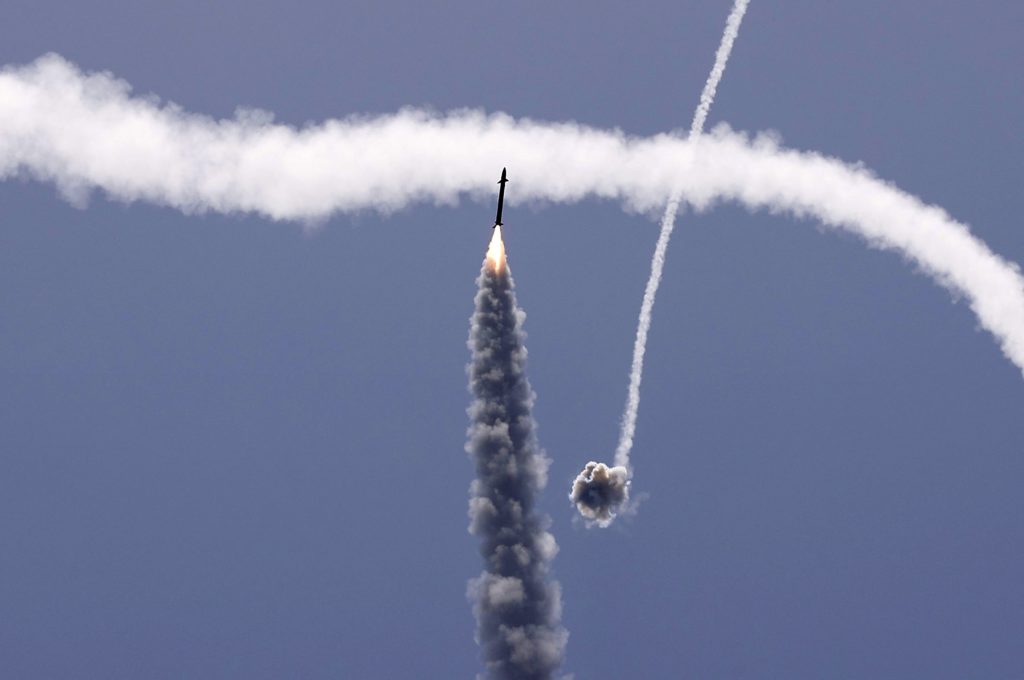
For Israel, even though its so-called Iron Dome System has a good track record of halting short-range rocket attacks by Palestinian militant groups and the Iranian-allied Hezbollah, the new mass drone tactics used by Iran represent an unprecedented challenge, said Avivi, the ex-general, who now heads the Israel Defense and Security Forum, an association of former and reserve members of the security forces.

“Imagine 100 suicide drones crossing the Israeli border toward the port of Haifa. As good as our air defense is, it would take 90 out of 100, still 10 will hit. It’s a big threat,” he said.

Shadow War

A shift in the Ukraine war into a proxy competition between Iranian and Israeli capabilities expands the shadow conflict the two countries have been fighting for years.

“The Iranian weapons have been effective on the ground because they’re causing damage and it’s also a great way for Iran to show it’s working with Russia and isn’t isolated,” said Dina Esfandiary, an analyst from the International Crisis Group in Brussels.

Tehran has agreed to send surface-to-surface missiles to Russia and, as soon as November, the Fateh-110 and Zolfaghar rockets, which are capable of striking targets from a range of 300 to 700 kilometers (180 to 420 miles), could be in use, Ukrainian military intelligence chief Kyrylo Budanov said in an interview with The War Zone published Oct. 28.

Russia’s growing dependence on Iran’s military potential in Ukraine is also fanning Israeli concerns that Tehran in return could seek Russian assistance with its nuclear program. Israel rejects Iran’s assertions that the nuclear program is for peaceful purposes, and says it will take any steps necessary to prevent Iran from acquiring a bomb.

–With assistance from Daniel Avis, Golnar Motevalli and Daryna Krasnolutska.

More stories like this are available on bloomberg.com

©2022 Bloomberg L.P.

Musk Commences Twitter Job Cuts as Advertisers Hit Pause

(Bloomberg) — Twitter Inc. plans to start cutting staff Friday, the company said in an email to employees.

Billionaire Elon Musk plans to eliminate half of Twitter’s workforce, making good on plans to slash costs at the social media platform he acquired for $44 billion last month, people with knowledge of the matter have said.

“In an effort to place Twitter on a healthy path, we will go through the difficult process of reducing our global workforce on Friday,” Twitter management said in an email reviewed by Bloomberg. “We recognize that this will impact a number of individuals who have made valuable contributions to Twitter, but this action is unfortunately necessary to ensure the company’s success going forward.”

The company will inform affected staffers Friday at 9 a.m. San Francisco time, according to the memo. Amid the layoffs, Twitter plans to temporarily close offices and suspend badge access “to help ensure the safety of each employee as well as Twitter systems and customer data,” the memo said.

All told, Musk wants to cut about 3,700 jobs at San Francisco-based Twitter, people with knowledge of the matter said this week. The entrepreneur had begun dropping hints about his staffing priorities before the deal closed, saying he wants to focus on the core product. “Software engineering, server operations & design will rule the roost,” he tweeted in early October.

Security staff at Twitter’s San Francisco headquarters carried out preparations for layoffs, while an internal directory used to look up colleagues was taken off line Thursday afternoon, people with knowledge of the matter said. Employees have been girding for firings for weeks. In recent days, they raced to connect via LinkedIn and other non-Twitter avenues, offering each other advice on how to weather losing one’s job, the people said. Ex-Twitter engineers are also using social media to respond to former “Tweeps” looking to land jobs elsewhere.

Musk has also been huddling with advisers to come up with new ways to make money from the blogging platform, including charging for verifications, which can help delineate real users from fake accounts. He’s also considering reviving a long-since-discontinued short-video tool called Vine, a way to vie with popular video-sharing apps like TikTok. Another product under consideration, the New York Times reported, is paid direct messages, which would let the rank and file send private messages to high-profile users.

Several advertisers, meanwhile, have tapped the brakes on placing ads on the platform until they get a clearer idea of Musk’s plans. The new owner has said he wants to remove some content moderation, giving rise to concerns that hate speech, misinformation and other potentially harmful material will flourish even more freely. General Mills Inc. said it’s temporarily pausing advertising on Twitter, joining Volkswagen AG’s Audi and General Motors Co. in rethinking their presence on the platform.

Read more: Musk to Restore Twitter Content Moderation Tools Before US Election

More stories like this are available on bloomberg.com

©2022 Bloomberg L.P.

Apple’s New iPhones Struggle Even With Deepening Discounts in China

(Bloomberg) — Apple Inc.’s latest iPhone generation is having a tough time in the world’s biggest smartphone market, where its most recent weekly sales were down by a third compared with last year, according to Jefferies.

China sales of the four iPhone 14 models over their first 38 days on the market are down by 28% compared to the iPhone 13 family of products, with the most recent data showing that deteriorating to 33%, according to a note Friday by analysts led by Edison Lee. The pricier Pro variants, which had proven more resilient this year, also lost steam.

The global smartphone market, and China especially, has been among the most heavily hit by this year’s decline in consumer spending. Samsung Electronics Co., the world’s biggest maker of phones, displays and memory, called out falling handset sales in China as a drag on its components business. The country is also posing potential challenges for Apple on the supply side, where the key iPhone assembly plant in Zhengzhou was this week put under an abrupt Covid-19 lockdown.

While domestic Chinese brands have already weathered the bulk of their sales declines with big drops earlier in the year, Apple’s lineup maintained its appeal and increased sales by 5.7% in the three months to September, according to an earlier Jefferies analysis.

An Apple representative did not immediately respond to a request for comment. 

Read more: China’s IPhone Sales Drop May Mean Bigger Problems for Apple

The pivotal first few weeks of sales of the latest generation of Apple’s handsets set the tone for the company’s production and pricing plans for the rest of the year. Discounts for the Nov. 11 Singles Day shopping festival already appear to be deeper and more widely available than last year, Jefferies said. Shoppers on Alibaba Group Holding Ltd.’s Tmall can get a 400 yuan discount on iPhone 14 as the festival approaches. 

“The vast majority of buyers of iPhone 13 series on Tmall last year likely received zero discount. But the discounts this year are available to everyone,” Lee and his colleagues wrote. “Even a few percentage-points price cut would not help the demand for the non-Pro models given unattractive price/performance, a growing used phone market and weak consumer sentiment.”

More stories like this are available on bloomberg.com

©2022 Bloomberg L.P.

How NFTs Live On as the Investment Promise Fizzles: Crypto IRL

(Bloomberg) — The chief experience officer at the crypto hardware wallet firm Ledger has a message for NFT haters: Eventually you’ll be dead.

Ian Rogers says that the concept of nonfungible tokens makes sense to a younger generation – those who spend hours glued to screens, live online, and attended school virtually at the height of the pandemic. 

“It’s not a foreign concept,” he told us in the most recent episode of “Crypto IRL.”

Emily Yang, the artist known as pplpleasr, sees NFTs as a reflection of society and that they will be collectibles the way vinyl albums once were.

NFT skeptics, though, urge caution. John Reed Stark, a former SEC enforcement attorney, says the entire concept is a ludicrous ripoff.  “It’s a giant scam,” he said. “It’s a giant Ponzi scheme.”  

Tune in to a new episode of Crypto IRL on Thursdays at 8:30 p.m. New York time on Bloomberg Quicktake, and Friday at 8:30 p.m. on Bloomberg TV. And it’s always streaming at bloomberg.com/qt/series/crypto-irl. 


More stories like this are available on bloomberg.com

©2022 Bloomberg L.P.

Apple Pause, Lyft Layoffs Herald New Phase of Tech Austerity

(Bloomberg) — Tech companies are once again tapping the brakes on hiring as they contend with sluggish consumer spending, higher interest rates and the impact of a strong dollar overseas. 

Amazon.com Inc. said Thursday that it would pause adding new corporate workers, citing an “uncertain” economy and its hiring boom in recent years. Lyft Inc., the ride-hailing company, is going further: It will eliminate 13% of staff, or around 683 people.

Twitter Inc.’s cutbacks are under particular scrutiny as new owner Elon Musk shakes up the social-networking business and pares roughly half its jobs.

Tech companies made moves earlier this year to rein in costs, with many of the industry’s biggest firms freezing hiring or cutting some departments. Even Apple Inc., which has outperformed most of its peers this year, is slowing spending and has paused much of its hiring. But some tech giants are finding that they now need to take more dramatic steps to trim their expenses.

More broadly, Challenger, Gray & Christmas said Thursday that job-cut announcements were up 48% year-over-year in October, with more layoffs “on the way.” A federal jobs report on Friday will give a clearer picture of US hiring trends. Even with the austerity, economists expect a net gain of 200,000 for non-farm payrolls.

Here are some of the latest companies to tighten their belts:

Amazon

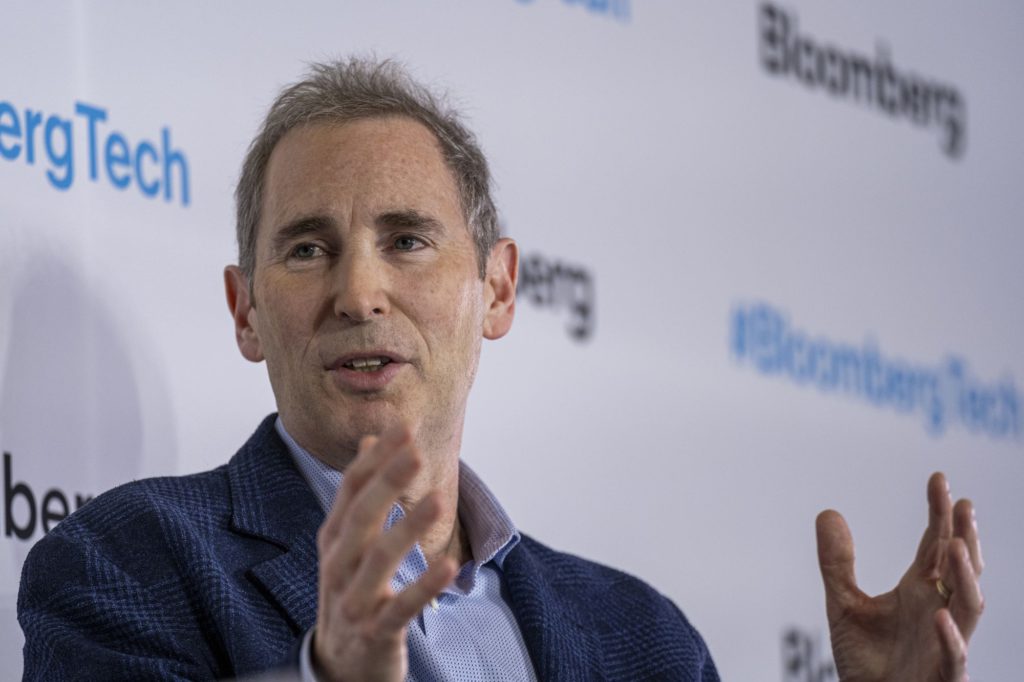
The e-commerce titan halted “new incremental” hiring across its corporate workforce — a decision Chief Executive Officer Andy Jassy and his team made this week. “We anticipate keeping this pause in place for the next few months, and will continue to monitor what we’re seeing in the economy and the business to adjust as we think makes sense,” according to Beth Galetti, Amazon’s top human resources executive. 

Apple 

The iPhone maker has paused hiring for many jobs outside of research and development, an escalation of an existing plan to reduce budgets heading into next year, according to people with knowledge of the matter. The break generally doesn’t apply to teams working on future devices and long-term initiatives, but it affects some corporate functions and standard hardware and software engineering roles.

Chime

The digital-banking startup Chime Financial Inc. is cutting 12% of its staff, or 160 people. A spokesperson said the company remains well-capitalized and the move will position it for “sustained success.”

Dapper Labs

Dapper Labs Inc. founder and CEO Roham Gharegozlou said in a letter to employees Wednesday that the company had laid off 22% of its staff. He cited macroeconomic conditions and operational challenges stemming from the company’s rapid growth. Dapper Labs created the NBA Top Shot marketplace for nonfungible tokens, a digital asset class that has seen a steep drop in demand since the crypto market downturn.

Digital Currency Group

Cryptocurrency conglomerate Digital Currency Group embarked on a restructuring last month that saw about 10 employees exit the company. As part of the shake-up, Mark Murphy was promoted to president from chief operating officer.

Galaxy Digital

Galaxy Digital Holdings Ltd., the crypto financial services firm founded by billionaire Michael Novogratz, is considering eliminating as much as 20% of its workforce. The plan may still be changed and the final number could be in a range of 15% to 20%, according to people familiar with the matter. Galaxy’s shares have plummeted 70% this year, part of a rout for cryptocurrencies.

Intel

Intel Corp. is cutting jobs and slowing spending on new plants in an effort to save $3 billion next year, the chipmaker said last week. The hope is to save as much as $10 billion by 2025, a plan that went over well with investors, who sent the shares up more than 10% on Oct. 28. Bloomberg News reported earlier that the headcount reduction could number in the thousands. 

Lyft

Lyft’s cost-saving efforts include divesting its vehicle service business. The company, which is preparing to report third-quarter results on Monday, had already said it would freeze hiring in the US until at least next year. It’s now facing even stiffer headwinds. 

“We are not immune to the realities of inflation and a slowing economy,” co-founders John Zimmer and Logan Green said in a memo. “We need 2023 to be a period where we can better execute without having to change plans in response to external events — and the tough reality is that today’s actions set us up to do that.”

Opendoor

Opendoor Technologies Inc. said this week that it’s laying off about 550 employees — roughly 18% of its headcount. The company, which practices a data-driven spin on home-flipping called iBuying, is coping with slowing housing demand because of higher mortgage rates. The iBuying model relies on acquiring homes, making some repairs and then selling the properties, often in a short period of time.

Qualcomm

Qualcomm Inc. said Wednesday that it’s frozen hiring in response to a faster-than-feared decline in demand for phones, which use its chips. It now expects smartphone shipments to decline in the double-digit percent range this year, worse than the outlook it gave just three months earlier.

Seagate

Seagate Technology Holdings Plc, the biggest maker of computer hard drives, said last week that it’s paring about 3,000 jobs. Computer suppliers, including Seagate and Intel, have been hard hit by a slowdown in hardware spending. Customers are sitting on a pile of extra inventory, hurting orders and weighing on Seagate’s financial performance, CEO Dave Mosley said. That necessitated cuts. “We have taken quick and decisive actions to respond to current market conditions and enhance long-term profitability,” he said.

Stripe

Payments company Stripe Inc., one of the world’s most valuable startups, is cutting more than 1,000 jobs. The 14% staff reduction will return its headcount to almost 7,000 — its total in February. Co-founders Patrick and John Collison told staff that they need to trim expenses more broadly as they prepare for “leaner times.”

Twitter

The upheaval at Twitter has more to do with its recent buyout — and the accompanying debt — than economic concerns. But the company is facing the deepest cuts of its peers right now. Musk, who acquired Twitter for $44 billion last month, plans to eliminate about 3,700 jobs, according to people with knowledge of the matter. 

The new owner plans to inform affected staffers Friday, said the people. Musk also intends to reverse the company’s work-from-anywhere policy, asking remaining employees to report to offices.

Upstart

Upstart Holdings Inc., an online lending platform, said in a regulatory filing this week it cut 140 hourly employees “given the challenging economy and reduction in the volume of loans on our platform.”

–With assistance from Matt Day, Ed Ludlow, Kurt Wagner, Yueqi Yang, Mark Gurman, Patrick Clark, Anna Irrera, Jenny Surane, Vildana Hajric, Hannah Miller, Muyao Shen, Katie Greifeld, Ian King and Edward Harrison.

(Updates with entries on Apple and Opendoor.)

More stories like this are available on bloomberg.com

©2022 Bloomberg L.P.

Close Bitnami banner
Bitnami