

Bloomberg

Musk Agrees to Restore Twitter Content-Moderation Tools This Week

(Bloomberg) — Twitter Inc.’s new owner, Elon Musk, promised civil rights leaders he will restore content moderation tools that had been blocked for some staff by the end of the week, according to three leaders who met with Musk on Monday. 

Musk made the commitment during a Zoom meeting with the heads of some of the country’s leading racial justice organizations, including the National Association for the Advancement of Colored People, Color of Change, and the Anti-Defamation League. 

The civil rights groups had raised concerns about Musk’s plans to relax speech protections on the platform and restore the accounts of users who had been removed. Last week, Twitter dramatically limited the number of people with access to the dashboard of tools that allows Twitter’s Trust and Safety team uses to enforce policy actions, Bloomberg reported. 

The billionaire completed his $44 billion acquisition of the social media company last week. In the past he has said he was concerned about Twitter’s content restrictions and lack of “free speech” on the service, and that he planned to restore accounts that had been permanently banned for breaking the rules. Still, on Wednesday, Musk tweeted that he won’t allow anyone back on the platform who violated Twitter’s rules until he’s established a clear process, “which will take at least a few more weeks.” 

Twitter declined to comment.

Read more: Facebook, Twitter Let ‘Big Lie’ Go Viral Days Before Midterms

ADL’s Yael Eisenstadt; Jessica Gonzalez, head of digital rights group Free Press; and Rashad Robinson, president of Color of Change, who were among the representatives at the meeting, said that Musk agreed with their concerns about speech on the platform and committed to working together.

During the 45-minute virtual call, Musk, who was the sole Twitter representative, said he would craft speech policies to protect marginalized communities and create more transparency around decisions to reinstate the accounts of people who have been suspended from Twitter — presumably including Donald Trump, though no one mentioned the former president by name. 

“He said he would continue consulting with the people of color, religious minorities and people most impacted by hate and disinformation on the platform,” said Free Press’s Gonzalez. 

Content-Moderation Council

Musk also asked the civil rights leaders to join his content-moderation council focused on handling speech and users on the platform, they said.

Though Musk has offered few details about the proposed council, he has said that he wants the group to reflect a diverse range of perspectives. His invitation to the civil rights leaders signals that he intends to represent the voices of religious and racial minorities, although it’s unclear so far who else he might include from across the ideological spectrum.

During the meeting, Musk agreed to the advocates’ three major requests: transparency around reinstating Twitter accounts, enforcing the platform’s election integrity policies ahead of the US midterm elections and including civil rights groups on the content moderation council. 

Eisenstadt, ADL’s vice president, said her group will likely accept the invitation, though several attendees said they will hold off until they get more information about what the council will look like, how it will operate and who else will serve on it. 

Color of Change President Robinson said it’s a “really unclear idea right now” and Musk didn’t shed much light on the council’s structure during the call.

Robinson said he told Musk that extremists shouldn’t be included on the council. There are people who have sought “to make some people invisible in our society, to create deep levels of harm, to incite violence,” he said. 

“The truth is, no matter what he says on Twitter or at a meeting, it doesn’t really matter — it matters what he does,” said Free Press’s Gonzalez. “That’s what we’ll be tracking.” 

–With assistance from Kurt Wagner.

(Updates to add background about Musk’s content plans in fourth paragraph.)

More stories like this are available on bloomberg.com

©2022 Bloomberg L.P.
Lyft Is Cutting 13% of Staff to Cope With ‘Tough Reality’

(Bloomberg) — Lyft Inc. said it will cut 13% of staff as the ride-hailing company tries to cope with a difficult economic backdrop, according to a memo to employees viewed by Bloomberg.

The cuts will amount to about 683 employees, the company said in a filing. The San Francisco-based company will also divest its first-party vehicle service business, and expects workers in that division will be offered positions by the buyer.

Lyft is preparing to report third-quarter results on Monday. It has already said it would freeze hiring in the US at least until next year to rein in costs and maintain profit during a period of macroeconomic instability. It’s now confronting a squeeze on consumer spending from high inflation and a rockier global outlook that’s pummeled tech stocks. 

“We are not immune to the realities of inflation and a slowing economy,” Lyft Co-Founders John Zimmer and Logan Green said in the memo. “We need 2023 to be a period where we can better execute without having to change plans in response to external events — and the tough reality is that today’s actions set us up to do that.” 

In a filing Lyft said it was maintaining previously issued guidance on third quarter 2022 revenue, contribution margin and adjusted earnings before interest, taxation, depreciation and amortization. It had forecast revenue of $1.04 billion to $1.06 billion and Ebitda of $55 million to $65 million for the third quarter.

Lyft is also maintaining its 2024 financial targets for $1 billion in adjusted Ebitda with more than $700 million in free cash flow.

The cuts were reported earlier by Dow Jones.

(Adds details from memo in second paragraph, filing in fifth-sixth paragraphs)

More stories like this are available on bloomberg.com

©2022 Bloomberg L.P.

Alphabet Cut Off Workers From Pay Transparency Data, Union Says

(Bloomberg) — Alphabet Inc., Google’s parent company, illegally cut off contract workers’ access to a spreadsheet about pay transparency, a union alleged in a complaint to the National Labor Relations Board.

In a filing Thursday, the Alphabet Workers Union claimed that Alphabet and two of its staffing vendors violated federal labor law, which protects employees’ right to discuss their working conditions and organize. By withdrawing workers’ access to an online spreadsheet comparing pay rates, the companies “interfered with, restrained and coerced” the employees, the complaint claims.

The treatment of contract workers, who became the majority of Alphabet’s global workforce in 2018, has been a flashpoint for activism at the company and a major focus for the AWU, part of the Communications Workers of America. The AWU has signed up both Alphabet employees and subcontracted staff as members. 

The latest complaint names Alphabet as a “joint employer” of the subcontracted staff, meaning it exercises enough control over working conditions to be legally liable for the employees’ treatment.

Alphabet didn’t immediately respond to a request for comment.

Subcontracted Alphabet staff have maintained a spreadsheet for several years where workers employed through various staffing agencies anywhere in the world can compare their pay — an avenue to identify systemic inequities and to help individual staffers figure out if they’re being underpaid, according to the union.

Like a similar document for direct employees of Alphabet, the Google Sheet was hosted on the company’s own internal internet system. Google contract worker Laura Greene learned about the spreadsheet in July from the AWU and quickly shared the link with co-workers on her team, who had previously had some success securing raises after informally comparing their pay with each other, she said in an interview.

But the next day, all of them discovered their access to the spreadsheet had been cut off. Subcontracted staffers in other offices also lost the ability to view the document, which had received contributions from hundreds of workers, according to the union.

“We just want freedom of information — I mean, it’s our money,” said Greene, an Accenture Plc employee who works on a team creating articles and graphics for Google’s customer help center. “We should be able to know that the sweat equity that we’re putting into this stuff is actually being compensated fairly.”

Though the AWU has no formal collective bargaining relationship with Alphabet, it has used tactics such as advocacy petitions and legal complaints to tackle workplace issues at the company. Last month, it asked the labor board to hold a unionization vote among a group of subcontracted YouTube Music workers and to deem Alphabet as a joint employer in that case. That designation — if the workers voted to unionize — would require the internet giant to negotiate with the labor group for the first time.

Last year, a complaint the AWU filed with the NLRB led to a settlement in which Google and one of its staffing agencies agreed not to silence workers who discuss their pay. Google didn’t admit wrongdoing in that case, which involved a data center in South Carolina where the union alleged that management didn’t allow pay discussions and suspended a worker because she wrote a pro-union Facebook post. The AWU argues that cutting contract workers off from the pay spreadsheet violates that settlement.

The NLRB has repeatedly shifted its position on employees’ rights to agitate online using their companies’ own email systems, expanding such protections under President Barack Obama and then restricting them under President Donald Trump. The agency’s current general counsel, President Joe Biden appointee and former CWA attorney Jennifer Abruzzo, has signaled that she wants to take up cases that could once again expand workers’ rights.

While Trump was president, Google was one of the companies that urged the NLRB to narrow the legal protections for workers organizing online.

More stories like this are available on bloomberg.com

©2022 Bloomberg L.P.
Meta’s India Chief Quits To Become Snap’s Asia-Pacific President

(Bloomberg) — Meta Platforms Inc.’s India chief is leaving to join Snap Inc., part of a reshuffling at the maker of Snapchat. 

Ajit Mohan will become president for Snap’s Asia Pacific business, Chief Executive Officer Evan Spiegel said in a statement. 

“We believe that Ajit’s leadership will enable us to accelerate our growth across APAC, and we could not be more thrilled to have Ajit joining the Snap team,” Spiegel said.

Snap created regional president roles in August to help the company focus on the unique needs of key geographies. Spiegel revealed the new organizational structure as part of a companywide refocusing effort, which also included job cuts, the halting of some projects and more attention on revenue-generating opportunities.

Mohan’s move coincides with a raft of regulatory challenges in India as Prime Minister Narendra Modi’s administration pushes to rein in Big Tech, with a particular focus on social-media companies. 

Mohan joined what was then known as Facebook Inc. in early 2019. He presided over rapid growth in Indian advertising revenue and led Instagram’s expansion into short-form video, helping the platform win close to 500 million users after the government banned TikTok in 2020.

Mohan previously ran Hotstar, the streaming service now owned by Walt Disney Co., and is credited with making it India’s leading streaming platform.

More stories like this are available on bloomberg.com

©2022 Bloomberg L.P.

Goldman’s Petershill Buys Minority Stake in LLR Partners

(Bloomberg) — Goldman Sachs Group Inc.’s Petershill unit has acquired a minority stake in Philadelphia-based private equity firm LLR Partners, people familiar with the matter said.

Petershill and LLR, which oversees about $3 billion, have notified their investors about the deal, one of the people said, asking not to be identified discussing confidential information. Spokespeople for Goldman Sachs and LLR declined to comment.

Founded in 1999, LLR focuses on investing in technology and health-care companies and aims to write equity checks of between $25 million and $200 million, according to its website. It’s backed businesses including parking software and payments provider ParkHub and medical platform Eye Health America. 

LLR, led by partners including Mitchell Hollin, Seth Lehr and Scott Perricelli, raised $1.8 billion for its most recent fund, LLR Equity Partners VI LP, in 2020. The firm’s investors include large state pension schemes from Ohio, Pennsylvania and Maryland, data compiled by Bloomberg show. 

Founders of alternative asset management firm have increasingly been turning to minority-stake sales as a way to obtain liquidity, which can be used to reinvest in new funds or fuel growth through the launch of additional strategies. 

More stories like this are available on bloomberg.com

©2022 Bloomberg L.P.
Standard General’s $5.4 Billion Tegna Deal Draws DOJ Concern Over Potential Price Hikes

(Bloomberg) — Justice Department officials are scrutinizing whether Standard General LP’s proposed $5.4 billion purchase of broadcaster Tegna Inc. could lead to higher cable prices, according to people familiar with the matter.

Justice Department lawyers are asking about an unusual element of the transaction involving a station sale, one of the people said. Critics say the sale could hike fees for cable providers, who may pass those costs on to consumers.

The questions are coming in the agency’s antitrust review probing whether the deal is anticompetitive, said the people, who asked not to be named discussing a confidential investigation. 

Tegna fell as much as 4.9% on the news and was down 2.8% to $19.95 at 11:55 a.m. in New York. 

The purchase, announced in February, by Tegna and investment adviser Standard General is being financed in part by private equity firm Apollo Global Management Inc., which also owns TV stations.

Under the proposed deal, Apollo plans to sell a TV station in Boston to Standard General. US Federal Communications Commission rules would allow Standard General to have new Tegna stations charge pay-TV companies as much for relaying their signals to subscribers as the Boston station charges. Tenga would own 61 stations across dozens of markets following the transaction. 

That maneuver “would jack up revenues” from fees “for every Tegna station across the country, the costs of which would be passed on to hardworking consumers,” NewsGuild-CWA, a journalists’ union that’s opposed to the deal, said in a filing.

Antitrust officials are also asking about information-sharing among TV stations that negotiate fees in a market, the person said. Cable companies have pressed regulators to forbid Apollo and the new Tegna from sharing information about fee negotiations. Apollo has said it will play no management role in the new Tegna formed from the transaction. Apollo unit CMG Media Corp. would own 31 television stations in 26 markets after the deal.

In other meetings, the Justice Department attorneys asked about whether Apollo’s involvement in financing the transaction might increase pressure on the company to cut jobs, another person said.

Standard General has told the FCC that the transaction would enhance news coverage, and the competitive market would keep prices in check.

The Justice Department and Standard General declined to comment. Apollo didn’t respond to an email seeking comment.

The administration of President Joe Biden is stepping up antitrust enforcement, saying consolidation across industries may harm workers and consumers. Antitrust enforcers are taking a closer look at the private equity sector, probing several firms including Apollo, Bloomberg reported, over concerns that executives who sit on the boards of rival companies could diminish competition. 

If the Justice Department finds the Tegna transaction harms competition, it would ask a court to block it. The deal also needs approval from the FCC. 

The NewsGuild-CWA and another opponent, advocacy group American Television Alliance, which represents cable-TV companies, say the deal could lead to job cuts and higher fees for station signals. 

Between 2018 and 2019, DOJ sued 12 TV broadcasters — including Tegna and Cox Communications, a precursor to Apollo’s CMG — for illegally exchanging information about television ad sales. The companies all settled, agreeing to stop sharing information on sales. 

Those settlements, valid for seven years, would extend to new owners. 

(Updates with Tegna drop in fourth paragraph)

More stories like this are available on bloomberg.com

©2022 Bloomberg L.P.
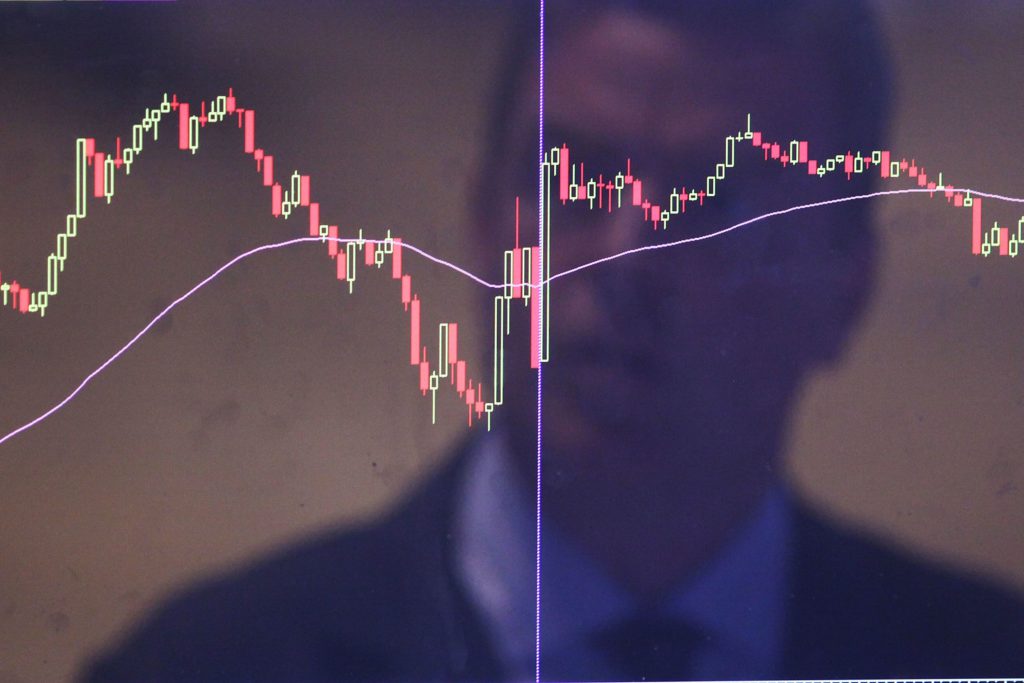
Stocks Under Pressure as Yields Climb Before Jobs: Markets Wrap

(Bloomberg) — Stocks fell before Friday’s jobs data, with traders betting the Federal Reserve will hold rates at a higher level for a longer period to tame inflation at the expense of economic growth. The pound sank as the Bank of England told investors to rein in expectations for hikes.

The S&P 500 dropped for a fourth consecutive session, while big tech once again got hit as Treasury yields climbed. Swaps that reference future Fed meetings indicate an expected peak rate above 5.1% in May and June 2023. Estimates briefly dropped below 5% on Wednesday. The benchmark rate currently sits in a range of 3.75% to 4%.

“Remember, ‘lower for longer’ in 2021 in terms of the interest rate environment?,” wrote Matt Maley, chief market strategist at Miller Tabak + Co. “Well, now we have “higher for longer”… as well as “slower but higher.” A rise in short-term rates might take longer to play out, but they’re headed for a higher level than the markets have been thinking.”

Traders also waded through a fresh batch of economic data, with US service providers expanding in October at the slowest pace since May 2020 as orders growth and business activity moderated. Applications for unemployment insurance last week fell slightly, hovering around historically low levels. The figures reinforce what Fed Chair Jerome Powell described as an “overheated” jobs market.

A report out on Friday is also expected to show that the labor market remains far too tight for the Fed’s liking. 

While projections show October payroll growth moderated to 200,000, such an increase would still be higher than a monthly pace shy of 100,000 that economists reckon is neither too strong nor too weak for the economy over the longer term.

“With Powell’s hawkish comments yesterday disappointing some and flipping the script on an initial rally, don’t be surprised to see more of the same volatility as investors digest the report and anticipate the Fed’s next steps,” said Mike Loewengart at Morgan Stanley Global Investment Office.

Read: Deeper US Recession Looms as Resilient Labor Market Spurs Fed

Markets are rightly more concerned with the ultimate level of rates rather than the pace of tightening, according to Mark Haefele, chief investment officer at UBS Global Wealth Management, who doesn’t believe the conditions are in place for a sustained stock rally.

“The Fed, along with other major central banks, looks likely to keep tightening rates until the first quarter of 2023,” Haefele noted. “Economic growth will likely continue to slow into the start of the new year, and global financial markets are vulnerable to stress while monetary policy continues to tighten. Such headwinds have yet to be fully reflected in earnings estimates or equity valuations.”

Meantime, European Central Bank President Christine Lagarde warned that a “mild recession” is possible, but that it wouldn’t be sufficient in itself to stem soaring prices. The comments are part of a raft of public appearances by ECB officials, as investors and analysts ponder the twin challenges of record price growth and a likely economic downturn, due largely to Russia’s invasion of Ukraine.

In corporate news, Peloton Interactive Inc. delivered a weaker estimate for the current quarter than Wall Street was predicting, even as management declared that it was beating its own timeline for turning around the fitness company. Moderna Inc. earnings offered a preview into the future of Covid-19 vaccine sales, and so far it doesn’t look pretty. Qualcomm Inc., the biggest maker of smartphone processors, gave a weaker forecast than expected.

Read: US Probes Insider Trading in Prearranged Executive Stock Sales

Key events this week:

  • US nonfarm payrolls, unemployment, Friday

Some of the main moves in markets:

Stocks

  • The S&P 500 fell 0.9% as of 11:54 a.m. New York time
  • The Nasdaq 100 fell 1.5%
  • The Dow Jones Industrial Average fell 0.4%
  • The Stoxx Europe 600 fell 1.2%
  • The MSCI World index fell 1.2%

Currencies

  • The Bloomberg Dollar Spot Index rose 0.6%
  • The euro fell 0.6% to $0.9757
  • The British pound fell 1.8% to $1.1184
  • The Japanese yen fell 0.2% to 148.17 per dollar

Cryptocurrencies

  • Bitcoin rose 0.4% to $20,251
  • Ether rose 2% to $1,542.14

Bonds

  • The yield on 10-year Treasuries advanced seven basis points to 4.17%
  • Germany’s 10-year yield advanced 12 basis points to 2.26%
  • Britain’s 10-year yield advanced 10 basis points to 3.50%

Commodities

  • West Texas Intermediate crude fell 1.2% to $88.92 a barrel
  • Gold futures fell 1.3% to $1,628.70 an ounce

–With assistance from Vildana Hajric and Isabelle Lee.

More stories like this are available on bloomberg.com

©2022 Bloomberg L.P.

Nano Dimension Surges After Top Shareholder Makes $995 Million Bid

(Bloomberg) — The top shareholder in Nano Dimension Ltd. has made a proposal to acquire the rest of the 3D printing company it doesn’t already own in a transaction that would value the company at roughly $995 million. 

Murchinson Ltd. made the non-binding proposal in September to Nano Dimension’s board, according to a letter reviewed by Bloomberg. The firm, which said it owned more than 10 million shares in the company, proposed purchasing the rest of the company on Sept. 5 for $4 a share, a premium of 52% at the time and a 67% premium over where the shares closed Wednesday. 

Nano Dimension — which rose more than 23% on the news — was up 8.3% to $2.61 at 11:21 a.m. in New York trading Thursday, giving the company a market value of about $649 million. 

“We believe that our proposal is the best opportunity for shareholders to achieve maximum and certain value for their shares,” said Marc Bistricer, Murchinson chief executive officer, in the letter to Nano Dimension’s board. 

A representative for Murchinson declined to comment, while a representative for Nano Dimension wasn’t immediately available for comment.

Murchinson, which is based in Toronto, said it had hired a financial adviser, and that it was prepared to start due diligence as soon as possible. It said its proposal was subject to the standard shareholder, board and regulatory approvals. 

Shares in Nano Dimension have fallen more than 60% over the past 12 months despite a significant increase in year-over-year sales. The company focuses on research and development of 3D printed electronics. 

Nano Dimension said in a statement last month that it expected its third-quarter sales to increase 646% from the same period last year to $10 million. It said it also had a record backlog of $9 million at the end of September. 

Yoav Stern, Nano Dimension’s chief executive officer, said on a call in September that the company had managed to deliver the results despite issues related to the war in Ukraine impacting its sales in Central Europe and in countries like Germany. 

(Updates trading in third paragraph)

More stories like this are available on bloomberg.com

©2022 Bloomberg L.P.

Nikola Says Electric-Truck Deliveries to Fall Short of Plans

(Bloomberg) — Nikola Corp. said deliveries of its battery-electric trucks will fall short of expectations due to worsening economic conditions, dragging down shares even as quarterly sales and earnings beat Wall Street’s estimates.

The company will hand over fewer than the 300 planned for this year, with deliveries trending below expectations in the final three months, Chief Financial Officer Kim Brady said Thursday on a conference call with analysts. Next year is also shaping up worse than expected, though Nikola declined to offer a specific forecast.

Customers are hesitant “to make significant capital investment in the necessary charging infrastructure,” Brady said. “We anticipate these headwinds will continue to be a significant limiting factor in the customer uptake rate for the Tre BEVs, especially for the remainder of this year and likely through 2023.”

Nikola’s shares fell 3.3% at 10:40 a.m. in New York, reversing an earlier gain of as much as 12%. The stock was down 67% this year through Wednesday’s close.

The Phoenix-based company sees itself as a leader in clean-energy commercial vehicles but has had a roller-coaster history getting its vehicles to market. Its efforts to develop plug-in electric trucks has been hampered by a global breakdown in supply chains and shortages of key parts, as well an managerial turmoil. Brady had warned analysts last quarter that Nikola would “more likely” come in near the bottom of a previously guided range of 300 to 500 vehicles delivered for the year. 

The latest issues tarnished results from a period in which Nikola built 75 of its Tre BEV trucks, up from 50 in the prior quarter, according to a statement Thursday. It delivered 63 to dealers in the third quarter. 

Nikola posted revenue of $24.2 million, above analysts’ expectations for $22.3 million. Nikola also recorded a narrower-than-expected loss of 28 cents per share.

Separately, Nikola said in a regulatory filing that President Michael Lohscheller has replaced Mark Russell as chief executive officer. The move, effective Thursday, comes about two months earlier than planned.

“During the third quarter we continued to produce and deliver Nikola Tre BEVs to dealers and customers,” Lohscheller said in the statement.

Fuel-Cell Trucks

Longer term, Nikola is focused on building hydrogen-powered fuel-cell trucks, but those models are still in development. Nikola also is working on building out fueling infrastructure.

After going public via a special purpose acquisition company in June 2020, Nikola’s market value eclipsed that of Ford Motor Co. despite having no revenue. But the stock came back to Earth after founder Trevor Milton was accused by a short seller of lying about the company’s progress and technology.

Last month, Milton was found guilty of defrauding investors in a New York federal court in a trial which stemmed from issues raised in the short seller’s report.

(Updates to recast story with details of delivery forecast)

More stories like this are available on bloomberg.com

©2022 Bloomberg L.P.

Fidelity Opens Wait List for Retail Crypto Trading With Zero Fee

(Bloomberg) — Fidelity Investments is set to launch a retail crypto trading platform, starting with zero-commission trading for Bitcoin and Ethereum.  

The brokerage has opened up a wait list for its new service Fidelity Crypto, according to its website. It will offer custody and trading of the two tokens, while allowing users to have an integrated view of both crypto and traditional investments. Fidelity doesn’t have a date identified for when customers will receive access, the firm said in an FAQ. Invitations will be sent based on timing of sign-ups and state eligibility.

Fidelity will collect a spread at no more than 1%, according to its website. A spread is the difference between the price users buy or sell crypto and the price at which the brokerage fills their order. Additional cryptocurrencies are being evaluated, the website says.

Retail investors buying digital assets typically use crypto exchanges such as FTX Trading Ltd., Coinbase Global Inc. or brokerage apps such as Robinhood Markets Inc. Boston-based Fidelity pushed into crypto in 2018, when it began offering hedge funds, family offices and trading firms custody services for their digital assets. But until now, it has held off on extending crypto trading to its more than 35 million retail customers. 

Already a giant in mutual funds and financial advice, the firm has been looking for ways to reach younger clientele. It has recently designed a new mobile app targeting young adults and introduced an investment account for teenagers.

In October, Fidelity said it’s hiring an additional 100 people for its digital assets unit, which will bring Fidelity Digital Assets’s headcount to roughly 500 by the end of next year’s first quarter.

Citadel Securities and Virtu Financial Inc. have been developing a cryptocurrency trading platform along with retail brokerages Fidelity Investments and Charles Schwab Corp., Bloomberg News reported in June. 

Fidelity had $9.6 trillion in assets under its administration at the end of September, according to its website. 

More stories like this are available on bloomberg.com

©2022 Bloomberg L.P.

Close Bitnami banner
Bitnami