
Bloomberg

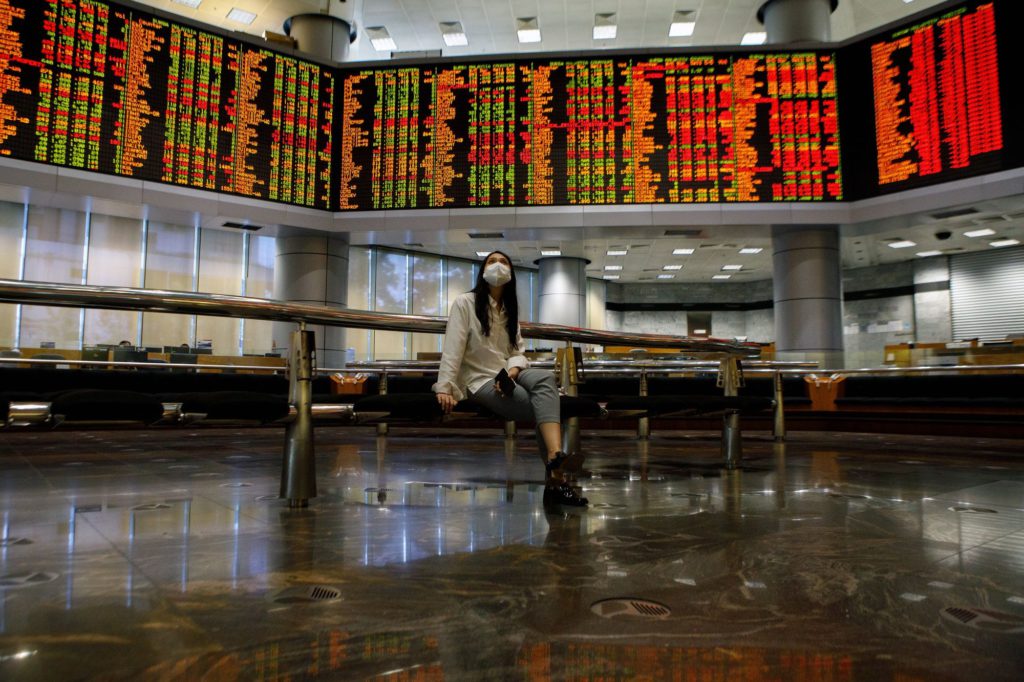
Selloff Deepens as BOE in Focus After Fed Warning: Markets Wrap

(Bloomberg) — Stocks and US futures fell after Jerome Powell said the Federal Reserve would raise interest rates more than previously anticipated, sapping risk appetite. Global bond yields rose.

The selloff spread in the wake of the S&P 500’s 2.5% drop on Wednesday. Chinese shares in Hong Kong underperformed after an affirmation of the government’s Covid-Zero stance dashed hopes of a reopening. 

The Fed raised rates 75 basis points for the fourth time in a row, bringing the top of its target range to 4%, the highest level since 2008. Traders immediately raised the market-implied peak in interest rates for next year and turn their attention to the Bank of England’s decision later on Thursday.

“Every time the market gets a little bit of dovish hope, it gets smacked on the nose with a rolled up newspaper,” said Scott Rundell, chief investment officer at Mutual Ltd. “There’s a lot of volatility still ahead.”

Investors are concerned about the impact of central bank tightening on economic growth, and Powell left little doubt that he’s prepared to push rates as high as needed to stamp out inflation. European Central Bank President Christine Lagarde warned on Thursday that a “mild recession” is possible but that it wouldn’t be sufficient in itself to stem soaring prices.

The pound fell more than 1%, with the BOE expected to deliver its biggest interest-rate increase in 33 years, while Norway’s krone fell after its central bank delivered the smallest increase in its benchmark rate since June. The dollar gained as investors looked toward US jobs data, which may help to determine the pace of upcoming rate hikes. 

“There is likely some profit taking in long dollar positions after the big moves post the FOMC meeting outcome and Powell’s press conference,” said David Forrester, a senior FX strategist at Credit Agricole CIB in Hong Kong.

Global bonds tumbled on Thursday in the wake of the Fed meeting. Two-year Treasuries led a selloff on Wednesday following Powell’s comments, but at 4.62% they are still about 40 basis points below the 5.06% peak in yields priced into Fed funds futures. 

“Factoring in the bond market’s assessment, markets are becoming increasingly convinced that the path toward the terminal rate will include a recession,” said Quincy Krosby, chief global strategist at LPL Financial.

Wheat prices fell after Russia agreed to resume a deal allowing safe passage of Ukrainian crop exports. Oil dropped after Powell’s comments on interest rates overshadowed tightening supply.

Key events this week:

  • Bank of England rate decision, Thursday
  • US factory orders, durable goods, trade, initial jobless claims, ISM services index, Thursday
  • US nonfarm payrolls, unemployment, Friday

Some of the main moves in markets:

Stocks

  • The Stoxx Europe 600 fell 0.8% as of 9:30 a.m. London time
  • Futures on the S&P 500 fell 0.1%
  • Futures on the Nasdaq 100 fell 0.2%
  • Futures on the Dow Jones Industrial Average were little changed
  • The MSCI Asia Pacific Index rose 0.8%
  • The MSCI Emerging Markets Index rose 0.6%

Currencies

  • The Bloomberg Dollar Spot Index rose 0.6%
  • The euro fell 0.6% to $0.9757
  • The Japanese yen fell 0.2% to 148.26 per dollar
  • The offshore yuan was little changed at 7.3475 per dollar
  • The British pound fell 1.1% to $1.1262

Cryptocurrencies

  • Bitcoin rose 0.6% to $20,304.89
  • Ether rose 2.6% to $1,550.75

Bonds

  • The yield on 10-year Treasuries advanced seven basis points to 4.17%
  • Germany’s 10-year yield advanced 10 basis points to 2.24%
  • Britain’s 10-year yield advanced nine basis points to 3.49%

Commodities

  • Brent crude fell 1.3% to $94.89 a barrel
  • Spot gold fell 0.8% to $1,621.78 an ounce

–With assistance from Richard Henderson.

More stories like this are available on bloomberg.com

©2022 Bloomberg L.P.

Spain’s Finetwork Weighs €500 Million Fundraising Plan

(Bloomberg) — Finetwork is considering raising about €500 million ($489 million) to help fund a strategy of growth through dealmaking, people familiar with the matter said. 

The Spanish telecommunications group is working with Nomura Holdings Inc. as it studies options including the sale of an equity stake, according to the people, who asked not to be identified discussing confidential information. It’s also exploring the possibility of an initial public offering, they said. 

Madrid-based Finetwork wants to position itself for acquisitions to allow it to better compete with larger rivals, including the soon-to-be-combined Spanish operations of Orange SA and Masmovil Ibercom SA, the people said. 

Finetwork, which started as a regional operator and is seeking to expand nationally, offers mobile and fiber broadband services to more than 800,000 customers, according to its website. It wants to become Spain’s fourth-largest telecom operator and may look to snap up any businesses Orange or Masmovil need to sell to ensure their merger gains antitrust approvals, one of the people said.

Deliberations are in the early stages, and no final decisions have been made on the details of the fundraising, according to the people. Representatives for Finetwork and Nomura declined to comment.

More stories like this are available on bloomberg.com

©2022 Bloomberg L.P.
Crypto Cowboys Test the Lonestar State’s Grid as Mining Woes Persist

  • Listen to Bloomberg Crypto on the iHeartRadio App
  • Listen to Bloomberg Crypto on Apple Podcasts
  • Listen to Bloomberg Crypto on Spotify  

(Bloomberg) — As our colleague David Pan has been reporting, Bitcoin miners have been having a very rough time of it.

To paraphrase one of his recent stories, falling Bitcoin prices and rising energy costs “led to combined second-quarter losses of more than $1 billion for the top three US publicly traded players — Core Scientific, Marathon Digital and Riot Blockchain.” Yikes.

This crunch has led to miners trying to raise cash by selling off their emergency stockpiles of Bitcoin — into the teeth of a down market.

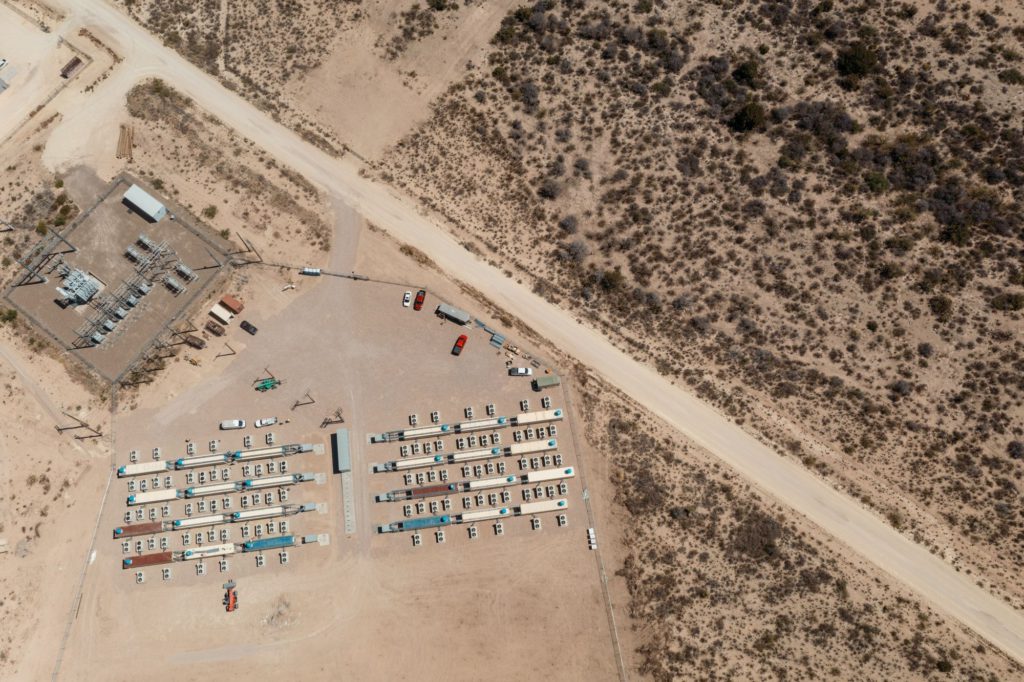
At the same time, miners continue to flock to places like Texas, but not everyone is a fan of these relatively recent arrivals. Texas isn’t known for having the world’s most stable power grid, so miners and state officials have tried to pilot ways to address concerns about energy consumption.

Bloomberg reporters David Pan and Michael Smith join this episode to discuss how the miners are holding up.

Follow us on Twitter @crypto, and subscribe to the Bloomberg Crypto Newsletter at https://bloom.bg/cryptonewsletter

This  podcast  is produced by the Bloomberg  Crypto  p odcast  team: Supervising producer: Vicki Vergolina, Senior Producer: Janet Babin, Producers: Sharon Beriro and Muhammad Farouk, Associate Producers: Mo Andam and Ty Butler, Sound Design/Engineer:  Desta Wondirad.

More stories like this are available on bloomberg.com

©2022 Bloomberg L.P.
China Solar Giant Sees Yet More Uncertainty For US Imports

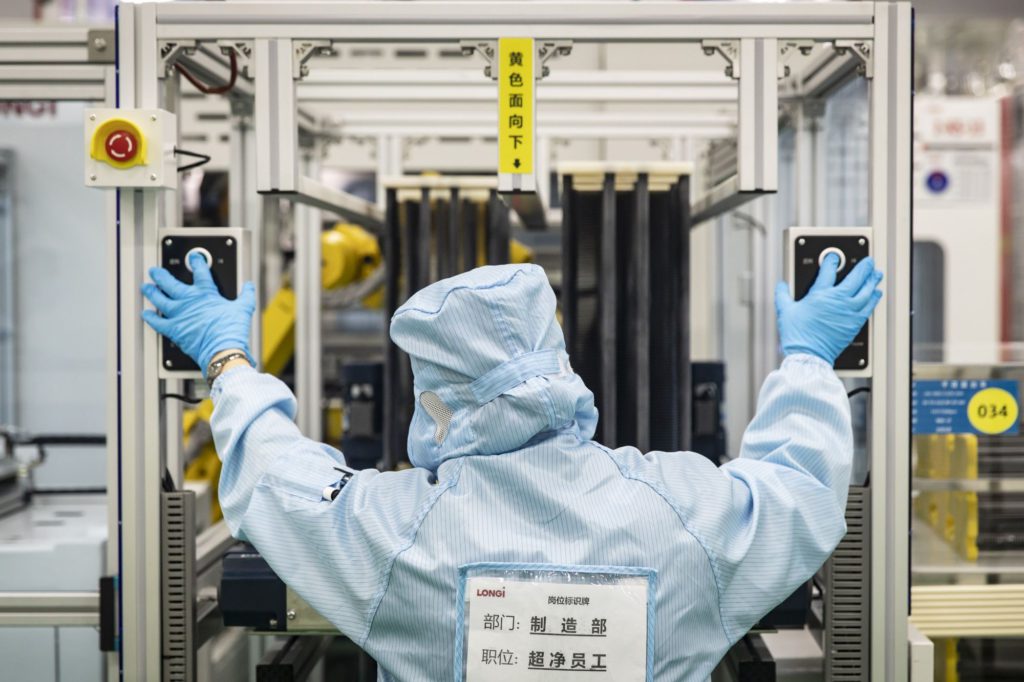
(Bloomberg) — The world’s largest solar company warned that stricter US import requirements for panel shipments will continue to create disruptions to the American market through next year.

Longi Green Energy Technology Co. projects between 20 to 50 gigawatts of US solar market demand in 2023, the Chinese company said in an earnings briefing Monday, according to a note by Daiwa Capital Markets. Longi indicated the wide range reflects uncertainty caused by the US import restrictions.  

A massive amount of solar panels has been held at the US border under a ban targeting alleged human-rights abuses in China’s Xinjiang region that went into effect in June. The Chinese government has repeatedly denied allegations of forced labor in Xinjiang. 

Under the ban, US Customs and Border Protection requires documentation from importers detailing the source of quartzite, a raw material used in the manufacture of solar panels, to prove their supply chains are free of links to Xinjiang.

No shipments from any companies halted under the new US ban have yet been cleared, Longi’s president Zhong Baoshen said on the Monday earnings call, according to a partial transcript provided by the company. However, cargoes stopped under earlier restrictions have since been released to customers, he said.

Shipping disruptions have already led to significant project delays in the US, Morgan Stanley analysts said last month. 

The US Solar Energy Industries Association forecasts the country will install 15.7 gigawatts of solar energy in 2022, the lowest in three years as a result of the detention of modules.

Outside the US, solar demand remains strong, led by China and Europe. That growth has driven up the price of polysilicon, providing stellar profits for makers of the key solar material. But that earnings pace will fade as supply and demand reach a balance in the second half of 2023, Tongwei Co., the world’s largest producer of the material, said on Monday, according to Daiwa. 

Profit will flow to downstream companies such as manufacturers of cells and modules, which will be in tight supply next year, while wafer producers are likely to see low prices due to abundant amounts, Tongwei said.

(Updates to add company comment in fifth paragraph.)

More stories like this are available on bloomberg.com

©2022 Bloomberg L.P.
BT Deepens Cost-Cutting Drive to Tackle Energy and Inflation

(Bloomberg) — BT Group Plc announced another extension to a long-running cost savings program as Chief Executive Officer Philip Jansen strives to grow earnings amid higher energy costs and a challenging economic outlook. 

The London-based telecommunications group set a new target of £3 billion by the end of 2025, versus its 2020 cost base, up from £2.5 billion. 

That came with second-quarter results which were broadly in line with expectations. Adjusted earnings before interest, tax, depreciation and amortization were £1.97 billion, the company said Thursday, versus the £1.95 billion average of analysts’ estimates compiled by Bloomberg. Adjusted revenue was £5.24 billion compared with £5.26 billion estimated by analysts.

BT shares fell 7.2% to 118.5 pence at 8:41 a.m. in London on Thursday.

Key Insights

  • BT reported a hit of about 40,000 to its Openreach customer connections due to industrial action — in effect delayed new transfers from other networks, which may or may not happen later. The carrier is in an ongoing dispute over pay with the Communication Workers Union. Last month workers including emergency services call handlers staged walkouts.
  • “Given the current high inflationary environment, including significantly increased energy prices, we need to take additional action on our costs to maintain the cash flow needed to support our network investments,” Jansen said in the results statement. “We remain laser focused on modernizing and simplifying BT Group.”
  • The company nudged up an annual capital expenditure forecast to £5 billion from £4.8 billion, citing inflation. It said previous guidance of normalized free cash flow would come in toward the bottom of a previously outlined £1.3 billion to £1.5 billion range.
  • Jansen previously said that the £7.9 billion Ebitda outlook was deliverable “under any imaginable scenario.”
  • On a call with reporters, Jansen said supply chain efficiencies and reducing internal duplication are focuses for his cost savings target
  • BT has absorbed a £200 million year-on-year increase in energy costs this year, Chief Financial Officer Simon Lowth said on the call. The company is about 50% hedged “at good prices” for next year, and it’s looking to market purchase or power-purchase agreements for the rest.

Market Context

  • BT shares had fallen 25% in the year to Wednesday’s close in London, versus a 3% fall in the FTSE 100 Index.
  • Of 25 analysts surveyed by Bloomberg, 15 rate the stock Buy, 8 Hold and 2 Sell.

Get More

  • Statement
  • NOTE, Oct. 31: BT Network Openreach Holds Talks to Lower Wholesale Rates 
  • NOTE, Oct. 18: BT Pension Says LDI Turmoil Sent Asset Values Down £11 Billion
  • NOTE, Sep. 22: BT Strikes Escalate to Include ‘999’ Emergency Call Handlers

(Updates with shares in fourth paragraph, adds CEO and CFO comments)

More stories like this are available on bloomberg.com

©2022 Bloomberg L.P.
China Reopening Is Dominant Theme as Traders Seek an End to Rout

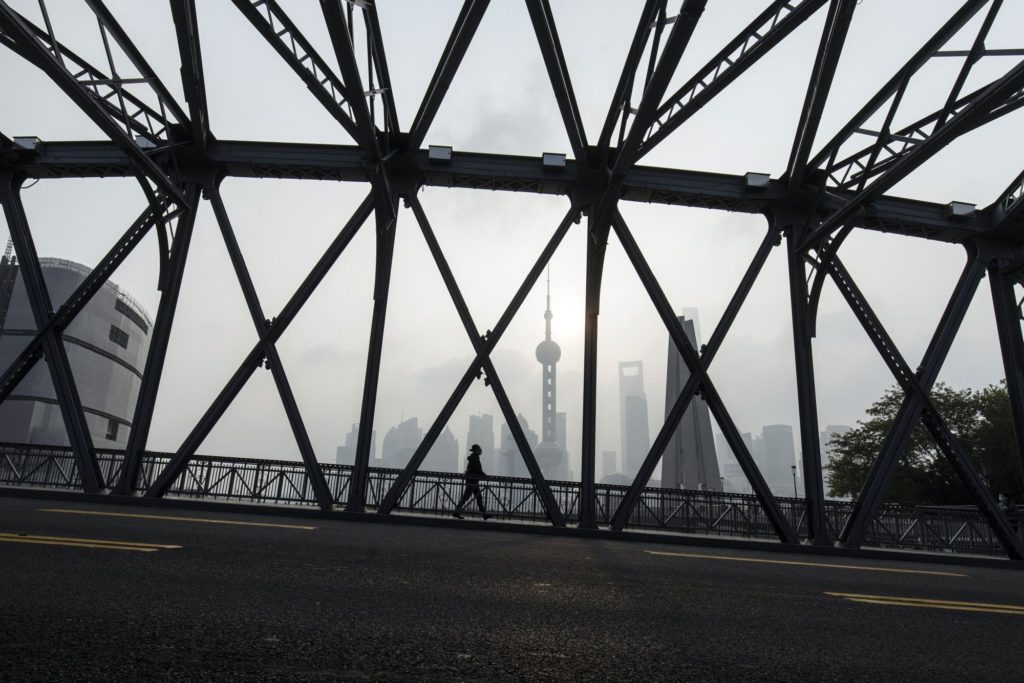
(Bloomberg) — If October was all about the Communist Party Congress, the flavor of this month for Chinese stock markets is the speculation around the nation’s reopening.

Equities rallied over the first two days of November as traders disgruntled by months of losses found succor in unverified social media posts that signaled Beijing is planning to move away from its stringent Covid Zero strategy. Stocks slumped again on Thursday as China’s top health body reiterated its commitment to the policy. A weak global backdrop given the Federal Reserve’s hawkish comments didn’t help.

Even as Chinese authorities have given no indication of a change in their stance, the rumor mills have brought a sense of enthusiasm among embattled investors who have been seeking reasons to scoop up stocks in one of the world’s worst-performing major markets. 

A gauge of Chinese shares trading in Hong Kong slumped 3.5% on Thursday after a two-day advance of over 8%. The Hang Seng Index also lost more than 3%. Stocks tied to reopening — including casinos and retailers — and technology, were among the worst performers in the market.

“The reopening bounce was bound to hit air pockets lower without a formal acknowledgment from party officials,” said Stephen Innes, a managing partner at SPI Asset Management. Yet even after the adherence to Covid Zero by health officials, “investors are still thinking about where there is smoke, there is fire. And will be looking for any subtle signs the reopening is getting pushed up.”

Li Ning Co. and Haidilao International Holding Ltd. plunged at least 3.5% each in Hong Kong, while a Bloomberg index of Macau casino shares fell as much as 3.1%. On the mainland, the CSI 300 Index lost 0.8%.

Down 37% this year, the Hang Seng China index is the worst performer among more than 90 global equity gauges tracked by Bloomberg. It capped a fourth straight month of losses in October.

The last couple of weeks have brought wild swings for Chinese markets — first with a historic rout following policy disappointment from the Communist Party Congress, then a sudden surge over the last two days, which saw turnover in the world’s second-biggest stock market climbed above the 1 -trillion yuan ($137 billion) mark on Wednesday, the first time in about two months.

“The market is very short-term oriented,” Thomas Fang, head of China global markets at UBS Group AG, said on Bloomberg Television, adding that Covid is “definitely one of the key focus” areas for the market.

All of this came even as China had shown little indication of changing its official Covid stance, with the latest lockdown of the area around iPhone assembler Foxconn Technology Group’s main plant in Zhengzhou highlighting that economic growth still takes a back seat over pandemic control. 

“I think the market may be misinterpreting the pace of reopening, as it may only come gradually like in Hong Kong, with a reduction in quarantine times likely as the first step,” said Marvin Chen, a strategist at Bloomberg Intelligence. “Local governments are still likely to adhere to Covid-Zero until broader measures are announced.”

–With assistance from Charlotte Yang and Catherine Ngai.

More stories like this are available on bloomberg.com

©2022 Bloomberg L.P.
Telecom Italia Plans to Start Business Unit Stake Sale

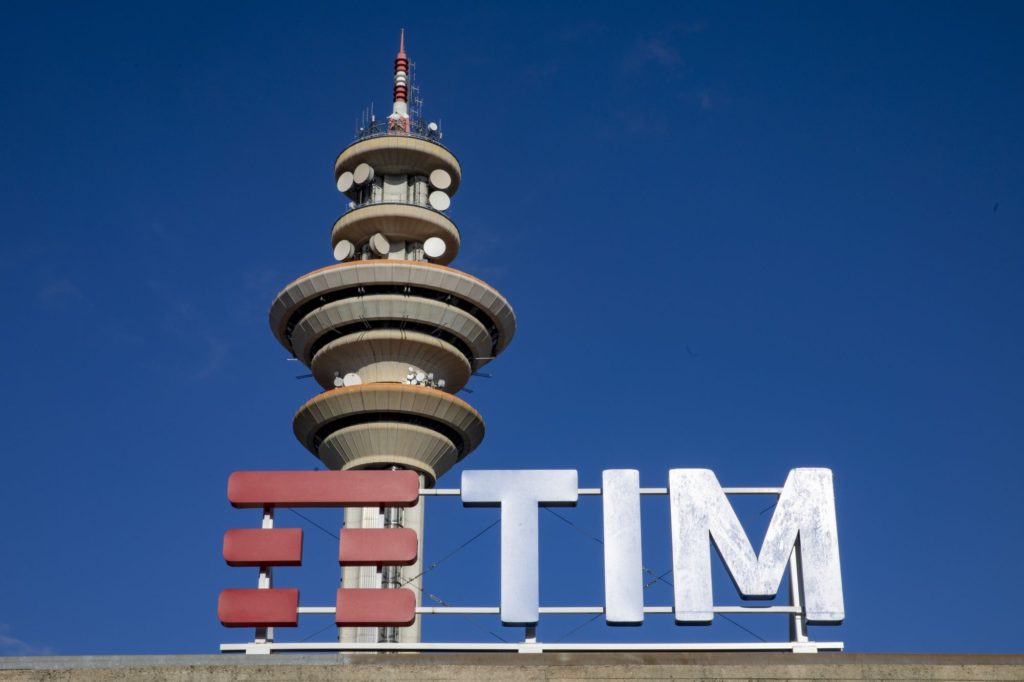
(Bloomberg) — Telecom Italia SpA plans to kick off the sale of a minority stake of its enterprise unit, potentially valued over 6 billion euros ($5.9 billion), in a move aimed at raising cash to start cutting its debt pile, according to people familiar with the matter.

Telecom Italia shares rose as much as 2.7% in Milan trading, giving the company a market value of about 4.5 billion euros.

The board of directors is expected to start the sale of up to 49% of the business on Nov. 9, when Telecom Italia will also approve third-quarter results, said the people, who asked not to be identified because the plan isn’t public. The sale will be conducted via an auction process, the people added. 

A spokesman for Telecom Italia declined to comment. 

Earlier this year, Telecom Italia rejected a nonbinding offer by CVC Capital Partners for the enterprise unit, which valued the business at about 6 billion euros including debt, people familiar with the matter told Bloomberg in June.  

Read More: Telecom Italia Said to Be Ready to Grant Delay in Bid on Network

Telecom Italia Chief Executive Officer Pietro Labriola, who was appointed in January, is focusing on extracting value by separating the company’s infrastructure unit from its commercial business.

The spun-off unit will be part of Telecom Italia’s ServCo division and will include the iconic Olivetti brand, cloud computing activities, Noovle data centers, Telsy cybersecurity business and others assets, according to a statement last March. Services grouped within the enterprise unit generated about 3 billion euros of revenue last year. Telecom Italia sees those units revenue topping 5 billion euros by 2030.

(Updates with shares in second paragraph.)

More stories like this are available on bloomberg.com

©2022 Bloomberg L.P.

China’s Top PC Maker Boosts Profit After Lowering Costs

(Bloomberg) — Lenovo Group Ltd.’s earnings climbed 6% after China’s top PC maker relied on cost reductions and new businesses to weather an unprecedented slump in global computing demand.

Net income rose to $541 million in the quarter ended September, the company said Thursday. The average analyst estimate was $473 million. Sales declined for the first time in more than two years to $17.1 billion, but still beat the $16.8 billion analysts predicted.

Lenovo and its rivals Dell Technologies Inc. and HP Inc. are struggling with a global PC market that saw its steepest quarterly drop on record — the fourth straight decline in shipments. In Lenovo’s home market, Beijing appears to prioritize Covid Zero over the economy, triggering lockdowns in major cities, smothering retail demand and disrupting manufacturing.

Read more: Intel Is Planning Thousands of Job Cuts in Face of PC Slump

What Bloomberg Intelligence Says

An extended macroeconomic overhang will likely lead to another down year for the PC market in 2023, though there’s scope for a rebound later in the year and potential for a return to growth in 2024. We’ve trimmed our 2023 PC-shipment target by 1% to 281 million, which implies a 3% unit drop. 

– Woo Jin Ho, analyst

Click here for the research.

Beyond China, the global tech outlook is clouded by a plethora of restrictions Washington imposed on chip and technology exports to China last month, which threaten to further curtail shipments to the world’s largest PC and semiconductor market. Industry bellwether Intel Corp. is planning a major reduction in headcount, likely numbering in the thousands, Bloomberg News has reported.

Lenovo couldn’t sell some of its most advanced computers to clients in China because of the latest US chip curbs, Chairman Yang Yuanqing said in an interview. The impact to Lenovo’s sales is limited because such products are only a small part of the company’s China business, he said. “It will not impact our general-purpose server, storage or other infrastructure sales,” he added.

Cost management will be a priority for Lenovo in the coming quarters, according to Yang, as the global electronics market sees signs of contraction. Last quarter, Lenovo lowered spending on research and development as well as advertising and promotions to support its profit margins. It also spent less on employee benefits and rent. Yang however said Lenovo wasn’t contemplating large-scale layoffs, without elaborating.

“We must ensure the competitiveness of our business. We must ensure the expense to revenue is competitive,” Yang said.

Shares of Lenovo fell 0.5% at 3:55 p.m. in Hong Kong. They have declined 33% this year.

The company has been counting on growth from businesses beyond its bread-and-butter division — such as in servers, cloud computing and data storage — to help offset worsening PC sales. But its core division still yields about four-fifths of revenue.

“Demand cracks are spreading to enterprise hardware end-markets, including PCs and data center infrastructure,” Morgan Stanley analysts wrote this month.

Read more: Global PC Sector Suffers Worst Drop as China Chip Curbs Loom

(Updates with comments from executive starting in fifth paragraph)

More stories like this are available on bloomberg.com

©2022 Bloomberg L.P.

Stellantis Revenue Jumps on Strong Prices, Rising Deliveries

(Bloomberg) — Stellantis NV’s sales surged in the third quarter thanks to strong vehicle prices and higher deliveries led by models like the Jeep Compass. Positive currency effects also boosted the result. 

Net revenue climbed 29% to €42.1 billion ($41.3 billion), the maker of Ram pickups and Fiat cars said Thursday, beating a consensus forecast. Stellantis reaffirmed a goal of double-digit returns on adjusted operating income for the full year. 

“We are still very positive about the full year financial performance,” Chief Financial Officer Richard Palmer said on a call with reporters. Third-quarter “growth was driven by all of our regions.”

Stellantis and carmaking peers, while increasingly contending with weaker economic conditions, are still benefiting from pent-up demand as supply-chain challenges continue. Since the start of the year, company vehicle inventory has ballooned to 275,000 units, up from 179,000, because of logistical challenges particularly in Europe, Stellantis said Thursday.

As the economic outlook darkens, automakers are under pressure to finance ambitious electric-car rollout plans. Stellantis is targeting more than 75 fully-electric models by 2030 with annual sales of 5 million vehicles, while maintaining double-digit returns over that time.

Car demand in the US, the company’s biggest profit contributor, is “still pretty strong” and the market continues to be supply-constrained, Palmer said on the call. In contrast, there is “some slower intake of orders” in Europe “but the order bank itself is still very stable” taking Stellantis “well into the middle of next year.”

“At the moment, we don’t have any clear indication that demand is significantly softening” in Europe, the CFO said. “We are watching it very carefully because the macro environment is clearly very challenging.”

Delivering cars to customers in Europe continues to be a challenge due to supply constraints linked to semiconductor shortages and a lack of both drivers and trucks, he said. Stellantis expects to resolve these issues this quarter, Palmer said. 

Europe’s second-biggest carmaker’s consolidated shipments rose 13% during the quarter to 1.3 million vehicles. 

Stellantis shares traded in Milan have declined 18% this year. That compares with a 3.2% gain of smaller French peer Renault SA.

(Updates with CFO comments from sixth paragraph)

More stories like this are available on bloomberg.com

©2022 Bloomberg L.P.

China Stocks Rally Cut Short Amid Signs Covid Zero Here to Stay

(Bloomberg) — Chinese stocks snapped a two-day rally sparked by reopening speculation, as the nation’s top health body reiterated its commitment to Covid Zero and the Federal Reserve’s hawkish comments led to a global selloff.

A gauge of Chinese shares trading in Hong Kong slumped as much as 3.5% on Thursday after a two-day advance of over 8%. The Hang Seng Index also lost more than 3%. Stocks tied to reopening — including casinos and retailers — and technology, were among the worst performers in the market.

Read: How a Mysterious China Screenshot Spurred $450 Billion Rally 

Equities soared earlier this week as unverified social media posts triggered frenzied speculation that after years of adhering to Covid Zero, authorities are outlining measures to open up the economy. Such hopes were given a harsh reality check after the National Health Commission said its zero-tolerance approach remains the overall strategy to fighting Covid-19. 

“The reopening bounce was bound to hit air pockets lower without a formal acknowledgment from party officials,” said Stephen Innes, a managing partner at SPI Asset Management. Yet even after the adherence to Covid Zero by health officials, “investors are still thinking about where there is smoke, there is fire. And will be looking for any subtle signs the reopening is getting pushed up.”

Li Ning Co. and Haidilao International Holding Ltd. plunged at least 5% each in Hong Kong, while a Bloomberg index of Macau casino shares fell as much as 3.1%. On the mainland, the CSI 300 Index lost more than 1%. 

Read: China Reopening Stocks Fall as Govt Reiterates Firm Covid Rules

The last couple of weeks have brought wild swings for Chinese markets — first with a historic selloff following policy disappointment from the Communist Party congress, then a sudden surge over the last two days.

“The market is very short-term oriented,” Thomas Fang, head of China global markets at UBS Group AG, said on Bloomberg Television, adding that Covid is “definitely one of the key focus” areas for the market.

As stocks rallied, turnover in the world’s second-biggest stock market climbed above the 1-trillion yuan ($137 billion) mark on Wednesday, the first time in about two months.

All of this came even as China had shown little indication of changing its official Covid stance, with the latest lockdown of the area around Foxconn Technology Group’s main plant in Zhengzhou highlighting that economic growth still takes a back seat over pandemic control. 

“I think the market may be misinterpreting the pace of reopening, as it may only come gradually like in Hong Kong, with a reduction in quarantine times likely as the first step,” said Marvin Chen, a strategist at Bloomberg Intelligence. “Local governments are still likely to adhere to Covid-Zero until broader measures are announced.”

–With assistance from Charlotte Yang and Catherine Ngai.

More stories like this are available on bloomberg.com

©2022 Bloomberg L.P.

Close Bitnami banner
Bitnami