
Bloomberg

Musk Plans to Eliminate Half of Twitter Jobs to Cut Costs

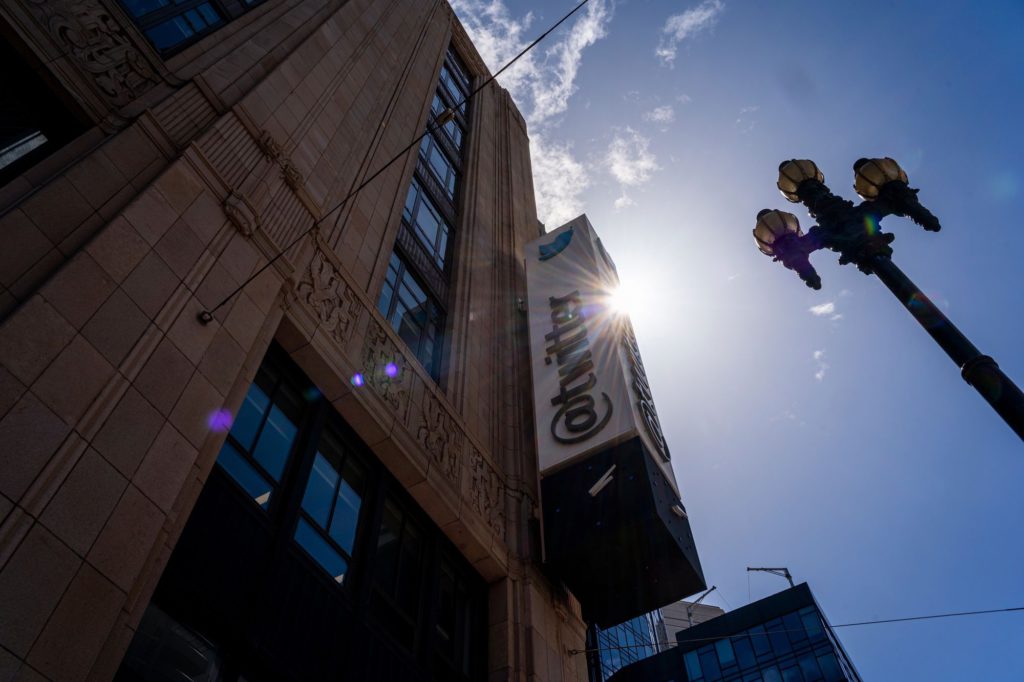
(Bloomberg) — Elon Musk plans to eliminate about 3,700 jobs at Twitter Inc., or half of the social media company’s workforce, in a bid to drive down costs following his $44 billion acquisition, according to people with knowledge of the matter.

Twitter’s new owner aims to inform affected staffers Friday, said the people, who requested anonymity discussing non-public plans. Musk also intends to reverse the company’s existing work-from-anywhere policy, asking remaining employees to report to offices — though some exceptions could be made, the people said.

Musk and a team of advisers have been weighing a range of scenarios for job cuts and other policy changes at San Francisco-based Twitter, the people said, adding that the terms of the headcount reduction could still change. In one scenario being considered, laid off workers will be offered 60 days’ worth of severance pay, two of the people said.

After the layoffs were sorted, Twitter Chief Accounting Officer Robert Kaiden left the company, becoming one of the last pre-Musk C-suite executives to depart, according to people familiar with the matter.

A spokesperson for Twitter didn’t immediately respond to a request for comment.  

Musk is under pressure to find ways to slash costs of a business for which he says he overpaid. The billionaire agreed to pay $54.20 a share in April just as markets tumbled. He then tried for months to get out of the transaction, alleging that the company misled him about the prevalence of fake accounts. Twitter sued to force Musk to make good on his agreement, and in recent weeks, Musk caved, resigning himself to closing the deal at the agreed-upon terms. The take-private deal closed Thursday.

Twitter employees have been bracing for layoffs ever since Musk took over and immediately ousted much of the top executive team, including Chief Executive Officer Parag Agrawal, finance chief Ned Segal and senior legal staffers Vijaya Gadde and Sean Edgett. In the days that followed, other departures have included Chief Marketing Officer Leslie Berland, Chief Customer Officer Sarah Personette, and Jean-Philippe Maheu, who was vice president of global client solutions.

Musk anointed himself “Chief Twit” in his bio on the social network. Bloomberg reported earlier that he would take on the role of interim CEO himself. He also dissolved the company’s board and became sole director, saying later that it’s “just temporary.”

Over the weekend, a few employees with director and vice president jobs were cut, people familiar with the matter said. Other leaders were asked to make lists of employees on their teams who could be cut, the people said.

Senior personnel on the product teams were asked to target a 50% reduction in headcount, a person familiar with the matter said this week. Engineers and director-level staff from Tesla Inc., the carmaker also run by Musk, reviewed the lists, the person said. Layoff lists were drawn up and ranked based on individuals’ contributions to Twitter’s code during their time at the company, the people said. The assessment was made by both Tesla personnel and Twitter managers.

Concerns over steep personnel cuts started to swirl in the run-up to Musk’s buyout, when potential investors were told that he’d eliminate 75% of the workforce, which stood at about 7,500 at the end of 2021. Musk later denied that the cuts would be that deep.

In recent weeks, Musk started hinting at his staffing priorities, saying he wants to focus on the core product. “Software engineering, server operations & design will rule the roost,” he tweeted in early October.

Musk is trying to generate more revenue, too. The company will soon start charging for verification.

The badges will be part of an $8-a-month subscription that could go live as early as Monday, according to people familiar with the plans. Users who already have a blue verification badge will have a multi-month grace period before they will either need to pay for the badge or lose it, said one of the people, who requested anonymity discussing plans that aren’t public.

–With assistance from Emily Chang.

(Updates with chief accounting officer departure in the fourth paragraph.)

More stories like this are available on bloomberg.com

©2022 Bloomberg L.P.
Asian Shares Tumble as Powell Primes Further Hikes: Markets Wrap

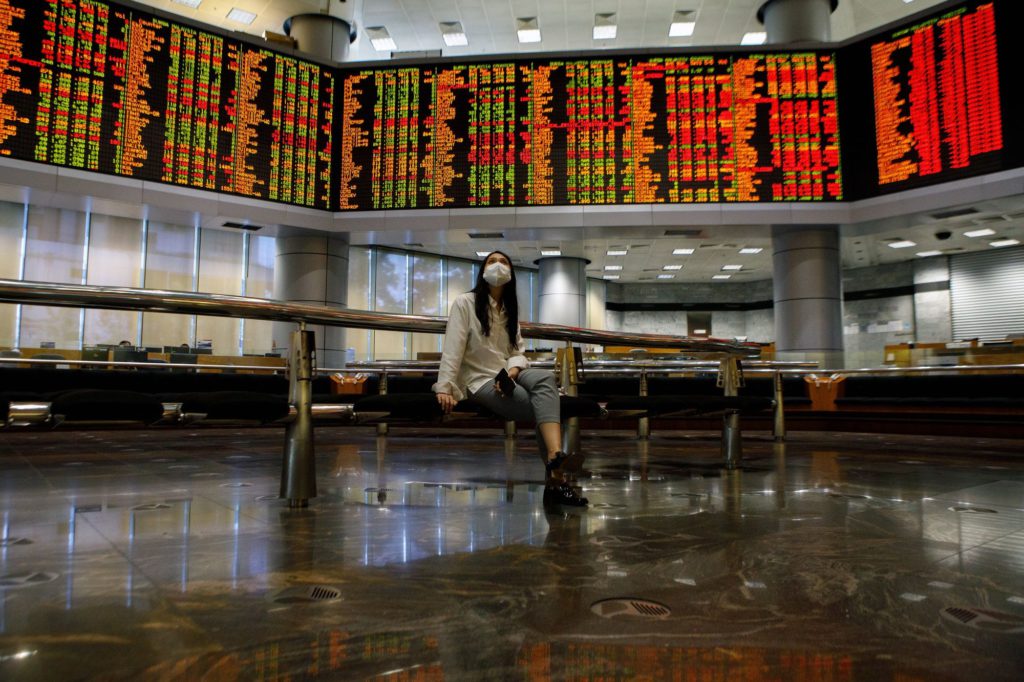
(Bloomberg) — Asian stocks slumped after Jerome Powell said the Federal Reserve would raise interest rates more than previously anticipated, sapping risk appetite and sending global equities to their worst day in almost a month.

Benchmark equity gauges in China, South Korea and Australia fell in the wake of the S&P 500’s 2.5% drop. Declines in Hong Kong and on the mainland came after an affirmation of the government’s Covid-Zero stance. 

The Fed raised rates 75 basis points for the fourth time in a row, bringing the top of its target range to 4%, the highest level since 2008. Traders immediately raised the market-implied peak in interest rates for next year. 

“This was a big reality check for the markets,” said Anastasia Amoroso, chief investment strategist for iCapital, in an interview with Bloomberg TV. Investors hoped “the beginning of the end of the tightening cycle,” was near but “cannot draw that conclusion now,” she said.

“Factoring in the bond market’s assessment, markets are becoming increasingly convinced that the path towards the terminal rate will include a recession,” said Quincy Krosby, chief global strategist at LPL Financial.

Megacap tech bore the brunt of the selling, with giants like Apple Inc. and Tesla Inc. tumbling more than 3.5%. As Asian markets opened, Hong Kong-listed China tech stocks were among the biggest decliners. 

Two-year US yields — which are more sensitive to imminent Fed moves — reversed course and pushed higher after Powell spoke. There was no cash trading of Treasuries in Asia with Japan on holiday.  

Australian and New Zealand bonds tumbled early Thursday in the wake of the Fed meeting. Australia’s policy-sensitive three-year yield jumped more than 10 basis points. 

The dollar fluctuated, losing ground against many of its Group-of-10 counterparts while an index of emerging-market currencies declined. 

Wheat prices fell after Russia agreed to resume a deal allowing safe passage of Ukrainian crop exports. Oil fell after Powell’s comments on interest rates overshadowed tightening supply.

“Every time the market gets a little bit of dovish hope, it gets smacked on the nose with a rolled up newspaper,” said Scott Rundell, chief investment officer at Mutual Ltd. “There’s a lot of volatility still ahead.”

Key events this week:

  • Bank of England rate decision, Thursday
  • US factory orders, durable goods, trade, initial jobless claims, ISM services index, Thursday
  • ECB President Christine Lagarde speaks, Thursday
  • US nonfarm payrolls, unemployment, Friday

Some of the main moves in markets:

Stocks

  • Futures on the S&P 500 rose 0.1% as of 11:49 a.m. Tokyo time. The S&P 500 fell 2.5%
  • Nasdaq 100 futures climbed 0.2%. The Nasdaq 100 fell 3.4%
  • Australia’s S&P/ASX 200 Index fell 2%
  • The Hang Seng Index fell 2.3%
  • The Shanghai Composite Index fell 0.1%
  • Euro Stoxx 50 futures fell 0.8%

Currencies

  • The Bloomberg Dollar Spot Index was little changed
  • The euro rose 0.1% to $0.9829
  • The Japanese yen rose 0.4% to 147.37 per dollar
  • The offshore yuan rose 0.3% to 7.3215 per dollar

Cryptocurrencies

  • Bitcoin rose 0.6% to $20,298.7
  • Ether rose 2.2% to $1,544.47

Bonds

  • The yield on 10-year Treasuries advanced six basis points to 4.10%
  • Australia’s 10-year yield advanced 10 basis points to 3.91%

Commodities

  • West Texas Intermediate crude fell 0.5% to $89.51 a barrel
  • Spot gold rose 0.1% to $1,637.43 an ounce

–With assistance from Georgina Mckay and Matthew Burgess.

More stories like this are available on bloomberg.com

©2022 Bloomberg L.P.
News Corp Beefs Up Lobbying Corps With Senate Aide Hire

(Bloomberg) — Media giant News Corp. has hired a new lobbyist to aid its ongoing fight against the country’s largest technology companies.

Rachel Bissex, a former senior aide on the Senate Judiciary Committee, has garnered a reputation for opposing Alphabet Inc.’s Google, Meta Platforms Inc., Amazon.com Inc. and Apple Inc. on Capitol Hill. She’s now News Corp.’s vice president of federal government affairs, the company said on Wednesday night. 

Bissex previously worked for Senator Lindsey Graham, a South Carolina Republican, and Colorado Republication Representative Ken Buck — two of the Republican party’s most fervent critics of the big tech companies. 

The move comes as News Corp. and a handful of smaller tech companies gear up for a potential Republican takeover of the House or Senate. News Corp. and Fox Corp., which are both owned by media mogul Rupert Murdoch, have stepped up their lobbying push to regulate the tech giants. They’ve targeted Republicans with the message that the companies have accumulated too much power and control over the digital ecosystem. 

News Corp., which owns Dow Jones & Co. and other major media organizations, claims that the tech companies don’t adequately compensate publishers for links to articles and news segments. Murdoch has specifically called out the internet giants for allegedly censoring conservatives online, a common GOP talking point. 

The Bissex hire is part of a broader shakeup of News Corp.’s lobbying operation after longtime global head of government affairs, Toni Bush, retired earlier this year. Bush was replaced by her colleague Todd Thorpe, who now heads the office. 

Meanwhile, the major tech companies have hired up a slew of Capitol Hill aides. Amazon in August hired Judd Smith, formerly a senior aide to Republican Iowa Senator Chuck Grassley, to bolster its efforts to stymie a highly-anticipated antitrust bill aimed at US internet giants. Apple earlier hired a key aide to Minnesota Democratic Senator Amy Klobuchar, who has led her party’s push against the tech platforms.

(Updates with company confirmation, in second paragraph.)

More stories like this are available on bloomberg.com

©2022 Bloomberg L.P.
IPhone Supply Chain Takes Hit From Xi’s Covid-Zero Enforcers

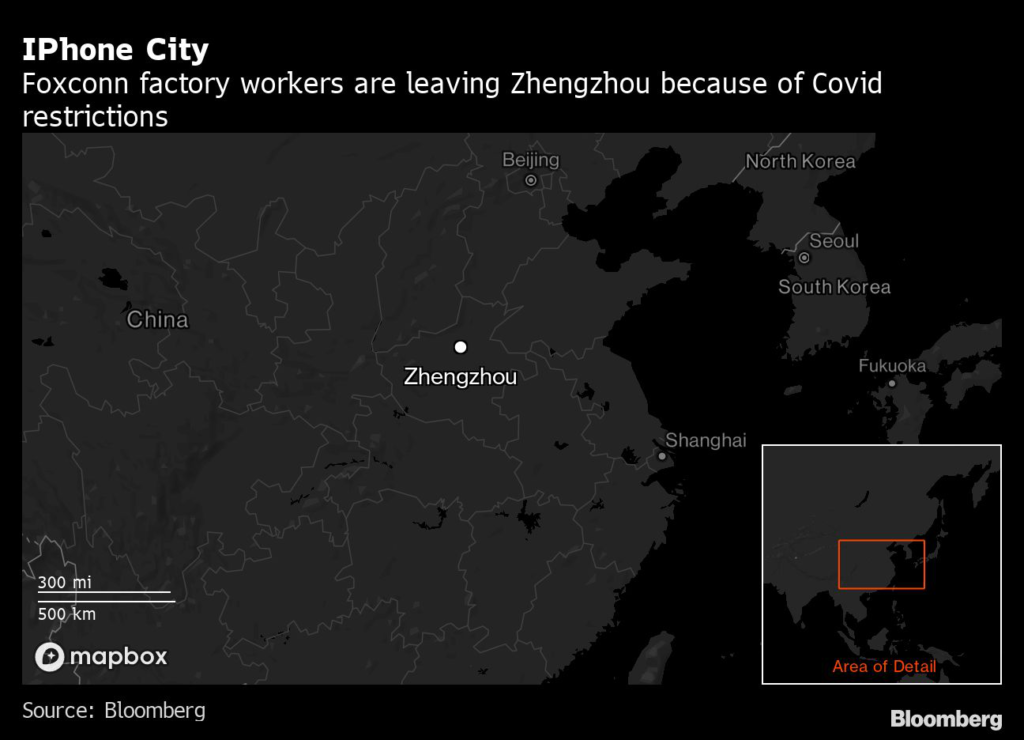
(Bloomberg) — With little warning, China locked down the world’s largest iPhone factory on Wednesday, declaring the zone around the Zhengzhou Foxconn Technology Group complex off-limits to combat a local Covid-19 outbreak. It’s the last thing Apple Inc. needed.

The abrupt move is expected to further disrupt a factory already grappling with an outcry over an on-site coronavirus outbreak, worker exodus and enforced quarantine. Local authorities said Wednesday that they’ll sterilize Foxconn’s campus and the surrounding areas in the next three days and send N95 masks to workers, another sign of the government’s tightening grip.

It served up a stark reminder of the dangers for Apple of relying on a vast production machine centered on China in a time of unpredictable lockdowns and uncertain trade relations. The company’s shares fell 3.7% on Wednesday, dragged down in part by the latest comments from Federal Reserve Chairman Jerome Powell.

“The Zhengzhou plant plays a monumental role in increasing capacity ahead of the holiday season,” said Nicole Peng, an analyst with Canalys. “Some of the orders generated in holiday promotional campaigns may not be able to be immediately delivered. Product delivery in certain channels could also be delayed.”

For now, Foxconn’s plant will keep operating within a “closed loop,” or a self-contained bubble that limits contact with the outside world, the company said in a statement Wednesday. That will keep some production going. But Foxconn didn’t address questions about how it will ship goods in and out of the compound during the area’s lockdown.

Xi Jinping’s Covid Zero policy, which relies on swift lockdowns to stamp out the disease wherever it pops up, has shown little regard for the economy and thrown swaths of the global supply chain in disarray. It’s curtailed output for big names, from Tesla Inc. to Toyota Motor Corp., often with little advance warning. But Apple is by far the largest business to adopt China as its factory floor.

Zhengzhou is the site of Apple’s most critical production, churning out four in five of its latest-generation handsets and the vast majority of iPhone 14 Pro units, according to Counterpoint senior analyst Ivan Lam. The Cupertino, California-based company relies on its smartphone for roughly half its revenue, and the lockdown comes in the middle of its peak production season in the buildup to holiday season shopping.

Apple’s iPhone production ramps up to tens of millions of handsets per month at its peak — hundreds of thousands a day — every one of which needs a plethora of components, from chips and displays to casings.

A big reason why Apple’s suppliers haven’t yet shifted more of its iPhone production out of China is the accompanying component supply chain, which largely makes parts in China, according to Counterpoint’s Lam. Even India, which is the only other country with a plant qualified to produce iPhone 14 Pro units, mostly gets its components shipped in from China and just does final assembly and packaging.

Apple didn’t respond to a request for comment.

Much now depends on the length of the lockdown, which is intended to last for a week until Nov. 9, but officials elsewhere in China have extended such actions for weeks, sometimes months, at a time.

The government notice emerged after Zhengzhou reported Covid-19 cases jumped to 359 for Tuesday, up more than threefold from a day before. New case numbers for Nov. 2 dropped to 167, though it’s too early to tell if curbs might get rolled back. Officials there have in recent days progressively imposed a web of smaller lockdowns and restrictions on areas as small as an apartment block.

Chinese officials have allowed so-called green lanes for important enterprises during past lockdowns, but the sheer scale of Apple’s logistical needs might give some pause. Foxconn also urgently needs workers to replace those who’ve left, and it’s hard to hold a recruitment drive when crowds are forbidden. 

While Foxconn should have enough materials stockpiled to keep production humming for weeks, questions remain about whether it will be able to ship any finished products out. The language of Zhengzhou’s lockdown notice is unequivocal in forbidding all activities and vehicle movements other than those for essential purposes like distribution of medical supplies. Foxconn’s inventory will eventually need replenishing, in any case.

As China’s largest private-sector employer and a key tax contributor in Zhengzhou, Foxconn will likely win concessions from local officials — but those will need to be significant. China’s top chipmaker, Semiconductor Manufacturing International Corp., worked with local authorities to transport much-needed materials into its Shanghai plant when the financial hub was in total lockdown early this year.

Foxconn has sought to mitigate the potential disruption by raising wages and arranging for backup from its other Chinese plants should assembly lines stall in Zhengzhou. Apple can handle 100% of orders for iPhone 14 and older models via other sites within China, but only has a handful of much smaller locations qualified to handle the iPhone Pro. Its main alternative is a smaller plant in Guangdong province, Lam said. Some of Foxconn’s factories in other parts of China haven’t been running at full capacity due to reasons including Covid disruptions, Peng said.

–With assistance from Mark Gurman.

(Updates with latest Covid-19 infection numbers)

More stories like this are available on bloomberg.com

©2022 Bloomberg L.P.
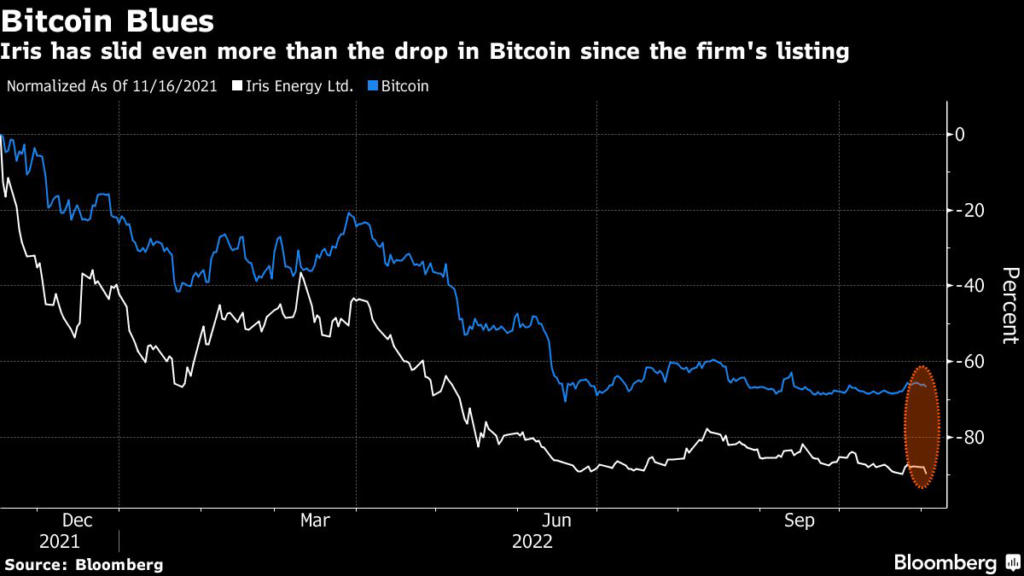
Bitcoin Miner Iris Flags Risk of Default on $103 Million of Debt

(Bloomberg) — Iris Energy Ltd. is the latest Bitcoin miner to grapple with debt trouble because of the sharp market downturn for digital assets. 

The Sydney-based green crypto miner, which listed in the US last year, said in a statement on Wednesday that some of its mining equipment isn’t making enough cash to cover related debt-financing obligations. 

The firm said $103 million of debt is secured against the rigs via a couple of wholly-owned special purpose vehicles. It doesn’t plan to provide further financial support for the vehicles absent a refinancing agreement.

That means a default on the loans looms on Nov. 8 when a scheduled principal payment is likely to be missed, according to the Iris statement.

Bitcoin has shed about 70% since a record high in November 2021, sapped by a pivot from the ultra-low interest rates characteristic of the pandemic to sharply tightening monetary policy to fight inflation.

In addition to declining demand for the world’s largest digital currency, miners have also had to contend with rising energy costs and power restrictions. 

The squeeze on profits has resulted in miners dipping into their Bitcoin stockpiles for quick cash. Iris Energy, Argo Blockchain Plc and Core Scientific Inc. have also sold equity to raise funds. A group of Core Scientific bondholders tapped Moelis & Co to manage debt talks with the beleaguered miner. 

Iris Energy said restructuring discussions with the lender to the special purpose vehicles are ongoing. It said the idea behind setting up the vehicles was to achieve “prudent risk management to protect the underlying business and data center infrastructure” of the company.

At a group level Iris said it has $53 million of cash in the bank. The shares slid 15% Wednesday to a record closing low and are down some 90% since listing. 

More stories like this are available on bloomberg.com

©2022 Bloomberg L.P.
Adobe’s $20 Billion Deal for Figma Draws DOJ Antitrust Scrutiny

(Bloomberg) — The US Justice Department is investigating Adobe Inc.’s $20 billion deal to buy design software startup Figma Inc., according to a person familiar with the matter, a sign the companies could face a drawn-out review of the deal.

The agency has begun talking to Figma’s customers and rivals as part of a probe to determine whether the transaction will hurt competition, the person said, asking not to be identified discussing an ongoing investigation. 

Adobe said it’s “engaged in productive discussions with regulators to ensure they have a full understanding of the combination.” 

Adobe’s Figma deal, which carried the largest price tag for a private software maker ever, was announced in September. While Adobe has said it expects to close the merger in 2023, the agreement allows for an extension until March 2024. 

San Jose, California-based Adobe, the leader in creative software, is looking to expand its web-based offerings and appeal to designers and small businesses that have shifted toward streamlined products from companies like Figma, Canva Inc. and Lightricks Ltd. in recent years.

The deal announcement triggered the steepest one-day decline in Adobe shares since 2010. The price, double Figma’s most recent valuation, sparked concern among Adobe investors about intensifying competitive pressure in the creative software market.

Figma has built a devoted user base because of its collaborative approach to app and website design software. The startup has trounced Adobe’s rival XD product in recent years, which today makes about $17 million a year in standalone annual recurring revenue and has 19 developers on staff, according to Adobe General Counsel Dana Rao.

That’s a fraction of Figma’s recurring revenue, which is estimated to hit $400 million this year, Adobe said when it announced the deal. 

Adobe has argued that Figma is serving a different market than its own core creative tools like Photoshop, which is used for photo editing, or Premiere, which is used for cutting video.

Politico reported earlier that DOJ is scrutinizing the deal.

The inquiry wouldn’t be Adobe’s first encounter with antitrust regulators over a deal. The company went through in-depth regulatory scrutiny over its 2005 purchase of Macromedia Inc., a suite of web development tools.

The Justice Department investigated whether that merger would eliminate competition for web design and graphics illustration software, but ultimately cleared the transaction. One piece of Macromedia’s software that competed with Adobe’s flagship graphic design program, Illustrator, was shut down within two years of the deal closing.

Under the Biden administration, the Justice Department is stepping up antitrust enforcement against deals it views as anticompetitive, especially in the technology sector, which has been largely unregulated for decades.

“Everybody knows that right now the regulatory environment is hard for any company looking at a potential merger or acquisition,” Adobe’s Rao said in a recent interview. “As soon as we have the opportunity to explain who we are, what we’re buying and why this good for customers, we feel that this will be approved.”

Earlier: Adobe Wants Photoshop to Be More Like New Acquisition Figma

Not everyone is so confident about the merger’s prospects. Antitrust regulators have become increasingly concerned about “killer acquisitions” — where a dominant player buys a rival upstart to keep it from growing into a viable competitor, said Florian Ederer, an economics professor at Yale School of Management, who coined the theory.

The Adobe-Figma deal can be seen as an example of that, Ederer said. The quality of the startup’s innovative product slowly stagnates as it’s incorporated into the bigger company, he said, failing to improve as much as it would if it remained independent.

Ederer pointed to Microsoft Corp.’s purchase of Skype and Intuit Inc.’s acquisition of Mint as examples of similar transactions in the technology sector where dominant players bought out promising upstarts and then allowed them to languish.

It’s “almost like paid suicide,” he said. “The founders are perfectly happy to sell out because they are getting compensated for the competitive threat they would pose if they stayed independent.”

While the theory has plenty of economic and real-world evidence, cases that focus on potential competition have faced a tough hurdle in court, he said.

“These cases are extremely hard to win,” Ederer said. “It’s not exactly a direct competitor right now, but they could be in five years.”

–With assistance from Sabiq Shahidullah.

(Updates with additional background starting in 11th paragraph.)

More stories like this are available on bloomberg.com

©2022 Bloomberg L.P.
Elon Musk Aims to Start Charging for Twitter Verification Next Week

(Bloomberg) — Twitter Inc. aims to start selling blue verification badges for user profiles as soon as next week, part of a plan by new owner Elon Musk to fight fake accounts and squeeze revenue from the company he bought for $44 billion.

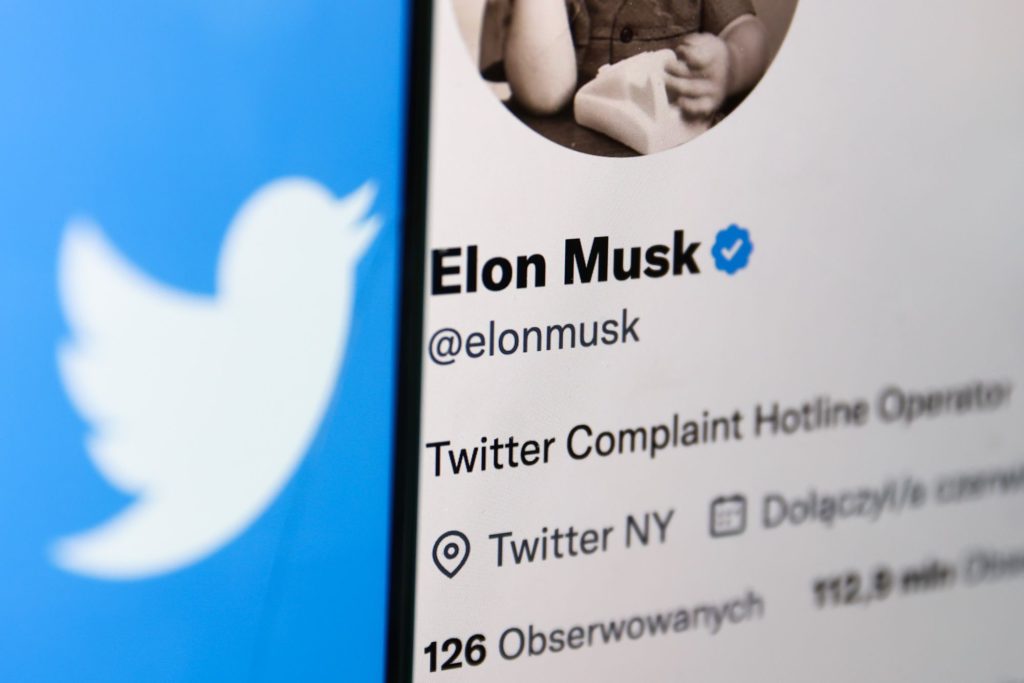
The badges will be part of an $8-a-month subscription that could go live as early as Monday, according to people familiar with the plans. Users who already have a blue verification badge will have a multi-month grace period before they will either need to pay for the badge or lose it, said one of the people, who requested anonymity discussing plans that aren’t public.

The company also plans to expand access to its edit function. The edit feature, currently available to so-called Twitter Blue users who pay $4.99 a month, will be opened to the rest of users for free, one of the people said. That change could be implemented as soon as this week, the person said.

Billionaire Musk and a close cadre of advisers are considering a host of changes to the way Twitter is run and makes money, and it’s possible that the timing for the subscriptions and edit-button rollout could change, the people said. A Twitter representative didn’t immediately respond to a request for comment.

The plan to charge for verification has polarized users, with some people who currently have the white check mark inside a light blue field saying they won’t pay to keep it. Some have publicly tweeted in favor of the new business model, concurring with Musk that it will help weed out “bots” or spam accounts. Twitter has historically used blue verification badges to identify high-profile users who may be at risk of impersonation — people like journalists, politicians and activists — and has never charged for the badge. Musk called the current setup a “lords and peasants system,” adding that users who pay $8 a month will also get other perks like “half as many ads” and “priority in replies, mentions & search.”

The quick turnaround for the new products reflects the speed at which Musk wants to move. One of the company’s product leaders in charge of Twitter Blue, Esther Crawford, tweeted on Wednesday that she slept at the office in an effort to meet her deadlines.

Critics say that giving verified users priority will mean that users who don’t pay will have their posts diminished or silenced. “Lmao at a billionaire earnestly trying to sell people on the idea that ‘free speech’ is actually a $8/mo subscription plan,” tweeted Congresswoman Alexandria Ocasio-Cortez, a Democrat from New York.

“Your feedback is appreciated, now pay $8,” Musk replied. 

Twitter will allow government accounts to stay verified, as well as those in regions where Twitter cannot charge payment, one person said. White House Press Secretary Karine Jean-Pierre said earlier Wednesday that the president and his administration had not yet considered whether it would pay to retain verification. 

More stories like this are available on bloomberg.com

©2022 Bloomberg L.P.

Airbnb’s Chesky Says He’s ‘Very Confident’ About Travel Demand

(Bloomberg) — Airbnb Inc. Chief Executive Officer Brian Chesky said he feels good about the fourth quarter, citing the home-rental site’s adaptable sales model and customers’ continuing interest in long-term stays.

Speaking in an interview with Bloomberg Technology anchor Emily Chang, Chesky responded to Airbnb’s shares dropping 13% on Wednesday after the company said it expects the pace of bookings to “moderate slightly” in the last three months of the year. The forecast followed Airbnb reporting record revenue in the third quarter and its highest-ever adjusted earnings before interest, tax, depreciation and amortization. 

“This is a very uncertain time and people are looking for indications of what the future holds,” Chesky said. “We tried to make clear that we feel very confident about the fourth quarter.”

Chesky said Airbnb was the first travel company to rebound from the pandemic because — as people cut back on cross-border travel — they increasingly sought out nearby homes in rural environments for extended stays. In response to a question about whether Airbnb rentals will continue to be affordable, Chesky said, “They will be.”

Prices have gone up because people have switched to renting larger houses for families, instead of small apartments in the city for vacation trips, Chesky said. He expects the average daily rate to remain stable.

In coming years, long-term stays will grow as a percentage of Airbnb’s business, he said. “I think more people will be flexible, and maybe fewer people will have leases. This is a huge new growth opportunity for us in the years to come.”

As the economy slows down, Airbnb wants to ensure that its value is even better. “We want to make sure our pricing is dynamic,” he said, noting that Airbnb is investing in pricing tools for hosts so they can remain competitive with hotels.

Chesky said that no matter how bad or good the economy is, it won’t change the way the business is run. That’s why Airbnb has planned to hire 7% more employees this year, and is sticking with that target, not cutting back like some other tech companies. “We’re not pulling back,” he said. “In fact, we’re stepping on the gas.”

–With assistance from Emily Chang.

More stories like this are available on bloomberg.com

©2022 Bloomberg L.P.
Power-Device Shortage Slows Spread of Car Chargers, EVgo Says

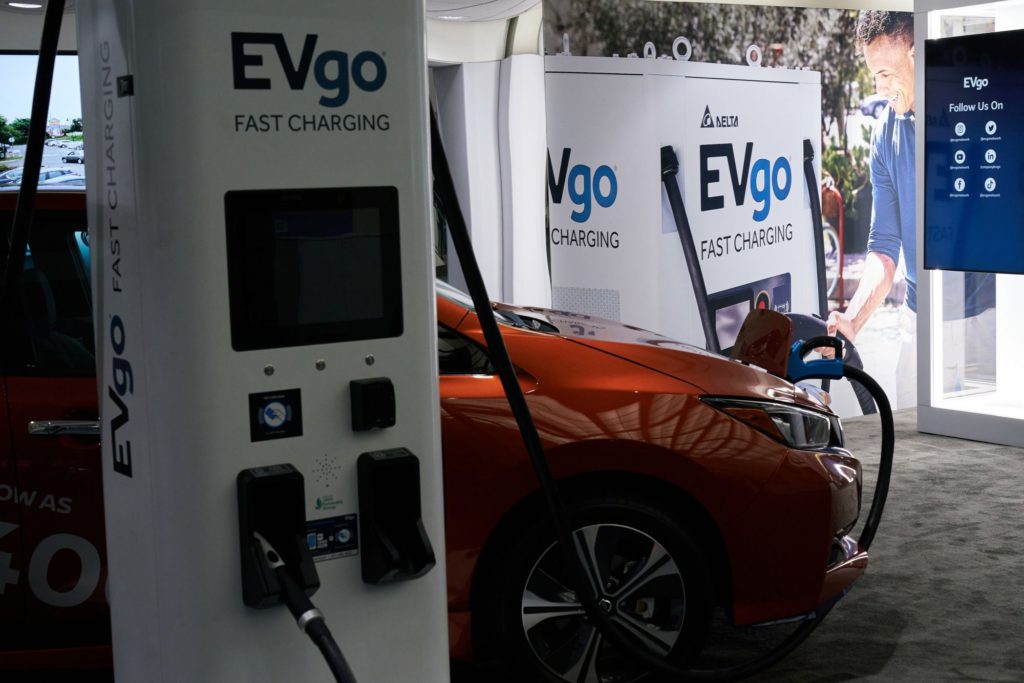
(Bloomberg) — Shortages of a key electricity device are slowing EVgo Inc.’s ability to expand its network of electric-car stations.

At the end of the third quarter, 130 newly installed charging stations awaited connections to the local grids, according to Chief Executive Officer Cathy Zoi. She attributed the delays to a paucity of transformers — devices that step down the voltage of electricity flowing over power lines to a level that appliances can use. Another reason: labor shortages.

The transformer shortage is a potential stumbling block for President Joe Biden’s push to slash transportation emissions via a nationwide network of EV chargers. The US recently launched a $5 billion effort to do so.

EVgo lowered its forecast Wednesday for the number of its charging stalls the company expects will be installed or under construction by year-end, to a range of 2,800 to 3,100 from a range of 3,000 to 3,300.

The company’s high-speed chargers usually require local utilities to upgrade nearby transformers, Zoi said on an investor call. EVgo is now working with utilities earlier in the process of planning new stations, to enable the companies more time to access the necessary equipment.

More stories like this are available on bloomberg.com

©2022 Bloomberg L.P.
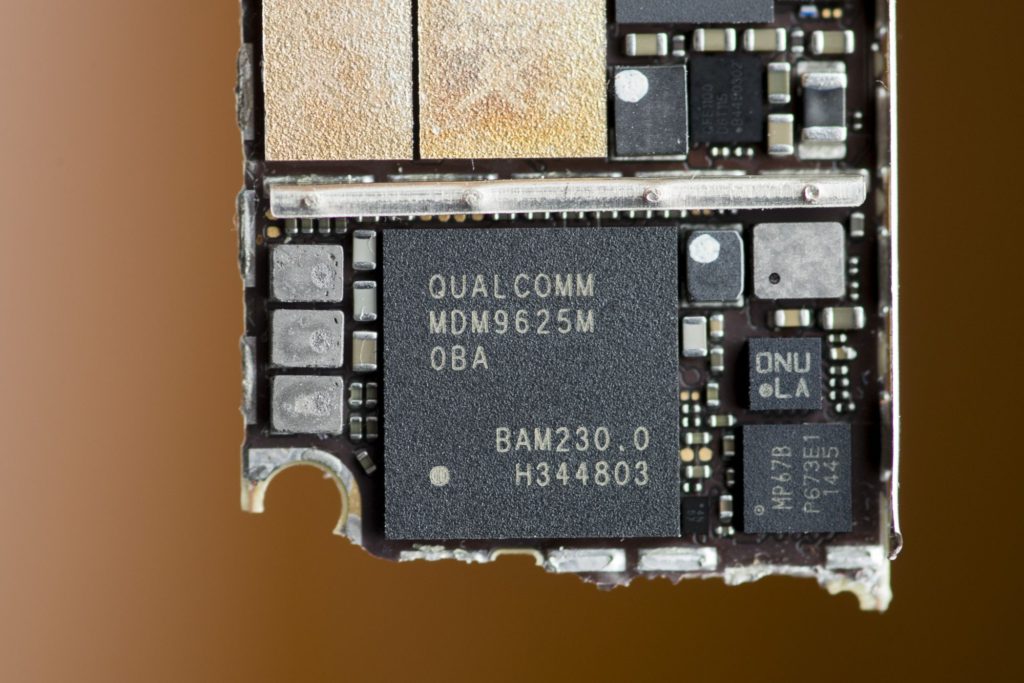
Apple to Keep Qualcomm Chips in 2023 in Turnabout

(Bloomberg) — Qualcomm Inc. will continue to provide the modem chips for the “vast majority” of iPhones in 2023, a turnabout for a company that had expected to lose the business to Apple Inc.’s homegrown components. 

Qualcomm had planned to only provide about 20% of the 5G modem parts for the new iPhones in 2023, but now expects to retain its current foothold, according to comments that accompanied its earnings report Wednesday. The statement confirmed that Apple won’t be moving to its own in-house modem design for next year’s models.

Since settling a lawsuit with Qualcomm in 2019 and agreeing to use that company’s technology inside iPhones for the foreseeable future, Apple went to work on building its own cellular modem, Bloomberg News has reported. Apple’s chip development chief told staff in 2020 that development of the part was underway. 

But earlier this year, Bloomberg News reported that Apple’s efforts have been stymied by prototype versions of the modems overheating and that the company wouldn’t begin a switch until 2024 at the earliest. Qualcomm continues to assume it will only receive minimal revenue contributions from Apple in fiscal 2025. 

Apple didn’t immediately respond to a request for comment.

The reprieve provided little comfort to Qualcomm investors Wednesday. The company is grappling with a broader slump in smartphone demand and delivered a far weaker forecast than expected. The shares slid as much as 8.4% in late trading.

–With assistance from Ian King.

(Updates with company continuing to assume minimal revenue from Apple in 2025.)

More stories like this are available on bloomberg.com

©2022 Bloomberg L.P.

Close Bitnami banner
Bitnami
