Bloomberg

Electric Car Battery Startup Britishvolt Announces Temporary Lifeline

(Bloomberg) —

Britishvolt Ltd. said it secured a funding lifeline following reports the company at the heart of Britain’s bid to create an electric-car battery industry was on the brink of entering administration.

The less-than-three year old business will receive a bridging loan that will give it a few weeks to secure longer-term finances, according to statement from the company. Britishvolt said it’s pursuing “positive ongoing discussions” with potential funders and has received approaches from “several more international investors in the past few days.”

Still, it did not name prospective backers or creditors, nor provide details about the short-term funding.

Britishvolt said its nearly 300 employees “voluntarily” agreed to a temporary salary reduction for the month of November to reduce costs.

The company, which previously gained backing from mining giant Glencore Plc, is a key part of the UK’s ambition to build facilities capable of providing batteries for millions of electric vehicles. However, it is yet to secure funding to build one of the biggest cell factories.

The bridging loan is not expected to unlock government funds that depend on the construction of the plant going ahead. Bloomberg News reported last month that Britishvolt had discussed a sale of its site to Inobat, a company chaired by former Aston Martin boss Andy Palmer.

‘Green Revolution’

Former Prime Minister Boris Johnson pledged to promote electric cars as part of Britain’s “green industrial revolution,” but critics say other countries have offered far greater subsidies and incentives. 

In December 2020, Britishvolt announced plans to spend £2.6 billion on its battery plant, with the startup’s Swedish founders — Orral Nadjari and Lars Carlstrom — hoping to benefit from rising regulatory pressure to phase out cars that run on fossil fuels. At the time, they announced they had bought the site of a former coal-fired power station in Blyth, in northeastern England.

Britishvolt subsequently said it hoped to employ as many as 3,000 people, with construction beginning in 2021 and the factory churning out lithium-ion batteries by the end of 2023. However, in August this year the company postponed the start of production to mid-2025, citing rising interest rates, inflationary pressures and surging energy costs.

More stories like this are available on bloomberg.com

©2022 Bloomberg L.P.

Malaysia’s Axiata Weighing Options for Indonesian Units, Sources Say

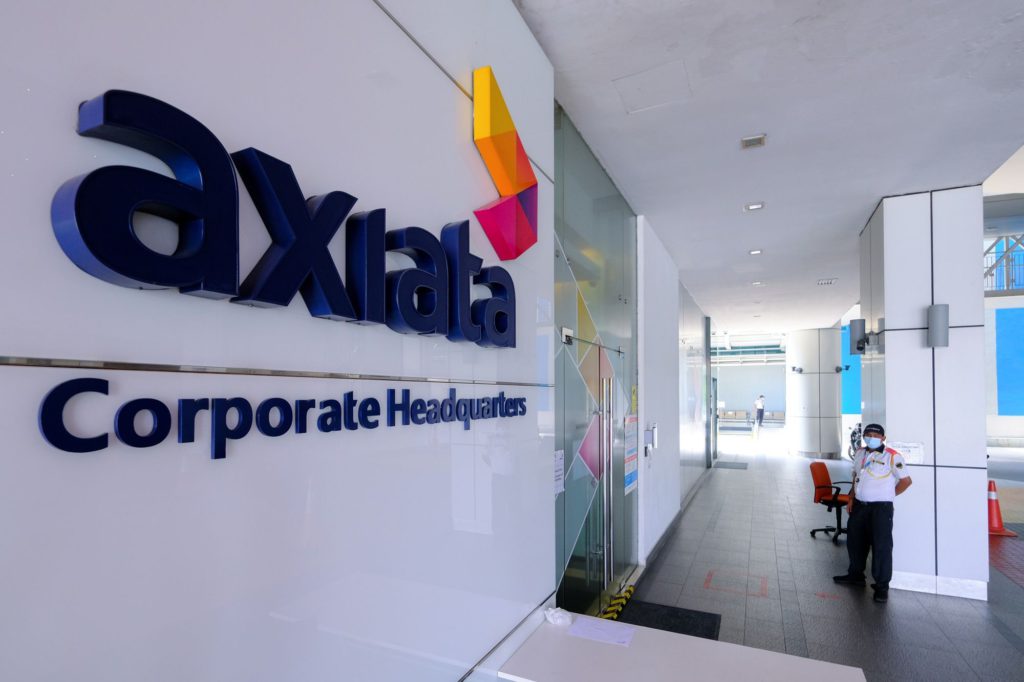
(Bloomberg) — Axiata Group Bhd. is exploring options for its Indonesia businesses including combining its broadband and mobile services in the country, according to people with knowledge of the matter.

Malaysia’s biggest wireless company is laying the groundwork of a potential deal that would help boost synergies in its Jakarta-listed assets, said the people, who asked not to be identified as the process is private. Options under consideration also include bringing in a minority investor for its infrastructure assets as a way to fuel further investments and growth, the people said.

Axiata has controlling interests in both mobile operator PT XL Axiata and broadband provider PT Link Net, according to data compiled by Bloomberg. The companies have a combined market value of more than $2.1 billion. 

Considerations are still at an early stage and there is no certainty that Axiata will proceed with a transaction, the people said. A representative for Axiata declined to comment. Link Net doesn’t have information on the plan, its representative said in response to a Bloomberg News query. Such discussion hasn’t happened at XL Axiata, the company’s corporate communication head said.

Telecommunications companies in Southeast Asia are exploring strategic options as they seek to boost growth. PT Telkom Indonesia has picked advisers for the merger of its broadband and wireless businesses, while it’s also looking at potential deals for its data center operation, Bloomberg News has reported. Philippine fiber provider Converge ICT Solutions Inc. is considering selling a stake in its infrastructure platform, people familiar with the matter have said.

Axiata Group owns a 76% stake in Link Net through its subsidiary Axiata Investments (Indonesia) Sdn., after completing an acquisition of a 66% stake and a mandatory offer, according to data compiled by Bloomberg. Axiata Group also owns about 61% of XL Axiata through another subsidiary.

XL Axiata, which has been listed on the Jakarta stock exchange since 2005, has a market value of 26.3 trillion rupiah ($1.7 billion). The wireless firm reported a 9% increase in revenue to about 14 trillion rupiah in the first half of 2022 and has 57.2 million subscribers, according to its latest earnings presentation. 

Founded in 1996, Link Net offers high-speed broadband and cable television in Indonesia, its website shows. Its services are connected to 2.9 million homes, according to its corporate presentation.

–With assistance from Fathiya Dahrul.

More stories like this are available on bloomberg.com

©2022 Bloomberg L.P.

China Solar Giant Sees Further Turmoil in US Market Next Year

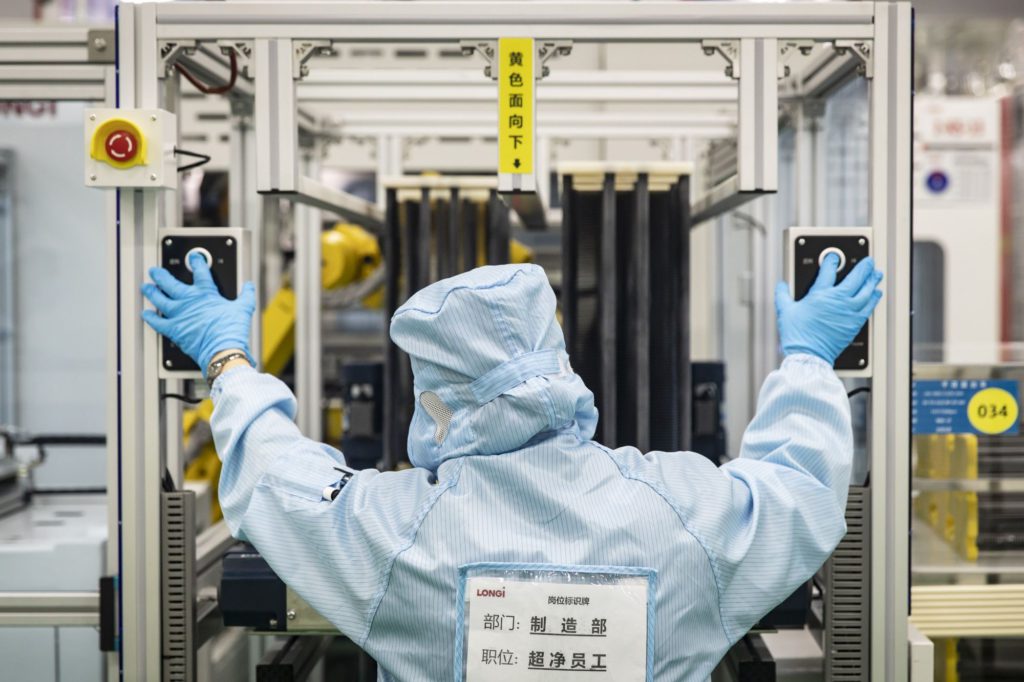
(Bloomberg) — The world’s largest solar company warned that stricter US import requirements for panel shipments will continue to create disruptions to the American market through next year.

Longi Green Energy Technology Co. projects between 20 to 50 gigawatts of US solar market demand in 2023, the Chinese company said in an earnings briefing Monday, according to a note by Daiwa Capital Markets. Longi indicated the wide range reflects uncertainty caused by the US import restrictions.  

A massive amount of solar panels has been held at the US border under a ban targeting alleged human-rights abuses in China’s Xinjiang region that went into effect in June. The Chinese government has repeatedly denied allegations of forced labor in Xinjiang. 

Under the ban, US Customs and Border Protection requires documentation from importers detailing the source of quartzite, a raw material used in the manufacture of solar panels, to prove their supply chains are free of links to Xinjiang. 

Longi said no solar companies are likely to fulfill the strict requirements, according to the Daiwa note. The shipping disruptions have already led to significant project delays in the US, Morgan Stanley analysts said last month. 

The US Solar Energy Industries Association forecast the country will install 15.7 gigawatts of solar energy in 2022, the lowest in three years as a result of the detention of modules.

Some companies have found a way to get through the checks, however. JA Solar Technology Co. was able to clear customs as it sourced polysilicon from outside China while manufacturing of wafers, cells and modules took place in Vietnam, according to Daiwa. The company expects to ship 3 to 4 gigawatts of solar modules in 2023.

Outside the US, solar demand remains strong, led by China and Europe. That growth has driven up the price of polysilicon, providing stellar profits for makers of the key solar material. But that earnings pace will fade as supply and demand reach a balance in the second half of 2023, Tongwei Co., the world’s largest producer of the material, said on Monday, according to Daiwa. 

Profit will flow to downstream companies such as manufacturers of cells and modules, which will be in tight supply next year, while wafer producers are likely to see low prices due to abundant amounts, Tongwei said.

More stories like this are available on bloomberg.com

©2022 Bloomberg L.P.

India Rate Panel to Meet Thursday on Inflation Report, Das Says

(Bloomberg) — India’s monetary policy committee will meet Thursday to discuss and prepare a report on why the central bank missed its inflation target, Governor Shaktikanta Das said.

The Reserve Bank of India’s letter to the government will not be released to the public immediately, Das said Wednesday at a banking industry event in Mumbai. The RBI is required by law to explain why India’s price gains missed a 2% to 6% goal for three straight quarters under an inflation-targeting mandate and what steps are being taken to tame the numbers. 

India RBI Off-Cycle Meet to Discuss Inflation Letter: Survey

India missed the inflation target because the war in Ukraine sent commodity prices soaring and led to supply disruptions, Das said. The RBI had kept rates at a record low of 4% for about two years during the pandemic and started raising borrowing costs from May this year amid accelerating inflation. The central bank has since delivered 190 basis points of hikes.

“We didn’t want to upset the recovery,” Das said, adding that tightening rates earlier would have slowed the economy. “In the process there was a slippage in inflation targeting, but it would have been very costly for the economy.”

The governor expects price gains to moderate and fall back within the target by the end of the fiscal year in March. The Indian rupee is one of the least misaligned among all currencies, Das said about the local currency, which has fallen about 10% this year.

Here’s more from Das:

  • Inflation above 6% will hurt growth, Das said, adding that the central bank’s “constant endeavor is to keep a focused eye on inflation”
  • Price stability, interest rates and financial stability need not be mutually exclusive
  • India’s banking liquidity crunch is likely to be transitory as government expenditure picks up, Das said, adding that the central bank will remain vigilant about meeting liquidity requirements
  • There’s no target date but the RBI aims to start retail use of digital currency in a month, he said

–With assistance from Devidutta Tripathy and Pradeep Kurup.

(Updates with more details in bullet points.)

More stories like this are available on bloomberg.com

©2022 Bloomberg L.P.

China Locks Down Area Around ‘iPhone City’ in Blow to Apple

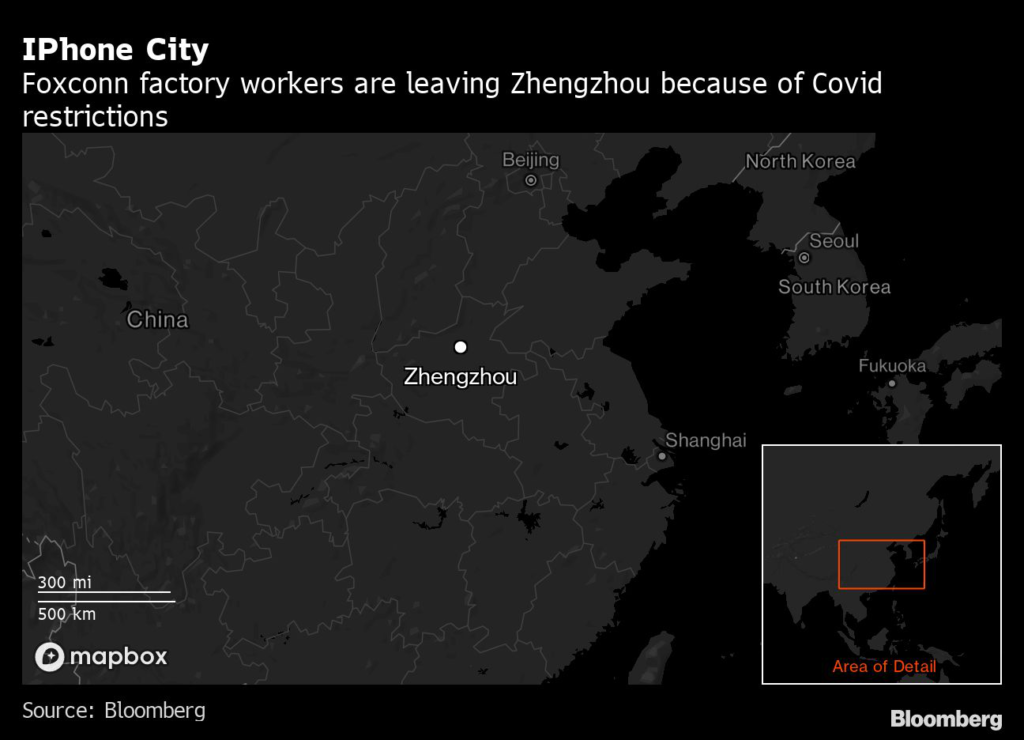
(Bloomberg) — China has ordered a seven-day lockdown of the area around Foxconn Technology Group’s main plant in Zhengzhou, a move that will severely curtail shipments in and out of the world’s largest iPhone factory.

The lockdown will last until Nov. 9, the local government said in a statement posted to its WeChat account. It ordered people and vehicles off the streets except for medical or other essential reasons, a prohibition that threatens to cut off the flow of additional workers and components needed to rev up production ahead of the holiday-season crush.

The abrupt action reflects Beijing’s Covid Zero approach and is likely to further disrupt Foxconn’s main operations base, which cranks out an estimated four out of five of Apple Inc.’s latest handsets. The Taiwanese company, whose main listed arm is Hon Hai Precision Industry Co., was already grappling with a Covid flare-up that forced some of its 200,000 staff into quarantine and pushed others to flee the facility — some on foot. 

The government notice emerged after Zhengzhou reported Covid-19 cases jumped to 359 for Tuesday, up more than three-fold from a day before. Officials there have in recent days progressively imposed a web of smaller lockdowns and restrictions on areas as small as an apartment block.

The plant will keep operating within a “closed loop,” or a self-contained bubble that limits contact with the outside world, Foxconn said in a statement. But the company didn’t address questions about how it will ship goods in and out of the compound during the area-lockdown. An Apple representative didn’t immediately respond to a request for comment.

Read more: IPhone Factory Worker Walked 25 Miles to Escape Covid Lockdown

The lockdown comes at a crucial time for Apple, which launched the iPhone 14 during an unprecedented slump in global electronics demand. While faring better than other smartphone makers, the company has backed off plans to increase production of its new iPhones this year after an anticipated surge in demand failed to materialize, Bloomberg has reported. Apple has posted better-than-expected results but warned of a holiday slowdown.

Foxconn has sought to mitigate the potential disruption by raising wages and arranging for backup from its other Chinese plants should assembly lines stall in Zhengzhou. In recent days, it’s also fought to quell speculation on social media that some of the infected staff had died.

In previous lockdowns, government officials have allowed not just essential services but also key local enterprises to work around Covid restrictions. Many important companies in Shanghai and the southern metropolis of Shenzhen, for instance, continued operating even when other factories were starved of manufacturing components. 

The Zhengzhou factory should also have stockpiled enough components to keep operating for a while, so much would depend on the length of the lockdown — officials elsewhere in China have sometimes extended such actions for months. 


It’s unclear if Foxconn has negotiated workarounds with the local government in Zhengzhou. Any disruption there threatens to snarl Apple’s finely orchestrated supply chain. Thousands of components from Europe to Asia are shipped into Zhengzhou, assembled manually into devices, then shuttled off to the rest of the world.

That single facility is responsible for 80% of capacity for the iPhone 14 series, with more than 85% of iPhone 14 Pro capacity based there, according to Counterpoint senior analyst Ivan Lam. 

(Updates with Foxconn’s comment from the fifth paragraph)

More stories like this are available on bloomberg.com

©2022 Bloomberg L.P.

Sony Jumps After Hiking Outlook and PlayStation Expectations

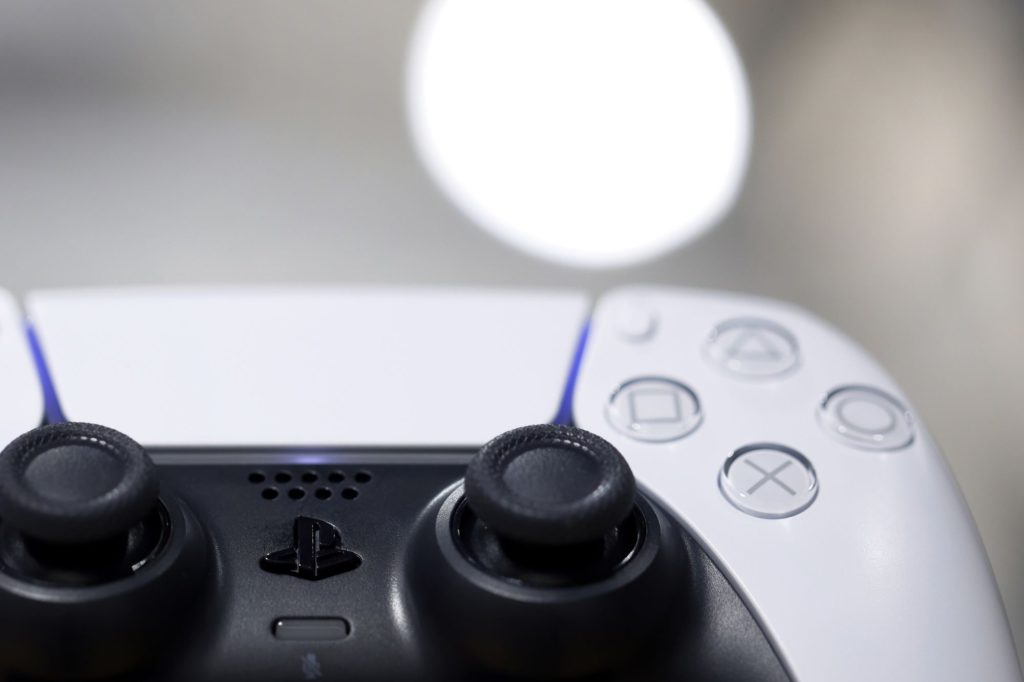
(Bloomberg) — Sony Group Corp. shares had their biggest surge in seven months after the company said PlayStation 5 production went better than expected in the past quarter and it now aims to surpass its sales target for the fiscal year.

The Tokyo-based conglomerate also bumped its full-year operating profit forecast by 5%, largely on the weakness of the yen. It reported sales of 2.75 trillion yen ($18.6 billion) in the three months ended September, 16% higher than the prior year, after getting a boost from its music streaming division. The company is now gearing up to beat its goal of 18 million PS5 sales this fiscal year and set a target of 23 million units for the next.

Shares were up 7% in Tokyo on Wednesday after slumping more than 30% this year prior to its latest earnings report.

Sony’s results proved better than feared, as the company’s various businesses are dependent on strong consumer demand, which has dissipated this year with a global economic downturn and potential recession on the horizon. Chief Financial Officer Hiroki Totoki said the games business was feeling the compound effects of cooler consumer appetites and the worldwide reopening after the pandemic, with both factors pushing people away from games and other leisure spending.

Still, the company said it’s seeing strong user engagement with newer games on the PlayStation platform and sounded a positive note about the release of its next God of War game, scheduled for next week, as a catalyst for more sales. It assembled 6.5 million PS5s in the past quarter, which was a faster production pace than expected, Totoki said.

“Considering the PlayStation did not see a single big game in the quarter, numbers were surprisingly stable,” said industry analyst Serkan Toto of Kantan Games. “Video games are a hit-driven business. Sony did relatively well despite not having any blockbusters to drive growth this quarter.”

Sony Bumps Up Profit Outlook as Weak Yen Juices Sensor Sales

The image sensor business was aided by the fall in the yen’s value — as much of the production is done in Japan and shipped overseas — in a year when smartphone sales have slumped globally and especially in China, the world’s biggest mobile market. Sony said it’s seeing resilient demand for premium devices, which use more cameras and require more sensors per unit sold.

“This announcement dispels excessive concerns to some extent, as the dominant market view lately was that the firm would cut guidance again on concern over a slowdown in high-end models at a major North American smartphone maker,” SMBC Nikko analysts Ryosuke Katsura and Hajime Ono wrote. A recovery in investor sentiment would hinge primarily on growth in the games division over the holiday period and beyond, they added.

(Updates with closing share price)

More stories like this are available on bloomberg.com

©2022 Bloomberg L.P.

Stocks Stage Cautious Rally Ahead of Fed Meeting: Markets Wrap

(Bloomberg) — Equities edged higher ahead of the Federal Reserve’s policy meeting Wednesday after a cautious open in Asia as Chinese stocks continued to climb from lows struck at the beginning of the week.

The Hang Seng Index jumped to its best two-day run since March in a session cut short by a storm warning. A gathering of global bank executives in Hong Kong also helped support sentiment in the financial hub. Mainland shares also climbed as investors tried to weigh speculation that China may scrap its Covid-Zero policy.

Japan’s Topix benchmark and shares in South Korea and Australia posted minor gains. European and US stock futures climbed following a drop in the S&P 500 on Tuesday that was triggered by a surprise rebound in job openings. Separate US manufacturing figures showed new orders contracted in October for the fourth time in five months, painting a less-rosy picture of the economy.

The data came ahead of the Fed meeting that is expected to see the central bank raise interest rates by 75 basis points for the fourth time in a row, bringing the upper limit of its target range to 4%. The US 10-year yield traded just above 4% while the more policy-sensitive two-year yield stayed near to 4.5%. 

Former Treasury Secretary Larry Summers said the Fed should “stay on the current course,” warning that growing expectations the central bank would pivot were “badly misguided” and extend a pandemic track record among economists for “being dismally wrong on inflation.”

Shares in Japan-listed Sony jumped as much as 12% on better-than-expected PlayStation production figures. Shares in Advanced Micro Devices Inc., the US-listed computer chip company, rose in after-hours trading following third-quarter earnings that topped estimates as the company made further inroads into the lucrative server chip market.

Elsewhere in markets, a gauge of the dollar fell and gold was steady. Oil rallied on reports of dwindling US stockpiles. The yen strengthened in a sign traders anticipate a muted impact of Fed tightening on the currency. 

Key events this week:

  • EIA crude oil inventory report, Wednesday
  • Federal Reserve rate decision, Wednesday
  • US MBA mortgage applications, ADP employment, Wednesday
  • Bank of England rate decision, Thursday
  • US factory orders, durable goods, trade, initial jobless claims, ISM services index, Thursday
  • ECB President Christine Lagarde speaks, Thursday
  • US nonfarm payrolls, unemployment, Friday

Some of the main moves in markets:

Stocks

  • Futures on the S&P 500 rose 0.1% as of 3:45 p.m. Tokyo time. The S&P 500 fell 0.4%
  • Nasdaq 100 futures climbed 0.2%. The Nasdaq 100 fell 1%
  • The Hang Seng Index rose 2.4%
  • The Shanghai Composite Index rose 1.2%
  • Japan’s Topix index climbed 0.1%
  • Australia’s S&P/ASX 200 edged 0.1% higher
  • Euro Stoxx 50 futures rose 0.5%

Currencies

  • The Bloomberg Dollar Spot Index fell 0.2%
  • The euro was little changed at $0.9883
  • The Japanese yen rose 0.6% to 147.41 per dollar
  • The offshore yuan rose 0.3% to 7.2859 per dollar

Cryptocurrencies

  • Bitcoin was little changed at $20,468.41
  • Ether rose 0.6% to $1,585.5

Bonds

  • The yield on 10-year Treasuries advanced one basis point to 4.05%
  • Australia’s 10-year yield advanced five basis points to 3.81%

Commodities

  • West Texas Intermediate crude rose 1.3% to $89.48 a barrel
  • Spot gold rose 0.2% to $1,650.75 an ounce

More stories like this are available on bloomberg.com

©2022 Bloomberg L.P.

China Locks Down Area Around Foxconn’s ‘IPhone City’ Plant

(Bloomberg) — China has ordered a seven-day lockdown of the area around Foxconn Technology Group’s main plant in Zhengzhou, a move that will severely curtail shipments in and out of the world’s largest iPhone factory.

The lockdown will last until Nov. 9, the local government said in a statement posted to its WeChat account. No vehicles are allowed to operate except for those carrying necessities, the government said. The notice emerged after Zhengzhou reported Covid-19 cases jumped to 359 for Tuesday, up from 95 the day before.

The abrupt action reflects Beijing’s Covid Zero approach to stamping out outbreaks, and is likely to further disrupt Foxconn’s main operations base. The Taiwanese company, whose main listed arm is Hon Hai Precision Industry Co., is grappling with a Covid flare-up that forced some of its 200,000 staff into quarantine and pushed others to flee the facility — some on foot. The lockdown will complicate efforts to recruit and bring in new staff as well as ship production materials to keep operations going.

Representatives for Foxconn and Apple Inc. didn’t immediately respond to requests for comment.

Foxconn has sought to mitigate the potential disruption by raising wages and arranging for backup from its other Chinese plants should assembly lines stall in Zhengzhou. In recent days, it’s also fought to quell speculation on social media that some of the infected staff had died.

Read more: IPhone Factory Worker Walked 25 Miles to Escape Covid Lockdown

The lockdown comes at a crucial time for Apple, which launched the iPhone 14 during an unprecedented slump in global electronics demand. While faring better than other smartphone makers, the company has backed off plans to increase production of its new iPhones this year after an anticipated surge in demand failed to materialize, Bloomberg has reported. Apple has reported better-than-expected results but warned of a holiday slowdown.

Foxconn’s Zhengzhou facility is responsible for 80% of capacity for the iPhone 14 series, with more than 85% of iPhone 14 Pro capacity based there, according to Counterpoint senior analyst Ivan Lam. Any disruption there threatens to snarl Apple’s finely orchestrated supply chain. Thousands of components from Europe to Asia are shipped into Zhengzhou, assembled manually into devices, then shuttled off to the rest of the world.

(Updates with number of Covid-19 cases)

More stories like this are available on bloomberg.com

©2022 Bloomberg L.P.

Blockchain Platform Paxos to Add at Least 130 Hires in Singapore

(Bloomberg) — Blockchain platform Paxos Trust Co. LLC plans to add at least 130 hires in Singapore over the next three years after its unit in the city-state received a central bank license to offer digital-token payment services.

“Singapore will be our hub for growth outside the US,” Co-Founder Rich Teo said in an interview, adding as many as 180 people could be brought on over the 36-month period. The current headcount in Singapore is 20 and 350 globally, he said.

Paxos operates its own stablecoin USDP as well as the BUSD stablecoin with Binance, the world’s largest crypto exchange. Another stablecoin issuer, Circle Internet Financial, also said Wednesday that it received a permit from the Monetary Authority of Singapore.

The city-state is seeking to become a hub for productive uses of blockchain technology while clamping down on crypto trading by retail investors. Some 18 companies have virtual-asset licenses in Singapore out of about 200 applicants.

The island nation’s shifting regulatory approach follows a $2 trillion rout in digital assets over roughly the past year that triggered blowups at crypto outfits. Competition for investment is also heating up after Hong Kong pivoted to a friendlier digital-asset regime that’s set to legalize retail trading.

Both Singapore and Hong Kong are hosting financial technology conferences this week in an effort to burnish their credentials as regional financial centers.

Paxos’ plan to add staff contrasts with deep recent layoffs in the digital-asset sector, which is in the midst of a so-called crypto winter.

Some of the latest cuts loom at Galaxy Digital Holdings Ltd., the crypto financial services firm founded by billionaire Michael Novogratz. The company is exploring eliminating as much as 20% of its workforce.

More stories like this are available on bloomberg.com

©2022 Bloomberg L.P.

Vulnerable Coral Moved to a 3D-Printed Reef in Hong Kong Is Thriving

(Bloomberg) — In the subtropical sea off northeast Hong Kong, orange and white-striped clownfish somersault like acrobats, black sea urchins furtively wiggle their antennas and crabs shuttle between crevices in a leggy panic. 

Much of this activity in Hoi Ha Wan Marine Park gravitates around corals that are thriving on an artificial reef made of 3D-printed terracotta tiles, installed two years ago by researchers at the University of Hong Kong (HKU). 

“The corals have grown so much since I last dived here,” said Vriko Yu on a recent afternoon, moments after resurfacing in the protected, jade-colored waters. “What excites me is the way that you can see the species are quickly making a home here.” 

The reef tiles are thought to be the first use of clay for 3D printing in the world. They were produced by Archireef, a company spun off from the university and co-founded by Yu, a former PhD student, and marine biology professor David Baker. The company will present its work at the upcoming COP27 climate summit.  

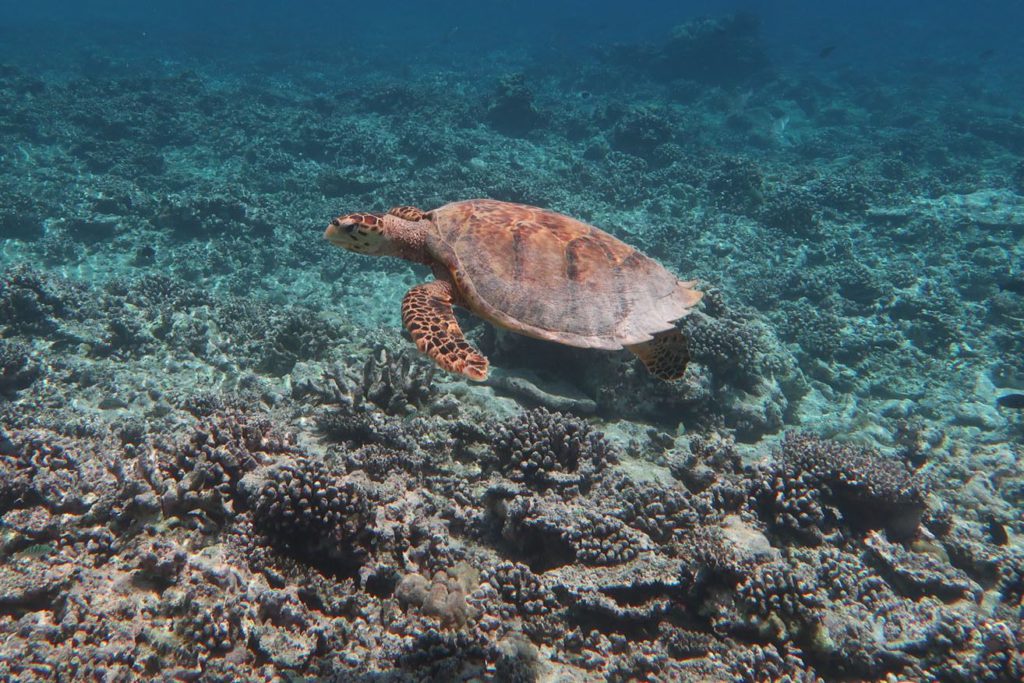
Its terracotta hexagons could be a building block in efforts to protect and restore vulnerable coral reefs, which cover less than 1% of the ocean floor but host more than 25% of all marine life. They might also help to cultivate corals that are more resilient to waters warming rapidly because of climate change. 

Hong Kong’s Agriculture, Fisheries and Conservation Department (AFCD) launched efforts to restore the reefs at Hoi Ha Wan after toxic “red tide” algae blooms in 2015 and 2016 killed off 90% of its Platygyra, one of the major local coral species.

Initially, in late 2016, scientists attempted to revive the reefs by gluing living coral fragments directly onto rocks. But the corals grew very slowly, often detaching and dying. In response, researchers developed the 3D-printed tiles. In 2020, divers placed 400 coral fragments, which had been naturally dislodged in the ocean, into the ridges of the tiles, which measure 50 centimeters square (about 20 inches by 20 inches) and weigh around 15 kilograms (33 pounds) each. 

Designed to mimic the complex shape of Platygyra, or “brain coral,” the tiles contain crevices and niches for coral seedlings and marine life to settle in while also minimizing buildup of the sediment prevalent in Hong Kong’s waters. The bottom half of the tile is designed like a snowshoe, providing stability on sandy seabeds, which have become common due to Hong Kong’s high rates of bioerosion. 

“Corals aren’t like trees, they don’t have roots,” says Yu. “They can’t attach to sand. They must be connected to substrate. So, we had to kind of renovate the sea floor.” 

Concrete, which is often used in coral restoration projects, can affect the chemical balance of coral ecosystems. But clay is slightly acidic like the calcium carbonate found in real coral reefs and will, in theory, erode over decades, leaving behind healthy coral. The 3D printing process is cheaper than pouring concrete and allows for customization, with bespoke designs combatting specific environmental problems posed by a location. 

The scientists seeded three dominant local genuses of coral, Acropora and Pavona as well as Platygyra, and are monitoring a number of key factors: which coral combinations produce faster regrowth and coverage; which generate the greatest increase in biodiversity; and the rate of survival. 

As of late August, after just over two years of deployment, the survival rate for the corals on the 3D-printed reef tiles is 98% — five times the previous level and more than that recorded in almost all other coral restoration projects. Despite the typically slow growth rates in subtropical waters, the Acropora have grown by 70%, the Pavona by 37% and the Platygyra by 25%. Many tiles are now barely visible, such is the mass of coral, and while biodiversity studies aren’t due until the end of the year, there have been sightings of nesting cuttlefish, drawn to structures to keep their eggs safe. 

Hong Kong’s corals are of special interest to marine scientists because of the region’s huge changes in seasonal water temperatures, which rise or fall by as much as 15C, according to Jonathan Cybulski, a Smithsonian fellow and former historical ecologist at HKU. Studying these corals could help researchers understand why they are so hardy and provide survival lessons for corals elsewhere. “Hong Kong corals are incredibly resilient to change,” Cybulski says. “There’s incredible fluctuation. Some consider them ‘super corals’ for that reason. In the Great Barrier Reef, there’s only a couple of degrees change.” 

Hong Kong is home to over 100 coral species, more than the Caribbean. Yet according to Cybulski, who analyzed fossils collected from more than 10 sites, the number of corals in Hong Kong has declined by 40% due to overfishing, land development and pollution. Research he and collaborators published in 2020 did not find evidence of climate change playing a significant role in that decline yet. 

Globally, though, global warming is a dire risk to coral reefs, an estimated 70% to 90% of which may be lost. Huge losses have been incurred already. In 2016 and 2017 alone, 89% of new corals on the Great Barrier Reef, the world’s largest coral reef system, died as a result of climate change-induced mass bleaching. 

Emma Camp, a coral expert at the University of Technology Sydney in Australia, says site-specific and evidence-based approaches like Archireef’s will be crucial to success in coral restoration. “It’s brilliant,” she says. “There is not one-size-fits-all when it comes to finding a solution. Local knowledge and context must be applied.” 

Camp points to a variety of approaches used across the globe, from the Great Barrier Reef’s Coral Nurture Program, which has outplanted 72,000 corals using a device known as a Coralclip, to the 18,000 “coral spiders” deployed in Indonesia to restore coral in the gaps between live reefs. 

“One of the big challenges is defining what success is,” she adds. “We’ve outplanted X number of corals. But what is the biodiversity created? How fast did they grow? Did they become reproductive? Will they survive in the future? How cost effective is it?”

After striking a deal with a corporate client or governments to sponsor a restoration project, Archireef identifies a site for restoration, installs the tiles, and, crucially, manages the site for up to five years on a “subscription” basis. By the end of 2022, Archireef hopes to deploy tiles in Hong Kong’s Deep Water Bay and in Abu Dhabi, adding to the three Hong Kong sites it already operates. Each project costs between $100,000 and $400,000. The startup also plans to refine the 3D-printing process and is exploring alternative tile materials, including materials derived from the ocean, since firing clay is still energy intensive. 

Back at Hong Kong’s Hoi Ha Wan Marine Park, there is at least hope on the horizon as the sun begins to set over the South China Sea and its steadily growing population of reinvigorated coral. 

“I was born and raised here,” said Yu. “My dad would tell me of all of these beautiful places he saw when diving. When I visited those sites, it was just mud. The corals had disappeared. But they are coming back. If you build it, they will come.” 

More stories like this are available on bloomberg.com

©2022 Bloomberg L.P.

Close Bitnami banner
Bitnami