
Bloomberg

US Manufacturers ‘Pumped Up’ About Supply-Chain Reshoring Trend

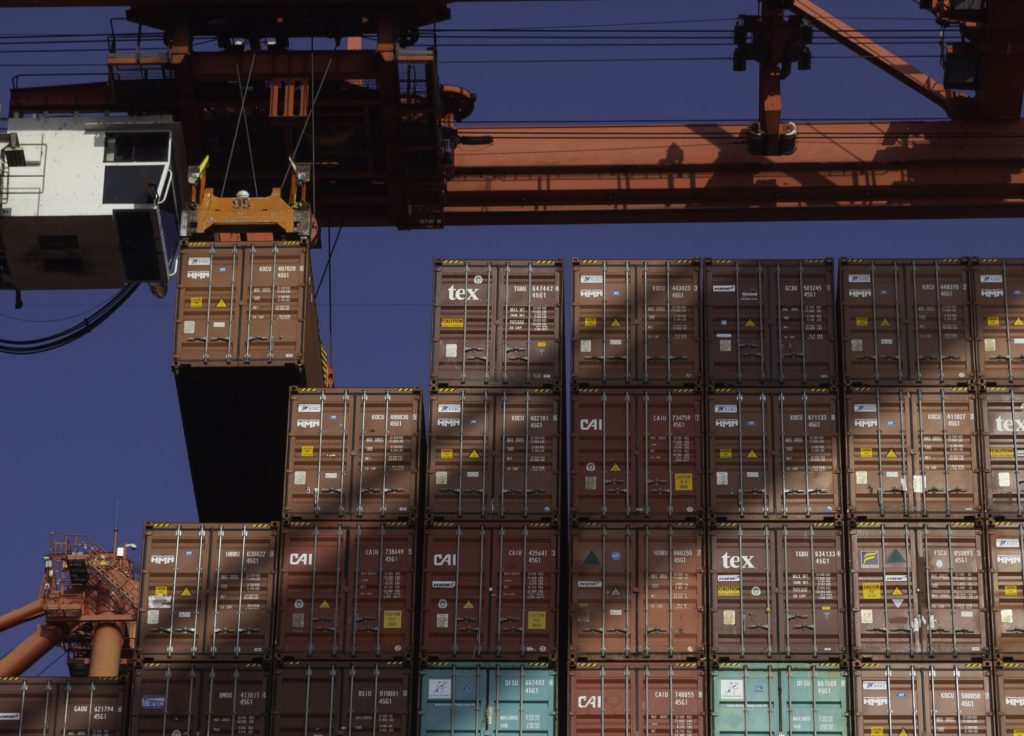
(Bloomberg) — US companies are acknowledging that reshoring — once the subject of talk but no groundswell of action — is accelerating, with at least one executive being “pumped up” about critical supply lines shifting away from nations such as China.

“This reshoring, nearshoring, whatever they’re calling it this week is real, and we’re pumped up about it,” Jim Hoffman, the CEO of Reliance Steel & Aluminum Co. of Scottsdale, Arizona, said on a recent earnings call. “It’s going to fit right in our wheelhouse.”

According to a report Wednesday, Deloitte said some 62% of manufacturers it surveyed have started reshoring or near-shoring their production capacities. The survey included 305 executives at transport and manufacturing firms, mostly in the US, with annual revenue of $500 million to more than $50 billion. 

American firms are expected to reshore almost 350,000 jobs in 2022 — an increase of 25% from 260,000 in 2021, according to figures cited in Deloitte’s ‘Future of Freight’ report. Ultimately, the shift could reduce by 20% the share of Asia-originating shipments to the US by 2025 and by 40% by 2030, it said.

‘Coming Back’

Moving production lines closer to the US and Europe has been discussed for years but was considered too costly and cumbersome. The pandemic turned much of the chin-scratching into construction spending for several reasons: global supply-chain snarls, rising e-commerce, geopolitical pressures, export restrictions, and a surge in robotics and automation.

These “are combining to create conditions for this movement to finally have legs,” Deloitte said in the report.

Another key factor are the massive US subsidies from the Inflation Reduction Act and CHIPS Act, which contain provisions that provide specific financial incentives for products made in the US, Canada or Mexico. The result is increased project planning for US-based manufacturing of electric vehicles, batteries, memory chip plants, and liquid natural gas. 

“Pandemic and geopolitical events have reminded us of the need for a more distributed set of sourcing options, ensuring reliability and flexibility in securing critical materials and equipment,” said Irving, Texas-based Commercial Metals Co. CEO Barbara Smith. “Eventually, we expect reshoring to extend well beyond the areas we just discussed.”

Higher Prices

As supply chains are realigned away from China to other regional factory hubs, labor-cost pressures in Western Europe and the US “are being mitigated by advances in robotics and automation,” according to the Deloitte report. 

Still, some goods will be more expensive for companies to produce, and ultimately for consumers to purchase over the longer term. 

Take, for example, semiconductors, which are a key battleground in the US-China trade conflict. Currently it costs 44% more to manufacture in the US versus Taiwan, according to a recent report from economists at Goldman Sach Group Inc. 

While semiconductors only represent 0.3% of the final value of US consumer prices, there’s a risk that an escalation in US-China trade tensions could broaden and “persistently boost consumer prices by a wider margin,” the report said.

For Goldman Sachs Group Inc. economists, more evidence is needed before declaring reshoring a long-term trend. They point to an increase in US manufacturing facilities that are in the planning stages this year.

“The increase is directionally consistent with a reshoring of production but the magnitude falls short of suggesting any meaningful turn in the tide,” they wrote in the report Monday.

But Mike McGaugh, the CEO of Akron, Ohio-based plastics and rubber maker Myers Industries Inc., indicated it’s a reality and not merely a blip. He responded affirmatively when asked on a conference call last week if he thought reshoring is a real trend.

“The supply-chain issues spooked some customers that we saw the last two or three years,” McGaugh said. “Even if the costs are a little bit higher on labor, the ability to have rapid feedback and rapid delivery means something to our customers.”

More stories like this are available on bloomberg.com

©2022 Bloomberg L.P.
Sunak’s Billionaire Brother-in-Law Wants to Make Office Work More Efficient

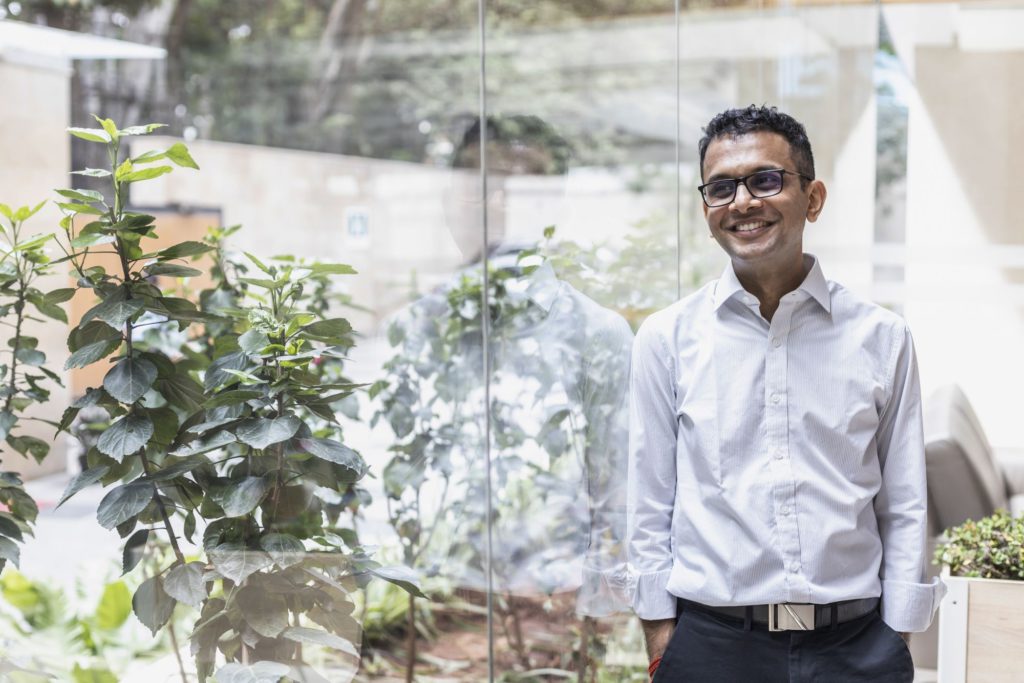
(Bloomberg) — Rohan Murty saw his father build Infosys Ltd. into one of India’s national champions by pioneering a novel strategy of outsourcing technology services. Now the 39-year-old is attempting a no less daunting task of using data to make white-collar workers more efficient.  

The billionaire Harvard alum’s Soroco works with global corporations to streamline office tasks, using techniques similar to Toyota Motor Corp.’s pioneering efforts decades ago to eliminate waste in manufacturing. The company collects data to study patterns of how workers use software across teams and suggests fixes to iron out kinks, boost productivity and reduce costs. The solutions can be better technology, automation, standardization and preventing repetition of tasks.

The startup, based both in Boston and Bangalore, gets a real-time view of how people in teams get work done by using machine learning. Customers include drugmaker Bayer AG, engineering giant Robert Bosch GmbH, candy and petfood maker Mars Inc. as well as some Wall Street banks and global online retailers.

“The manufacturing industry built and refined processes to make blue-collar work more efficient but the digital age has no parallel,” founder and Chief Technology Officer Murty said in an interview recently in Bangalore. “Soroco has built the white-collar equivalent.” 

He’s hardly the first one to come up with the concept, which is dubbed task mining in industry parlance. Giants such as Microsoft Corp., International Business Machines Corp. and SAP SE all have similar offerings and have struggled to make much of a dent in the daily inefficiencies of white-collar work. 

Murty thinks he’s found a more effective approach. Soroco’s software can collect data and map patterns across entire teams, uncovering inefficiencies and waste that top executives can’t see, he said.

“It’s common to see the management pitted against the team doing the work,” said Murty, who earned a bachelor’s degree from Cornell University and a doctorate from Harvard University, both in computer science,. “Soroco helps align both toward a common goal.”

In one example, a global pharmaceutical firm faced complaints from customers about delays in handling orders, rebates and returns. Soroco says its machine-learning software detected steps along the way that required a significant amount of manual work and recommended automation across multiple locations. That cut the processing time by 75%, resulting in a steep reduction in complaints, according to the startup.

Murty teamed up with Arjun Narayan, a computer scientist from Massachusetts Institute of Technology and George Nychis, a PhD from Carnegie Mellon University to create Soroco in 2014. The startup is seeking to expand at a time when the pandemic has hastened the proliferation of digital devices and apps used by more than half-a-billion office workers around the world. Murty estimates that people interact with work-related software roughly 70 times as often as they do with leading social networks.

Besides formidable competition, Soroco could also face internal resistance from employees who feel threatened by the scrutiny of how they work, according to Amardeep Modi, a vice president at researcher Everest Group. Addressing such concerns, Soroco says the whole exercise is anonymous and carried out without compromising the privacy of individuals. 

Most companies obsess over the wrong kind of workplace questions — like the number of days employees work from home or office — said Sandeep Dadlani, who was until last month the chief digital officer at Mars.

“Any technology capability that allows enterprises to empathize with and understand how employees work, can help frame the productivity problem better, make life better for teams and at scale,” said Dadlani, now the chief digital and technology officer at health-care conglomerate UnitedHealth Group Inc.

Infosys Stake

Murty owns 1.45% of Infosys, whose market value is about $80 billion, making him the second-largest individual shareholder of the outsourcing giant founded by his father Narayana Murthy. Murty’s sister Akshata, a billionaire herself, is married to the newly elected British Prime Minister Rishi Sunak. 

Soroco, with about 250 employees and 40 patents, isn’t in a hurry to seek external funding yet, Murty said, adding its customer base tripled in the past year.

–With assistance from Ben Stupples.

More stories like this are available on bloomberg.com

©2022 Bloomberg L.P.

Blackbird Raises Biggest Australian Venture Fund at $640 Million

(Bloomberg) — Blackbird Ventures has raised the largest Australian venture capital fund yet, securing more than A$1 billion ($640 million) from sovereign wealth funds and individual investors.

The Sydney-based firm will allocate A$284 million for early-stage investments in Australia, A$668 million for follow-on bets and NZ$75 million ($44 million) for early-stage investments in New Zealand, the company said in a statement on Wednesday. 

Blackbird has expanded steadily since its debut A$29 million fund in 2012. That fund invested in the first rounds for Canva Inc., Culture Amp and SafetyCulture, which went on to become some of Australia’s most prominent startups. Canva alone was valued at $40 billion last year, while the other two have been valued at more than $1 billion, according to CB Insights.

That helped Blackbird generate a net internal rate of return of 61.3% for the first fund, according to the company, which posts the performances of its funds on its website.

“This new fund represents the next chapter in our ambition,” Blackbird partner Rick Baker said in an interview. “Just as Aussie and Kiwi-founded companies are proving they can succeed globally, we also want to show it is possible to build a world-leading VC firm outside Silicon Valley.”

Investors in the firm’s fifth fund include Australian superannuation funds such as AustralianSuper and Hostplus as well as sovereign wealth funds of Australia and New Zealand. About 270 individual investors, many of whom are tech founders it has backed in the past, also participated.

More stories like this are available on bloomberg.com

©2022 Bloomberg L.P.
Danish Leader Stages Comeback in Tight General Election

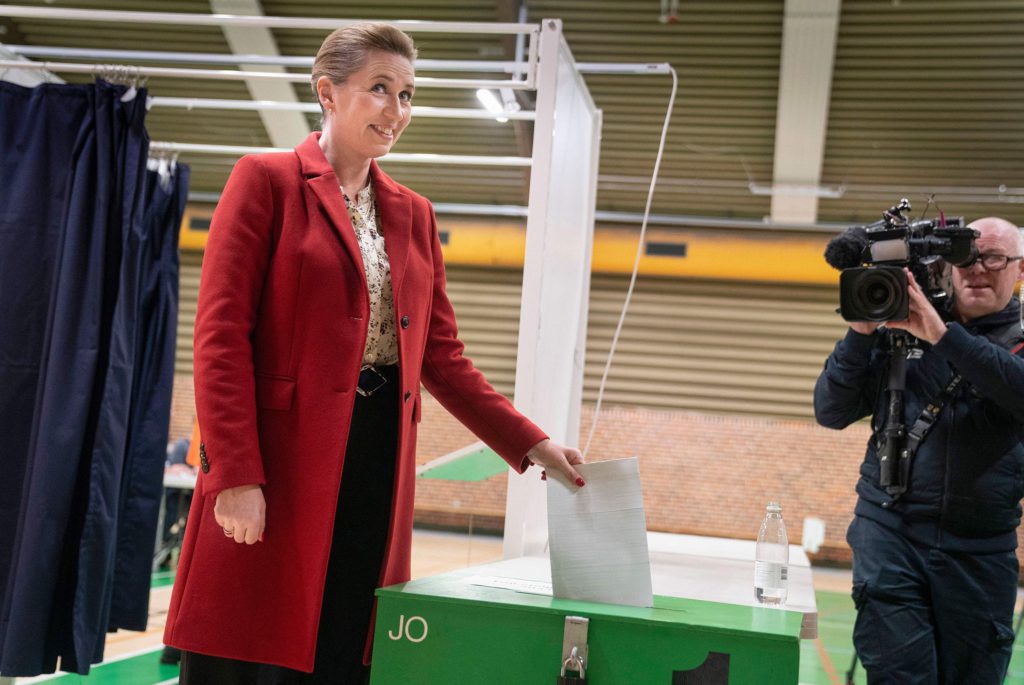
(Bloomberg) — Denmark’s Social Democratic Prime Minister Mette Frederiksen was unexpectedly set to win a majority in a nail-biter general election, putting her on track to secure another four-year term at the helm of the Nordic country.

Frederiksen and her allies in the left-leaning red bloc won 87 seats as all votes had been tallied, after early polling indicated she would falter. That compares with 72 mandates for the right-wing opposition blue bloc and 16 for a newly emerged center party the Moderates, which had been widely expected to become a kingmaker following the vote.

Frederiksen has spoken about a broad government, going as far as to propose forming a grand coalition spanning the political spectrum.

“I’m very, very happy,” Frederiksen said as she arrived at parliament after midnight on Wednesday. When asked if she would still seek a broad-based coalition, she replied in the affirmative, saying “we will do all we can to realize it.”

In her victory speech, Frederiksen said her cabinet will resign to allow talks to open on forming a broad government. The technical resignation underscores her wish to involve a range of parties in the talks.

“No matter who forms a government, the challenges are piling up,” she said, highlighting three key issues: reduced waiting lists in the health-care system; further inflation aid for Danes; and more efforts to fight climate change.

The outcome of the election will allow the prime minister to put a pandemic-era mink scandal finally behind her and push forward with climate policies, including spurring the transition to green energy, as well as fixing the health service, which she pledged to do as part of her campaign. Given the consensus-driven nature of Danish politics and the krone’s peg to the euro, markets are unlikely to move on the election result.

For the first hours of the vote count, the 44-year-old prime minister was on track to lose her majority, which would have forced her to the negotiating table with Lars Lokke Rasmussen, a former two-term prime minister who five months ago founded the centrist Moderates. Her campaign, much like the past two years of her premiership, was weighed by a decision to kill the country’s mink population during the pandemic, later found to have been unlawful.

Standing in the way of a grand coalition is the opposition leader, Jakob Ellemann-Jensen of the Liberals, who has ruled out such a partnership, partly due to Frederiksen’s role in the mink cull.

Frederiksen, who’s led the party since 2015, is the youngest premier in Danish history and was seen as having handled the pandemic more skillfully than many developed nations until that perception was marred by the mink scandal. Two months after taking over the government in June 2019, she drew then-US President Donald Trump’s ire by saying Greenland wasn’t for sale after he’d offered to buy it.

The vote was so close that a final tally could shift some seats, and a further element of uncertainty is created by two seats from Greenland, which Frederiksen needs in order to retain control in the 179-seat legislature. Those will be announced Wednesday. She gained one seat from the Faroe Islands with one going to the opposition. Turnout in the election reached 84.1%.

The election result sets off talks among parties on who can secure the needed backing in parliament, with the leader of those negotiations carrying the moniker royal investigator. 

“The Social Democrats campaigned on the formation of a broad government,” Frederiksen said. “If a majority of parties choose me as the royal investigator, I will explore that opportunity because that would be good for Denmark.”

When they reach a deal, it’s presented to the Queen and marks the formal shift of power. Often the governing coalition has a minority in the legislature, but is supported in any votes by allies to ensure the government’s proposals pass.

(Updates with Frederiksen comments from fifth paragraph.)

More stories like this are available on bloomberg.com

©2022 Bloomberg L.P.
Sony Jumps 12% After Hiking Outlook and PlayStation Expectations

(Bloomberg) — Sony Group Corp. shares had their biggest intraday rise since 2017 after the company said PlayStation 5 production went better than expected in the past quarter and it now aims to surpass its sales target for the fiscal year.

The Tokyo-based conglomerate also bumped its full-year operating profit forecast by 5%, largely on the weakness of the yen. It reported sales of 2.75 trillion yen ($18.6 billion) in the three months ended September, 16% higher than the prior year, after getting a boost from its music streaming division. The company now expects to beat its goal of 18 million PS5 sales this fiscal year and set a target of 23 million units for the next.

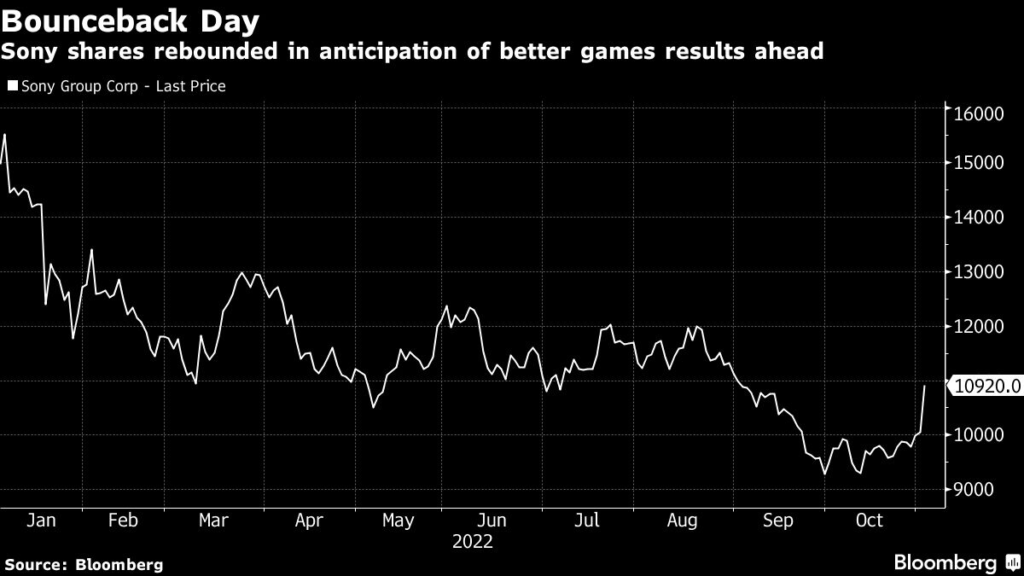
Shares were up as much as 12% in Tokyo on Wednesday after slumping more than 30% this year prior to its latest earnings report.

Sony’s results proved better than feared, as the company’s various businesses are dependent on strong consumer demand, which has dissipated this year with a global economic downturn and potential recession on the horizon. Chief Financial Officer Hiroki Totoki said the games business was feeling the compound effects of cooler consumer appetites and the worldwide reopening after the pandemic, with both factors pushing people away from games and other leisure spending.

Still, the company said it’s seeing strong user engagement with newer games on the PlayStation platform and sounded a positive note about the release of its next God of War game, scheduled for next week, as a catalyst for more sales. It assembled 6.5 million PS5s in the past quarter, which was a faster production pace than expected, Totoki said.

“Considering the PlayStation did not see a single big game in the quarter, numbers were surprisingly stable,” said industry analyst Serkan Toto of Kantan Games. “Video games are a hit-driven business. Sony did relatively well despite not having any blockbusters to drive growth this quarter.”

Sony Bumps Up Profit Outlook as Weak Yen Juices Sensor Sales

The image sensor business was aided by the fall in the yen’s value — as much of the production is done in Japan and shipped overseas — in a year when smartphone sales have slumped globally and especially in China, the world’s biggest mobile market. Sony said it’s seeing resilient demand for premium devices, which use more cameras and require more sensors per unit sold.

“This announcement dispels excessive concerns to some extent, as the dominant market view lately was that the firm would cut guidance again on concern over a slowdown in high-end models at a major North American smartphone maker,” SMBC Nikko analysts Ryosuke Katsura and Hajime Ono wrote. A recovery in investor sentiment would hinge primarily on growth in the games division over the holiday period and beyond, they added.

More stories like this are available on bloomberg.com

©2022 Bloomberg L.P.
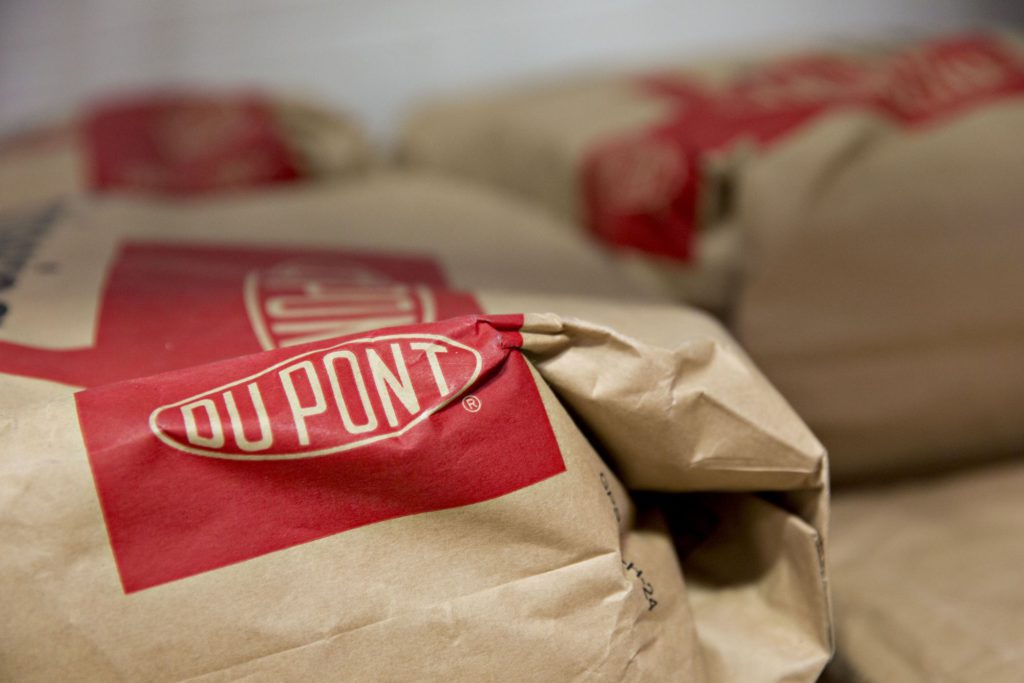
DuPont Scraps $5.2 Billion Rogers Deal After China Review

(Bloomberg) — DuPont called off its planned $5.2 billion acquisition of engineering materials maker Rogers Corp., saying it was unable to get timely clearance from regulators.

DuPont de Nemours Inc. said it will pay a breakup fee of $162.5 million to Chandler, Arizona-based Rogers, whose shares plunged as much as 46% after the close of regular trading. DuPont’s brief statement was issued a day short of the one-year anniversary of the deal’s announcement.

While Tuesday’s statement didn’t specify which “required regulators” hadn’t cleared the transaction, DuPont previously identified China’s State Administration for Market Regulation, SAMR, as the last remaining hurdle for deal approval. The scuttling comes as mounting tensions between the US and China spill into industry as both governments vie for preeminence in key sectors such as semiconductors, advanced batteries for electric cars and artificial intelligence.

Representatives for the two companies declined to comment beyond the statement.

China has been wielding its power over the mergers of foreign companies with increasing force in recent years. In 2018, US-based Qualcomm Inc. scrapped a $44 billion bid for Dutch chipmaker NXP Semiconductors NV after Chinese regulators failed to approve what would have been the largest-ever deal in the chip industry.

Last year, Blackstone Group Inc.’s $3 billion takeover of Soho China Ltd. collapsed a month after the companies said SAMR had formally accepted the deal for review.

Mergers that have won SAMR’s approval this year include Taiwan-based GlobalWafers Co.’s takeover of Germany’s Siltronic AG and Advanced Micro Devices Inc.’s $35 billion acquisition of Xilinx Inc.

China sales accounted for more than a third of Rogers’ 2021 revenue, while nearly half of DuPont’s sales came from the broader the Asia-Pacific region, according to data compiled by Bloomberg.

DuPont had pitched the Rogers purchase as a way to tap into the rapid growth of electric vehicles and advanced auto electronics. The deal also would have expanded its position in advanced materials for other key growth markets such as clean energy and 5G mobile-phone service.

Wilmington, Delaware-based DuPont’s shares rose about 6% in late trading.

(Updates with previous transactions in fifth paragraph.)

More stories like this are available on bloomberg.com

©2022 Bloomberg L.P.
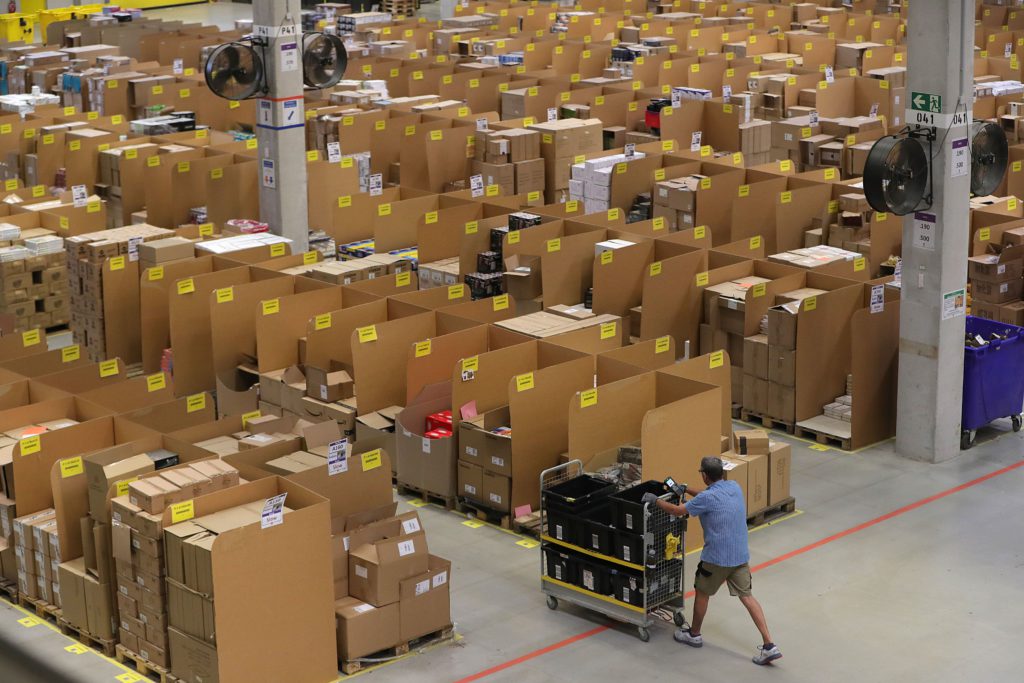
Amazon Freezes Hiring Levels in Profitable Advertising Business

(Bloomberg) — Amazon.com Inc. is freezing staffing levels in its profitable advertising business, according to a person familiar with the matter, showing that the world’s largest e-commerce company is taking more drastic measures to align expenses with slowing sales. 

The headcount freeze was announced internally Tuesday, said the person, who asked not to be identified because the plans are private. Amazon will continue to fill vacancies in its advertising business, but won’t create any new positions, the person said.

“Amazon continues to have a significant number of open roles available across the company,” a spokesperson said in a statement. “We have many different businesses at various stages of evolution, and we expect to keep adjusting our hiring strategies in each of these businesses at various junctures.”

The decision to keep the advertising unit workforce at its current level shows Amazon is looking to squeeze more profit out of the fast-growing business in the busy holiday quarter. Chief Financial Officer Brian Olsavsky said in a media call last week that Amazon would continue to invest in its advertising division and its cloud-computing unit, Amazon Web Services, while looking for other places to cut costs.

Amazon’s advertising business — largely sponsored search results on its web store — generated $9.55 billion in the quarter ended Sept. 30, an increase of 25% from the same period a year earlier.

Amazon shares have dropped 13% since Oct. 27, when the company projected the slowest revenue growth ever for its holiday quarter. Chief Executive Officer Andy Jassy has been busy reducing expenses in the face of sales that have come off their pandemic highs. Amazon in October imposed a hiring freeze on corporate roles in its retail business and has been cutting and shutting down several experimental and smaller programs to reduce costs.

More stories like this are available on bloomberg.com

©2022 Bloomberg L.P.

AMD Beats Profit Estimates as It Pushes Deeper Into Servers 

(Bloomberg) — Advanced Micro Devices Inc. climbed in late trading after an expansion into server processors helped offset a slumping personal-computer market last quarter and the chipmaker vowed to make further gains.

Profit topped analysts’ predictions in the third quarter, with sales coming in roughly in line with projections. In the current period, revenue will be approximately $5.5 billion. Though that missed the average estimate of about $5.9 billion, it represents an increase at a time when several of AMD’s peers are suffering contractions.

Chief Executive Officer Lisa Su assured investors that a long turnaround of the chipmaker is still on course, helped by market-share wins. The company expects sales to increase about 14% in the fourth quarter, in contrast with double-digit declines at rivals Intel Corp. and Nvidia Corp.

“We believe we will continue to gain share” in the data-center market, Su told analysts on a conference call. “We’re planning for a weaker PC environment in the fourth quarter,” meanwhile, as customers cut inventory and the company ships fewer parts, she said.

Underlining how important servers are becoming to AMD’s finances, the company’s data-center unit posted a revenue increase of 45% from a year earlier. That helped cushion the impact of a 40% drop in its personal-computer chip revenue. Strong demand for game-console parts — it supplies Microsoft Corp. and Sony Group Corp. with custom chips — helped boost sales for AMD’s gaming division by 14%.

The results helped send the shares up as much as 7.1% in extended trading. 

AMD had warned in October that its third-quarter performance would fall short of projections, and other chipmakers — including Intel and Nvidia — have provided gloomy outlooks for the industry. Facing a shaky economy and soaring inflation, consumers and corporations have turned away from buying computers.

Against that backdrop, AMD’s numbers were a bit better than expected. Profit was 67 cents a share in the period, excluding some items. Analysts had estimated 65 cents. 

Investors have been seeking signs of whether the steep PC decline will continue — and take the market back to pre-Covid depths — or settle at the higher level. A rebound to the heights of the early pandemic is now looking increasingly unlikely. Su said that the company is assuming that the PC market will decline about 10% in 2023. 

In the third quarter, PC shipments fell 15% to 74 million from the same period a year earlier, according to IDC. The industry had enjoyed a resurgence during the pandemic, when the work-from-home trend fueled demand for equipment. 

Under Su, AMD had proven less susceptible to market fluctuations because it’s taken share from larger rival Intel with new products. But in the third quarter, Intel said it took back share in PCs. Su said that AMD had decided to not match some of the price cuts offered by its competitor. 

Su’s biggest coup, though, has been the breakthrough in the profitable market for processors that run server machines. In that area, AMD has gone from a share of less than 1% to a double-digit percentage. Su’s counterpart at Intel, Pat Gelsinger, said last week he expects tough competition in servers to continue.

AMD shares closed at $59.66 in New York on Tuesday, leaving them down 59% this year. With fears of a deepening slowdown weighing on the company, AMD has been one of the worst-performing semiconductor stocks in 2022 following a four-year surge.

(Updates with CEO comments starting in fourth paragraph.)

More stories like this are available on bloomberg.com

©2022 Bloomberg L.P.

Digital Currency Group Names Murphy President, Cuts 10% of Staff

(Bloomberg) — Cryptocurrency conglomerate Digital Currency Group promoted Mark Murphy to president from chief operating officer as part of a restructuring that saw about 10 employees exit the company. 

Notices to those impacted by the reshuffling at the Stamford, Connecticut-based firm, which controls asset-manager Grayscale Investments and brokerage Genesis, among others, went out last week, according to a person familiar with the matter. DCG, run by founder and Chief Executive Barry Silbert, has 66 employees left following the reorganization.

“We recently made a series of internal changes to position DCG for its next phase of growth, including a streamlining of our departments alongside several promotions on our leadership team,” a spokesperson said.

Murphy is DCG’s first president. Jenn Goodson was named as chief administrative officer; Simon Koster is chief strategy officer; and Matt Kummell is senior vice president of operations. Amanda Cowie is now overseeing communications, marketing and events. 

Cryptocurrencies have been mired in a slump this year as the Federal Reserve raises interest rates to combat historic levels of inflation. The downdraft has affected scores of digital-asset companies, with layoffs happening at major exchanges and elsewhere. Bloomberg News reported on Tuesday that Galaxy Digital Holdings Ltd., the crypto financial services firm founded by billionaire Michael Novogratz, is exploring eliminating as much as 20% of its workforce. 

DCG-subsidiary Genesis has already been hit with a wave of departures and firings in recent months. The brokerage and lender’s chief executive officer stepped down in mid-August as the unit eliminated 20% of its workforce. A handful of its trading-desk personnel have also departed since then, as have its head of market insights and its chief risk officer. 

Genesis was the biggest creditor ensnared in the collapse of Three Arrows after the fund failed to meet margin calls. DCG assumed some liabilities and filed a $1.2 billion claim against Three Arrows, which is under liquidation. Genesis said last month that lending plunged 80% in the third quarter. 

More stories like this are available on bloomberg.com

©2022 Bloomberg L.P.
This $50,000 Japanese Turntable Is What Your Vinyl Has Been Waiting For

(Bloomberg) — Sales of vinyl records topped $1 billion last year for the first time since 1986. That was the year before Esoteric Co. was established as a niche high-end digital brand for the burgeoning audio revolution ushered in by CD players.

More than three decades and a whole lot of design later, the company has released its first-ever analog turntable. And the Grandioso T1 has a weight to match its eye-watering price tag.

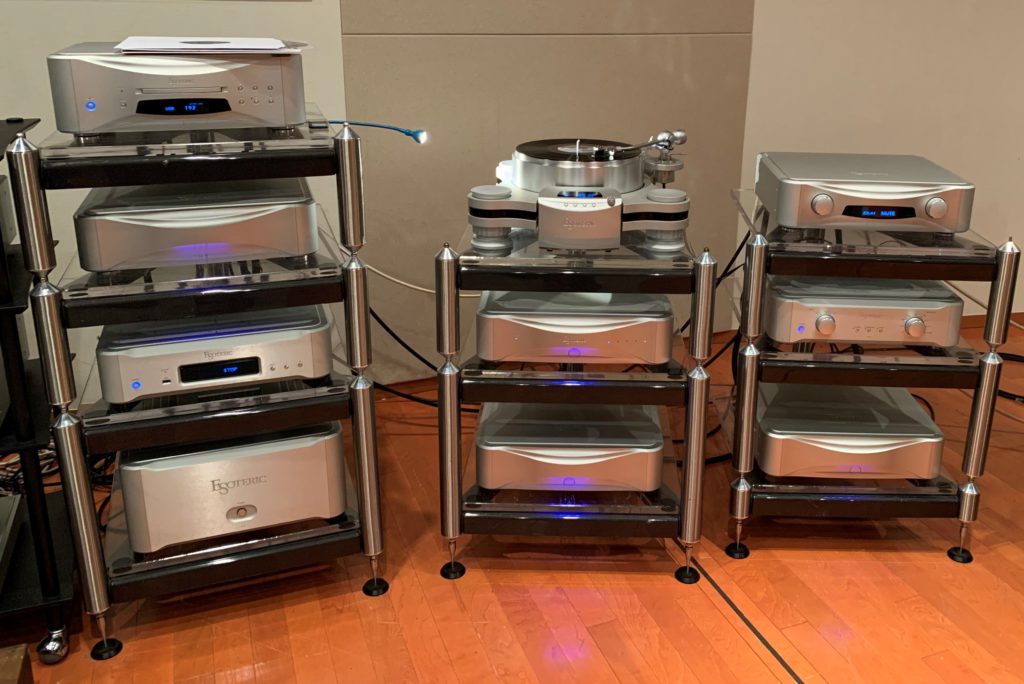
Priced at 7,700,000 yen ($52,000), the T1 features a contoured brushed aluminum chassis similar to the company’s other components. It looks more like something you’d expect to see in a NASA lab or five-star kitchen. It’s a behemoth at nearly 100 pounds — about four times the weight of the ubiquitous Technics SL 1200 favored by club DJs. 

The bulk comes from the massive platter on which the record sits and rotates. This is the first feature that catches the eye, looking more like a single-layer metallic cake than the overturned dinner-plate profile of most other models. The piece is hand-polished to remove imperfections and weighs 19 kilograms (42 pounds), providing a solid base for minimal vibration.

Esoteric employs unique magnetic technology in two different ways in the T1. The “Magne-Float” set-up helps effectually lower the platter’s weight by about 80% to reduce friction on the spindle bearing. Meanwhile, the patented “MagneDrive System” motor spins the platter via induction, making no direct contact as is usual with traditional belt or direct-drive turntables. All of this is aimed at smooth, distortion-free rotation.

The plinth is designed to further reduce vibration, with two aluminum slabs sandwiching a piece of wood painted with high-gloss piano lacquer. Up to three tonearms can be attached to accommodate various cartridge types for playing different types of records (pop versus classical, for example, or brand new 180 gram pressings versus old worn vintage records).

The company’s soundroom, where I tested the turntable, is an ideal listening environment. Solid walls in a loose-pleat pattern prevent reflections, and soft padded treatments absorb sound. The elephant in the room — roughly the same size as a baby pachyderm, anyway — is the Avantgarde Acoustic Trio and Spacehorn speaker system, which, had you the room for them to shine, would set you back more than $250,000.

We listened first to Aaron Copland’s “Fanfare for the Common Man,” as performed by the Minnesota Orchestra (Eiji Oue, conductor). Played on the T1 through Esoteric amplification, rich, clear horn sounds separated from the ominous rumble of the drums and shimmering tam-tam. The sound was live and beautiful, though admittedly I imagine even a compressed Spotify copy played via an iPhone would probably sound great through those speakers in that particular room.

Next up was “Isolation” by Hiromi Uehara’s quintet. With a broader range of instruments, each tone was distinct. The warm dynamics of the piano, the hush between notes, even the most subtle sounds from the bow on the violin strings to the taps on the fingerboard. The whole experience made me regret that I hadn’t been bold enough to bring along some of my own rock records for a Risky Business-esque spin, in a bid to discover details I’d not heard before.

So, almost 40 years after Tom Cruise famously danced in his socks, why has Esoteric finally decided to join the vinyl party?

With parent company Teac Corp. already having an established turntable presence, Esoteric felt it could take its time to develop something that would leverage its expertise and consumer recognition in digital source machines, and stand out from the crowd. It took five years to create the T1.

“There had been no innovation for 100 years,” Hiroshi Oshima, Esoteric’s president said in our discussion of turntables. While a number of magnetic-drive turntables have emerged in the past few years, Oshima said the T1 takes a different approach, drawing on technology used in medical instruments and semiconductor production gear to manipulate objects with minimal outside interference or contamination.

The lengthy development time, during which the company gradually leaked details of the machine, helped create a buzz among the brand’s fans ahead of its release in October, to commemorate Esoteric’s 35th anniversary. Oshima said initial demand had outstripped the company’s expectations.

Sales at parent Teac rose nearly 10% in the fiscal year ended March to ¥16 billion ($110 million), ending a steady two-decade decline. Esoteric said that overseas business has become the focus, now accounting for 70-80% of demand for high-end Japanese audio products versus 20-30% in the past. 

While China is seen as an important growth market for the company as a whole, it’s not a target audience for the T1 due to its lack of a legacy record culture. The main target customers are keen-eared, affluent North Americans and Europeans.

And while much has been made of the T1’s price, it’s hardly the most expensive turntable on the market, with a number of mostly European-made products breaching $200,000, such as the Transrotor Argos. But still, it’s not cheap.

“Even wealthy people wouldn’t buy something like this unless they’re an audiophile,” Oshima admitted. “Then there are some that will buy it even if they don’t have the money — they’ll take out a loan.”

–With assistance from Marika Katanuma.

More stories like this are available on bloomberg.com

©2022 Bloomberg L.P.

Close Bitnami banner
Bitnami
