Bloomberg

Chinese Stocks Surge in US on Speculation of Covid Zero Exit

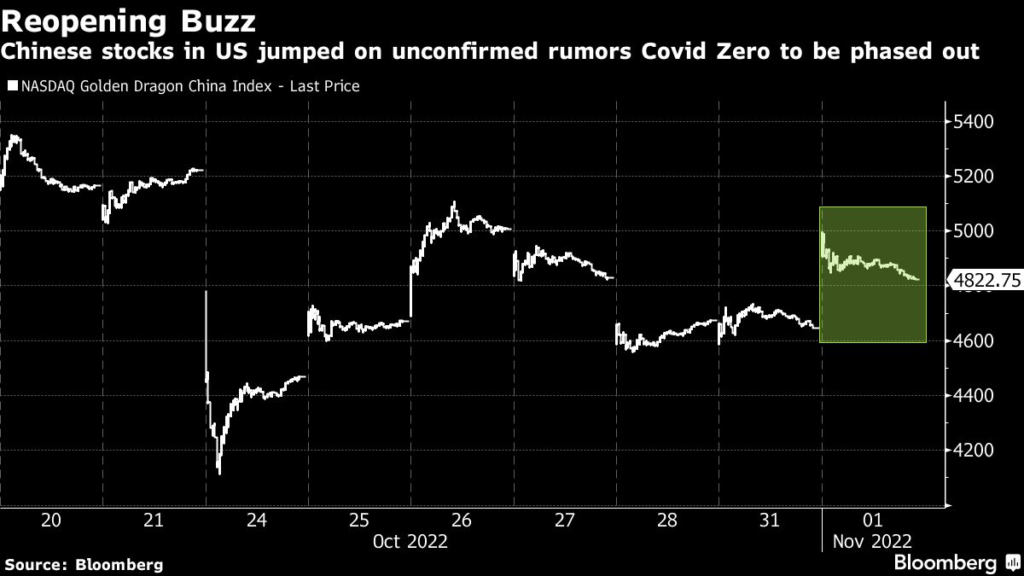
(Bloomberg) — Chinese stocks listed in the US surged on Tuesday, fueled by speculation that Beijing is preparing to phase out Covid Zero policies — even as the nation’s Foreign Ministry said it was unaware of such a plan.

The Nasdaq Golden Dragon Index of 65 Chinese companies closed up 3.8% in New York, after jumping as much as 7.6% during the session. Stocks tied to economic reopening like online travel agency Trip.com Group Ltd. and hotel operator H World Group Ltd. leading the gains, advancing 8.4% and 11% respectively. Shares of internet giants including Alibaba Group Holding Ltd. and JD.com Inc. rose more than 3% each.

Optimism that China may ease its zero-tolerance approach toward the pandemic offered timely relief to the nation’s US-listed shares, which fell to a nine-year low last week amid President Xi Jinping’s push to tighten his control over the government. Investors have been desperate for less-restricted activity to spur growth in China’s economy, which has been hampered by weak consumption and an ailing housing sector.

“Today’s move is a combination of people buying the market and probably some short covering,” said Sharif Farha, head of investments at HB Investments, referring to speculators reversing a recent wave of bearish bets. “Whether the rally sustains or not will be dependent on if China’s Covid Zero policy is officially over.”

Traders latched onto unconfirmed social media posts that China is forming a committee to assess scenarios for relaxing its uncompromising responses to the pandemic, a stance long seen as a key risk for the country’s stocks. The committee has set a target for reopening of March next year, according to the posts. In response, Foreign Ministry spokesman Zhao Lijian said he’s “not aware” of any such committee.

“I’m not surprised to hear rumors about a more formal approach” to walk back some Covid Zero policies, said Charlie Wilson, a portfolio manager at Thornburg Investment Management. “It’s impossible to run an economy of that size with periodically locking down. It’s not sustainable.”

Wilson had an overweight position in Chinese stocks for his $935 million emerging-market portfolio as of the end of September. He said he expects more announcements on economic reopening as new government leaders assume roles at regional and local levels.

The reopening speculation boosted stocks from New York to Johannesburg to London on Tuesday. European luxury stocks such as Hermes International and Richemont rose, as did tech investor Naspers Ltd. and its unit Prosus NV. In the US, casino stocks and cruise operators including Melco Resorts & Entertainment Ltd, Las Vegas Sands Corp and Carnival Corp also gained.

Some investors, though, are still wary, especially given that the world’s No. 2 economy has previously reiterated its commitment to stringent Covid restrictions. 

In fact, the country ramped up its lockdowns after the Party Congress ended due to rising Covid cases, although the central city of Zhengzhou — home to the world’s biggest iPhone plant — started to loosen some control measures on Tuesday, according to a local government statement.

“One must be cautious about investing on speculation, particularly because much positive speculation about China Internet in recent months has proven unfounded,” said Adam Montanaro, investment director of global emerging-market equities at Abrdn. 

Still, the strong share-price reaction shows that many Chinese stocks “have substantial upside in the event the rumors of an exit from zero Covid translate to reality,” he said.

(Updates with share moves, chart at close and adds Thornburg’s commentary in sixth and seventh paragraphs.)

More stories like this are available on bloomberg.com

©2022 Bloomberg L.P.

A Risky Trading Strategy Is Growing in Popularity in 2022’s Wild Market

(Bloomberg) — It happens in a flash: The S&P 500 turns on a dime, and piranha-like options traders pile into short-dated contracts in a dash to harvest a quick advantage. 

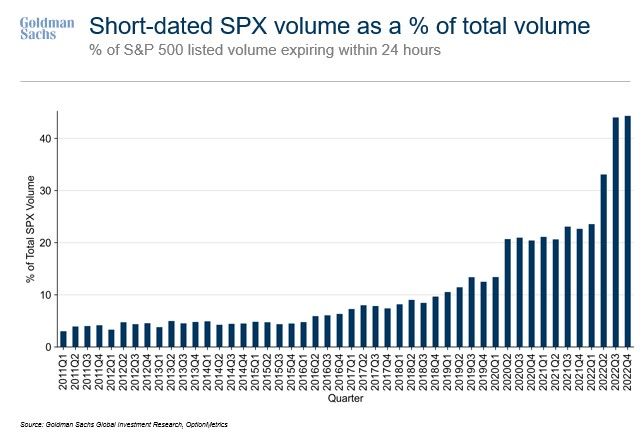
Tuesday reprised a pattern that has been visible for months. As the S&P 500 reversed a 1% gain in a violent session right before the Federal Reserve meeting, the turbulence fed a trading frenzy in options that expire within the next 24 hours. Such contracts dominated the ranks of the most traded, making up half of the index’s total volume. 

Once a popular playbook for day traders seeking quick profits on meme stocks, the risky strategy appears to have grown more popular among retail and institutional investors alike. During the third quarter, S&P 500 options expiring within one day accounted for more than 40% of total volume, almost doubling from six months ago, according to data compiled by Goldman Sachs Group Inc. 

The rush reinforces concern that derivatives can amplify moves in underlying assets, potentially creating market dislocations. At the same time, it reflects a Wall Street era where stock investors are so keyed to minute-by-minute news flows that intraday volatility builds on itself. 

“Initially there was a narrative that this short-duration trading was retail but I do not think that covers the entire story,” said Amy Wu Silverman, an equity derivatives strategist at RBC Capital Markets. “It is a function of the fact that the Fed has been extremely data dependent. This will continue to be a ‘thing’ as long as we remain quite data dependent.”

The latest dash comes amid the bear market’s seventh discernible rally of the year. The failure of past ones has snuffed out the previously reigning quick-money strategy: Buying the dip. Tuesday marked the 26th time in 2022 where the S&P 500 erased a gain or loss of at least 1% in a single session. Not since the 2008 financial crisis has the market experienced such frequent swings. 

A whiplashing market breeds hedging activity as well as speculative wagers. Also feeding the boom are moves by firms like Cboe Global Markets Inc. to expand option expirations to each weekday.  

To Brian Donlin, an equity derivatives strategist at Stifel Nicolaus & Co., the ramp-up in the usage of fleeting contracts is a symptom of the futility of having any long-term conviction while inflation data and Fedspeak dominate the discourse.

“It’s a relatively new development that has seen adoption because the perfect conditions exist for it. I use them myself,” Donlin said. “We have clear consistent macro data points as catalysts more than ever.”

The focus on here and now has gained particular traction with retail investors. According to data compiled by JPMorgan Chase & Co., about 13% of all retail-involved option transactions are one day or less to maturity, compared with 5% in 2020. 

With day traders overrunning the market, institutional investors have been forced to adapt by keeping a close tap on retail flows. Nomura Securities International Inc. strategist Charlie McElligott noticed that professionals have recently been taking a page out of retail’s playbook, piling into options right before their expiry.

Some market watchers attribute the rush to the need among defensively positioned pros to catch up to a market rally by purchasing bullish call options, a move that helped fuel the S&P 500’s 5% reversal on Oct. 13. Others suggest institutions are utilizing the products to manage portfolio risk during times of turbulence.

Whatever the reason, one thing is clear: Short-dated options can expose investors to big profits and losses as they’re more susceptible to changes in the price of the underlying stock or index.

Take last Friday, when the S&P 500 jumped more than 2% to close above 3,900. Calls expiring that day with a strike at 3,850 surged to $45.80 from $2.90 — a stunning gain of 1,479%. On the other hand, puts maturing the next session with an exercise price of 3,750 tumbled 97% to 65 cents, after more than doubling to $24.27 during the previous day.

The explosion in short-dated contacts is concerning to Brent Kochuba, founder of SpotGamma. The flow, he says, can inflict large volatility on markets as it forces market makers to actively hedge these positions.

“This is a recipe for things to break and it elevates risk,” he said. “The risk, we feel, is that of a major headline or other data point that either catches this short-dated volume offsides, and/or triggers an overwhelming flood of directional volume.”

(Updates for the Tuesday market close)

More stories like this are available on bloomberg.com

©2022 Bloomberg L.P.

Electronic Arts Cuts Net Bookings Forecast on Strong Dollar

(Bloomberg) — Electronic Arts Inc., the video game publisher behind franchises such as Madden NFL, cut its forecast for net bookings and widened the profit range for its full fiscal year, citing the strength of the US dollar. 

The publisher, also known for its FIFA football and Star Wars games, said it expects net bookings, which exclude deferred sales from content purchases and other adjustments, of $7.65 billion to $7.85 billion for the fiscal year ending in March. That’s down from a previous forecast for as much as $8.1 billion and is below analysts’ average estimate for $7.93 billion. Earnings per share are expected to be $6.95 to $7.25. Analysts were projecting $7.15. 

Redwood City, California-based EA gets more than half of its revenue outside of North America. The shares dropped about 5% in extended trading after the results.

The video game industry, which boomed during the pandemic, has struggled this year, hampered by hardware supply chain issues affecting the availability of new consoles, inflation and a lack of big hits. US spending on video game content fell 7% in September from a year earlier, according to NPD analyst Mat Piscatella. Electronic Arts has yet to release any major new titles in 2022 aside from FIFA and Madden and is still grappling with fallout from Battlefield 2042, which was released last November to mediocre reviews and poor fan reception. 

The video game publisher expects several big releases in 2023, including a remake of the horror game Dead Space and the highly anticipated action game Star Wars Jedi Survivor. Next year will also mark the end of EA’s licensing deal with FIFA. The company will instead be releasing new soccer games under the brand EA Sports FC.

EA also announced this week a deal with Marvel Entertainment to develop at least three games inspired by the comic book characters. The first title will be based on Iron Man, the billionaire inventor and superhero who was the subject of one of the first hit Marvel movies, and is being developed by EA’s Montreal-based Motive studio. The company also recently announced a new game in the popular franchise The Sims. On Tuesday, EA unveiled new FIFA World Cup 2022 updates that will be released before this year’s football world cup in Qatar. 

During a year of major acquisitions and consolidation for the video game industry, EA has so far remained independent. Rival Activision Blizzard Inc. is in the process of being bought by Microsoft Corp. while Ubisoft Entertainment SA sold a major stake to Chinese gaming giant Tencent Holdings Ltd.

In its fiscal second quarter, EA reported net bookings of $1.75 billion, down 5.2% from a year earlier and below analysts’ estimates. Adjusted earnings per share were $1.45, beating analysts’ estimates of $1.35.

More stories like this are available on bloomberg.com

©2022 Bloomberg L.P.

Elon Musk’s Takeover of Twitter: Everything You Need to Know

(Bloomberg) — Elon Musk is now the owner of Twitter Inc., capping months of speculation over whether he would complete the deal. It’s been a wild ride for all involved, but after several fits and starts, the company is finally in the hands of the tech billionaire who also runs Tesla Inc. and SpaceX. Here’s the timeline of how it came together.

Jan. 31: Musk starts building his stake 

The year begins with Musk quietly acquiring Twitter shares. By March 14, he accumulates over a 5% stake, the point at which he’s supposed to disclose the activity to the Securities and Exchange Commission — a misstep that later would trigger a shareholder lawsuit. 

March 24: Musk starts criticizing Twitter, on Twitter

In late March, with his stake still secret, Musk begins lobbing criticism at the company: “Twitter algorithm should be open source,” he tweets on March 24. “Free speech is essential to a functioning democracy. Do you believe Twitter rigorously adheres to this principle?” he asks on March 25. “Is a new platform needed?” Musk says on March 26. “Am giving serious thought to this.”

April 4: Musk’s stake becomes public, and he’s invited to join Twitter’s board

It becomes known that Musk is Twitter’s largest individual shareholder, with more than 9% of the company. His filing lists him as a passive investor, but he’s been actively tweeting about changes to the business. That includes polling users on whether they want an edit button, which would allow people to change tweets after they’ve been published. By end of day, Twitter invites Musk to join the board contingent on him not owning more than 14.9% of the company’s stock.

April 5: Musk becomes an active investor

In the morning, several of Twitter’s board members take to the platform to congratulate Musk on his decision to join their ranks. Chief Executive Officer Parag Agrawal tweets that the company and Musk have been chatting for weeks. Later that day, Musk refiles his disclosure to classify himself as an active investor, after indicating that he would accept a seat on the social network’s board.

April 9: Musk rejects the board seat

Musk rejects the offer to join the board, and Twitter holds the news for roughly 36 hours while waiting to see if he will change his mind. He spends the weekend tweeting more suggestions for the business, like converting Twitter’s San Francisco headquarters into a homeless shelter “since no one shows up anyway” and charging for user verification, a service that has been free and reserved for notable figures.

April 10: Twitter announces Musk is not joining the board

On Sunday, Agrawal sends a note to employees about Musk not joining the board and later tweets it publicly. Neither Agrawal or Musk give a reason for the reversal.

April 11: Speculation abounds

Musk files an amended disclosure with the SEC. He can now purchase as many shares as he wants. Without a board seat, he doesn’t have to act in the best interest of Twitter shareholders. Within the company, which doesn’t have a founder with majority control like other tech giants, employees are “super stressed” and concerned that this is only the beginning of the turmoil.

April 14: Musk offers to buy the whole company

In an SEC filing and accompanying tweet, Musk says he would buy out stockholders in a cash deal then valued at $43 billion to take Twitter private. The offer is $54.20 a share, a 54% premium over the price when he started building his stake in January. Morgan Stanley is brought in to advise on the bid, which Musk describes as his “best and final” offer.

April 15: Twitter adopts ‘poison pill’ to ward off Musk takeover

To thwart Musk, Twitter launches a so-called poison pill, which is a rights plan that allows shareholders to purchase shares at a discount if any shareholder exceeds 15% ownership. It’s a tactic that would effectively dilute the billionaire’s stake. The company says that the intention of the plan is to ensure that anyone taking control through open-market accumulation will pay all shareholders an appropriate premium. Twitter begins to field interest from other parties, and is advised by Goldman Sachs Group Inc. and JPMorgan Chase & Co, among others. Twitter co-founder and former CEO Jack Dorsey, a friend of Musk, acknowledges in a tweet that as a public company Twitter has always been for sale.

April 16: ‘Twitter’s board owns almost no shares’

In a flurry of tweets about the potential deal, Musk says, “With Jack departing, the Twitter board collectively owns almost no shares,” so its economic interests are not aligned with shareholders. Dorsey replies, “It’s consistently been the dysfunction of the company.” Dorsey is scheduled to leave the board once his term expires at the next shareholder meeting on May 25.

April 21: Musk lines up $46.5 billion in funding

Musk says he’s secured $46.5 billion in funding. A filing with the SEC shows that he has $25.5 billion in debt financing from Morgan Stanley and other financial institutions, including margin loans backed by his equity stake in Tesla and $21 billion in equity financing from himself. But whether the billionaire will sell part of his stake in one of his prized companies to acquire Twitter remains to be seen.

April 25: Twitter agrees to be bought

Twitter yields to Musk’s original offer of $54.20 a share. The transaction, valued at about $44 billion, will take the company private. Musk says he will prioritize free speech on the site, make its algorithms open-source, eliminate spam and add new features. Twitter says it expects the deal to close this year.

April 29: Musk sells Tesla stock

Musk discloses an additional $4.5 billion worth of Tesla stock sales in new regulatory filings, followed by disclosures of 4.4 million shares sold the two prior days, bringing the total to around $8.5 billion that he’s disposed of in the process of buying Twitter. Musk has now sold about $25 billion worth of stock in the electric-car maker during the last six months.

May 4: Billionaire backers pony up additional funds 

Musk raises an additional $7.1 billion to fund the transaction. Backers include Oracle Corp. co-founder Larry Ellison, who puts up $1 billion. The bid also gets $800 million from Sequoia Capital, $700 million from Vy Capital and $500 million from Binance, with more than a dozen others contributing as well, according to company filings. Musk secures a pledge from Saudi Arabia’s Prince Alwaleed bin Talal, who agrees to roll over his nearly 35 million Twitter shares, worth about $1.9 billion at $54.20 per share.

May 6: Plans for Twitter revealed

In a pitch deck presented to investors and seen by the New York Times, Musk lays out aggressive growth plans for Twitter, including aiming to quintuple revenue $26.4 billion by 2028, from $5 billion last year, and increasing users to 931 million from 217 million. To accomplish this, he plans to expand the company’s negligible payments business currently used for tipping creators, and increase it to $15 million in revenue by 2023 and $1.3 billion by 2028. The deck also reveals plans to cut the company’s reliance on advertising to less than 50% of revenue, further develop a subscription product and prepare for fluctuating headcount. 

May 10: Trump ban to be lifted

Musk confirms that he would reverse Twitter’s ban on former US president Donald Trump once he’s the owner. 

“I would reverse the permanent ban,” he says at a Financial Times conference. “Perma bans just fundamentally undermine trust in Twitter as a town square where everyone can voice their opinion.”

“My opinion, and Jack Dorsey I want to be clear shares this opinion, is that we should not have permanent bans,” Musk says. Dorsey tweets his agreement, and both men add caveats that illegal behavior or spam wouldn’t be allowed.

May 12: Hiring freeze goes into effect and key executives depart

CEO Agrawal announces a hiring freeze and other cost-cutting efforts amid the state of uncertainty over the acquisition. Two of Twitter’s top leaders also depart: Kayvon Beykpour, head of consumer product, and Bruce Falck, in charge of revenue product. Beykpour tweets, “Interrupting my paternity leave to share some final @twitter-related news: I’m leaving the company after over 7 years.” He adds: “The truth is this isn’t how and when I imagined leaving Twitter, and this wasn’t my decision. Parag asked me to leave after letting me know that he wants to take the team in a different direction.”

According to an internal memo obtained by Bloomberg, the company is halting hiring and may rescind outstanding offers. The company is also pulling back on costs such as travel, consulting and marketing. Agrawal says global events, including the war in Ukraine and supply-chain crunch, have hurt Twitter’s business, but broad job cuts aren’t yet planned.

May 13: Musk hits the brakes

With bots surfacing as a deal breaker, Musk tweets, “Twitter deal temporarily on hold pending details supporting calculation that spam/fake accounts do indeed represent less than 5% of users.” This sends Twitter’s stock plummeting. A few hours later he tweets that he is “still committed” to the acquisition and is waiting on confirmation that fake accounts on the social-media platform contributes to less than 5% of its users. 

May 16: Musk and Agrawal have it out…on Twitter

In a tweetstorm, Agrawal explains that measuring spam accounts is complicated because some are actually real humans even if they look like spam, and vice versa. Twitter also allows bots on the service, so simply setting up an automated account is not against the rules. Musk is not impressed with Agrawal’s response and suggests calling users to verify their accounts. He then replies to Agrawal with a poop emoji. 

May 17: Musk threatens to pull out 

Musk declares that he won’t proceed with his takeover plan unless the social-media giant can prove bots make up fewer than 5% of its users. The comment stokes speculation that Musk may be trying to lower the price. But Twitter’s board says it plans to enforce the $44 billion agreement, and that directors have already voted to unanimously recommend that shareholders approve Musk’s $54.20-a-share offer.

If the deal falls apart due to financing issues, Musk would have to pay a $1 billion breakup fee, but he can’t walk away for just any reason. The merger agreement includes a specific performance provision that allows Twitter to force Musk to consummate the takeover, according to a securities filing. That could mean that, should the deal end up in court, Twitter might secure an order obligating Musk to complete the merger rather than winning monetary compensation for any violations of it.

July 8: Musk backs out of deal, citing ‘spam bots’

Musk backs out of the deal to buy the platform, saying in a regulatory filing that the company has made “misleading representations” over the number of so-called spam bots on the service. He also says in a letter to Twitter that the company hasn’t “complied with its contractual obligations” to provide information about how to assess how prevalent the bots are on the social-media service and argues that Twitter has failed to operate its normal course of business.

July 12: Twitter sues Musk

Twitter files suit in Delaware Chancery Court to compel Musk to complete the deal. In the lawsuit, Twitter says, “Having mounted a public spectacle to put Twitter in play, and having proposed and then signed a seller-friendly merger agreement, Musk apparently believes that he — unlike every other party subject to Delaware contract law — is free to change his mind, trash the company, disrupt its operations, destroy stockholder value, and walk away.” Musk then countersues Twitter, arguing the company misled investors and the SEC and was “frantically closing the gates on information in a desperate bid to prevent the Musk Parties from uncovering its fraud,” according to the filing reviewed by Bloomberg.


Sept. 29: Private texts revealed

As part of the lawsuit slated to go to trial on Oct. 17 in Delaware Chancery Court, Musk’s private text messages become public, revealing how the deal came together, including early conversations with Dorsey.

There are also a flurry of messages from industry insiders who offer suggestions on who should be CEO. Investor Bill Lee suggests Bill Gurley of Benchmark Capital. Steve Jurvetson pushes for the former chief business officer of Uber Technologies Inc., Emil Michael. And investor Jason Calacanis texts, “Put me in the game coach! Twitter CEO is my dream job.”

Oct. 4: Musk revives $44 billion takeover bid

To avoid a courtroom fight, Elon Musk revives his bid for Twitter at the original offer price of $54.20 a share. Twitter shares climb as much as 23% after resuming trading following a halt on the news. 

Oct. 6: It’s do or die

Delaware Chancery Judge Kathaleen St. J. McCormick agrees to pause the court case to give the two parties a chance to complete the deal. A hard deadline is set for agreement to be reached by Oct. 28 at 5 p.m., or a trial will resume in November.

Oct. 27: Musk buys Twitter

With the court deadline approaching, Musk finalizes the deal and takes possession of Twitter.

His first act is to fire the executive leadership that thwarted him, including CEO Agrawal.

As he tweets plans for unbanning accounts and charging for user verification, there are murmurings of another wave of Twitter quitters. General Motors Co. pauses ads. Hollywood producer Shonda Rhimes tweets, “Not hanging around for whatever Elon has planned. Bye.” 

The deal is done, ending Twitter’s nine-year run as a public company. But with Musk poised to cut jobs and shake up the company’s business model, the upheaval may just be beginning.

(Updates with closing of deal.)

More stories like this are available on bloomberg.com

©2022 Bloomberg L.P.

Embracer Group Shuts Down Montreal Video Game Studio

(Bloomberg) — Video game publisher Embracer Group AB is shutting down Onoma, a Montreal, Canada-based video game studio that it acquired just months ago.

Onoma, formerly known as Square Enix Montreal, was best known for creating the Go series of mobile games such as Hitman Go.  The company informed employees Tuesday that some staff would be transferred to a sister studio, Eidos Montreal, said people familiar with the situation.

A representative for Embracer confirmed Tuesday that the company is closing Onoma and said the move would impact around 200 employees.

The shutdown is unusual because of the timing. Onoma was purchased in May and on Oct. 10 announced a new name and branding.

Sweden-based Embracer has been on a video game industry shopping spree, buying companies both big and small over the past few years. Onoma was part of a large acquisition earlier this year, alongside Eidos Montreal, San Francisco-based Crystal Dynamics and a handful of franchises including Tomb Raider and Deus Ex.

The move appears to be part of a larger cost-cutting initiative. Eidos Montreal has reduced the scope of one unannounced project and will cancel another one, said the people familiar with the situation who asked not to be identified because they were not authorized to speak publicly. The company also plans to work with Microsoft Corp. to help develop some games, including one in the Fable franchise led by UK-based Playground Games.

(Updates with Embracer confirmation in the third paragraph.)

More stories like this are available on bloomberg.com

©2022 Bloomberg L.P.
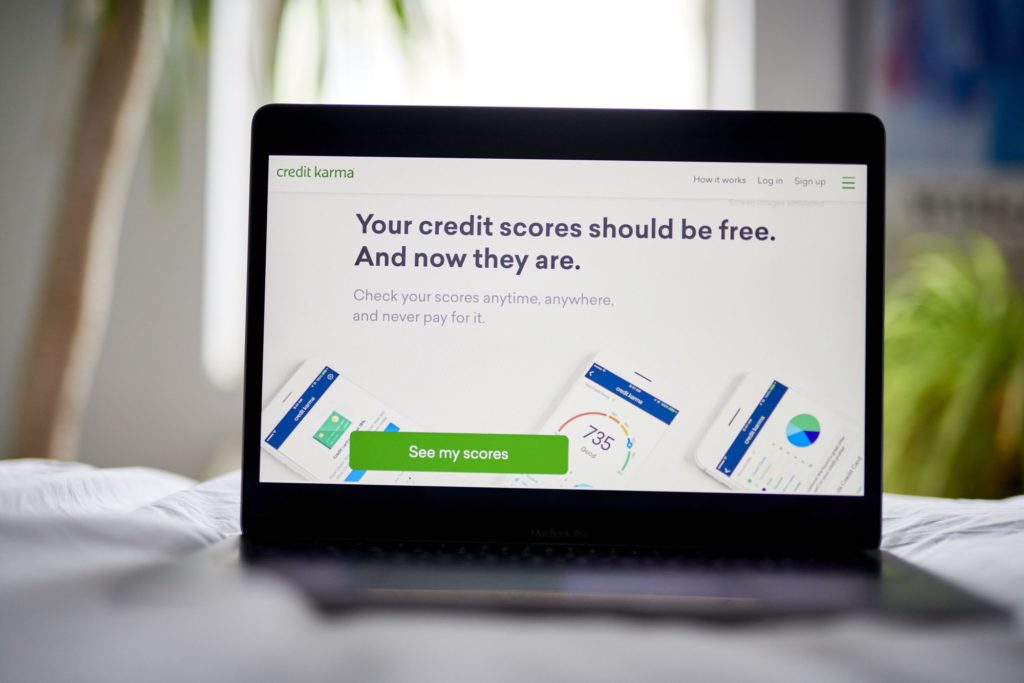
Intuit Pauses Hiring at Credit Karma Unit on ‘Revenue Challenges’

(Bloomberg) — Intuit Inc. is pausing hiring in its Credit Karma unit as souring business sentiment is slowing the pace of lending. 

Almost all new hiring in the division will be paused as the company sees “revenue challenges due to the uncertainty of the economic environment,” Chief People Officer Colleen McCreary wrote in a letter to employees last Sunday that was shared with Bloomberg. Departing workers will continue to be replaced, and there will be no pay cuts, she wrote.

“Our partners worry about lending products among high inflation, potential for rising unemployment and the possibility of recession, which results in fewer opportunities for us to provide products for a broader range of members,” according to the letter.

Many tech companies and startups have paused hiring or cut jobs this year amid a tough economic environment. After the Credit Karma hiring freeze email went out, employees and prospective new hires turned to the anonymous online forum Blind to discuss whether pending job interviews and offers would be kept. In her email, McCreary said that 500 new segment employees have joined in the past five quarters, and there are about 100 people that have either been given an offer, or accepted one and haven’t started yet.

Intuit shares fell as much as 9.5% Tuesday in New York, the biggest intraday decline in almost six months. The stock had dropped 34% this year through Monday’s close.

The reaction is “likely reminding investors that it is tough to find ‘safe places’ in a broad downturn,” wrote Barclays analyst Raimo Lenschow. It may also signal investor fear in additional Intuit weakness beyond Credit Karma, wrote BMO Capital Markets analyst Daniel Jester.

“Like most companies, Credit Karma is keeping a close eye on the current economic conditions and we have gotten more conservative with our hiring,” a Credit Karma spokesperson said. “We are still hiring for some open roles but this move allows us optionality as a business.”

Credit Karma, which provides credit scores and connects users to loans, was acquired by Intuit for $7.1 billion in February 2020. It has been among the fastest-growing segments in Intuit’s portfolio, with sales expanding as much as 48% in 2022’s third fiscal quarter. However, the company sees a slowdown to 10% to 15% growth in fiscal year 2023.

Intuit is set to report earnings at the end of the month, and has projected revenue growth of about 24%. Bloomberg Intelligence analyst Niraj Patel wrote that worsening small business sentiment and tight consumer budgets could make it hard to meet this guidance. 

(Updates with comments from analysts in the sixth paragraph.)

More stories like this are available on bloomberg.com

©2022 Bloomberg L.P.
Twitter Blue Will Verify Users for $8 a Month, Musk Says

(Bloomberg) — Elon Musk said the premium version of Twitter, called Blue, will cost $8 a month and will include a verified check mark for paying users’ accounts.

Musk, who acquired the social network for $44 billion last week, said these Blue users would also get priority in replies, mentions and Twitter search, and half as many ads. They would also have the ability to bypass paywalls for “publishers willing to work with us,” he said on Twitter.

Musk called Twitter Inc.’s current verification system, which applies a check mark to users and brands that may be at risk of getting impersonated, a “lords & peasants” system. “Power to the people!” he tweeted, asking the people for $8 a month.

Read more about what Musk wants to change at Twitter

Musk said Twitter would use the revenue stream to reward content creators. 

Currently, verified users don’t pay anything for their badges — Twitter applies them manually to high-profile users and public figures, so that users know the messages are coming from a legitimate source. Prior press reports have indicated that those who don’t pay will lose their check marks, but Musk didn’t say either way.

Twitter Blue existed before Musk took over, separately from the company’s verification system. It currently costs $4.99 per month, and allows people to edit their tweets, organize tweets with bookmark folders, and change Twitter’s display and design, including the app icon. 

(Updates with Twitter Blue current offering in the final paragraph)

More stories like this are available on bloomberg.com

©2022 Bloomberg L.P.
Stocks Remain Lower in Run-Up to Key Fed Decision: Markets Wrap

(Bloomberg) — Stocks came off session lows, but struggled to improve much further as data showing a solid US labor market bolstered speculation that Federal Reserve policy could remain aggressively tight even with the threat of a recession.

At a time when good news is considered bad news when it comes to policy conjectures, the S&P 500 erased an earlier advance as the figures highlighted an unexpected rebound in US job openings — which may fuel wage gains and keep the pressure on the Fed. The report precedes Friday’s payrolls report.

Big tech once again weighed on equities, with Apple Inc. down about 2% and Amazon.com Inc. on track for its lowest since 2020. Facebook parent Meta Platforms Inc. jumped. After notching its best month in 46 years, the Dow Jones Industrial Average traded near a resistance level that saw the index halt a few rally attempts in 2022. Two-year US yields — which are more sensitive to imminent Fed moves — climbed.

“Hopes for a Fed dovish pivot are misplaced if today’s job openings are any guide,” said Ronald Temple, head of US equity at Lazard Asset Management. “Despite other signs of economic deceleration, the job openings data taken together with nonfarm payroll growth indicate the Fed is far from the point where it can declare victory over inflation and lift its foot off the economic brake.”

Also weighing on market sentiment was a separate report showing US manufacturing neared stagnation in October as orders contracted for the fourth time in five months, while an index of prices paid fell to a more than two-year low. The figures added to evidence of recession concerns as central banks step up the fight to get inflation under control.

To Matt Maley at Miller Tabak + Co., a lot of what will take place in markets over the next few weeks will hinge upon Powell’s signals on Wednesday as well as the subsequent Fedspeak. Tom Porcelli at RBC Capital Markets says that if the Fed’s boss really wants to transition to shallower hikes, he should maintain some element of hawkishness as there’s a “decent risk of creating confusion.”

“As we have not yet reached the peak for Fed rate hikes, it’s highly unlikely that we’ve already seen the bottom of this bear market, especially given the history of Fed rate hikes peaking before the market troughs,” noted Seema Shah, chief global strategist at Principal Asset Management. She anticipates the market floor for this cycle will most likely be reached in the first or second quarters of 2023.

For now, Shah sees both market and inflation volatility persisting alongside further Fed rate hikes in the last few months of 2002 and into early next year.

Lauren Goodwin at New York Life Investments says she believes the Fed may pause its rate hikes soon even amid strong inflation. Financial conditions have tightened substantially, and recession should be considered a base case, she added.

“Let me be clear — a Fed pause is not the same as a pivot,” Goodwin added. “Certainly, deteriorating economic and credit conditions could cause the Fed to pivot modestly at some point, but a full pivot into accommodative territory is highly unlikely in the next year.”

In corporate news, Uber Technologies Inc. posted revenue that beat expectations as gains in ridership assuaged investor concerns that rising inflation would damp consumer spending. Pfizer Inc. increased its forecast for adjusted earnings for the year as sales of its Covid-19 vaccine were stronger than expected. Eli Lilly & Co. cut its 2022 profit outlook due to the stronger US dollar and one-time charges.

Earlier in the day, speculation that China is preparing to gradually exit the stringent Covid Zero stance helped boost equities. A gauge of the nation’s stocks listed in Hong Kong surged almost 7% intraday. Shares pared gains after Chinese Foreign Ministry spokesman Zhao Lijian said he’s “not aware” of a committee on ending the policy.

Read: ‘It Is Unacceptable’: Investors React to Toronto Exchange Outage

Key events this week:

  • EIA crude oil inventory report, Wednesday
  • Federal Reserve rate decision, Wednesday
  • US MBA mortgage applications, ADP employment, Wednesday
  • Bank of England rate decision, Thursday
  • US factory orders, durable goods, trade, initial jobless claims, ISM services index, Thursday
  • ECB President Christine Lagarde speaks, Thursday
  • US nonfarm payrolls, unemployment, Friday


Some of the main moves in markets:

Stocks

  • The S&P 500 fell 0.4% as of 2:34 p.m. New York time
  • The Nasdaq 100 fell 0.9%
  • The Dow Jones Industrial Average fell 0.3%
  • The MSCI World index rose 0.2%

Currencies

  • The Bloomberg Dollar Spot Index fell 0.2%
  • The euro was little changed at $0.9884
  • The British pound was little changed at $1.1478
  • The Japanese yen rose 0.3% to 148.23 per dollar

Cryptocurrencies

  • Bitcoin rose 0.1% to $20,429.65
  • Ether rose 1% to $1,580.14

Bonds

  • The yield on 10-year Treasuries advanced one basis point to 4.06%
  • Germany’s 10-year yield declined one basis point to 2.13%
  • Britain’s 10-year yield declined five basis points to 3.47%

Commodities

  • West Texas Intermediate crude rose 2.1% to $88.38 a barrel
  • Gold futures rose 0.7% to $1,652.10 an ounce

–With assistance from Vildana Hajric, Elaine Chen, Isabelle Lee and Emily Graffeo.

More stories like this are available on bloomberg.com

©2022 Bloomberg L.P.
Mexican Border State Chihuahua Looks to Attract Intel Investment

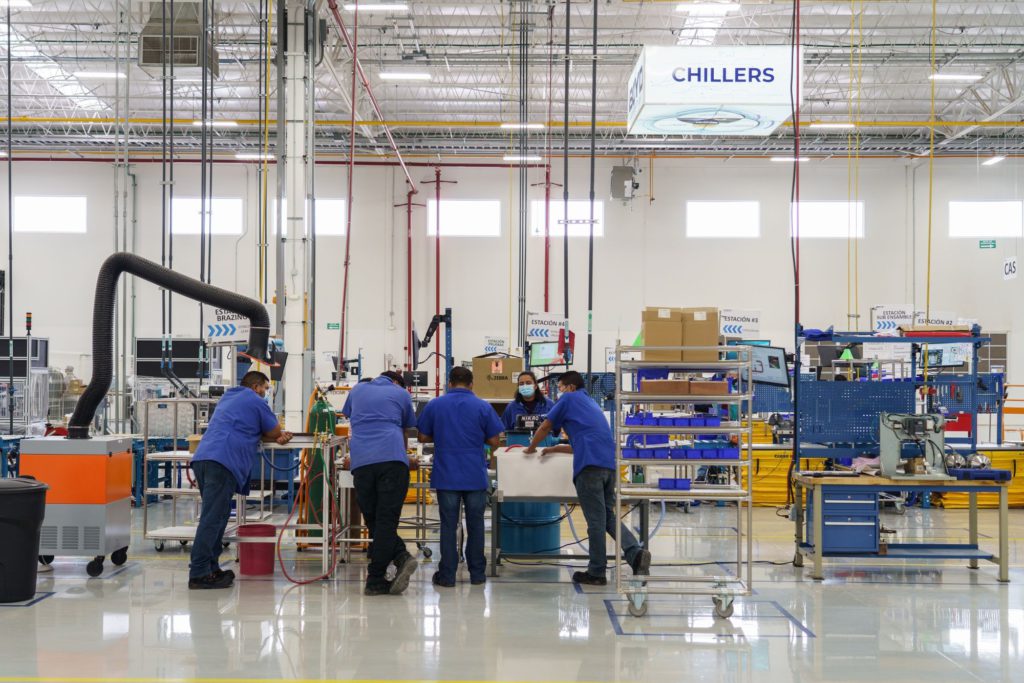
(Bloomberg) — The Mexican state of Chihuahua is looking to attract investment by chipmaker Intel Corp. and other semiconductor companies as it seeks to move up the manufacturing value chain and benefit from proximity to the US.

Governor Maru Campos is in Washington this week meeting with Intel and other companies as part of a push to lure $8 billion in foreign direct investment to the state over five years.

Intel has its largest engineering center in Latin America about 900 miles south of the border in the central state of Jalisco. Closer to Chihuahua’s manufacturing powerhouse city of Ciudad Juarez is Chandler, Arizona, where Intel is investing $20 billion to build two new computer-chip factories to bring total investment in the state to $50 billion.

Besides semiconductors, Campos is eying industries including electro-mobility and aerospace as she looks to scale up from the state’s traditional strength in auto parts and electronics, she said in an interview in Washington on Monday.

“I want to be the spark plug of the US-Mexico border,” Campos said in an interview in Washington on Monday. “We’re looking for Intel and we’re interested.” 

A spokesperson for Intel declined to comment.

The US in September asked Mexico to find ways of offering incentives to bring chipmakers to North America from Asia as both nations try to lure companies that are crucial to the world’s electronics.

The US is implementing the CHIPS and Science Act, which includes more than $50 billion to boost domestic semiconductor production and research as President Joe Biden’s administration looks to address supply-chain vulnerability laid bare by the Covid-19 pandemic and China’s lockdowns. 

Bloomberg News reported in July that Contemporary Amperex Technology Co., the world’s biggest maker of batteries for electric vehicles, is considering Ciudad Juarez for an investment of as much $5 billion. 

–With assistance from Maya Averbuch and Ian King.

More stories like this are available on bloomberg.com

©2022 Bloomberg L.P.
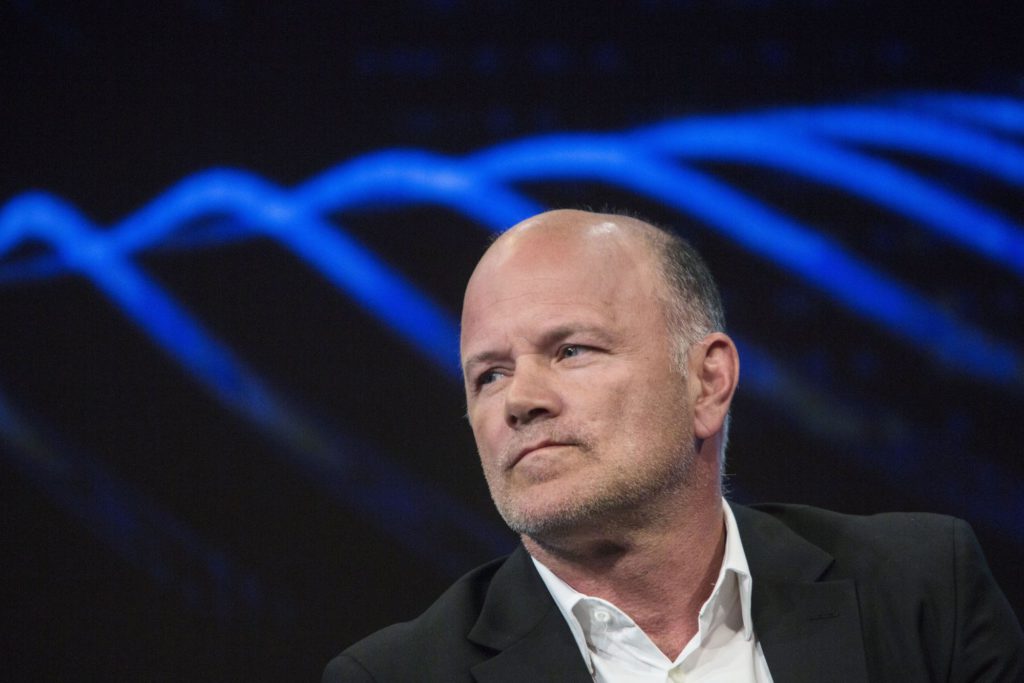
Novogratz’s Galaxy Digital Explores Job Cuts of About 20%

(Bloomberg) — Galaxy Digital Holdings Ltd., the crypto financial services firm founded by billionaire Michael Novogratz, is exploring eliminating as much as 20% of its workforce against the backdrop of a digital-assets market downturn. 

The plan under consideration could still be changed and the final number could be in a range of 15% to 20%, according to people familiar with the matter. New York-based Galaxy reported 375 employees globally as of the end of the second quarter, which would mean as many as 75 positions could be eliminated.

“We are always considering optimal team structure and strategy and will share future plans when finalized,” said Galaxy’s spokesperson Michael Wursthorn. “While our industry continues to face macroeconomic headwinds, Galaxy remains focused on building for the future state of institutional adoption, and on enhancing long-term shareholder value.”

Galaxy’s shares have tumbled 70% this year, inline with many of the most popular cryptocurrencies. Its second-quarter loss more than doubled from a year ago, primarily due to unrealized losses on digital assets and on investments in its trading and principal investments businesses. Novogratz was a backer of Do Kwon’s Terraform Labs, the company behind the failed Terra and Luna tokens. In July, Novogratz acknowledged that he was “darn wrong” about the magnitude of the leverage in the system.

The crypto industry has seen widespread layoffs this year following the collapse of coin prices and the bankruptcy of hedge fund Three Arrows Capital. Crypto exchange Coinbase Global Inc., brokerage Genesis, and lender BlockFi have all announced job reductions. During the second-quarter earnings call in August, Novogratz said Galaxy has taken some “selective shrinking” of its teams but expects the firm to expand to over 400 people this year. 

In a October interview with Bloomberg TV, Novogratz said he expects “a rough few months of markets that are pricing in tremendous amount of bearishness” due to inflation and geopolitical risks. 

Galaxy is due to report third-quarter earnings result on Nov. 9.   

(Updates with more context on losses in the fourth paragraph.)

More stories like this are available on bloomberg.com

©2022 Bloomberg L.P.
Close Bitnami banner
Bitnami