Bloomberg

Brazilian Fintech Nubank Opens New Building in Sao Paulo

(Bloomberg) — Nu Holdings Ltd., a Brazilian fintech backed by Warren Buffett, opened a building in Sao Paulo to be used for big events, training and parties. 

“We’re going to be piloting a new type of setup to maximize the benefit that teams can get from working at the office,” Brazil Chief Executive Officer Cristina Junqueira said in an interview. “We’re going to be experimenting with spaces.”

Nubank, as the company is known, has 7,000 employees and plans to boost that figure. The fintech is adopting a hybrid working-from-home schedule it’s calling “Nu Way of Working.” It suggests workers go to the office at least one week in every seven or eight.

Unlike many banks that have much more office space than they need after the pandemic, fast-growing Nubank has already overflowed into nearby buildings in Sao Paulo’s Pinheiros neighborhood as the global staff ballooned from 2,700 people in July 2020.

The new building, with 10,000 square meters (107,640 square feet), has a ground floor and 3 mezzanines, and is located in Vila Leopoldina, in the south of Sao Paulo. It’s already being used in a testing phase, and is expected to reach its full capacity in the second quarter of 2023. Nubank’s main headquarters, in the neighborhood of Pinheiros in western Sao Paulo, has been completely renovated. It has two smaller sites nearby.

The company also has offices in Berlin, Buenos Aires, Bogota and Mexico City.

“What we learned with the Covid pandemic is that there’s not that much value in people coming to the office at the same time and leaving at the same time, sitting right next to each other and doing exactly the same things they would do at home,” Junqueira said. 

“So we’re telling people to come when it makes sense for them,” she said, adding that “if teams need to be here everyday because that’s the best for them, they would be allowed to.”

More stories like this are available on bloomberg.com

©2022 Bloomberg L.P.

Google Signs Solar Deal With SB Energy in Push to Cut Emissions

(Bloomberg) — Alphabet Inc.’s Google signed its largest solar deal from a single developer, agreeing to buy 942 megawatts from SB Energy Global LLC as part of its push to eliminate emissions from its operations.

The electricity will come from four solar projects that are being built in Texas, according to a statement from SB Energy, a solar operator backed by SoftBank Group Corp. Google agreed to buy 75% of the renewable energy produced from the facilities, which are expected to be operational by mid-2024. Terms weren’t disclosed.

Tech companies like Google and Amazon.com Inc often buy energy directly from renewable energy developers through power purchase agreements to reduce greenhouse gas emissions amid mounting pressure to reduce their impacts on the environment. Google vows that it’ll operate on carbon-free energy by 2030.

The SB Energy deal is Google’s largest solar power purchase agreement from a single developer, according to the company. Google’s largest clean energy purchase deal was for 1.9 gigawatts from multiple developers in 2019, according to Bloomberg’s energy and data analysis unit, BloombergNEF. One gigawatt, or 1,000 megawatts, is enough to power about 750,000 US houses.

The first solar project is expected to be online as soon as next year, SB Energy Co-Chief Executive Officer Rich Hossfeld said in an interview. 

More stories like this are available on bloomberg.com

©2022 Bloomberg L.P.

MicroStrategy’s Bitcoin Plan Is Set to Become More Volatile

(Bloomberg) — MicroStrategy Inc. is likely to show a return to profitability when reporting third-quarter results after co-founder Michael Saylor turned the enterprise-software maker into a Bitcoin investment vehicle.

That’s a marked change from the loss of more than $1 billion posted in the prior three-month period, when an almost 60% plunge in the cryptocurrency required MicroStrategy to write down the value of its holdings. Bitcoin rose 3.7% in the most recent quarter. 

The respite may prove to be short. In coming quarters, MicroStrategy will most likely be reporting more volatile results under a proposed accounting rule change that would require valuing the digital asset at market prices. 

Without standard accounting rules for cryptocurrency, the Tysons Corner, Virginia-based company has been classifying its Bitcoin holdings as intangible assets — similar to brand recognition or trademarks. This designation forces MicroStrategy to permanently markdown the value of its holdings when the price of Bitcoin drops. Gains can only be recognized when coins are sold, which MSTR has yet to do.

That’s what prompted the almost $1 billion loss in the second quarter. Under the proposed rules by the Financial Accounting Standards Board on Oct. 12, MicroStrategy would be able to notch Bitcoin’s more recent quarterly gain when it announces earnings Tuesday after the stock market closes. 

The crypto industry has been pushing for the so-called fair value measurement for years. Previously, the standards-setting board, FASB, said that new rulemaking wasn’t warranted since most companies didn’t hold a material amount of cryptoassets. That’s begun to change with MicroStrategy, payments firm Block Inc. and carmaker Tesla Inc. holding significant Bitcoin assets. 

The pending accounting change is a positive for the company, said Mark Palmer, an analyst at BTIG, who has a “buy” rating on the shares and a price target of $950. “The impairment charges have been nothing but accounting noise.” 

MicroStrategy began buying Bitcoin in the summer of 2020 as a hedge against inflation. Saylor stepped down in August as chief executive officer to focus on the company’s cryptocurrency strategy. The 57-year-old, who assumed the title of executive chairman, is also facing tax fraud claims from the Attorney General for the District of Columbia for allegedly skipping out on paying more than $25 million in income taxes despite living in the district for more than a decade. Saylor has disputed the allegations, saying he’s a resident of Florida. 

MicroStrategy and its subsidiaries hold about 130,000 Bitcoin, which were bought for about $30,639 per token, according to a September regulatory filing. MicroStrategy’s aggregate holdings have dropped in value by about $1.3 billion, or around 33% since it first started buying the virtual currency.    

The company’s shares have closely tracked Bitcoin’s price moves. In 2020, shares surged more than 170% as the value of the Bitcoin jumped. This year, the stock has fallen about 50%, on par with Bitcoin’s slide.

FASB will consider how to implement the potential new measure at a future date. Any proposal must also pass public vetting before becoming a final update to US accounting rules.    

If the rule does past, MicroStrategy observers may be best served to move right past the company’s income statement to the change in market value from one quarter to the next. That number will pretty much be their net income or loss.   

–With assistance from Tom Contiliano.

More stories like this are available on bloomberg.com

©2022 Bloomberg L.P.

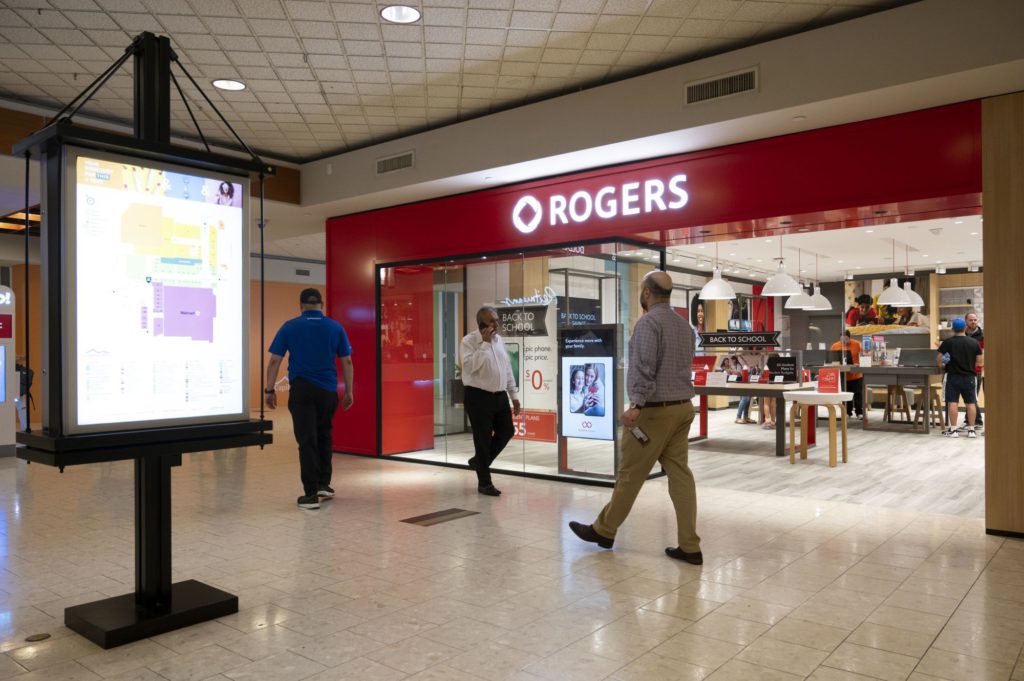
Judge Asks Antitrust Czar If There’s Solution to Rogers Deal

(Bloomberg) — The judge presiding over the antitrust case against Rogers Communications Inc.’s takeover of a rival has asked lawyers representing the companies and Canada’s antitrust czar whether there’s a potential solution to the impasse stalling the deal.

Chief Justice Paul Crampton of the Federal Court ordered legal counsel for Rogers, Shaw Communications Inc. and the federal Competition Bureau to a case-management conference at 3 p.m. Ottawa time Tuesday, according to a notice published Monday afternoon. 

In the meantime, Crampton asked all sides to “reflect” on whether it’s possible to find a solution that doesn’t involve blocking the entire transaction. 

Rogers and Shaw have agreed to sell Shaw’s Freedom Mobile division, which has more than 2 million customers, to Quebecor Inc. in an attempt to resolve concerns that Rogers would gain too much power in the wireless sector. 

The divestiture would shrink the Rogers-Shaw deal so that it’s primarily a merger of two companies that offer internet, cable and other services in different regions of Canada. But so far, that hasn’t been enough to satisfy Competition Commissioner Matthew Boswell, who has pressed ahead with an argument that the transaction would harm consumers by reducing competition. 

Crampton’s orders asks the parties to consider whether “alternative relief” — a change to deal terms that helps ensure competition — is possible, so that “it would not be necessary to continue to seek an order directing the respondents not to proceed with the entire proposed transaction.” The respondents in the case include Rogers and Shaw. 

At stake in the case is one of the largest mergers in Canada’s history — a C$20 billion ($14.8 billion) deal to unite Rogers, the country’s largest wireless and cable firm, with Shaw, a major provider of cable and internet services in the western provinces.

“To effectively challenge a merger, the Bureau needs not only a theory of competitive harm and evidence to support that theory, but also a remedy that addresses those harms that can be consented to by the parties or ordered by the Competition Tribunal,” said Keldon Bester, a fellow at the Center for International Governance Innovation and a former special adviser to the Competition Bureau.

If the deadlock can’t be resolved, the Competition Tribunal would begin hearings next week. 

(Updates with additional context starting in fourth paragraph)

More stories like this are available on bloomberg.com

©2022 Bloomberg L.P.

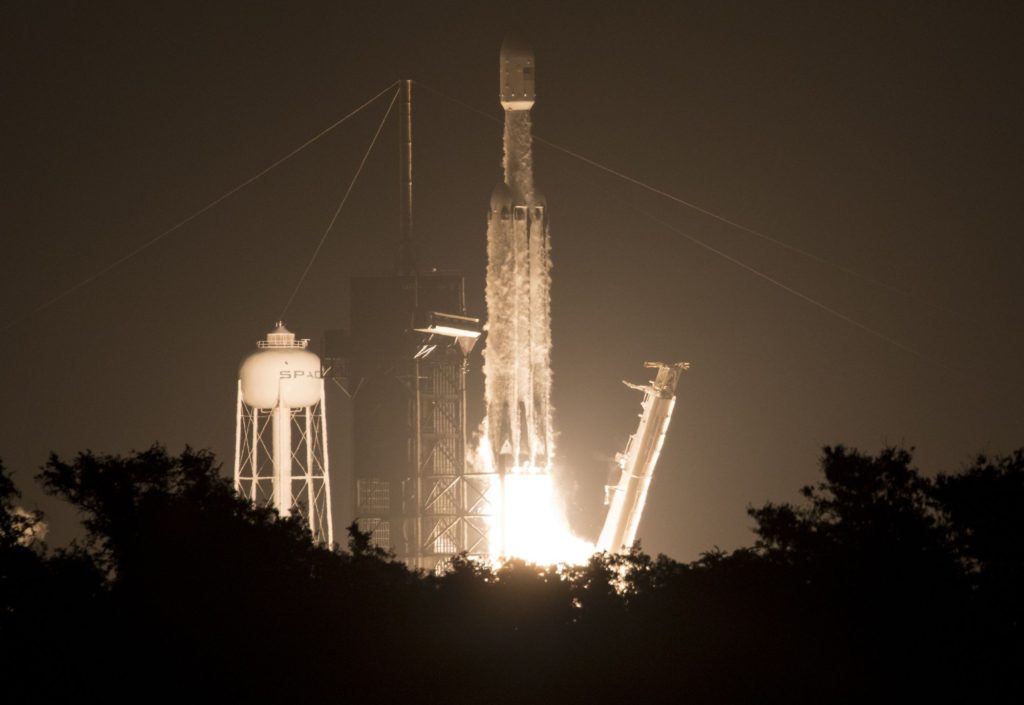
SpaceX Set to Launch Falcon Heavy on Classified US Space Force Mission

(Bloomberg) — SpaceX is set to launch its powerful Falcon Heavy rocket from Florida on a classified mission for the US Space Force, marking the return of the rocket after a more than 3-year hiatus. The launch is scheduled for as early as 9:41 am local time on Tuesday. The flight will be just the fourth launch of the Falcon Heavy since its debut in February 2018, a relatively infrequent launch cadence for a vehicle that has been hailed as the most powerful rocket now in operation.

When Elon Musk, chief executive officer of Space Exploration Technologies Corp., first announced plans to create the rocket in 2011, it was touted as a new and powerful option for customers in need of launching large satellites. The big rocket has roughly a dozen launches planned over the next several years, with the majority of flights designated for the Defense Department and NASA’s science missions.

But the Falcon Heavy has failed to live up to its commercial promise as a can-do rocket in the same way that the Falcon 9 has. It accounts for a tiny fraction of SpaceX’s launches, while the workhorse Falcon 9 handles most of the company’s business. The low launch frequency of the Falcon Heavy speaks to the current market for satellite launches, as well as changes to SpaceX’s strategy for the marketplace. The company has vastly upgraded its Falcon 9 rocket over the last decade, making it a more powerful rocket. And as SpaceX focuses on its very large interplanetary rocket, Starship, for more ambitious deep space missions, there appears less need for the Falcon Heavy.

Said Caleb Henry, a senior analyst with the research and advisory firm Quilty Analytics: “The Falcon Heavy is being squeezed on both ends—on one end, by the Falcon 9, which has taken a lot of its responsibility, and on the other end, by Starship, which may take Falcon Heavy’s future responsibilities.”

The Falcon 9 has turned out to be suitable for much of the commercial satellite market, especially as the rocket’s capabilities have grown. Prior to 2016, SpaceX listed the Falcon 9 as capable of launching 29,000 pounds to low-Earth orbit. Thanks to various upgrades, the Falcon 9 can now get more than 50,000 pounds to low-Earth orbit.

While the Falcon Heavy can still loft a lot more than that — more than 140,000 pounds to low-Earth orbit — its nose cone is still the same size as that of the Falcon 9, limiting the satellites it can carry. “It’s launching payloads that have more mass, but it can’t accommodate something with a significantly greater volume,” said Carissa Christensen, CEO of BryceTech, a spaceflight analytics firm. “So there are only certain payloads that really need a Heavy rather than the 9.”

With much of the commercial satellite market satisfied by the Falcon 9, that really only leaves the biggest payloads bound for distant orbits for the Falcon Heavy. It’s a small pool composed of mostly national security satellites from the Department of Defense, scientific payloads from NASA, and just a handful of the largest commercial satellites from customers like Viasat Inc. and EchoStar Corp.

One advantage that the Falcon Heavy still has over the Falcon 9 is that it can send larger satellites directly into geostationary orbit, a path 22,000 miles up that’s been popular for telecommunications. The Falcon 9 can get satellites into this orbit, too, but typically the rocket must lift the satellites into a lower transfer orbit first. From there, the satellites raise themselves to the higher orbit. That process takes time, often months, which delays companies from using their satellites right away.

“What we’ve seen is that the [geostationary] market has dried up,” Henry said. “And then on top of that, a surprising number of customers are willing to wait and actually allow their spacecraft to do that orbit raising over several months.”

The Falcon 9 is also SpaceX’s rocket of choice for launching the company’s own internet-from-space Starlink satellites into low-Earth orbit. It’s likely due to the rocket’s nimbleness. The Falcon 9 has the capability to take off from multiple sites in Florida and California, whereas the Falcon Heavy can only launch from one SpaceX site at the moment. And the Falcon 9 has a significantly reduced turnaround time, making it easier to launch more satellites in a given year. “There’s a stronger business case for the Falcon 9,” Henry said.

Many of the more ambitious uses touted by SpaceX for the Falcon Heavy, such as flying passengers to deep space destinations like the Moon, are no longer planned for the rocket. Such trips are now reserved for SpaceX’s Starship rocket, which is tasked with landing people on the Moon for NASA. For missions closer to home, the Falcon 9 continues to shuttle people back and forth to the International Space Station in low-Earth orbit.

Still, despite the challenges, it’s too early to write off the Falcon Heavy. It takes years for satellite manufacturers to develop new spacecraft, so it’s possible that more vehicles will come online soon that need the Falcon Heavy’s abilities. “You may have a vehicle with more capacity, and it takes a little while for payloads to catch up,” Christensen said.

More stories like this are available on bloomberg.com

©2022 Bloomberg L.P.

After DAO Frenzy Last Year, Another Constitution Heads to Auction

(Bloomberg) — One year after a copy of the US Constitution sold for $43.2 million, a second example is headed to auction on Dec. 13 at Sotheby’s in New York with an estimate of $20 million to $30 million.

The copy, which was printed in 1787 for submission to the Continental Congress and distributed to delegates at the Constitutional Convention, is what the auction house classifies as “The Official Edition of the Constitution, the First Printing of the Final Text of the Constitution.” About 500 were printed at the time; just 13 copies are known to remain, according to Sotheby’s.

It’s been owned by the same family for the past 128 years, and is one of two, the auction house says, still in private hands. (The other sold last year.) “We knew there was another,” says Richard Austin, the global head of Books & Manuscripts at Sotheby’s. “And in fact, we’d contacted the owner, who wasn’t interested and didn’t want to sell at the time. But things change.”

One of those changes could be the international brouhaha that led to last year’s copy, known as the Goldman Constitution, selling for a record sum.

ConstitutionDAO Versus Griffin

It began when a decentralized autonomous organization called ConstitutionDAO was formed to purchase the work. “We intend to put The Constitution in the hands of The People,” the organization’s website said at the time. (Never mind that the Constitution is already on display for anyone to visit at the National Archives in Washington.) The DAO eventually raised roughly $40 million from about 17,000 contributors, but it was outbid by hedge fund billionaire Kenneth Griffin.

Griffin, the founder of Citadel, later remarked that he purchased the artifact on the recommendation of his son. “I told myself, ‘I am going to own this,’” he said in an interview with Bloomberg News. “I don’t do that very often.” Soon after the sale, Griffin lent the work to fellow billionaire Alice Walton’s Crystal Bridges Museum of American Art in Bentonville, Arkansas, where it’s on view through Jan. 2.

ConstitutionDAO disbanded, refunding many of its contributors minus transaction costs. Its website now states that “ConstitutionDAO (2021-2021) was a beautiful experiment in a single-purpose DAO. We now believe this project has run its course.”

A Second Copy Emerges

The activity was apparently enough to dislodge another Constitution copy. “It’s been in the same family since 1894,” says Austin.

It was purchased at auction and given as a childhood gift to Adrian Van Sinderen (1887-1963), who came to be known as one of the most prolific book collectors in the country. “He’s not well-known, but he was one of the great American collectors of the first half of the 20th century,” says Austin. The Constitution then passed, by descent, to the present owner, who’s decided to put it up for sale.

The last time this copy was seen by the public was 1987, when it was lent to Stanford University.

Potential Bidders

Given the price achieved by the Goldman Constitution, comparisons between the two copies are inevitable. “There are minor differences,” says Austin. “The Goldman copy is as close to pristine as you’re going to get. This one had a few very minor repairs at some point—it was stored in the back of a book, which is how a couple have been discovered, actually.” Generally, he continues, “it’s in excellent condition. It has a wonderful presence when you hold it. It’s a lovely example.”

With that in mind, Austin says, the estimate makes sense. “The Goldman copy achieved an extraordinary price,” he explains. “We wanted an estimate that was still conservative enough to attract bidding, and $20 million to $30 million still does that.”

It isn’t clear how many deep-pocketed bidders are still in the running. Griffin already owns his copy, and ConstitutionDAO is defunct. Austin, though, says there were more collectors waiting in the wings. “I always felt there were a number of people interested who didn’t get the chance,” he says, adding that “we would certainly welcome another DAO, or the same DAO’s participation, and I think that’s going to be one of the exciting things about having this opportunity.”

“It’s unusual to get second chances,” Austin concludes, “but this is it.”

More stories like this are available on bloomberg.com

©2022 Bloomberg L.P.

Uber Tops Sales Estimates on Strong Ridership, Driver Supply

(Bloomberg) — Uber Technologies Inc. reported revenue that beat analysts’ expectations, fueled by a recovery in driver supply that supported increased ridership, assuaging investor concerns that rising inflation would damp consumer spending. The shares jumped about 6% in early trading.

Third-quarter sales jumped 72% to $8.34 billion, the San Francisco-based company said Tuesday in a statement. That exceeded the $8.1 billion analysts were expecting, according to data compiled by Bloomberg. Gross bookings, which encompass ride hailing, food delivery and freight, increased 26% to $29.1 billion, slightly below the average estimate. Adjusted earnings before interest, tax, depreciation and amortization reached $516 million. Analysts, on average, projected $458.7 million. 

Uber’s “global scale and unique platform advantages are working together to drive more profitable growth,” Chief Executive Officer Dara Khosrowshahi said in the statement. “Even as the macroeconomic environment remains uncertain, Uber’s core business is stronger than ever.”

Uber reported its ride-hailing driver base at the end of the period on Sept. 30 was “on par with September 2019 levels,” and the increased driver engagement continued into October. The improvement is a sign the company is moving past a protracted shortage of drivers that has also affected rival Lyft Inc., resulting in higher fares and wait times for customers. Both ride-hailing giants have spent millions to lure drivers back to their respective platforms and recruit new ones to meet resurgent rider demand. 

After surging during much of the pandemic, Uber and other gig economy peers such as Lyft and DoorDash Inc. are navigating a challenging economy that includes US inflation rising to a 40-year high while the risks of a global recession loom. The uncertainty has weighed on spending by advertisers and consumers, hitting tech giants like Meta Platforms Inc. and Amazon.com Inc. The gloomy outlook remains a risk for Uber, whose ride-hailing and delivery services carry a premium that customers may view more as a splurge than a necessity as budgets tighten.

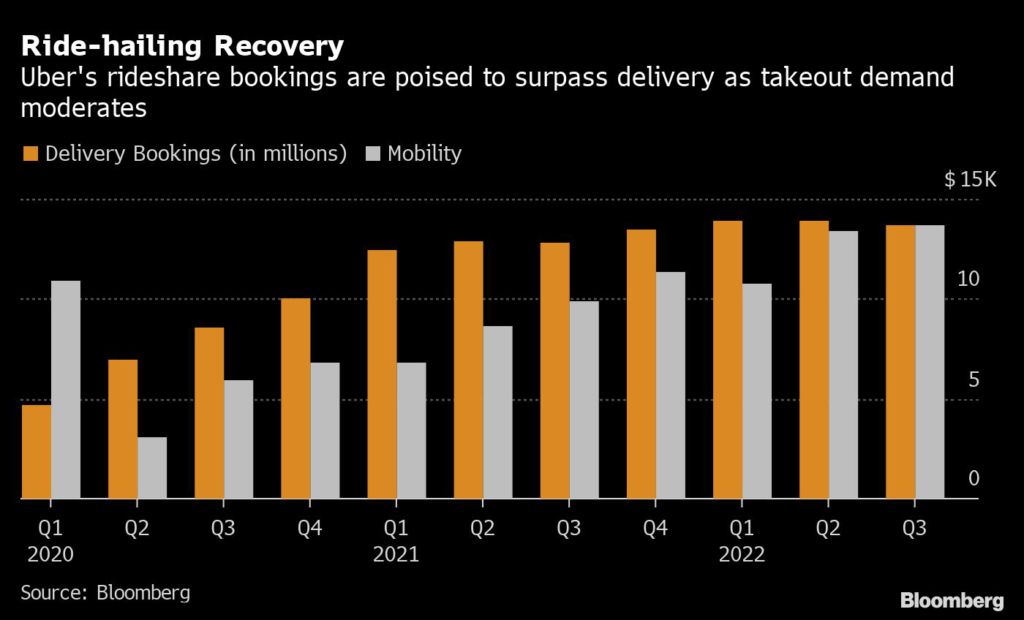
Uber’s food-delivery arm, Uber Eats, generated $13.7 billion in gross bookings during the quarter, a decline from the previous period, and missed the $13.9 billion analysts expected. The unit, which offers delivery across restaurants, groceries and alcohol, has grown to make up about 33% of the company’s total revenue. Uber Eats initially benefited from the pandemic-induced boom in delivery and has more than doubled in size, based on bookings, from before Covid-19 emerged. The increased scale has allowed the delivery business to become more profitable, posting a record $181 million in adjusted earnings during the period.

“While the delivery category is one of the few ‘pandemic winners’ that continues to grow with a healthy top line, we welcome the newfound capital discipline amongst our peers,” Khosrowshahi said. “We will be measured with our investments, and will look to expand profitability while maintaining or growing our category position.”

Uber reached profitability on an adjusted basis for the first time in its history last summer and, earlier this year, Khosrowshahi pledged to reach $2 billion in free cash flow. One way the company plans to meet that target is by giving more attention to ads. In October, Uber launched a dedicated advertising arm to monetize its audience of 124 million monthly active users and tap a higher-margin revenue stream. The company said the business reached $350 million in run-rate revenue during the third quarter and affirmed its goal to reach $1 billion in ad sales by 2024.

The company’s freight unit completed an integration with Transplace, which it acquired last year, and reported revenue of $1.75 billion. Bookings and adjusted earnings for the division missed analysts’ estimates amid weaker demand, spot volumes and rates that affected the logistics sector, Uber said.

Uber projected adjusted earnings before interest, tax, depreciation and amortization in the current quarter of $600 million to $630 million, beating estimates of $564.4 million. Gross bookings will be $30 billion to $31 billion in the period ending in December, in line with expectations.

The company recorded a net loss of $1.2 billion, or 61 cents a share, attributed in part to its equity stake in Didi Global Inc. 

(Updates with shares in first paragraph.)

More stories like this are available on bloomberg.com

©2022 Bloomberg L.P.

Russian Tycoon Tinkov Renounces Citizenship Over War in Ukraine

(Bloomberg) — Oleg Tinkov, one of the first Russian billionaires to speak out against the country’s invasion of Ukraine, has renounced his citizenship.

“I have taken the decision to exit my Russian citizenship,” Tinkov said Monday on his Instagram account. He said he didn’t want to be associated with a country “that started a war with their peaceful neighbour and killing innocent people daily. It is a shame for me to continue to hold this passport.”

Tinkov, 54, in April published an expletive-filled post about Russia’s “insane war” on his Instagram. A week later, after Tinkoff Bank’s co-chief executive officers quit and the bank distanced itself from its founder and announced plans to drop his name from the brand, he sold his family’s stake to Vladimir Potanin for an undisclosed amount. 

Tinkov, who was sanctioned by the UK in March, said he hopes more Russian business tycoons will also renounce their citizenship “so it weakens Putin’s regime and his economy, and put him eventually to defeat.”

“I hate Putin’s Russia, but love all Russians who are clearly against this crazy war!” he wrote Monday on Instagram.

Early Tuesday, Tinkov’s post vanished from his account. After about an hour, he posted a new one saying, in English and Russian, “my post of yesterday has been mysteriously disappeared. Must be Kremlin’s trolls. Reiterating: i have decided to throw out Russian citizenship after Russia invades Ukraine, and start killing innocents there.”

“Moreover, I am engaging lawyers to start revoking Tinkoff brand from the bank,” he added. “I hate when my brand/name is associated with the bank that collaborates with killers and blood.”

A Tinkoff bank spokesman said the bank owns all the rights to that brand.

Tinkov joins a growing list of wealthy Russians relinquishing their citizenship. 

Nikolay Storonsky, the 38-year-old co-founder and CEO of London-based fintech startup Revolut Ltd., also renounced his Russian citizenship, Bloomberg reported on Monday. He’s worth $6.7 billion, according to the Bloomberg Billionaires Index.

Asked about the tycoons’ renunciation of Russian citizenship Tuesday, Kremlin spokesman Dmitry Peskov said, “It’s their right. They have practically no business left here, as far as I understand.”

Yuri Milner, the billionaire Silicon Valley investor, said earlier this month that he gave up his Russian citizenship in August. The Israeli billionaire, who is worth an estimated $3.5 billion, was born in Moscow. In an Oct. 10 tweet, Milner, 60, said he and his family “left Russia for good” in 2014 after the annexation of Crimea.

–With assistance from Dayana Mustak.

(Updates with new Tinkov post, Kremlin comment from 6th paragraph)

More stories like this are available on bloomberg.com

©2022 Bloomberg L.P.
Tesla Sends Shanghai Workers to California for Factory Boost

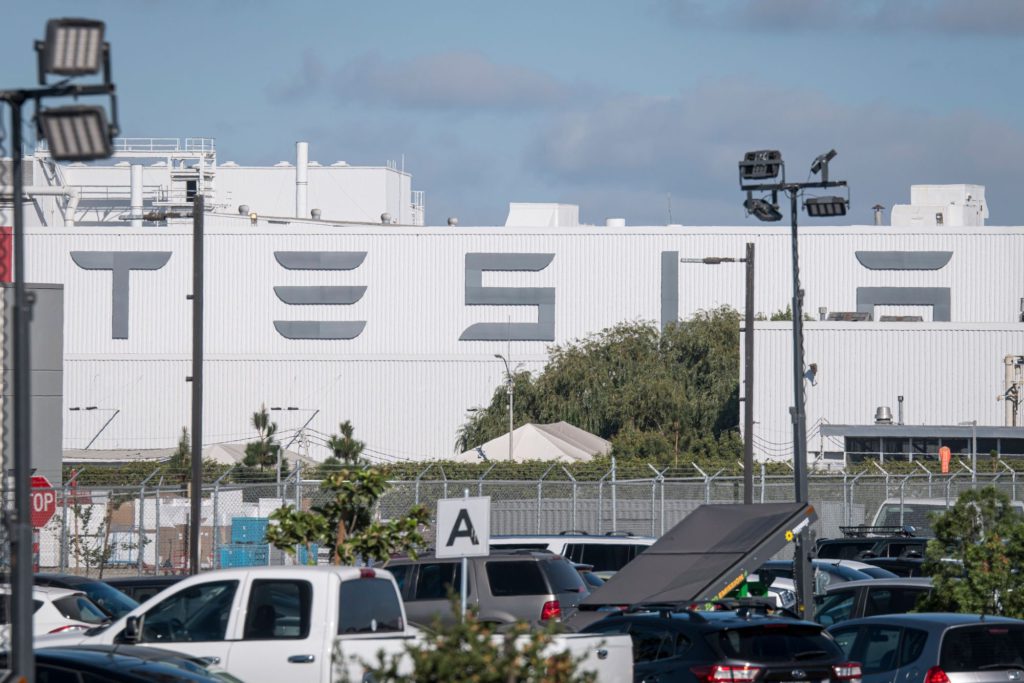
(Bloomberg) — Tesla Inc. is sending engineers and production staff from its recently upgraded Shanghai factory to its plant in Fremont, California, in a bid to boost production at the US facility, according to people familiar with the plans.

The Elon Musk-led carmaker will dispatch staff — in particular automation and control engineers — to assist efforts to increase output in Fremont, where Tesla produces the Model S, X, 3 and Y vehicles, the people said, asking not to be identified because the information is private. About 200 people will head to California on assignments that will last at least three months, one of the people said. The first workers are setting off as soon as this month, the person added.

A representative for Tesla in China declined to comment. Tesla shares rose as much as 2.1% to $232.38 before the start of regular trading.

Tesla delivered a record 83,135 cars in China in September after increasing the capacity of its Shanghai factory. The upgrade of the company’s first plant outside of the US, which entailed machinery maintenance and improvements overseen by automation and control engineers, took about five weeks. This helped double the factory’s annual capacity to around 1 million vehicles, Bloomberg News has reported. Fremont can produce about 650,000 cars a year.

The uptick in production has contributed to shortening wait times for a Tesla in China to one to four weeks, from a peak of as long as 22 weeks earlier this year, according to the automaker’s website. Last week, the company cut prices across its lineup to attract buyers in the face of tougher competition from local manufacturers including BYD Co., which is also expanding globally.

By comparison, customers ordering a Model Y sport utility vehicle in the US may have to wait until as long as April 2023 for delivery, Tesla’s website shows. In its third-quarter deliveries report, the company said it’s increasingly had trouble transporting vehicles from its factories to customers.

“There weren’t enough boats, there weren’t enough trains, there weren’t enough car carriers to actually support the wave” of vehicle deliveries at the end of the last quarter, Musk said during Tesla’s earnings call. “Whether we like it or not, we actually have to smooth out the delivery of cars intra-quarter, because there just aren’t enough transportation objects to move them around.”

Tesla delivered 343,830 cars worldwide last quarter and expects to come up just shy of its target for 50% growth this year, a rate it’s forecast will be its average over several years. The company opened new factories in Germany in March and in Texas a month later.

(Updates with early trading in the third paragraph.)

More stories like this are available on bloomberg.com

©2022 Bloomberg L.P.
Dollar Declines; Stocks Rise as Traders Await Fed: Markets Wrap

(Bloomberg) — The dollar and Treasury yields fell as investors awaited the Federal Reserve’s policy meeting. Stocks and US equity futures rallied.

US-listed Chinese stocks soared in premarket trading, tracking an earlier rally in Chinese markets on speculation that the country’s policymakers are looking to gradually unwind its stringent Covid policy, even as the country’s Foreign Ministry said it was unaware of such a plan.

Mining shares led gains in Europe, as copper rebounded amid signs of global supply tightness and iron ore rose after six days of declines. Gold and oil also gained, while BP Plc climbed after announcing a further $2.5 billion buyback.

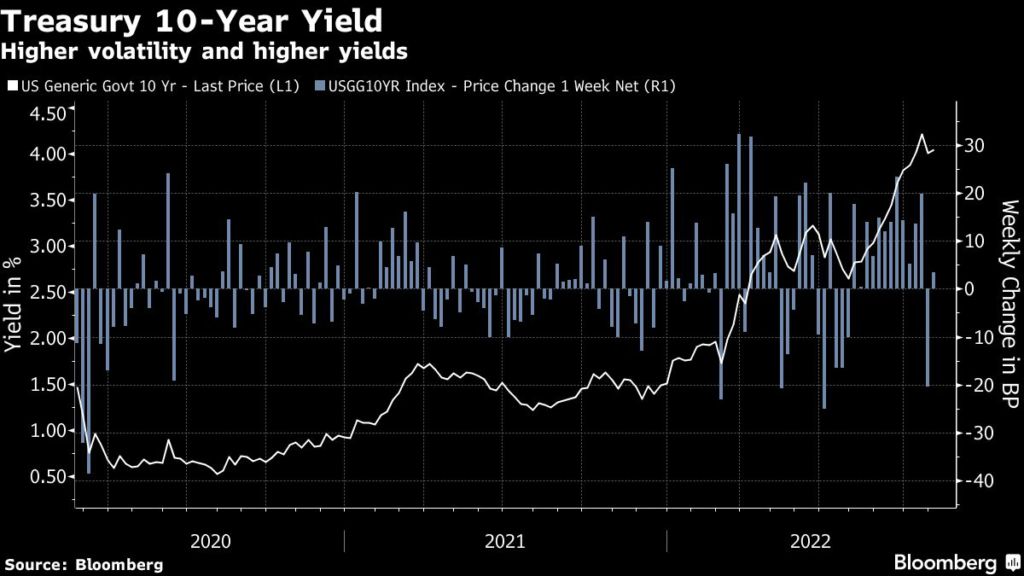
The Bloomberg Dollar Index snapped a three-day rising streak and Treasury yields fell below 4%. Swap markets are pricing in a 75-basis-point hike this week amid the Fed’s most-aggressive tightening campaign in four decades.

Still, strategists including JPMorgan Chase & Co.’s Marko Kolanovic believe the Fed’s aggressive hiking is nearing an end, providing the prospect of relief for markets. The US will likely raise rates by 50 basis points in December and pause after one more 25-basis-point hike in the first quarter, he said. 

Indicators such as the inversion of the yield curve between 10-year and three-month Treasuries “all support a Fed pivot sooner rather than later,” wrote Morgan Stanley’s Michael Wilson.

“If the Fed does give us some indication that there is light at the end of the tunnel, we are very close if not already past peak dollar,” Mark Matthews, head of Asia research at Julius Baer said on Bloomberg TV. “Then all the currencies which have declined like the euro will rebound.”

The euro and pound rose on Tuesday. Meanwhile, the UK government said it’s inevitable that all Britons, especially the richest, will have to pay more tax to restore stability to the public finances and the Bank of England is set to become the first major central bank to sell off assets accumulated during a 13-year-old stimulus program.

Among other moves, shares in European online retailers and food delivery firms rallied on Tuesday as Ocado Group Plc jumped after its deal with South Korea’s Lotte Shopping Co.

Chinese stocks pared gains after the Foreign Ministry said it was unaware of any plans to ease restrictions. But the strong initial reaction to an unverified social media post “shows how much anticipation there has been for the reopening in the market,” said Hao Hong, partner at Grow Investment Group. 

Australian government bond yields reversed earlier gains and the nation’s stocks rallied to a seven-week high after the central bank raised interest rates by a quarter point as expected. 

The yen strengthened, while remaining within reach of 150 versus the dollar. Japan spent a record 6.3 trillion yen ($42 billion) in October to counter the currency’s sharp slide, as it tried to limit speculative moves adding pressure.

Key events this week:

  • US construction spending, ISM manufacturing index, Tuesday
  • EIA crude oil inventory report, Wednesday
  • Federal Reserve rate decision, Wednesday
  • US MBA mortgage applications, ADP employment, Wednesday
  • Bank of England rate decision, Thursday
  • US factory orders, durable goods, trade, initial jobless claims, ISM services index, Thursday
  • ECB President Christine Lagarde speaks, Thursday
  • US nonfarm payrolls, unemployment, Friday

Some of the main moves in markets:

Stocks

  • Futures on the S&P 500 rose 0.8% as of 5:55 a.m. New York time
  • Futures on the Nasdaq 100 rose 1.1%
  • Futures on the Dow Jones Industrial Average rose 0.6%
  • The Stoxx Europe 600 rose 1.2%
  • The MSCI World index fell 0.4%

Currencies

  • The Bloomberg Dollar Spot Index fell 0.6%
  • The euro rose 0.5% to $0.9931
  • The British pound rose 0.6% to $1.1533
  • The Japanese yen rose 0.8% to 147.47 per dollar

Cryptocurrencies

  • Bitcoin rose 0.9% to $20,593.87
  • Ether rose 2.2% to $1,598.68

Bonds

  • The yield on 10-year Treasuries declined nine basis points to 3.96%
  • Germany’s 10-year yield declined seven basis points to 2.07%
  • Britain’s 10-year yield declined seven basis points to 3.45%

Commodities

  • West Texas Intermediate crude rose 1.3% to $87.63 a barrel
  • Gold futures rose 0.7% to $1,652.40 an ounce

–With assistance from Tassia Sipahutar, Ken McCallum and Brett Miller.

More stories like this are available on bloomberg.com

©2022 Bloomberg L.P.
Close Bitnami banner
Bitnami