
Bloomberg

Dollar Declines; China Tech Leads Stocks Rebound: Markets Wrap

(Bloomberg) — The dollar and Treasury yields fell as investors adjusted positions ahead of the Federal Reserve’s policy meeting while Chinese stocks led a rebound in equities during the Asian trading session.

Chinese stocks roared back from a rout on unconfirmed social media posts speculating that a committee was being formed to assess scenarios on how to exit Covid Zero. A gauge of Hong Kong-listed technology companies surged more than 9%. 

European and US equity futures advanced after the S&P 500 declined, weighed down by big tech. US energy shares had whipsawed on news that President Joe Biden would call on Congress to consider tax penalties for producers accruing record profits. 

Australian government bond yields reversed earlier gains and the nation’s stocks rallied to a seven-week high after the central bank raised interest rates by a quarter point as expected. The small increase in Australia’s policy rate contrasts with projections for another jumbo hike from the Federal Reserve on Wednesday.

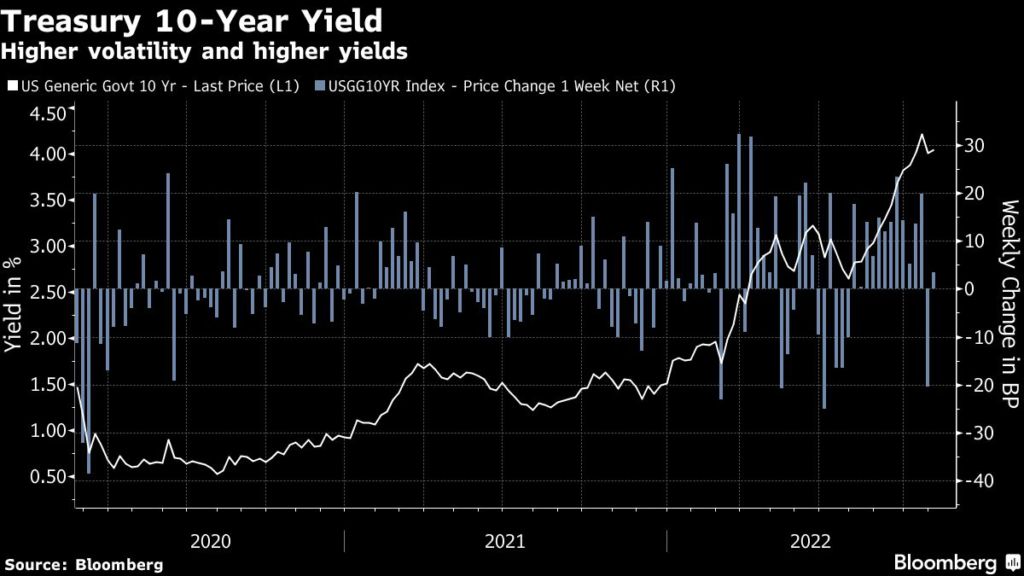
While Treasury yields slid, they remained elevated. Swap markets are pricing in a 75-basis-point hike this week amid the Fed’s most-aggressive tightening campaign in four decades.

The strong reaction in China’s markets on the reopening report “shows how much anticipation there has been for the reopening in the market,” said Hao Hong, partner at Grow Investment Group. 

Meanwhile, strategists including JPMorgan Chase & Co.’s Marko Kolanovic believe the Fed’s aggressive hiking is nearing an end, providing the prospect of relief for markets. The US will likely raise rates by 50 basis points in December and pause after one more 25-basis-point hike in the first quarter, he said. 

Indicators such as the inversion of the yield curve between 10-year and three-month Treasuries “all support a Fed pivot sooner rather than later,” wrote Morgan Stanley’s Michael Wilson.

Looking ahead, Bespoke Investment Group said November has historically been one of the strongest months of the year for US stocks. The S&P 500 has experienced an average gain of 0.82% with positive returns 69% of the time, according to data going back to 1983. Over the last 10 years, the gauge saw a median advance of 1.26% and gains nine out of 10 times.

The Bloomberg Dollar Index snapped a three-day rising streak and the offshore yuan extended a gain.

The yen strengthened while remaining within reach of the 150 level versus the dollar. Japan spent a record 6.3 trillion yen ($42 billion) in October to counter the yen’s sharp slide against the dollar, as it tried to limit speculative moves adding to pressure on the currency. 

Elsewhere, oil advanced toward $88 a barrel after losing around 3% over the previous two sessions. Gold rose.

Key events this week:

  • US construction spending, ISM manufacturing index, Tuesday
  • EIA crude oil inventory report, Wednesday
  • Federal Reserve rate decision, Wednesday
  • US MBA mortgage applications, ADP employment, Wednesday
  • Bank of England rate decision, Thursday
  • US factory orders, durable goods, trade, initial jobless claims, ISM services index, Thursday
  • ECB President Christine Lagarde speaks, Thursday
  • US nonfarm payrolls, unemployment, Friday

Some of the main moves in markets:

Stocks

  • S&P 500 futures rose 0.6% of 6:44 a.m. in London. The S&P 500 fell 0.8% on Monday
  • Nasdaq 100 futures rose 0.7%. The Nasdaq 100 fell 1.2%
  • Euro Stoxx 50 futures rose 0.8%
  • Japan’s Topix index rose 0.5%
  • South Korea’s Kospi index rose 1.8%
  • Hong Kong’s Hang Seng Index rose 5.7%
  • China’s Shanghai Composite Index rose 2.4%
  • Australia’s S&P/ASX 200 Index rose 1.7%

Currencies

  • The Bloomberg Dollar Spot Index fell 0.5%
  • The euro rose 0.5% to $0.9931
  • The Japanese yen rose 0.5% to 147.92 per dollar
  • The offshore yuan rose 0.6% to 7.2920 per dollar

Cryptocurrencies

  • Bitcoin rose 1.1% to $20,637.64
  • Ether rose 2% to $1,596.55

Bonds

  • The yield on 10-year Treasuries declined three basis points to 4.02%
  • Yields on Australia’s 10-year bonds were little changed at 3.76%

Commodities

  • West Texas Intermediate crude rose 1.4% to $87.73 a barrel
  • Spot gold rose 0.7% to $1,644.91 an ounce

–With assistance from Jeanny Yu and Charlotte Yang.

More stories like this are available on bloomberg.com

©2022 Bloomberg L.P.
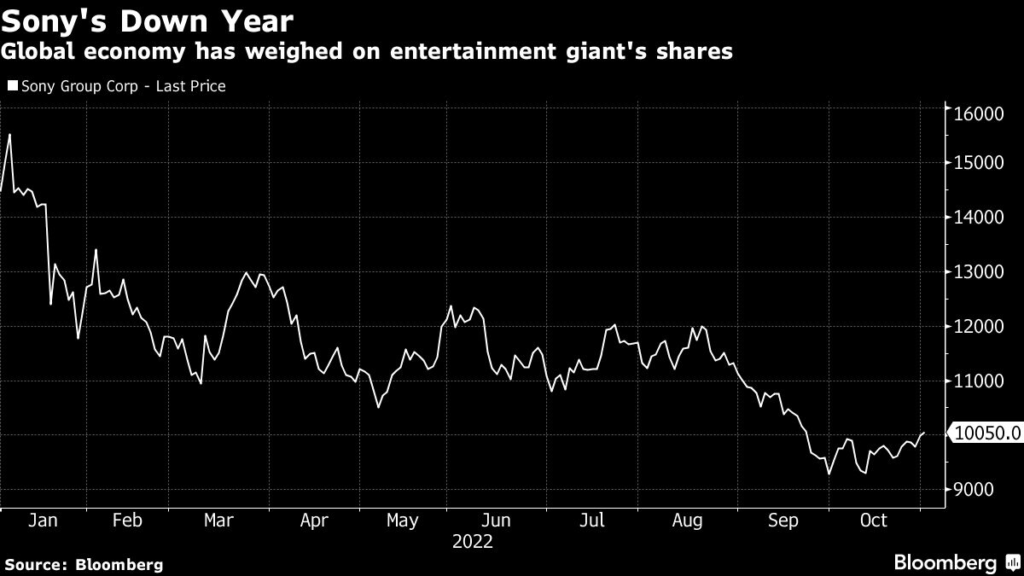
Sony Bumps Up Profit Outlook as Weak Yen Juices Sales

(Bloomberg) — Sony Group Corp. nudged up its fiscal-year profit outlook after the weaker yen bolstered sales of image sensors used in Apple Inc.’s premium iPhones.

The Tokyo-based company raised its operating profit outlook to 1.16 trillion yen ($7.8 billion), matching average analyst estimates and up from its previous forecast of 1.11 trillion yen. The Japanese entertainment group reported on Tuesday an operating profit of 344 billion yen in the July-September quarter, against the consensus forecast of 280.7 billion yen.

The weak yen lifted sales of Sony’s image sensors, used in iPhones and other smartphones and which the company makes in Japan but mostly sells overseas. Bloomberg News reported stronger-than-expected sales of the premium iPhone 14 Pro and 14 Pro Max, which use more cameras than the base models and require more sensors. Demand for high-end handsets remains strong, despite weakening momentum for entry-level versions, according to smartphone component suppliers such as Murata Manufacturing Co.

Sony cut its annual forecast for its games segment, saying it now expects it to log a profit of 225 billion yen, down from 255 billion yen. While shortages of PlayStation 5 consoles are easing as Covid-related chip and logistics snarls end, the war in Ukraine and tightening monetary policy had been constraining overall demand for games and other leisure items. Sony sold 3.3 million PS5 units in its fiscal second quarter, the same as the previous year, betraying hopes of a takeoff in demand on its flagship console. 

The gaming division sold fewer physical software copies this year with 62.5 million units, down 18% from the same quarter a year ago. PS Plus subscribers dipped to 45.4 million from 47.3 million in the prior quarter.

“Performance of Sony’s two major pillars, games and image sensors, was bad and masked by the weak yen,” said Hideki Yasuda, an analyst at Toyo Securities. “Image sensor sales are likely to fall as demand from Chinese smartphones is falling. PlayStation software sales continued to be lackluster and still-declining PlayStation Plus subscriber numbers are concerning.”

Sony said its music publishing business, as well as its box office films and TV dramas, continued to generate steady revenue. Both divisions got full-year profit forecast raises.

(Updates with analyst comment)

More stories like this are available on bloomberg.com

©2022 Bloomberg L.P.

Twitter Cannot Rely Entirely on Advertisers, Musk Says

(Bloomberg) — Twitter Inc. cannot rely entirely on advertisers, new owner Elon Musk tweeted in response to author Stephen King’s criticism that the platform reportedly plans to charge users about $20 a month to keep their Blue Check verification.

Twitter is looking to raise its optional Twitter Blue monthly subscription price to $19.99 from $4.99, and launch new features including paid user verification, the Verge reported late Sunday. 

Musk, who recently changed his Twitter bio to ‘Chief Twit’, has now changed it to ‘Twitter Complaint Hotline Operator’. 

More stories like this are available on bloomberg.com

©2022 Bloomberg L.P.

Peristent Chip Shortage Forces Toyota to Revise Output Target

(Bloomberg) — Toyota Motor Corp. lowered its production target while sticking to a conservative profit outlook because of a persistent shortage of chips, disappointing analysts who were anticipating an upward revision in the forecast by the world’s biggest carmaker.

Shares fell the most in a month after the manufacturer cut its output target to 9.2 million vehicles from 9.7 million for the fiscal year through March. Operating profit is on track to be ¥2.4 trillion ($16.2 billion) for the period, Toyota said in a statement Tuesday, below analysts’ average estimate of ¥2.98 trillion. 

The chip shortages, which stem from Covid-related lockdowns, have challenged the global auto industry, which also faces rising costs for materials and logistics, as well as other supply-chain disruptions. While the weak yen helps Japan’s carmakers boost the competitiveness of vehicles sold abroad and the value of repatriated earnings, they don’t get as much benefit as they used to because the weaker yen amplifies imported costs of raw materials and energy.

“Although the situation is better for chips that are also used for consumer products, there will still be some constraints in semiconductors for automobiles,” Kazunari Kumakura, Toyota’s chief officer in charge of purchasing, said in a briefing. “It appears that the worst is over.”

The carmaker also unveiled a share buyback of as much as ¥150 billion that will run Nov. 2 through May 12. Toyota declined 2.6%, the most since Sept. 30.

For the full year, Toyota raised its sales target to ¥36 trillion, compared with analysts’ estimate of ¥36.3 trillion and the company’s prior guidance for ¥34.5 trillion.

Japan’s currency slumped to a 32-year low in October, and has weakened more than 22% against the dollar this year. Toyota has estimated that each one yen decline pushes its operating profit up by ¥45 billion. The carmaker revised its foreign exchange rate to ¥135 against the dollar from ¥130. The currency was last trading at around ¥148.

Toyota reported operating profit of ¥563 billion for the July-September quarter, compared with analysts’ average projection for ¥765 billion. Profit was ¥750 billion a year earlier. Revenue rose 22% to ¥9.2 trillion in the quarter.

The carmaker booked a ¥97 billion loss on the termination of vehicle production in Russia, including costs for retirement allowances and asset impairments. Toyota in September announced that it would permanently stop production at its lone car plant in the country. 

Underscoring the chip shortage, Toyota said Thursday it will temporarily give new car buyers just one smart key instead of two as it seeks to ration semiconductors. The measure will apply to 14 models for sale in Japan, including Crown sedans, Prius hybrids and the battery-electric vehicle bZ4X, for production in November. 

Another headache for Toyota is a scandal at its truck and bus unit Hino Motors Ltd. over falsification of engine data that forced it to suspend domestic shipments. Hino said last week full-year operating profit will slump 82%. The manufacturer declined to issue net income guidance, saying it was unable to reasonably assess losses related to the scandal. 

“It’s still hard to tell what might happen with suppliers,” Bloomberg Intelligence analyst Tatsuo Yoshida said. “Although there’s less risk now, it’s possible that suppliers may suddenly warn of any issues.”

(A previous version of this story corrected the prior sales guidance figure.)

More stories like this are available on bloomberg.com

©2022 Bloomberg L.P.

India Probing MG Motor as Scrutiny on Chinese Firms Widens

(Bloomberg) — India has begun an inquiry into MG Motor India Private Ltd. over alleged financial irregularities, according to people with knowledge of the matter, deepening a scrutiny of Chinese firms operating in the country.

The probe against the local unit of the Chinese carmaker SAIC Motor Corp Ltd. has been initiated by India’s Ministry of Corporate Affairs. The scrutiny started after a detailed analysis of the company’s financial statements indicated suspicious related-party transactions, alleged tax evasion, under and over-invoicing of bills and other irregularities, the people said, asking not to be identified as the matter is not public. 

The company’s top management, including directors, managing director and auditors have been summoned next month by the ministry seeking more clarification, the people said.

The move follows similar action against other China-based firms including Xiaomi Corp., local units of ZTE Corp., Oppo and Vivo Mobile Communications Co Ltd. amid continued hostility between the two nuclear-armed neighbors since 2020 when the deadliest fighting in decades erupted along their disputed Himalayan border. 

MG Motor said it has been a sent a notice seeking clarifications on why the company posted an operational loss in the first year of business in 2019-2020.

“We fully cooperate with the government authorities on all issues and are in process of providing the desired records and information to the Registrar of Companies within the stipulated time frame,” the company said in a statement.

The company added that it is impossible for any automobile company to be profitable in the first year of operations. 

“This is because of the huge capex investment required and the long gestation period in a highly competitive market such as India where many multinationals have struggled for decades and have accumulated losses,” MG Motor said, adding that its accounts were audited.

MG Motor recorded its highest-ever output of 5,008 units, including 1,000 electric vehicles, in October as supply of semiconductors improved, MG said in a separate statement Tuesday. The company’s retail sales jumped 53% to 4,367 units last month from a year earlier, it said. 

The ministry declined to comment for this story.

Prime Minister Narendra Modi’s government has banned more than 300 Chinese mobile applications, including shopping services from Alibaba Group Holding Ltd., the TikTok short video hit from ByteDance Ltd. and apps used on Xiaomi phones. 

The ministry is already investigating the account books of more than 500 Chinese companies to look into allegations of significant financial impropriety, Bloomberg News had reported earlier.

–With assistance from Unni Krishnan and Ragini Saxena.

(Updates with MG Motor’s monthly sales and production data in 9th paragraph.)

More stories like this are available on bloomberg.com

©2022 Bloomberg L.P.

Twitter Limits Content-Enforcement Work as US Election Looms

(Bloomberg) — Twitter Inc., the social network being overhauled by new owner Elon Musk, has frozen some employee access to internal tools used for content moderation and other policy enforcement, curbing the staff’s ability to clamp down on misinformation ahead of a major US election.

Most people who work in Twitter’s Trust and Safety organization are currently unable to alter or penalize accounts that break rules around misleading information, offensive posts and hate speech, except for the most high-impact violations that would involve real-world harm, according to people familiar with the matter. Those posts were prioritized for manual enforcement, they said.

People who were on call to enforce Twitter’s policies during Brazil’s presidential election did get access to the internal tools on Sunday, but in a limited capacity, according to two of the people. The company is still utilizing automated enforcement technology, and third-party contractors, according to one person, though the highest-profile violations are typically reviewed by Twitter employees.

San Francisco-based Twitter declined to comment on new limits placed on its content-moderation tools.

In response to this story, Yoel Roth, the head of safety and integrity at Twitter, tweeted: “This is exactly what we (or any company) should be doing in the midst of a corporate transition to reduce opportunities for insider risk. We’re still enforcing our Twitter rules at scale.”

Twitter staff use dashboards, known as agent tools, to carry out actions like banning or suspending an account that is deemed to have breached policy. Detection of policy breaches can either be flagged by other Twitter users or detected automatically, but taking action on them requires human input and access to the dashboard tools. Those tools have been suspended since last week, the people said.

This restriction is part of a broader plan to freeze Twitter’s software code to keep employees from pushing changes to the app during the transition to new ownership. Typically this level of access is given to a group of people numbering in the hundreds, and that was initially reduced to about 15 people last week, according to two of the people, who asked not to be named discussing internal decisions. Musk completed his $44 billion deal to take the company private on Oct. 27.

The scaled-back content moderation has raised concerns among employees on Twitter’s Trust and Safety team, who believe the company will be short-handed in enforcing policies in the run-up to the US midterm election on Nov. 8. Trust and Safety employees are often tasked with enforcing Twitter’s misinformation and civic integrity policies — many of the same policies that former President Donald Trump routinely violated before and after the 2020 elections, the company said at the time.

Other employees said they were worried about Twitter rolling back its data access for researchers and academics, and about how it would deal with foreign influence operations under Musk’s leadership.

On Friday and Saturday, Bloomberg reported a surge in hate speech on Twitter. That included a 1,700% spike in the use of a racist slur on the platform, which at its peak appeared 215 times every five minutes, according to data from Dataminr, an official Twitter partner that has access to the entire platform. The Trust and Safety team did not have access to enforce Twitter’s moderation policies during this time, two people said.

Roth posted a series of Tweets on Monday addressing the increase in offensive posts, saying that very few people see the content in question. “Since Saturday, we’ve been focused on addressing the surge in hateful conduct on Twitter. We’ve made measurable progress, removing more than 1500 accounts and reducing impressions on this content to nearly zero,” Roth wrote. “We’re primarily dealing with a focused, short-term trolling campaign.”

Read more: Musk Consolidates Power at Twitter After Board Is Dismissed

Musk tweeted last week that he hadn’t made “any changes to Twitter’s content moderation policies” so far, though he has also said publicly that he believes the company’s rules are too restrictive, and has called himself a free-speech absolutist.

Internally, employees say, Musk has raised questions about a number of the policies, and has zeroed in on a few specific rules that he wants the team to review. The first is Twitter’s general misinformation policy, which penalizes posts that include falsehoods about topics like election outcomes and Covid-19. Musk wants the policy to be more specific, according to people familiar with the matter.

Musk has also asked the team to review Twitter’s hateful conduct policy, according to the people, specifically a section that says users can be penalized for “targeted misgendering or deadnaming of transgender individuals.”

In both cases it is unclear if Musk wants the policies to be rewritten or the restrictions removed entirely.

(Updates with Yoel Roth comment in the fifth paragraph)

More stories like this are available on bloomberg.com

©2022 Bloomberg L.P.
Telkom Exploring Deals for $1 Billion Data Center Unit, Sources Say

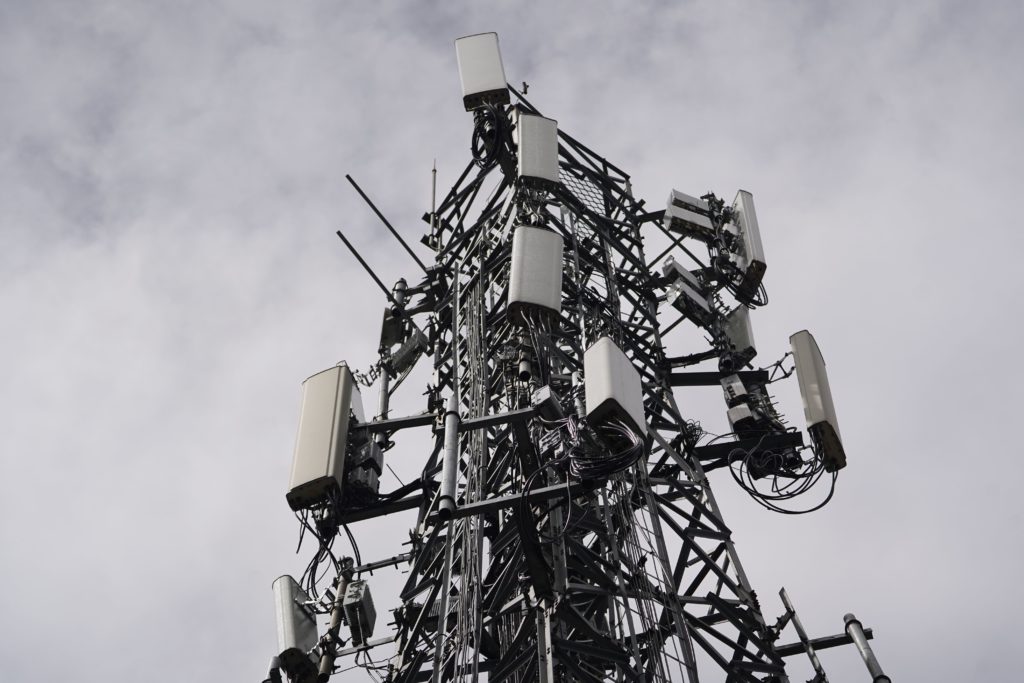
(Bloomberg) — State-owned phone carrier PT Telkom Indonesia is considering introducing investors to its data center business amid increasing interest for digital infrastructure assets, according to people familiar with the matter.

The Jakarta-listed telecom giant has held initial talks with prospective investors and could seek a valuation of more than $1 billion for the operation in a deal, the people said, asking not to be identified because the matter is private. Options under consideration include selling a minority stake in the data center unit, the people said. The company said last year it was planning an initial public offering for the business in 2023.

Discussions are at an early stage and might not lead to any transactions, the people said. Telkom hasn’t decided whether it will introduce investors to, or hold an IPO for, the data center operation, President Director Ririek Adriansyah said in response to a Bloomberg News query, adding that the business could be valued at about 25 times Ebitda.

“We will see how our data center consolidation and development progresses,” he said in a text message. “We will also need to look at the macro conditions before deciding on the right scenario.”

Global investment funds are keen for digital infrastructure assets in Southeast Asia, which has seen rising demand for e-commerce and financial technology services. Beyond Indonesia, the Philippines has also turned into a hot spot for deals in assets such as mobile phone towers and data centers.

Telkom, which has a market value of about $28 billion, has been looking into reorganizing and monetizing its wide-ranging assets from mobile and broadband, to satellites and digital content.

The company is considering a merger of its broadband and wireless businesses, a move that would create an entity valued at more than $30 billion, Bloomberg News has reported. Banks including Goldman Sachs Group Inc. and PT Bank Mandiri have been tapped to work on the deal, people familiar with the matter have said. 

Telkom’s infrastructure services unit, known as Mitratel, raised about 18.8 trillion rupiah ($1.2 billion) in a Jakarta initial public offering in November last year. 

More stories like this are available on bloomberg.com

©2022 Bloomberg L.P.

Bharti Airtel Slips After Posting Profit Miss Amid 5G Rollout

(Bloomberg) — Bharti Airtel Ltd. reported a lower-than-expected quarterly profit, spurring India’s No. 2 wireless operator to make a case for higher tariffs as it rolls out 5G services across the country. Shares slipped on Tuesday.

The carrier, led by billionaire Sunil Mittal, posted a 90% jump in net income to 21.5 billion rupees ($260 million) for the quarter ended Sep. 30, according to a filing Monday, but missed the average profit of 25.44 billion rupees estimated in a Bloomberg survey. 

Analysts were expecting the profit to more than double after baking in the impact of two rounds of tariff hikes — August and November 2021 — that were fully reflected in the latest quarter and not in the year-ago period. Higher forex losses dented its bottomline, brokerages wrote after the earnings.

Revenue rose 22% to 345.3 billion rupees while total costs advanced 17% to 169.3 billion rupees compared with the same period last year, the filing said. Bharti saw its revenue from South Asia mobile services drop 27% to 695 million rupees while capital expenditure inched up.

“We are now rolling out 5G and are confident that Airtel 5G Plus will deliver the best experience in India while being kinder to the environment,” Gopal Vittal, Bharti’s chief executive officer for India and South Asia, said in a post-earnings statement Monday. He added that Bharti management was “concerned” about the low return on capital employed due to the world’s lowest prices. 

“Given the large investments required to drive digital adoption in India, we believe there is a need for tariff correction,” Vittal said in the statement.

KEY INSIGHTS

  • The tepid earnings come weeks after Indian telecom carriers kicked off their speedier 5G networks that’s touted to revolutionize everything from gaming to manufacturing and health care. It may also decide who dominates the digital era in a country of billion-plus people that’s rapidly switching to smartphones.
  • Bharti, which has not announced its 5G investment or tariffs, intends to offer these services in urban centers by 2023 and go pan India in 2024. While bigger rival and sector leader, Reliance Jio Infocomm Ltd. plans to invest $25 billion to roll out the world’s most affordable 5G services across India by December 2023.
    • “The key thing to watch out from results would be commentary on pace of 5G rollout and any visibility on tariff hike,” Bank of America analysts Sachin Salgaonkar and Priyank Mahajan wrote in a report earlier this month.
  • Analysts and investors are keen to see how Indian carriers are able to profit off 5G technology which has been available in China and South Korea for years and where operators have struggled to recoup their investment of billions of dollars. In South Korea, despite efforts to come up with killer apps, average revenue per person has only climbed slightly since the 4G era.
  • Bharti, like its peers, has been boosted by two rounds of tariff hikes last year. Vittal said in February that another round of tariff hikes may happen this year and reiterated the need for it again on Monday.
    • India’s telecom sector has shrunk to just three private sector players now — Reliance Jio, Bharti and smallest of the trio, Vodafone Idea Ltd. — after Mukesh Ambani’s upstart unleashed a bruising tariff war in 2016. The oligopolistic market structure has meant that tariff hikes by any other operator are usually followed on by others.
  • Bharti, which received as much as $1 billion from Alphabet Inc. in January, spent 430.8 billion rupees in August in a government-conducted auction of airwaves to gear up for providing 5G services.

Market Reaction

  • Bharti shares fell as much as 1.32% when markets opened in Mumbai on Tuesday. Earnings were announced Monday after the close of India trading hours.
  • The stock jumped 16.8% in the September quarter, outpacing the 8.3% gains clocked by the S&P BSE Sensex. The carrier has surged 21% this year.

Get More

  • India mobile average revenue per user was 190 rupees, +3.8% q/q
  • Bharti’s total subscriber base, as of Sept. 30, was 501 million, with almost 364 million users in India where it added 3 million q/q
  • Ebitda margin 51.3% vs. 49.5% y/y
  • Net debt $25.61 billion, +21% q/q
  • Other income 2.02 billion rupees, +84% y/y


(Updates with stock movement in the Market Reaction subhead.)

More stories like this are available on bloomberg.com

©2022 Bloomberg L.P.
Hong Kong Leads Asia Advance Before Rate Decisions: Markets Wrap

(Bloomberg) — Stocks advanced during the Asian trading session amid higher bond yields and investor focus on central bank decisions and the pace of further interest rate hikes.

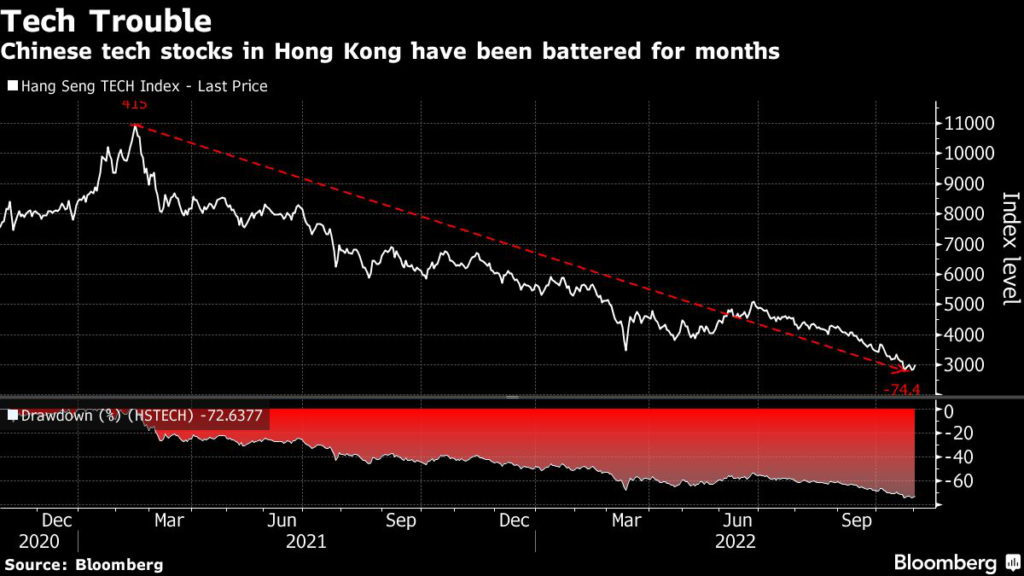
An Asian equity gauge surged for the second straight day as the sell-off in Hong Kong and China shares paused. Tech shares gained more than 5% and led a rebound in Hong Kong equities, which on Monday slumped to the lowest since 2009. 

Japanese shares climbed as the yen’s weakness supported sentiment for the nation’s exporters. Technology and EV battery companies pushed South Korea’s benchmark index higher.

US equity futures rose after the S&P 500 declined, weighed down by big tech. US Energy shares had whipsawed on news that President Joe Biden would call on Congress to consider tax penalties for producers accruing record profits. 

Australia’s central bank raised interest rates by a quarter point as expected. The ASX 200 Index extended gains and Australian sovereign bonds enjoyed a little bit of a relief rally.

The small increase in Australia’s policy rate contrasts with expectations for another jumbo hike from the Federal Reserve on Wednesday.

Treasury yields dropped despite two-year US yields remaining elevated at around 4.4%. Swap markets are pricing in a 75-basis-point hike this week amid the Fed’s most-aggressive tightening campaign in four decades.

“Some bottom fishing activities today after heavy sell-offs” led to the strong rebound in Chinese and Hong Kong stocks, said Banny Lam, head of research at CEB International Investment Corp. “The markets might be volatile in the coming days, however, as investors are waiting for Fed comments about rate outlook on Wednesday. So I’m still cautious at the moment.”

Still, strategists including JPMorgan Chase & Co.’s Marko Kolanovic believe the Fed’s aggressive hiking is nearing an end, providing the prospect of relief for markets. The US will likely raise rates by 50 basis points in December and pause after one more 25-basis-point hike in the first quarter, he said. 

Indicators such as the inversion of the yield curve between 10-year and three-month Treasuries “all support a Fed pivot sooner rather than later,” wrote Morgan Stanley’s Michael Wilson.

Looking ahead, Bespoke Investment Group said November has historically been one of the strongest months of the year for US stocks. The S&P 500 has experienced an average gain of 0.82% with positive returns 69% of the time, according to data going back to 1983. Over the last 10 years, the gauge saw a median advance of 1.26% and gains nine out of 10 times.

In currency markets, the yen is back within reach of the 150 level versus the dollar. Japan spent a record 6.3 trillion yen ($42 billion) in October to counter the yen’s sharp slide against the dollar, as it tried to limit speculative moves adding to pressure on the currency. 

The offshore yuan declined, edging closer to its weakest on record, as China signaled a looser grip on the currency by weakening the fixing.

“We expect that strong dollar trend will continue at least into mid to early 2023,” Todd Jablonski, chief investment officer of asset allocation at Principal Asset Management, said on Bloomberg Television. “The strong US dollar likely correlates with peak US policy rates in early 2023.”

Elsewhere, oil gained and gold rose.

Key events this week:

  • US construction spending, ISM manufacturing index, Tuesday
  • EIA crude oil inventory report, Wednesday
  • Federal Reserve rate decision, Wednesday
  • US MBA mortgage applications, ADP employment, Wednesday
  • Bank of England rate decision, Thursday
  • US factory orders, durable goods, trade, initial jobless claims, ISM services index, Thursday
  • ECB President Christine Lagarde speaks, Thursday
  • US nonfarm payrolls, unemployment, Friday

Some of the main moves in markets:

Stocks

  • S&P 500 futures rose 0.4% of 12:37 p.m. in Tokyo. The S&P 500 fell 0.8% on Monday
  • Nasdaq 100 futures rose 0.4%. The Nasdaq 100 fell 1.2%
  • Japan’s Topix index rose 0.5%
  • South Korea’s Kospi index rose 1.5%
  • Hong Kong’s Hang Seng Index rose 2.7%
  • China’s Shanghai Composite Index rose 0.9%
  • Australia’s S&P/ASX 200 Index rose 1.2%

Currencies

  • The Bloomberg Dollar Spot Index fell 0.2%
  • The euro rose 0.2% to $0.9903
  • The Japanese yen rose 0.3% to 148.24 per dollar
  • The offshore yuan rose 0.1% to 7.3255 per dollar

Cryptocurrencies

  • Bitcoin rose 0.7% to $20,556.5
  • Ether rose 2.1% to $1,597.43

Bonds

  • The yield on 10-year Treasuries declined three basis points to 4.02%
  • Yields on Australia’s 10-year bonds rose two basis points to 3.77%

Commodities

  • West Texas Intermediate crude rose 0.8% to $87.20 a barrel
  • Spot gold rose 0.3% to $1,638.26 an ounce

–With assistance from Jeanny Yu.

More stories like this are available on bloomberg.com

©2022 Bloomberg L.P.

Tech Leads Broad Rally in Chinese Stocks After Historic Rout

(Bloomberg) — Tech stocks led a rebound in Chinese stocks as dip buyers emerged following a rout that pushed key gauges to multi-year lows.  

The Hang Seng Tech Index jumped as much as 6.2% on Tuesday before trimming some of its advance, with internet giants Meituan and Tencent Holdings Ltd. the biggest contributors to gains. A broader gauge of Chinese firms traded in Hong Kong rose as much as 4.3%, bouncing back from its lowest close since late 2005.   

The advance comes after a heavy bout of selling following the Communist Party congress, where President Xi Jinping solidified his grip on power. Chinese stocks have been among the worst performers globally this year as investors face a wall of concerns from geopolitical tensions to slowing economic growth amid Covid restrictions. 


“Obviously there are some bottom-fishing activities today after heavy selloffs,” said Banny Lam, head of research at CEB International Investment Corp., adding that some investors are looking to add positions given the new month. “The markets might be volatile in the coming days, however, as investors are waiting for Fed comments.” 

Even with Tuesday’s rebound, few expect the rally to be sustainable. China’s economic growth remains a concern, with both manufacturing and services activity contracting in October. A property market crisis is deepening, with the nation’s new home sales falling another 28%. A recent nationwide surge in Covid infections is also adding to worries.

Read: China’s Economy Weakens and Signs Point to More Strain Ahead

Traders remain cautious ahead of the Federal Reserve’s rate decision later this week. While policy makers are widely expected to raise interest rates by 75 basis points for the fourth straight time on Wednesday, where they go from there remains up for debate.  

“Such strong rises across the board especially with Chinese tech looks more like short covering,” said Ken Wong, Asian equity portfolio specialist at Eastspring Investments Hong Kong Ltd. He added that it is “a bit early to have sentiment changing.” 

(Updates throughout)

More stories like this are available on bloomberg.com

©2022 Bloomberg L.P.

Close Bitnami banner
Bitnami