
Bloomberg

Senate’s Murphy Wants Security Review of Saudi Investment in Twitter

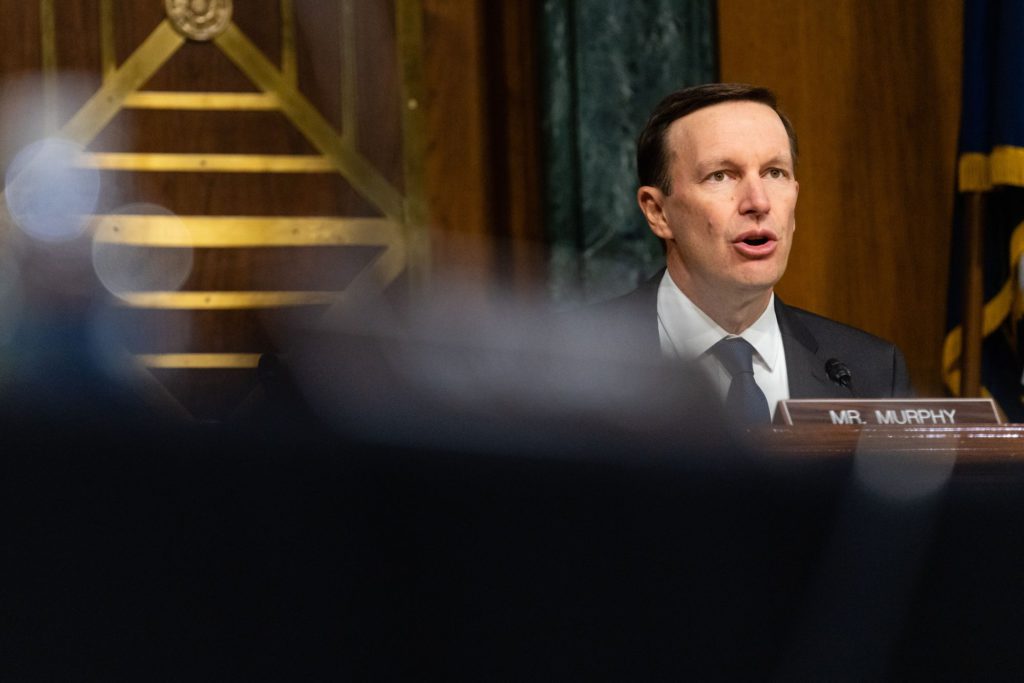
(Bloomberg) — Democratic Senator Chris Murphy said Saudi Arabian backing for Elon Musk’s purchase of Twitter Inc. should be scrutinized by a government panel that reviews national security risks from foreign investments in the US.

“We should be concerned that the Saudis, who have a clear interest in repressing political speech and impacting U.S. politics, are now the second-largest owner of a major social media platform,” Murphy said in a tweet Monday on the social media platform. “There is a clear national security issue at stake and Cfius should do a review.”

Among the investors backing Musk’s takeover is Saudi Prince Alwaleed bin Talal through the Kingdom Holding Company and his private office, which agreed to roll over nearly 35 million Twitter shares, worth about $1.9 billion at $54.20 per share. 

Murphy, of Connecticut, is a senior member of the Senate Foreign Relations Committee. Members of Congress can ask the Committee on Foreign Investment in the United States to look into a transaction, but it doesn’t necessarily trigger a review, according to Shannon Reaves, a partner at Stroock & Stroock & Lavan LLP who works on issues related to the committee.

“It’s not the first time that a member of Congress has pressed for a Cfius review of a transaction,” Reaves said in an interview. “Cfius will need to assess whether it has jurisdiction. Cfius will also need to do a preliminary look to understand whether the transaction has the potential to present national security risk.”

Still, the request is another political pressure point on the deal, which has drawn a wary reaction from Democrats and cheers from many Republicans.

Senator Mark Warner, the chairman of the Senate Intelligence Committee, has also raised concerns in a recent interview about the potential for Musk to be pressured by China, where his electric car maker Tesla Inc. has a massive factory, to moderate content it doesn’t like.

Murphy’s request to Treasury Secretary Janet Yellen for a review comes as the Biden administration is weighing whether the US should subject Musk’s Twitter purchase and other ventures, including a deal for Space Exploration Technologies Corp.’s Starlink satellite network, to scrutiny on national security grounds. Several experts on CFIUS and its workings last week cast some doubt on whether there is a strong enough argument for the committee to review Musk’s recent business deals. 

Cfius has broad authority to review transactions. A 2018 law gave it the ability to scrutinize investors who have minority stakes of any size in a company that also would give them access to non-public information in three categories: sensitive data, critical infrastructure and critical technology.

The panel, which is chaired by the Treasury secretary and includes representatives of other cabinet departments and agencies, operates behind closed doors and rarely confirms when it is conducting reviews. 

The panel holds the power to review deals still underway and those that have already been consummated. For example, in 2012 it barred a Chinese-owned company from buying Oregon windfarm company, Ralls Corp., and ordered it to unwind the deal. 

The Treasury Department declined to comment.

When a Twitter poster said that Saudis had invested in Twitter before Musk bought it, he responded to the poster, and Murphy, on Monday night with two emojis, one “rolling on the floor laughing,” the other a target with an arrow in the bullseye.

–With assistance from Saleha Mohsin, Subrat Patnaik and Steven T. Dennis.

(Updates with Musk tweet, in final paragraph.)

More stories like this are available on bloomberg.com

©2022 Bloomberg L.P.

Instagram Users Report Accounts Randomly Suspended, App Crashes

(Bloomberg) — Instagram said it resolved a bug that blocked, crashed or inexplicably altered accounts for thousands of user around the world.

The Meta Platforms Inc.-owned photo sharing app said in a tweet it had fixed the issue about eight hours after posting that it was looking into the disruptions. Reports of problems had surged Monday morning, with Instagram users citing random suspensions of their accounts, temporary changes in follower numbers and frequent app crashes, according to data on Downdetector.

Still, some users appeared to have issues even after Instagram said the problems had been resolved, with people sharing their frustrations on Twitter. Several users said that they were not receiving a text code needed to log back in.

At 10:33 p.m. New York time, Downdetector still showed a higher number of people reporting outages than before the peak of the disruptions on Monday morning, when there were at one point more than 7,000 down reports.

Last week, Meta’s instant messaging service WhatsApp suffered a widespread outage, with tens of thousands of users reporting problems.

–With assistance from Low De Wei and Lisa Du.

More stories like this are available on bloomberg.com

©2022 Bloomberg L.P.

US Ban on Americans Aiding China Chip Firms Narrower Than Feared

(Bloomberg) — Washington’s restrictions on US citizens assisting China’s chip industry will be more narrowly enforced than feared, suggesting a smaller-than-expected impact on semiconductor companies doing business in the world’s second largest economy.

The rules seem to be mostly targeting US persons working in certain functions for semiconductor manufacturing equipment firms, based on a document the Bureau of Industry and Security published last Friday to clarify export control measures announced on Oct. 7. Those sweeping sanctions were introduced to keep cutting-edge chip technologies out of reach for China’s military but have amplified uncertainty around its tech industry and wrought havoc on global chip stocks.

A license is required for US persons — anyone with an American passport, green card or residency — conducting or authorizing the delivery of items used to develop or produce advanced chips at a plant in China, but not those who perform related clerical or administrative duties. The same controls apply to US persons who maintain, repair and refurbish those items, according to the document.

Foreign-born designers and engineers, along with Chinese people with overseas passports, have long played an instrumental role in the nation’s technological development. The new curbs triggered widespread concern in the country’s chip industry that US staff would be completely sidelined. Several major Chinese semiconductor firms rely on US passport holders for their top management, Bloomberg News has reported.

Ban on US Talent at China Chip Firms Thwarts Xi’s Key Ambition

Chinese chipmakers like Semiconductor Manufacturing International Corp. or machinery suppliers such as Naura Technology Group Co. may still be affected, but the measures will only prevent people from performing certain functions. US personnel affiliated with China’s fast-growing chip design sector may end up unaffected — semiconductor design firms generally do not run plants or own much machinery directly.

The US agency declined to provide further comment on the restrictions.

On Oct. 7, BIS formally banned shipments of US equipment for fabrication of logic chips built at a 16-nanometer or more advanced process, NAND chips with 128 layers or more and DRAM chips above a certain threshold in China. Some multinationals, such as memory maker SK Hynix Inc., have won a one-year reprieve to keep receiving equipment at their plants in the country without additional US approval. The agency also restricted US persons from supporting the development or production of chips at plants in China.

The new US measures have brought sizable impact to the $550 billion global chip industry that’s already being squeezed by an economic downturn. Companies like Dutch chip equipment maker ASML Holding NV have now prohibited American staff from supporting Chinese customers. American equipment suppliers Applied Materials Inc., KLA Corp. and Lam Research Corp. have pulled employees from Yangtze Memory Technologies Co., the country’s most advanced maker of memory chips, and all three have said their sales will take a hit from the new round of export control rules.

“We scoped our measures narrowly,”  US Assistant Secretary of Commerce for Export Administration Thea D. Rozman Kendler said on a public call on Oct 13. “That ensures that our actions will have the least possible impact on commercial activity and not cause disruptions to the global supply chain.”

–With assistance from Eric Martin and Ian King.

More stories like this are available on bloomberg.com

©2022 Bloomberg L.P.

Credit Suisse, CICC Picked for Beijing United GDRs, Sources Say

(Bloomberg) — Chinese e-commerce platform Beijing United Information Technology Co. has selected banks for a sale of global depositary receipts in Switzerland that could raise about $500 million, according to people familiar with the matter.

The Shanghai-listed company is working with China International Capital Corp. and Credit Suisse Group AG on the potential share sale, the people said. A listing could happen as soon as end of this year, the people said, asking not to be identified as the information is private. 

Deliberations are ongoing and details including size and timeline could still change, the people said. More banks could be added later, they said. Representatives for CICC and Credit Suisse declined to comment, while a representative for United Information didn’t immediately respond to requests for comment.

United Information operates business-to-business portals that sell everything from paper to fertilizer to cooking oil, according to its website. It also offers a cloud computing platform and is developing an industrial metaverse, the site shows. It raised about 533 million yuan ($73 million) in a Shanghai IPO in 2019, and followed with a 2.5 billion yuan offering the next year.

The company is planning a Swiss listing to expand overseas and to strengthen its international brand image, it said in an exchange filing in August. Its shares have risen around 66% this year, giving the company a market value of about $8.4 billion.

United Information is joining a number of Chinese companies choosing venues in Europe for their overseas fundraising, as policy uncertainties and geopolitical tensions make listings in the US more difficult. Four Chinese firms raised about $1.5 billion in total in Swiss listings in July. While the debuts opened the gate for more GDR sales, they were met with muted trading.

Banks in Hong Kong are increasingly seeing the Swiss listing as an attractive option in the coming year, after shares in the Asian financial hub slumped dramatically following China’s Communist Party Congress.

–With assistance from Gao Yuan.

More stories like this are available on bloomberg.com

©2022 Bloomberg L.P.
Korea’s First Export Drop in 2 Years Highlights Global Slowdown

(Bloomberg) — South Korea’s first decline in exports in two years is among the clearest signals yet that the global economy is cooling under the pressure of rising interest rates.

Working-day shipments on average declined 7.9% in October from a year earlier, customs office data showed Tuesday. Headline exports dropped 5.7%, worse than estimates for a 2.1% fall.

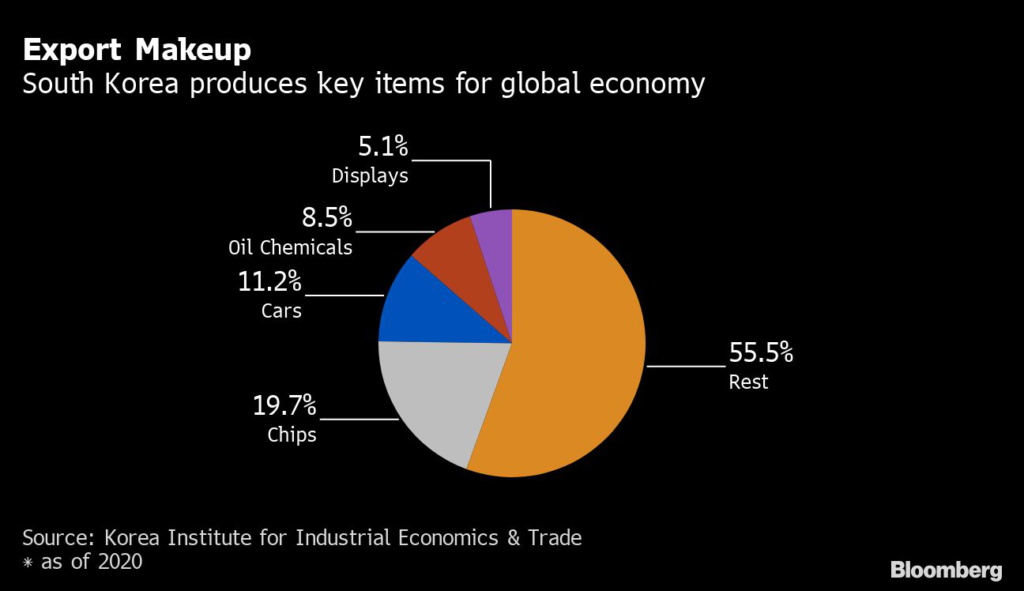
Korea’s trade performance is a canary in the global coal mine as the country manufactures key items such as chips, displays and refined oil for the world economy. The data showed semiconductor exports, Korea’s biggest source of income, dropped the most since 2019, while shipments to China contracted by double-digits for the first time since the onset of the pandemic. 

“It’s an early indicator that is signaling demand is slowing in the global economy,” said Roh Hyun-woo, a strategist at Hanwha Asset Management. “Interest rates are rising, credit markets are strained and sentiment is weakening and exports reflect those trends.”

Overall imports gained 9.9%, resulting in a trade deficit of $6.7 billion, the nation’s seventh consecutive monthly shortfall. The deficit was almost double the $3.5 billion expected by economists.

Deteriorating exports and mounting trade deficits are among the latest concerns for policy makers who are struggling to maintain economic momentum. A deadly crowd crush during weekend Halloween celebrations in Seoul is set to add to factors weighing on the economy as it’s likely to hurt consumer sentiment.

A credit rout triggered by the default of a local developer also chilled investor sentiment, prompting the government to pledge 50 trillion won ($35 billion) in financial support. Economic growth decelerated last quarter as inflation remained elevated and the central bank stepped up policy tightening.

High global commodity prices are raising the prospect of Korea’s first annual trade deficit since the global financial crisis. The won’s slide against the dollar is likely to cause a decline not only in imports but also exports going forward, according to the Korea Development Institute.

Russia’s war on Ukraine, monetary tightening in major countries and a global slowdown are among factors driving the drop in exports, the trade ministry said in a statement. It also pointed to slowing exports and rising deficits in other manufacturing powerhouses such as Germany, France and Japan.

The report from the trade ministry showed:

  • Exports to China fell 15.7%, while total semiconductor shipments slid 17.4%
  • Total automobile shipments advanced 28.5% in October from a year earlier, while exports of oil products rose 7.6%. Korea sold 16.7% more rechargeable batteries than a year earlier.
  • Overall exports to the U.S. gained 6.6%, while those to Japan decreased 13.1% and to the European Union were up 10.3%.

(Updates with comments from economist and trade ministry.)

More stories like this are available on bloomberg.com

©2022 Bloomberg L.P.
Twitter Limits Content-Enforcement Tools as US Election Looms

(Bloomberg) — Twitter Inc., the social network being overhauled by new owner Elon Musk, has frozen some employee access to internal tools used for content moderation and other policy enforcement, curbing the staff’s ability to clamp down on misinformation ahead of a major US election.

Most people who work in Twitter’s Trust and Safety organization are currently unable to alter or penalize accounts that break rules around misleading information, offensive posts and hate speech, except for the most high-impact violations that would involve real-world harm, according to people familiar with the matter. Those posts were prioritized for manual enforcement, they said.

People who were on call to enforce Twitter’s policies during Brazil’s presidential election did get access to the internal tools on Sunday, but in a limited capacity, according to two of the people. The company is still utilizing automated enforcement technology, and third-party contractors, according to one person, though the highest-profile violations are typically reviewed by Twitter employees.

San Francisco-based Twitter declined to comment on new limits placed on its content-moderation tools.

Twitter staff use dashboards, known as agent tools, to carry out actions like banning or suspending an account that is deemed to have breached policy. Detection of policy breaches can either be flagged by other Twitter users or detected automatically, but taking action on them requires human input and access to the dashboard tools. Those tools have been suspended since last week, the people said.

This restriction is part of a broader plan to freeze Twitter’s software code to keep employees from pushing changes to the app during the transition to new ownership. Typically this level of access is given to a group of people numbering in the hundreds, and that was initially reduced to about 15 people last week, according to two of the people, who asked not to be named discussing internal decisions. Musk completed his $44 billion deal to take the company private on Oct. 27.

The scaled-back content moderation has raised concerns among employees on Twitter’s Trust and Safety team, who believe the company will be short-handed in enforcing policies in the run-up to the US midterm election on Nov. 8. Trust and Safety employees are often tasked with enforcing Twitter’s misinformation and civic integrity policies — many of the same policies that former President Donald Trump routinely violated before and after the 2020 elections, the company said at the time.

Other employees said they were worried about Twitter rolling back its data access for researchers and academics, and about how it would deal with foreign influence operations under Musk’s leadership.

On Friday and Saturday, Bloomberg reported a surge in hate speech on Twitter. That included a 1,700% spike in the use of a racist slur on the platform, which at its peak appeared 215 times every five minutes, according to data from Dataminr, an official Twitter partner that has access to the entire platform. The Trust and Safety team did not have access to enforce Twitter’s moderation policies during this time, two people said.

Yoel Roth, Twitter’s head of safety and integrity, posted a series of Tweets on Monday addressing the increase in offensive posts, saying that very few people see the content in question. “Since Saturday, we’ve been focused on addressing the surge in hateful conduct on Twitter. We’ve made measurable progress, removing more than 1500 accounts and reducing impressions on this content to nearly zero,” Roth wrote. “We’re primarily dealing with a focused, short-term trolling campaign.”

Read more: Musk Consolidates Power at Twitter After Board Is Dismissed

Musk tweeted last week that he hadn’t made “any changes to Twitter’s content moderation policies” so far, though he has also said publicly that he believes the company’s rules are too restrictive, and has called himself a free-speech absolutist.

Internally, employees say, Musk has raised questions about a number of the policies, and has zeroed in on a few specific rules that he wants the team to review. The first is Twitter’s general misinformation policy, which penalizes posts that include falsehoods about topics like election outcomes and Covid-19. Musk wants the policy to be more specific, according to people familiar with the matter.

Musk has also asked the team to review Twitter’s hateful conduct policy, according to the people, specifically a section that says users can be penalized for “targeted misgendering or deadnaming of transgender individuals.”

In both cases it is unclear if Musk wants the policies to be rewritten or the restrictions removed entirely.

More stories like this are available on bloomberg.com

©2022 Bloomberg L.P.

This Japanese Startup Wants to Become the Moon’s Very Own FedEx

(Bloomberg) — An intensifying US-China space rivalry and Elon Musk’s ambitious Mars program have fired up scores of startups across the world chasing lucrative contracts, as humans race for resources that could foster life beyond Earth.

Among those is a small Japanese company seeking to make a mark as early as this month with what could be a first for a commercial firm. 

Tokyo-based ispace Inc. is scheduled to send a lunar lander earliest by Nov. 22, carrying multiple government and commercial payloads, including two rovers. Like Musk’s dream for a Martian colony, the startup’s grand vision is to build a human settlement on the moon by 2040, but before that it wants to become the lunar version of FedEx — earning money by ferrying scientific equipment and commercial goods to the moon. 

Ispace’s maiden mission will put to the test not just the technological credentials it’s built since its founding in 2010 but also the faith of its backers, one of whom is a former SoftBank Group Corp. executive. A lot rides on its success, including a potential initial public offering as early as this fiscal year and a shot at a bigger sliver of an industry pie that Morgan Stanley estimates will triple to $1 trillion in two decades from 2020. 

“There’s a vast market for services like these,” ispace’s founder and Chief Executive Officer Takeshi Hakamada, 43, said in an interview. “If something goes wrong with this attempt, we can still use the feedback from the failure to boost the quality of the next launch.”

Bankers for IPO

The company is preparing for a listing on the Tokyo Stock Exchange and has picked SMBC Nikko Securities Inc., Bank of America Corp., Morgan Stanley and Nomura Holdings Inc. as lead managers, people familiar with the matter said, asking not to be identified discussing confidential information. A representative for ispace  declined to comment.

Ispace says it’s raised about $237 million in total as of July, of which $57 million is borrowings. It was valued at about 76 billion yen ($511 million) in a Series C equity financing in August last year. Led by Incubate Fund, the round brought in six other investors including SoftBank’s former chief strategy officer Katsunori Sago and funds managed by Innovation Engine Inc. and SBI Investment Co.

The moon lander mission is part of ispace’s lunar exploration program called Hakuto-R, which means white rabbit in Japanese. The startup says it can reduce fuel costs by taking advantage of the moon’s gravity to travel. The downside is it will take as long as five months to reach the moon, compared to the roughly three days it took for the Apollo missions of the late 1960s and early 1970s.

SpaceX’s Falcon 9

Set for launch on a Falcon 9 rocket built by Musk’s Space Exploration Technologies Corp., ispace’s moon lander is part of a $73 million NASA contract won by a team led by Cambridge, Massachusetts-based Draper. The deal envisages end-to-end delivery services to the far side of the moon under the US Artemis program.

“The first private lunar lander will be a major milestone for the space industry,” said Caleb Henry, a senior analyst at Quilty Analytics, a US-based research and advisory firm.

The Mission 1 lunar lander has been flown to Cape Canaveral in Florida for its space odyssey, the company said in a statement Monday.

Ispace’s success will also be critical to Japan’s own space program as the moon once again becomes the focus of geopolitical intrigue. NASA is targeting a return this decade with its Artemis, while China and Russia have announced plans for a joint lunar base. Last year, Japan’s Lunar Industry Vision Council urged closer cooperation between state and private sectors to remain competitive in the budding space economy. 

Sago said the company’s valuation has the potential to multiply over the coming years. “I don’t invest in startups unless they have enough potential to grow by 10-fold or so over the long term,” he said.

Dozen Contenders

Currently, a dozen companies are developing landers and lunar vehicles, mainly through NASA’s Commercial Lunar Payload Services, or CLPS, program. One leading company in this sector, Masten Space Systems Inc., filed for bankruptcy in July. The firm received a $4.5 million bankruptcy auction-opening bid from space robotics tech developer Astrobotic Technology Inc. in August.

Debacles in space programs aren’t rare, and for its part, ispace has already had a brush with failure. It was one of the finalists in Google’s Lunar XPrize, a $20 million award for the first privately funded team to land on the moon, travel 500 meters (1,640 feet) and beam high-definition video back to Earth. The competition concluded without a winner, but the teams, including ispace, have persisted with their efforts.

“There are a million ways space missions can go wrong and only one way to go right,” Quilty Analytics’ Henry said, noting it’s hard to predict whether ispace’s launch will be successful. “While this is an exciting field, it remains a difficult business financially and technologically.”

Jumpei Nozaki, ispace’s chief financial officer, is well aware of the risks. In an interview, he stressed that a successful landing is not the only goal and the performance of each and every stage will be assessed. 

Hakamada said he can see the formula for success in Musk’s SpaceX, which has executed projects repeatedly undeterred by setbacks. He’s about to face his biggest test soon when he steps into the space center to witness the take-off.  

“I was told that your life changes after watching the launch in person,” he said. “It’s going to be an exciting and nervous moment.” 

(Updates with lander’s current location in 11th paragraph.)

More stories like this are available on bloomberg.com

©2022 Bloomberg L.P.
Musk’s Twitter Investors Include Saudi Prince, Dorsey and Qatar

(Bloomberg) — Elon Musk bought Twitter Inc. last week for $44 billion with the help of Wall Street bank loans and shareholders who agreed to roll over their interest in the social media service in exchange for a stake of the new private company.

That means Twitter, whose shares were delisted last week after almost a decade as a public company, has a new lineup of top investors.

Prince Alwaleed bin Talal

Regulatory filings show the Saudi prince moved almost 35 million Twitter shares through the Kingdom Holding Co., worth about $1.9 billion at the $54.20 per share sale price. That made him the “second-largest investor” in the new parent company.

Alwaleed was quick to endorse Musk’s plan to acquire Twitter, saying in May that Musk would be “an excellent leader” for the social media company. 

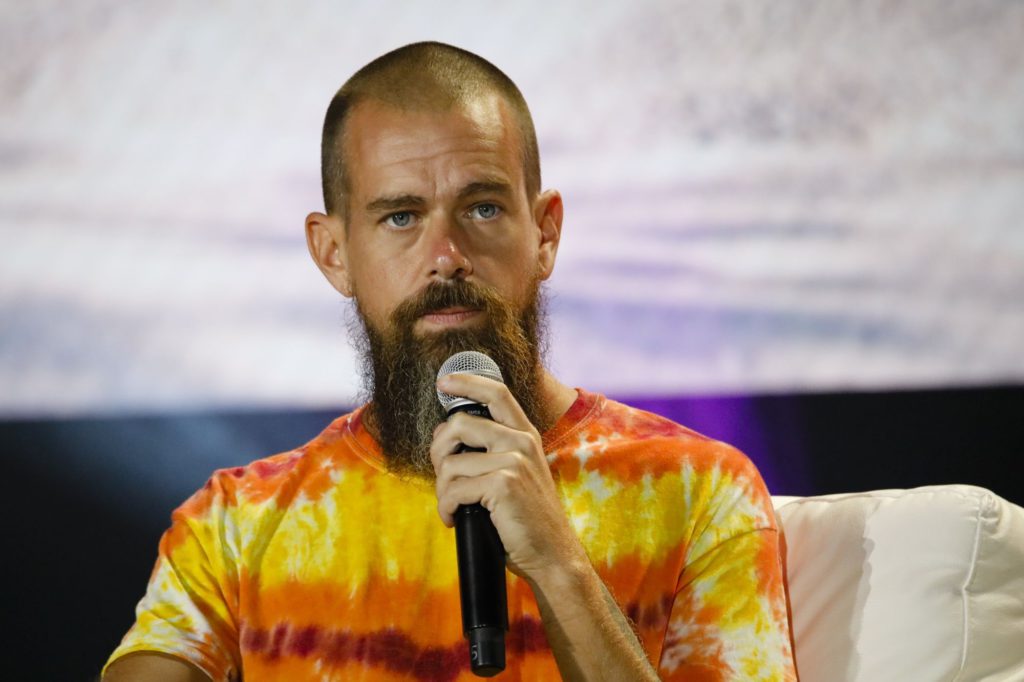
Jack Dorsey

Twitter’s co-founder and former chief executive officer rolled over just more than 18 million shares, or about 2.4% of the public company, worth about $978 million at the merger price. That gave him shares of Musk’s X Holdings I Inc., which controls Twitter.

After Musk first agreed to buy Twitter in April, Dorsey lamented that the company was “owned” by Wall Street and said that taking it private was the “correct” first step.

Qatar Investment Authority

A subsidiary of the sovereign wealth fund of Qatar contributed $375 million in exchange for shares of Musk’s holding company.

The Bloomberg Billionaires Index estimates the value of the stakes rolled over from Twitter stock declined by about 40% since Musk made his offer in April, based on a drop in an index of social-media company shares.

More stories like this are available on bloomberg.com

©2022 Bloomberg L.P.
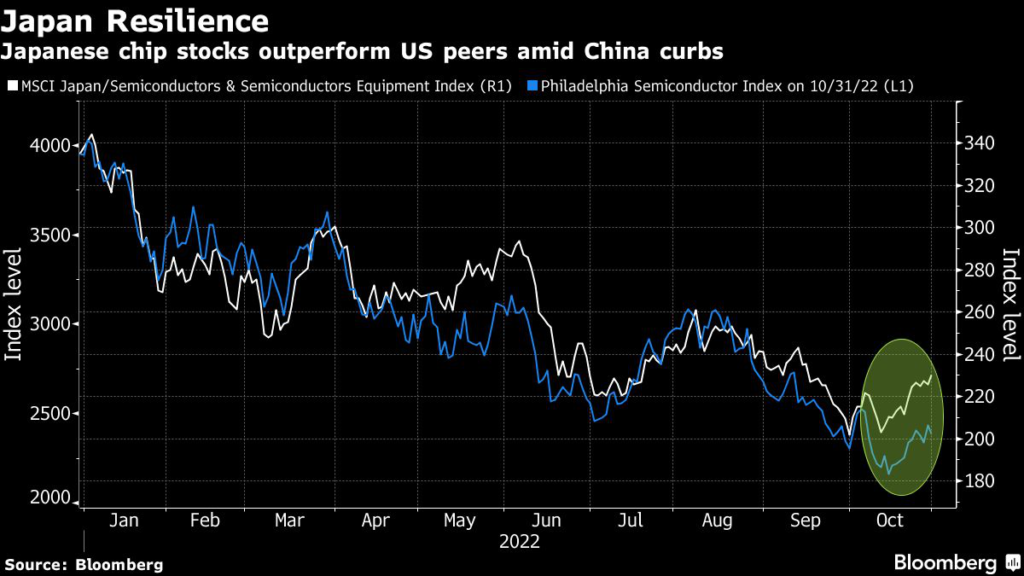
Japanese Chip Stocks Outperform US Peers Amid China Export Curbs

(Bloomberg) — Japan’s semiconductor-related stocks outperformed US peers last month amid concerns over the impact of Washington’s tighter regulations on exports to China.

An MSCI gauge of Japanese chip stocks jumped 14% in October, its best month in nearly two years and more than four times the gain in the Philadelphia Semiconductor Index. The best performer was Lasertec Corp., a maker of testing gear for extreme ultraviolet lithography chipmaking, which posted a 45% gain on the month. 

While chip stocks rebounded globally last month after steep drops earlier this year on concerns over rising interest rates and sector valuations, the China curbs caused additional concern for US suppliers. Japanese shares did “extremely well” in comparison, as they face relatively limited impact, said Masahiro Wakasugi, an analyst at Bloomberg Intelligence. 

As seen in earnings comments from other major global players, however, “if Chinese semiconductor companies stop investing, after a while there may be an indirect effect in a decrease in demand for suppliers other than US companies,” Wakasugi said. 

More stories like this are available on bloomberg.com

©2022 Bloomberg L.P.
Apple’s Online Store and Information Systems Chiefs Are Leaving

(Bloomberg) — Apple Inc.’s top executives in charge of its online retail store and information-systems divisions are stepping down, according to people with knowledge of the matter, bringing changes to two key parts of the tech giant’s operations. 

Anna Matthiasson, the vice president of online retail, is leaving her position, said the people, who asked not to be identified because the changes aren’t yet public. Chief Information Officer Mary Demby, meanwhile, is retiring after three decades, they said.

The departures mean Apple is losing at least three vice presidents — the highest manager level below Chief Executive Officer Tim Cook’s executive team — in recent weeks. Evans Hankey, Apple’s vice president in charge of industrial design, is also leaving the company, Bloomberg News reported earlier this month. Chief Privacy Officer Jane Horvath has departed Apple in recent weeks as well, taking a position at a law firm. 

A spokesman for Cupertino, California-based Apple declined to comment on the latest departures.

The online store became an increasingly vital sales channel for Apple during the Covid pandemic, and the company has spent the last several years unifying its policies and marketing across both its digital and physical storefronts. Apple redesigned its online store in 2021. The division will now be overseen by Karen Rasmussen, who served as a senior director in charge of digital experience and e-commerce before her current role. 

Demby’s department, known as IS&T, handles the technical infrastructure behind Apple’s online services, manufacturing and website. The company refers to the operation as Apple’s “nerve center,” allowing employees to connect with one another, as well as suppliers and customers. The division reports up to Luca Maestri, the chief financial officer.

It’s unclear who will succeed Demby. The company hired David Smoley as a vice president on her team in 2019. He was earlier the chief information officer for pharmaceutical giant AstraZeneca Plc. 

Unlike Demby, Matthiasson was in her role for relatively short time — just about three years. She previously worked as an operations executive at Apple.

The job running Apple’s online store has been a revolving door for several years. The original head of the business, Jennifer Bailey, left that role in 2014 to launch Apple Pay. She now oversees that feature alongside Apple Wallet, the Apple Card and other consumer financial services. Her replacement, Bob Kupbens, left after two years for EBay Inc. His successor lasted a few years and was replaced by Matthiasson.

More stories like this are available on bloomberg.com

©2022 Bloomberg L.P.

Close Bitnami banner
Bitnami
