
Bloomberg

Putin Stirs European Worry on Home Appliance Imports Stripped for Arms

(Bloomberg) — A sudden and surprising spike in European exports of washing machines, refrigerators and even electric breast pumps to Russia’s neighbors is raising concerns among officials the trade boom may be helping Vladimir Putin’s war machine in Ukraine.

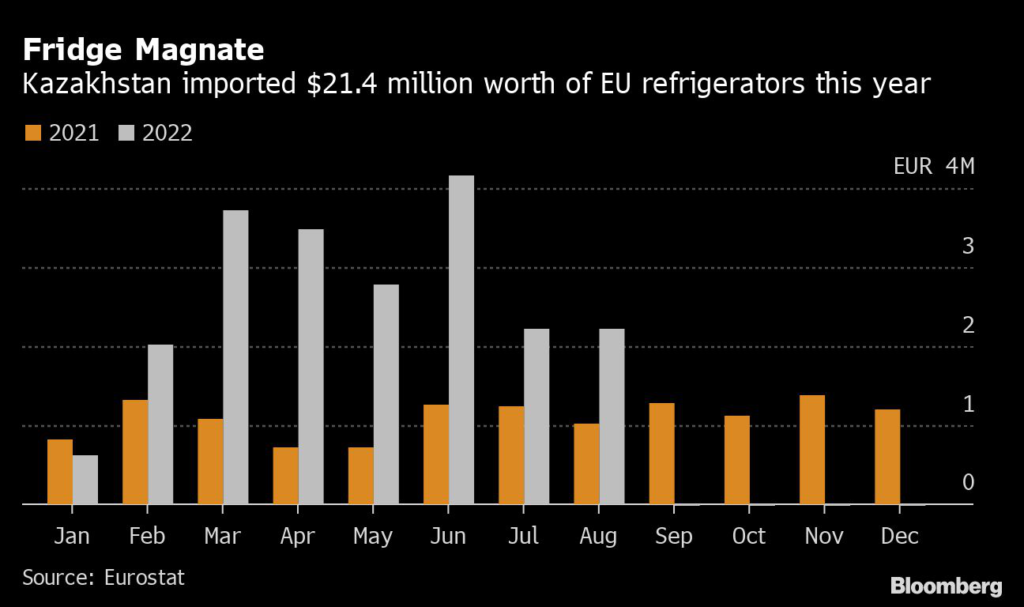
Armenia imported more washing machines from the European Union during the first eight months of the year than the past two years combined, according to data compiled by Bloomberg from the EU’s Eurostat database. Kazakhstan imported $21.4 million worth of European refrigerators through August, more than triple the amount for the same period last year. 

Kazakh government data meantime show a jump in refrigerators, washing machines and electric breast pumps being shipped into Russia.

Some trade via Eurasian states into Russia may be opportunistic businesses making up for shortfalls of imports from elsewhere, or for Russian companies to break up the appliances and use components and semiconductors in civilian manufacturing. 

But European officials familiar with the figures say they worry at least some of the goods and their components may be finding their way into military use, and are closely tracking the rise in exports to countries on Russia’s periphery. 

Officials in Europe have already said publicly they have seen parts from refrigerators and washing machines showing up in Russian military equipment such as tanks since its invasion of Ukraine. People familiar with the assessments said it was quite possible that components and microchips from other household goods were being used for military purposes, too, even if mostly in relatively low-grade equipment.

The trade data show for example that EU exports of electric breast pumps to Armenia nearly tripled in the first half of 2022 versus the prior year, despite a 4.3% drop in the Armenian birth rate. Likewise, Kazakhstan’s demand for breast pumps from the EU soared 633% in the first half of 2022 even though the national birth rate fell 8.4% during the same period. 

Putin’s war has seen Russia hit by sanctions on almost every sector of its economy, depriving it of imports including chips and other components it has long relied on for basic military equipment like radios and guns through to more sophisticated weapons including missile systems, fighter jets and submarines.

Authorities in Moscow stopped publishing trade figures after the invasion of Ukraine. Still, Russian demand for electric breast pumps from Kazakhstan more than doubled during the first eight months of the year versus all of 2021, according to Kazakhstan government data. The country also shipped $7.5 million worth of washing machines to Russia so far in 2022 — versus nearly zero the previous two years. Its exports of refrigerators to Russia have surged ten-fold versus the prior year.

“Even highly sophisticated Russian weapons systems are often built with run of the mill microelectronic components found in a range of commercial goods,” said James Byrne​, director of Open Source Intelligence and Analysis Research at the Royal United Services Institute, a UK think tank. “It’s entirely possible that Russia’s military industrial complex is importing commercial off-the shelf goods to cannibalize for parts.”

Assessing the final destination and the use for the household goods is complicated. Armenia, Kazakhstan and Russia are all in the Eurasian Economic Union, which means there are no customs borders between them. European companies may not want to ship directly to Russia even if their products are not sanctioned, given the optics of being seen to do business with the country right now. They also may not be aware their goods are being sent onto Russia.

European officials say targeting trade in household appliances is difficult, as those items and their so-called sub-threshold components are often not sanctioned. That’s even as the EU has recently introduced new powers that allow it to sanction entities outside the bloc if they help European companies evade its restrictive measures. 

Kazakhstan has vowed to not help Russia circumvent sanctions and there is no evidence the government is aiding Moscow to do so. Officials in both Armenia and Kazakhstan did not immediately respond to requests for comment.

European Commission President Ursula von der Leyen said last month the Russian military was using chips from dishwashers and refrigerators in its military hardware because it was running out of semiconductors. The Biden administration made a similar claim earlier this year, citing reports of parts that had been found in captured Russian tanks in Ukraine. 

It isn’t clear exactly which components might be salvaged from household goods, although they generally all contain microchips. And without workarounds for foreign parts, Russia could find its ability hindered to check Ukrainian military advances on the ground, shaping the course and outcome of the war.

Russia Is Scouring the Globe for Weapons to Use in Ukraine

European Commission spokeswoman Miriam Garcia Ferrer said the bloc was watching trade flows to identify where sanctions against Russia might be skirted. The commission also monitors “the items used by the Russian army in Ukraine based on forensic analysis of the debris of the remnants of destroyed Russian weapons,” she said.

She added low key components from washing machines or refrigerators are commercially available in many countries and regions and where the EU can identify items that are being used in Russian weapons it considers extending trade restrictions to them. For example a number of electronic components were sanctioned under the latest measures adopted earlier this month, Garcia Ferrer said.

After more than eight months of high-intensity warfare, Russia has sustained substantial equipment losses. US and European officials also say Moscow has run down its stockpiles of key weapons systems, such as high-precision missiles. Ukraine, by contrast, continues to draw on supplies of modern arms from its allies that, together with other advantages such as a ready supply of motivated recruits, has transformed the balance of forces on the battlefield. 

Bloomberg News reported earlier in October that Russia had tried for years to reduce its reliance on imports for a vast array of its military equipment — and an internal review in 2021 found it was falling short on almost every metric.

Russia Failed to Swap Out Western Military Parts: 2021 Audit

The US has pushed since the war broke out to cut off Russia’s supplies of semiconductors. “One of the things I’ve been able to do, and I make no bones about it, because of — with Russia’s activities, we have curtailed their ability to access some of this stuff,” President Joe Biden said on Thursday.

“They’re not able to rebuild those devastating weapon systems to take out those civilians in Ukraine as well,” he said. “Not a joke. It makes a big difference. These things matter, and they matter a great deal.”

Other countries that Russia regards as partners, such as China, have largely remained reluctant to supply it with semiconductors and key components even if they have not signed up to the sanctions imposed by the US, Europe and others.

Still, Russia had long experience in evading sanctions to supply its military during the Soviet era, through smuggling and espionage. 

An August study of 27 advanced Russian weapons systems by RUSI found 450 unique foreign made components, a majority of which were manufactured in the US, and most of the rest in Europe and other nations that have imposed sanctions on Russia.

“Common components used in weapons platforms such as microprocessors, analog-to-digital converters, field-programmable gate arrays and micro controllers can also be found in a wide range of commercial goods such as televisions, cars, computers and cameras,” said Byrne​, one of the authors of the RUSI report. 

At the same time, a global semiconductor shortage “has reportedly caused many firms struggling with their semiconductor supply chain to cannibalize goods for their microelectronics.” 

One European official noted that Russian troops were also systematically seizing and looting household appliances in Ukraine. The theft has been widely documented, but it isn’t clear how much has been taken for state use or personal use.

–With assistance from Sara Khojoyan, Jorge Valero, Nariman Gizitdinov and Akayla Gardner.

More stories like this are available on bloomberg.com

©2022 Bloomberg L.P.
How Elon Musk Could Put More Crypto Into Twitter

(Bloomberg) — After months of dramatic back-and-forth, Elon Musk has taken control of Twitter Inc., igniting emotions ranging from hope to anxiety among users who are bracing themselves for how the billionaire will put his stamp on the social-media platform. Crypto Twitter is no exception.

Digital-asset enthusiasts have long congregated on Twitter, where they’ve changed their profile pictures to images of themselves with “laser eyes” as a signal of their crypto support, posted irreverent memes about rising (and then falling) coin prices and re-tweeted threads from their favorite founders. 

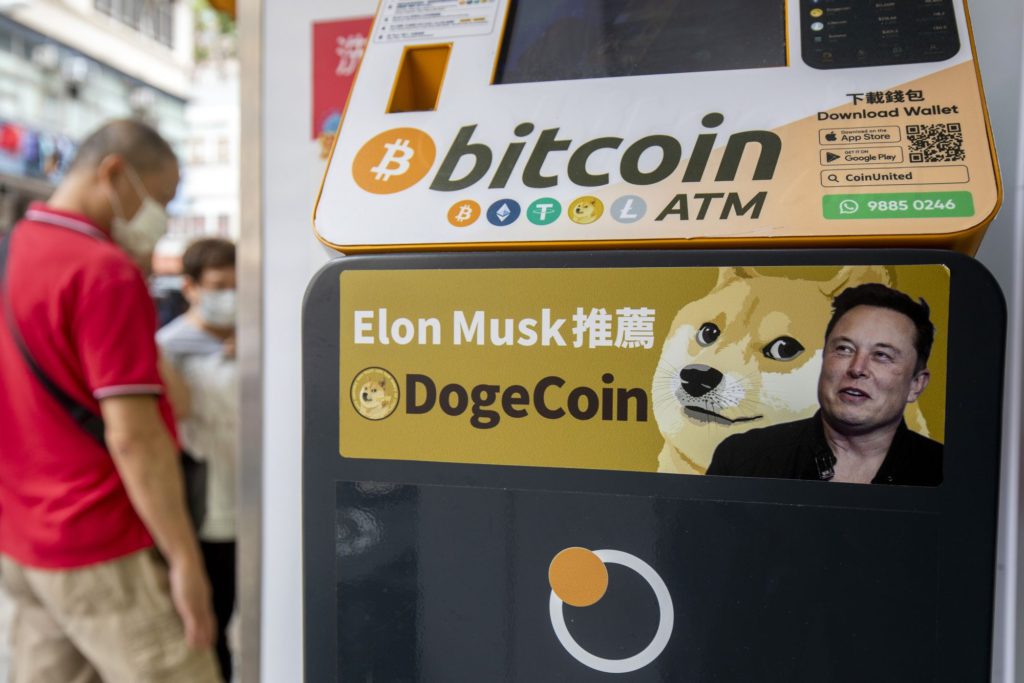
Musk, a prolific tweeter himself, has had a complicated relationship with crypto, seeming to embrace it one minute and belittle it the next. That hasn’t stopped industry supporters from imagining an expansion of Twitter’s blockchain features under his management that would broaden mainstream adoption. Their elation has likely helped boost interest in Dogecoin, Musk’s token of choice, which has soared days leading up to his finally sealing the deal. 

Twitter has made its own forays into crypto. Co-founder and former Chief Executive Officer Jack Dorsey is one of the industry’s most well-known Bitcoin bulls, and under his leadership, the company introduced a feature to let users receive tips in Bitcoin, built a Twitter Crypto division and started Bluesky, a project dedicated to building a decentralized social media network that is now an independent company. Since Dorsey’s departure last November, Twitter has added Ether tipping, nonfungible token profile pictures and USD Coin stablecoin payments for a select group of creators.

It’s unclear what will happen to these efforts under the leadership of Musk, who’s been notoriously mercurial about crypto and may clean out the platform’s digital-asset team as other high-profile executives exit. While the Tesla Inc. CEO has touted Dogecoin on Twitter enough to earn the moniker “the Dogefather,” he called the token “a hustle” when he hosted “Saturday Night Live” in May 2021. He also added the ability to pay in Bitcoin for Tesla’s electric vehicles in 2021, but ended the practice less than two months later, citing the cryptocurrency’s environmental impact. 

In putting together the Twitter acquisition, Musk has seemed to waver on his commitment to crypto. Binance Holdings Ltd., the world’s largest digital-asset exchange, committed $500 million to Musk’s financing for the deal in May and is reportedly building a team focused on exploring how crypto could be useful to the social media company. In a trove of text messages released as part of litigation over the Twitter deal, Musk initially discussed using blockchain to promote free speech and reduce spam on social media, only to write later that “blockchain Twitter isn’t possible.” 

But if Musk did decide to have crypto play a bigger role on Twitter, here are some ways he could do it:

  • Bots and spam on Twitter are huge pain points for Musk, and helped spark a contentious legal battle that put his acquisition of the company in jeopardy. The issue is particularly important in crypto, where spam accounts impersonate famous figures like Musk in order to promote scams involving fake crypto giveaways. But some digital-asset enthusiasts believe that using blockchain could help reduce bots on Twitter. A blockchain-based identity verification tool or an NFT passport could be options for promoting Musk’s goal of wanting to “authenticate all real humans”on Twitter.
  • Freedom of speech is close to Musk’s heart, and he intends to lift the company’s lifelong bans on users. Those values align with those of many crypto believers dedicated to the ethos of decentralization promoted by blockchain. They think that a single entity shouldn’t make major decisions over how a platform is managed. While Musk could potentially implement a token-based voting system that allows users to have more say over what happens on Twitter, it’s important to note that his potential embrace of crypto is a doubled-edged sword. While adding more crypto elements on Twitter could expand mainstream usage of digital assets, it will further consolidate Musk’s influence over an industry that many want to be as decentralized as possible.
  • Musk has already expressed ambitions of turning Twitter into a “super app” and spoken admirably of China’s WeChat platform, which can handle messaging, games, payments and video streaming. With other aspiring super app creators like Revolut Ltd. expanding into crypto, it would make sense if Musk’s vision included digital assets as well. Allowing more cryptocurrencies for tipping could be a first step, with Dogecoin being a likely top candidate given Musk’s love of the token.
  • Other mainstream social media platforms like Instagram are diving further into NFTs. Though Musk has mocked these assets in the past, including Twitter’s decision to allow authenticated NFT profile pictures, he could introduce more NFT features, such as a marketplace or the ability for users to create a profile represented by an NFT that gives them greater ownership over their content — a practice already implemented by decentralized social media platform Lens Protocol. These measures could ensure that Twitter doesn’t fall behind other social media giants in terms of crypto adoption.

While integrating these blockchain elements would be a complex and closely watched undertaking for Twitter, Musk’s new reign still opens up the potential for them to become a reality. 

More stories like this are available on bloomberg.com

©2022 Bloomberg L.P.
Ukraine Latest: Russia Says UK Involved in Crimea Drone Strike

(Bloomberg) —

Russia’s Defense Ministry said a navy minesweeper received “minor” damage from a drone strike on its Black Sea fleet in Crimea, and accused the UK of helping with the attack, without offering evidence. Vessels targeted were involved in the safe-transit shipping corridor for Ukrainian grain, the ministry said. That deal is up for renewal in November.  

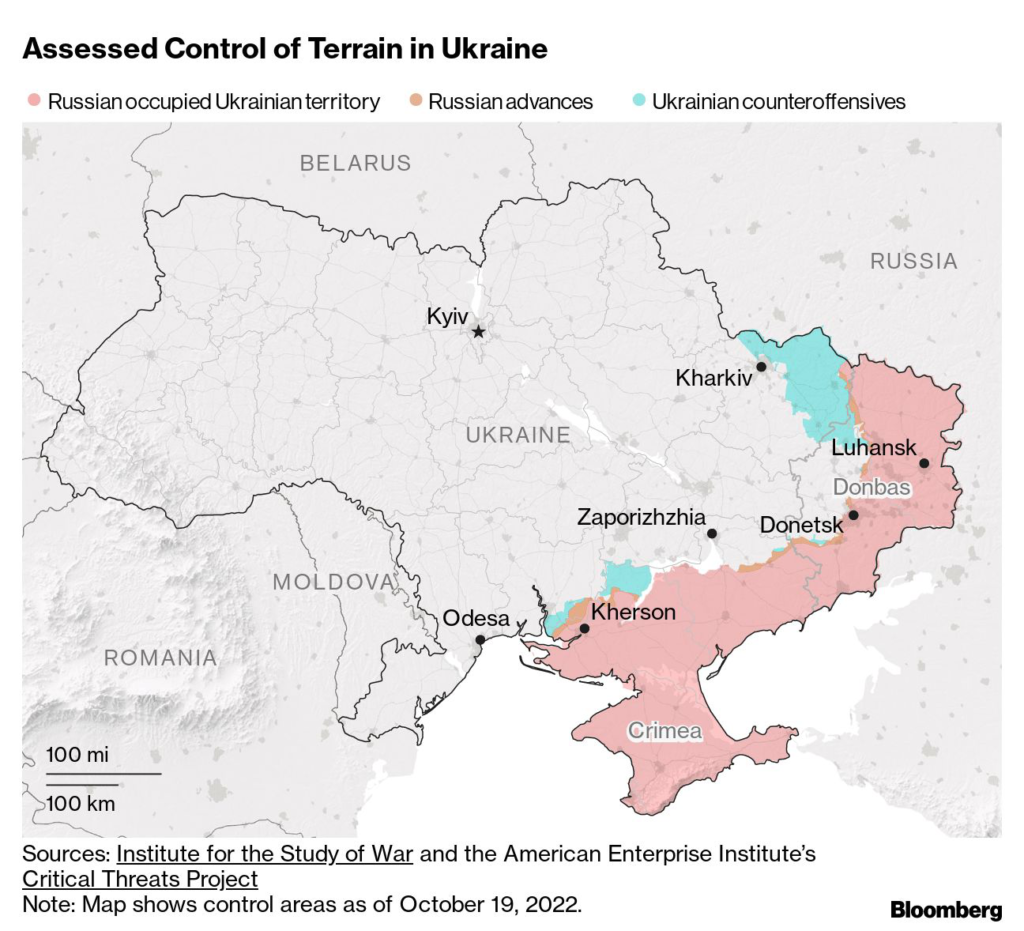
The removal of the remains of 18th century military commander Prince Grigory Potemkin from a tomb in Kherson’s cathedral — announced by the region’s Kremlin-appointed chief on Russian TV — is “symbolic” and likely “preempts Russian intent to expedite withdrawal from the area,” the UK said. 

Russia’s central bank cited the inflationary impact of the Kremlin’s recent call-up of reservists to fight against Ukraine in pausing its run of six consecutive interest rate cuts. Defense Minister Sergei Shoigu told Putin that Russia’s call-up of 300,000 reservists is complete. 

(See RSAN on the Bloomberg Terminal for the Russian Sanctions Dashboard.)

Key Developments

  • ‘Terrifying’ Putin Driven by ‘Evil Forces,’ ECB’s Lagarde Says
  • Russian Air Travel is Back, But Aircraft Lack Service, Parts
  • UK Bans Russian LNG Even Though Imports Have Already Stopped
  • Russia Pauses Rate Cuts as War Call-Up Stirs Economic Angst
  • UK Bans Russian LNG Even Though Imports Have Already Stopped

On the Ground

An industrial building in Zaporizhzhia was struck by Russia on Saturday, the region’s governor said. No casualties were reported. Ukrainian troops repelled Russian attacks in the Donetsk region around Vodyane, Kamianka and Nevelske over the past day, according to the General Staff of the Armed Forces. Russia also continued to attempt offensive actions in the directions of Bakhmut and Avdiivka. Two Russian Su-25 attack aircraft, one Mi-8 helicopter and a drone were shot down by air defense units. Russian occupation forces continued an evacuation from the southern Kherson region, and are removing equipment and medicines from local hospitals, according to the General Staff report.

(All times CET)

New Prisoner Exchange Taking Place, Officials Say (1:50 p.m.)

Russia and Ukraine exchanged about 50 prisoners each on Saturday, Denis Pushilin, the Kremlin-backed head of the self-proclaimed Donetsk People’s Republic, said on Telegram, without giving further details. 

It was the second exchange in four days after Ukraine reported Wednesday that 10 of its servicemen were released. Last week, 108 women returned to Ukraine in a prisoner swap.

Presidential aide Andriy Yermak said 52 Ukrainian prisoners, including officers, medics, sergeants and soldiers, were freed. The swap included two civilians, he said. Some of the prisoners were captured from Azovstal steel plant in Mariupol. 

Russian Ship Damaged in Crimea Drone Attack, Ministry Says, Blaming UK (1 p.m.)

Russia’s Defense Ministry said a Navy minesweeper, the Ivan Golubets, received “minor” damage during an attack involving nine airborne drones and seven unmanned marine vessels against its Black Sea fleet in Sevastopol, Crimea. 

The ministry said ships targeted were involved in ensuring security for the grain corridor allowing safe transit of agricultural goods from Ukrainian ports. It also accused “British specialists” of helping Ukraine’s military carry out the attack, without offering evidence. 

The Moscow-appointed governor in Sevastopol, Mikhail Razvozhayev, said the drone assault on the city, home to a major Russian naval base, was the largest since the Kremlin’s invasion of Ukraine began in February. Nobody was hurt, the news service said.

Kyiv Mayor Makes Urgent Plea for Winter Aid (9:30 a.m.)

“Send blankets and generators or we’ll freeze to death,” Vitali Klitschko, mayor of Kyiv and a former world heavyweight boxing champion, told the UK’s Telegraph. 

The capital, like other parts of the country, is facing regular blackouts after widespread Russian strikes on the energy grid this month seen as a bid to break Ukrainian resolve heading into winter. About 40% of the nation’s energy infrastructure has been damaged by missile and drone attacks. 

“We are doing everything we can do to save the lives of our people and to protect them,” Klitschko said in an interview on Friday. “But this winter will definitely be a huge challenge for us.”  


Ukraine Commander Speaks With Chairman of US Joint Chiefs (9:13 a.m.)

Valeriy Zaluzhnyi, commander-in-chief of Ukraine’s armed forces, spoke by phone with General Mark Milley, chairman of the US Joint Chiefs of Staff, he said on Telegram. 

Kyiv’s forces “are concentrating their efforts on liberating of Ukrainian territory and preventing the capture of new areas,” Zaluzhnyi said. “Thanks to the courage and professionalism of Ukrainian soldiers and officers, our positions remain unchanged.” 

Germany Threatens to End Swiss Arms Purchases in Dispute Over Ammo (8:10 a.m.)

Germany is pressing on with a request for approval from Switzerland to allow a blocked supply of ammunition to Ukraine. The bullets were manufactured in Switzerland decades ago, and require a permit for re-export.

Switzerland’s Federal Council refused the request in June, citing the nation’s law of neutrality. Now German members of the Bundestag are openly threatening not to buy any more armaments in Switzerland if it doesn’t allow the deliveries.

Ukraine and Germany justify the renewed call for help with the fact that the ammunition is primarily used to secure grain exports from the port city of Odesa, turning it into a humanitarian action. Switzerland has yet to respond to this new argument.

Potemkin Remains Theft From Kherson ‘Symbolic,’ UK Says (8 a.m.)

Russia’s removal of the remains of Prince Grigory Potemkin from a tomb in Kherson’s cathedral is “symbolic,” the UK defense ministry said, and along with the civilian exodus from the region “likely preempts Russian intent to expedite withdrawal from the area.” 

“In the Russian national identity, Potemkin is heavily associated with the Russian conquest of Ukrainian lands in the 18th century, and highlights the weight Putin almost certainly places on perceived historical justification for the invasion,” the ministry said in a Twitter update. 

Potemkin’s remains were held in a crypt in the cathedral, including a small bag containing his “skull and bones, carefully numbered,” the New York Times reported. 

Lagarde Says Putin’s War Has ‘Reunited’ Ukrainians (5 a.m.)

Putin’s assault on on Ukraine is his attempt to “cause chaos and to destroy as much of Europe as he can,” European Central Bank chief Christine Lagarde said Friday on Irish national broadcaster RTE’s Late Late Show. “Anyone who is behaving in that way must be driven by evil forces.”

Lagarde called Putin a “terrifying person” in referring to her past meetings with the Russian leader, adding “he was not as sick as he is today.” Even so, Putin’s actions have “reunited” the Ukrainian people, she said.  “He has rejuvenated NATO and he has certainly brought the Europeans together.”

After expressing her view, Lagarde stressed that she’s “just a central banker,” so “shouldn’t be saying all these things.” 

Zelenskiy Scoffs at Russia Saying Mobilization is Finished (8:41 p.m.)

Zelenskiy dismissed Russia’s announcement that it has completed its call-up of 300,000 reservists to beef up its fight in Ukraine.

“We feel completely different on the battlefield,” the Ukrainian president said in his nightly address. “Russia is trying to increase pressure on our positions, using mobilized people, but their training and equipment are so poor that it allows us to assume that soon Russia will need a new wave of sending people to the front.”

Commenting on rolling blackouts, Zelenskiy said about 4 million Ukrainians now have a limited supply of electricity, underscoring his frequent calls for allies to “strengthen our air defenses.”

Ukraine Freezes Electricity Prices Through Winter (7:04 p.m.)

Ukraine’s government approved a decree to keep electricity prices for households unchanged for the winter heating season through March.

“Today, despite the war and massive shelling of energy infrastructure, a decision was made to keep tariffs for households unchanged to avoid additional financial burden on our citizens,” Energy Minister Herman Halushchenko said in an emailed statement.

Russia has intensified shelling of Ukrainian energy infrastructure since Oct. 10, damaging at least 30% of electricity production facilities. Ukraine was forced to introduce power supply limits across its regions and the capital Kyiv may face an electricity shortage of as much as 50%, Mayor Vitali Klitschko said.

Pentagon to Tap Inventories 24th Time for $275 Million in Weapons (6:29 p.m.)

The US Defense Department said it will provide Ukraine with an additional $275 million in weapons, the 24th such drawdown from existing inventories.

The batch will include an additional 500 precision-guided 155mm artillery rounds as well as 2,000 more 155mm rounds of Remote Anti-Armor Mine Systems that dispense tank-busting munitions. It also provides for transferring 250 M1117 Armored Security Vehicles and more than 2.75 million rounds of small arms ammunition.

One new element is four satellite communications antennas. Pentagon spokeswoman Sabrina Singh said the “off-the-shelf” antennas are separate from equipment for Elon Musk’s Starlink satellite system.

Canada to Issue ‘Ukraine Sovereignty Bonds’ (5:30 p.m.)

The five-year bonds are among the measures Ottawa is putting in place to help Ukraine’s government.

The securities will help Ukraine with essential services including paying pensions and purchasing fuel before winter, Prime Minister Justin Trudeau said in an statement. Equivalent proceeds will be sent to Ukraine through the IMF’s administered account.

The bonds will be offered via financial institutions. Investors will be, in effect, purchasing a regular top-rated Government of Canada five-year bond. Zelenskiy later tweeted his appreciation.

Shoigu Tells Putin ‘Partial Mobilization’ Complete (4:29 p.m.)

Russia’s “partial mobilization” — calling up 300,000 reservists to fight in Ukraine — is complete and won’t be extended, Defense Minister Sergei Shoigu said in a televised meeting with President Vladimir Putin.

The call-up, Russia’s first since World War II, shocked many citizens and led more than 350,000 to flee the country amid widespread reports of ineligible candidates being drafted and new troops getting inadequate equipment and poor treatment.

Putin on Friday ordered Shoigu to “modernize” Russia’s draft system to ensure such problems aren’t repeated. Shoigu said 218,000 of the mobilized forces are still in training, while the remainder have already been deployed to Ukraine.


Russia Holds Rates Steady on Impact of Partial Mobilization (13:40 p.m.)

Russia’s central bank held interest rates for the first time since the immediate aftermath of the attack on Ukraine, as risks of higher inflation intensify following the Kremlin’s call-up of reservists to fight in the war.

“While the partial mobilization may mainly create disinflationary pressure in the coming months due to subdued consumer demand, its subsequent effects will be pro-inflationary as it adds to supply-side restrictions in the broader economy,” policy makers said.

Read more: Russia Pauses Rate Cuts as War Call-Up Stirs Economic Angst 


More stories like this are available on bloomberg.com

©2022 Bloomberg L.P.
Twitter Frees Up Billions for Arbitrage Traders Seeking Next Win

(Bloomberg) — Billions of dollars in arbitrage capital is looking for a new home after Elon Musk finally closed his $44 billion deal to buy Twitter Inc.

Merger arbitrage traders, who make money betting on the outcome of dealmaking among public companies, are now setting their sights on transactions involving Activision Blizzard Inc., VMware Inc. and Albertsons Cos. after enduring a months-long roller-coaster ride by Twitter’s stock, according to a Bloomberg News survey of 10 event-driven and risk-arbitrage trading desks this week.

The wide spreads on each of the deals — the difference between the purchase price and where the target’s stock is currently trading — means they offer the most potentially lucrative opportunities for arbs, as the traders are colloquially known. 

Mortgage software provider Black Knight Inc., regional bank First Horizon Corp. and broadcaster Tegna Inc. are also among the popular picks.

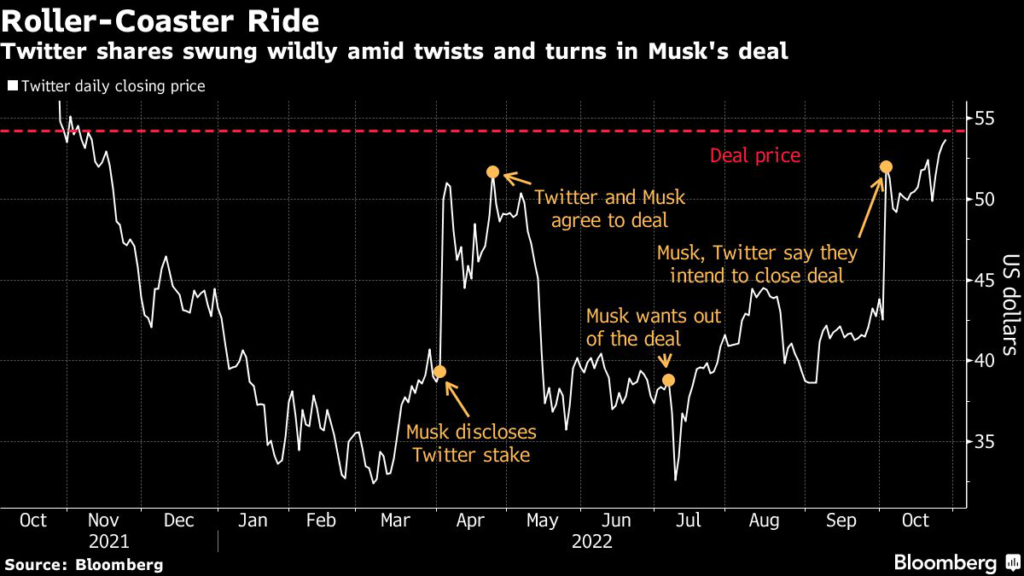
For those who stuck to their wager that Musk would go through with the Twitter purchase, Friday was a triumphant moment to cash out and reap profits after months of uncertainty. The social media platform’s stock had a tumultuous stretch of trading as the world’s richest man tried to back out of the deal, with shares falling roughly 40% below the takeover price in July.

“For the merger arbitrage community, it is always good to see a problematic deal close — Twitter certainly having been in the problematic category,” said Brett Buckley, an event-driven strategist at WallachBeth Capital, who estimated billions of dollars from merger arbitrage funds were tied to the situation. Not everyone will have made money though, he said, due to the unpredictable developments that whipsawed the stock over the US summer. 

Here’s a breakdown of the deals that will be next to capture traders’ attention:

Microsoft-Activision Blizzard

Microsoft Corp.’s $69 billion purchase of Activision Blizzard, announced in January, is among the largest mergers in US history, and Warren Buffett is among investors who’ve snapped up Activision stakes in a merger arbitrage bet. The videogame company’s shares are still more than 22% below Microsoft’s offer price, driven by heightened antitrust scrutiny in the US and Europe. A broad slump in the technology industry is also pushing investors to price in a greater downside risk if the deal falls apart. The companies expect to close the deal in the first half of 2023.

Broadcom-VMware

Broadcom Inc. agreed to pay about $61 billion for VMware in May, in the biggest-ever takeover of a semiconductor maker. Given the cash-and-stock offer’s effective value of roughly $130 per share, VMware’s current trading price offers about a 13% upside to anyone willing to bet on the deal. The spread is likely to stay wide until the transaction clears some major regulatory approvals, given its size and the possibility of a lengthy review. But merger arbitrage specialists aren’t too concerned about antitrust risks, a Bloomberg News survey in May showed. The companies aim to wrap up the deal by November next year.

Kroger-Albertsons

Kroger Co. this month announced plans to buy Albertsons in a deal valued at about $25 billion, including debt, combining the nation’s second and fourth-largest grocers. The merger has attracted skepticism from US senators and is expected to face tough antitrust reviews. Arbs initially sat on the sidelines because of a potential tax liability in Albertsons’ special dividend, but the window to receive that payout closed on Oct. 21, allowing speculators to wade back in. Albertsons’ shares are trading around $20.40 — well below the offer of $34.10, which included the special dividend. The transaction isn’t expected to close until 2024.

Other Deals

Arbs are also focused on Intercontinental Exchange Inc.’s acquisition of Black Knight in a $13 billion cash-and-stock deal, announced in May. First Horizon and Toronto-Dominion Bank are still in the process of closing the $13 billion combination they announced in February, while the planned $5.4 billion purchase of broadcaster Tegna by Standard General LP is pending approval from the Federal Communications Commission, among other regulators.

More stories like this are available on bloomberg.com

©2022 Bloomberg L.P.
Biden’s Popping Up on TikTok Even Though It’s Banned in the White House

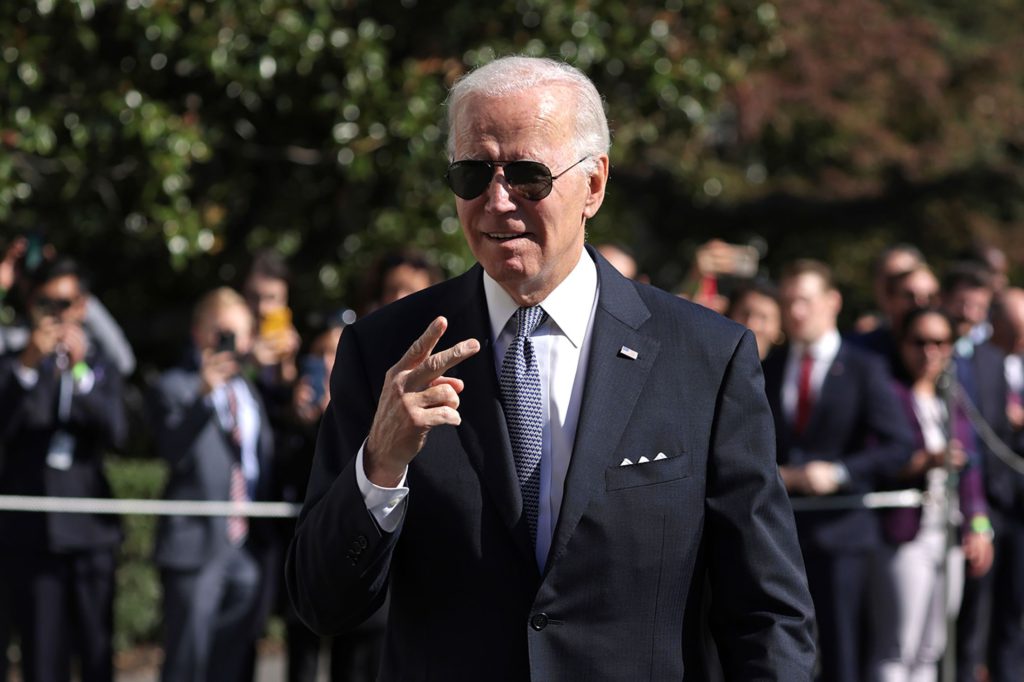
(Bloomberg) — Two weeks out from the Nov. 8 midterms, President Joe Biden sat for an interview — not with a broadcast news anchor or major newspaper, but a panel of six young activists organized by NowThis News. 

As the conversation aired on the network’s YouTube channel that night, the count of live viewers hovered at about 6,000.

But the live coverage wasn’t the point.

The interview was intended as a back door for the White House into one of the fastest-growing social media platforms for politics and news, one the White House can’t access directly itself: TikTok Inc.

The rapidly expanding video-sharing platform has become increasingly pivotal to reaching young voters, particularly as legacy social media networks like Facebook and Twitter publicly falter. But TikTok’s aggressive harvesting of user data — and suspicions of its Chinese parent company ByteDance Ltd. — have fueled bipartisan alarm about the amount of information on US users that may be funneled to Beijing.

By having the president appear on NowThis, the White House could be certain that clips from the event would be posted to the channel’s millions of TikTok followers, amplifying the appearance many times over without putting the president directly on the social media platform.

The engagement betrays a simple calculation within the West Wing: TikTok is too important to ignore.

One in 10 Americans and more than a quarter of adults between the ages of 18 and 29 say they “regularly get news from TikTok” according to a recent survey from the Pew Research Center. 

More importantly, TikTok and Instagram — which has adopted some of TikTok’s most popular features — are the only two major social networks with increasing levels of news consumption. Users of Twitter Inc., Facebook, LinkedIn Corp., and Reddit Inc. all report consuming less news through those services over the past two years.

“The reality is that there’s a significant amount of people who are getting their news there — we can’t unilaterally disarm,” said Rob Flaherty, the White House’s director of digital strategy. “So it’s important to make sure that we’re engaging there.”

TikTok Prohibited

But that can be difficult when your interactions with the platform are handcuffed amid a multi-year national security review. 

The White House is among a slew of federal entities — including the State Department, Department of Homeland Security, Department of Defense, and Transportation Security Administration — that do not allow TikTok to be installed on government-issued devices.

Biden administration officials are attempting to broker an agreement with TikTok that would allow the video-sharing site to keep operating in the US by enacting additional restrictions on how US user data is stored, according to people familiar with the discussions who requested not to be identified discussing a national security matter. But the effort has stalled over concerns the app would still remain a threat, and Congress is weighing legislation that would officially ban TikTok from all government phones.

Spokespeople for TikTok didn’t respond to a request for comment.

More: TikTok Deal Remains Out of Reach as Biden Team Weighs Concerns

For now, there’s no official White House account on the social media network, and Biden’s digital strategy team has no relationship with the content team at TikTok in the way it does with other leading social media sites. To monitor emerging trends on the platform, Flaherty occasionally uses an old, personal iPod Touch device that can access the service without putting White House data at risk.

Instead of generating its own TikTok content, the White House has targeted creators on the platform who then post their own videos.

“We have to focus on reaching people where they are, so we built out a digital partnerships team that makes us the first White House to have dedicated staff for digital creators,” Flaherty said. “Some of them focus on political creators – folks who primarily make political content. Others focus on what we call ‘audience creators’ — people who have reach into target audiences that we need to talk to.”

Engagement has typically occurred around big policy rollouts but can also be driven by breaking news or trending interest.

When the White House saw a large number of TikTok influencers posting about Russia’s invasion of Ukraine in March, it brought creators to the White House for a briefing from National Security Council officials and then-Press Secretary Jen Psaki.

In the hours before Biden announced his student debt relief plan in August, he briefed about 80 digital creators on the plan via a Zoom call. Details of the program — which offers Americans as much as $20,000 in canceled loans — were posted first to social media networks.

Celebrity supporters have also played a crucial role.

Pop singer Olivia Rodrigo filmed a TikTok with Maisy Biden, the president’s granddaughter, before the 2020 election urging her followers to vote — a post that garnered 18.5 million views. Months later, Biden hosted Rodrigo at the White House, where she filmed a series of videos with the president about the administration’s vaccination campaign.

And earlier this week, Biden invited a group of eight TikTok creators to the White House for an event where he received his updated coronavirus booster. The visit also included an hour-long meeting in the Oval Office where he spoke about his family and urged them to get vaccinated as well, the Washington Post reported. 

“The key to quote-unquote winning TikTok in the political space isn’t about your own content as much as it’s about how you are getting your message out through creators,” Flaherty said. “And that means you have to take them seriously and give them the information they need to help inform their own audiences in authentic ways.”

But not every effort to engage with TikTok is that serious. For the White House, simply being a character on the platform can pay dividends; winking references to trends or popular figures are a chance to engage casual audiences in the way a late-night television appearance previously might have.

Viral Whisper

Last December, the Jonas Brothers and the president recreated a version of the viral “Joe Byron” TikTok video at the White House. (For the uninitiated, the original video featured brief interviews with some of Coney Island’s most eccentric residents — including a shirtless man who asked the president to take him to dinner.) 

Biden’s version of the clip racked up more than 50 million views in the first 24 hours.

A sketch featuring Psaki and comedian Benito Skinner pretending to be a White House intern racked up 7.2 million TikTok views. 

And during the Detroit Auto Show in September, Biden filmed a clip with Daniel Mac, a TikTok influencer who gained his following by asking the owners of exotic cars their occupations.

Still, there can be some risk in navigating an emerging digital space — beyond the security concerns that hang broadly over TikTok.

Just two weeks after Biden and Mac’s video post, Apple Inc. announced Tony Blevins, a senior executive that had been at the iPhone manufacturer for 22 years, was departing the company. Blevins’ departure came after his team was removed from his command following a crude joke he made in a TikTok video with Mac. 

And TikTok’s algorithmic-driven virality means it can often be tough to anticipate what might take off on the platform. When Biden sought to promote his pandemic relief measure, the American Rescue Plan, during a speech last year at the White House, he adopted his trademark stage whisper.

“Guess what?” Biden said. “It grows the economy. Benefits everybody. Hurts nobody.”

The audio exploded on TikTok, appearing in over 15,000 videos created by a legion of Gen Z users to show off ridiculous pandemic purchases — from barbells painted to look like doughnuts to a Garfield-themed spice set.

–With assistance from Alex Barinka.

More stories like this are available on bloomberg.com

©2022 Bloomberg L.P.

India Tweaks Internet Rules to Allow Social Media Appeals

(Bloomberg) — India is revamping its internet rules to include an appeals panel for social media grievances.

The federal Technology Ministry last year announced intermediary guidelines to push social media companies to take down controversial content and to help with legal probes. New Delhi’s move aligned with those by other countries looking to exercise greater control over big US internet companies. It also increased compliance headaches for the likes of Meta Platforms Inc. and Twitter Inc., which count India among their key growth markets.

The 2021 rules, which are legally enforceable, directed the tech companies to appoint grievance officers to resolve user complaints. The penalty for non-compliance included the lapse of protections given to intermediaries or content hosts and jail terms.

Under the amended rules, released Friday, the federal government will set up one or more grievance appellate committees comprised of a chairperson and two full-time members. The committee will aim to resolve an appeal within 30 calendar days, and an intermediary must comply with its order, according to the rules.

The new rules have been introduced as intermediaries or content hosts such as social media firms did not do enough to address user complaints, junior technology minister Rajeev Chandrasekhar told a news conference. “Redressal officer is supposed to address grievances not have some tokenism there.”

The changes come as billionaire Elon Musk takes control of Twitter, appointing himself head of the company and vowing to ensure free speech on the platform. 

India has had an especially contentious relationship with Twitter over the past few years as Prime Minister Narendra Modi’s administration has sought to gain greater control over online dialogue.

The prospect of less restrictive content moderation under Musk’s leadership has prompted concerns that dialogue on the social network will deteriorate, eroding years of efforts by the company and its trust and safety team to limit offensive or dangerous posts.

(Updates with the minister’s quote in the fifth paragraph.)

More stories like this are available on bloomberg.com

©2022 Bloomberg L.P.

How Augmented Reality Can Cut Down on Returns

(Bloomberg) — With Halloween just around the corner, here’s something scary: Americans are expected to spend close to $3 billion this year on costumes, according to the National Retail Federation, many of which only get worn once. Factor in the growing number of returns spawned by the rise of e-commerce, and the environmental impact of Oct. 31 can be frightening all on its own. 

A bit of technology could help. For the first time this year, costume company Disguise Inc. is partnering with Snapchat owner Snap Inc. on an augmented-reality lens that lets users try on costumes virtually and then order them directly from their phone. Snapchat users take a full-body photo and then browse Disguise’s Snapchat store for costumes, which they can “try on” using an AR filter that shows how the costume would look on their person before they buy it.Snapchat’s AR lenses have a history of going viral — the company only started baking in e-commerce this year — but the technology is also increasingly considered a way to reduce purchase returns and the greenhouse-gas emissions that come with them. As e-commerce becomes more common, especially for clothing, “returning is a huge problem,” says Andrew Lipsman, an analyst specializing in retail at consultancy Insider Intelligence.Last year, American shoppers returned $761 billion worth of goods, or nearly 17% of all retail sales, according to NRF. In e-commerce, where consumers don’t generally have the option of trying before they buy, return rates can exceed 20%.

The transportation and logistics industry is already the biggest contributor to carbon dioxide emissions in the US, accounting for 27% of total emissions in 2020. Fashion, too, has a big footprint, accounting for up to 10% of global carbon dioxide output — more than international flights and shipping combined. The more parcels sent back to merchants, the greater those emissions.

Snap may have helped normalize AR, but it’s far from alone in applying the technology to shopping. Canadian retailer Shopify also lets shoppers try things on virtually, and companies that include Amazon.com Inc., IKEA Group, and Walmart Inc. are all experimenting with letting customers use AR shopping tools to, for example, see how an armchair might look in their living room before buying it.

Beyond making e-commerce more convenient, the efforts appear to have potential. Roughly two-thirds of consumers who used AR technology to guide their shopping decision were less likely to return their purchase, according to a recent survey conducted by market research firm Alter Agents, which polled  more than 4,000 shoppers in the US, the UK, France and Saudi Arabia. The survey didn’t specify which products participants bought, but  industry experts say virtual try-ons work best for cosmetics at the moment, while apparel and furniture are still tricky. 

Lipsman is among those skeptical about the technology’s readiness, particularly after he failed to find a suitable couch using AR. But embracing augmented reality is “directionally right” in the search for solutions that could reduce carbon emissions caused by frequent returns, he says: “In the long term, it could be significant if it becomes useful to consumers and if it becomes a normal and routine part of how they shop.”

More stories like this are available on bloomberg.com

©2022 Bloomberg L.P.
Bitcoin on Track for October Gains in Defiance of a Tough Stretch of Months

(Bloomberg) — Bitcoin looks set for gains in October, defying a recent streak of monthly losses as the macro picture shows hints of improving and cryptocurrency market data improve.

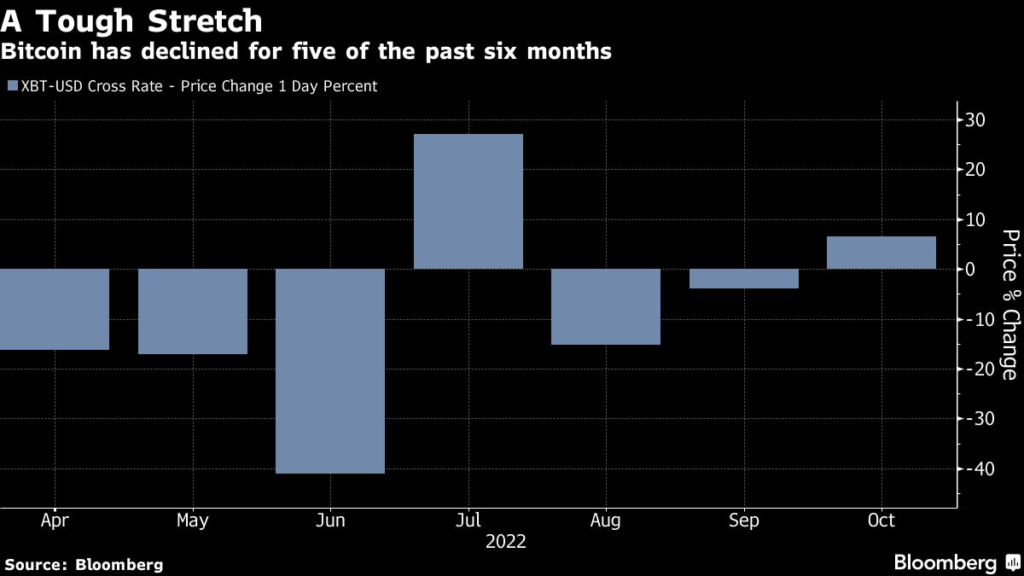
The largest cryptocurrency is up 6.5% in October and was trading around $20,700 as of 8 a.m. in London on Saturday, while second-biggest Ether has risen 19%. Both tokens dropped in five of the previous six months, and bulls had been putting hope into this month as October has historically tended to be positive for crypto prices.

Read more: Bitcoin’s Hold Above $20,000 Gives Bulls Hope for Lasting Rally

A recent rally doesn’t appear to have been caused by any one factor but is “largely driven by a more favorable backdrop for risk assets and short liquidations,” Greg Cipolaro, global head of research at NYDIG, wrote in a report. He cited $615 million of short futures and perpetual swap contracts getting liquidated on overseas exchanges for Bitcoin on Oct. 26-27, and $462 million of liquidations on Ether.

Bitcoin was stuck below $20,000 for much of September and October, but rallied above that level in recent days as tentative signs emerged the Federal Reserve might pull back on the pace of rate increases in coming months. Crypto has traded in tandem with risk assets such as the Nasdaq 100 in recent months amid Fed hikes and stubbornly high inflation.

Also helping crypto: Dogecoin’s 40% monthly gain amid anticipation that booster Elon Musk’s purchase of Twitter might lead to initiatives that could spur the memecoin’s price.

“Digital asset markets have shown early signs of decoupling from tech,” Walter Teng, Fundstrat’s vice president of digital-asset strategy, said in a note Friday as top tokens gained in the past week while the likes of Meta Platforms Inc. and Amazon.com Inc. tumbled.

More stories like this are available on bloomberg.com

©2022 Bloomberg L.P.
Ukraine Latest: Kyiv’s Klitschko Makes Urgent Plea for Support

(Bloomberg) —

European Central Bank President Christine Lagarde said Russian President Vladimir Putin “must be driven by evil forces,” but that his invasion of Ukraine had united the Ukrainian people, NATO and Europe. 

The removal of the remains of 18th century military commander Prince Grigory Potemkin from a tomb in Kherson’s cathedral — announced by the region’s Kremlin-appointed chief on Russian TV — is “symbolic” and likely “preempts Russian intent to expedite withdrawal from the area,” the UK said. 

Russia’s central bank cited the inflationary impact of the Kremlin’s recent call-up of reservists to fight against Ukraine in pausing its run of six consecutive interest rate cuts. Separately, Defense Minister Sergei Shoigu told Putin that  Russia’s call-up of 300,000 reservists to fight in Ukraine had been completed on schedule.  

(See RSAN on the Bloomberg Terminal for the Russian Sanctions Dashboard.)

Key Developments

  • ‘Terrifying’ Putin Driven by ‘Evil Forces,’ ECB’s Lagarde Says
  • Russian Air Travel is Back, But Aircraft Lack Service, Parts
  • UK Bans Russian LNG Even Though Imports Have Already Stopped
  • Russia Pauses Rate Cuts as War Call-Up Stirs Economic Angst
  • UK Bans Russian LNG Even Though Imports Have Already Stopped

On the Ground

Ukrainian troops repelled Russian attacks in the Donetsk region around Vodyane, Kamianka and Nevelske over the past day, according to the General Staff of the Armed Forces. Russia also continued to attempt offensive actions in the directions of Bakhmut and Avdiivka. Kremlin forces fired four missiles and carried out more than 70 attacks with multiple-launch rocket systems, as well as as many as 25 air strikes. Ukrainian air forces conducted 24 strikes against Russian military supply areas and air defense systems. Two Russian Su-25 attack aircraft, one Mi-8 helicopter and a drone were shot down by air defense units. Russian occupation forces continued an evacuation from the southern Kherson region, and are removing equipment and medicines from local hospitals, according to the General Staff report.

(All times CET)

Kyiv Mayor Makes Urgent Plea for Winter Aid (9:30 a.m.)

“Send blankets and generators or we’ll freeze to death,” Vitali Klitschko, mayor of Kyiv and a former world heavyweight boxing champion, told the UK’s Telegraph. 

The capital, like other parts of the country, is facing regular blackouts after widespread Russian strikes on the energy grid this month seen as a bid to break Ukrainian resolve heading into winter. About 40% of the nation’s energy infrastructure has been damaged by missile and drone attacks. 

“We are doing everything we can do to save the lives of our people and to protect them,” Klitschko said in an interview on Friday. “But this winter will definitely be a huge challenge for us.”  

Russian Black Sea Ships Repel Drone Attack, Tass Reports (9:47 a.m.)

Ships from Russia’s Black Sea fleet destroyed an airborne drone and an unmanned vehicle in the waters of Sevastopol Bay, the state-run Tass news service reported, citing the local governor. There were no casualties. 

Air defense systems in the Crimean city, where Russia has a major naval base, also shot down numerous drones, Governor Mikhail Razvozhayev said, according to Tass. 

Anton Gerashchenko, an adviser to Ukraine’s mininster of internal affairs, said on Twitter that there had been explosions in Sevastapol harbor Friday night. 

Ukraine Commander Speaks With Chairman of US Joint Chiefs (9:13 a.m.)

Valeriy Zaluzhnyi, commander-in-chief of Ukraine’s armed forces, spoke by phone with General Mark Milley, chairman of the US Joint Chiefs of Staff, he said on Telegram. 

Kyiv’s forces “are concentrating their efforts on liberating of Ukrainian territory and preventing the capture of new areas,” Zaluzhnyi said. “Thanks to the courage and professionalism of Ukrainian soldiers and officers, our positions remain unchanged.” 

Germany Threatens to End Swiss Arms Purchases in Dispute Over Ammo (8:10 a.m.)

Germany is pressing on with a request for approval from Switzerland to allow a blocked supply of ammunition to Ukraine. The bullets were manufactured in Switzerland decades ago, and require a permit for re-export.

Switzerland’s Federal Council refused the request in June, citing the nation’s law of neutrality. Now German members of the Bundestag are openly threatening not to buy any more armaments in Switzerland if it doesn’t allow the deliveries.

Ukraine and Germany justify the renewed call for help with the fact that the ammunition is primarily used to secure grain exports from the port city of Odesa, turning it into a humanitarian action. Switzerland has yet to respond to this new argument.

Potemkin Remains Theft From Kherson ‘Symbolic,’ UK Says (8 a.m.)

Russia’s removal of the remains of Prince Grigory Potemkin from a tomb in Kherson’s cathedral is “symbolic,” the UK defense ministry said, and along with the civilian exodus from the region “likely preempts Russian intent to expedite withdrawal from the area.” 

“In the Russian national identity, Potemkin is heavily associated with the Russian conquest of Ukrainian lands in the 18th century, and highlights the weight Putin almost certainly places on perceived historical justification for the invasion,” the ministry said in a Twitter update. 

Potemkin’s remains were held in a crypt in the cathedral, including a small bag containing his “skull and bones, carefully numbered,” the New York Times reported. 

Lagarde Says Putin’s War Has ‘Reunited’ Ukrainians (5 a.m.)

Putin’s assault on on Ukraine is his attempt to “cause chaos and to destroy as much of Europe as he can,” European Central Bank chief Christine Lagarde said Friday on Irish national broadcaster RTE’s Late Late Show. “Anyone who is behaving in that way must be driven by evil forces.”

Lagarde called Putin a “terrifying person” in referring to her past meetings with the Russian leader, adding “he was not as sick as he is today.” Even so, Putin’s actions have “reunited” the Ukrainian people, she said.  “He has rejuvenated NATO and he has certainly brought the Europeans together.”

After expressing her view, Lagarde stressed that she’s “just a central banker,” so “shouldn’t be saying all these things.” 

Zelenskiy Scoffs at Russia Saying Mobilization is Finished (8:41 p.m.)

Zelenskiy dismissed Russia’s announcement that it has completed its call-up of 300,000 reservists to beef up its fight in Ukraine.

“We feel completely different on the battlefield,” the Ukrainian president said in his nightly address. “Russia is trying to increase pressure on our positions, using mobilized people, but their training and equipment are so poor that it allows us to assume that soon Russia will need a new wave of sending people to the front.”

Commenting on rolling blackouts, Zelenskiy said about 4 million Ukrainians now have a limited supply of electricity, underscoring his frequent calls for allies to “strengthen our air defenses.”

Ukraine Freezes Electricity Prices Through Winter (7:04 p.m.)

Ukraine’s government approved a decree to keep electricity prices for households unchanged for the winter heating season through March.

“Today, despite the war and massive shelling of energy infrastructure, a decision was made to keep tariffs for households unchanged to avoid additional financial burden on our citizens,” Energy Minister Herman Halushchenko said in an emailed statement.

Russia has intensified shelling of Ukrainian energy infrastructure since Oct. 10, damaging at least 30% of electricity production facilities. Ukraine was forced to introduce power supply limits across its regions and the capital Kyiv may face an electricity shortage of as much as 50%, Mayor Vitali Klitschko said.

Pentagon to Tap Inventories 24th Time for $275 Million in Weapons (6:29 p.m.)

The US Defense Department said it will provide Ukraine with an additional $275 million in weapons, the 24th such drawdown from existing inventories.

This batch will include an additional 500 precision-guided 155mm artillery rounds as well as 2,000 more 155mm rounds of Remote Anti-Armor Mine Systems that dispense tank-busting munitions. It also provides for transferring 250 M1117 Armored Security Vehicles and more than 2.75 million rounds of small arms ammunition.

One new item is four satellite communications antennas. Pentagon spokeswoman Sabrina Singh said the “off-the-shelf” antennas are separate from equipment for Elon Musk’s Starlink satellite system.

Crowd Seeking End to War in Ukraine Interrupts Blinken in Montreal (5:50 p.m.)

Protesters demanding an end to hostilities in Ukraine briefly interrupted an event with Secretary of State Antony Blinken and Canadian Foreign Minister Melanie Joly in Montreal. 

The pair were meeting members of Les Filles Fattoush, an organization that assists Syrian refugee women, when demonstrators began shouting “we don’t want you here” and “Yankee go home.” The two were forced to relocate remarks to the press but were never in danger.  

Canada to Issue ‘Ukraine Sovereignty Bonds’ (5:30 p.m.)

The five-year bonds are among the measures Ottawa is putting in place to help Ukraine’s government.

The securities will help Ukraine with essential services including paying pensions and purchasing fuel before winter, Prime Minister Justin Trudeau said in an statement. Equivalent proceeds will be sent to Ukraine through the IMF’s administered account.

The bonds will be offered via financial institutions. Investors will be, in effect, purchasing a regular top-rated Government of Canada five-year bond. Zelenskiy later tweeted his appreciation.

Shoigu Tells Putin ‘Partial Mobilization’ Complete (4:29 p.m.)

Russia’s “partial mobilization” — calling up 300,000 reservists to fight in Ukraine — is complete and won’t be extended, Defense Minister Sergei Shoigu said in a televised meeting with President Vladimir Putin.

The call-up, Russia’s first since World War II, shocked many citizens and led more than 350,000 to flee the country amid widespread reports of ineligible candidates being drafted and new troops getting inadequate equipment and poor treatment.

Putin on Friday ordered Shoigu to “modernize” Russia’s draft system to ensure such problems aren’t repeated. Shoigu said 218,000 of the mobilized forces are still in training, while the remainder have already been deployed to Ukraine.


Russia Holds Rates Steady on Impact of Partial Mobilization (13:40 p.m.)

Russia’s central bank held interest rates for the first time since the immediate aftermath of the attack on Ukraine, as risks of higher inflation intensify following the Kremlin’s call-up of reservists to fight in the war.

“While the partial mobilization may mainly create disinflationary pressure in the coming months due to subdued consumer demand, its subsequent effects will be pro-inflationary as it adds to supply-side restrictions in the broader economy,” policy makers said.

Read more: Russia Pauses Rate Cuts as War Call-Up Stirs Economic Angst 


More stories like this are available on bloomberg.com

©2022 Bloomberg L.P.

Telecom Italia Grants More Time For Multi-Billion Network Deal

(Bloomberg) —

Telecom Italia Spa will grant an extra month for Italy’s state lender to present a multibillion-euro offer for its phone carrier, the latest delay to a deal months in the making. 

The company’s board set a Nov. 30 deadline to receive an offer and dropped the exclusivity granted to Cassa Depositi e Prestiti SpA, which is controlled by Italy’s government, according to a statement on Saturday. 

The plan would see the merger of Telecom Italia’s grid with that of Open Fiber SpA, one its smaller competitors, to create a single national landline network. 

Earlier this year, Telecom Italia and Cassa Depositi signed a memorandum of understanding aimed at starting the merger, but in October the companies said they needed more time to finalize the offer. 

The accord was also signed by Open Fiber and Teemco, a Luxembourg company controlled by US private equity firm KKR & Co., which in turn owns a stake in Telecom Italia’s FiberCop SpA fiber unit, and Macquarie Group Ltd., a minority investor in Open Fiber.

The network’s value remains a sticking point. Telecom Italia’s advisers initially assessed it at about 20 billion euros ($19.4 billion), people familiar with the matter said earlier this year.

The delay, reported by Bloomberg News on Oct. 27, also reflects the impact of Italy’s change in government. Giorgia Meloni this month took over from Mario Draghi as prime minister, and is likely to want to weigh in on a deal with major implications for state-owned and strategic critical infrastructure.

More stories like this are available on bloomberg.com

©2022 Bloomberg L.P.

Close Bitnami banner
Bitnami