Bloomberg

Crypto Exchange Binance Is Creating a Team That Aims to Help Twitter With Things Like Bots

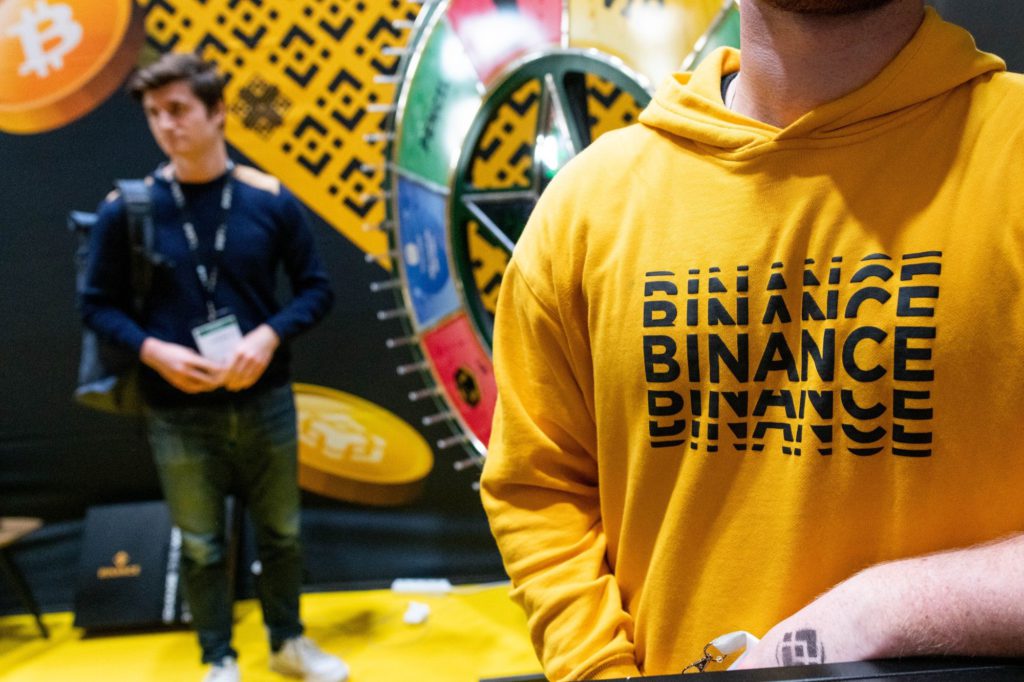
(Bloomberg) — Binance Holdings Ltd., which is an equity investor in Elon Musk’s deal for Twitter, is forming a team to look at ways that blockchain and cryptocurrencies could help the social-media platform.

The world’s largest crypto exchange appears to be seeking an active role in how Twitter is run, after on Friday confirming that it had made an investment as part of Musk’s takeover of the platform. 

Read more: Binance Confirms Equity Investment in Musk’s Twitter Deal

“Binance is creating an internal team to focus on ways that blockchain and crypto could be helpful to Twitter and actively brainstorming plans and strategies that could help Elon Musk realize his vision,” a spokesperson said in a statement, adding that the effort was in its early stages and plans are still being worked out.

Areas of focus could include on-chain solutions “to address some of Twitter’s issues, such as the proliferation of bot accounts in recent years,” the spokesperson said. Musk has repeatedly highlighted the prevalence of bots, or automated accounts, as a concern and even cited them when trying to scrap the deal previously.

Read more: Twitter Gets One-Two Punch as Whistle-Blower Piles On After Musk

Twitter representatives didn’t immediately respond to a request for comment sent outside normal business hours.

–With assistance from Zheping Huang.

More stories like this are available on bloomberg.com

©2022 Bloomberg L.P.

Musk’s Free Speech Plans for Twitter Clash With EU Content Rules

(Bloomberg) — Elon Musk’s plans for Twitter might run into a major hurdle: the European Union.

The continent’s regulations have been a headache for Silicon Valley for years, and Musk — a so-called “free speech absolutist” — could soon feel the pain. 

Hours after Elon Musk tweeted that he had “freed” the bird, a reference to Twitter’s logo, the European Commission’s Internal Markets Commissioner Thierry Breton warned that in Europe “the bird will fly by” the EU’s content moderation rules.

The EU’s Digital Services Act, which officially became law this month, gives the bloc’s executive arm, the European Commission, unprecedented powers to police tech platforms by requiring them to remove illegal content ranging from terrorist propaganda to ads for unsafe toys.

Breton already warned Musk in the spring that his free-speech approach would have to follow the DSA. “I don’t care what he’s doing outside of Europe,” Breton told Bloomberg Television in April. “You want to enter into Europe? These are our rules.”

The EU has never shied from policing Big Tech. Violating the union’s landmark data protection rules, the General Data Protection Regulation, already resulted in a €450,000 ($448,360) fine for Twitter back in 2020, while Amazon.com Inc., Meta Platforms Inc.’s WhatsApp and Alphabet Inc.’s Google have been slapped with fines in the tens of millions of euros.

Soon, the commission will have even more power to police Big Tech. The Digital Markets Act will force tech companies designated as “gatekeepers” to abide by new antitrust rules. But the biggest problem for Musk will be its sister legislation, the DSA.

Potential Fines

The main goal of the legislation is to ensure companies do better at finding and removing illegal content, but what counts as illegal can differ significantly between the EU’s 27 countries. Musk’s Twitter, like all social media companies, will have to be diligent about removing illegal content regardless of the country it was posted from, or face fines of up to 6% of their global annual turnover. If Twitter repeatedly breaks the rules, the company could be barred from operating in the union entirely.

Content moderation has always been tricky for tech companies, which rely on a mix of algorithms and human monitoring to take down content. Currently Twitter has roughly 1,500 people doing content moderation compared to an estimated 15,000 at Meta and 10,000 for Google’s products, according to research from New York University. Experts say these numbers are not enough to properly police social media content.

Musk at one point planned to cut 75% of Twitter’s staff, according to documents seen by the Washington Post. Although he’s walked back on such high figures, any plans to strip the company of content moderators will likely make it even harder to stay on top of illegal posts in EU countries, let alone the rest of the world.

The EU’s DSA will also force companies to moderate content in the languages they operate in. On Friday, Musk announced he wants to create a content moderation council with “diverse viewpoints” but if he reduces headcount in Twitter’s human content moderation team, the company could rely more on automated systems. However these systems tend to struggle to determine the context of posts and have a history of making high-profile mistakes.

Lifetime Bans

While the EU’s tech regulation approach might seem to clash extensively with Musk’s love of unfettered free speech, there are many points on which the two align. The DSA forces companies to make their algorithms more transparent and requires them to have consistent rules about banning people from the platform.

Following the January 6 attack, it was EU leaders including Breton and former German chancellor Angela Merkel who were vocal against Twitter and Facebook’s unlimited bans on former President Donald Trump, a stance Musk agrees with. Getting rid of lifetime bans creates the potential for high-profile people who were blocked, such as Steve Bannon, to return to the platform.

This kind of alignment was on display when Breton visited Musk in Texas in May. At the time, Breton told Bloomberg the two had “no disagreement” on their approach to content. Musk said in a viral video post that “I agree with everything you said, really,” talking to Breton. “I think we’re very much on the same line.”

That relationship could change as the commission starts to take action against harmful but not illegal content: for example, algorithms that surface eating disorder content. The DSA gives the commission powers to ask companies to carry out risk assessments focused on specific types of harmful material and, if sufficient controls aren’t put in place, force them to downrank it.

This is where Musk and Breton’s approaches might differ. In the context of Russia’s invasion of Ukraine, the EU took a far more interventionist approach than the US by banning Russian media sites RT and Sputnik in an effort to crack down on misinformation. Musk was explicitly against banning the news sites.

More stories like this are available on bloomberg.com

©2022 Bloomberg L.P.

Ukraine Latest: Lagarde Says Putin ‘Driven by Evil Forces’

(Bloomberg) — European Central Bank President Christine Lagarde said Russian President Vladimir Putin “must be driven by evil forces,” but that his invasion of Ukraine had united the Ukrainian people, NATO and Europe. 

Russia’s central bank cited the inflationary impact of the Kremlin’s recent call-up of reservists to fight against Ukraine in pausing its run of six consecutive interest rate cuts. 

Ukraine downed 23 out of more than 30 Iranian Shahed attack drones launched by Russia in the past two days, according to President Volodymyr Zelenskiy who called them “metal monsters.” Ukrainian forces also shot down a Kh-59 cruise missile, two Ka-52 attack helicopters and another Su-25 fighter jet during the same period. Russia’s representative to the UN has denied that Moscow is using Iranian drones. 

Russia’s defense minister said the call-up of 300,000 reservists to fight in Ukraine had been completed on schedule. The partial mobilization prompted some 350,000 Russians, mostly draft-age men, to flee the country. Some 41,000 newly-mobilized troops are already part of active combat units. 

(See RSAN on the Bloomberg Terminal for the Russian Sanctions Dashboard.)

Key Developments

  • ‘Terrifying’ Putin Driven by ‘Evil Forces,’ ECB’s Lagarde Says
  • Russian Air Travel is Back, But Aircraft Lack Service, Parts
  • UK Bans Russian LNG Even Though Imports Have Already Stopped
  • Russia Pauses Rate Cuts as War Call-Up Stirs Economic Angst
  • Tiremaker Nokian Renkaat to Exit Russia as Buyer Found for Plant
  • Poland Picks US, Westinghouse for First Nuclear Power Plant

On the Ground

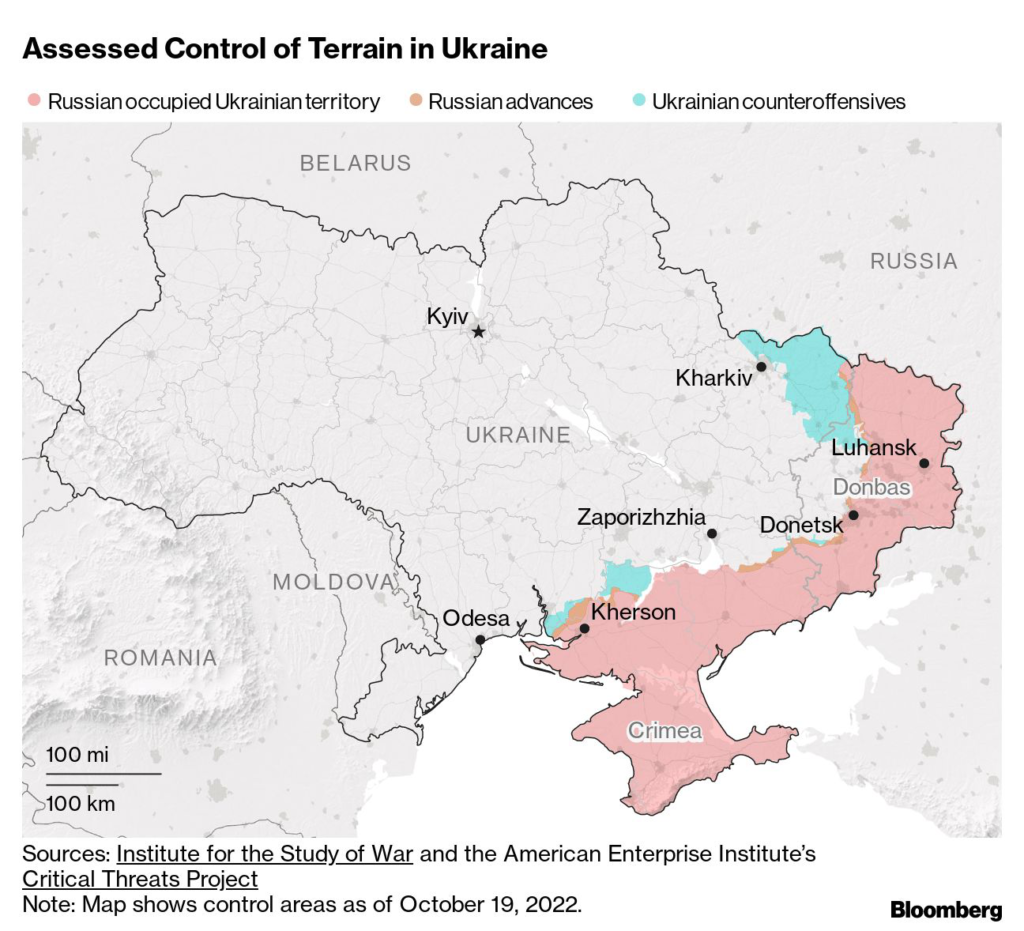
Russian forces struck Mykolaiv and several settlements in the Kharkiv region near the Ukrainian-Russian border overnight, local authorities said on Telegram. The Ukrainian army continued its counteroffensive in several areas, according to the General Staff. Citing Russian sources, the Institute for the Study of War reported that counteroffensive operations were conducted in the northeastern Kharkiv Region and along the Kreminna-Lysychansk line. It also pointed out limited ground assaults by Ukrainian forces in the Kherson region, where Russian forces are continuing to make defensive preparations along the east bank of the Dnipro River. Russian forces continued offensive operations toward Bakhmut and Avdiivka in the Donetsk Region, according to the General Staff of the Ukrainian Army.

(All times CET)

Lagarde Says Putin’s War Has ‘Reunited’ Ukrainians (5 a.m.)

Putin’s assault on on Ukraine is his attempt to “cause chaos and to destroy as much of Europe as he can,” Lagarde said Friday on Irish national broadcaster RTE’s Late Late Show. “Anyone who is behaving in that way must be driven by evil forces.”

Lagarde called him a “terrifying person” in referring to her past meetings with the Russian leader, adding “he was not as sick as he is today.” Even so, Putin’s actions have “reunited” the Ukrainian people, she said.  “He has rejuvenated NATO and he has certainly brought the Europeans together.”

After expressing her view, Lagarde stressed that she’s “just a central banker,” so “shouldn’t be saying all these things.” 

Zelenskiy Scoffs at Russia Saying Its Call-Up Is Complete (8:41 p.m.)

Zelenskiy dismissed Russia’s announcement that it has completed its call-up of 300,000 reservists to fight in Ukraine.

“We feel completely different on the battlefield,” the Ukrainian president said in his nightly address. “Russia is trying to increase pressure on our positions, using mobilized people, but their training and equipment are so poor that it allows us to assume that soon Russia will need a new wave of sending people to the front.”

Commenting on rolling blackouts, Zelenskiy said about 4 million Ukrainians now have a limited supply of electricity, underscoring his frequent calls for allies to “strengthen our air defenses.”

Ukraine Freezes Electricity Prices Through Winter (7:04 p.m.)

Ukraine’s government approved a decree to keep electricity prices for households unchanged for the winter heating season through March.

“Today, despite the war and massive shelling of energy infrastructure, a decision was made to keep tariffs for households unchanged to avoid additional financial burden on our citizens,” Energy Minister Herman Halushchenko said in an emailed statement.

Russia has intensified shelling of Ukrainian energy infrastructure since Oct. 10, damaging at least 30% of electricity production facilities. Ukraine was forced to introduce power supply limits across its regions and the capital Kyiv may face an electricity shortage of as much as 50%, Mayor Vitali Klitschko said.

Pentagon to Tap Inventories 24th Time for $275 Million in Weapons (6:29 p.m.)

The US Defense Department said it will provide Ukraine with an additional $275 million in weapons, the 24th such drawdown from existing inventories.

This batch will include an additional 500 precision-guided 155mm artillery rounds as well as 2,000 more 155mm rounds of Remote Anti-Armor Mine Systems that dispense tank-busting munitions. It also provides for transferring 250 M1117 Armored Security Vehicles and more than 2.75 million rounds of small arms ammunition.

One new item is four satellite communications antennas. Pentagon spokeswoman Sabrina Singh said the “off-the-shelf” antennas are separate from equipment for Elon Musk’s Starlink satellite system.

Crowd Seeking End to War in Ukraine Interrupts Blinken in Montreal (5:50 p.m.)

Protesters demanding an end to hostilities in Ukraine briefly interrupted an event with Secretary of State Antony Blinken and Canadian Foreign Minister Melanie Joly in Montreal. 

The pair were meeting members of Les Filles Fattoush, an organization that assists Syrian refugee women, when demonstrators began shouting “we don’t want you here” and “Yankee go home.” The two were forced to relocate remarks to the press but were never in danger.  

Canada to Issue ‘Ukraine Sovereignty Bonds’ (5:30 p.m.)

The five-year bonds are among the measures Ottawa is putting in place to help Ukraine’s government.

The securities will help Ukraine with essential services including paying pensions and purchasing fuel before winter, Prime Minister Justin Trudeau said in an statement. Equivalent proceeds will be sent to Ukraine through the IMF’s administered account.

The bonds will be offered via financial institutions. Investors will be, in effect, purchasing a regular top-rated Government of Canada five-year bond. Zelenskiy later tweeted his appreication.

Shoigu Tells Putin ‘Partial Mobilization’ Complete (4:29 p.m.)

Russia’s “partial mobilization” — calling up 300,000 reservists to fight in Ukraine — is complete and won’t be extended, Defense Minister Sergei Shoigu said in a televised meeting with President Vladimir Putin.

The call-up, Russia’s first since World War II, shocked many citizens and led more than 350,000 to flee the country amid widespread reports of ineligible candidates being drafted and new troops getting inadequate equipment and poor treatment.

Putin on Friday ordered Shoigu to “modernize” Russia’s draft system to ensure such problems aren’t repeated. Shoigu said 218,000 of the mobilized forces are still in training, while the remainder have already been deployed to Ukraine.

Russia’s Country Risk at Record High (4 p.m.)

Russia’s country risk rose to its highest on record, according to Geoquant indices which quantify risks to investors based on governance, social and security indicators. The index rose to 63.4 on a scale from 0 to 100 where the higher the number, the greater the risk. 

Serbia Needs to Align with EU Foreign Policy: Von Der Leyen (4:09 p.m.)

Like other countries seeking membership of the European Union, Serbia must ensure “a strong alignment with our common foreign and security policy,” said Ursula von der Leyen, head of the European Commission. 

Speaking at a joint news conference with President Aleksandar Vucic during a visit to Serbia, von der Leyen said that “joining the EU means sharing the same values.” She added that Serbia has “done a lot already” in terms of reform. 

Serbia has condemned Russia’s invasion of Ukraine, including in votes at the United Nations, but has failed to impose economic sanctions against Moscow. Vucic insists that respect for Ukraine’s territorial integrity must also apply to Serbia, whose southern province Kosovo seceded with Western support. 

Russia Holds Rates Steady on Impact of Partial Mobilization (13:40 p.m.)

Russia’s central bank held interest rates for the first time since the immediate aftermath of the attack on Ukraine, as risks of higher inflation intensify following the Kremlin’s call-up of reservists to fight in the war.

“While the partial mobilization may mainly create disinflationary pressure in the coming months due to subdued consumer demand, its subsequent effects will be pro-inflationary as it adds to supply-side restrictions in the broader economy,” policy makers said.

Read more: Russia Pauses Rate Cuts as War Call-Up Stirs Economic Angst 

McDonald’s Reopenings Move Ahead Despite Recent Shelling (1:30 p.m.)

McDonald’s is reopening more branches in Ukraine, even as Russian forces shell many of cities and regions far from the front lines, aiming increasingly at the energy grid.  

The US fast-food giant resumed operations in Zhytomyr in west-central Ukraine, following restarts in Kyiv and in far-western Lviv, Interfax reported, citing the company’s press office. 

McDonald’s halted its operations in Ukraine following Russia’s invasion, but has been gradually reopening since September and seeing strong demand. The company in a tweet referenced rolling power outages after Russian attacks, saying its menu is “more romantic…by candlelight.” 

No Recent Exodus From Ukraine, Border Service Says (1:20 p.m.) 

This month’s widespread Russian strikes on Ukraine’s energy grid and the blackouts that have followed in many areas haven’t caused a new exodus from the country, said Andriy Demchenko, spokesman for Ukraine’s state border service. 

From Russia’s invasion on Feb. 24 through the end of September, 20.5 million people crossed Ukraine’s western borders — 9.3 million for entry and more than 11 million who departed. More than 50% of those people crossed the border with Poland, Demchenko said.

Russia Focuses Missiles Against Energy Targets, Air Force Says (12:50 p.m.)

Russia has effectively stopped using cruise and ballistic missiles to target military goals in Ukraine, instead hitting energy objectives amid a growing shortage of such weapons, Ukrainian Air Force spokesman Yuriy Ignat said during a video briefing.

Ukraine estimates Russia may have depleted its missile stockpiles to 13-15% of pre-war levels, according to Ignat. In order to attack Ukrainian troops near front lines, Russia now mostly uses S-300 air defense missiles, adjusted to extend their range to 150 kilometers (93 miles) even though this makes them less precise. Russia has thousands of such missiles in stockpiles, Ignat said.


More stories like this are available on bloomberg.com

©2022 Bloomberg L.P.

Musk’s Twitter Roils With Hate Speech as Trolls Test New Limits

(Bloomberg) —  

In the wake of Elon Musk buying Twitter Inc., a tide of slurs and racist memes swelled on the platform, sparking concern that the site is entering an era of hateful speech.

Twitter has long wrestled with how to enforce content policies fairly on its platform in order to appease the advertisers, users and powerful world leaders that use its service. But as Musk, a self-styled “free speech absolutist,” took over ownership of the company, some conservative officials, partisan extremists and conspiracy peddlers saw reason to celebrate the change.

“It seems like this is a group of people who think the rules magically changed as soon as he signed on the dotted line,” said Katie Harbath, the chief executive officer and founder of Anchor Change and former public policy director at Facebook.

Dr. Rebekah Tromble, director of the Institute for Data, Democracy, and Politics at George Washington University, said as soon as Musk took control of Twitter, online trolls began encouraging each other to push the boundaries on Twitter.

“Unfortunately, this spike in hateful language is entirely predictable,” said Tromble, who has studied Twitter for years. “For most of these trolls, it’s a game. But for others, including certain political influencers, saying hateful, outlandish things helps them increase their audience and make money. And they see this as a golden opportunity to gain even more attention.”

The flood of speech underlines the difficulty Musk faces in fulfilling his promise to restore people’s ability to speak freely while managing the palatability of the platform for advertisers, to whom he pledged in a letter Thursday that Twitter would not spiral into a “free-for-all hellscape” under his leadership. Musk has repeatedly opposed Twitter’s enforcement strategies, such as banning some high-profile accounts permanently.Musk tweeted that Twitter will form a content-moderation council that includes “widely diverse viewpoints.” Major decisions on content and account reinstatement are on hold until the group is convened, he said.

Though Musk has already fired four Twitter executives, including Vijaya Gadde, the company’s head of legal, policy and trust, who headed up a team that made decisions on permanently banning certain high-profile accounts, he has yet to make any concrete or substantial changes to Twitter’s moderation policies. Still, on Friday, some conservative politicians and pundits saw the platform coming into his ownership as a symbolic win.

“FREEDOM OF SPEECH!!!!” posted Rep. Marjorie Taylor Greene, a Republican from Georgia, from her official Twitter account on Thursday evening, minutes after news of Musk’s acquisition of Twitter broke. Greene’s personal account was permanently banned by Twitter earlier this year for repeated violations of its Covid-19 misinformation policies. “Just wait until tomorrow,” she said in another tweet one minute later.

On Friday, Greene tweeted, simply: “We are winning.” The congresswoman gained at least 40,492 new followers in the hours since Musk took over Twitter, according to a Bloomberg analysis.

Rep. Jim Jordan, a Republican of Ohio, also cheered Musk’s takeover of Twitter with a post on Friday morning: “Free speech. Liberal tears.” He gained at least 40,419 followers in the same timeframe, according to Bloomberg’s analysis.

Other partisan accounts with records of repeatedly spreading false claims that the 2020 US presidential election was stolen tested the limits of speech under Twitter’s Musk regime. Robby Starbuck, a former congressional candidate in Tennessee and a pro-Trump activist, published a transphobic and misinformation-laden tweet on Thursday night, prefacing the post with: “Just testing the new Twitter out.” The post collected 80,870 likes and shares on the platform.

An influential anonymous account with nearly 1 million followers, called @catturd2, complained that it had been “shadowbanned” on Twitter. On Friday morning, it was one of the few accounts that Twitter’s new chief responded to: “I will be digging in more today.”

The Starbuck and @catturd2 accounts appeared on the list of repeat misinformation spreaders in a peer-reviewed report from the Election Integrity Partnership, a group of research organizations studying misinformation campaigns, including in the 2020 election.

Dozens of anonymous trolls signed up for Twitter in the past day according to an analysis by Bloomberg, broaching topics that had been heavily moderated by Twitter in the past — such as levying hate speech against protected groups and promoting falsehoods about Covid-19 and its vaccines.

Overnight and into Friday, racist slurs, anti-Semitic speech and offensive memes surged on the platform, with users egging each other on in far-right message boards such as The Donald, and on messaging apps like Telegram and on internet forums like 4chan.

For hours on Thursday afternoon, a racist slur remained at a low volume on Twitter, with less than a dozen or so mentions every five minutes across the entire platform, according to data from Dataminr, a social media analysis platform. After the news broke that Musk had closed the deal on Twitter, there was a 1,300% increase in the word appearing on the platform in various languages, including Spanish, Arabic and Portuguese. At its peak, the word appeared 170 times every five minutes, according to the data.

Mentions of ivermectin, the deworming drug popular among those seeking alternative treatments for Covid-19 in spite of a lack of strong research to back it up, also shot up 2,900% on Twitter, peaking at 358 mentions every five minutes, according to Dataminr. 

And mentions of “plandemic,” a shorthand for a conspiracy in which a shadowy cabal of elites were using the coronavirus pandemic and a potential vaccine to profit and gain power, increased. 

On Friday, the Anti-Defamation League’s Center on Extremism said it had identified a coordinated effort to spread anti-Semitic content on Twitter, “explicitly drawing inspiration from Elon Musk’s takeover.” Over the past day, the group said, it identified over 1,200 tweets and retweets on the platform that spread anti-Semitic memes.

Alex Stamos, director of the Stanford Internet Observatory, said in an interview that Musk publicly taking on the responsibility for content decisions for an entire social network, while having business interests in other parts of the world, was unprecedented.

“He has another company that gets a quarter of its revenue from the People’s Republic of China,” Stamos said, referring to Musk’s Tesla Inc. business in China. “That is amazingly different than what has ever happened before.” 

The former Russia president Dmitry Medvedev welcomed Musk on the platform with his own post. “Good luck @elonmusk in overcoming political bias and ideological dictatorship on Twitter,” he said on Friday. He added an appeal: “Quit that Starlink in Ukraine business.”


–With assistance from Margi Murphy, Jack Gillum and Daniel Zuidijk.

More stories like this are available on bloomberg.com

©2022 Bloomberg L.P.
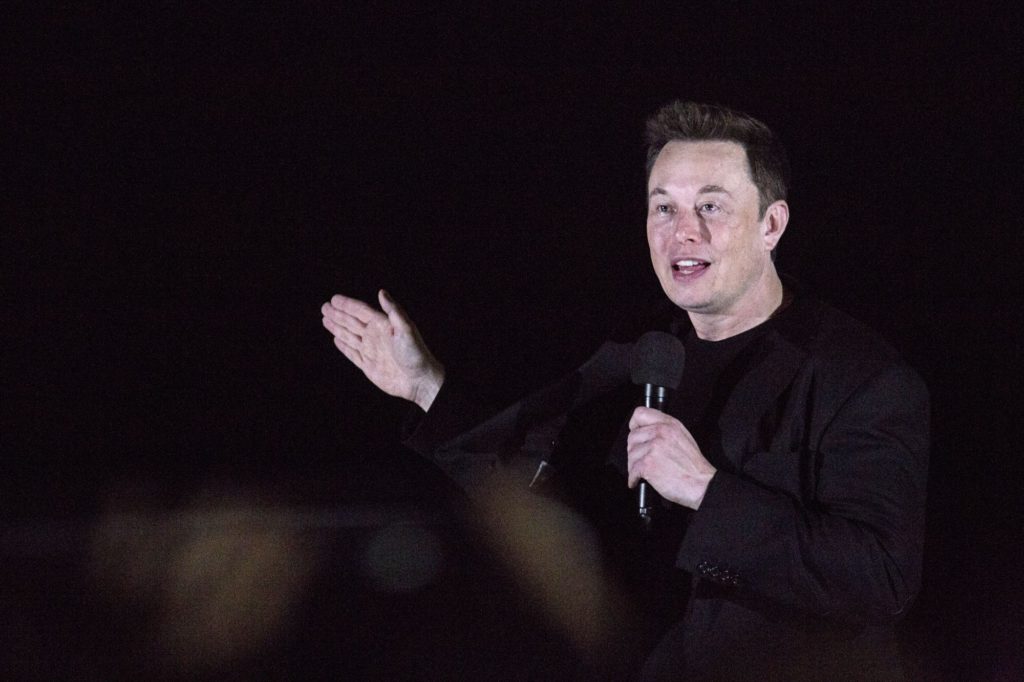
Musk’s Twitter Roils With Hate Speech as Trolls Test New Limits

(Bloomberg) — In the wake of Elon Musk buying Twitter Inc., a tide of slurs and racist memes swelled on the platform, sparking concern that the site is entering an era of hateful speech.

Twitter has long wrestled with how to enforce content policies fairly on its platform in order to appease the advertisers, users and powerful world leaders that use its service. But as Musk, a self-styled “free speech absolutist,” took over ownership of the company, some conservative officials, partisan extremists and conspiracy peddlers saw reason to celebrate the change.

“It seems like this is a group of people who think the rules magically changed as soon as he signed on the dotted line,” said Katie Harbath, the chief executive officer and founder of Anchor Change and former public policy director at Facebook.

Dr. Rebekah Tromble, director of the Institute for Data, Democracy, and Politics at George Washington University, said as soon as Musk took control of Twitter, online trolls began encouraging each other to push the boundaries on Twitter.

“Unfortunately, this spike in hateful language is entirely predictable,” said Tromble, who has studied Twitter for years. “For most of these trolls, it’s a game. But for others, including certain political influencers, saying hateful, outlandish things helps them increase their audience and make money. And they see this as a golden opportunity to gain even more attention.”

The flood of speech underlines the difficulty Musk faces in fulfilling his promise to restore people’s ability to speak freely while managing the palatability of the platform for advertisers, to whom he pledged in a letter Thursday that Twitter would not spiral into a “free-for-all hellscape” under his leadership. Musk has repeatedly opposed Twitter’s enforcement strategies, such as banning some high-profile accounts permanently.Musk tweeted that Twitter will form a content-moderation council that includes “widely diverse viewpoints.” Major decisions on content and account reinstatement are on hold until the group is convened, he said. A Twitter spokesperson added that the company has a hateful conduct policy and it had not made any changes to the Twitter Rules.

Though Musk has already fired four Twitter executives, including Vijaya Gadde, the company’s head of legal, policy and trust, who headed up a team that made decisions on permanently banning certain high-profile accounts, he has yet to make any concrete or substantial changes to Twitter’s moderation policies. Still, on Friday, some conservative politicians and pundits saw the platform coming into his ownership as a symbolic win.

“FREEDOM OF SPEECH!!!!” posted Rep. Marjorie Taylor Greene, a Republican from Georgia, from her official Twitter account on Thursday evening, minutes after news of Musk’s acquisition of Twitter broke. Greene’s personal account was permanently banned by Twitter earlier this year for repeated violations of its Covid-19 misinformation policies. “Just wait until tomorrow,” she said in another tweet one minute later.

On Friday, Greene tweeted, simply: “We are winning.” The congresswoman gained at least 40,492 new followers in the hours since Musk took over Twitter, according to a Bloomberg analysis.

Rep. Jim Jordan, a Republican of Ohio, also cheered Musk’s takeover of Twitter with a post on Friday morning: “Free speech. Liberal tears.” He gained at least 40,419 followers in the same timeframe, according to Bloomberg’s analysis.

Other partisan accounts with records of repeatedly spreading false claims that the 2020 US presidential election was stolen tested the limits of speech under Twitter’s Musk regime. Robby Starbuck, a former congressional candidate in Tennessee and a pro-Trump activist, published a transphobic and misinformation-laden tweet on Thursday night, prefacing the post with: “Just testing the new Twitter out.” The post collected 80,870 likes and shares on the platform.

An influential anonymous account with nearly 1 million followers, called @catturd2, complained that it had been “shadowbanned” on Twitter. On Friday morning, it was one of the few accounts that Twitter’s new chief responded to: “I will be digging in more today.”

The Starbuck and @catturd2 accounts appeared on the list of repeat misinformation spreaders in a peer-reviewed report from the Election Integrity Partnership, a group of research organizations studying misinformation campaigns, including in the 2020 election.

Dozens of anonymous trolls signed up for Twitter in the past day according to an analysis by Bloomberg, broaching topics that had been heavily moderated by Twitter in the past — such as levying hate speech against protected groups and promoting falsehoods about Covid-19 and its vaccines.

Overnight and into Friday, racist slurs, anti-Semitic speech and offensive memes surged on the platform, with users egging each other on in far-right message boards such as The Donald, and on messaging apps like Telegram and on internet forums like 4chan.

For hours on Thursday afternoon, a racist slur remained at a low volume on Twitter, with less than a dozen or so mentions every five minutes across the entire platform, according to data from Dataminr, a social media analysis platform. After the news broke that Musk had closed the deal on Twitter, there was a 1,300% increase in the word appearing on the platform in various languages, including Spanish, Arabic and Portuguese. At its peak, the word appeared 170 times every five minutes, according to the data.

Mentions of ivermectin, the deworming drug popular among those seeking alternative treatments for Covid-19 in spite of a lack of strong research to back it up, also shot up 2,900% on Twitter, peaking at 358 mentions every five minutes, according to Dataminr. 

And mentions of “plandemic,” a shorthand for a conspiracy in which a shadowy cabal of elites were using the coronavirus pandemic and its vaccines to profit and gain power, increased. 

On Friday, the Anti-Defamation League’s Center on Extremism said it had identified a coordinated effort to spread anti-Semitic content on Twitter, “explicitly drawing inspiration from Elon Musk’s takeover.” Over the past day, the group said, it identified over 1,200 tweets and retweets on the platform that spread anti-Semitic memes.

Alex Stamos, director of the Stanford Internet Observatory, said in an interview that Musk publicly taking on the responsibility for content decisions for an entire social network, while having business interests in other parts of the world, was unprecedented.

“He has another company that gets a quarter of its revenue from the People’s Republic of China,” Stamos said, referring to Musk’s Tesla Inc. business in China. “That is amazingly different than what has ever happened before.” 

The former Russia president Dmitry Medvedev welcomed Musk on the platform with his own post. “Good luck @elonmusk in overcoming political bias and ideological dictatorship on Twitter,” he said on Friday. He added an appeal: “Quit that Starlink in Ukraine business.”


–With assistance from Margi Murphy, Jack Gillum and Daniel Zuidijk.

More stories like this are available on bloomberg.com

©2022 Bloomberg L.P.
Paul Pelosi’s Alleged Attacker Has Links to Far-Right Blog and Social Ties to 9/11 Denier

(Bloomberg) — David DePape, who police say attacked House Speaker Nancy Pelosi’s husband in San Francisco early Friday morning, has been linked to personal blogs that railed against the government and technology giants, and espoused far-right conspiracy theories. 

DePape, 42, is accused of breaking into the couple’s home and striking Paul Pelosi with a hammer. DePape was taken into custody Friday and is being booked on charges including attempted homicide, assault with a deadly weapon, elder abuse and burglary. San Francisco Police Chief Bill Scott said the motive was “still being determined.” 

On one website registered to a David DePape, posts, some from as recently as this week, took aim at immigrants, “climate hysteria,” “trannies” and promoted “pedo gate,” the long-debunked conspiracy theory about prominent Democrats being involved in child-sex trafficking. “This is what the gas chamber doors at Auschwitz look like,” he wrote in one post. “So feminists are always talking about how they want equality,” another post read.Using the research site DomainTools.com, Bloomberg News found several websites registered to a David DePape. Those include “FrenlyFrenz,” a blog containing affronts against immigrants, Jewish people and women. Another site registered under the name David DePape hosts the blog of Gypsy Taub, DePape’s friend and former housemate. A WordPress blog with posts under the David DePape name contains identical spellings of his targets, such as “wamen” for “women.”

It could not be independently verified that these were the accounts of the suspect arrested in the attack on Paul Pelosi. Public records show only one David DePape living in California, who is also 42 years old.

On one of the blogs, a post complained about the “elites” and “ruling class,” who  “never censor themselves.” The news media, he said in an undated bio page, have a “narrative put forth by the people who rule you.”

“The founding father(s) built in protection against censorship coming from the government because they never imagined a day when Tech giants and private industry would be so powerful they could single handedly silence the people,” he wrote. The site has since been suspended for violating the web host’s terms of service.

The  more current blog was wide-ranging, packed with videos, memes, colorful drawings and categorized into sections with titles such as “voter fraud” and “groomer schools.” “Ya I remember the backlash and insults when you came out in support of Trump,” he posted about the rapper Kanye West on Oct. 17. Days earlier, West posted antisemitic rants — including wanting to go “death con 3 on JEWISH PEOPLE” — that led to Adidas, the talent agency CAA and others to cut ties with him. 

A an article in the San Francisco Chronicle in 2013 mentioned DePape’s associations with Taub, a nude activist who organized protests against the city’s proposed public nudity ban in 2012. Taub also pushed conspiracy theories about the Sept. 11, 2001, terrorist attacks. DePape lived with Taub across San Francisco Bay in Berkeley, according to the Chronicle, and was the best man at her wedding. Online records show DePape owned as many as 12 Internet domains, including Taub’s blog. 

California State Senator Scott Wiener, who served as San Francisco supervisor for the Castro District from 2010 to 2016, told Bloomberg News he remembered DePape as part of a group protesting for the right to public nudity in the neighborhood in 2011 and 2012. Wiener said he’s looking into what DePape’s role was in those protests. 

Wiener said that most “activists who believe in public nudity” are just “regular people,” but that Taub and allies like DePape were “in a completely different category.” 

More stories like this are available on bloomberg.com

©2022 Bloomberg L.P.
GM Temporarily Suspends Twitter Advertising After Musk Takeover

(Bloomberg) — General Motors Co. is temporarily suspending advertising on Twitter Inc. after the social media platform was acquired by Elon Musk, the head of rival automaker Tesla Inc.

The Detroit automaker, which is racing to catch up with Tesla in electric vehicle development, said Friday it’s talking with Twitter to discuss how the platform will change and will stop advertising until it has a better understanding of what will happen to it with Musk now at the helm.

“We are engaging with Twitter to understand the direction of the platform under their new ownership,” spokesman David Barnas said in a statement. “As is normal course of business with a significant change in a media platform, we have temporarily paused our paid advertising. Our customer care interactions on Twitter will continue.”

Ford Motor Co. and Stellantis NV, which owns the Jeep and Ram brands, did not immediately reply to a request for comment. GM’s decision was first reported by CNBC. 

Since completing his acquisition Thursday, Musk has said he will convene a content council to make decisions about standards for users and their tweets. Among the considerations will be whether public figures who have been suspended, such as former President Donald Trump, will be allowed back on the platform.

–With assistance from Keith Naughton and Gabrielle Coppola.

More stories like this are available on bloomberg.com

©2022 Bloomberg L.P.

Musk’s Role as ‘Chief Twit’ Knocks $10 Billion From Fortune

(Bloomberg) — In the hours before finalizing his $44 billion acquisition of Twitter Inc., Elon Musk said he bought the social-media platform to help humanity, not to make more money.

Indeed, by finalizing the deal, the world’s richest person, who now calls himself “Chief Twit,” took an instant $10 billion hit to his net worth, according to calculations by the Bloomberg Billionaires Index.

Musk, 51, spent at least $25 billion to follow through on his agreement from April to buy Twitter for $54.20 a share, assuming he kept the external investors who’d committed $7.1 billion to the deal.

But six months after Musk announced he would buy the company, his offer looks very expensive. Shares of social media companies have crashed as economic uncertainty and interest rate increases curb market speculation and advertiser spending. 

The Solactive Social Media Index, which tracks the performance of publicly traded social-media companies, is down almost 40%. The Bloomberg wealth index factors in a similar drop in the value of Twitter, and, thus, Musk’s stake.

Other peers have fared even worse. Shares of Meta Platforms Inc., owner of the Facebook and Instagram networks, are down 53% since Musk made his offer for Twitter in April, slashing Chief Executive Officer Mark Zuckerberg’s fortune by more than $100 billion from its peak. Snap Inc. has cratered 70% over the period, erasing the wealth of its co-founders.

Musk isn’t the only Twitter investor taking a hit. Company co-founder Jack Dorsey and Prince Alwaleed Bin Talal al Saud supported the takeover and are thought to have remained investors in the company. Their wealth estimates dropped $380 million and $640 million, respectively.

Cashing Out

The flip side: For Twitter investors who are cashing out, Musk’s deal is a huge win. Not only did they get a 20% premium when Musk made his take-private offer, they also avoided the crash in stock prices that hit rival social media giants.

It’s also a big windfall for several outgoing Twitter executives set to share in severance and payouts worth roughly $100 million. About half will go to Parag Agrawal, the former CEO.

Musk spent several months trying to undo the Twitter bid. In July he said he was terminating the deal because he’d been misled about the prevalence of bots on the network. After Twitter sued to force him to complete the deal, the parties went to court. Musk ultimately agreed to proceed at the original offer price. 

The $10 billion hit to Musk’s fortune brings his total losses this year to $66 billion, according to the Bloomberg wealth index. 

Shares of Tesla Inc., his most valuable asset, are down 35% this year, partially on fears he’d sell shares in the electric-vehicle maker to fund his Twitter purchase. Musk used all his available liquid assets to complete the Twitter purchase, and his estimated liabilities increased by $4.6 billion, according to the Bloomberg index. 

More stories like this are available on bloomberg.com

©2022 Bloomberg L.P.
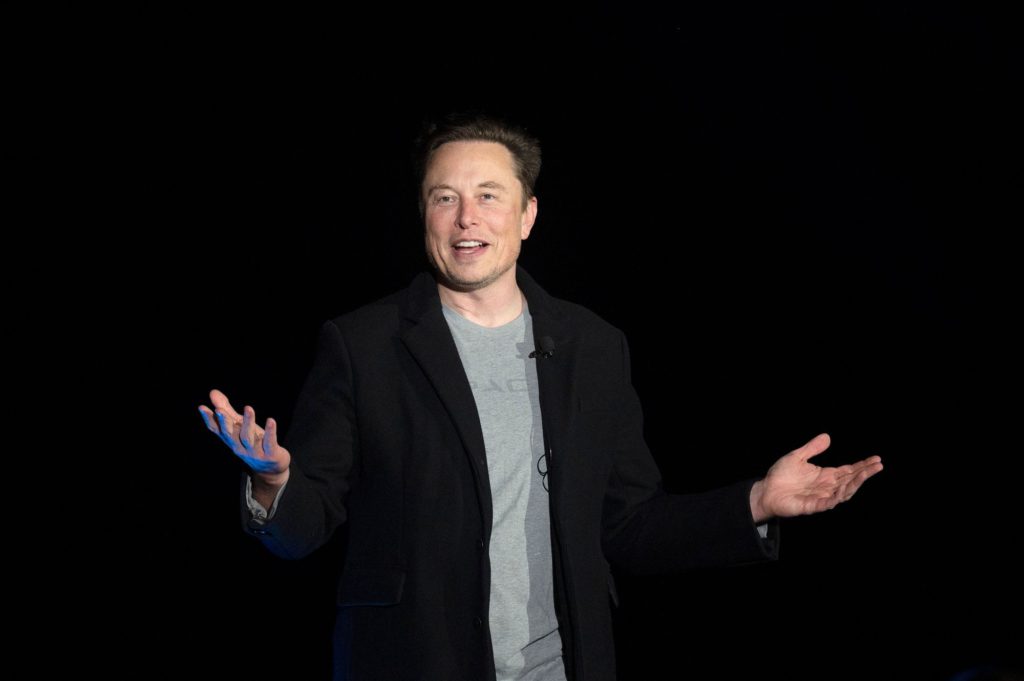
Musk Is Forming a Council to Advise on Lifting Any Twitter Bans

(Bloomberg) — Twitter Inc. will form a content-moderation council that includes “widely diverse viewpoints,” and big decisions on content and account reinstatements are on hold until the group is convened, new owner Elon Musk said, addressing speculation that he might restore banned users to the social network immediately.

Musk, whose $44 billion deal to take the social network private was completed Thursday, had indicated previously that he thought Twitter’s content moderation standards were too strict and that he didn’t believe in lifetime bans. Users and advertisers are waiting to see if the new owner’s views mean that high-profile personalities who were blocked from the site, including former US President Donald Trump, will be allowed back on. Musk’s tweet on Friday indicates that no reinstatements are imminent.

In most other ways, the billionaire wasted no time taking complete control. Musk appointed himself chief executive officer, dismissed senior management and immediately began reshaping strategy at one of the world’s most influential social media platforms.

Musk, 51, is replacing Parag Agrawal, who was fired along with three other top executives, a person familiar with the matter said, asking not to be identified discussing internal deliberations. The mercurial entrepreneur, who also leads Tesla Inc. and SpaceX, may eventually cede the Twitter CEO role in the longer term, the person added. Twitter representatives declined to comment.

Musk’s acquisition puts the world’s richest man in charge of a struggling social network after six months of public and legal wrangling. Among Musk’s first moves: changing the leadership. Departures include Vijaya Gadde, the head of legal, policy and trust; Chief Financial Officer Ned Segal, who joined Twitter in 2017; and Sean Edgett, who has been general counsel at Twitter since 2012. Edgett was escorted out of the building, Bloomberg News reported.

Musk intends to do away with permanent bans on users because he doesn’t believe in lifelong prohibitions, the person said. 

Twitter banned Trump days after the 2021 Capitol insurrection, citing the “risk of further incitement of violence.” With the former president widely expected to make another run for the White House in 2024, a return to Twitter could grant him an opportunity to turbocharge his message.

In response to a Twitter user complaining about being “shadowbanned, ghostbanned, searchbanned,” as well as having followers removed, Musk said in a tweet on Friday that he will be “digging in more today.” 

But the same day, he also tweeted that major decisions about restoring banned accounts won’t happen ahead of the formation of the new council. San Francisco-based Twitter already convenes a group of outside experts that advises the company on content moderation, called the Trust and Safety Council.

The takeover caps a convoluted saga that began in January with the billionaire’s quiet accumulation of a major stake in the company, his growing exasperation with how it was run and an eventual merger accord that he later spent months trying to unravel. Musk’s buyout marks the end of nine years of public trading. Twitter debuted with a bang on the New York Stock Exchange in 2013 but failed to match the rocket ride achieved by some other tech heavyweights.

The change in leadership will bring immediate disruption to Twitter’s operations, in part because many of Musk’s ideas for how to change the company are at odds with how it has been run for years. He’s said he wants to ensure “free speech” on the social network. 


More broadly, Musk’s initiatives threaten to undo years of Twitter’s efforts to reduce bullying and abuse on the platform.

The prospect of less restrictive content moderation under Musk’s leadership has prompted concerns that dialogue on the social network will deteriorate, eroding years of efforts by the company and its “trust and safety” team to limit offensive or dangerous posts. On Thursday, Musk posted a note to advertisers seeking to reassure them he doesn’t want Twitter to become a “free-for-all hellscape.”

Still, overnight and into Friday, racist slurs, antisemitic speech and memes directing hate at various underrepresented groups poured forth on the platform, egged on and organized by far-right message boards such as The Donald and on messaging apps like Telegram and on internet forums like 4chan.

As the Oct. 28 deadline neared, Musk began putting his stamp on the company, posting a video of himself walking into the headquarters and changing his profile descriptor on the platform he now owns to “Chief Twit.”

He arranged meetings between Tesla engineers and product leadership at Twitter. Twitter’s engineers could no longer make changes to code as of noon Thursday in San Francisco, part of an effort to ensure that nothing about the product changed ahead of the deal closing, the people familiar with the matter said.

On Friday, Twitter engineers were being invited to meetings to pair up with Tesla engineers to review the social network’s code, a person familiar with the matter said. In some cases, the meetings can be 20 people or so, and Twitter engineers are being asked to bring paper printouts of their source code from last 30 days to show the Tesla engineers.

Read more: Twitter Faces Only Bad Outcomes If $44 Billion Musk Deal Closes

Twitter employees, meanwhile, have been bracing for layoffs since the transaction was announced in April, and Musk floated the idea of cost cuts to banking partners when he was initially fundraising for the deal. Some potential investors were told Musk plans to cut 75% of Twitter’s workforce, which now numbers about 7,500, and expects to double revenue within three years, a person familiar with the matter said earlier this month.

While visiting Twitter headquarters on Wednesday, Musk told employees that he didn’t plan to cut 75% of the staff when he takes over the company, according to people familiar with the matter.

The past six months have been challenging for Twitter employees, who have primarily followed the ups and downs of the roller-coaster deal through the news headlines.

Many have been unhappy with Musk’s involvement and some have questioned his qualifications to run a social networking company. His support of a far-right political candidate in Texas, plus sexual harassment accusations from a former SpaceX flight attendant in May, have raised additional concerns. During a video Q&A with Musk in June, some employees mocked Musk on internal Slack channels. Others have ridiculed or chided him publicly on Twitter throughout the deal process.

–With assistance from Ed Ludlow and Davey Alba.

(Updates with details of Musk’s plans starting in third paragraph.)

More stories like this are available on bloomberg.com

©2022 Bloomberg L.P.

US Stocks End Turbulent Week With a Hefty Gain: Markets Wrap

(Bloomberg) — US stocks ended a turbulent week with a sizable gain as Apple Inc.’s earnings report buoyed technology shares and a smattering of economic data suggested a modicum of progress is being made in the Federal Reserve’s battle against inflation.

The S&P 500 and the tech-heavy Nasdaq 100 notched their longest weekly rising streak since August. Gains in big-tech companies including Microsoft Corp. and Google parent Alphabet Inc. helped both indexes snap a two-day decline on Friday.

Treasuries turned weaker on Friday, breaking a three-day rally after hopes of a Fed pivot fizzled. The dollar rose for a second straight session. 

Stocks, bonds and the dollar whipsawed this week as investors attempted to make sense of conflicting earnings reports and economic data. 

Quarterly reports from megacap technology firms underscored the impact of the Fed’s tightening regime, and consequently the surging dollar. But overall, earnings still largely beat estimates, with Caterpillar Inc., which is considered a bellwether firm, highlighting strong buyer demand. 

“This result season is turning out to be quite a strong result season, just like the second quarter was,” Anik Sen, global head of equities at PineBridge Investments, said by phone. “As you can see, the rally is very broad-based. It’s not necessarily stock specific. What’s moving the market is basically valuation. And the valuation is being teed off expectations of where the Fed is going land.”

Meanwhile, a core gauge of US inflation accelerated in September, bolstering the Fed’s case for another jumbo rate hike next week. But a contraction in manufacturing and services, and lower-than-expected US home sales, indicated that the Fed’s actions are already hitting the economy. Gross domestic product data, which came in on Thursday, briefly assuaged concerns of an imminent recession.

Economists are still expecting the Fed to raise rates by three-quarters of a percentage point for the fourth time in a row next week. Rates are projected to rise another half point in December, then by quarter points the following two meetings.

“It is too early to expect the Fed to signal a more dovish stance,” said Mark Haefele, chief investment officer at UBS Global Wealth Management. “We maintain our view for economic growth to bottom out in the middle of 2023 and for the Fed to stop hiking in 1Q23.” 

Seeds of a Stock Market Recovery Sown in Tech’s Catastrophe Week

Beyond the US

US investors also closely watched the actions of other central banks for possible hints about the Fed’s path ahead.  

While the European Central Bank delivered a second straight 75 basis-point hike on Thursday, it dropped a prior reference to rate increases continuing for “several meetings,” an outcome that was considered dovish. On Wednesday, the Bank of Canada announced a smaller-than-expected rate hike, which briefly stoked speculation that the Fed could follow suit. 

The Bank of Japan, meanwhile, stood by its ultra-low interest rates at the end of a two-day long policy meeting on Friday.

Some of the main moves in markets:

Stocks

  • The S&P 500 rose 2.5% as of 4 p.m. New York time
  • The Nasdaq 100 rose 3.2%
  • The Dow Jones Industrial Average rose 2.6%
  • The MSCI World index fell 0.3%

Currencies

  • The Bloomberg Dollar Spot Index rose 0.2%
  • The euro was little changed at $0.9965
  • The British pound rose 0.4% to $1.1617
  • The Japanese yen fell 0.8% to 147.44 per dollar

Cryptocurrencies

  • Bitcoin rose 1.1% to $20,620.71
  • Ether rose 2% to $1,558.63

Bonds

  • The yield on 10-year Treasuries advanced seven basis points to 3.99%
  • Germany’s 10-year yield advanced 14 basis points to 2.10%
  • Britain’s 10-year yield advanced eight basis points to 3.48%

Commodities

  • West Texas Intermediate crude fell 1.1% to $88.13 a barrel
  • Gold futures fell 1% to $1,648.40 an ounce

–With assistance from Cecile Gutscher, Reade Pickert and Tassia Sipahutar.

More stories like this are available on bloomberg.com

©2022 Bloomberg L.P.
Close Bitnami banner
Bitnami

