
Bloomberg

Hijacked New York Post Site Highlights the ‘Insider Threat’ — Again

(Bloomberg) — When a New York Post employee on Thursday hijacked the company’s website and Twitter Inc. account to post death threats, as well as racist and misogynistic headlines, it was just the latest example of a company insider abusing their access for their own gain. 

The Post fired the unnamed employee after headlines on the news site included offensive headlines, including calling for the assassination of some US leaders  

For all the attention on foreign hackers, rogue employees constitute a major threat to organizations.

“The New York Post hack is just the tip of the iceberg,” Howard Ting, chief executive of cybersecurity company Cyberhaven Inc. said in an interview. “We read all the time about external hacking threats, but I think of them as the big pipe that bursts in your neighborhood and causes a flood. The internal threats are the faucets leaking in your neighbor’s home, the hidden problem that is dripping away over time.” 

A company with 1,000 employees experiences an average of 45 “data exfiltration incidents” each month, a rate that increased to 2,254 per month for a company with 50,000 workers, according to a study by Cyberhaven.  Such incidents include staffers sending work from a corporate account to a personal email address, accessing sensitive project files or gathering client data. Client data comprises 44.6% of the sensitive information employees exfiltrate, Cyberhaven said. 

“Most of the time these companies don’t even know,” Ting said.

In August, federal prosecutors charged a former product manager at the cryptocurrency exchange Coinbase Global Inc. named Ishan Wahi in the first-ever crypto insider trading case. Wahi, who pleaded guilty, shared details of new coins that Coinbase planned to list on its exchange with his brother and friend so they could buy them in advance in anticipation of rising prices. The Securities and Exchange Commission said Wahi made a profit of more than $1.1 million by passing on the confidential information. 

History has shown that internal threats can do more than just reputational damage, and can cost a company its valuable secrets. 

Mayank Choudhary, executive vice president and general manager for information protection at cybersecurity vendor Proofpoint Inc. said that insider threats cost organizations $15.4 million every year according to the company’s latest research. 

In June, an employee at ByteDance Ltd.-owned social media app TikTok leaked audio from more than 80 internal meetings which suggested that China-based employees were able to access sensitive data about TikTok users in the US, something that the company had long denied was possible. The so-called TikTok tapes added yet more scrutiny onto the app, which narrowly dodged a ban under President Donald Trump. 

Last November, Pfizer Inc. sued an employee it said had stolen thousands of files relating to its Covid-19 vaccine, including development plans for new drugs. Pfizer said the suspect, Chun Xiao Li, allegedly took the information to a competitor. It claimed she provided a “decoy” laptop when quizzed on why she had downloaded the data. Li is now cooperating with the investigation and Pfizer has taken the matter outside of court, the company said. 

Self-driving competitors Waymo LLC and Uber Technologies Inc. were shadowed by a lengthy and expensive legal battle over employee Anthony Levandowski, who was famously accused of stealing files from former employer Alphabet in 2016 and bringing them to his new Uber gig. Uber settled in February this year, and was required to pay a “substantial portion” of the $120 million. 

Such incidents sometimes pose a risk to national security. A former Twitter Inc. employee was convicted of spying for Saudi Arabia in August. The worker sent on the personal information of Twitter users who used anonymous handles to criticize the Saudi royal family and Kingdom.

(Corrects company name in seventh paragraph and clarifies that Wahi is a former employee.)

More stories like this are available on bloomberg.com

©2022 Bloomberg L.P.
One Year On, Metaverse Frenzy Yet to Yield Dividends

(Bloomberg) — In the year since Mark Zuckerberg unveiled Facebook Inc.’s multibillion-dollar shift to developing an immersive virtual world, the investment industry has rolled out a flood of products to capitalize on the metaverse frenzy. For investors, the timing couldn’t have been worse.

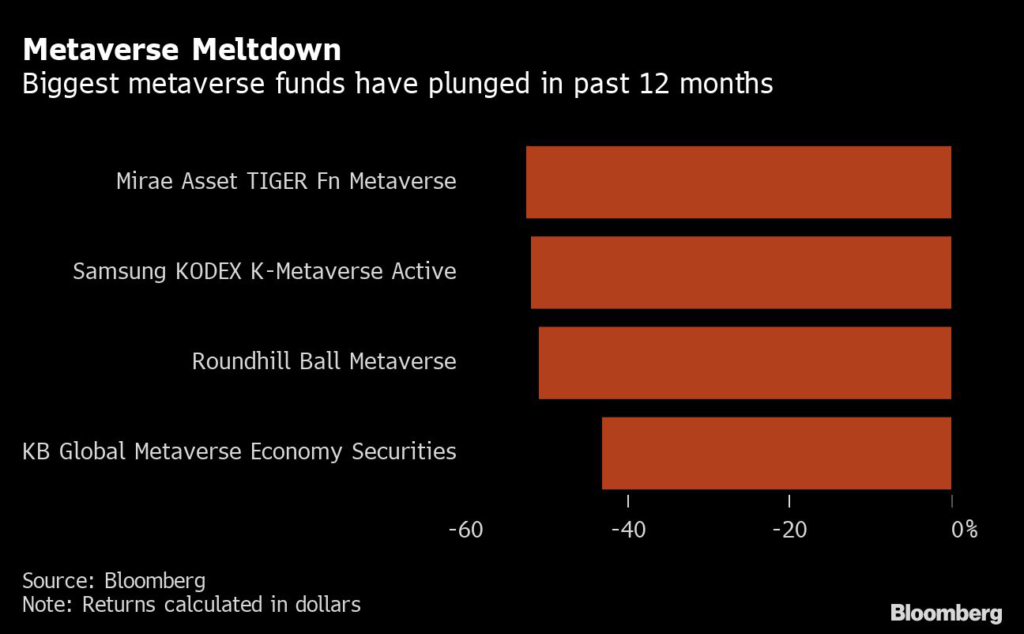
The four dozen exchange-traded funds and mutual funds in the Bloomberg database that have the word “metaverse” in their description — many of them introduced in the past 12 months — have plunged in the bear market. The Roundhill Ball Metaverse ETF, the biggest of them, has fallen 51% in the past year.

The declines accelerated Thursday after shares of Zuckerberg’s rechristened Meta Platforms Inc. plunged the most in eight months. The chief executive officer and co-founder asked investors to be patient with the huge investments in the metaverse even as the company reported a slowdown in its main source of income, digital advertising. 

“It’s one thing to rebrand it, it’s another thing to say, well, we don’t see substantial profits from the metaverse” for years, said Dennis Dick, head of market structure and a proprietary trader at Bright Trading. “Investors in this market aren’t going to wait eight years to see substantial profits.”

The performance of the metaverse funds shows the risk of piling in to an unproven industry regardless of the price you pay: The companies that are seen as the building blocks of the metaverse — digital worlds where users can socialize, play and do business — are just the kind of stocks that investors are fleeing right now. Many of them have little or no earnings and sell for high valuations, with the promise of rapid growth and big profits far in the future.

The 18 metaverse funds that have been around for a year or more are down 33% to 66% over the past 12 months. Some of the stocks that are popular with the funds have gotten equally hammered: Meta was down 69% as of Thursday’s close, while games company Roblox Corp. has fallen 42% and graphics-chip maker Nvidia Corp. has tumbled 46%. 

And fund industry heavyweights are still rolling out products, along with marketing materials to explain the sector. Allianz Global Investors introduced a fund just last week, while Legal & General Group Plc and Invesco Ltd. also have done so over the past few months.

The metaverse is still as much an idea as an actual product for many companies. But the dramatic change in the market environment means that most investors lack the stomach for long-term bets and are looking for firms with steady growth rates and tangible profits. 

Even bulls consider metaverse a long-term bet. Matthew Kanterman, the director of research at Ball Metaverse Research Partners, said it’s still the “very early innings.” 

For Meta, changing its name and “going all in and investing the amount they are investing in it today” is a big commitment given that the return might not come around for 10 to 15 years, said Kanterman. That’s “an investment cycle that is pretty much two to three times longer than the average cycle for any new product.”


Tech Chart of the Day

A weak forecast by Amazon.com Inc. triggered a 12% selloff in the e-commerce giant’s stock. Its market value briefly fell below $1 trillion after the company projected the slowest holiday-quarter growth in its history, while sales at its important web services business missed estimates. There are only three other firms in the elite list of US companies valued at more than $1 trillion: Apple Inc., Microsoft Corp. and Alphabet Inc. 

Top Tech Stories

  • Elon Musk completed his $44 billion acquisition of Twitter Inc., putting the world’s richest man in charge of the struggling social network after six months of public and legal wrangling over the deal.
    • Musk plans to assume the role of chief executive officer at Twitter after completing his $44 billion acquisition, taking the helm of the social media giant on top of leading Tesla Inc. and SpaceX.
  • Amazon.com, shocking Wall Street, projected the slowest holiday-quarter growth in the company’s history.
  • Apple Inc. delivered just enough good news in its quarterly report Thursday to avoid the fate of most tech giants this earning season, when its peers have seen their market values plunge by hundreds of billions of dollars.
    • Apple was alone among the world’s top five smartphone vendors to register growth in the third quarter this year as the mobile market suffered a double-digit decline.
    • Discontent rippled though Apple’s biggest iPhone plant in China this week, after hastily enacted measures aimed at quelling a Covid outbreak plunged many of its 200,000 workers into isolation — some without proper meals.
  • Amazon, Microsoft Corp. and Alphabet Inc. have pledged to run their own operations on 100% clean power. But their suppliers — the lesser-known companies that make the key components of hit products like the Kindle, the Xbox or Pixel mobiles — remain deeply reliant on fossil fuels.
    • Tech giants like Amazon, Meta and Intel Corp., which have long touted their ambitious growth plans, are now being judged by a different measure: how quickly they can make cuts.

–With assistance from Ryan Vlastelica and Matt Turner.

(Updates at market open.)

More stories like this are available on bloomberg.com

©2022 Bloomberg L.P.

Ye’s Twitter Account Appears to Be No Longer Suspended

(Bloomberg) — The Twitter account belonging to Ye, formerly known as Kanye West, appeared to be no longer suspended on Friday morning.

  • The account was no longer listed as being suspended on the website
  • NOTE: Musk Takes Twitter Helm, Enacts Sweeping Change as Deal Closes

More stories like this are available on bloomberg.com

©2022 Bloomberg L.P.
Amazon Shares Plunge on Forecast for Sluggish Holiday Sales

(Bloomberg) — Amazon.com Inc., shocking Wall Street, projected the slowest holiday-quarter growth in the company’s history, sending the shares tumbling about 11% Friday morning.

The Seattle-based company, which reaped record profits during the pandemic, said sales during the current period will rise just 2% to 8% as shoppers reduce their spending in the face of economic uncertainty. Either figure would be the slowest increase ever for Amazon’s “Peak” season, which usually finds warehouse employees rushing to get orders out on time. And the e-commerce giant’s other businesses aren’t riding to the rescue. Amazon Web Services, the cloud-computing division, and the advertising unit each reported muted third-quarter revenue growth by their lofty standards.

“We’re taking actions to tighten our belt,” Chief Financial Officer Brian Olsavsky said Thursday on a call with journalists after the results were released. Olsavsky said Amazon would pause hiring in some businesses and wind down products and services in areas where the company determines its money would be better spent elsewhere. 

The report, and subsequent share decline, pushed Amazon’s market value below $1 trillion dollars. The e-commerce giant joins a long list of US companies to see their market values crumble in this year’s bear market.

The world’s largest online retailer had spent this year adjusting to a sharp slowdown in e-commerce growth as shoppers resumed pre-pandemic habits. Amazon delayed warehouse openings, froze hiring in its retail group and shut down experimental projects. Some investors had hoped the company’s commanding market share in the US and Europe, the massive scale of its logistics business and the cost-cutting would insulate Amazon from slowing consumer spending. The forecast suggests that isn’t the case, and Amazon joined other previously high-flying tech giants such as Alphabet Inc. and Microsoft Corp. in reporting disappointing results.

Asked about how the upcoming shopping season, Olsavsky said Amazon is “optimistic about the holiday, but we’re realistic that various forces are weighing on people’s wallets.” 

Amazon projected that revenue would be $140 billion to $148 billion in the fourth quarter, far short of analysts’ average estimate of $156 billion. Some independent sellers on Amazon’s website, who account for a majority of unit sales, are bracing for a rough holiday season. Adobe Inc. forecast that US e-commerce sales in November and December will rise just 2.5% from the prior year. 

In the period ended Sept. 30, revenue increased 15% to $127.1 billion, Amazon said in a statement. Analysts had projected sales of $127.6 billion. Profit was 28 cents a share, compared with 31 cents a year earlier, adjusting for a 20-to-1 stock split that took effect in June.

Amazon said changes in foreign exchange rates — primarily a strengthening US dollar that made the company’s sales in other currencies less lucrative — reduced its revenue during the quarter by about $5 billion. The company expects those headwinds to continue through the current period, contributing to the weak guidance.

Despite Chief Executive Officer Andy Jassy’s pledge to cut costs, Amazon’s expenses jumped almost 18% to $125 billion. It was the fifth consecutive quarter the company’s expenses have increased faster than revenue growth. The number of full- and part-time employees rose 5% to more than 1.54 million.   

“The core e-commerce business has come under pressure from changing shopping habits from the boom seen over the pandemic and a consumer with less disposable income,” said Matt Britzman, an analyst at Hargreaves Lansdown. “Clearly, Amazon went too big, too soon, on its expansion plans and it’s had to put the brakes on and then some to try and get costs back under control.”

Technology and content expenses, a rough proxy for the company’s spending on research and development, as well as AWS, surged 35%, the biggest jump since 2018. That partly reflects bigger stock payouts Amazon is making to recruit and retain employees in a competitive market for technologists.

Still, Amazon returned to profitability after two quarters of losses, posting $2.9 billion in net income. The prior losses reflected declines in the value of the company’s roughly 17% stake in Rivian Automotive Inc. The electric automaker’s shares are down sharply following a November 2021 initial public offering, but have steadied in recent months.

Sales at AWS increased 27% to $20.5 billion. Analysts, on average, projected $21 billion, according to data compiled by Bloomberg. It was the cloud unit’s slowest year-over-year growth since Amazon began breaking out the division’s performance going back to 2014.

The backlog of cash that businesses and governments have committed to spending on the cloud unit in the future climbed to $104 billion, though Amazon executives said business customers had also asked the company for help lowering their bills for the service.

Advertising unit revenue rose 25% to $9.5 billion, roughly half the growth rate it has posted on average since Amazon began reporting the division’s results. Online store revenue rose 7.1% to $53.5 billion. 

–With assistance from Spencer Soper.

(Updates with trading from first paragraph)

More stories like this are available on bloomberg.com

©2022 Bloomberg L.P.
Tegna Buyer Planned Layoffs Without Telling the FCC, Unions Say

(Bloomberg) — Standard General LP told investors it planned to eliminate jobs at Tegna Inc. after completing its $5.4 billion acquisition of the TV broadcaster, according to opponents, despite assertions to regulators that it had no such intention.

“Staffing cuts remained a constant, premeditated, carefully calibrated feature driving the proposed transaction,” unions trying to kill the deal said in an Oct. 27 filing with the Federal Communications Commission.

The claim by the NewsGuild-CWA and the National Association of Broadcast Engineers and Technicians-CWA relies upon confidential documents Standard General submitted to the regulator. The unions’ filing is partially redacted, with some details supporting its assertions not publicly visible.

“Standard General has responded to this misleading claim before,” a spokesperson for the company said in an email. The company in an earlier filing told the FCC the unions were misinterpreting job cuts already planned by Tegna.

Deal opponents have said the purchase of Tegna, which owns 64 stations, could raise prices for cable-TV distributors and bring journalism job cuts while undermining local news. Standard General has said it would enhance news coverage, while the competitive market would keep prices in check. The deal needs approval by the FCC and also is being scrutinized by antitrust officials at the Justice Department.

The FCC in September asked Standard General for details on presentations to deal partner Apollo Global Management Inc. and other lenders, including documents discussing staff cuts. 

Standard General told the FCC it has “repeatedly confirmed” that “it has no intention of reducing station news or journalism jobs, or, indeed, station staffing more generally.”

Standard General has objected to what it says has become a lengthy review of the deal proposed in February, saying the transaction “is at the receiving end of unrelenting and baseless attacks and delay tactics.”

More stories like this are available on bloomberg.com

©2022 Bloomberg L.P.
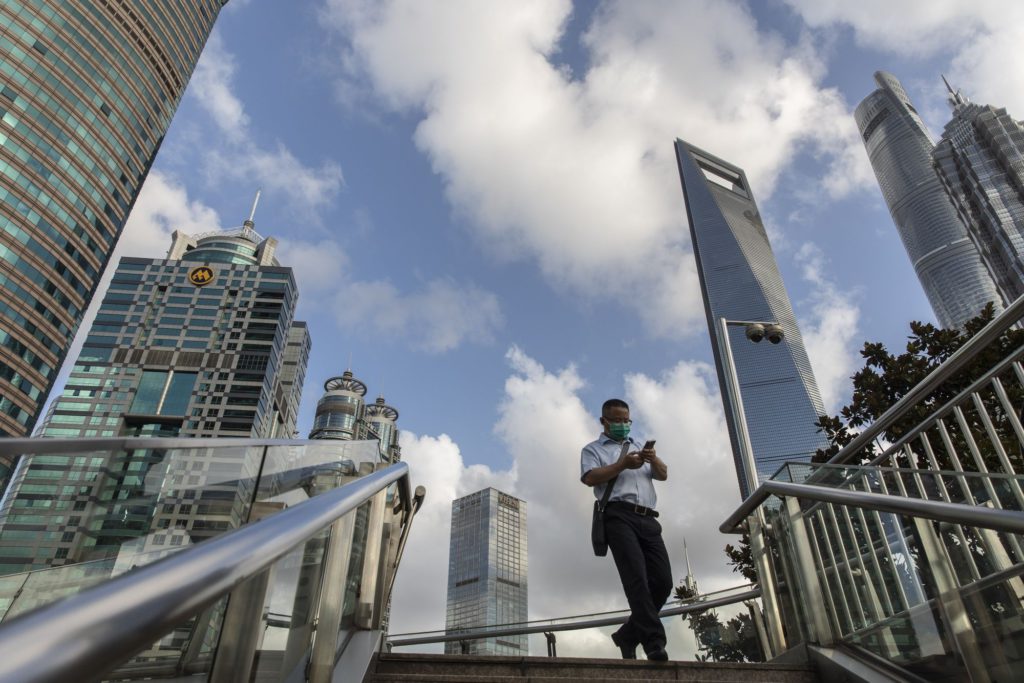
US Futures Drop as Data to Keep Fed Aggressive: Markets Wrap

(Bloomberg) — US stock futures dropped after a fresh batch of data showed persistent inflation, paving the path for the Federal Reserve to stay aggressive. Treasury yields rose. 

S&P 500 futures fell. Contracts on the tech-heavy Nasdaq 100 were down on Amazon.com Inc.’s plunge as its sales forecast trailed estimates. The benchmark 10-year Treasury yield rose to around 4.04% as hopes of a Fed pivot fizzled. 

Data on Friday showed that a core gauge of US inflation accelerated in September, while consumer spending stayed resilient, bolstering the Fed’s case for another jumbo rate hike next week. US employment costs also rose, another data point that’ll keep the central bank firmly on its path. 

Economists are now expecting the Fed to raise rates by three-quarters of a percentage point for the fourth time in a row next week. Tighter policy is already starting to crimp corporate earnings.

“The longer the Fed sticks to hiking based on old data and not allowing the effects of earlier hikes to kick in, the more risk we get of a hard landing,” Peter Tchir, head of macro strategy at Academy Securities, wrote in a note. “I’m in the camp that the recession will be sooner and deeper than expected, but we can still get one more ‘everything rally’ before that gets priced in.”

Sentiment is also sour after lackluster earnings from big-tech firms including Alphabet Inc. and  Meta Platforms Inc. this week. While Apple Inc. delivered some good news in its quarterly report, it still warned of a holiday slowdown much like Amazon.com Inc. 

“We are starting to see some companies’ bleeding in terms of forecasts and unfortunately we’re starting to see the big caps in the market disappointing,” Banque Syz CIO Charles-Henry Monchau said in an interview with Bloomberg TV. “Earnings for us is still a headwind.”

Despite the downturn, the S&P 500 is heading for a second week of gains for the first time since August.

Beyond the US

The ECB delivered a second straight 75 basis-point hike on Thursday but dropped a prior reference to rate increases continuing for “several meetings,” an outcome that was considered dovish. The central bank has a small margin for error after German inflation unexpectedly accelerated this month to 11.6% from a year earlier — far exceeding all estimates in a Bloomberg survey whose median forecast was 10.9%.

The Bank of Japan held its negative rate Friday, 10-year yield cap and asset purchases at the end of a two-day policy meeting, in line with the view of 49 economists surveyed by Bloomberg.

Chinese assets also remained in focus, with foreign investors dumping a record amount of mainland China stocks this week and sending Hong Kong equities to a 13-year low. President Xi Jinping’s tightening grip on power hasn’t had the same impact domestically, with mainland investors hunting for bargains in Hong Kong. 

Some of the main moves in markets:

Stocks

  • Futures on the S&P 500 fell 0.5% as of 8:55 a.m. New York time
  • Futures on the Nasdaq 100 fell 0.9%
  • Futures on the Dow Jones Industrial Average rose 0.2%
  • The Stoxx Europe 600 fell 0.4%
  • The MSCI World index fell 0.3%

Currencies

  • The Bloomberg Dollar Spot Index rose 0.4%
  • The euro was little changed at $0.9956
  • The British pound fell 0.3% to $1.1531
  • The Japanese yen fell 1% to 147.80 per dollar

Cryptocurrencies

  • Bitcoin fell 1% to $20,187.67
  • Ether fell 1.3% to $1,508.68

Bonds

  • The yield on 10-year Treasuries advanced 12 basis points to 4.04%
  • Germany’s 10-year yield advanced 20 basis points to 2.16%
  • Britain’s 10-year yield advanced 10 basis points to 3.50%

Commodities

  • West Texas Intermediate crude fell 0.9% to $88.32 a barrel
  • Gold futures fell 1% to $1,649.40 an ounce

–With assistance from Michael Msika, Kurt Schussler, Allegra Catelli, Cecile Gutscher, Brett Miller and Reade Pickert.

More stories like this are available on bloomberg.com

©2022 Bloomberg L.P.
Twitter Caps Nine Years of Largely Unfulfilled Promise on NYSE

(Bloomberg) — Elon Musk’s buyout marks the end of nine years of public trading in Twitter Inc., which debuted with a bang but failed to match the rocket ride achieved by some other tech heavyweights.

While the stock made a splash with its trading debut on the New York Stock Exchange in November 2013, surging 73% on its first day, the company has since failed to impress investors as it struggled to consistently grow its user base and ramp engagement. 

Twitter’s shares doubled during its tenure as a listed company, equal to an 8.4% growth a year. That’s lower than the S&P 500 Index’s 11% annual return and Nasdaq 100 Index’s 15% climb.

“There’s no question it has never lived up to what investors had hoped for when it went public, when it was trading at about double where it was earlier this year,” said Alec Young, chief investment strategist at Mapsignals. “Most investors have been disappointed with the stock performance, the growth, the penetration — it just seems like it never took off with users and got the kind of mass adoption other services got.”

Musk completed his $44 billion purchase of the social media company putting the world’s richest man in charge of the struggling social network after months of public and legal wrangling over the deal. The buyout would take Twitter private about a week before the “TWTR” stock ticker turns nine years old.

Read more: Musk Is Said to Take Twitter CEO Role, Reverse Life Bans

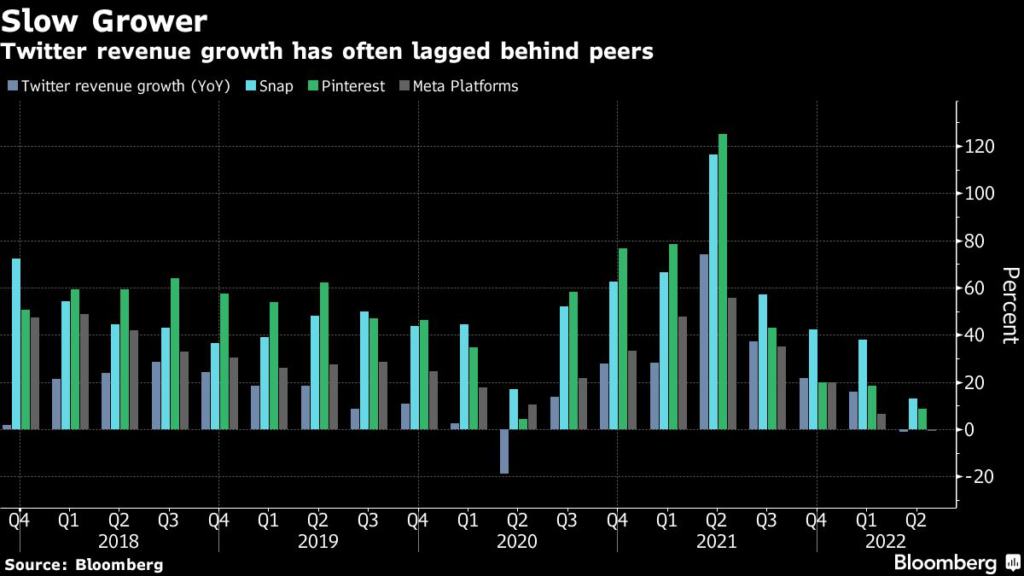
Twitter’s underperformance relative to its social peers largely reflects how revenue growth at the micro-blogging platform has consistently been slower, with others better able to monetize their user bases. Over the past five years, Twitter has averaged quarterly revenue growth of 19%, compared with 29% at Meta Platforms Inc., 50% for Snap Inc., and 51% for Pinterest Inc.

Musk’s interest, however, has the company ending its run as a public stock on a positive note. It gained 24% this year, making it the top performer among components of S&P 500 communication services companies. Its stock performance has massively outdone its peers in a year marred by plunging growth stocks thanks to supersized interest-rate hikes from the Federal Reserve, surging inflation and the possibility of a looming recession. 

“It was a great exit… because there is no way the company would be worth $40 billion in the current environment,” said Neil Campling, an analyst at Mirabaud Securities. “Companies such as Pinterest and Snap trade on significantly lower valuations. If Twitter was trading still today independently I think it would be at $25/share (tops) by the end of the year.”


For Twitter’s stock investors, it’s been a wild ride with Musk in the driver’s seat.

“The rollercoaster track he’s taken Twitter shareholders on has ended in a last scream of exhilaration for those who clung on for the ride, said Susannah Streeter, senior investment and markets analyst, Hargreaves Lansdown. “While the price of $54.20 a share is still below the heady heights of above $77 reached in the pandemic rush for tech in March 2021, it’s well above the $32 the company was being traded at a year later, just weeks before Musk slapped his generous offer on the table.”

–With assistance from Matt Turner and Edward Dufner.

(Updates with analyst comments.)

More stories like this are available on bloomberg.com

©2022 Bloomberg L.P.

EU Commissioner Warns Musk Twitter Must ‘Fly by Our Rules’

(Bloomberg) — European Commissioner Thierry Breton took to Twitter to send a warning to the social-media platform’s new owner, hours after billionaire Elon Musk closed his $44 billion deal for the company. 

“In Europe, the bird will fly by our rules,” Breton, the EU’s internal markets commissioner, said on Friday in response to Musk’s Tweet: “the bird is freed.” 

Earlier this year, Breton had also reminded Musk that his free-speech focus on Twitter would be limited by the EU’s own content-moderation laws. Breton traveled to Texas in May where the two said there was “no disagreement” over their approach to content. 

Read More: Musk’s Charm Offensive for Twitter Takeover Begins With EU

On Thursday, Musk posted a note to advertisers seeking to reassure them he doesn’t want Twitter to become a “free-for-all hellscape,” full of violent or dangerous posts. 

The EU’s Digital Services Act gives governments more power enforce rules governing how tech companies moderate content and to decide when they must take down illegal content. If Musk doesn’t comply, Twitter will face fines of as much as 6% of annual sales and could even be banned. 

Musk completed the deal late Thursday, changing the executive ranks and taking over as chief executive officer, people familiar with the matter said. Musk also intends to do away with permanent bans on users because he doesn’t believe in lifelong prohibitions, potentially allowing people such as former US President Donald Trump to rejoin, one of the people said. 

Policing Tech

The EU has not been afraid of taking on big US tech companies in the past. Ireland’s data protection watchdog fined Twitter €450,000 ($448,360) in 2020 for violating the GDPR, the EU’s landmark data protection rules. Amazon.com, Meta’s WhatsApp and Alphabet’s Google have been slapped with fines in the millions of euros.

The European Commission now has even more power to police big tech with the DSA and its sister legislation, the Digital Markets Act, which forces tech companies designated as “gatekeepers” to abide by new antitrust rules.

Both of these acts officially became law this month, meaning companies could be fined billions of euros for failing to comply as soon as next year. Repeat offenders could be blocked from mergers and acquisitions or be banned from operating in the union entirely.

(Updates with past EU actions on US tech companies)

More stories like this are available on bloomberg.com

©2022 Bloomberg L.P.
Twitter-Musk Deal Drama Is Just Beginning for Wall Street Banks

(Bloomberg) — Elon Musk is the new owner of Twitter Inc., ending months of uncertainty for Silicon Valley and shareholders. Yet for debt bankers on Wall Street, the drama is far from over, as they’ll need to convince investors that the Chief Twit’s ambitions for the company can justify its heavy debt load.

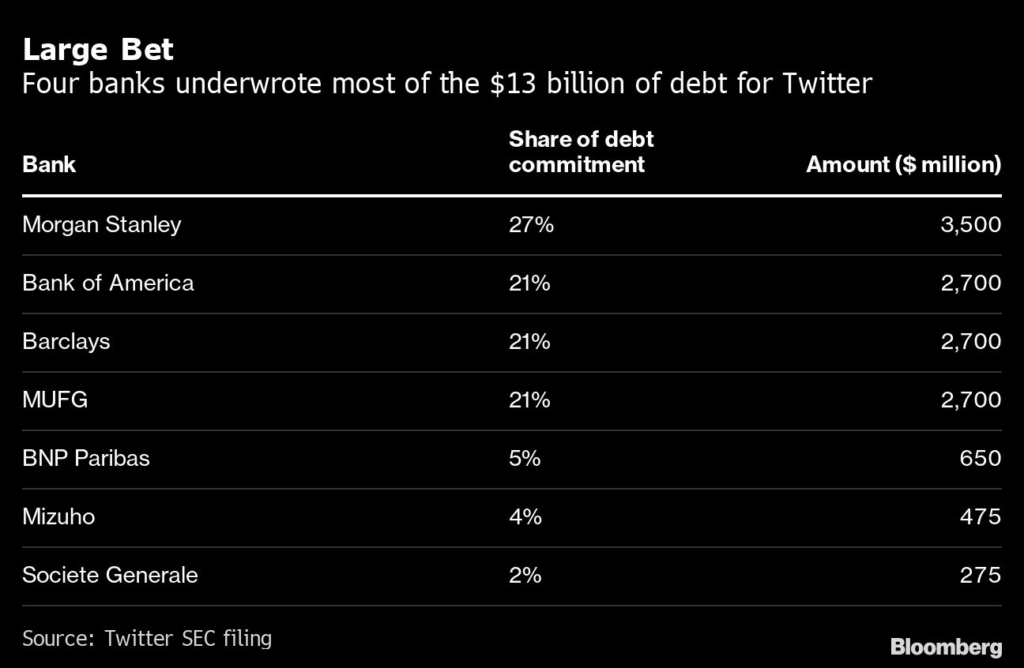
With the $44 billion deal now closed, a Morgan Stanley-led cohort that provided about $13 billion of debt financing to help fund the acquisition of Twitter is now saddled with risky loans that they never intended to keep on their books. The banks now face the unenviable task of selling it off without realizing big losses — and that’s not going to be easy. 

For a start, the cost of borrowing has soared. 

Yields on junk bonds in the CCC tier, where Twitter’s riskiest unsecured debt would likely be rated, have soared to 15.4%, well above the 11.75% maximum interest rate that the banks promised Musk on that portion of the debt financing. That would force the banks to offer steep discounts if they tried to offload it to institutional investors at current rates, and they’re on the hook for the difference — to the tune of losses of more than $500 million for the entire debt package.

The banks, and Musk himself, will also need to explain why Twitter’s bot problem isn’t a problem after all, and how the company can afford the huge annual interest burden that is nearly $1.2 billion a year by one estimate. Without a rapid turnaround plan, and new sources of revenue and cost cuts, Twitter will burn through cash.   

Read more: Morgan Stanley-Led Banks Face $500 Million Loss on Twitter Debt

A representative for Morgan Stanley didn’t immediately respond to requests for comment.

Musk plans to assume the role of chief executive officer at Twitter, taking the helm of the social media giant on top of leading Tesla Inc. and SpaceX. Musk intends to replace Parag Agrawal, who was fired along with other major executives upon completion of the takeover, Bloomberg reported.

The controversial deal, also financed with $33.5 billion of equity from Musk and other backers, has left many constituencies unhappy, including Twitter employees, some users of the platform around the world, and arguably Musk as well given the purchase price that now looks far too high given the slump in stock markets.


Bank Pain

Winning the mandate to support the acquisitive ambitions of the world’s richest man was supposed to be a coup back in April. Morgan Stanley provided the largest commitment, followed by Bank of America Corp., Barclays Plc, and Mitsubishi UFJ Financial Group Inc.

Representatives for all three banks declined to comment.

But then months of uncertainty about whether the deal would go ahead followed as Musk backtracked. And by the time he agreed to buy the San Francisco-based tech firm in October, debt markets were reeling. Even if they could have tried selling bonds and loans to help fund the deal, the banks had barely any time to put the wheels in motion due to the court-issued deadline of Oct. 28. 

This marks the biggest so-called hung deal for a leveraged buyout this year, and one of the largest on record. The Twitter deal is just one of many troubled LBO transactions causing problems for Wall Street in this latest cycle, albeit at a much smaller scale than during the 2007-2008 Great Financial Crisis, when banks faced a debt backlog of more than $200 billion.

Banks have already used about $30 billion of their own cash this year to fund loans for acquisitions and buyouts that they weren’t able to sell to investors, and adding Twitter to the pile takes that figure to over $40 billion. 

Read more: Unsold Twitter Loans Inflate Banks’ Big LBO Debt Problem: Chart

Wall Street lenders have also sustained billions of dollars of writedowns this year after central banks worldwide started hiking rates to tame inflation, pushing borrowing costs above the maximum interest rates they’d promised for mega deals. A different group of banks realized roughly $600 million in losses for the buyout of Citrix Systems Inc. in September and were forced to hold roughly $6.5 billion of the debt. Lenders supporting the buyout of Nielsen Holdings Plc. were stuck with more than $8 billion of debt.

Musk now has grand plans about how he will use Twitter as the basis of a new X.com “everything app.” After spending months lambasting the social media company over the bot problem and a whistleblower as he tried to weasel out of the deal, Musk has now promised to help his bankers market the debt to money managers. 

Read more: Confused by Musk’s Twitter LBO? Here’s What’s Weird: QuickTake

Those potential buyers will be focused on the health of Twitter as a company. Credit conditions have worsened in recent months amid high inflation, quickly rising rates, and recession fears. With buyside demand limited, banks now find themselves as direct creditors to the social-media platform, rather than as providers of temporary bridge financing, as is typically the case. 

The lenders originally planned to sell $6.5 billion of leveraged loans to investors, along with $6 billion of junk bonds split evenly between secured and unsecured notes. They also provided $500 million of a type of loan called a revolving credit facility that they would typically plan to hold themselves, though it is unclear if that was drawn or undrawn when the deal closed. 

Eventually when markets calm, the banks will likely try and sell at least part of the debt to investors, which is when they will ultimately realize those losses — unless there’s a big and unexpected rebound in market risk appetite.

More stories like this are available on bloomberg.com

©2022 Bloomberg L.P.
Amazon’s Only Bearish Analyst Says Revival to Take Even Longer

(Bloomberg) — Amazon.com Inc. shares will fall another 28% and take longer to recover from a slump that has already wiped out $560 billion in market value, says BNP Paribas Exane’s Stefan Slowinski, the only analyst with a sell-rating on the e-commerce giant.

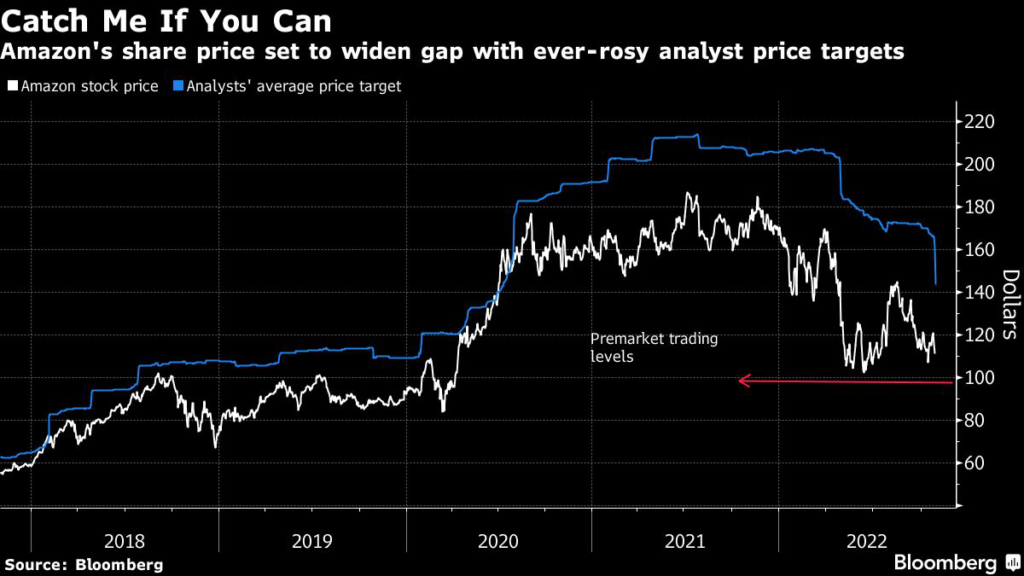
Slowinski cut the stock’s 12-month price target to $80 per share, the lowest among 58 analysts covering the stock, according to Bloomberg data. The shares have fallen 34% since he initiated coverage of the stock with a sell rating in March. 

For Slowinski, the performance of Amazon’s cloud unit, or AWS, was the biggest disappointment in the third-quarter earnings reported Thursday. AWS, which he described as a “growth engine” for the company, saw its slowest year-over-year growth since Amazon began breaking out the division’s performance in 2014.

“AWS had put a floor on the stock – now that’s also turning out to be a concern,” Slowinski said in a phone interview with Bloomberg News. The AWS numbers adds to concerns about their consumer business, he added.

Indeed, the Seattle-based company, which reaped record profits during the pandemic, said sales during the fourth quarter will rise just 2% to 8% as shoppers reduce their spending in the face of economic uncertainty. 

Amazon shares were down 13% at $96 in premarket trading as of 07:44 a.m. in New York.

More stories like this are available on bloomberg.com

©2022 Bloomberg L.P.

Close Bitnami banner
Bitnami
