Bloomberg

Binance Confirms Equity Investment in Musk’s Twitter Deal

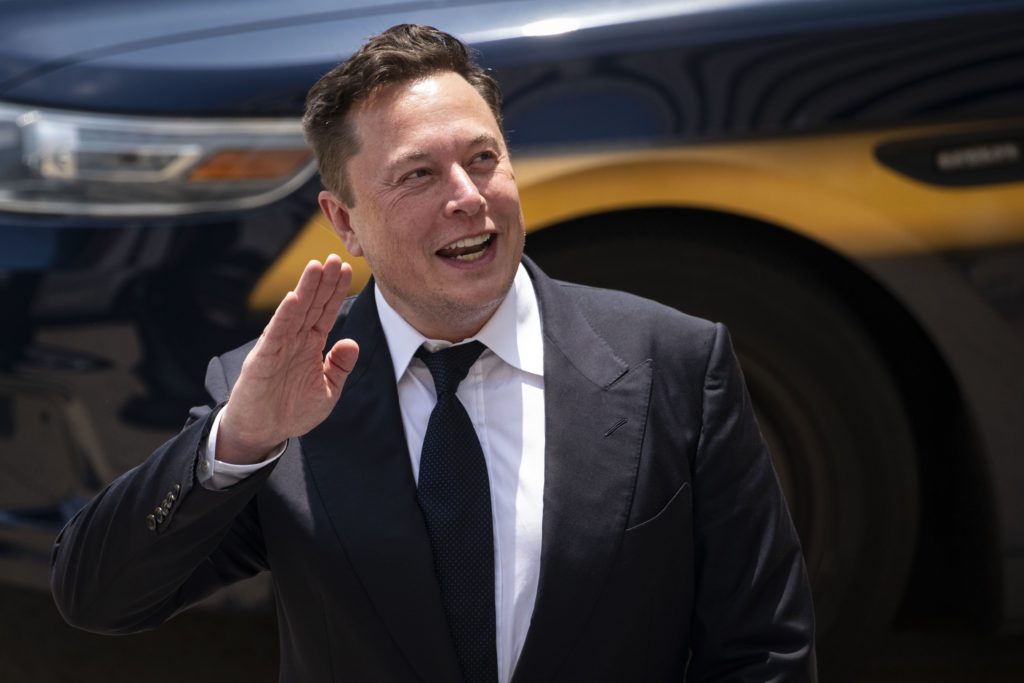
(Bloomberg) — Binance Holdings Ltd., the world’s largest cryptocurrency exchange, confirmed that it’s an equity investor in Elon Musk’s $44 billion acquisition of Twitter Inc.

“We aim to play a role in bringing social media and Web3 together in order to broaden the use and adoption of crypto and blockchain technology,” Binance said in a statement, citing Changpeng “CZ” Zhao, its billionaire co-founder.

Binance in May said it had committed $500 million for the takeover as part of its strategy to bring social media and news sites into the world of web3. 

A Binance spokesperson said Friday “our initial commitment remains the same” and flagged the possibility of growing the partnership.

The term “web3” refers to a vision of a decentralized internet built around blockchains, crypto’s underlying technology.

Read more: Binance CEO Says He Thinks He’ll Stick With Musk in Twitter Bid

(Updates with more from Binance in the fourth paragraph.)

More stories like this are available on bloomberg.com

©2022 Bloomberg L.P.

Musk Is Said to Take Twitter CEO Role, Reverse Life Bans

(Bloomberg) — Elon Musk plans to assume the role of chief executive officer at Twitter Inc. after completing his $44 billion acquisition, taking the helm of the social media giant on top of leading Tesla Inc. and SpaceX.

Musk intends to replace Parag Agrawal, who was fired along with other major executives upon completion of the takeover, a person familiar with the matter said, asking not to be identified discussing internal deliberations. The billionaire is expected to remain CEO in the interim but may eventually cede the role in the longer term, the person added. Twitter representatives declined to comment.

Musk’s acquisition puts the world’s richest man in charge of a struggling social network after six months of public and legal wrangling. Among Musk’s first moves: changing the leadership. Departures include Vijaya Gadde, the head of legal, policy and trust; Chief Financial Officer Ned Segal, who joined Twitter in 2017; and Sean Edgett, who has been general counsel at Twitter since 2012. Edgett was escorted out of the building, Bloomberg News reported.

Musk also intends to do away with permanent bans on users because he doesn’t believe in lifelong prohibitions, the person said. That means people previously booted off the platform may be allowed to return, a category that would include former president Donald Trump, the person said. It’s unclear however if Trump would be allowed back on Twitter in the near term.

Read more: Musk Closes $44 Billion Twitter Deal, Fires Top Executives

The takeover caps a convoluted saga that began in January with the billionaire’s quiet accumulation of a major stake in the company, his growing exasperation with how it’s run and an eventual merger accord that he later spent months trying to unravel. 

The billionaire will bring immediate disruption to Twitter’s operations, in part because many of his ideas for how to change the company are at odds with how it has been run for years. He’s said he wants to ensure “free speech” on the social network. 

Twitter banned Trump days after the 2021 Capitol insurrection, citing the “risk of further incitement of violence.” With the former president widely expected to make another run for the White House in 2024, a return to Twitter could grant him an opportunity to turbocharge his message.

More broadly, Musk’s initiatives threaten to undo years of Twitter’s efforts to reduce bullying and abuse on the platform.

The prospect of less restrictive content moderation under Musk’s leadership has prompted concerns that dialogue on the social network will deteriorate, eroding years of efforts by the company and its “trust and safety” team to limit offensive or dangerous posts. On Thursday, Musk posted a note to advertisers seeking to reassure them he doesn’t want Twitter to become a “free-for-all hellscape.”

As the Oct. 28 deadline neared, Musk began putting his stamp on the company, posting a video of himself walking into the headquarters and changing his profile descriptor on the platform he now owns to “Chief Twit.”

He arranged meetings between Tesla engineers and product leadership at Twitter, and he planned to address the staff on Friday, people familiar with the matter said. Twitter’s engineers could no longer make changes to code as of noon Thursday in San Francisco, part of an effort to ensure that nothing about the product changes ahead of the deal closing, the people said.

Read more: Twitter Faces Only Bad Outcomes If $44 Billion Musk Deal Closes

Twitter employees have been bracing for layoffs since the transaction was announced in April, and Musk floated the idea of cost cuts to banking partners when he was initially fundraising for the deal. Some potential investors were told Musk plans to cut 75% of Twitter’s workforce, which now numbers about 7,500, and expects to double revenue within three years, a person familiar with the matter said earlier this month.

While visiting Twitter headquarters on Wednesday, Musk told employees that he doesn’t plan to cut 75% of the staff when he takes over the company, according to people familiar with the matter.

The past six months have been challenging for Twitter employees, who have primarily followed the ups and downs of the roller-coaster deal through the news headlines.

Many have been unhappy with Musk’s involvement and some have questioned his qualifications to run a social networking company. His support of a far-right political candidate in Texas, plus sexual harassment accusations from a former SpaceX flight attendant in May, have raised additional concerns. During a video Q&A with Musk in June, some employees mocked Musk on internal Slack channels. Others have ridiculed or chided him publicly on Twitter throughout the deal process.

(Updates with free speech debate from the 9th paragraph)

More stories like this are available on bloomberg.com

©2022 Bloomberg L.P.

Stocks Decline; Yen Fluctuates After BOJ Decision: Markets Wrap

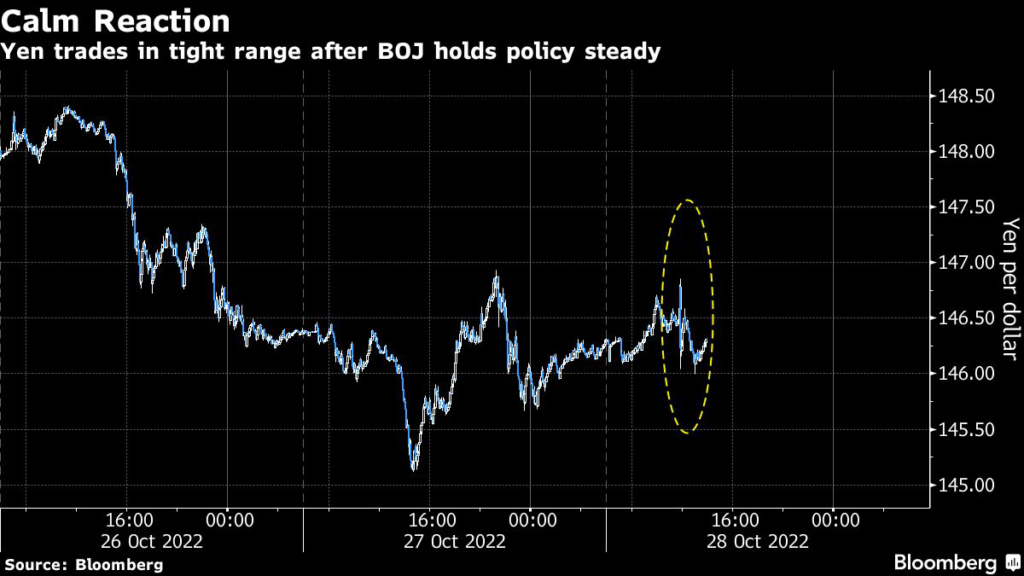
(Bloomberg) — Shares dropped in Asia following declines on Wall Street as investors contended with disappointing results from tech giants. The yen swung between gains and losses after the Bank of Japan kept monetary policy unchanged.

A gauge of Asian equities slid as China stocks extended losses. Hong Kong-listed technology stocks tumbled more than 5%. Shares of miners and steelmakers in the region declined amid weakness in iron ore prices and a downbeat outlook for the sector. 

Japan’s government bonds advanced after the central bank maintained ultra-low interest rates and projected inflation will cool below 2% next year. The 10-year bond gained for the first time since early this month. Traders are now awaiting Governor Haruhiko Kuroda’s post-decision briefing later Friday.

US equity futures fell, with Nasdaq futures dropping as much as 1%, following Amazon.com Inc.’s plunge after hours as its sales forecast trailed estimates. Shares of Apple Inc. rose slightly in postmarket trading following a volatile afternoon. 

Chinese assets also remained in focus, with foreign investors dumping a record amount of mainland China stocks this week and sending Hong Kong equities to a 13-year low. President Xi Jinping’s tightening grip on power hasn’t had the same impact domestically, with mainland investors hunting for bargains in Hong Kong.  

Bond yields fell in Australia and New Zealand while Treasury yields held most of their recent drop, with the 10-year remaining well below 4%. 

Gross domestic product data showed that the US economy rebounded after two quarterly contractions, but also highlighted that consumer spending remains under pressure because of inflation.  

Elon Musk completed his $44 billion acquisition of Twitter Inc., according to people familiar with the matter. Holders will be paid $54.20 per share and the social network will now operate as a private company.

Economists still expect the Fed to hike by three-quarters of a percentage point for the fourth time in a row when it meets next week. But with recent data highlighting the effects of sharp rate hikes on the economy, investors expect the FOMC to slow the pace of tightening after November’s meeting.  

Read: Bond Bulls Bet on Plateau in Rates as Dovish Signals Grow

“We feel that inflation is still really too hot at the moment. So for us to get to a point where there is really an easing signal from the Fed, I think we’re still very long way off,” Julia Wang, global market strategist at JPMorgan Private Bank, said on Bloomberg Radio. “So we’ll be very wary of chasing this hopeful tone in the market for too much.”

Elsewhere, oil headed for a weekly gain, supported by tightness in petroleum product markets, robust US exports, and a weakening dollar. Gold was set for its second weekly climb and Bitcoin traded above $20,000.

Key events this week:

  • US personal income, personal spending, pending home sales, University of Michigan consumer sentiment, Friday

Some of the main moves in markets:

Stocks

  • Futures on the S&P 500 fell 0.6% as of 6:34 a.m. London time. The S&P 500 fell 0.6%
  • Nasdaq 100 futures dropped 1%. The Nasdaq 100 fell 1.9%
  • Japan’s Topix index declined 0.2%
  • South Korea’s Kospi index lost 0.6%
  • Hong Kong’s Hang Seng Index tumbled 3.1%
  • China’s Shanghai Composite Index slumped 1.3%
  • Australia’s S&P/ASX 200 Index declined 0.9%
  • Euro Stoxx 50 futures slipped 0.8%

Currencies

  • The Bloomberg Dollar Spot Index was little changed
  • The euro rose 0.2% to $0.9985
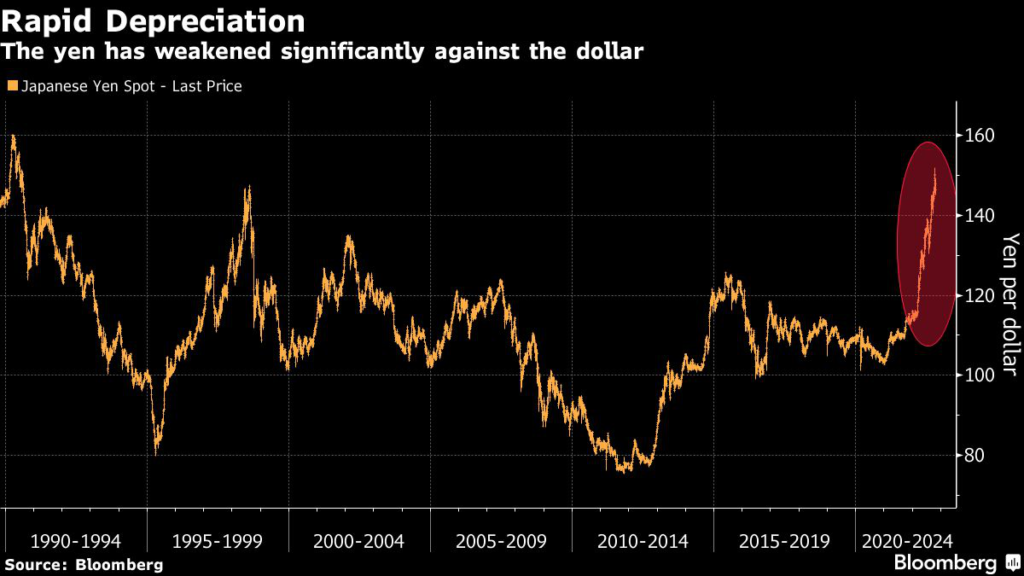
  • The Japanese yen was steady at 146.26 per dollar
  • The offshore yuan climbed 0.3% to 7.2415 per dollar
  • The British pound weakened 0.1% to $1.1556

Cryptocurrencies

  • Bitcoin fell 0.6% to $20,268.07
  • Ether dropped 1.2% to $1,509.06

Bonds

  • The yield on 10-year Treasuries advanced three basis points to 3.94%
  • Australia’s 10-year bond yield fell 10 basis points to 3.73%

Commodities

  • West Texas Intermediate crude fell 1.2% to $88 a barrel
  • Spot gold was little changed at $1,662.18 an ounce

–With assistance from Toru Fujioka and Sumio Ito.

More stories like this are available on bloomberg.com

©2022 Bloomberg L.P.

Robot Maker Fanuc Sinks as China, Chip Supply Woes Dim Outlook

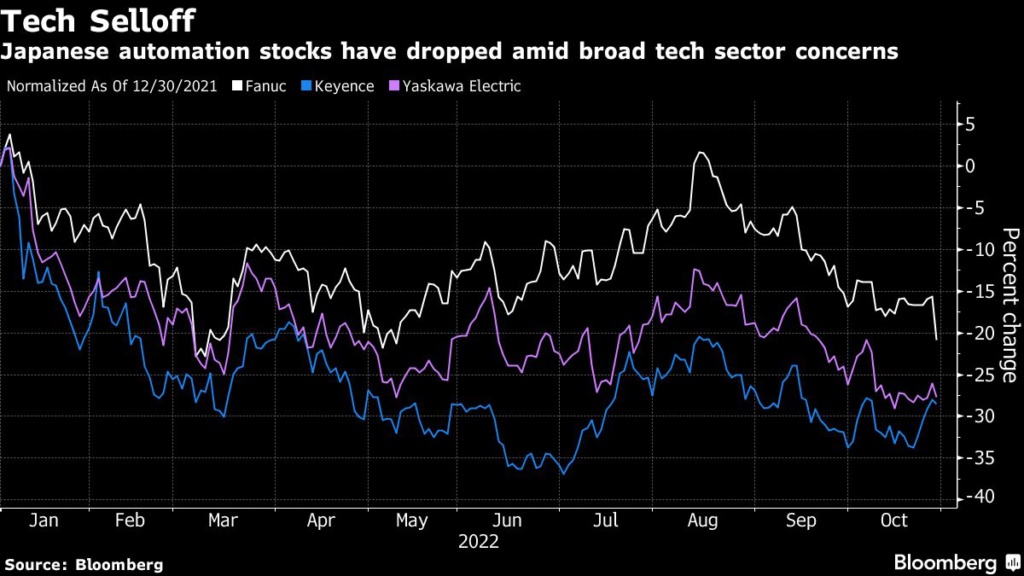
(Bloomberg) — Shares of Fanuc Corp., a Japanese maker of robots and other machinery, slid by the most since April after the firm cut its profit outlook on part-supply difficulties and a weak outlook for Chinese business.

The stock dropped as much as 8.3%, weighing down peers such as Keyence Corp., which reports earnings later Friday, and Yaskawa Electric Corp. The trio, keenly watched by foreign investors, are all down more than 20% this year as rising US interest rates and recession fears batter the global tech sector.

Fanuc warned that demand for factory-automation equipment and its “robomachines” — which are used in making Apple Inc.’s iPhone and other products — is likely to slow “for the foreseeable future”. While orders for its robots remain strong, it’s having trouble getting necessary components.

The company lowered its operating profit forecast for the year ending March 2023 by 8.4% to ¥181.7 billion ($1.2 billion) on Thursday.

“Factory automation and robomachine segment demand and sales slowed more than expected, due to economic slowdown in China and a slump in the smartphone market,” Mitsubishi UFJ Morgan Stanley analyst Tsubasa Sasaki wrote in a note. The company is also still struggling with rising parts and logistics costs, he added.

More stories like this are available on bloomberg.com

©2022 Bloomberg L.P.

Singapore Retreat From Retail Crypto Sector Opens Way for Rivals

(Bloomberg) — Asia may be heading for a reordering of sorts in cryptocurrency markets, with Hong Kong moving to legalize retail trading of digital tokens just as Singapore looks to impose fresh restrictions on consumers. 

Speaking in an interview with Bloomberg Television, Singapore’s central bank chief Ravi Menon had a clear message for other financial centers looking to draw retail crypto trading away with more relaxed rules: We won’t stand in your way. 

“We don’t set ourselves out to compete with other jurisdictions, especially on regulation,” said Menon, the managing director of the Monetary Authority of Singapore. “We have to do what is right for us, what is necessary to contain the risks. And the risks are primarily harm to retail investors.”

Hong Kong, having fallen behind Singapore in crypto in past years, is pivoting toward a friendlier regulatory regime as part of a recently stated goal of becoming a top crypto hub. Japan is taking steps to make it easier to list tokens, partially reversing a conservative stance that was blamed for driving crypto startups away. Australia is becoming a regional home for listings of exchange-traded products linked to digital assets.

Singapore’s evolving vision on the kind of regional digital-asset center it prefers to be is as much an indication of the perils of letting mom-and-pop investors dabble in volatile virtual coins as an opening for other jurisdictions to gain ground.

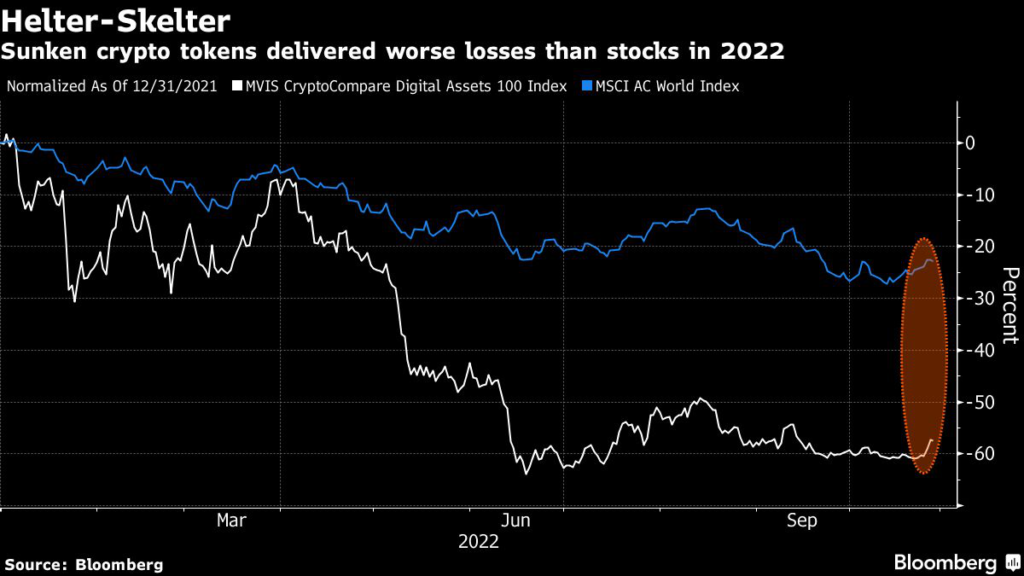
The city-state was buffeted by blowups amid this year’s crypto rout, such as at Three Arrows Capital hedge fund and crypto lender Hodlnaut. An index of top tokens is down 58% so far in 2022, leaving many investors nursing losses. 

“I think our latest proposals would be among the strictest in the world with respect to retail access to cryptocurrencies,” Menon said. “And we think that’s necessary.”

He acknowledged that some retail-focused crypto companies might move to other jurisdictions, saying “we wish them good luck.”

Crucial Decisions

Both Singapore and Hong Kong are hosting financial-technology conferences next week — events that will feature high-profile crypto executives like Binance’s founder Changpeng Zhao and FTX’s chief executive officer Sam Bankman-Fried. Busan, the coastal South Korean city that aspires to become a digital-asset hub, is wrapping up a three-day conference on Saturday. 

Hong Kong and Singapore’s diverging approaches to retail crypto trading leave exchange executives facing some potentially crucial decisions. Coinbase Global Inc. and Crypto.com are among global exchange operators that this year secured Singapore permits. There are now only 16 permit holders out of nearly 200 applicants.

“Singapore is getting a bit uncommercial for crypto exchanges by being over cautious on retail participation,” said Adrian Przelozny, chief executive officer of Sydney-based Independent Reserve. “Any decision to choosing a jurisdiction to do business is guided by two principles — if it will earn profit for me and do I trust that the rules won’t change in that jurisdiction. It is hard to have confidence to invest if rules keep changing.”

Independent Reserve last year received a Major Payment Institution Licence from the Monetary Authority of Singapore, allowing it to operate as a virtual asset service provider.

Retail Curbs

The MAS on Wednesday unveiled proposals to restrict retail participation in digital assets, including banning small investors from borrowing to fund coin purchases. The consultation paper from the central bank also proposed barring companies from using tokens deposited by retail investors for lending or staking to generate yield. 

The proposed restrictions don’t apply to high-net-worth investors. 

Menon said Singapore still wants to be a crypto hub, but one that promotes areas of digital assets with “use cases” and tokenization — the process of using blockchain technology to securitize various assets. 

“We accept that cryptocurrencies have a place in the larger digital ecosystem because they are the tokens native to the blockchain that powers much of this activity,” he said. “They need to have an expression in the formal financial sector.”  

–With assistance from Joanna Ossinger and Richard Lewis.

More stories like this are available on bloomberg.com

©2022 Bloomberg L.P.

Ukraine Latest: Biden Questions Putin’s Nuclear Denials

(Bloomberg) — President Joe Biden, asked whether Russian leader Vladimir Putin was sincere in saying he has no intention of using nuclear or chemical weapons in Ukraine, said: “If he has no intention, why’s he keep talking about it?” 

Putin said Thursday that there was no need for Russia to launch a nuclear strike on Ukraine, and denied his country had ever discussed the use of atomic weapons in the war, now in its ninth month.

Putin claimed Russia has only used “hints” in response to repeated US and European discussion of a possible atomic conflict, telling an audience of foreign-policy experts that the West was trying to influence Moscow’s friends and allies by showing “how terrible Russia is.” 

China is willing to deepen its cooperation with Russia at all levels, according to a Chinese readout of a phone call between Foreign Minister Wang Yi and his Russian counterpart Sergei Lavrov that also said the pair discussed Ukraine. Russia hasn’t commented. 

Ksenia Sobchak, the celebrity-journalist daughter of Putin’s political mentor fled Russia for Europe as police detained a close associate and raided her home as part of a criminal case for alleged extortion.

(See RSAN on the Bloomberg Terminal for the Russian Sanctions Dashboard.)

Key Developments

  • Biden Questions Putin Claim Russia Won’t Use Nuclear Weapons
  • Putin Plays Down Nuclear Threat in Ukraine as He Lambasts US
  • Putin-Linked Celebrity Journalist Sobchak Flees Russia
  • Is Putin Strangling Russia’s Golden Gas Goose? The IEA Thinks So
  • Russia Crisis Heralds Turning Point for Global Energy, IEA Says
  • What Is a ‘Dirty Bomb’ and Why Is Ukraine Worried?: QuickTake

On the Ground

Russian forces struck the Kyiv region and the southern city of Zaporizhzhia overnight, Ukrinform reported, citing local authorities. Ukraine’s “South” command said air defense downed a Russian Ka-52 helicopter and an Su-25 fighter jet in the Kherson region Thursday morning. Ukrainian troops downed 18 out of 20 Iranian-made Shahed-136 drones launched by Russia over the past 24 hours at the country’s critical infrastructure, Commander-in-Chief of the Armed Forces Valeriy Zaluzhnyi said on Telegram. Russian assaults near seven settlements in the Donetsk and Luhansk regions were repelled over the past day, the General Staff of the Ukrainian military reported on Facebook.

(All times CET)

Biden Questions Putin Claim on Nuclear Weapons (6:31 a.m.) 

Biden questioned whether Putin was sincere in saying he had no intention of using nuclear or chemical weapons in Ukraine. “If he has no intention, why’s he keep talking about it?” Biden said after he was asked if he believes Putin’s denials in an interview with NewsNation, a cable outlet, broadcast on Thursday.

“Why does he talk about the ability to use a tactical nuclear weapon?” Biden added. “He’s been very dangerous in how he’s approached this. He can end this all. Get out of Ukraine.”

US to Send $275 Million in Aid, Report Says (1:30 a.m.)

The  Pentagon plans to send $275 million in fresh military assistance to Ukraine, the Associated Press reported on Thursday evening. The aid does not contain new types of weapons, and will be dedicated to forces battling the Russian military in the south of Ukraine, according to the AP, which cited unnamed US officials.

The package will replenish ammunition for weapons systems, including the High Mobility Artillery Rocket Systems, or Himars, the AP said.

Putin Keeps Up Suspense on G-20 Summit Plans (7:15 p.m.)

Putin said he still hasn’t decided whether to go to next month’s G-20 summit in Indonesia, as the US and its allies have pushed for him to be excluded over his invasion of Ukraine.

“We’ll think about how we’ll do it. Russia definitely will be represented at a high level,” Putin told a questioner from Indonesia at the Valdai Discussion Club outside Moscow. “I may still go.”

Most Russians Want Peace Talks With Ukraine, Survey Shows (6:36 p.m.)

For the first time, a majority of Russians favor opening peace talks with Ukraine, according to a poll by the independent Levada Center, which also found that just a third of respondents now support the war.

Those backing negotiations with Ukraine rose to 57% in October from 48% a month earlier, while the proportion supporting continuation of the invasion fell to 36% from 44% in September, according to the nationwide survey of 1,600 Russians conducted Oct. 20-26.

Support for peace talks was highest among 18-to-24-year-olds, at 68%, and lowest among those 55 years and older, at 42%, Levada said on its website. The figures were reversed when it came to backing Russia’s mobilization of reservists to fight in Ukraine, with 58% of the younger respondents opposed to the measure and 66% of older Russians in favor.

Putin Says Plan for Ukraine Operation Remains Unchanged (6:21 p.m.)

Putin said his plan for the “special military operation” in Ukraine remains to ensure the security of the Donbas region, but didn’t mention the sweeping goals of “de-Nazification” and “de-militarization” that he’d cited earlier in the invasion.

Putin, whose public statements of his goals for the war have shifted in the months since he dispatched troops, didn’t explain the apparent omission. He described the neighboring regions of Ukraine that Russia also illegally annexed last month as part of a historic ‘Novorossiya’ region.

His comments came in response to a question from the host of the Valdai event, foreign policy analyst Fyodor Lukyanov, who noted that “society doesn’t really understand what the plan is.”

US Defense Secretary Says No Sign Putin Plans Nuclear Attack (6 p.m.)

“We have not seen anything to indicate that Putin has made a decision to use a dirty bomb,” Defense Secretary Lloyd Austin told reporters at the Pentagon Thursday. “Nor have we seen any indications that the Ukrainians are planning such a thing. Ukrainians have, in fact, their leadership have indicated to us that is not in their plans.”

Austin said it was important to keep talking to both allies and adversaries to tamp down “dangerous talk.”

Putin Says ‘No Point’ in Making Nuclear Strike on Ukraine Weapons (5:48 p.m.)

“We don’t need a nuclear strike on Ukraine –there is no point, either military or political,” Putin said.

Former President Dmitry Medvedev has been among Kremlin officials warning that using tactical nuclear weapons in Ukraine was possible. US and European defense officials said this week that a claim by Russian Defense Minister Sergei Shoigu that Ukraine may use a so-called “dirty bomb” may be an indication the Kremlin is planning such an operation.

Pentagon Rejects Ban on Using Nukes Against Conventional Threats (5:36 p.m.)

Citing burgeoning threats from Russia and China, the Pentagon’s new National Defense Strategy rejects limits on using nuclear weapons long championed by arms control advocates and, in the past, by President Joe Biden.

Read more: Pentagon Rejects Ban on Using Nukes Against Conventional Threats

Ukraine Grain Group Says Exports May Hit 50M Tons, Urges Extension of Deal (3:25 p.m.)

If the safe-transit deal for Black Sea grain exports is renewed, shipments for the current marketing year could reach 50 million tns, the Ukrainian Grain Association said. 

The group petitioned the UN to secure an extension beyond November for the agreement, which has seen more than 9 million tons shipped since August from three ports. 

If the corridor is suspended, Ukraine will be able to send abroad a maximum of 35 million tns of grains and oilseeds, the group said. Either way, shipments will trail the 62 million tns exported in 2021-22.  

Russia Authorizes Drafting Convicts to Fight in Ukraine (2:19 p.m.)

The Russian lower house of parliament has passed a law that allows for drafting convicts to fight in Ukraine, the state news service RIA Novosti reported. 

The mechanism excludes prisoners convicted of the most serious crimes, such as terrorism, spying and treason, it said.

Separately, Russia’s Wagner mercenary group has recently been recruiting prisoners to fight in Ukraine, offering them early release. 

Kyiv May Face 30% Power Deficit From Repeated Attacks (1:27 p.m.)

Kyiv may face a 30% power supply deficit due to additional heavy Russian strikes on local energy infrastructure on Thursday morning, the capital’s grid operator Yasno said in a Facebook statement. “The damage is serious. Therefore, we have a sharp shortage of energy supply,” the company said. 

“Usually, Kyiv consumes 1,000-1,200 MW. Currently, the estimated available capacity is 600-800 MW.” Yasno said upcoming blackouts will be longer and will affect much larger number of consumers than before. 

City authorities expect more widespread, stricter limits on power supply in the next days to avoid complete outages.

Putin Told Guinea-Bissau Leader He’s Still Ready for Ukraine Talks (12:20 a.m.)

Russian President Vladimir Putin told his Guinea-Bissau counterpart that his country remains ready for talks with Ukraine, while accusing Kyiv of refusing dialog, the Kremlin said.

Putin accepted an offer by President Umaro Sissoco Embalo to convey this message to Ukraine’s Volodymyr Zelenskiy, Putin’s spokesman Dmitry Peskov told reporters on a conference call. The African leader met with Putin and Zelenskiy on consecutive days this week.

“Russia isn’t changing its position, we’re ready to talk at the table, but it’s a matter now of the complete refusal of Ukraine to negotiate,” Peskov said. Putin has so far refused to meet Zelenskiy. The Ukrainian leader has formally ruled out holding talks with Putin and tied negotiations with a future leader to a withdrawal by Russia from all the territory it’s occupied in Ukraine.

Russian Missile Attacks Become Less Intense, Official Says (11:45 a.m.)

The number of Russian missile attacks has fallen by almost two-thirds since Oct. 19 compared to a previous seven-day period, Ukrainian military spokesman Oleksiy Hromov said in a video briefing Thursday.

Ukrainian forces downed nearly half of the 52 missiles fired by Russia during the latest period, he said, which compares to Russia firing 146 missiles over the previous seven days. Single-use drone attacks declined by a third, with Ukraine shooting down 79% of the 114 drones fired.

More stories like this are available on bloomberg.com

©2022 Bloomberg L.P.

Asian Stocks Decline; Yen Whipsaws After BOJ: Markets Wrap

(Bloomberg) — Asian shares dropped following declines on Wall Street as investors contended disappointing results from tech giants. The yen swung between gains and losses after the Bank of Japan kept policy unchanged.

A gauge of Asian equities slid, weighed down by Hong Kong-listed technology stocks. Shares of miners and steelmakers in the region declined after the world’s No. 2 iron ore producer Vale SA saw a steeper-than-expected drop in profit. 

The BOJ maintained both its policy balance rate and the 10-year government bond yield target, as well as leaving forward guidance on rates unchanged. 

US equity contracts fell following Amazon.com Inc.’s plunge after hours as its sales forecast trailed estimates. Shares of Apple Inc. rose slightly in postmarket trading following a volatile afternoon. 

Chinese assets also remained in focus, with foreign investors dumping a record amount of mainland China stocks this week and sending Hong Kong equities to a 13-year low. President Xi Jinping’s tightening grip on power hasn’t had the same impact domestically, with mainland investors hunting for bargains in Hong Kong.  

Bond yields fell in Australia and New Zealand while Treasury yields were little changed, with the 10-year remaining well below 4%. 

Gross domestic product data showed that the US economy rebounded after two quarterly contractions, but also highlighted that consumer spending remains under pressure because of inflation.  

Elon Musk completed his $44 billion acquisition of Twitter Inc., according to people familiar with the matter. Holders will be paid $54.20 per share and the social network will now operate as a private company.

Economists still expect the Fed to hike by three-quarters of a percentage point for the fourth time in a row when it meets next week. But with recent data highlighting the effects of sharp rate hikes on the economy, investors expect the FOMC to slow the pace of tightening after November’s meeting.  

Read: Bond Bulls Bet on Plateau in Rates as Dovish Signals Grow

Policymakers’ rhetoric lately “also supports our forecast that the Fed slows the hiking pace to 50 basis points in December, after another 75 basis-point hike in November,” a team of Goldman Sachs’ economists, including Daan Struyven, wrote in a note.

The European Central Bank lifted its policy rate Thursday by 75 basis points — in line with expectations — and signaled more tightening ahead. But ECB officials weren’t unanimous about the size of the increase and sought to avoid giving a specific signal on their next move in December, according to people familiar with the matter.

Elsewhere, oil headed for a weekly gain, supported by tightness in petroleum product markets, robust US exports, and a weakening dollar. Gold was set for its second weekly climb and Bitcoin traded above $20,000.

Key events this week:

  • US personal income, personal spending, pending home sales, University of Michigan consumer sentiment, Friday

Some of the main moves in markets:

Stocks

  • S&P 500 futures fell 0.4% as of 12:07 p.m. in Tokyo. The S&P 500 fell 0.6%
  • Nasdaq 100 futures dropped 0.7%. The Nasdaq 100 fell 1.9%
  • The Topix Index rose 0.1%
  • The S&P ASX Index fell 0.8%
  • The Hang Seng Index fell 1.8%
  • The Shanghai Composite Index fell 0.9%
  • Euro Stoxx 50 futures fell 0.5%

Currencies

  • The Bloomberg Dollar Spot Index was little changed
  • The euro rose 0.2% to $0.9987
  • The Japanese yen was little changed at 146.37 per dollar
  • The offshore yuan rose 0.1% to 7.2446 per dollar

Cryptocurrencies

  • Bitcoin fell 0.8% to $20,240.1
  • Ether fell 1.5% to $1,504.5

Bonds

  • The yield on 10-year Treasuries was at 3.92%
  • Australia’s 10-year bond yield fell six basis points to 3.77%

Commodities

  • West Texas Intermediate crude fell 1.2% to $88.02 a barrel
  • Spot gold rose 0.1% to $1,665.14 an ounce

More stories like this are available on bloomberg.com

©2022 Bloomberg L.P.
Hong Kong Plans to Legalize Retail Crypto Trading to Become Hub

(Bloomberg) — Hong Kong is pivoting toward a friendlier regulatory regime for cryptocurrencies with a plan to legalize retail trading, contrasting with the city’s skeptical stance of recent years and the ban in place in mainland China.

A planned mandatory licensing program for crypto platforms set to be enforced in March next year will allow retail trading, according to people familiar with the matter, who asked not to be named because the information isn’t public. 

Regulators are seeking to allow listings of bigger tokens but won’t endorse specific coins like Bitcoin or Ether, the people said, adding the details and timetable have yet to be finalized as a public consultation is due first.

The government is expected to flesh out its recently stated goal of creating a top crypto hub at a fintech conference starting Monday. The push comes amid a broader drive to restore Hong Kong’s credentials as a finance center after years of political turmoil and Covid curbs sparked a talent exodus.

“Introducing mandatory licensing in Hong Kong is just one of the important things regulators have to do,” said Gary Tiu, executive director at crypto firm BC Technology Group Ltd. “They can’t forever effectively close the needs of retail investors.”

Listing Criteria

The upcoming regime for listing tokens on retail exchanges is likely to include criteria such as their market value, liquidity and membership of third-party crypto indexes, the people familiar said. That’s similar to the approach for structured products such as warrants, they added.

A spokesperson for Hong Kong’s Securities and Futures Commission declined to comment on the details of the new stance.

Shares of some crypto-related firms listed in Hong Kong rose on Friday. BC Technology gained as much as 4.8% to the highest in three weeks, while Huobi Technology Holdings Ltd. edged higher.

Regulators globally are grappling with how to oversee the volatile digital-asset sector, which is picking up the pieces of a $2 trillion rout since a peak in November 2021. The crash toppled a range of crypto outfits while exposing unbridled leverage and deficient risk management.

Singapore, Hong Kong’s traditional rival for financial business, was buffeted by the implosion and has tightened up its digital-asset rules to curb retail trading. Singapore earlier this week proposed banning leveraged retail token purchases. China declared the crypto sector largely illegal a year ago.

Hong Kong has actually been trying to frame an all-encompassing crypto regime going beyond retail token trading, said Michel Lee, executive president of digital-asset specialist HashKey Group. 

‘Grow the Ecosystem’

He cited tokenized versions of stocks and bonds as a potentially more important segment in future. “Just trading digital assets on its own is not the goal,” Lee said. “The goal is really to grow the ecosystem.”

Hong Kong used to be a base for big exchanges like Binance and FTX. They were lured by a laissez faire reputation and close ties with China. In 2018 the city introduced a voluntary licensing regime that restricted crypto platforms to clients with portfolios of at least HK$8 million ($1 million).

Only two firms were approved for permits, BC Group and HashKey. The signal of a tough approach effectively turned away the more lucrative consumer-facing business, spurring FTX to decamp to the Bahamas last year. 

Questions remain as to whether Hong Kong’s plan to woo crypto entrepreneurs back is too little, too late. For instance, it remains unclear if mainland Chinese investors would be able to trade in tokens via Hong Kong.

“The kind of conversations I’ve had was that people still fear there’ll be a very strict licensing regime,” said Leonhard Weese, co-founder of the Bitcoin Association of Hong Kong. “Even if they’re able to deal directly with retail users, they’re still not going to be as attractive or as competitive as overseas platforms.”

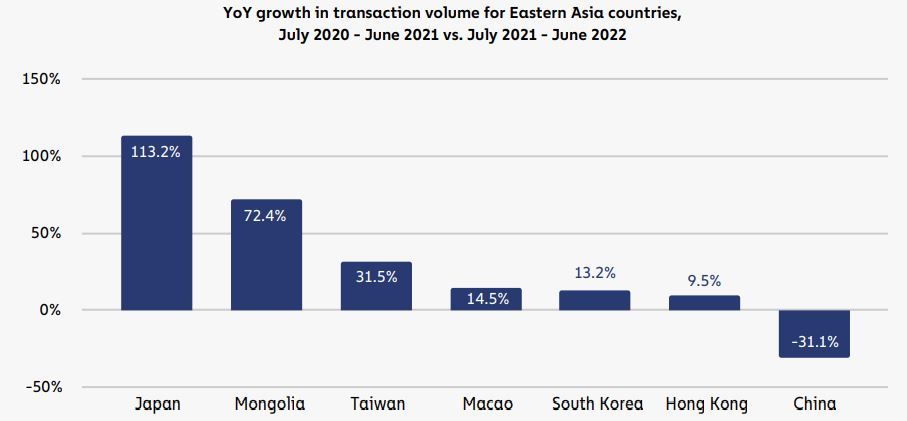
Digital-token transaction volume in Hong Kong expanded less than 10% in the 12 months through June from a year earlier, the least in East Asia outside of a slump in China, according to blockchain specialist Chainalysis Inc. The city’s overall global ranking for crypto adoption fell to 46 in 2022 from 39 in 2021. 

Other possible steps in Hong Kong include establishing a regime to authorize exchange-traded funds offering exposure to mainstream virtual assets, according to Elizabeth Wong, the fintech head of the city’s Securities and Futures Commission. 

The fact the city can introduce its own crypto framework distinct from China’s shows the one country, two systems principle in action in financial markets, Wong said at an event last week.

–With assistance from Hannah Miller and Joanna Ossinger.

(Updates with share price moves in the eighth paragraph.)

More stories like this are available on bloomberg.com

©2022 Bloomberg L.P.
Musk Fires Top Twitter Executives After Closing $44 Billion Deal

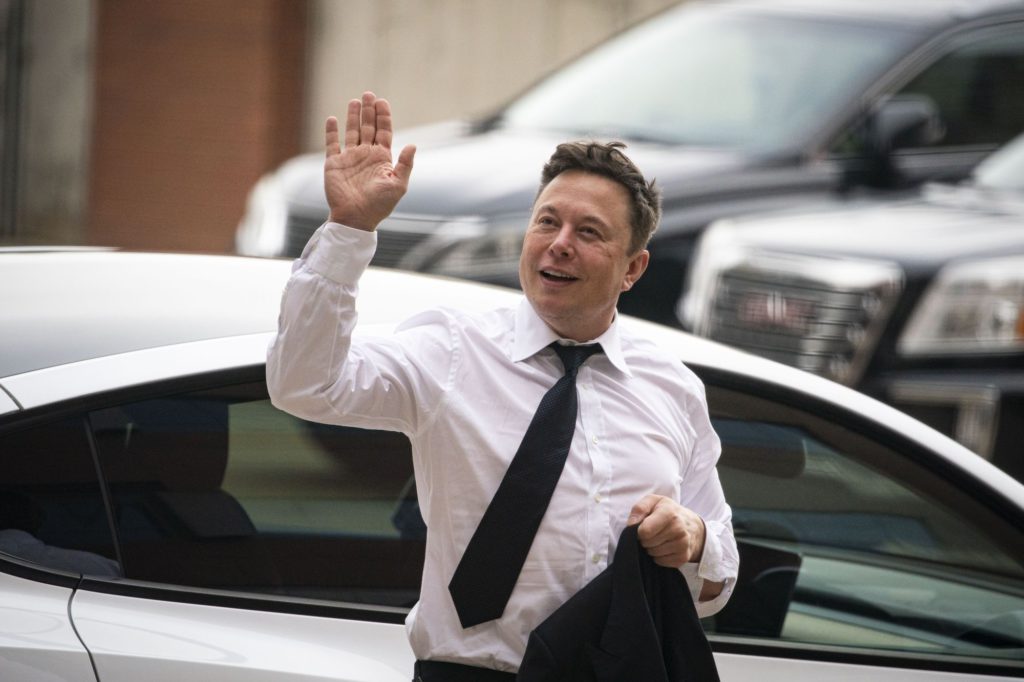
(Bloomberg) — Elon Musk completed his $44 billion acquisition of Twitter Inc., according to people familiar with the matter, putting the world’s richest man in charge of the struggling social network after six months of public and legal wrangling over the deal.

Among Musk’s first moves: changing the leadership. Departures include Twitter Chief Executive Officer Parag Agrawal; Vijaya Gadde, the head of legal, policy and trust; Chief Financial Officer Ned Segal, who joined Twitter in 2017; and Sean Edgett, who has been general counsel at Twitter since 2012, according to people familiar with the matter. Edgett was escorted out of the building, said two of the people, who asked not to be identified because the information isn’t public.

Shareholders will be paid $54.20 per share, and Twitter will now operate as a private company. The completion caps a convoluted saga that began in January with the billionaire’s quiet accumulation of a major stake in the company, his growing exasperation with how it’s run and an eventual merger accord that he later spent months trying to unravel. 

On Oct. 4, Musk agreed to proceed on his originally proposed terms, and a Delaware Chancery Court judge gave the two sides until Oct. 28 to wrap up the deal. That deadline was met, and now Musk, who is CEO of both Tesla Inc. and SpaceX, also controls Twitter, a service he uses often but criticizes openly, and that he has promised to change dramatically. The company’s shares are no longer expected to trade on the New York Stock Exchange.

Musk’s ownership will bring immediate disruption to Twitter’s operations, in part because many of his ideas for how to change the company are at odds with how it has been run for years. He has said he wants to ensure “free speech” on the social network, which is likely to mean looser content moderation standards, and plans to restore some high-profile accounts that were kicked off Twitter for breaking rules, such as former U.S. President Donald Trump’s. More broadly, Musk’s initiatives threaten to undo years of Twitter’s efforts to reduce bullying and abuse on the platform.

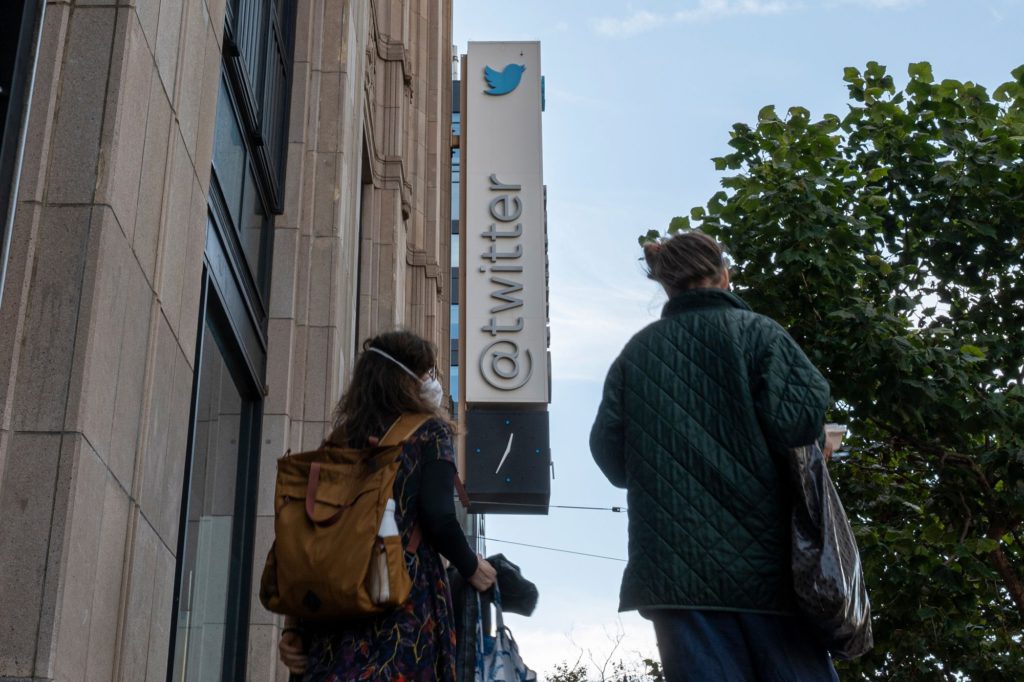
As the deadline neared, Musk began putting his stamp on the company, posting a video of himself walking into the headquarters and changing his profile descriptor on the platform he now owns to “Chief Twit.” He arranged meetings between Tesla engineers and product leadership at Twitter, and he planned to address the staff on Friday, people familiar with the matter said. Twitter’s engineers could no longer make changes to code as of noon Thursday in San Francisco, part of an effort to ensure that nothing about the product changes ahead of the deal closing, the people said.

Twitter employees have been bracing for layoffs since the transaction was announced in April, and Musk floated the idea of cost cuts to banking partners when he was initially fundraising for the deal. Some potential investors were told Musk plans to cut 75% of Twitter’s workforce, which now numbers about 7,500, and expects to double revenue within three years, a person familiar with the matter said earlier this month.

While visiting Twitter headquarters on Wednesday, Musk told employees that he doesn’t plan to cut 75% of the staff when he takes over the company, according to people familiar with the matter.

‘Get Healthy’

In June, during an all-hands meeting following his purchase agreement, Musk said that Twitter “needs to get healthy,” a reference to trimming costs. He has also said only “exceptional” employees will be able to work from home and everyone else must come to the office. San Francisco-based Twitter was one of the first large companies to promise all employees they could work from anywhere “forever.”

Twitter has done some of the work for him. The company announced a hiring freeze in May, closed or downsized several offices around the world, and canceled a 2023 companywide retreat to Disneyland.

Last week, Twitter froze the equity awards accounts for employees in anticipation of the deal closing. That prompted concerns among workers that he stock awards will not be paid, people familiar with the matter said, and some employees are discussing and researching labor laws to ensure they get the correct type of severance.

It was long clear that Agrawal probably wouldn’t remain in charge once Musk took over. Text messages unveiled during the lawsuit show that the two men had a contentious exchange early on in the deal process, and Musk later mocked Agrawal for being on vacation in Hawaii during some of the early negotiations. Efforts by former Twitter CEO Jack Dorsey to bring them back together after the deal was announced ended poorly.

“At least it became clear that you can’t work together,” Dorsey texted Musk on April 26. “That was clarifying.”

Gadde, meanwhile, oversaw Twitter’s content policy efforts, which Musk has lambasted.

Twitter’s business, which relies mainly on advertising placed in users’ feeds on its social network, has struggled in the time since Musk publicly entered the chat in April. In the second quarter, the company reported its first year-over-year sales decline since the height of the pandemic, and Twitter likely experienced a similar slump for the third quarter, though the company hasn’t announced plans to report earnings.

No ‘Hellscape’ Here

Musk has mentioned the possibility of building a subscription product for Twitter to supplement ad revenue, though it’s unclear which products or features might cost extra. Twitter already offers a subscription product, called Twitter Blue, which includes access to a tweet editing feature, but the company has said it is primarily targeted at power users. Musk hasn’t been impressed. In April, he called Twitter Blue an “insane piece of s–t” in a text message to a friend.

The prospect of less restrictive content moderation under Musk’s leadership has prompted concerns that dialogue on the social network will deteriorate, eroding years of efforts by the company and its “trust and safety” team to limit offensive or dangerous posts. On Thursday, Musk posted a note to advertisers seeking to reassure them he doesn’t want Twitter to become a “free-for-all hellscape.”

The past six months have been challenging for Twitter employees, who have primarily followed the ups and downs of the roller-coaster deal through the news headlines.

Many have been unhappy with Musk’s involvement, with some questioning his qualifications to run a social networking company. His support of a far-right political candidate in Texas, plus sexual harassment accusations from a former SpaceX flight attend in May, have raised concerns with many of Twitter’s workers. During a video Q&A with Musk in June, some employees mocked Musk on internal Slack channels. Others have ridiculed or chided him publicly on Twitter throughout the deal process.

(Updates with executive departures in fourth paragraph.)

More stories like this are available on bloomberg.com

©2022 Bloomberg L.P.
Big Tech’s Dirty Supply Chains Undercut Climate Promises From HQ

(Bloomberg) — Amazon.com Inc., Microsoft Corp. and Alphabet Inc. have pledged to run their own operations on 100% clean power. But their suppliers — the lesser known companies that make the key components of hit products like the Kindle, the Xbox or Pixel mobiles — remain deeply reliant on fossil fuels. Twelve of the 14 top suppliers get on average 5.4% of their energy from renewable sources or don’t disclose, data from a Greenpeace report released Friday showed. Their major clients, including HP Inc., Dell Technologies Inc., Lenovo Group, Sony Group Corp., LG Electronics Inc. and Samsung Electronics Co. share the blame, the organization said: Of 10 consumer electronics brands, only one — Apple Inc. — has designed an emissions strategy requiring its suppliers to achieve 100% renewable energy by 2030.

The big consumer electronics brands “have not provided sufficient incentives or support for their suppliers to decarbonize,” Greenpeace’s researchers concluded. They “have failed to set meaningful renewable energy targets where it really counts — in their supply chains.” 

Is ESG just a fad or here to stay? Tell us what you think. Take Bloomberg’s ESG survey. 

Google, Sony and Dell declined to comment, while representatives from Microsoft, HP, Lenovo and LG didn’t respond to Bloomberg’s emailed requests for comment. Amazon said it plans to power its operations with 100% renewable energy by 2025 and to zero out its carbon emissions by 2040. Samsung said it was committed to achieving net zero emissions by 2050. 

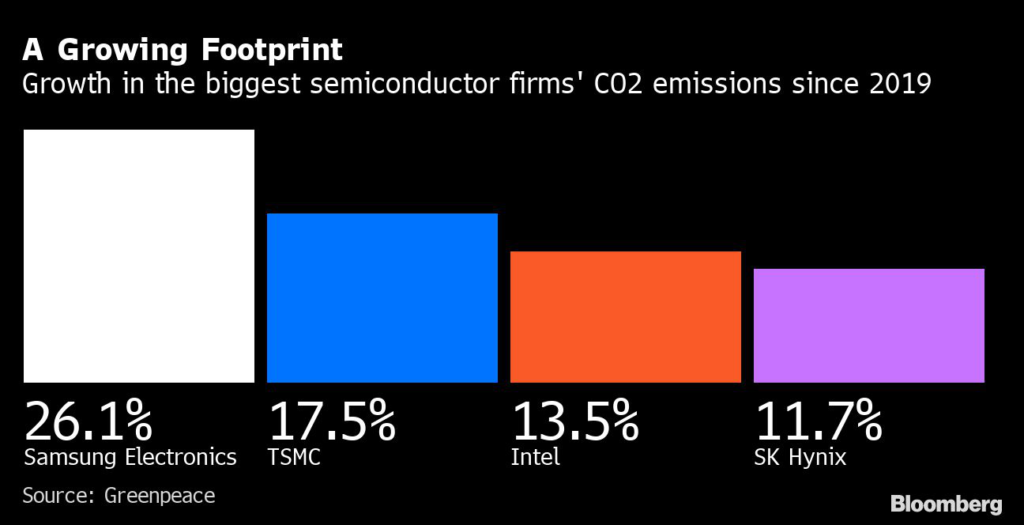
At the heart of their supply chains are Asian chip behemoths like Taiwan Semiconductor Manufacturing Co. and SK Hynix Inc. that can guzzle as much power as entire countries to produce the advanced logic and memory chips that are now used in nearly everything. While their products are indispensable, they use fossil fuels to generate much of their power. In 2021, TSMC and Hynix reported renewable energy usage rates of only 9% and 4%, respectively.

Read more: The Chip Industry Has a Problem With Its Giant Carbon Footprint

Other suppliers included screen manufacturers like Japan Display Inc. and LG Display Co., the world’s largest contract electronics manufacturer Hon Hai Precision Industry Co., and Pegatron Corp., which produces motherboards, wireless systems and game consoles. Greenpeace said that the 10 tech companies and 14 suppliers studied used more than 170,000 gigawatt hours of power last year, on par with the annual electricity consumption of Argentina. By 2030, power used by the global tech sector is expected to be up 60% over 2020. That threatens to create severe supply issues and raises environmental concerns in manufacturing hubs. 

Taiwan’s TSMC is sucking up as much electricity as Sri Lanka’s 21-million population and is expected to use up 12.5% of the island’s annual power consumption by 2025. More than half of Taiwan’s energy is generated from coal and fossil fuels. In South Korea, home to another critical chip-supplier, SK Hynix, the story is similar. The company’s chip factories consume power equivalent to 1.6 million South Korean households and more than 60% of the country’s power comes from burning coal and natural gas.

Apple is calling on its suppliers to address their greenhouse gas emissions, the company said in a statement Tuesday. The Cupertino, California-based company will “evaluate the work of its major manufacturing partners to decarbonize their Apple-related operations — including running on 100% renewable electricity — and will track yearly progress,” the firm said in the statement. TSMC is the sole producer of Apple’s Silicon processors that go into iPhones, iPads and Macs, while Hynix is a key memory provider for the same devices.

(Updates with additional suppliers in sixth paragraph)

More stories like this are available on bloomberg.com

©2022 Bloomberg L.P.
Close Bitnami banner
Bitnami