Bloomberg

New York Post Fires Employee Responsible for ‘Vile’ Posts

(Bloomberg) — The New York Post employee responsible for a Thursday morning hack of the newspaper’s Twitter feed and website has been fired for “unauthorized conduct,” a spokesperson for the newspaper said.

Tweets on the paper’s account linked to pages on its website with offensive headlines, including calling for the assassination of some US leaders as well as racist and misogynistic content. 

The newspaper immediately removed the “vile and reprehensible” content on its website and social media, the spokesperson said. 

Rupert Murdoch’s News Corp. owns the New York Post. 

New York Governor Kathy Hochul, who was the subject of one of the headlines, blasted the New York Post and the hack through her press secretary, who called the posts “more disgusting and vile than usual.”  

Earlier this year, the Post and other News Corp. properties — including The Wall Street Journal — were targeted in what cybersecurity researchers described as a likely Chinese-backed intelligence operation. Dow Jones said that hackers pilfered a “limited number” of email accounts and documents relating to topics of interest to China.


–With assistance from Jack Gillum.

(Updates with employee firing beginning in first paragraph.)

More stories like this are available on bloomberg.com

©2022 Bloomberg L.P.

Musk-Twitter Countdown to Close $44 Billion Deal Begins

(Bloomberg) — After months of “will they or won’t they,” Elon Musk is running up against a court-ordered deadline to deliver on his promise to buy Twitter Inc. for $44 billion.

The world’s richest person and the social media company he favors have until 5 p.m. Friday in Delaware to do the deal. If they don’t, Delaware Chancery Judge Kathaleen St. J. McCormick has said she will schedule a November trial to determine whether Twitter can force the impulsive billionaire to complete the buyout he mused on, proposed, shunned and finally put back on the table.

The day of reckoning, after a bitter round of suing and countersuing, will almost certainly end in a transaction. Musk assured bankers this week he would wrap the buyout on time. The banks providing $13 billion in debt financing are in the process of transferring the cash, while the New York Stock Exchange says action is pending to suspend trading of Twitter shares before Friday’s open. And Musk already seems to be settling in: He changed his profile descriptor on the platform to “Chief Twit,” showed up at Twitter’s San Francisco headquarters Wednesday and will be addressing staff on Friday.

He has even offered an olive branch, denying he plans to cut 75% of staff after taking the company private, and telling advertisers he doesn’t want Twitter to become a “free-for-all hellscape.”

Looking further down the road, Musk plans to take Twitter’s new holding company public within three to five years, according to people familiar with the matter.

Read More: Musk Tells Bankers He Plans to Close Twitter Deal on Friday 

A deal would end one of the most contentious merger fights in US legal history and mark an uncertain new era for the social platform, which remains a vital forum but one Musk says he plans to revolutionize. If he and Twitter can’t close the deal by themselves, its fate will lie in the hands of McCormick, possibly with the same result: She has already made a series of rulings against Musk and is unlikely to appreciate having canceled the original trial date at his urging.

“It seems to me there’s a 99% chance this deal is going to close,” said Brian Quinn, a Boston College law professor who teaches merger-and-acquisition cases. “All the indications are Mr. Musk is resigned to his fate.”

As of right now, Musk looks to be headed full steam ahead toward closing the acquisition at the $54.20-per-share price he offered in April and Twitter says it is determined to get. At least some of the investors in the equity portion of the deal have already transferred funds, people with knowledge of the matter told Bloomberg.

Twitter shares closed up 1.1% at $53.35 after news of a chipper memo to staff Wednesday saying Musk would be “meeting with folks” at the office. That bump narrowed the gap between the share price and the takeover offer to less than $1. The stock, which has swung wildly as the dispute ground on, was about 40% below the offer price at one point in early July after Musk said he was walking away from the buyout. It has climbed ever closer to the offer this week after the Bloomberg report on the call with bankers.

But the deal’s short, tortured history and Musk’s whipsaw style have some experts on guard for a last, last, last minute surprise.

“Trying to predict what Elon Musk is going to do is a fool’s gambit,” said Jill Fisch, a University of Pennsylvania law professor who specializes in Delaware corporate disputes.

Musk raised his plan to take Twitter public in a few years in shareholder agreement letters to equity investors in the deal this week, the people with knowledge of the matter said, asking not to be identified because the information is private. The potential relisting timeline was included in an outline for a business plan for X Holdings, one of the entities Musk formed to buy Twitter, the people said. It also referred to the potential need for the company to raise more capital in the future. 

A representative of Twitter declined to comment on the plans, while a representative for Musk didn’t immediately respond to a request for comment.

Read More: The Twitter Deal Pierces Elon Musk’s Reality Distortion Field

Twitter sued the 51-year-old Tesla Inc. chief executive officer in July after he said the deal was off. Musk argued that the company had misled him about the number of spam and bot accounts lurking in the 230 million-plus customer base, providing legal grounds for him to cancel the transaction. Twitter said the claim was a pretext for him to abandon the acquisition amid a decline in financial markets and a massive case of buyer’s remorse.

After the pretrial rulings against him and on the eve of a questioning session by Twitter’s lawyers, Musk agreed to consummate the buyout. His lawyers asked McCormick to delay an Oct. 17 trial so they could close. 

That spared Musk not only the discomfort of the pretrial deposition but also the possible release on the public court docket of more of his private texts, not to mention whatever might come up at trial.

Read More: Musk Revives $44 Billion Twitter Bid, Aiming to Avoid Trial 

If he blows up the deal at this point, Fisch said, Musk would be plunging himself into a world of hurt.

“The letter his side sent to the judge asking her to delay the trial has him pretty much locked in,” she said.

Shareholders and employees of Twitter are keenly awaiting a resolution. Morale at the company, and motivation to build new products, are declining amid uncertainty over how or when Musk will execute his vision of “creating X, the everything app” — which would basically be a US version of China’s WeChat — should he take over. Twitter remains in a hiring freeze, adjusting to a difficult economic market for its primary business, advertising, on top of all the chaos.

Meanwhile, Tesla’s stock has been under pressure from Musk’s bid for Twitter, as investors worry that taking on another big company would distract the Tesla CEO from his duties — and that Musk, who is also the electric car maker’s biggest shareholder, would have to sell more of his Tesla stock to finance the buyout. 

If the acquisition somehow falls apart again, Musk would be going to trial in Wilmington against an adversary that Bloomberg Intelligence estimates has the legal advantage. Despite a whistleblower’s claims against Twitter, the company had a 70% chance of winning a court order requiring Musk to consummate the buyout at the original offered price, BI analyst Matthew Schettenhelm wrote in September. 

Read More: Twitter, Musk Talks Warm Up as Buyout Closing Deadline Nears 

Both Twitter and Tesla are incorporated in Delaware, corporate home to more than half of US public companies and more than 60% of Fortune 500 firms. Its Chancery Court judges, led by McCormick, are business law experts who hear cases without a jury, often on a fast-track basis.

A longtime Twitter devotee and super tweeter himself, with more than 100 million followers, Musk has been tweeting about his hopes and dreams for the platform. He said on an earnings call last week that he was “excited about the Twitter situation.” He described the company as an asset with “incredible potential” that has “sort of languished for a long time.” 

He added that he was obviously overpaying for it.

The case is Twitter v. Musk, 22-0613, Delaware Chancery Court (Wilmington).

–With assistance from Ed Ludlow and Gillian Tan.

(Adds paragraph about Musk’s plans to take Twitter public in future, below the embedded tweet.)

More stories like this are available on bloomberg.com

©2022 Bloomberg L.P.

Meal Startup Daily Harvest Sales Fall by Half in Four Months

(Bloomberg) — The pre-packaged meal startup Daily Harvest has seen its sales drop by more than half since May, according to data from Bloomberg Second Measure. The company, which is facing customer lawsuits over a high-profile food illness incident this summer, credited declines to a decision to reduce advertising spending.

Daily Harvest’s sales dropped by about 55% in September compared with May, and 36% compared to the prior year, according to the data, which is based on billions of anonymized credit card transactions. The company’s customer base also shrank from May to September, the data show.

Daily Harvest said that it anticipated a decline after it cut its marketing outlays by 75% in the May-to-September period, citing the rising cost of ads. “We knew this carefully considered spending reduction would result in a change in volume,” a spokesman wrote in an email, pointing to the company’s belief in efficient spending. The spokesman said that Daily Harvest is a “thriving business serving millions of consumers that generate hundreds of millions in annual revenue.”

The startup said there was no connection between its food illness episode and its decline in sales. 

It’s been a rocky year for Daily Harvest. This summer, the company recalled a product called “French Lentil + Leek Crumbles,” and received  hundreds of reports of illness or adverse reactions to the product. After an investigation that involved the Food and Drug Administration, the Centers for Disease Control and Prevention, toxicologists and labs, the startup said it had identified the cause of illness: tara flour, an ingredient Daily Harvest only used in that recalled product. Some customers’ illnesses were so severe that they underwent surgery to remove their gallbladders, according to lawsuits filed against the startup. 

“Health and safety is our highest priority,” Daily Harvest said in a statement, noting that it initiated the recall of its lentil and leek crumbles voluntarily. “Quality, safety, and transparency are and always will be top priorities and what drove our swift approach.”

In recent months, the food delivery industry has been challenged as the pandemic recedes, and several delivery companies have pared back costs. Berlin-based HelloFresh recently notified California officials that it would close its facility in Richmond and lay off more than 600 employees. Instant delivery startup GoPuff has cut almost 2,000 workers. And in August, Daily Harvest laid off 15% of its staff. Daily Harvest told its staff the layoffs were planned before the crumbles issue, according to reports at the time. 

In a statement, Daily Harvest said its “substantial customer base” means that the company can afford to reduce its spending on increasingly expensive advertising, “while we evolve our business for a changed dynamic.” Although the Second Measure data showed that the number of people ordering from the startup fell, the company said its customer retention rate had remained steady. Daily Harvest also vigorously defended the health of the business. 

Daily Harvest could be more insulated from inflationary pressures than its some of its peers because its higher-income customer base is less likely to change eating habits based on economic factors, said Dana Peck, the co-founder and chief executive of food product development company Pilot R&D. She also said trust issues could potentially weigh on the company. “When there’s a contamination, there’s more uncertainty and less trust, and you see that in sales numbers,” Peck said. “This is part and parcel of the food industry.  It’s not a dirty secret. It’s a reality of food that we all contend with.”

More stories like this are available on bloomberg.com

©2022 Bloomberg L.P.
Drop in Used-Car Prices Burn US Auto Dealers But Is Good Sign for Fed

(Bloomberg) — Sagging used-car prices are starting to hurt the profits of car dealers and rental car companies — a good sign for policy makers trying to tame inflation.

Hertz Global Holdings Inc. said Thursday that rising depreciation costs are starting to dent profits at the rental car company. AutoNation Inc., the largest US car retailer, warned of skimpier margins on used-car sales next year as prices come down from their peak. That echoed a warning from CarMax Inc. last month, which missed earnings forecasts after writing down the value of its used-car inventory.

Soaring prices for new and used cars have helped drive inflation in the US to the highest level in 40 years. Now, the semiconductor bottlenecks that starved dealers of inventory last year are starting to ease, unwinding a shortage that made used cars appreciate after they were driven off the lot. At the same time, the Federal Reserve’s interest-rate increases are scaring off price-sensitive car buyers.

“Used retail inventory can be your biggest asset but it also can bite you,” AutoNation Chief Executive Officer Mike Manley said on an earnings call Thursday. “It’s something we need to watch carefully, because wholesale prices haven’t fully come into the retail process. That will happen.”

The Fed is raising interest rates to help cool demand in the economy, part of its fight against inflation. Data from the US Commerce Department on Thursday showed that the nation’s gross domestic product rose 2.6% at an annualized rate in the third quarter, more than economists predicted and enough to keep traders convinced the Fed will raise its benchmark rate by another 75 basis points next week.

Read more: AutoNation warns of used-car price drop 

Luxury-vehicle values are holding up well because affluent consumers are less impacted by rising interest rates, Manley said. General Motors Co. demonstrated that this week with robust profits wrung from sales of Cadillac SUVs and fully loaded pickup trucks. 

New-car prices will be steadier because automakers want to maintain tight inventories to protect profit margins and fund electrification, Manley said. He predicts the annual pace of new-car sales this year will be about 13.5 million vehicles, still well below pre-pandemic levels.

But for the 40 million Americans who typically buy used cars each year, relief may be close at hand. Wholesale prices for used cars will likely end the year down 14%, researcher Cox Automotive said earlier this month. 

For rental-car companies, which sell vehicles at the end of their time in the fleet, the bonanza they enjoyed from record used-car prices is coming to an end. Hertz’s profits fell in the third quarter as the value of its rental fleet started depreciating at rates more in line with historic norms. 

Hertz’s monthly depreciation costs per vehicle in the US climbed to $198 — up from just $21 in the third quarter of 2021. In more normal markets, depreciation was $250 and $300 monthly a car. That’s a very different story than Hertz had in the first quarter, when the company actually reported a gain on the value of its cars in service.

Looking ahead, Hertz CEO Stephen Scherr said he doubts automakers will be able able to return to full production rates due to the ongoing semiconductor shortage. That means there will be sustained demand for used cars.


More stories like this are available on bloomberg.com

©2022 Bloomberg L.P.

Chocolate With Half the Sugar, More Cocoa Is Coming

(Bloomberg) — Confectioners have long tried to create low-sugar chocolate to cater for health-conscious consumers, to little success. Now, one of the industry’s giants says it may have figured it out.

Barry Callebaut AG, which supplies some of the biggest names in food, says it has developed chocolate with half as much sugar than in most of what’s eaten around the world. The new chocolate contains more cocoa and fewer ingredients, and should hit stores in 12 to 18 months’ time, Chief Executive Officer Peter Boone said.

“We really bring it back to two or three ingredients, which has never been done before,” Boone said in an interview. “It’s a much simpler label. So the dark chocolates will only have two noble ingredients as we call it, just the cocoa and sugar.” 

The food sector is under pressure to deliver healthier options as investors step up scrutiny of consumer goods and shoppers opt to cut back on sugary and fatty foods. The Covid pandemic has also highlighted the need to better think about health and improve diets.

But low-sugar chocolate has been a challenge because the sweetener is used to mask the inherent bitterness of cocoa beans. Nestle SA’s Milkybar Wowsomes — an attempt at using sugar-reduction technology — were discontinued after about a year because they didn’t offer the same creaminess of full-sugar chocolate.

Dark chocolate consists of at least three-quarters of cocoa, to which sugar is added, while milk chocolate contains a minimum of 55% of cocoa and is mixed with milk and sugar. Those formulas have been used for some 140 years.

But Barry Callebaut’s “second generation” of chocolate contains 50% less sugar than 85% of the chocolate currently consumed, it said Thursday. The Swiss company developed a new product design which starts with carefully sourcing the right kind of cocoa beans and then adapting the fermentation and roasting.

The processor has unveiled a number of innovations in recent years, including pink-colored ruby chocolate and WholeFruit chocolate.

“We have really been able to get the acidity and the bitterness out to really make it a very round nice cocoa flavor without sugar,” said Boone, who became CEO in 2021 and was previously the company’s chief innovation officer.

More stories like this are available on bloomberg.com

©2022 Bloomberg L.P.
Flight to Dollars a Risk as Nigeria Replaces High-Value Currency

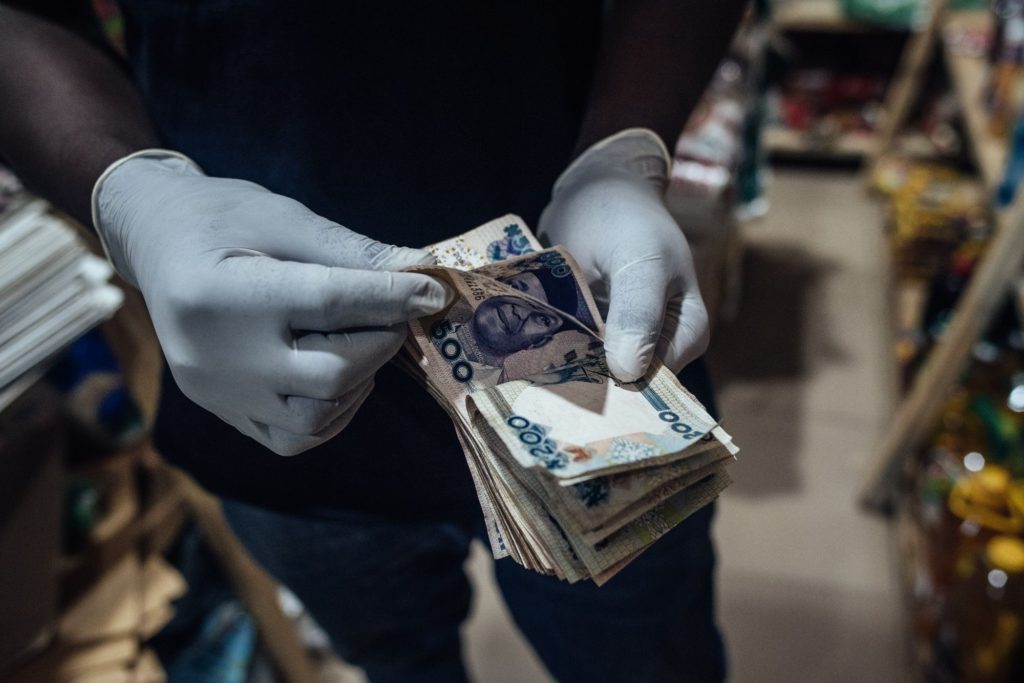
(Bloomberg) — Nigeria’s move to replace high-value currency notes from December may exacerbate dollar demand in the country, which rations foreign-exchange, and put further pressure on the naira, according to an economic adviser to President Muhammadu Buhari.

Africa’s most-populous nation plans to issue redesigned 200-, 500- and 1,000-naira notes and asked residents to change the bills by Jan. 31, when they will cease to be legal tender, Governor Godwin Emefiele said at a briefing in Abuja on Wednesday. That will give citizens of the West African country, where cash dominates transactions, six weeks to exchange their notes.

“The first reaction to the new regulations is likely to be a flight to safety by investors — so we expect some initial speculation against the naira,” Bismark Rewane, member of the Economic Management Team appointed by Buhari in 2019, said in emailed note. “In times of uncertainty, investors, speculators and manufacturers will prefer to be long in dollars and short in domestic currencies.”

The naira plunged both in the official market, where the currency is controlled by the central bank, as well as in unauthorized trade where many citizens obtain the greenback. It weakened 4% to 780 a dollar in Lagos as residents rushed to convert cash into dollars, said Umar Salisu, a bureau de change operator that tracks the data in the commercial capital. The official rate fell 0.6% to 441.75 as of 1.31 p.m. local time.

Emefiele predicts cutting the amount of cash in circulation will help minimize access to large volumes of money outside the banking system and will also make a “positive impact” on the inflation rate, which climbed to a 17-year high in September.

The president’s adviser disagreed. The move may have no effect on the general price level, Rewane said.  

Traders, especially women, may decide not to accept old notes from December “and therefore will reduce aggregate demand and affect the supply of goods,” Rewane, who’s also the chief executive officer of Financial Derivatives Co. in Lagos, said. On the positive side, the move may lead to “a sharp increase” in electronic payments and help the nation’s financial inclusion drive. 

More stories like this are available on bloomberg.com

©2022 Bloomberg L.P.

Qualcomm Fights Back Against Arm in Dispute Over Chip Technology

(Bloomberg) — Qualcomm Inc. countersued UK-based Arm Ltd., saying there is no legitimate basis for claims that the US chipmaker violated licensing agreements and trademarks tied to a 2021 acquisition. 

San Diego-based Qualcomm wants a federal judge in Delaware to conclude it didn’t trample on Arm’s licensing contracts as part of Qualcomm’s $1.4 billion buyout of chip startup Nuvia Inc., according to a court filing Wednesday.

The dispute focuses on Arm’s licenses with Nuvia for technology used in chip designs. Arm, owned by SoftBank Group Corp., sued Qualcomm for breach of contract and trademark infringement in September, accusing the firm of using the proprietary innovations without permission. In the past, Qualcomm had been one of Arm’s biggest customers. 

Qualcomm’s lawyers allege Arm’s goal is to “strong-arm Qualcomm into renegotiating the financial terms of the parties’ longstanding license agreements, using this baseless lawsuit as leverage.” 

The dispute has drawn wide attention in the tech industry. Qualcomm is the biggest maker of the processors and modems used in smartphones, and Arm is one of the world’s most-influential chip companies. 

“Arm’s claim against Qualcomm is aimed at protecting the Arm ecosystem and partners who rely on our intellectual property and innovative designs,” Phil Hughes, an Arm spokesman, said Thursday in an emailed statement. “We believe our argument is clear, and we are confident the court will agree.”

Qualcomm acquired Nuvia last year to beef up its technology and allow it to field more powerful chips. It’s part of a broader strategy by Chief Executive Officer Cristiano Amon for Qualcomm to decrease reliance on the smartphone industry and grab a share of the laptop-chip market and the lucrative server-processor business. 

Arm’s suit is designed to hamper Qualcomm’s plans, the US company’s attorneys argued. 

“With this lawsuit, Arm makes clear to the marketplace it will act recklessly and opportunistically, threatening the development of new and innovative products as a negotiating tactic, not because it has valid license and trademark claims,” according to the filing.

Arm is wrongfully demanding Qualcomm destroy all technology with ties to the UK company and misrepresenting its right to that technology to customers, the media and analysts, the US company’s lawyers contend.

“The notion ARM has the right to control technology that is not ARM’s — and worse yet, to ask defendants to destroy their innovation and inventions unless substantial monetary tribute is paid to ARM — offends customary norms of technology ownership, as well as NUVIA’s and Qualcomm’s rights under their agreements with ARM,” Qualcom’s lawyers said in the filing.

The case is Arm Ltd v. Qualcomm Inc., No. 22-1146, US District Court for the District of Delaware (Wilmington)

–With assistance from Amy Thomson and Ian King.

(Updates with Arm’s comment in sixth paragraph)

More stories like this are available on bloomberg.com

©2022 Bloomberg L.P.

Stocks Fluctuate on Conflicting Earnings Messages: Markets Wrap

(Bloomberg) — Wall Street is dealing with another session of twists and turns as investors weigh conflicting earnings messages from major companies while parsing fresh data that showed the US economy rebounded in the third quarter.

The S&P 500 whipsawed while the Nasdaq 100 dropped. Meta Platforms Inc. plunged as much as 25% as at least three investment banks downgraded the stock after disappointing earnings. But Caterpillar Inc. shares surged the most in two years after the bellwether company highlighted strong buyer demand. 

Treasuries gained, with the 10-year yield pushing below 4%. The dollar pared gains after data showed that US gross domestic product advanced for the first time this year.  

Investors are still digesting the mixed GDP data. But those numbers may not provide them with a complete picture of the current state of the economy because they’re backward looking, said Tom Hainlin, national investment strategist at US Bank Wealth Management. Traders will be more focused on October’s inflation print and the upcoming jobs report for further clues on the Fed’s path of rate hikes, he said.

The central bank’s efforts to cool the economy seem to be bearing some fruit, as seen in a decline in investment in residential housing as well as a contraction in services and manufacturing. Disappointing big-tech earnings also underscored the impact of Fed tightening and the surging dollar. Economists still expect the Fed to hike by three-quarters of a percentage point for the fourth time in a row when it meets next week. 

“The number one driver of capital market performance right now is this discussion and this anticipation of where does the Fed end up with its rate hikes, how long does it stay there, and at what point does it start to reduce those rates once it has seen the results and get to the inflation level it wants?” Hainlin said by phone. “The second would be corporate profits. Is it a shallow glide lower? Is it a big stair step lower in terms of the outlook for 2023? That’s still unknown.” 

Read More: US Economy Rebounds as Consumers, Businesses Show Resilience

More opinions on the GDP data:

Chris Zaccarelli, chief investment officer for Independent Advisor Alliance

“On the one hand, it is good to see that the economy is continuing to grow and that should bode well for the stock market. However, given that we are in the middle of an inflation fight, the Federal Reserve will likely feel that they need to continue to be aggressive in their rate hikes.”

Richard Flynn, managing director at Charles Schwab UK

“Investors may be relieved by today’s GDP figures which exceeded expectations. This announcement follows strong September job data showing that, despite some stress fractures beneath the surface, the labor market remains strong in terms of net jobs created. That has helped bolster consumer spending; the downside is that credit card debt has increased, and savings rates have plunged due to still-hot inflation.”

Stan Shipley, economist at Evercore ISI

“Demands for the economy was fine as real GDP climbed a more-than-expected +2.6% in 3Q. The GDP deflator advanced less than expected +4.1%. The inflation story is probably the most influential part of this release. Attention will now shift to 4Q activity. Despite news stories of layoffs, initial unemployment claims stayed low. For now, the fixed income market is discounting the risk of a near term recession.”

Earlier, the European Central Bank lifted its policy rate by 75 basis points — in line with expectations — and signaled more tightening ahead. The euro fell. 

Key events this week:

  • Bank of Japan policy decision, Friday
  • US personal income, personal spending, pending home sales, University of Michigan consumer sentiment, Friday

Some of the main moves in markets:

Stocks

  • The S&P 500 rose 0.2% as of 11:33 a.m. New York time
  • The Nasdaq 100 fell 0.8%
  • The Dow Jones Industrial Average rose 1.2%
  • The Stoxx Europe 600 was little changed
  • The MSCI World index was little changed

Currencies

  • The Bloomberg Dollar Spot Index rose 0.1%
  • The euro fell 0.7% to $1.0006
  • The British pound fell 0.2% to $1.1600
  • The Japanese yen rose 0.5% to 145.70 per dollar

Cryptocurrencies

  • Bitcoin fell 0.5% to $20,654.59
  • Ether rose 0.3% to $1,557.8

Bonds

  • The yield on 10-year Treasuries declined nine basis points to 3.91%
  • Germany’s 10-year yield declined 14 basis points to 1.97%
  • Britain’s 10-year yield declined 15 basis points to 3.43%

Commodities

  • West Texas Intermediate crude rose 2% to $89.65 a barrel
  • Gold futures were little changed

–With assistance from Robert Brand, Elaine Chen, Emily Graffeo, Vildana Hajric and Peyton Forte.

More stories like this are available on bloomberg.com

©2022 Bloomberg L.P.
UserTesting Gains 99% on Sale to Thoma Bravo, Sunstone

(Bloomberg) — UserTesting Inc. rose as much as 99% on Thursday after the digital consumer insight company agreed to sell to private equity firms Thoma Bravo and Sunstone Partners in a deal valued at about $1.3 billion. 

The buyout firms agreed to pay $7.50 per share in cash for the San Francisco-based company, according to a statement Thursday, confirming a Bloomberg News report. That’s about a 94% premium to UserTesting’s closing price of $3.86 on Wednesday in New York, according to data compiled by Bloomberg.

The stock — which had fallen 54% this year through Wednesday — was up 93% to $7.44 at 9:34 a.m. in New York on Thursday, giving the company a market value of about $1.1 billion. As part of the deal, UserTesting will be merged with customer-experience software firm UserZoom. 

“We believe the combination of UserTesting and UserZoom will unlock tremendous value for our customers by further integrating and expanding the suite of research methods, testing types, and measurement options available—all while making the voice of the customer and human insight more accessible across an organization and easily integrated into their processes and workflows,” UserTesting Chief Executive Officer Andy MacMillan said in a statement. 

MacMillan, who will lead the combined company, said in an interview the deal came about after Thoma Bravo approached the company about merging with UserZoom, a competitor that offers complementary services. 

The private equity firm has long had that goal and tried to merge the companies around 2018 and 2019, according to A.J. Rohde, a Thoma Bravo senior partner.

It’s using all equity to fund the deal, he said in an interview, like another deal it struck this month for ForgeRock Inc.

“Financing markets are expensive in general,” Rohde said “It’s challenging.” 

UserTesting’s human-insight platform uses video to assess user engagement with products, apps, services and other experiences, according to its website. It has more than 850 employees and counts customers including GoDaddy Inc., HelloFresh SE, HP Inc. and Subway Restaurants, the site shows.

Thoma Bravo made a strategic growth investment in UserZoom in April, while Sunstone retained a stake, according to a statement at the time.  

Listen: UserTesting CEO Andy MacMillan Bloomberg Intelligence’s Tech Disruptors podcast 

UserTesting raised $140 million in an IPO on the New York Stock Exchange in November, after reducing the size of its offering.

The deal, which includes a go-shop period expiring on Dec. 10, is expected to close in the first half of 2023. Morgan Stanley and Fenwick & West advised UserTesting while Kirkland & Ellis is advising Thoma Bravo and Goodwin Procter is advising Sunstone. 

(Adds quote from Thoma Bravo in sixth paragraph)

More stories like this are available on bloomberg.com

©2022 Bloomberg L.P.
US Sees China Tech-Export Limits Deal With Allies in Near Term

(Bloomberg) — The top US official overseeing export controls said he expects a deal with global allies to limit shipments of chip-production equipment to China in the “near term,” building on rules Washington announced earlier this month. 

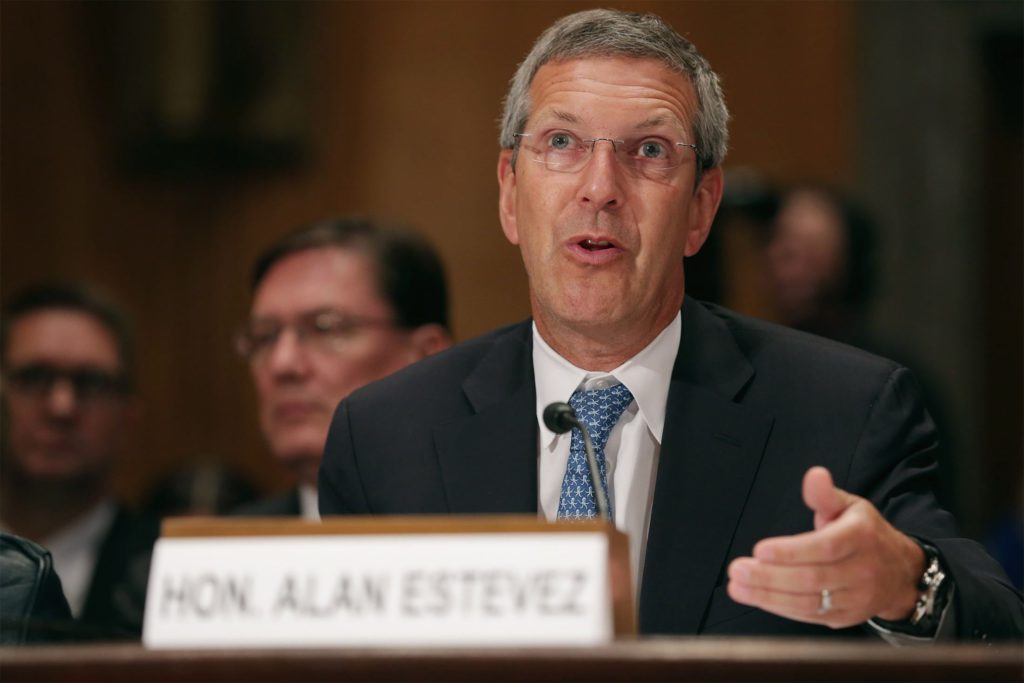
“We expect to have a deal done in the near term,” Alan Estevez, under secretary of Commerce for industry and security, told an audience at an event hosted by the Washington-based Center for a New American Security on Thursday. Making the controls multilateral is “a work in progress.”

The US Commerce Department unveiled the sweeping regulations on Oct. 7, aiming to curb the sale of advanced semiconductors and equipment to China and ban Americans from helping with the country’s development of chip technologies, striking at the foundation of the country’s efforts to build its own cutting-edge chip technologies. 

The move sent shock waves through the $550 billion industry. Already, US chip-equipment suppliers such as Lam Research Corp., Applied Materials Inc. and KLA Corp. have stopped employees from working with China’s top memory chipmaker and indicated their sales will take a hit. 

More stories like this are available on bloomberg.com

©2022 Bloomberg L.P.
Close Bitnami banner
Bitnami