

Bloomberg

Taylor Swift, TV Shows Give New Life to $20 Billion Casket Industry

(Bloomberg) — In 2018, Joshua Siegel was working in logistics at Amazon.com Inc. when he received a phone call from one of the company’s vendors, who had a business proposition for him: direct-to-consumer caskets.

Scott Ginsberg, a 20-year veteran of the funeral industry, had been selling caskets through Amazon since 2016. But he knew the business could grow—and it would need to compete with the industry’s twin gatekeepers, Hillenbrand’s Batesville Casket and Matthews International, which together control about 80% of a $20 billion market.

These manufacturers sell their wares to funeral homes that then mark up prices for a profit, a reality that means grief-ridden shoppers often have no idea how much they are overpaying. The funeral industry had a markup bubble problem, Ginsberg told Siegel, and it was ripe for bursting.

By early 2020, Siegel had quit his Amazon job and recruited his wife, Elizabeth, who’d already founded two other direct-to-consumer companies, as a third partner, and together they launched Titan Casket. Almost three years and a pandemic later, the timing has proven the value of Titan’s business model—an online service that offers a more accessible, cost-transparent approach to death. 

“Funeral homes enjoy a 200% to 400% markup,” on casket sales, says Ginsberg. “This industry hasn’t changed in over 100 years. It’s been slow, lumbering, and I thought to myself, ‘There’s got to be a better way.’”

That “better way,” pioneered by Costco Wholesale Corp. in the early aughts, resembles any other direct-to-consumer marketplace peddling groceries or clothes, without the added pressure of a funeral director’s scrutinizing gaze. There’s a filter tool (price, color, material, etc.), a model comparison chart, and a Casket Finder quiz. A customization engine lets you design your own steel casket, while the regular stock includes over 1,000 models, including more eco-friendly wicker and cloth builds, specialty caskets for military veterans, and even ones custom-wrapped like high-end autos in American and LGBTQ rainbow pride flags.

Prices for the Boston-based company are stated outright, from $500 for a biodegradable cardboard box to $4,000 for a steel one with all the bells and whistles. Delivery is included, with one-day shipping within 700 miles of its five warehouses. In addition to its own website and Amazon, where Titan’s products consistently rank as bestsellers, the company sells through several retail partners that include Costco, Walmart Inc., and Sam’s Club.  

The pandemic, says Siegel, with its lockdowns and related supply chain issues, “led to more consumers looking online, because they couldn’t find what they wanted at the funeral home.” On top of 400% year-over-year sales growth in 2021, Titan closed a $3.5 million seed funding round led by Reformation Partners LP in June. 

Taylor Swift, TV Shows

Yet unlike the direct-to-consumer paragons that Titan has tried to emulate, even calling itself the “Warby Parker of caskets,” the business of death has a unique problem: No one wants to talk about it, much less window-shop it. The challenge is to advertise in such a way that caskets are “top-of-mind when the need arises,” says David Nixon, a Chatham, Ill.-based consultant to funeral homes.

To that end, Titan has produced them as props for TV shows such as Hulu LLC’s Castle Rock and Starz Entertainment LLC’s P-Valley. And as part of its marketing push to promote the new TV series Interview With the Vampire, AMC Networks Inc. commissioned a one-of-a-kind design to be sold with other novelty goods and collectibles in its Night Market. The casket, priced at $4,000, sold within five hours of the store’s grand opening on Oct. 2, says Kim Granito, an executive vice president of integrated marketing for AMC Networks. 

Most recently, a Titan casket was centerstage in Taylor Swift’s new music video “Anti-Hero,” which has racked up more than 34 million views in six days. An eagle-eyed fashion blogger made note of the cameo in an Instagram post. The product placement was a happy accident instead of a deliberate marketing push; a production company bought the casket in July for an unnamed musician’s music video, Siegel said in an email. But Titan issued a press release as soon as they confirmed the casket was actually the company’s.

Siegel says attention like this is crucial for educating consumers about the death-care industry. (As diehard as Swifties are known to be—one comment read, “thank you i will be requesting this for my funeral ????”—sales aren’t yet booming from the casket’s five minutes of fame.)

View this post on Instagram

A post shared by Taylor Swift Style (@taylorswiftstyled)

“Our entire mission is education and awareness about the Federal Trade Commission’s Funeral Rule,” says Siegel, citing a little-known 1984 regulation that requires funeral homes to provide clear pricing information and accept third-party caskets, a key component of Titan’s business model. “We’re excited about the Taylor Swift video, as suddenly tens of thousands of her fans are now aware about their rights. Over time, we’d expect that increased awareness leads to more families choosing to purchase outside the funeral home.”

The Dying Industry

The death-care business at large is facing a reckoning as tech-savvy upstarts try to pry away market share from “Big Funeral” via price transparency and convenience—qualities traditional funeral services infamously lack. 

There are more than a dozen other direct-to-consumer casket companies, such as Overnight Caskets and Casket Emporium. In 2019 former Nike Inc. designers launched Solace Cremation with flat-fee services. Death-planning sites such as Cake and Lantern help people set up wills and life insurance and make other end-of-life decisions. Some companies will turn your loved one’s ashes into diamonds, coral reefs, and even sex toys.

Still, Titan’s stiffest competition comes from long-established industry players that also saw pandemic-related windfalls. Batesville and Matthews both reported record annual revenue last year, citing in their earnings releases increased casket sales because of Covid-19. Meanwhile, Service Corp. International, a conglomerate that owns roughly 1,300 mortuary homes and 500 cemeteries in the US, more than doubled its earnings per share from 2019 to 2021, according to a recent investor presentation.

Funeral homes charged a median of $7,848 for a burial, casket, and viewing last year in the US, according to the National Funeral Directors Association. That doesn’t include other services such as headstones, flowers, and a cemetery plot, which can add thousands of dollars more in costs. 

Death is big money, even if traditional industry players are reluctant to qualify what they do in such terms. “We’re not in the casket-selling business,” says NFDA spokesperson Kurt Soffe, a fourth-generation funeral home operator.

Related:  Long Burdened by Costly Funerals, Japan Embraces Simple Goodbyes

A recent survey by the Funeral Consumers Association found that only 18% of 1,046 funeral homes in 35 states posted their prices online. Critics say this lack of transparency is a problem because most consumers nowadays look up products and compare costs before making a purchase, especially for big-ticket items, and because those who’ve lost a loved one are shopping under emotional stress. 

“It’s an industry that’s steeped in tradition,” says Chris Cruger, chief executive officer of Foresight Cos., a financial management firm in Phoenix that provides consultation services to funeral homes and cemeteries. For most people, funeral planning means going in-person to their community funeral parlor for a “face-to-face interaction” with the mortuary director.

That personal touch is one reason the death-care industry has been slow to innovate and remains able to avoid pricing transparency. Cruger says amending the Funeral Rule to mandate online pricing, a proposal the FTC has been reviewing for the past two years, may wind up confusing the general consumer who’s not familiar with niche industry terminology.

The same line was repeated by an Service Corp. International spokesperson in an emailed statement: “Prices alone do not provide consumers enough information to plan something as customizable as a funeral, leading to customer confusion that could result in uninformed decisions.”

Cremation, Competition

It’s unclear just how much traditional funeral businesses view disruptors like Titan as existential threats to their businesses. (Batesville and Matthews declined to comment.) The arrival of the internet, says funeral home consultant Nixon, initially sparked fears over increased online competition, but the direct-to-consumer casket business “never really took off.”

According to an estimate cited in Hillenbrand’s annual report, nontraditional funeral-care services such as Titan’s are estimated to represent less than 10% of casket sales, though the document warned investors that competition from alternative casket companies “could grow” and negatively impact cash flow.

Service Corp. International called direct-to-consumer casket businesses “immaterial” to its operations. At Soffe’s Utah-based funeral home, where he facilitated about 500 funerals last year, only 10 of the caskets that were used were from third-party vendors, he says.

The rise of cremation is the bigger concern, says Nixon.

Cremation has outpaced burial as the most common method of disposition since 2015. According to the NFDA, the cremation rate was 57.5% in 2021, and that’s projected to reach 64.1% by 2025, due in part to factors such as environmental concerns and affordability.

That doesn’t have the team behind Titan worried, however, since almost 38% of consumers still want their ashes buried or interred in a cemetery. Last year, the company expanded its services to include urns and  preplanning policies, a move that pushes it beyond merely direct-to-consumer caskets and into digital funeral services at large.

Regardless of where the industry goes, Melissa Meadow, the funeral director behind the popular TikTok personality The Modern Mortician, is all for the competition these internet upstarts provide—and she’s a big fan of Titan, in particular. With 20 years of experience in the industry, Meadow went into business for herself after becoming disillusioned with the upselling culture at traditional mortuaries, a practice she described as “gross.”

“The online casket game was Costco’s, and now Titan has a recognizable brand in the industry,” says Meadow. “People are able to find them by Googling how to buy a casket online, and now people know they have choices.”

More stories like this are available on bloomberg.com

©2022 Bloomberg L.P.

Stocks Slip as Traders Assess Earnings, Await ECB: Markets Wrap

(Bloomberg) — Stocks slipped and US futures wavered as traders digested a flurry of major earnings and prepared for another jumbo European Central Bank rate hike later Thursday.

The Stoxx Europe 600 Index edged lower, with Credit Suisse Group AG sliding more than 15% after the bank reported its fourth straight loss. Shell Plc gained after posting its second-highest profit and raising its dividend. 

Contracts on the S&P 500 advanced less than 0.2% ahead of data that may show the US economy rebounded in the third quarter, while futures on the Nasdaq 100 fluctuated. Meta Platforms Inc. shares plunged as much as 21% in premarket trading after the Facebook parent gave a disappointing revenue forecast and asked investors for patience as costs soared. 

The ECB is set to look past intensifying recession fears by lifting its main interest rate by 75 basis points to the highest in more than a decade as it battles record euro-zone inflation. The pace of increases is likely to slow to 50 basis points in December, according to economists. The Bank of Canada hiked by a smaller amount than expected on Wednesday, adding to suggestions that the Federal Reserve is also getting closer to shifting down in gears. 

“We are oriented with consensus, expecting a big hike of 75 basis points” from the ECB, Monica Defend, head of the Amundi Institute, said on Bloomberg Television. “We think they will continue being hawkish until December and then with the beginning of the new year, they might review or slow down a little bit the pace. Yesterday the Central Bank of Canada surprised the market with their final hike — we think the ECB will remain bold.”

The yield on the 10-year Treasury bond rebounded after inching below 4% earlier, with investors positioning for less aggressive rate hikes as earnings and economic data indicate a slowdown. The benchmark US yield has dropped more than 20 basis points over the past two days. A gauge of the dollar was steady after two days of steep declines.

The yen climbed to around 145.70 per dollar, extending its rally to more than 4% from a three-decade low reached Friday. The offshore yuan gave up some of Wednesday’s gains. 

A contraction in services and manufacturing and fewer new home sales showed the Fed’s efforts to cool the economy seem to be bearing some fruit. Still, economists expect the Fed to hike by 75 basis points for the fourth time in a row when it meets next week. Traders have cut expectations for rates to peak next year to 4.86% from 5% a week ago. 

Oil fluctuated after touching the highest level in about two weeks after US Secretary of State Anthony Blinken said a deal with Iran would be unlikely to advance in the short term. 

Traders placed bets on a soaring price for aluminum as the US considers adding the metal to sanctions against Russia, a major producer. Iron ore futures slumped to the lowest since May 2020 on concern overan economic slowdown in China. 

Key events this week:

  • ECB rate decision, Thursday
  • US GDP, durable goods orders, initial jobless claims, Thursday
  • Bank of Japan policy decision, Friday
  • US personal income, personal spending, pending home sales, University of Michigan consumer sentiment, Friday

Some of the main moves in markets:

Stocks

  • The Stoxx Europe 600 fell 0.3% as of 10:18 a.m. London time
  • Futures on the S&P 500 rose 0.2%
  • Futures on the Nasdaq 100 fell 0.2%
  • Futures on the Dow Jones Industrial Average rose 0.5%
  • The MSCI Asia Pacific Index rose 0.4%
  • The MSCI Emerging Markets Index rose 0.6%

Currencies

  • The Bloomberg Dollar Spot Index rose 0.2%
  • The euro fell 0.3% to $1.0050
  • The Japanese yen was little changed at 146.24 per dollar
  • The offshore yuan fell 0.9% to 7.2497 per dollar
  • The British pound fell 0.4% to $1.1581

Cryptocurrencies

  • Bitcoin fell 0.6% to $20,630.1
  • Ether fell 0.4% to $1,547.06

Bonds

  • The yield on 10-year Treasuries advanced six basis points to 4.06%
  • Germany’s 10-year yield advanced seven basis points to 2.18%
  • Britain’s 10-year yield advanced three basis points to 3.61%

Commodities

  • Brent crude fell 0.1% to $95.58 a barrel
  • Spot gold fell 0.1% to $1,662.44 an ounce

–With assistance from Allegra Catelli and Richard Henderson.

More stories like this are available on bloomberg.com

©2022 Bloomberg L.P.
Israeli Bank Chairman Praises Saudi Potential at Talk in Riyadh

(Bloomberg) — The chairman of Israeli lender Bank Leumi Le-Israel BM spoke at an investment conference in Saudi Arabia on Thursday, another sign of steps toward normalization between Israel and the kingdom.

“The potential here is huge,” Samer Haj-Yehia, an Israeli-Arab originally from Taibeh, said at the Future Investment Initiative. He spoke of Saudi Arabia’s thriving economy, tech-savvy youth and high mobile penetration, while noting opportunities in the broader region’s under-banked and un-banked areas.

“We can see that there is a lot of investment going on and we want to tap into that kind of investment, whether it is on the payment side, whether it is in the it is in the crypto currency side, anything we can leverage from the micro-services and the cloud, we would love to do that.”

Saudi Arabia has shunned the Jewish state since its founding in 1948, in solidarity with Palestinians, and continues to insist on a solution to the Palestinian issue before normalizing ties with Israel. Recently, though, there have been signs of a thawing, and Haj-Yehia’s presence on the FII panel is the latest public example of emerging ties between the kingdom and Israel. 

Arab-Israeli citizens make up about 20% of Israel’s population. Muslims from Israel have been allowed to travel to Saudi Arabia for religious pilgrimage, despite the lack of diplomatic ties between the two nations.

“Although he is an Israeli-Arab, and we can’t forget that Israeli Arabs travel to Saudi for the hajj every year, he didn’t come as a Muslim, but as chairman of Bank Leumi Le-Israel, and the name of the bank is meaningful here,” said Shaul Yanai, a Saudi expert at Hebrew University in Jerusalem. “This is part of the ongoing normalization.”

More stories like this are available on bloomberg.com

©2022 Bloomberg L.P.
How Are Venture Capitalists Feeling About Crypto Lately?

  • Listen to Bloomberg Crypto on the iHeartRadio App
  • Listen to Bloomberg Crypto on Apple Podcasts
  • Listen to Bloomberg Crypto on Spotify  

(Bloomberg) — Let’s say you’re a crypto startup trying to raise money from venture capitalists. All things being equal, you’d have done decently well in 2020, ridiculously well in 2021, and not bad at all in the first half of 2022.

But right now? Maybe not so much.Bloomberg reporter Hannah Miller joins this episode to discuss  what’s happening with crypto VCs and the startups who need them.

Follow us on Twitter @crypto, and subscribe to the Bloomberg Crypto Newsletter at https://bloom.bg/cryptonewsletter

More stories like this are available on bloomberg.com

©2022 Bloomberg L.P.
Taiwan Tensions Raise Alarms Over Risks to World’s Subsea Cables

(Bloomberg) — Surging tensions with China have prompted Taiwan to boost its military defenses. Now it’s heeding the lessons of the war in Ukraine to address one of its bigger weakness: the fragile undersea infrastructure that connects the island to the internet.

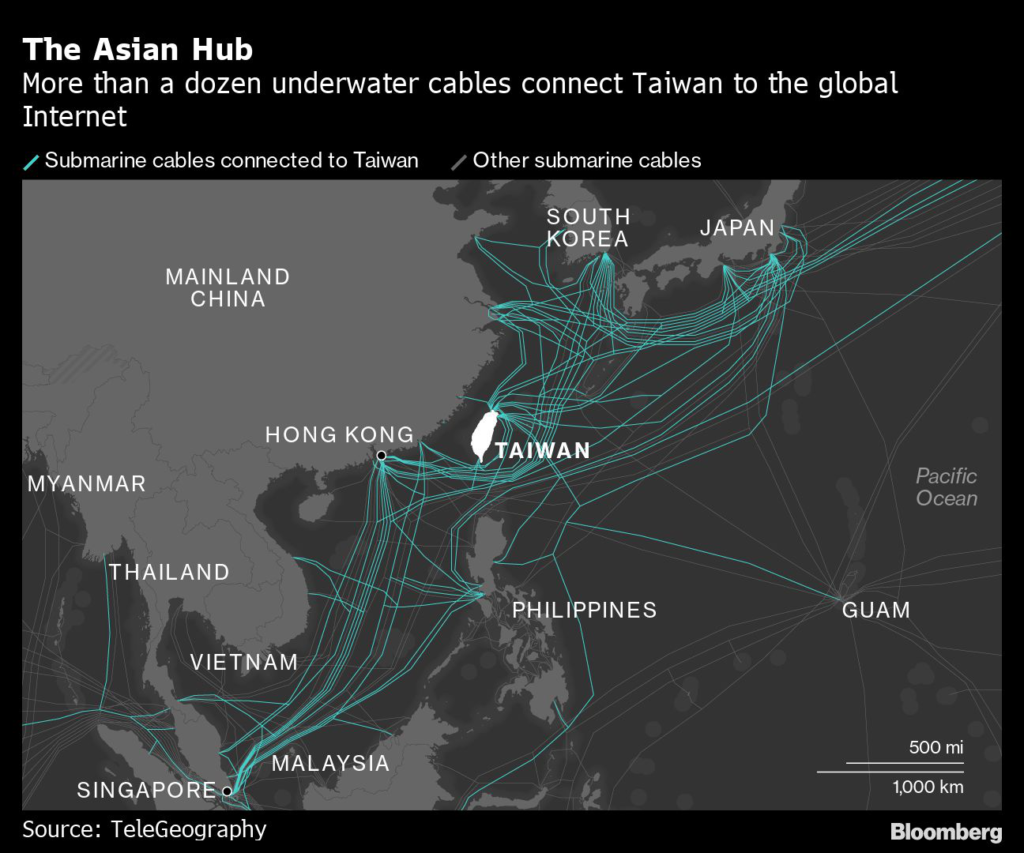
Taiwan has 14 subsea cables — many little wider than a garden hose — stretching thousands of miles and directly linking Asian nations including China to the US and other parts of the world. That’s a vulnerability the island’s government, seeing any interruption as potentially destabilizing, wants to minimize. A disruption in a conflict with China could result in Taiwan getting cut off from the world, similar to what happened to the Pacific Island nation of Tonga earlier this year when a volcanic eruption left it without internet access for more than a month.

“Undersea cables are a serious Achilles’ Heel to Taiwan,” said Kenny Huang, chief executive officer at the Taiwan Network Information Center, a non-profit partially owned by Taiwan’s government.

It’s not just a concern in Taipei: With US-China ties under strain, defense strategists around the world are looking carefully at the risks facing the estimated 1.3 million kilometers (810,000 miles) of subsea cables that nearly all internet traffic passes through and planning contingencies for how to deal with the risk of lost access. 

Taiwan’s government knows those risks well: an earthquake off the island in 2006 cut eight cables, took weeks to repair and caused disruptions to the internet, banking services and cross-border trading that was felt as far away as Singapore. 

For Taiwan President Tsai Ing-wen, the China threat is rising: President Xi Jinping said at the opening of the Communist party congress this month that “reunification” with Taiwan “must be realized and it can without a doubt be realized.” And the Chinese general who led the military command responsible for Taiwan was rewarded by Xi with the post of vice chair of the Central Military Commission. 

Why Taiwan’s Status Risks Igniting a US-China Clash: QuickTake

In response to the increasing threat, starting this year Taiwan will incorporate communication breakdowns into its frequent war drills. In the short term it will also spend NT$550 million ($17 million) on a plan to bolster existing mobile infrastructure, including submarine cables, and accelerate the deployment of fifth-generation mobile network base stations through 2024. 

“False information can easily flow and cause social chaos,” Audrey Tang, Taiwan’s minister of digital affairs, told Bloomberg. “We realize that whether Taiwan is under military aggression or encounters emergencies such as natural disasters, it is very important to maintain high-quality, instant communication.”

Longer term, Tang said Taiwan wants to improve access to communications satellites and has put together a proposal to tap high-speed satellite systems in an emergency.

That plan was partly inspired by Ukraine’s response to Russia’s invasion. Within days of Russia’s attacks, Elon Musk’s orbiting broadband provider Starlink activated services in Ukraine, extending a communications lifeline in occupied areas and impressing even US military officials who noted such capabilities were difficult to defeat.

“If you asked me about using satellites last year, I’d say it’s impossible,” said Huang. “But after we learned from the lesson of Ukraine war, I’d say we need to make the impossible possible.”

It’s not clear if the world’s richest man would come to Taiwan’s aid, however, after he voiced support for Taiwan to become a “special administrative zone” under Chinese rule, comments that were quickly criticized in Taipei and applauded in Beijing. 

Officials at SpaceX, which operates Starlink, didn’t respond to emailed requests for comment. 

Tang, a 41-year-old former hacker and self-described “conservative anarchist,” was tapped to lead the new digital affairs ministry just two days after US House Speaker Nancy Pelosi’s visit to Taipei in August. Her trip triggered a wave of cyberattacks 23 times stronger than anything Taiwan had seen in a single day as Chinese warships prepared for drills off its shores.

The disruptions from those cyber attacks were minor, but a move to sever the island’s subsea fiber cables, which cross disputed waters claimed by China, could be catastrophic. Sustained damage to Taiwan’s cables could crush a digital economy set to reach NT$6.5 trillion ($204 billion) by 2025, along with any ambition to become a high-tech hub. 

Tonga, a Pacific island nation of about 106,000 people, was left almost entirely cut off from the rest of the world for over a month when its single international cable was damaged in a volcanic eruption earlier this year. Residents of the Shetland Islands, the northernmost region of the UK, lost access to mobile and broadband for a few days last week after cuts to a cable connecting them to the mainland. Police boosted patrols to reassure residents during the outage, which cable operator Faroese Telecom said was likely the result of a fishing accident, the BBC reported. 

TeleGeography, a market research and consulting firm that produces an updated map of the world’s subsea cables, said the data lines can be prone to damage or breaks for reasons ranging from anchor drag to underwater landslides. They’ve even been seen, on rare occasions, to be the target of shark bites. 

In developed nations with multiple systems, consumers wouldn’t notice the impact of a single cut as data can be quickly rerouted. But while acts of malice are rare, defense officials are increasingly acknowledging the threat. 

As Vladimir Putin massed troops along Ukraine’s border earlier this year, the head of the UK’s armed forces told The Times that a “phenomenal” build-up of Russian submarine activity threatened underwater cables, and warned an attack on them was an act of war. France rolled out a strategy this year to defend against “seabed warfare” with deep-sea capabilities including underwater drones and robots.

Beijing considers Taiwan part of its territory, and the island has become the biggest source of tension with the US in recent months. But China’s ambassador to the US, Qin Gang, said in August that “people are over-nervous”’ about the risk of attack.

Nevertheless, Taiwan’s rush for new capacity underscores another geopolitical tension: of the more than 500 subsea cables globally, according to a Bloomberg analysis, US companies own all or part of 22% of them, while China has a small but growing stake at 4%. 

One method of ensuring internet resilience is to build more cables. Between 2017 and 2019, international bandwidth used by global networks more than doubled, according to TeleGeography. Google, for example, spent over $2 billion on its network infrastructure in the Asia-Pacific over a decade since 2010. 

But that’s getting harder as regulations become more cumbersome and the US-China standoff worsens. 

Amid a global campaign to block Huawei Technologies Co. from supplying 5G wireless networks, the Trump administration pushed so-called “clean cables” to ensure China couldn’t subvert the global internet for intelligence gathering. 

Since then, at least four projects directly linking the US with Hong Kong were forced to withdraw licensing bids amid American national security concerns, though one backed by Meta Platforms Inc. later won approval after agreeing to route the system through Taiwan.

“You build as much diversity as you can and this is partly why you see us investing into all the submarine cables, because ultimately the best way of getting reliability is redundancy in the cable system, so you build as much as you can,” said Bikash Koley, Google’s vice president and head of global networking.

But the possibility of severed cables is a threat many nations still need to address. 

As the host of about 40 undersea cables, Singapore is setting up a cyber military force to meet threats in the digital domain, including to physical infrastructure.

Could bad actors try to cause a “digital blackout so that the target country is literally cast into darkness. I think, yes,” Singapore Defense Minister Ng Eng Hen said in June. “It’s not just the stuff of good novels.”

–With assistance from Sarah Zheng, Yasufumi Saito and Adrian Leung.

More stories like this are available on bloomberg.com

©2022 Bloomberg L.P.
Yellen Playing More Political Role With Ohio Battleground Visit

(Bloomberg) — Treasury Secretary Janet Yellen, traveling to the election battleground state of Ohio, will say that the Biden administration’s policies to spur electric vehicle manufacturing have begun to create a “battery belt” across the US Midwest.

“Since January of last year, companies have announced over $100 billion in EV, battery, and charging investments here in America,” Yellen is set to say, according to the text of a speech she’s scheduled to deliver on Thursday in Cleveland. “The wave of new battery investments in the Midwest has been so significant that some commentators are dubbing the region as the new “battery belt.”

The private-sector commitments follow passage of the two pieces of legislation in August that channel about $52 billion into semiconductor manufacturing and tens of billions more into green energy technology, including electric vehicles.

For Yellen, a technocrat known more for her grasp of economics than her prowess on the campaign trail, it’s the latest in a series of engagements that cast her in an increasingly political role just before the congressional midterm elections on Nov. 8. Those elections will control of both houses of Congress, and the stakes are high for both President Joe Biden and Yellen. 

The outcome will go a long way to determining whether Biden can advance unfinished business in the remainder of his four-year term. A positive outcome for Democrats could also cast away lingering doubts over whether Yellen will keep her post into the new year. She has made clear in recent weeks she plans to stay.

Ohio hosts a closely-watched race for an open US Senate seat. Democrat Tim Ryan has waged an unexpectedly competitive race against venture capitalist and author JD Vance, who is backed by former President Donald Trump in the Republican-leaning state.

Yellen has also visited Michigan and North Carolina in recent weeks, telling audiences that the Biden administration has protected Americans from the coronavirus pandemic and put hundreds of billions behind long-term efforts to bolster the economy through investments in infrastructure, research and development, clean energy and job development.

“For too long, regions like the Midwest have suffered through decades of underinvestment,” she is to say in Cleveland. “Over the past two years, our administration has made significant investments in our country’s industrial strength,” ensuring that economic opportunity is shared “beyond our country’s coasts.”

In her prepared remarks, she contrasts that with “traditional” supply-side economics — a policy approach championed by conservatives — that, she said, stressed “deregulation and tax cuts that disproportionately benefit the wealthiest Americans and large corporations.”

Yellen is scheduled to speak alongside Senator Sherrod Brown, an Ohio Democrat, at the Manufacturing Advocacy and Growth Network, a business incubator in Cleveland.

More stories like this are available on bloomberg.com

©2022 Bloomberg L.P.
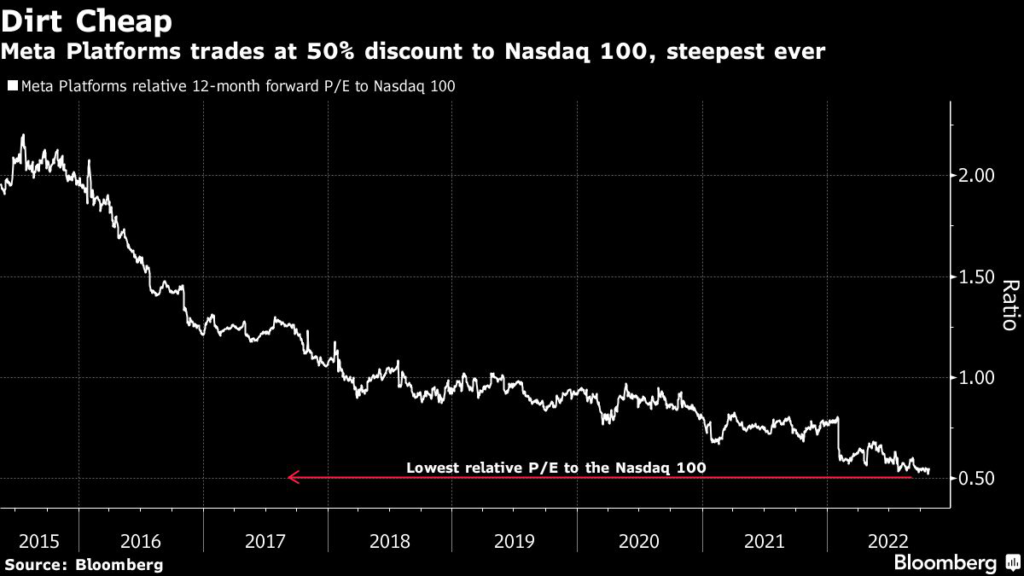
Zuckerberg Asks for ‘Patience’ as Meta’s Costs Spook Investors

(Bloomberg) — Meta Platforms Inc. Chief Executive Officer Mark Zuckerberg asked investors for patience with the social-media giant’s swelling investments in unproven bets at an already-challenging time for digital-advertising companies.

The company’s shares slumped about 20% in premarket trading before exchanges opened in New York on Thursday after it gave a disappointing quarterly revenue outlook. On a call Wednesday, Zuckerberg sought to justify Meta’s ballooning costs to fund its version of virtual reality, the metaverse, as well as the artificial intelligence fueling major changes to its social networks.

Investors, who have already sent the stock down 61% this year, so far aren’t buying it. Zuckerberg said he is confident that Meta’s largest bets in areas such as short-form video, business messaging and the metaverse were headed in the right direction — he just couldn’t say for sure how big the payoff would be.

“I think we’re going to resolve each of these things over different periods of time,” Zuckerberg said. “And I appreciate the patience and I think that those who are patient and invest with us will end up being rewarded.”

It’s proving to be a hard sell when the company expects its already-falling revenue to be less than analysts expected, and costs to be more. On Wednesday, Meta said third-quarter revenue declined 4.5% from a year prior, only the second time the company’s sales have ever declined — the first being last quarter. In the final three months of the year, Meta expects that trend to continue. The company’s fourth quarter forecasts came in at the low end of analysts’ estimates.

Meta now expects total expenses for this year to be $85 billion to $87 billion. For 2023, that number will grow to an expected $96 billion to $101 billion, the company said on Wednesday.

Read More: Meta Tumbles as Sales Forecast Shows Depth of Ad-Market Weakness

Meta has already been grappling with both a contraction in marketer spending due to economic uncertainty, and a change in Apple Inc.’s privacy policy that made all social media ads less effective. The company has cut costs by slowing hiring and narrowing priorities to focus on keeping its social media platforms relevant and expanding virtual reality offerings. 

The company, which changed its name from Facebook to Meta a year ago, is also betting big on the metaverse, virtual-reality-fueled gathering places that Zuckerberg thinks will host the future of work and communication. The effort is losing Meta billions, and the company expects to lose more money on the metaverse business next year.

Meta’s not the only internet company suffering from a weak advertising market; both Alphabet Inc. and Snap Inc. got hammered on similarly lackluster results. It is the only company that’s overhauling how its social media platforms work while spending about one in every 10 dollars it generates in sales on a virtual future that’s still years off.

In the past year, Meta has changed Facebook and Instagram’s experiences to show more algorithmically chosen content and fewer posts from the people users follow. It’s also prioritizing short-form videos, called Reels, in response to ByteDance Ltd.’s popular TikTok app, which has won users’ time and accustomed them to a feed of vertical videos based on specific interests. 

Meta’s legacy social media products need to remain popular enough to generate the advertising revenue that will fund Zuckerberg’s metaverse vision. In the third quarter, 4% more people spent time on Meta’s platforms every day, compared with the same period last year, with 2.93 billion daily active users. Monthly, the tech giant saw 3.71 billion active users for its family of apps, which also includes Messenger and WhatsApp.

On Wednesday, the company touted that Instagram surpassed 2 billion monthly active users, and said those people are spending more time watching Reels — and marketers are spending to advertise there, at an implied rate of $3 billion a year in revenue. But Reels is dragging on revenue, to the tune of $500 million in the recent quarter, as the newer product cannibalizes other ad spaces that monetize at faster rates. It could be as much as 18 months before that changes, Zuckerberg said. 

“How investors are feeling right now is that there are just too many experimental bets versus proven bets in the core,” Brent Thill, an analyst at Jefferies LLC, said on the earnings call with Meta executives.

Zuckerberg has asked for patience before. In 2015, investor questions focused on when WhatsApp, Instagram and Messenger would make money. The difference then was those applications already had hundreds of millions of users each.

“Meta needs to turn its business around,” said Debra Aho Williamson, an analyst at Insider Intelligence. “As Facebook Inc., it was a revolutionary company that changed the way people communicate and the way marketers interact with consumers. Today it’s no longer that innovative groundbreaker.”

(Updates with premarket trading in second paragraph.)

More stories like this are available on bloomberg.com

©2022 Bloomberg L.P.
Meta’s Spiralling Rout Puts It on Brink of Losing Top 20 Status

(Bloomberg) — Meta Platforms Inc. shareholders are paying dearly for its spending on the metaverse: The Facebook parent’s market value has collapsed by a whopping $520 billion in the past year, and now it’s on the brink of getting booted from the ranks of the 20 largest US companies.

The punishment shows no signs of easing anytime soon. Meta’s stock is down 19% in premarket trading after it spooked investors with ballooning costs to fund its version of virtual reality and a decline in revenue. 

Meta was the sixth biggest US company by market capitalization at the start of the year, flirting with a $1 trillion market value. Fast forward 10 months and the stock will be worth about $283 billion, ranking it 20th, if it opens regular trading in line with its decline in the premarket. It will now be smaller than companies including Chevron Corp., Eli Lilly & Co. and Procter & Gamble Co.

Once a Wall Street darling, Meta is gradually losing favor with brokerages. At least two investment banks — Morgan Stanley and KeyBanc Capital Markets — cut their rating on the stock, citing the rising costs. 

“Meta remains too aggressive with its investments in long-term initiatives despite a sharp deceleration in expected revenue growth,” said Mandeep Singh, an analyst at Bloomberg Intelligence. “The company’s opex and capex view for 2023 is surprising, given the lack of traction so far with its metaverse efforts.” 

While Thursday’s premarket slump is a big move, it pales in comparison to its record-setting rout in February when it plunged plunged 26% on the back of woeful earnings results, and erased about $251 billion in market value. That’s the biggest wipeout in market value for any US company ever. 

The decline in the stock this year has attracted value investors, who buy beaten-down stocks in anticipation of a turnaround. But there’s no sign of those bets paying off any time soon. 

Meta announced its shift to investing in virual reality a year ago, along with a name change of the company from Facebook Inc. to Meta Platforms. The company said  Wednesday it expects total expenses for this year to be $85 billion to $87 billion. 

For 2023, that number will grow to an expected $96 billion to $101 billion. That’s the big negative, since investors were hoping Meta would aggressively cut costs, said Neil Campling, an analyst at Mirabaud Securities. 

The company’s quarterly capital expenditure was more than all but 16 of the S&P 500 companies spent all of last year, according to Bloomberg data. 

Campling likened a buillish trade in Meta to IBM in 2005, saying “like IBM symbolizes dinosaur tech 1.0… so Meta faces the risk of being the next-generation fossil.”

–With assistance from Tom Contiliano and Kit Rees.

More stories like this are available on bloomberg.com

©2022 Bloomberg L.P.
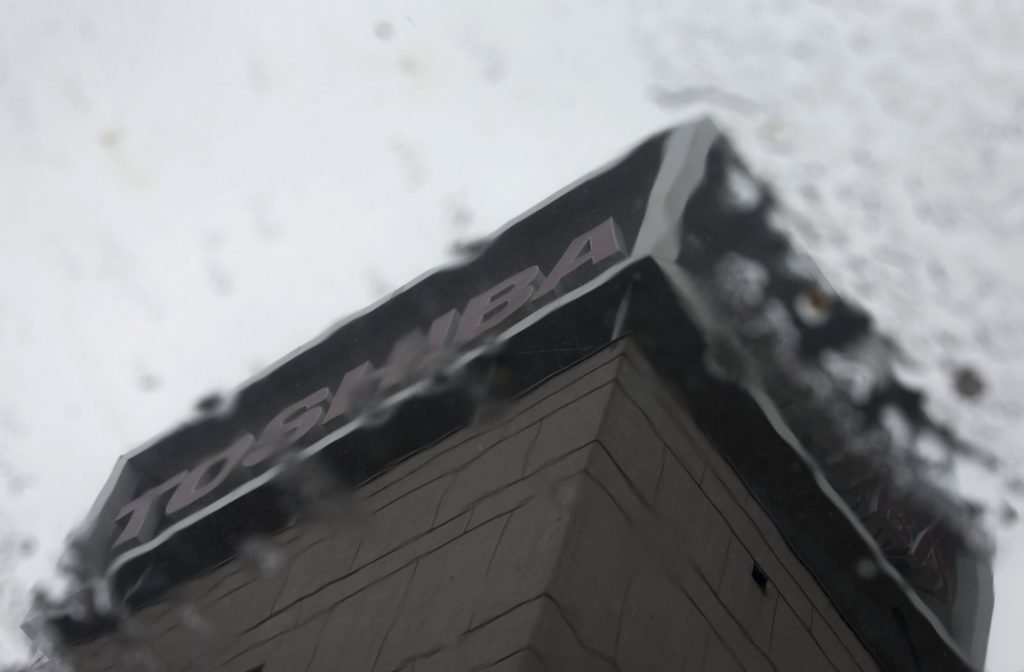
CVC Weighs Cutting Contribution to JIP-Led Toshiba Bid

(Bloomberg) — CVC Capital Partners is in talks to reduce its planned contribution to a Japan Industrial Partners Inc.-led buyout offer for Toshiba Corp. to help ease antitrust approval for the deal, according to people familiar with the matter.

The buyout firm aims to avoid triggering Chinese regulatory scrutiny, which could delay the deal, by lowering the amount of its investment and the size of its stake in the Japanese conglomerate, said the people, who asked not to be identified as the information is private.

Deliberations are ongoing and no final decision has been made, the people said. Representatives for CVC and JIP declined to comment.

Shares of Toshiba fell as much as 3.3% and touched the lowest intraday level in more than two weeks on Thursday after the Bloomberg News report. The stock dropped 1.7% at the close, giving the company a market value of about $15.2 billion.

A merger transaction — even if no Chinese companies are involved — is subject to regulatory approval in China should the deal have the potential to affect competition in the local market. A non-China transaction could face antitrust review if the companies reach certain revenue thresholds and the deal involve a change of control. Any three companies that have 75% combined market shares and where each of them has 10% or above are seen as having major influence in the industry.

China Approval

Chinese regulators had in the past given the key nods in several major cross-border deals including SK Hynix Inc.’s $9 billion acquisition of Intel Corp’s Nand storage unit. The State Administration for Market Regulation last year granted approval for the transaction, which was the final hurdle to the Korean company’s largest-ever purchase. However, China has also ended deals before they could be completed. A $44 billion merger between Qualcomm Inc. and NXP Semiconductors NV was scrapped in 2018 because Beijing didn’t approve the deal before a final deadline.

The JIP-led consortium, which is the preferred bidder, is considering a takeover of Toshiba at a valuation of about 2.4 trillion yen ($16.4 billion) in what could be Asia’s biggest buyout this year, Bloomberg News reported this week. The group plans to fund the bid with 1 trillion yen in cash and 1.4 trillion yen of financing support from banks, people familiar with the matter have said.

The JIP-led bidding group and a rival consortium led by state-backed investment fund Japan Investment Corp. are running into obstacles securing financing commitments from banks, threatening to delay the potential takeover, Bloomberg News reported this month.

(Adds background on previous antitrust approvals on major deals by China in sixth paragraph.)

More stories like this are available on bloomberg.com

©2022 Bloomberg L.P.

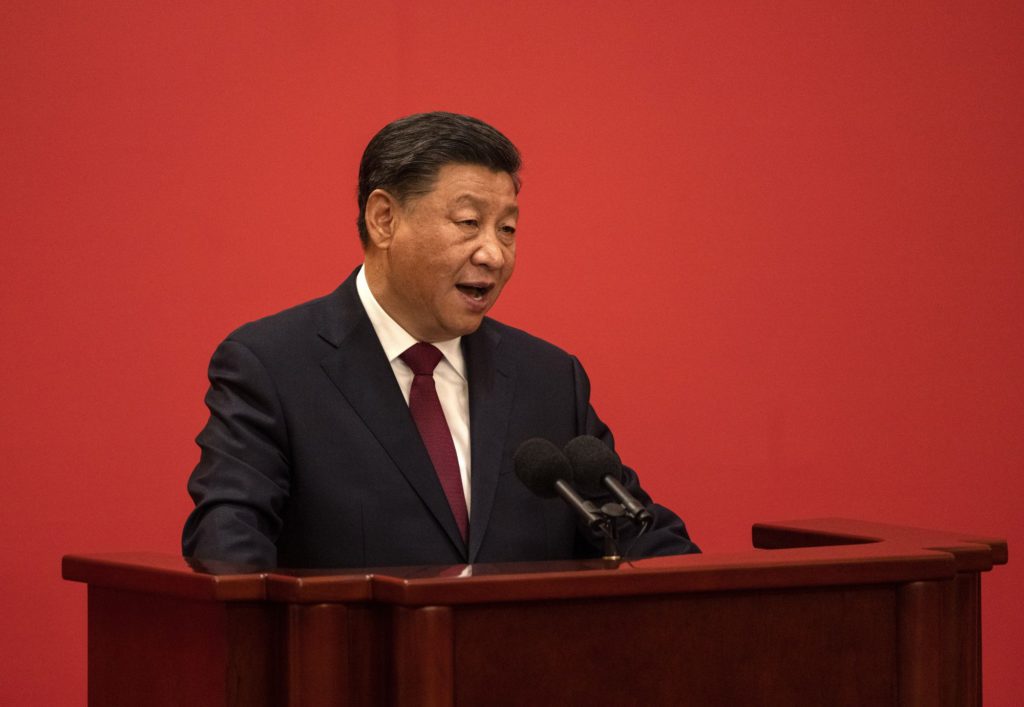
Xi Says China Can Work With US Before Possible Biden Meeting

(Bloomberg) — Chinese President Xi Jinping said his nation is willing to work with the US to find ways to cooperate, comments that come before a potential meeting with President Joe Biden at a Group of 20 summit next month. 

Better communication between the two nations would bolster global peace and development, Xi said in a letter to the National Committee on US-China Relations’ annual dinner Wednesday, the official Xinhua News Agency reported.

“China stands ready to work with the United States to find the right way to get along with each other in the new era on the basis of mutual respect, peaceful coexistence and win-win cooperation, which will benefit not only the two countries but also the whole world,” Xi said, according to the report on Thursday.

The comments strike a conciliatory tone after a Communist Party congress during which Xi secured a norm-breaking third term and promised China would stand its ground in a more hostile world.

Blinken Says Beijing Wants to ‘Speed Up’ Seizure of Taiwan

Xi’s remarks echoed his message last year to the same gala for the group that aims to promote China-US cooperation. That event similarly came before a video summit with the US leader in November. Still, they signal an effort to maintain ties despite disputes over Taiwan, the semiconductor industry and Beijing’s response to Russia’s invasion of Ukraine. 

Speaking to Department of Defense leaders on Wednesday, Biden emphasized that even as the US maintains its military advantage over China, “we’re making it clear that we don’t seek conflict.”

“There’ll be stiff competition, but there doesn’t need to be conflict,” he added. 

Xi’s Vow of World Dominance by 2049 Sends Chill Through Markets

Earlier this week, US National Security Council spokesman John Kirby said the administration would “keep the lines of communication open, and that includes at the leader level.” He said teams were still working through a possible meeting when world leaders gather at a G-20 meeting in Bali next month, in what would be Biden’s first sitdown with Xi as president.

When asked about a possible meeting between Xi and Biden, Foreign Ministry spokeswoman Mao Ning said Thursday at a regular press briefing in Beijing that she had no information to offer.

The Commerce Department unveiled sweeping regulations this month that limit Beijing’s access to chips, the Biden administration’s most aggressive move to try to stop China from developing capabilities to challenge the US’s global technological dominance.

Xi, in turn, has pledged that his nation would prevail in its fight to develop strategically important technology.

–With assistance from Sarah Zheng and Lucille Liu.

(Updates with quote from Xi Jinping and comment from Foreign Ministry.)

More stories like this are available on bloomberg.com

©2022 Bloomberg L.P.

Close Bitnami banner
Bitnami