Bloomberg

Huawei Posts Sharp Profit Fall in Year Without Phone Cash Cow

(Bloomberg) — Huawei Technologies Co.’s net income fell about 40% in the first three quarters of this year as the Chinese telecom giant couldn’t revive its cash cow smartphone business and spent heavily on research and development.

The Shenzhen-based company, once the world’s biggest smartphone maker, generated 27.2 billion yuan ($3.8 billion) in net income between January and September with a profit margin of 6.1%, according to Bloomberg calculations. It marked a slump from 46.5 billion yuan net income in the same period a year ago, when Huawei reported a double-digit profit margin. Revenue for the September quarter rose 6% to 144.2 billion yuan, per Bloomberg calculations.

The company didn’t disclose detailed financial information.

A series of US sanctions that started during the Trump administration have smothered Huawei’s phone business, which used to be the key driver of growth for its consumer group and biggest source of revenue. Among those trade restrictions is a ban on contract chipmakers producing semiconductors designed by Huawei, effectively kneecapping its HiSilicon design business, which was keeping pace with Apple Inc.’s in-house Silicon group.

“Overall performance was in line with forecast,” said Rotating Chairman Eric Xu. “The decline in our device business continued to slow down, and our ICT infrastructure business maintained steady growth. Going forward, we will keep bringing in top-notch talent and investing in R&D to take the competitiveness of our products to a new level.”

2022 has been a transitional year for Huawei as it shifts from its prior emphasis on consumer electronics, originally underpinned by its smartphones. It grew sales of wireless communications products and base stations and is also exploring opportunities for collaboration with auto companies on cockpit communications and entertainment services for cars.

More stories like this are available on bloomberg.com

©2022 Bloomberg L.P.

Elon Musk Taps Tycoon Sy for Philippine Satellite Internet

(Bloomberg) — Philippine tycoon Henry Sy Jr. will partner with Elon Musk to launch a satellite broadband service in the Southeast Asian nation.

Data Lake Inc. signed an agreement with Space Exploration Technologies Corp., making it the first Starlink integrator in the country and in Southeast Asia, the Sy-owned company said in a statement.

“With 7,640 islands, connecting the Philippine archipelago to the rest of the world often requires extensive infrastructure,” Data Lake Chairman Anthony Almeda said. Starlink, with its constellation of satellites in orbit, provides high bandwidth and reliable internet that’s crucual especially during natural calamities, he said.

Starlink targets to make its service available in the Philippines in the coming months, Jonathan Hofeller, vice president of Starlink commercial sales at SpaceX, said.

More stories like this are available on bloomberg.com

©2022 Bloomberg L.P.

Another Bumper Profit Puts Shell in Focus: The London Rush

(Bloomberg) — Shell’s second-highest earnings on record is likely to reignite the debate in the UK about the large profits energy companies are making and whether the government should tax them more heavily. Unilever, which makes things like Dove soap or Hellmann’s mayonnaise, expects higher prices to cost them 2 billion euros in the first half of next year — price increases that will surely be passed on to supermarket checkouts.

Here’s the key business news from London-listed companies this morning:

In The City

Unilever Plc: The consumer products company expects pressures on its prices to continue into next year, despite some commodity prices easing off their peak levels. 

  • The company expects inflation will cost them an additional 2 billion euros in the first half of next year, as factors like currency devaluation, higher supplier costs and raw material costs carry on into 2023

Shell Plc: The oil major posted its second-highest profit on record, even as some parts of its business showed signs of slowing, prompting it to raise its dividend and buyback $4 billion worth of shares next quarter.

  • The company’s CEO  Ben van Beurden said they are “working closely with governments and customers to address their short and long-term energy needs,” addressing the market volatility and high prices that has put the industry in the cross-hairs of governments

Lloyds Banking Group Plc: The bank’s profit was dragged below analyst estimates in the third quarter after the lender took charges for bad loans while warning of a darkening outlook for the UK economy.

GSK Plc: The pharmaceutical giant will not seek regulatory approval for a drug to treat rheumatoid arthritis after phase three trials didn’t meet the appropriate benefit to risk profile for a treatment for the disease.

Elsewhere: Renishaw Plc is managing its costs amid weakening demand for semiconductors and electronics, and a more cautious market sentiment.

  • The food company Kerry Group Plc expects demand for clean-label and healthier products to remain strong, with affordability also becoming a priority
  • Automotive distributor and retailer Inchchape Plc said its record order books shows continued “robust demand” for vehicles and it expects a gradual improvement in supply

In Westminster

Rishi Sunak’s decision to delay the Treasury’s economic statement may save as much as £15 billion and spare the public services deep spending cuts, a prominent economist said.

Meanwhile, automakers asked the new prime minister and his government to improve the UK’s business environment after car production in the country declined again.

In Case You Missed It 

UK mortgage lending is headed for its biggest plunge in more than a decade next year after a surge in interest rates and cost-of-lending squeeze brings household budgets to a breaking point.

“All the bad trends afflicting the UK converge in the capital’s office sector,” writes Bloomberg Opinion’s Chris Hughes. “But investors are being overly pessimistic,” Hughes says. 

Looking Ahead 

British Airways parent International Consolidated Airlines Group SA is due to finish off a busy earnings week tomorrow.

The company said earlier in the month that trading during the third quarter had been better than expected, setting it up for around €1.2 billion of adjusted operating profit in the period. The group also said its bookings were showing no signs of weakness, despite growing concern about the rising cost of living weighing on demand for travel.

Meanwhile, mining behemoth Glencore Plc’s production report for the quarter should give further indications about the industry’s prospects following a sharp drop in metals and ore prices this year. NatWest Group Plc is also due to disclose earnings tomorrow. 

For a news fix when the day is done, sign up to The Readout with Allegra Stratton, to make sense of the day’s events.

More stories like this are available on bloomberg.com

©2022 Bloomberg L.P.

Goldman Is Among Banks Picked for $30 Billion Telkom Merger

(Bloomberg) — PT Telkom Indonesia has picked advisers for the merger of its broadband and wireless businesses as part of an overhaul of the state-owned telecommunications group.

The Jakarta-listed company has appointed Indonesian financial group PT Bank Mandiri to work on the transaction, President Director Ririek Adriansyah said in response to a Bloomberg News query. Telkom has also picked Goldman Sachs Group Inc. to help with the process, according to people familiar with the matter. A merger of the businesses would create an entity valued at more than $30 billion, the people said.

The mobile unit, known as Telkomsel, is 65% owned by Telkom, with Singapore Telecommunications Ltd. holding the remaining 35% stake, its latest annual report shows. Telkomsel has selected HSBC Holdings Plc to help advise on the transaction, while Singtel has picked Citigroup Inc. as its own financial adviser, the people said, asking not to be identified because the matter is private. The broadband business is wholly owned by Telkom.

Adriansyah confirmed Mandiri’s appointment but declined to comment on other details of the merger, while a Mandiri spokesperson referred Bloomberg News to Adriansyah’s comment. Representatives for Citigroup, Goldman Sachs, HSBC and Singtel declined to comment.

Shares in Telkom have risen about 8% in the year to date, valuing the company at nearly $28 billion.

Investment banks would welcome such a transaction for its ability to propel them in the league table rankings, particularly in a year when mergers and acquisitions activity is down globally. There have been $2.1 trillion worth of M&A deals this year, down 29% from the same period in 2021, according to data compiled by Bloomberg.

BofA on Asia Telcos Trading Towers for Treasure: Bloomberg Deals

Telkomsel is the largest mobile provider in Indonesia, according to Bloomberg Intelligence. The business counts 169.7 million subscribers at the end of the first half of 2022, according to its investor presentation. Telkom’s IndiHome fixed broadband service had 8.9 million subscribers at the end of the period, the presentation showed.

The Indonesian group had been speaking with financial advisers for the past several months about a potential combination of the businesses, Bloomberg News has reported. A merger is part of a plan to eventually separate its consumer-facing operations from those focused more on corporate customers.

The business reorganization comes as Indonesia is poised for growth in areas such as e-commerce and financial technology. Telkom counts a wide range of assets from mobile and broadband to satellite, towers and digital content.

–With assistance from Anurag Kotoky.

More stories like this are available on bloomberg.com

©2022 Bloomberg L.P.

Southeast Asia Digital Economy Slows as People Curb Spending

(Bloomberg) — Growth in Southeast Asia’s internet economy is slowing after years of expansion, showing that even emerging digital markets aren’t immune to economic headwinds.

Online spending in the region will rise about 20% this year to $200 billion, research from Google, Temasek Holdings Pte and Bain & Co. showed, slowing from 38% a year earlier. The region’s internet economy is set to reach $330 billion by 2025, according to the report, down from a previous forecast of $363 billion.

This is the first time estimates have been revised downward in the companies’ annual report, which covers Singapore, Indonesia, Malaysia, Thailand, Vietnam, and the Philippines. Even as the region’s consumers are adopting mobile and online services at a rapid clip, they are curbing spending amid accelerating inflation and rising interest rates — just like their peers globally.

“After years of acceleration, digital adoption growth is normalising,” the companies said in a release. “The majority of digital players are now shifting priorities from new customer acquisition to deeper engagement with existing customers to increase usage and value.”

Southeast Asia, home to Alibaba Group Holding Ltd.’s Lazada and Sea Ltd.’s Shopee, will see a 16% increase in e-commerce gross merchandise value this year, slowing sharply from pandemic highs as consumers become more cautious. Online shopping is now forecast to hit $211 billion in 2025 versus a previous $234 billion prediction, making up 64% of the region’s total estimated digital GMV, the research showed.

E-commerce, financial services and travel are among leading sectors driving the region’s digital growth, the report showed. Southeast Asia is adding about 20 million new digital consumers in 2022.

The number of deals involving tech companies in the region remained relatively steady at about 1,200 in the first half of this year compared with a year-earlier period, according to the report. Early-stage investments are increasing, while later-stage deals are getting hit by dimmer public listing prospects in the capital markets. Southeast Asia venture capital funds held about $15 billion in “dry powder” at the end of 2021, down from $16 billion a year earlier.

“Macroeconomic headwinds are here,” Stephanie Davis, vice president at Google Southeast Asia, said in an interview with Bloomberg TV’s Haslinda Amin and Rishaad Salamat. “We do expect some conservancy in the later half of this year and next year. In fact, about three quarters of venture capital firms in the region expect there to be declines in valuation.”

Indonesia remains the region’s largest digital economy where online spending is predicted to rise to $130 billion by 2025. Vietnam is expected to grow at the fastest rate among the six countries tracked by the study, more than doubling in online GMV over the next three years.

–With assistance from Haslinda Amin and Rishaad Salamat.

(Updates with comment from executive in eighth paragraph)

More stories like this are available on bloomberg.com

©2022 Bloomberg L.P.

Global Stocks Rise Amid Bets for Slower Rate Hikes: Markets Wrap

(Bloomberg) — Stocks advanced, with US futures bouncing back from tech earnings worries while Hong Kong’s benchmark gauge rallied for a second day.

An index of global shares headed for a fifth day of gains, its longest stretch in more than two months, amid growing expectations of moderating US rate hikes. 

A tech rally powered Hong Kong shares to further erode losses incurred earlier this week after President Xi Jinping tightened his grip on power. Mainland share benchmarks fluctuated. Japanese stocks led declines in Asia.

The yen climbed 0.7% to around 145.30 per dollar, extending its rally to more than 4% from a three-decade low reached Friday. The dollar stabilized after a two-day drop and the offshore yuan gave up some of Wednesday’s gains. 

The yield on the 10-year Treasury bond sat around 4% after inching below the threshold earlier, with investors positioning for less aggressive rate hikes as earnings and economic data indicate a slowdown. The benchmark US yield has dropped more than 20 basis points over the past two days. 

Amid the challenges for equities investors, central banks are providing some optimistic signals that less aggressive monetary tightening may be on the horizon. The Bank of Canada raised interest rates by a smaller amount than expected on Wednesday, adding to suggestions that the Federal Reserve is also getting closer to shifting down in gears. Traders have cut expectations for rates to peak next year to 4.86% from 5% a week ago. 

A contraction in services and manufacturing and fewer new home sales showed the Fed’s efforts to cool the economy seem to bearing some fruit. Still, economists expect the Fed to hike by 75 basis points for the fourth time in a row when it meets next week. 

“The only reprieve that will cause them to pause will be signs that inflation is subsiding and we’re not quite there,” said Nancy Daoud, a private wealth adviser at Ameriprise Financial, in an interview on Bloomberg TV. “They will stick to their guns and raise rates in November and again in December.”

The European Central Bank is also projected to hike by 75 basis points later Thursday.

US futures climbed, overcoming a 24% decline for Meta Platforms Inc. in after-hours trading following underwhelming third-quarter earnings. Wednesday’s declines for the Facebook parent, Amazon.com Inc., Alphabet Inc. and Microsoft Inc. dragged the S&P 500 to a loss as investors grew uneasy over tech profits. South Korea’s Samsung Electronics Co. was little changed after reporting weak earnings.

Oil gained further ground after touching the highest level in about two weeks after US Secretary of State Anthony Blinken said a deal with Iran would be unlikely to advance in the short term. 

Traders placed bets on a soaring price for aluminum as the US considers adding the metal to sanctions against Russia, a major producer. Iron ore futures slumped to the lowest since May 2020 on concern over economic slowdown in China. 

Key events this week:

  • ECB rate decision, Thursday
  • US GDP, durable goods orders, initial jobless claims, Thursday
  • Bank of Japan policy decision, Friday
  • US personal income, personal spending, pending home sales, University of Michigan consumer sentiment, Friday

Some of the main moves in markets:

Stocks

  • Futures on the S&P 500 rose 0.6% as of 6:56 a.m. London time. The S&P 500 fell 0.7%
  • Nasdaq 100 futures climbed 0.6%. The Nasdaq 100 fell 2.3%
  • The Topix Index fell 0.6%
  • The S&P/ASX 200 Index rose 0.5%
  • The Hang Seng Index rose 2%
  • The Shanghai Composite Index rose 0.1%
  • Euro Stoxx 50 futures fell 0.2%

Currencies

  • The Bloomberg Dollar Spot Index fell 0.1%
  • The euro was little changed at $1.0078
  • The Japanese yen rose 0.7% to 145.29 per dollar
  • The offshore yuan fell 0.2% to 7.2029 per dollar
  • The British pound was little changed at $1.1628

Cryptocurrencies

  • Bitcoin rose 0.3% to $20,815.73
  • Ether rose 0.7% to $1,564.35

Bonds

  • The yield on 10-year Treasuries was steady at 4.01%
  • Australia’s 10-year yield declined nine basis points to 3.83%

Commodities

  • West Texas Intermediate crude rose 0.2% to $88.11 a barrel
  • Spot gold rose 0.3% to $1,669.21 an ounce

More stories like this are available on bloomberg.com

©2022 Bloomberg L.P.

Abu Dhabi’s Biggest Wealth Fund Is Pushing Deeper Into the US, Real Estate

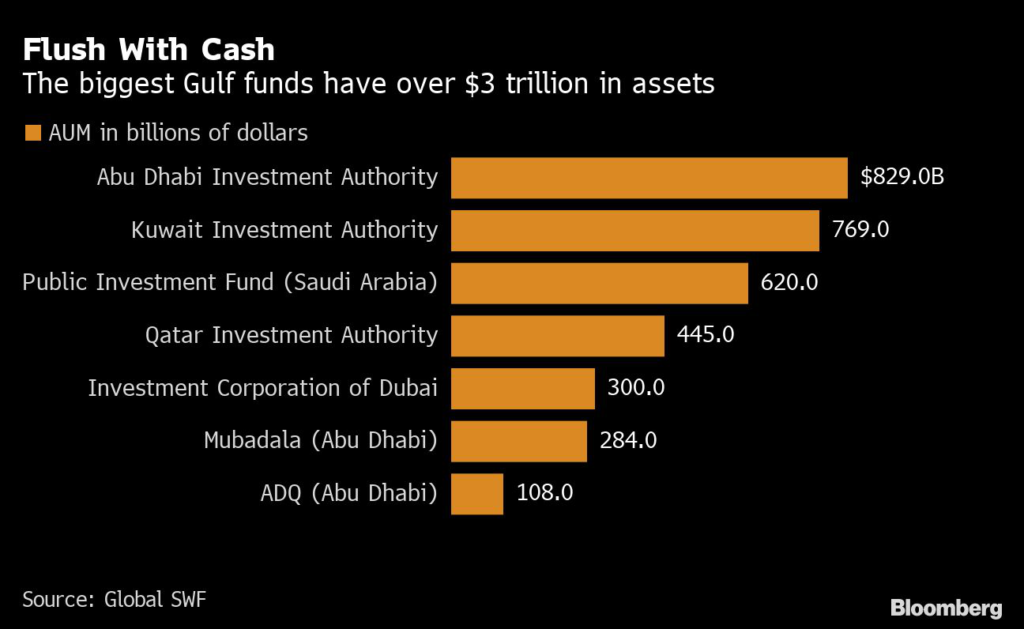
(Bloomberg) — The $829 billion Abu Dhabi Investment Authority is pushing deeper into the US and real estate investments, tapping into opportunities brought on by the pandemic. 

After one of its busiest years of dealmaking, the emirate’s biggest sovereign wealth fund has raised its target allocation range for North America to between 45% and 60%, and expects activity levels for real estate investments to remain high this year and beyond, according to its 2021 annual review released on Thursday.

“The outlook for real estate investment remains attractive,” ADIA said. “Market fundamentals are well-supported by rising replacement costs on the back of high inflation in labor and construction materials, the delayed supply-chain response, and other disruptions resulting from the pandemic.”

Due to its sheer size, ADIA’s choices can have an impact around the world. It’s already one of the biggest investors in US real estate, and its recent deals include stakes in German railcars, North American energy and Indonesia’s biggest internet firm.

ADIA is among Gulf sovereign wealth funds investing more in the US to capture opportunities arising from the fallout of the pandemic and rising fears of a global recession. Royal Group, another Abu Dhabi investment firm, plans to plow as much as $10 billion into US and European stocks to broaden its global portfolio. In neighboring Saudi Arabia, the $620 billion Public Investment Fund has been increasing its exposure to the US.

“ADIA sought out opportunities in regions and sub-regions with high potential over the long term and continued to build out its direct exposure to private markets,” Hamed bin Zayed Al Nahyan, the fund’s managing director, said in the review. “It also benefitted from positioning equity portfolios to capitalize on emerging trends, including opportunities arising from differing government responses to the pandemic.”

In 2021, ADIA’s private equity department committed more capital than ever before with 40 investments, up from 25 in 2020, including 12 co-investments in early-stage companies alongside its venture capital partners. Direct investments and co-investments represented 58% of its overall deployment for 2021, up from 55% in 2020, with the balance committed to funds.

  • ADIA’s allocation range for private equity was raised to 7%-12% from 5%-10%
  • The band for developed Asia has been reduced to 5%-10% from 5%-15%, which ADIA said was consistent with the region’s relative weighting in global indexes
  • ADIA’s 20-year annualized returns through December of last year were 7.3%, compared with 6% the previous year
  • Thirty-year annualized rates of return were 7.3% versus 7.2% in 2020
    • ADIA said the increases can be attributed to both the years falling out of the calculations as well as performance in 2021 and that they underline “our preference for focusing on long-term trends”

ADIA’s private equity division will keep focusing on investments in technology, healthcare and digital consumer services. It expects “a continuation of the high level of competition for attractive companies, choppy IPO markets, and the need to adjust to pandemic-related and geopolitical developments.”

In fixed income, the fund will continue to build out its quantitative research capabilities to enhance investment decision-making and deploy “more capital into less liquid areas of fixed income including private credit, to improve returns in the low yield environment.”

For infrastructure, ADIA is focusing on larger-scale acquisitions and investments where it can deploy capital alongside partners, it said. 

Centralized Functions

In 2021, ADIA set up two new centralized functions and trimmed its middle and back offices. It recently also separated the real estate and infrastructure departments, which are both gaining in importance as the fund looks increasingly to private markets. The net result of all these changes meant that the fund lost 160 people, or almost 10% of its workforce, and now employees 1,520 staff.

ADIA was set up in 1976 to manage the oil surplus revenues of Abu Dhabi, one of the world’s top crude exporters. It’s the biggest sovereign wealth fund in the city, eclipsing Mubadala Investment Co. and ADQ, and one of the largest in the world.

More stories like this are available on bloomberg.com

©2022 Bloomberg L.P.

Tesla’s Lithium Supply Talks Collapse With Australian Miner Core

(Bloomberg) — Tesla Inc.’s efforts to agree a lithium supply pact with Australian miner Core Lithium Ltd. fell through after months of negotiations against a backdrop of rocketing prices.

A deadline for concluding the terms of a four-year deal passed on Wednesday without any agreement, the Adelaide-based miner said Thursday in a statement. No reason was given for the failure to clinch a pact.

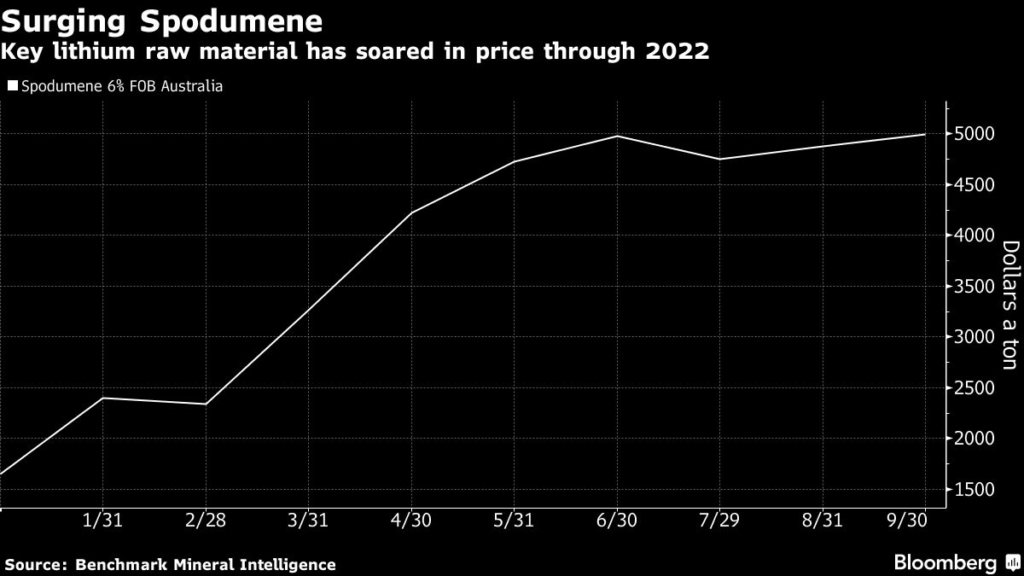
Core said in March it was working on a deal with Tesla for the supply of up to 110,000 tons of spodumene concentrate, with terms referenced to market prices for the lithium-bearing raw material. Since then spodumene prices have soared, and more than doubled since the end of February, according to Benchmark Mineral Intelligence.

Tesla is facing increasing competition for battery metals as rival automakers expand their electric lineups, and as tight markets put more negotiating power in the hands of producers and project developers. Miners are now in a stronger position to demand higher prices, or to ask customers to consider joint-ventures or to offer funding to develop their assets. 

Read more: EV Makers May Need to Partner With Miners to Secure Key Metals

Core’s shares fell 5.2% in Sydney trading, the most in almost a month. 

The miner, which in August had extended negotiations with Tesla, has other agreements in place for about 80% of production for the first four years of its Finniss mine project in Australia’s Northern Territory. The failure to strike a further pact deal should allow the company to benefit more from higher prices, according to Chief Executive Officer Gareth Manderson.

Recent small-scale sales of raw materials and “an increasing lithium price environment indicate that Core Lithium is well positioned to capitalize on the high demand and current shortage of available battery grade lithium spodumene concentrate,” Manderson said in the statement.

Elon Musk, who recently complained lithium is “crazy expensive”, this month confirmed the company is building a refinery in Texas, meaning the company is likely to require additional supplies of raw materials. The firm has existing supply pacts with lithium producers including Albemarle Corp., Livent Corp. and Ganfeng Lithium Co. 

Prices of lithium carbonate, a refined material, have reached a fresh record at 562,500 yuan ($78,376) a ton in China and doubled since the start of the year. 

–With assistance from James Fernyhough.

More stories like this are available on bloomberg.com

©2022 Bloomberg L.P.
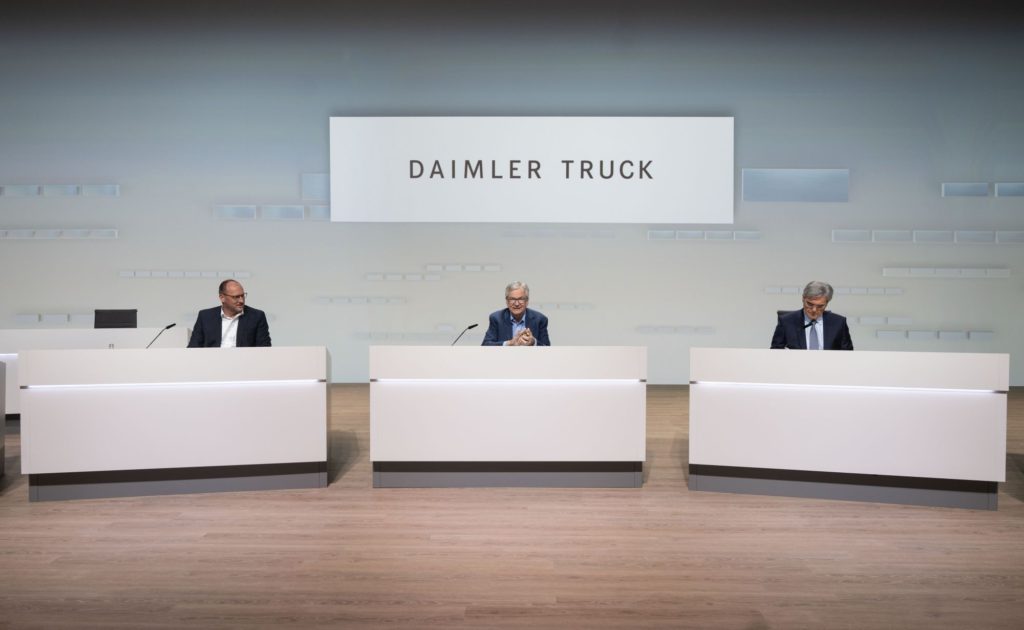
Daimler Truck Lifts Outlook on Strong North American Demand 

(Bloomberg) — Daimler Truck Holding AG increased its earnings forecast for the year amid strong demand for vehicles, including from its North American trucks segment.

The company should now see a “slight increase” in earnings before interest and taxes for the year, up from a prior target of no growth, the world’s biggest commercial vehicle maker said late Wednesday. 

Daimler Truck disclosed the rosier outlook after a better-than-expected third quarter on the back of a significant increase in vehicle sales, strong prices and solid results in the after-sales business. 

Like automotive firms worldwide, the company’s production has been limited by a lack of semiconductors. Manufacturers have recently outlined improving availability of the components, allowing companies to work through a long backlog of orders.

Third-quarter preliminary earnings more than doubled to €1.27 billion ($1.28 billion) before interest and taxes, Daimler Truck said, beating a €1.09 billion average analyst estimate.

Daimler Truck, which split from luxury automaker Mercedes-Benz AG last year, has struggled to turn unrivaled industrial scale into profitability matching the likes of Volvo Group and Paccar Inc. The company is striving for a margin in excess of 10% by 2025.

More stories like this are available on bloomberg.com

©2022 Bloomberg L.P.

Chipmakers Are All Pulling Back on Capital Spending, Except Samsung

(Bloomberg) — Over the past two weeks, every major memory chipmaker has warned of a supply glut and tumbling prices, announcing it was time to slash capital spending.

Not so market leader Samsung Electronics Co.

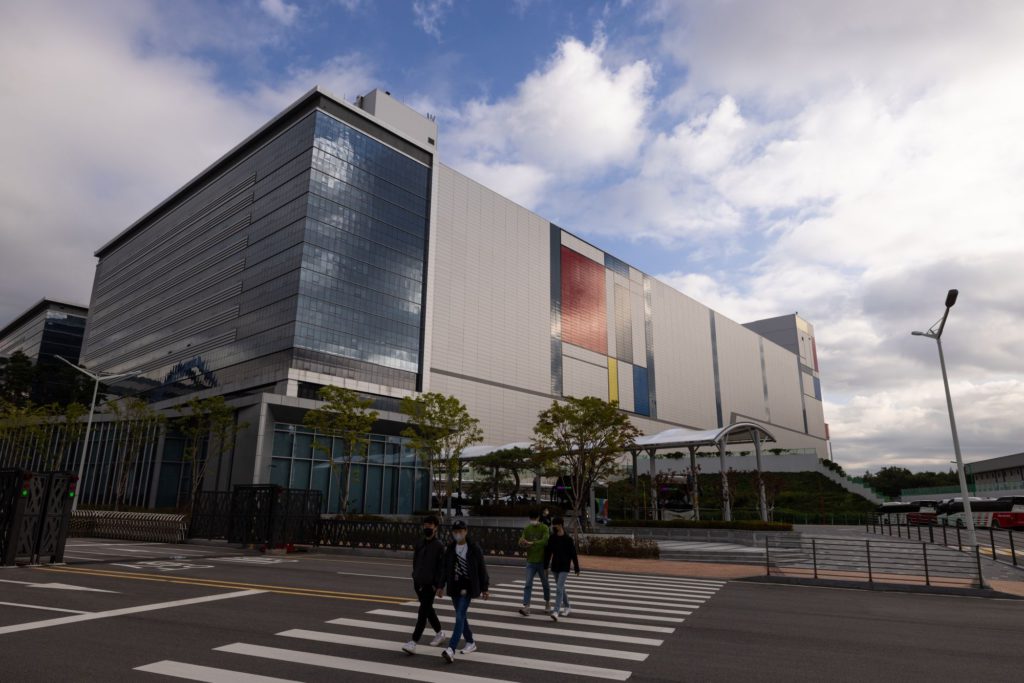
The South Korean giant said on Thursday that it sees widespread weakness in the semiconductor market with little sign of recovery until the second half of next year– but it’s not going to pull back. Instead, Samsung is increasing its capital expenditures this year, in a move that would help it gain ground against rivals in the memory sector as well as against Taiwan Semiconductor Manufacturing Co. 

“Without a doubt, we are at a pivotal moment,” Samsung’s newly-appointed Executive Chairman Jay Y. Lee said in a statement. “Now is the time to act, to be bold and unwavering in our focus.”

Samsung will boost chip-related capital spending 9% this year to 47.7 trillion won ($33.6 billion) and vowed to stay the course on “preemptive” investments in topline chip gear. The company said capex will be lower in dollar terms because of the weak won, but it is pouring money into its logic chipmaking business, targeting TSMC.

“Samsung can do what it wants, as it is flush with cash,” Nomura Financial Invest Korea analyst Chung Chang-Won said.

Demand for memory chips has plunged worldwide, as client technology firms work through record-level stockpiles of chips, accumulated to meet demand amid pandemic-related supply disruptions and Russia’s invasion of Ukraine. Samsung said prices of both its NAND and DRAM memory fell by around 20% in the three months ended in September, echoing rival SK Hynix Inc.’s assessment of “unprecedented” market deterioration.

But while Hynix, as well as Micron Technology Inc. and Kioxia Holdings Corp. said they are slashing capital spending or chip output to cope, Samsung said it had no immediate plans to cut output, saying its scale gave it superior cost efficiency.

Quarterly net income at Samsung stood at 9.1 trillion won, missing the 9.4 trillion won consensus compiled by Bloomberg News. Profit in its chip segment was 5.1 trillion won, down 49% from a year ago.

Shares in Samsung were little changed after its earnings announcement, while rival Hynix shares fell by as much as 3.6%.

More stories like this are available on bloomberg.com

©2022 Bloomberg L.P.
Close Bitnami banner
Bitnami