Bloomberg

Philippines to Tap Its ‘Not-So-Secret Weapons’ to Cushion Peso

(Bloomberg) — Inflows from millions of Filipinos working overseas and hundreds of call center companies in the Philippines may help anchor the peso above the 60 per dollar level until the end of the year, according to traders and analysts.

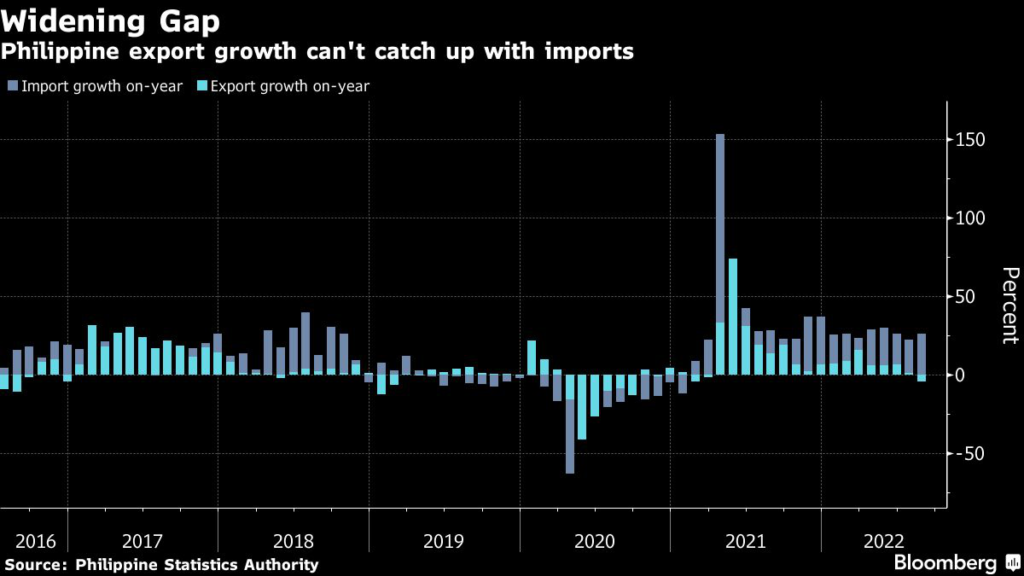
Filipinos abroad typically send more money home for the Christmas holidays while the business-process outsourcing industry has become a steady source of dollar receipts, giving the nation some leg up amid a record $6 billion trade deficit.

“Filipinos overseas and the thriving call center industry have been our not-so-secret weapons,” said Joy Gallega, president of ACI Philippines, the association of currency, fixed-income and derivatives traders. “They can help offset the weakness in exports.” 

The peso may trade within the 58-59 per dollar range for the rest of the year as remittances pour in, Gallega said. The currency climbed for a third day on Thursday to 58.25 per dollar, its strongest level in a month.

Overseas remittances are expected to total $35 billion by end-2022 while outsourcing revenues should add another $30 billion this year, according to Michael Ricafort, chief economist at Rizal Commercial Banking Corp. 

The two sectors can bring $15.8 billion in inflows between now and year-end, and the nation can use $10 billion of that to defend the peso, Finance Secretary Benjamin Diokno said Oct. 21.

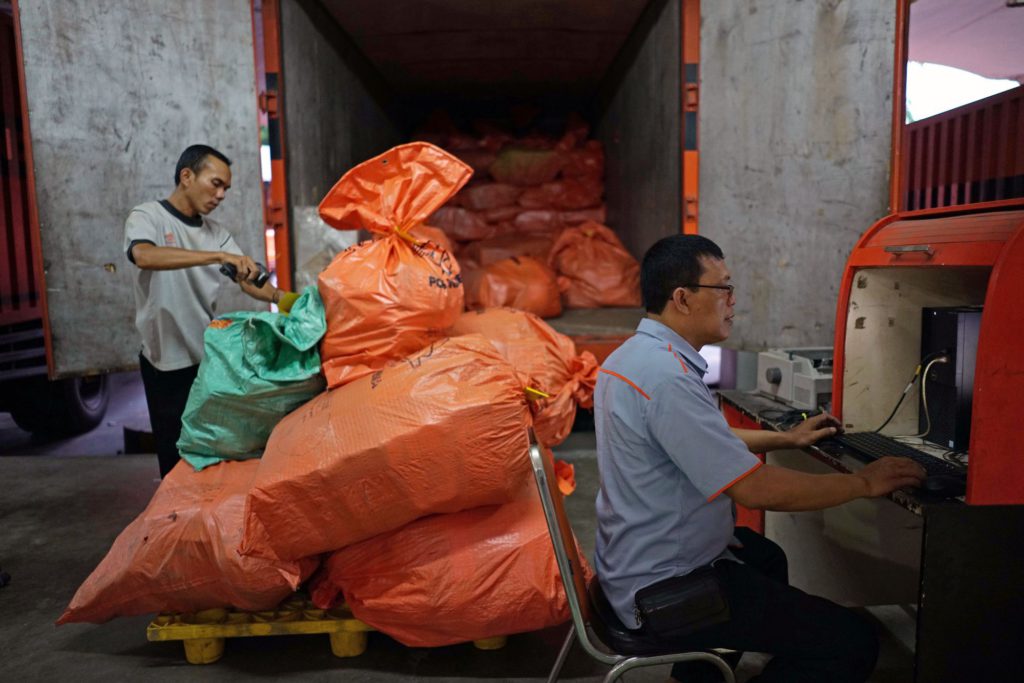
Resurgent demand for imported goods as the economy reopened, coupled with shrinking exports, particularly of electronics, highlight the importance of other dollar sources to support a currency that has lost nearly 13% this year against the backdrop of the US’s aggressive monetary tightening. The nation’s intervention this year was estimated by Exante Data Inc., which specializes in tracking capital outflows, at $8 billion. 

Receipts from remittances and outsourcing can plug the estimated $60-billion trade gap for 2022 and along with foreign tourism revenue and other inflows “fundamentally provide some cushion for the peso,” Ricafort said. 

Hedging

The peso had also been under pressure lately as large buyers of dollars look to cover their next two to three months worth of invoices for purchases such as oil, traders said, adding that these are legitimate hedging practices.

A fourth consecutive outsized increase in the key rate should help anchor the currency, said ACI’s Gallega, also Philippine Business Bank’s fixed income head, predicting at least a half-point hike in the central bank’s November policy meeting. Policy makers will couple this with other tools like market intervention and mopping up of excess liquidity, he said.

Another “solid move” by the central bank on the policy rate will be crucial, according to Security Bank Corp. chief economist Robert Dan Roces. He estimates the country’s ballooning imports bill — forecast at $142 billion this year — could blow past the $136 billion seen from export earnings, remittances and outsourcing revenues.

Central bank Governor Felipe Medalla this week said he will vote for a 75-basis-points rate hike if the Federal Reserve raises by that much at its next meeting. The Philippines has so far tightened by 2.25 percentage points this year, its most aggressive cycle in two decades.

“Dollar sources, plus monetary authority actions, may help with preventing the peso going past 60,” Roces said.

More stories like this are available on bloomberg.com

©2022 Bloomberg L.P.

Stocks Resume Rally With Slower Rate-Hike Bets: Markets Wrap

(Bloomberg) — Stocks advanced, with US futures bouncing back from tech earnings worries while Hong Kong’s benchmark gauge rallied for a second day. The dollar stabilized after a two-day drop. 

An index of global shares is headed for a fifth day of gains, its longest stretch in more than two months, amid growing expectations of moderating US rate hikes. A tech rally powered Hong Kong shares to further erode losses incurred earlier this week after President Xi Jinping tightened his grip on power. Japanese stocks led declines in Asia. 

A Bloomberg gauge of the dollar steadied, with offshore yuan giving up some of Wednesday’s gains. The yield on the 10-year Treasury bond sat around 4% after inching below the threshold earlier, with investors positioning for less aggressive rate hikes as earnings and economic data indicate a slowdown. The benchmark US yield has dropped more than 20 basis points over the past two days. 

Amid the challenges for equities investors, central banks are providing some optimistic signals that less aggressive monetary tightening may be on the horizon. The Bank of Canada raised interest rates by a smaller amount than expected on Wednesday, adding to suggestions that the Federal Reserve is also getting closer to shifting down in gears.


A contraction in services and manufacturing and fewer new home sales showed the Fed’s efforts to cool the economy seem to bearing some fruit. Still, economists expect the Fed to hike by 75 basis points for the fourth time in a row when it meets next week. 

“The only reprieve that will cause them to pause will be signs that inflation is subsiding and we’re not quite there,” said Nancy Daoud, a private wealth adviser at Ameriprise Financial, in an interview on Bloomberg TV. “They will stick to their guns and raise rates in November and again in December.”

The European Central Bank is also projected to hike by 75 basis points later Thursday.

US futures climbed, overcoming a 24% decline for Meta Platforms Inc. in after-hours trading following underwhelming third-quarter earnings. Wednesday’s declines for the Facebook parent, Amazon.com Inc., Alphabet Inc. and Microsoft Inc. dragged the S&P 500 to a loss as investors grew uneasy over tech profits. South Korea’s Samsung Electronics Co. was little changed after reporting weak earnings.

China’s mainland stock indexes were little changed, while Australian equities rose. 

Oil gained further ground after touching the highest level in about two weeks after US Secretary of State Anthony Blinken said a deal with Iran would be unlikely to advance in the short term. Traders placed bets on a soaring price for aluminum as the US considers adding the metal to sanctions against Russia, a major producer.

Read More: Stock Fissures Widen in Day of Severe Moves Below Market Surface

Key events this week:

  • ECB rate decision, Thursday
  • US GDP, durable goods orders, initial jobless claims, Thursday
  • Bank of Japan policy decision, Friday
  • US personal income, personal spending, pending home sales, University of Michigan consumer sentiment, Friday

Some of the main moves in markets:

Stocks

  • Futures on the S&P 500 rose 0.5% as of 10:45 a.m. Tokyo time. The S&P 500 fell 0.7%
  • Nasdaq 100 futures climbed 0.5%. The Nasdaq 100 fell 2.3%
  • The Topix Index fell 0.4%
  • The S&P/ASX 200 Index rose 0.7%
  • The Hang Seng Index rose 2.8%
  • The Shanghai Composite Index rose 0.3%
  • Euro Stoxx 50 futures fell 0.4%

Currencies

  • The Bloomberg Dollar Spot Index was little changed
  • The euro was little changed at $1.0077
  • The Japanese yen rose 0.2% to 146.07 per dollar
  • The offshore yuan was little changed at 7.1932 per dollar

Cryptocurrencies

  • Bitcoin was little changed at $20,739.65
  • Ether rose 0.4% to $1,560.32

Bonds

  • The yield on 10-year Treasuries was little changed at 4.00%
  • Australia’s 10-year yield declined seven basis points to 3.85%

Commodities

  • West Texas Intermediate crude rose 0.4% to $88.26 a barrel
  • Spot gold rose 0.2% to $1,667.69 an ounce

More stories like this are available on bloomberg.com

©2022 Bloomberg L.P.

Southeast Asia Digital Economy Slows as Consumers Curb Spending

(Bloomberg) — Growth in Southeast Asia’s internet economy is slowing after years of expansion, showing that even emerging digital markets aren’t immune to economic headwinds.

Online spending in the region will rise about 20% this year to $200 billion, research from Google, Temasek Holdings Pte and Bain & Co. showed, slowing from 38% a year earlier. The region’s internet economy is set to reach $330 billion by 2025, according to the report, down from a previous forecast of $363 billion.

This is the first time estimates have been revised downward in the companies’ annual report, which covers Singapore, Indonesia, Malaysia, Thailand, Vietnam, and the Philippines. Even as the region’s consumers are adopting mobile and online services at a rapid clip, they are curbing spending amid accelerating inflation and rising interest rates — just like their peers globally.

“After years of acceleration, digital adoption growth is normalising,” the companies said in a release. “The majority of digital players are now shifting priorities from new customer acquisition to deeper engagement with existing customers to increase usage and value.”

Southeast Asia, home to Alibaba Group Holding Ltd.’s Lazada and Sea Ltd.’s Shopee, will see a 17% increase in e-commerce gross merchandise value this year, slowing sharply from pandemic highs as consumers become more cautious. Online shopping is now forecast to hit $211 billion in 2025 versus a previous $234 billion prediction, making up 64% of the region’s total estimated digital GMV, the research showed.

E-commerce, financial services and travel are among leading sectors driving the region’s digital growth, the report showed. Southeast Asia is adding about 20 million new digital consumers in 2022.

The number of deals involving tech companies in the region remained relatively steady at about 1,200 in the first half of this year compared with a year-earlier period, according to the report. Early-stage investments are increasing, while later-stage deals are getting hit by dimmer public listing prospects in the capital markets. Southeast Asia venture capital funds held about $15 billion in “dry powder” at the end of 2021, down from $16 billion a year earlier.

Indonesia remains the region’s largest digital economy where online spending is predicted to rise to $130 billion by 2025. Vietnam is expected to grow at the fastest rate among the six countries tracked by the study, more than doubling in online GMV over the next three years.

More stories like this are available on bloomberg.com

©2022 Bloomberg L.P.

Bankers Replaced by Tech PhDs as Xi Sparks New Fund Talent War

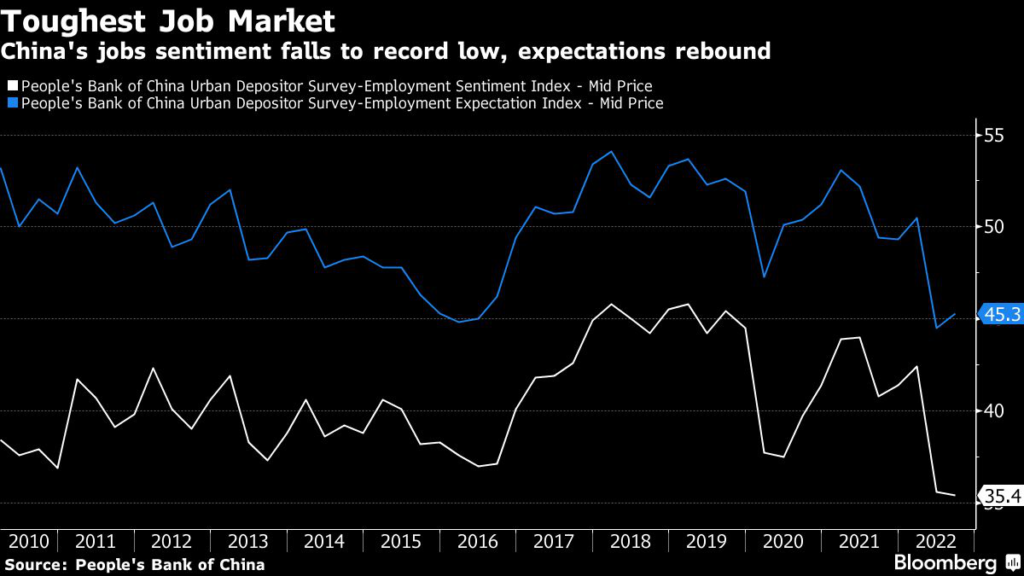
(Bloomberg) — One in five Chinese youths can’t find a job. Oliver Jiang has to fight off employers with a stick.

When the first-time job-seeker posted his resume on a recruitment website earlier this year, his inbox exploded and his phone buzzed non-stop. The 28-year-old doctoral grad spent the following month turning away suitors — including one that promised him 15 months of pay a year — before landing his dream job at a $600 million investment firm.

Jiang is one of the chosen few in China’s rapidly evolving finance sector: a PhD in electric vehicle technology. This kind of methodical researchers steeped in the classical sciences are replacing well-connected bankers as the most desirable hires at venture capital firms across the nation — sometimes doubling their salaries when they switch over.

“Everybody’s on the lookout for deeptech talent. A background in science and technology is now often listed as a must in job postings,” Jiang said. “Who knew such strong demand would come from the venture capital sector?” 

It’s a phenomenon that reflects a broader shift in the world’s No. 2 economy. This month, Xi Jinping vowed to depose the US as a technology leader and become self-sufficient — formalizing a groundswell that’s been underway since Beijing in 2021 made it clear the days of freewheeling expansion and deal-making that built internet giants like Alibaba Group Holding Ltd. were over. 

The effort is taking on urgency as the Biden administration escalated efforts to contain its geopolitical rival, imposing a series of chip export restrictions in its most aggressive effort yet to contain China’s rise. Hardline nationalist media including the Global Times argued that would only accelerate Beijing’s ambitions. China’s top technology overseer convened a series of emergency meetings with leading semiconductor companies, seeking to assess the fallout and pledging support for the critical sector.

Read more: China Summons Chip Firms for Emergency Talks After US Curbs

That last is what investment firms are counting on. As Chinese investors scramble to regain momentum by embracing hard-core tech startups, the country’s search for the next Tesla or SpaceX has fueled demand for bona fide engineers like Jiang.

“It’s a way for venture capitalists to differentiate their funds and compete for the best startups at a time when fund-raising has proven to be more challenging for all but for the very top tier,” says Rebecca Fannin, founder of Silicon Dragon Ventures that researches tech trends in China. “The money is following the tech, deeper tech that is.”

Spooked by the ferocity of last year’s internet crackdown, China’s fast-reacting tech investment industry is taking no chances this time. Once rivaling Silicon Valley, Beijing’s heightened scrutiny and Xi’s Covid-zero policy in particular have crippled China’s startup investment industry.

While there’s little reliable data on the secretive industry, the vast majority of new hires since 2021 at venture capital firms have sported science and technological credentials, according to interviews with startup financiers and recruiters. 

There’s no guarantee that stacking the deck with PhDs produces better yields. The war for talent is also inflating costs for venture firms struggling with a worsening drought in capital, the aftermath of the tech crackdown and a realization that the easy double-digit returns of years past are no more.

Xi Aide Likely to Be Next Economy Czar Stresses Need for Growth

But what’s forcing their hand is the undeniable fact that investors once enamored of the consumer and mobile internet are shifting their focus, heeding signs from Xi’s administration that is prioritizing semiconductors, clean energy and artificial intelligence to wean China off a reliance on American suppliers.

The country’s total startup investment has shrunk roughly 44% this year through September from a year earlier, but the amount of venture money flowing into semiconductor startups has actually climbed by 40%, according to global data tracker Preqin. 

Hillhouse Capital Group, the private equity giant that made its name as an early backer of Tencent Holdings Ltd. and JD.com Inc, recently raised its first “carbon-neutral” fund dedicated to climate technologies.

Then there’s Sinovation Ventures. The Beijing-based venture firm founded by former Google executive Kai-Fu Lee plans to expand its investment crew by roughly 15% this year — with new additions working on fundamental technology. That comes as nearly all the venture capitalists there now devote their attention to startups along those lines. By contrast, only half of its investors did that five years ago. 

The hiring of deep-tech investors is vital for Chinese venture firms to succeed, some industry observers say. That’s a sea change from just a decade ago. Xiong Hao, a semiconductor researcher who returned from the US to join China’s then-nascent venture investment sector in the early 2010s, planned to build a career on finding and funding startups on the cutting-edge of science and technology. Nobody cared.

“Deep-tech startups in the country were few and far between,” recalled Xiong, now a partner at Sinovation. “Investors would also question your choice of investment — ‘Why not pick internet companies that could grow into a monopoly and give us a home run?’”

Xiong now co-leads a team of six people hoping to groom the Chinese version of graphics chip pioneer Nvidia Corp. and chip-equipment maker Applied Materials Inc. He plans to hire four more this year to keep pace with the industry boom. 

In the quest for talent, venture capital firms are forced to get creative. Hiring managers say they’ve begun browsing staff rosters at the Chinese Academy of Sciences — the nation’s premier research organization — while others are befriending engineers at tech giants like the Warren Buffett-backed automaker BYD Co. The fight can get nasty, too. 

Venture firms are cannibalizing each other. The bigger players have begun targeting talent at smaller rivals such as Lenovo venture arm Legend Capital and even billionaire Jack Ma’s Yunfeng Capital, industry insiders and headhunters say. Legend Capital and Yunfeng Capital didn’t respond to Bloomberg’s inquiries seeking comment. 

On at least one occasion, a Beijing-based US dollar fund doubled the base salary of an investment associate in order to get that person on board – almost unthinkable a few years ago for anyone specializing in advanced manufacturing, says Duke Duan, a partner who specializes in tech talent at boutique recruitment advisory firm Bowers. Industry-wide, Duan estimates the base salary for investors active in hard-core technology climbed at least 50% this year when they joined a new firm, up from a more typical 20% to 30% previously.

All that belies a job market in crisis. Tencent, for one, reduced its workforce by thousands in the June quarter -– its first staffing cuts since 2014, while Alibaba let go of nearly 10,000 employees during the same period.

The shift in fortunes not only has reshaped venture firms’ hiring strategy but also reshaped the path of on-the-job professionals. One case in point is Zhang Lijun, Xiong’s colleague and a partner at Sinovation.

After Chinese policymakers last year banned for-profit tutoring — an arena that once attracted billions of dollars from investors including Zhang — she decided to align her future picks in part with the government’s vision. The venture capitalist took courses in biology, even volunteering at the China Agricultural University, to reinvent herself as the authority on next-generation farming.

“Branching out into fundamental technology has become a common choice for venture capitalists,” she said.

Read more: Xi’s Tech Crackdown Fuels Another Crisis: Out-of-Work Youth

But converting scientists and engineers into venture capitalists isn’t an easy matter. Not everyone has the aptitude for dealmaking, where human relations can matter as much as knowledge. The softer skills essential to investment, such as communications and networking, aren’t taught in classrooms or explored in labs.

Jiang, the engineer-turned-investment-analyst, made it clear that financing wouldn’t be his long-term career choice. He joined his company — a Shenzhen-based venture firm focusing on consumer-facing businesses — because it assembled a team for the first time to invest in electric cars. That was vital to his next move.

“This is just a stepping stone,” Jiang said. “I’d like to start my own business one day, ideally in the manufacturing of smart cars.” 

More stories like this are available on bloomberg.com

©2022 Bloomberg L.P.

Musk Tells Twitter Employees He Doesn’t Plan to Cut 75% Of Jobs

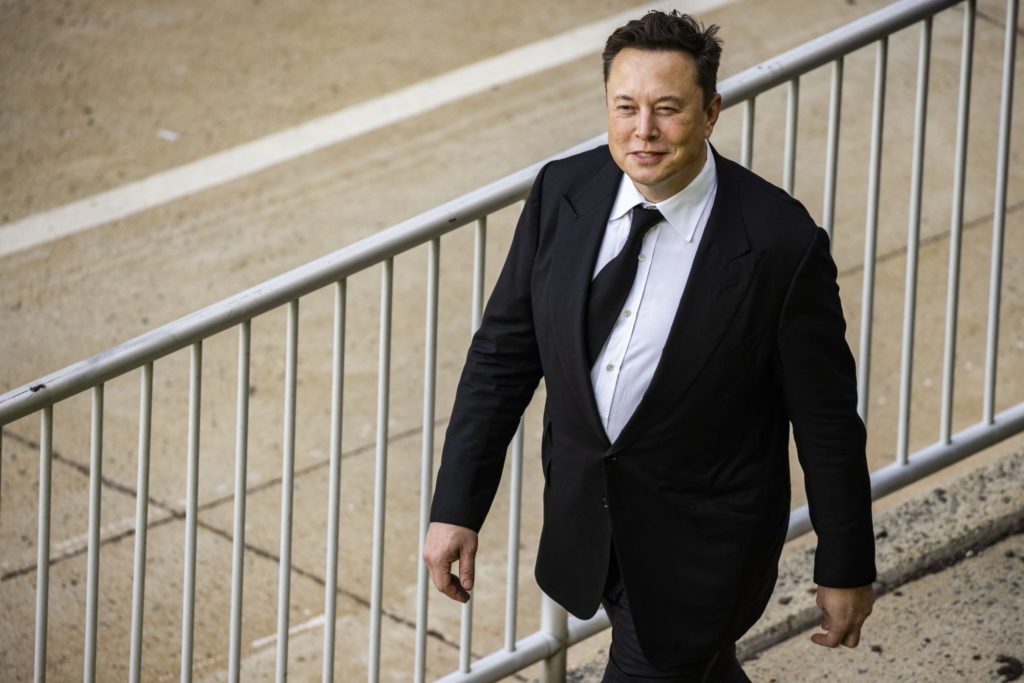
(Bloomberg) — Elon Musk told Twitter Inc. employees on Wednesday that he doesn’t plan to cut 75% of the staff when he takes over the company, according to people familiar with the matter.

Musk, whose $44 billion deal for Twitter is on track to close Friday, denied the previously reported number in an address to employees at the company’s San Francisco office, said the people, who declined to be named because the information isn’t public. 

The billionaire is still expected to cut staff as part of the takeover, causing anxiety among workers. Earlier on Thursday, Musk posted a video clip of himself walking into the offices carrying a kitchen sink. He changed his Twitter profile description to read “Chief Twit.”

Read More about Musk’s visit to Twitter HQ

More stories like this are available on bloomberg.com

©2022 Bloomberg L.P.
TikTok Found Not Liable For Child Dying in ‘Blackout Challenge’

(Bloomberg) — TikTok isn’t liable for the death of a 10-year-old girl who watched a so-called Blackout Challenge video that encouraged people to choke themselves, a judge ruled.

US District Judge Paul Diamond in Philadelphia said a federal law shielded the video-sharing platform from liability in the death of Nylah Anderson, even if the company’s app recommended the video to her.

The Blackout Challenge encourages viewers to videotape themselves choking to the point of passing out. Versions of the challenge have been posted on various platforms and have been blamed for the deaths of multiple children. Other wrongful death lawsuits against TikTok over the challenge are pending in federal courts in Oakland and Los Angeles.

Anderson was found hanging from a purse strap in a closet of her home in Pennsylvania in December 2021, according to court records. Her mother sued TikTok, claiming it had recommended the video to the girl on her “For You Page.”

In an eight-page ruling Tuesday, Diamond said even if the app had recommended the video to the girl, TikTok couldn’t be sued. Promoting a video to a user is “exactly the activity” that is shielded from liability under Section 230 of the federal Communications Decency Act, he wrote. “The wisdom of conferring such immunity is something properly taken up with Congress, not the courts,” he added.

Congress added Section 230 to the 1996 law in an effort to shield online content providers from being buried under mountains of litigation based on the the content posted by users on their platforms.

A lawyer for the Andersons said the family disagreed with the judge’s interpretation of Section 230. 

“The federal Communications Decency Act was never intended to allow social media companies to send dangerous content to children, and the Andersons will continue advocating for the protection of our children from an industry that exploits youth in the name of profits,” Jeffrey Goodman said.

The case is Anderson v. TikTok Inc., 22-cv-01849, US District Court, Eastern District of Pennsylvania (Philadelphia).

More stories like this are available on bloomberg.com

©2022 Bloomberg L.P.

JPMorgan Ramps Up Hiring for Payment Services in Asia Pacific

(Bloomberg) — JPMorgan Chase & Co. is building out teams that handle card transactions and other payments for businesses by recruiting staff across key Asian markets amid the boom in digital commerce.

The New York-based lender has begun providing services within its merchant-acquiring unit in Australia, India, Japan, Singapore, South Korea and New Zealand this year, with Hong Kong planned by the end of 2022, according to Max Neukirchen, the firm’s global head of payments & commerce solutions. 

The bank is looking to hire “many, many dozens if not more people,” he said in an interview. 

JPMorgan’s payments business combines the firm’s treasury services, trade, card and merchant services capabilities to help clients pay anyone from anywhere in the world at any time. As e-commerce surges across Asia with many small merchants still waiting to go digital, getting these firms as clients is increasingly attractive to banks and fintech companies alike.

India ranks among markets with the highest growth potential, said Neukirchen, saying the country is “very important” due to its size and the transition away from cash to other electronic payment methods. Japan is also a priority for the bank with a growing e-commerce market, while Australia benefits from heavy usage of credit cards, he said. Singapore and Hong Kong are “critical hubs” for the region, he added.

Read more on JPMorgan’s acquisitions to bolster its payments infrastructure 

In China, where the payments market is dominated by local giants Alipay and Wechat Pay, the bank has a partnership with a local firm. According to Neukirchen, it has been harder to get licenses within the world’s second largest economy, though he doesn’t rule out an expansion there sometime in the future. 

“Down the road we might want to expand our footprint in China but the priority for now is on those seven new markets,” he said.

More stories like this are available on bloomberg.com

©2022 Bloomberg L.P.
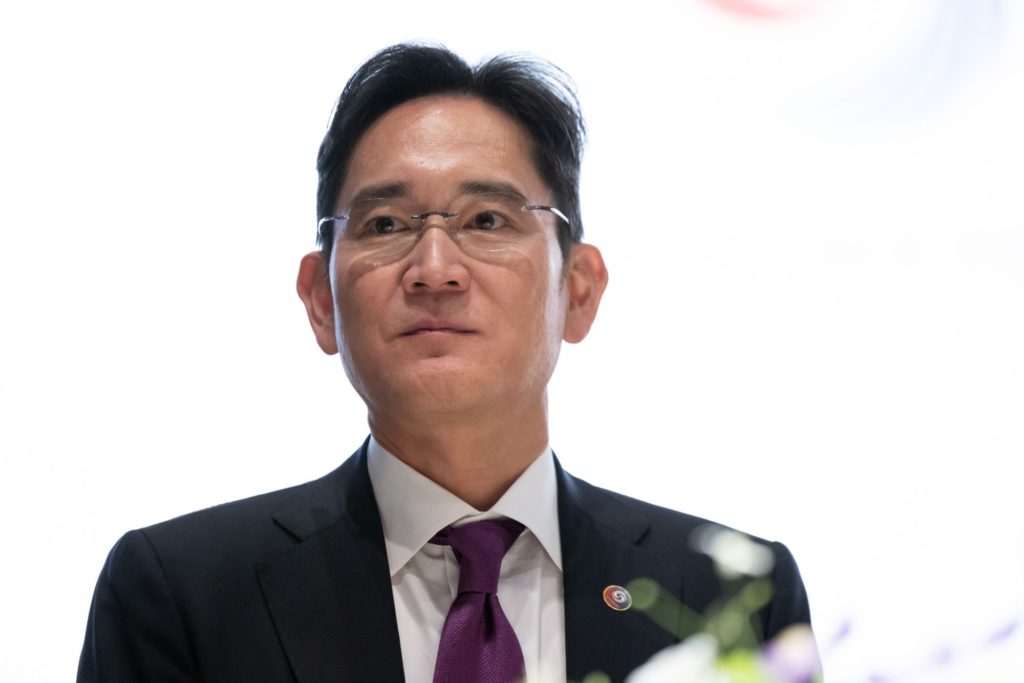
Samsung Scion Lee Takes Helm of Korean Technology Empire

(Bloomberg) — Samsung Electronics Co. named Jay Y. Lee executive chairman of South Korea’s largest company, finalizing a long-anticipated elevation just as a supply chain crisis and escalating geopolitical tensions roil the world’s biggest chipmaker. 

The board approved the 54-year-old’s ascension to the helm of the $250 billion company Thursday, Samsung said in a statement. While Lee had been expected to take over the post after his father died in 2020, his ascension had been delayed by graft investigations and two stints in jail.

The decision emerged the same day his company reported disappointing earnings and warned it didn’t foresee a recovery in technology demand till the second half of 2023 — underscoring the magnitude of Samsung’s challenge ahead.

Click here for a live blog on Samsung’s earnings conference call.

The elevation formalizes Lee’s status as the nation’s most prominent business executive and one of its chief economic ambassadors. While the move may not make much difference in the short run given Lee was already de-facto leader, a formal title could smooth Lee’s efforts to guide Samsung deeper into semiconductors and biotechnology.

“Without a doubt, we are at a pivotal moment,” Lee said in a statement accompanying his appointment. “Now is the time to plan our next move. Now is the time to act, to be bold and unwavering in our focus.”

Read more: Samsung Profit Dragged Down by Chip Decline as Prices Slump

Lee must steer the company through one of the more turbulent periods since his grandfather Lee Byung-Chull founded Samsung in 1938. Big nations from the US to Europe are urging Samsung to increase investment in their backyards to secure their supply of chips. Washington’s campaign to curb China’s chipmaking ambitions is increasingly forcing allies like South Korea, which depends heavily on the Chinese market for exports, to pick a side.

More immediately, the emergence of new technology such as artificial intelligence and supercomputing is forcing technology giants to adapt and think strategically about the future. 

Why Samsung’s Billionaire Heir Is In and Out of Jail: QuickTake

The succession comes after a years-long leadership vacuum at the crown jewel of the Samsung group. Lee has been embroiled in bribery and corruption investigations dating back to 2017. In August, he won a presidential pardon that allowed him to formally take the helm at the company. Speaking in front of media at the time, Lee apologized to the Korean public and promised to “start anew.”

Lee, who has an extensive global network developed over several decades under his father’s guidance, has stepped up as the nation’s relief pitcher during the pandemic and chip shortage crisis. He played matchmaker between companies and governments, helping ramp up mask and vaccine production as well as a major expansion of chip investments. 

The market has been hoping Lee’s return would drive growth at Samsung through major mergers and acquisitions, as well as accelerate strategic decisions on where Samsung should invest in future technology, boosting shareholder value. 

Read more: Samsung Profit Dragged Down by Chip Decline as Prices Slump

Lee earned an undergraduate degree in East Asian History at Seoul National University, the nation’s top school, and a master’s degree from Japan’s Keio University. He also studied for his doctorate at Harvard Business School, though he didn’t get a degree. 

The executive joined Samsung Electronics in 1991 and was promoted to vice chairman in 2012, with the company citing his achievements in the phone, TV and components businesses — including forging partnerships with Apple Inc. and Google. Samsung remains the largest seller of phones using Google’s Android software. 

Lee will take the helm after his father achieved mythical status in South Korea, credited for his vision for pushing an appliances maker into semiconductors and smartphones. In the process, the elder Lee became the nation’s richest and most powerful tycoon. 

The new chairman owns 1.63% of Samsung Electronics and 18.13% of the group’s de-facto holding company Samsung C&T Corp., according to data compiled by Bloomberg. Lee is worth about $5.9 billion, according to the Bloomberg Billionaires Index.

–With assistance from Mayumi Negishi.

(Updates with earnings and Lee’s comments from the third paragraph)

More stories like this are available on bloomberg.com

©2022 Bloomberg L.P.
Bolsonaro Slams Electoral Court Decision Ahead of Brazil Runoff

(Bloomberg) — President Jair Bolsonaro ratcheted up attacks on Brazil’s electoral authority after it denied a request to investigate radio stations for allegedly giving preference to his opponent, former President Luiz Inacio Lula da Silva.

Speaking in the presidential palace late Wednesday, Bolsonaro slammed Alexandre de Moraes, chief of the electoral court, and announced plans to appeal the decision. Brazil holds its presidential runoff on Oct. 30.

“We will go to the limits, by what’s allowed by the constitution, and prove what our audits show, that there is truly a huge disparity,” he said.

The latest row between the conservative president and Moraes, a Supreme Court justice who heads a wide-reaching investigation into disinformation, centers on air space for campaign propaganda. By law, TV and radio stations have to lot equal time to each presidential hopeful in the final stretch of the race.

On Monday, lawyers from the Bolsonaro campaign said broadcasters in Brazil’s North and Northeast regions, strongholds of support for the leftist challenger, had played a disproportionate amount of Lula’s radio spots. 

Moraes, who often clashes with Bolsonaro for his attacks on Brazil’s institutions, said the president failed to provide evidence. He also ordered an investigation into the president’s campaign for a possible attempt to disrupt the election.

Read More: Bolsonaro Stalls in Polls After Ally Clashes With Police

Tensions are running high ahead of the Sunday vote, with polls showing Lula holding a narrow lead. Well before this year’s campaign kicked off, the incumbent has cast doubt on Brazil’s electronic voting system, raising fears of a potential contested result if he loses.

In his speech, Bolsonaro also claimed without providing evidence that he underperformed in the first-round vote in cities that didn’t air his campaign ads. “My side has been hurt a lot, and not just now,” he said.

More stories like this are available on bloomberg.com

©2022 Bloomberg L.P.
Samsung Profit Dragged Down by Chip Decline as Prices Slump

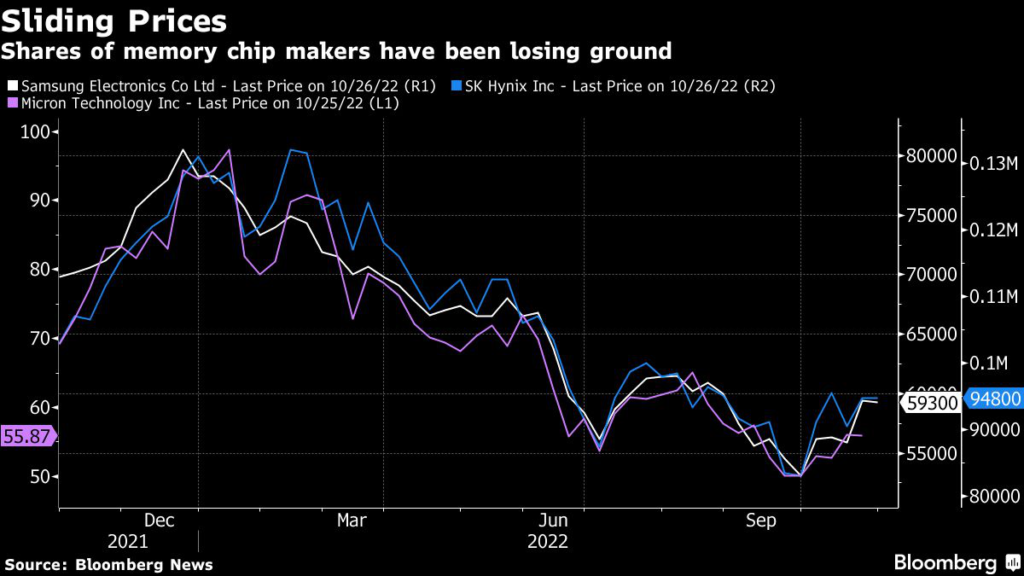
(Bloomberg) — Samsung Electronics Co.’s third-quarter profit missed analyst estimates, hurt by a 14% fall in its bread-and-butter chip business as price falls prompt the industry to slash capital spending.

Semiconductor revenue at the world’s largest memory chip maker came to 23 trillion won ($16.1 billion) in the three months ended September, according to a company statement on Thursday, missing the consensus 35 trillion won compiled by Bloomberg. Net income for the company came to 9.1 trillion won, compared with the consensus 9.4 trillion won.

Reeling from a sharp downturn, memory chip rivals from SK Hynix Inc. to Micron Technology Inc. and Kioxia Holdings Corp. are slashing capital spending or chip output. Client technology firms are working through record-level stockpiles of chips, accumulated to meet soaring demand amid supply disruptions stemming from pandemic-related lockdowns, logistics bottlenecks and Russia’s invasion of Ukraine.

Unlike its peers, Samsung is increasing its chip capital spending, pushing it to 47.7 trillion won for 2022 from 43.6 trillion won last year.

“Under continued macro uncertainties, scale of customers’ inventory adjustments exceeded market expectations, and demand for consumer products continued to weaken,” the company said in a statement. “As a result, bit growth missed guidance and our sales result declined.” 

Samsung shares were little changed in early trading Thursday.

The company said that it now sees a recovery in the second half of 2023, subject to macroeconomic headwinds, led by demand from data center servers. 

The memory industry faces “unprecedented” market deterioration as shipments of PCs and smartphones fall, Hynix warned Wednesday, announcing it would halve its capex plans for next year. Climbing oil prices and interest rates are denting consumer spending, with uncertainty growing because of the US’s push to rein in China and its access to high-performance chips.

While Washington’s export curbs on military-use technology only affect a tiny part of the server market, an expansion of the scope of the ban would herald “a more significant slowdown risk for China’s server shipment momentum in 2023,” research firm TrendForce said in a report.

Samsung has taken a cautious approach over cuts to production or capital expenditure, with a memory chip executive saying this month that output reductions were not on the table. Samsung has said it would take its cues from the market and will “flexibly” manage capacity.  

“It’s hard to expect demand recovery at this point,” Lee Seung-woo, analyst at Eugene Investment & Securities, said ahead of the earnings announcement. “There should be somewhat flexible output reduction plans.”

What Bloomberg Intelligence Says 

“The NAND flash market flipped to oversupply in 3Q and, given the pace of demand, could remain there into 2024. Long-term growth trends remain intact, but the near term is challenged with PC and smartphones weak, server companies taking a breather and select chip shortages pushing inventories up for customers including hyperscalers and NAND vendors alike.”

– Paula Penkal, BI analyst

Click here for the full research. 

More stories like this are available on bloomberg.com

©2022 Bloomberg L.P.

Close Bitnami banner
Bitnami