
Bloomberg

Amazon CEO Jassy Violated Labor Laws, NLRB Regional Head Says

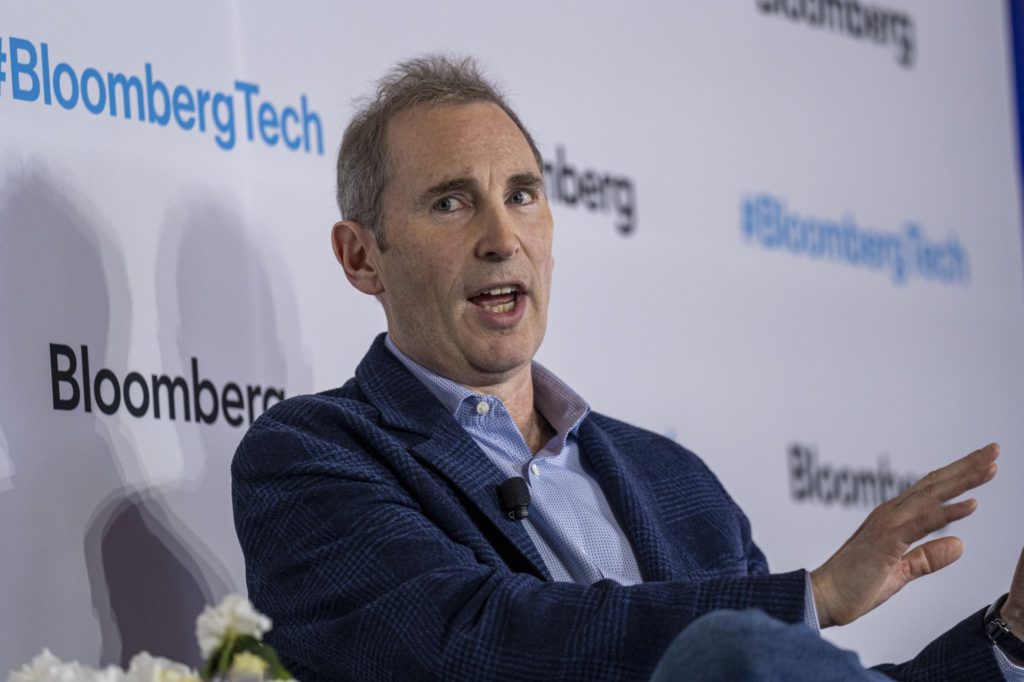
(Bloomberg) — Amazon.com Inc. Chief Executive Officer Andy Jassy violated federal labor laws when he said in television interviews earlier this year that company workers would make greater gains without union representation, a National Labor Relations Board official alleged in a complaint.

The complaint against Jassy highlights statements he made in an April interview with CNBC and a June interview on Bloomberg Television. In the Bloomberg interview, Jassy said Amazon workers would be better off without a union, which would make it more difficult for employees to have a direct relationship with management.

Jassy has been “interfering with, restraining and coercing employees” in violation of federal labor laws by making such statements, Ronald Hooks, regional director of the NLRB in Seattle, wrote in the complaint dated Oct. 25. The complaint asks Amazon to respond in writing by Nov. 8 and scheduled a hearing on the matter before an administrative law judge in February.

“These allegations are completely without merit, and the comments in question are clearly protected by express language of the National Labor Relations Act and decades of NLRB precedent,” Amazon spokeswoman Kelly Nantel said in a statement. “The comments lawfully explain Amazon’s views on unionization and the way it could affect the ability of our employees to deal directly with their managers, and they began with a clear recognition of our employees’ right to organize and in no way contained threats of reprisal.” 

Labor unrest has roiled various US companies in the past couple of years. The upstart Amazon Labor Union won an election in April to represent workers at an Amazon warehouse in Staten Island, New York. Earlier this week, workers seeking improved pay, benefits and working conditions at an Amazon warehouse in Southern California abandoned an effort to schedule a union election. Apple Inc. workers at a store in Oklahoma City voted Oct. 15 to unionize, marking the second location to do so. A union victory at a Starbucks Corp. store in Buffalo, New York, has since led to hundreds of successful votes around the country.

Seth Goldstein, an attorney for the Amazon Labor Union, which filed the complaint against Jassy, said the NLRB’s action against the CEO highlights a tougher stance taken by the federal government to protect the rights of workers to form unions.

“There hasn’t been accountability on these issues in several decades,” he said.

More stories like this are available on bloomberg.com

©2022 Bloomberg L.P.
Chinese Stocks in US Rally, Erasing Most of Record Selloff

(Bloomberg) — Chinese stocks in the US are extending their rally after a record selloff on Monday, as Beijing’s pledge to support its financial markets lifted investor confidence and retail traders bought the dip. 

The Nasdaq Golden Dragon China Index rose 7.2% on Wednesday, bringing its two-day gain to 12%, the most since April. The index has erased most of its losses from Monday, when it sank 14%. Among the top performers, Alibaba Group Holding Ltd., JD.com Inc. and Pinduoduo Inc. jumped more than 8%, while Lufax Holding Ltd. rallied 13%. 

Some investors saw a glimmer of hope after China’s central bank and foreign-exchange regulator vowed to ensure the healthy development of financial markets and reiterated that the yuan would be “basically stable.” The comments followed President Xi Jinping’s tightening of control over the government, which spurred fears among foreign investors that his strategy will stifle the nation’s economy and private enterprise. 

The offshore yuan surged by a record, joining a broad rally against the dollar as investors bet that the Federal Reserve will moderate the pace of its rate hikes. The strength of the move caught out traders, who also reported seeing Chinese banks selling the greenback to help drive the currency’s rebound from an all-time low.

“While sentiment is likely to stay depressed and markets could remain volatile until concrete policy actions emerge, pro-growth announcements could lead to sharp rallies, as happened in May or June,” UBS Global Wealth Management Chief Investment Officer Mark Haefele wrote in a note Wednesday. 

The risks and upsides for China equities are balanced, and investors should consider sticking to benchmark allocations for Chinese stocks rather than going underweight, according to Haefele. “Those with a lower allocation could consider buying on dips, and we continue to recommend positioning in sectors with resilient earnings given the prevailing headwinds,” he wrote.

That’s exactly what some traders did during Monday’s epic selloff. The American depositary receipts of Chinese companies were among the most heavily purchased stocks this week as retail investors sought to “buy the dip,” Vanda Research analysts including Marco Iachini wrote in a note on Wednesday.

Retail investors’ purchase of the top Chinese ADRs Monday surpassed levels last seen during the Shanghai lockdowns in March, with more than $157 million of net flows, according to Vanda. Alibaba, Nio and Pinduoduo were the biggest beneficiaries with $92 million, $32 million and $12 million of net inflows, respectively, the report said, noting that Alibaba attracted close to 60% of the inflows on that day.

Still, China’s equity markets remain fragile and are at risk of being bogged down by the nation’s Covid-zero policy. Reports of a lockdown in one of Wuhan city’s central districts dealt a blow to indexes in China and Hong Kong early Wednesday.

–With assistance from Matt Turner.

(Adds paragraph on yuan.)

More stories like this are available on bloomberg.com

©2022 Bloomberg L.P.

Zuckerberg’s Path to Metaverse Will Keep Losing Money

(Bloomberg) — Meta Platforms Inc. in its third-quarter earnings statement on Wednesday highlighted the path to the metaverse is expensive:

“We do anticipate that Reality Labs operating losses in 2023 will grow significantly year-over-year. Beyond 2023, we expect to pace Reality Labs investments such that we can achieve our goal of growing overall company operating income in the long run.”

Chief Executive Officer and founder Mark Zuckerberg on the analyst call said it’s important to remember the metaverse efforts are a “pretty wide” portfolio. It’s not just the Quest headsets you see — it’s also the social aspect, like the avatars that will give a sense of presence. And in VR, there will not only be a consumer-focused product that will reach a large scale, but also a work-focused product like what they just released at Connect.

The work on augmented reality is going to take a lot longer. Zuckerberg for now is just judging the R&D efforts. He said although they haven’t shipped anything, he’s confident nobody else in the world is working on the stuff they’re working on.

“I get that a lot of people disagree with this investment,” Zuckerberg said. But he said it would be a mistake to abandon the efforts, because they are going to be important for the future of the business. It’s “some of the most historic work we’re doing” that people will look back at over “decades,” he says.

“Those who are patient and invest with us will end up being rewarded.”

Mandeep Singh of Bloomberg Intelligence points out that Reality Labs revenue missed estimates:

“No one is buying virtual reality headsets right now. As long as they keep losing money on Reality Labs, that’s going to make investors nervous.”

For more on Meta Third-Quarter Earnings, click here for our TOPLive blog.

(Updates with more details. A previous version corrected the spelling of Zuckerberg in the headline.)

More stories like this are available on bloomberg.com

©2022 Bloomberg L.P.
Shaw Jumps as Minister’s Comments Boost Odds of Rogers Deal

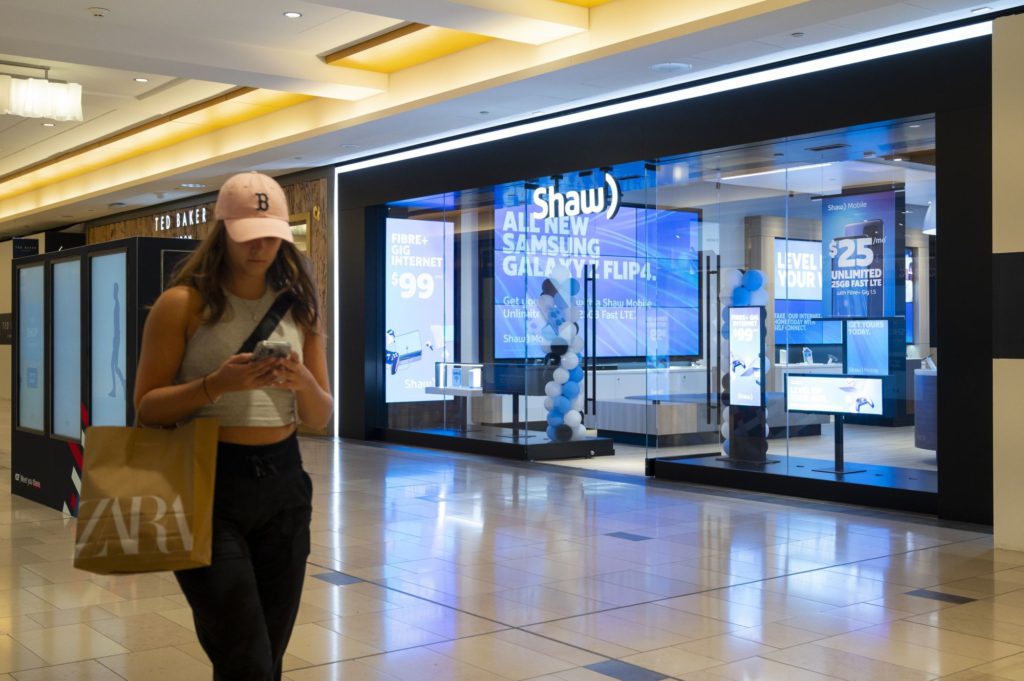
(Bloomberg) — Shaw Communications Inc. rose 7% to the highest level since July after a government minister in Canada clarified the regulatory conditions on its deal with Rogers Communications Inc., improving the odds that the transaction will close.  

Shaw shares closed at C$36.52, about 10% below the Rogers takeover offer of C$40.50. Rogers was up nearly 6%.

Toronto-based Rogers agreed to pay C$20 billion ($14.8 billion) for its rival in March 2021, but the deal has been delayed by Canada’s antitrust regulator, which says it will weaken competition in the wireless sector. The two companies have agreed to sell most of Shaw’s wireless assets to a third Canadian communications firm, Quebecor Inc., to try to solve that problem. 

On Tuesday, Industry Minister Francois-Philippe Champagne said he’d approve the divestiture to Quebecor only if the company promises to keep the wireless licenses for at least 10 years and consumer prices improve in Ontario and Western Canada, where Shaw operates. Quebecor Chief Executive Officer Pierre Karl Peladeau said the company will accept those terms. 

That’s a sign the Rogers-Shaw deal has a path to the finish line, Desjardins analyst Jerome Dubreuil said. The government “is signaling that the deal would be acceptable if QBR competes in the long term,” Dubreuil said in a note, referring to Quebecor’s stock ticker. “Why would Mr. Champagne set conditions if he were about to say no?”

Bureau Is ‘Firm’ 

The deal still has to pass the antitrust hurdle. Rogers and Shaw are scheduled for mediation with the Competition Bureau this week. If the two sides can’t reach a settlement, the merger is destined for Canada’s Competition Tribunal, a merger court. 

“The odds now seem quite low that the Competition Bureau wouldn’t agree to a settlement” with Shaw and Rogers, said Aaron Glick, a merger arbitrage specialist at Cowen & Co. The base case is for settlement, with the deal closing next week, he said. 

“We remain firm in our decision to challenge this proposed merger to protect the public interest,” Jayme Albert, a spokesperson for the Competition Bureau, said in an emailed statement. Albert said the bureau was aware of Champagne’s statement but that it would be inappropriate to comment on it. 

–With assistance from Yiqin Shen.

(Updates with share price close, adds comment from Competition Bureau.)

More stories like this are available on bloomberg.com

©2022 Bloomberg L.P.

Blockchain.com Said to Be in Funding Talks at Shrunken Valuation

(Bloomberg) — Blockchain.com, stung by the crypto bear market that has rocked the industry, is in talks over a potential “down round” fundraising that may value the digital financial-services firm at a fraction of the $14 billion mark it achieved earlier this year, according to people with knowledge of the matter. 

The fundraising would follow strategic financing the company obtained in the third quarter at an unspecified valuation from investors led by UK-based investment firm Kingsway Capital. In March, Blockchain.com said it completed a round that more than doubled its estimated worth to $14 billion and included investors Baillie Gifford and Lightspeed Venture Partners. 

While terms of the current possible round are still being worked out and it is in early stages, the financing will result in a significant cut to Blockchain.com’s valuation, likely leaving it worth $3 billion to $4 billion, said one of the people, who asked not to be identified discussing private information. Blockchain.com declined to comment. 

The possible down round reflects a pullback by venture capitalists from investments in blockchain startups as the market endures a downturn during which Bitcoin has lost roughly 70% of its value from its all-time high last year. Crypto venture funding tumbled 37% to $4.4 billion in the third quarter, according to research firm PitchBook. 

Read more: Crypto Startup Funding Plunges to Lowest Level in Over a Year

Blockchain.com has faced challenges since prices of cryptocurrencies began plummeting earlier this year. The company disclosed major exposure to the collapse of Three Arrows Capital and said it was cooperating with investigations into the disgraced crypto hedge fund. The digital-asset exchange also laid off 25% of its staff, or about 150 people, in July. 

More stories like this are available on bloomberg.com

©2022 Bloomberg L.P.
There’s Less Than $1 Left in the Twitter-Musk Deal Spread

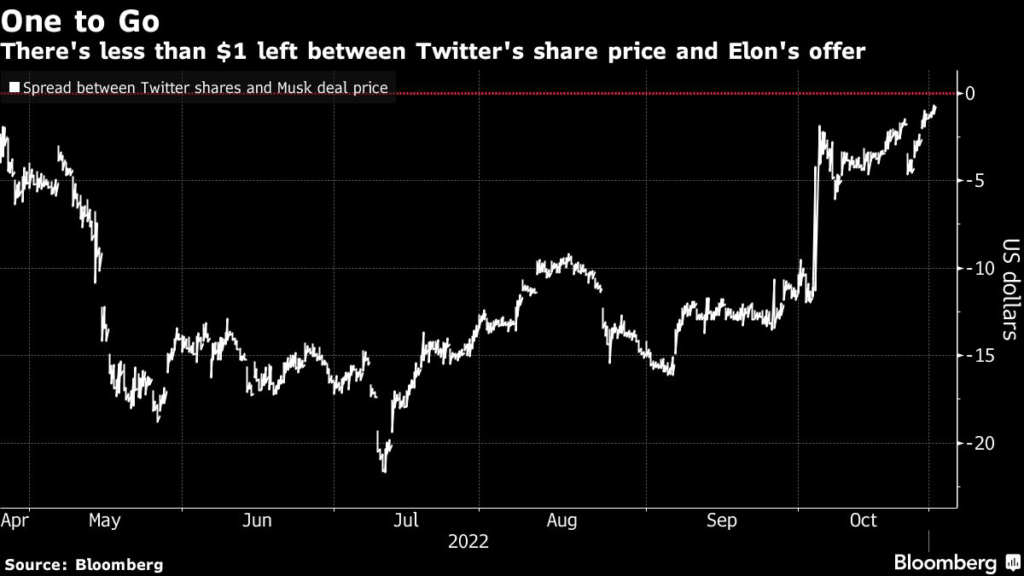
(Bloomberg) — The gap between Twitter Inc.’s share price and Elon Musk’s takeover offer narrowed to less than $1 Wednesday, with a court-ordered deadline to complete the $44 billion deal just two days away.

Shares of the social media giant closed up 1.1% at $53.35 after it was reported that Twitter’s chief marketing officer Leslie Berland sent a memo to staff saying that Musk would address the company on Friday. Musk, who is set to pay $54.20 for the company, also tweeted a video of himself entering Twitter headquarters.

Assuming the deal closes as planned, it will end a tumultuous six-month stretch of trading that has seen Twitter shares swing wildly on a near daily basis as investors tried to gauge the likelihood of Musk actually completing the purchase. At one point in early July, Twitter shares fell roughly 40% below Musk’s offer price after the Tesla Inc. chief executive officer said he was trying to terminate his agreement to buy the company.

Twitter shares have steadily climbed closer to the offer price this week, after Bloomberg News reported that Musk told bankers who are helping to fund the deal that he planned to close the acquisition by Friday. That date coincides with the deadline a Delaware judge set earlier this month in order to avoid a new trial.

The stock extended its climb in postmarket trading, rising as much as 1.1% to $53.95.

–With assistance from Yiqin Shen.

(Adds postmarket trading in)

More stories like this are available on bloomberg.com

©2022 Bloomberg L.P.

Meta’s Instagram Users Reach 2 Billion, Closing In on Facebook

(Bloomberg) — Meta Platforms Inc.’s Instagram now has 2 billion monthly active users worldwide, closing in on the 2.96 billion who use Facebook, in a sign of the social media giant’s shifting makeup.

The company disclosed the number during an otherwise-gloomy earnings report Wednesday, when a shaky ad market clouded Meta’s forecast and sent its shares tumbling. It also said that more than 2 billion people now use its messaging app, WhatsApp, every day. Meta’s total monthly users for its family of apps number 3.71 billion worldwide.

In June 2018, the company said Instagram surpassed 1 billion monthly active users. Since then, the app underwent one of the biggest transformations since it was acquired by Facebook — now called Meta — a decade ago. Instagram shifted away from exclusively showing posts from people users followed. Instead, it provided more algorithmically selected content based on what it thinks they’re interested in. The service also added TikTok-style short-form videos, called Reels, which have been prioritized over other video formats on the platform. 

Meta made those changes in an attempt to keep Instagram relevant in an increasingly crowded social media industry. Over the past few years, ByteDance Ltd.’s TikTok surged onto the stage with its popular topics-focused feed of videos. On TikTok, videos are algorithmically pushed out to people who are interested in a certain subject — rather than just people who follow a post’s creator.

It’s important for Meta that its social media platforms continue to keep users coming back and spending time on Facebook and Instagram. The company makes the majority of its revenue from advertisements placed on those platforms. Lately, marketers have been spending less on digital ads amid uncertain economic conditions, leaving Meta and its rivals fighting for fewer dollars.

Instagram, acquired in 2012, built an advertising business that is a major revenue driver for Meta. The business model for WhatsApp, purchased in 2014, is more nascent.

More stories like this are available on bloomberg.com

©2022 Bloomberg L.P.
Nvidia Leads Chip Stocks Higher on Meta’s Planned Tech Binge

(Bloomberg) — Buried in a gloomy earnings report from Meta Platforms Inc. was a bit of good news — just not for the Facebook parent company.

The shares of companies that supply data centers gained after Meta Platforms said it’s planning to spend even more on components next year as it invests in infrastructure to support its push into digitally immersive experiences. 

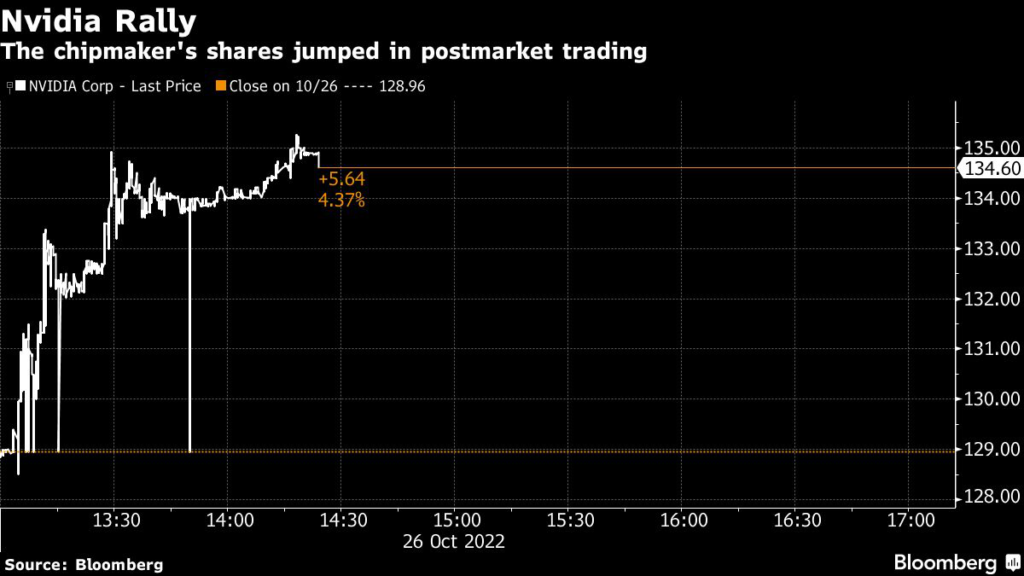
In its third quarter earnings report, Meta Platforms projected capital spending of $34 billion to $39 billion in 2023, up from $30 billion to $34 billion this year. The comments sent Nvidia Corp. and Marvell Technology Inc. up more than 3% in postmarket trading. 

Arista Networks Inc., which makes networking gear used in data centers and counts Meta as one of its biggest customers, is up more than 7%.

“Amidst increased question/concern that Meta would significantly reduce their forward capex guide in conjunction with third quarter results, tonight we got the absolute opposite,” Wells Fargo analysts led by Aaron Rakers said in a report.

While Meta’s spending plans are a boon to its suppliers, it was received poorly by investors skeptical of the high costs associated with its strategic shift. The stock dropped 14% after the company projected weaker-than-expected sales in the current quarter. 


More stories like this are available on bloomberg.com

©2022 Bloomberg L.P.

Meta Tumbles as Sales Forecast Shows Depth of Ad-Market Weakness

(Bloomberg) — Meta Platforms Inc. gave a forecast for revenue in the fourth quarter that was on the low end of analysts’ estimates, showing the social-media platform continues to struggle with a weak advertising market amid an economic slowdown.

The owner of Instagram and Facebook said it sees $30 billion to $32.5 billion in revenue in the last three months of the year. Analysts had been expecting $32.2 billion, according to estimates compiled by Bloomberg. The shares tumbled more than 12% in extended trading and are down more than 55% this year through Wednesday’s close.

Meta, which makes most of its revenue from advertising, is grappling with a decline in marketers’ budgets due to economic uncertainty and a recent change in Apple Inc.’s privacy rules that made social media ads less effective. The company has cut costs by slowing hiring and narrowing priorities to focus on keeping its social media platforms relevant and expanding virtual reality offerings. 

But with Meta in a revenue slump potentially for the long haul, Chief Executive Officer Mark Zuckerberg said the company is making “significant changes across the board to operate more efficiently,” and has “increased scrutiny on all areas of operating expenses.”

This year, Meta has transformed a number of key parts of its business. As ByteDance Ltd.’s popular TikTok app has won users’ time and accustomed them to a feed of vertical videos based on users’ interests, Meta has changed Facebook and Instagram’s experiences to show more algorithmically-chosen content and less from the people you follow. Its short-form videos, called Reels, are meant to increase user engagement and revenue opportunities on the app.

The company, which changed its name from Facebook to Meta a year ago, is also betting big on the metaverse, virtual-reality-fueled gathering places that Zuckerberg thinks will host the future of work and communication. The effort is losing Meta billions, and the company expects to lose more money on the metaverse bet next year. 

Meta now expects total expenses for this year to be $85 billion to $87 billion. For 2023, that number will grow to an expected $96 billion to $101 billion, it said on Wednesday.

“While we face near-term challenges on revenue, the fundamentals are there for a return to stronger revenue growth,” Zuckerberg said in a statement. “We’re approaching 2023 with a focus on prioritization and efficiency that will help us navigate the current environment and emerge an even stronger company.”

Meta’s legacy social media products need to remain popular enough to generate the advertising revenue that will fund the metaverse vision. In the third quarter, 4% more people spent time on Meta’s platforms every day, compared with the same period last year, with 2.93 billion daily active users. Monthly, the tech giant saw 3.71 billion active users.

“Meta is on shaky legs when it comes to the current state of its business,” said Debra Aho Williamson, an analyst at Insider Intelligence. “Zuckerberg’s decision to focus his company on the future promise of the metaverse took his attention away from the unfortunate realities of today: Meta is under incredible pressure from weakening worldwide economic conditions, challenges with Apple’s App Tracking Transparency policy, and competition from other companies, including TikTok, for users and revenue.”

But Meta isn’t the only tech company to succumb to the new economic reality. On Tuesday, Alphabet Inc. reported third-quarter earnings and revenue that missed analysts’ expectations. Google, which had been uniquely resilient to this year’s digital ad slowdown, and YouTube both saw sales fall short of estimates. Last week Snap Inc. reported the slowest quarterly sales growth ever even after spending the year shrinking and refocusing its business. Shares of Snap and Pinterest Inc. both fell after Meta’s report.

In the third quarter, Meta posted revenue of $27.7 billion, slightly beating analysts’ average estimate for $27.4 billion. Net income fell 52% from the same quarter last year to $4.4 billion. Earnings per share were $1.64, below the $1.88 per share average estimate. 


More stories like this are available on bloomberg.com

©2022 Bloomberg L.P.

Elon Musk Is In Twitter’s Office and Will Address Staff Friday

(Bloomberg) — Elon Musk made his presence felt at Twitter’s San Francisco headquarters Wednesday, posting a video clip of himself walking into the offices carrying a kitchen sink and changing his public profile descriptor to “Chief Twit.” He’s due to address staff Friday, the closing deadline for his planned $44 billion deal to take the company private.

The social-media platform is expected to come under Musk’s ownership by 5 p.m. New York time on Oct. 28, as lawyers and bankers on both sides race to finalize paperwork. Leslie Berland, Twitter’s chief marketing officer, sent a memo to employees Wednesday saying that Musk was visiting the company’s headquarters this week, according to people who received the note.

“Elon is in the SF office this week meeting with folks, walking the halls, and continuing to dive in on the important work you all do,” Berland wrote in the memo. “For everyone else, this is just the beginning of many meetings and conversations with Elon, and you’ll all hear directly from him on Friday.”

Twitter shares gained on these latest signs that billionaire Musk plans to make good on his agreement to pay $54.20 a share for the company. On Tuesday, Bloomberg reported that Musk has told bankers he expected the deal to close by the deadline. Banks were expecting a borrowing notice from Musk for $13 billion in debt financing, with the intention of the funds going into escrow Thursday.

The stock climbed 1.1% to $53.35 at Wednesday’s close in New York.

The Wall Street lenders, led by Morgan Stanley, had already been preparing in recent weeks to fund the debt, Bloomberg previously reported. But nothing had ever been certain with the mercurial Musk, who only weeks ago was seeking to back out of the deal. These latest developments suggest he is in the final stages of closing the transaction.

At least some of the equity investors in the transaction have already transferred funds in support of the deal, people with knowledge of the matter said. In recent days, Musk’s lawyers have written to investors backing the equity portion of the deal to confirm it’s on track to close by the deadline, one of the people said.

Completing the transaction would mark the culmination of a months-long saga that saw Musk amass a big stake in the company, agree to join its board before changing his mind and then embark on a hasty quest to take Twitter private. Aside from the debt financing, he also rounded up a who’s who of billionaire buddies and other investors to pony up part of the equity needed, signing the takeover agreement while waiving the right to examine Twitter’s financials.

As markets tumbled and it became clear that he had vastly overpaid, Musk turned heel again, backing out of the deal on the allegation that Twitter misled him about the prevalence of fake accounts. After Twitter took him to court in Delaware to force his hand, Musk relented and the two sides got back to negotiations.

Many Twitter staff are greeting the prospect of ownership by Musk with trepidation. Potential investors were told that he plans to cut 75% of the workforce, which now numbers about 7,500, and that he expects to double revenue within three years, a person familiar with the matter said last week. In recent days, fears have been growing about a major reduction in headcount or another reorganization, another person said.

Musk would also allow for the return of former US President Donald Trump and others who have been kicked off the platform because Twitter will loosen content moderation standards, according to one of the people.

–With assistance from Maxwell Adler.

(Updates to add details about equity funding of the acquisition in seventh paragraph. An earlier version corrected Leslie Berland’s title to remove “head of people” reference in second paragraph.)

More stories like this are available on bloomberg.com

©2022 Bloomberg L.P.

Close Bitnami banner
Bitnami
