Bloomberg

Mobileye Rises Up to 36% in Year’s Best Debut for Big US IPO

(Bloomberg) — Mobileye Global Inc., the self-driving technology company spun off by Intel Corp., gained as much as 36% in its trading debut after raising $861 million in one of the few US initial public offerings to exceed its goals this year.

The first-day gain so far, though unextraordinary by standards in previous boom years, ranks as the biggest in a major US listing this year.

Mobileye’s shares, which opened trading in New York Wednesday at $26.71 apiece, rose as high as $28.49 after selling for $21 in the IPO. They were up 28% to $26.80 at 1:31 p.m. in New York, giving the company a market value of about $22 billion.

The company sold 41 million shares Tuesday after marketing them for $18 to $20, making it only the fourth out of 199 in the US this year to price its IPO above the targeted range, according to data compiled by Bloomberg.

While Mobileye’s market value tops the $15.3 billion Intel paid for Mobileye in 2017, it’s still short of the $30 billion valuation the company had sought earlier, Bloomberg News has reported. In conjunction with the listing General Atlantic agreed to buy $100 million worth of shares in a private placement, according to Mobileye’s filings with the US Securities and Exchange Commission. 

Last year’s record-high volumes for IPOs in the US and around the world have tanked amid market volatility, inflation fears and geopolitical risks, as well as a poor showing by companies that went public in 2021, which are down 22% on a weighted average basis.

‘Expansion Opportunity’

“Mobileye’s initial IPO pop validates investors’ interest in Mobileye’s growth prospects in the advanced driver-assistance systems (ADAS) market,” said Mandeep Singh, a senior analyst for Bloomberg Intelligence. “We believe similar to the growth of chips in smartphones, increasing demand for computer vision and ADAS systems in automobiles could be a multiyear expansion opportunity in semiconductors.”

The success of Mobileye’s listing springs from its proven business model and steady growth expectations, Singh said. “Still, it will be hard for companies without profitability to go public in this market,” he said.

IPO volume in the US has plummeted to about $23 billion since Jan. 1, compared with $279 billion at this point in 2021, the data show.

Only two 2022 listings on US exchanges have topped $1 billion. Corebridge Financial Inc. raised $1.68 billion in September, while private equity firm TPG Inc.’s January listing brought in $1.1 billion. Last year, 45 companies raised $1 billion or more in IPOs on the New York Stock Exchange and Nasdaq, the data show.

Awaiting Instacart 

Mobileye’s offering is the fourth-largest in the US and might stand as the last major IPO of the year unless a surprise contender pivots quickly toward a listing. Instacart Inc., another highly anticipated listing, decided against an IPO this year after cutting its valuation for the third time, to $13 billion, Bloomberg News reported this month.

Mobileye is off to a strong start in a tough year for its semiconductor peers. The Philadelphia Stock Exchange Semiconductor Index has lost 40% of its value this year. But even within the rout, caused by rapidly declining demand in end markets such as personal computers and smartphones, orders for auto-related chips have held up and shortages persist.

Amnon Shashua co-founded Mobileye in 1999 and and helped take it public in the US in 2014. He has been its chief executive officer since 2017.

In a letter to shareholders included in the prospectus, Shashua said the company’s driver-assistance technology has been used in more than 125 million vehicles. He said he expects the technology to be deployed in 270 million more vehicles by 2030.

“While the core of our business today is making human-driven cars safer, we are working tirelessly to bring about a future of autonomously driven vehicles,” Shashua said.

Mobileye said it will use the cash raised to toward net proceeds for working capital and general corporate purposes, as well as repaying a portion of debt owed to Intel. As of July, it had $774 million of cash and cash equivalents. In the 12 months ended Dec. 25, it had a net loss of $75 million on revenue of $1.39 billion, according to its filings.

Intel Chief Executive Officer Pat Gelsinger is seeking to capitalize on the Israel-based business, which makes chips for cameras and drive-assistance features, and is seen as a prized asset as the car industry races toward fully automated vehicles. But the bright future for self-driving vehicles that was prophesied by Intel, Waymo and others has sputtered. A world full of robo-taxis seems at best decades away and the losses for investors who put faith in the field are mounting.

Intel’s Control

Intel said in its filings that it will continue to hold all of Mobileye’s Class B shares, which will allow it to control the company with 99.4% of the voting power.

Shashua had indicated an interest in purchasing as much as $10 million of shares of Class A common stock, according to the filings. Baillie Gifford and Norges Bank Investment Management, as cornerstone investors, have indicated interest in purchasing up to an aggregate of $330 million shares.

Mobileye’s offering was led by Goldman Sachs Group Inc. and Morgan Stanley. The 23 other underwriters listed in its filings include Evercore Inc., Barclays Plc, Citigroup Inc. and Bank of America Corp.

The company’s shares are trading on Nasdaq under the symbol MBLY, the same ticker it used when it went public the first time in 2014.

(Updates with share gain in third paragraph.)

More stories like this are available on bloomberg.com

©2022 Bloomberg L.P.

More People Want to Work From Home But Remote Job Postings Are Declining

(Bloomberg) — The appeal of work-from-home is on the rise even as postings for remote jobs are on the decline, according to new LinkedIn data.

In February 2022, a record one in five jobs advertised on the site in the US offered remote work. By September, this figure had fallen to just 14%. Meanwhile, the allure of these opportunities has only grown: Remote job listings attract 52% of applications, up from 50% in February.

This preference has crystallized even as hiring cools after months of historic highs, according to LinkedIn’s analysis of data across 14 countries. While the labor market is still tight and employees continue to hold leverage in negotiations around salary, benefits and flexibility, LinkedIn chief economist Karin Kimbrough said in the report that “this power balance is likely to start leveling out in the coming months.” 

Read more: How to negotiate your return to the office

While the share of US employees working from home was slowly rising before Covid-19, the pandemic accelerated that trend by about 30 years, according to research by Stanford University professor Nick Bloom, Instituto Tecnológico Autónomo de México professor Jose Maria Barrero, and University of Chicago research associate Steven Davis. These patterns have leveled out, the researchers found, with about 15% of all Americans working fully remotely, 30% maintaining hybrid schedules and about 55% working in-person full-time. But for those able to work remotely, the number of work-from-home days that employers are willing to offer on average falls short of employees’ desires.

Read more: US offices are still less than half full despite recession fears

Data shows that workers continue to prize flexibility and work-life balance even as the economic outlook darkens, Jennifer Shappley, LinkedIn’s vice president of global talent acquisition, said in the report. An analysis by the Federal Reserve Bank of New York last week found that collectively, working from home saves Americans 60 million hours of commute time each day, which is spent instead taking care of kids, cooking, cleaning, exercising, going out or simply getting extra sleep. 

Read more: No longer tied to offices, workers are still bound by the clock

And according to Shappley, the trend has staying power: “I expect those two attributes to remain top talent drivers for years to come.”

More stories like this are available on bloomberg.com

©2022 Bloomberg L.P.

Volkswagen Will Make Only Electric Cars in Europe Within Next 10 Years

(Bloomberg) — Volkswagen AG’s namesake brand is stepping up efforts to go entirely electric and vowing to phase out making combustion cars in Europe completely starting in 2033 at the latest.

The VW division will launch 10 new electric models by 2026, including an entry-level model the automaker wants to sell for less than €25,000 ($25,161), brand chief Thomas Schaefer said Wednesday. VW had previously said it planned to stop selling combustion cars in Europe between 2033 and 2035.

VW got off to a bumpy start with the all-electric ID series that was intended to challenge Tesla Inc. The initial model — the ID.3 hatchback — only started deliveries on time in 2020 because early buyers agreed to wait months for certain functions to work. Ongoing software issues with the company’s electric models contributed to the company dismissing Herbert Diess as chief executive officer and making Porsche boss Oliver Blume the CEO starting last month.

Schaefer, who used to lead VW’s Skoda brand, said the carmaker will bring forward a face lift of the ID.3 to next year. The model will take “a significant and noticeable leap forward in terms of quality, materials and system stability,” he said.

More stories like this are available on bloomberg.com

©2022 Bloomberg L.P.

S&P 500 Rises After Fresh Data, BOC Decision: Markets Wrap

(Bloomberg) — US stocks rose after recent economic data and a smaller-than-expected interest-rate hike from the Bank of Canada buoyed hopes that the Federal Reserve may soon reach the end of its tightening regime. 

The S&P 500 climbed after fluctuating earlier in the session. The tech-heavy Nasdaq 100 pared losses that topped 2%.

Treasuries rallied after data showed the US merchandise-trade deficit widening. Sales of new US homes fell in September, another indication that the economy is starting to see the effects of the Fed raising rates sharply. A gauge of the dollar declined for a second day to its lowest level in three weeks.

Stocks had been buoyed in recent days by mostly solid earnings and speculation the Federal Reserve may curb the pace of rate increases. Sentiment took a hit earlier on Wednesday after earnings from megacap companies including Alphabet Inc. and Microsoft Corp. highlighted the impact the Fed, and consequently the surging dollar, had on the economy. 

The Bank of Canada unexpectedly slowing its pace of interest-rate hikes amid fears of a recession lifted markets mid-morning. Investors are now mulling whether other central banks could learn from their Canadian peer as they try to work out how aggressively they need to keep tightening to combat inflation. 

But it’ll be challenging for the Fed to announce that they’re going to be less hawkish, as they have to manage investors’ expectations along the way, according to Dustin Thackeray, chief investment officer at Crewe Advisors.

“They obviously don’t want to be too dovish and the market is obviously looking for any sort of a sign from the Fed that we’re hitting the break, so to speak, on rate increases,” he said by phone. “If they continue on their too hawkish stance, there is a risk that things kind of get out of hand on that end as well. So they’re definitely walking a very fine line.”

Key events this week:

  • Earnings due this week include: Apple, Exxon Mobil, Ford Motor, Credit Suisse, Airbus, Amazon, Bank of China, Boeing, Caterpillar, Cnooc, Intel, McDonald’s, Merck, Samsung Electronics, Shell, Vale, Volkswagen
  • ECB rate decision, Thursday
  • US GDP, durable goods orders, initial jobless claims, Thursday
  • Bank of Japan policy decision, Friday
  • US personal income, personal spending, pending home sales, University of Michigan consumer sentiment, Friday

Some of the main moves in markets:

Stocks

  • The S&P 500 rose 0.6% as of 11:39 a.m. New York time
  • The Nasdaq 100 fell 0.2%
  • The Dow Jones Industrial Average rose 1%
  • The Stoxx Europe 600 rose 0.6%
  • The MSCI World index rose 1.6%

Currencies

  • The Bloomberg Dollar Spot Index fell 1%
  • The euro rose 1.2% to $1.0081
  • The British pound rose 1.3% to $1.1626
  • The Japanese yen rose 1% to 146.43 per dollar

Cryptocurrencies

  • Bitcoin rose 3.7% to $20,932.42
  • Ether rose 7.2% to $1,579.76

Bonds

  • The yield on 10-year Treasuries declined nine basis points to 4.01%
  • Germany’s 10-year yield declined five basis points to 2.12%
  • Britain’s 10-year yield declined five basis points to 3.58%

Commodities

  • West Texas Intermediate crude rose 3% to $87.88 a barrel
  • Gold futures rose 1.1% to $1,676.20 an ounce

–With assistance from Allegra Catelli, Abigail Moses, Robert Brand, Vildana Hajric and Peyton Forte.

More stories like this are available on bloomberg.com

©2022 Bloomberg L.P.

Ford Sells Stake in Russia Business, Joining Carmaker Exodus

(Bloomberg) — Ford Motor Co. sold its 49% stake in the Sollers Ford joint venture, finalizing its exit from Russia after suspending operations in the country earlier this year after Moscow’s invasion of Ukraine.

Shares of the automaker will be transferred to the venture for a nominal value of €1 ($1), a Ford spokesman said Wednesday. The company will retain the option to buy back the shares within a five-year period “should the global situation change,” it said in a statement. 

Ford already had halted Russian commercial van manufacturing, supply of parts, information technology and engineering support in March. It follows Toyota Motor Corp., Nissan Motor Co. and Mercedes Benz AG in making a full departure from Russia. 

Ford’s business in Russia is small and has been downsized over the past three years. There were just 22,000 of its vehicles — including Ford-branded automobiles produced by an unconsolidated affiliate — sold there last year, according to regulatory filings. 

“We at Ford are deeply concerned about the invasion of Ukraine by Russia and the safety of the Ukrainian people,” Chief Executive Officer Jim Farley wrote on Twitter in March. 

Shares of Ford rose 1.3% to $13 as of 11:24 a.m. in New York. The stock is down about 37% this year.

The Dearborn, Michigan-based automaker had said in 2019 it was closing three factories in Russia, pulling out of a car market where it was once a pioneer as part of a broader overhaul of its money-losing European operations. That decision was made as an economic slowdown and Western sanctions dimmed the outlook for what many automakers had long seen as a key growth market.

(Updates with Ford’s history in Russia in the last paragraph. An earlier version corrected share percentage gain.)

More stories like this are available on bloomberg.com

©2022 Bloomberg L.P.

Emmanuel Macron and Olaf Scholz Seek a Reset After Lingering Tensions

(Bloomberg) — German Chancellor Olaf Scholz and French President Emmanuel Macron met in Paris Wednesday to try and iron out wide-ranging tensions from energy and economic issues to the future of European defense.

An official in Macron’s office said the conversation, which was conducted in English and lasted three hours, evolved around around energy, defense and innovation but stuck to long-term perspectives, with Scholz visibly open to more collaboration. 

Europe’s two biggest economies have traditionally been the driving force behind key decisions in the European Union including a massive plan to raise billions of euros in joint debt to weather the Covid pandemic. 

But the Franco-German engine appears to have jammed up, potentially delaying decision-making just as the EU grapples with acute challenges from the Russia’s war in Ukraine and soaring energy prices.

In Paris, Scholz was seeking to develop a joint French and European strategy to counter the impact of the US Inflation Reduction Act, officials said. German Economics Minister Robert Habeck has said the act risks triggering transatlantic trade tensions given large subsidies to attract companies investing in the US renewables sector.

Scholz is also seeking to discuss with France a European solution to the energy crisis. With half of France’s nuclear power plants down, Germany is forced to export electricity across the border from renewable sources at a time when the country is scrambling to secure new supplies.

Gas Bills

Money is part of the problem. When Berlin unveiled a plan to spend 200 billion euros ($201 billion) to help households and business pay their gas bills last month, European partners including France complained that the scheme could divide the region further.

Paris and Berlin canceled a joint meeting of government ministers that had been scheduled for Wednesday, to replace it with the Scholz visit and the lunch at the Elysee Palace. 

The decision came after Berlin agreed to build a missile defense shield dubbed the “European Sky Shield Initiative” with other members of the NATO military alliance, that could include German, US and Israeli-made equipment.

The project is a blow for France, which has been developing a ground-to-air defense system with Italy known as Mamba. An Elysee official declined to comment on the missile defense shield.

Work Ahead

On the sidelines of a meeting of EU leaders last week, Macron said the joint ministerial gathering had been canceled because German ministers were not available, although he insisted on the significant amount of work ahead for the two partners. 

The next meeting, which is mostly symbolic, is planned in January for the 60th anniversary of the Elysee treaty, a treaty of friendship signed between leaders  Charles de Gaulle and Konrad Adenauer to end years of Franco-German enmity, and which called for regular meetings between the two.

The missile shield isn’t the only thorn in the relationship, especially in the defense sector. Like his predecessors, Macron argues that Europe should rely on its own defense systems to be independent of the US.

Transatlantic Relationship

In Paris, officials have privately warned that President Donald Trump, or a figure with similar doubts on the need for a strong transatlantic relationship, could come back to power. They emphasize the need for stronger EU autonomy in defense.

But France, which has Europe’s biggest and strongest defense industry with giants such as Dassault Aviation or Thales SA, is often suspected of pushing its own economic interests when it promotes “strategic sovereignty.”

Officials in Paris have privately complained that Germany is working with the US’s SpaceX to launch satellites rather than relying on the European launcher, Ariane, and that it bought F-25 fighter jets from Lockheed Martin. 

Progress is also slow on the Future Combat Air System, known as FCAS. The Franco-German-Spanish project includes a jet fighter meant to replace France’s Rafale and Germany’s Typhoons jets in 2040.

As Berlin readies new legislation on weapons exports, a group of two dozen anonymous French defense experts dubbed Vauban published a column in newspaper La Tribune on Monday to complain about Germany’s “hypocrisy” and “selfishness.” Germany has failed to coordinate with partners including France when banning certain exports while sending weapons to “authoritarian regimes,” they wrote.


–With assistance from Arne Delfs.

(Updates with readout of the meeting in second and 10th paragraphs)

More stories like this are available on bloomberg.com

©2022 Bloomberg L.P.

Spotify Has Biggest Slump Since May on Profitability Concerns

(Bloomberg) — Spotify Technology SA, a leader in music streaming, tumbled after saying profit margins may narrow due to programming costs.

The shares fell as much as 9.5% on Wednesday, the biggest intraday decline since May 9. The stock has lost more than 60% this year.

The sell-off shows how investors have become less interested in the pace of subscriber growth and more focused on whether Spotify becomes profitable. That has put pressure on management to make a strong case for investments in newer businesses like original podcast programming.

“Sentiment on the name remains among the lowest in our coverage, and this quarter is not likely to change that,” Raymond James analyst Andrew Marok said in a note to clients. “We envision a longer-than-expected road to margin expansion.”

On a conference call with investors Tuesday, Chief Executive Officer Daniel Ek said he was mulling a price increase for its streaming product in the US, but wanted to first discuss the move with the record labels that provide the company’s music. 

Apple Inc., a rival in music streaming, raised the price of its service this week by $1 to $10.99 a month for individuals, citing costs. Spotify, based in Stockholm, charges $10.

Slowing Ad Sales

Spotify’s third-quarter ad revenue increased 19%, but the company said sales were slower than expected due to a “challenging macro environment.” The company joins other tech giants, including Alphabet Inc. and Snap Inc., in reporting slower ad sales. 

On the call, Ek said he wasn’t worried about ad sales slowing because the business is still a small one for Spotify. 

Spotify’s gross margin in the quarter failed to meet the average 25.2% estimate of analysts, coming in at 24.7%, which Spotify attributed to the ad slowdown and increased content spending — like its recent move into audiobooks.

The company forecast a gross margin of 24.5% in the fourth quarter, and an operating loss of 300 million euros, both below consensus expectations.

The company has been taking steps to diversify its revenue. Spotify began selling audiobooks in September in an effort to enter the “substantially untapped” market, according to Nir Zicherman, global head of audiobooks and gated content.

Spotify continues to wrestle with its podcasting business, terminating employees at its Gimlet Media and Parcast studios this month, following layoffs of other podcast staff in September.

The company reported 456 million monthly average users for the third quarter, beating analysts’ projections of 450.7 million. It surpassed paid subscriber predictions as well, confirming some investors’ beliefs that the business can weather a shaky economy and inflationary environment. 

Third-quarter revenue reached 3.04 billion euros ($3.03 billion), exceeding analysts’ expectations of 3.02 billion euros. Paid subscribers totaled 195 million, beating Wall Street projections of 194.2 million. The company generated 385 million euros in advertising sales in the quarter, representing 13% of its revenue. 

–With assistance from Catherine Larkin.

(Updates shares in second paragraph, adds analyst comment in fourth.)

More stories like this are available on bloomberg.com

©2022 Bloomberg L.P.

TikTok Plans To Expand London Footprint With New Office

(Bloomberg) — TikTok is in talks to lease a new London office a block away from its current UK headquarters as the social media giant continues to expand rapidly despite political tensions between Britain and China. 

The company, owned by Beijing-based ByteDance Ltd., is negotiating a lease for the Verdant development at 150 Aldersgate Street near London’s Farringdon district, people with knowledge of the talks said. The video-sharing platform wants to rent the entire 11-story, 134,000-square-foot (12,500-square-meter) development, the people said, asking not to be identified as the talks are private. 

A TikTok spokesperson declined to comment.

Deteriorating relations between the UK and China have affected TikTok’s expansion plans in Britain. The company suspended talks to build a global headquarters in the UK after the government limited the use of Huawei Technologies Co. products in the country’s 5G infrastructure, the Sunday Times reported in July 2020. 

The company has instead expanded rapidly in Dublin while renting a more modest UK headquarters at the Kaleidoscope building in Farringdon. Mapletree, the Singaporean owner of the Dublin building, is now considering a sale of the property, React News reported. 

More stories like this are available on bloomberg.com

©2022 Bloomberg L.P.

UK Seeking to Plug £35 Billion Fiscal Shortfall on Nov. 17

(Bloomberg) —

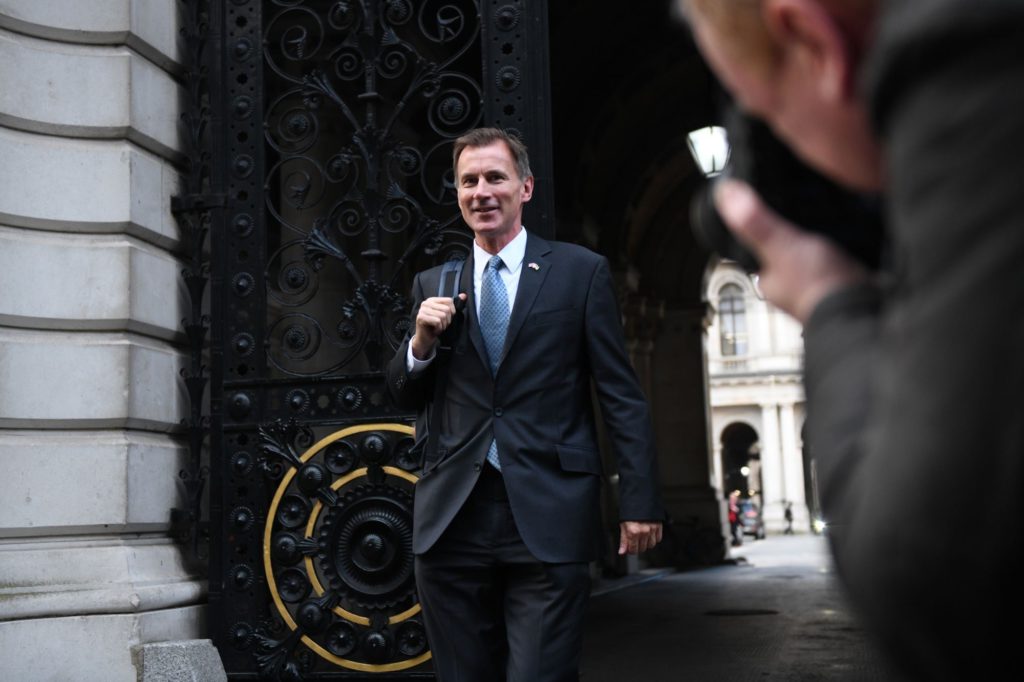
Chancellor of the Exchequer Jeremy Hunt is seeking to fill a fiscal shortfall of £35 billion ($41 billion) when he sets out the government’s tax and spending plans next month, officials familiar with the matter said.

The government has drawn up a menu of 104 options to cut spending to get public finances back onto a sustainable track, according to the officials, who cited Treasury and Office for Budget Responsibility data from this week.

Asked about the £35 billion figure at a regular briefing on Wednesday, Prime Minister Rishi Sunak’s spokesman called it “speculative.” Without pushing back against the details, the Treasury said in a statement that “our number one priority is economic stability and restoring confidence that the United Kingdom is a country that pays its way.”

Both Hunt and Sunak — who took office on Tuesday — delayed a planned economic statement to Nov. 17 from Oct. 31 to give them time to make what the premier described as the “right decisions” to manage the British economy. The government also upgraded the status of the program from a “medium-term fiscal plan” to an Autumn Statement — a form of interim mini budget.

The delay means the Bank of England will now make its next interest rates decision on Nov. 3 without knowing the government’s plans in full. Hunt told broadcasters he had discussed the delay with the central bank.

More Time

There’s a potential advantage for Hunt in delaying, because it gives the fiscal watchdog a chance to incorporate the improvement in the gilt market when it assesses the viability of his economic plan — as long as the picture doesn’t deteriorate dramatically again in the meantime.

It will “give us the best chance of giving people security over their mortgages, over their jobs, over the cost-of-living concerns everyone has,” Hunt said.

Markets were relatively unmoved by the announcement, with the yield on 30-year gilts rising 10 basis points to 3.77% and the pound holding gains to trade 0.8% stronger at $1.1564.

Meanwhile Sunak told his new Cabinet that Hunt’s statement will set out how the government will get debt falling in the medium term, according to a readout of the meeting.

“Spending does need to be paid for,” Sunak later told the House of Commons. Nevertheless, the Treasury said that “protecting public services and the most vulnerable will be prioritized.”

The plan for a fiscal statement was first announced by Hunt’s predecessor, Kwasi Kwarteng, as he tried to calm markets that were roiled by the massive package of unfunded tax cuts he announced on Sept. 23.

Kwarteng had planned it initially for late November, but brought it forward to Oct. 31 as Liz Truss’s government came under fierce pressure to act as market instability drove up the cost of mortgages. In the end, Truss fired Kwarteng and replaced him with Hunt, who ripped up most of the tax cuts and warned that he would have to cut spending to get public finances back on track.

Foreign Secretary James Cleverly had earlier hinted at the delay during the government broadcast round. He was asked on BBC radio about the UK’s development aid commitment, which Sunak cut to 0.5% of national income from 0.7% when he was Chancellor, and which has been touted as a candidate for further cuts. 

“I don’t think we are envisaging that,” Cleverly said. He reiterated that the government’s “ultimate desire” is to bring it back up to 0.7%.

In other developments:

  • Asked in the House of Commons whether he would up-rate welfare payments in line with inflation, Sunak said: “We will always protect the most vulnerable”
  • The prime minister’s press secretary said a final decision on whether to maintain the triple lock on pensions — which guarantees payments rise by 2.5%, inflation or wages, whichever is highest — will be made in the Nov. 17 fiscal statement

–With assistance from Reed Landberg, Ellen Milligan and David Goodman.

(Updates with Treasury response in third paragraph.)

More stories like this are available on bloomberg.com

©2022 Bloomberg L.P.

Microsoft Plunges on Forecast for Lackluster Azure Growth

(Bloomberg) — Microsoft Corp. shares had their biggest intraday drop since March 2020 after the company gave a lackluster forecast for sales growth in its Azure cloud-computing services business, a closely watched measure of corporate demand.

Revenue growth for Azure, which lets companies run and store software applications, will drop by five percentage points in the current period from the prior quarter, Chief Financial Officer Amy Hood said on a conference call Tuesday. Azure sales rose 42% in the fiscal first quarter, excluding the impact of foreign-currency exchange rates, implying a gain of 37% for the second quarter, which ends in December. 

The comapny’s shares slid as much as 8.2% in early New York trading on Wednesday. While the stock jumped 51% in 2021, it has fallen about 30% so far this year amid a rout in large technology stocks. 

Earlier, Microsoft posted its weakest quarterly sales growth in five years, throttled by the surging U.S. dollar, slumping PC demand and faltering advertising revenue. As the global economy teeters on the brink of a recession, sales of Windows software to PC makers swooned 15% in the recent period, and Hood forecast continued challenges in PC and ad markets for the rest of the fiscal year.

On the call, Hood said demand for Azure and new contract signings both remain strong among large customers, but the software maker is helping customers to run applications and tasks more efficiently and at a lower cost. That ignited fresh concerns that demand may sputter further for Azure, which has been driving Microsoft’s resurgence as a technology powerhouse in recent years.

“The tone has definitely changed,” said Dan Morgan, a senior portfolio manager at Synovus Trust Co. “We’ve started to get a big change-up in software spending surveys — there’s a general consensus of ‘hey, you know, the economy is slowing down and we’re watching our expenses.’”

The Azure commentary hit particularly hard with shareholders who look to that business as a barometer of Microsoft’s future growth prospects. A few years ago, the division was doubling sales every quarter. Growth rates have slowed as total revenue became large enough to make gains of that magnitude more challenging, and Hood said the company is reaching out “proactively to customers and making sure we are helping them optimize their workloads,” particularly as the weakening economy causes customers to worry about spending.

Profit margins are also worsening because of rising energy costs, particularly in Europe, which are cutting into cloud-computing profits. Microsoft will spend an additional $800 million this year to cover the higher cost of powering data centers, particularly in Europe, Hood said. And the weakness in Windows means less revenue from what remains a very high-margin part of Microsoft’s portfolio.

The Redmond, Washington-based company will continue to invest in key strategic priorities, Hood and Chief Executive Satya Nadella said. But Microsoft will also aim to limit expenses, particularly around hiring. Hood forecast headcount increases will be minimal during the current quarter. The company has already had two small rounds of job cuts, and has eliminated many open roles in a bid to slow hiring.

Sales in the first quarter, which ended Sept. 30, rose 11% to $50.1 billion. Net income was $17.6 billion, or $2.35 a share. On average, analysts had estimated fiscal first-quarter sales of $49.6 billion and profit of $2.29 a share, according to a Bloomberg survey. Demand remained strong for cloud services, with Office 365 sales to businesses performing slightly better than expected, and the majority of large customers that signed up for Microsoft 365 licenses opting for the higher-end version, Hood said.

“While we are not immune, of course, from macroeconomic impacts, we really feel good about the businesses we are investing in, the strong growth rate, the position in the market,” Hood said.

(Updates shares in first and third paragraphs.)

More stories like this are available on bloomberg.com

©2022 Bloomberg L.P.
Close Bitnami banner
Bitnami