Bloomberg

Rogers’ Odds of Closing Shaw Deal Are Improving, Desjardins Says

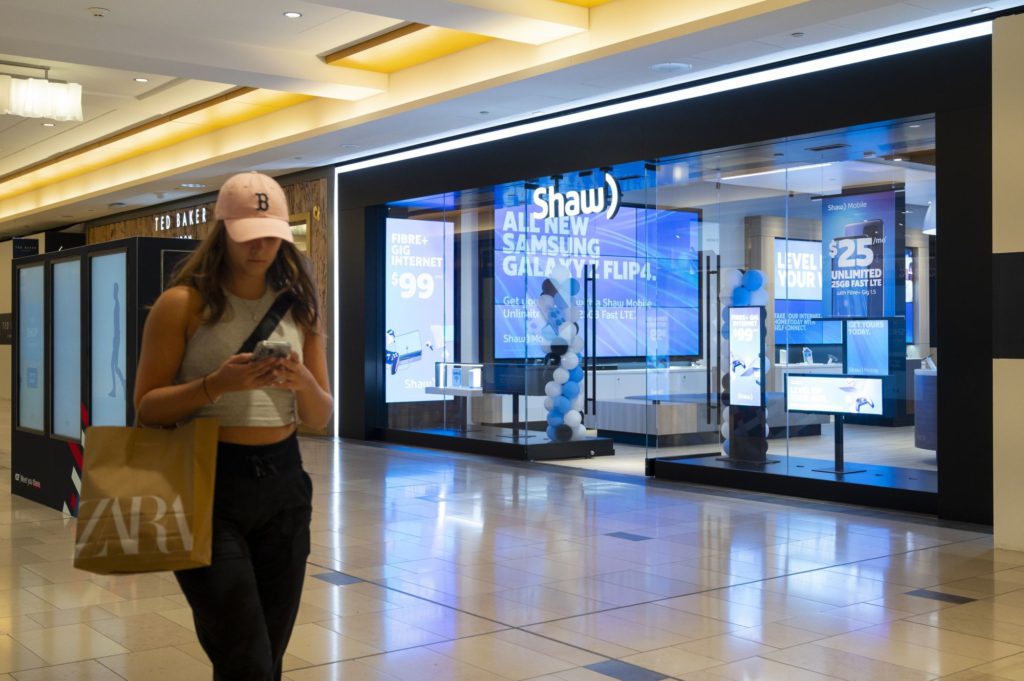
(Bloomberg) — Rogers Communications Inc. has a better chance of completing its takeover of Shaw Communications Inc. now that the Canadian government has clarified some of the conditions on the deal, according to Desjardins Securities. 

Rogers offered C$20 billion ($14.8 billion) for its rival in March 2021, but the deal has been delayed by Canada’s antitrust regulator, which says the transaction will weaken competition in the wireless sector. The two companies have agreed to sell most of Shaw’s wireless assets to a third Canadian communications firm, Quebecor Inc., to try to solve that problem. 

On Tuesday, Industry Minister Francois-Philippe Champagne said he’d approve the divestiture to Quebecor only if the company promises to keep the wireless licenses for at least 10 years and consumer prices improve. Quebecor Chief Executive Officer Pierre Karl Peladeau said the company will accept those terms. That’s a sign the Rogers-Shaw deal has a path to the finish line, Desjardins analyst Jerome Dubreuil said. 

The government “is signaling that the deal would be acceptable if QBR competes in the long term,” Dubreuil said in a note, referring to Quebecor’s stock ticker. “Why would Mr. Champagne set conditions if he were about to say no?”

Read more: Rogers Takeover of Shaw Gets New Conditions From Canada

Shaw continues to trade well below the C$40.50-per-share takeover price. It closed at C$34.06 in Toronto on Tuesday, before Champagne’s late-afternoon statement. 

The deal still has to pass the antitrust hurdle. Rogers and Shaw are scheduled for mediation with the Competition Bureau this week. If the two sides can’t reach a settlement, the merger will head to Canada’s Competition Tribunal, a merger court. 

More stories like this are available on bloomberg.com

©2022 Bloomberg L.P.

Saudi Wealth Fund Plans to Invest $24 Billion in Regional States

(Bloomberg) — Saudi Arabia’s sovereign wealth fund plans to invest $24 billion in Middle Eastern and North African countries as the oil-rich kingdom seeks to bolster regional economies.

The Public Investment Fund plans to set up companies to invest in Bahrain, Oman, Jordan, Iraq and Sudan, according to a statement. It will channel funds into several sectors including infrastructure, heath care, real estate and telecommunications. In August, the PIF started the Saudi Egyptian Investment Co. to invest in Egypt.

Saudi Arabia’s Crown Prince Mohammed bin Salman is sitting on his first budget surplus since coming to power, allowing him to channel billions of dollars into assets globally and to plan ambitious construction projects.

The wealth fund, also chaired by the crown prince, is a key lever for the kingdom’s efforts to revive growth after a recession caused by the coronavirus pandemic and lower oil prices. Since 2015, the PIF has grown assets under management to $620 billion from about $150 billion.

The announcement came as Saudi Arabia holds the three-day Future Investment Initiative event in Riyadh.

More stories like this are available on bloomberg.com

©2022 Bloomberg L.P.

Sunak Delays UK Economy Plan to Allow for ‘Right Decisions’

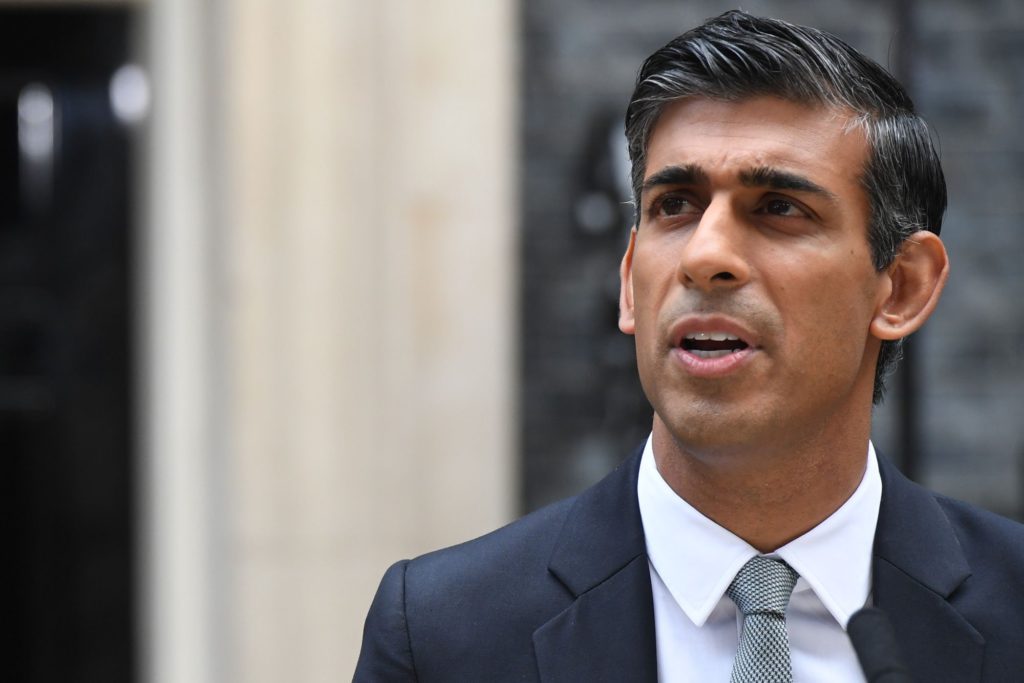
(Bloomberg) — New UK Prime Minster Rishi Sunak delayed an economic strategy announcement planned for Monday until Nov. 17 as he sought more time to make the “right decisions” on managing the British economy.

The delay from Oct. 31 was announced in a readout of Wednesday’s Cabinet meeting issued by Sunak’s office. The government also upgraded the status of the program from a “medium-term fiscal” plan to an Autumn Statement — a form of interim mini budget.

https://t.co/1CHqiyrHra pic.twitter.com/b2iRuvbOcS

— Bloomberg UK (@BloombergUK) October 26, 2022


The delay means the Bank of England will now make its next interest rates decision on Nov. 3 without the benefit of knowing the full direction of travel the government is setting for the economy. But Chancellor of the Exchequer Jeremy Hunt told broadcasters that it was important to allow for time to make enduring choices on the direction of the economy, and that he had discussed the timing with the central bank.

“This is my recommendation to the prime minister as the best way to ensure that the decisions we take, these very, very difficult decisions are ones that stand the test of time,” Hunt said. That will “give us the best chance of giving people security over their mortgages, over their jobs, over the cost-of-living concerns everyone has,” he said.

Sunak told his cabinet that the statement will “set out how we will put public finances on a sustainable footing and get debt falling in the medium term and will be accompanied by a full forecast from the Office for Budget Responsibility,” according to the readout.

The plan was initially announced by Hunt’s predecessor, Kwasi Kwarteng, in an effort to calm markets that had been roiled by his previous tax-cutting strategy, which Hunt has largely since reversed. Kwarteng had planned it initially for late November, but later brought it forward in an effort to restore market stability. 

Sunak appointed his Cabinet yesterday, keeping Hunt on to ensure continuity. The new prime minister met his top team of ministers for the first time on Wednesday and is due to take questions in the House of Commons for the first time as prime minister at 12 p.m.

Hunt has already scrapped the bulk of the unfunded tax cuts outlined by Kwarteng and former Prime Minister Liz Truss on Sept. 23. 

Foreign Secretary James Cleverly earlier on Wednesday hinted at the delay in a series of broadcast interviews. He was asked on BBC radio about the UK’s development aid commitment, which Sunak cut to 0.5% of national income from 0.7% when he was Chancellor, and which has been touted as a candidate for further cuts. “I don’t think we are envisaging that,” Cleverly said. He reiterated that the government’s “ultimate desire” is to bring it back up to 0.7%.

–With assistance from David Goodman and Reed Landberg.

(Updates with Hunt comment starting in third paragraph)

More stories like this are available on bloomberg.com

©2022 Bloomberg L.P.

Mnuchin Warns Market Watchers Who Misread Fed May Be Wrong Again

(Bloomberg) — Former US Treasury Secretary Steven Mnuchin said market watchers who were too sanguine about risks to the economy a year ago are now being too alarmist about the threats presented by inflation and the Federal Reserve’s monetary tightening.

Speaking at Saudi Arabia’s Future Investment Initiative in Riyadh, Mnuchin predicted a significant slowdown in China and a recession in the US, but expects inflation to come under control thanks in part to higher US interest rates.

“A year ago, people underestimated the risks,” Mnuchin, now managing partner at Liberty Strategic Capital, told the conference in the Saudi capital. “And my own view is we’re now overestimating those risks. All of a sudden everybody has turned incredibly negative.”

The Fed has led global central banks in tightening monetary policy this year in the face of the biggest inflation shocks in decades. But the worry is that the effort to cool inflation might cause even greater harm because higher rates slow business activity and hurt the economy.

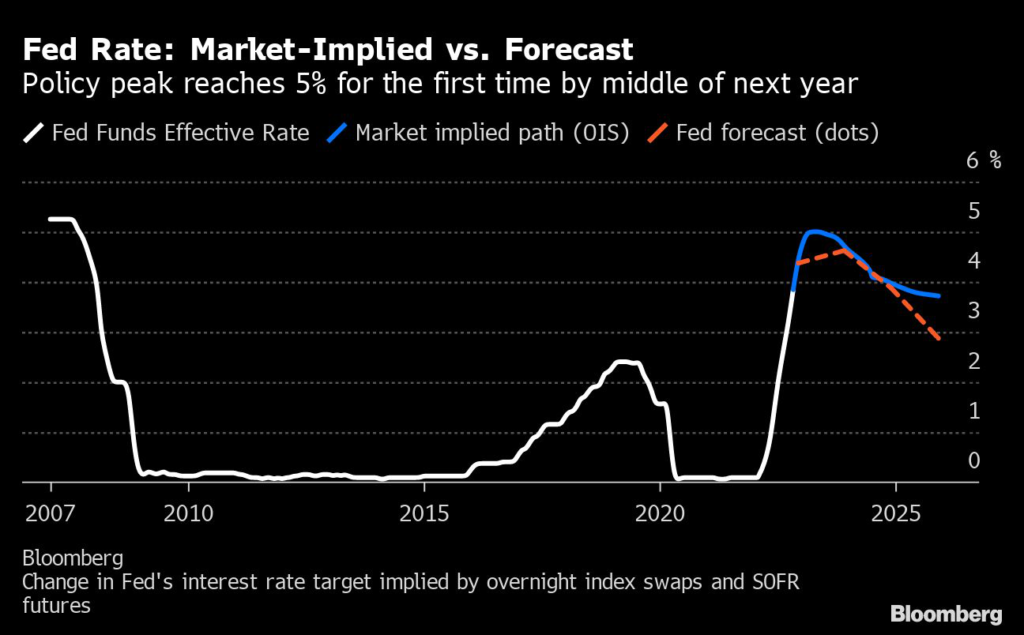
In the US, the central bank has raised its policy rate five times since March, most recently to a range of 3%-3.25% in September, after dropping the lower bound to 0% in 2020 at the onset of the pandemic. The market for wagers on the Fed’s benchmark last week priced in a peak of 5%, the highest yet, for the first half of 2023.  

“People are overestimating the Fed’s actions just as they underestimated it before,” Mnuchin said, forecasting a peak of 4.5% in 10-year Treasury yields. 

Fed forecasts released last month showed officials expecting rates to reach 4.4% this year and 4.6% in 2023, suggesting the pace of hikes will slow to 50 basis points in December and then downshift to 25 basis points early next year. 

Since then, disappointing news on inflation showing core consumer prices rising to a 40-year high of 6.6% in September has led some officials to suggest a higher peak may be needed to cool demand and reduce price pressures.

Geopolitics, Economics

Mnuchin, whose company has clinched investment from Saudi Arabia’s sovereign Public Investment Fund, said geopolitics, not economics, were a greater risk going forward, echoing earlier comments by JPMorgan Chase & Co.’s Jamie Dimon a day earlier at the conference. 

Wall Street Bankers See Darker Economic Outlook, Political Risks

“Geopolitical risk — forget the economic risk, is higher than we’ve seen in modern times,” Mnuchin said. 

Europe is going to take longer to come out of recession than the US because of energy supply issues linked to Russia’s invasion of Ukraine, he said.

Mnuchin cited the war in Europe and US-China frictions, adding that the world’s two biggest economies needed to “figure out how to coexist and communicate.” 

Mnuchin Expects Significant Slowdown in China: FII Update

The US Commerce Department this month unveiled sweeping regulations that limit the sale of semiconductors and chipmaking equipment to Chinese customers, striking at the foundation of the country’s efforts to build its own chip industry. The curbs have also cast uncertainty over major Chinese operations run by foreign firms.

“Clearly China is going to have a significant slowdown and that will have an impact on the world economy,” he said. 

Daniel Yergin, vice chairman at S&P Global, struck a similar tone on US-China relations. Companies around the world are really struggling to deal with global supply chains “when you have this kind of confrontation between the world two largest economies,” he said. 

“The US and China aren’t working together at all, and the fundamental issue is what’s happening between the US and China and this breakdown,” Yergin told another panel discussion at the conference. 

–With assistance from Christine Burke and Salma El Wardany.

More stories like this are available on bloomberg.com

©2022 Bloomberg L.P.

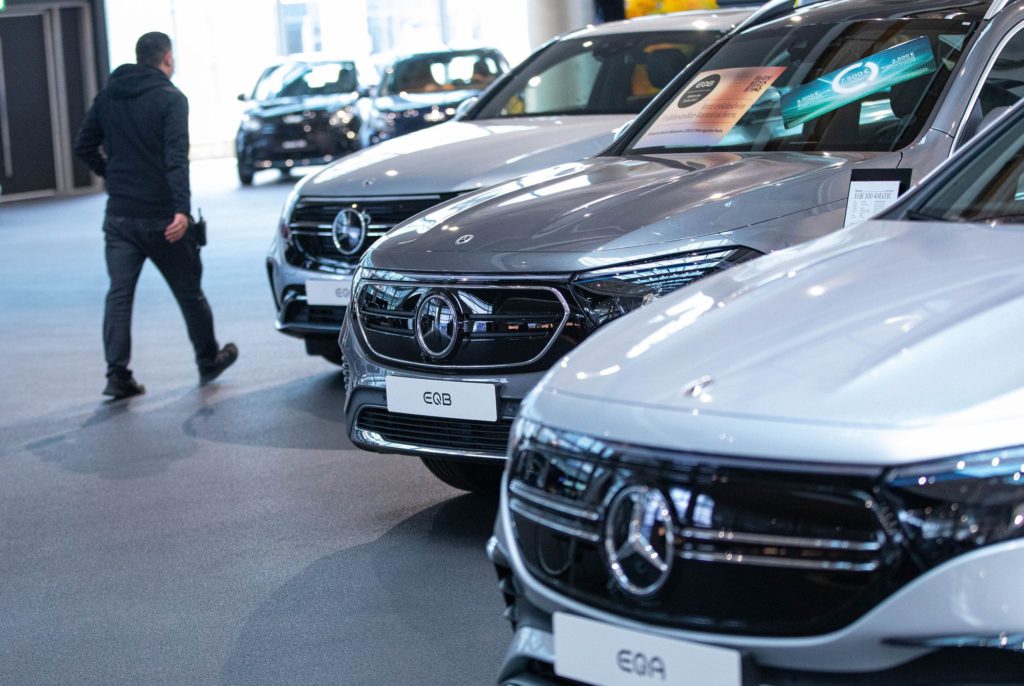
Mercedes Sees Strong Demand Defying Mounting Economic Woes

(Bloomberg) — Mercedes-Benz AG expects strong sales of top-end vehicles like its G-Wagon SUV to help shield the automaker from the global economy taking a turn for the worse. 

While signs of a slowdown proliferate with surging inflation and rising interest rates, a shift to high-margin vehicles will keep returns from slipping below targets, Mercedes said Wednesday, reporting a jump in earnings and raising projections for the year. The company also kept intact its forecast for deliveries, even as it cut back its sales outlook for Europe and the US. 

“Even if the macroeconomic situation in Europe is shaky in 2023, the appetite for these great products is there,” Mercedes Chief Financial Officer Harald Wilhelm said on a media call. After two years of protracted supply-chain shortages, a large backlog of orders will also support demand for vehicles in a downturn, he added.

Mercedes shares were almost flat at 11:42 a.m. in Frankfurt, after declining 14% so far this year. 

Warnings over the health of the Chinese, European and U.S. economies are mounting as consumers face surging energy bills and slowing property markets. Automakers usually aren’t immune to downturns, though Mercedes has pledged to keep margins from slipping below 8% even in a very challenging environment by focusing on its biggest-earnings cars like the S-Class and its electric sibling, the EQS. 

Returns in the core automaking division rose to 14.5% during the third quarter, up from 8.8% last year. 

Raised Outlook

Robust sales especially for high-end models and healthy pricing prompted Mercedes to raise its outlook for the second consecutive quarter, defying the increasing drag from macro-economic factors. At the same time, executives stopped short of outlining expectations into next year. Tiremaker Michelin late Tuesday postponed a planned investor update for next month to March or April, saying it wasn’t possible to make any forecasts as cost inflation rips through supply chains and raw material sourcing.

Mercedes now sees group profit significantly higher than a year ago, up from a projection of a “slight” gain. For the core car division, the adjusted return on sales is expected to rise to as much as 15%, up from as much as 14%. Mercedes also raised the outlook for its vans division.   

While Mercedes raised its guidance, record inflation and surging interest rates are hitting its business in the US and Europe, where the company downgraded sales expectations. The carmaker now sees deliveries in the US “significantly” lower than the prior year, compared with a slight decrease previously. In Europe, sales will decline further from an already-low level, a downgrade from an unchanged forecast. 

Weaker US and European markets are expected to be offset by significantly higher sales in China, where tax breaks for car purchases are set to boost demand after a series of stringent pandemic lockdowns. Overall, Mercedes stuck to a projection for a slight rise in global deliveries for the year. 

Russia Exit

Separately, Mercedes will exit its Russian business in the wake of the country’s invasion of Ukraine, planning to sell its subsidiaries to a local investor, subject to approvals from authorities. 

Before the war, the automaker operated a so-called knock-down kit manufacturing plant near Moscow. The Russia plant, opened in 2019, received components for final assembly of E-Class sedans and other vehicles.

More stories like this are available on bloomberg.com

©2022 Bloomberg L.P.

Xi’s Vow of World Dominance by 2049 Sends Chill Through Markets

(Bloomberg) — President Xi Jinping has put himself in position to rule China for at least another decade, and possibly for life. The question now is what he’ll do with all that power.

On one level, Xi has made it clear where he wants to take China. At the opening of the Communist Party congress last week, he repeated a goal to make China a modern socialist power by 2035, boosting per capita income to middle-income levels and modernizing the armed forces. Then by 2049, the 100th anniversary of the People’s Republic of China, he wants to ensure the nation “leads the world in terms of composite national strength and international influence.”

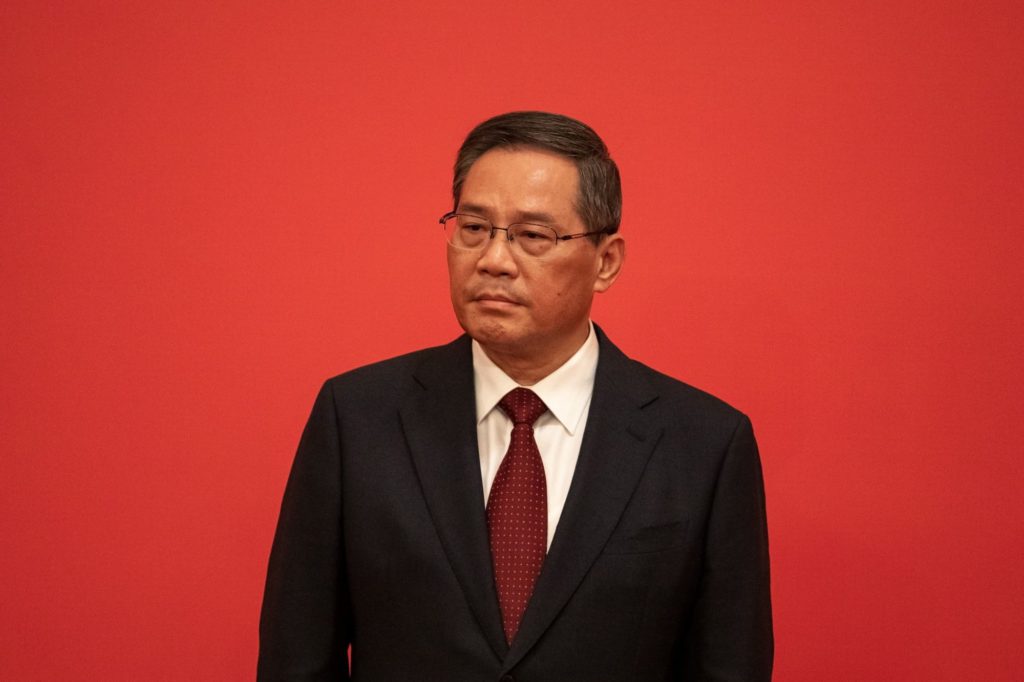
It’s how Xi plans to get there that’s unsettling markets. Chinese assets plummeted earlier this week after the president surrounded himself with allies during the twice-a-decade leadership reshuffle, notably positioning Shanghai party chief Li Qiang as premier despite a lack of central government experience. He also signaled a shift of priorities from economic development toward security, heightening investor anxiety over how an unrestrained Xi will steer the country. 

“He’d want his legacy in history to be that he achieved the 2049 goal,” said Charles Parton, a former British diplomat and fellow at the Council on Geostrategy and the Royal United Services Institute. “Which if you translate it from party speak, is to become top dog, knock America off its perch, and order the world so that its governance better suits China’s interests and values.” 

But Xi’s road map is laden with contradictions: Boosting economic growth while locking down cities under Covid Zero; ensuring technological self-sufficiency while wiping $1.5 trillion off the tech sector; opening more to the world while restricting speech and capital flows. And perhaps the biggest of all, achieving this grand vision while also risking a catastrophic war over Taiwan to complete a “historic mission” and “a natural requirement for realizing the rejuvenation of the Chinese nation.”

“He’s eyeing having an important position in the history books,” said Liu Dongshu, assistant professor at City University of Hong Kong. “A lot of things, including the Taiwan issue, are part of the narrative he can use to justify his extraordinary efforts to take a third and even a fourth term. If you want to break the rule, you need a reason.”

“In the past, if anything was in contradiction with economic development, many people know that China will not do it,” Liu added. “But now it seems that China is willing to sacrifice economic development and market confidence to a much bigger extent.”

When Xi rose to power in 2012, there were early hopes that he would follow his reformist father Xi Zhongxun in seeking to liberalize China at home and open further to the rest of the world. 

Former Secretary of State Hillary Clinton told a US banking conference that China’s new leader was “worldly,” “sophisticated” and “more effective” than his predecessor, Hu Jintao, according to documents included in her hacked campaign emails released by WikiLeaks. Shortly after taking office, Xi trekked to Shenzhen on a trip that seemed echo the 1992 southern tour by former leader Deng Xiaoping, whose “reform and opening up” policy kickstarted China’s economic miracle.

Instead, Xi ended up increasing the party’s role in running the economy and centralizing control to make himself China’s most powerful leader since Mao Zedong. He ended China’s era of hiding and biding on the world stage, crushed dissent from Xinjiang to Hong Kong, and eroded four decades of power-sharing at the top levels of the Communist Party. 

Xi struck a defiant tone in his speech to open the party congress this month, saying China wouldn’t change course even as it faces “dangerous storms” in a more hostile world. Instead, he forcefully offered China’s model up as an alternative to the US and its allies, in essence vowing to overcome the Biden administration’s efforts to hobble the nation’s development by depriving it of chips and other advanced technology. 

“Chinese modernization offers humanity a new choice for achieving modernization,” Xi said. 

So far, investors aren’t confident he can pull it off. After Xi unveiled the new elite Politburo Standing Committee, stocks in Hong Kong capped their worst day since the 2008 global financial crisis on Monday and the yuan weakened to a 14-year low. The historic sell-off has since rebounded slightly as Chinese officials have sought to reassure investors.

The party congress has dashed hopes among investors that Xi was turning China into “a hybrid model of restrained capitalism and a reform-minded communist philosophy,” said Gary Dugan, chief executive officer of the Global CIO Office. 

“The past week’s events only reinforce the fear that Xi is taking the Chinese policy back to communism,” Dugan said. “His vision of openness does not quite align with that of the West.”

Optimists see Xi’s consolidation of power helping to smooth out policy implementation. On his team, Li as incoming premier is known for having supported companies including Alibaba Group Holding and Tesla Inc. when leading Zhejiang and Shanghai.

At the same time, however, Li also oversaw the punishing two-month pandemic lockdown for Shanghai’s 25 million residents earlier this year. And China still has no clear path out of Covid Zero, which has further hurt an economy weighed down by a property crisis and tech clash with the West.

“National security will likely be China’s top priority given the unstable international environment,” said Vivian Zhan, associate professor of Chinese politics at the Chinese University of Hong Kong. “China has to step up indigenous innovation.”

The one thing Xi doesn’t need to worry about is political stability, with nobody still around in China’s top leadership ranks who could stand in his way. But that doesn’t mean his job will be easier: The bigger issues around Covid, property, chips, Taiwan and an ideological battle with the US have no easy solutions. 

“There’s a contradiction between how self-confident the leadership seems to be on the one hand, and how anxious they seem to be about security concerns on the other,” said Jean-Pierre Cabestan, an emeritus professor of political science at Hong Kong Baptist University. “The next five years are going to be harder for Xi Jinping than the past five years.” 

–With assistance from Abhishek Vishnoi and Philip Glamann.

More stories like this are available on bloomberg.com

©2022 Bloomberg L.P.

Cashierless Checkout Startup Raises $100 Million to Compete With Amazon

(Bloomberg) — An Israeli startup making technology for cashier-free payment at brick-and-mortar stores has raised $100 million. Trigo Vision Ltd., which plans to announce the financing on Wednesday, will use the cash to help fund its race against Amazon and other competitors trying to let shoppers skip the checkout line. 

The company’s systems use ceiling-mounted cameras and software designed to automatically match individuals with what they take off the shelves. The technology is currently in use at six retail stores, including in London and Tel Aviv, and is being tested internally by Wakefern Food Corp. in the US. If the product works the way Trigo and other companies envision, cashiers and checkout stands could one day become obsolete.  

Trigo has so far raised $204 million from investors including Temasek Holdings Pte and venture capital firm 83North, which co-led its latest round. The Tel Aviv-based startup has about 200 employees and has so far reeled in $204 million from investors. The company didn’t disclose its latest valuation.

Trigo-powered stores include locations operated by Tesco Plc and Aldi, and are relatively small, ranging in size from about 1,000 square feet to 4,000 square feet. That convenience store-scale footprint is the typical starting point for automated checkout systems. Software can better identify people and products in small, streamlined environments than in large, chaotic supermarkets. But Trigo’s chief executive officer aims to have the company make its mark by retrofitting larger stores where waiting in line takes more time. 

“It took a few years to develop the first stores, open the first stores, and we decided that our strategy would be focus on the supermarket,” said CEO Michael Gabay, who co-founded Trigo four years ago. “If you’re going to a small convenience store in the US, with your Coke and your snack, then the need for the product is less than in supermarkets.” 

In the race to automate grocery store checkouts, Amazon.com Inc. is likely in the lead. Twenty-six of the new Amazon Fresh grocery stores in the US, which typically have more than 20,000 square feet of shopping space, are equipped with the company’s Just Walk Out technology. Amazon is also trying to sell the system of cameras and shelf sensors to other retailers, with Starbucks Corp., J Sainsbury PLC and a few airport and stadium concessions operators among its customers. But many in the industry are skeptical of inviting Amazon, a fierce competitor, into their stores.

Trigo and a raft of startup competitors including AiFi Inc., Grabango Co. and Standard Cognition Corp., are jostling to fill that gap. The industry generated plenty of hype and investment following the surprise announcement of the first Amazon Go convenience store in 2016, but has since settled into the grind of refining a complicated and unproven technology, and trying to find customers in a low-margin industry where self-checkout stands pass as state-of-the-art.

So far, the technology has fallen short of its more ambitious goals. Amazon, which has been working on Just Walk Out for almost a decade, at one point envisioned thousands of Amazon Go convenience stores. But the project’s expansion has slowed to a crawl in the US, with 28 stores in five metro areas. Amazon in recent years set its sights on the greater London, a city where shoppers are used to pocket-sized markets, and where the company today operates 19 Fresh-branded Just Walk Out stores.

When Trigo raised money in 2019, the company said it planned to deploy its technology in 280 stores run by Israeli supermarket operator Shufersal Ltd. over the subsequent five years. To date, they’ve opened one: a 1,080-square-foot market in Tel Aviv. More are on the way, a spokesperson said.

In addition to its technological hurdles, the technology also faces other challenges: Labor unions have slammed automated checkout systems as an expensive way to engineer away cashier jobs. 

Trigo sells its hardware to customers, and charges them a subscription fee to operate the service. Gabay said retailers should expect to recoup that initial investment and see returns a year and a half to two years after deploying the hardware. He declined to disclose its price.

Like Amazon, Trigo is working to add services to its people- and item-tracking system that go beyond checkout, like inventory management or analysis of shoppers’ paths within a store. That information could turn into insights for marketers, store designers or e-commerce operations that depend on knowing exactly what is on the shelf at a given time. Trigo calls its product, still in development, StoreOS. “It’s a gold mine,” Gabay said.

“Retailers and grocery retailers want to be more efficient,” Gabay said. “They all want to continue to develop this technology and to open more stores. This market, it’s here, and it’s here to grow.”

More stories like this are available on bloomberg.com

©2022 Bloomberg L.P.
NY’s Crime Rate Dominates Only Debate in Narrowing Governor’s Race

(Bloomberg) — Crime, abortion and election integrity dominated New York’s first and only debate between Democratic Governor Kathy Hochul and Republican challenger Lee Zeldin on Tuesday night, two weeks before a general election that polls suggest has narrowed.

Zeldin, 42, managed to keep Hochul on the defensive as she ducked criticism over her donations from companies with business before the state and the $600 million in taxpayer dollars she committed to keep the Buffalo Bills football team in New York. She also sidestepped questions over the state’s migrants crisis and her inaction over a proposed crypto mining ban.

Hochul, 64, mostly stuck to a long-held script of attacks she’s used throughout the campaign on the Long Island Congressman’s anti-abortion views, his support of former President Donald Trump and his denial of the 2020 election results.

There are “very few people in Congress who have a more pro-life record,” Hochul said of Zeldin during the debate, which was hosted by Spectrum News NY1. “Women need to know that that’s on the ballot this November.”

The governor commanded a double-digit lead for months in a state where Democrats make up about half of New York’s 12 million active voters. Hochul, who assumed office when Governor Andrew Cuomo resigned last year, limited public campaign stops and rarely engaged with a Republican opponent she portrayed as out of touch with New Yorkers.

However, recent polls showed a narrowing race as Zeldin’s message about public safety and pocketbook economic issues began to resonate with voters. 

Read More: NY Governor Hochul Leads Zeldin by Only Four Points in New Poll

‘Out of Control’ Crime

Zeldin joins a wave of Republicans making crime central to the November elections, describing New York as “out of control” and blaming a pandemic spike in crime on Hochul’s support of the state’s bail reform laws.

“People are getting pushed in front of oncoming subway cars,” he said. “Kathy Hochul is too busy patting herself on the back, job well done.”

During the debate, Hochul downplayed the severity of the crime rate, citing a recent 14% decline in murders and shootings. Meanwhile, she’s shifted her tone in the last week to put a sharper emphasis on crime in new television ads and public appearances, including a weekend announcement to spend $62 million on transit safety.

“You can either work on keeping people scared, or you can work on keeping them safe,” she said. “It’s not about governing by sound bites, I’m governing by sound policies.”

Read More: Hochul Touts Crime Efforts as NY Governor Race Tightens

‘Losing Isn’t an Option’

Zeldin was an early supporter of Trump’s presidential bid and voted against certifying the 2020 election in Pennsylvania and Arizona. Text messages offering guidance to Trump advisers surfaced during the House committee investigating the January 6th insurrection.

Asked whether he would vote that way again, Zeldin said “the issue still remains today.” 

Regarding election integrity in his own race for governor, Zeldin was asked whether he will respect the results if he lost. 

Losing isn’t an option, Zeldin said. Then, he added that in a hypothetical scenario, he would accept the results of a loss.

Economic Promises

Zeldin also called out New York’s largest-ever budget and Hochul’s role in increasing state spending. He pledged to implement a state spending cap and decrease taxes, without elaborating on what cuts he would make. 

“New York is going to be back open for business, baby. January 1st,” he said.

He said the state should allow natural gas extraction to benefit the economy and decried the legalization of recreational marijuana and a congestion pricing plan Hochul has championed.

Hochul, meanwhile, touted a recent Micron deal to invest $100 billion over two decades to build a memory chip plant upstate.

Read More: Micron Plans to Invest Up to $100 Billion in NY Chip Factory

More stories like this are available on bloomberg.com

©2022 Bloomberg L.P.
Blibli Owner Raises $320 Million in Jakarta IPO

(Bloomberg) — PT Global Digital Niaga has raised about 8 trillion rupiah ($513 million) after the owner of e-commerce group Blibli exercised an option to sell more shares in its Indonesian initial public offering.

The company has sold about 17.8 billion shares at 450 rupiah each, according to terms of the deal seen by Bloomberg News. It’s upsized from the base offering of around 11.2 billion shares, which were marketed at 410 rupiah to 460 rupiah apiece.

Kusumo Martanto, Global Digital Niaga Chief Executive Officer, declined to comment on the IPO pricing. Martanto and a spokesperson didn’t immediately respond to requests for comment on the upsize option.

Niaga’s IPO is the largest in Jakarta after tech company PT GoTo Gojek Tokopedia Tbk raised $959 million in an April listing. Since then, Indonesia’s exchange hasn’t hosted any new equities sales larger than $100 million as dealmaking slumped globally amid a spike in volatility, high inflation and rising rates.

Global Digital Niaga plans to use the IPO proceeds for debt repayment and working capital. Its shares are scheduled to start trading in Jakarta on Nov. 7.

–With assistance from Julia Fioretti.

(Updates throughout with terms of the deal.)

More stories like this are available on bloomberg.com

©2022 Bloomberg L.P.
Blibli Owner Raises $513 Million in Upsized Jakarta IPO

(Bloomberg) — PT Global Digital Niaga has raised about 8 trillion rupiah ($513 million) after the owner of e-commerce group Blibli exercised an option to sell more shares in its Indonesian initial public offering.

The company has sold about 17.8 billion shares at 450 rupiah each, according to terms of the deal seen by Bloomberg News. It’s upsized from the base offering of around 11.2 billion shares, which were marketed at 410 rupiah to 460 rupiah apiece.

Kusumo Martanto, Global Digital Niaga Chief Executive Officer, declined to comment on the IPO pricing. Martanto and a spokesperson didn’t immediately respond to requests for comment on the upsize option.

Niaga’s IPO is the largest in Jakarta after tech company PT GoTo Gojek Tokopedia Tbk raised $959 million in an April listing. Since then, Indonesia’s exchange hasn’t hosted any new equities sales larger than $100 million as dealmaking slumped globally amid a spike in volatility, high inflation and rising rates.

Global Digital Niaga plans to use the IPO proceeds for debt repayment and working capital. Its shares are scheduled to start trading in Jakarta on Nov. 7.

–With assistance from Julia Fioretti.

(Updates throughout with terms of the deal.)

More stories like this are available on bloomberg.com

©2022 Bloomberg L.P.
Close Bitnami banner
Bitnami