Bloomberg

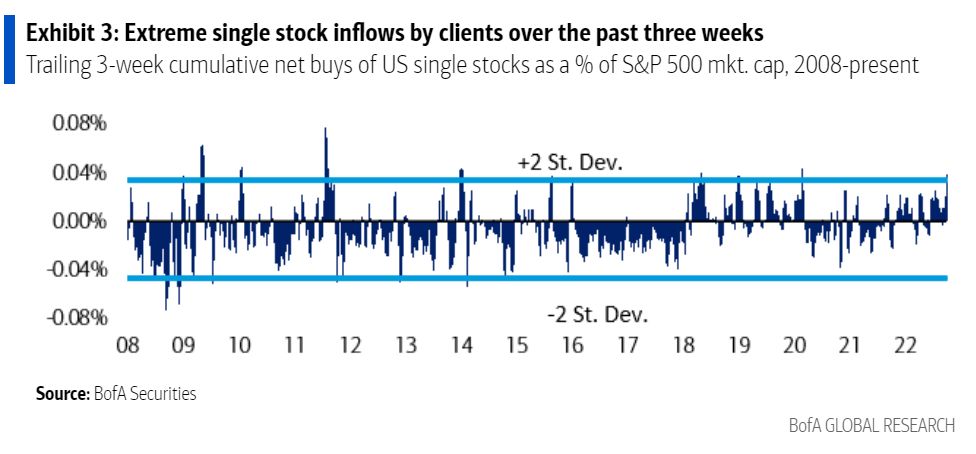
BofA’s Client Flows Into Single Stocks Near Historic Levels

(Bloomberg) — Bank of America Corp.’s clients poured money into US equities for the sixth consecutive week led by hedge funds and private clients, with the intake by single stocks nearing historic extremes.

In the past three weeks, inflows into single stocks as a percentage of the S&P 500 Index’s market capitalization were in the 99th percentile of history since 2008, according to BofA strategists led by Jill Carey Hall. Prior extremes like this were followed by above average returns for the equity gauge over the subsequent months and one year later, they said. 

Read: Earnings Flops Are Getting Penalized by the Most Ever, BofA Says

Still, “most prior instances of extreme inflows following the global financial crisis typically were preceded by extreme outflows in the several months prior,” Carey Hall wrote in a note to clients Tuesday. But that’s “not the case this time,” since cumulative inflows this year in US dollars have been the most positive in BofA’s data history, she added. 

Last week, buying was led by BofA’s hedge fund clients. Private clients also snapped up equities for the fourth straight week, while institutional clients sold stocks after buying for two weeks. 

Overall, clients bought stocks across seven of the S&P 500’s 11 sectors, led by technology, health care and communication services while financial and energy stocks saw the biggest outflows. They have been large net buyers of tech, media and telecom stocks at a time when flows were down for consumer discretionary shares.

Value stocks, in particular, could be poised for a bounce. In a separate note Tuesday, BofA strategists led by Savita Subramanian said value funds may benefit from seasonality since 43% of those funds historically outperform their benchmark from November to January. 

“Hedge funds, which have been reducing their cyclical exposure most of the year, are now overweight defensives relative to cyclicals first time since Oct. 2021,” Subramanian wrote in a note to clients. The shift was primarily driven by hedge funds’ reduced exposure to materials, industrials and energy, she said.

Read more: BofA Sees Year-End Rally for Loser Stocks on Tax-Loss Harvesting

Long-only mutual funds, however, appear to be expecting a soft landing for the US economy and have maintained their pro-cyclical view, with overweights in discretionary and industrials and a sizeable underweight in consumer staples.

In years when the market was down through October, the dominance of value funds was even more pronounced, with 45% outperforming compared with 38% of core funds and 40% of growth funds, according to the bank. “This may be likely this year given the depth and breadth of the market decline,” Subramanian said. 

More stories like this are available on bloomberg.com

©2022 Bloomberg L.P.

Stocks Rise on Earnings Optimism; Dollar Drops: Markets Wrap

(Bloomberg) — US stocks rose on Tuesday as traders assessed a slew of corporate earnings and weighed risks to economic growth from the Federal Reserve raising interest rates to combat inflation. 

The S&P 500 and the Nasdaq 100 climbed, extending Monday’s strong performance. Among companies reporting Tuesday, The Coca-Cola Co., General Motors Co. and United Parcel Service Inc. rose after beating analysts’ earnings estimates, while General Electric Co. and Invesco Ltd. dipped after falling short. Alphabet Inc., Microsoft Corp. and Visa Inc. are among major companies still reporting today.

US Treasuries stabilized after an earlier rally, with the 10-year yield around 4.08%. The dollar dropped after data on Tuesday showed that home-price growth in the US slowed the most on record as high borrowing costs sapped demand. 

About a quarter of S&P 500 companies have reported earnings so far, with more than half outperforming estimates. Still, some investors are concerned the effects of a slowing economy will be seen further down the line, especially after manufacturing and services data on Monday showed that Fed tightening has already started to weigh on the economy. 

US consumer confidence also fell on growing concerns about the broader economic outlook. The Fed is still set to raise interest rates next week, but investors are starting to speculate that it may be approaching the end of its aggressive tightening campaign. 

The tech sector is particularly vulnerable to further interest-rate hikes because of its reliance on more distant profits, said Mark Haefele, chief investment officer at UBS Global Wealth Management. This week’s big-tech earnings will show investors whether companies that are among the key profit-growth engines for the S&P 500 can deliver profits with inflation crimping margins.

Any potential positive earnings surprise is unlikely to lead to a sustained rallied in risk assets, said Bipan Rai, head of foreign-exchange strategy at Canadian Imperial Bank of Commerce. If it does, “then it would work against what the Fed is trying to engender, which are tighter financial conditions to suppress aggregate demand,” Rai said.

Analysts are also expecting a jumbo hike of 75 basis points from the ECB on Thursday, even as many economists now reckon a recession has begun in the euro region. German business confidence improved in October, data showed Tuesday, though remained at depressed levels as Europe’s largest economy heads into a challenging winter.

US-listed Chinese stocks rebounded Tuesday after losing about $93 billion of market value in a historic selloff that pushed the shares to their lowest level in over nine years. President Xi Jinping’s power grab has raised concerns that concentrated decision-making could weaken growth and destabilize geopolitics. 

“We’re certainly staying away from the Chinese market right now because the political scene is not favorable,” Laila Pence, president of Pence Wealth Management, said in an interview on Bloomberg TV. “There’s a lot less risk in the US and just as much upside.”

Elsewhere in markets, the British pound gained as Rishi Sunak formally took over as UK prime minister on Tuesday, vowing to “fix” the mistakes made by his predecessor, Liz Truss. 

Key events this week:

  • Earnings due this week include: Apple, Microsoft, Exxon Mobil, Ford Motor, Credit Suisse, Airbus, Alphabet, Amazon, Bank of China, Boeing, Caterpillar, Cnooc, Intel, McDonald’s, Mercedes-Benz, Merck, Samsung Electronics, Shell, Vale, Visa, Volkswagen
  • US Conference Board consumer confidence, Tuesday
  • Bank of Canada rate decision, Wednesday
  • ECB rate decision, Thursday
  • US GDP, durable goods orders, initial jobless claims, Thursday
  • Bank of Japan policy decision, Friday
  • US personal income, personal spending, pending home sales, University of Michigan consumer sentiment, Friday

Some of the main moves in markets:

Stocks

  • The S&P 500 rose 1.1% as of 11:19 a.m. New York time
  • The Nasdaq 100 rose 1.6%
  • The Dow Jones Industrial Average rose 0.7%
  • The Stoxx Europe 600 rose 1.2%
  • The MSCI World index rose 0.8%

Currencies

  • The Bloomberg Dollar Spot Index fell 0.8%
  • The euro rose 0.9% to $0.9964
  • The British pound rose 1.7% to $1.1471
  • The Japanese yen rose 0.7% to 147.80 per dollar

Cryptocurrencies

  • Bitcoin rose 1.3% to $19,637.98
  • Ether rose 3.4% to $1,397.41

Bonds

  • The yield on 10-year Treasuries declined 16 basis points to 4.08%
  • Germany’s 10-year yield declined 15 basis points to 2.18%
  • Britain’s 10-year yield declined 10 basis points to 3.64%

Commodities

  • West Texas Intermediate crude rose 1.3% to $85.72 a barrel
  • Gold futures rose 0.4% to $1,660.80 an ounce

–With assistance from Richard Henderson, Allegra Catelli and Emily Graffeo.

More stories like this are available on bloomberg.com

©2022 Bloomberg L.P.

Ukraine Latest: Kyiv Needs $17 Billion as Leaders Talk Funding

(Bloomberg) — President Volodymyr Zelenskiy said his government needs $17 billion in immediate financing to cover Ukraine’s budget gap as global leaders met in Berlin to map out the nation’s postwar reconstruction. 

German Chancellor Olaf Scholz, who hosted the conference, reinforced his message about creating a “Marshall Plan” for Ukraine as delegates work to support the war-battered nation for decades to come. 

European Commission President Ursula von der Leyen said the EU will develop funding for around 18 billion euros ($17.7 billion) for next year, with the Ukrainian government estimating overall needs at $38 billion. Talks on the EU funding are ongoing, even as the disbursement of loans for this year has been halted — partly because of resistance from Germany. 

(See RSAN on the Bloomberg Terminal for the Russian Sanctions Dashboard.)

Key Developments

  • One Missile Shook Ukraine’s Grain Trade. Another Might Kill It
  • Too Much Gas. Europe’s Energy Crisis Takes a Surprise Turn 
  • Putin’s Threats Worry NATO as Sign of Russian Desperation
  • Top US, Russian Generals Speak Amid Fears of Nuclear Escalation
  • Russian Oil Logistics in Chaos With Weeks Until Sanctions Bite
  • What Is a ‘Dirty Bomb’ and Why Is Ukraine Worried?: QuickTake

On the Ground

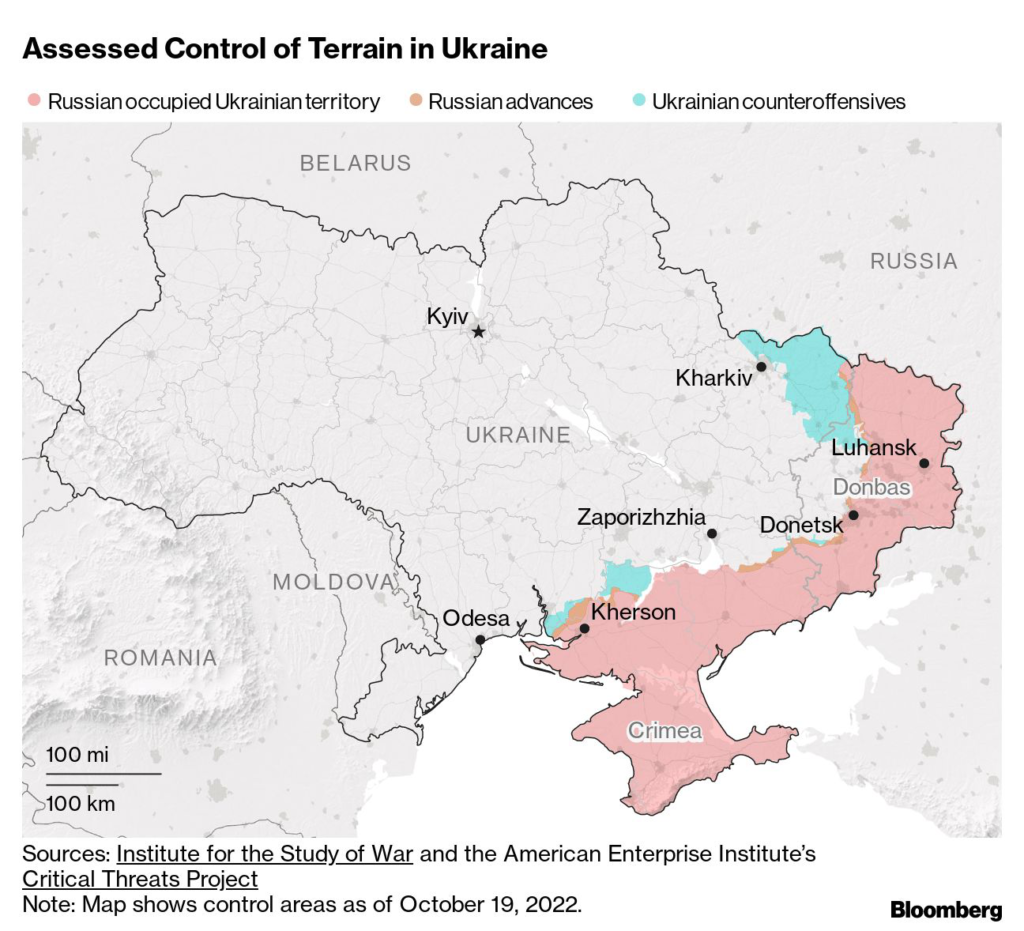
Russian troops shelled the Nikopol district of the Dnipropetrovsk region overnight, local authorities said on Telegram. Analysts at the US-based Institute for the Study of War said that the slower pace of Russian air, missile, and drone strikes may reflect “decreasing missile and drone stockpiles and the strikes’ limited effectiveness of accomplishing Russian strategic military goals.” 

(All times CET)

Putin Chairs First Meeting of Special War Needs Council (5:02 p.m.) 

President Vladimir Putin chaired the inaugural meeting of a new coordination council on military needs — and conceded it had missed its first deadline.

“I remind you that today the coordination council was to have fixed the targets for individual areas of activity,” Putin said. “These targets aren’t ready yet, but I have no doubt they will be soon.”

The Russian leader has escalated his faltering invasion of Ukraine after a series of reverses, mobilizing at least 300,000 reservists, declaring martial law in certain regions and carrying out a devastating bombardment aimed at crippling Ukrainian power and other infrastructure.

Ukraine Former Central Bank Chief Says Graft Probe Politicized (4:20 p.m.) 

Ukraine’s former central bank Governor Kyrylo Shevchenko, who is being sought by anti-corruption investigators for his alleged involvement in embezzlement, called the probe against him politically motivated. 

In his first comments after Ukraine’s National Anti-Corruption Bureau placed him on a wanted list, Shevchenko told Bloomberg News on Tuesday that being added was “further evidence of the prosecution being biased and politicized.” He didn’t elaborate. NABU, as the bureau is known, wasn’t immediately able to comment on his statement.

Ukraine Documenting Russian Hacks, Eyeing International Charges (3:51 p.m.) 

Ukrainian officials are documenting suspected Russian hacking incidents as part of a plan to prosecute Moscow in an international court, according Victor Zhora, chief digital transformation officer of Ukraine’s special communications and information protection service. The government in Kyiv is collecting evidence of malicious cyber activity and sharing the data with the International Criminal Court, he said. 

“Our intention is to bring this to justice after the war, and perhaps this will be the first prosecution of the first global cyber-war and cybercrimes that were conducted with kinetic operations and war crimes in Ukraine,” Zhora said during an interview at a cybersecurity conference in Singapore. 

Russian Envoy Says Moscow Backs Nuclear Plant Safe Zone (3:15 p.m.) 

A Russian diplomat said that Moscow in principle backs a United Nations proposal to set up a security zone around Ukraine’s Zaporizhzhia nuclear plant.

“It’s a reasonable idea, which we support in general,” Mikhail Ulyanov, Russia’s ambassador to international organizations in Vienna, said on state television on Tuesday. “The devil, as always, lies in the details.”

The Zaporizhzhia plant, Europe’s largest atomic energy station, has been occupied by Russian troops since March and heavy fighting around the facility has raised fears that power disruptions could endanger its safety.

Russian Court Rejects Appeal of Jailed US Basketball Star Griner (2:37 p.m.) 

A Russian court rejected an appeal by WNBA star Brittney Griner against her nine-year sentence for drug smuggling. The ruling means Griner, 32, a two-time Olympic gold medalist, will leave pre-trial detention near Moscow and be sent to serve her prison term in a penal colony elsewhere in Russia.

President Joe Biden has made a priority of securing the release of Griner and another jailed American in Russia, former US Marine Paul Whelan. Amid a vocal campaign from the basketball star’s supporters, the US leader has denounced Griner’s prison sentence as “unacceptable.”

Akhmetov’s Metinvest Sues Russia in European Court (2:24 p.m.) 

Ukrainian steel company Metinvest, owned by the country’s richest tycoon, Rinat Akhmetov, filed a case against Russia with the European Court of Human Rights, according to an emailed statement.

Metinvest is suing for damages caused by Russian forces in its eight-month invasion of the country, including for the destructions of the company’s steel mills in the port city of Mariupol. Akhmetov also filed a case against Russia in June.

IMF Chief Says Ukraine Manages Well, But Needs Huge Sums (1:58 p.m.)  

International Monetary Fund Managing Director Kristalina Georgieva said that while Ukraine had managed its economy “responsibly,” huge sums would be needed to support the country.

Ukraine would require $3 billion a month in a “best-case scenario,” though with additional gas imports and reconstruction funding, that figure could climb to $5 billion, Georgieva said at the Berlin conference.

Lviv Region Announces Rolling Blackouts (11:33 a.m.)

Ukraine’s electricity distributor in the western region of Lviv announced rolling blackouts for households on Tuesday, according to a statement on its website.

Rolling blackouts are expected to hit the whole region that borders Poland. Earlier in the day, the electricity grid operator Ukrenergo said it limited power to industries in all regions of the country to stabilize the functioning of the energy system.

Ukraine Needs $17 Billion for Immediate Recovery (10:12 a.m.)

Ukrainian President Zelenskiy urged allies to provide his country with financial support “now, when the war is on — and for the postwar period.”

The country needs $17 billion immediately for a quick recovery “as we have not got a single cent,” Zelenskiy told International Expert Conference on the Recovery, Reconstruction and Modernization of Ukraine in Berlin in a video address. Speaking at the same conference, his premier said the amount doesn’t include the latest widespread damage to Ukraine’s energy infrastructure.

On the whole, Ukraine needs $38 billion of aid next year to fill the budget gap opened by the war — and it won’t manage without external help, he said.

Dimon Says Russia Invading Ukraine Was a ‘Massive Pivot’ 

Poland Mulls Border Wall With Kaliningrad to Stave Off Migration (10:11 a.m.)

Poland will reinforce its border with Russia’s Baltic exclave of Kaliningrad and may consider building a fence along the 210 kilometer (130 mile) frontier, ruling party official Krzysztof Sobolewski said on public radio.

Poland has also accused the Kremlin of masterminding the artificial flow of thousands of people from countries including Iraq, Syria and Afghanistan onto the border, hoping to cross into the EU late last year. 

Lithuania Calls for More EU Sanctions Against Iran (9:14 a.m)

The EU should consider more sanctions against Iran to match those imposed against Belarus to prevent the country from producing drones for Russia’s war in Ukraine, Lithuanian Foreign Minister Gabrielius Landsbergis said.

Iran is effectively a participant in the war against Ukraine, Landsbergis told radio LRT.

“It seems to me that similar sanctions that apply to Belarus should at least be considered for Iran, limiting its ability to continue supplying weapons,” he said.

Yakunin Appeals Arrest by Authorities in Norway (9:01 a.m.)

A Russian-British citizen who’s the son of a long-standing Putin ally has appealed his arrest by Norwegian authorities last week for flying a drone on the Svalbard islands. Andrey Yakunin, who was held on Oct. 17 during a boating holiday in the Arctic archipelago, said he was using the drone to take landscape photographs and check for weather conditions on hiking routes, according to an emailed statement by his lawyers.

His lawyers said the sanctions regulations, which prohibit Russian nationals from flying drones in Norway, do not apply to British citizens, and they also argued the sanctions do not apply to the recreational flight of drones. Yakunin’s father Vladimir was among Putin’s closest allies until leaving his post as the head of the national railways in 2015.

Investigation Identifies Alleged Russian Missile Programmers (8:41 a.m.)

An investigation published by Bellingcat, in partnership with The Insider and Der Spiegel, identified dozens of members of a “secretive” group of military engineers in Russia’s Defense Ministry that it said were linked to the programming of cruise missiles “that have killed hundreds and deprived millions in Ukraine of access to electricity and heating.”

Phone metadata records showed contacts between the specialists and their superiors “spiked shortly before” the strikes, according to the six-month investigation, which found that members of the group are mostly young men and women, including a husband-and-wife couple, with IT and even computer-gaming backgrounds working in centers in Moscow and St. Petersburg. 

World Bank Disburses Additional $500 Million to Ukraine (8:38 a.m.)

The World Bank announced the disbursement of an additional $500 million to help Ukraine meet urgent spending needs.

The money will be used to maintain essential government services, the lender said in a statement. The bank has already mobilized $13 billion in emergency financing for Ukraine, including commitments and pledges from donors. So far, $11.4 billion has been fully disbursed, according to the bank’s data.

German President Visits Ukraine (8:08 a.m.)

German President Frank-Walter Steinmeier said his visit aims to show solidarity with Ukraine and convey a message his nation stands by the war-torn country.

“Our solidarity is unbroken and it will stay that way,” he said in a statement posted on his website.

More stories like this are available on bloomberg.com

©2022 Bloomberg L.P.

A Florida Man’s Election-Skepticism Project is Swamping US Officials

(Bloomberg) — For the last several months, a persistent group of election skeptics has been inundating local election officials with public records requests, seeking data that they believe will prove that the 2020 presidential election was stolen.

The requests are emanating from a single home in central Florida, targeting each of the more than 3,000 counties in the US and demanding records on voting machines and email communications between election officials and vendors of those machines. Election officials say the deluge is taking valuable time away from preparations for the upcoming midterms, which will determine who controls Congress and oversees the vote count in 2024.

“One of the requests for a file is so large I’m having trouble even copying it. It’s more than 2 million files,” said Brian Sleeth, president of the Ohio Association of Election Officials, referring to the large volume of responsive materials stemming from the public records’ inquiries. “What would someone even do with that?”

The campaign has been organized by a software and database engineer in Davenport, Florida who goes by the online name Lone Raccoon. He is actually Jeffrey O’Donnell, a bearded 61-year-old who communicates with his more than 13,000-person strong “Raccoon Army” on his Telegram channel from his home office in a suburban subdivision in central Florida.

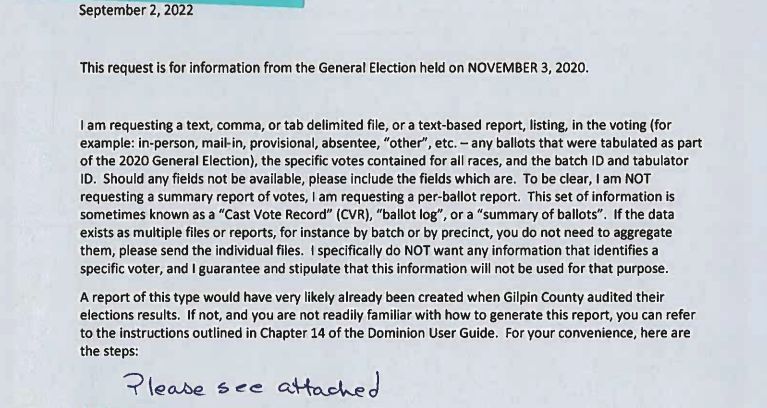
In a phone interview, O’Donnell said his goal is to create a public database of “Cast Vote Records,” allowing his supporters – and anyone else – to probe the data to find evidence of voter fraud. Cast Vote Records, known as CVRs, are the electronic version of voters’ ballot selections, saved on a voting system’s hard drive, and O’Donnell has created a document, “Cast Vote Records For Dummies,” that provides step-by-step instructions on how to request them.

“I was led by God to do this,” O’Donnell said.

The efforts continue as local government officials, academics and news organizations have found no evidence of widespread voter fraud or irregularities during the 2020 election. Former Attorney General William Barr also said the Justice Department came to similar conclusions, and a federal judge indicated recently that Donald Trump knew voter fraud claims were false. 

O’Donnell has found an ally in MyPillow Founder Mike Lindell, who is being sued by voting machine vendors Dominion Voting Systems Inc. and Smartmatic Corp. over his claims that they engaged in a conspiracy to ensure President Donald Trump lost his re-election bid. Lindell has encouraged his followers to join O’Donnell’s campaign and provide “support.”

Lindell told Bloomberg News he hired O’Donnell last summer as an IT, cybersecurity and CVR expert, along with a dozen others under his companies Lindell Management and Lindell TV. He described the vendors’ lawsuits as “frivolous.” 

Journalists, lawyers and others frequently request public records to hold public officials accountable and monitor the daily workings of government. But in dozens of interviews, election officials in both Democratic-leaning and Republican-leaning counties said voluminous requests from the Raccoon Army and others seeking similar information seems intended to upend the upcoming midterm elections, an allegation that O’Donnell denies.

Christopher Channell, director of elections in Glynn County, Georgia, likened them to a “spam attack.” The director of the Caswell County, North Carolina, board of elections, Robert Webb, compared it to a distributed denial-of-service incident, a kind of harassment in which huge amounts of traffic is directed at a website to knock it offline. The requests have prompted crisis meetings among election officials and reminders from secretaries of state that elections, not speculative requests, are the priority, according to documents reviewed by Bloomberg.

Justin Roebuck, clerk of Michigan’s Ottawa County, said his office had received more than 100 public records requests this year, compared to a previous annual average of eight. 

“In many cases, when we ask for clarification from the individuals, we are told that they themselves do not know what they are requesting,” Roebuck said. The responses were “troubling to me and lends credibility to the argument that these requests are meant more as a distraction and perhaps an intimidation tactic,” he added.

Bloomberg News queried 679 officials in key states like Florida, Georgia, Arizona, Colorado, Nevada, Pennsylvania, Ohio, North Carolina and Wisconsin. Questions were also sent to election officials in Alaska, Michigan, California, Minnesota and South Carolina. 

Of the more than 134 election officials who responded to emailed questions, nearly all said they’ve seen an increase this year in requests for election-related data — including CVRs — compared with last. Many of the requests have landed in counties that Trump won by a landslide.

In Muscogee County, Georgia, officials received more than 1,200 requests for CVR data — all apparent carbon-copied requests that “seems to be a coordinated effort,” elections chief Nancy Boren said. They received 10 in 2021. In Murray County, near the Tennessee border and where President Joe Biden received 15% of the 2020 vote, election chairman Larry Sampson said the volume of requests has “really gotten to the point where they sometimes interfere with the normal office routine.”

“One man, who was sent by a group, someplace out West I think, stood here at the counter and told me that Mike Lindell had proof that the Dominion equipment was controlled by satellites from South America!” Sampson said in an email. “I just shook my head.”

It wasn’t clear how many of the requests to county election officials came from members of the Raccoon Army. At least 10 officials said the requests they received contained the exact same wording as the templates posted on O’Donnell’s websites. Others said the requests were copies or screenshots from O’Donnell’s record request manual. 

“We have seen FOIA requests that just copy and paste directly from certain Telegram channels,” said Isaac Cramer, executive director of Charleston County’s board of elections and voter registration in South Carolina. FOIA is an acronym for Freedom of Information Act and is often used as a shorthand for public records requests.

Cramer said he has received requests for every single polling location receipt tape in the primarily Republican county – of which there are more than 100. Some requests were so voluminous the requester was invited to come and view the records in person as they could not be transferred over email. But after locating and preparing the documents, the requesters never turned up, Cramer said. “They’re just telling their followers, ‘Hey, go FOIA election officials and just overwhelm them,’” he said.

O’Donnell said it was never his intent to put the midterms at risk and that claims he was conspiring to cause chaos before Americans went to the polls was untrue. “I’ve heard those accusations but that was never even a thought,” he said. “We had no idea how many people were going to pick up the gauntlet and go with it.” O’Donnell said it should be easy for counties to upload the information to their websites so individuals do not need to keep asking for it.

The effort has been organized on O’Donnell’s Telegram channel, where supporters regularly post memes criticizing liberals and are encouraged to try to them banned on Twitter. O’Donnell, and others in the chat, have posted about being watched, or fearing that they will be shut down. A backup website and Telegram channel are available in case the originals are taken down. 

“Talk amongst yourselves for a moment folks,” The Lone Raccoon wrote on Oct. 6. “To my three letter agency friends, I have a request.  I get that you have to hack my phone. But could you please stop sapping all the battery? Thank you.”

Last year, O’Donnell tried to build a crowd-sourced system that collected digital photos of ballots to try to find creases or smudges that might have skewed the result, Vice News reported. That project was abandoned when election skeptics turned their focus to CVR, which O’Donnell said he began collating in early 2021.

When information stolen from voting machine hard drives in Mesa County, Colorado, began circulating on QAnon channels on Telegram later that year, he analyzed the data and prepared a report that alleged voter fraud which was touted by high-profile election skeptics. Mesa County’s district attorney investigated the allegations and determined there wasn’t any wrongdoing.

Regardless, the episode earned O’Donnell recognition among the “election integrity movement,” as the online community of election skeptics call themselves. He began working with a fellow election skeptic and software engineer named Lisa Batsch-Smith, who goes by the online name Lady Draza, and together, they created the ballot database they claim will prove fraud. Batsch-Smith didn’t respond to a request for comment. 

O’Donnell’s work piqued the interest of Lindell; Both men agreed there was a need for more national voting data, specifically CVRs, O’Donnell said. At a voter fraud conference in Missouri in August, Lindell encouraged participants to join O’Donnell’s Raccoon Army and start demanding that election officials hand over CVRs. 

The number of requests “easily tripled, if not more, after Mike put out the call,” O’Donnell said. 

O’Donnell now makes regular appearances on the Rumble video service and Lindell’s Frank Speech app. 

Leading the Raccoon Army has nearly become a full-time job, O’Donnell said, taking a toll on him and his wife, Nancy, who is also known as “Mama Raccoon.” In a Rumble video, he said he has lost some consultancy jobs because of his skepticism of the 2020 election results. The initiative is draining their savings and free time. “We talked about it, and we knew there was gonna be hardships and attacks, and she was fine with that.”

One of O’Donnell’s sons provides security when he travels, due to numerous death threats. His other three sons think he’s an “idiot,” he said. “But I can live with that.”

For some election officials, public records requests aren’t their only headache. Persistent requesters are also suing for information, encouraged by O’Donnell and Lindell. In addition, some election skeptics are turning up at clerk’s offices and demanding to inspect voting machines, according to Chuck Broerman, El Paso, Colorado, county clerk and a handful of officials who wished to speak only on background. O’Donnell is encouraging his followers to stand watch over the Nov. 8 vote.

“I miss the days when the question we got asked the most was, ‘What do you do the rest of the year?’” said Mary Hall, auditor for Thurston County, Washington, and an election administrator.

More stories like this are available on bloomberg.com

©2022 Bloomberg L.P.
‘Raccoon Army’ Swamps Election Officials in Dubious Campaign to Disprove Results

(Bloomberg) — For the last several months, a persistent group of election skeptics has been inundating local election officials with public records requests, seeking data that they believe will prove that the 2020 presidential election was stolen.

The requests are emanating from a single home in central Florida, targeting each of the more than 3,000 counties in the US and demanding records on voting machines and email communications between election officials and vendors of those machines. Election officials say the deluge is taking valuable time away from preparations for the upcoming midterms, which will determine who controls Congress and oversees the vote count in 2024.

“One of the requests for a file is so large I’m having trouble even copying it. It’s more than 2 million files,” said Brian Sleeth, president of the Ohio Association of Election Officials, referring to the large volume of responsive materials stemming from the public records’ inquiries. “What would someone even do with that?”

The campaign has been organized by a software and database engineer in Davenport, Florida who goes by the online name Lone Raccoon. He is actually Jeffrey O’Donnell, a bearded 61-year-old who communicates with his more than 13,000-person strong “Raccoon Army” on his Telegram channel from his home office in a suburban subdivision in central Florida.

In a phone interview, O’Donnell said his goal is to create a public database of “Cast Vote Records,” allowing his supporters – and anyone else – to probe the data to find evidence of voter fraud. Cast Vote Records, known as CVRs, are the electronic version of voters’ ballot selections, saved on a voting system’s hard drive, and O’Donnell has created a document, “Cast Vote Records For Dummies,” that provides step-by-step instructions on how to request them.

“I was led by God to do this,” O’Donnell said.

The efforts continue as local government officials, academics and news organizations have found no evidence of widespread voter fraud or irregularities during the 2020 election. Former Attorney General William Barr also said the Justice Department came to similar conclusions, and a federal judge indicated recently that Donald Trump knew voter fraud claims were false. 

O’Donnell has found an ally in MyPillow Founder Mike Lindell, who is being sued by voting machine vendors Dominion Voting Systems Inc. and Smartmatic Corp. over his claims that they engaged in a conspiracy to ensure President Donald Trump lost his re-election bid. Lindell has encouraged his followers to join O’Donnell’s campaign and provide “support.”

Lindell told Bloomberg News he hired O’Donnell last summer as an IT, cybersecurity and CVR expert, along with a dozen others under his companies Lindell Management and Lindell TV. He described the vendors’ lawsuits as “frivolous.” 

Journalists, lawyers and others frequently request public records to hold public officials accountable and monitor the daily workings of government. But in dozens of interviews, election officials in both Democratic-leaning and Republican-leaning counties said voluminous requests from the Raccoon Army and others seeking similar information seems intended to upend the upcoming midterm elections, an allegation that O’Donnell denies.

Christopher Channell, director of elections in Glynn County, Georgia, likened them to a “spam attack.” The director of the Caswell County, North Carolina, board of elections, Robert Webb, compared it to a distributed denial-of-service incident, a kind of harassment in which huge amounts of traffic is directed at a website to knock it offline. The requests have prompted crisis meetings among election officials and reminders from secretaries of state that elections, not speculative requests, are the priority, according to documents reviewed by Bloomberg.

Justin Roebuck, clerk of Michigan’s Ottawa County, said his office had received more than 100 public records requests this year, compared to a previous annual average of eight. 

“In many cases, when we ask for clarification from the individuals, we are told that they themselves do not know what they are requesting,” Roebuck said. The responses were “troubling to me and lends credibility to the argument that these requests are meant more as a distraction and perhaps an intimidation tactic,” he added.

Bloomberg News queried 679 officials in key states like Florida, Georgia, Arizona, Colorado, Nevada, Pennsylvania, Ohio, North Carolina and Wisconsin. Questions were also sent to election officials in Alaska, Michigan, California, Minnesota and South Carolina. 

Of the more than 134 election officials who responded to emailed questions, nearly all said they’ve seen an increase this year in requests for election-related data — including CVRs — compared with last. Many of the requests have landed in counties that Trump won by a landslide.

In Muscogee County, Georgia, officials received more than 1,200 requests for CVR data — all apparent carbon-copied requests that “seems to be a coordinated effort,” elections chief Nancy Boren said. They received 10 in 2021. In Murray County, near the Tennessee border and where President Joe Biden received 15% of the 2020 vote, election chairman Larry Sampson said the volume of requests has “really gotten to the point where they sometimes interfere with the normal office routine.”

“One man, who was sent by a group, someplace out West I think, stood here at the counter and told me that Mike Lindell had proof that the Dominion equipment was controlled by satellites from South America!” Sampson said in an email. “I just shook my head.”

It wasn’t clear how many of the requests to county election officials came from members of the Raccoon Army. At least 10 officials said the requests they received contained the exact same wording as the templates posted on O’Donnell’s websites. Others said the requests were copies or screenshots from O’Donnell’s record request manual. 

“We have seen FOIA requests that just copy and paste directly from certain Telegram channels,” said Isaac Cramer, executive director of Charleston County’s board of elections and voter registration in South Carolina. FOIA is an acronym for Freedom of Information Act and is often used as a shorthand for public records requests.

Cramer said he has received requests for every single polling location receipt tape in the primarily Republican county – of which there are more than 100. Some requests were so voluminous the requester was invited to come and view the records in person as they could not be transferred over email. But after locating and preparing the documents, the requesters never turned up, Cramer said. “They’re just telling their followers, ‘Hey, go FOIA election officials and just overwhelm them,’” he said.

O’Donnell said it was never his intent to put the midterms at risk and that claims he was conspiring to cause chaos before Americans went to the polls was untrue. “I’ve heard those accusations but that was never even a thought,” he said. “We had no idea how many people were going to pick up the gauntlet and go with it.” O’Donnell said it should be easy for counties to upload the information to their websites so individuals do not need to keep asking for it.

The effort has been organized on O’Donnell’s Telegram channel, where supporters regularly post memes criticizing liberals and are encouraged to try to them banned on Twitter. O’Donnell, and others in the chat, have posted about being watched, or fearing that they will be shut down. A backup website and Telegram channel are available in case the originals are taken down. 

“Talk amongst yourselves for a moment folks,” The Lone Raccoon wrote on Oct. 6. “To my three letter agency friends, I have a request.  I get that you have to hack my phone. But could you please stop sapping all the battery? Thank you.”

Last year, O’Donnell tried to build a crowd-sourced system that collected digital photos of ballots to try to find creases or smudges that might have skewed the result, Vice News reported. That project was abandoned when election skeptics turned their focus to CVR, which O’Donnell said he began collating in early 2021.

When information stolen from voting machine hard drives in Mesa County, Colorado, began circulating on QAnon channels on Telegram later that year, he analyzed the data and prepared a report that alleged voter fraud which was touted by high-profile election skeptics. Mesa County’s district attorney investigated the allegations and determined there wasn’t any wrongdoing.

Regardless, the episode earned O’Donnell recognition among the “election integrity movement,” as the online community of election skeptics call themselves. He began working with a fellow election skeptic and software engineer named Lisa Batsch-Smith, who goes by the online name Lady Draza, and together, they created the ballot database they claim will prove fraud. Batsch-Smith didn’t respond to a request for comment. 

O’Donnell’s work piqued the interest of Lindell; Both men agreed there was a need for more national voting data, specifically CVRs, O’Donnell said. At a voter fraud conference in Missouri in August, Lindell encouraged participants to join O’Donnell’s Raccoon Army and start demanding that election officials hand over CVRs. 

The number of requests “easily tripled, if not more, after Mike put out the call,” O’Donnell said. 

O’Donnell now makes regular appearances on the Rumble video service and Lindell’s Frank Speech app. 

Leading the Raccoon Army has nearly become a full-time job, O’Donnell said, taking a toll on him and his wife, Nancy, who is also known as “Mama Raccoon.” In a Rumble video, he said he has lost some consultancy jobs because of his skepticism of the 2020 election results. The initiative is draining their savings and free time. “We talked about it, and we knew there was gonna be hardships and attacks, and she was fine with that.”

One of O’Donnell’s sons provides security when he travels, due to numerous death threats. His other three sons think he’s an “idiot,” he said. “But I can live with that.”

For some election officials, public records requests aren’t their only headache. Persistent requesters are also suing for information, encouraged by O’Donnell and Lindell. In addition, some election skeptics are turning up at clerk’s offices and demanding to inspect voting machines, according to Chuck Broerman, El Paso, Colorado, county clerk and a handful of officials who wished to speak only on background. O’Donnell is encouraging his followers to stand watch over the Nov. 8 vote.

“I miss the days when the question we got asked the most was, ‘What do you do the rest of the year?’” said Mary Hall, auditor for Thurston County, Washington, and an election administrator.

More stories like this are available on bloomberg.com

©2022 Bloomberg L.P.

Binance CEO Thinks He’ll Stand by Financial Backing of Musk’s Twitter Bid

(Bloomberg) — Binance Holdings Ltd.’s chief executive officer said he thinks he will stick with Elon Musk’s proposed $44 billion buyout of Twitter Inc. amid potential concerns from Washington about foreign investors backing the bid.  

“I think so,” Changpeng Zhao said when asked if he will stand by his financial commitment to Musk. Zhao spoke in Riyadh, Saudi Arabia, where he was attending the kingdom’s Future Investment Initiative conference on Tuesday.

Biden administration officials are discussing whether the US should subject some of Elon Musk’s ventures to national security reviews, including the deal for Twitter and SpaceX’s Starlink satellite network, Bloomberg reported last week, citing people familiar with the matter. The Twitter sale faces a Friday deadline for closing, or risks ending up back in court. 

Some US officials may be concerned about foreign investors backing Musk’s bid, including Prince Alwaleed bin Talal of Saudi Arabia, Binance — a digital-asset exchange founded and run by a Chinese native — and Qatar’s sovereign wealth fund, said Gregory Lafitte, who heads merger arbitrage trading at Tradition Securities and Futures, in written comments last week.

Binance said in May it committed $500 million for Musk’s proposed takeover of Twitter as part of its strategy to bring social media and news sites into the world of web3.

More stories like this are available on bloomberg.com

©2022 Bloomberg L.P.
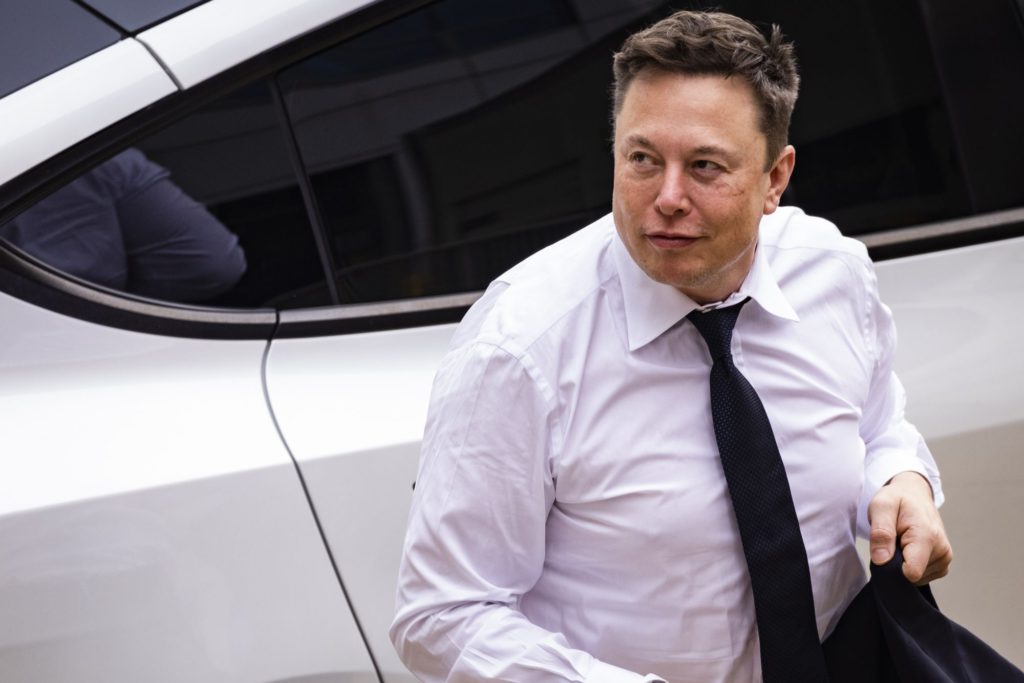
Elon Musk Faces Investors in Court Over Tweet to Take Tesla Private

(Bloomberg) — Investors who filed suit over Elon Musk’s 2018 tweet stating that he was considering taking Tesla Inc. private are facing a crucial test in court.

A federal judge in San Francisco will hear arguments Tuesday over whether Musk was intentionally deceitful when he unveiled the proposal to his millions of Twitter followers and said “funding secured.” 

The class-action suit is one of several legal issues facing the world’s richest person, who is currently under a court-ordered deadline to complete his $44 billion purchase of Twitter Inc. by Friday or face a trial in Delaware.

Investors are seeking to hold Musk and Tesla responsible for massive losses they suffered from wild swings in the company’s share price following the tweet on Aug. 7, 2018.

Musk insists investors are wrong to accuse him of manipulating the stock price and maintains that his short-lived plan to take Tesla private was solid based on discussions he had with Saudi Arabia’s Public Investment Fund. Tesla didn’t respond Monday to a request for comment.

Read More: Tesla Judge Refuses to Silence Musk in Go-Private Tweet Case

Lawyers for shareholders have never publicly revealed how much they’re seeking in damages for hundreds of investors. A recent court filing by Musk and Tesla cited “billions” at stake.

US District Judge Edward Chen made it significantly easier for the investors to prevail when he ruled in April that the “funding secured” tweet was false and reckless. 

To avoid confusing jurors, Chen will likely instruct them that what he’s already decided takes that issue off the table, according to legal experts.

Lawyers for Musk and Tesla are asking Chen to leave it for the jury to decide whether Musk knew he was misleading investors. 

“Mr. Musk’s actual knowledge and state-of-mind remain a live issue in this trial,” the defense lawyers said in a filing. 

If the judge agrees, the investors will have less of a head start at the trial than they’ve been counting on. 

Adam Pritchard, a professor at University of Michigan Law School, said the question of Musk’s intent behind the tweets — “funding secured,” for example — is intertwined with whether his statements were material, or important enough to influence investors’ decisions.

“‘Secured’ is not a binary question,” Pritchard said. “There’s no ‘it’s secured’ or ‘it’s not secured.’ There are gradations of secured. The court has said it’s misleading to say it was secured, but was it materially misleading to say it was secured? I think that’s still in play here.”

As a witness in the trial, Musk will be asked to explain the facts as he knew them at the time, Pritchard said. 

Pritchard said he agrees with analysts who have estimated a loss at trial for Musk could cost him and the company more than $1 billion.

‘Weak Sauce’: Elon Musk’s 2018 Feud With Saudi Fund Revealed

That would present another financial challenge for Musk, who has been trying to assemble financing for the Twitter deal.

“Elon has a lot of demands for his cash right now, so it’s really unfortunate timing for him,” Pritchard said.

The case is In re Tesla Inc. Securities Litigation, 18-cv-04865, US District Court, Northern District of California (San Francisco).

More stories like this are available on bloomberg.com

©2022 Bloomberg L.P.
Ukraine Documenting Russian Hacks, Eyeing International Charges

(Bloomberg) — Ukrainian officials are documenting suspected Russian hacking incidents as part of a plan to prosecute Moscow in an international court, according to a top Ukrainian cybersecurity official.

Victor Zhora, chief digital transformation officer of Ukraine’s special communications and information protection service, said the Ukrainian government is collecting evidence of malicious cyber activity from Russia and sharing the information with the International Criminal Court, a tribunal based in The Hague. 

“Our intention is to bring this to justice after the war, and perhaps this will be the first prosecution of the first global cyber-war and cybercrimes that were conducted with kinetic operations and war crimes in Ukraine,” Zhora said during an interview at a cybersecurity conference in Singapore. “I hope this will happen.”

International officials have long debated the legality of state-sponsored hacking. The US, Russia and 23 other countries in 2021 voluntarily agreed to not conduct cyberattacks on foreign critical infrastructure during peacetime, terms that policy experts said have been undermined since the invasion of Ukraine. 

US and European Union officials in May blamed the Russian government for a February cyberattack on the satellite company Viasat Inc., which knocked out communications in much of Ukraine in the hours prior to Russia’s invasion. Suspected state-sponsored Russian hackers also launched a series of digital assaults against Ukrainian targets prior to military movements, according to Microsoft Corp. research. Other distributed denial-of-service attacks flooded Ukrainian services with web traffic, knocking them offline and rendering them useless. 

“We should combine the instruments of sanctions, financial and technological against all who participated in this illegal aggression against Ukraine, at least in cyberspace,” Zhora said. 

Kyiv has weathered Russian cyber activity with minimal interruption due in part to Ukraine’s experience with NotPetya ransomware in 2017, Zhora said. In that instance, suspected Russian malware shut down Ukrainian banks, government agencies as well as the drugmaker Merck & Co. and the shipping giant  A.P. Moller-Maersk A/S. The White House later blamed NotPetya on the Russian government, pegging the cost at an estimated $10 billion. 

Ukraine has been preparing for another incident with the same impact, with help from allies including the US. Global IT companies, governments, partner agencies, consultants, hardware and software and cloud companies have all come together to help shore up Ukraine’s digital resilience, Zhora said. 

“Ukraine is the primary target but not the final one,” he said. “If Ukraine is not able to defend itself then our closest neighbors would be next in this point. Ukraine defends the world in the battlefield and in global cyberspace.”

More stories like this are available on bloomberg.com

©2022 Bloomberg L.P.

Alphabet, Microsoft Lead Bear-Market Earnings Season

(Bloomberg) — Investors are facing a make-or-break week for some of Wall Street’s most influential tech stocks in a historic year for the group marked by a plunge into bear market territory.

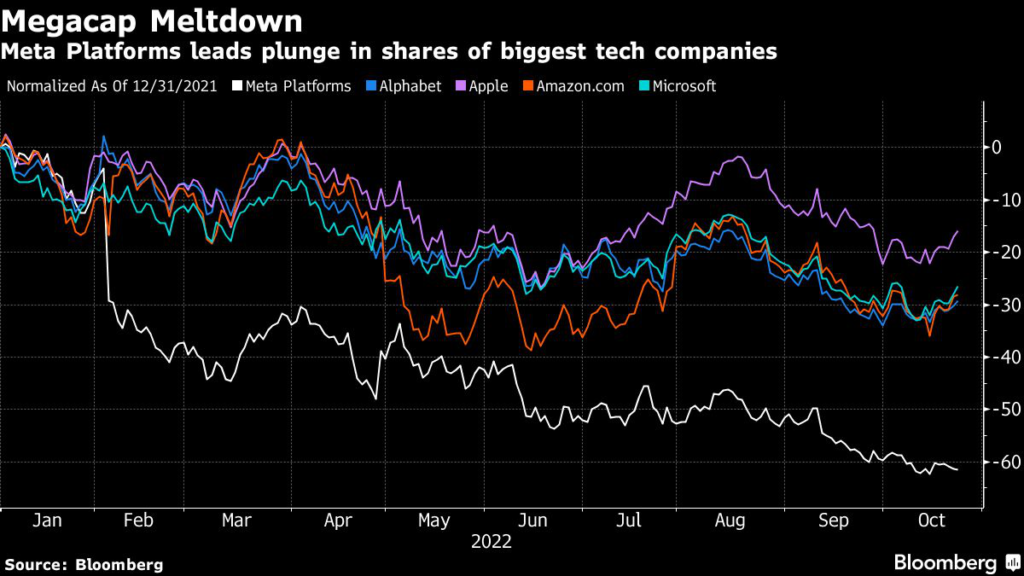
The superlatives have followed one after another in 2022’s wild ride. Shares of Meta Platforms Inc. have lost 61%, their biggest drop since the company went public a decade ago. Apple Inc., Alphabet Inc., Amazon.com Inc. and Microsoft Corp. are set for their steepest declines since the global financial crisis. 

The Nasdaq 100 Index rose 0.6% on Tuesday.

Now, these companies are slated to report quarterly results this week with projections showing a profit decline by the most in at least three years. The quintet of stocks together comprise about 40% of the weight of the Nasdaq 100 Index, which has lost $6 trillion of value this year because of supersized interest rate hikes from the Federal Reserve and the growing potential of a recession.

“They are essential to the sentiment around tech, no doubt,” said Neil Campling, an analyst at Mirabaud Securities. “Investors are now focused on the bottom line and want evidence of lower costs, disciplined spending, and not chasing revenue growth at all costs.”

Here’s a look at the Big Tech stocks slated to report this week and what investors are keeping an eye on.

Alphabet

Investors are concerned about the strength of the ad market in a weaker economy, a theme that was underlined by weak growth out of Snap Inc. last week. However, analysts are still penciling in full-year revenue growth for Alphabet of about 12%, slightly faster than the S&P 500, with double-digit increases also expected for the next three years. 

Any sign after the market closes Tuesday that those forecasts are too optimistic could send the stock on another leg down. Keybanc Capital Markets on Monday lowered its estimates for the Google parent, and is now predicting a revenue increase of only 5% for the year.

The stock weakness arguably has made Alphabet a bargain, as it trades at just 17 times estimated earnings, a discount to its 10-year average and the Nasdaq 100 overall. 

Microsoft

The software giant, which also reports after the close Tuesday, trades at 23 times earnings, a slight premium to its average over the past decade.

While demand for its cloud and business software products is expected to be durable, even in the event of a recession, the 9.4% quarterly revenue growth expected by analysts would be its slowest pace since 2017.

“The big question mark is, what impact will Microsoft see from the economy slowing and PC weakness?” Wiley Angell, chief market strategist at Ziegler Capital Management. “However, given the overall stability of the revenue and the stock’s valuation, I think this is a good time to be evaluating it.”

Meta Platforms

After a stock plunge that’s wiped $579 billion off Meta’s value this year, some investors would love to hear Mark Zuckerberg announce at Wednesday’s earnings that he’s dialing back the spending on the company’s push into the metaverse. That expensive gambit has yet to generate meaningful revenue at a time when investors are focused on reducing costs.

The Facebook parent has been besieged by stalling user growth, competition from TikTok, and an Apple privacy policy that has diminished its ability to target ads. Also, it’s facing the same weak ad market that pressured Snap. 

Full-year revenue for is seen falling 0.7%, making it the only company of the five expected to report a decline. This is also set to be the first year of falling revenue in the company’s history. Meta stock trades near its cheapest level on record, though that hasn’t been enough to entice bulls. 

Amazon.com

Amazon reports Thursday afternoon, and the report will be scrutinized as a bellwether across industries. The e-commerce business will shed light into the strength of the consumer, especially going into the holiday shopping season, while its Amazon Web Services cloud-computing division gives a glimpse into how IT spending is holding up.

Investors are likely to focus on the progress Amazon is making cutting costs, given the recent preference for profitability over growth. Amazon trades above 40 times estimated earnings, more than twice the Nasdaq 100, though below its long-term average.

Amazon is JPMorgan Chase & Co.’s top idea among internet stocks, and it views the valuation as attractive. While analyst Doug Anmuth sees some risks — including currency headwinds and slowing discretionary spending — he writes that it “becomes a cleaner story through 2022 as revenue growth re-accelerates & operating income margins expand into 2023.”

Apple

The iPhone maker has been the relative winner of 2022, down 15%. Investors have gravitated to it as its steady growth and fortress-strength balance sheet give it a perceived safe-haven status.

However, this could leave the stock vulnerable when it reports on Thursday. Bloomberg News recently reported that it is retreating from plans to increase production of its new iPhones given demand trends. The stock also trades at 23 times forward earnings, above both its long-term average and the market overall. 

“Apple certainly doesn’t look like it is being priced for a recession, and the multiple could be challenged in the short term, given what we’re hearing about softness in the market,” said Angell. “However, the stability of earnings should continue to result in stability in the stock, while providing a higher floor for the multiple.”

Tech Chart of the Day

Top Tech Stories

  • Apple increased prices for its music and TV+ services for the first time, citing rising licensing costs, a move that risks giving rivals an edge in a fiercely competitive streaming industry.
    • Apple updated its App Store guidelines Monday with new and clearer language explaining its policy toward cryptocurrency trading and non-fungible tokens.
  • WhatsApp, the instant messaging service owned by Meta Platforms Inc. said it fixed an issue that caused a widespread outage, with tens of thousands of users reporting problems.
  • Amazon workers seeking to join a union at a company warehouse in Southern California have backed away from their attempt to hold an election, a setback for the upstart Amazon Labor Union following its defeat at a New York facility last week.
  • The US unsealed charges claiming two Chinese intelligence officers tried to obstruct a criminal investigation of Huawei Technologies Co., and alleged others were working on behalf of a “foreign power” to try procure technology and recruit spies.
  • SoftBank Group Corp.-backed Jellysmack, which helps content creators become YouTube and TikTok stars, is launching a spending spree for growth in Asia, following staff cuts this year.

–With assistance from Subrat Patnaik.

(Updates to market open.)

More stories like this are available on bloomberg.com

©2022 Bloomberg L.P.
Amazon Is Testing Venmo Payments Ahead of Holiday Shopping Surge

(Bloomberg) — Amazon.com Inc. is allowing certain customers to use their Venmo wallets when checking out as the retailing giant tweaks its payment options for customers ahead of the holiday shopping season.

All US customers will be able to use Venmo to check out by Black Friday, the day after the Thanksgiving holiday that’s typically one of the busiest for shoppers, the two companies said in a statement Tuesday. The move comes almost a year after the firms said they would pursue such a partnership.

“We want to offer customers payment options that are convenient, easy to use and secure,” said Max Bardon, vice president of Amazon worldwide payments. “Whether it’s paying with cash, buying now and paying later, or now paying via Venmo, our goal is to meet the needs and preferences of every Amazon customer.”

Venmo’s parent company, PayPal Holdings Inc., is pushing to improve returns on the wallet. The company has looked to gin up acceptance of the platform as well as offer new services such as the ability to buy, sell and hold cryptocurrencies.

PayPal shares jumped 4.8% to $87.30 at 9:32 a.m. in New York.

Amazon, for its part, has been adding new capabilities to make it easier for consumers to make transactions on its site. The company last year agreed to add the “buy now, pay later” provider Affirm Holdings Inc. to its list of payment options.

(Updates with share reaction in fifth paragraph.)

More stories like this are available on bloomberg.com

©2022 Bloomberg L.P.

Close Bitnami banner
Bitnami