

Bloomberg

Digital-Currency Plan Falters as Nigerians Defiant on Crypto

(Bloomberg) — A year after launching Africa’s first digital currency, Nigeria’s central bank is turning to the nation’s three-wheeler taxi operators to speed the adoption of the eNaira, as regulators across the world scrutinize its every move.

It’s offering a 5% discount to drivers and passengers of the motorized rickshaws — known locally as Keke Napep — who use the eNaira. It’s the latest attempt to kickstart the digital currency, which has so far attracted just one in 200 people in the continent’s most populous country.

The central bank’s focus on the digital currency is creating confusion among many Nigerians, who fail to see the difference between the government-backed eNaira and cryptocurrencies. For drivers of Keke Napep, the most popular form of transport around the gridlocked streets of Lagos and other cities, the heavy promotion of the eNaira just as authorities crack down on cryptocurrencies has them befuddled. The Central Bank of Nigeria has barred commercial banks from doing business with crypto exchanges.

“Why is it asking us to collect eNaira?” said 23-year-old driver Hamed Lawan. “I thought the government said cryptocurrency is bad?”

When Nigeria became the first African nation to start a central bank digital currency, or CBDC, it was partly targeting the almost 40 million people in the country without a bank account. 

Disappointing Results

The results, so far, have been disappointing. While the eNaira uses similar distributed ledger technology to Bitcoin or Ethereum and can be saved in digital wallets, Nigerians’ passion for cryptocurrencies doesn’t extend to the central bank offering. 

Virtual currencies have lured residents of Africa’s top oil producer as a hedge against inflation and currency depreciation, but eNaira is seen as a proxy for the challenges facing the continent’s biggest economy and a symbol of distrust in the ruling elite.

Educating Nigerians about the digital currency is a key task for both the central bank and the government. As the largest economy to fully launch, it’s also being scrutinized by the more than 100 nations considering their own CBDCs, according to Josh Lipsky, senior director of the Atlantic Council’s GeoEconomics Center.

“Nigeria’s project is hugely important to the world,” he said. “My bottom line on Nigeria is the jury is still out, but the world is paying close attention to what they’re doing.”

CBDCs emerged amid the rise of thousands of cryptocurrencies, which are disrupting traditional payment systems and pushing central bankers to innovate to compete. The digital money aims to make payments safer, cheaper and more reliable, while giving governments in poorer nations an alternative to underdeveloped banking systems.

Although central banks typically are not aiming for universal adoption, they do need to achieve a critical mass of users, said Tommaso Mancini-Griffoli, a deputy division chief in the Monetary and Capital Markets Department at the International Monetary Fund. Authorities are targeting the “sweet spot,” as excessive CBDC usage could disrupt the flow of credit and potentially dis-intermediate commercial banks overnight, he said.

Mis-Targeted Messaging

The relatively low adoption up until this point, while not uncommon for countries in the early phases of launching a digital currency, may be caused by insufficient incentives for commercial banks or mis-targeted consumer messaging, according to John Kiff, managing director of the CBDC Think Tank.

Nigeria’s central bank remains upbeat. After attracting almost 1 million people to its digital platform, it’s targeting 8 million users by next August.

All the eNaira needs is “a little push from the government,” said Kingsley Obiora, deputy governor in charge of economic policy at the central bank.

Nigeria’s mobile-phone penetration of 81% makes it a vital channel to offer digital financial services to the underbanked population, central bank Governor Godwin Emefiele said on Tuesday at a ceremony to mark the anniversary of the eNaira’s introduction.

Cashless Economy

“The destination, as far as I am concerned, is to achieve a 100% cashless economy in Nigeria,” Emefiele said without giving a time frame. 

While virtual currencies have crashed this year, their speculative appeal still draws Nigerians, who can also use them to bypass the central bank’s foreign currency restrictions, according to Adesoji Solanke, director at Renaissance Capital in Lagos. 

A shortage of dollars has prompted the central bank to ration foreign exchange in the official market prompting residents to turn to the more expensive parallel market and cryptocurrencies. 

“The eNaira does not address any of these basic use cases, so no surprise at its low adoption rates so far,” Solanke said. 

Even though the central bank last year asked lenders in the West African nation not to transact with cryptocurrency exchanges, Nigeria ranked 11th in the world in adopting cryptos, according to blockchain specialist Chainalysis Inc.

Nigeria’s enthusiasm for virtual currencies partly reflects a long history of naira depreciation. Africa’s largest economy has devalued the naira about six times since 2015, and Bank of America Corp. economist Tatonga Rusike expects a further 20% weakening next year. Those concerns are compounded by record interest rates and inflation at a 17-year high. 

That makes the eNaira a hard sell, particularly as it faces competition from established mobile-banking apps. With money loaded on eNaira wallets not counting as cash on a lender’s book, banks also have little incentive to market the digital currency, said Babatunde Obrimah, chief operating officer of the Fintech Association of Nigeria. 

At the same time, millennials and Generation Z — the main cryptocurrency users — are suspicious of the central bank’s project.

“They see the regulator as hostile to them and therefore have no interest in anything it introduces,” Obrimah said. 

Since August, Nigerians without bank accounts have also been able to open eNaira wallets using a so-called USSD code and their mobile phones. Still, the government may need to provide further impetus, according to Adedeji Olowe, founder of Open Banking Nigeria.

Central Bank Deputy Governor Obiora echoes that sentiment, suggesting that if half of government salaries were paid in eNaira it could be a “game changer.”

A positive sign is that those who have adopted the eNaira are active users, according to Lipsky of the Atlantic Council. That’s the opposite of China, where hundreds of millions opened wallets during a pilot CBDC phase but with very low activity for the average user, he said.

For the moment, the eNaira continues to struggle, especially among the poorest communities it’s targeting.

“Did you say eNaira? I don’t even have a bank account, let alone an eNaira account,” said Adamu Alidu, another taxi driver in Abuja. “Me, I don’t know anything about it.”

–With assistance from Emele Onu.

(Updates central bank governor’s comments in fourth paragraph after second subhead.)

More stories like this are available on bloomberg.com

©2022 Bloomberg L.P.

Google Fined $113 Million in Second India Antitrust Penalty

(Bloomberg) — India’s antitrust regulator has fined Alphabet Inc.’s Google 9.4 billion rupees ($113 million) for “abusing” its dominant position on its Android mobile app store, the second such penalty for the tech giant within days.

The Competition Commission of India on Tuesday ordered Google to “cease-and-desist” from anti-competitive practices after it found the company to be “dominant” in the Indian market for licensable operating systems available for smartphones and app stores.

The regulator also asked Google to not restrict app developers from using third-party billing or payment-processing services. 

Google has been ordered to follow a non-discriminatory policy against other apps that allow payments via a state-backed system known as Unified Payments Interface, or UPI, the anti-trust body said in a statement.

Google didn’t respond to an email seeking comment.

The regulator’s order comes just days after it fined Google $162 million for accelerating the dominant position of its Android smartphone operating system. 

(adds details)

More stories like this are available on bloomberg.com

©2022 Bloomberg L.P.
Private Dealmaking Set to Rise, Widening Public Markets Gap

(Bloomberg) — Private capital investors expect to increase their volume of dealmaking globally in the coming months, widening the chasm with moribund public markets.

Two-thirds of 30 investment firms surveyed by UK investment bank Numis Securities Ltd. see an increase in the number of private companies raising capital in the next six months, according to Rachel Stott, an associate director on the bank’s growth capital solutions team. Respondents included Softbank Group Corp., Andreessen Horowitz and General Catalyst.

“While most remain deeply pessimistic about the macro environment, with nine in ten anticipating worse conditions ahead, the overarching and encouraging theme we are hearing from investors is that activity levels will pick up,” Stott said in a interview.

Even the largest startups are turning to deep private capital pools to fund investment, while shunning public market listings given declining risk appetite. But stock market volatility has weighed on valuations recently, causing some private firms to swallow hefty markdowns.

In a dramatic reversal, buy-now-pay-later giant Klarna Bank AB in July saw its valuation slashed to $6.7 billion, from the $45.6 billion it achieved in June 2021. Having grown up in an era of cheap credit and easy financing, many, including the likes of online brokerage Trade Republic Bank GmbH, have laid off employees in recent months to keep costs low and delay fresh funding needs. However, some have managed to grow their valuations, such as Celonis, a software company based in Munich and New York.

In the current climate, investors are now increasingly focused on profitability, in contrast to their previous willingness to “fund growth at any cost,” said Stott. Moreover, most expect valuations to stabilize and “see current market conditions as an attractive opportunity,” she said.

Still, even with activity expected to pick up over the next 12 months, a return to last year’s record dealmaking level is highly unlikely, Stott said. Global venture-capital deal rounds more than doubled to exceed $500 billion in 2021 and have crossed $200 billion so far this year, within touching distance of 2020’s haul, according to CB Insights data.

Optimism among private market participants is in contrast with equity capital markets, with most bankers expecting initial public offering activity to remain subdued for the remainder of the year. Fundraising on global exchanges has also lagged behind private markets this year, with proceeds from initial public offerings falling 66% to about $180 billion, according to data compiled by Bloomberg.

(Adds details about private funding market in fifth paragraph. A previous version corrected spelling of Andreessen Horowitz)

More stories like this are available on bloomberg.com

©2022 Bloomberg L.P.
Solar Costs Will Rise for Many Years, Says Saudi Arabia’s ACWA

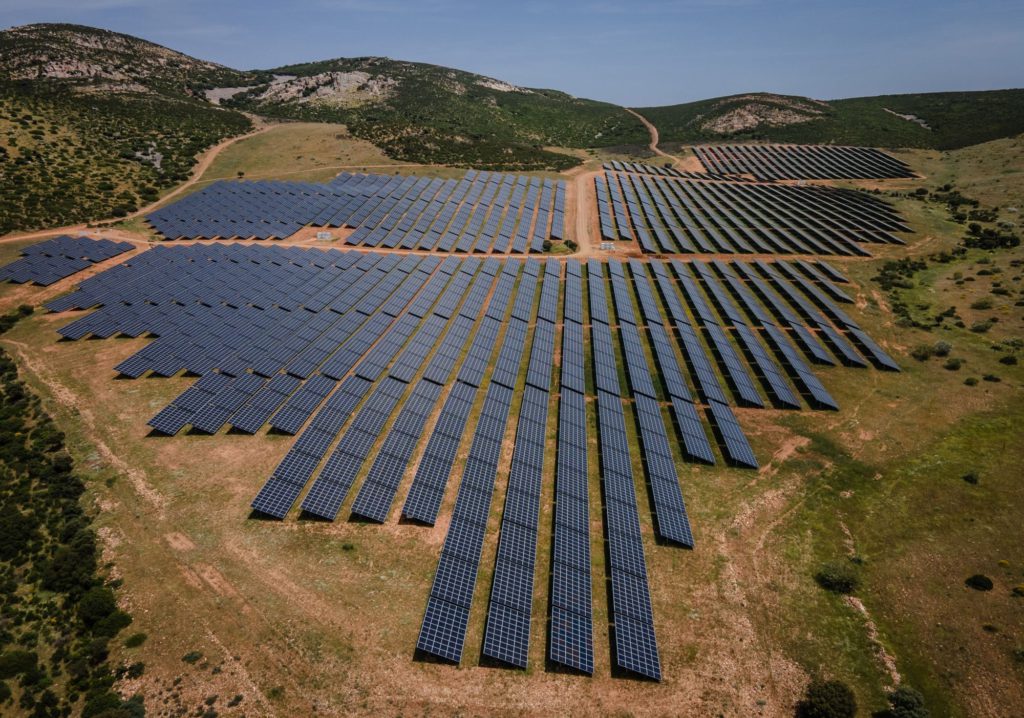
(Bloomberg) — Soaring inflation and higher interest rates mean that costs for solar-power projects will rise for the next five to seven years, according to Saudi Arabia’s biggest renewable energy company.

“Five years, I hope,” Paddy Padmanathan, chief executive officer of ACWA Power Co., said in an interview at the Future Investment Initiative conference in Riyadh. “Costs are going to go up. It’s immediate. Technology driving down costs won’t happen as fast as inflation and interest rates are pushing prices up.”

Still, renewables “are cheaper and will continue to be cheaper” than most fossil fuels, he said.

ACWA, which generates power and desalinates seawater in Saudi Arabia, has no intention of slowing its expansion plans, Padmanathan said.

The government has said ACWA will help develop 70% of Saudi renewable energy projects. It is the main local partner in a $5 billion project to produce green hydrogen at the new city of Neom in the north west of the kingdom.

ACWA’s shares have soared almost 220% since they were listed in Riyadh in October last year. The stock now trades at 177.8 riyals, valuing the company at $34.6 billion.

–With assistance from Sarah Halls and Habiba Basiony.

More stories like this are available on bloomberg.com

©2022 Bloomberg L.P.

US Equity Futures Decline With Earnings in Focus: Markets Wrap

(Bloomberg) — US equity-index futures retreated Tuesday as traders assessed a mixed bag of corporate earnings against the backdrop of the FederaL Reserve’s ongoing rate-hike campaign. Treasury yields dipped for a second day and the dollar was steady.

Futures on the S&P 500 and Nasdaq 100 fluctuated before turning lower after Monday’s strong performance on Wall Street. Among companies reporting Tuesday, The Coca-Cola Co., General Motors Co. and United Parcel Service Inc. rose in pre-market trading after beat analysts’ earnings estimates, while 3M Co. and General Electric Co. fell short. Alphabet Inc., Microsoft Corp. and Visa Inc. are among major those still reporting today.

About a fifth of S&P 500 companies had posted third-quarter earnings before today, with more than half outperforming estimates. Still, investors are concerned the effects of a slowing economy will be felt further down the line, with the Fed set to raise interest rates next week even as output shows signs of flagging.

“What we’ve seen throughout the year is that equity risk premia have really compressed,” Christian Mueller-Glissmann, Goldman Sachs managing director for portfolio strategy, said on Bloomberg TV. “That makes you more vulnerable if you disappoint on growth, cash flows, et cetera. For now that hasn’t happened really, but all the lead indicators are pointing to risks in this direction.”

The Stoxx Europe 600 Index erased an early advance, with chemicals the worst-performing sector as Linde Plc dropped after proposing to de-list from the Frankfurt exchange. Banks underperformed as the ECB considers curbing windfall profits from rising interest rates, while HSBC Holdings Plc plunged more than 7% after reporting higher-than-expected charges for possible loan losses. On the plus side, UBS Group AG buoyed financial services after it exceeded earnings estimates, while technology stocks climbed after software developer SAP SE’s third-quarter revenue beat. 

Manufacturing and services data for the US underwhelmed on Monday, indicating Federal Reserve rate hikes are beginning to slow activity. Fed officials have entered a blackout period ahead of the central bank’s meeting next week, where it’s expected to raise rates 75 basis points. Investors are starting to speculate that the central bank may be approaching the end of its aggressive tightening campaign.

“Investors are getting more confident that inflation will soften as the consumer rethinks massive purchases,” said Edward Moya, a senior markets analyst at OANDA Corp. “Fed rate-hike expectations will remain volatile, but expectations are growing that a weaker economy will let the Fed pause their tightening after the February policy meeting.”

Analysts are also expecting a jumbo hike of 75 basis points from the ECB on Thursday, even as many economists now reckon a recession has begun in the euro region. German business confidence improved in October, data showed Tuesday, though remained at depressed levels as Europe’s largest economy heads into a challenging winter.

A gauge of global stocks held a small advance as Chinese shares staged a modest rebound following Monday’s historic selloff. The offshore yuan fell to the lowest level since trading began a dozen years ago, as President Xi Jinping’s power grab raised concern that concentrated decision-making could weaken growth and destabilize geopolitics. The decline extended after China’s central bank set the official fixing rate for the currency at the lowest level in 14 years.

“We’re certainly staying away from the Chinese market right now because the political scene is not favorable,” Laila Pence, president of Pence Wealth Management, said in an interview on Bloomberg TV. “There’s a lot less risk in the US and just as much upside.”

Elsewhere in markets, the British pound gained as Rishi Sunak formally took over as UK prime minister on Tuesday, vowing to “fix” the mistakes made by his predecessor, Liz Truss. oil slid as traders assessed near-term supply tightness in the crude market and broad appetite for risk assets including commodities.Bitcoin continued to track sideways, holding above $19,000.

Key events this week:

  • Earnings due this week include: Apple, Microsoft, Exxon Mobil, Ford Motor, Credit Suisse, Airbus, Alphabet, Amazon, Bank of China, Boeing, Caterpillar, Cnooc, Intel, McDonald’s, Mercedes-Benz, Merck, Samsung Electronics, Shell, Vale, Visa, Volkswagen
  • US Conference Board consumer confidence, Tuesday
  • Bank of Canada rate decision, Wednesday
  • ECB rate decision, Thursday
  • US GDP, durable goods orders, initial jobless claims, Thursday
  • Bank of Japan policy decision, Friday
  • US personal income, personal spending, pending home sales, University of Michigan consumer sentiment, Friday

Some of the main moves in markets:

Stocks

  • Futures on the S&P 500 fell 0.5% as of 8:07 a.m. New York time
  • Futures on the Nasdaq 100 fell 0.2%
  • Futures on the Dow Jones Industrial Average fell 0.6%
  • The Stoxx Europe 600 fell 0.1%
  • The MSCI World index was little changed

Currencies

  • The Bloomberg Dollar Spot Index was little changed
  • The euro fell 0.2% to $0.9859
  • The British pound rose 0.3% to $1.1308
  • The Japanese yen was little changed at 148.93 per dollar

Cryptocurrencies

  • Bitcoin fell 0.4% to $19,301.22
  • Ether fell 0.2% to $1,348.39

Bonds

  • The yield on 10-year Treasuries declined seven basis points to 4.17%
  • Germany’s 10-year yield declined eight basis points to 2.25%
  • Britain’s 10-year yield declined four basis points to 3.71%

Commodities

  • West Texas Intermediate crude fell 1.2% to $83.56 a barrel
  • Gold futures fell 0.4% to $1,648.10 an ounce

–With assistance from Richard Henderson, Allegra Catelli and Ryan Vlastelica.

More stories like this are available on bloomberg.com

©2022 Bloomberg L.P.

GM Rides Full-Size Pickups, Luxury SUVs to Big Earnings Beat

(Bloomberg) — General Motors Co. beat Wall Street’s consensus third-quarter profit estimate on record revenue and affirmed its guidance for the year thanks to strong sales of its luxury Cadillac SUVs and largest trucks, an indicator that rising interest rates have not yet hit its business.

GM reported adjusted profit of $2.25 a share on Tuesday, surpassing analysts’ projection for $1.89 a share. It also maintained guidance for full-year profit of $6.50 to $7.50 a share. 

The quarterly results show that auto profits are resilient even as the economy weakens and inflation remains high. Improved availability of semiconductors and other components helped boost sales of its highest margin vehicles in the US, especially large pickups and SUVs. GM also saw higher profits in China. 

“We’re delivering on our commitments and affirming our full-year guidance despite a challenging environment because demand continues to be strong for GM products and we are actively managing the headwinds we face,” GM Chief Executive Officer Mary Barra said in a letter to shareholders.

The Detroit automaker posted revenue of $41.9 billion thanks to a 24% jump in US vehicles sales for the three months ending Sept. 30. Analysts expected GM to bring in $42 billion in revenue for the quarter. Electric-vehicle market leader Tesla Inc. last week said its revenue came in at $21.5 billion. Traditional rival Ford Motor Co. reports its earnings on Wednesday. 

The automaker’s results beat profits of $1.53 a share a year ago and $1.14 per share in the second quarter, easing concerns about vehicle affordability and a possible recession. 

Shares of the carmaker rose 5.1% in premarket trading to $37.55 as of 7:35 a.m. in New York. The stock is down about 39% this year. 

The company sees 2022 adjusted earnings before interest and taxes of $13 billion to $15 billion, unchanged from its previous projections. 

GM also showed an improvement in its business in China, the world’s largest auto market. The company said it made $330 million from its Chinese operations, up 22% from the same period a year ago even though shutdowns related to the Covid-19 pandemic have weighed on the local economy.

The carmaker’s Cruise self-driving vehicle unit lost $497 million in the most recent quarter and has lost a total of $1.4 billion so far this year as GM continues to develop autonomous technology and prepares to expand robotaxi service in Phoenix and Austin.

(Updates with China income in ninth paragraph.)

More stories like this are available on bloomberg.com

©2022 Bloomberg L.P.
Lidar Sensor Price Plunge Leads to Orders From GM, Volkswagen

(Bloomberg) —

When it comes to perception technology, lidar simply can do what other sensors cannot. Developers of automated driving systems of all grades will still need to effectively utilize their camera-based system capabilities, but by operating in concert with lidar, automated driving can function better and make roads safer.

Lidar has been winning over more supporters in the automotive industry as prices rapidly decline. Developers are betting that once their sensors are cheap enough, it’ll be difficult to justify not using lidar in vehicles. BloombergNEF data shows the extent to which lidar prices have fallen and how manufacturers expect cost improvements to continue across all major lidar types.

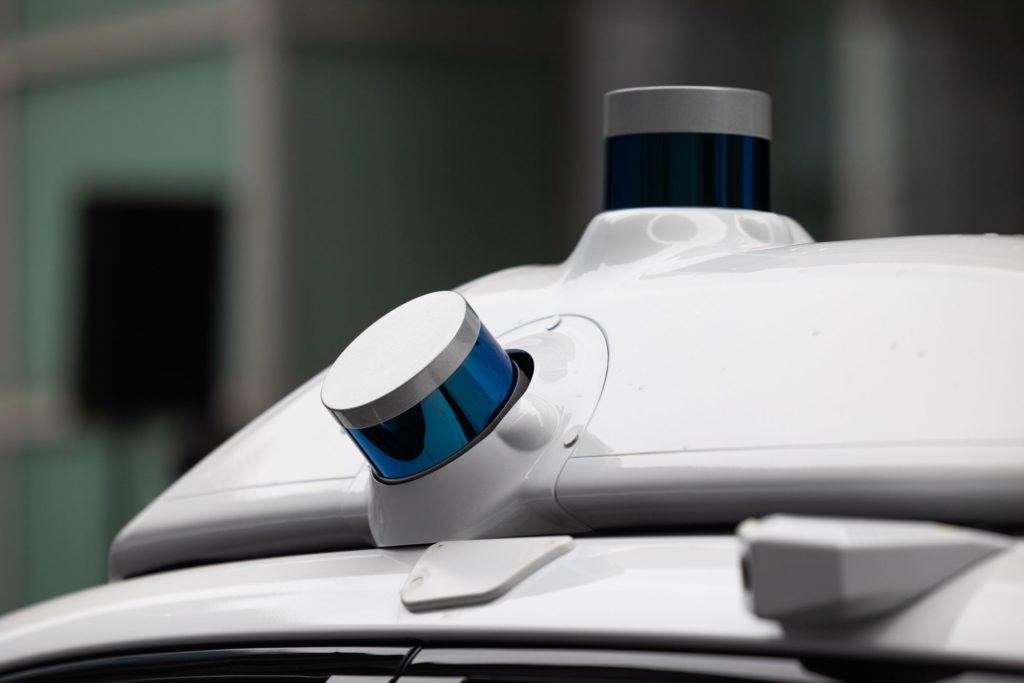
Lidar technology is changing in that there’s an increasing focus on sensors with few or no moving parts, referred to in the industry as hybrid solid state and solid state. These sensors can do less than the mechanical spinning variety of lidar, but they come at a fraction of the cost. Using a combination of between four and eight solid-state lidar sensors can deliver comparable performance to mechanical spinning lidar at a lower price point. There’s also the added bonus that components without moving parts are more suitable in the automotive environment.

Lidar has historically been used mostly on highly autonomous vehicles, of which we estimate there are currently around 3,500 in testing or deployment around the world. However, automakers are putting lidar on more production vehicles to improve their advanced driver assistance systems, or ADAS.

There’s growing view in the auto industry that SAE Level 3 automated-driving systems — where the driver can hand over authority to the vehicle under specific conditions — will have lidar. A prime example is the strategy of General Motors.

GM has offered its positively reviewed Level 2 system, called SuperCruise, since late 2017. For its Level 3 system Ultra Cruise, GM is employing lidar from Cepton, a San Jose, California-based supplier that went public by merging with a special purpose acquisition company earlier this year.

A host of other automakers are also looking to lidar as a way to improve their ADAS, including Volkswagen, whose software unit Cariad recently ordered $4 billion worth of sensors from Innoviz Technologies. Chinese automakers, in particular, have adopted the sensors even in vehicle with far lower sticker prices than some of the vehicles available to consumers in the US and Europe.

The more traditional spinning mechanical lidar is still a favorite among many robotaxi developers, which are shooting for a more advanced level of self-driving capability than what’s offered to consumers in production vehicles. The latest designs from US industry leaders such as GM’s Cruise, Amazon’s Zoox, Ford and Volkswagen-backed Argo AI and Google’s Waymo use lidar packages that BNEF estimates cost between $35,000 and $100,000 per vehicle.

While these costs will undoubtedly drop as the technology improves and manufacturing scales, China-based companies including Baidu, Pony.ai and WeRide aren’t waiting for that to happen. The latest technology packages from these companies use only hybrid solid-state and solid-state sensors. The system performance differences are something which we will need to wait to observe, but the cost advantages already seem significant.

More stories like this are available on bloomberg.com

©2022 Bloomberg L.P.

Ford Updates the Escape Small SUV in a Segment It Once Dominated

(Bloomberg) — Ford Motor Co. is updating the small Escape SUV with new technology and styling, after years of declining sales and ambivalence for the model expressed earlier this year by Chief Executive Officer Jim Farley.

The 2023 Escape coming early next year will feature bigger dashboard touchscreens and a new sporty ST trim, the automaker said. It will continue to offer the only plug-in hybrid option in the Ford-brand lineup. Starting prices will range from $27,500 to $38,500.

Ford marketing officials say the Escape lives on because it appeals to an urban and female audience that isn’t attracted to the off-road-oriented Bronco Sport. They also say Ford needs to remain a player in the compact crossover segment, which accounts for 22% of the US auto market and is now dominated by the Toyota RAV-4 and Honda CR-V. 

The Escape once outsold those models and ranked as the company’s No. 2 vehicle. But sales have fallen by more than half in the last five years and the Escape now faces competition in its own showroom from the rugged and popular Bronco Sport small SUV. 

“There’s plenty of demand, and the segment’s huge,” Craig Patterson, Ford’s utility marketing manager, said in an interview. “We’re not going to be able to serve that with just one vehicle.”

Farley’s Questions

Farley raised questions about the Escape’s future in June while speaking at the Bernstein Strategic Decisions Conference. Asked by an analyst how the company will manage the decline of its internal-combustion engine models as electric vehicles rise in popularity, Farley lumped the Escape with the Edge crossover utility, which Ford is phasing out by mid-decade.

“You cannot ask everyone to do everything,” Farley said. “We’re going to have passion brands. We’re not going to have commodity products like Edges and Escapes.”

Ford argues the Escape isn’t a commodity product and has a particular appeal to buyers looking for a sleek, lower-riding SUV with premium touches. Patterson blamed the falling sales on a lack of computer chips, which has hurt the entire industry for two years.

“There’s this commoditized middle of the market that many of our competitors compete in, and we wanted to have two distinct points of view,” Patterson said. “What we’re really targeting is the growth audiences of millennial women, first-time buyers, Hispanics and African Americans.”

ST Model

Ford expects as much as half of the Escape’s sales to come from the new ST model, which features a black mesh grille, large rear spoiler and an option for a “coast to coast” LED light bar connecting the headlights. The automaker also is doubling the size of the standard dashboard touchscreen to 8 inches and offering a 13.2-inch screen as an option.

The hybrid and plug-in hybrid versions of the Escape are each estimated to go more than 500 miles on a tank of gas. The plug-in can be driven exclusively on electric power for up to 37 miles, and the driver can choose four different settings for electric and gasoline power. 

Sticking with the Escape — despite US sales falling to 145,415 last year from 308,296 in 2017 — is the right business decision, said David Whiston, analyst with Morningstar Inc. in Chicago. Unllike sedans, which Ford dropped, small SUVs are still moneymakers.

“It’s one thing to walk away from the sedan segment because of a lack of profitability,” Whiston said. “But you don’t want to be walking away from compact crossovers because there’s a lot of good volume there and there’s good profit, too.”

More stories like this are available on bloomberg.com

©2022 Bloomberg L.P.
US and Saudi Arabia Will Work Out Spat, Dimon and Falih Say

(Bloomberg) — Riyadh and Washington will work through the recent tensions in their relationship and remain allies, a senior Saudi official and JPMorgan Chase & Co.’s chief executive said at the Future Investment Initiative conference.

An escalating dispute over an OPEC+ decision to cut oil production risks causing lasting damage to political relations between the US and Saudi Arabia. Wall Street seems unfazed, with a big turnout for the start of the kingdom’s FII event on Tuesday.

“It’s a blip,” Saudi Arabia’s Investment Minister Khalid Al-Falih told global executives, investors and Saudi government officials at the conference. 

“In the long term we’re solid allies,” said Falih, a former energy minister and ex-chairman of oil giant Aramco. “We’re close and we’re going to get over this recent spat that I think was unwarranted and it was a misunderstanding hopefully.”

He cited strong ties in the corporate world, in education and in terms of people-to-people relations. 

Saudi Feud Leaves the US Asking If Relations Are Beyond Repair

Falih’s remarks were echoed by JPMorgan Chief Executive Officer Jamie Dimon, who also warned against what he referred to as America’s “everything our way” policy.

“I can’t imagine any allies agreeing on everything,” Dimon said earlier at the summit. “They will work it through and I’m comfortable folks on both sides are working through and these countries will remain allies going forward.”

“The American policy doesn’t have to be: ‘Everything our way,’” said Dimon whose firm is expanding in Saudi Arabia.

JPMorgan Set to Hire 20 More Bankers in Saudi Arabia Expansion

Dimon and Goldman Sachs Group Inc.’s David Solomon are among US finance chiefs attending Riyadh’s glittering investment summit this week, a showcase for Saudi Crown Prince Mohammed Bin Salman. Meanwhile, the White House is escalating a war of words, with Joe Biden threatening “consequences” for the kingdom for its role in slashing crude output despite US objections.

Dimon Calls Geopolitics Bigger Threat Than Recession: FII Update

Earlier on Tuesday, Dimon said geopolitical uncertainties were among the biggest concerns facing the global economy right now, far outweighing the risk of recession.

For Dimon, this year’s event will be his first after he and other senior western executives bailed on the conference in 2018 following the disappearance of Jamal Khashoggi, a dissident Saudi journalist. Dimon later said pulling out “achieved nothing.”

(Recasts to add Saudi minister comments)

More stories like this are available on bloomberg.com

©2022 Bloomberg L.P.

Negroni Sbagliato’s TikTok Origin Myth Has Been Debunked. Here’s the Real Story

(Bloomberg) — The Negroni sbagliato has taken the internet by storm over the past several weeks, after the prosecco drink received a plug by two actors from House of the Dragon and became a sensation on TikTok.

But as with many viral trends, content farms are so busy regurgitating the same story based on a kernel of information that a misconception ends up broadcasted far and wide. 

Of course, that’s perhaps fitting here: Sbagliato means “mistaken,” “false” or “wrong” in Italian. The now-legend has it that the drink was created by mere happenstance, when, a few decades ago a bartender at Milan’s Bar Basso making a Negroni grabbed a bottle of prosecco instead of a bottle of gin. Voilà, the drink was so good it stuck around for eternity. Doesn’t sound too likely, does it?

What is the Negroni sbagliato, and why is it famous now?

The Negroni sbagliato is a riff on the classic Negroni, which incorporates equal measures of Campari, sweet vermouth and gin. In the sbagliato, a pour of prosecco replaces the gin, making for an effervescent, lighter take on the sultry original. The riff came into existence at Bar Basso in the early 1970s; it was logical place to be making Negronis and experimenting with them, as Campari itself is based in Milan and owns a large share of the hearts and minds (and livers) of its resident imbibers.

The drink became a sensation when House of the Dragon co-stars Emma D’Arcy, who portrays Rhaenyra Targaryen, and Olivia Cooke, who portrays Alicent Hightower, discussed their favorite drinks in a clip that’s received 1.8 million likes and more than 100,000 shares on TikTok and generated tens of millions of views across the internet. D’Arcy reveals their drink of choice—a “Negroni … sbagliato … with prosecco in it”—and Cooke “oohs” in delight at the drink’s description. “Oh, stunning,” she says.

The clip has spurred countless reshares, hot takes and stories, and almost all of them are wrong.

Why the internet seems to be getting the Negroni sbagliato wrong

The truth is that the Negroni sbagliato was no mistake at all. It was very much created on purpose by Bar Basso’s owner, Mirko Stocchetto. How do I know? I asked his son Maurizio Stocchetto, the bar’s current proprietor. We had a lengthy chat on the subject—this was in 2017, well ahead of the TikTok trend or TikTok for that matter—at one of the bar’s outdoor tables, as I sipped on one of its signature enormous Negroni sbagliatos.

Mirko purchased Bar Basso in 1967, and it’s been in the family for more than five decades now. He had a passion for cocktails and experimenting with drinks as he attempted to lure in customers. “In order to get people’s attention,” Maurizio says. “The cocktail is really an American institution. The Milanese refused to drink them.”

But Mirko was an innovator, and within a few years, Bar Basso had become a go-to spot in Milan for cocktails. “In the early ’70s, this place became a place to be,” Maurizio says. The Negroni sbagliato, which came into existence during those years, helped to fuel the bar’s rise.

“It’s just a story,” Maurizio admits. “He was experimenting with many drinks.”

In this case, the delightful, invigorating concoction was paired with a perfect “tongue-in-cheek” descriptor. “The name was very catchy,” Maurizio says. His father, who’d made countless Negronis, would never have made such a blatant error as mistaking a bottle of prosecco for a bottle of gin and would never have doubled down on his mistake by then serving it to a customer who hadn’t asked for it. No, the drink was an intentional, well-named creation.

Ironically, Mirko wasn’t even a fan of his famed creation, but the drink helped to put his bar on the map and helped to make the place a Milan institution. “And he hated it,” Maurizio says. His father preferred the potent, bracing strength of a proper traditional Negroni. Maurizio compares his father’s preferences to those of a heavy smoker being forced to smoke light cigarettes; the Negroni sbagliato didn’t have the same effect or the usual oomph behind it. It just wouldn’t do for him.

Make yourself a Negroni sbagliato

To make a Negroni sbagliato, take an equal portion of Campari and sweet vermouth, 1 or 1.5 ounces of each, and pour over ice. Give the drink a quick stir, top with prosecco, and garnish with an expressed orange peel, and you’re good to go.

Even better, take a trip to Milan and visit Bar Basso for yourself. When you order a Negroni sbagliato, you’ll receive a drink so large in a vessel of such fantastical size that it’s almost difficult to hold with one hand. It seems more like a cartoon prop than an actual libation, but rest assured, it is. Be sure to head to the bar in the predinner aperitivo hours, a nightly ritual that is the city’s specialty. While much of Europe may partake in the aperitivo, nowhere else is it as prized and wonderful as it is in Milan. When you order a drink, you’ll receive an assortment of complimentary snacks alongside it: potato chips, olives, focaccia bread, and mini open-faced sandwiches, at the least.

If you’re thirsty for more, you can visit some of Campari’s famed haunts in Milan. There’s the Camparino in Galleria, an official Campari bar with a prime position in the ornate Galleria Vittorio Emanuele II. The setting and the people watching are both spectacular. Campari even has its own museum in Milan, the Galleria Campari. You can book a tour to take in exhibits loaded with eye-catching contemporary Campari artwork, vintage advertisements and bottles, and plenty of lore.

When you return from your trip to Milan, you’ll have all of the firsthand Campari and Negroni knowledge that you need, including the fact that the mistaken Negroni was not a mistake after all.

(Adds shares numbers on TikTok in fifth paragraph. Previous versions corrected pronoun for Emma D’Arcy in the fifth paragraph and spelling of sbagliato in headline.)

More stories like this are available on bloomberg.com

©2022 Bloomberg L.P.

Close Bitnami banner
Bitnami