Bloomberg

Crypto Exchange FTX to Provide $6 Million Phishing Compensation

(Bloomberg) — Digital-asset exchange FTX will provide about $6 million compensation to its account holders impacted by a phishing incident via a third-party website.

Crypto billionaire Sam Bankman-Fried, FTX’s chief executive officer, said on Twitter on Monday that the decision was a one-off as the firm won’t be “making a habit” of compensating users caught up in phishing efforts targeting non-FTX websites.

If the perpetrators send back 95% of the $6 million taken from FTX accounts within 24 hours, “we’ll absolve them,” Bankman-Fried said.

Last week, Bankman-Fried proposed in a blog post what he called a “5-5 standard” where crypto hackers keep either 5% of the amount they’ve taken from a protocol or $5 million, whichever is smaller.

That was part of an effort to curb the security exploits plaguing the digital-asset industry.

To view the source of this information click here

More stories like this are available on bloomberg.com

©2022 Bloomberg L.P.

Budapest Protest Swells to 80,000 to Support Hungary’s Teachers

(Bloomberg) — Crowds filled the embankment in front of the Budapest University of Technology and Economics on Sunday night, with Hungary’s remembrance day for 1956 revolution against Soviet rule only part of the reason. 

Students and parents gathered in the afternoon in central Budapest’s Kalvin Square to support teachers in the largest demonstration since the 2014 march in the city against a short-lived Internet tax. 

Thousands of teachers walked off work across Hungary on Oct. 14 to protest low pay, defying a warning from Prime Minister Viktor Orban’s government that they risked losing their jobs. Protesters also held signs criticizing Orban for his pro-Russian policies and his close ties with President Vladimir Putin. 

Organizers, including students associations, estimated the size of the crowd at 80,000 people, HVG news website reported on Sunday. That’s larger than the previous demonstration on Oct. 14 after five teachers were fired in September for civil disobedience.

Hungarian teachers earn the lowest wage among the 38 member countries of the Organization for Economic Cooperation and Development, according to 2021 figures, the latest available, down from second-lowest in 2020.

Orban’s government has tied raising teacher wages to accessing billions of euros in European Union funds, which are currently blocked over the alleged spread of corruption under the premier’s 12-year rule.

In a speech earlier Sunday in western Hungary’s Zalaegerszeg, more than a two-hour drive from Budapest, Orban criticized the EU’s policies for being harmful for Hungary.  “Never mind those who are shooting at Hungary from the shadows, or from the high-stand in Brussels,” Orban said.

More stories like this are available on bloomberg.com

©2022 Bloomberg L.P.

Metaverse Game Backer Yat Siu Says Low User Count Isn’t Best Measure

(Bloomberg) — The Sandbox, a virtual world based on blockchain, is doing just fine despite a report that the platform only had around 500 daily active users, according to Yat Siu, co-founder of Animoca Brands Corp., the majority owner of the digital game. 

Such a low user count would be shocking for The Sandbox, which has considered raising funds at a more than $4 billion valuation. The CoinDesk report used data that only looked at blockchain transactions, Siu said Thursday in an interview with Bloomberg at the TechCrunch Disrupt conference in San Francisco. He said these transactions, which can include sales of virtual land represented by nonfungible tokens, are not reflective of overall engagement with the platform, especially considering that more users are holding onto their NFTs in order to use them in the game, rather than selling them.

To look at this metric would be comparable to claiming that “how many people trade on Wall Street is the size of the American population,” he said. 

The Sandbox has more than 200,000 monthly active users, he said. Other metrics, such as the number of jobs created on the platform and how much revenue is being generated from the game, are more accurate measures of user engagement on the platform, Siu said.

“Every landowner in Sandbox has a wallet that’s between half a million and $2 million,” he said. 

Siu also discussed another virtual game backed by Animoca: Axie Infinity. Created by gaming developer Sky Mavis, the blockchain-based platform, which allows players to breed and battle monsters represented by NFTs, faced a $620 million hack in March and has seen the price of the crypto tokens used in the game as well as its user numbers plummet during the market downturn for digital assets. The game has also faced complaints about its player experience. 

Despite these setbacks, many gaming companies likely envy Axie Infinity’s position, especially considering its billion-dollar treasury, according to Siu. Still, he compared Axie Infinity to Angry Birds, the Finnish mobile game that soared in popularity in the early 2010s. While Axie Infinity shows the potential of blockchain gaming the way Angry Birds did for mobile gaming, he doesn’t think Axie Infinity represents the future of blockchain gaming. 

Overall, Siu said the impact of crypto winter has been less severe for blockchain gaming compared to the rest of the crypto industry. While other crypto companies are pursuing funding rounds at lower valuations, Siu said Animoca’s recent $110 million fundraise, which saw participation from Temasek Holdings Pte., Boyu Capital and GGV Capital, was a flat round. He also pointed to the potential for new regulatory developments in Hong Kong that could help the industry.

“I think in a week or two, they’re going to come out with a sweeping cryptocurrency and digital assets policy that’s supposed to be very progressive,” he said, noting that he his supposed to help introduce the policy at the upcoming Hong Kong Fintech Week.

“Presumably, they wouldn’t ask me to go on stage if it was going to be bad news, so I’m optimistic,” he said.

More stories like this are available on bloomberg.com

©2022 Bloomberg L.P.

Iran’s Top Nuclear Agency Says Its Email Servers Were Hacked

(Bloomberg) —

The Iranian body overseeing the country’s contested nuclear program said its email servers were subject to an “illegal infiltration” by an unknown group in a foreign country. 

The Atomic Energy Organization of Iran said in a statement on its website that a number of emails from the IT unit of a subsidiary called the Nuclear Energy Production and Development Co., which is responsible for making nuclear energy, were published online without authorization. 

The AEOI said an internal investigation had been launched “in the shortest possible time” and referred to the matter as a “desperate attempt to attract public attention”.

A group called Black Reward claimed in a series of tweets and messages on its Telegram channel on Friday that it had hacked the AEOI as part of a campaign supporting the anti-government protests gripping Iran. 

How Iran’s Hijab Protests Stoked Broader Public Anger: QuickTake

The Telegram messages contained a raft of links to email correspondence that Black Reward claimed involved the UN’s International Atomic Energy Agency, foreign contracts and Iran’s Bushehr nuclear power station. In its statement, the AEOI didn’t mention Black Reward and said the emails contained “normal everyday exchanges” and were about “technical matters”.

Iran’s nuclear program has been a major factor in driving tensions with the West for almost 20 years. Indirect negotiations between Iran and the US to revive the 2015 nuclear deal that sought to curb Tehran’s atomic activities in exchange for sanctions relief, remain on hold.

The European Union, the main interlocutor in the talks, last week imposed new sanctions in response to both the Islamic Republic’s violent crackdown on protests and reports that the regime is supplying Russia with drones for its war in Ukraine.  

How and Why Russia Is Using Iranian Drones in Ukraine: QuickTake

(Updates with more details about hack and background.)

More stories like this are available on bloomberg.com

©2022 Bloomberg L.P.

US Holiday Air Travel May Be More Turbulent Than Summer’s Frenzy

(Bloomberg) — Sign up for the New Economy Daily newsletter, follow us @economics and subscribe to our podcast.

The US travel industry expects this holiday season to be busy enough to make last summer’s turmoil seem orderly.

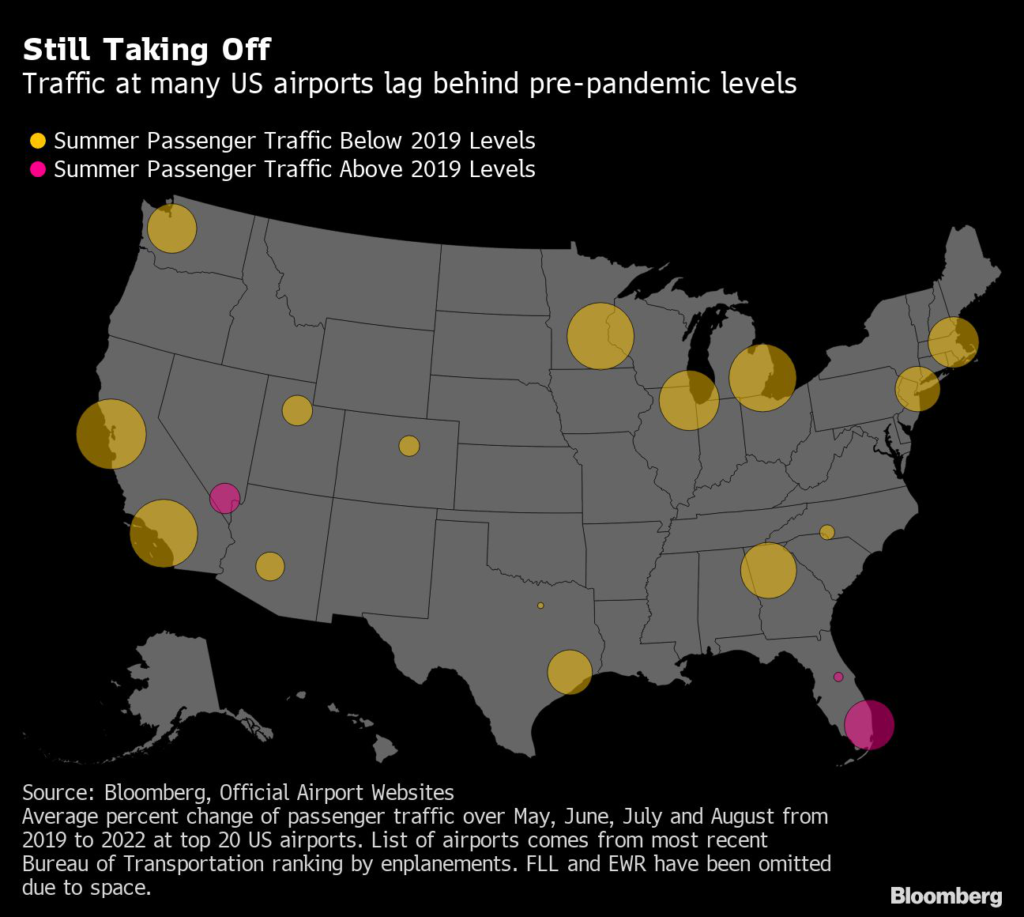
Airport officials and industry analysts say passenger traffic for the Nov. 24 Thanksgiving holiday through New Year’s is set to reach or exceed 2019 levels, when 93 million people packed US flights. This summer, the desire to resume vacationing and visiting family boosted passenger traffic to about 90% of pre-pandemic levels, according to a Bloomberg analysis of Transportation Security Administration checkpoint data. 

“We’ll all look back on 2022 as the year that most airports really came back in full force,” said Doug Yakel, spokesperson for San Francisco International Airport.

The total number of airline customers in North America this year is projected to reach 94% of pre-pandemic levels, according to the International Air Transport Association. In 2019 — the year before Covid hit — US airports handled a record 1.1 billion travelers, according to the US Bureau of Transportation Statistics, though that number includes people on both domestic and international flights.

The rising demand means fliers will pay the price at the ticket counter: airfare costs around Thanksgiving time are up 43% from last year and 22% from 2019 levels, according to travel booking app Hopper.

As it was in the peak summer months of May through August, holiday travelers are likely to face delays at boarding gates, limited flight availability and luggage snafus. While airports are racing to staff up, airlines still face a shortage of pilots and other workers. Winter weather in the US and the usual increased demand for flying during a six-week holiday window may add to travelers’ woes. 

United Airlines Holdings Inc. Chief Executive Officer Scott Kirby said along with the insufficient number of pilots, carriers are facing the need for more aircraft as pandemic-induced supply chain problems are causing Boeing Co. and Airbus SE to fall behind in production.

Meanwhile, demand continues to grow, helped by the hybrid model of working from home and office that allows people to travel more, he said in an Oct. 19 interview with Bloomberg Television.

“It’s just a new, permanently higher level of demand,” Kirby said. “That makes every weekend a potential holiday weekend.”

Read more: The 10 Worst US Airports for Flight Cancellations This Summer

Come the holidays, travelers’ stress may depend on their departure and arrival locations. During the summer, airports in Miami, Las Vegas and Orlando saw the biggest increase in traffic. 

The number of travelers passing through Miami International Airport jumped 13% in May, June and July compared to the same period in 2019, according to an analysis of airport passenger data from the top 20 US airports compiled by Bloomberg. The vacation and business hot spot had the biggest increase, the data show. 

For now, both San Francisco International and Los Angeles International Airport remain about 25% below pre-pandemic traffic levels. Flights to Asia, particularly those to China and Japan, have been reduced by Covid travel restrictions and geopolitical tensions, LAX Chief Executive Officer Justin Erbacci said in an interview. 

Still, LAX will deploy extra air traffic controllers, guest experience teams and other staff to manage what is anticipated to be the biggest holiday travel season since the pandemic began, said Heath Montgomery, director of public relations. 

“I would be surprised if we do not set a post-pandemic record at some point this winter around Thanksgiving or Christmas,” Montgomery said.

Officials in other cities are forecasting air traffic growth from large events during the holiday period. Harry Reid International Airport in Las Vegas, having broken passenger records this summer, is preparing for the Consumer Electronics Show in January, said Rosemary Vassiliadis, director of aviation. CES drew in 171,000 attendees right before the pandemic.  

While scientists predict that at least one variant of the virus will lead to a new wave of infection sometime this year, air travel industry experts say the roll out of vaccines and other safety measures mean travel is likely to stay high.

“People who haven’t had family holidays in some time — this year, they’re just gonna go for it,” said Bill Wyatt, executive director of Salt Lake City International Airport. “I expect a very busy season.”


More stories like this are available on bloomberg.com

©2022 Bloomberg L.P.

Your Sunday Asia Briefing: Meet the New Boss

(Bloomberg) — Meet the new boss, same as the old boss, so the saying goes. In a week of political reshuffling, we can look forward to a new line up of top brass in China, but without the customary change in the top job, while the UK could welcome its third premier in two months. Here’s what to expect.

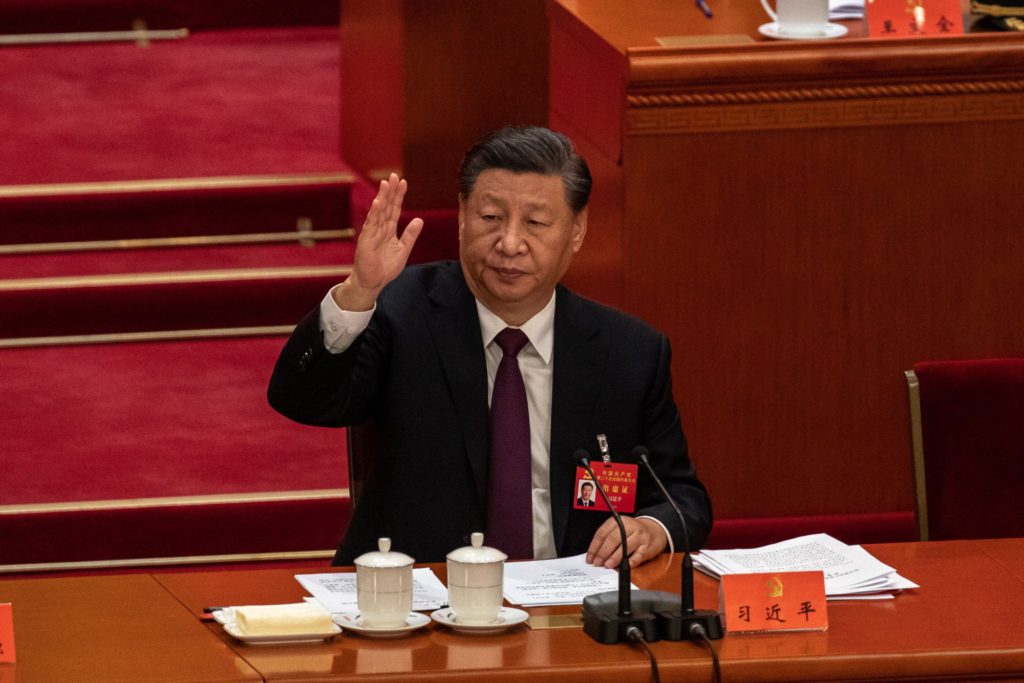
The big reveal: President Xi Jinping is expected to lead out the parade of China’s new supreme Politburo Standing Committee leaders at noon today after filling the ranks of the 205-member Central Committee with his loyalists at the close of the Communist Party congress on Saturday. 

The big intervention: Will the Bank of Japan blink? Most economists expect the central bank to keep rates unchanged on Friday, an entrenched dovish stance to help the economy. But pressure is mounting as the yen comes under repeated attack, forcing yet another round of reported intervention on Friday to push the currency back below 150 to the dollar. Any shift in Japan’s monetary policy could send a wrecking ball through global markets if traders think the last heavyweight anchor against soaring global yields is finally coming adrift. 

The big earnings: Hynix and Samsung report this week and both have big Chinese operations. Investors will be looking for indications of the effect of the semiconductor slowdown and answers to questions on how US tech restrictions will affect the global chip market.

The big elbows: In the latest twist to the UK’s staggering political crisis, former Prime Minister Boris Johnson and ex-chancellor Rishi Sunak are said to have met on Saturday to discuss the Conservative Party leadership, as the demise of Liz Truss’s short-lived and eventful premiership opened the jostling to become the nation’s next leader. The two front runners became bitter enemies this summer when Sunak resigned as finance minister of Johnson’s administration, a move that helped trigger his downfall. 

The big delay:  China last week delayed publishing its key economic data, with insiders blaming the postponement on the party congress keeping senior officials from signing off on the numbers. No such excuse should prevent their appearance this week with a scorecard including economic growth, investment, industrial production and retail sales all due – a comprehensive round-up of how the nation is being hit by Covid lockdowns and wavering global trade.

The big budget: Australian Treasurer Jim Chalmers offers another compare and contrast moment this week when he unveils his first budget. Unlike Kwasi Kwarteng’s mini budget that brought chaos to UK markets, Chalmers has promised his will be “solid” and “sensible,” delivering on election pledges while trying to pare spending. The day after, Australia’s latest prices data may show that headline inflation is running at its quickest pace since 1990.

The big clean-up: The world’s biggest exporter of power station coal is looking for money to clean up its dirty electricity industry. Indonesia is seeking a deal on Wednesday from funders including the World Bank and the Asian Development Bank for about $4 billion of projects that would mark a big step in its efforts to wean itself off the most polluting fossil fuel.

And finally, if you can find something to celebrate in all this, consider the wisdom of buying a solomon.

Have a sagacious week.

More stories like this are available on bloomberg.com

©2022 Bloomberg L.P.

Plunging Markets Defy Government Intervention in Taiwan, Korea

(Bloomberg) — Asia’s two tech-heavy economies South Korea and Taiwan are facing an uphill battle in trying to stem losses in what are already among the world’s worst-performing assets this year. They are hit particularly hard by a global growth slowdown and US chip restrictions.

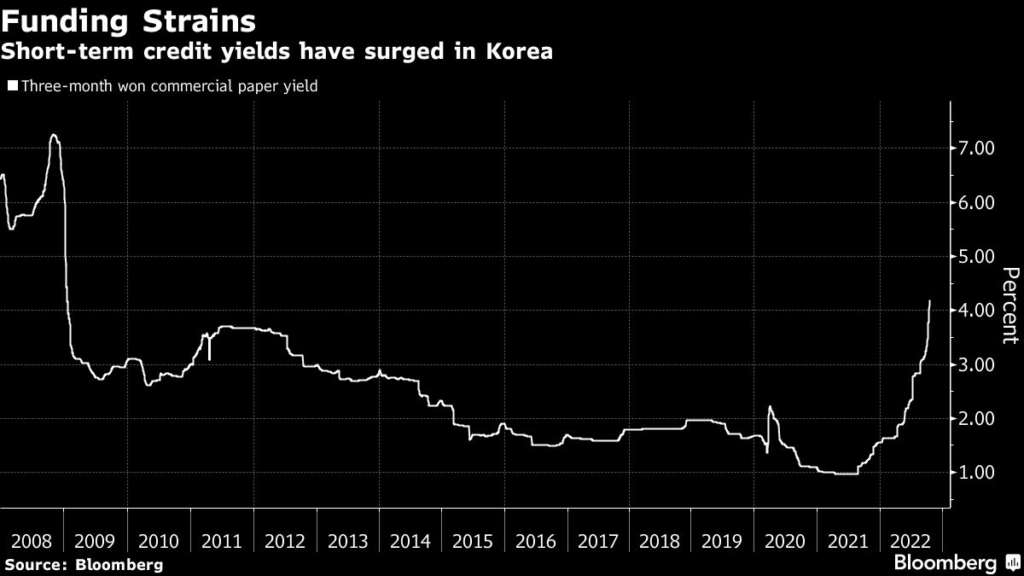
Authorities are stepping up actions, including introducing curbs on short selling, readying market stabilization funds to buy assets and intervening in currency markets in moves reminiscent of the early days of the pandemic. Korea is resuming corporate-bond purchases as yields surge and default risk spreads.

While markets everywhere have seen gut-wrenching moves in reaction to accelerating inflation, aggressive central bank rate hikes and a soaring dollar, South Korea and Taiwan look especially vulnerable among major economies. Both are highly dependent on exports for growth, and are swayed by global demand for chip. Adding to their woes is the impact of new US curbs on supply chains linked to China’s semiconductor industry.

The interventions haven’t stopped the declines. Taiwan’s equity benchmark has dropped about 8% since a support fund was activated in mid-July and Korean shares were down 11% in the past two months, leaving stock gauges in both markets more than 25% lower this year. The Korean won and Taiwanese dollar are also among the top losers in the world against the greenback year to date. 

“These stabilization measures are intended to buy enough time until the tech cycle bottoms out and foreign investors return,” said Wai Ho Leong, strategist at Modular Asset Management. “Turning markets around is a different matter.”

Chip Woes

Amid these headwinds, analysts have cut their earnings estimates for Korea’s SK Hynix Inc. and Samsung Electronics Co. to the lowest in more than two years. 

While the chipmakers have won approval from the US to keep ordering American equipment for their China plants for one year, concerns swirl around their business models as the US seeks to curb China’s self sufficiency and advancement in military capabilities.

A recessionary environment in the West and China’s Covid Zero policy are also having knock-on effects. The Taiwanese central bank warned of “severe economic challenges” in 2023, while South Korea recorded its longest string of trade deficits since the Asian financial crisis.

“In the near term we remain cautious on Asian stocks -– in particular on stocks or equity markets that are exposed to external growth — such as Korea” and tech hardware firms, Nomura Holdings Inc. strategists including Chetan Seth wrote in a recent note. Samsung and Taiwan Semiconductor Manufacturing Company account for the biggest weights on the Kospi and Taiex indexes, respectively.

Bond Gloom

Korea’s resumption of a $1.1 billion bond stabilization fund, which was announced just a few weeks after a rare default on commercial paper by the developer of Legoland Korea theme park in Gangwon province, may have limited impact because the overall market is so much bigger, and yields continue to rise. Still, the fund may prompt others to follow suit if credit markets remain weak.

“Korea may only be the first of a string of credit interventions in Asia amid higher risks of financial accidents,” DBS Group Holdings Ltd. strategists including Chang Wei Liang and Philip Wee wrote in a note.

Korea and Taiwan aren’t alone in supporting markets. Japan has intervened in the currency market to stem the yen’s decline, but it failed to prevent the currency’s plunge to a 32-year low. China is easing restrictions on mutual funds’ purchases to back its plunging stock market.

‘Long Winter’

To be sure, slumping valuations in Korea and Taiwan are proving attractive for some, and could spark short-term relief rallies. Foreign investors snapped up Korean shares for 13 straight days this month, and Morgan Stanley is among the outliers calling an end to the underperformance of Asian technology stocks as it sees most risks as priced in. 

Others remain skeptical that the export-reliant economies will pick up anytime soon, and some favor Asian markets that are backed by strong domestic demand and a revival in tourism such as India and Indonesia.

“It’s going to be a long winter — these support measures will probably not be enough,” said Ken Peng, head of Asia investment strategy at Citigroup Inc.’s private-banking arm, referring to actions from Korean and Taiwan authorities. “A recovery will likely have to wait until the USD peaks and rolls over, likely when non-US growth is expected to recover.”

–With assistance from Youkyung Lee, Hooyeon Kim, Betty Hou, Catherine Bosley and Abhishek Vishnoi.

More stories like this are available on bloomberg.com

©2022 Bloomberg L.P.

Ukraine Latest: Kherson Civilians Told to Evacuate Across Dnipro

(Bloomberg) —

Russian annexation authorities issued an urgent evacuation order for the city of Kherson, held by Moscow’s forces since March, telling civilians to depart immediately ahead of an expected counteroffensive by Ukrainian troops. Ukraine has said that Russia intends to blow up a hydroelectric dam upstream. 

Russian forces launched dozens of rockets against Ukraine in a “massive attack” on Saturday, said President Volodymyr Zelenskiy. Some missiles hit energy targets across several cities, leaving some 1.5 million Ukrainians without power. Ukraine’s foreign minister called the deliberate strikes on critical civilian infrastructure “part of Russia’s genocide.”  

Zelenskiy said Moscow is deliberately slowing exports of grain from Ukrainian ports in a bid to prolong a global food crisis, with more than 150 ships waiting to gain access to Black Sea ports. Putin has repeatedly criticized the grain shipment agreement his government agreed to in July. 

(See RSAN on the Bloomberg Terminal for the Russian Sanctions Dashboard.)

Key Developments

  • Blinken Says Iran May Be Sending More Drones to Russia
  • Russia Hits Ukraine’s Power Grid, Causing Widespread Blackouts
  • Ukraine Crop Deal Fears Boost Food Costs and Slow Shipments
  • Ex-Moscow Investment Banker Takes Top Job in War-Torn Region 
  • The Private Jet That Took 100 Russians Away From Putin’s War

On the Ground

Ukraine was targeted with 40 missiles and 16 Iranian drone strikes on Saturday, according to the country’s military headquarters, which said Ukrainian forces shot down half the missiles and 11 drones. The attacks are part of a Russian campaign to target civilian infrastructure that has knocked out electricity and water. Ukrainian troops shelled Shebekino in Russia’s Belgorod region, killing two people, the area’s governor said. There was no comment from Ukraine and no confirmation. A missile strike on an industrial facility wounded 11 people in Kharkiv, Ukraine’s second largest city, the regional governor said. Ukraine carried out 16 air strikes on Russian military targets and shot down a Russian Su-25 warplane.

(All times CET)

Ukraine Says Russian Troops Flee in Kherson Area (6:35 p.m.)

Russian troops are continuing to flee the Kherson region amid a Ukrainian counteroffensive, the general staff in Kyiv said on Facebook. Russian officers left the town of Beryslav, 77 kilometres (48 miles) east of Kherson up the Dnipro river, according to the account.

Annexation Officials Order Rapid Kherson Evacuation (6 p.m.)

Russian-installed authorities ordered all civilians in the southern city of Kherson to leave “immediately” ahead of an expected advance by Ukrainian troops and take “documents, money, valuables and clothes” with them. 

In a Telegram post that added urgency to previous statements, the pro-Kremlin administration called on civilians to use boat crossings over the Dnipro River to move deeper into Russian-held territory, citing a tense situation at the front. 

There was no immediate comment from Ukrainian authorities. Kyiv has warned that Russia has mined and may attempt to blow up the Kakhovka dam on the Dnipro River above Kherson, causing massive flooding to the city and dozens of other settlements downstream. 

Electricity Services Resume in Some Regions (4:07 p.m.)

The lights were back on as Ukrainian repair workers fixed damages to local power grid in southern Mykolaiv region, one of several that faced missile attacks from Russia Saturday morning. 

“Connection plus, light plus,” regional governor Vitaliy Kim wrote on his Telegram-account. 

Zelenskiy Says Russia Launched 36 Rockets on Saturday (3 p.m.)

Ukraine’s president said Russia “launched a massive attack” on Saturday of some 36 rockets, most of which were shot down by Kyiv’s air defenses, though some hit key energy targets.

“To all energy workers and services that are currently working at the sites of impact and restoring our infrastructure. You are our heroes!” Zelenskiy said on his Telegram channel. 

Kyiv Stocks Up on Mobile Power Supplies (2:41 p.m.)

Authorities in Kyiv are buying mobile boiler-rooms amid fears that Russian air strikes on energy infrastructure may lead to a temporary collapse of its centralized heating, Ukrayinska Pravda reported, citing Deputy Mayor Petro Panteleyev. 

Kyiv started its new heating season — which typically runs from late October through mid-April — on Friday despite relatively mild weather that’s eased some pressure on the grid. Authorities have called on residents to conserve power amid heavy shelling from Russia on the country’s energy infrastructure in recent weeks.

Ukraine’s government has warned citizens to prepare for a difficult winter marked by potential rolling blackouts. 

Almost 1.5 Million Ukrainians Facing Blackouts (1:44 p.m.)

More than 1.4 million Ukrainians are without power after Russia’s repeated missile strikes on the country’s energy infrastructure on Saturday, said a top aide to President Volydymyr Zelenskiy. Water supplies have also been disrupted. 

Extensive power cuts were reported is Khmelnytskyi, about 350 km (217 miles) southwest of Kyiv and even further from the front lines in the Donbas and Kherson regions. More than 670,000 residents are without power there, or more than half the region’s population, said Kyrylo Tymoshenko, deputy head of the presidential office. Explosions were also reported in the Volyn and Rivne regions, even further west. 

Biden Cites Ukraine in Message to Italy’s Meloni (2 p.m.)

US President Joe Biden focused on the war in Ukraine as he lauded Giorgia Meloni on becoming Italy’s new prime minister, the first woman to hold that role. 

“As leaders in the G-7, I look forward to continuing to advance our support for Ukraine, hold Russia accountable for its aggression, ensure respect for human rights and democratic values, and build sustainable economic growth,” Biden said in a statement. 

Ukraine President Volodymyr Zelenskiy also offered congratulations, saying he looked forward to “continued fruitful cooperation to ensure peace and prosperity in Ukraine.” 

Germany’s Scholz Says Rebuilding Ukraine Must be Global Effort (10 a.m.) 

Rebuilding Ukraine will be a task the European Union can’t shoulder alone as it’s an effort that will require financing for decades, German Chancellor Olaf Scholz said in a video statement. 

Scholz, as part of Germany’s G7 presidency, will host a conference in Berlin on Tuesday to discuss what investments are needed and how to organize funding, he said. 

The gathering is meant to send “a sign of hope now, in the midst of the horror of war, that things are looking up again,” he said.

Widespread Strikes Continue on Energy Facilities (9:30 a.m)

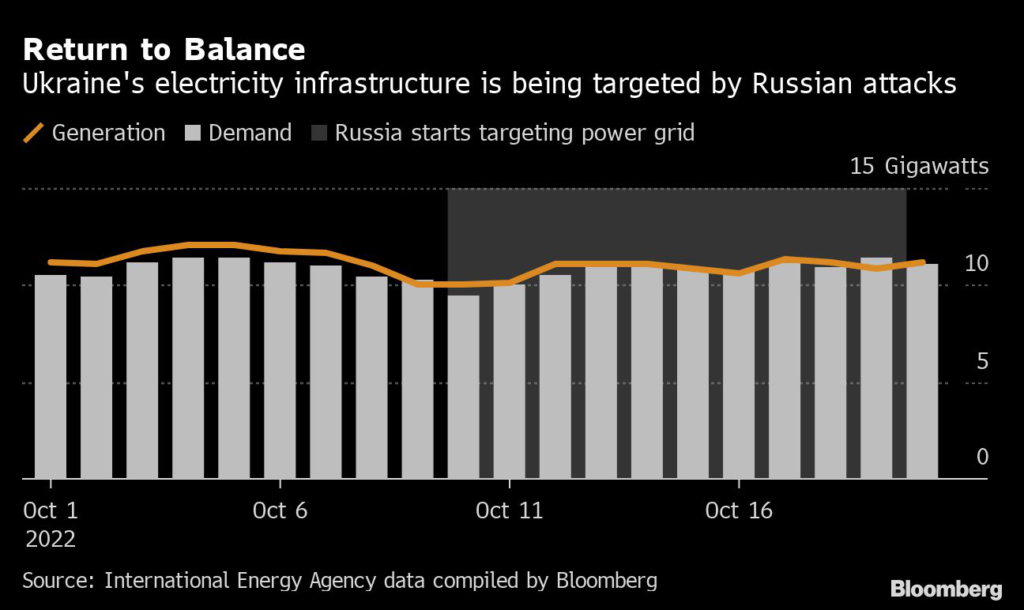
Russian forces made multiple strikes on Ukraine’s power plants and other energy infrastructure on Saturday, including in western and central regions as well in the Odesa region on the Black Sea coast. Targeting of power and water facilities increased on Oct. 10 and has continued. 

Ukraine’s power grid operator NPC Ukrenergo limited electricity supplies in Kyiv and at least ten other regions.  

Targeting of civilian infrastructure has increased as Kremlin troops have suffered multiple setbacks on the battlefield, including what now looks like a retreat from the southeastern Kherson region. 

Russian Forces in Kherson Prepare for Street Battles, Withdrawal (8:30 a.m.) 

A significant part of the population of Kherson has left, and remaining Russian military in the city dress in civilian clothes and have moved into abandoned buildings in the southeastern city, Ukraine’s military said.  

The Institute for the Study of War said Russia’s withdrawal from western Kherson oblast has begun, weeks after the region was illegally annexed by Putin. The troops likely intend to continue their retreat for several weeks, “but may struggle to withdraw in good order if Ukrainian forces choose to attack,” the US-based think tank said. 

Russia “will likely attempt to blow up the dam at the Kakhovka hydroelectric power plant to cover their withdrawal,” ISW said. Zelenskiy and other officials have warned of the potential for Russia to blow up the dam and called for urgent international intervention.  

Zelenskiy Blames Russia for Massive Grain Ship Backlog (8 a.m.) 

President Volodymyr Zelenskiy said Russia is attempting to undermine the safe-transit deal for three Black Sea ports it agreed to in late July and creating a backlog of “more than 150 ships” waiting to load wheat, corn and other products. 

“This is an artificial queue,” Zelenskiy said Friday in his nightly video address. “It arose only because Russia is deliberately delaying the passage of ships.”

Ukraine has shipped more than 8 million tons of farm products since August, but “under-exported” about 3 million tons because of the shipment delays, Zelenskiy said, estimating that at “the annual volume consumption of 10 million people.” 

Read more: Ukraine Crop Deal Fears Boost Food Costs and Slow Shipments

Blinken Warns of More Iranian Drones on Battlefield (3:30 a.m.)

Blinken said more Iranian military drones may be on their way to Russian forces, as the US reiterated its condemnation of Tehran for aiding President Vladimir Putin’s invasion. 

“We believe that Russia’s received dozens of these UAVs so far from Iran, with more potentially in the works,” Blinken told reporters at a briefing alongside French Foreign Minister Catherine Colonna on Friday, referring to unmanned aerial vehicles. 

Blinken spoke a day after the White House accused Iran of sending trainers and technicians to Crimea to help advise and support Russian attacks on Ukrainian targets. He added that the US was working to counter Iran’s efforts and bolster Ukraine’s ability to ward off attacks.

Russian, US Defense Chiefs Speak for First Time Since May (3:22 p.m.)

Russian Defense Minister Sergei Shoigu discussed the Ukraine war and other global security issues with US counterpart Lloyd Austin, Tass said, citing the Russian Defense Ministry.

The brief report provided no other details of the phone call. In a separate readout, the Pentagon said Austin “emphasized the importance of maintaining lines of communication amid the ongoing war.” The US last announced a call between the two on May 13.

Austin also spoke on Friday with Ukraine’s Defense Minister Oleksii Reznikov, the Pentagon said.   


More stories like this are available on bloomberg.com

©2022 Bloomberg L.P.

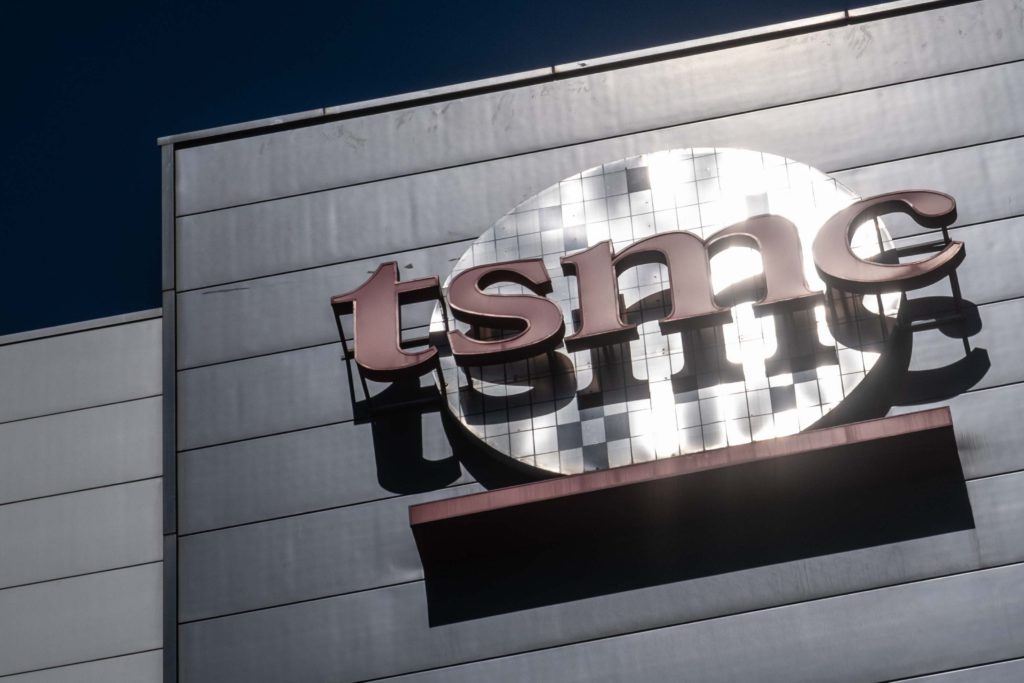
TSMC Said to Suspend Work for Chinese Chip Startup Amid US Curbs

(Bloomberg) — Taiwan Semiconductor Manufacturing Co. has suspended production of advanced silicon for Chinese startup Biren Technology to ensure compliance with US regulations, according to a person familiar with the matter.

The decision is connected with information in the public domain that Biren’s products outperform Nvidia Corp.’s A100 chips, which are now banned for the Chinese market, the person said, asking not to be identified discussing a sensitive matter. While TSMC has not reached a conclusion on whether Biren’s products meet the US threshold for restrictions, the Taiwanese chipmaker has decided to stop supplies to the Chinese startup for now, the person said.

Biren, one of China’s most promising semiconductor designers, earlier concluded its artificial intelligence chips produced by TSMC are not covered by the latest US export restrictions because the specs of its products don’t meet the criteria for curbs, Bloomberg reported on Friday.

A representative for TSMC said the company complies with all relevant rules, and declined to comment further. No one at Shanghai-based Biren was immediately available to respond to requests for comment outside of regular business hours.

US Restrictions

Biren is considered a domestic contender to compete with graphics chips from Nvidia, which has said it can no longer sell its most advanced AI products into China. The US measures were designed to limit China’s development of technology that may be used to aid its military, and appeared to rule out access to advanced fabrication.

The US Commerce Department’s Bureau of Industry and Security, which plays a key role in designing and enforcing export controls, announced the semiconductor restrictions on Oct. 7.

“While BIS cannot comment on company-specific actions, we expect all companies to comply with export controls,” a Commerce Department spokesperson said in an response to an earlier Bloomberg query on TSMC’s business relationship with Biren. “Since the release of the rule on October 7, BIS has been undertaking a vigorous outreach effort to educate those impacted by it to aid compliance efforts.”

TSMC, the world’s largest contract chipmaker, complies with all relevant regulations and “will continue to serve all customers around the world,” Chief Executive Officer C.C. Wei said in response to a question about China during its earnings call earlier this month.

Biren, backed by the likes of IDG Capital and Walden International, was seeking new funds earlier this year at a valuation of $2.7 billion, Bloomberg News reported. Its flagship BR100 and BR104 processors are designed along similar lines to the graphics chips that Nvidia and Advanced Micro Devices Inc. have adapted to AI purposes and are used to train artificial intelligence models and algorithms. Those include computer vision, natural language processing and conversational AI.

–With assistance from Gao Yuan.

More stories like this are available on bloomberg.com

©2022 Bloomberg L.P.

TSMC Suspends Work for Chinese Chip Startup Amid US Curbs

(Bloomberg) — Taiwan Semiconductor Manufacturing Co. has suspended production of advanced silicon for Chinese startup Biren Technology to ensure compliance with US regulations, according to a person familiar with the matter.

The decision is connected with information in the public domain that Biren’s products outperform Nvidia Corp.’s A100 chips, which are now banned for the Chinese market, the person said, asking not to be identified discussing a sensitive matter. While TSMC has not reached a conclusion on whether Biren’s products meet the US threshold for restrictions, the Taiwanese chipmaker has decided to stop supplies to the Chinese startup for now, the person said.

Biren, one of China’s most promising semiconductor designers, earlier concluded its artificial intelligence chips produced by TSMC are not covered by the latest US export restrictions because the specs of its products don’t meet the criteria for curbs, Bloomberg reported on Friday.

A representative for TSMC said the company complies with all relevant rules, and declined to comment further. No one at Shanghai-based Biren was immediately available to respond to requests for comment outside of regular business hours.

US Restrictions

Biren is considered a domestic contender to compete with graphics chips from Nvidia, which has said it can no longer sell its most advanced AI products into China. The US measures were designed to limit China’s development of technology that may be used to aid its military, and appeared to rule out access to advanced fabrication.

The US Commerce Department’s Bureau of Industry and Security, which plays a key role in designing and enforcing export controls, announced the semiconductor restrictions on Oct. 7.

“While BIS cannot comment on company-specific actions, we expect all companies to comply with export controls,” a Commerce Department spokesperson said in an response to an earlier Bloomberg query on TSMC’s business relationship with Biren. “Since the release of the rule on October 7, BIS has been undertaking a vigorous outreach effort to educate those impacted by it to aid compliance efforts.”

TSMC, the world’s largest contract chipmaker, complies with all relevant regulations and “will continue to serve all customers around the world,” Chief Executive Officer C.C. Wei said in response to a question about China during its earnings call earlier this month.

Biren, backed by the likes of IDG Capital and Walden International, was seeking new funds earlier this year at a valuation of $2.7 billion, Bloomberg News reported. Its flagship BR100 and BR104 processors are designed along similar lines to the graphics chips that Nvidia and Advanced Micro Devices Inc. have adapted to AI purposes and are used to train artificial intelligence models and algorithms. Those include computer vision, natural language processing and conversational AI.

–With assistance from Gao Yuan.

More stories like this are available on bloomberg.com

©2022 Bloomberg L.P.

Close Bitnami banner
Bitnami