Bloomberg

Renault Says Revenue Climbed, Supply-Chain Woes Remain

(Bloomberg) — Renault SA’s third-quarter revenue advanced on strong demand for new electric models such as the Megane E-Tech, even as ongoing supply-chain constraints weighed on production.

Group revenue climbed 21% to €9.8 billion ($9.6 billion) in the period, in line with analysts’ estimates, the French company said Friday. Renault reaffirmed its guidance for 2022.


Commercial sales, however, were hampered by a persistent shortage of semiconductors, declining 2.4% from the same period last year, the carmaker said. Automotive revenue rose to €9 billion.

The third-quarter growth “continues to reflect our commercial policy focused on value,” Chief Financial Officer Thierry Pieton said in the statement, adding that the carmaker has improved pricing and is focusing on its most profitable channels. 

Renault raised its full-year outlook in July as it sought to move past a costly withdrawal from Russia that led to a first-half loss. Chief Executive Officer Luca de Meo and his team are now working to carve out the company’s electric-vehicle and combustion engine businesses, a plan they will give more details on next month. Renault also is in ongoing talks with with Japanese partner Nissan Motor Co. to reshape their two-decade old alliance, with the two companies closing in on an agreement, Bloomberg reported earlier this week.

Under the possible deal with Nissan, Renault would reduce its stake over time to 15% from the current 43%, people familiar with the situation have said. In return, Nissan is planning to invest $500 million to $750 million for about 15% of Renault’s EV business Ampere, which is being split from the combustion-engine and powertrain operations as part of de Meo’s strategy. 

The company is due to hold a capital markets day Nov. 8 to give an update on its mid-term financial targets and more details on the carve-out plans. 


(Updates with CFO comment in fourth paragraph.)

More stories like this are available on bloomberg.com

©2022 Bloomberg L.P.

Thousands on Spotify Report Outage as Taylor Swift Album Drops

(Bloomberg) — Thousands of users reported problems accessing Spotify Technology SA, just minutes after popstar Taylor Swift’s latest album Midnights was released.

As many as 7,844 outages were reported by users across the global monitoring service Downdetector at 1:10 a.m. in New York after Spotify tweeted about the new album. 

Phrases related to Swift’s release were trending globally on Twitter as of 1:10 a.m. New York, with four in the top 10. “Spotify” was trending number two, with many users venting about the reported outage.

Spotify did not immediately respond to a request for comment from Bloomberg News outside of business hours. 

Popular entertainment releases have also crashed video streaming services recently. In August, HBO Max was overwhelmed by users flocking to the service after the debut of the Game of Thrones prequel.

More stories like this are available on bloomberg.com

©2022 Bloomberg L.P.

Merger to Form Thailand’s Largest Mobile Firm Gets Nod After 11-Hour Meeting

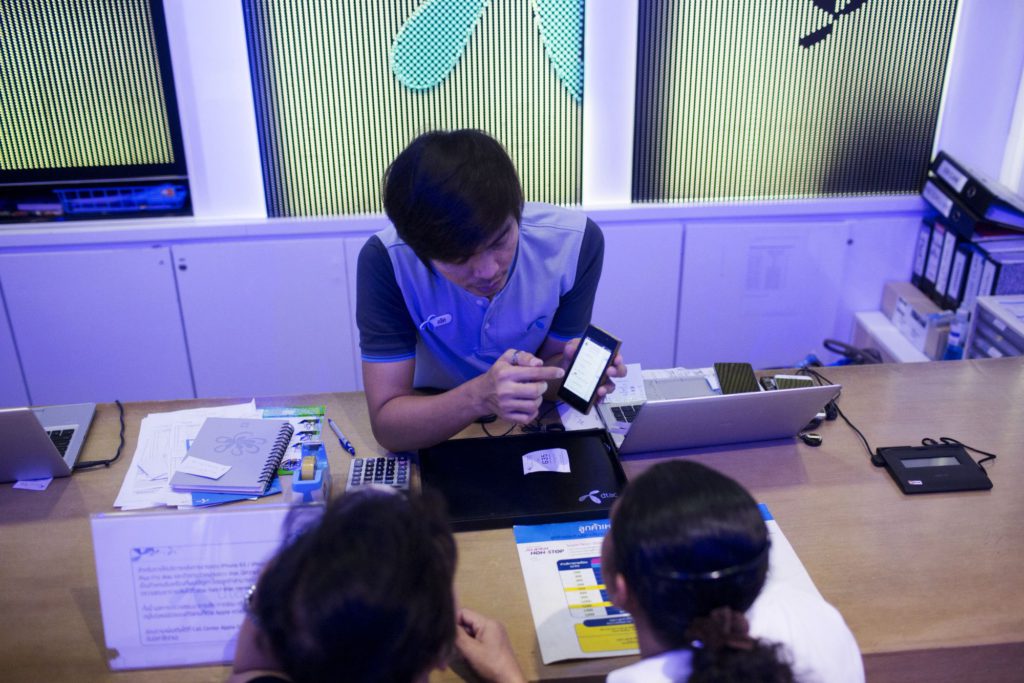
(Bloomberg) — Thailand’s telecommunications regulator cleared a planned merger between Telenor ASA’s local unit and True Corp Pcl with some conditions, removing the final hurdle in creating the Southeast Asian nation’s largest mobile operator. 

The National Broadcasting and Telecommunications Commission said late on Thursday that Telenor’s Total Access Communication Pcl and True may proceed with the merger through an all-share deal, first announced almost a year ago. 

The regulator tied the merger to a number of conditions to protect consumer interests and ensure fair competition in the industry. The five-member board of the commission, which held a marathon 11-hour meeting, was split on clearing the deal with the chairman exercising his powers to greenlight the merger, the commission said. One member abstained from voting, it said.

The combined entity, valued at $7.3 billion at Thursday’s closing price, will have more mobile subscribers than Advanced Info Services Pcl, the current market leader. Total Access, known as Dtac, and True, backed by Thai conglomerate Charoen Pokphand Group and China Mobile Ltd., are seeking to expand their presence in internet and startup ventures by joining forces.

The delayed approval comes after some consumer groups and Advanced Info, backed by Thai billionaire Sarath Ratanavadi and Singapore Telecommunications Ltd., raised concerns about industry monopoly.

“The next step in the merger is for Dtac and True to discuss these conditions with the NBTC. If the merged entity accepts the conditions, the merger will proceed and the tender offer process can start within a month from today,” Phatipak Navawatana, an analyst Krungsri Securities, wrote in a note Friday. “The merger is expected to be completed by the end of the year.

Under the terms of the proposed merger, first announced in November last year, True shareholders will receive 0.60018 shares in the new company for every stock held, while Total Access holders will get 6.13444 shares for every stock owned. True and Total Access will also make a tender offer for shareholders who oppose combining the two companies.

The regulator’s board outlined five areas of concern including the service rates, market obstruction, quality of service, spectrum holding and shared infrastructure, and the country’s digital divide.

The new entity will be listed on the Stock Exchange of Thailand, the companies have said. The CP Group would own 29% of the merged entity, Telenor would hold 27% and China Mobile would have 10.4% with the rest being held by minority holders, according to the filing. 

True shares rose as much as 2% before trading 1% lower at 5.05 baht at 11:55 a.m. in Bangkok, while Total Access trimmed gains to 0.5% after climbing 2.2% earlier.  

(Adds share moves in final paragraph.)

More stories like this are available on bloomberg.com

©2022 Bloomberg L.P.

India’s Economy Lighting Up on Peak Festive Season Demand

(Bloomberg) — Indian shoppers are back in force online and in stores, splurging this festive season after the coronavirus pandemic damped celebrations and consumption in previous years.

Online marketplaces Amazon.com Inc., and Walmart Inc.-owned Flipkart saw sales jump 27% from a year ago to $5.7 billion during the festival season’s first sale between Sept. 22-30, consulting firm RedSeer estimated. Traders estimate spending of about 2.5 trillion rupees ($30.2 billion) at stores.

This year’s Diwali, the festival of lights that falls on Oct. 24 and the equivalent of Christmas in the West, will be India’s first season of celebration since the pandemic began without virus-related restrictions. The return of shoppers will serve as a boost to consumption, the backbone of the economy.

Here are four charts that help explain the broader consumption trends:

New vehicle sales jumped 57% from a year ago during the nine-day ‘Navratri’ period that precedes Diwali, data from the Federation of Automobile Dealers Associations show. Sales of two-wheelers in India, an indication of rural demand, grew 3.7% from 2019 levels. Cars and sports utility vehicles sales soared 92% in September from a year earlier, according to Society of Indian Automobile Manufacturers.  

India’s largest carmaker Maruti Suzuki India Ltd. saw demand for its cars rise 20% year-on-year, led by its premium offering. “The growth numbers have been uniform in both urban and rural centers,” said Maruti’s Executive Director Shashank Srivastava, with higher interest rates doing little to suppress demand.

As demand for goods rose, businesses ramped up capacity. Total flow of financial resources from banks and non-banks to the commercial sector jumped nearly five-fold to 9.3 trillion rupees between the April-September period, from 1.7 trillion rupees a year ago, according to the Reserve Bank of India. “Non-oil non-gold imports remained resilient, indicating sustained revival in domestic demand.”

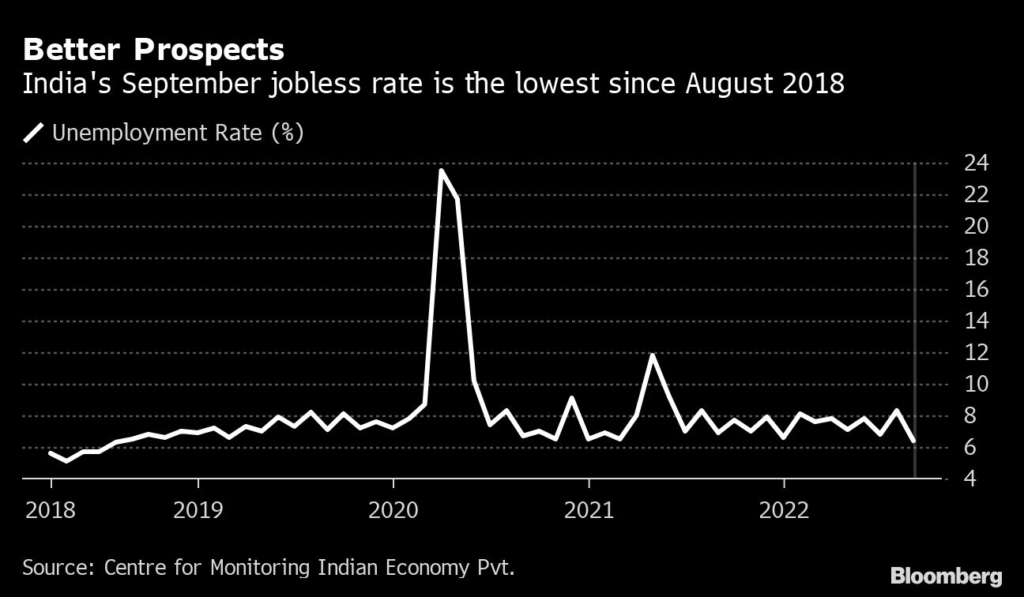
Good monsoon rains and the withdrawal of pandemic restrictions accelerated economic activity in agriculture, the services sector, and in small- and medium-enterprises. That was accompanied by a drop in the jobless rate to the lowest in more than four years in September.

The recovery in rural areas is also helping consumer firms to normalize their pricing strategy. Haldiram’s, one of India’s top snack-makers, saw the category ratio between small packs and family packs return to 70:30, “which reflects that rural areas are also buying,” said AK Tyagi, the company’s executive director. “Gift packs are seeing tremendous demand.”

With the economic recovery taking shape and normalizing income levels, Indian households expect to spend more, according to RBI surveys. Much of this spending is to buy essentials, which in recent months have turned costly due to supply side shocks. But  overall consumer confidence also remains buoyant, indicating greater willingness for discretionary spending. 

“For the first time in three years this festival season is seeing robust demand,” said Gaurav Kapur, chief economist of IndusInd Bank. “Since the start of the year, people are spending on goods and services, mall footfalls are increasing, airline seat occupancy rates have jumped despite high ticket prices.”

–With assistance from Vrishti Beniwal.

More stories like this are available on bloomberg.com

©2022 Bloomberg L.P.

GoTo Talking to Alibaba, SoftBank for $1 Billion Stake Sale

(Bloomberg) — Indonesia’s largest tech company GoTo Group is in talks with its major owners for a controlled sale of roughly $1 billion of their stakes, aiming to avoid a potential stock crash when a lock-up on their holdings ends next month.

The ride-hailing and e-commerce provider is gauging the interest of early backers including Alibaba Group Holding Ltd. and SoftBank Group Corp. for a managed sale of some of their shares to new investors, according to people familiar with the matter. The plan is part of an effort to prevent a potential drop in GoTo stock price that could occur if many investors sell shares when a lock-up period expires on Nov. 30, the people said.

GoTo has also held discussions with some investors to get them to commit to holding their shares for a further period of as long as six months, said one of the people, who asked not to be identified because the matter is private. The Jakarta-based company is in the early stages of talks with the investors and the price levels for any deals are subject to negotiations, the people said. Deliberations are ongoing and GoTo hasn’t made any final decisions, they said.

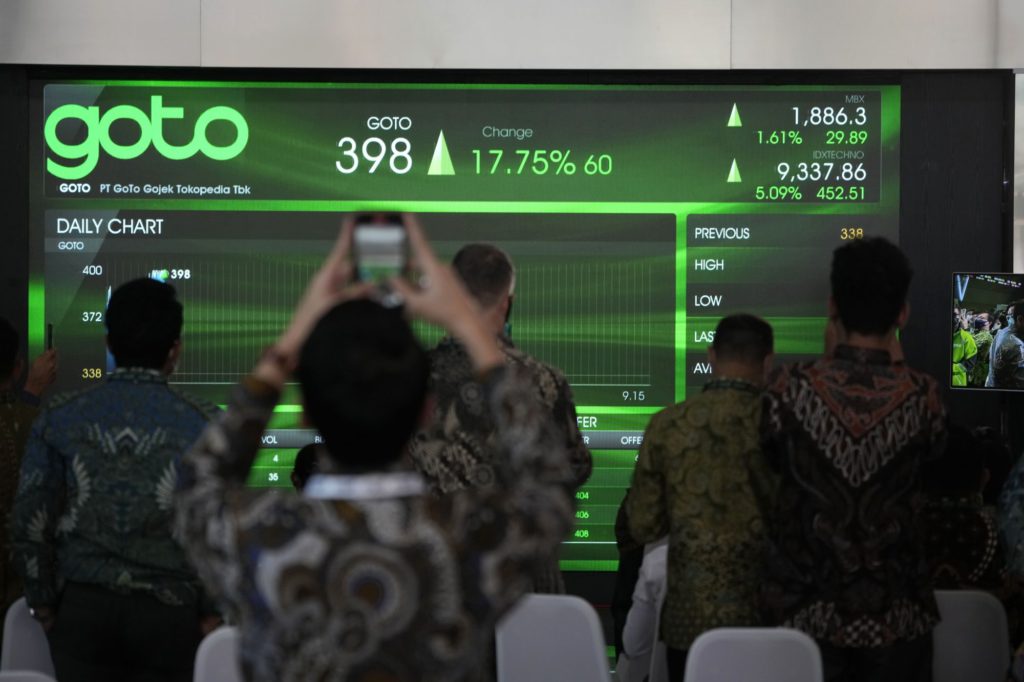
Shares of GoTo were little changed at 11:11 a.m. in Jakarta, paring earlier gains.

The regional tech giant, which has a market value of about $16 billion, is trying to avoid a situation where a large part of its backers would seek to cash out at the same time. Many major shareholders agreed to hold to their stakes for at least eight months following the company’s initial public offering in late March.

“GoTo’s plan to manage share-price volatility, by engaging early investors such as Alibaba and Softbank to sell down their shares, could help prevent a sharp correction,” said Nathan Naidu, an analyst at Bloomberg Intelligence, in a report Friday.

In late June, Chinese artificial intelligence software maker SenseTime Group Inc. slumped as much as 51% in Hong Kong trading after a lock-up of its shares expired following its December IPO.

About 1 trillion GoTo shares, or more than 90% of the total outstanding, become eligible to be sold starting Nov. 30. Still, that includes holders such as GoTo’s employee fund that are unlikely to sell. Alibaba holds about 8.8% of GoTo, and SoftBank’s stake is about 8.7%.

GoTo has engaged Citigroup Inc. and Goldman Sachs Group Inc., along with local advisers, to help with managing the potential selldown by existing shareholders, the people said. Representatives of GoTo, Citigroup, Goldman Sachs and SoftBank declined to comment. Alibaba didn’t respond to a request for comment.

Formed via a merger of ride-hailing provider Gojek and e-commerce firm Tokopedia, GoTo raised $1.1 billion in one of the world’s largest initial public offerings this year. The share sale boosted the value of stakes of China’s Alibaba and SoftBank’s Vision Fund to almost $5 billion combined.

After an initial surge following the debut, GoTo shares have pared gains to now trade about 40% below the IPO price. Still, cashing out after the lock-up expires could provide many investors a much needed boost this year amid a global decline in tech stocks.

Even after the stock-price decline, GoTo enjoys a high valuation which Bloomberg Intelligence’s Naidu called “unsustainable.” The company’s enterprise value is about 14 times its estimated 2023 sales, well above the 2 times that e-commerce and food-delivery peers are valued at on average, Naidu said.

GoTo is among Southeast Asian consumer-internet companies that are adding users at a rapid clip but has yet to generate a profit. It is a leading internet company in Indonesia, a country of more than 270 million people whose mobile-savvy consumers are shopping on Tokopedia’s platform and ordering rides and food via Gojek’s app.

–With assistance from Elffie Chew, Jane Zhang and Min Jeong Lee.

(Updates with comments from analyst starting in sixth paragraph.)

More stories like this are available on bloomberg.com

©2022 Bloomberg L.P.

US Weighs Security Reviews for Musk Deals, Including Twitter Buy

(Bloomberg) — Biden administration officials are discussing whether the US should subject some of Elon Musk’s ventures to national security reviews, including the deal for Twitter Inc. and SpaceX’s Starlink satellite network, according to people familiar with the matter.

US officials have grown uncomfortable over Musk’s recent threat to stop supplying the Starlink satellite service to Ukraine — he said it had cost him $80 million so far — and what they see as his increasingly Russia-friendly stance following a series of tweets that outlined peace proposals favorable to President Vladimir Putin. They are also concerned by his plans to buy Twitter with a group of foreign investors.

The discussions are still at an early stage, the people familiar said on condition of anonymity. Officials in the US government and intelligence community are weighing what tools, if any, are available that would allow the federal government to review Musk’s ventures. 

One possibility is through the law governing the Committee on Foreign Investment in the United States to review Musk’s deals and operations for national security risks, they said.

Read more: Twitter, Musk Talks Warm Up as Buyout Closing Deadline Nears

The interagency panel, known as CFIUS, reviews acquisitions of US businesses by foreign buyers. It is not clear if a CFIUS review — which would involve assessments by the Departments of State, Defense, and Homeland Security, among others — would offer the government a legal way to conduct a review, the people said. 

One element of the $44 billion Twitter deal that could trigger a CFIUS review is the presence of foreign investors in Musk’s consortium. The group includes Prince Alwaleed bin Talal of Saudi Arabia, Binance Holdings Ltd. — a digital-asset exchange founded and run by a Chinese native — and Qatar’s sovereign wealth fund.

The panel operates behind closed doors and rarely confirms when it is conducting reviews. CFIUS also holds the power to review deals that have already been consummated. 

A US Treasury Department spokesperson said CFIUS does not publicly comment on any transactions that may or may not be under review.

Musk, the world’s richest person, has taken to Twitter in recent weeks to announce proposals to end Russia’s war and threaten to cut financial support for Starlink internet in Ukraine. His tweets and public comments have frustrated officials in the US and Europe and drawn praise from America’s rivals.

Musk later backed down from his threat to stop deploying Starlink and said he would continue to bear the costs of the service. Starlink has become an essential tool for communications in Ukraine during the Russian invasion. Musk has been providing the service for free but has said SpaceX loses $20 million a month providing it to Ukraine and he cannot be responsible for that cost indefinitely.

The US government would also use Starlink in the event of a telecommunications outage, according to people familiar with the matter.

Musk did not immediately respond to multiple e-mailed requests for comment.

He tweeted in reply to a fellow reader’s reaction to the Bloomberg article. “It would be hysterical if the government stopped Elon from over paying for Twitter ????,” the reader tweeted. “????????,” Musk replied.

Widely known as the chief executive officer of electric automaker Tesla Inc., Musk is no stranger to Washington, where he is a major player in government contracts. 

Musk forced his way into the business of military and intelligence satellite launches after lobbying vigorously in Congress and suing the US Air Force for the right to compete with a longstanding joint venture of defense giants Boeing Co. and Lockheed Martin Corp. 

In 2019, the Pentagon said it was reviewing Musk’s federal security clearance after he smoked marijuana on a podcast, though the results of that investigation are unclear. A SpaceX official at the time, who asked not to be identified, said the review had not had an impact on the company.

SpaceX flies astronauts to the International Space Station as part of a long-standing partnership with NASA and launches top secret satellites for the Pentagon. The US Agency for International Development, or USAID, has also paid for some of SpaceX’s Starlink satellites that have made their way to Ukraine.

–With assistance from Dana Hull.

(Updates with Musk reaction, in 13th paragraph.)

More stories like this are available on bloomberg.com

©2022 Bloomberg L.P.

US Eyes Expanding China Tech Ban to Quantum Computing and AI

(Bloomberg) — The Biden administration is exploring the possibility of new export controls that would limit China’s access to some of the most powerful emerging computing technologies, according to people familiar with the situation.

The potential plans, which are in an early stage, are focused on the still-experimental field of quantum computing, as well as artificial intelligence software, according to the people, who asked not to be named discussing private deliberations. Industry experts are weighing in on how to set the parameters of the restrictions on this nascent technology, they said.

The efforts, if implemented, would follow separate restrictions announced earlier this month aimed at stunting Beijing’s ability to deploy cutting-edge semiconductors in weapons and surveillance systems.

Technology stocks in China fell on Friday, with equipment-makers Naura Technology Group Co. and ACM Research Shanghai Inc. tumbling as much as 6.1% and 8.7% respectively. Piotech Inc. dropped as much as 13%. 

The US has ramped up actions to stifle China’s ability to develop certain technologies that it sees as key in the competition with its top strategic rival. The sweeping regulations released earlier this month also limited how US citizens and residents participate in Chinese tech firms.

The Commerce Department’s Bureau of Industry and Security, which plays a key role in designing and enforcing export controls and announced the semiconductor restrictions on Oct. 7, declined to comment. The White House National Security Council isn’t aware of discussions on such additional controls, according to a spokesperson. 

National Security Advisor Jake Sullivan, in a speech last month on technology, competitiveness and national security, referred to “computing-related technologies, including microelectronics, quantum information systems and artificial intelligence” as among developments “set to play an outsized importance over the coming decade.” He also noted the importance of export controls to “maintain as large of a lead as possible” over adversaries.

Expanding the wall around advanced technologies risks further antagonizing China and forcing other countries to pick sides between the world’s two top economies. The new ideas have been shared with US allies, according to the people. 

Powerful Potential 

Quantum computing is an experimental field with the potential to dramatically increase the power and speed of computing, enabling machines to solve problems beyond the capacity of the current generation of computers.

It’s expected to someday upend computer-security technology, as quantum machines could be powerful enough to decode passwords and circumvent encryption security features.

Officials are still determining how to frame the controls on quantum computing, which will probably focus on the level of output and the so-called error correction rate, the people said.

Companies including Microsoft Corp., Alphabet Inc.’s Google, Intel Corp. and International Business Machines Corp. are devoting millions of research dollars to various quantum projects.

While conventional computers interpret data in “ones” and “zeros,” a quantum machine can store information in multiple states — as one, zero, both or something in between — a principle known as “superposition.” That allows a quantum system to multitask in ways today’s binary equipment can’t.

A normal computer looking for a name in a phone book cataloged by numbers, for instance, would search one number at a time. A quantum computer could scan all of them simultaneously. 

The biggest challenge, however, is that existing quantum systems typically require exotic cooling mechanisms to generate the super-cold temperatures required to manipulate and detect quantum states of sub-atomic particles.

The Biden administration is also working on an executive order for an outbound investment review mechanism that would scrutinize money heading to certain Chinese technologies, and the quantum computing and artificial intelligence controls could be included, one of the people said. That could incorporate some aspects similar to a measure pushed by senators Bob Casey, a Pennsylvania Democrat, and John Cornyn, a Texas Republican.

–With assistance from Hugo Miller, Alberto Nardelli and Dina Bass.

(Updates with shares from fourth paragraph)

More stories like this are available on bloomberg.com

©2022 Bloomberg L.P.

China Summons Chip Firms for Emergency Talks After US Curbs

(Bloomberg) — China’s top technology overseer convened a series of emergency meetings over the past week with leading semiconductor companies, seeking to assess the damage from the Biden administration’s sweeping chip restrictions and pledging support for the critical sector.

The Ministry of Industry and Information Technology has summoned executives from firms including Yangtze Memory Technologies Co. and supercomputer specialist Dawning Information Industry Co. into closed-door meetings since Washington unveiled measures to contain China’s technological ambitions.

MIIT officials appeared uncertain about the way forward and at times appeared to have as many questions as answers for the chipmakers, people familiar with the discussions said. While they refrained from hinting about counter-measures, officials stressed the domestic IT market would provide sufficient demand for affected companies to keep operating, the people said, asking to remain anonymous on a sensitive issue.

Many of the participants argued US curbs collectively spell doom for their industry, as well as China’s ambitions to un-tether its economy from American technology. Yangtze Memory, among China’s best hopes of getting into cutting-edge chipmaking, warned the MIIT its future may be in jeopardy, according to one of the people.

Chinese semiconductor firms extended gains Thursday after Bloomberg News reported on the potential government support. Gear-makers Naura Technology Group Co. and ACM Research Shanghai Inc. gained about 10%, while Piotech Inc. surged 15%.

AI chipmaker Biren is a telling example of how Chinese semiconductor startups went from stardom to crisis in a matter of days. The chip designer was eyeing a $2.7 billion valuation and declared in August it had released the first general-purpose graphics processing unit, “setting a new record in global computing power.”

But Biren had contracted with Taiwan Semiconductor Manufacturing Co. to produce its chips, using advanced 7-nanometer technology. Now TSMC may have to stop working with the startup under Biden’s regulations, and no company in China has the capabilities to replace it. 

Biren declined to comment on the discussions but said in a statement the company was operating normally, and it determined the curbs would have no impact on their business after checking with lawyers. The ministry didn’t respond to a faxed request for comment. Dawning Information representatives didn’t respond to requests for comment. Yangtze Memory said in a statement that reports about its executives attending a meeting with the MIIT were inaccurate.

US firms have withdrawn employees from promising firms including top memory maker Yangtze, while non-American suppliers such as ASML Holding NV have halted support for local customers. Dawning Information, China’s leading builder of supercomputers, and its unit Hygon are scrambling to find alternatives to the American silicon they need to keep going. 

Hygon spokespeople didn’t immediately reply to emails seeking comment. But the company said in a filing last week it was evaluating the longer-term impact of the sanctions.

“Biden’s new chip export controls are a huge blow to the CCP’s science and technology ambitions,” Jordan Schneider, an analyst at Rhodium Group, wrote on Twitter, referring to the Communist Party.

Why Making Computer Chips Has Become a New Arms Race: QuickTake

It’s unclear how Beijing will react to the new restrictions, the Biden administration’s most aggressive yet as it tries to stop China from developing capabilities it sees as threatening. 

Xi Jinping, in a landmark address over the weekend, pledged tech self-reliance to prevail in a battle with the US for technological supremacy — which many took as a sign Beijing will redouble policy and financial support for sectors such as AI and chips. China’s leader however stopped short of directly addressing Washington’s latest moves or outlining new aid. Officials haven’t indicated whether they were considering measures to retaliate.

Earlier this month, the US Commerce Department unveiled sweeping regulations that limit the sale of semiconductors and chip-making equipment to Chinese customers, striking at the foundation of the country’s efforts to build its own chip industry. The US also added 31 organizations to its unverified list, including Yangtze Memory and Naura, severely limiting their ability to buy hardware from abroad.

“We find the newly-announced restrictions well thought-out and plugs many loopholes that the prior restrictions failed to cover,” Bernstein analysts led by Mark Li wrote last week. “China won’t be able to advance in semiconductor technologies as fast as before and probably has no choice but to focus on the mature part.”

The global chip industry, which relies on China as the world’s biggest single consumer of semiconductors, has been bracing for retaliation of some fashion from Beijing. US firm Lam Research Corp. warned its revenue could halve in China — a market that yields roughly 30% of its overall business. ASML however suggested “fairly limited” impact from the export controls.

Read more: Chip Industry’s China Crisis Hammers Lam But May Spare ASML

Local firms are meanwhile counting on tangible support. 

Many technology powerhouses in China rely on government-backed projects for growth. The country’s massive wireless network construction yielded hefty profits for Huawei Technologies Co. and ZTE Corp. Data center construction in the less-developed western part of the country is set to benefit an array of server makers including Sugon and Inspur Group. This year, Beijing ordered government agencies and state firms to replace foreign personal computers, potentially creating demand for 50 million Chinese-branded PCs, Bloomberg News has reported.

But depending on how broadly Washington enforces the restrictions, the impact could extend well beyond semiconductors and into industries that rely on high-end computing, such as electric vehicles, aerospace and smartphones. Chip sector leaders from Intel Corp. to TSMC have sold off in recent days, spooked by the growing uncertainty at a time the world is bracing for a potential recession.

“When Beijing is caught flat-footed, its initial reaction is always slow,” according to a note from Fathom China. “Ministers are not authorized to make decisions on their own, they need the big bosses to decide. And right now, the big bosses are busy with the Party Congress.”

How Biden’s Chip Actions May Be Broadest China Salvo Yet

–With assistance from Debby Wu and Jeanny Yu.

(Updates with Yangtze Memory’s statement in the eighth paragraph)

More stories like this are available on bloomberg.com

©2022 Bloomberg L.P.

Foxconn Imposes Curbs at Main iPhone Factory After Covid Flare-Up

(Bloomberg) — Foxconn Technology Group has shut cafeterias and imposed other curbs on workers across its main iPhone assembly campus in central China, becoming one of the largest companies to respond to a resurgence of Covid cases.

Foxconn, which assembles the majority of the world’s iPhones from its Zhengzhou facility, has asked workers to take meals in their dorm rooms instead, it said in an online notice. They must wear more-secure N95 masks, Foxconn said on its official WeChat account. It also restricted movement, closing some entrances while mandating employees commute to plants along only certain routes, the South China Morning Post reported.

The iPhone manufacturing hub of Zhengzhou locked down one of its most-populated districts last week to tame a virus flareup, part of a series of creeping restrictions that underscored the threat of disruption to companies from China’s Covid Zero policies.

Almost 1 million residents of the city’s Zhongyuan district were ordered to stay at home except for when they needed to undergo Covid testing, while non-essential businesses were shut, according to a government notice. It’s unclear how the outbreak has progressed since.

More stories like this are available on bloomberg.com

©2022 Bloomberg L.P.

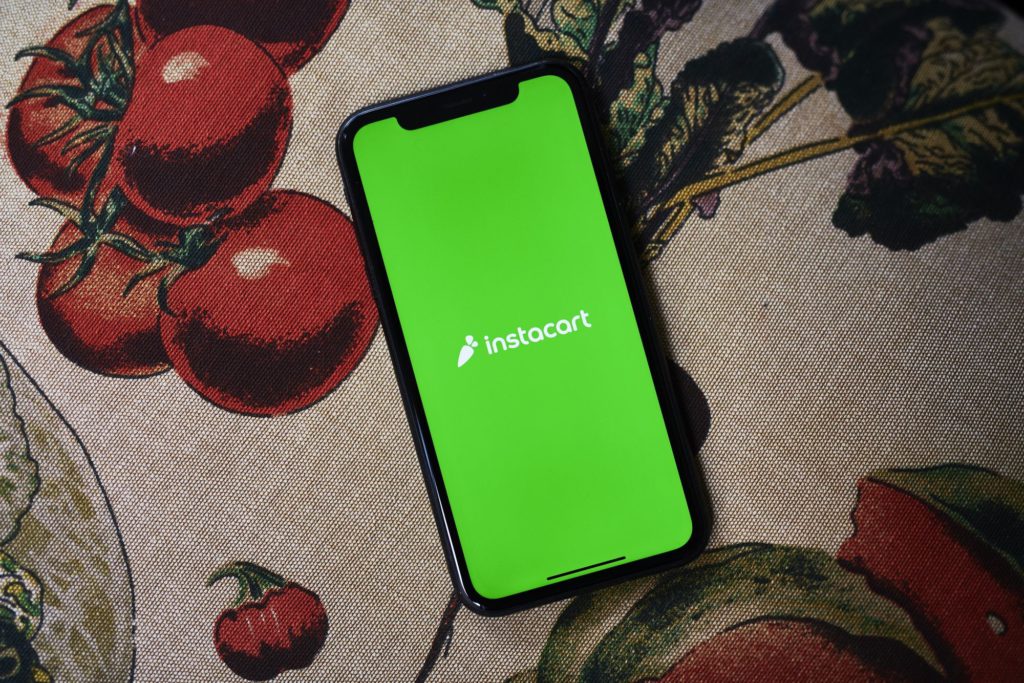
Instacart Shelves Plans for 2022 IPO, Citing Market Turmoil

(Bloomberg) — Food delivery giant Instacart Inc. is holding off on plans to go public until at least next year, according people familiar with the matter. Instacart had been planning to file its S-1 filing this week but reconsidered amid a turbulent market, the people said.

The company’s chief executive officer, Fidji Simo, wrote in a memo to staff on Thursday night that “extremely tumultuous” markets made it “highly unlikely” that an initial public offering would be possible for the company in 2022. 

Instacart earlier slashed its valuation to about $13 billion and had decided not to go public until market conditions improved. 

The San Francisco-based startup, valued by investors at $39 billion in 2021, has raised hundreds of millions of dollars in venture capital funding. Instacart filed confidentially to go public earlier this year.

The company declined to comment on the timing of a public offering. “We are incredibly proud of the work our teams are doing,” the company said in a statement. It added: “Our business has never been stronger.”

Instacart, the US’s largest online grocery-delivery company, surged during the pandemic as more diners ordered food from home. Since then, the company’s valuation has tumbled and it has laid off workers. In a staff meeting earlier this month, company leaders stressed that the startup’s fundamentals were healthy and told employees that it would go public when broader economic conditions improved. 

The New York Times earlier reported the news of the delay. 

In Thursday’s memo, which was reviewed by Bloomberg, Simo said Instacart plans to give employees a cash bonus, since “it appears unlikely we will be able to provide equity liquidity before the end of 2022.” The bonus will be based on the person’s role, performance and tenure, she said. 

Simo added that she and Chief Financial Officer Nick Giovanni had met with more than 50 potential investors who have confidence in the company, “but also believe the market will not support new tech IPOs for now.”

Simo emphasized the company’s strong financial position: Sales grew more than 40% compared with last year and gross profit increased more than 45%, she wrote. Net income and adjusted earnings before interest, taxes, depreciation and amortization more than doubled from the second quarter.

(Updates with context starting in the second paragraph.)

More stories like this are available on bloomberg.com

©2022 Bloomberg L.P.

Close Bitnami banner
Bitnami