
Bloomberg

Twitter, Musk Talks Warm Up as Buyout Closing Deadline Nears

(Bloomberg) — Advisers to Twitter Inc. and Elon Musk are hard at work trying to get the $44 billion deal closed by the end of the month, according to people familiar with the matter.

Both sides’ bankers and lawyers are preparing paperwork for the buyout to be completed by the Oct. 28 court-issued deadline, the people said, asking not to be identified because the matter is private. 

After months of public acrimony and accusations, talks between the two sides have turned cordial and are focused on closing the transaction rather than litigation, according to one of the people.

Read more: US Weighs Security Reviews for Musk Deals, Including Twitter Buy

The Wall Street banks involved, led by Morgan Stanley, are also ironing out the steps needed to finalize funding about $13 billion of debt commitments. One of the banks has told its staff to expect a borrowing notice from Musk on Tuesday, said another person familiar with the matter.

Representatives for Twitter and Morgan Stanley declined to comment. A spokesperson for Musk didn’t immediately respond to a request for comment.

It’s unclear what led to the breakthrough between Twitter and Musk. In early October, their talks were stuck over Musk’s statement that his offer was contingent on receiving $13 billion in debt financing, even though banks were already on the hook to provide the debt through a commitment letter from April.

Musk Allegations

Another sticking point was that Musk had been seeking to reserve his rights to file a fraud lawsuit over his claims the platform’s executives misled him and other investors about the number of spam and automated accounts, Bloomberg News reported.

Musk said Wednesday on a Tesla Inc. earnings call that he was “excited about the Twitter situation.” He described the social media company as an asset with “incredible potential” that has “sort of languished for a long time.” He also said that, at $54.20 a share, he was obviously overpaying for it.

Read more: Elon Musk Says He’s ‘Obviously Overpaying’ for Twitter

The transaction closing would follow a roller coaster of events that started in April with the deal announcement. Musk previously tried to walk away from his offer, prompting Twitter to sue to force him to fulfill the contract. A judge delayed a planned trial that had been set for Oct. 17 to give the two sides more time to finalize the details.

Earlier this week, Twitter froze the equity awards accounts for employees in anticipation of the deal closing. 

Workforce Cuts

The relative calm may not last long. 

Potential investors are being told Musk plans to cut 75% of Twitter’s workforce, which now numbers about 7,500, and expects to double revenue within three years, said a person familiar with the matter. Musk’s plans also would allow for the return of former President Donald Trump and others who have been kicked off the platform because Twitter will loosen content moderation standards, that person said.

The Washington Post reported earlier that Musk plans to slash Twitter’s workforce by almost 75% in a matter of months. Musk had told investors he intended to shrink staff in his initial pitch to bankers for funding, Bloomberg News reported in April.

Twitter workers have been bracing for layoffs for months. Executives discussed plans earlier this year to lay off roughly 25% of employees, but that plan was scrapped after Musk agreed to purchase the company, according to people familiar with the matter.

Instead, Twitter has been trying to cut costs in other ways, implementing a hiring freeze in May and announcing a series of office closures over the summer. It’s possible the company may need to do layoffs if the Musk deal falls through, though none are currently planned, the people said. Even if Twitter wanted to carry out job cuts sooner, it might not be able to under the terms of the deal agreement, which stipulate Twitter cannot take certain actions that may be considered outside of the ordinary course of business.

In a memo to staff following the Washington Post report, General Counsel Sean Edgett warned workers to expect “tons of public rumors and speculation” as the closing of the deal nears. “Since the merger agreement has been in place, there have been no plans for any companywide layoffs,” he said.

Separately, Biden administration officials are discussing whether the US should subject some of Musk’s ventures to national security reviews, including the Twitter deal and SpaceX’s Starlink satellite network, according to people familiar with the matter.

Banks’ Pain

Banks had originally intended to sell $12.5 billion of the debt commitments to money managers in the form of junk bonds and leveraged loans before the deal closed. Due to Musk’s reversals and volatile debt markets, the banks will instead have to provide the cash themselves and then try to sell the debt to investors later. 

The banks are expected to see paper losses of more than $500 million compared to where the bonds and loans would currently trade. The banks won’t realize the losses until they eventually sell the debt to investors at steep discounts to par. They’ll be paid interest in the meantime, which could offset some of that pain.

–With assistance from Kurt Wagner.

(Updates with memo to staff in 16th paragraph.)

More stories like this are available on bloomberg.com

©2022 Bloomberg L.P.
South Korea’s Early Exports Sink in Sign of Weakening Demand

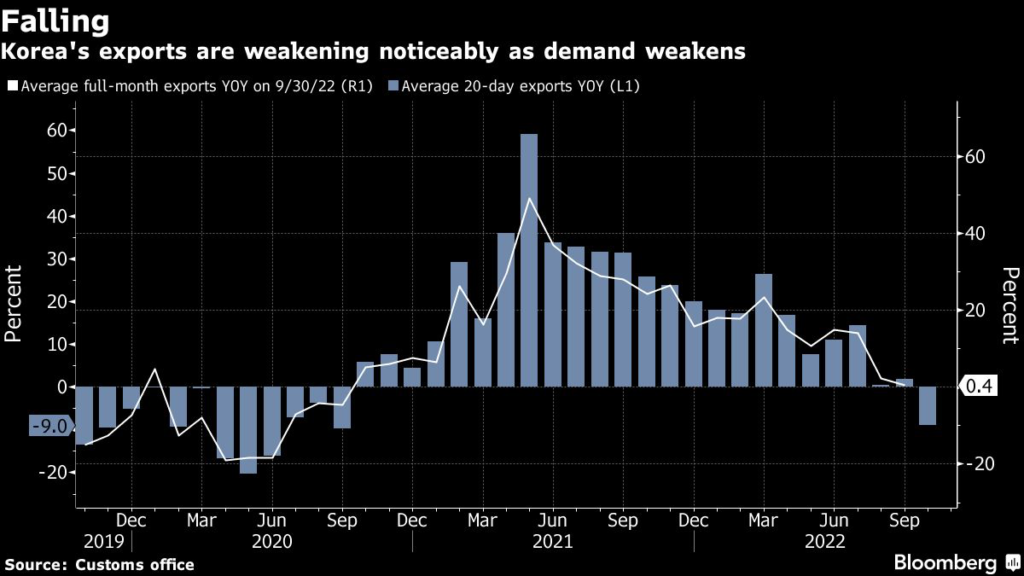
(Bloomberg) — South Korea’s early exports dropped in October, suggesting a weakening of demand that reinforces signs of a slowdown in the global economy.

Daily shipments declined 9% on average in the first 20 days of the month compared with a year earlier, the customs office said Friday. It was the first time in two years that the reading, which reflects working-day differences, had fallen and a clear sign of cooling momentum.

Headline exports also fell 5.5% for a trade deficit of $5 billion. Korea’s chip sales dropped 12.8% in the first 20 days, while shipments to China declined by 16.3%, today’s data showed.

Korean export momentum is weakening and trade deficits are mounting as a combination of Russia’s war on Ukraine, Covid lockdowns in China and interest-rate hikes weigh on the world economy. The won has also depreciated rapidly, increasing the cost of imports and eroding the bottom lines for manufacturers.

Exports are poised to weaken further as China’s economy slows and global chip demand eases, Bank of Korea researchers said in a report earlier this week. Geopolitical tensions between the US and China, rising trade barriers and the Biden administration’s Inflation Reduction Act are other risks to Korean trade, they said.

Korean tech sales have been among the earliest sectors to take a hit from a slowing global economy. Wireless communication devices sold 15.6% less than a year earlier in the first 20 days of October while exports to Taiwan, another chipmaking powerhouse, plummeted 26.7%, the customs office said.

Still, overall shipments to the U.S. increased 6.3% and those to Vietnam edged up 1.7%. Meanwhile, imports from China increased 10.9%, suggesting Korea’s trade deficit with the world’s second-largest economy will continue to swell, the data showed.

(Updates with details, chart)

More stories like this are available on bloomberg.com

©2022 Bloomberg L.P.
Snap Shocks Market Again, Fueling $29 Billion Social Media Slump

(Bloomberg) — For the third time in as many quarters, disappointing results from Snap Inc. are roiling social media stocks and adding to signs that the economic slowdown is deepening.

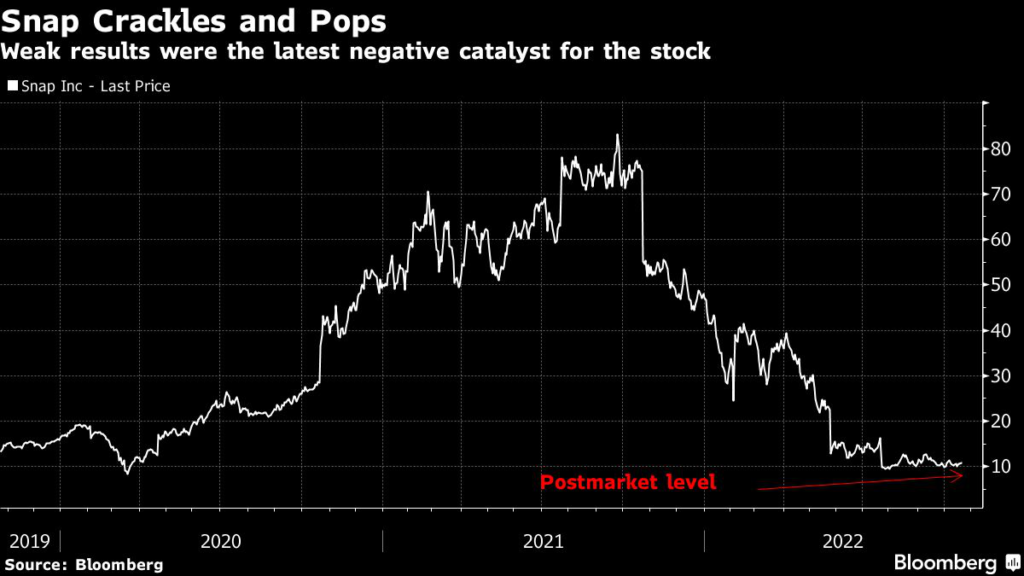
The maker of the Snapchat app reported its slowest quarterly sales growth ever on Thursday, saying a decline in advertising spending continues to drag on results.

Shares of Snap plunged 27% in late trading, with the selloff spreading to peers including Meta Platforms Inc., Alphabet Inc. and Pinterest Inc. The companies were set to lose a combined market value of about $29 billion. Futures on the Nasdaq 100 Index fell 0.9%, signaling further pain for a tech-heavy benchmark that has plunged 32% this year.

Snap spent the quarter shrinking and refocusing its business, announcing in August that it was cutting 20% of its workforce and slashing projects that don’t contribute to ​​user or revenue growth, or to the company’s augmented reality efforts. The changes were in response to plunging sales, which Snap attributed to a slowdown in marketer spending.

Snap and platforms like Meta’s Facebook and Alphabet’s Google are competing for a shrinking pool of advertising dollars this year. Spiraling inflation is putting pressure on companies and consumer spending. Meanwhile, new rules from Apple Inc. that require all apps to get smartphone users’ permission to be tracked online have made it more difficult for advertisers to measure and manage their ad campaigns.

Revenue growth “continues to be impacted by a number of factors we have noted throughout the past year, including platform policy changes, macroeconomic headwinds, and increased competition,” Snap said in its prepared remarks for investors. “We are finding that our advertising partners across many industries are decreasing their marketing budgets, especially in the face of operating environment headwinds, inflation-driven cost pressures, and rising costs of capital.”

Snap’s quarterly results were the first from big internet companies that depend on advertising, setting the stage for what investors can expect when larger players like Alphabet and Meta Platforms report next week.

–With assistance from Alex Barinka, Subrat Patnaik and Phil Serafino.

(Adds more detail on Snap results from fourth paragraph.)

More stories like this are available on bloomberg.com

©2022 Bloomberg L.P.
Twitter Tells Staff There Aren’t Plans for Companywide Layoffs

(Bloomberg) — Twitter Inc., confronting reports that Elon Musk aims to gut its workforce as part of his takeover, told staff that there haven’t been plans for companywide layoffs since it signed a deal to be acquired by the billionaire.

In a memo seen by Bloomberg News, Twitter General Counsel Sean Edgett warned workers to expect “tons of public rumors and speculation” as the closing of the deal nears. “We do not have any confirmation of the buyer’s plans following close and recommend not following rumors or leaked documents but rather wait for facts from us and the buyer directly,” he said.

The Washington Post reported that Musk’s plan for Twitter involve slashing its staff by 75% in a matter of months. Musk, whose $44 billion purchase of the social network is set to close by Oct. 28, would reduce Twitter’s staff to just over 2,000 people, compared with the 7,500 it currently employs, the Post said, citing documents and people familiar with the plans.

Bloomberg News confirmed that potential investors were told of the plan for cuts, along with an effort to double revenue within three years. 

In his memo, Edgett said discussions about cost savings and planning occurred earlier in the year. “Those discussions stopped once the merger agreement was signed,” he said. “Since the merger agreement has been in place, there have been no plans for any companywide layoffs.”

More stories like this are available on bloomberg.com

©2022 Bloomberg L.P.
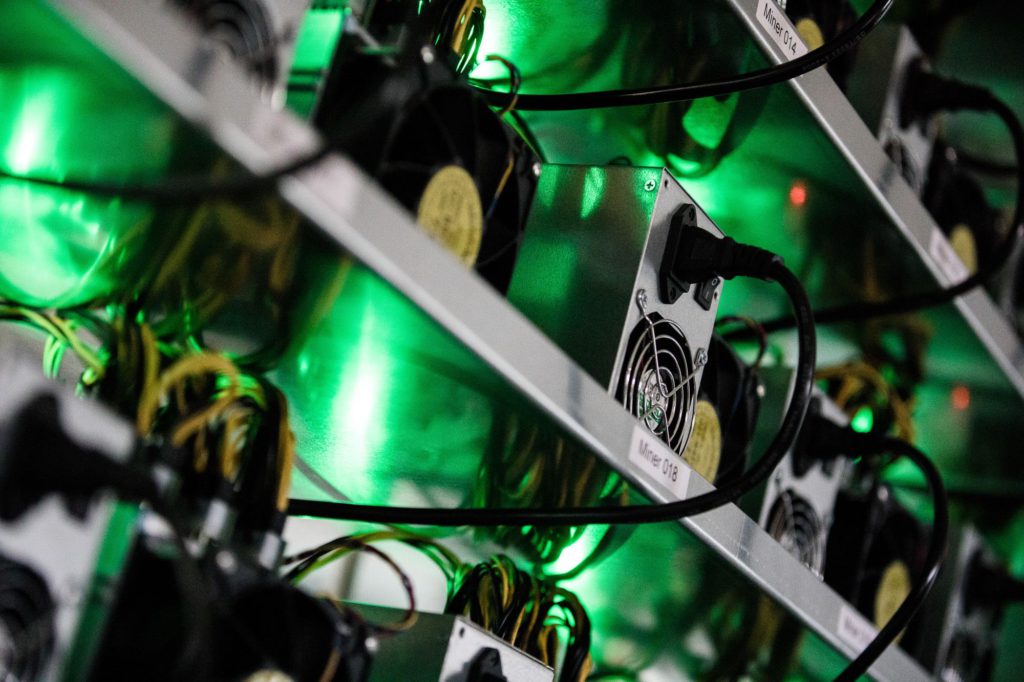
The Fight Over Regulating Crypto’s Energy Use: Crypto Irl

(Bloomberg) — Crypto’s energy consumption remains one of the most fiercely debated topics in the sector, with environmental activists arguing electricity usage should be curtailed, and miners saying that Bitcoin’s benefits outweigh its costs.

“There are energy standards for light fixtures. There are energy standards for appliances,” Liz Moran, of advocacy group Earthjustice, said in the fourth episode of “Crypto IRL”. “So that’s the type of thing we need to look at for the cryptocurrency mining universe as well.” The government needs “to play catch up” when it comes to regulating crypto mining, Moran added.

But miners operating in states like Texas counter that regulation won’t save energy in the long term, and crypto’s overall benefits justify its environmental impact.

Recent economic shocks have made the use case for Bitcoin more important than ever, Jason Les, CEO of Riot Blockchain, said on the show. Giving people “sovereign control over their money,” Les argued, “is a very important and noble use of energy.”

Watch Crypto IRL on Thursdays at 8:30 p.m. New York time on Bloomberg Quicktake, and Fridays at 8:30 p.m. on Bloomberg TV. And it’s always streaming at www.bloomberg.com/qt.

More stories like this are available on bloomberg.com

©2022 Bloomberg L.P.
TikTok Says Never Been Used to Target US Individuals

(Bloomberg) — TikTok said it has never been used to “target” any members of the US government, activists, public figures or journalists, after Forbes reported that its parent ByteDance planned to use the app to track particular individuals.

TikTok “does not collect precise GPS location information from US users, meaning TikTok could not monitor US users in the way the article suggested”, the platform added in a series of tweets. 


More stories like this are available on bloomberg.com

©2022 Bloomberg L.P.
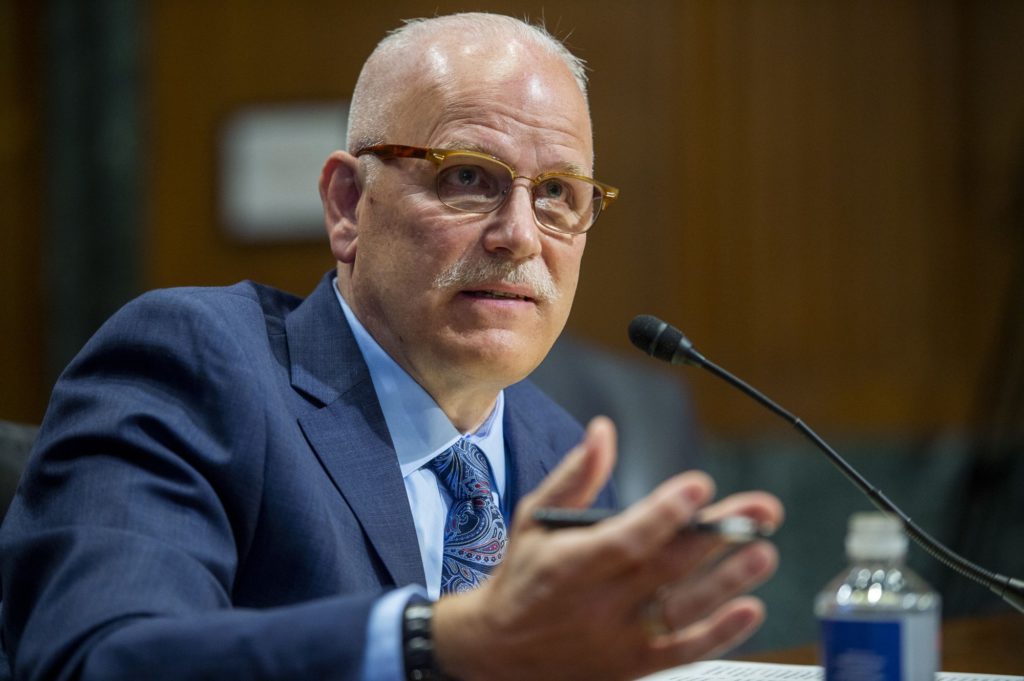
US Ban on Xinjiang Imports Is Off to ‘Remarkably Good Start’

(Bloomberg) — Four months into a sweeping ban on imports from China’s Xinjiang region, the top US customs official is signaling confidence that companies are observing the embargo.

“There are going to be some rough spots along the way, but I think we’ve been off to a remarkably good start,” Chris Magnus, the commissioner of US Customs and Border Protection, said in an interview at the Bloomberg News Washington office on Thursday.

The ban, which is aimed at pressuring Beijing over the forced labor of the minority Uyghur Muslims in Xinjiang, puts the onus on importing companies to ensure none of their goods were even partially made in that region. The blanket measure has threatened to reshape the broader US-China trade relationship.

“We’re seeing good examples of compliance so far,” Magnus said. “When you start to have some success stories, business starts to become more comfortable that there’s a way to work with this act — and the issue of forced labor in general.”

Magnus pointed to popular support for the legislation. President Joe Biden signed the Uyghur Forced Labor Prevention Act, or UFLPA, in December after it was passed without opposition in the Senate and by a 428-1 vote in the House.

“Ultimately this comes down to the American public wants this — the consciousness has by and large been raised about this issue,” the customs chief said. “People want to buy products that they can feel confident are not made with forced labor.”

QuickTake: Why China and US Disagree on Forced Labor in Xinjiang

Under the UFLPA, the US government assumes that anything made even partially in Xinjiang is produced with forced labor and can’t be imported unless companies are able to provide “clear and compelling evidence” otherwise.

The new process effectively supplanted about a dozen existing orders barring the import of some goods from Xinjiang, including cotton, tomatoes and solar-panel material.

While the new law only took effect in late June, for the fiscal year that ended in September items from Xinjiang covered by the recently-implemented legislation accounted for almost half of the more than 3,000 shipments that were detained by CBP and prohibited from entering the US, with an estimated value of almost $500 million.

CBP is still ramping up monitoring efforts to make importers comply, AnnMarie Highsmith, an executive assistant commissioner at the agency, said in the same meeting Thursday.

At the same time, it’s equally important to give companies the tools needed to identify potential forced labor in their supply chains — so they can avoid unwitting violations the of the act and getting caught up in enforcement actions, she said.

The UFLPA aims to put pressure on Beijing for allegedly detaining minorities in Xinjiang, an autonomous region in northwestern China, where about 10 million Uyghurs live. China has been accused of incarcerating more than a million Uyghurs in recent years, and for forcing Muslim citizens into forced labor including the harvesting of cotton. Beijing has repeatedly denied that it is committing such human-rights abuses.

Read More: China Forced Labor Law Prompts Sweeping Supply Chain Reviews

More stories like this are available on bloomberg.com

©2022 Bloomberg L.P.

South Korea Says Report Do Kwon Transited Via Dubai ‘Not False’

(Bloomberg) — Some light has been shed on crypto fugitive Do Kwon’s travel after South Korea sought his arrest and his location became a mystery.

Prosecutors in Seoul said in a text message late Thursday that a report Kwon had left Singapore and flown to Dubai likely as a stopover to destinations unknown “was not false.”

Kwon’s Terraform Labs crypto project suffered a $60 billion implosion in May, convulsing the digital-asset sector and saddling investors with losses. He faces charges in South Korea, including accusations of breaching capital-markets law.

Kwon, who has denied wrongdoing, refrained from revealing his whereabouts in a podcast earlier this week, citing threats he’s received.

His location became unclear in September after officials said he was no longer in Singapore, where his project had a base. South Korea says Kwon is the subject of an Interpol red notice. 

A Terraform Labs spokesperson declined to comment on his movements. Kwon didn’t reply to a request for comment.

More stories like this are available on bloomberg.com

©2022 Bloomberg L.P.
Zara to Start Repairing, Reselling Clothes in UK Pre-Owned Push

(Bloomberg) — Zara is moving into the business of pre-owned clothing as the Spanish brand starts offering services for repair, resale and donations in the UK.

Starting next month, shoppers will be able to repair their previous Zara garments from any season, including replacing buttons, zips and seams either online or in a Zara store. With the new initiative, British customers can also resell and buy worn Zara clothing using a new secure platform and can donate clothing of any brand to charity.

Owned by Inditex SA, the world’s biggest clothing retailer, the move into extending the life of garments is a departure for Zara, which is known for its fast-fashion approach. It’s reacting to growing pressure to become more sustainable as the textile industry is responsible for as much as 10% of global carbon emissions. 

With online operations in about 200 countries, Zara’s products are already among the most resold brands on the web. Worn Zara clothes, bags and shoes can be found for resale on websites including Depop, Vestiaire, Asos Marketplace and Re-fashion. 

The resale platform will be organized by product category and will include images taken by the seller, much like alternative sites, while original product information will be provided by Zara. 

Garments can be donated via at-home collection and will be sent to the Red Cross, which reuses or recycles them, building on a tie-up that’s already in place with donation containers in Zara stores. 

Earlier this year, Zara started charging for online returns in the UK, driving customers into its 60 stores across the country to return garments for free. 

Zara isn’t alone in the sustainability push. UK department store chain Selfridges & Co. is planning for 45% of transactions to come from resale, rental and repair by the end of this decade. Still, the growth of Chinese fast-fashion giant Shein shows that shoppers frequently prioritize price over lowering carbon emissions. 

More stories like this are available on bloomberg.com

©2022 Bloomberg L.P.
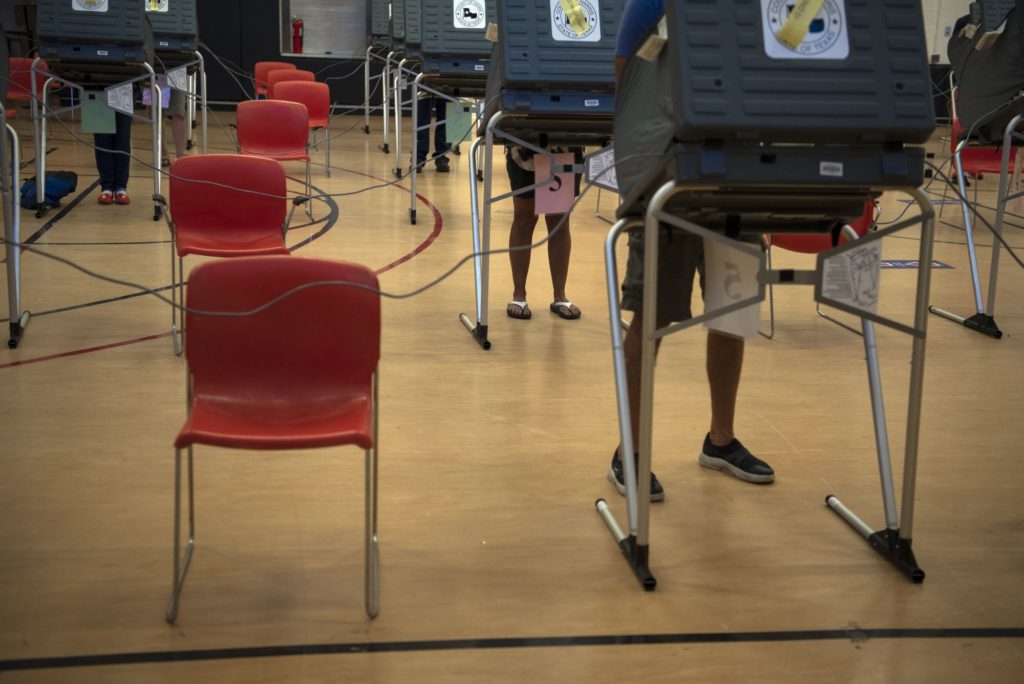
Houston Seeks Federal Help to Protect Voters From Intimidation

(Bloomberg) — Houston’s top political leaders called on the Justice Department to deploy monitors during next month’s election in the fourth-largest US city after Republican state officials pledged to post inspectors at polling places.

The Texas secretary of state’s office and state Attorney General Ken Paxton announced plans earlier this week to send inspectors to Harris County’s central vote-counting office, conduct random checks of election materials and investigate complaints by poll watchers or voters.

Houston Mayor Sylvester Turner and Harris County Judge Lina Hidalgo said in a letter to the Justice Department late Thursday that the plan “appears designed to chill voters’ trust in the election process” and “disrupt and intimidate local election workers.” The request also was signed by Harris County Attorney Christian Menefee.

In Texas, all three branches of state government are controlled by the GOP, while Houston and all the other major metropolitan areas are solidly Democratic. Hidalgo, who leads the third-largest county in the US, also is a Democrat.

“This is an election with massive national, state and local consequences,”  they wrote. “In addition to electing congresspersons, voters will be electing a governor, lieutenant governor, attorney general, county judge (the Harris County executive), two Harris County commissioners and many other state and local officials.”

More stories like this are available on bloomberg.com

©2022 Bloomberg L.P.

Close Bitnami banner
Bitnami
