Bloomberg

Tesla Shares Fall on Sales Miss as Musk Promises ‘Epic’ Year End

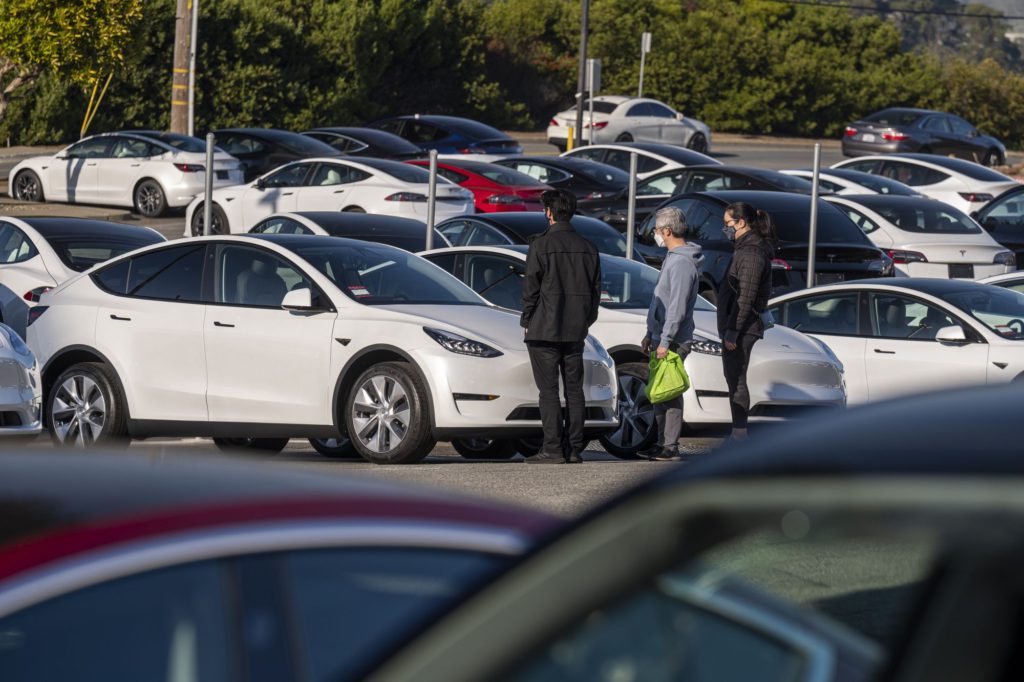
(Bloomberg) — Tesla Inc. reported sales that fell short of Wall Street estimates, citing delivery and production bottlenecks, and prompting Elon Musk to assure investors that demand for his company’s cars remains strong. 

Getting cars onto ships and trucks proved especially costly and troublesome in the latest quarter, as much of the electric-vehicle maker’s output was concentrated in the final weeks of the period. That made it tough for Tesla to deliver all the vehicles  — and led Chief Executive Officer Musk to address concerns demand may be faltering.

“We have excellent demand for Q4 and we expect to sell every car that we make for as far into the future as we can see,” he said on a conference call Wednesday. “Knock on wood, it looks like we’ll have an epic end of year.”

Investors are paying close attention to how quickly Tesla can increase output of its mass-market Model Y SUV from new factories in Austin and Berlin — a key milestone for the pioneering EV maker. The company blamed its sales miss on difficulties shipping vehicles at the end of the quarter and said profit growth was tempered by higher costs related to a slower-than-expected ramp up at its two newest factories.

Tesla said third quarter revenue rose to $21.5 billion compared with analysts’ projections of $22.1 billion. Profit excluding some items rose to $1.05 a share, exceeding the $1.01 average of estimates compiled by Bloomberg.

Shares of Austin, Texas-based Tesla fell 5.3% in postmarket trading to $210.28 as of 7:32 p.m. in New York. They have declined 37% this year against the backdrop of Musk’s $44 billion bid to buy Twitter and concerns over a slowing economy, higher inflation and rising interest rates. 

“Tesla is a company that typically has been beating numbers,” said Gene Munster, managing partner of Loup Ventures, a venture capital company. “The reaction you’re seeing is that people are a bit taken aback by the fact that they missed.”

Smoothing Delivery

To address the transportation bottlenecks, Tesla is trying to smooth its delivery and logistics processes and reduce costly end-of-quarter arrangements.

Those difficulties mean the company is unlikely to achieve full-year delivery growth of 50% this year, even with production probably hitting that mark, Chief Financial Officer Zachary Kirkhorn said on the call.

In April, Musk said Tesla would produce more than 1.5 million vehicles this year. The company has made 929,910 through the first three quarters — and needs to crank out more than 570,000 in the fourth quarter to meet that target. It produced 305,840 vehicles in the final three months of 2021.

Tesla is sticking to its long-held plans to increase vehicle deliveries by 50% on average annually over multiple years. Musk expects to be on hand for the first Semi Truck deliveries to Pepsi in December. In addition, he said Tesla is in the “final lap” for production of its forthcoming Cybertruck.

Share Buyback

Citing the company’s profitability and growing cash balance of $21.1 billion, Musk said on the call that Tesla could repurchase $5 billion to $10 billion of its shares, subject to board approval and review.

He also speculated that Tesla’s market value, now at $696 billion, could one day exceed the combined capitalization of Apple Inc. and Saudi Aramco, two of the world’s most valuable companies. Together, they are worth more than six times Tesla’s capitalization at $4.4 trillion.

Tesla’s automotive gross margin narrowed to 27.9% in the quarter, falling short of the 28.4% average of estimates. 

Income from the sale regulatory credits — used by other automakers to offset greenhouse gas emissions — were $286 million for the quarter, the lowest in a year. Tesla has said it expects such revenue to shrink over time as competitors launch more EVs to comply with emissions regulations and meet growing demand.

(Updates with comments from conference call from third paragraph.)

More stories like this are available on bloomberg.com

©2022 Bloomberg L.P.

Apollo-Backed Shutterfly Reports Deeper Third Quarter Losses

(Bloomberg) — Photo products retailer Shutterfly LLC released preliminary third-quarter earnings that reflected steeper losses, according to people with knowledge of the private results.

The Apollo Global Management-backed company booked a preliminary loss of $45 million to $55 million before interest, taxes, depreciation and amortization, said the people, who asked not to be identified because they weren’t authorized to speak publicly. That compares to a $41 million loss in the same period last year, the people said.

For the last twelve months, Shutterfly’s revenue was between $338 million and $348 million, they said. A measure of earnings that allows the company to add back certain costs and make other adjustments was in the $345 million to $355 million range, according to the people.

Shutterfly’s business is highly seasonal. The company, which sells personalized frames and photo albums online, earns the vast majority of its free cash flows in the final quarter of the calendar year, S&P Global Ratings said in an Oct. 7 note.

The company may face tight liquidity as the cost of its floating-rate debt rises and consumers pull back on discretionary spending in a potential recession, S&P said in the note. The company’s debt load may become unsustainable in a recession, according to the credit grader. 

At end of September, Shutterfly’s revolver was fully drawn, putting liquidity at $65 million to $70 million, one of the people said. 

The company’s first-lien term loan due 2026 is quoted at around 62 cents on the dollar, down from roughly 70 cents on Sept. 28, according to data compiled by Bloomberg. 

A representative for Shutterfly didn’t immediately provide a comment. Apollo declined to comment.

Apollo’s private equity arm acquired Shutterfly in a 2019 leveraged buyout and later combined the company with Snapfish. Shutterfly raised roughly $1.1 billion of debt to finance the acquisition of home decor marketplace Spoonflower last summer. 

Reorg earlier reported on Shutterfly’s results.

More stories like this are available on bloomberg.com

©2022 Bloomberg L.P.

Ukraine Latest: Zelenskiy Urges Conservation as Blackouts Near

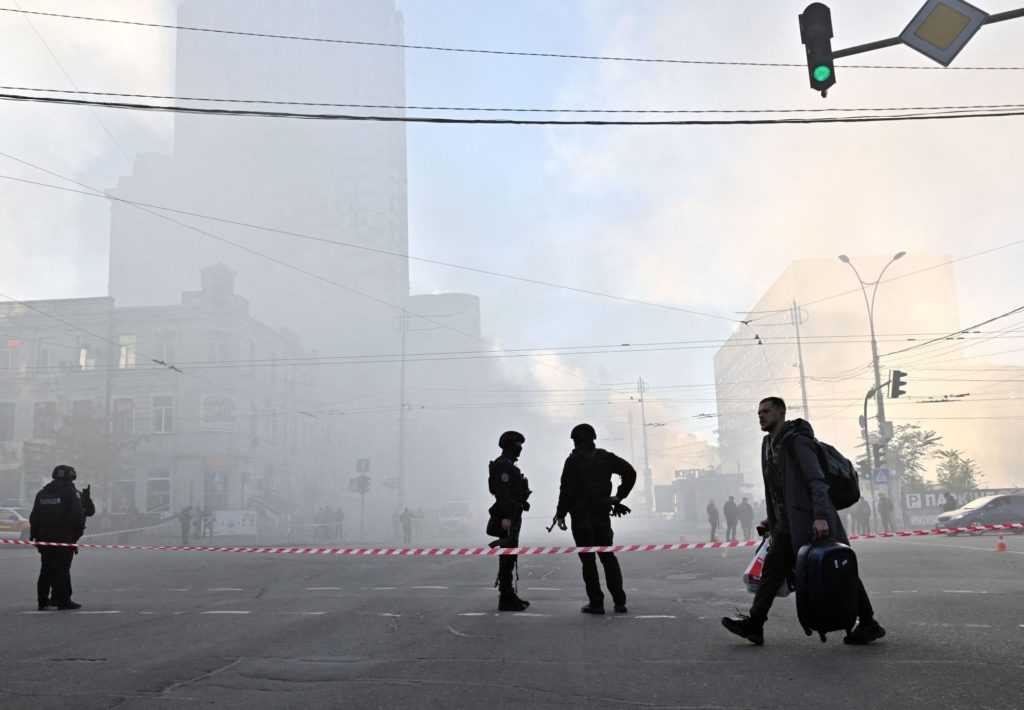
(Bloomberg) — Ukrainian President Volodymyr Zelenskiy asked citizens to consume electricity “with awareness tomorrow” after a grid operator warned of rolling blackouts because of damage to the country’s power infrastructure from Russian missile attacks. About 30% of Ukrainian power stations have been destroyed since Oct. 10, Zelenskiy said earlier.

Russian President Vladimir Putin ordered dramatically heightened security, including restrictions on movement, in regions along the border with Ukraine after attacks spread into Russian territory. 

Russian authorities said they left the occupied city of Kherson for the eastern bank of the Dnipro River as Kyiv pushes forward with its counteroffensive. The European Union is set to sanction one entity and three Iranian generals for providing military support and drones to Moscow.

And US officials are increasing pressure on Turkey to take a harder line against Moscow after President Recep Tayyip Erdogan met Putin in Kazakhstan for their fourth in-person get together in as many months.

(See RSAN on the Bloomberg Terminal for the Russian Sanctions Dashboard.) 

Key Developments

  • Ukraine Faces Rolling Blackouts After Attacks on Power Stations
  • US Charges Seven in Plot to Buy Chips for Russian Military
  • Italy’s Berlusconi Blames Zelenskiy for Russia’s Invasion
  • Putin Orders Sweeping Security Powers in Regions Near Ukraine
  • Israel Won’t Give Arms to Ukraine, Offers Help on Warning System
  • Ukrainians Return Home by the Millions Even as War Rages On

On the Ground

Russian attacks in Ukraine killed 17 civilians and wounded 29 on Tuesday, Zelenskiy’s chief of staff said. Ukrainian air defenses shot down four of six Russian cruise missiles and 10 Iranian-built drones by early afternoon. An attack on energy infrastructure near Kryvyi Rih in the Dnipropetrovsk region left much of the area in a blackout. Ukrainian troops repelled Russian attacks near 11 settlements in the Kharkiv, Luhansk and Donetsk regions, Ukraine’s General Staff said. Ukrainian units downed a Russian Ka-52 helicopter in the Kherson region, the Air Force said. 

(All times CET)

US Charges Seven in Plot to Buy Chips for Russia (2:05 a.m.)

The US Justice Department accused seven people of evading US sanctions as part of a purported plot to sell Venezuelan oil to Russia and China and use the proceeds to buy black market chips for Russia to install in high-tech weapons on the battlefields in Ukraine.

The five Russians and two Venezuelans, “knowingly sought to conceal the theft of US military technology and profit off black market oil,” FBI Assistant Director in Charge Michael Driscoll said in announcing the charges in New York on Wednesday. “This network schemed to procure sophisticated technology in direct support of a floundering Russian Federation military industrial complex.”

Zelenskiy Warns Citizens to Conserve Power (1:40 a.m.)

Zelenskiy urged Ukrainians to use as little electricity as possible on Thursday after electrical grid operator Ukrenergo warned of rolling blackouts because of damage to power infrastructure from Russian missile attacks.

“It is very important energy is consumed with awareness tomorrow,” Zelenskiy said in his nightly address on Wednesday. “We are preparing for all possible scenarios in the light of approaching winter season. We proceed from the fact that Russian terror will be directed at energy facilities until, with the help of our partners, we can shoot down 100 percent of enemy’s missiles and drones.”

All regions in Ukraine may face four-hour cutoffs between 7 a.m. and 10 p.m., a necessary step because of a shortage of power generation, Ukrenergo said on Wednesday.

Biden Says Martial Law Shows Putin In ‘Difficult Position’ (8:05 p.m.)

Putin’s decision to extend martial law to annexed areas of Ukraine shows that the Russian leader “finds himself in an incredibly difficult position,” President Joe Biden said Wednesday.

“It seems his only tool available to him is to brutalize individual citizens in Ukraine, Ukrainian citizens, to try to intimidate them into capitulating,” the American president said at the White House. “They’re not going to do that.”

Berlusconi Blames Zelenskiy for Forcing Putin to Invade (7:15 p.m.) 

Italy’s Silvio Berlusconi told lawmakers that Zelenskiy pushed Putin into an endless war, according to an audio obtained by an Italian newswire.

It’s the second audio recording in as many days where Berlusconi seems to espouse Putin’s narrative of the war, and it comes just as right-wing leader Giorgia Meloni is struggling to agree on cabinet posts with Berlusconi and other allies. Meloni has vowed not to change Italy’s pro-Ukraine stance but the recordings suggest she faces strong pressure to soften the position.

EU Gas Price Cap Tantamount to ‘Embargo,’ Hungary Says (6:02 p.m.)

Hungarian Prime Minister Viktor Orban said he’ll urge a “rethink” of EU sanctions against Russia at a summit of the bloc’s leaders in Brussels starting Thursday, adding that the fallout from the penalties have become “unbearable” for Hungarians.

Separately, his government’s spokesman, Zoltan Kovacs, said Hungary sees the EU’s latest proposal for a price gap on natural gas as tantamount to a “gas embargo.” Orban last week launched a national ad campaign that blames Hungary’s economic woes on EU sanctions.

Mobilization Hit Russian Economy, Central Bank Says (5:52 p.m.)

Putin’s order last month to call up 300,000 reservists to fight in Ukraine hit consumer confidence and business activity and is likely to weigh on the economy for months to come, according to economists at the Bank of Russia.

The “partial mobilization” triggered an exodus of more than 350,000 Russians out of the country, which worsened an already-acute labor shortage and “negatively impacted consumer and business confidence,” the economists said in a report. 

They said the impact from sanctions on the oil and high-tech sectors has yet to be felt and that the flight of foreign companies from the Russian market since February was creating inflationary pressures as supplies of key consumer products ran short. 

Zelenskiy Calls for Mobile Power Points for Infrastructure (5:45 p.m.)

The Ukrainian president ordered authorities to quickly create mobile power points for critical infrastructure across the country to be used in cases of power blackouts, his press service said.

In a separate announcement, the utility serving Lviv said it would shut power off to part of the western Ukrainian city to allow for the repair of equipment damaged by Russian missile strikes. In Kyiv, the city council said electricity had been restored to about 40,000 households following an attack.

India Advises Nationals Against Ukraine Travel (5:37 p.m.)

The embassy cited escalation of hostilities, in its statement.

The embassy also asked Indian citizens, including students, already in the country, to leave “at the earliest.”

Russian Hits Power Stations in West Ukraine (4:12 p.m.)

Russia shelled two facilities of the power producer DTEK Energy on Wednesday, taking the total number of its damaged sites to three, the company said.

A missile hit another power station in the western Ivano-Frankivsk region, regional Governor Svitlana Onishchuk said. There were no casualties.

Croat President Bristles at Plan to Train Ukraine Troops (3:47 p.m.)

Croatian President Zoran Milanovic rejected an initiative welcomed by the nation’s prime minister to host and train Ukrainian troops inside the NATO and European Union country.

“This is not our war,” said Milanovic, whose mostly ceremonial duties include overseeing Croatia’s armed forces. “I won’t allow Croatia to be involved in this.” Earlier this year, Milanovic clashed with Premier Andrej Plenkovic over the issue of admitting Finland and Sweden to NATO. Milanovic eventually acquiesced.

Putin Extends Martial Law in Occupied Ukraine (2:21 p.m.)

Citing strikes in recent weeks in border zones and a bombing on his showcase bridge to Crimea, Putin told his Security Council that he’s ordering stepped-up measures across much Russia. He also extended existing martial-law regimes in the four Ukrainian territories he claims to have annexed last month. 

Putin’s new measures impose higher security in six regions near the Ukrainian border, as well as Crimea. The new rules impose limits on movement in and out of the regions, allow local authorities to relocate civilians away from combat zones, boost military production and give increased powers to military officials.

Areas further back from the front lines, including Moscow, also will see unspecified restrictions on movement, according to the text of Putin’s decree.

US Officials Raise Up Pressure on Turkey Over Russia (2:19 p.m.)

US officials have raised pressure on their Turkish counterparts regarding compliance with financial sanctions against Russia to force Ankara into taking a harder line against Moscow. 

A delegation led by Elizabeth Rosenberg, assistant secretary for terrorist financing and financial crimes at the US Treasury, met the Turkish central bank governor and business groups in Ankara and Istanbul earlier this week, according to people familiar with the discussions.

The visit comes a week after Erdogan agreed with Putin to boost energy ties and set up an international gas hub in Turkey, potentially positioning the country as a key route for Russian flows to Europe.

Billionaire Gets Second Chance at Sanction Fight (2:16 p.m.)

Russian billionaire Petr Aven’s legal fight over a UK investigation into alleged sanction evasions has been sent back to a lower court for a fresh look, leaving the first major legal case on the newly-imposed sanction regime hanging in the balance.

Aven, who said he has never had a British bank account in his name, is suspected of using ones held by his wife and estate management firms to fund his lifestyle. The National Crime Agency’s investigation has focused on around £3.7 million ($4.2 million) routed to the UK from an Austrian trust in the hours before European sanctions were imposed. 

EU Set to Sanction Iran Drone Maker (12:58 p.m.)

The EU intends to approve sanctions against three Iranian generals and one entity for providing military support to Russia on Wednesday and formally adopt them by Thursday, several officials said.

The entity, Shahed Aviation Industries, is responsible for the design and development of the Shahed series of drones that are being used in Ukraine. Iran has repeatedly denied exporting any weapons for use in the war in Ukraine.

Germany Sees No Urgency for Approving More Funds for Ukraine (12:38 p.m.)

Germany is dragging its feet to approve 3 billion euros ($2.9 billion) in loans for Ukraine and complete the release of the 9 billion-euro package promised by the European Union in May.

Berlin told member states early this week that there was no financing gap in the war-torn country until the end of the year. For that reason, it considered it unnecessary to urge EU leaders to complete the approval of the remaining tranche when they meet in Brussels on Thursday and Friday, according to people familiar with the discussion.

Germany remains at loggerheads with the European Commission over the design of the financial package for Ukraine, and the delay to disburse the funds has irked US and Ukrainian officials.

Ukraine Makes Progress Toward EU Accession: German Envoy (12:01 p.m.)

Germany’s ambassador to Ukraine, Anka Feldhusen, said the country had made progress on reform of the judiciary, as well as on electing a head of the National Anti-Corruption Bureau as part of its bid to join the EU. The German government will monitor the authorities’ work in these areas, she said in a video briefing from Kyiv, adding that her country’s mission was working despite recent attacks on the Ukrainian capital.

“The German embassy, like other embassies in Kyiv, operates as before the attacks,” Feldhusen said. “We are shoulder to shoulder with the Ukrainian society. I am indeed impressed how calmly people, especially in Kyiv, live through this.”  

More stories like this are available on bloomberg.com

©2022 Bloomberg L.P.

Tesla Confirms Plans to Build Lithium Refinery in Texas

(Bloomberg) — Tesla Inc. is moving forward with plans to build a lithium refinery on the Texas Gulf Coast in a bid to gain more control over the supply chain for electric vehicle batteries.

Chief Executive Officer Elon Musk confirmed the move Wednesday on a conference call in answer to an analyst’s question on progress developing the company’s new 4680 battery cell technology.

The Austin, Texas-based company has been weighing the project for months, as Bloomberg News previously reported, but had been considering at least one other site in Louisiana. The company has told state regulators it plans to build a battery-grade lithium hydroxide refining facility near Corpus Christi that would process raw ore material into something more production-ready.

Musk called lithium prices “crazy expensive” and has repeatedly encouraged entrepreneurs to start refining lithium as a way to ease supply bottlenecks of the key material used in lithium-ion batteries.


More stories like this are available on bloomberg.com

©2022 Bloomberg L.P.
UK Watchdog Fires Warning Shots at Snap and Twitch Over Safety

(Bloomberg) — UK internet regulator Ofcom has criticized how platforms including Snap Inc. and Amazon.com Inc.’s Twitch deal with protecting users.

At streaming service Twitch, the watchdog said users of any age “can easily watch videos that are marked by creators as ‘mature.’” Twitch also has said that parental controls or systems for viewers to rate harmful material would be a disproportionate measure or impracticable, according to Ofcom. 

Twitch shared plans with Ofcom to stop users under 18 from stumbling across mature content, but the regulator said it still “has concerns that these plans may not fully address this problem and will continue to engage with Twitch on this.”

Read More: Child Predators Use Twitch to Systematically Track Kids Livestreaming

Meanwhile at Snapchat owner Snap, it’s “not clear that it has a formalized online safety governance structure in place,” and the company’s decision-making structure is also “not clear,” the watchdog said, in a first-of-its-kind report on video-sharing platforms.

“The report from Ofcom addresses a number of important industry issues,” a Snap spokeswoman said by email. “In particular, our approach around moderation of public content, parental tools and proactive education campaigns are recognized positively in the report. We look forward to continuing our constructive partnership with Ofcom as we work together on these industrywide matters.”

Twitch didn’t immediately respond to a request for comment. 

The UK is preparing to introduce controversial and sweeping new legislation designed to protect the public. The Online Safety Bill has spent five years being drafted, and gives Ofcom significant new powers.

Ofcom compiled the 112-page report about 19 companies as part of its job enforcing video-sharing platform regulation, a precursor to the bigger Online Safety Bill expected to come into effect next year. It also included statistics from Ipsos on the users of each service.

Most adult-oriented websites under Ofcom’s remit don’t have robust measures to stop children access pornography, the regulator said. The biggest, UK-based OnlyFans, has introduced new age verification technology “in response to regulation,” it added.

More stories like this are available on bloomberg.com

©2022 Bloomberg L.P.

Elon Musk Says He’s ‘Obviously Overpaying’ for Twitter

(Bloomberg) — Elon Musk said he and other investors are “obviously overpaying” for Twitter Inc.

Tesla Inc.’s chief executive officer said he is “excited about the Twitter situation,” describing the social media company as an asset that has “sort of languished for a long time” but has “incredible potential.”

The company’s long-term potential is an “order of magnitude greater than its current value,” Musk’s said on Tesla’s quarterly earnings call Wednesday.

Twitter shares climbed in after-hours trading on Musk’s remarks, rising 1.6% at 6:32 p.m. in New York.

Musk faces a court-issued Oct. 28 deadline to seal his $44 billion purchase of Twitter.

For more on Tesla Third-Quarter Earnings, click here for our TOPLive blog.

More stories like this are available on bloomberg.com

©2022 Bloomberg L.P.
HPE Shares Slip as Annual Profit Forecast Misses Estimates

(Bloomberg) — Hewlett Packard Enterprise Co.’s annual earnings forecast came in light of analysts’ estimates, even as the company projected “healthy growth” from its newer services.

Profit, excluding some items, will be as much as $2.04 in the year ending October 2023, falling short of the $2.10 average estimate of analysts surveyed by Bloomberg. Annual revenue will increase 2% to 4%, adjusted for currency fluctuations, through fiscal 2025, the company said Wednesday in a statement. 

HPE is transitioning away from reliance on the sale of hardware such as data-center servers, into services such as cloud computing and artificial intelligence. The company is on target for its second consecutive year of revenue gains after declines in fiscal year 2019 and 2020.

“We have taken decisive and important actions to transform HPE,” said Chief Executive Office Antonio Neri. “Our evolution to a platform-based model, fueled by a software- and services-rich portfolio, is already delivering very strong results that translate to value for our shareholders.”

HPE highlighted strong sales momentum for its GreenLake edge computing platform, which covers products that let companies gather and process data where it is generated instead of sending it to an external storage center. The Spring, Texas-based company also projected greater than $6.5 billion of cumulative free cash flow from fiscal year 2022 to fiscal year 2024.

The growth projection shows “that there’s progress in the long-term strategy amid challenging economic conditions,” wrote Bloomberg Intelligence’s Woo Jin Ho.

Shares declined about 2% in extended trading after closing at $12.82 in New York. The stock has dropped 19% this year.

More stories like this are available on bloomberg.com

©2022 Bloomberg L.P.
US Charges Seven in Plot to Buy Chips for Putin’s War Machine

(Bloomberg) — The Justice Department accused seven people of evading US sanctions as part of a purported plot to sell Venezuelan oil to Russia and China and use the proceeds to buy black market chips for Russia to install in high-tech weapons on the battlefields in Ukraine.

The five Russians and two Venezuelans, “knowingly sought to conceal the theft of US military technology and profit off black market oil,” FBI Assistant Director in Charge Michael Driscoll said in announcing the charges in New York on Wednesday. 

“This network schemed to procure sophisticated technology in direct support of a floundering Russian Federation military industrial complex,” Driscoll said.

One of those accused, Yury Orekhov, was arrested in Germany, while a suspect identified as Artem Uss was detained in Italy. Both face extradition to the US. The whereabouts of the other five suspects was not immediately clear.

The charges include conspiracy to defraud the US, bank fraud, wire fraud and money laundering. 

At the same time, the Treasury Department imposed sanctions on Orekhov and two of his companies over the allegations.

The semiconductors and microprocessors the network sent to Russia are used in fighter planes, ballistic and hypersonic missiles, smart munitions, radars and satellites, US officials said. 

The kind of components Orekhov and others procured are used in Russian weapons that have been deployed in Ukraine, according to the officials. The US has heightened enforcement of export controls on these items as part of its efforts to deny President Vladimir Putin the money and materiel necessary to continue the invasion.

“These efforts are having a direct effect on the battlefield, as Russia’s desperation has led them to turn to inferior suppliers and outdated equipment,” Deputy Treasury Secretary Wally Adeyemo said in a statement.

According to the government, Orekhov and Uss used front companies to smuggle hundreds of millions of barrels of oil from Venezuela to Russia and China. One such purchaser was a Russian aluminum company “controlled by a sanctioned oligarch and the world’s largest oil refining, gas and petrochemical conglomerate based in Beijing,” the US said, without identifying them.

More stories like this are available on bloomberg.com

©2022 Bloomberg L.P.

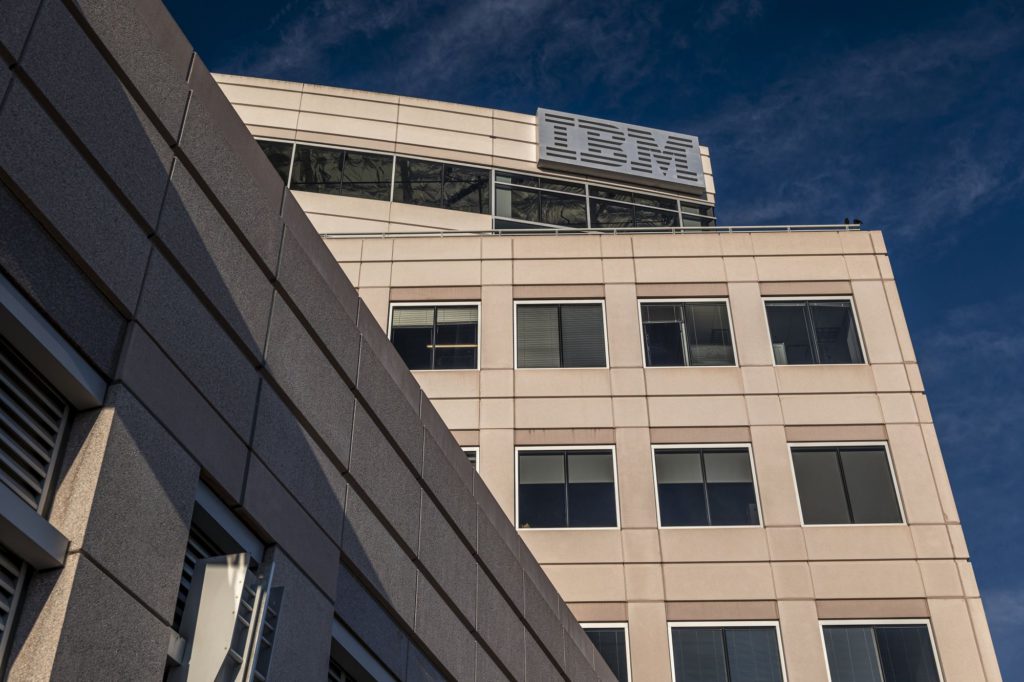
IBM Gains After Sales Top Estimates Amid Currency Headwinds

(Bloomberg) — International Business Machines Corp. reported better-than-expected sales and affirmed its cash flow forecast in a sign that demand for software, mainframe computers and hybrid cloud services remain steady.

Sales rose 6.5% to $14.1 billion in the third quarter, the Armonk, New York-based company said Wednesday in a statement. Analysts, on average, estimated $13.5 billion, according to data compiled by Bloomberg. IBM expects full-year revenue growth will exceed the company’s previous mid-single digit guidance while free cash flow will hit the estimate of $10 billion.

The shares climbed about 4% in extended trading after closing at $122.51 in New York. IBM has been a relative safe haven in the tech market meltdown, falling only 8.3% this year compared with a 36% loss for the iShares Expanded Tech Sector ETF.

IBM’s resilience comes from its focus on mission-critical services for businesses, Chief Executive Officer Arvind Krishna said on a call with analysts after the results were released. Looking forward, Krishna said demand for information technology in the Americas and Asia is “very robust,” while energy price volatility and inflation in Europe could result in “a bit of a downturn.”

Though Krishna is betting IBM’s future growth on the lucrative market for cloud computing and artificial intelligence, mainframe sales helped its infrastructure unit generate a 15% increase in revenue — the fastest-growing division in the quarter. A new model should support mainframe sales through at least the first half of next year, Bank of America analyst Wamsi Mohan wrote in a note ahead of earnings.

Software sales jumped 7.5% to $5.8 billion, while consulting gained 5.4% to $4.7 billion. Revenue produced by Red Hat, the acquired division that has been a key part of Krishna’s turnaround strategy, increased 12%, another comparatively slow quarter for a unit that has regularly posted growth of more than 20% since the 2019 purchase.

The figures indicate steady IT spending, but “given persistent pressure in the global economic environment, we expect to see some deceleration in these segments,” wrote Bloomberg Intelligence’s Anurag Rana after the results.

Big Blue’s internationally skewed sales continue to be damped by a historically strong US dollar. The company said currency fluctuations cut its third-quarter revenue by 9 percentage points and would slice full-year growth by about 7 percentage points.

The strong dollar is impacting margins and the company has responded by increasing prices for products and consulting, Chief Financial Officer Jim Kavanaugh said in an interview. Gross margin was 52.7% in the period ended Sept. 30, more than 2 percentage points below analysts’ average estimate. IBM has spent more than $1 billion on acquisitions this year, which has been “more than offset by proceeds from the vested businesses,” Kavanaugh said on the call.

Earnings, excluding some items, was $1.81 a share in the quarter, in line with estimates. The company reported a net loss of $3.2 billion, impacted by a previously announced one-time $5.9 billion pretax charge to offload pension obligations to two life insurers, Prudential Financial Inc. and MetLife Inc. 

Last November, IBM spun off a large portion of its legacy infrastructure services unit into a new company called Kyndryl Holdings Inc. Sales to Kyndryl continue to make up a significant portion of IBM’s revenue, including an additional 3.5 percentage points of full-year revenue growth in constant currency.

(Updates with comments from CEO in the fourth paragraph.)

More stories like this are available on bloomberg.com

©2022 Bloomberg L.P.

YouTube Names a New Head of Its Gaming Division After Wyatt Exit

(Bloomberg) — YouTube named a new head of its gaming unit after an eight-month vacancy for the position. 

Leo Olebe has held executive roles in Google Play’s games partnerships division as well as a similar role at Facebook. He replaces Ryan Wyatt, who left earlier this year for crypto startup Polygon Studios. 

Olebe will report to YouTube’s vice president of Americas, Tara Walpert Levy, according to an email from the company. He is also a board member of Games for Change, a nonprofit organization that facilitates real-world social change through games and the gaming community. Before Facebook, Olebe also held positions at Electronic Arts and Zynga. 

YouTube, a division of Alphabet Inc.’s Google, is the most popular website for gaming videos and also hosts game livestreaming. In the first half of 2021, gamers livestreamed more than 90 million hours on the platform and uploaded over 250 million videos. YouTube received over 800 billion views related to gaming.

More stories like this are available on bloomberg.com

©2022 Bloomberg L.P.

Close Bitnami banner
Bitnami