

Bloomberg

New Title for Xi Stokes Fears of a Mao-Style Personality Cult

(Bloomberg) — President Xi Jinping has accumulated so many titles he’s been called the Chairman of Everything. But one gaining traction among Communist Party elites is raising concerns of a Mao Zedong-style personality cult.

Lingxiu, or “leader,” is a revered title of praise previously reserved for Mao, the founder of the People’s Republic, who was referred to as “the great leader” when the Cultural Revolution started in 1966. While party officials and state media have occasionally bestowed the title on Xi in the past few years — in the form of renmin lingxiu, or “people’s leader” — this week has seen more cadres using the term, including at least two Politburo members. 

Beijing party chief Cai Qi, a close ally of Xi, said Sunday afternoon that the past decade has proven the Chinese president is the “people’s leader who has heartfelt love from us.” Wang Chen, a senior lawmaker, also used the phrase to extol Xi during a discussion of the Hubei province delegation on Monday morning.

“General Secretary Xi Jinping is the outstanding figure of our great era, the people’s leader that all people look up to,” Tian Peiyan, deputy head of the Central Committee’s Policy Research Office, told a press briefing Monday on the sidelines of the party congress, at which Xi is expected to secure a third term in office.

The references are the latest sign Xi is set to further consolidate even more unofficial authority within the party, which has already conferred such names as the “core” on the Chinese leader. At the same time, it risks stoking a backlash among those who see Xi amassing too much power in a party that embraced collective leadership after Mao’s turbulent rule ended with his death in 1976.

Last year, the party’s Central Committee vowed that upholding the current leadership “in no way involves the creation of any kind of personality cult — something the CPC has resolutely opposed.” Those concerns were evident in a banner draped from a bridge by a lone protester in Beijing last week that read: “We want reform, not a Cultural Revolution. We want to vote, not have a lingxiu.” 

Reviving the lingxiu title was risky because of existing “resentments against the Maoism of Xi Jinping,” Perry Link, a professor at the University of California, Riverside, who helped edit the Tiananmen Papers, a collection of secret documents related to the 1989 military crackdown on protesters in Beijing. Elements of Xi’s Covid Zero policy have drawn comparisons with the Cultural Revolution, a decade of political and social chaos driven by Mao’s desire for complete control.

“The Beijing protest suggests people think Xi is trying to be Mao,” Link said. “And they’re saying, ‘We don’t need another Mao.’”

Xi has sporadically been referred to as “people’s leader” over the years. At the last party congress in 2017, the official Xinhua News Agency called him “core of the party,” “military chief,” and “people’s leader” in a documentary. 

While “people’s leader” is important, it pales in comparison to Xi’s moves to disrupt succession norms and remove term limits, said Neil Thomas, a China analyst at Eurasia Group, the political risk advisory and consulting firm. “That’s the really significant change,” he added.

Still, Chinese history shows that assuming such grandiose titles isn’t without risk. When the Cultural Revolution began, a few party cadres — including Lin Biao, Mao’s designated successor at the time — began calling Mao “great teacher, great leader, great commander and great helmsmen.” Party mouthpiece People’s Daily then formally adopted the references, and they began to spread. 

After Mao died, his successor Hua Guofeng was given the title yingming lingxiu, or “wise leader.” But he was later accused of engaging in a personality cult, according to Joseph Torigian, an assistant professor at American University. 

“So Xi’s challenge is how to use such titles to further increase his stature without it backfiring,” Torigian said. 

Xi has portrayed himself as a man of the people. In 2013, his first full year in power, an illiterate villager in China’s central Hunan province welcomed Xi into her home while he was visiting and asked what she should call him. 

“I am a servant of the people,” Xi replied. 

Either way, the title makes clear that Xi is as important as Mao and has surpassed former paramount leader Deng Xiaoping, according to Chen Gang, assistant director of the East Asian Institute of the National University of Singapore. 

“That would give him an influence that’s greater than what his actual office holds,” Chen said. “And that could potentially have a big impact for future.” 

More stories like this are available on bloomberg.com

©2022 Bloomberg L.P.

Stocks Fail to Keep Rally Going With Yield Spike: Markets Wrap

(Bloomberg) — Stock traders balked at any rebound attempt on Wednesday, with Treasury yields creeping back to multiyear highs and mounting concern that a hawkish Federal Reserve will raise the odds of a hard landing.

The day that marked the 35th anniversary of the equity crash saw the market halting a back-to-back rally, making any calls for a bottom look elusive. Not even bright earnings spots like Netflix Inc. and United Airlines Holdings Inc. were able to enthuse investors about more gains in the S&P 500. A late day rout in Tesla Inc. on disappointing sales could further weigh on sentiment.

“Earnings are not allowing us to see that capitulation and resetting of 2023 earnings expectations yet,” Morgan Stanley’s Lisa Shalett told Bloomberg Television. “It’s not yet a clearing event that sets up for a durable, viable bottom in this market.”

To Nicholas Colas at DataTrek Research, a more sustainable advance would require a backdrop of stabilizing yields — which was the setup for the two-month surge in the US equity benchmark that started in mid-June. That seems like a “tall order” given that Fed policy remains tight and bond rates are stuck at such high levels, he noted.

Treasuries saw a renewed wave of selling, spurred by firmer global inflation readings, corporate deal hedging flows and a poorly received US 20-year bond auction. The two-year yield jumped to the highest since 2007 as traders pushed expectations for the peak policy rate closer to 5% — from a current range between 3% and 3.25%.

Fed Bank of St. Louis President James Bullard said it’s good news that markets are pricing in anticipated hikes by policymakers, making it important that officials “follow through” and implement those increases to curb high inflation.

Read: Fed Says Economy Grew Modestly But Recession Worry Dims Outlook

In another sign of economic jitters, a Bank of America Corp. survey showed 60% of chief investment officers want companies to use cash reserves to improve their balance sheets — rather than opting for capital expenditures or stock buybacks.

The economy will probably mostly slow in 2023, so companies have time to use “still strong cash flow generation this year to shore up their balance sheets before a potential recession hits next year,” wrote credit strategist Yuri Seliger.

As the third-quarter earnings season gets underway, a nightmare scenario for stock pickers is unfolding. The S&P 500’s three-month realized correlation — a gauge of how closely the top weighted stocks in the benchmark move relative to each other — is at its highest level since July 2020. As correlations rise, it becomes increasingly difficult for fund managers to outperform the broader market.

Read more: Bullard Says Fed Must ‘Follow Through’ on Anticipated Rate Hikes

For anyone attempting to catch a bottom in stocks, history shows that the last innings of bear markets typically inflict a lot of pain on stock investors. That means more turbulence may lie ahead since the S&P 500’s drop over the past six months looks tame when compared with they type of declines typically seen in the last half-year of major equity downturns, according to Bespoke Investment Group.

“Oversold conditions coinciding with key support has recently underpinned a recovery in stocks, leaving many investors wondering if this will be another trick or a potential treat?” said Craig Johnson, chief market technician at Piper Sandler. “From our technical perspective, risk for another trick appears high as there is insufficient evidence to confirm the equity market has fully capitulated. This does not eliminate the probability of a sizable relief rally developing into year-end.”

Key events this week:

  • US existing home sales, initial jobless claims, Conference Board leading index, Thursday
  • Euro area consumer confidence, Friday

Some of the main moves in markets:

Stocks

  • The S&P 500 fell 0.7% as of 4 p.m. New York time
  • The Nasdaq 100 fell 0.4%
  • The Dow Jones Industrial Average fell 0.3%
  • The MSCI World index fell 0.9%

Currencies

  • The Bloomberg Dollar Spot Index rose 0.6%
  • The euro fell 0.9% to $0.9773
  • The British pound fell 0.9% to $1.1223
  • The Japanese yen fell 0.4% to 149.87 per dollar

Cryptocurrencies

  • Bitcoin fell 0.7% to $19,226.67
  • Ether fell 1.4% to $1,296.2

Bonds

  • The yield on 10-year Treasuries advanced 12 basis points to 4.13%
  • Germany’s 10-year yield advanced nine basis points to 2.38%
  • Britain’s 10-year yield declined seven basis points to 3.88%

Commodities

  • West Texas Intermediate crude rose 3.5% to $85.69 a barrel
  • Gold futures fell 1.3% to $1,634.30 an ounce

–With assistance from Emily Graffeo and Peyton Forte.

More stories like this are available on bloomberg.com

©2022 Bloomberg L.P.

Chinese Stocks in US Skid to Lowest in More Than Nine Years

(Bloomberg) — Chinese stocks listed in the US tumbled Wednesday as concerns over the nation’s economic outlook and a rise of Covid cases in the middle of the twice-a-decade party congress weighed on investor sentiment.

The Nasdaq Golden Dragon China Index sank 7.1%, its steepest one-day decline since May 9, putting the gauge at its lowest closing level in more than nine years. The index has erased all its gains since mid-March, when Beijing announced a strong push to stabilize its markets. 

Nio Inc., Li Auto Inc., Xpeng Inc. and Bilibili Inc. were among the worst performers, each sliding more than 10%. Some of China’s largest tech companies listed in New York including Alibaba Group Holding Ltd., JD.com Inc. and Baidu Inc. also sank.

Wednesday’s selloff came after shares listed in China and Hong Kong dropped amid a rout in consumer stocks and concerns about the region’s earnings outlook. Adding to the wall of worry for investors was the surge in Beijing’s Covid cases to the highest in four months and the government’s unprecedented silence on key economic indicators. The Hang Seng Tech Index slumped 4.2% overnight, to close near a record low level, as Hong Kong Chief Executive John Lee’s policy speech disappointed some investors. 

What Makes China’s 2022 Party Congress a Landmark: QuickTake

The market’s sentiment remains fragile as President Xi Jinping holds the Communist Party Congress meeting, which is due end this week. China’s onshore yuan also slumped to record low Tuesday. 

“Investors are disappointed that there wasn’t any signal of future relaxation of zero-Covid policies, and stronger support pledged for the real estate sector,” said Louis Lau, a portfolio manager at Brandes Investment.

Chinese stocks listed in the US have been mired in tumult for a slew of reasons including escalating tensions between policymakers in Beijing and Washington that has led to delisting fears, a government clampdown on various industries including tech, the nation’s stringent Covid curbs and a slump in the property sector. The Nasdaq Golden Dragon China Index has dropped 75% from its peak in February 2021.

The wild swings in the group also have lured bearish bets. Over the last 30 days, the market saw a 3.6% increase, or $635 million, in short selling for US-listed Chinese stocks, said Ihor Dusaniwsky, managing director of predictive analytics at S3 Partners. 

–With assistance from Henry Ren.

(Updates share prices throughout and adds fund manager comments in sixth paragraph, short interest data in the last paragraph.)

More stories like this are available on bloomberg.com

©2022 Bloomberg L.P.
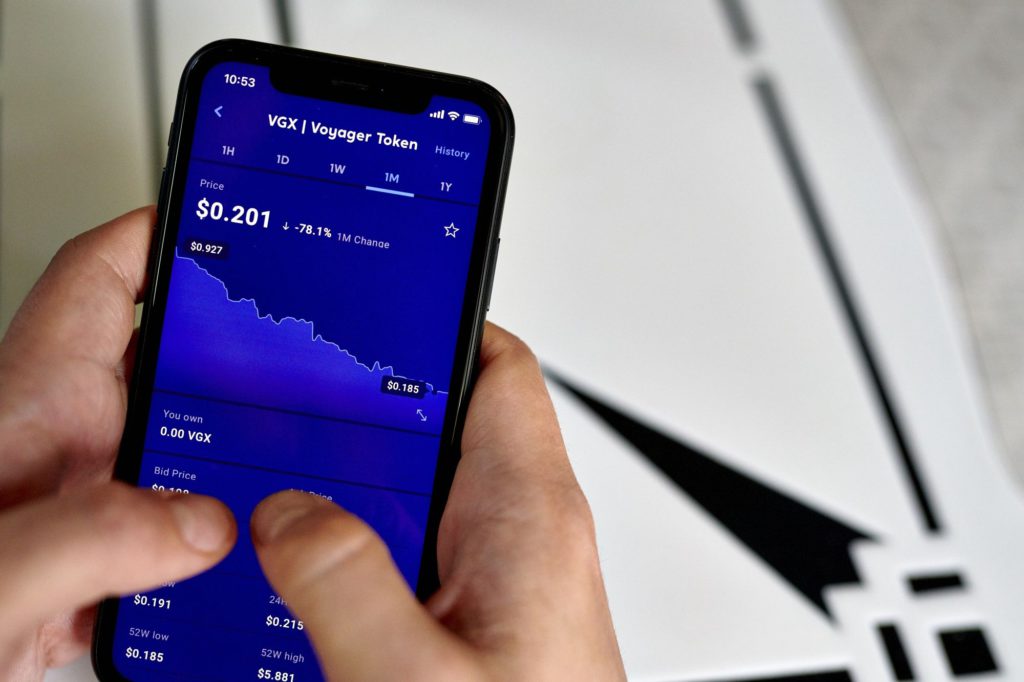
Voyager Crypto Customers May Recover 72% From Bankruptcy Sale

(Bloomberg) — Customers of bankrupt crypto lender Voyager Digital Ltd. may recover about 72% of the value of their accounts under a tentative deal for the company to sell itself to FTX US, the digital-asset exchange. 

Under the arrangement approved by US Bankruptcy Judge Michael E. Wiles on Wednesday, the company can cancel its deal with FTX should it get a higher offer that pays customers more. The sale can’t close until Wiles approves Voyager’s bankruptcy payout plan, which the Manhattan-based judge may consider in December.

FTX won a two week-long auction for Voyager under a deal tied to court approval of the creditor payment plan, lawyers said during a court hearing held by telephone. Wiles pressed Voyager to include a standard bankruptcy clause called a “fiduciary out,” which allows a company under court protection to consider higher offers until a sale is final.

FTX is providing “the only viable alternative” for the company, Voyager bankruptcy attorney Christine Okike told Wiles. The company agreed to change how the fiduciary out is worded to ensure a better offer can be considered.

The company has also asked Wiles to give it permission to send the payout plan to creditors, including crypto customers, for a vote. Should creditors vote in favor, Wiles would have the final word on whether the plan, and the proposed sale, are approved.

The sale to FTX is valued at about $1.4 billion, of which $51 million is in cash. As part of the sale, FTX would move customers on to its platform. Under the payout plan, customers who had digital currencies on Voyager’s platform can be paid in that form once FTX takes over, if FTX supports that type of currency, lawyers told Wiles.

The bankruptcy is Voyager Digital Holdings Inc., 22-10943, U.S. Bankruptcy Court for the Southern District of New York (Manhattan).

More stories like this are available on bloomberg.com

©2022 Bloomberg L.P.
AT&T Is in Talks With Investors on Fiber Build-Out

(Bloomberg) — AT&T Inc. is in discussions to create a joint venture that would invest billions of dollars on fiber-optic network expansion, according to people familiar with the matter.

The company is working with Morgan Stanley to help bring in an infrastructure partner to the venture, which is expected to be valued at $10 billion to $15 billion, said some of the people, who asked not to be identified because the matter is private. 

The discussions with infrastructure investors are early and could still fall apart, the people said. AT&T could find a partner as soon as this year, but it could also slip into 2023, one of the people added. 

AT&T and Morgan Stanley declined to comment. TMT Finance reported some of the details in late August.  

Dallas-based AT&T is embarking on its biggest plan yet to pursue broadband customers outside its traditional 21-state local phone territory. The largest US telecommunications company by revenue has already started to take on fiber projects in new states such as Arizona and plans to expand to more in an effort to boost subscriber growth. Chief Executive Officer John Stankey has been traveling to cities such as Mesa, Arizona, and Evansville, Indiana, to kick off projects, including public-private partnerships that can serve as a model to tap into the nearly $100 billion in federal broadband funding available.

The rise of digital infrastructure investing has been swift in recent years, with alternative asset managers such as Brookfield Asset Management, KKR & Co. and Blackstone Inc. jockeying for assets. 

Large corporations are starting to turn to these deep-pocketed funds to help them build expensive infrastructure projects. Earlier this year, an affiliate of Brookfield partnered with Intel Corp. on a $30 billion joint venture to build semiconductor manufacturing facilities. 

AT&T’s decision to move into new markets hinges on at least three factors, Stankey said in an interview in early October. The area has to be undeserved with broadband and be profitable for the company. AT&T also has to be the first provider of fiber to the home. 

Stankey is bullish on fiber as a path to long-term growth for AT&T since it provides some of the largest capacity and highest potential speed of any broadband connection. That gives fiber-optic lines a longer-term viability than copper wire or wireless connections. But the wiring cost are high and require a huge investment in labor and equipment. 

As AT&T focuses on fiber, peers Verizon Communications Inc. and T-Mobile US Inc. have been selling wireless home internet as a cheaper alternative to fiber, which has been a source of most, if not all of the industry’s broadband growth this year.

More stories like this are available on bloomberg.com

©2022 Bloomberg L.P.

A New US Plan Will Show Which Consumer Electronics Are the Safest

(Bloomberg) — The White House is planning to introduce a labeling system to signal the level of security in the growing number of devices connected to the internet, according to a senior administration official. 

Consumers would be able to scan barcode attached to product packaging with their phones to access information such as the level of support from manufacturers and the device’s history of receiving software updates, an important function of data security, the official said. 

The system would be comparable to the green Energy Star logos used to signal energy efficiency, with the same level of support and testing implicit in the standards. 

While there is recognition that there are different levels of risk between various devices, the intention, at least initially, is to keep the system simple to encourage consumer adoption. Companies will participate on a voluntary basis, according to the White House. The effort will launch on a more formal basis in early 2023, according to the official. 

The White House said it would start with some of the most common, and often most at-risk, technologies such as internet routers and home cameras.

The so-called Internet of Things is a broad category of devices used to refer to everything from smart speakers to WiFi connected light-switches. They are often hijacked by hackers, who deploy those devices’ connections as part of distributed denial-of-service attacks.

More stories like this are available on bloomberg.com

©2022 Bloomberg L.P.

Abortion Pill Startups Face Challenges Raising Cash—Even Post-Roe

(Bloomberg) — Startups that provide abortion pills by mail saw a groundswell of attention after the Supreme Court overturned Roe v. Wade earlier this year. Today, though, the founders of two abortion pill companies say that raising money from investors has been complicated.

Hey Jane, which provides Mifepristone pills for inducing abortions to patients in eight states, recently closed a $6.1 million funding round, the company told Bloomberg. The round, which was oversubscribed, came mostly from female investors, Hey Jane said. 

Co-founder and CEO Kiki Freedman said that during the fundraising process she found that many investors were interested in backing businesses expanding access to abortion care, but added, “I’d be lying if I said it was easy.” Numerous firms told her they couldn’t invest in a business focused on abortion access because their limited partners, who supply capital, would be wary of the politics involved. “They may not want to ruffle feathers with their own investors,” she said.

On Tuesday, President Joe Biden vowed to enshrine Roe v. Wade in federal law, a promise that hinges on the Democrats’ ability to hold the House and make gains in the Senate in the upcoming midterm elections. Until then, access to an abortion is subject to the political climate in each state.

About 20,000 people have received abortion medication from Hey Jane since its launch in early 2021. The funding brings the startup’s total cash raised to $9.7 million, a relatively small sum in the world of venture capital, but the round exceeded the amount Hey Jane initially set out to raise. Freedman said the funding will help grow Hey Jane’s staff and expand its virtual care model to include other areas like postpartum depression. The company plans to introduce that program in all 50 states by the end of next year. Investors in Hey Jane’s latest funding round include New York-based VC the Helm, Ulu Ventures and Amboy Street Ventures, which focuses on sexual health startups and women’s health technology. 

Over the summer, after reports that Supreme Court was planning to overturn Roe v. Wade, companies seeking to expand access to abortion care saw an influx of inbound interest from investors wanting to talk about their businesses. Choix Inc., another company that mails pills that patients can use to induce an abortion, raised $1 million in seed funding over the summer from Oregon-based Elevate Capital. 

But since then, Choix has struggled to raise more money. Earlier this month, the startup launched a crowdfunding campaign on Republic, a site that allows people to invest in companies as well as other projects. Choix went the crowdfunding route after failing to raise the additional $1 million it was hoping to bring in as part of its summer round. (Freedman said Hey Jane also raised some money from investors on tech investing platform AngelList, and found about 100 backers there.)

Choix’s co-founder and CEO, Cindy Adam, said that like Freedman, she found that investors were hesitant to fund abortion-related companies because of worries over their limited partners’ politics. Another common reason VCs passed was that they’re looking for profitability, particularly during a market downturn. “Lots of investors want to see profits,” Adam said. “We’re focused on quality care and taking care of our patients over profits.” 

There are a number of other telehealth companies focused on abortion access and women’s health. On Wednesday, a business called Wisp said it had expanded its abortion medication offering to nine states, after launching in California this summer.

Carli Sapir, a Hey Jane investor and founding partner at Amboy Street Ventures, said that startups catering to women are often overlooked. In the case of abortion access, the topic is so politicized that “a lot of people won’t touch this space for fear of repercussions,” she said. Still, Sapir is optimistic about the future of startups focused on women’s health. “I know this space is underserved and underfunded,” she said. “But there’s a huge shift in the landscape right now because women are becoming decision-makers in the VC landscape and directing the flow of capital.”

(Updates with context on telehealth companies in the ninth paragraph.)

More stories like this are available on bloomberg.com

©2022 Bloomberg L.P.
Bored Bitcoin Faithful Rekindle ‘Halving’ Hype

(Bloomberg) — Trading has gotten so tedious in the cryptocurrency world that advocates are resorting to touting a scheduled reduction in the amount of Bitcoins awarded to miners that is set to take place in about 18 months as a potential catalyst.

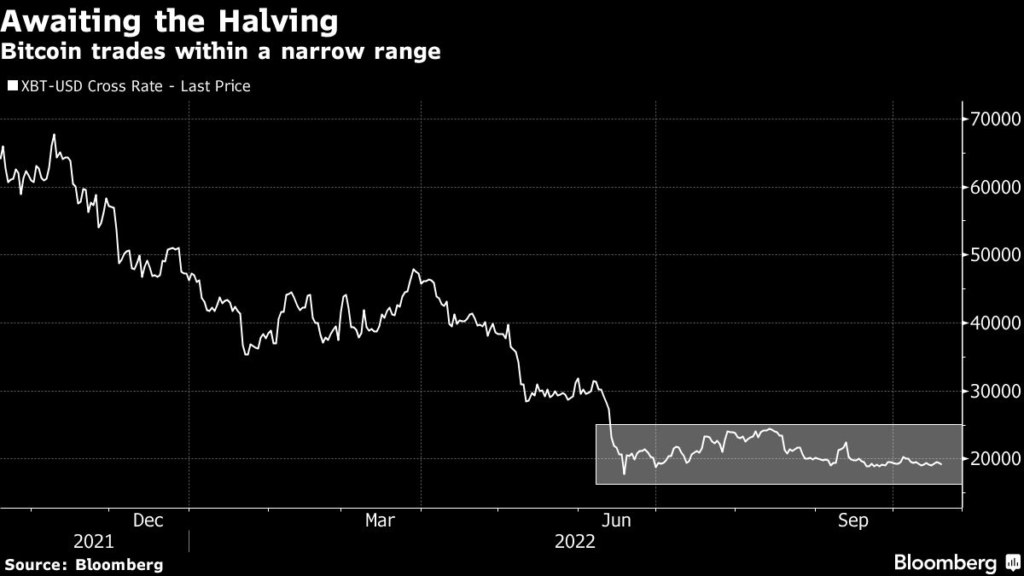
Bitcoin, the largest cryptocurrency, fell about 1% to $19,187 as of 2:58 p.m. in New York. It has been locked in a narrow range of around $20,000 since prices collapsed in June. Even so, analysts from ByteTree Research say “it is time to sit up and pay attention,” as the next halving is expected to happen in 2024.

Bitcoin undergoes what’s known as halving, or halvening, every three or four years or so. During a halving, coin rewards to miners — whose computers order transactions on the network and get paid with new Bitcoins — get cut in half. Prior halvings have coincided with bull runs, which often started a few months before a halving and continued for some months afterwards. The last halving, in May of 2020, was followed by a bull run that ended in a record Bitcoin price of almost $69,000 in November 2021. Since reaching that milestone, Bitcoin has tumbled about 70%.

“Our view remains that this epoch will echo previous ones, albeit with a lower amplitude given its scale,” ByteTree said in a Wednesday report, which pointed to expected greater regulatory clarity in the coming months as likely to light a fire under adoption of digital assets. “The technology is going to make it easier to use and expand its use case, regulation will provide greater investment clarity and the punishing macro headwinds will abate. This will bring greater activity into an ecosystem which is heading for another supply shock. If that’s correct, the next few months should be the perfect time to accumulate.”

The advice is coming at a time of low trading volumes and low volatility, when investors see nothing to get excited about. Many crypto long-timers aren’t excited about the halving, either.

“No, I don’t think the halvening will have much effect on prices,” said crypto investor Aaron Brown, who writes for Bloomberg Opinion. “I don’t try to predict the tides of enthusiasm among speculators. I don’t see major fundamental changes in the next few months.”  

–With assistance from Vildana Hajric.

More stories like this are available on bloomberg.com

©2022 Bloomberg L.P.
Stocks Get Hit as Rally Crumbles With Yield Surge: Markets Wrap

(Bloomberg) — Stocks came under pressure as Treasury yields soared to multiyear highs on speculation the Federal Reserve will remain hawkish, raising the odds of a recession.

The day that marked the 35th anniversary of the equity crash saw the market halting a back-to back advance and failing to sustain any rebound attempt. To Nicholas Colas at DataTrek Research, a more durable rally at this stage would require a backdrop of stabilizing yields — which was the setup for the two-month surge in the S&P 500 that started in mid-June. 

That seems like a “tall order,” however, given that Fed policy remains tight and bond rates are stuck at such high levels, he noted.

A renewed wave of selling propelled Treasury yields higher, with bearish sentiment spurred by firmer global inflation readings, corporate deal hedging flows and a poorly received US 20-year bond auction. The two-year yield — which is more sensitive to imminent central bank moves — jumped to the highest since 2007 as traders pushed expectations for a peak policy rate closer to 5%. 

Not even bright spots on the earnings front like Netflix Inc. and United Airlines Holdings Inc. were able to enthuse traders about a continuation of this week’s broad-market rally. One of the reasons is that going into the current season, estimates had already been cut to the bone. So beating forecasts wouldn’t be hard.

“Earnings are not allowing us to see that capitulation and resetting of 2023 earnings expectations yet,” Morgan Stanley’s Lisa Shalett told Bloomberg Television. “It’s not yet a clearing event that sets up for a durable, viable bottom in this market.”

Corporate profits in the S&P 500 are expected to show growth of just 2% in the third quarter —  which is way below the 10% increase predicted by analysts back in June, according to data compiled by Bloomberg Intelligence. That means company guidance will — as it’s always been — crucial for market sentiment especially at a time of so many economic uncertainties weighing on stocks.

Fed Bank of Minneapolis President Neel Kashkari said that the US central bank could potentially pause its rate increases at some point next year if policymakers see clear evidence that core inflation is slowing. However, he made it clear that he sees no evidence yet to give him “comfort” that core prices are moderating.

The Fed’s restrictive stance aimed at crushing stubborn inflation continues to take a toll on important areas of the world’s largest economy such as housing, with fresh data showing a drop in new US home construction and mortgage rates jumping to a two-decade high.

In another sign of economic jitters, a Bank of America Corp. survey showed 60% of chief investment officers want companies to use cash reserves to improve their balance sheets — rather than opting for capital expenditures or stock buybacks.

The economy will probably mostly slow in 2023, so companies have time to use “still strong cash flow generation this year to shore up their balance sheets before a potential recession hits next year,” wrote credit strategist Yuri Seliger.

As the third-quarter earnings season gets underway, a nightmare scenario for stock pickers is unfolding. The S&P 500’s three-month realized correlation — a gauge of how closely the top weighted stocks in the benchmark move relative to each other — is at its highest level since July 2020. As correlations rise, it becomes increasingly difficult for fund managers to outperform the broader market.

For anyone attempting to catch a bottom in stocks, history shows that the last innings of bear markets typically inflict a lot of pain on stock investors. That means more turbulence may lie ahead since the S&P 500’s drop over the past six months looks tame when compared with they type of declines typically seen in the last half-year of major equity downturns, according to Bespoke Investment Group.

“Oversold conditions coinciding with key support has recently underpinned a recovery in stocks, leaving many investors wondering if this will be another trick or a potential treat?” said Craig Johnson, chief market technician at Piper Sandler. “From our technical perspective, risk for another trick appears high as there is insufficient evidence to confirm the equity market has fully capitulated. This does not eliminate the probability of a sizable relief rally developing into year-end.”

Key events this week:

  • US existing home sales, initial jobless claims, Conference Board leading index, Thursday
  • Euro area consumer confidence, Friday

Some of the main moves in markets:

Stocks

  • The S&P 500 fell 1% as of 2:52 p.m. New York time
  • The Nasdaq 100 fell 0.7%
  • The Dow Jones Industrial Average fell 0.7%
  • The MSCI World index fell 1.1%

Currencies

  • The Bloomberg Dollar Spot Index rose 0.7%
  • The euro fell 0.9% to $0.9769
  • The British pound fell 1% to $1.1207
  • The Japanese yen fell 0.4% to 149.88 per dollar

Cryptocurrencies

  • Bitcoin fell 0.9% to $19,190
  • Ether fell 1.4% to $1,296.4

Bonds

  • The yield on 10-year Treasuries advanced 12 basis points to 4.12%
  • Germany’s 10-year yield advanced nine basis points to 2.38%
  • Britain’s 10-year yield declined seven basis points to 3.88%

Commodities

  • West Texas Intermediate crude rose 2.9% to $85.25 a barrel
  • Gold futures fell 1.4% to $1,632.80 an ounce

–With assistance from Emily Graffeo and Peyton Forte.

More stories like this are available on bloomberg.com

©2022 Bloomberg L.P.

GM Considers Adding Midsized Plug-In Pickup to Its Hummer Line

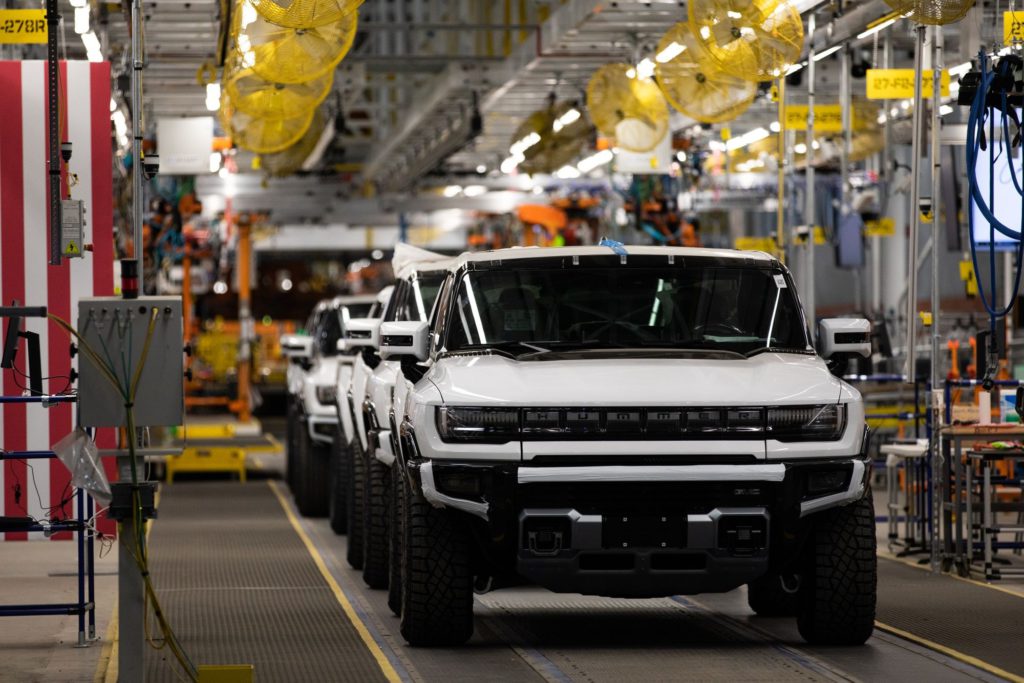
(Bloomberg) — General Motors Co. is considering adding an electric midsized pickup truck to its lineup of Hummer vehicles, leaning into demand for lower-emissions cars, according to people familiar with the matter.

A smaller, electric Hummer is still a design concept in GM’s California studio, but has a good chance of going into production and is seen as a priority project, said the people, who asked not to be identified because the plans are private. GM already builds the large electric Hummer pickup and will begin building a full-size SUV early next year.

Hummer is emerging as a key piece of GM’s electric-vehicle strategy. The company has said it’s spending $35 billion to build 30 EVs by 2025. It’s breaking into the market by appealing to high-end customers with pricey EVs from Hummer and Cadillac and offering lower-priced models to fleet buyers, allowing the automaker to build sales volume and manufacturing scale. 

GM believes the Hummer brand has great recognition and a strong following, so a smaller Hummer that is still brawny would be a logical extension, the people said. It could also help GM if it decides to bring the Hummer brand to Europe, which the Detroit automaker plans to re-enter by exporting EVs.

Mikhael Farah, a spokesman for GM’s GMC truck division, which sells Hummer, declined to comment.

GMC underwent a rebranding and started building a new electric version of the big, military-styled pickup in late 2021. The vehicle, which sells for about $110,000, has been well-received. GM has accepted more than 90,000 reservations for the Hummer pickup and had to temporarily halt sales, and even raise the price, to prevent a large backlog of orders.

Output Boost

Hummer was GM’s first EV built off its Ultium battery platform. Production has started slowly, but as the automaker ramps up its battery plant in Lordstown, Ohio, GM will be able to boost output of the Hummer pickup and SUV in the first quarter. The company has delivered 781 vehicles as of Sept. 30.

GM also makes the $60,000 Cadillac Lyriq SUV. Next it plans to produce the Hummer SUV, and an electric Chevy Silverado pickup this spring, though the first version will primarily target commercial customers. A mid-sized Hummer would be a few years away but would compete directly with startup Rivian Automotive Inc.’s R1T pickup truck, which is smaller than the Hummer, Ford Motor Co.’s F-150 Lightning and the Silverado EV.

The Hummer brand, a target of environmentalists seeking to limit fossil-fuel emissions, was killed in 2010. GM brought it back as an EV brand as a way to lure consumers who may not have looked at electric vehicles, and support work to shed its gas-guzzler image. The large truck still does have a high carbon footprint compared to other EVs due to the volume of electricity need to power its 1,000-horsepower motor and 9,200 pounds (4,173 kilograms) of weight.

Extending the brand to include smaller models has precedent. GM starting selling the H2 model in 2002, a $60,000 SUV made using some parts from Chevy pickups and SUVs. It was a smash-hit among buyers looking for brawn and bling, prompting the Detroit automaker to follow up with the mid-sized vehicles. Before the Hummer brand was killed, the mid-sized H3 SUV and H3T pickup accounted for the largest portion of sales. 

GM acquired Hummer in 1998, six years after AM General debuted it as a civilian version of the armored Humvee military vehicle made famous for its role in the Gulf War. Actor and former California Governor Arnold Schwarzenegger was an early and very public advocate for the brand and its first model, which later became known as the H1. 

More stories like this are available on bloomberg.com

©2022 Bloomberg L.P.

Close Bitnami banner
Bitnami