
Bloomberg

Truss Fires Home Secretary as UK Government Risks Imploding

(Bloomberg) —

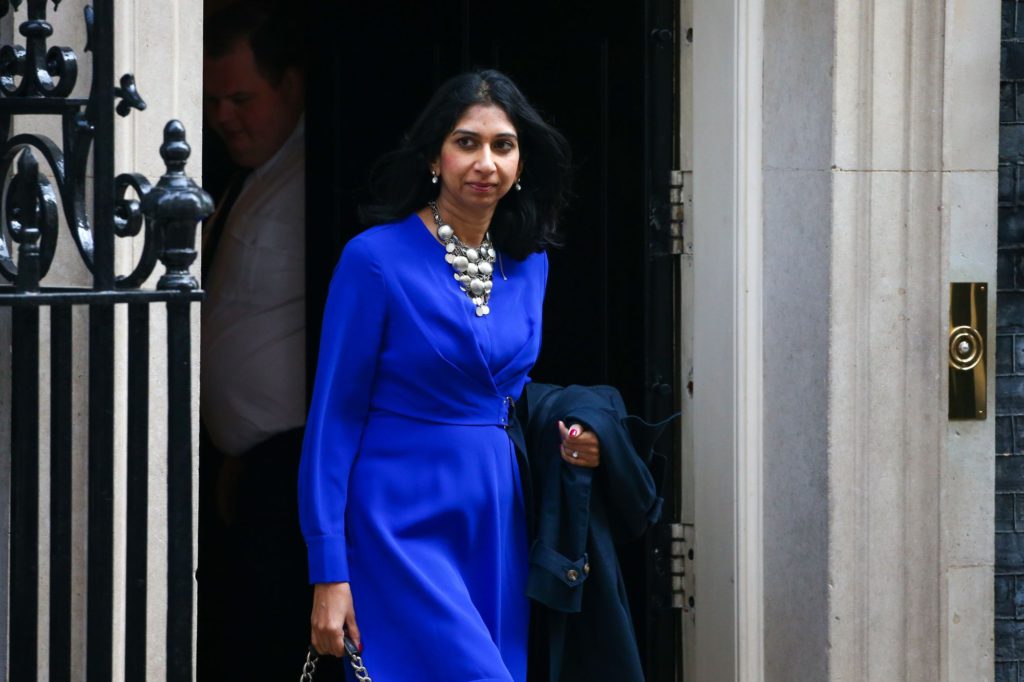
Liz Truss fired Home Secretary Suella Braverman for what was described as a national security breach, a dramatic move that heaps even more pressure on Britain’s premier as she clings to power.

Braverman shared secret documents on a personal mobile phone, four officials familiar with the matter said. In a letter to Truss posted on Twitter, she said she had sent an official document from her personal email, the contents of which she said had already been briefed to MPs.

That is regarded as serious, though not normally a firing offense. But political context is key, as Truss battles to keep her premiership from imploding.

According to a person familiar with the matter, Braverman was on a list of Cabinet ministers Truss’s advisers worried were preparing to resign to try to force the premier out after a disastrous six weeks in office. The others are Education Secretary Kit Malthouse and Trade Secretary Kemi Badenoch, the person said. Both told Bloomberg News they are not quitting.

Yet the fears among Truss’s team illustrate just how far the prime minister’s authority has disintegrated in her mutinous Conservative Party. Compounding the sense of desperation, Truss moved quickly to replace Braverman with Grant Shapps — who has himself been openly plotting with Tory MPs to remove the prime minister. That bears all the hallmarks of a premier not in control.

Key Firing

“I actually want to apologize, I really am getting fed up with this soap drama as much as your listeners are,” Tory MP Bob Seely told LBC Radio. “I’m frankly as bemused as everybody else is and I’m really unhappy with the situation.”

Braverman is the second holder of one of the UK’s so-called Great Offices of State to be fired by Truss. Kwasi Kwarteng, Truss’s longtime friend and ally, was removed as Chancellor of the Exchequer after the economic plan they worked on together blew up in the face of financial market pressure, forcing a series of humiliating U-Turns.

Even getting to the end of Wednesday could be a challenge. The government’s enforcer in Parliament, Chief Whip Wendy Morton, resigned following a brutal fight to contain a Tory rebellion in a vote on shale gas fracking, according to two people with knowledge of her decision. Morton’s deputy, Craig Whittaker, also quit, the people said.

Truss’s party won the vote by 326 votes to 230 in the House of Commons, which should have given the prime minister a rare moment of respite. But the resignations are likely to trigger more trouble, and Labour MP Chris Bryant called for a probe after allegations of bullying as government whips tried to get people to vote.

Truss Warns UK Tories Not to Defy Her on Fracking

Truss had warned Conservative MPs not to vote against the government, and an order had gone round that even abstaining would result in being kicked out of the parliamentary party. But fracking is a thorny issue and many Conservatives reject it due to fierce opposition in their districts.

Angry Tories

Some Tory MPs took to Twitter to express their defiance — ex-minister Chris Skidmore said he wouldn’t vote to support fracking “for the sake of our environment and climate,” and would face the consequences.

It’s by no means the only pressure point facing Truss. There’s another looming row on benefit payments, which many Tory MPs want the government to raise in line with soaring inflation. But new Chancellor of the Exchequer Jeremy Hunt has refused to commit to doing so as he seeks to repair the damage done by Truss and Kwarteng with their economic plan.

The fear among Conservatives is that a real-terms benefits cut will hurt the most vulnerable during a cost-of-living crisis. Tory support has plummeted to a record low in opinion polls, and Truss’s personal approval rating is substantially lower than her ousted predecessor, Boris Johnson.

Hunt has reversed most of the policies to restore financial stability after the UK’s public finances suddenly unraveled. But in doing so, he has put the Tories on a path to another round of punishing austerity. 

Still, according to people familiar with the matter, Hunt told rank-and-file Tories on Wednesday he is committed to raising defense spending to 3% of GDP by 2030 — a longstanding Truss pledge — and will stick with the high-speed railway project HS2.

Risks to Truss

The bigger question facing Conservative MPs is whether and when to remove Truss, with the next general election due by January 2025. There’s a growing consensus that she shouldn’t be allowed to lead the party into that vote, but deep divisions over who MPs want to take over.

In her letter to Truss posted on Twitter, Braverman made a thinly-veiled attack on the prime minister’s performance. “Pretending we haven’t made mistakes, carrying on as if everyone can’t see that we have made them, and hoping that things will magically come right is not serious politics,” she said.

Her departure from office has left Westminster on edge. Though she was pushed out by Truss, few MPs will miss the broader significance of the loss of another key ally on the ideological right of the party. 

In the absence of a unity candidate — former Chancellor of the Exchequer Rishi Sunak and House of Commons leader Penny Mordaunt are in the running — it is Cabinet departures that pose the most immediate threat to Truss. Johnson’s tenure was ended by the sudden resignations of then Health Secretary Sajid Javid and Sunak, which triggered a mass exodus from his government. 

“I’m a fighter, not a quitter,” Truss said in the House of Commons on facing lawmakers for the first time since she was forced to junk most of her economic program just weeks after announcing it.

–With assistance from Emily Ashton, Ellen Milligan and Joe Mayes.

(Updates with chief whip resigns in eighth paragraph)

More stories like this are available on bloomberg.com

©2022 Bloomberg L.P.

Five Russians Charged in Scheme to Obtain US Military Technology

(Bloomberg) — The US has charged five Russian nationals and two oil traders in a global sanctions evasions and money-laundering scheme involving Venezuelan state oil company PDVSA.

The 12-count indictment unsealed Wednesday in federal court in Brooklyn, New York, alleges the seven engaged in a scheme in which they obtained military technology from US companies, smuggled millions of barrels of sanctioned oil and laundered tens of millions of dollars for Russian oligarchs and sanctioned entities. Two of the Russians were arrested in Germany and Italy on Monday. 

More stories like this are available on bloomberg.com

©2022 Bloomberg L.P.
Amazon Narrowly Avoids UK Warehouse Strike During Holiday Season

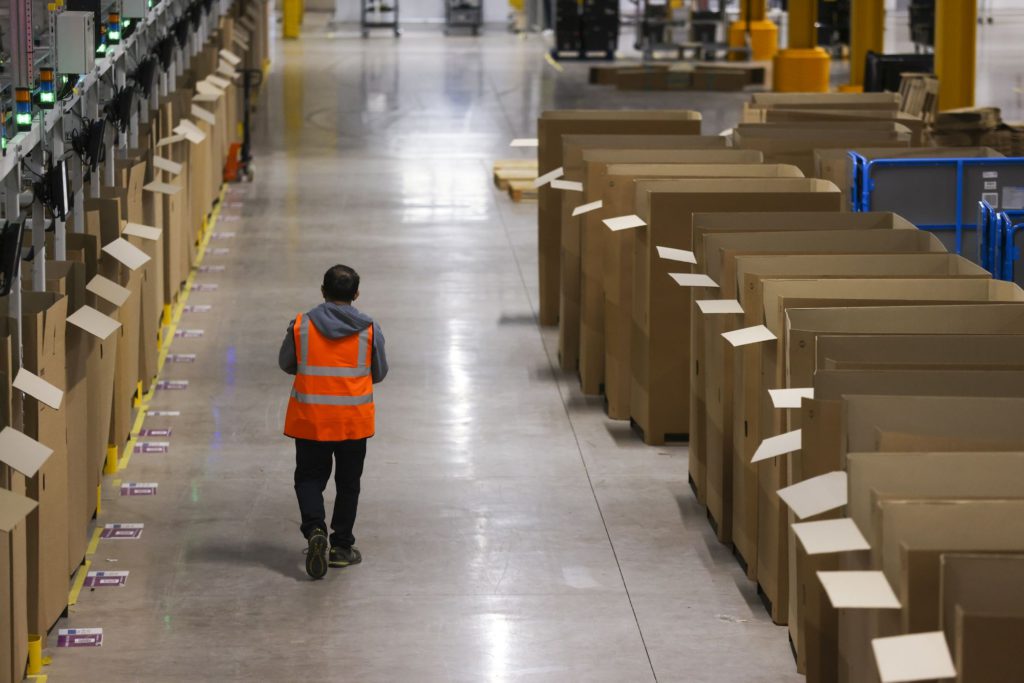
(Bloomberg) — Amazon.com Inc. has narrowly avoided a strike in the UK during the crucial holiday shopping season. 

Employees at a warehouse near Coventry failed to muster enough votes to walk off the job, the GMB union said Wednesday. Under labor rules, at least 50% of union members needed to participate, and only 49% did so by the deadline. Still, all but one of them voted to strike, according to GMB spokesman Jon Parker-Dean.

The month-long ballot, which invited the 291 GMB union members out of the warehouse’s 1,400-strong workforce to vote on whether they wanted to strike as soon as next month, was the first of its kind in the UK. The vote followed a series of informal work stoppages, slowdowns and walkouts at warehouses across the country earlier this year. 

Amazon didn’t immediately respond to a request for comment.

The strike ballot was called after Amazon offered workers a raise of between 35 pence (40 cents) and 50 pence per hour, bringing starting pay to between £10.50 and £11.45 an hour, amid rising inflation and a cost-of-living crisis. Union members want Amazon to pay a minimum hourly wage of at least £15, they said in a statement last month.  

Earlier this month, Amazon announced a £500 bonus for UK warehouse workers in two equal payments in October and December. The second payment is contingent on staff taking “no unauthorized absence,” between Nov. 22 and Dec. 24, when GMB members had planned to strike, according to a copy of the message sent to workers and reviewed by Bloomberg. 

A GMB spokesman said linking such a payment to attendance could be interpreted as unlawful inducement not to strike, and the union has instructed lawyers to take legal action.

Amazon spokesman David Nieberg confirmed that the company would view any GMB strike as an unauthorized absence but said paying tens of thousands of workers £500 each would not be a cost-effective way to discourage staff from striking. 

The e-commerce giant has about 30 fulfillment centers and plans to employ 75,000 people in the UK by the end of the year — up 4,000 compared with 2021. Amazon also offers workers a company pension plan and benefits including private medical insurance, life insurance, income protection and subsidized meals.

In the US, meanwhile, workers at an Amazon facility in upstate New York on Tuesday overwhelmingly rejected a bid to unionize. The outcome was a setback for the upstart Amazon Labor Union, which won a historic victory earlier this year in New York City.

More stories like this are available on bloomberg.com

©2022 Bloomberg L.P.

Qatar in Talks to Invest $2.5 Billion in Egypt as Ties Mend

(Bloomberg) — Qatar is in advanced talks to buy around $2.5 billion of state-held stakes in Egypt’s biggest mobile network operator and other companies, as the North African nation lines up funding to cope with the economic fallout of Russia’s invasion of Ukraine.

Under the potential pact, which is expected to be finalized by the end of this year, Qatar Investment Authority would acquire 20% in Vodafone Egypt from Telecom Egypt Co., according to people with knowledge of the matter. The QIA is the Gulf state’s sovereign wealth fund and oversees an estimated $445 billion in assets. 

The people, who asked not to be named because the talks are confidential, didn’t identify the other firms, saying only that they weren’t listed on Egypt’s stock market.

A deal would be a boost for Egypt’s troubled economy, which is grappling with soaring food and fuel bills after Russia’s invasion of Ukraine and an exodus of foreign investors in its local debt. Gulf Arab states have already pledged upward of $20 billion in deposits and investments, while Egypt is close to securing sorely needed International Monetary Fund assistance. 

Telecom Egypt, some shares in which have been listed since 2005, rose 4.4% by the close of trade on Egypt’s stock exchange on Wednesday, reaching their highest level since early March.

Market Pioneer

State-owned Telecom Egypt, which began operating in 1854 with the first telegraph line connecting Cairo and Alexandria, acquired its 45% stake in Vodafone Egypt to gain a strategic foothold in the mobile telecommunications market prior to founding its own provider, WE, in 2017. 

The UK’s Vodafone Group owns 54.9% stake of Vodafone Egypt, and while there was an agreement to sell a majority stake in the company to its Johannesburg-based subsidiary Vodacom Group Ltd. for $2.7 billion last year that transaction hasn’t closed.

Egypt’s sovereign wealth fund, the QIA and Telecom Egypt all declined to comment. Ayman Essam, Vodafone Egypt’s spokesperson, said it was “not officially aware of the deal” and declined to comment further.

Qatar’s support for the now-defunct Muslim Brotherhood administration that held power in Egypt shortly after the 2011 uprising which ousted Hosni Mubarak strained its relationship with the incumbent government, and the pending investment accord is the latest sign that ties are on the mend. 

Warming Ties

Egyptian President Abdel-Fattah El-Sisi visited Doha last month, and a port cooperation agreement was signed. And earlier this year, Qatar deposited $3 billion into Egypt’s central bank to help the most populous Arab nation contend with soaring food costs.

Read More: Saudi Arabia’s $10 Billion Pledge to Egypt Delivers First Deals

Qatar is among the world’s richest countries due to its plentiful gas reserves, and the government has been taking steps to diversify the economy in anticipation of a decline in earnings as reserves become depleted and the world moves away from fossil fuels. 

Founded in 2005, the QIA has vowed to plow more money into Asia and the US after years of substantial investment in Europe. Even so, it participated in Porsche AG’ s 9.4 billion-euro ($9.1 billion) initial public offering, acquiring a 4.99% stake. 

Earlier this year, the QIA trimmed stakes in a number of listed assets and bought into closely-held technology companies in growth markets, marking a major strategy shift for one of the world’s largest sovereign wealth funds. 

–With assistance from Farah Elbahrawy.

(Updates with Telecom Egypt share move in seventh paragraph.)

More stories like this are available on bloomberg.com

©2022 Bloomberg L.P.

Waymo’s Self-Driving Taxi Service Is Coming to LA

(Bloomberg) — Waymo, Alphabet Inc.’s driverless-vehicle unit, plans to expand its robo-taxi service to Los Angeles, the third region where it will be offered.

The company will follow the same playbook for the service, called Waymo One, that it has elsewhere, according to an announcement Wednesday. Local employees will try the program first, followed by so-called “trusted testers” who sign nondisclosure agreements, followed by unaccompanied, paying members of the public. Waymo One is already open to the general public in the Phoenix metro area and is in the advanced testing stage in the more crowded downtown areas of Phoenix and San Francisco.

Robo-taxi services are gradually debuting in more US cities, though they remain far from mainstream adoption. Waymo’s chief rival, Cruise LLC, the self-driving car startup majority-owned by General Motors Co., said in September that it plans to expand its robo-taxi business to Phoenix and Austin, Texas, in the coming months, with a target of adding $1 billion in revenue by 2025.

Waymo has priced its service to be competitive with other ride-hailing companies, Chief Product Officer Saswat Panigrahi said in an interview. He added that the margins of the business are improving, in part due to the lower cost of sensors in the latest generation of the company’s technology. The amount of additional testing the company needs to conduct before launching in new markets is also declining, Panigrahi said.

“We are getting better and better at understanding what the cost of operations is,” he said.

More stories like this are available on bloomberg.com

©2022 Bloomberg L.P.
Trudeau Minister Moves to Ban Scab Workers in Labor Disputes

(Bloomberg) — Prime Minister Justin Trudeau’s government took a key step in fulfilling its promise to ban the use of replacement workers during strikes or lockouts in Canada.

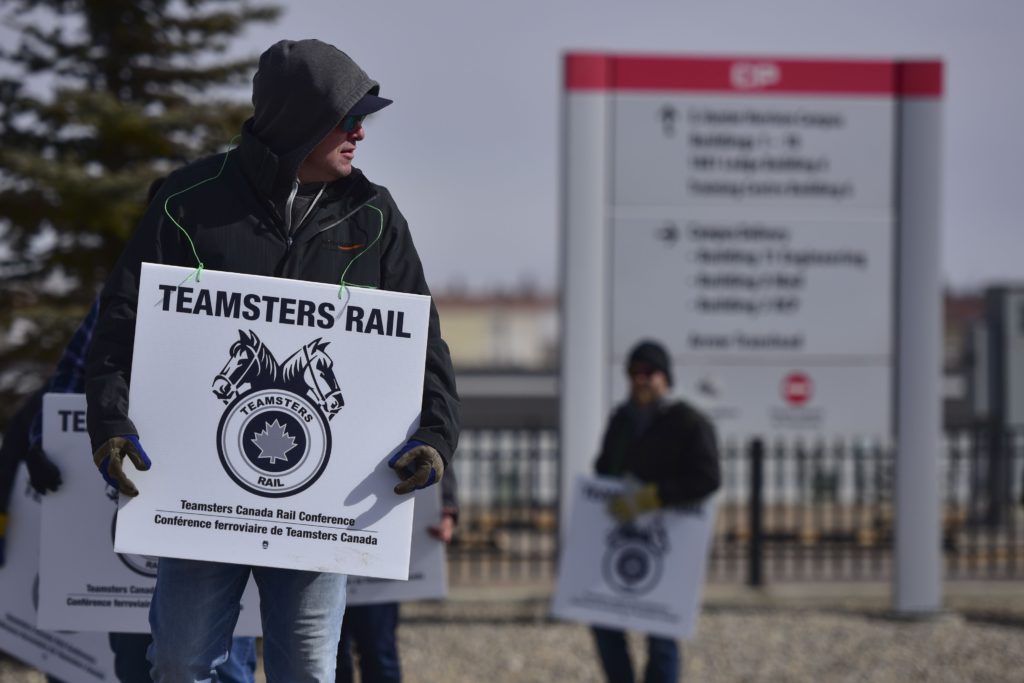
Labor Minister Seamus O’Regan announced the start of consultations Wednesday on anti-scab legislation for unionized workers in federally regulated sectors, including international and cross-provincial transportation services, telecommunications and banks. The consultations will take place with both employers and unions.

The proposed law is part of Trudeau’s platform commitment as well as the prime minister’s confidence-and-supply agreement with the labor-friendly New Democratic Party. Struck in March, the power-sharing deal will likely stave off another election until 2025.

The use of replacement workers “pits workers against each other, it’s undignified and it’s dangerous,” O’Regan said at a news conference in Ottawa. “The best deals are made at the negotiating table.”

The legislation — which applies to about 1 million Canadian workers — will be contentious, coming at a time when businesses are already facing increased strike activity with unions ramping up wage demands.

To assuage business, the government will also hold separate but parallel consultations to ensure the new legislation doesn’t undermine companies’ ability to maintain core services during a work stoppage.

The legislation is the “latest evolution” of labor rights in Canada and the consultations will find “the best way to respect workers’ interest and employers’ interest,” O’Regan said. 

More stories like this are available on bloomberg.com

©2022 Bloomberg L.P.

JPMorgan Adds Crypto Policy Head After Dimon ‘Ponzi Scheme’ Quip

(Bloomberg Law) — JPMorgan Chase & Co. has hired a new head of digital assets regulatory policy, less than a month after CEO Jamie Dimon told lawmakers that cryptocurrencies are “decentralized Ponzi schemes.”

Aaron Iovine joined the company this week as executive director for digital assets regulatory policy, a newly created role, a JPMorgan spokeswoman confirmed. He was previously head of policy and regulatory for cryptocurrency lender Celsius Network Ltd., whose bankruptcy filing has roiled the digital asset market.

JPMorgan is looking to build out its policy ranks in the evolving digital asset space amid increased regulatory scrutiny and a downturn in cryptocurrency values.

Iovine didn’t respond to a comment request.

Dimon and other JPMorgan executives have been vocal critics of digital assets.

Dimon’s “Ponzi schemes” comment came Sept. 21 in congressional testimony, during which he called himself a “major skeptic on crypto tokens.” Takis Georgakopoulos, global head of payments at JPMorgan, told Bloomberg Television last month that he sees “very little” demand for cryptocurrencies as a payment tool.

In addition to hiring Iovine, JPMorgan this month posted an opening for a digital assets counsel position with its corporate and investment bank.

Stacey Friedman, who has been JPMorgan’s general counsel since 2015, didn’t respond to a request for comment about the New York-based financial services giant’s interest in lawyers familiar with distributed ledger technologies.

A JPMorgan spokeswoman declined to comment on Friedman and Iovine’s behalf.

Iovine will work with JPMorgan’s regulatory affairs group, which a year ago welcomed aboard former Davis Polk & Wardwell senior associate Sharon Yang as a managing director and global head of regulatory affairs. Yang previously served as a deputy assistant secretary for international financial markets at the Treasury Department.

Celsius hired Iovine earlier this year from Cross River Bank, a digital asset-friendly regional lender. The company recently brought on Benjamin Melnicki from Robinhood Markets Inc. to be its head of cryptocurrency compliance and regulatory.

Iovine, who like Melnicki is also an attorney, spent nearly three years at Cross River, where he led policy and regulatory affairs. Cross River hired Iovine in 2019 after he spent nearly a year as a senior regulatory analyst at the law firm White & Case.

During the first quarter of this year, Iovine was part of a Cross River team that lobbied Congress on “general issues focused on financial services, fintech partnerships, and the Paycheck Protection Program,” according to a public filing.

Iovine departed Fort Lee, N.J.-based Cross River in February to join Celsius, according to his LinkedIn profile. An online bio touts Iovine’s expertise “exploring the future of financial services while working at the intersection of law, policy, and regulation.”

He left Celsius in September, two months after the cryptocurrency rewards-earning and lending platform filed for bankruptcy in New York.

The Chapter 11 case has already generated large legal bills for Kirkland & Ellis—court filings show the latter has received at least $3.5 million in retainer payments—and other firms. It has also sparked fraud accusations against London-based Celsius by a former company employee, who the debtor has accused of deception.

A bankruptcy docket for the Celsius case shows that Iovine’s name appears on a list of thousands of unsecured creditors with claims against the company. Among them are Ron Deutsch, a former counsel at Paul, Weiss, Rifkind, Wharton & Garrison hired last year by Celsius to be its general counsel and head of mergers and acquisitions.

To contact the reporter on this story: Brian Baxter in New York at bbaxter@bloomberglaw.com

To contact the editors responsible for this story: Chris Opfer at copfer@bloomberglaw.com; John Hughes at jhughes@bloombergindustry.com

(Adds comment from JPMorgan in ninth paragraph.)

More stories like this are available on bloomberg.com

©2022 Bloomberg L.P.
ASML Sees ‘Fairly Limited’ Impact From Latest US Curbs on China

(Bloomberg) — Key chip equipment supplier ASML Holding NV said it sees “fairly limited” impact from the latest US export control measures to restrict China’s access to cutting-edge semiconductor technologies, a fact that highlights the challenges Washington faces with its efforts to get allies on board to suppress China’s technological rise. 

“The fact that we are a European company with limited US technology in it of course creates this situation where a direct impact on us is fairly limited,” ASML Chief Financial Officer Roger Dassen said in a video released together with earnings on Wednesday, adding that the company will comply with US regulations. 

While the company still cannot ship its most advanced machines to China, Dassen said that the company can continue to ship less sophisticated tools out of Europe to Chinese customers. 

Earlier this month, Washington unveiled sweeping regulations to curb the sale of advanced semiconductors and chipmaking equipment to China and ban US persons from helping with China’s development of chip technologies, sending shockwaves through the $550 billion industry.

The new US move dealt a major blow to China’s chip industry. American firms including Applied Materials Inc., KLA Corp. and Lam Research Corp. pulled employees from China’s top memory chipmaker, while ASML told its employees in the US to refrain from servicing customers in China. ASML expects the total indirect impact from U.S. measures to be around 5% of its backlog, Chief Executive Officer Peter Wennink said on Wednesday.

The administration of US President Joe Biden continues to express its wish for allies to collaborate on export control mechanism when it comes to restricting China’s access to critical chip technologies. 

Earlier this year Washington renewed its pressure on the ASML to halt sales of the firm’s immersion lithography machines, its second most advanced products after extreme ultraviolet lithograph systems, to China, and Dutch newspaper FD has reported that the US Department of State again broached the subject of collaboration on chip issues with Europe earlier this month. 

Dassen’s comments showed that ASML has yet to consent to the US demand that it should stop supplying China with immersion lithography machines. In June, Dutch Prime Minister Mark Rutte said the European Union should not isolate China and that the block should develop its own policies toward the Asian country. German Chancellor Olaf Scholz also said recently that decoupling from China is the wrong answer for resolving economic woes. 

–With assistance from April Roach.

More stories like this are available on bloomberg.com

©2022 Bloomberg L.P.

Stocks Fail to Keep Gains as Treasury Yields Surge: Markets Wrap

(Bloomberg) — Stocks came under pressure amid persistent concern that a hawkish Federal Reserve will raise the odds of a recession. Treasury yields climbed to multiyear highs.

Not even the bright spots on the earnings front like Netflix Inc., United Airlines Holdings Inc. and Procter & Gamble Co. were able to enthuse traders about a continuation of this week’s rally. One of the reasons is that going into the current season, estimates had already been cut to the bone. So beating forecasts wouldn’t be so hard.

Another aspect is that things haven’t changed dramatically on the economic front, with data showing a drop in new US home construction and mortgage rates jumping to a two-decade high. Minneapolis Fed President Neel Kashkari said late Tuesday the central bank can’t pause its tightening campaign once its benchmark rate hits 4.5% to 4.75% if “underlying” inflation is still accelerating.

Read: Famed 60/40 Portfolio Is So Beaten Down It’s Almost Cheap Again

“US equities have priced the most (but not enough) recession risk, and earnings estimates have further to adjust,” Citigroup Inc. quantitative strategists including Alex Saunders wrote. “US bonds have priced the least risk, but it will take some time before bonds react to recession risks given the hawkish Fed.”

To Nicholas Colas at DataTrek Research, an extension of any equity rally at this stage would require a backdrop of stabilizing bond yields — which was the setup for the two-month surge in the S&P 500 that started in mid-June. That seems like a “tall order,” however, given that Fed policy remains tight and yields are stuck at such high levels, he noted.

History suggests that the last innings of bear markets typically inflict a lot of pain on stock investors. That means more turbulence may lie ahead since the S&P 500’s drop over the past six months looks tame when compared with they type of declines typically seen in the last half-year of major equity downturns, according to Bespoke Investment Group.

Read: Options Show Traders Racing to Catch the Next Big S&P 500 Rally

Key events this week:

  • US existing home sales, initial jobless claims, Conference Board leading index, Thursday
  • Euro area consumer confidence, Friday

Some of the main moves in markets:

Stocks

  • The S&P 500 fell 0.4% as of 10:55 a.m. New York time
  • The Nasdaq 100 was little changed
  • The Dow Jones Industrial Average was little changed
  • The Stoxx Europe 600 fell 0.4%
  • The MSCI World index fell 0.6%

Currencies

  • The Bloomberg Dollar Spot Index rose 0.5%
  • The euro fell 0.7% to $0.9788
  • The British pound fell 0.6% to $1.1256
  • The Japanese yen fell 0.3% to 149.68 per dollar

Cryptocurrencies

  • Bitcoin fell 1.1% to $19,160.74
  • Ether fell 1.4% to $1,296.16

Bonds

  • The yield on 10-year Treasuries advanced nine basis points to 4.09%
  • Germany’s 10-year yield advanced six basis points to 2.34%
  • Britain’s 10-year yield declined seven basis points to 3.88%

Commodities

  • West Texas Intermediate crude rose 0.4% to $83.18 a barrel
  • Gold futures fell 1% to $1,638.60 an ounce

More stories like this are available on bloomberg.com

©2022 Bloomberg L.P.
ASML Sales Forecast Beat Estimates Amid Strong Chip Demand

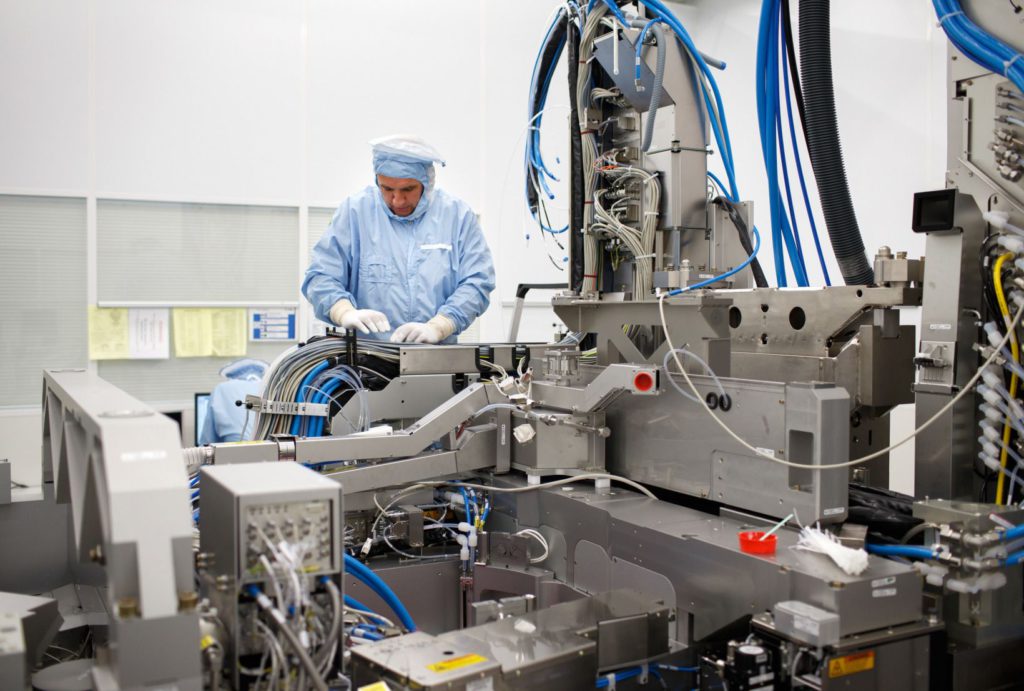
(Bloomberg) — ASML Holding NV, Europe’s largest semiconductor equipment producer, said its fourth-quarter sales would likely be higher than analyst estimates as demand remains strong for its advanced chip-making machines. Shares surged. 

The strong earnings are a boost to the Dutch company, which finds itself caught up in growing tensions between Washington and Beijing. ASML, which generated 15% of its revenue in China last year, said in a statement on its third-quarter results Wednesday that new US restrictions on the way chip companies do business with China’s tech industry won’t seriously affect its shipments there next year.

“Based on our initial assessment, the new restrictions do not amend the rules governing lithography equipment shipped by ASML out of the Netherlands and we expect the direct impact on ASML’s overall 2023 shipment plan to be limited,” Chief Executive Officer Peter Wennink said in a statement. The company expects the total indirect impact from U.S. measures to be around 5% of its backlog, Wennink said on Wednesday.

ASML forecast sales of €6.1 billion to €6.6 billion ($6 billion to $6.5 billion) this quarter. That compares with an estimate of €6.13 billion in a Bloomberg analyst survey.

The Dutch chip-gear maker’s third-quarter sales were €5.8 billion, which beat the average analyst estimate of €5.3 billion. The company continued to delay recognition for some deals in order to speed up delivery. 

Chief Financial Officer Roger Dassen said in a video transcript accompanying the release that the US measures could have an “indirect effect on the demand for our tools” but supply is still below the demand. 

“To the extent that at a certain point in time we would be in a position that we can no longer supply certain tools to certain customers in China, the demand outside of China is still such that we would get compensation for that in the current environment from other customers,” Dassen said.

Some US suppliers are beginning to withdraw staff from one of China’s leading chip companies in the wake of the regulations. 

Applied Materials Inc., KLA Corp. and Lam Research Corp. have started or are preparing to pull employees from Yangtze Memory Technologies Co., the country’s most advanced maker of memory chips, Bloomberg reported last week.

Key Insights 

  • ASML said it expects revenue of €21.1 billion this year with a gross margin approaching 50%.
  • The value of fast shipments in 2022 leading to delayed revenue recognition into 2023 is expected to be around €2.2 billion, it said.
  • ASML will discuss its scenarios for 2025 at a Nov. 11 investor day. The company will provide update on its long-term business prospects, including a new share buyback program plan.

Market Context

  • ASML shares rose as much as 8%, most since December, after the earnings results. They were up 4.4% to €421.45 per share as of 4:00 p.m. in Amsterdam on Wednesday. They have fallen around 40% so far this year.
  • The Stoxx Europe technology index is down about 36% over the period.

–With assistance from Debby Wu.

(Updates with Wennink’s quote on the impact of US measures in the third paragraph.)

More stories like this are available on bloomberg.com

©2022 Bloomberg L.P.

Close Bitnami banner
Bitnami
