
Bloomberg

Bitcoin Miners Pan for Cash as Profits Dry Up and Crypto Markets Slump

(Bloomberg) — Bitcoin mining companies are increasingly opting to sell equity, resorting to one of their least attractive options to raise money as profits dry up and higher interest rates makes borrowing more expensive.

Core Scientific Inc., one of the largest US publicly traded Bitcoin miners, entered into a $100 million common stock purchase agreement with B. Riley Principal Capital II in July. Australian miner Iris Energy Ltd. said in September that it agreed to sell up to $100 million in equity to the same investment bank. London-based Argo Blockchain PLC, earlier this month, decided to issue stock at a discount to an unnamed investor for $27 million. 

Bitcoin miners have been pummeled by low Bitcoin prices, soaring energy costs and steep competition in the industry. These firms had rushed to the equity market to raise money during crypto’s bull run, when investors expected Bitcoin prices to surge and publicly traded miners were seen as an efficient way to invest in the sector. 

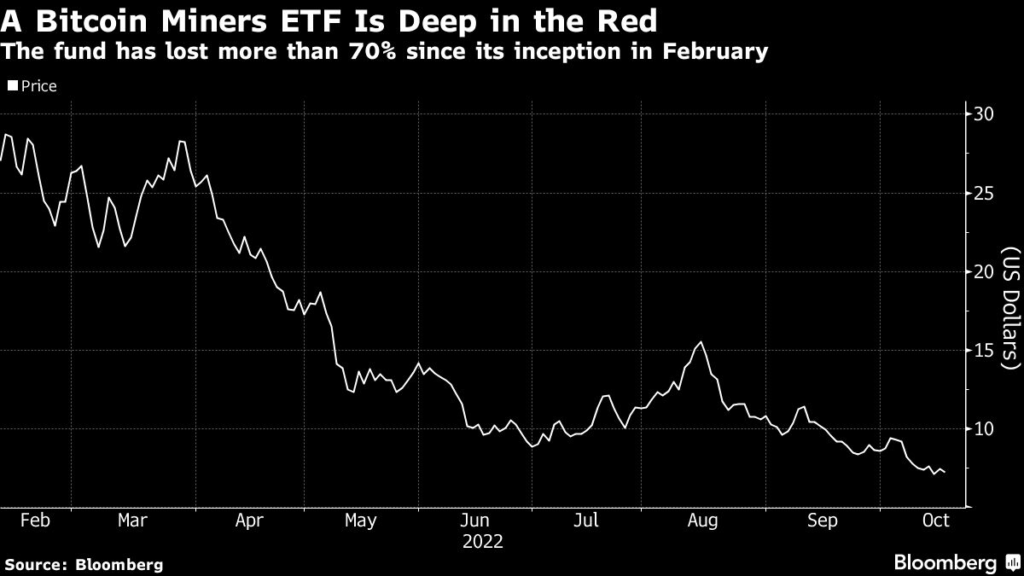
Now, mining companies that are attempting to issue new shares to weather the ongoing digital-asset slump risk upsetting their shareholders, whose stakes end up diluted. Several large miners have already seen their stock prices decline this year, with Core Scientific, and the US-traded shares of Iris Energy and Argo Blockchain plunging by at least 78% year-to-date. The $2.35 million Valkyrie Bitcoin Miners ETF (ticker WGMI), which tracks several major public miners, is down 73% since its inception in February. 

“While painful for investors through additional dilution, raising equity capital is one of the only ways to shore up a miner’s balance sheet to meet their financial obligations,” said Ethan Vera, chief operations officer at crypto-mining services firm Luxor Technologies. “The other option is to fire sale assets, which can be equally or more detrimental to shareholders.”

Other less favorable alternatives to raising equity include selling Bitcoin at lower prices or facing bankruptcy, says Daniel Frumkin, head of research and content at crypto-mining services firm Braiins. Core Scientific, for example, sold about 85% of its Bitcoin reserves since the end of March, its September update indicates. The firm had $29.5 million in cash at the end of September, down 77% from $128.5 million at the end of the second quarter. The second-quarter figure does not include $11.9 million in restricted cash.

A recent surge in mining difficulty, a measure of Bitcoin miners’ computing power, delivers another blow to companies looking to ride out the current slump. A higher level of computing power will lead to lower mining revenue for already-bruised Bitcoin miners. And the more mining power there is, the less each Bitcoin miner receives.

Lender Stress

A handful of Bitcoin miners have been ramping up sales of their rigs to help them ride out the storm or at least trim their debt. But firms that took massive loans backed by the value of their mining machines are feeling the squeeze as prices of some of these popular rigs have plunged more than 80% since last November, when Bitcoin hit a record high of $69,000, Luxor’s Vera said. 

This also poses a major risk to their financiers, who are already under pressure with Bitcoin lingering around $20,000 since June. Lenders, including Celsius Network Ltd. and Asia-based Babel Finance, are grappling with liquidity issues exacerbated by the crypto-market crash earlier this year. Another major crypto lender Genesis, who also lends money to Bitcoin miners, has said it’s eliminating 20% of its 260-person workforce, and its parent company had filed a $1.2 billion claim against bankrupt crypto hedge fund Three Arrows Capital.

“I don’t see lenders scaling back completely, but there is a definite focus of many lenders on ‘distressed’ miners that may be willing to accept unfavorable terms in order to avoid bankruptcy,” Frumkin said. 

Several miners are still turning to equity financing because some lenders have raised interest rates, said Matthew Kimmell, digital-asset analyst at crypto-research firm CoinShares.

To be sure, not all miners raising money from the equity market are flailing. Riot Blockchain Inc., which is another large US publicly traded Bitcoin miner, is attempting to get approval from its shareholders to issue new shares, in part to scale up operations. It withdrew a similar appeal this summer. The firm gained more than 700 coins between March and September, and it had $270.5 million in cash on hand by the end of the second quarter. Still, its shares are down nearly 74% year-to-date. 

“To expand during the bear market, Bitcoin miners must raise capital,” Jaran Mellerud, crypto-mining analyst at Hashrate Index, said. “Without raising equity now, these companies will be unable to fulfill their expansion plans, and some of the most indebted ones might even go bankrupt.”

More stories like this are available on bloomberg.com

©2022 Bloomberg L.P.

Palantir Plans to Open New UK Base Near NHS Digital Headquarters

(Bloomberg) — Palantir Technologies is planning to set up a second UK base, likely in Leeds or Manchester, near the National Health Service’s digital headquarters to help it serve customers in the north of England.

The American data analytics company plans local hires and to move some staff from its London office to a new outpost, it said in response to a Bloomberg News query.  

Palantir significantly grew its UK business during the pandemic, particularly by deepening its relationship with the NHS. It now has about 900 employees in London, spokesman Ben Mascall said by email. 

“We are actively looking at expanding outside of the capital both because of the growing amount of work we are doing across the country and so we can access the best British talent,” Mascall said, adding no final decision on the location has been made.  

Having an office in the north would bring Palantir physically closer to the Leeds headquarters of NHS Digital and NHS England’s national team as the firm vies for a £360 million ($404 million) contract to build a data platform for the health service.

Mascall said that the new office could also support work funded by the Department of Levelling Up, Housing and Communities in the region. Last week, the department disclosed it awarded Palantir a £4.5 million contract to continue work it had been doing for free since April, providing a case management system to help allocate housing and resources to Ukrainian refugees. 

The company has hired British politician John Woodcock, also known as Lord Walney, as a consultant to help identify a location.

Woodcock, a former Labour MP, told a conference last month that Palantir was looking at Manchester and Leeds, according to a transcript of the event. 

More stories like this are available on bloomberg.com

©2022 Bloomberg L.P.
Hackers Targeting Tech Supply Chains Spur Security Startup Boom

(Bloomberg) — Cyberattacks on the digital supply chain have become increasingly common, as hackers seek out weak links among makers of computer code and equipment to breach organizations that depend on the technologies.

In 2020, for example, hackers suspected of working for Russia’s intelligence services used tampered updates from software maker SolarWinds Corp. to infiltrate nine US government agencies. Last year, hundreds of businesses were compromised with ransomware after the breach of another software provider, Kaseya Ltd. And several months later, the discovery of a flaw in open-source software called Log4j was followed by attacks by hackers in China, Iran and North Korea.

Now, in response, a growing number of startups are emerging to tackle one of the industry’s hardest problems.

Global sales of technologies to secure the software development cycle were $3.7 billion last year and expected to more than double, to $9.2 billion, in 2026, said Katie Norton, a senior research analyst with IDC Corp. Palo Alto Networks Inc. and Tenable Holdings Inc. were among cybersecurity companies that made acquisitions in the space last year, and Microsoft Corp. and Alphabet Inc.’s Google have released tools to help prevent attacks against software development pipelines, she said. 

“There are a lot of solutions and tools emerging,” Norton said. “The combination of nascency with urgency is just really overwhelming.”

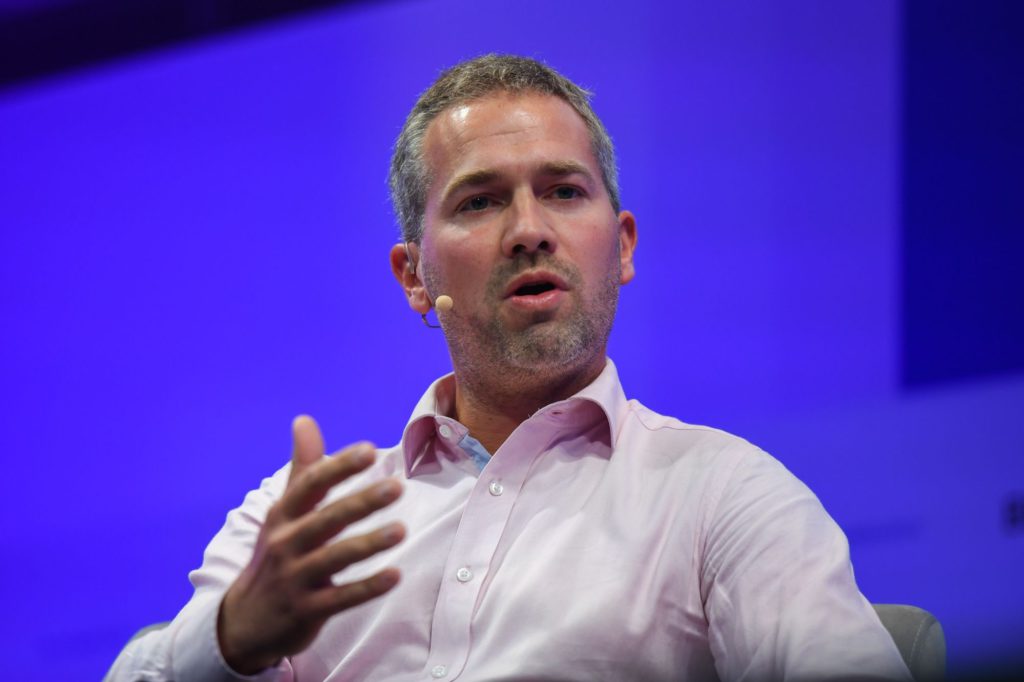
Feross Aboukhadijeh, a prolific open-source developer, said he realized early in his career how fragile the foundations of modern software were. “It was mind-blowing to me that all these organizations were using my code-–the code of a random 20-something,” he said.

Those concerns were reinforced in 2018 after open-source code maintained by a friend was hacked. Later, Aboukhadijeh created an encrypted file-sharing program that contained more than 90% open-source code, and he realized he had no reliable way to search for vulnerabilities.

“How could we know for sure that our app was secure if we weren’t even reading any of the code?” he said. “No one had a scalable solution to the problem.” 

In 2020, he started San Francisco-based Socket Inc., which examines open-source software packages and flags potential dangers.

Kirkland, Washington-based Chainguard Inc., whose founders come from VMware Inc. and Google, is another company trying to bring more accountability to open-source software. Its technology creates a chain of custody, assessing the origin and trustworthiness of the code. 

“People just don’t even know what they’re running and what they’re depending on in their systems,” said Kim Lewandowski, one of the founders.

An executive order that US President Joe Biden issued last year on cybersecurity was a major catalyst for the industry, including a mandate that companies selling to federal agencies provide a “software bill of materials” — the ingredients in their code, computer security experts said.

Supply-chain attacks are growing in part because operating systems and web browsers — hackers’ usual targets — are now harder to hack, said Window Snyder, who’s held senior roles at Microsoft, Apple Inc. and Intel Corp. At the same time, a range of connected devices, including baby monitors and smart doorbells, are proliferating with code that often suffers from basic vulnerabilities, which creates openings into personal and corporate networks, she said. 

“We see a real dearth of security protections,” said Snyder, who in 2020 founded San Francisco-based Thistle Technologies Ltd., whose tools help device makers write and update their code securely. 

Technology has become so complex that many organizations don’t know all the software they’re using, let alone whether it’s secure, said Renaud Feil, founder of Paris-based Synacktiv, a company that’s hired to hack into products to help fix vulnerabilities.

“In some code we’ve reviewed, the company is just writing 1% of the code base,” he said. “The rest is third-party software, framework, libraries.”

Firmware — code that controls a computer’s hardware — is another area where more attacks are being found. Earlier this year, an Iranian firm called Amnpardaz Soft Corp. and Moscow-based Kaspersky separately published details of new firmware implants they discovered. 

Two companies developing tools to detect firmware vulnerabilities include Portland-based Eclypsium Inc. and Pasadena, California-based Binarly Inc. Cycuity, in San Jose, California, has created methods to inspect chip designs to spot security problems. 

But technology alone can only go so far in preventing attacks, said Justin Cappos, associate professor of computer science and engineering at New York University. Organizations need to “holistically examine” how their technologies are built, starting with software, he said.

“If you can ensure the right processes are being followed,” he said, “you can nip a lot of these problems in the bud.”

More stories like this are available on bloomberg.com

©2022 Bloomberg L.P.

Qatar in Talks to Invest $2.5 Billion in Egypt to Expand Support

(Bloomberg) — Qatar is in advanced talks to buy around $2.5 billion of state-held stakes in Egypt’s biggest mobile network operator and other companies, as the North African nation lines up funding to cope with the economic fallout of Russia’s invasion of Ukraine.

Under the potential pact, which is expected to be finalized by the end of this year, Qatar Investment Authority would acquire 20% in Vodafone Egypt from Telecom Egypt Co., according to people with knowledge of the matter. The QIA is the Gulf state’s sovereign wealth fund and oversees an estimated $445 billion in assets. 

The people, who asked not to be named because the talks are confidential, didn’t identify the other firms, saying only that they weren’t listed on Egypt’s stock market.

A deal would be a boost for Egypt’s troubled economy, which is grappling with soaring food and fuel bills after Russia’s invasion of Ukraine and an exodus of foreign investors in its local debt. Gulf Arab states have already pledged upward of $20 billion in deposits and investments, while Egypt is close to securing sorely needed International Monetary Fund assistance. 

State-owned Telecom Egypt, which began operating in 1854 with the first telegraph line connecting Cairo and Alexandria, acquired its 45% stake in Vodafone Egypt to gain a strategic foothold in the mobile telecommunications market prior to founding its own provider, WE, in 2017. The UK’s Vodafone Group owns 54.9% stake of Vodafone Egypt, and while there was an agreement to sell a majority stake in the company to its Johannesburg-based subsidiary Vodacom Group Ltd. for $2.7 billion last year that transaction hasn’t closed.

Egypt’s sovereign wealth fund, the QIA and Telecom Egypt all declined to comment. Ayman Essam, Vodafone Egypt’s spokesperson, said it was “not officially aware of the deal” and declined to comment further.

Improved Relations

Qatar’s support for the now-defunct Muslim Brotherhood administration that held power in Egypt shortly after the 2011 uprising which ousted Hosni Mubarak strained its relationship with the incumbent government, and the pending investment accord is the latest sign that ties are on the mend. 

Egyptian President Abdel-Fattah El-Sisi visited Doha last month, and a port cooperation agreement was signed. And earlier this year, Qatar deposited $3 billion into Egypt’s central bank to help the most populous Arab nation contend with soaring food costs.

Read More: Saudi Arabia’s $10 Billion Pledge to Egypt Delivers First Deals

Qatar is among the world’s richest countries due to its plentiful gas reserves, and the government has been taking steps to diversify the economy in anticipation of a decline in earnings as reserves become depleted and the world moves away from fossil fuels. 

Founded in 2005, the QIA has vowed to plow more money into Asia and the US after years of substantial investment in Europe. Even so, it participated in Porsche AG’ s 9.4 billion-euro ($9.1 billion) initial public offering, acquiring a 4.99% stake. 

Earlier this year, the QIA trimmed stakes in a number of listed assets and bought into closely-held technology companies in growth markets, marking a major strategy shift for one of the world’s largest sovereign wealth funds. 

More stories like this are available on bloomberg.com

©2022 Bloomberg L.P.
MTN Walks Away From Talks to Buy South Africa’s Telkom

(Bloomberg) — MTN Group Ltd. has walked away from talks to buy Telkom SA SOC Ltd., a deal that would have created South Africa’s largest mobile-phone operator. Telkom shares sank the most since 2009, wiping out about a fifth of their market value.  

MTN ended early stage discussions because Telkom couldn’t assure the bigger telecom company that talks were exclusive, Telkom said in statement on Wednesday, confirming an earlier Bloomberg News report. MTN hadn’t yet made a binding offer and the talks hadn’t progressed to due diligence, it said. 

MTN said separately that it didn’t ask specifically for exclusivity on the deal. Rather it wanted Telkom to stick to a “pre-agreed process of engaging on regulatory and public interest matters” without the carrier evaluating other proposals. The parties were unable to reach an agreement to their “mutual satisfaction” on the process going forward, MTN said. 

Telkom shares fell as much as 25% after the announcement and had declined 22% at 11:52 a.m. in Johannesburg, valuing the company at about 17.9 billion rand ($987 million). That’s the biggest intraday decline since May 2009. MTN shares fell 2.2%.  

The combination would have created the largest South African wireless operator by subscribers, overtaking larger rival, Vodacom Group Ltd. With Telkom’s shares trading at a market value of about $1.3 billion when MTN disclosed the offer, it also would’ve been one of the largest takeovers in the country this year, according to data compiled by Bloomberg. 

Read More: MTN in Talks to Buy $1.3 Billion-Valued Carrier Telkom 

The deal would have also likely raised a number of antitrust concerns, given that the number of major mobile networks in the country would have been reduced to three from four, with the vast majority of customers using the top two carriers. The companies were also concerned about getting antitrust approval for any deal, people familiar with the matter said, asking not to be identified because the deliberations were private. 

The talks initially stalled following an unsolicited approach from Rain Group Holdings Pty Ltd., which proposed selling itself to Telkom, Bloomberg reported. 

(Updates with MTN statement in third paragraph)

More stories like this are available on bloomberg.com

©2022 Bloomberg L.P.

SurveyMonkey Owner Momentive Global Considers a Sale

(Bloomberg) — SurveyMonkey owner Momentive Global Inc. is weighing a sale after getting takeover interest, according to people familiar with the matter. 

The San Mateo, California-based company is working with a financial adviser, said the people, who asked to not be identified because the information isn’t public. No final decision has been made and Momentive could opt to remain independent. 

Momentive shares rose as much as 20% in US premarket trading, putting them on track to gain for a fifth straight day. The company had a market value of about $958 million as of Tuesday’s close.

A representative for Momentive declined to comment. 

Zendesk Inc. agreed to buy Momentive last year, but nixed the deal after shareholders in both companies opposed the pact. 

Momentive received takeover interest from private equity firm Permira before striking that deal, Bloomberg News reported.

SurveyMonkey provides software that allows its users to easily create surveys, quizzes, and polls for any audience, according to its website.

–With assistance from Matt Turner and Gillian Tan.

(Updates with premarket share move in third paragraph.)

More stories like this are available on bloomberg.com

©2022 Bloomberg L.P.

UAE Seeks to Lure Tech Firms With Long-Term Residency, Financing

(Bloomberg) — The United Arab Emirates is trying to lure advanced technology companies away from hubs in Asia and Europe by fast-tracking business licenses and offering long-term residency for employees.

The Gulf country is targeting more than 300 digital firms under a program launched in July and about 40 companies are in the process of moving, Minister of State for Foreign Trade, Thani Al Zeyoudi, said in an interview. 

The UAE’s nimble handling of the pandemic and liberal visa policies have already made it an attractive destination for bankers and hedge fund managers to commodity traders. Authorities now want to attract firms in sectors including food technology, robotics and blockchain, and encourage them to set up global or regional headquarters in the Middle Eastern business hub.

Dubai and Abu Dhabi already host the Mideast headquarters of an array of global financial firms. Still, there is competition from global hubs and from Saudi Arabia, which is trying to get firms to move their regional headquarters there by 2024. 

“The timing was very crucial because what we noticed from the beginning of the year was that many companies would like to move because of inflation, the tighter regulatory environment in many parts of the world, including Asia – especially Singapore and Hong Kong,” Al Zeyoudi said. 

UAE Opens Citizenship to Select Foreigners to Boost Economy

Under the scheme, digital companies get faster business licensing and easier access to banking and financing. Employees can be offered 10-year UAE residency “golden visas” and in some cases the program — which unifies government bodies, freezones and institutions — helps find accommodation and admissions to schools. 

The so-called “golden visa” allows foreigners to work, live and study without needing a UAE work sponsor in a country where expatriate residents make up nearly 90% of the population. 

UAE Unveils New Residency Guidelines to Attract Foreigners 

As the UAE seeks to further diversify away from oil income, the aim is to create more high-skilled jobs in futuristic industries, Al Zeyoudi said.

“We want to make sure we are harnessing the fourth industrial revolution – so the latest technology, whether it’s the Internet of things, blockchain, AI,” he said. “We are redefining the way FDI is usually done.” 

The program groups together freezones in Abu Dhabi, Dubai and Sharjah. Lenders connecting with businesses under the scheme include Emirates NBD, Sharjah Investment Bank, and Wio — a digital bank backed by Abu Dhabi wealth fund ADQ.  

Two privately-held US companies are among those already in the process of moving — Change Foods, a food-tech group that is working on technology to produce natural milk in a lab and Gecko Robotics, a firm that designs, builds and operates robots, Al Zeyoudi said.

European software development company Softserve is relocating technical staff, coders, consultants and executives to the UAE while two fintech firms, Currency.com and Capital.com, are setting up a regional headquarters under the program. 

Separately, cryptocurrency exchanges have flocked to Dubai this year as the emirate steps up efforts to attract companies in that industry. Exchange Bybit announced plans to move its headquarters to Dubai from Singapore in March, joining rivals like Binance Holdings Ltd. and FTX in expanding in the UAE. More bankers have also headed to the city with the gradual demise of Hong Kong as Asia’s top finance hub. 

More stories like this are available on bloomberg.com

©2022 Bloomberg L.P.
Why Are Crypto Companies Contributing To Super PACs?

  • Listen to Bloomberg Crypto on the iHeartRadio App
  • Listen to Bloomberg Crypto on Apple Podcasts
  • Listen to Bloomberg Crypto on Spotify  

(Bloomberg) — Wealthy crypto investors are pouring money into US politics, especially going into November’s congressional elections. 

Over the past 15 months or so, crypto-affiliated donors have sent about $70 million to political causes – that’s more than what traditional players like defense and big pharma are spending. 


One of the most prolific donors is none other than Sam Bankman-Fried, the billionaire co-founder of FTX. Bankman-Fried isn’t afraid to spend big here: he has said that he could disburse up to $1 billion on the 2024 presidential election.

To discuss how crypto is shaping the political landscape, Zach Cohen from Bloomberg Government and Bloomberg campaign finance reporter Bill Allison join this episode.

Follow us on Twitter @crypto, and subscribe to the Bloomberg Crypto Newsletter at https://bloom.bg/cryptonewsletter 


More stories like this are available on bloomberg.com

©2022 Bloomberg L.P.

Stocks Waver Amid Inflation Worries; Pound Drops: Markets Wrap

(Bloomberg) — European stocks slipped and US equity futures gave up gains as worries about scorching inflation and a looming recession countered a strong start to the earnings season. The pound fell after UK inflation rose faster than economists expected.

The Stoxx Europe 600 Index dropped 0.4%, with real estate and miners the biggest laggards. Contracts on the S&P 500 edged lower after rising as much as 1.1%, with Nasdaq 100 futures steady. Netflix Inc. rallied in New York premarket trading after reporting a surge in subscribers. 

The pound weakened after soaring food prices drove UK inflation back into double digits in September, matching a 40-year high of 10.1% and intensifying pressure on the central bank and Liz Truss’s government to act. The yield on 10-year UK government debt rose.

“The outlook for the UK is very, very difficult and certainly when focusing on our asset allocation it’s predominantly in the US where we have much higher conviction and certainty of outcome,” Grace Peters, JPMorgan Private Bank’s head of investment strategy, said on Bloomberg Television.

Treasury yields held near multi-year highs before the publication of US housing data for September and the Fed’s Beige Book. The yield on the 10-year rose to 4.07% and the dollar strengthened.

An Asia Pacific share gauge fell. In Japan, authorities continued their jawboning of the yen, with Finance Minister Shunichi Suzuki saying he is increasing the frequency of monitoring foreign-exchange markets. The currency hovered above 149 per dollar. The 10-year government bond yield rose above the 0.25% upper limit of the central bank’s target range, a breach that’s likely to prompt the Bank of Japan to step up bond purchases to limit the advance.

Upbeat company results, cheaper valuations and UK policy reversals have helped buoy risk appetite in recent sessions. At the same time, investors are monitoring signs of weakness in the global economy and the impact of persistent inflation on the Federal Reserve and other hawkish central banks. 

Terry Sandven, chief equity strategist at US Bank Wealth Management, warned that challenges remain for equity markets. “Analysts’ consensus earnings projections remain subject to downward revision,” he wrote in a note. “Inflationary trends, hawkish Fed commentary, and a slower earnings growth pace in 2023 are key contributors weighing on investor sentiment and equity prices.”

Some regional Fed directors last month favored raising a key interest rate by a smaller or larger amount than the 75 basis points that policy makers ultimately decided was needed to curb persistent inflation, according to minutes of discount-rate meetings released Tuesday.

Read: Fed’s Bostic Says Slowing Inflation Best for Long-Run Employment

Oil fluctuated amid concerns that the European Union’s latest sanctions on Russian fuel could exacerbate the market tightness that the US is trying to alleviate with additional sales. The Biden administration will announce Wednesday a plan to release 15 million barrels from US emergency oil reserves in an effort to ease high gasoline prices.

Elsewhere, gold declined and Bitcoin slid below $19,200. 

Key events this week:

  • Euro area CPI, Wednesday
  • EIA crude oil inventory report, Wednesday
  • US MBA mortgage applications, building permits, housing starts, Fed Beige Book, Wednesday
  • Fed’s Neel Kashkari, Charles Evans, James Bullard speak, Wednesday
  • US existing home sales, initial jobless claims, Conference Board leading index, Thursday
  • Euro area consumer confidence, Friday

Some of the main moves in markets:

Stocks

  • The Stoxx Europe 600 fell 0.4% as of 9:37 a.m. London time
  • Futures on the S&P 500 fell 0.2%
  • Futures on the Nasdaq 100 were little changed
  • Futures on the Dow Jones Industrial Average fell 0.2%
  • The MSCI Asia Pacific Index fell 0.8%
  • The MSCI Emerging Markets Index fell 1.2%

Currencies

  • The Bloomberg Dollar Spot Index rose 0.3%
  • The euro fell 0.4% to $0.9823
  • The Japanese yen fell 0.1% to 149.41 per dollar
  • The offshore yuan fell 0.3% to 7.2456 per dollar
  • The British pound fell 0.5% to $1.1263

Cryptocurrencies

  • Bitcoin fell 1% to $19,177.57
  • Ether fell 1.3% to $1,297.23

Bonds

  • The yield on 10-year Treasuries advanced six basis points to 4.07%
  • Germany’s 10-year yield advanced eight basis points to 2.36%
  • Britain’s 10-year yield advanced seven basis points to 4.02%

Commodities

  • Brent crude fell 0.6% to $89.52 a barrel
  • Spot gold fell 0.7% to $1,639.93 an ounce

More stories like this are available on bloomberg.com

©2022 Bloomberg L.P.
Japan to Further Relax Crypto Rules by Easing Listings of Tokens

(Bloomberg) — Japan plans to further loosen cryptocurrency rules by making it easier to list virtual coins, potentially burnishing the country’s allure for Binance and rival foreign digital-asset exchanges.

The body that governs crypto exchanges plans to allow them to list coins without going through its lengthy screening process, unless the tokens are new to Japan’s market, according to documents seen by Bloomberg News. 

The relaxed rule could take effect as early as December, helping startups compete with established players by smoothing the process of listing tokens and lowering the bar for market entry. The documents outlining the changes were distributed to member firms recently.

By March 2024, the Japan Virtual and Crypto assets Exchange Association could also scrap pre-screenings for coins new to the nation, as well as for tokens issued through initial coin or exchange offerings, Vice Chairman Genki Oda said in comments he described as personal views.

‘Revitalize’ Crypto

“We hope the latest measure will help revitalize Japan’s crypto assets market,” he said in an interview, while also confirming the documents. Oda is president of software developer Remixpoint inc.

Japan is getting more serious about rejuvenating its crypto market, a shift away from the regulatory tightening of a few years ago. Binance, the world’s biggest digital-asset exchange, is seeking a license to operate in Japan four years after it retreated, partly because of the change in stance.

The country’s steps contrast with the tougher oversight emerging in some jurisdictions after a $2 trillion wipeout in digital assets from last year’s peak led to blowups at crypto hedge funds and lenders.

Once the JVCEA’s planned measure takes effect, exchanges will be able to list tokens within 30 days of reporting their listing plan and coin assessments. Oda said the goal is to trim that to within 14 days from April at the latest.

Remaining Watchful

The latest moves goes beyond the JVCEA “Greenlist” introduced earlier in 2022, whereby some tokens qualified for faster listings. The JVCEA will watch for any “inappropriate” coins and may call on member firms to stop offering them.

Crypto exchanges will need to report every three months to the JVCEA about events associated with listed coins, such as so-called hard forks, where a blockchain splits because of changes to the underlying software code.

Over 50 coins are being traded in Japan, compared with fewer than half about two years ago, thanks partly to quicker listing screenings, Oda said. Aggregator CoinGecko currently counts more than 13,000 digital tokens globally, though many are hardly traded so-called zombie tokens. 

The prospective shift in crypto listing rules comes as Prime Minister Fumio Kishida pursues an agenda for reinvigorating Japan’s economy under the rubric of “New Capitalism,” including support for the growth of so-called Web3 firms. The term “Web3” refers to a vision of a decentralized internet built around blockchains, crypto’s underlying technology.

More stories like this are available on bloomberg.com

©2022 Bloomberg L.P.

Close Bitnami banner
Bitnami
