

Bloomberg

Kakao Co-CEO Resigns After Outage That Hit Millions Caused Chaos

(Bloomberg) — Kakao Corp.’s co-Chief Executive Officer Whon Namkoong resigned after a widespread outage caused chaos in a nation heavily reliant on Korea’s most popular messaging and social media service.

Kakao’s days-long outage halted a swath of services from banking to online deliveries across the nation, triggering a debate among policymakers and consumers about whether one company should hold sway over so much of the economy. The disruption stemmed from a blaze at an SK C&C data center in the south of Seoul on Saturday, raising questions about whether Kakao had done enough to safeguard services used across the country by millions of users and clients from government agencies to online businesses.

“We apologize for causing huge inconvenience for such an extended time,” Namkoong said in a news briefing on Wednesday. “We are aware that it will take a great deal of effort over a long period of time to recover lost trust.”

Euntaek Hong will remain at the helm as the company’s sole CEO, while Namkoong said he will stay at the company to help oversee an investigation into the causes of the disruption and the compensation drive. 

Kakao plans to compensate users and business partners who were affected and investigate why services stayed offline for so long, but it will take time to assess the amount of compensation Kakao will need to pay, Namkoong said. As of Wednesday, most services including messenger app KakaoTalk, were restored.

“Data centers are supposed to be very safe from fire and other disasters. That’s basic,” said Shin Jin-Ho, co-CEO at Midas International Asset Management which manages $9 billion in assets, adding that he reduced the fund’s holding in Kakao, anticipating parliamentary hearings and other newsflow ahead.

On Saturday, users found themselves unable to hail a ride, or if they got one, could not pay for their taxis. Millions more were unable to buy groceries, while overseas family members were suddenly unable to reach loved ones for a weekend chat. 

The disruptions highlight the nation’s dependence on the group. Kakao has been the target of antitrust crackdowns due to its market dominance before, but the outages have since sparked discussion by South Korea’s lawmakers about possible revisions to the broadcasting communications law to step up oversight. One possibility under discussion is for the government to regulate private data centers, such as those housing Kakao and Naver Corp. servers, in a similar way as national disaster management facilities.

Saturday’s blaze ignited lithium-ion batteries and power lines needed to supply power to the data center, Hong said. An entire shutdown of a data center had never occurred before, and the company had not prepared for contingencies, he said. “This was a mistake.”

It took time to resume services, because there was no comprehensive back up system, Hong said. Once the data center is fully operational, Kakao will build in redundancy within two months to prevent a similar disruption, he said.

Kakao is investing 460 billion won ($323 million) to complete a new data center in Ansan, southwest of Seoul, next year. It will begin constructing another data center in Siheung, also just outside Seoul, to be completed in 2024.

Namkoong became co-CEO in March this year, taking the reins from Yeo Min-soo, who resigned during a stock options scandal that embroiled top executives. Namkoong, who rose in Kakao’s ranks by helping to build Kakao Games Corp. into a leading force in Asian game development, had pledged to work for minimum wage until he boosted the company’s stock price to 150,000 won. 

“I’m sorry for not meeting this goal within my term,” he said.

Shares in Kakao closed 0.8% higher, reducing its gains after jumping as much as 5.7% Wednesday. The stock price is down more than 50% this year, making it among the worst performers on the blue-chip Kospi 200 Index, along with its affiliates Kakaopay Corp. and KakaoBank Corp. Kakao’s US dollar exchangeable bonds sold in 2020 were indicated at around 96.1 cents on the dollar on Tuesday after falling to a record low the previous day, according to pricing source BVAL.

The resignation will have little impact on Kakao’s shares, as Namkoong’s expertise was in games, not in managing the portal, messenger or ads businesses, said Ahn Hyunsang, chief executive officer at Korea Investment Research Institute, which provides research to day traders. “The resignation seems to be just a stopgap measure.”

–With assistance from Seyoon Kim and Kyungji Cho.

(Updates with market comment from sixth paragraph)

More stories like this are available on bloomberg.com

©2022 Bloomberg L.P.
Equities in Asia Decline as Dollar Edges Higher: Markets Wrap

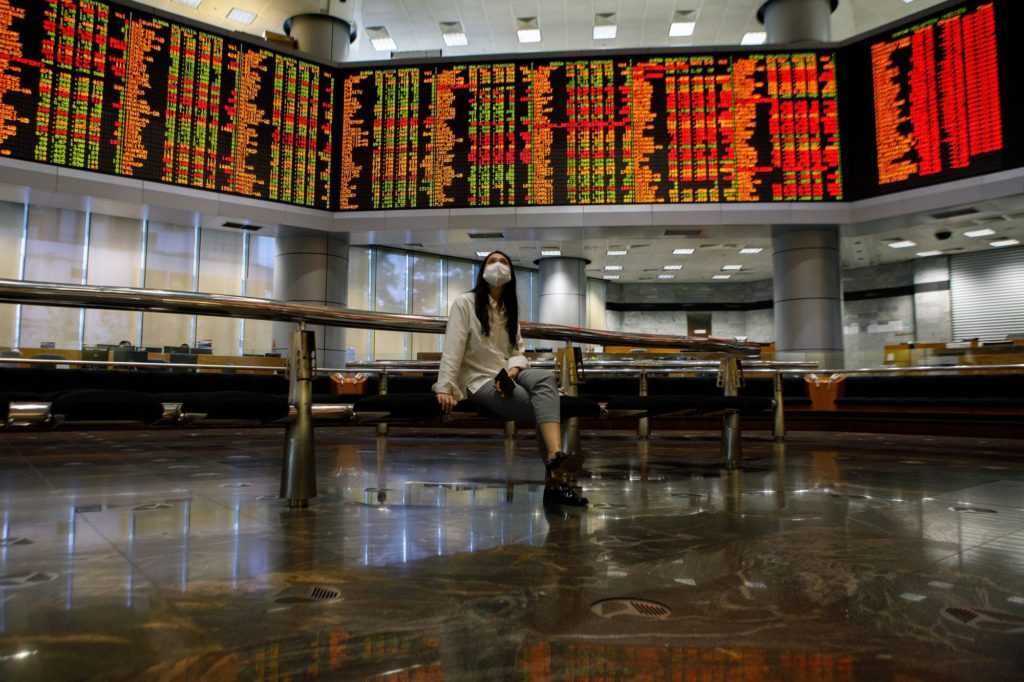
(Bloomberg) — Stocks fell in Asia and US equity futures pared gains as traders assessed prospects for earnings growth against a backdrop of rising interest rates. The dollar inched higher.

An Asia Pacific share gauge fell, led by declines in technology shares in Hong Kong, where heavyweights including Alibaba Group Holding Ltd. and Tencent Holdings Ltd. dropped. 

US equity futures erased some of their earlier gains, though are still pointing toward another positive session after the delivery of some solid results Tuesday from companies including Netflix Inc., which reported a surge in subscribers.

The pound fell after UK consumer prices rose 10.1% in September from a year earlier, matching a 40-year high reached in July. The euro slipped.

Treasury yields held near multi-year highs before the publication of US housing data for September and the Fed’s Beige Book. The yield on the 10-year hit 4.03%.

In Japan, authorities continued their jawboning of the yen, with Finance Minister Shunichi Suzuki saying he is increasing the frequency of monitoring foreign-exchange markets. The currency hovered above 149 per dollar.

Read: Yen Traders on Intervention Alert as Japan Keeps Guard

Upbeat company results, cheaper valuations and UK policy reversals have helped buoy risk appetite. The sentiment on stocks and global growth among fund managers surveyed by Bank of America Corp. shows full capitulation, opening the way for equities to bottom in the first half of 2023.

Despite the optimism, Terry Sandven, chief equity strategist at US Bank Wealth Management, warned that challenges remain. “Analysts’ consensus earnings projections remain subject to downward revision,” he wrote in a note. “Inflationary trends, hawkish Fed commentary, and a slower earnings growth pace in 2023 are key contributors weighing on investor sentiment and equity prices.”

Some regional Fed directors last month favored raising a key interest rate by a smaller or larger amount than the 75 basis points that policy makers ultimately decided was needed to curb persistent inflation, according to minutes of discount-rate meetings released Tuesday.

“Everyone wants to know when the Fed will stop raising the funds rate,” Jeff Schulze, investment strategist at ClearBridge Investments, wrote in a note. “Regardless of what the Fed does from here, if the bond yield shows signs of ignoring the Fed’s next rate hike and brushing off any tough talk of more to come, investors may want to increase exposure to the stock market.”

Read: Fed’s Bostic Says Slowing Inflation Best for Long-Run Employment

Oil climbed from a two-week low on concern that the European Union’s latest sanctions on Russian fuel could exacerbate the market tightness that the US is trying to alleviate with additional sales. The Biden administration will announce Wednesday a plan to release 15 million barrels from US emergency oil reserves in an effort to ease high gasoline prices.

Elsewhere, gold declined and Bitcoin traded around $19,300. 

Key events this week:

  • Euro area CPI, Wednesday
  • EIA crude oil inventory report, Wednesday
  • US MBA mortgage applications, building permits, housing starts, Fed Beige Book, Wednesday
  • Fed’s Neel Kashkari, Charles Evans, James Bullard speak, Wednesday
  • US existing home sales, initial jobless claims, Conference Board leading index, Thursday
  • Euro area consumer confidence, Friday

Some of the main moves in markets:

Stocks

  • Futures on the S&P 500 rose 0.5% as of 7:16 a.m. London time
  • Futures on the Nasdaq 100 rose 0.8%
  • Futures on the Dow Jones Industrial Average rose 0.3%
  • The MSCI Asia Pacific Index fell 0.5%
  • The MSCI Emerging Markets Index fell 0.8%

Currencies

  • The Bloomberg Dollar Spot Index rose 0.1%
  • The euro fell 0.2% to $0.9837
  • The Japanese yen was little changed at 149.33 per dollar
  • The offshore yuan fell 0.2% to 7.2386 per dollar
  • The British pound fell 0.2% to $1.1299

Cryptocurrencies

  • Bitcoin fell 0.5% to $19,273.76
  • Ether fell 0.9% to $1,302.7

Bonds

  • The yield on 10-year Treasuries advanced three basis points to 4.04%
  • Germany’s 10-year yield advanced two basis points to 2.28%
  • Britain’s 10-year yield declined three basis points to 3.95%

Commodities

  • Brent crude rose 0.1% to $90.14 a barrel
  • Spot gold fell 0.4% to $1,645.93 an ounce

More stories like this are available on bloomberg.com

©2022 Bloomberg L.P.
HK Proposes Lower Revenue Threshold for Cutting-Edge Tech IPOs

(Bloomberg) — Hong Kong Exchanges & Clearing Ltd. is planning a system that will slash the revenue requirements for advanced tech and science companies to go public in the city, in an effort to revive listings while echoing China’s drive for developing cutting-edge technology. 

The bourse is planning to adjust its listing rules to accommodate companies in sectors ranging from next-generation information technology to advanced hardware and materials, and new energy to food and agriculture science. The HKEX is seeking public consultation till Dec. 18, according to a statement. 

Granting easier access to public markets for such companies fits with China’s push to beef up its artificial intelligence and semiconductor industry. For the HKEX, the move may boost its appeal as a listing hub and broaden its revenue stream, after a bruising year hit by Covid and regulatory setbacks that have dented its listing business. 

It dovetails with Chief Executive John Lee’s push to restore the city’s competitiveness by announcing special visas and a property tax cut for non-permanent residents to attract talent. 

Here are the specific terms proposed: 

  • Types of firms included: 1) next-generation information technology 2) advanced hardware 3) advanced materials 4) new energy and environmental protection 5) new food and agriculture technologies
  • Firms pre-commercialization: market value requirement of at least HK$15 billion ($1.9 billion) at time of IPO; R&D investment of at least 50% of operating expenditure in each of three years prior to listing
  • Commercialized firms: Revenue from specialist technology business of at least HK$250 million, versus current requirement of HK$500 million for total revenue; market value requirement would be at least HK$8 billion

Xi’s Plea

As China decouples from the US, President Xi Jinping has been exhorting top officials to pool their resources and focus on breakthroughs critical to the country’s future. 

The US, after years of targeting specific companies such as Huawei Technologies Co., is enacting broader restrictions on the Chinese economy. President Joe Biden’s administration implemented new controls over the sale of artificial intelligence chips to Chinese customers and restricted so-called US persons supporting the development, production or use of integrated circuits at some chip plans located in China.

Hong Kong could play a larger role in attracting capital to support hard-tech company growth, while it tries to compete with other hubs to lure cutting-edge startups. 

That’s especially important as the HKEX comes under financial strain. The bourse on Wednesday reported a 28% decline in profits in the first nine months of the year as trading slumped and IPO deals were down 74% from the same period last year.

More stories like this are available on bloomberg.com

©2022 Bloomberg L.P.
US Official Sees More Aggressive Cybersecurity Threats in Asia

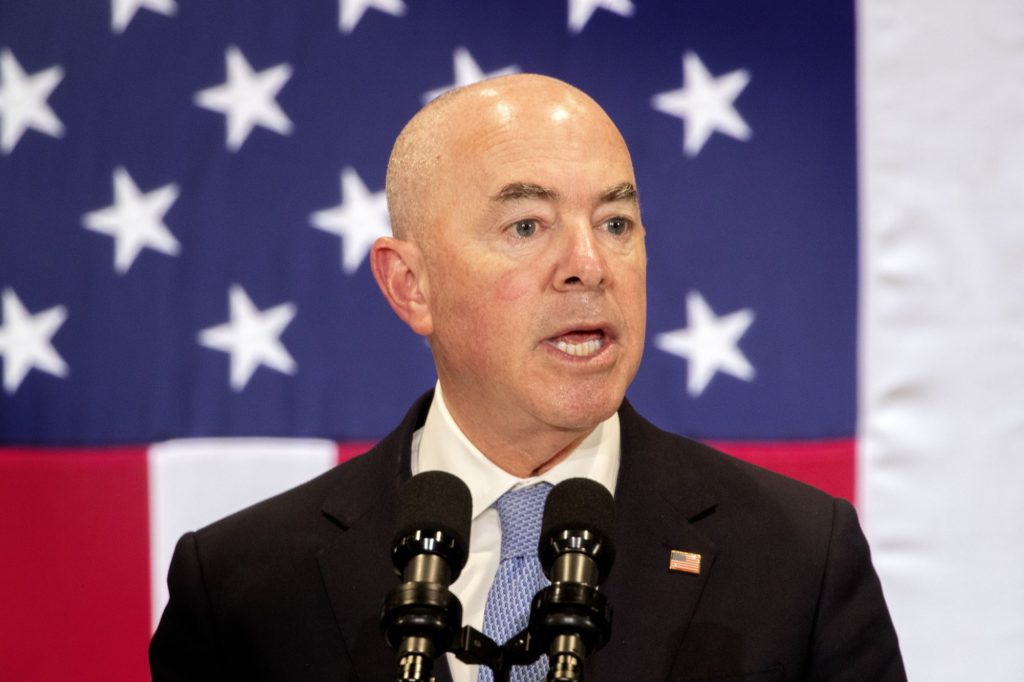
(Bloomberg) — Secretary of Homeland Security Alejandro Mayorkas said the US has observed growing cybersecurity threats both at home and throughout Asia, and is warning against activity coming from Russia, China, North Korea and Iran.

“Malicious activity from the PRC is a real and present threat, not just for the United States, but for other countries as well and that’s why I’ve traveled such a distance here,” he told Bloomberg Television’s Haslinda Amin on Wednesday during a trip to Singapore. 

His remarks come amid heightened tensions between the US and China over a host of issues from trade to human rights and the status of Taiwan. The US government has long alleged that China runs extensive hacking operations and has repeatedly warned nations of security breaches stemming from the use of Chinese-run mobile networks and Internet technology.

Beijing routinely denies the accusations, saying it is a victim of cyberattacks and countering that the US is the “empire of hacking.” 

Mayorkas said China has now become “very, very aggressive” in selling its telco technology globally. “We feel compelled to share the perils of allowing that to occur with our close partners and allies,” he added. 

The US has broadly tried to beat back attacks from criminal hackers, who have successfully targeted everything from gas pipelines and meat factories to schools and hospitals. The Biden administration last month called on states and local governments to apply for new cybersecurity grants worth $1 billion over four years.

The US government has made numerous efforts to try to curb the deluge of attacks, including indicting hackers, going after entities that allegedly aid in laundering illicit proceeds and ordering software companies that do business with the government to attest that they comply with new cyber standards.

Speaking during a summit on cyber issues Tuesday evening in Singapore, Mayorkas warned “hostile nations” including Russia and China have only become more sophisticated, raising the risk of adverse consequences. “These cyber operations threaten the economic and national security of everyone in this room,” he said.

(Updates with fresh details throughout)

More stories like this are available on bloomberg.com

©2022 Bloomberg L.P.
Amazon Starts Online Home Insurance Store for UK Customers

(Bloomberg) — Amazon.com Inc. is moving into a new business area, offering UK consumers home and contents insurance from third-party providers.

The world’s largest online retailer will initially provide shoppers with quotes from LV= General Insurance, Ageas UK and Co-op, with more insurers added in coming months, the Seattle-based company said. The rollout starts Wednesday. 

The Amazon Insurance Store will show star ratings, customer reviews and claims acceptance rates for the insurers, similar to the other products for sale on the site. Amazon will get a commission from the insurers for policies sold over the platform.

The venture marks a departure for Amazon and will take on comparison websites and banks, which often sell insurance alongside mortgages. The online giant is seeking to simplify the process of buying insurance, allowing customers to request and review quotes, select a policy, and check out, all on its UK site. 

“This is just the start,” said Jonathan Feifs, general manager of Amazon’s European Payment Products division. It’s yet to be seen whether the company will expand into more markets or offer other types of insurance, he said.

“There are many different categories of insurance and we’re certainly always listening to customers to find other ways where we can exceed their expectations and make their lives easier,” said Feifs. 

More stories like this are available on bloomberg.com

©2022 Bloomberg L.P.
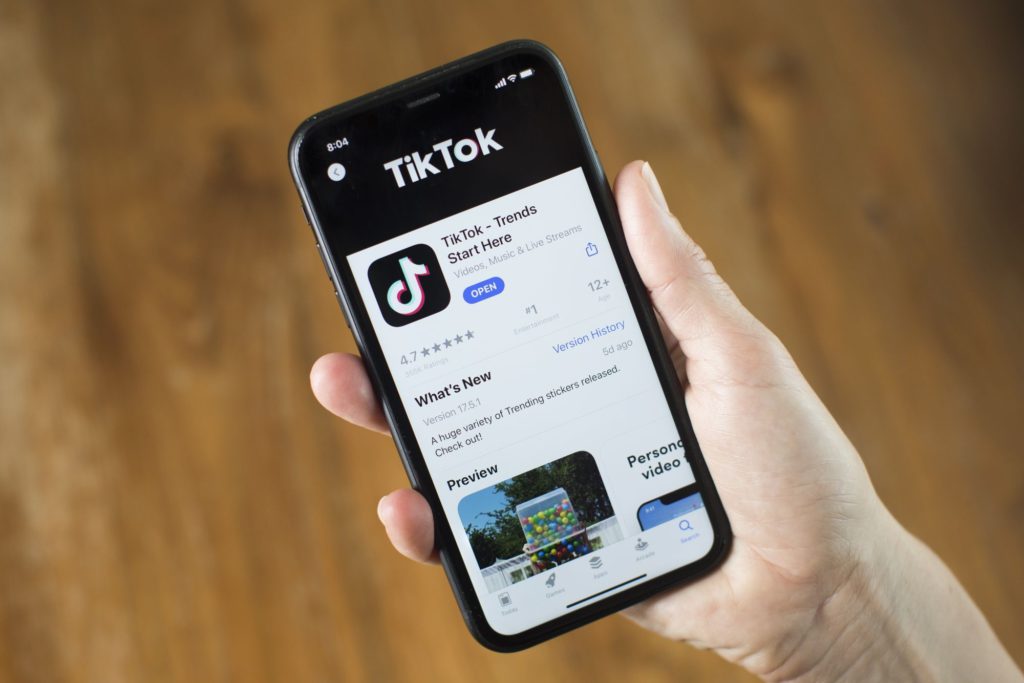
TikTok Security Deal Is Likely to Leave US Data Leaking to China

(Bloomberg) — TikTok users would still risk having personal data exposed to hacking and espionage by China even if the Biden administration forges a security agreement designed to spare the video platform from a total US ban.

That’s the conclusion of former national security officials and other experts as the Justice Department reviews an accord that would keep the popular video-streaming app, which is owned by China’s ByteDance Ltd., accessible to its millions of US users. 

TikTok has been under US scrutiny since 2019 over concerns that Chinese actors might tap those users’ information for espionage or other harmful purposes.

“They built the whole system in China,” said Stewart Baker, a national security lawyer at Steptoe & Johnson LLP. “Unless they’re going to rebuild the system in the United States at great expense, sooner or later, when something goes wrong, there’s going to turn out to be only one engineer who knows how to fix it. And he or she is likely to be in China.”

This analysis of the agreement is based on interviews with former national security officials, lawyers who have worked on similar deals and experts who have studied data security, social media platforms and telecommunications companies. There’s no indication a decision has been made.

Brooke Oberwetter, a spokesperson for TikTok, said that while the company would not comment on the specifics of its discussions with the US government, “We are confident that we are on a path to fully satisfy all reasonable U.S. national security concerns.” 

She also pointed out that while some employees based in China would have access to public data posted by users, they would not have access to private user information, and their use of the public data — including videos and comments — would be very limited and accessed under the supervision of the oversight board set up by the US government.


TikTok is routing all its US user traffic through servers maintained by Oracle Corp. and the database giant is auditing the app’s algorithms. Still, additional restrictions on how US user data is stored and accessed will be necessary — and might not resolve US security concerns no matter how strong a deal looks on paper, the experts said.

That’s a view shared by Senator Mark Warner, the Virginia Democrat who chairs the Senate Intelligence Committee. He said he’s aware of the conversations around TikTok and couldn’t give details. Nonetheless, he said the company has “a big mountain to climb with me to prove the case that it can really be safe.”

Warner said China has a bad track record on protecting users’ privacy. “They’ve shown repeatedly the ability to create this surveillance state that ought to scare the dickens out of all of us.”

He added that it’s much harder today to wall off TikTok’s data technically or ban it outright than it was five or six years ago as the popularity of the app has surged. “The burden of proof that you can really segregate American data, particularly if the code is still being written in China — that would be a tough case to make.”

While TikTok’s owner ByteDance has tried to distance itself from Chinese state influence, President Xi Jinping has launched a sweeping crackdown on private enterprises, particularly in the tech sector.

The video-streaming app, which has about 1 billion users but is banned in China, has been under scrutiny by US officials since 2019, when the Committee on Foreign Investment in the US began reviewing a merger between ByteDance and Musical.ly.

The Biden administration re-opened a national security review of TikTok after former President Donald Trump stopped short of banning the app in an effort to broker a deal to sell the platform to a US buyer, which never came to fruition. ByteDance had sought US approval to sell a stake in the app to Oracle and Walmart Inc., but the transaction didn’t materialize. A US court blocked efforts by the Trump administration to boot TikTok from app stores operated by Apple Inc. and Alphabet Inc.’s Google. 

Cfius, which is chaired by the Treasury Department but includes members from across the government, has the power to reject or modify transactions involving foreign companies that purchase US entities. 

The agency is “committed to taking all necessary actions within its authority to safeguard U.S. national security,” said Treasury spokesperson Michael Kikukawa, declining to comment further. 

For more: TikTok Names New Head of Security Amid Heightened US Scrutiny

If the companies that come under review are able to make concessions to sell or cordon off US assets that raise security concerns, including data, it’s possible to work out an agreement with the security panel to allow the transaction to proceed. These arrangements can include establishing a new board of directors and an oversight board that reports to Cfius.

“You’ll get an agreement that commits the company to behave responsibly and transparently,” said James Lewis, the director of the Strategic Technologies Program at the Center for Strategic and International Studies. “And you’ll have the ability to pull the plug if it looks like anything’s not being honored.”

Lewis pointed to the purchase of T-Mobile USA Inc. by Germany’s Deutsche Telecom AG in 2001 and Sprint Corp.’s 2013 sale to Japanese investment firm Softbank Group Corp. In both those deals, the US put in place monitoring to ensure the data of US citizens wasn’t being misused, Lewis said.

Nova Daly, a senior public policy adviser for Wiley Rein LLP, and a former Treasury official who worked on Cfius deals, said in some instances, it’s better to have the foreign company retain ownership of the US company because it allows for more robust scrutiny of that data.

TikTok COO Pressured to Stop China’s Access to US User Data

“Sometimes this kind of data is more securely protected by the enforcement powers of a mitigation agreement, rather than an owner that isn’t compelled by law to protect it,” said Daly, pointing out that it will still be hard to secure the data against determined efforts to steal it or use it for nefarious purposes.

If national security concerns can’t be resolved, Cfius can force the companies to walk away from a deal or unwind a transaction.

Lawmakers pressed TikTok Chief Operating Officer Vanessa Pappas during a Senate hearing last month about whether the company would seal off Chinese access to all US data. Pappas said the company has strict controls over access to data and where it’s stored, and that the company wouldn’t give that data to the Chinese government.

She said that the company will continue cooperating with federal agencies to secure US data and said a final agreement “will satisfy all national security concerns.”

Steptoe’s Baker said that argument suggests that while TikTok may believe it’s satisfied reasonable national-security concerns, “they shouldn’t have to sign in blood that there will never be access.” 

More stories like this are available on bloomberg.com

©2022 Bloomberg L.P.
Stocks Mixed as US Futures Climb; Pound Advances: Markets Wrap

(Bloomberg) — Stocks were mixed in Asia and US equity futures climbed as traders assessed prospects for earnings growth against a backdrop of rising interest rates.

An Asia Pacific share gauge fluctuated, with stocks rising in Japan and South Korea but falling in Hong Kong. US equity futures signaled further gains after several positive results Tuesday, including from Netflix Inc. which reported a surge in subscribers.

Treasury yields held near multi-year highs before the publication of US housing data for September and the Fed’s Beige Book. The yield on the 10-year hit 4.02%.

The dollar was steady, while the pound rose against most Group-of-10 peers ahead of the first inflation data to print in wake of the UK government’s fiscal fiasco and as the nation backs a new Chancellor.

In Japan, the authorities continued their jawboning of the yen, with Finance Minister Shunichi Suzuki saying he is increasing the frequency of monitoring foreign-exchange markets. The currency hovered at around 149 per dollar.

Read: Yen Traders on Intervention Alert as Japan Keeps Guard

Upbeat company results, cheaper valuations and UK policy reversals have helped buoy risk appetite. The sentiment on stocks and global growth among fund managers surveyed by Bank of America Corp. shows full capitulation, opening the way for equities to bottom in the first half of 2023.

Despite the optimism, Terry Sandven, chief equity strategist at US Bank Wealth Management, warned that challenges remain. “Analysts’ consensus earnings projections remain subject to downward revision,” he wrote in a note. “Inflationary trends, hawkish Fed commentary, and a slower earnings growth pace in 2023 are key contributors weighing on investor sentiment and equity prices.”

Some regional Fed directors last month favored raising a key interest rate by a smaller or larger amount than the 75 basis points that policy makers ultimately decided was needed to curb persistent inflation, according to minutes of discount-rate meetings released Tuesday.

Japanese authorities may not achieve much from their intervention in the yen, according to Sean Callow, senior currency strategist at Westpac Banking Corp. 

“It’s more, I guess, just keeping the market honest as far as the speculative positioning, just hoping it doesn’t get too stretched, doesn’t become too much of a one-way bet,” Callow said on Bloomberg Television. “But really it’s not likely to achieve much and I think most central banks in certainly G-7 and G-20 would prefer just to keep out.”

Read: Fed’s Bostic Says Slowing Inflation Best for Long-Run Employment

Oil climbed from a two-week low on concern that the European Union’s latest sanctions on Russian fuel could exacerbate the market tightness that the US is trying to alleviate with additional sales. The Biden administration will announce Wednesday a plan to release 15 million barrels from US emergency oil reserves in an effort to ease high gasoline prices.

Elsewhere, gold was little changed and Bitcoin traded around $19,300. 

Key events this week:

  • Euro area CPI, Wednesday
  • EIA crude oil inventory report, Wednesday
  • US MBA mortgage applications, building permits, housing starts, Fed Beige Book, Wednesday
  • Fed’s Neel Kashkari, Charles Evans, James Bullard speak, Wednesday
  • US existing home sales, initial jobless claims, Conference Board leading index, Thursday
  • Euro area consumer confidence, Friday

Some of the main moves in markets:

Stocks

  • S&P 500 futures rose 0.8% as of 11:54 a.m. Tokyo time. The S&P 500 rose 1.1% Tuesday
  • Nasdaq 100 futures rose 1.2%. The Nasdaq 100 rose 0.8%
  • Japan’s Topix index was up 0.4%
  • South Korea’s Kospi index rose 0.4%
  • Hong Kong’s Hang Seng Index fell 0.9%
  • China’s Shanghai Composite Index slipped 0.2%
  • Australia’s S&P ASX 200 Index rose 0.4%
  • Euro Stoxx 50 futures added 0.7%

Currencies

  • The Bloomberg Dollar Spot Index was little changed
  • The euro was steady at $0.9852
  • The Japanese yen was at 149.18 per dollar
  • The offshore yuan was little changed at 7.2204 per dollar
  • The British pound strengthened 0.1% to $1.1335

Cryptocurrencies

  • Bitcoin fell 0.3% to $19,301.39
  • Ether slipped 0.5% to $1,307.37

Bonds

  • The yield on 10-year Treasuries climbed two basis points to 4.02%
  • Australia’s 10-year yield advanced two basis points to 3.93%

Commodities

  • West Texas Intermediate crude rose 1.4% to $84.02 a barrel
  • Spot gold slid 0.1% to $1,650.16 an ounce

More stories like this are available on bloomberg.com

©2022 Bloomberg L.P.

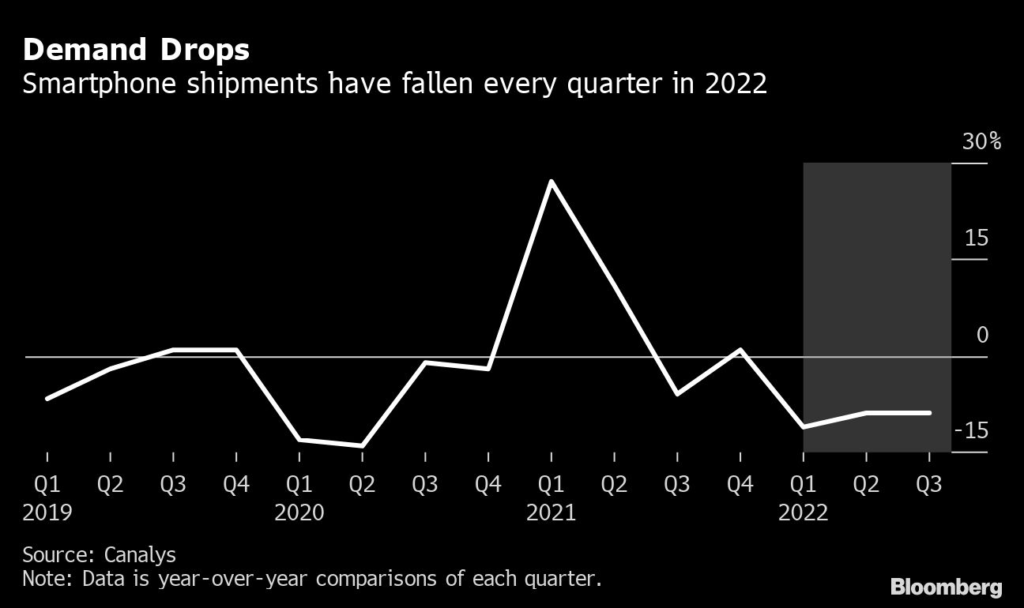
Global Smartphone Demand Continues Fall as Economic Woes Hit

(Bloomberg) — The global smartphone market had its worst third quarter since 2014 as economic headwinds pushed consumers to delay discretionary purchases like personal electronics.

Shipments of smartphones around the world fell 9% in the three months ended September, extending a decline that’s lasted the entirety of 2022, according to market research firm Canalys. The downward trend in demand is likely to continue for a further nine months, Canalys added.

Interest rate hikes and rising energy prices have dampened consumer appetites this year, with China’s economic slowdown and Covid-19 lockdowns playing a key role in sapping momentum for smartphone sales. Domestic players like Xiaomi Corp., Vivo and Oppo have all registered double-digit drops in sales this year, with only Apple Inc.’s iPhone showing resilience in the market.

Samsung Electronics Co., which lacks a significant presence in China, held on to its leading global position with 22% of the market, aided by heavy discounts and promotions, the data showed. Apple, whose iPhone 14 series went on sale in September, grew its share to 18% while Oppo and Vivo both saw smaller shares than last year.

“Going into the sales season, consumers who have been delaying purchases will expect steep discounts and bundling promotions as well as significant price reductions,” Canalys analyst Sanyam Chaurasia said. “Compared to the strong demand period of the previous year, a slow but steady festive sale is anticipated” in the fourth quarter.

Although Apple was the main winner of market share in the third quarter, it has ditched plans to increase production of its iPhone 14 product family, Bloomberg News reported last month.

More stories like this are available on bloomberg.com

©2022 Bloomberg L.P.
SpaceX Loses $20 Million a Month on Starlink Internet Service in Ukraine

(Bloomberg) — SpaceX is losing about $20 million a month providing its Starlink satellite internet service to Ukraine, Chief Executive Officer Elon Musk said on Twitter. 

The company isn’t receiving any money from the US Department of Defense for providing the service, “but we’ll keep doing it,” Musk said in response to a user on Twitter, adding that several other countries, organizations and people are paying for terminals.

Musk backed down from demands for funding Starlink on the weekend, having previously told the Pentagon that the company couldn’t indefinitely fund the system that’s helped Ukraine combat Russia’s invasion. 

Withdrawing support of Starlink threatened a key means of communication used by Ukraine’s military forces in areas that don’t otherwise have cellular service. 

Ukraine has 20,000 Starlink terminals provided evenly by USAID, Poland, the European Union and private companies, according to an Oct. 5 report from state-run news agency Ukrinform that cited Ministry of Digitalization data.

More stories like this are available on bloomberg.com

©2022 Bloomberg L.P.

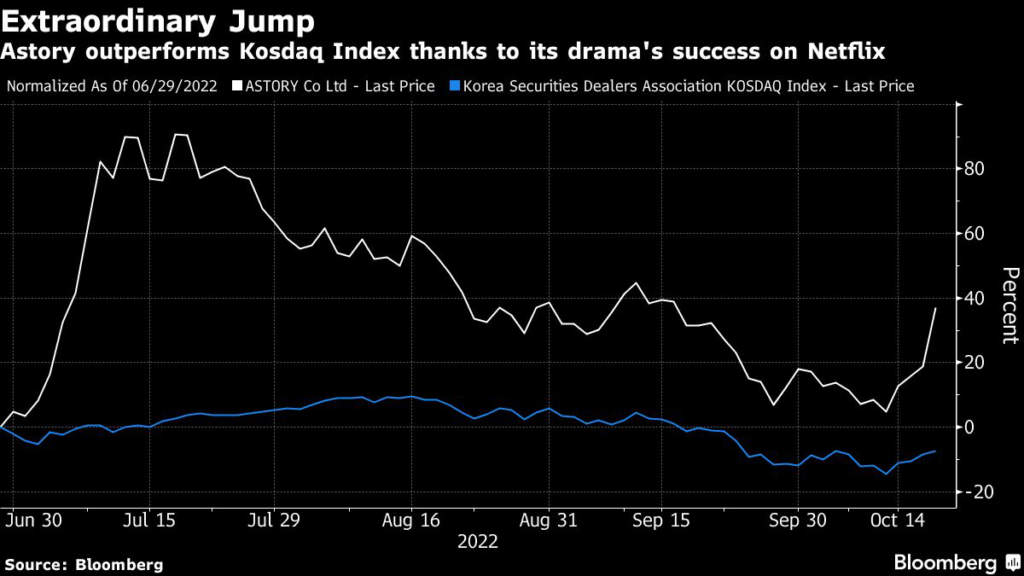
Netflix’s Subscriber Growth Sparks Surge in Korean Drama Stocks

(Bloomberg) — Shares of South Korean drama producers jumped after Netflix Inc. said it added more subscribers than expected in the third quarter and touted the contribution of Asian shows.

Astory Co. — producer of “Extraordinary Attorney Woo,” which has racked up 402 million viewing hours — opened up by its 29% daily limit before paring the gain. During the streaming giant’s conference call, Netflix co-Chief Executive Officer Ted Sarandos mentioned the strength of the series and said the company is increasingly leaning on programs that are not made in English.

The success of South Korean blockbuster survival drama “Squid Game” last year has sparked frenzied trading in related stocks. The nation has become an entertainment powerhouse with TV and film on top of the company’s popular videogames and K-pop music.

Bucket Studio Co., which holds a stake in the agency representing Squid Game’s lead actor, jumped as much as 11% Wednesday in the wake of Netflix’s results. Studio Dragon Corp., the firm behind the Netflix hit “Crash Landing on You,” gained as much as 5.6%. Other “K-drama” stocks posting gains included ContentreeJoongAng Corp. and Wysiwyg Studios Co.

More stories like this are available on bloomberg.com

©2022 Bloomberg L.P.

Close Bitnami banner
Bitnami