
Bloomberg

EU Unveils Interim Gas Market Steps With No Quick Price Cap

(Bloomberg) — The European Union announced a new emergency package to tackle the energy crunch, betting on steps to bolster solidarity among member states. But the bloc is refraining from immediate gas-price caps amid political divisions and concerns over security of supply.

The European Commission proposed measures on Tuesday to avoid extreme price spikes in energy derivatives and to use the EU’s joint purchasing power as a leverage in negotiations with global gas suppliers. The bloc’s executive arm, also wants to launch a new liquefied natural gas index to better reflect the region’s energy reality after a cut in supplies of pipeline gas from Russia.

“We know that we are strong when we act together,” European Commission President Ursula von der Leyen said at a news conference. “It is logical that instead of outbidding each other, energy companies should leverage their joint purchasing power.”

At stake is the future of the bloc’s $17 trillion economy, which the energy crisis threatens to push into recession as companies and consumers reel from high power and gas bills. The EU is trying to balance demands by more than a half of the EU’s 27 member states to limit gas prices with the need to avoid undermining its single market or deepening economic splits among member states.

The EU’s executive arm is also seeking authority from national governments to propose — only as a last resort — price limits on transactions on the Dutch Title Transfer Facility, whose main index is the benchmark for all gas traded on the continent. Such a measure could be used while the bloc is developing its new LNG index to avoid price hikes and limit speculation. It would need approval from EU nations in a separate process and would be valid for no more than three months. 

The commission has also warmed up to the idea of capping gas prices used for electricity production, an idea it has previously criticized as risky. 

“This model has been introduced in Spain and Portugal where it has reduced electricity prices,” von der Leyen said. “We believe that it merits to be considered for introduction at the EU level and we are looking right now into the available data to find responses to one or two questions that are still open. But as I said, it merits really to look deep into it and to see how we can make it operational on the EU level.”

Curbing Volatility

To create a more direct mechanism to avert gas-price volatility, the package would require trading venues to establish a new temporary intra-day volatility management mechanism in electricity and gas derivatives by Jan. 31, 2023. In a bid to avoid unintended disruptions on markets for less liquid contracts, the tool should focus on front-month energy derivatives, the document showed.

“The more successful we are regarding energy, the stronger economic and social position we will be in,” Valdis Dombrovskis, the commission’s vice-president, told European lawmakers in Strasbourg on Tuesday.

But “it won’t be possible to shield everyone from the consequences of the war,” he added in reference to Russia’s invasion of Ukraine. Instead, the EU should focus on supporting vulnerable households and the most affected businesses to avoid fueling inflation.

EU Summit

The commission’s plan will be discussed by EU leaders at a summit on Oct. 20-21 in Brussels. They may endorse a plan to “explore a temporary dynamic price corridor on natural gas” that would be implemented before a new LNG index is in place and are likely to support joint gas purchases, according to a draft political statement by the heads of government seen by Bloomberg News. In the next step, energy ministers will debate the specifics at a gathering in Luxembourg on Oct. 25.

A further emergency meeting of energy ministers is expected in mid-November to sign off on the proposals.

Read more: EU to Boost Protection of Infrastructure as Sabotage Fears Grow

The common purchase platform would coordinate the filling of gas reserves. If storage supplies are depleted at the end of this winter, meeting the 90% filling goal by November 2023 may be more difficult next winter, according to the commission. The plan is to mandate member states to jointly purchase enough gas to account for at least 15% of their storage and allow companies to form a European consortium to negotiate long-term contracts. Russian supply sources would be excluded from participation.

To avoid blackouts and rationing in the heating season, the EU has already agreed to a voluntary 15% gas consumption cut target, with an option of a mandatory trigger. The commission will closely monitor demand reduction measures and stands ready to activate the switch to compulsory cuts or even revise the goals if current measures prove insufficient, according to the proposals. 

The package also offers tools for member states to use state aid to mitigate the impact of high energy crisis on companies and households, with member states offered the possibility to use as much as €40 billion ($39.5 billion) from the bloc’s cohesion funds. To boost liquidity in energy markets, the commission will propose increasing the clearing threshold for non-financial counter parties to €4 billion and broadening the list of eligible assets that could be used as collateral for one year.

In addition to that, the commission is seeking to strengthen its RePowerEU strategy to win energy independence with additional common funding. 

Read more: EU to Propose €40 Billion Fund to Mitigate Energy Price Fallout

(Updates with new von der Leyen quotes starting in sixth paragraph)

More stories like this are available on bloomberg.com

©2022 Bloomberg L.P.
Bitcoin Volume Matters More Than Volatility, Cumberland Says

(Bloomberg) — Crypto volatility might be way down, prompting warnings from analysts about investor interest in the digital-asset sector. But it’s not volatility that matters — it’s volumes.

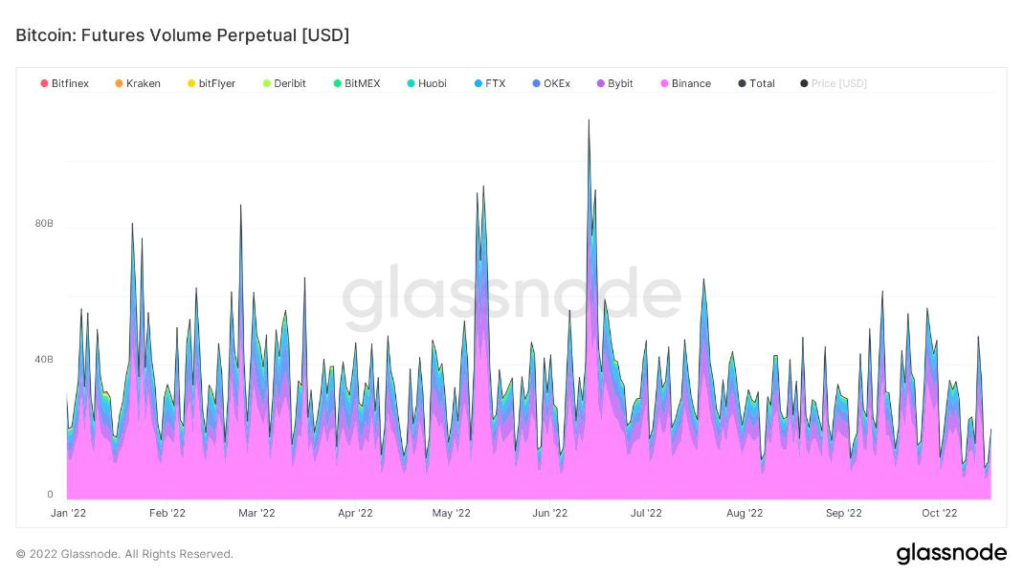
That’s according to crypto trading firm Cumberland, which says that volumes, while off the highs of the year, “remain absolutely massive.” Roughly $50 billion worth of Bitcoin derivatives — excluding spot and on-chain, as well as non-Bitcoin related activity — are cleared on exchanges each day, prompting the firm to posit that daily activity in crypto may be more than $100 billion, about one-fifth the figure for US stocks. 

“Recent volatility-driven concerns about the health of the crypto space likely stem from comparisons to the bear market of 2018, when volumes were dire,” the firm said on Twitter. “This time is different.”

Different volatility measures for the crypto space have come way down in recent days as the price of Bitcoin remains stuck in a narrow range around $19,000-$20,000. An index of Bitcoin volatility has dropped to its lowest level of the year. 

But the takeaway from this trend shouldn’t be that it represents a lack of interest in the digital-assets space, said Cumberland, the crypto offshoot of the Chicago-based trading giant DRW. Such analysis “is deeply problematic” because it “obfuscates the critical difference between trading volumes and price volatility.”

More stories like this are available on bloomberg.com

©2022 Bloomberg L.P.

Branson Says First UK Space Launch on Course for Next Month

(Bloomberg) —

Britain’s first-ever space launch is on track to take place before the end of November, according to billionaire entrepreneur Richard Branson, whose Virgin Orbit Holdings Inc. will undertake the mission.

“We plan to launch our first satellite into space from European soil within six weeks,” Branson said Tuesday at a press conference in Milan. “We are pretty much ready.”

Required infrastructure is now in place at Spaceport Cornwall in southwest England following the arrival of Virgin’s LauncherOne rocket. It has been joined by a converted Boeing Co. 747, named Cosmic Girl, which will then transport the craft under its wing and drop it somewhere over the north Atlantic.

Spaceport Cornwall said it’s waiting on licenses from the UK Civil Aviation Authority for the launch site, for Virgin Orbit as the designated operator, and for the payload itself. A spokeswoman said a date for the mission should be confirmed in the next two weeks once those approvals are in place.

The landmark UK launch — which bears the mission name “Start Me Up,” after the Rolling Stones song — will carry seven satellites into lower Earth orbit, marking Long Beach, California-based Virgin Orbit’s first international foray since it began commercial services in the US last year.

Virgin Orbit is contracted to two UK launches a year from 2023 onward, the spokeswoman said, helping to meet demand from the burgeoning UK satellite sector.

Branson was in Italy to publicize a new ultra-high-speed broadband service called Virgin Fibra.

More stories like this are available on bloomberg.com

©2022 Bloomberg L.P.
Salesforce Jumps After Activist Investor Starboard Takes Stake

(Bloomberg) — Salesforce Inc. shares jumped after news that activist investor Starboard Value has taken a stake in the company.

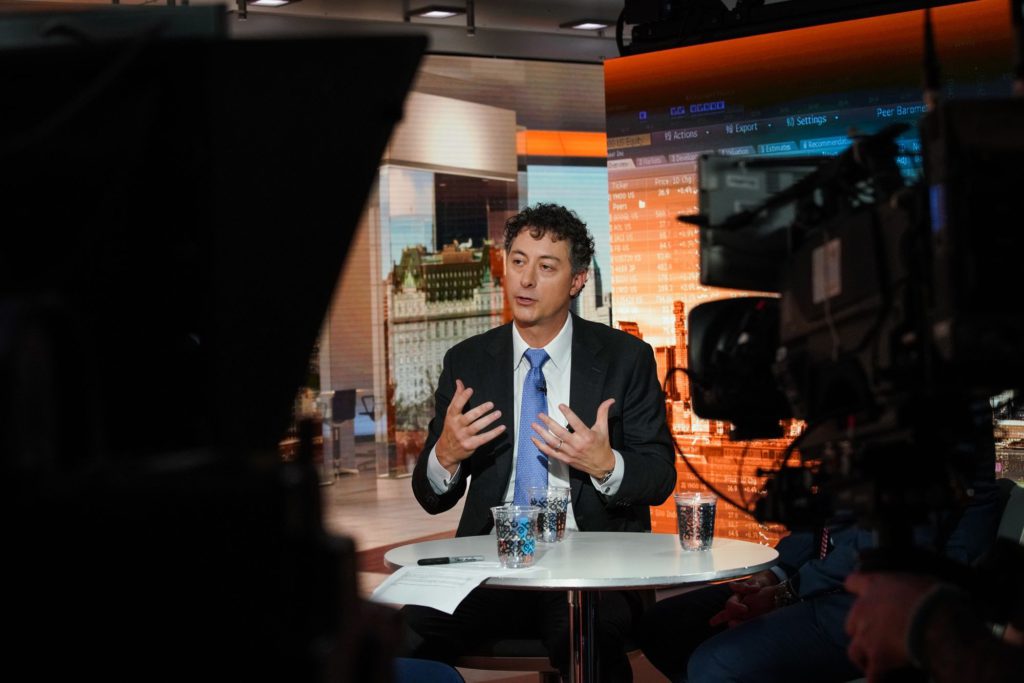
Jeff Smith, chief executive officer of the activist investor, announced the position at a conference on Tuesday. The shares gained as much as 6.8% as the market opened in New York, the biggest increase since July 27. 

Smith said Salesforce has had issues translating growth into profitability, and as a result is falling behind its peers. Salesforce is a great business that just needs to do a better job at focusing on improving margins, he said.

“With Salesforce we don’t think it’s an issue of can they do it. It’s a question of how focused the company is on the issue,” Smith said at the 13DMonitor Active-Passive Investor Summit in New York on Tuesday.

Starboard has shared its views with management on the matter, and Smith said he believes the new leadership team has committed to addressing the issue.

“This is good news. We’re not banging our head against the wall. We just need them to get really competitive and try to be the best at this,” he said.

Starboard said Salesforce’s new financial targets disclosed at its investors day earlier this year are a step in the right direction but are less ambitious than those of the company’s rivals, including ServiceNow Inc. and Workday. This suggests that Salesforce should be able to achieve significantly higher margins given its scale and lower growth rate, Smith said.

A Salesforce spokesperson said the company is committed to acting in the best interests of its shareholders and is focused on continuing to execute on its strategy outlined at last month’s Dreamforce event.

San Francisco-based Salesforce in September reaffirmed its target of $50 billion in revenue by fiscal year 2026 — nearly double its current annual sales — while adding a new profit margin target of 25%. Co-Chief Executive Officer Marc Benioff said at the time the company will continue to make acquisitions as it continues to integrate past purchases.

In June, 36.8% of voting shareholders supported an activist proposal to unseat Benioff as board chair. The proposal was initiated by a conservative group that took issue with his public support for causes like gun control and reproductive health care access, but picked up support from Institutional Shareholder Services, who said that although the company has no specific governance issues, it can be difficult to counterbalance a board chaired by a long-time CEO and founder. Shareholders also rejected a bid for an audit of racial equity in the company’s workforce.

“This makes a lot of sense to us,” Bloomberg Intelligence analyst Anurag Rana said of the Starboard stake. “Salesforce’s valuation has gotten killed since they bought Slack as investors are annoyed that Benioff keeps on promising margin expansion and then goes out and buys another company. However, I think the company has found religion and are very focused on improving profitability.”

Salesforce shares are down about 40% this year, compared with a 30% drop in the NASDAQ Composite Index. 

In addition to Salesforce, Smith confirmed Starboard held a stake in Splunk Inc. He said his firm believes the software company has the ability to improve its margins as well and that it is “a highly strategic asset that could be attractive to a number of different strategic and financial buyers. Smith also said the firm saw opportunities in Wix.com Ltd., a provider of online tools to build websites. 

More stories like this are available on bloomberg.com

©2022 Bloomberg L.P.
Tipping Points Aren’t Just for Climate Catastrophes

(Bloomberg) — The personal carbon footprint has a dismal origin. It’s true — an oil company came up with it. An oil company also invented the lithium-ion battery. And now 1 in 10 new cars sold worldwide are electric, according to a recent finding from BloombergNEF.

How it started shouldn’t be confused with how it’s going. Climate change, after all, is the process of something as negligible as carbon-dioxide molecules accumulating bit by bit until the planet shakes. It’s easy to overlook that tipping points aren’t just for desertification, collapsing ice sheets and coral bleaching.

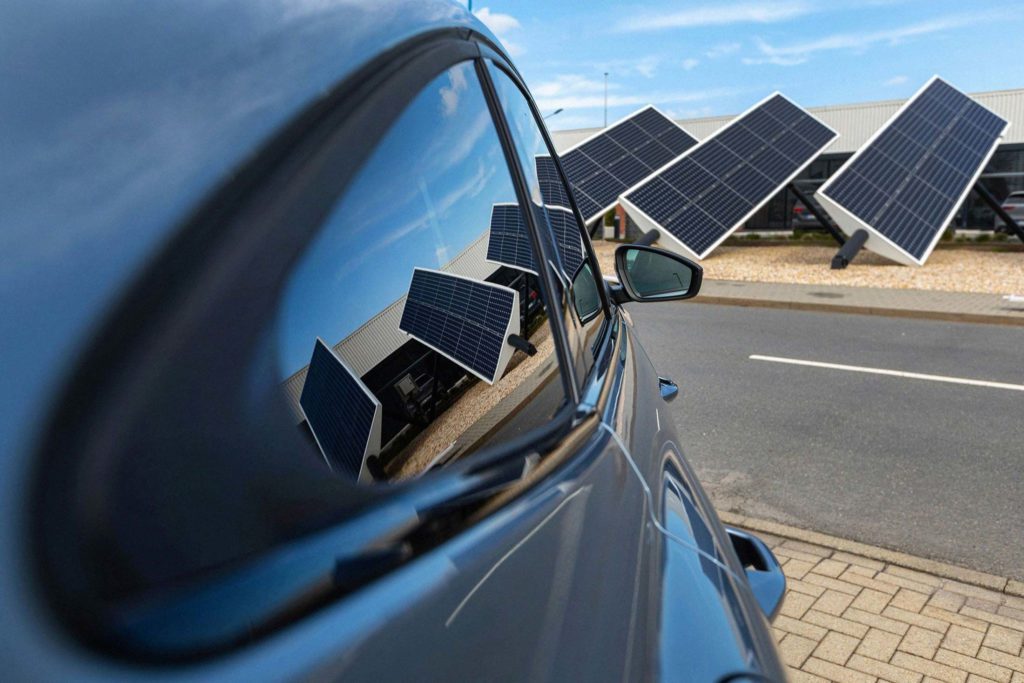
The same gradually-then-all-at-once dynamic also applies to decarbonizing technologies. Clean energy has a tipping point, and 87 countries have now crossed it. Green technologies that get plugged into the grid follow the same S-shaped curve. Electric cars take years to eke out gains in a market — but once ownership hits 5%, mass adoption goes into warp speed. The US just crossed that crucial threshold this year, among at least 18 other countries. Australia and Spain are expected to cross the line next.  

There’s more weight to tip things over, thanks to increasingly generous incentives for everything from rooftop solar and e-bikes to furnace-replacing heat pumps. All these things fall within the realm of the personal. Even something as intangible as the fees on drivers in central London can become a force for EV adoption.

Your carbon footprint isn’t everything, but it is yours. It’s subject to direct action in a way that the collective politics of COP27 aren’t. It doesn’t get more collective than UN talks requiring consensus among all nations, and the summit to be held in Egypt will likely be defined by calls for climate reparations. The tipping point for arguing about “loss and damage,” as diplomats at COP27 call it, may prove to be Pakistan’s utterly devastating floods. An ugly impasse is brewing.

Government remains by far the biggest lever for eliminating emissions. But the personal is getting stronger, because there are more decarbonized options in people’s hands. Your dinner, your laundry, your playthings, your retirement account, your lawnmower — your power to shape our future has never been greater.

Welcome to the seventh issue of Bloomberg Green’s magazine.

Stories from the latest issue will continue rolling out through the end of October, with everything we’ve published available on this collection page. The only magazine focused on climate and the energy transition is sent to our all-access subscribers, so sign up today to receive a print edition along with full digital access to Bloomberg Green. This issue is all about decarbonizing everyday life. There’s also a special focus on climate solutions made in Africa and a guide to COP27 in Egypt, alongside the climate data and deep investigations at the center of every issue.

Below are some of the highlights so far…

  • Tipping points aren’t just for climate catastrophes. Solar power, electric cars, grid-scale batteries, heat pumps — the world is crossing into a mass-adoption moment for green technologies. 
  • A Bitcoin mining boom is threatening to crush a shaky electrical grid in Texas. And the miners behind this surging demand for energy insist they’re helping the climate.
  • The volatile weather of climate change is playing havoc on professional sports teams, and they’re turning to increasingly sophisticated forecasting tools.
  • Quiet quitting on net zero? Some of the big banks that turned up at last year’s UN climate talks with new momentum on climate pledges are feeling anxious about what goes into cleaning up their holdings. Plus, read our complete coverage of COP27, including this deep examination of the politics of climate reparations after the flooding of Pakistan. 
  • An old golf course can fight climate change. Just look at this example of transformation from fairway to wildlife habitat.

  • Suburban landlords are seeing green.  The single-family rental industry is slowly making its homes more energy-efficient.

  • What keeps a champion surfer up at night? Kassia Meador is worried about the loss of all the kelp that she used to surf through.

More stories like this are available on bloomberg.com

©2022 Bloomberg L.P.
IBM Finds Fans in a Market Where Boring Is Rewarded

(Bloomberg) — It’s been decades since investors looked on IBM as an exciting tech stock, but with high-growth shares plunging this year, that lack of flashiness has become one of its most-desired qualities.

International Business Machines Corp.’s low valuation, high dividend yield, and cash flow have helped the stock outperform the broader technology sector in an environment marked by high inflation, which has led to rising interest rates and concern a recession is looming. Those attributes could be on display Wednesday as IBM, which offers infrastructure, cloud, and IT services, reports third-quarter results.

Shares of IBM rose 1.6% on Tuesday.

The stock has a price-earnings multiple of 12.6, compared with 19 for an index of tech stocks in the S&P 500. Apple Inc. and Microsoft Corp. trade for about 22 times earnings. IBM also has an indicated dividend yield of 5.4%. Among components of the S&P 500 tech index, that’s second only to Intel Corp., the chipmaker mired in a difficult environment for semiconductor stocks. 

“I’m of the mind that I’m going to own tech stocks if their valuations are reasonable and I can touch the cash flow, which takes me to lower PE tech like IBM,” said Bob Doll, chief investment officer at Crossmark Global Investments. “I’d rather own these companies than those that got bloated and had a crazy valuation.” 

IBM has dropped 4.2% this year including reinvested dividends, versus a 28% drop for the S&P 500 tech index. According to data compiled by Bloomberg, value, profitability, and dividends have been among the best performing factors for tech stocks this year, with volatility and growth the weakest.

The backdrop represents a switch from the years where rapid growth was the favored metric for tech investors, an environment that led to massive gains for buzzy unprofitable stocks, and also had Big Blue lagging behind legacy peers like Microsoft Corp. and Apple Inc.

While IBM may be an oasis of stability in the short term, the lack of growth that kept it from the multi-year rally in tech could also hold the stock back when the market turns. Even Crossmark’s Doll, who owns the stock, said he wasn’t “pounding the table” with enthusiasm and doesn’t expect to be a long-term holder of IBM. 

Analysts predict the company will report revenue growth of 2.5% in 2023, below the 3.8% pace of the tech sector, according to data compiled by Bloomberg. The gap is expected to be even wider in 2024, with the 5.2% growth expected at IBM less than half the 11.9% pace predicted for the overall sector.

“IBM’s dividend has supported investors over the past year, but who knows if that will continue to be the case,” said Robert Stimpson, chief investment officer of Oak Associates, which has been cutting its position in IBM. 

“Because fixed-income investors can get more yield out of a 10-year Treasury now, a dividend tech stock isn’t as attractive if it doesn’t have incremental growth opportunities. We still like tech, but other big names look more attractive here.”


Tech Chart of the Day

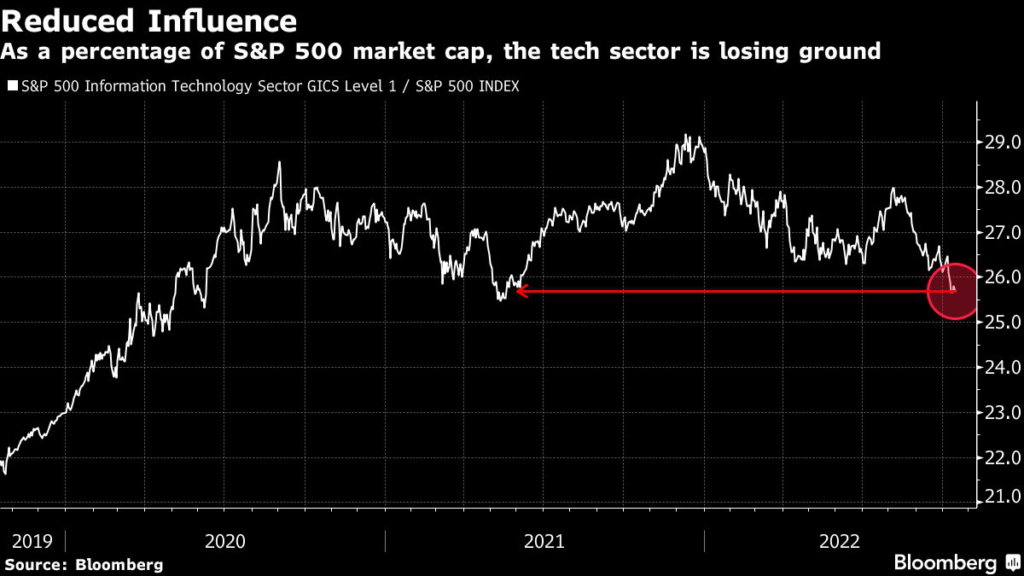
The selloff in tech stocks this year has reduced the sector’s weighting within the S&P 500 to about 26%, near its lowest level since May 2021. The tech sector has lost about 30% of its value in 2022, compared with the 23% decline for the overall S&P 500.

Top Tech Stories

  • Rupert Murdoch’s plan to combine News Corp. and Fox Corp., recreating the conservative-leaning media Goliath that he split apart nine years ago, drew mixed reactions on Wall Street.
  • Semiconductor delivery times shrank by four days in September, the biggest drop in years, in a sign that the industry’s supply crunch is easing.
  • Uber Technologies Inc. will offer consumers delivery within minutes on orders from frozen-grocery chain Iceland Foods, in its first “quick commerce” partnership in the UK.
  • California has generated the most initial public offerings of any US state every year since 2003. That streak could end this year unless the Golden State picks up the pace. The state’s change of fortune is explained largely by the drop in valuations among Silicon Valley’s tech startups, said Jay Ritter of the University of Florida.
  • Singapore’s Prime Minister Lee Hsien Loong warned the US decision to curb supply of microchips to Chinese companies could have widespread consequences and greater decoupling between the top two economies may create a “less stable world.”
  • Foxconn Technology Group took the wraps off two new electric vehicles on Tuesday, prototypes that embody the iPhone maker’s ambitions of carving out a slice of a market led by the likes of Tesla Inc.
  • Ye, formerly known as Kanye West, said he was motivated to acquire the conservative social media service Parler by his belief that existing platforms like Instagram and Twitter are too restrictive when it comes to user speech.
  • Indian edtech Byju’s said it has raised $250 million from existing investors led by the sovereign wealth fund Qatar Investment Authority, days after announcing job cuts in a bid to slash costs.

(Updates to market open.)

More stories like this are available on bloomberg.com

©2022 Bloomberg L.P.

EU Inches Toward Sanctioning Iran for Supplying Drones to Russia

(Bloomberg) — European Union countries want to review evidence to confirm when Iranian drones were delivered to Russia before imposing new sanctions against the country, according to people familiar with the issue.

Ukrainian officials have highlighted the use of Iranian-made drones in recent Russian attacks across Ukraine since mid-September. Several reports and intelligence assessments have concluded that drones were most likely delivered during the summer.

Iran has repeatedly denied exporting any weapons for use in the war in Ukraine. EU states want to nail down that the drones were delivered after Russia’s invasion given the firmness of Tehran’s denials, said the people who asked not to be named on a confidential matter. 

It is likely the bloc will make progress on more sanctions against Iran this week, one of the people said, despite concern such measures would risk further distancing Tehran from the bloc and pushing it closer toward Russia. Another person said the aim is to have new penalties in place by the end of the month. It hasn’t been decided yet what shape the penalties will take, but one of the people said any sanctions on weapons deliveries could result in trade-related measures. 

The drones have given the Russian President Vladimir Putin a relatively cheap way to strike Ukraine at a time when it’s running short of other key military hardware.

EU foreign ministers meeting Monday sanctioned Iran’s morality police and other entities over human-rights violations related to the death of a young woman in police custody. They also discussed drones and missile deliveries to Russia, with some stating the evidence is already clear, while others urged caution and balance, one of the people said.

“We are gathering evidence and we will be ready to react with the tools at our disposal,” Josep Borrell, the EU’s foreign policy chief, told reporters after the meeting. He added that some countries called for a compilation of all the evidence from intelligence services of countries including Ukraine.

An explanation given by Ukrainian Foreign Minister Dmytro Kuleba via video conference was “decisive” for many ministers, Borrell added.

Russia has launched Iranian-made drones mainly from the south — including Crimea and parts of occupied Kherson — although some were sent from Belarus and Russia’s Kursk region, Air Force spokesman Yuriy Ihnat said on national television Tuesday. Over the past two days, 51 Shahed drones have been downed, he added.

Russians are using Iranian Mohajer-6 and Shahed series drones that were delivered in the beginning of August, a senior official of the North Atlantic Treaty Organization said last week. The drones are being used for kinetic attacks as well as intelligence, surveillance and reconnaissance missions, the official said.

Ukrainian President Volodymyr Zelenskiy told Group of Seven leaders earlier this month that Russia ordered 2,400 Iranian-made Shaheds.

Russian Visits

Russian officials visited Kashan airfield on June 8 and July 5 to view drones before they were delivered, and the Iranian government is preparing to provide Moscow with anywhere from a few to several hundred UAVs, or unmanned aerial vehicles, the NATO official added. A Russian delegation also visited Iran in August, another official said.

Drones and missiles have targeted both infrastructure and people’s homes, according to Ukrainian officials. 

“Another kind of Russian terrorist attacks: targeting Ukraine’s energy and critical infrastructure,” Zelenskiy said Tuesday. “Since Oct 10, 30% of Ukraine’s power stations have been destroyed, causing massive blackouts across the country. No space left for negotiations with Putin’s regime.”

Leaders Summit

The issue of further Iran sanctions is due to come up in working groups before an EU leaders summit in Brussels on Thursday and Friday, some of the people familiar said. Leaders are expected to discuss the topic at the summit as some countries are pushing for this, an EU official said. 

A new package of sanctions on Iran, this time to punish it for potential arms exports, would be the first time the EU punishes another country besides Belarus over involvement in Russia’s war in Ukraine since the February invasion. 

Asked whether EU countries would support new penalties on Iran once all the evidence has been gathered, Borrell said Monday: “I don’t think there will be any problem on the part of the member states.”

The discussions come as negotiations stall over a deal with Iran to end its nuclear program, one of the only avenues where EU and US officials still communicate with Moscow. EU diplomats have stressed the process should remain separate from any measures they take over Ukraine.

More stories like this are available on bloomberg.com

©2022 Bloomberg L.P.

Peloton Is Still Working on a Fix for the Treadmill That Was Recalled Last Year

(Bloomberg) — Peloton Interactive Inc. is still working on a fix for its high-end treadmill that was recalled last year and is extending the refund window for current users, according to the US Consumer Product Safety Commission.

The model, called the Tread+, was pulled off the market in May 2021 following reports that children, pets and adults had been pulled underneath the treadmill, causing injuries. In at least one case, a child died. At the time, the safety commission recommended that all owners of the Tread+ stop using it immediately and contact Peloton for a refund. 

Peloton said last May that it’s working on a hardware fix, but the long wait has raised speculation that the company might not bring back the Tread+. Tuesday’s announcement signals that Peloton is still actively planning a fix. The fitness company also said it is extending the full refund window for existing Tread+ owners from next month until Nov. 6, 2023. 

“Peloton is working on a rear guard that would address the hazard at the back of the treadmill but no repair has been approved to date,” the commission said in a statement on its website. Consumers who return Treads after November next year will receive prorated refunds. Peloton hasn’t predicted when sales would resume. The commission reiterated that consumers “should immediately stop using the recalled Tread+ treadmills.”

The company’s executives were criticized for their handling of the recall last year. They initially called warnings about the Tread+ “misleading and inaccurate” and told users there is no reason to stop using the device. To date, in addition to the reported death, Peloton has received 335 incident reports, including 87 reports of injuries to consumers.

Since then, Peloton’s woes have mounted. Demand slowed as consumers began returning to the office and gyms, and the company misjudged how much inventory it would need. Peloton has now reshuffled management and cut jobs a number of times, and its stock is down more than 90% over the past 12 months.

A filing from the commission last year indicated that Peloton sold about 125,000 Tread+ units during the product’s lifetime, suggesting that it generated revenue of about $500 million in total. Even before the recall, Peloton paused sales of the Tread+ for several months in 2020 because of delivery problems during the pandemic. Analysts estimated at the time that treadmills made up about 10% of Peloton’s revenue.

The Tread+ was priced at about $4,300 when it was last on sale, making it the company’s most expensive piece of hardware. Any fix would have to be approved by the commission. Peloton will also likely have to offer the remedy to any existing users who don’t return their treadmill for a refund.

Peloton’s cheaper treadmill, the Tread, was also recalled last year. In that case, there were at least 18 incidents of its touch screen loosening and six reports of it falling off. But Peloton quickly repaired the problem and returned the Tread to market.

More stories like this are available on bloomberg.com

©2022 Bloomberg L.P.

British Land Weighs £590 Million Facebook London Office Sale

(Bloomberg) — British Land Co. is planning to sell a portfolio of London buildings whose tenants include Facebook owner Meta Platforms Inc.

The London-based real estate investment trust has appointed an adviser to sell 10, 20 and 30 Brock Street which are valued at about £590 million ($668 million), people with knowledge of the sales plan said. The sales process is at an early stage and there’s no guarantee a deal will be agreed, the people added, asking not to be identified as the plans are private.

A spokeswoman for British Land declined to comment.

The UK’s biggest office REITs have been selling completed and fully leased properties and reinvesting the proceeds in new developments despite storm clouds hanging over the economy. That’s because they’re betting on a looming shortage of modern green buildings that will mean rents for the best space increase as more companies looking to achieve net-zero carbon commitments compete for a limited number of green offices. 

Rival Land Securities Group Plc sold 21 Moorfields in the City of London last month, the office that will house Deutsche Bank AG’s new London headquarters. Great Portland Estates Plc, another London office REIT, announced the sale of a nearly completed development on Finsbury Square earlier this month. 

British Land completed the largest of the trio of buildings at 10 Brock Street in 2013 and leased the building to companies including Facebook, Debenhams Plc and Manchester City Football Club. Facebook has since also taken over the space that was occupied by collapsed retailer Debenhams and now leases most of the building. The combined buildings span about 500,000 square feet (46,452 square meters) of space. 

More stories like this are available on bloomberg.com

©2022 Bloomberg L.P.

Crypto Gaming Startup Stardust Raises $30 Million Despite Slump

(Bloomberg) — Despite a steep drop in venture funding for crypto companies, some startups are still managing to secure fresh capital. Stardust, which provides developer tools for building blockchain-based games, said Tuesday that it raised $30 million in a funding round led by crypto venture capital firm Framework Ventures. 

Acrew Capital, Blockchain Capital and Distributed Global participated in the Series A round. Stardust declined to provide its valuation, but said that it was higher than in its previous funding round.

The Palo Alto, California-based startup was founded by Chief Executive Officer Canaan Linder in 2018. He said in an interview that he first came across blockchain when he discovered CryptoKitties, a virtual game that allows players to own, trade and breed cats represented by nonfungible tokens. He previously worked as a software engineer for Bloomberg LP. He said he was drawn to the game because he’s always been an avid collector—he loves Yu-Gi-Oh! trading cards and named his company after his favorite Stardust Dragon card. 

But he didn’t always have the easiest time playing CryptoKitties. “The user experience, even for me as a software engineer and developer, was very difficult,” he said. 

He built Stardust with the goal of making it easier for developers to design more accessible virtual games that are built on blockchains like Solana and Polygon and incorporate crypto elements like NFTs. Managed by a 40-person team, Stardust charges game creators a monthly per-player cost, as well as a fee for each blockchain transaction. 

Even though overall VC investing in crypto startups is down, funding for NFT gaming startups has shown some resilience.  Michael Anderson, co-founder of Framework Ventures, said his firm invested in Stardust because he thinks the company will help expand blockchain gaming, including to those active in traditional gaming. Without a company like Stardust, he said, “there isn’t the level of infrastructure that will be able to bridge web2 gamers and web3.” 

The use of NFTs and blockchain in gaming has sparked controversy among players, but Linder said it’s important to bring traditional game developers into the mix. Stardust has already teamed up with game publisher Tilting Point to help its developers build blockchain games. 

“Web3 is an industry that is not going away,” he said. 

More stories like this are available on bloomberg.com

©2022 Bloomberg L.P.

Close Bitnami banner
Bitnami