Bloomberg

Mercedes Unveils Latest Electric SUV Aimed at Tesla’s Model Y

(Bloomberg) — Mercedes-Benz Group AG is broadening its battery-powered lineup with a sport utility vehicle that will take on Tesla Inc.’s Model Y in another step toward the automaker’s goal to go all-electric by the end of the decade.

The EQE SUV, unveiled on the eve of the Paris car show, will edge out the cheaper Model Y with 590 kilometers (367 miles) of driving range and start at around €70,000 ($68,000) when sales begin late this year. It’s the fourth model to use Mercedes’ dedicated EV platform, which also underpins the flagship EQS sedan.


“It’s the latest proof that we’re consistently executing on our strategy to go all-electric,” Mercedes Chief Executive Ola Kallenius said in a statement.

The SUV features a 141-centimeter (55.5-inch)-wide screen, and the high-performance AMG version will reach a top speed of 210 kilometers per hour.

Mercedes plans to offer electric siblings for all combustion-engine models in its portfolio by the end of the year, then introduce three new platforms to underpin its cars, AMGs and vans by 2025. By 2030, it will only sell EVs in markets where phasing out engines entirely is possible.

To help fund this ambitious rollout, Mercedes plans to weed out lower-margin vehicles in favor of more profitable G-Wagon SUVs and performance models.

Chinese Competition

The EQE SUV, which will be manufactured at Mercedes’ US plant in Alabama, debuted at the Musée Rodin in Paris ahead of a show lacking many western carmakers, including Volkswagen AG and BMW AG. Among those filing the void will be Chinese manufacturers led by BYD Co., the country’s biggest EV maker.

China’s EV manufacturers are increasingly seeking to make inroads into Europe. Nio Inc. this month announced plans to start sales in Germany, Denmark, Sweden and the Netherlands after modest success in Norway. Great Wall Motor Co. and Seres Group Co. also are part of the Chinese contingent exhibiting at the Paris show.

After many false starts by Chinese brands over the years, the transition to EVs could pry open the door to competitive European markets. British brand MG, owned by China’s SAIC Motor Corp., last year sold some 40,000 vehicles in Europe.

‘Robust’ Sales

The carmakers proffering shiny new models in Paris are contending with low consumer confidence amid surging inflation and rising interest rates.

While its archrival BMW recently warned orders have started to slow, Mercedes said last week that sales jumped by 21% during the third quarter, with China leading a strong showing of growth across all key regions.

In an interview with Bloomberg Television, Kallenius called the third-quarter deliveries “robust” and said that while the economy “might cool down,” Mercedes will be prepared.

“We’re also looking at finishing this year off in a robust fashion, and then we’ll see what next year brings,” he said.

More stories like this are available on bloomberg.com

©2022 Bloomberg L.P.

Peter Thiel Backs German Startup Delivering Drones to Ukraine

(Bloomberg) — German drone developer Quantum-Systems GmbH has received $17.5 million in new funding from investors including US billionaire Peter Thiel and German firms Project A Ventures and Sanno Capital. 

Thiel hailed Quantum-Systems, which supplies the Ukrainian armed forces with reconnaissance drones, as “leaps ahead” of the competition, according to a statement Sunday.

Quantum-Systems is developing docking stations that allow unmanned aerial vehicles to be charged and deployed without human operators for use by the military, border patrol, mining companies and for surveillance in cities, Chief Executive Officer Florian Seibel said in an interview.

“The future of UAS [unmanned aircraft systems] is in neither software nor hardware alone, but in the intelligent synthesis of the two,” said Thiel of Quantum-Systems’ approach.

Quantum-Systems has supplied 42 drones to support the Ukrainian army via the German armed forces, Seibel said. 

Seibel added that the process of military tech development and procurement in Europe is too slow. “We cannot keep spending hundreds of billions of dollars to develop technology that is outdated once it gets deployed,” he said. 

More stories like this are available on bloomberg.com

©2022 Bloomberg L.P.

Here’s What Crypto Traders Are Doing With Volatility Gone

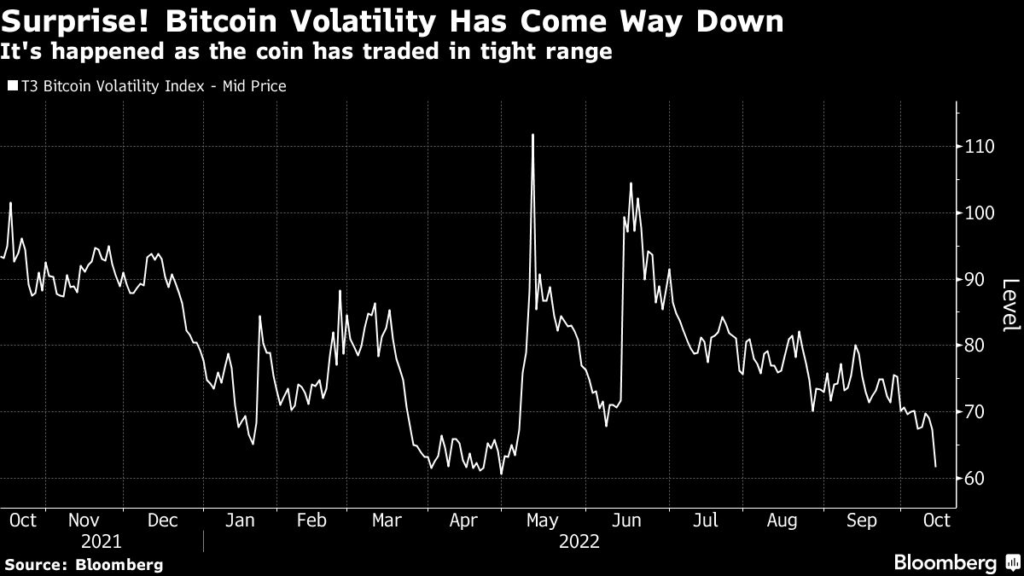
(Bloomberg) — Besides dangling the opportunity to get rich quickly, one of the biggest attractions for crypto traders was the ability to profit from wild price swings. Now with volatility all but gone — at least for now — both professionals and amateurs are altering their strategies as the crypto winter drags on. 

A volatility gauge for Bitcoin has dropped in recent days to its lowest level since April, reaching 61 on Friday. That’s a far cry from the 140 it hit in May amid the collapse of the Terra stablecoin ecosystem. After surging to an all-time high of almost $69,000 in November, the largest digital asset by market value has been trading in a narrow range of around $20,000 since June. 

Which begs the question: what exactly are crypto traders and investors, accustomed to the twists and turns of the asset class, doing now to make money? 

Bloomberg News talked to a number of investors and traders about what they’ve been doing to survive the chill. Here’s a by no means complete list of recent strategies: 

Selling Options

Julian Koh, co-Founder and CEO of Ribbon Finance, a structured investment products protocol for DeFi, says his firm’s seen “increased demand to sell options,” which can make money in a sideways market. Ribbon over the past month reached $100 million in total value locked (a crypto term to denote funds deposited in a project) from $70 million, and its options vaults are “doing well in this environment,” Koh says. 

“Basically it’s a way for people to express the view that markets will continue to be flat and still make money,” he added.

Staking 

Steven McClurg, co-founder and chief investment officer at digital-asset fund manager Valkyrie Investments, has been risk-off for most of the year. But he says Bitcoin’s a buy whenever it hits between $17,000-$18,000. “That’s when we’re buying. We’re waiting for those opportunities,” he said in an interview. But he’s also seeing “good opportunities” with staking certain assets. Avalanche, for instance, is a token he favors because it took a big hit earlier in the year. Buying it and staking it can earn 8% currently. 

Still, given how uncertain things have been, McClurg has moved some of his firm’s assets into cash. “Sometimes doing nothing is a great strategy,” he says. Some of his strategies are more than 50% in cash. That could mean straight-up, old-fashioned cash, though it could also include a stablecoin like USDC or Gemini token. 

Playing the Long Game

With where Bitcoin’s currently trading, it makes sense to go long, according to Zaheer Ebtikar, portfolio manager at crypto fund LedgerPrime. “The market factors I look at tell me that a lot of people are positioned in the opposite way, so I think the expected value is for me to go long,” he said. 

He’s noticed the “vol crush” in the market, which he likened to Bitcoin’s last halving event in 2020. But at some point, volatility will get “super attractive, the range will break and vol will surge again.”

“This makes it pretty attractive to get long volatility because then you can make money if the range breaks if you think there’s another catalyst,” he added. 

‘Distressed-Asset Market’

One of the side effects of the crypto downturn has been that lots of DAOs — decentralized autonomous organizations that allow holders to vote on different proposals  — sitting on treasuries that are “in distress,” says Michael Safai of proprietary trading firm Dexterity Capital, meaning that their prices are beneath their treasury value. 

“The game then is, Hey, can I convince the rest of the DAO to liquidate the treasury and then pay it out? And if I do that, the liquidation value is going to be greater than the price I’m paying of the token,” he said on a recent episode of Bloomberg’s “What Goes Up” podcast. “And that’s because crypto prices are sometimes irrational,” he said, adding that he’s seen this happening recently, though his firm has not done anything like this. 

More stories like this are available on bloomberg.com

©2022 Bloomberg L.P.

China Traders See Tech Focus, More Covid Gloom After Xi’s Speech

(Bloomberg) — President Xi Jinping’s two-hour address to the party congress on Sunday left traders poring over the nuance of each phrase as China’s leader ranged from Taiwan to semiconductors, pollution, housing and the coronavirus. 

Those expecting a shift away from the Covid Zero policy that has weighed on the economy were disappointed, but there were strong comments in specific areas, such as technology, the environment and national security, that could indicate support in some market sectors. Overall though, Xi did little to lift the gloom that has encompassed China’s markets in the lead-up to the five-yearly leadership meeting. 

“In the short term, it seems that there will not be any change in the direction of Covid Zero policy, which will drag on market sentiment,” said Shen Meng, a director at investment bank Chanson & Co. in Beijing.

Market watchers were looking especially for indications of support for the nation’s troubled property industry and the technology sector, which recently came under assault from the US.

Earlier this month, the US Commerce Department unveiled sweeping regulations that limit the sale of semiconductors and chip-making equipment to Chinese customers, striking at the foundation of Xi’s efforts to build a domestic chip industry. Xi hit back in the speech on Sunday, promising to “resolutely win the battle in key core technologies,” and investors could be trading on expectations that more supportive policies will come.

“There was a lot of emphasis on technology and innovation,” said Peiqian Liu, chief China economist at Natwest Markets. “Which means the focus will likely shift away from just lowering financial risks and reducing debt growth to pouring more resources into development of high tech.”

Saber-rattling between the US and China over security issues such as Taiwan could also heighten interest across a number of industries after Xi emphasized the need for self reliance. 

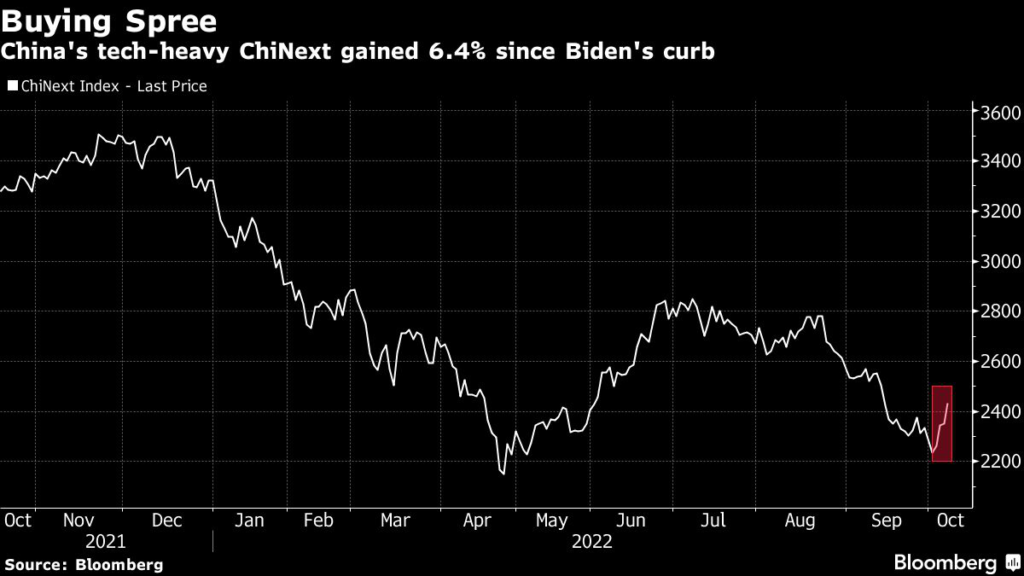
“National security is key,” said Hong Hao, partner and chief economist at Grow Investment Group. “This is why last week the ChiNext had a strong bounce. The market believes more investments will be poured in.” 

Missing Slogan

A glimmer of light was offered to the pummeled property sector, which has suffered a yearlong crisis, not so much by what Xi said as what he didn’t say. Absent from his address was the slogan of “housing is for living, not for speculation,” spurring hopes of further easing of pain for developers. Still, the slogan later reappeared in the state media’s full transcript, indicating the difficulty in reading the tea leaves when it comes to Party gatherings. 

“This slogan, along with the crackdown on real estate sector, may not be the party’s focus in the near-term,” said Ting Meng, senior Asia credit strategist at ANZ Bank China Co. “There may be continued policy support to boost home sales, although it’s unlikely for authorities to aid private developers’ debt directly or rein in defaults.”

Green Debt

The environment, a long-time passion for Xi, also garnered strong rhetoric, though how his reaffirmed support for cutting emissions will play out on the nation’s murky green bond market is unclear.

“The commitment to tech and green sectors looks strong, meaning these sectors are the rare darlings with favorable government policies,” said Gary Ng, senior economist at Natixis. 

The Shanghai Composite Index lost more than 5% over the past month, its worst pre-Congress showing since the gauge’s inception in 1991. The yuan is down more than 10% this year against the dollar, heading for the worst annual performance since 1994. China’s dollar-denominated junk bonds have plunged to near record lows as a property crisis expanded.

Investors including Chanson’s Shen point out that the speech to congress tends to give the broad strokes of party direction and many traders will be looking for more detailed signals to help fill in the detail over the coming weeks. 

Covid Zero “will still be the biggest drag for market sentiment and economic growth, but it is possible to see a softer stance on properties, at least in the short run,” said Ng. “The market may be excited only about certain sectors due to the limited changes in the overall tone and the growth prospect. But the biggest worry is whether the tightened grip of the state will affect the business opportunities in China, further amplifying the polarization between state-owned and private firms.”

More stories like this are available on bloomberg.com

©2022 Bloomberg L.P.

Ukraine Latest: Training Camp Shooting; Donetsk Missile Strike

(Bloomberg) —

At least 11 soldiers were killed after two men — said to be from an unnamed ex-Soviet state — opened fire at a Russian military training camp near the border with Ukraine, according to state-run media. The incident comes as Russia has intensified its mobilization efforts and already deployed thousands of new recruits into combat. 

The mayor’s office in Russian-annexed Donestsk was hit by a missile on Sunday, and explosions were reported near the Belgorod airport in Russia. On Saturday, missile strikes caused “serious damage” to an electrical installation near Kyiv on Saturday. Residents were urged to cut their electricity use. Moscow is believed to be systematically targeting Ukraine’s power plants heading into winter. 

Ukraine’s battlefield efforts got a potential boost when Elon Musk said he’d keep providing SpaceX’s Starlink satellite-based internet service “for free.” Russian forced deportations of Ukrainians from the Kherson region amount to ethnic cleansing, a US think-tank said. 

(See RSAN on the Bloomberg Terminal for the Russian Sanctions Dashboard.) 

Key Developments

  • Russia Failed to Swap Out Western Military Parts: 2021 Audit
  • Ukraine IT Sector Tested as Putin Bombs Civilian Infrastructure
  • Saudi Arabia Announces $400M in Aid to Ukraine
  • Putin Says Has No Regrets About Ukraine Invasion After Reverses
  • Musk Tweets Complicate US Diplomacy From Ukraine to Taiwan

On the Ground

Two people were injured in a strike in the Belgorod region, about 50 km north of the border with Ukraine, the region’s governor said. Social media posts suggested multiple explosions and showed smoke billowing. Russian forces conducted five missile and 23 air strikes, as well as attacks from multiple-launch rockets, in the last 24 hours and more than 30 settlements were hit, Ukraine’s Defense Ministry said on Facebook early Sunday. It said Russian attacks were repelled in several areas but there were no indications of major changes at the front line. Ten Ukrainians were killed and 14 injured in Saturday strikes, according to the deputy head of President Volodymyr Zelenskiy’s staff, Kyrylo Tymoshenko. 

(All times CET)

Mayor’s Office in Russian-Annexed Hit By Missile Strike (11:35 a.m.)

The mayor’s office in the Russian-annexed Ukrainian city of Donetsk was hit by a missile Sunday, injuring four people and causing substantial damage, state news agencies reported.

RIA said the attack was a direct hit on the building in downtown Donetsk, capital of one of the self-declared separatist zones in the Donbas region. Local officials also reported one person was killed in another attack in the area Sunday.

The strike comes as several explosions were heard in the Belgorod region of Russia, about 50 km north of the Ukrainian border. Social media posts show smoke billowing from around the city’s airport. 

Forced Deportations Amount to Ethnic Cleansing of Ukrainians, ISW Says (10 a.m.)

Massive, forced deportations of Ukrainians, including children subsequently put up for adoption, “likely amount to a deliberate ethnic cleansing campaign” and a violation of the Convention on the Prevention and Punishment of the Crime of Genocide, said the Institute for the Study of War. 

Moscow may be carrying out a wider ethnic cleansing campaign “by depopulating Ukrainian territory through deportations and repopulating Ukrainian cities with imported Russian citizens,” the US-based military analysts said in a report. 

Ukrainian sources have said that reconstruction projects in Mariupol, the southern city mostly razed by Russia bombardments in the spring, are intended to house “tens of thousands of Russians.” 

Iran Stepping Up Arms Deliveries to Russia: WaPost (9 a.m.) 

Tehran will supply Russia with what officials describe as the first Iranian-made surface-to-surface missiles, in addition to replenishing its supply of attack drones, the Washington Post reported, citing US and allied security officials. 

Iran is preparing for the first time to send Fateh-110 and Zolfaghar short-range ballistic missiles, the newspaper reported, citing officials briefed on the matter. Such missiles would help Moscow replenish a fast shrinking supply of precision-guided munitions, such as those used in last week’s strikes against several Ukrainian cities. 

Iran has repeatedly denied supplying drones to Russia despite mounting evidence of their use in the war. Ukraine’s military estimates Russian still has about 300 Iranian-made drones with plans to buy thousands more. Separately, the UK defence ministry said on Sunday that Russia is probably incapable of producing advanced munitions at the rate they’re being expended.

Read more: Russia Failed to Swap Out Western Military Parts: 2021 Audit

Eleven Killed at Shooting at Russian Training Base (8 a.m.)

Eleven people were killed and 15 wounded at a training base in the Belgorod region near the Ukrainian border Saturday, Russia’s Defense Ministry said, according to Interfax.

The two citizens of another unnamed ex-Soviet state who opened fire at the weapons training session for “volunteers” headed to Ukraine were killed, the ministry said. Calling the attackers “terrorists,” it provided few other details. The region’s governor said all the dead and wounded were military personnel.

Moscow has sought to build up the ranks of its military by offering citizens of former Soviet states the chance to get Russian passports in return for serving in its military.

Ukraine’s Naftogaz in Talks to Market Gas Reserves: Telegraph (7:42 a.m.)

Ukraine is in talks with US drillers to pump gas from its untapped reserves to Europe and ease the region’s energy crisis by the end of the decade, the Telegraph reported, citing an interview with an adviser to Naftogaz’s chief executive.

“We have a number of resources and gas reserves there that are basically the second largest in Europe,” said Myron Wasylyk. “We estimate there could be up to 40 billion cubic meters.”

Musk Signals He’s Backing Off Starlink Threat (8:42 p.m.)

Elon Musk said Saturday he’d continue to fund Starlink satellites in Ukraine “for free” after a standoff with the US Defense Department over the cost of their deployment.

Musk threatened a day earlier to cut financial support for SpaceX’s satellite internet service in Ukraine, claiming that the operation had cost his company $80 million so far. The Pentagon said it was in talks with SpaceX, while saying the US is looking at other options. 

S. Korean Central Banker Calls on China’s Help to End War (5:30 p.m.)

Bank of Korea Governor Rhee Chang-yong urged Beijing to take on a more active role in trying to end the Russian war in Ukraine and calm the world’s geopolitical situation. 

“I really hope that China can play a very important role,” Rhee said in Washington on Saturday. “I really hope that my old friends in China can step up efforts to stop the Russian war.” 

If any country can talk to Russian President Vladimir Putin, it’s China, he said, adding that Beijing can be a “bridge between Russia and the West” and help its own relations with Washington in the process.  

More Ships Sail With Ukrainian Farm Products (5:25 p.m.)

Another seven vessels with a total of 101,000 tons of agriculture products left Ukraine’s Odesa-area ports on Saturday for destinations in Asia and Europe, Ukraine’s infrastructure ministry said on Facebook.

Since the safe-transit agreement was reached with Russia in late July, 7.5 million tns of grains and other farm products have departed on 341 ships, the ministry said. 

Fire at Oil Depot in Russia’s Belgorod (5 p.m.)

A major fire at an oil depot near the Russian city of Belgorod was caused by a second day of Ukrainian cross-border shelling, the region’s governor said. 

Social media posts showed black smoke billowing in the area. Belgorod is about 60 miles north of the Ukrainian border.  Ukraine hasn’t commented.   

Poland Says Oil Flows Resume on Druzhba Pipeline (4:14 p.m.)

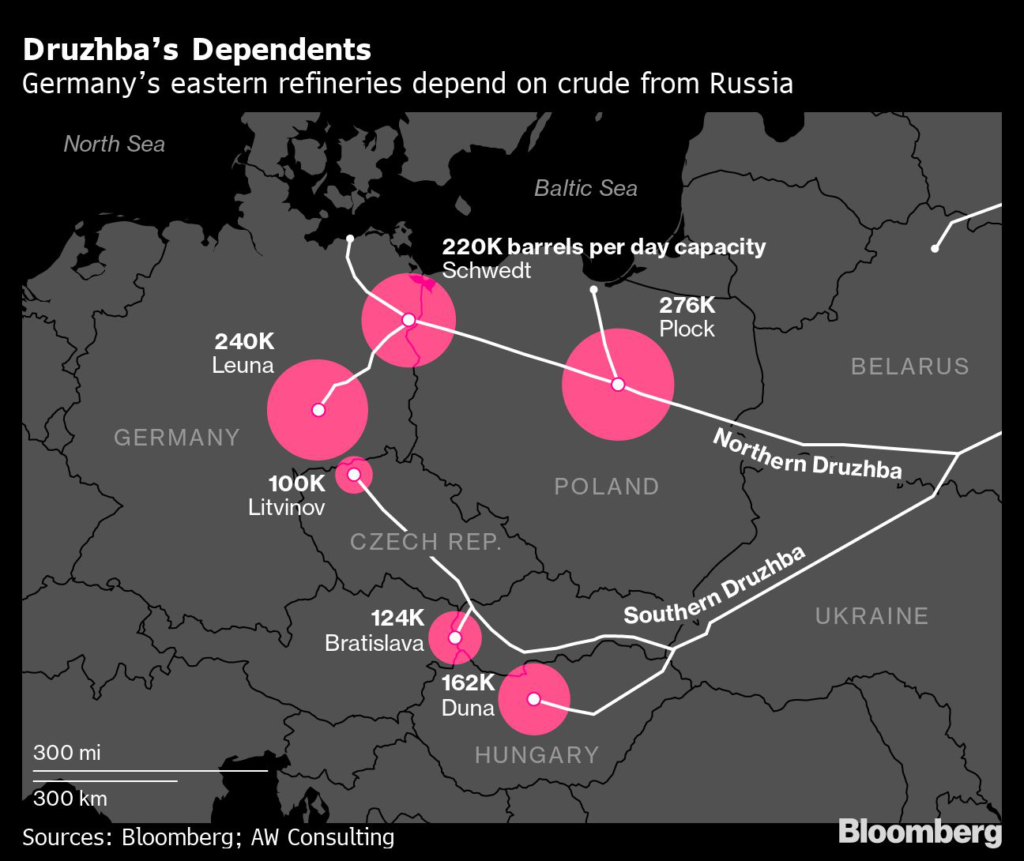
Oil flows via the northern leg of the Druzhba pipeline, which supplies, Germany and Poland with Russian crude oil, resumed in full on Saturday after an accident earlier in the week, according to Poland’s pipeline operator PERN. 

Poland early ruled out third-party involvement in the incident, at a time Europe is on high alert about potential sabotage to infrastructure. 

Ukraine Expects Red Cross Officials in East on Monday (1:57 p.m.)

Ukraine expects representatives of International Committee of the Red Cross to reach the “contact line” in the country’s east on Monday, Andriy Yermak, head of Ukraine’s Office of the President, said on a video call with new ICRC President Mirjana Spoljaric Egger.

Yermak urged Egger, who took up her post this month, to do everything possible to send the ICRC mission to the penal colony in Olenivka in the Donetsk region and to have access to prisoners of war. “This is my priority,” Egger said on the call, according to a post on the presidential website. 

In late July, more than 50 Ukrainian POWs were killed in shelling at the prison that Ukraine has blamed on Russia. Moscow has said Kyiv was responsible for the attack. 

First Russian Troops Arrive in Belarus for Joint Force (11:22 a.m.)

Russian forces have started arriving in Belarus to man the new joint force with troops there, the defense ministry in Minsk said on Saturday.

“The first convoys of Russian servicemen from the regional force group have arrived in Belarus,” the ministry said, saying their mission was to “strengthen the protection and defence of the border.” 

Belarusian President Alexander Lukashenko said Monday that he and Russia’s president had agreed to deploy a regional grouping of forces. Moscow launched its failed push toward Kyiv in February from Belarusian territory. Observers this week have cited the movement of Belarusian military equipment to Russia, potentially to shore up dwindling supplies. 

Grid Operator Reports Russian Strike on Kyiv Region (9:10 a.m.)

Russian forces struck “critical” energy infrastructure in the Kyiv region, causing “severe destruction,” the grid operator Ukrenergo said on Facebook. Repairs are under way. 

Ukrenegro warned of potential emergency shutdowns and asked consumers to use power sparingly. “Such measures give our specialists the opportunity to stabilize the situation as soon as possible and carry out the necessary restorative work,” it said.  

The strike comes after Russian President Vladimir Putin said on Friday that seven of 29 of sites targeted in a mass bombing of Ukraine earlier in the week “were not damaged as planned by the Defence Ministry,” and that “the attacks will be renewed.”   


More stories like this are available on bloomberg.com

©2022 Bloomberg L.P.

Ukraine Latest: Eleven Dead in Russian Training Camp Shooting

(Bloomberg) —

At least 11 soldiers were killed after two men — said to be from an unnamed ex-Soviet state — opened fire at a Russian military training camp in the Belgorod region, near the border with Ukraine, according to state-run media. The incident comes as Russia has intensified its mobilization efforts and already deployed thousands of new recruits into combat. 

A strike was reported Sunday near the Belgorod airport in Russia, close to the Ukrainian border, with two injured. On Saturday, missile strikes caused “serious damage” to an electrical installation near Kyiv on Saturday. Residents were urged to cut their electricity use. Moscow is believed to be systematically targeting Ukraine’s power plants heading into winter. 

Ukraine’s battlefield efforts got a potential boost when Elon Musk said he’d keep providing SpaceX’s Starlink satellite-based internet service “for free.” Russian forced deportations of Ukrainians from the Kherson region amount to ethnic cleansing, a US think-tank said. 

(See RSAN on the Bloomberg Terminal for the Russian Sanctions Dashboard.) 

Key Developments

  • Russia Failed to Swap Out Western Military Parts: 2021 Audit
  • Ukraine IT Sector Tested as Putin Bombs Civilian Infrastructure
  • Saudi Arabia Announces $400M in Aid to Ukraine
  • Putin Says Has No Regrets About Ukraine Invasion After Reverses
  • Musk Tweets Complicate US Diplomacy From Ukraine to Taiwan

On the Ground

Two people were injured in a strike in the Belgorod region, about 50 km north of the border with Ukraine, the region’s governor said. Unverified social media posts suggested multiple explosions and showed smoke billowing in the vicinity of the area’s airport. Russian forces conducted five missile and 23 air strikes, as well as attacks from multiple-launch rockets, in the last 24 hours and more than 30 settlements were hit, Ukraine’s Defense Ministry said on Facebook early Sunday. It said Russian attacks were repelled in several areas but there were no indications of major changes at the front line. Ten Ukrainians were killed ant 14 injured in Saturday strikes, according to the deputy head of President Volodymyr Zelenskiy’s staff, Kyrylo Tymoshenko. 

(All times CET)

Forced Deportations Amount to Ethnic Cleansing of Ukrainians, ISW Says (10 a.m.)

Massive, forced deportations of Ukrainians, including children subsequently put up for adoption, “likely amount to a deliberate ethnic cleansing campaign” and a violation of the Convention on the Prevention and Punishment of the Crime of Genocide, said the Institute for the Study of War. 

Moscow may be carrying out a wider ethnic cleansing campaign “by depopulating Ukrainian territory through deportations and repopulating Ukrainian cities with imported Russian citizens,” the US-based military analysts said in a report. 

Ukrainian sources have said that reconstruction projects in Mariupol, the southern city mostly razed by Russia bombardments in the spring, are intended to house “tens of thousands of Russians.” 

Iran Stepping Up Arms Deliveries to Russia: WaPost (9 a.m.) 

Tehran will supply Russia with what officials describe as the first Iranian-made surface-to-surface missiles, in addition to replenishing its supply of attack drones, the Washington Post reported, citing US and allied security officials. 

Iran is preparing for the first time to send Fateh-110 and Zolfaghar short-range ballistic missiles, the newspaper reported, citing officials briefed on the matter. Such missiles would help Moscow replenish a fast shrinking supply of precision-guided munitions, such as those used in last week’s strikes against several Ukrainian cities. 

Iran has repeatedly denied supplying drones to Russia despite mounting evidence of their use in the war. Ukraine’s military estimates Russian still has about 300 Iranian-made drones with plans to buy thousands more. Separately, the UK defence ministry said on Sunday that Russia is probably incapable of producing advanced munitions at the rate they’re being expended.

Read more: Russia Failed to Swap Out Western Military Parts: 2021 Audit

Eleven Killed at Shooting at Russian Training Base (8 a.m.)

Eleven people were killed and 15 wounded at a training base in the Belgorod region near the Ukrainian border Saturday, Russia’s Defense Ministry said, according to Interfax.

The two citizens of another unnamed ex-Soviet state who opened fire at the weapons training session for “volunteers” headed to Ukraine were killed, the ministry said. Calling the attackers “terrorists,” it provided few other details. The region’s governor said all the dead and wounded were military personnel.

Moscow has sought to build up the ranks of its military by offering citizens of former Soviet states the chance to get Russian passports in return for serving in its military.

Ukraine’s Naftogaz in Talks to Market Gas Reserves: Telegraph (7:42 a.m.)

Ukraine is in talks with US drillers to pump gas from its untapped reserves to Europe and ease the region’s energy crisis by the end of the decade, the Telegraph reported, citing an interview with an adviser to Naftogaz’s chief executive.

“We have a number of resources and gas reserves there that are basically the second largest in Europe,” said Myron Wasylyk. “We estimate there could be up to 40 billion cubic meters.”

Musk Signals He’s Backing Off Starlink Threat (8:42 p.m.)

Elon Musk said Saturday he’d continue to fund Starlink satellites in Ukraine “for free” after a standoff with the US Defense Department over the cost of their deployment.

Musk threatened a day earlier to cut financial support for SpaceX’s satellite internet service in Ukraine, claiming that the operation had cost his company $80 million so far. The Pentagon said it was in talks with SpaceX, while saying the US is looking at other options. 

S. Korean Central Banker Calls on China’s Help to End War (5:30 p.m.)

Bank of Korea Governor Rhee Chang-yong urged Beijing to take on a more active role in trying to end the Russian war in Ukraine and calm the world’s geopolitical situation. 

“I really hope that China can play a very important role,” Rhee said in Washington on Saturday. “I really hope that my old friends in China can step up efforts to stop the Russian war.” 

If any country can talk to Russian President Vladimir Putin, it’s China, he said, adding that Beijing can be a “bridge between Russia and the West” and help its own relations with Washington in the process.  

More Ships Sail With Ukrainian Farm Products (5:25 p.m.)

Another seven vessels with a total of 101,000 tons of agriculture products left Ukraine’s Odesa-area ports on Saturday for destinations in Asia and Europe, Ukraine’s infrastructure ministry said on Facebook.

Since the safe-transit agreement was reached with Russia in late July, 7.5 million tns of grains and other farm products have departed on 341 ships, the ministry said. 

Fire at Oil Depot in Russia’s Belgorod (5 p.m.)

A major fire at an oil depot near the Russian city of Belgorod was caused by a second day of Ukrainian cross-border shelling, the region’s governor said. 

Social media posts showed black smoke billowing in the area. Belgorod is about 60 miles north of the Ukrainian border.  Ukraine hasn’t commented.   

Poland Says Oil Flows Resume on Druzhba Pipeline (4:14 p.m.)

Oil flows via the northern leg of the Druzhba pipeline, which supplies, Germany and Poland with Russian crude oil, resumed in full on Saturday after an accident earlier in the week, according to Poland’s pipeline operator PERN. 

Poland early ruled out third-party involvement in the incident, at a time Europe is on high alert about potential sabotage to infrastructure. 

Ukraine Expects Red Cross Officials in East on Monday (1:57 p.m.)

Ukraine expects representatives of International Committee of the Red Cross to reach the “contact line” in the country’s east on Monday, Andriy Yermak, head of Ukraine’s Office of the President, said on a video call with new ICRC President Mirjana Spoljaric Egger.

Yermak urged Egger, who took up her post this month, to do everything possible to send the ICRC mission to the penal colony in Olenivka in the Donetsk region and to have access to prisoners of war. “This is my priority,” Egger said on the call, according to a post on the presidential website. 

In late July, more than 50 Ukrainian POWs were killed in shelling at the prison that Ukraine has blamed on Russia. Moscow has said Kyiv was responsible for the attack. 

First Russian Troops Arrive in Belarus for Joint Force (11:22 a.m.)

Russian forces have started arriving in Belarus to man the new joint force with troops there, the defense ministry in Minsk said on Saturday.

“The first convoys of Russian servicemen from the regional force group have arrived in Belarus,” the ministry said, saying their mission was to “strengthen the protection and defence of the border.” 

Belarusian President Alexander Lukashenko said Monday that he and Russia’s president had agreed to deploy a regional grouping of forces. Moscow launched its failed push toward Kyiv in February from Belarusian territory. Observers this week have cited the movement of Belarusian military equipment to Russia, potentially to shore up dwindling supplies. 

Grid Operator Reports Russian Strike on Kyiv Region (9:10 a.m.)

Russian forces struck “critical” energy infrastructure in the Kyiv region, causing “severe destruction,” the grid operator Ukrenergo said on Facebook. Repairs are under way. 

Ukrenegro warned of potential emergency shutdowns and asked consumers to use power sparingly. “Such measures give our specialists the opportunity to stabilize the situation as soon as possible and carry out the necessary restorative work,” it said.  

The strike comes after Russian President Vladimir Putin said on Friday that seven of 29 of sites targeted in a mass bombing of Ukraine earlier in the week “were not damaged as planned by the Defence Ministry,” and that “the attacks will be renewed.”   


More stories like this are available on bloomberg.com

©2022 Bloomberg L.P.

India Says New Digital Banking Units to Spur Financial Inclusion

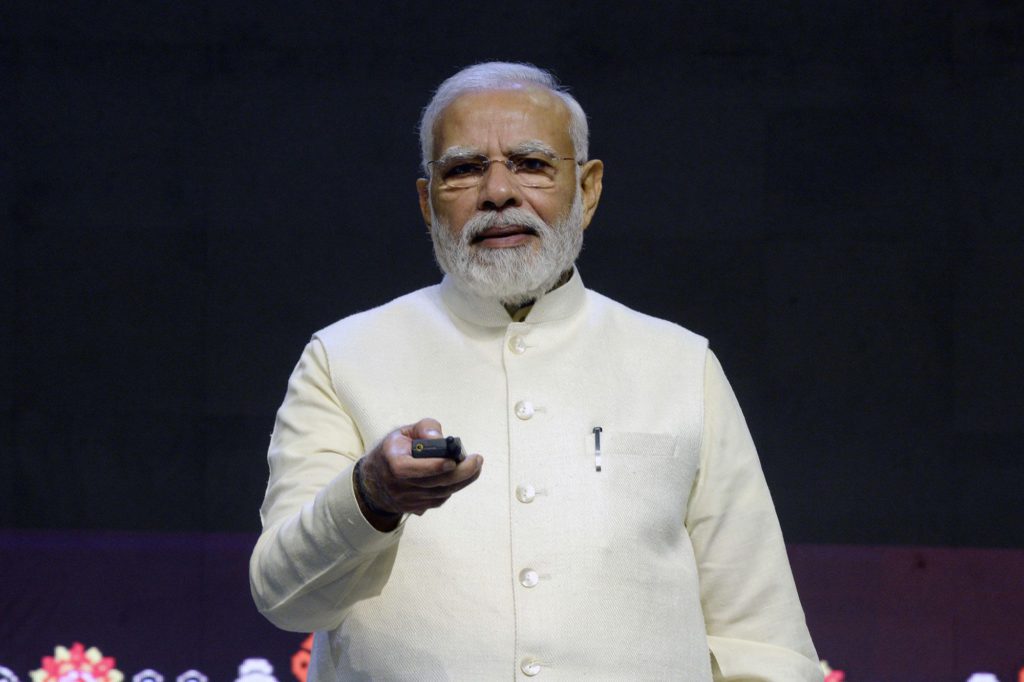
(Bloomberg) — India’s Prime Minister Narendra Modi announced the rollout of 75 digital banking units, or DBUs, as the federal government seeks to bolster financial inclusion in the country of almost 1.4 billion people.

“People living in small towns and villages will find benefits like transferring money to availing loans,” Modi said Sunday in an online to mark the launch of this new format of banking hubs in 75 Indian districts. “Digital Banking Units are another big step” toward making banking services more accessible to citizens, he said.

These DBUs — first announced in February — will be brick-and-mortar units and help Indian citizens in availing basic banking facilities such as opening bank accounts, applying for loans, transferring funds and paying taxes online, according to a government statement Sunday.

ICICI Bank Ltd. and HDFC Bank Ltd., two of India’s largest private-sector lenders, announced setting up of four DBUs each in smaller Indian towns, according to separate statements from the banks. While ICICI has set up the DBUs at Dehradun, Karur, Kohima and Puducherry, HDFC is opening these at Haridwar, Chandigarh, Faridabad and South 24 Parganas.

More stories like this are available on bloomberg.com

©2022 Bloomberg L.P.

India’s Rupee Will Endure Dollar Strengthening, Sitharaman Says

(Bloomberg) — The Indian currency will withstand the recent strengthening of the dollar, Finance Minister Nirmala Sitharaman said, reiterating a central bank forecast that the South Asian economy will grow at 7% in the year to March, 2023.

“The Indian rupee has performed much better than many other emerging market currencies,” Sitharaman said at a media briefing in Washington D.C. late on Saturday. The country’s central bank was working to contain the rupee’s volatility, she said, adding that the “rupee will find its own level.”

Rupee Declines to New Record; Bonds Pare Losses: Inside India

The Indian currency has plummeted to new lows against the US dollar in recent weeks amid fears of a global recession. While the Narendra Modi-led government is concerned about the global economic outlook and geopolitical challenges, it is confident the country will “stay on course,” according to a statement Saturday from the finance ministry.

 The International Monetary Fund lowered India’s growth forecast to 6.8% this month on “significant” headwinds. The Reserve Bank of India last month cut its GDP forecast to 7% from its earlier prediction of 7.2%.

Some of the other highlights from Sitharaman’s comments from the media briefing in the US:

  • India is “keeping a watch” to ensure it doesn’t have a disproportionate trade deficit with any country
  • India inflation is at a “manageable level” and the government is making efforts to keep it below 6%
  • During its G20 presidency next year, India will focus on issues such as multinational development banks, the debt situation and climate change
    • Note: India will assume the G20 presidency from Dec. 1 to Nov. 30 next year
  • Another area of focus during the G20 presidency will be developing standard operating procedures for cryptocurrencies
  • The fundamentals of the Indian economy and its foreign-exchange reserves are both robust

More stories like this are available on bloomberg.com

©2022 Bloomberg L.P.

Ukraine Latest: 11 Dead in Shooting at Russian Training Camp

(Bloomberg) —

Eleven soldiers were killed and 15 wounded after two men from an unnamed ex-Soviet state opened fire on Saturday at a Russian military training camp in the Belgorod region, near the border with Ukraine, according to state-run media. The incident comes as Russia has stepped up mobilization of reserves and already deployed thousands into combat. 

Russian forces caused “serious damage” to an electrical installation near Kyiv on Saturday, grid operator Ukrenegro said, with emergency blackouts possible even after power was restored. Residents in the Kyiv area and in neighboring regions were urged to immediately cut their electricity use. “If we don’t follow this advice, we will have to take out the candles and suffer all the consequences,” said Kyrylo Tymoshenko, deputy head of Ukraine’s presidential administration.

Ukraine’s battlefield effort got a potential boost when Elon Musk said he’d keep providing SpaceX’s Starlink satellite-based internet service “for free.” South Korea’s central bank head called on China to persuade Russia to end the war.   

(See RSAN on the Bloomberg Terminal for the Russian Sanctions Dashboard.) 

Key Developments

  • Russia Failed to Swap Out Western Military Parts: 2021 Audit
  • Ukraine IT Sector Tested as Putin Bombs Civilian Infrastructure
  • Saudi Arabia Announces $400M in Aid to Ukraine
  • Putin Says Has No Regrets About Ukraine Invasion After Reverses
  • Musk Tweets Complicate US Diplomacy From Ukraine to Taiwan
  • Canada Wants ‘Arsonist’ Russia to Be Barred From IMF and G-20

On the Ground

Russian forces launched missiles at the Kyiv region again overnight, with damage reported to energy systems. Kamikaze drone attacks also took place in the Dnipro regions and Zaporizhzhia regions. Ukraine’s military estimates Russian still has about 300 Iranian-made drones with plans “to buy several thousand more.” A large number of wounded people are being admitted to medical facilities in the regions annexed by Russia last month after a vote called illegal by the UN. Several people were wounded by Russian shelling in the Nikopol region in southern Ukraine that a regional administrator said were designed to cause “maximum damage to civilians.” 

(All times CET)

Eleven Killed at Shooting at Russian Training Base (8 a.m.)

Eleven people were killed and 15 wounded at a training base in the Belgorod region near the Ukrainian border Saturday, Russia’s Defense Ministry said, according to Interfax.

The two citizens of another unnamed ex-Soviet state who opened fire at the weapons training session for “volunteers” headed to Ukraine were killed, the ministry said. Calling the attackers “terrorists,” it provided few other details. The region’s governor said all the dead and wounded were military personnel.

Moscow has sought to build up the ranks of its military by offering citizens of former Soviet states the chance to get Russian passports in return for serving in its military.

Musk Signals He’s Backing Off Starlink Threat (8:42 p.m.)

Elon Musk said Saturday he’d continue to fund Starlink satellites in Ukraine “for free” after a standoff with the US Defense Department over the cost of their deployment.

Musk threatened a day earlier to cut financial support for SpaceX’s satellite internet service in Ukraine, claiming that the operation had cost his company $80 million so far. The Pentagon said it was in talks with SpaceX, while saying the US is looking at other options. 

S. Korean Central Banker Calls on China’s Help to End War (5:30 p.m.)

Bank of Korea Governor Rhee Chang-yong urged Beijing to take on a more active role in trying to end the Russian war in Ukraine and calm the world’s geopolitical situation. 

“I really hope that China can play a very important role,” Rhee said in Washington on Saturday. “I really hope that my old friends in China can step up efforts to stop the Russian war.” 

If any country can talk to Russian President Vladimir Putin, it’s China, he said, adding that Beijing can be a “bridge between Russia and the West” and help its own relations with Washington in the process.  

More Ships Sail With Ukrainian Farm Products (5:25 p.m.)

Another seven vessels with a total of 101,000 tons of agriculture products left Ukraine’s Odesa-area ports on Saturday for destinations in Asia and Europe, Ukraine’s infrastructure ministry said on Facebook.

Since the safe-transit agreement was reached with Russia in late July, 7.5 million tns of grains and other farm products have departed on 341 ships, the ministry said. 

Fire at Oil Depot in Russia’s Belgorod (5 p.m.)

A major fire at an oil depot near the Russian city of Belgorod was caused by a second day of Ukrainian cross-border shelling, the region’s governor said. 

Social media posts showed black smoke billowing in the area. Belgorod is about 60 miles north of the Ukrainian border.  Ukraine hasn’t commented.   

Poland Says Oil Flows Resume on Druzhba Pipeline (4:14 p.m.)

Oil flows via the northern leg of the Druzhba pipeline, which supplies, Germany and Poland with Russian crude oil, resumed in full on Saturday after an accident earlier in the week, according to Poland’s pipeline operator PERN. 

Poland early ruled out third-party involvement in the incident, at a time Europe is on high alert about potential sabotage to infrastructure. 

Ukraine Expects Red Cross Officials in East on Monday (1:57 p.m.)

Ukraine expects representatives of International Committee of the Red Cross to reach the “contact line” in the country’s east on Monday, Andriy Yermak, head of Ukraine’s Office of the President, said on a video call with new ICRC President Mirjana Spoljaric Egger.

Yermak urged Egger, who took up her post this month, to do everything possible to send the ICRC mission to the penal colony in Olenivka in the Donetsk region and to have access to prisoners of war. “This is my priority,” Egger said on the call, according to a post on the presidential website. 

In late July, more than 50 Ukrainian POWs were killed in shelling at the prison that Ukraine has blamed on Russia. Moscow has said Kyiv was responsible for the attack. 

First Russian Troops Arrive in Belarus for Joint Force (11:22 a.m.)

Russian forces have started arriving in Belarus to man the new joint force with troops there, the defense ministry in Minsk said on Saturday.

“The first convoys of Russian servicemen from the regional force group have arrived in Belarus,” the ministry said, saying their mission was to “strengthen the protection and defence of the border.” 

Belarusian President Alexander Lukashenko said Monday that he and Russia’s president had agreed to deploy a regional grouping of forces. Moscow launched its failed push toward Kyiv in February from Belarusian territory. Observers this week have cited the movement of Belarusian military equipment to Russia, potentially to shore up dwindling supplies. 

Grid Operator Reports Russian Strike on Kyiv Region (9:10 a.m.)

Russian forces struck “critical” energy infrastructure in the Kyiv region, causing “severe destruction,” the grid operator Ukrenergo said on Facebook. Repairs are under way. 

Ukrenegro warned of potential emergency shutdowns and asked consumers to use power sparingly. “Such measures give our specialists the opportunity to stabilize the situation as soon as possible and carry out the necessary restorative work,” it said.  

The strike comes after Russian President Vladimir Putin said on Friday that seven of 29 of sites targeted in a mass bombing of Ukraine earlier in the week “were not damaged as planned by the Defence Ministry,” and that “the attacks will be renewed.”   


More stories like this are available on bloomberg.com

©2022 Bloomberg L.P.

Key Takeaways From Xi Jinping’s Two-Hour Speech

(Bloomberg) —

President Xi Jinping delivered a wide-ranging speech Sunday laying out the Communist Party’s agenda for China over the next five years, covering everything from Taiwan to tech policy.

Here are the key takeaways:

Foreign Policy

Xi: “China’s international influence, appeal and power to shape the world has significantly increased.”

“Confronted with drastic changes in the international landscape, we have maintained firm strategic resolve and shown a fighting spirit. Throughout these endeavors, we have safeguarded China’s dignity and core interests and kept ourselves well-positioned for pursuing development and ensuring security.”

The context: Xi declared China would “standi tall and firm in the East” at the last congress in 2017, departing from former leader Deng Xiaoping’s “hide and bide” strategy. That shift along with Beijing’s moves to crush dissent in Hong Kong and Xinjiang, lack of transparency on Covid’s origins, partnership with Russia and more aggressive posture toward Taiwan and the South China Sea, has put China on a collision course with the West.

Development Model

Xi: “Chinese modernization offers humanity a new choice for achieving modernization.”

The context:  China had long stressed that its development path is unique and does not follow traditional Western approaches based on capitalism. Xi elaborated on what the Chinese model, saying it is peaceful and based on maintaining the leadership of the party, realizing high quality growth and achieving “common prosperity.” While officials previously stressed the country does not seek to export its development model, Beijing has shown increasing ambition to reform the global governance system by offering alternatives.Common Prosperity

Xi: “We will steadfastly push for common prosperity. We will improve the system of income distribution. We will ensure more pay for more work and encourage people to achieve prosperity through hard work. We will promote equality of opportunity, increase the income of low income earners and expand the size of the middle income group. We will keep income distribution and the means of accumulating wealth well regulated.”

The context:  Xi elevated the common prosperity slogan last year amid crackdowns on thebig tech, education and real estate sectors, drawing unease from investors who saw heavy losses from sudden policy shifts. That campaign to narrow China’s wealth gap fell out of the limelight this year as Covid lockdowns battered the economy. Today, Xi made clear it’s still high on the priority list.

Covid Zero

Xi: “In responding to the sudden attack of Covid-19, we put the people and their lives above all else and tenaciously pursued a dynamic Zero Covid policy. We have protected the people’s health and safety to the greatest extent possible and made tremendously encouraging achievements in both epidemic response and economic and social development.”

The context: Anyone looking for signs China’s Covid strategy, which has kept its virus death toll low at growing economic and social costs,  would have been disappointed. Xi signaled the zero-tolerance strategy he’s a cornerstone of his leadership is going strong, even as public tolerance for it appears to be cracking.

Economy

Xi:  “High-quality development is the top priority of building a socialist modern country in all aspects. Development is the party’s top priority in governing. It’s impossible to build a socialist modern strong country in all aspects without solid material and technology foundation.”

The context:  Despite some analysts suggesting there may be a slight shift in Xi’s speech to elevate national security at the expense of economic growth, Xi repeated the slogan from previous party congress speeches that development is the party’s “top priority.” Some China observers had expected Xi to give equal weighting to security and development, a signal that Beijing could tolerate slower economic growth in order to meet other policy goals. By sticking to earlier language, Xi’s speech suggests no real departure from economic goals.

Taiwan 

Xi:  “We will continue to strive for peaceful reunification with the greatest sincerely and the upmost effort, but we will never promise to renounce the use of force, and we reserve the option of taking all measures necessary. The wheels of history are rolling on towards China’s reunification and the rejuvenation of the Chinese nation. The complete reunification of our country must be realized and it can without a doubt be realized.”

The context: Xi reaffirmed the party line on Taiwan, one of Beijing’s main points of acrimony with the US. Beijing sees the self-governing island as its territory and has ramped up military pressure over the past year. President Joe Biden has repeatedly said the US would come to the democracy’s aid if attacked, marking a shift in the policy of “strategic ambiguity” that guided US-China relations for decades — even as the White House insists nothing has changed.

Hong Kong

Xi:  “In the face of turbulent developments in Hong Kong, the central government exercised its overall jurisdiction over the special administrative region as prescribed by China’s Constitution and the Basic Law of the Hong Kong Special Administrative Region. It ensured that Hong Kong is governed by patriots. Order has been restored in Hong Kong, marking a major turn for the better in the region.”

The context: Beijing imposed a national security law on Hong Kong that bans terrorism, secession, subversion and collusion with foreign force in June 2020 to quell anti-government dissent, after city-wide protests erupted a year prior. Several pro-democracy media outlets have closed under a pressure campaign from that legislation, which has been used to jail scores of opposition leaders and been condemned by the US and other Western democracies for diminishing freedoms in the former British colony.

Tech Crackdown

Xi:  “We will focus on national strategic needs, gather strength to carry out indigenous and leading scientific and technological research, and resolutely win the battle in key core technologies.”

The context: China’s crackdown on its once-swaggering tech industry erased more than $1 trillion in combined market value, battering major firms such as Alibaba Group Holding Ltd. and Tencent Holdings Ltd. Xi’s speech struck a more optimistic note, instructing the sector to focus on innovation as the US moves to cut it off from cutting-edge chip capabilities. 

Military

Xi:  “We will intensify military training under combat conditions across the board to see that our armed forces can fight. We will innovate new military strategic guidance and develop strategies and tactics for people’s war, establish a strong system of strategic deterrence, increase the proportion of new domain forces with new combat capabilities, and intensifying military training under combat conditions

The context:  Xi has vowed to modernize the once infantry-dominated military by 2027. To achieve that goal, the People’s Liberation Army has undergone tremendous organizational changes and hardware upgrades. The ground force has been trimmed, while other services including navy and rocket force have gained prominence. 

Green Goals

Xi: “We will work actively and prudently toward the goals of reaching peak carbon emissions and carbon neutrality. Based on China’s energy and resource endowments, we will advance initiatives to reach peak carbon emissions in a well-planned and phased way, in line with the principle of getting the new before discarding the old.”

The context: More than any other leader of the Chinese Communist Party, Xi has sought to make the environment part of his lasting legacy. He’s dramatically cut air pollution that plagued urban residents and laid out ambitious goals for China including a target to reach net-zero emissions within four decades. But a spate of power shortages throughout the nation and global energy turmoil following Russia’s war in Ukraine have shifted the focus back on energy security, with climate goals coming in a distant second place.

(Updates with Xi’s comments on modernization.)

More stories like this are available on bloomberg.com

©2022 Bloomberg L.P.
Close Bitnami banner
Bitnami