

Bloomberg

Sports Leagues and Airlines Want More Sophisticated Weather Data

(Bloomberg) — Serena Williams walked onto the tennis court in New York to thwack practice shots on a Wednesday morning in August a week before her final appearance at the US Open. Up above, in a box office at the Arthur Ashe Stadium in Queens, the tournament’s head honchos ignored the superstar. They were transfixed by 17 monitors in the room, which showed local weather patterns, heat levels, and live camera feeds around the stadium. All those data points were designed to answer one question: Should they close the roof?

The stadium’s retractable dome, a $150 million engineering marvel, is the difference between a nationally televised sporting success and a disaster. The United States Tennis Association installed it in 2016, after a men’s final got nixed in heavy rain, and added a dome to the tournament’s second stadium two years later. Still, the elements have outmatched the architecture. Last fall, Hurricane Ida struck the East Coast, bringing historic and unexpected rainfall and winds to New York. The USTA closed the roof and postponed matches but didn’t cancel the event or turn fans away. As the storm worsened, thousands of spectators were stranded in floods, and the organizers were blamed.

A year later, reminders of that mishap were plastered around the stadium’s forecasting command center. Workers had photoshopped movie posters to represent their battle with Mother Nature and hung them on the walls. Indiana Jones and the Temple of Dome. Dew Point Wars. Singin’ in the Rain, with the names of Gene Kelly and Debbie Reynolds swapped out for those of USTA staff members. Employees had nicknamed the room “NASA Control.” But the USTA was aware it lacked NASA’s scientific pedigree. “This is not Google here,” Mike Rodriguez, director of security, said as the stadium readied for the tournament. “We could have people that can’t even get the TV on.” With a week to go before the stadiums opened, the USTA called in its forecasting specialist, Tomorrow.io, a startup in Boston that’s worked with the organization since 2018.

As the weather gets more unpredictable and deadly, sports leagues, airlines, utilities, and even militaries are turning to private forecasters such as Tomorrow.io for data that was once provided exclusively by governments, as well as for detailed advice on how to deal with the climate. Formed in 2016, Tomorrow.io has raised $260 million and signed deals with Delta Air Lines, Ford, the NFL, and the US Air Force. Next year, the company plans to launch 30 satellites equipped with meteorological radar that can monitor ocean activity many weather stations aren’t able to decipher until it hits the coast. “We want to be the biggest company in the world in weather and climate,” says Chief Executive Officer Shimon Elkabetz.

Elkabetz met his co-founders in the Israeli air force. There they discovered the paucity of good weather reporting even with the benefit of military intelligence. Rei Goffer, a Tomorrow.io co-founder and its chief strategy officer, recalls piloting an F-16 with a “super generic” one-page report listing winds and cloud patterns, without any specifics for his route or aircraft. “It’s a little more technical than what you’d see on TV,” he says. “That’s the state of the art in weather.” The veterans formed their company to tailor forecasts for specific industries that depend on predictable weather, such as airlines and sports leagues. Tomorrow.io aggregates existing data—from weather stations and sensors slapped on buoys and balloons—and mixes in other signals it collects from cell towers and car windshield wipers, an approach the company calls the “weather of things.” Its software then spits out a recommendation: Close the dome at 4 p.m. The service might tell cargo companies to avoid driving empty trucks during high winds or tell Uber Technologies Inc., another customer, to hold drivers back when wildfire smoke is blanketing the streets. Tomorrow.io declined to share its pricing or sales, but Elkabetz says his company has “a good path to profitability” within two years.

Private companies can make sharper forecasting models and better predictions than the public sector, says Kerry Emanuel, a meteorologist at the Massachusetts Institute of Technology. But he worries about privatization replacing the system national governments have in place for readily sharing weather data, particularly during emergencies. “All of a sudden,” Emanuel says, “you’ll have lots of little companies with lots of little datasets that are almost useless by themselves.”

Elkabetz points to his company’s work upgrading technology for the US government’s weather models and the online portal where it provides the basic parts of its forecasting software for free. But he dismisses the idea that the public sector should monopolize forecasting. “Imagine you had to rely for Covid-19 vaccines on a government agency,” he says. “We’d still be locked at home, probably.”

One shortcoming the company sees in public forecasting is over the sea. Existing weather stations struggle to read inclement events forming over the ocean. Tomorrow.io’s solution is to send its own satellites into orbit, fitted with meteorological radar. Several satellite startups already sell aerial footage to hedge funds and insurance companies; some have branched out into weather data. But Elkabetz argues that these competitors are fumbling for a business to fund their technical dreams. “Usually, space companies are a solution looking for a problem,” he says. He believes his company already has a problem to solve, and customers willing to pay for it. In 2021, Tomorrow.io was awarded a $19.3 million contract with the US Air Force to build weather satellites.

Tim Farrar, a space industry consultant at TMF Associates, agrees that satellite operators have struggled to find commercial success from the insights their spacecraft collect. But he says companies moving in the opposite direction—adding spacecraft to software businesses—often misjudge the difficulties of space. “It tends to take longer and cost more than they had expected,” Farrar says. Goffer cites precipitation-measuring satellites that NASA launched over a decade at a cost of almost $1 billion; he says Tomorrow.io’s efforts will cost 1% of that amount.

Ideally, these satellites can help anticipate freak events like the hurricane that shocked the US Open last year. Tomorrow.io says its tech saw the storm coming but didn’t anticipate how extreme and volatile it would be. “No one had a forecast that would indicate that type of flooding,” says Daniel Zausner, chief operating officer of the USTA’s National Tennis Center in New York. After waterlogged streets and subways left fans stranded last year, Tomorrow.io says it added a feature to alert customers about the potential impact on transportation.

Wayne McKewen, a US Open referee, spent the days before this year’s tournament studying the Tomorrow.io dashboards on his monitors for upswings in humidity or wind, signs of another big storm. Prior to working in Queens, McKewen refereed for 16 years in Melbourne, where severe heat, or more recently wildfire ash — conditions occurring more frequently around the world—can make tennis unplayable. Compared with Australia’s national forecasts, McKewen finds the Tomorrow.io information more reliable. But he admits to sometimes missing alerts in his email inbox because he confuses the company’s name with predictions about the next day. He’s usually trying to answer a more immediate question: “Is there rain in the next four hours?”

More stories like this are available on bloomberg.com

©2022 Bloomberg L.P.
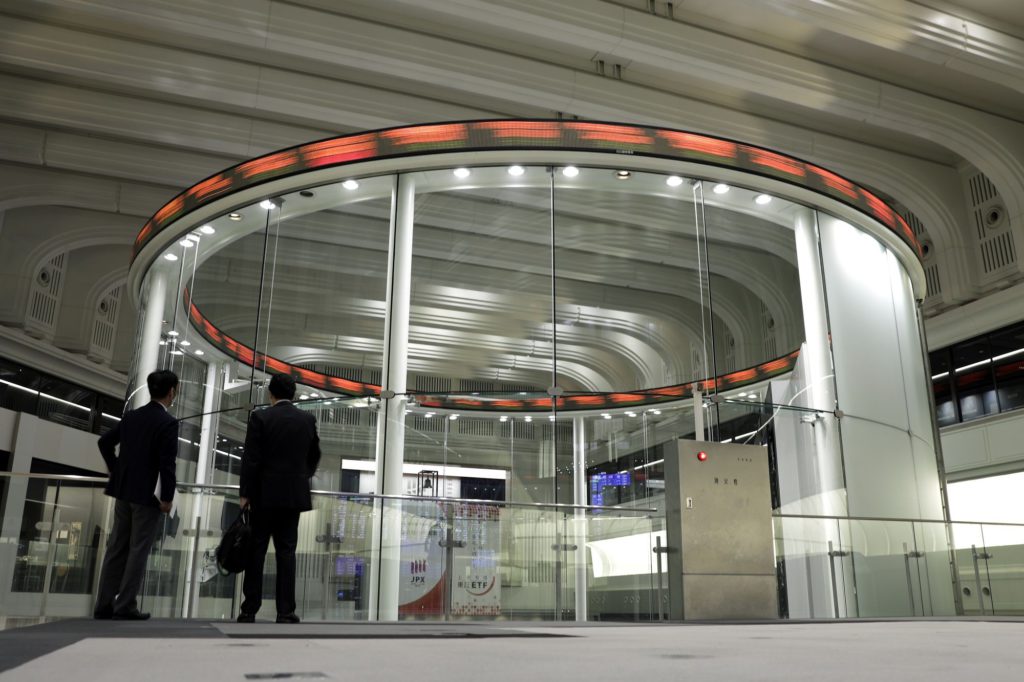
US Futures Slip Before Earnings Rush, Bonds Rally: Markets Wrap

(Bloomberg) — Equities gave up some of the previous sessions hefty gain as markets settled in to await key earnings reports from big Wall Street banks. Bonds advanced, led by UK gilts which benefited from speculation that controversial tax-cutting plans would be revised. 

Futures for the S&P 500 and Nasdaq 100 indexes slipped 0.4% and 0.7% respectively, with the latter weighed down by premarket losses on rate-sensitive chipmakers shares. The moves follow Thursday’s 2.6% surge that ended a six-day losing streak for Wall Street, even after above-forecast inflation data cemented bets on further outsize Federal Reserve interest rate hikes. 

A slew of corporate results is the next focal point for markets. JPMorgan Chase & Co, Citigroup Inc. and other big banks are expected to post the biggest profit decline of any S&P 500 Index sector, according to data compiled by Bloomberg Intelligence.

“Even though investors may look through a disappointing CPI print, it will be a much higher bar to look through weak corporate earnings.” Invesco global market strategist David Chao told clients. “Growth is below trend and decelerating because the Fed is still tightening. This is a tough backdrop for risk assets.”

The dollar advanced but held below two-week highs hit earlier this week against major currencies. Bond yields slipped, with two-year rates shedding four basis points.

UK markets remain in focus as investors awaited more news on the government’s tax-cut package and on the Bank of England’s emergency bond-buying program which expires later on Friday.

While the pound eased after Thursday’s sharp rally versus the dollar, 10-year gilt yields extended their fall. They dropped 20 basis points, falling further from the 14-year highs hit on Wednesday.

Jefferies analysts said a government U-turn would be a step “in the right direction,” which “should take some pressure off the gilt market and the BoE.”

In the premarket, financials’ shares broadly weakened amid concern tha Fed tightening could spark defaults and force banks to set aside higher provisions against losses. 

JPMorgan Chief Executive Officer Jamie Dimon offered a stark warning this week that the US is likely to enter a recession within six to nine months and that the S&P 500 could see an “easy” 20% drop.

Read more: Bank Results to Give Clues on Market’s Next Move: Earnings Watch

Chipmakers Nvidia Corp and Advanced Micro Devices shed about 1% each as Jefferies became the latest bank to highlight the impact of higher rates and US restrictions on shipments to China. Other tech giants, Microsoft Corp, Apple Inc and Alphabet Inc also lost close to 1% in premarket trading.

Europe’s Stoxx 600 equity gauge ceded some early gains but was about 0.7% higher, led by real estate and utilities.

Elsewhere, oil headed for weekly losses as signs of a global economic slowdown and tighter monetary policy threaten to sap energy consumption. The International Energy Agency earlier warned crude production cuts agreed by OPEC+ group risked causing a price spike that tipped the global economy into recession. 

Crypto assets gained, with Bitcoin touching a one-week high, within reach of surpassing the $20,000 level. 

Key events this week:

  • Earnings on Friday: JPMorgan Chase & Co., Citigroup Inc., Morgan Stanley, UnitedHealth Group Inc., U.S. Bancorp, Wells Fargo & Co.
  • US retail sales, business inventories, University of Michigan consumer sentiment, Friday
  • BOE emergency bond buying is set to end, Friday

Some of the main moves in markets:

Stocks

  • Futures on the S&P 500 fell 0.4% as of 5:39 a.m. New York time
  • Futures on the Nasdaq 100 fell 0.7%
  • Futures on the Dow Jones Industrial Average fell 0.3%
  • The Stoxx Europe 600 rose 0.7%
  • The MSCI World index rose 0.4%

Currencies

  • The Bloomberg Dollar Spot Index rose 0.4%
  • The euro fell 0.5% to $0.9725
  • The British pound fell 0.8% to $1.1234
  • The Japanese yen fell 0.4% to 147.76 per dollar

Cryptocurrencies

  • Bitcoin rose 1% to $19,585.99
  • Ether rose 2.1% to $1,321.26

Bonds

  • The yield on 10-year Treasuries declined two basis points to 3.92%
  • Germany’s 10-year yield declined nine basis points to 2.19%
  • Britain’s 10-year yield declined 18 basis points to 4.02%

Commodities

  • West Texas Intermediate crude fell 1% to $88.25 a barrel
  • Gold futures fell 0.9% to $1,661.90 an ounce

More stories like this are available on bloomberg.com

©2022 Bloomberg L.P.

MTN Talks to Buy South Africa’s Telkom Said to Have Stalled

(Bloomberg) — MTN Group Ltd.’s talks to buy South Africa’s Telkom SA SOC Ltd. have stalled following a rival proposal from another telecom company, according to people familiar with the matter. 

Negotiations about price and other terms have been halted for the time being, though MTN hasn’t decided to walk away from the deal, the people said, asking not to be identified because the discussions are confidential. 

Read More: MTN in Talks to Buy $1.3 Billion-Valued Carrier Telkom 

Telkom shares plunged as much as 16% following the Bloomberg News report, the most since April 2020, and traded 10% lower as of 11:12 a.m. in Johannesburg. That values the company at about 22 billion rand ($1.2 billion). MTN was little changed, having pared earlier gains.

MTN, Africa’s largest wireless operator, stepped back after Telkom received an approach from Rain Group Holdings Pty Ltd., creating uncertainty about its proposal, the people said. Rain said it had offered to sell itself to Telkom, which is partially owned by the South African government, in exchange for shares. 

Talks could restart if Telkom clarifies its position on the Rain offer, the people said.

“MTN could be better off quitting merger talks with Telkom and focusing on growth investment,” Bloomberg Intelligence analyst John Davies said in a note to clients. 

A representative for MTN declined to comment. A spokesperson for Telkom referred to the company’s statement on Oct. 4, which said that MTN’s proposal was still under consideration by both parties and that shareholders should exercise caution. The spokesperson declined to comment further.  

MTN and Telkom’s potential combination would create South Africa’s largest mobile operator by subscribers, overtaking rival Vodacom Group Ltd. The move would likely raise antitrust concerns, given the number of major mobile networks in the country would be reduced to three from four, with the vast majority of subscribers controlled by the top two carriers. 

“The regulatory complications of an MTN-Telkom tie-up increase risk and uncertainty, potentially outweighing the synergies of a merger,” Davies said.

Read More: MTN Seeks to Review Telkom Offer After Rain Group Proposal

(Updates with share prices in third paragraph.)

More stories like this are available on bloomberg.com

©2022 Bloomberg L.P.
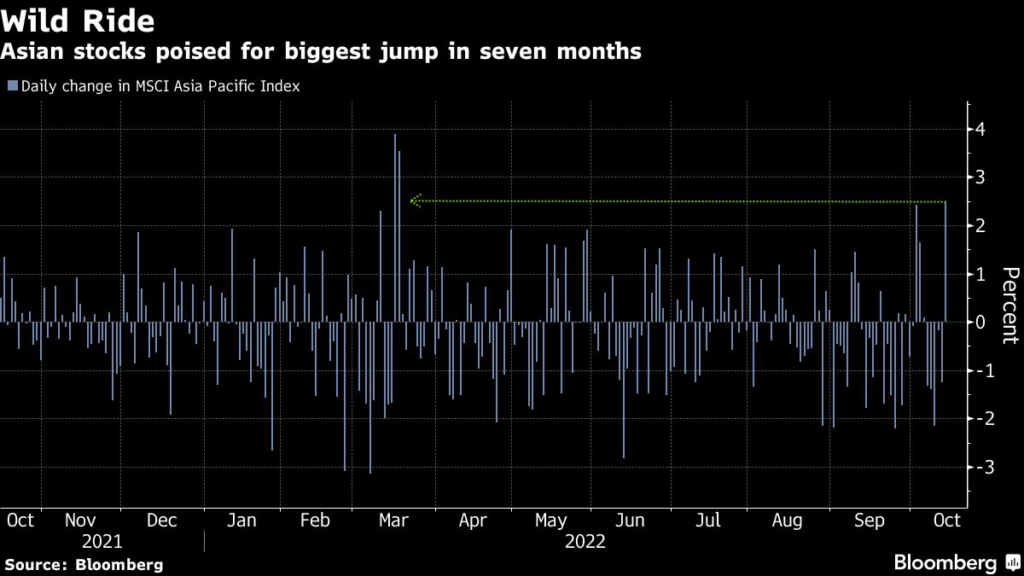
Asian Stocks Rally as Focus Turns to China’s Party Congress

(Bloomberg) — Asian equities snapped a five-day losing run, tracking a rally in US peers, with investors looking to China’s twice-a-decade Party Congress for policies to help revive its economy and markets.

The MSCI Asia Pacific Index rebounded from more than a two year low to gain 1.9%, led by technology and financial shares. Equity benchmarks in the heavyweight markets of China and Japan were among the biggest gainers.  

Friday’s surge aside, uncertainties remain high over China’s outlook with investors preparing to parse policy signals from the Congress, which starts on Sunday. Inflation in China remained relatively subdued in September as lockdowns continued to impact spending habits, latest figures showed.

Meanwhile, US consumer prices rose 8.2% year-on-year, data showed on Thursday, cementing expectations the Federal Reserve will roll out another outsized interest-rate hike at its upcoming meeting. Still, the S&P 500 roared back from losses, with dip buyers helping stage the dramatic rebound.

Read: Hot Inflation Torches Bears in a Stock Reversal for the Ages

“The question after such as big counter move, driven largely by a position adjustment, poor liquidity and changes in hedging flow, is whether the market builds on this,” Chris Weston, head of research at Pepperstone Group, wrote in a note. “The lesson once again is that flow drives markets and we must be dynamic to react to the moves.” 

Asia’s stock benchmark was still set for a weekly loss of more than 2%. The gauge is hovering near the lowest levels since April 2020 as investors continue to grapple with the prospect of faster rate increases, China’s Covid-Zero policy and rising geopolitical tensions.

In a sign of jittery sentiment, Hong Kong’s stock benchmark pared earlier gains of nearly 4% to end 1.2% higher. 

“The main consideration for markets will be once the Party Congress is out of the way, if China will renew its crackdown on tech, property and other relevant industries,” according to Ales Koutny, emerging markets portfolio manager at Janus Henderson Investors. “The trade-off between economic focus, market openness versus a shared wealth agenda will be incredibly important for China growth prospects.”

SECTORS TO WATCH:

  • Japanese restaurant-related stocks extended gains in late afternoon trading on report the Tokyo Metropolitan Government will resume the “Go to Eat” voucher program from Oct. 26
  • Shares of Asian companies with revenue from Europe gained following a Bloomberg report that UK Prime Minister Liz Truss’s administration is preparing to abandon a central part of its tax-cutting agenda amid market turmoil.
  • Chinese chip equipment makers were mixed on Friday after a US official said the Biden administration is also restricting the export of items that will be used to develop or produce indigenous semiconductor manufacturing equipment in China
  • Asian airline stocks followed their US peers higher after Delta Air Lines said it sees profit in the final months of the year outpacing Wall Street’s expectations

MARKETS AT A GLANCE

  • MSCI Asia Pacific Index up 1.9%
  • Japan’s Topix index up 2.4%; Nikkei 225 up 3.3%
  • Hong Kong’s Hang Seng Index up 1.2%; Hang Seng China Enterprises up 1.2%; Shanghai Composite up 1.8%; CSI 300 up 2.4%
  • Taiwan’s Taiex index up 2.5%
  • South Korea’s Kospi index up 2.3%; Kospi 200 up 2.4%
  • Australia’s S&P/ASX 200 up 1.7%; New Zealand’s S&P/NZX 50 up 0.5%
  • India’s S&P BSE Sensex Index up 1.6%; NSE Nifty 50 up 1.6%
  • Singapore’s Straits Times Index up 0.3%; Malaysia’s KLCI Index up 1%; Philippine Stock Exchange Index up 0.2%; Jakarta Composite Index down 1%; Vietnam’s VN Index up 1%

ADVANCERS

  • Longi Green jumped 8.9% after the company posted third-quarter earnings that beat Citigroup’s estimates
  • Ryohin Keikaku soared 7.7% after the Japanese retailer and Muji owner posted 4Q operating profit that beat estimates
  • Taiwan Semiconductor Manufacturing Co. rose 4.3% after it reported third-quarter earnings that beat expectations

DECLINERS

  • Hong Kong Exchanges and Clearing fell 4.6% ahead of its third-quarter results due next Wednesday

(Update prices.)

More stories like this are available on bloomberg.com

©2022 Bloomberg L.P.

This Week in Crypto: SEC Investigates Yuga Labs, What’s Happening in China

  • Listen to Bloomberg Crypto on the iHeartRadio App
  • Listen to Bloomberg Crypto on Apple Podcasts
  • Listen to Bloomberg Crypto on Spotify  

(Bloomberg) — It’s been (another) busy week for digital  assets. And now that we’re well into October, we have a better idea of whether the month will deliver a boost to crypto value as it has in years past. 

Guest-host and senior crypto editor Anna Irrera reviews some regulatory actions that took place this week and considers what smoke signals it may be sending to investors and to companies. Plus, a look at how China’s crypto ban has played out – spoiler alert: it’s not unfolding like many expected it would.  

Joining Anna for this episode is Bloomberg senior crypto editor Philip Lagerkranser and Bloomberg Crypto blogger Emily Nicolle, who wrote about DeFi’s current doldrums in this week’s Crypto Newsletter.


Follow us on Twitter @crypto, and subscribe to the Bloomberg Crypto Newsletter at https://bloom.bg/cryptonewsletter

More stories like this are available on bloomberg.com

©2022 Bloomberg L.P.
Rolex Prices to Drop Further as Supply Surges: Morgan Stanley

(Bloomberg) — Prices for the most popular pre-owned Rolex, Patek Philippe and Audemars Piguet watches will fall further as the market has been flooded with supply, analysts at Morgan Stanley said in a report.

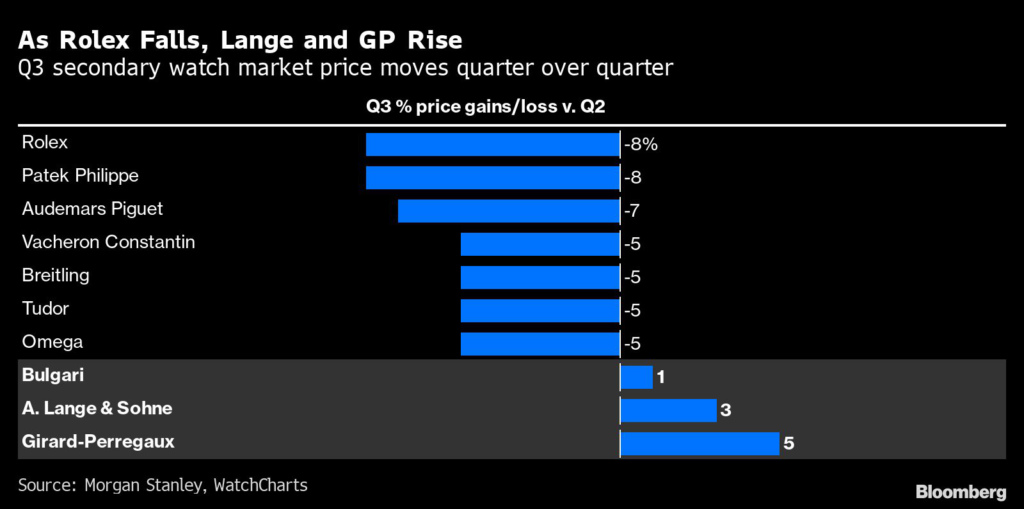
After surging in 2021 and during the first quarter of 2022, an index of the most popular models from Daytona chronograph maker Rolex tracked by WatchCharts has fallen by 21% since the market peak in April. Prices for the most popular Nautilus-maker Patek Philippe references are down an average of 19% on the secondary market while those for Audemars Piguet, the maker of the Royal Oak, have declined 15% since the peak. 

Prices will likely keep falling due to a “dramatic” increase in supply, Morgan Stanley analysts including Edouard Aubin said in the report.

“We have noticed a significant increase of watch inventory in the secondary watch market year to date as a result of secondhand watch dealers and individual watch investors off-loading their stocks,” Morgan Stanley said. 

“Given the current watch inventory for sale and the worsening macro backdrop, we would expect second hand prices to contract further quarter over quarter.”

The most in-demand models of the ‘big three’ – Rolex, Patek and Audemars Piguet – account for a significant 71% of of the total traded value of the secondary luxury watch market. Prices for the WatchCharts overall market index, which includes other brands, fell by 9% in the third quarter this year compared to the second quarter. 

An example of the decline is the Vacheron Constantin Overseas reference 4500V/110A-B483. The steel sportswatch model, made by the Richemont-owned brand with a retail price of $22,500, peaked at $39,900 on the secondary market in April. It can now be purchased for about $30,900, which is still a significant premium over retail. 

Secondary watch market prices have declined less than many other asset classes during the past 18 months, according to the report. While secondhand prices of the 30 most traded Rolex watches fell 8% this quarter, they are still up a cumulative 21% since January 2021. This compares favorably to the S&P 500 stock market index which is flat while Bitcoin is down 34% during the same period. 

The report identifies a few Swiss watch brands that are bucking the price decline trend. Even as Rolex and Patek prices fell, LVMH-owned Bulgari models rose 1%, Richemont’s A. Lange & Sohne increased 3% and Girard Perregaux, a brand that was purchased in a management-led buyout from Kering SA this year, climbed 5%. 

More stories like this are available on bloomberg.com

©2022 Bloomberg L.P.

Musk Says SpaceX Can’t Help Fund Ukraine Internet Indefinitely

(Bloomberg) — Elon Musk warned his company SpaceX cannot help carry the cost of high-speed broadband internet for Ukraine indefinitely, after an earlier furor over his public comments suggesting the government in Kyiv cede territory in exchange for peace with Russia.

SpaceX “is not asking to recoup past expenses” on Starlink services in Ukraine, Musk said on Twitter, but it also cannot sustain the financial support or send thousands more terminals to Ukraine. The Starlink terminals deployed in Ukraine are using data as much as 100 times the amount of typical households, Musk added. A week ago he tweeted that Starlink in Ukraine had cost SpaceX $80 million, which would likely surpass $100 million by the end of the year.

Mykhailo Fedorov, Ukraine’s minister for digital transformation, has said previously the country is getting Starlink terminals free of charge, although he added there might be a different arrangement between Musk and the US Agency for International Development and European entities which provided most of the Starlinks to Ukraine. The terminals are proving crucial in supporting infrastructure across Ukraine and for its troops on the ground against Russian forces.

CNN reported on Thursday that SpaceX warned the Pentagon in September it may no longer part-fund the Starlink service in Ukraine unless the US military provided tens of millions of dollars of support per month. Musk is the world’s richest man.

There was no immediate comment from the Ukraine president’s office or the information ministry.

Musk angered Ukrainians — from President Volodymyr Zelenskiy down — with his recent suggestion that Ukraine should seek a negotiated solution to the invasion by Russia and cede Crimea, which was annexed by Moscow in 2014, for good. Musk also launched a Twitter poll asking citizens of recently annexed occupied parts of eastern Ukraine and Crimea to decide if they want to live in Russia or Ukraine, days after Ukraine, Europe and the US denounced the annexation moves of President Vladimir Putin.

Ian Bremmer, head of political-risk consultancy Eurasia Group, wrote in a note to clients this week that Musk told him about speaking recently with Putin. Bremmer said that conversation came before Musk posted his tweets urging Ukraine to find a negotiated solution to the war. Both Musk and the Kremlin subseqently denied that he had spoken with Putin this year.

More stories like this are available on bloomberg.com

©2022 Bloomberg L.P.

TSMC Jumps After Capex Cut and Better-Than-Expected Earnings

(Bloomberg) — Taiwan Semiconductor Manufacturing Co. shares had their biggest jump in three months after the company slashed its 2022 capital spending target by roughly 10% and reported better-than-expected earnings.

TSMC said it expects to spend about $36 billion in 2022 on capital equipment, down from at least $40 billion previously. The company, which reported better-than-estimated third-quarter net income of NT$280.9 billion ($8.8 billion), is projecting revenue of $19.9 billion to $20.7 billion in the December quarter, though that assumes certain US dollar expectations at a time Asian currencies have weakened.

Asia’s semiconductor sector as a whole rose following a rebound in American peers after hot US inflation data. The Bloomberg Asia Pacific Semiconductors Index gained as much as 3.6% and the Philadelphia Semiconductor Index closed 2.9% higher. TSMC’s stock rose 4.3% in Taipei on Friday.

“The time to start buying TSMC stock for absolute upside has now arrived,” JPMorgan analysts said after TSMC’s earnings. Shares had tanked earlier in the week, taking its market capitalization to about $320 billion from more than $550 billion in January.

TSMC and its peers are grappling with Washington’s sweeping restrictions on doing business with China, which are sending shock waves through the global semiconductor industry. Applied Materials Inc., a leading producer of chip-making equipment, slashed its forecast for the fourth quarter, while Intel Corp. is said to be preparing to fire thousands. Shares in European gear maker ASML Holding NV, whose top customer is TSMC, fell as much as 3% Thursday.

The moves unveiled last week are the Biden administration’s most aggressive yet as it tries to stop China from developing technological capabilities it sees as a threat. The actions, which have incensed Beijing, threaten to disrupt a global economy already dealing with a potential global recession, soaring inflation and lingering supply snarls.

“The company’s 10% cut in full-year capital spending target implies prolonged weakness in smartphone and PC chip demand,” Bloomberg Intelligence analyst Charles Shum said.

Executives said that they won a license from the US to continue operating and building out their 16 nanometer and 28 nanometer lines at Nanjing in China, joining companies from SK Hynix Inc. to Samsung Electronics Co. in securing narrow exemptions to the chip curbs from Washington.

The grants allow Asia’s three largest chipmakers to maintain their existing plants and operations in the world’s biggest semiconductor market, for instance by buying, importing and upgrading American tools. They may also be allowed to expand existing facilities covered by the licenses — which in TSMC’s case involves more mature nodes that are several generations behind state of-the-art. It’s unclear, however, if foreign firms will be allowed to move up the technology ladder, or have American employees working on the lines in China.

TSMC to the World: We Have No Good News for You: Tim Culpan

The Biden administration measures limit the ability of companies that use US technology to sell products to China. They include restrictions on the export of some types of chips used in artificial intelligence and supercomputing, and also tighter rules on the sale of semiconductor equipment to any Chinese company.

The restrictions make it more difficult for chipmakers to move their inventories and hit TSMC more severely than previous actions by the US, Fubon Research analysts led by Sherman Shang said in a note this week. The curbs mean about 5%-8% of TSMC’s total revenue will likely be restricted, they said. Bloomberg Intelligence estimates TSMC could lose more than 10% of its annual sales because of the restrictions.

It’s “too early to provide a specific number, however the inventory correction will likely see its biggest impact sometime in the first half of 2023,” Chief Executive Officer C. C. Wei told analysts on a conference call. The impact of the US curbs will be manageable, he said.

Still, Taiwan’s largest company is betting on its massive size and industry-leading technology to navigate its biggest challenges in years. Hsinchu, Taiwan-based TSMC is the world’s largest contract chipmaker, producing for the likes of Qualcomm Inc., Apple Inc. and Nvidia Corp., all of which sell a significant portion of their products into the Chinese market.

On Thursday, executives reaffirmed their long-term targets for revenue and declared 2023 a year of growth. TSMC also pledged to continue expanding around the globe as needed.

“TSMC’s guidance of at least 43% year-over-year sales growth and 59.5% gross margin is above consensus estimates, and indicate very mild immediate impact from the new US restrictions,” Shum said.

The outlook for the electronics industry had begun to darken even before the upheaval engendered by Biden’s curbs. 

Macroeconomic shocks have suppressed consumer demand and business spending, while unsold inventory among PC vendors built up. Third-quarter shipments of desktop and laptop computers slumped 15%, according to IDC data, and chip companies like Advanced Micro Devices Inc. have said they were surprised by the speed and sharpness of the downturn in demand. Memory makers Micron Technology Inc. and Kioxia Holdings Corp. have announced cutbacks in output of as much as 30% to try and stabilize prices.

TSMC may not be able to rely on sustained demand for products of Apple, its main customer, whose growth has benefited the Taiwanese manufacturer for years. 

While the California company has launched new types of chips to boost the performance of its devices, it has recently backed off plans to increase production of its new iPhones, raising further questions about underlying electronics demand.

(Updates with shares)

More stories like this are available on bloomberg.com

©2022 Bloomberg L.P.
New Turkey Law Mandates Jail Time for Spreading ‘Disinformation’

(Bloomberg) — Turkey criminalized the spread of what authorities describe as false information on digital platforms, giving the government new powers in the months remaining before elections.

The measure, proposed by the governing AK Party and its nationalist ally MHP, is part of a broader “disinformation” law that was adopted by parliament on Thursday. It mandates a jail term of one to three years for users who share online content that contains “false information on the country’s security, public order and overall welfare in an attempt to incite panic or fear.” 

Media groups and opposition parties have decried the bill as censorship, seeing it as a move to stifle critics and journalists in the run-up to elections set for next year.

“The crime is defined with rather vague and open-ended terms,” said Mustafa Kuleli, vice president of the European Federation of Journalists. “It is not clear how prosecutors will take action against those who allegedly spread false information.”

Other articles in the law range from amendments to issuance of press cards to the procedure of correcting “false” information online. 

‘Systematic Censorship’

Reporters Without Borders’ World Press Freedom Index ranks Turkey 149th out of 180 nations, saying 90% of the national media is under state control. The organization has accused President Recep Tayyip Erdogan’s government of stepping up attacks on journalists to deflect attention from economic and other problems ahead of elections.

In 2020, Turkey passed a contentious law that obligated social-media companies with more than 1 million daily users in the country to appoint local representatives, and gave authorities more power to block access to sites. 

Erdogan has also repeatedly threatened to shut down some social media, citing what he considered to be personal attacks against himself and his family. He’s described the platforms as “a threat to democracy” and “a national security problem.”

Courts banned YouTube and Wikipedia for years, while access to Twitter was slowed to a trickle at times of heightened strife, such as cross-border operations into Syria and terrorist attacks at home. 

Kuleli said the law would “boost systematic censorship and self-censorship in Turkey instead of fighting disinformation.”

More stories like this are available on bloomberg.com

©2022 Bloomberg L.P.

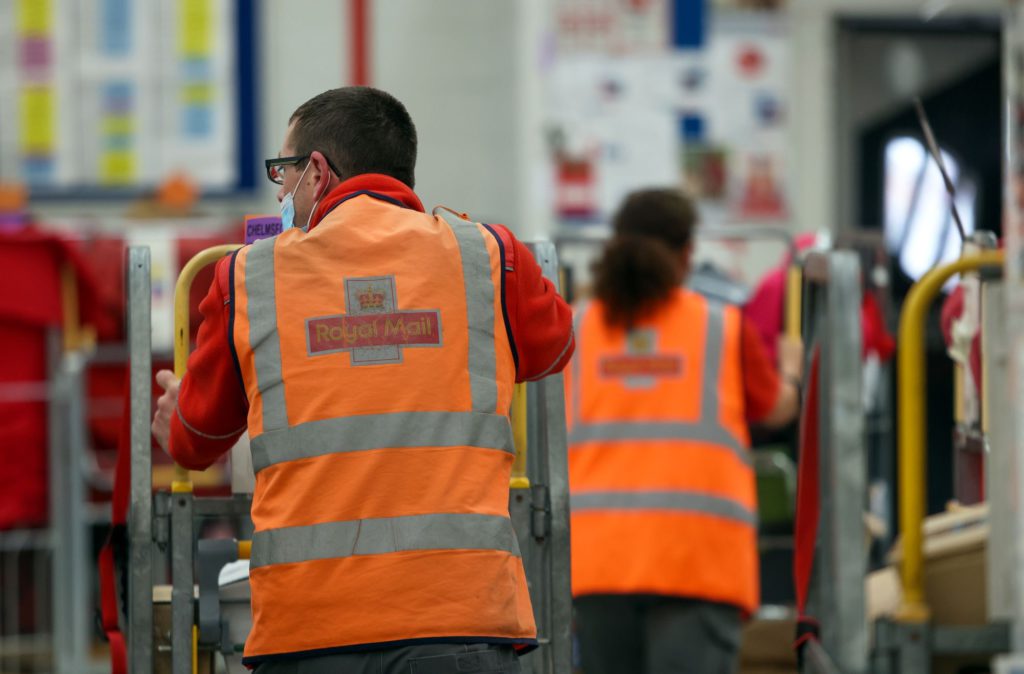
Thousands of Jobs at Royal Mail Under Threat: The London Rush

(Bloomberg) — Chancellor Kwasi Kwarteng told broadcasters yesterday he is “not going anywhere.” Then, just hours later, he was going home, on a flight back to London amid reports Downing Street was preparing what could prove to be the mother of all U-turns. Amid the political drama, don’t ignore the real pain in the economy that’s underscored this morning by Royal Mail, who said they will start a consultation on thousands of job cuts in the wake of industrial action.

Here’s the key business news from London-listed companies this morning:

In The City

International Distributions Services Plc: Royal Mail’s parent company will consult on job cuts in its UK business response to industrial action, what it called “delays in delivering agreed productivity improvements,” and lower parcel volumes.

  • The company said about 5,000 to 6,000 redundancies and 10,000 full time equivalent operational roles cuts might be required by the end of August 2023

Ashmore Group Plc: The emerging markets specialist asset manager experienced $5 billion worth of net outflows in the first quarter of the year, as well as a negative investment performance of $3 billion.

  • Risks of a recession are impacting investors risk appetite, which CEO Mark Coombs said will stay “limited in the near term”

Mondi Plc: The packaging and paper manufacturer reported a jump in earnings after higher average selling prices and volume growth more than offset “significant” cost pressures.

  • The company mostly dodged the impact of higher European energy prices by using biomass sources in its pulp and paper mills, although a tight market for wood is impacting availability.

In Westminster

The Chancellor has been forced to dash back to London overnight to deal with the mounting crisis surrounding his mini budget. Reports yesterday that the government is preparing an extraordinary U-Turn on the tax-cutting plan where met positively by markets. The question now remains, can Liz Truss survive if her economic project is over? Here are some of the dynamics in play. 

The prime minister faces four traps of her own making, writes Bloomberg Opinion’s Therese Raphael. 

In Case You Missed It 

Here’s a deep dive into Shell Plc’s plans for electric-vehicle charging stations with snacks — but no gasoline. 

Finally, OnlyFans Ltd. executives have mapped out a plan to become more transparent and highlight less-explicit content at a time when the company’s home country is finalizing strict new online safety laws. 

Looking Ahead 

As the new earnings season picks up pace, here’s a look at what to expect next week: 

Monday: Mining company Rio Tinto Plc will report its third quarter operations review in the evening. That follows a soft first-half update where the firm halved its dividend and reported a sharp decline in profit. Concerns about slowing demand have led to lower prices for commodities like iron.

Tuesday: Homebuilder Bellway Plc’s update will be closely watched for further signs of storm clouds gathering over Britain’s housing market. Barratt Developments Plc flagged this week that private reservations, the average weekly number of homes reserved at its sales sites, has dropped more than 30%.

Wednesday: Asos Plc’s full-year results will likely provide an important insight into the state of the consumer. Most spending with the online fashion website is discretionary, and it warned last month that sales in August were weaker than expected as shoppers cut back.

Thursday: Alongside a trading update, Jupiter Fund Management Plc’s new boss Matthew Beesley is expected to announce his turnaround plans for the London-based asset manager which has been grappling with years of outflows. 

Friday: Deliveroo Plc’s results will follow those of food delivery rival Just Eat Takeaway.com earlier in the week. London-based Deliveroo has set its eyes on achieving adjusted Ebitda profitability and after that, free cash flow generation, but is facing headwinds from a worsening consumer environment. Bloomberg Intelligence analyst Diana Gomes suggests the company could narrow its gross transaction value guidance range, which at 4%-12% appeared too wide.

For a news fix when the day is done, sign up to The Readout with Allegra Stratton, to make sense of the day’s events.

More stories like this are available on bloomberg.com

©2022 Bloomberg L.P.

Close Bitnami banner
Bitnami