

Bloomberg

Infosys Hikes Sales Outlook, Defying Recession Fears

(Bloomberg) — Infosys Ltd. raised its annual sales forecast, defying fears that a global economic slowdown would push clients at the outsourcing giant to cut back on tech spending.

The Bengaluru-headquartered company said it expected revenue to grow between 15% to 16% in the year to March 2023, raising the lower end of its sales outlook, while reiterating the top end.

Seen as a bellwether of India’s $227 billion IT sector, the country’s No. 2 software services exporter and rivals such as Tata Consultancy Services Ltd. have so far remained upbeat about winning new business deals. But concerns of a global recession and a European energy crisis continue to weigh on the sector, which remains vulnerable to cuts in discretionary IT spending.

“We’ve had very good traction in Europe for the last several quarters and that has shown again in this quarter’s growth number,” Chief Executive Officer Salil Parekh said in a press conference after the earnings. “We continue to see the pipeline of large deals strong but we are also cautious and watching the macro developments.”

Infosys’s net income rose 11% to 60.2 billion rupees ($731 million) in the second quarter ending in September, it said in a filing. That beat an average analysts’ estimate of 59.02 billion rupees in a Bloomberg survey. Quarterly sales rose 23% to 365.4 billion rupees. The company also announced the buyback of 50.3 million shares for as much as 93 billion rupees at 1,850 rupees per share from the open market. 

WHAT BLOOMBERG INTELLIGENCE SAYS

Infosys’ 19% revenue growth in constant currency (CC), 29% CC growth in Europe and the raising of the lower bound of fiscal 2023 sales guidance to 15-16% from 14-16% are encouraging in the face of elevated economic woes. With a noticeable slowdown in the financial and retail sectors expected, we anticipate that these metrics could soften further in fiscal 2H.

– Anurag Rana, analyst

Click here for research

Larger rival TCS reported an 8% rise in its quarterly income earlier this week, but cautioned it needed to be more wary of uncertainties in the face of rising volatility. IT companies such as Infosys, which won over clients in North America and Europe by offering low-cost solutions to problems such as the Y2K bug, are now banking on services such as cloud computing, machine learning, artificial intelligence and analytics to shore up revenue.  

Global technology spending faces headwinds, however, as businesses bring employees back to workplaces, dampening pandemic-era demand. Rising competition from global IT giants such as Accenture Plc and International Business Machines Corp. are also weighing on margins at India’s software services companies.


(Updates with comment from CEO in fourth paragraph.)

More stories like this are available on bloomberg.com

©2022 Bloomberg L.P.

US Futures Sink as Inflation Beat Seals Jumbo Hike: Markets Wrap

(Bloomberg) — US stock futures plunged and Treasury yields spiked after a hot inflation reading all but assured another large Federal Reserve rate increase.

Futures on the S&P 500 sank 2% after wiping out overnight gains. The index is already at a two-year low as the Fed aggressively throttles the economy in an effort to tamp down inflation. Those on the Nasdaq 100 dropped almost 3%.

A key gauge of US consumer prices hit a 40-year high in September, showing the central bank’s efforts have so far had little effect. Two-year Treasury yields soared and the dollar rallied in anticipation of more outsize rate increases. 

Read more: Core US Inflation Rises to 40-Year High, Securing Big Fed Hike

The latest data added to evidence the harsh monetary medicine has yet to take hold and comes on the heels of last week’s payrolls figures that showed unemployment rate at a five-decade low in September.

“This isn’t the CPI report markets or the Fed were hoping for,” said James Athey, investment director at abrdn. “Inflation pressures remain stubbornly high. The reality is that for the foreseeable future the Fed is locked into a stance of unequivocal hawkishness. This will support bond yields and the US dollar but its yet more bad news for equities.”

Rates market bets now show traders fully pricing in a three-quarter point increase at the Fed’s November meeting. They now expect the central bank to push rates past 4.85% before the tightening cyle ends. The current rate is 3.25%.

Meanwhile, UK markets remained in turmoil almost two weeks after the government unveiled a plan to drastically cut taxes.

Speculation leaders may reconsider the controversial program sent the pound higher and yields on benchmark gilts tumbling more than 25 basis points.

Key events this week:

  • Earnings this week include: JPMorgan Chase & Co., Citigroup Inc., Morgan Stanley, BlackRock Inc., Delta Air Lines Inc., UnitedHealth Group Inc., U.S. Bancorp, Wells Fargo & Co.
  • G-20 finance ministers and central bankers meet, Thursday
  • China CPI, PPI, trade, Friday
  • US retail sales, business inventories, University of Michigan consumer sentiment, Friday
  • BOE emergency bond buying is set to end, Friday

Some of the main moves in markets:

Stocks

  • Futures on the S&P 500 fell 2% as of 8:55 a.m. New York time
  • Futures on the Nasdaq 100 fell 2.8%
  • Futures on the Dow Jones Industrial Average fell 1.7%
  • The Stoxx Europe 600 fell 1.3%
  • The MSCI World index fell 0.5%

Currencies

  • The Bloomberg Dollar Spot Index rose 0.4%
  • The euro fell 0.5% to $0.9659
  • The British pound rose 0.8% to $1.1187
  • The Japanese yen fell 0.3% to 147.32 per dollar

Cryptocurrencies

  • Bitcoin fell 4.2% to $18,359.32
  • Ether fell 6.4% to $1,215.85

Bonds

  • The yield on 10-year Treasuries advanced 13 basis points to 4.03%
  • Germany’s 10-year yield advanced seven basis points to 2.39%
  • Britain’s 10-year yield declined 17 basis points to 4.27%

Commodities

  • West Texas Intermediate crude fell 1.7% to $85.75 a barrel
  • Gold futures fell 1.3% to $1,655.30 an ounce

More stories like this are available on bloomberg.com

©2022 Bloomberg L.P.
UK Officials Are Working on a U-Turn for Truss Tax-Cut Plan

(Bloomberg) —

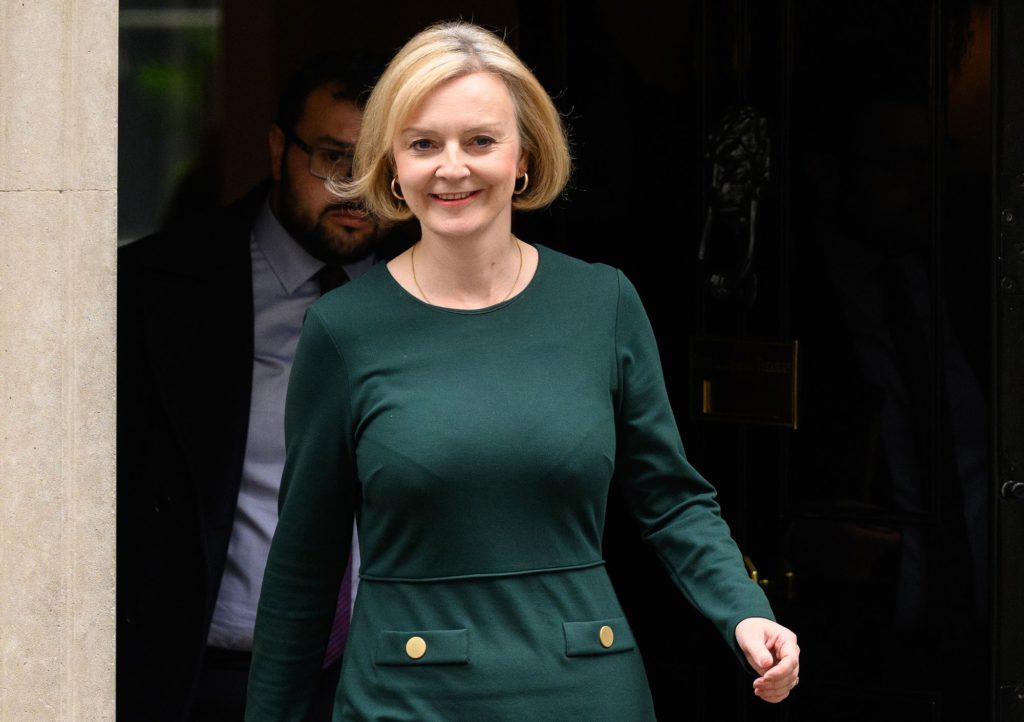
UK officials are discussing how to back down from Prime Minister Liz Truss’s massive package of unfunded tax cuts, amid pressure from financial markets and members of the ruling Conservative Party to restore economic credibility.

Officials at 10 Downing Street and the Treasury are drafting options for Truss but no final decision has been taken on any U-turns, according to a person familiar with the matter who asked not to be identified commenting on private discussions. They’re also waiting for Chancellor of the Exchequer Kwasi Kwarteng to return to London from Washington, where he has been attending meetings of the International Monetary Fund, the person said.

The premier could scrap her pledge to keep corporation tax at its current level next year — and instead raise it as originally planned by her predecessor Boris Johnson’s administration, the Sun reported.

The pound surged 1.8% on Thursday to $1.1295. UK government bonds extended a rally, with 30-year yields falling 46 basis points to 4.36%.

The plan to freeze corporation tax next year has come in for particular attention from detractors within Truss’s own Tories. Under a strategy set out by the previous Conservative administration, the levy on companies was due to rise to 25% from 19% in April. But scrapping that move was one of the key measures in Kwarteng’s fiscal plan announced Sept. 23.

Tories Demand U-Turn on Tax Cuts as Pressure Builds on Truss

The package roiled markets, sending the pound at one point to an all-time low against the dollar, and forcing the Bank of England to intervene in the bond market to prevent a collapse. It also left a hole in the public purse that the influential Institute of Fiscal Studies estimates at £60 billion.

BOE

BOE Governor Andrew Bailey put his credibility on the line this week when he told investors that gilt-buying program will end as planned on Friday, brushing off calls to extend the market support. In response, investors ramped up the volume of bonds that they were selling to the bank. 

That the government is preparing a climbdown on its fiscal plans represents a victory of sorts for the central bank chief after being forced into the emergency bond purchases at the same time as the bank attempted to clamp down on rising prices by lifting interest rates.

Ministers “need to reverse the kamikaze budget and restore confidence,” the opposition Labour Party’s shadow chancellor, Rachel Reeves, said in a statement. “This is now urgent as the Bank of England’s intervention in the markets ends tomorrow. The Tories cannot allow the chaos caused by their mini-budget to continue any longer.”

The initial market reaction suggests that a U-turn on corporation tax along with the bank’s greater buying activity this week could help ease any turbulence next week when the BOE has withdrawn its safety net. Investors will be focused on the details of the plans the government is drawing up and that may determine whether the broad market rally will be sustained.

Cleverly

After Kwarteng and Truss already U-turned on one of the measures in the so-called mini-budget — a headline promise to scrap the 45% rate of income tax on the UK’s top earners — they now face calls to reverse even more of their fiscal decisions, with the corporation tax move foremost among them. When Kwarteng unveiled that move last month, the Treasury estimated it would cost £67.5 billion over five years — or more than £13 billion a year.

Senior government figures have already begin distancing themselves from the measure. On Thursday, Foreign Secretary James Cleverly refused to commit to the plan when asked by Sky News whether there would be any more reversals, particularly on corporation tax.

He responded by listing measures the government is determined to keep, but made no mention of corporation tax.

“The foundations of that mini-budget, protecting people from energy bill prices, letting them keep more of their earnings, protecting businesses form those energy prices, making sure that we’re internationally competitive, all those things are really key,” Cleverly said.

Asked again whether the government would stick with the plan on corporation taxes, he replied: “It’s absolutely right that we’ve made it clear that we want to invest in businesses.”

‘Disastrously Bad Idea’

Speaking to reporters at a regular briefing, Truss’s spokesman Max Blain said the government’s position on taxes has not changed.

But Cleverly’s refusal to explicitly back the plan will fuel speculation that the government is preparing to backtrack on more of last month’s fiscal package, which took the financial markets by surprise by going further and faster in cutting taxes that Truss had suggested during the Conservative leadership campaign over the summer. 

With market uncertainty persisting and the central bank’s intervention due to end Friday, even members of Truss’s party are urging her to unpick her economic strategy and restore the party’s reputation for economic credibility.

Despite the dire polling numbers facing the Tories and Truss personally, Cleverly also told Sky News that changing leader now “would be a disastrously bad idea, not just politically but economically.”

(Updates with Bailey, starting in seventh paragraph)

More stories like this are available on bloomberg.com

©2022 Bloomberg L.P.

Renault and Nissan Inch Closer to a Power Imbalance Resolution

(Bloomberg) —

Renault and Nissan may finally be on the cusp of resolving a source of tension that’s been weighing on their alliance for years.

Nissan is willing to invest as much as $750 million in Renault’s planned electric-vehicle business, Bloomberg reported this week. In exchange, the French manufacturer is open to paring its ownership of Nissan to 15% over time. This would address a power imbalance that’s long bothered executives in Japan: Renault has a 43% stake in its bigger partner, with voting rights, while Nissan holds 15% of Renault and has no voting rights.

It wasn’t entirely clear the last few years that this alliance would survive the 2018 toppling of Carlos Ghosn, who at the time was chairman of both companies. The globetrotting executive was widely seen as the glue that held the group together. Renault registered a record loss two years ago, while Nissan recorded its biggest fiscal-year deficit in two decades.

While neither company’s fortunes are now ironclad, CEO Luca de Meo colorfully declared last year that Renault was “back from hell.” He and his counterparts at Nissan presented a €23 billion ($22.3 billion) electrification plan in January that indicated the alliance may well have staying power in the face of their costly and complicated transitions away from the internal combustion engine.

Executives emphasized burden-sharing with respect to developing next-generation batteries, automated-driving features and software. Since then, Renault has been exploring carve-outs of its EV and combustion-engine businesses, betting this will make it easier for those operations to raise outside funds. To pull this off, the company needs the backing of its Japanese partner. Nissan is using this as leverage to ensure its demands for a more balanced alliance structure are met. De Meo held marathon talks in Japan over the weekend with executives including Nissan CEO Makoto Uchida to broker compromises.

These negotiations haven’t concluded, and there’s no guarantee a deal will get done. It’s nevertheless difficult to imagine them going completely awry. These two companies need one another to remain relevant in the electric age. Renault and Nissan’s biggest rivals have all subscribed to the notion that pairing up is the way forward. Volkswagen, already a house of brands on its own, has partnered with Ford on both electrification and self-driving technology. General Motors and Honda have forged a similar relationship. Toyota is developing EVs with Subaru and fuel cell vehicles with BMW. PSA Group and Fiat Chrysler merged to form Stellantis last year.

There’s a lot of savings to be had from pooling purchasing of batteries and raw materials, and not doubling up investments in the same technologies.

“There’s no reason the alliance can’t flourish despite previous tensions between the two companies,” Michael Dean, an analyst at Bloomberg Intelligence, wrote in a report Thursday. Carmakers are “clamoring to collaborate with each other given the huge costs associated with the transition to BEVs, e-mobility, digitalization and autonomous driving.”

While Nissan may buy back some of its shares from Renault, it’s highly unlikely this happens right away. Neither company’s stock price is where it was before the pandemic. One option being discussed is Renault placing the shares it owns in a trust and giving Nissan the right of first refusal for any stock, according to a person familiar with the talks. And there are several other sticking points at play, including Nissan’s reluctance to allow Renault to possibly transfer combustion-powertrain technology to a Geely-Volvo Car joint venture.

De Meo is trying to secure an agreement with Nissan by Renault’s capital markets day on Nov. 8. That’s an ambitious deadline, but both companies are signaling some willingness to finally work this out.

More stories like this are available on bloomberg.com

©2022 Bloomberg L.P.
Snowflake’s Pay-What-You-Use Pricing Gains Favor With Software Firms

(Bloomberg) — Business software pricing is starting to look less like a monthly Netflix subscription and more like your home water bill.

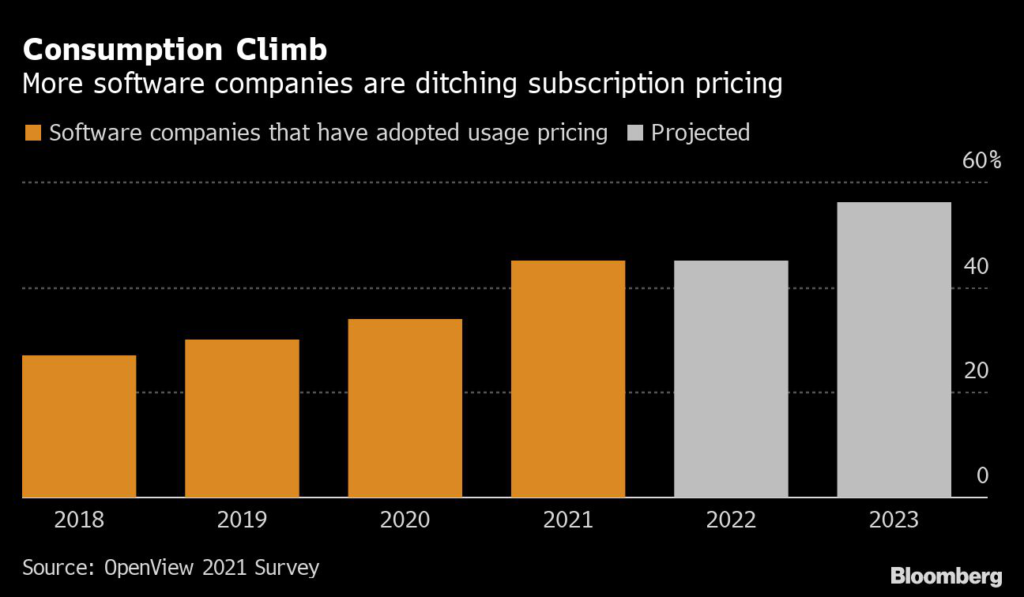
Economic uncertainty and tightening budgets are accelerating a move to consumption pricing, which charges software customers based on how much they use a product rather than a recurring annual or multiyear subscription fee. The model, popularized by Snowflake Inc., is being adopted by a growing number of software makers, including C3.ai Inc. and Autodesk Inc. 

Analysts have traditionally viewed pay-as-you-go as a liability for providers, figuring that customers can more quickly dial back spending when times get rough. But in the current market slowdown, consumption-model cheerleader Snowflake said it continues to attract new clients to its data storage and analytics products who want to pay just for what they need when money is tight rather than being locked into a big contract. Subscription-model stalwarts like Salesforce Inc. and ServiceNow Inc. by contrast have reported a slowdown in acquiring new business.

The slowing sales cycles helped push C3.ai, an enterprise software provider led by industry veteran Tom Siebel, to switch all new business to consumption pricing. Signing up new customers is much easier now that initial purchase is cheaper and requires less executive approval, Siebel said. “In a recession, you need to talk about pennies not millions.”

Siebel, who sold his eponymous customer relationship management company to Oracle Corp. in 2006, said the pricing transition will flatten revenue in the short term before accelerating growth. Last month, Mike Cikos, an analyst at Needham & Co., said it’s a challenge for companies to change the way they sell their products, and C3.ai’s shares are “likely to stay in limbo until we have line of sight to the other side of the transition.”

Cloud-computing providers like Amazon.com Inc., Microsoft Corp., and Alphabet Inc. have long charged customers based on how much server space is used, but this pricing model has expanded to more kinds of software services, according to a 2021 report by venture capital firm OpenView Partners. More than half of software companies said they expect to use consumption pricing by 2023, according to a survey it conducted. Other notable examples include customer communication provider Twilio Inc. and OpenAI’s image generator Dall-E.

Software stocks have been battered this year as traders bet on increasingly aggressive interest rate hikes from the Federal Reserve. The iShares expanded software ETF is down 38% this year compared with 214% drop in the broad-based S&P 500. Unprofitability, long accepted in high-growth firms, has been a particular black mark on software companies like Snowflake this year, with a basket of money-losing tech companies compiled by Goldman Sachs Group Inc. down 59%. In this economic backdrop, its unsurprising tech leaders are willing to try new pricing strategies to keep growth going.

Not every executive is convinced. Atlassian Corp. Co-CEO Mike Cannon-Brookes said the pricing model makes less sense for collaborative applications, particularly when there’s not a specific resource like server space being consumed. Customers expect a simple per-user subscription cost for workplace tools that are a part of the typical business day like Atlassian’s Trello, Cannon-Brookes said. “I don’t feel demand to move away from it.”

Consumption pricing doesn’t work as well when users are discouraged from using the service by continually climbing costs — also known as the “taxi-meter effect” — according to the OpenView report. They pointed toward Adecco Group AG’s platform Hired.com, where recruiters posted fewer job listings when pricing was pay-per-hire. Customers may also be put off by high cost variability and prefer a more simplified buying experience, according to the OpenView researchers.

Snowflake bills sometimes also have surprised customers. Numerous social media posts share stories of high charges from the company or trade tips on keeping costs down. Earlier this year, Snowflake executives said improvements to its products would lower customer expenses.

Usage-based pricing is less common in applications than infrastructure, but that may be changing. Autodesk, known for its architectural and manufacturing design programs, last year introduced one-day “Flex” licenses. Under this plan, AutoCAD — one of its flagship applications — costs $21 for each day of use compared with a standard $235-a-month subscription plan. Chief Executive Officer Andrew Anagnost said about 40% of the users of the flex pricing model are new.

“It’s a powerful tool for small businesses that can’t afford a full subscription to everything we do,” Anagnost said. “I think eventually, most everyone’s going to end up in some kind of consumption plan.”

Snowflake Chief Revenue Officer Chris Degnan started as the company’s first salesperson in 2013, and remembers it was “not easy” to sell the consumption-based product to companies that had never heard of it. Snowflake even had to build its own billing system, since most payment processors were geared toward handling subscriptions.

Today, Snowflake looks like the elder statesman of pay-for-what-you-use pricing. Degnan said he gets many executives calling him to ask about switching their companies to Snowflake’s model.

“There are going to be software-as-a-service companies that don’t make that transition that will fail,” Degnan said. 

More stories like this are available on bloomberg.com

©2022 Bloomberg L.P.

Dubai’s $73,000 a Year Villa Rentals Come With a Warning

(Bloomberg) — It’s not just Dubai’s luxury home sales that are on a tear, rental prices are too.

The average annual rent for a villa, or family home, in the emirate reached 268,758 dirhams ($73,171) last month after prices jumped 26% in the year through September, according to real estate adviser CBRE Group Inc. Average apartment rents, meanwhile, soared 27% to 89,986 dirhams.

The surge in rental prices is being driven by a growing number of expatriate workers moving to the city, according to CBRE’s head of research Taimur Khan. It also mirrors soaring luxury real-estate prices, which jumped 89% over the past year, property consultant Knight Frank said earlier this week.

The average sale price for villas rose 14%, while apartment prices rose 9% through September, according to CBRE. But CBRE warned that such rapid growth may impact Dubai’s attractiveness. 

“The rate of growth in certain typologies and neighborhoods may start to impact affordability in the city very significantly,” Khan said. “This in turn may impact its competitiveness and lead a negative spill over into other sectors, particularly amidst a high cost of living and softer global economic backdrop.” 

Demand to rent and buy homes in Dubai is booming as the government’s handling of the pandemic and its liberal visa policies attract more foreign buyers and residents. The emirate’s real-estate market is benefitting from an influx of newcomers including bankers fleeing strict Covid restrictions in Asia, crypto investors and wealthy Russians escaping their sanctions-hit country after its invasion of Ukraine. 

Rentals for apartments on the city’s man-made island, Palm Jumeirah, reached the highest level at 231,397 dirhams on average. While annual villa rentals in the swanky neighborhood of Al Barari hit 946,270 dirhams, CBRE said. 

Fastest Pace Ever

“Rates are rising at the fastest pace ever and that’s making the gulf between core areas and secondary areas much more pronounced,” CBRE’s Khan said. “Some secondary areas are seeing occupancy levels of around 95%.”

The surge is pricing some out of prime areas. Sahar Samara, for instance, is moving her family out of their 4-bedroom apartment on the Palm Jumeirah to a villa 30-minutes away on the outskirts of town. After being served an eviction notice, Samara scouted for a home in the neighborhood but found comparable properties listed for 475,000 dirhams — a 150% increase on her current rent. 

“It’s exhausting with so much financial cost and emotional distress especially for the kids who will now be away from friends and will have a long ride to school,” she said. 

Rental prices may start to moderate by early next year, CBRE’s Khan said. Monthly increases are slowing, an indication that many renters are voting with their feet and moving to cheaper areas, he said. 

Demand from buyers has also surged. The number of home sales in the year through to September reached their highest level since 2009, CBRE said. 

(Adds quote from resident in 9th and 10th paragraphs)

More stories like this are available on bloomberg.com

©2022 Bloomberg L.P.

SoftBank-Backed Vuori Takes on Lululemon With Global Expansion

(Bloomberg) — Vuori Inc. has big ambitions, and with the help of SoftBank’s deep pockets, it’s getting the chance to show if it can become the next Lululemon.

The latest phase of the activewear brand’s expansion arrived on Thursday with its first store in New York. The closely-held company, valued at $4 billion after a $400 million investment from SoftBank a year ago, expects to be operating about 30 locations by yearend and could nearly double that total in 2023. On the international front, Vuori began offering e-commerce in China and other foreign markets last month.

“They’re definitely becoming a bigger brand and someone that larger players should be looking at and understanding,” said Cristina Fernández, a senior research analyst for Telsey Advisory Group.

Vuori, founded in the San Diego area in 2014, broke through by cultivating a following for its stylish workout gear in Southern California. Then the pandemic helped trigger a spike in sales as stuck-at-home Americans splurged on its comfy sweatpants and athleisure.

Now it’s pushing to get much bigger. That won’t be easy, as shoppers are shifting purchases to workwear and becoming more frugal as fears of a recession increase.

“In this environment where there’s a lot of competition and not a ton of growth, it’s going to be about stealing market share,” said Kristen Classi-Zummo, director and industry analyst at NPD Group. The challenge for Vuori will be innovation — “what will inspire someone to buy another legging or sweatpant?”

Softbank, the Tokyo-based holding company, is betting Vuori can overcome these hurdles after its investment boosted the brand’s valuation almost 20 times from $210 million to $4 billion, according to data from PitchBook. The relationship blossomed when Nagraj Kashyap, head of the consumer practice for SoftBank’s Vision Fund, had lunch with Vuori founder Joe Kudla.

Vuori “became very interesting for us once we understood how they had scaled from a small shop,” said Kashyap, who is also based in San Diego and was a Vuori customer before investing. “Their growth had come from e-commerce without actually being on any of the other coasts besides the West Coast.”

The brand’s store in the heart of Manhattan’s ritzy SoHo shopping district is helping to change that. At about 5,000 square-feet, it’s more than double the size of an average location and will offer more items. The store oozes the brand’s Southern California vibe with artwork featuring surfers and hikers.

The store is also located within a block of Lululemon and Nike, and that’s no accident. The company spent three years looking for a spot and said it used customer ZIP codes and other data to find the new location.

Vuori declined to share specific numbers on its financial performance. However, Kudla did say that the company has been profitable for several years and sales are projected to  increase by more than 70% this year.

A former accountant who practices yoga, he got the idea for Vuori after becoming frustrated with the men’s athletic apparel category being focused on professional sports and urban streetwear. That led him to create workout gear and casual clothing made with smooth, premium fabrics, tighter fits and no big logos.

After initial success with men’s apparel, the brand introduced a women’s line, which now makes up half its sales. Prices are similar to Lululemon’s, ranging from about $50 for women’s tank tops to $250 for a men’s down jacket.

See also: How the great post-Covid online shopping bet was a costly delusion

The company’s rapid growth has invited comparisons to Lululemon, which started with women’s activewear and later introduced men’s products. Lululemon is expected to hit almost $8 billion in sales this fiscal year, doubling revenue from three years earlier, and has about 600 stores. Its shares on a price-to-earnings basis trade at a premium to its peers, including 40% above Nike.

Vuori accelerated growth early on by building a wholesale business with retailers such as Nordstrom and REI. For years, the dominant model for young brands was to sell directly to consumers through its own channels. That can help boost profit margin, but it also makes sustaining growth difficult.

“Selling wholesale and not thinking it was a dirty word served them well,” said Brian Berger, chief executive officer and founder of apparel maker Mack Weldon. The strategy also boosted exposure while reducing its reliance on digital advertising that has skyrocketed in cost, he said.

Vuori is now trying to expand beyond a niche brand and will go head-to-head with giants like Lululemon, Nike and Under Armour. One way forward could be going public, but few athletic apparel brands have gone that route in the past several years. The recent track record of initial public offerings by any kind of consumer brand has been spotty at best.

“If a brand like Vuori wanted to go public today, you would have to demonstrate extremely dynamic growth and best-in-class profitability,” Kudla said. “Those are — I think — things that Vuori possesses.”


More stories like this are available on bloomberg.com

©2022 Bloomberg L.P.
Bitcoin Becoming Less Volatile Than Stocks Raises Warning Flag

(Bloomberg) — At first blush, Bitcoin becoming less volatile than stocks might appear like a positive development. But crypto traders are warning that in a low-volume environment, that might not be a great thing. 

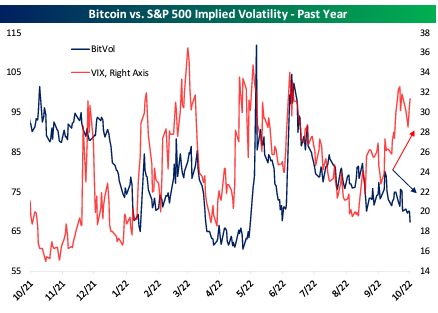
The coin’s 30-day realized volatility has “dropped sharply” in recent days, according to Noelle Acheson, author of the “Crypto is Macro Now” newsletter. It’s currently at around 52% after spending the past month above 64% on an annualized basis, according to Coin Metrics data compiled by Acheson. Meanwhile, Jake Gordon at Bespoke Investment Group points to a volatility gauge called BitVol, which has “begun to break down,” falling to near its lowest levels since the spring. The index currently clocks in at a little above 69, down from more than 111 in May. 

Yet trading volume has also slumped. Daily readings are hovering around $47 billion right now, down from more than $100 billion at the start of the year, according to data tracker CoinMarketCap.com. 

And even though lower volatility is typically welcomed in the stock market, for instance, the combo could spell trouble for Bitcoin, where there tend to be plenty of speculators who enter the space purely for the thrill of the swings. 

“Low volatility in Bitcoin might not necessarily be a good thing, especially if it’s on low volume,” ARK Investment Management analyst Yassine Elmandjra said on Bloomberg TV on Tuesday. Elmandjra cited late 2018, when Bitcoin was hovering around $6,000 and many had expected what appeared to be overly pessimistic sentiment to result in a short squeeze, though the coin instead “dumped” to $3,000. 

“So while low volatility is perhaps an indication that Bitcoin is becoming more boring and less contrarian, low volatility on low volume might not be great for Bitcoin.”

Crypto has suffered this year as the Federal Reserve and other central banks aggressively raise rates to cool inflation. That’s pushed a lot of digital-asset investors — especially those who had gotten in just over the last few years — away from the space and from daily trading, a big change from the hype-fueled mania of years past. Retail investors, in particular, have been missing in action. Meanwhile, institutions have become the main players recently, potentially helping to explain why volatility has declined. 

“The macro backdrop is really affecting us just as it’s affecting every other asset class,” Tim Grant, head of EMEA at Galaxy Digital, said on Bloomberg TV this week. “It’s not a retail asset class anymore.”


All of it’s pushed market-watchers to try to decipher signs of Bitcoin and other tokens potentially hitting a bottom. Bitcoin has shed 60% this year, while the S&P 500 is down about 25%. Still, much of the selling in crypto took place in the first half of 2022, with exchange-traded fund flows reflecting that: The money flowing out of crypto-related funds in the third quarter slowed down, a sign that many bearish investors may have already piled out of the risky asset class.

Bitcoin fell about 2.6% to $18,666 as of 6:55 a.m. in New York on Thursday, the lowest level in about two weeks. 

Read more: Shutting Off Fed ‘Money Printer’ Leaves Bitcoiners Out of Sorts

The fear with the low-vol, low-volumes noxious mix is that such an environment could mean prices drop faster in the event of a selloff. 

“In an overall bear market, you do not want low volatility coupled with low volume because we’re already in recessionary period, we believe it could get worse and the Fed will continue to raise rates and people might start taking money off the table,” said Steven McClurg, co-founder and chief investment officer at digital-asset fund manager Valkyrie Investments. “And when there’s low volume and low volatility, it will cause prices to go down faster, it could cause higher volatility.”

(Updates token prices.)

More stories like this are available on bloomberg.com

©2022 Bloomberg L.P.

Startup Outdoorsy Passes $2 Billion in Transactions as RV Hype Grows

(Bloomberg) — Recreational vehicle rental marketplace Outdoorsy Inc. reached a milestone in October of $2 billion in total bookings value since the startup was founded seven years ago. That’s double what it was 18 months ago, signaling that more people are taking vacations inspired by the #vanlife movement even as the pandemic fades. 

Despite inflation reaching a 40-year high and gas prices above average in many states, Americans still have the desire to take an RV on the road, said Chief Executive Officer Jeff Cavins. He sees the business continuing to grow next year, supported by domestic tourists and the return of international travelers. 

“We really thought gas prices would slow us down, but it’s roaring ahead,” Cavins said in an interview. He said 70% of RV owners deliver the vehicles to renters at the start of their trip, easing travelers’ worries about paying for more gasoline.

The initial weeks of the pandemic pushed Outdoorsy’s cancellation rate to as high as 90%, but eventually the company saw a wave of success as Covid-19 restrictions and remote work policies encouraged people to take extended weekend trips and explore the outdoors. The attraction of the RV has also been fueled by the Instagram phenomenon #vanlife, which has spawned other startups like Kift Inc., where van enthusiasts can congregate in a community to work and live in stunning locations. 

Austin, Texas-based Outdoorsy was founded in 2015 and reached $1 billion of bookings value in March 2021.  Its rapid growth made the company an attractive target last year for blank-check companies and it was working with Goldman Sachs Group Inc. bankers to potentially bring the startup to market through an initial public offering. The company is valued at $1.7 billion, according to Pitchbook. 

Read more about how van-life startup Kift pitches remote work in the great outdoors.

Outdoorsy’s online marketplace has more than 40,000 vehicles to rent from individual owners in the US and Canada. Its website is similar to that of Airbnb Inc. and Expedia Group Inc.’s Vrbo, which link hosts, who post pictures and descriptions of their properties, to travelers looking for accommodations. Even with cross-border travel resuming and cities opening back up, vacationers are still drawn to the outdoors and national parks. The appeal for RV trips still exists, as 79% of customers are first-time travelers with Outdoorsy, Cavins said. 

Outdoorsy is profitable and on pace to book close to $98 million in gross booked revenue this year, compared with revenue in the low $80-million range last year, according to the company, which takes 20% of the booking fee. Cavins is optimistic about the company’s growth trajectory, expecting that uncertainty around inflation and a potential recession will lead to “more people looking for a side hustle” and extra sources of cash. 

In addition to the RV marketplace, Outdoorsy has built an insurance product, Roamly, which has brought in $40 million in premium payments as of March.

More stories like this are available on bloomberg.com

©2022 Bloomberg L.P.

Volkswagen to Invest $2.3 Billion in China Autonomous Driving Venture

(Bloomberg) — Volkswagen AG will invest €2.4 billion euros ($2.3 billion) to set up an autonomous driving joint venture with China’s Horizon Robotics Inc. to strengthen the automaker’s tech presence in its biggest market. 

The new unit will develop automated and assisted driving systems for China, integrating numerous functions on one chip to save costs and lower energy consumption, VW said Thursday. The technology will be built for the carmaker’s battery-only models sold in China to accelerate innovation in a market where consumers increasingly pick local EV brands.

The joint venture “will enable us to tailor our products and services even faster and more consistently to the needs of our Chinese customers,” said Ralf Brandstaetter, who runs VW’s China business. Teaming up with Horizon will help “drive the repositioning of our China business.”

VW is under pressure to improve its offering in China, its biggest market with roughly 40% of deliveries. Sales last year slid, outpacing an overall drop as the company struggled to keep up with local consumer tastes, particularly on digital offerings with many VW models exasperating drivers with frozen screens and complex functionality. 

Cariad, the manufacturer’s software subsidiary will take a 60% stake in the joint venture, with the transaction due to be completed next year. Cariad is attempting to get back on track after software development hiccups delayed several models, including the important electric Porsche Macan. The disarray culminated in the departure of Chief Executive Officer Herbert Diess with Oliver Blume now in charge at Europe biggest carmaker. 

Horizon, backed by investors including Intel Corp., Hillhouse Capital and electric-vehicle maker BYD Co., has technology that can be installed in everything from cars to smart speakers, and already counts Volkswagen’s Audi among its partners, according to its website. As part of the deal, VW will take a stake in the company, gaining a board seat, and invest €1.3 billion to set up the joint venture. 

VW’s move to start making advanced chips in China for local models also comes at a time of deep upheaval for the global chip industry. The US on Friday outlined restrictions on doing business with China to hamper its ability to develop the most advanced chips and equip its military, prompting manufacturers to reel in servicing customers in the country. 

Having development capability “in China and for China” will help with offering an “independent solution here for the future,” Cariad CEO Dirk Hilgenberg said on a call with reporters. 

More stories like this are available on bloomberg.com

©2022 Bloomberg L.P.

Close Bitnami banner
Bitnami
