Bloomberg

Trump’s Truth Social Now Allowed in Google’s Play Store

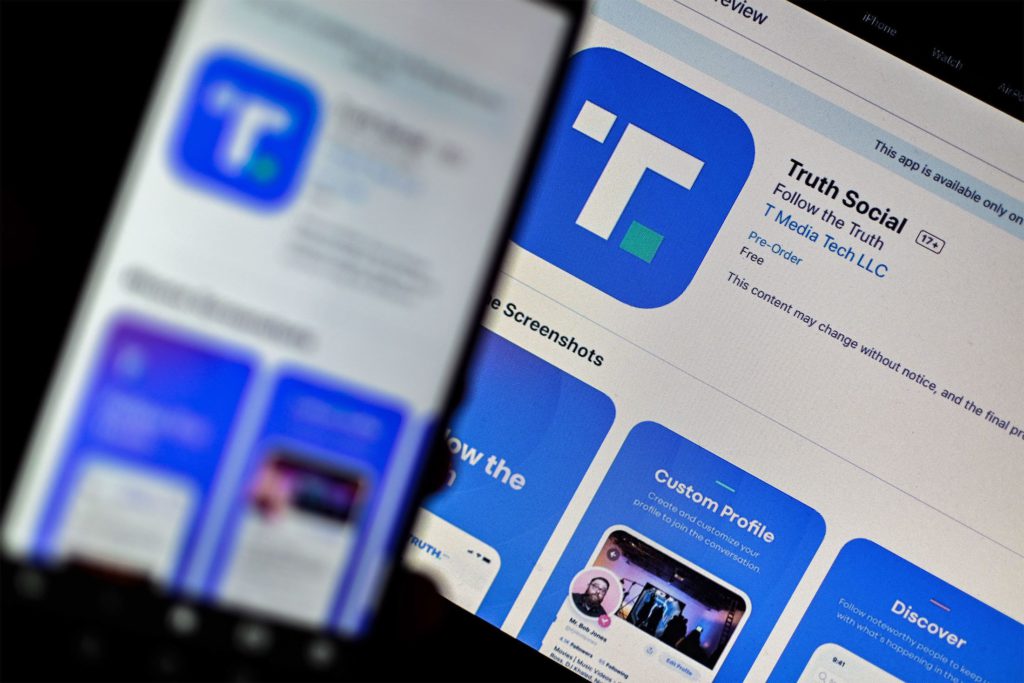
(Bloomberg) — Google has approved Donald Trump’s Truth Social app for release in its Play Store, opening up a key distribution channel for the social network ahead of US midterm elections. 

Google had previously declined to distribute the app, saying it needed to address the fact that it hosted violent threats and other content that goes against Google’s standards. Google, which is owned by Alphabet Inc., confirmed on Wednesday that Truth Social was now available. 

“Apps may be distributed on Google Play provided they comply with our developer guidelines, including the requirement to effectively moderate user-generated content and remove objectionable posts such as those that incite violence,” a Google spokesperson said in a statement. 

Truth Social has agreed to take down content that violates Google’s policies, Google said. Axios earlier reported the news of the app’s approval.

Devin Nunes, chief executive officer of Trump Media & Technology Group, said in a statement that the development represented “a significant milestone in our mission to restore free speech online.”

“It’s been a pleasure to work with Google, and we’re glad they helped us to finally bring Truth Social to all Americans, regardless of what device they use,” Nunes said.

(Updates with comments from CEO in the fifth paragraph.)

More stories like this are available on bloomberg.com

©2022 Bloomberg L.P.

Amazon to Shut Down ‘Explore’ Virtual Tour Product in Latest Cut

(Bloomberg) — Amazon.com Inc. is shutting down a virtual tour feature called “Amazon Explore,” which was launched during the pandemic, in the latest belt-tightening move by the online giant as it adjusts to slowing sales.

“At Amazon, we are always experimenting and testing ideas like Amazon Explore,” the company said Wednesday in a statement. “While we are winding down this program, we’ll continue innovating and investing in new ways to delight our customers. We are supporting our affected employees during this transition and working to identify other opportunities within Amazon.”

Amazon launched Explore in 2020, targeting those suffering cabin fever during pandemic lockdowns. Users could pay $7.50 for a 50-minute guided tour of sites such as an animal sanctuary in Costa Rica or $50 for an hourlong virtual stroll through the markets of Venice.

Amazon has been trimming experimental programs to reduce costs. Among the features or products that have been curtailed or canceled are Scout, an autonomous delivery robot and Amazon Glow, a kids-focused video calling device. The company has also frozen hiring for its corporate retail teams and is winding down Amazon Care, its startup telehealth service.

More stories like this are available on bloomberg.com

©2022 Bloomberg L.P.

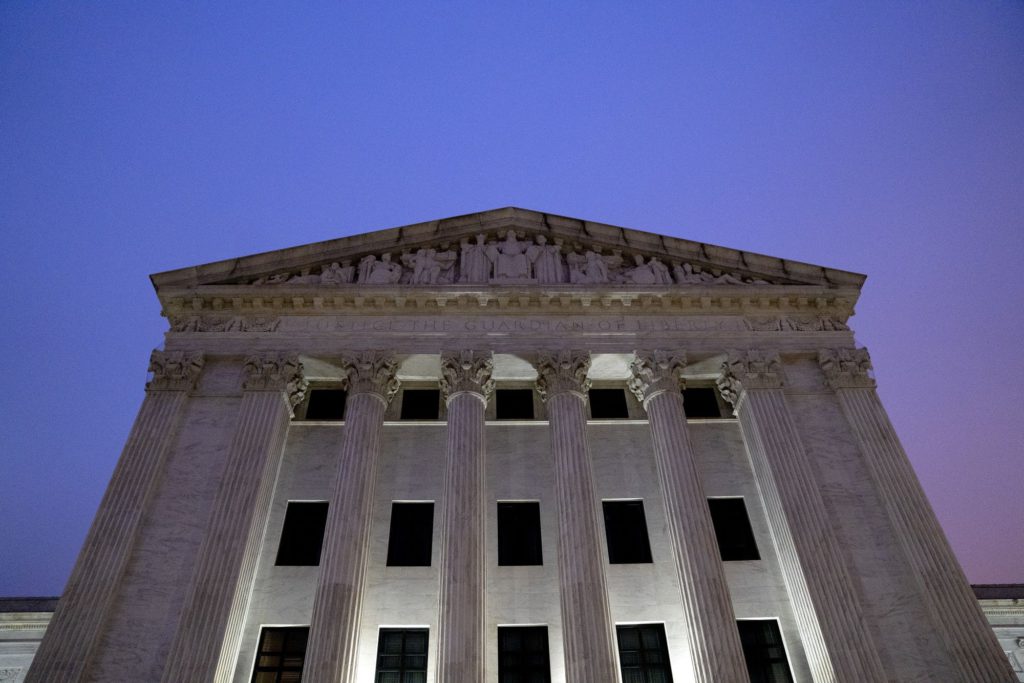
Texas Social-Media Law Put on Hold Pending Supreme Court Review

(Bloomberg) — A federal appeals court put on hold a Texas law banning some forms of content moderation on social media while a trade group representing industry giants petitions the US Supreme Court to review its challenge.

Although the 5th US Circuit Court of Appeals previously upheld the Texas law and said it could be implemented, the court on Wednesday granted a late September request from the social-media platforms to block enforcement of the measure while they appeal the case to the high court.

Internet publishers including Meta Platforms Inc. and Twitter Inc. argued they expected the US Supreme Court to agree to hear their challenge and that there is a “significant possibility” the justices will find the Texas law unconstitutional.

The law prohibits social-media companies with more than 50 million users from discriminating on the basis of viewpoint. Tech groups have opposed the law, arguing that it is unconstitutional and prevents platforms from removing hate speech and extremism.

Read More: Social Media Giants Ask to Pause Texas Law for High Court Review

The social-media companies claim they’ll have to spend billions of dollars to make changes to content moderation on their platforms if the law goes into effect and asked the appeals court to preserve the status quo while the case proceeds.

Texas previously agreed to the delay, assuming the media groups quickly file an appeal. A similar Florida law is presently on hold pending potential Supreme Court review

The case is Netchoice v Paxton, 21-51178, US Court of Appeals for the Fifth Circuit (New Orleans).

More stories like this are available on bloomberg.com

©2022 Bloomberg L.P.

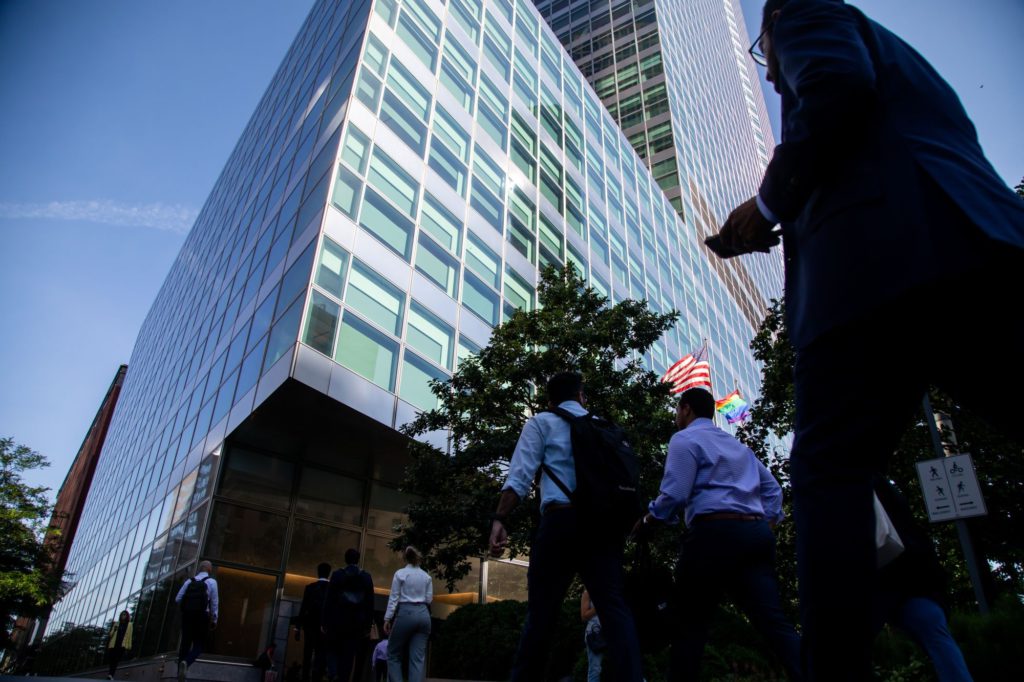
Money, Tech, Recession: The World According to a Goldman Intern

(Bloomberg) — Goldman Sachs Group Inc.’s interns overwhelmingly expect the US economy to fall into recession, and see climate change as among the most pressing issues of the coming decade, a survey shows.

Of the 2,470 summer interns who completed the annual survey, 86% expect a recession, the Wall Street giant said Wednesday on its website. Those surveyed identified climate change, artificial intelligence and geopolitical tensions as the most urgent issues to be faced over the next 10 years.

Amid a surge in digital banking and currencies, 47% of surveyed interns reported using phone-based payments, while only 2% reported using cash. Despite the popularity of digital assets and services, 99% of interns reported that they prefer relationships formed in person. Goldman Sachs has been among Wall Street’s most aggressive proponents of bringing staff back to their desks.

An internship at Goldman Sachs is one of Wall Street’s most competitive and prized positions for aspiring bankers, and can lead to offers of employment at the firm. The bank received a record 236,000 applicants for 3,700 summer internships globally this year.

Only 45% of interns expect to get married or establish a formal relationship, down from 88% in 2021.

More stories like this are available on bloomberg.com

©2022 Bloomberg L.P.

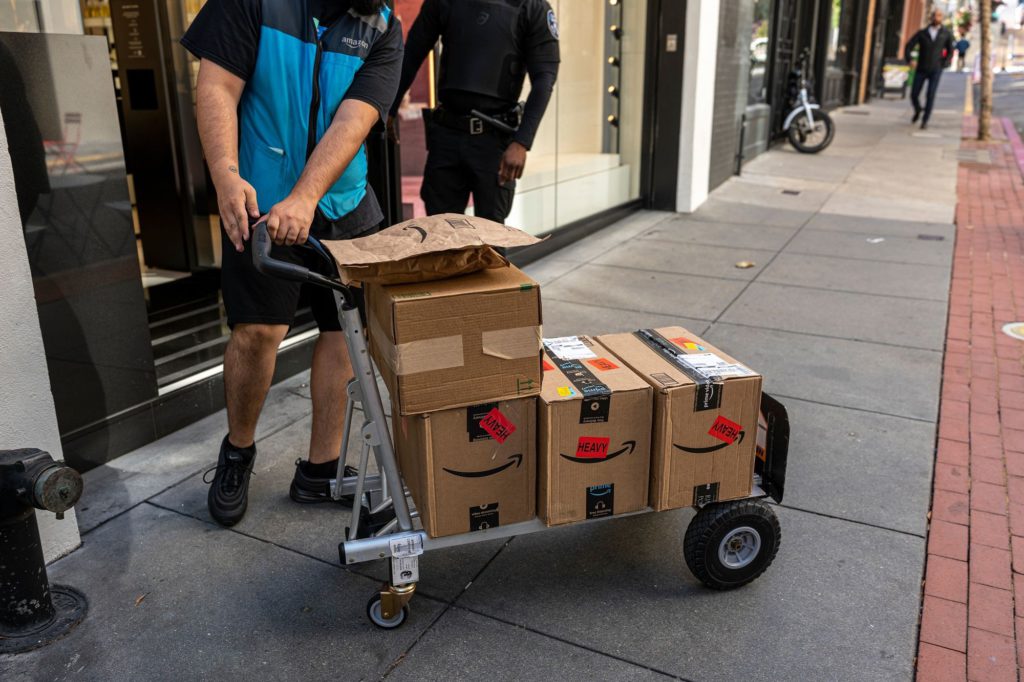
Amazon Shoppers Favor Household Goods Over Big-Ticket Items in Second Prime Day

(Bloomberg) — Amazon.com Inc. shoppers are largely skipping pricey purchases during the company’s Prime sale sequel — favoring pantry items and affordable gifts over big-ticket items like televisions and laptops.

The average order size as of 1 p.m. in New York Wednesday was $46.44, down 23% from the “Prime Day” sale in July, according to Numerator, which based its most recent data on 19,512 orders from nearly 9,500 households. 

The two-day “Prime Early Access Sale,” which began Tuesday, also has been generating softer sales than the summer event, according to Klover, a research firm that uses real-time spending data from 3 million US shoppers.

This is the first time Amazon has held two Prime-focused sales in the same year, suggesting that the company was looking to give customers a reason to splurge during what many analysts expect to be a lackluster holiday shopping season.

Consumers are grappling with the loftiest inflation in some 40 years and many are planning to curb their spending. US online spending in November and December will grow just 2.5% this year to $209.7 billion, according to Adobe Inc. That would be a big slow-down from last year’s gain of 8.6%.

Amazon’s Prime Day Sequel Fails to Boost Sales in Early Hours

Amazon launched Prime Day in 2015 to attract new subscribers who now pay $139 a year for shipping discounts, video streaming and other perks. The event helps the Seattle-based company lock in shoppers before the holidays and deepen its relationship with existing customers by offering them deals on Amazon gadgets and other goods.

There’s evidence consumers are trying to make their money go further in an inflationary environment, but it’s too soon to compare the event to the July sale, Prime chief Jamil Ghani said in an interview with Bloomberg Television.

“Everyone is feeling the pinch of inflation,” he said, adding his team was “impressed with how many Prime members are showing up, how they are engaging with the event and how they are shopping.” Ghani said customers were focusing not simply on “needs,” but on “wants,” too. 

Amazon offered some compelling deals on televisions and laptops, but it wasn’t enough to persuade many shoppers to buy them, said Kristin McGrath, a shopping expert at the deal-tracking website BlackFriday.com.

“A lot of the TV deals were surprisingly good,” she said. “But are these the things people are looking to buy if they’re worried about paying for their next grocery run?”

More stories like this are available on bloomberg.com

©2022 Bloomberg L.P.

S&P Hits Fresh Low for the Year as CPI Data Loom: Markets Wrap

(Bloomberg) — US stocks fell with investors bracing for Thursday’s reading on consumer prices. Treasuries gained, while UK markets were roiled once again by confusion over the country’s policies.

The S&P 500 slipped into the red in the final minutes of trading, capping six days of losses to close at the lowest level since November 2020 and surpassing the previous low on Sept. 30. Equities faded a brief rally after minutes from the Federal Reserve’s last meeting suggested some officials may consider calibrating the pace of rate increases. The consumer price reading will be the last major data point before the central bankers meet next month.

“The market is waiting for the CPI print tomorrow more than it was waiting for minutes,” according to Sarah Hunt of Alpine Woods Capital Investors. “There may be a little hint of relief on the ‘calibrate’ statement, but I think that with the speed of hikes so far it would be irresponsible not to have some sort of possible slowdown coming in hikes, even if it isn’t a cessation in hikes.” 

Data Wednesday showed prices paid to US producers rose in September by more than expected ahead of a key measure of consumer inflation due Thursday that’s set to return to a four-decade high. 

Comments by Minneapolis Fed chief Neel Kashkari earlier Wednesday reaffirmed policy makers’ commitment to the current rate-hike path, saying the bar for a pivot away from monetary policy tightening is “very high.”

Read more: Top-Ranked Chartist Says Gaming Out Fed Pivot Is ‘Fool’s Errand’

More market comments

  • “Should tomorrow’s CPI print come in above what the market is expecting, today’s somewhat blasé reaction to the minutes, and the PPI report, could be tested, particularly by bond yields,” said Quincy Krosby, chief global strategist at LPL Financial. “If rates on the 10-year Treasury inches closer to 4%, and the 2-Year Treasury follows suit, the market could have a rough day before the market turns its focus towards a broad reading of bank earnings and guidance.”
  • “There was a lot of negativity and worry out there. I think the minutes allow investors to walk back their fears a bit,” said Mike Zigmont, head of trading and research at Harvest Volatility Management.
  • “The silver lining was that some Fed participants did acknowledge that further tightening would have to be monitored in the context of the uncertain global environment, which is a nod to the bulls,” said Joe Gilbert, portfolio manager at Integrity Asset Management.
  • “Prices remain elevated so it shouldn’t be a surprise to see producer goods and services rise,” Mike Loewengart, head of model portfolio construction at Morgan Stanley Global Investment Office, wrote. “No doubt the Fed still has its work cut out for them, and if tomorrow’s CPI read is hot, don’t be surprised to see some investors come to grips with how long the road to tamer inflation may be.”

On the corporate front, PepsiCo Inc. jumped the most in more than two years after lifting its forecast for the year on the back of better-than-estimated third-quarter profit as drink and snack sales buck inflation. Moderna Inc. surged after Merck & Co. said it would exercise an option to work in partnership with the biotech on a messenger RNA cancer vaccine. The reporting season will kick off in earnest Friday with results from banks including JPMorgan Chase & Co. and Citigroup Inc. 

Read more: JPMorgan, Citi May Show Growth Elusive Despite Interest Income

A selloff in long-maturity UK debt gathered pace after the Bank of England damped hopes it would extend its bond-buying support into next week. The yield on 30-year gilts surged above 5%, nearing levels that just last month drew the central bank’s intervention, before easing again after the BOE snapped up billions in its daily operations.

Elsewhere,  oil in New York dropped below $88 a barrel on slowdown fears. OPEC trimmed projections for the amount of crude it will need to pump this quarter, while Russia’s President Vladimir Putin said any energy infrastructure in the world is at risk after the explosions on the Nord Stream pipelines.

NATO Secretary General Jens Stoltenberg urged alliance members to step up supplies of air defense systems to Ukraine, condemning Russian strikes. In China, Shanghai is quietly shutting down schools and a raft of other venues as officials try to rein in a flareup that’s hit the financial hub.

Key events this week:

  • Earnings this week include: JPMorgan Chase & Co., Citigroup Inc., Morgan Stanley, BlackRock Inc., Delta Air Lines Inc., UnitedHealth Group Inc., U.S. Bancorp, Wells Fargo & Co.
  • FOMC minutes for September meeting, Wednesday
  • Fed’s Michelle Bowman and Neel Kashkari speak
  • ECB’s Christine Lagarde speaks
  • US CPI, initial jobless claims, Thursday
  • G-20 finance ministers and central bankers meet, Thursday
  • China CPI, PPI, trade, Friday
  • US retail sales, business inventories, University of Michigan consumer sentiment, Friday
  • BOE emergency bond buying is set to end, Friday

Some of the main moves in markets:

Stocks

  • The S&P 500 fell 0.3% as of 4 p.m. New York time
  • The Nasdaq 100 was little changed
  • The Dow Jones Industrial Average was little changed
  • The MSCI World index fell 0.3%

Currencies

  • The Bloomberg Dollar Spot Index was little changed
  • The euro was little changed at $0.9702
  • The British pound rose 1.1% to $1.1093
  • The Japanese yen fell 0.7% to 146.84 per dollar

Cryptocurrencies

  • Bitcoin rose 0.7% to $19,145.69
  • Ether rose 1.2% to $1,297.45

Bonds

  • The yield on 10-year Treasuries declined five basis points to 3.89%
  • Germany’s 10-year yield advanced two basis points to 2.31%
  • Britain’s 10-year yield was little changed at 4.44%

Commodities

  • West Texas Intermediate crude fell 2.5% to $87.11 a barrel
  • Gold futures fell 0.3% to $1,681.30 an ounce

More stories like this are available on bloomberg.com

©2022 Bloomberg L.P.

Apple to Withhold Latest Employee Perks From Unionized Store

(Bloomberg) — Apple Inc. is withholding its latest employee benefits from staff who work at its sole unionized retail store, a move that could potentially inflame labor tensions at the technology giant.

The company told retail and corporate staff this week that it will increase benefits for outside educational classes and health care, according to people familiar with the matter. Workers will get more funds to pursue coursework, and employees in some states will be able to access new health plan benefits, said the people, who asked not to be identified because the program hasn’t been announced publicly.

It’s part of a broader effort to reward workers at the Cupertino, California-based company, which has had to navigate inflationary pressure, a tight labor market and changing demands of workers during the pandemic. But the company was quick to inform the employees at its unionized retail location — a store in the Baltimore suburb of Towson, Maryland — that they wouldn’t get the new perks.

The reason given was that the Towson store needs to negotiate benefits with Apple via the collective bargaining arrangement that comes with a union. The approach isn’t unique to Apple. Excluding unionized stores from new benefits has also been a flashpoint in the labor dispute at Starbucks Corp., where about 250 cafes have voted to unionize over the past year. Starbucks rolled out a series of new perks at nonunion stores, including raises and student-debt coaching, while saying that it can’t legally provide them unilaterally to sites with union activity.

Apple’s move could dissuade employees in other cities from unionizing their stores, but it also could further upset workers. The company declined to comment.

Employees at an Apple store in Oklahoma City are due to vote this week whether to join the Communications Workers of America, and labor groups are looking to mobilize workers at more of the company’s US stores in the coming months. The iPhone maker also has contended with some employee pushback in its office staff, which was ordered back to in-person work in recent months.

The new benefits include:

  • Apple prepaying some tuition for outside education. The company has long reimbursed employees for a portion of education costs, but the iPhone maker will now pay the amount in advance. This will start at a small amount of colleges, though the list is expected to expand over time.
  • A program with Coursera Inc. beginning on Jan. 1 that gives Apple employees a free membership. Coursera is an online-course provider that normally charges $399 per year for its premium subscription.
  • In certain states, including Connecticut, New York, Georgia, Washington and New Jersey, employees will get access to a new health care plan that waives co-pays for some Apple-approved doctors within the UnitedHealth Group Inc. network.

Apple’s behavior could be deemed by the National Labor Relations Board to violate federal law, which forbids anti-union threats or discrimination, labor experts said. The timing of the new benefits could be particularly significant, since it comes on the eve of the Oklahoma City election. 

“It’s hard to see how they could come up with a legitimate reason for the timing other than to influence the outcome of the election,” former union attorney and NLRB Chair Wilma Liebman said in an email.

Apple has expanded other benefits for workers over the past year. The company previously upped vacation and sick days, and it has long-offered health care and product discounts. 

The store in Maryland, which is represented by the International Association of Machinists and Aerospace Workers union, is preparing to begin formal negotiations with Apple. Its labor group in recent days supplied employees with guides to negotiate with Apple and hold conversations with managers. 

According to an internal survey provided with the guide that was obtained by Bloomberg News, the No. 1 bargaining priority at that location is general wage increases, followed by cost-of-living adjustments, improved work-life balance, better communication and more staffing.

The union said Wednesday that it remained committed to negotiations at the Maryland store.

“Our goal is still the same,” the IAM union said in a statement. “We are urging Apple to negotiate in good faith so we can reach an agreement over the next few weeks.”

Apple’s union-related moves have been under heavy scrutiny in recent weeks, with the NLRB and CWA accusing the iPhone maker of discriminating against pro-union employees. 

In the Starbucks case, the union said it waived the right to negotiate over receiving perks that were already being provided to other stores — meaning employees should just get them automatically. Workers United, the group attempting to organize Starbucks cafes, described the denial of benefits as a union-busting tactic.

While it is true that the law restricts companies from making unilateral changes at unionized shops, nothing prohibits management from offering to give union workers the same new perks that other staff are getting, said Harvard Law School professor Benjamin Sachs. 

That’s true even if there isn’t yet an overall collective bargaining agreement yet, he said. “They can’t impose the increases, but they can offer them to the union,” Sachs said.

“If you give benefit increases to nonunion workers and withhold them from union workers, you’re sending a message of favoritism and discrimination,” he said. “You’re trying to discourage workers from forming unions.”

(Updates with commentary from labor experts starting in eighth paragraph.)

More stories like this are available on bloomberg.com

©2022 Bloomberg L.P.

Crypto Correlation to Stocks Is Starting to Break, Pantera’s Morehead Says

(Bloomberg) — Dan Morehead, chief executive and founder of Pantera Capital, says that the high correlation between cryptocurrency prices and risk assets is already starting to break.

Morehead said that for a decade, digital token prices did not correlate closely with risk assets such as stocks. But for much of the year, digital tokens and risk assets have been “highly correlated,” he says. 

But the crypto hedge-fund manager said crypto’s performance does not necessarily have to align with risk assets.

“Most risk assets are interest rate based,” Morehead said on Bloomberg TV. “Crypto really is totally independent. It’s about all kinds of different use cases that have nothing to do with rates, so I could see a world where even if risk assets continue to struggle, blockchain does well.”

Prices for Bitcoin, the largest virtual currency by market value, have mirrored moves in US stocks this year. A 60-day correlation coefficient for Bitcoin and contracts on the S&P 500 hovered around 0.67 on Wednesday. (A coefficient of 1 means the assets are moving in lockstep, while minus-1 would show they’re moving in opposite directions.)

“There are glimmers of this decoupling,” Morehead said.

Morehead said last month that Pantera plans to raise $1.25 billion for its second blockchain fund to court institutional investors. Pantera aims to close the fund, which will invest in stocks and digital assets, by May 2023.  

More stories like this are available on bloomberg.com

©2022 Bloomberg L.P.
Former NSO CEO, Ex-Austrian Chancellor Start Cyber Firm

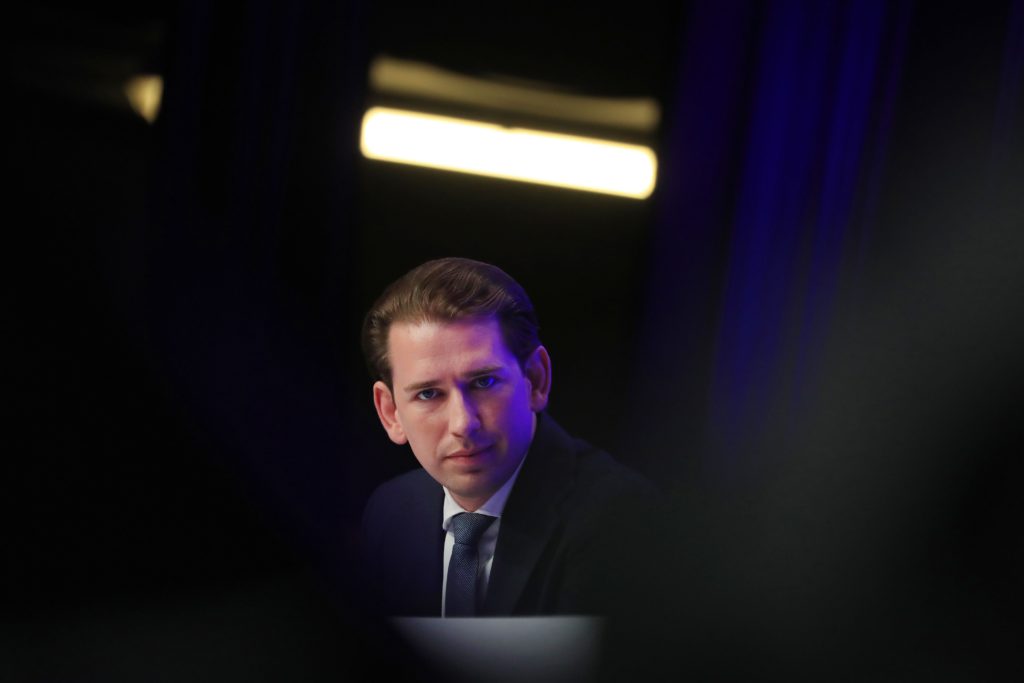
(Bloomberg) — The former chief executive officer of Israeli spyware company NSO Group, Shalev Hulio, has joined with ex-Austrian Chancellor Sebastian Kurz to found a new cybersecurity startup focused on protecting critical infrastructure.

Their company, Dream Security, has raised $20 million in funding in a round led by venture capitalist Dovi Frances, a spokesperson said. Gil Dolev — former CEO of Wayout Group, an Israeli tech company that had catered to intelligence agencies before it was acquired — will also join the new business. 

Dream will use the funds to build an artificial intelligence-based solution that will monitor and respond to cyber threats as they occur, the company said.

“We decided to leave the intelligence side, offensive side if you want, and move to the defensive side,” Hulio said in an interview. “We saw that the biggest challenge the cyber world is dealing with is critical infrastructure.” Hulio said the new company is primarily aimed at European countries, “because I currently think that they have the biggest threats right now because of the geopolitical situation.”

Hulio previously gained prominence in his role leading NSO, whose Pegasus software is sold to governments and law enforcement agencies that use it to hack into mobile phones. He stepped down in August amid a reorganization. 

In a report last year from human rights groups, NSO’s spyware was found in use in more than 60 cases targeting dissidents and government critics in countries including Rwanda, Togo, Spain, the United Arab Emirates, Saudi Arabia, Mexico, Morocco and India. NSO said at the time that it investigates any improper use of its system. The company has more recently said it will focus on NATO-member nations going forward. 

Read more: New Database Ties NSO Group to Improper Spying and Violence

Kurz was forced to resign as chancellor of Austria in 2021 after prosecutors launched investigations into alleged corruption that helped his rise to power. He has since been appointed global strategist at billionaire Peter Thiel’s Thiel Capital LLC. Kurz has denied any wrongdoing.

Read More: Billionaire Thiel Gives Austria’s Disgraced Wunderkind a Job

“This is the strongest and most seasoned founding team I have seen,” said Frances, who has previously invested in firms including TripActions and Tipalti. He added that the new company came at a “unique time in the market where de-globalization forces all nations to strengthen protection around their critical infrastructure.”

(Updates with comment from Hulio in fourth paragraph.)

More stories like this are available on bloomberg.com

©2022 Bloomberg L.P.
Crypto Lobby Group Sues Janet Yellen, US Treasury Over Tornado Cash Sanctions

(Bloomberg) — The US Treasury Department faces a second lawsuit over its August decision to sanction Tornado Cash, a crypto-mixing service that obscures sources of coin transactions. 

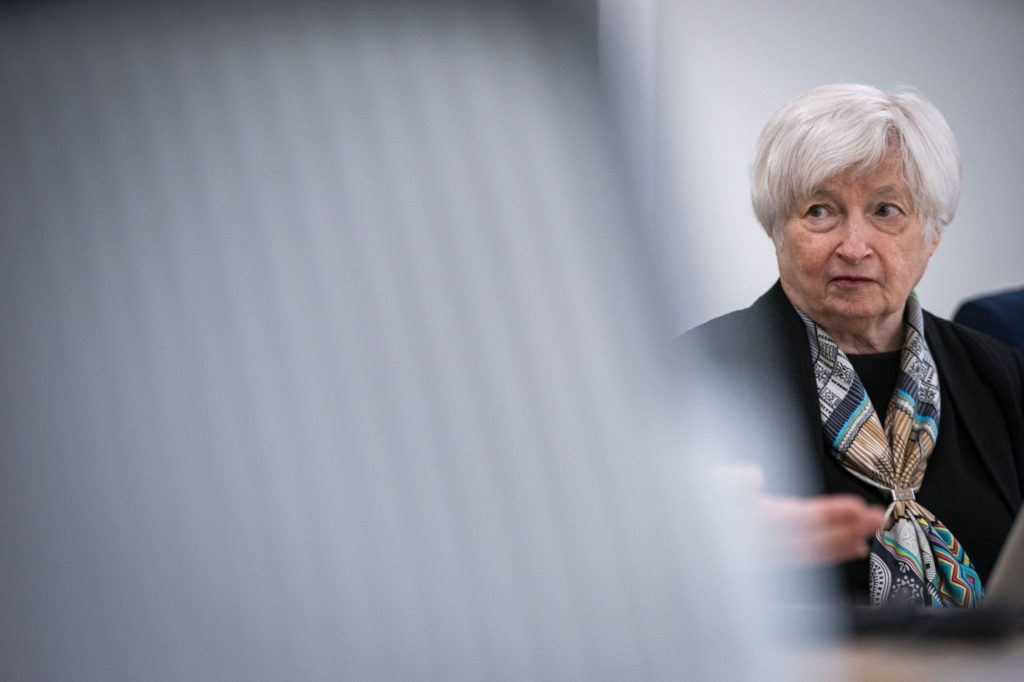
The lawsuit filed Wednesday claims the Treasury’s sanctions overstepped its authority and punishes US cryptocurrency investors. A crypto advocacy group, Coin Center, and a group of users who relied on Tornado Cash for normal privacy reasons named Janet Yellen, secretary of the Treasury, among the defendants. 

In August, the Treasury’s Office of Foreign Assets Control accused Tornado of laundering more than $7 billion of cryptocurrencies since its creation in 2019, including some virtual currencies stolen by a North Korea-sponsored hacking group. The agency also sanctioned crypto wallets associated with Tornado Cash, as well as a related code known as smart contracts, a type of computer program that automatically executes transactions.

The following month, Coinbase Global Inc. helped organize and fund a lawsuit against the Treasury over its sanction of Tornado Cash. Brian Armstrong, chief executive officer of the cryptocurrency exchange, has said that sanctioning a technology could lead to unintended consequences for the industry that’s largely built on smart contracts. 

A spokesperson for the Treasury Department didn’t immediately respond to a request for comment. The suit was filed in the US District Court for the Northern District of Florida. 

More stories like this are available on bloomberg.com

©2022 Bloomberg L.P.
Close Bitnami banner
Bitnami