
Bloomberg

Stocks Hold Modest Gains in Bid to Snap Losing Run: Markets Wrap

(Bloomberg) — US stocks took another leg higher as markets digested upbeat corporate news and data on producer prices that will keep pressure on the Federal Reserve to tighten policy. Treasuries were steady along with the dollar.

The S&P 500 is attempting to stage a comeback after a five-day losing streak. Consumer staples and health care topped the leaderboard with gains in PepsiCo Inc. and Moderna Inc. The tech-heavy Nasdaq 100 advanced. Treasuries were little changed, with the policy-sensitive two-year yield holding near 4.3%. The dollar gained. 

PepsiCo jumped after lifting its forecast for the year on the back of better-than-estimated third-quarter profit. Moderna surged after Merck & Co. said it would exercise an option to work in partnership with the biotech on a messenger RNA cancer vaccine.

Data showed prices paid to US producers rose in September by more than expected ahead of a key measure of consumer inflation due Thursday that’s set to return to a four-decade high. 

“Prices remain elevated so it shouldn’t be a surprise to see producer goods and services rise,” Mike Loewengart, head of model portfolio construction at Morgan Stanley Global Investment Office, wrote. “No doubt the Fed still has its work cut out for them, and if tomorrow’s CPI read is hot, don’t be surprised to see some investors come to grips with how long the road to tamer inflation may be.”

Read more: Top-Ranked Chartist Says Gaming Out Fed Pivot Is ‘Fool’s Errand’

Comments by Neel Kashkari on Wednesday reaffirmed policy makers’ commitment to the current rate-hike path, with the Minneapolis Fed chief saying the bar for a pivot away from monetary policy tightening is “very high.”

The yield on 30-year gilts rose after the Bank of England confirmed its plan to end emergency bond purchases, but the pound rallied above $1.10. The BOE also signaled interest rates are likely to rise sharply in November and warned that some UK households may face a strain over debt repayments that’s as great as before the 2008 financial crisis.

“The Bank of England is a test case for how hawkish central banks can be without doing damage to financial stability,” said Michael Metcalfe, global head of macro strategy at State Street Global Markets.

Kristina Hooper, chief global market strategist for Invesco, said in a note that while world economy is slowing after rate hikes, there’s yet to be a meaningful decline in inflation. 

“This is an extraordinary monetary policy tightening environment and we are waiting to see if something breaks globally,” she said. “The UK has come close.”

Elsewhere, crude fluctuated. OPEC slashed projections for the amount of crude it will need to pump this quarter, while Russia’s President Vladimir Putin said any energy infrastructure in the world is at risk after the explosions on the Nord Stream pipelines.

NATO Secretary General Jens Stoltenberg urged alliance members to step up supplies of air defense systems to Ukraine, condemning Russian strikes. In China, Shanghai is quietly shutting down schools and a raft of other venues as officials try to rein in a flareup that’s hit the financial hub.

Key events this week:

  • Earnings this week include: JPMorgan Chase & Co., Citigroup Inc., Morgan Stanley, BlackRock Inc., Delta Air Lines Inc., UnitedHealth Group Inc., U.S. Bancorp, Wells Fargo & Co.
  • FOMC minutes for September meeting, Wednesday
  • Fed’s Michelle Bowman and Neel Kashkari speak
  • ECB’s Christine Lagarde speaks
  • US CPI, initial jobless claims, Thursday
  • G-20 finance ministers and central bankers meet, Thursday
  • China CPI, PPI, trade, Friday
  • US retail sales, business inventories, University of Michigan consumer sentiment, Friday
  • BOE emergency bond buying is set to end, Friday

Some of the main moves in markets:

Stocks

  • The S&P 500 rose 0.3% as of 11:51 a.m. New York time
  • The Nasdaq 100 rose 0.5%
  • The Dow Jones Industrial Average rose 0.5%
  • The Stoxx Europe 600 fell 0.5%
  • The MSCI World index was little changed

Currencies

  • The Bloomberg Dollar Spot Index was little changed
  • The euro fell 0.2% to $0.9692
  • The British pound rose 1.1% to $1.1088
  • The Japanese yen fell 0.7% to 146.94 per dollar

Cryptocurrencies

  • Bitcoin rose 0.6% to $19,133.43
  • Ether rose 1.3% to $1,298.86

Bonds

  • The yield on 10-year Treasuries declined one basis point to 3.93%
  • Germany’s 10-year yield advanced five basis points to 2.35%
  • Britain’s 10-year yield advanced one basis point to 4.45%

Commodities

  • West Texas Intermediate crude fell 2.7% to $86.98 a barrel
  • Gold futures fell 0.6% to $1,675.70 an ounce

More stories like this are available on bloomberg.com

©2022 Bloomberg L.P.
Vista Equity to Pay $4.6 Billion for Software Firm KnowBe4

(Bloomberg) — Vista Equity Partners has agreed to pay $4.6 billion for KnowBe4 Inc. after sweetening its offer for the software-security firm. 

The private equity firm will pay $24.90 in cash for KnowBe4, according to a statement Wednesday. That’s up from the $24 per share Vista Equity offered last month. 

KnowBe4 said that its board approved the deal after engaging in a “robust process” connected to Vista’s initial offer.

“Today’s announcement is a testament to the success of our strategy and the strength of our incredible team. This acquisition by Vista represents the next phase of our journey,” Stu Sjouwerman, KnowBe4’s chief executive officer, said in a statement. 

Vista has won support for the deal from Sjouwerman, KKR & Co. and Elephant Partners, which together control 83% of Knowbe4’s voting power, according to the statement.  

Knowbe4 offers so-called security awareness training, which helps companies teach employees to fend off malware, phishing and other cybersecurity threats, according to its website. 

The transaction marks the latest take-private for Vista, which has announced deals this year for companies including Avalara Inc. and Citrix Systems Inc. 

Vista will finance the acquisition with a combination of debt and equity. The transaction is expected to close in the first half of 2023, subject to standard conditions, the companies said. 

More stories like this are available on bloomberg.com

©2022 Bloomberg L.P.
Musk Gets Most of Twitter Shareholder Suit Over Buyout Dismissed

(Bloomberg) — Elon Musk got a judge to throw out most of a Twitter Inc. shareholder’s lawsuit over his effort to cancel his $44 billion buyout of the company, already the subject of a high-profile legal battle.

Delaware Chancery Judge Kathaleen St. J. McCormick on Tuesday dismissed the bulk of the suit, filed July 29, which targets Musk’s “lame rationales for reneging on his contract.” 

A trial over Twitter’s own lawsuit to make Musk consummate the buyout, which was due to start in Wilmington next week, is on hold as the social media company weighs a last-minute effort by Musk to renew the deal.

Read More: Musk Revives $44 Billion Twitter Bid, Aiming to Avoid Trial 

In the shareholder suit, the investor, Luigi Crispo, hasn’t “adequately alleged third-party beneficiary standing to specifically enforce the merger agreement,” the judge said. 

She also tossed an allegation of breach of fiduciary duties. Because Crispo couldn’t show that Musk was Twitter’s controlling shareholder, he couldn’t make a legitimate claim that the billionaire had violated legal duties to other Twitter investors, she found.

That leaves arguments about whether Crispo has legal standing to bring breach-of-contract claims over the teetering merger. McCormick let that part of the case proceed, pending further briefing.

In July, Musk shunned the buyout he had proposed in April, alleging Twitter had vastly understated the extent of bots and spam on its platform, exaggerating the value and prospects of the company. Twitter says the claim is just a pretext for the world’s richest person to walk away from the deal amid a decline in financial markets and a massive case of buyer’s remorse.

The shareholder case is Crispo v. Musk, 2022-0666, Delaware Chancery Court (Wilmington).

More stories like this are available on bloomberg.com

©2022 Bloomberg L.P.

‘Flying Car’ Startup Alef Emerges Just Weeks After Kittyhawk Went Bust

(Bloomberg) — Venture capitalist Tim Draper is preparing to help launch a startup building an electric aerial passenger vehicle to be unveiled later this month, just a few weeks after the high-profile flameout of a “flying car” company backed by Google co-founder Larry Page.

The new startup, Alef Aeronautics Inc., is focused on developing a vehicle that looks more like a car than a small helicopter. That would set it apart from most companies in an emerging industry building so-called electric vertical takeoff and landing vehicles.

The founders of Alef haven’t said much publicly about their startup, but they’ve been working on it since 2015. A small group of engineers have been developing the vehicle in San Mateo, California, with the goal of making a “real car” that can take off vertically and “be affordable for most people (not just the rich),” according to Alef’s website, which recently went live. 

The company, formerly called Armada Aeronautics, showed a small-scale model to Draper several years ago, and he was impressed. That demonstration was enough to convince Draper to become the “pioneering investor” in the company, Alef said. A full-size prototype was flown for the first time in 2019. Alef’s website contains few other details about the project, though it says the exterior was developed by former Bugatti designer Hirash Razaghi.

Draper has long been connected to what could be called the personal air mobility industry. He was soliciting proposals for a flying car as far back as 2004. He has since invested in two different jetpack startups through his fund, Draper Associates, including one that is also working on a motorcycle-style flying vehicle. Draper didn’t respond to a request for comment.

Silicon Valley’s wealthy have long coveted the idea of a Jetsons car come to life. Page poured his own money into perhaps the most ambitious effort to develop one, Kittyhawk, but the company called it quits in September after more than 10 years attempting to create a reliable vehicle and a viable business model. Other air taxi companies are still at it despite a rash of crashes during testing. At least two, Joby Aviation Inc. and Lilium NV, recently went public by merging with blank-check companies.

More stories like this are available on bloomberg.com

©2022 Bloomberg L.P.

Microsoft Says Sony Bias on $69 Billion Deal Swayed CMA

(Bloomberg) — Microsoft Corp. accused Britain’s competition watchdog of relying on “self-serving” input from fierce rival Sony Group Corp. in its decision to probe the tech giant’s $69 Billion takeover of Activision Blizzard Inc..

The Competition and Markets Authority opened a longer review of the deal last month citing concerns it could hamper markets, for example by restricting players of Activision’s Call of Duty to Microsoft’s Xbox console.

In the agency’s full decision published Wednesday it said “the main rival that could be affected by this conduct would be Sony,” whereas other competitor Nintendo competes less closely. The CMA also pointed to past “strategies” used by Microsoft to justify taking a closer look at the tie-up.

Microsoft hit back, saying the CMA “incorrectly relies on self-serving statements by Sony which significantly exaggerate the importance of Call of Duty.” In a response to the CMA statement, seen by Bloomberg, it said the authority has adopted the complaints of market leader Sony without the “appropriate level of critical review.”

The combination with Activision — which owns some of the most popular franchises including World of Warcraft and Guitar Hero — will make Microsoft the world’s third-largest gaming company and boost the Xbox maker’s roster of titles for its Game Pass subscribers.

“Our inquiry is about protecting competition in the interests of UK gamers and businesses,” a CMA spokesperson said. “The Phase 1 decision identified three areas where the deal could cause harm: gaming consoles, multi-game subscription services and cloud gaming services.”

Sony didn’t immediately respond to requests for comment.

Microsoft is facing scrutiny from global regulators including in the US. The European Union has also formally opened a probe and will next update in November. The UK regulator has until March 1 to come to a final decision on whether it will allow the deal to go ahead.

(Updates with CMA comment in sixth paragraph)

More stories like this are available on bloomberg.com

©2022 Bloomberg L.P.
Texas Crypto Miners Face Inquiry From Warren Over Power Use

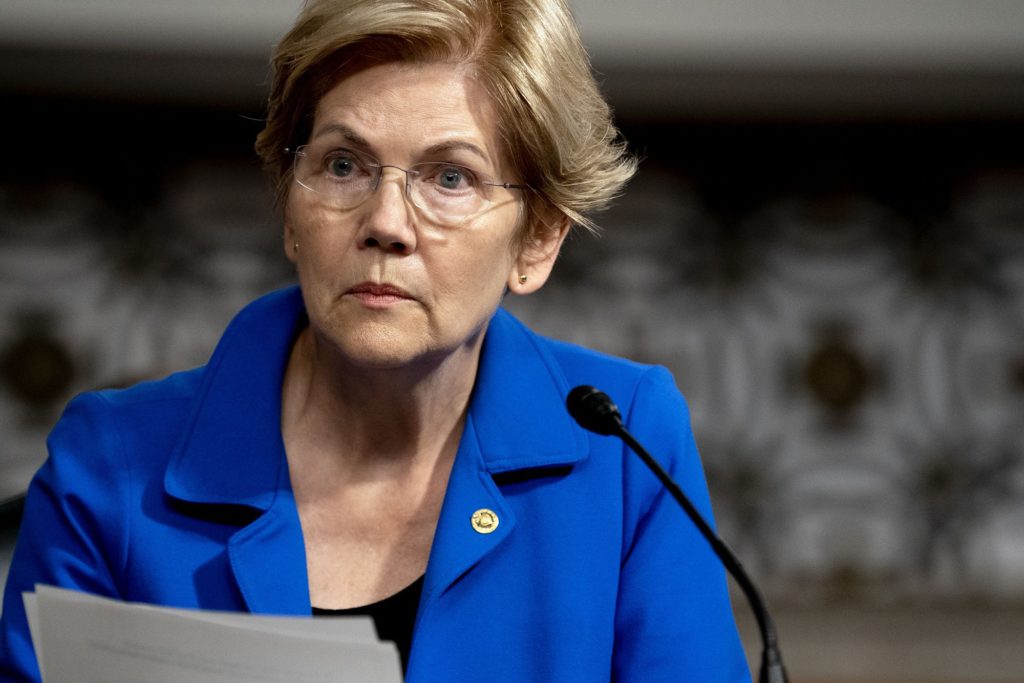
(Bloomberg) — US Senator Elizabeth Warren is leading a group of Democratic lawmakers pressing Texas officials for details on how crypto currency miners may be straining the state’s power grid, impacting climate change and profiting from programs to ensure the lights stay on.

In a letter Wednesday, the lawmakers asked the Texas grid operator to provide details on almost six years of crypto miners’ electricity usage, their carbon-dioxide emissions and how consumers’ energy bills will be impacted as they expand. They’re also asking the grid operator, the Electric Reliability Council of Texas, to disclose payouts to miners for curtailing power use during extreme demand periods.

“Cryptominers’ energy use rivals that of entire countries, and taxpayers — in Texas or anywhere in the nation — shouldn’t subsidize their profits, especially when the energy grid is on the verge of collapse,” Warren, who represents Massachusetts, said in a statement. 

Also See: Biggest Bitcoin Miners Pressed by Congress on Climate Impact

The letter was also signed by Texas Rep. Al Green, Rhode Island Senator Sheldon Whitehouse, Massachusetts Senator Edward Markey and several other Democrats.


Texas Governor Greg Abbott and other Republican lawmakers in the state have aggressively courted crypto miners, who have flocked to the region for its cheap power and laissez faire regulation. They’ve argued that miners could actually make the state’s power grid more stable and flexible because they can quickly shutdown when power demand spikes. 

Critics, however, say miners may be adding to stress on the state grid in the wake of the 2021 winter storm that killed more than 200 people and plunged millions into darkness for days.

More stories like this are available on bloomberg.com

©2022 Bloomberg L.P.
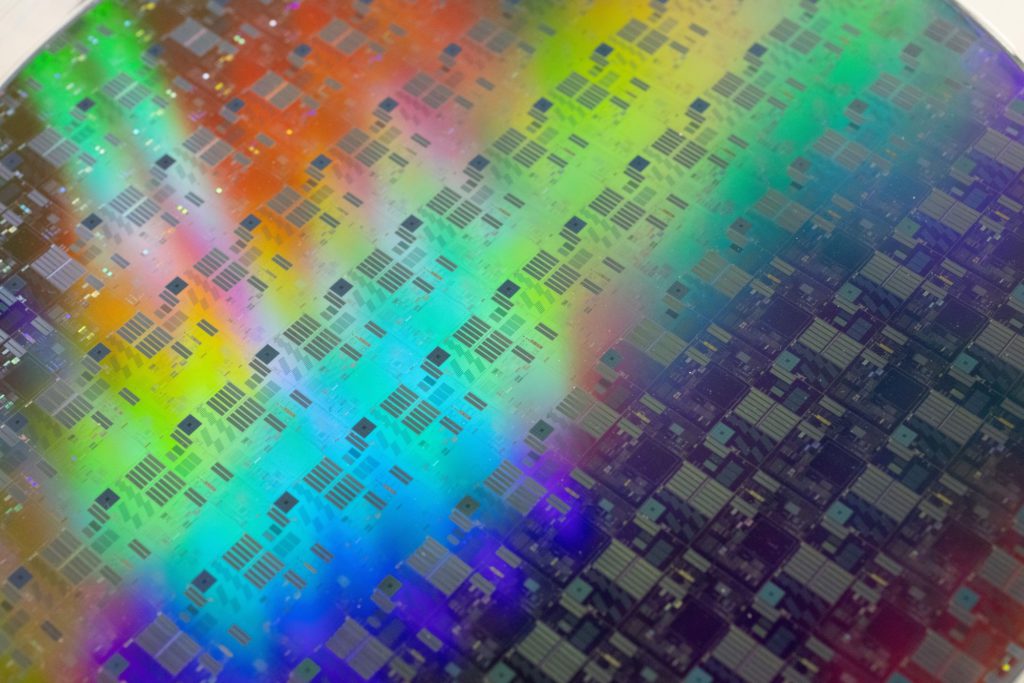
US Chip Suppliers Pull Back From China’s Yangtze Memory After Biden Ban

(Bloomberg) — American suppliers are beginning to withdraw staff from one of China’s leading chip companies in the wake of new US regulations, a blow to Communist Party efforts to build a vibrant domestic technology industry.

Applied Materials Inc., KLA Corp. and Lam Research Corp. have started or are preparing to pull employees from Yangtze Memory Technologies Co., the country’s most advanced maker of memory chips, according to people familiar with the matter who asked not to be identified because the moves are private. The withdrawals are coming this week, the people said, following new regulations from the Biden administration last week that ban Chinese companies from buying advanced chip-making equipment or employing American citizens without a license.

Yangtze Memory was also among more than 30 organizations that the US Commerce Department put on its so-called unverified list, which restricts their ability to buy American technology. 

Companies like Applied Materials that produce chip-making machines often send employees to customer facilities to help them fine-tune the manufacturing processes. It’s not clear whether the companies are pulling staff because of Yangtze Memory’s placement on the unverified list or because of other restrictions. The US companies need to assess their constraints under the Biden administration’s rules. 

Yangtze Memory will likely be able keep operating some production lines on stockpiled components, one of the people said.

The company didn’t immediately respond to requests for comment. The Wall Street Journal reported some details of the Yangtze supplier moves earlier.

The severity of the US regulations stunned many in the chip industry, potentially jeopardizing the operations for hundreds of Chinese semiconductor companies. The Biden administration argued the regulations are necessary to prevent the Communist Party from becoming more of an economic and military threat. 

China has ambitious goals to develop its supercomputers and become a leader in artificial intelligence, said Thea D. Rozman Kendler, Assistant Secretary of Commerce for Export Administration. “It is using these capabilities to monitor, track and surveil their own citizens, and fuel its military modernization.”

The Chinese government has made it a national priority to build a domestic semiconductor industry, pouring tens of billions of dollars into the effort. This year, President Xi Jinping renewed calls for the country to develop the technologies critical for national security, invoking the so-called “whole nation system” that propelled China’s space and nuclear weapons programs

The Biden rules dealt a serious setback to that effort. Chip stocks and related companies tumbled across the country. Semiconductor Manufacturing International Corp. fell 9.3% over three days, as as Bloomberg Intelligence analyst Charles Shum slashed his estimate on 2023 growth by 50%. Naura Technology Group Co., a leading chip equipment maker, fell by its daily limit for two days in a row.

Applied Materials shares were up less than 1% in New York on Wednesday morning, while Lam Research gained about 1%. KLA was little changed.

(Updates with US companies’ shares in final paragraph.)

More stories like this are available on bloomberg.com

©2022 Bloomberg L.P.
Musk’s Twitter Buyout Gambit Is Getting Costlier by the Day

(Bloomberg) — If Elon Musk really does go through with his acquisition of Twitter Inc., the social media giant will face an annual interest burden of nearly $1.2 billion on its debt – a problem that’s only going to get worse as rates continue to rise.

Roughly half of the $13 billion debt Musk is loading on Twitter is floating rate, meaning interest costs will increase as the Federal Reserve continues to raise rates. The Fed is expected to hike rates again next month, possibly by as much as 75 basis points in a fight to tame inflation.

Twitter now faces an annual interest burden of nearly $1.2 billion, up from an estimated $900 million in May, said Jordan Chalfin, a senior analyst at credit research firm CreditSights. 

That’s because the $6.5 billion loan portion of the financing, which banks may have to fund themselves, is structured as a margin over a benchmark rate that changes over time. In addition, Twitter is unlikely to be able to sell debt to investors below the maximum interest rates banks had promised because credit markets have deteriorated so much since the deal was inked, Chalfin added.

Twitter’s current interest expense is less than $100 million per year, Chalfin said. Its debt includes two outstanding junk bonds worth about $1.7 billion total, plus some convertible notes.

Musk is taking a page from the usual private equity playbook by saddling Twitter with debt to help fund his acquisition of the company. Private equity firms usually then aggressively cut costs to increase earnings. 

The higher interest burden means Twitter has an even smaller margin for error, Chalfin said. “The goal for Twitter is to increase revenues and expand margins so that they can grow into their capital structure,” he said. 

A representative for Morgan Stanley, which is the lead bank on the debt commitments, declined to comment. Representatives for Twitter and Musk did not respond to requests for comment.

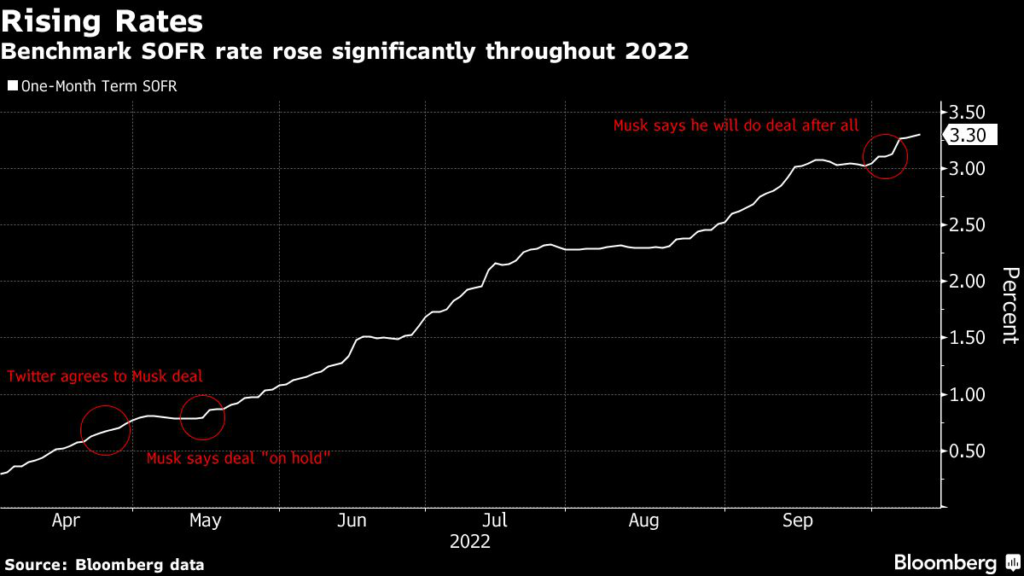
The leveraged loan’s coupon is based off of the Secured Overnight Financing Rate, and if banks fund the debt it would be at an interest rate of 4.75% over SOFR, according to an April SEC filing. 

The one-month term version of this benchmark, which is commonly used in corporate lending, has increased by nearly 3 percentage points since Musk announced the acquisition in April, and is closely related to the Fed’s interest rate. 

Musk’s buyout also includes $6 billion of junk bonds, split equally between secured and unsecured tranches, and would typically be fixed rate once sold to investors. The banks already promised Twitter maximum interest rates on this debt, and the most the unsecured tranche can cost is a coupon of about 11.75%, Bloomberg reported.

The seven banks that committed to provide the debt package in April likely won’t have time to try to sell the bonds and loans to outside investors like they normally would if the deal closes by Oct. 28. They are also providing $500 million of a type of floating-rate loan called a revolving credit facility that the banks would typically plan to hold themselves, and it’s unknown if that would be drawn or undrawn when the deal closes.

Cash Burn

Twitter is expected to burn cash going forward, and might not become free-cash-flow positive until 2025, Chalfin estimates. “Given significant cash flow burn and high leverage, this is going to be a challenging deal to go out and syndicate to the market,” he said.

Assuming the deal closes and banks fund the debt, they will likely wait for credit markets to calm and then try to sell the loans and bonds to investors. But potential buyers will have to consider not only the cash burn, but also Musk’s numerous criticisms of Twitter. He spent months trying to get out of the deal and lambasted the social media company over a bot problem and a whistleblower. 

Read more: Confused by Musk’s Twitter LBO? Here’s What’s Weird: QuickTake

On the other hand, Musk is the ultimate backstop. The billionaire and a handful of backers are providing $33.5 billion of equity to fund the rest of the acquisition, and he will likely want to protect this massive investment.

“There’s a much longer leash for a privatization by a key man than there would be if it was just a traditional financial sponsor,” said Bloomberg Intelligence analyst Robert Schiffman. “If more capital needs to be put into Twitter, Musk can be their bank.” 

More stories like this are available on bloomberg.com

©2022 Bloomberg L.P.
Intel Is Planning Thousands of Job Cuts in Face of PC Slump

(Bloomberg) — Intel Corp. is planning a major reduction in headcount, likely numbering in the thousands, to cut costs and cope with a sputtering personal-computer market, according to people with knowledge of the situation. 

The layoffs will be announced as early as this month, with the company planning to make the move around the same time as its third-quarter earnings report on Oct. 27, said the people, who asked not to be identified because the deliberations are private. The chipmaker had 113,700 employees as of July.

Some divisions, including Intel’s sales and marketing group, could see cuts affecting about 20% of staff, according to the people.

Intel is facing a steep decline in demand for PC processors, its main business, and has struggled to win back market share lost to rivals like Advanced Micro Devices Inc. In July, the company warned that 2022 sales would be about $11 billion lower than it previously expected. Analysts are predicting a third-quarter revenue drop of roughly 15%. And Intel’s once-enviable margins have shriveled: They’re about 15 percentage points narrower than historical numbers of around 60%. 

During its second-quarter earnings call, Intel acknowledged that it could make changes to improve profits. “We are also lowering core expenses in calendar year 2022 and will look to take additional actions in the second half of the year,” Chief Executive Officer Pat Gelsinger said at the time. 

Intel, based in Santa Clara, California, declined to comment on the layoffs.

Intel’s last big wave of layoffs occurred in 2016, when it trimmed about 12,000 jobs, or 11% of its total. The company has made smaller cuts since then and shuttered several divisions, including its cellular modem and drone units. Like many companies in the technology industry, Intel also froze hiring earlier this year, when market conditions soured and fears of a recession grew.

The latest cutbacks are likely meant to reduce Intel’s fixed costs, possibly by about 10% to 15%, Bloomberg Intelligence analyst Mandeep Singh said in a research note. He estimates that those costs range from at least $25 billion to $30 billion. 

Gelsinger took the helm at Intel last year and has been working to restore the company’s reputation as a Silicon Valley legend. But even before the PC slump, it was an uphill fight. Intel lost its long-held technological edge, and its own executives acknowledge that the company’s culture of innovation withered in recent years.

Now a broader slowdown is adding to those challenges. Intel’s PC, data center and artificial intelligence groups are contending with a tech spending downturn, weighing on revenue and profit.

PC sales tumbled 15% in the third quarter from a year earlier, according to IDC. HP Inc., Dell Technologies Inc, and Lenovo Group Ltd., which use Intel’s processors in their laptops and desktop PCs, all suffered steep declines.

With PC prices stagnating and demand weakening, Intel also may need to pursue a dividend cut to offset cash-flow headwinds, Singh said. But Intel’s plan to sell shares of its Mobileye self-driving technology business in an initial public offering may ease those concerns, he said.

It’s a particularly awkward moment for Intel to be making cutbacks. The company lobbied heavily for a $52 billion chip-stimulus bill this year, vowing to expand its manufacturing in the US. Gelsinger is planning a building boom that includes bringing the world’s biggest chipmaking hub to Ohio. 

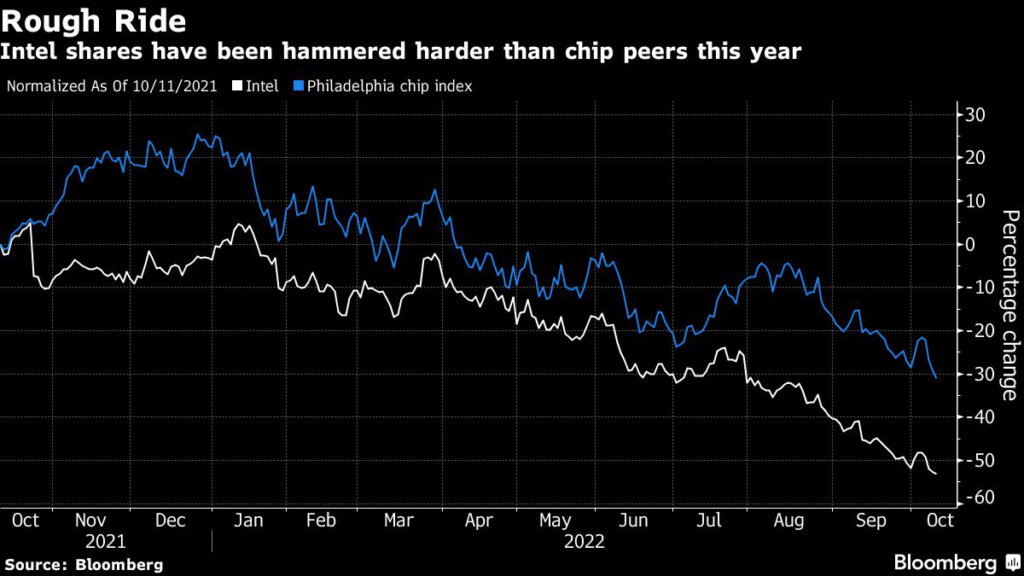
At the same time, the company is under intense pressure from investors to shore up its profits. The company’s shares have fallen more than 50% in 2022, with a 20% plunge occurring in the last month alone.

The shares slipped about 1% to $24.80 in New York on Wednesday morning. 

US tensions with China also have clouded the chip industry’s future. The Biden administration announced new export curbs on Friday, restricting what US technologies companies can sell to the Asian nation. The news sent shares of chipmakers tumbling anew, with Intel falling 5.4% that day.

Intel has been trying to regain its footing in the industry by releasing new PC processors and graphics semiconductors. A key part of its strategy is selling more chips to the data-center market, where rivals AMD and Nvidia Corp. have made inroads. On Tuesday, Google unveiled new Intel-powered technology for its server farms that will help speed artificial intelligence tasks.

Intel is now looking to pursue those goals as a leaner company.

David Zinsner, Intel’s chief financial officer, said after the company’s latest quarterly report that “there are large opportunities for Intel to improve and deliver maximum output per dollar.” The chipmaker expected to see restructuring charges in the third quarter, he said, signaling that cuts were looming.

Some chipmakers, including Nvidia and Micron Technology Inc., have said they’re steering clear of layoffs for now. But other tech companies, such as Oracle Corp. and Arm Ltd., have already been cutting jobs.

(Updates with shares in 15th paragraph)

More stories like this are available on bloomberg.com

©2022 Bloomberg L.P.

Jack Dorsey’s Block, Sequoia Back Egyptian Fintech Firm Telda

(Bloomberg) — Egyptian fintech startup Telda secured $20 million in seed funding from investors including Jack Dorsey’s Block Inc., a bright spot for the Middle East’s tech sector against the current global slowdown.

Existing backers Global Founders Capital led the financing round, Silicon Valley venture capital firm Sequoia Capital and new investor Block Inc. — previously known as Square Inc. — also participated. Telda will use the funds to expand into new markets and build its product offering, it said in a statement.

Telda was co-founded last year in Cairo by Ahmed Sabbah, who also co-founded Swvl Holdings Corp., an Egyptian transportation firm that became the first African company to list on the Nasdaq through a special purpose acquisition company, or SPAC. It recently launched a debit card and app in Egypt, the Arab world’s most populous country. 

“In Egypt dealing with money is still a complicated matter; making it easy and straightforward will have a large impact not just on the economy but also the society as a whole,” said Youssef Sholqamy, Telda’s co-founder, and a former engineer in Uber Technologies Inc.’s infrastructure team.

After considerable expansion recent years, the growth of Middle Eastern and North Africa technology firms has slowed over the last three quarters due to global economic uncertainty, according to research firm Magnitt.

More stories like this are available on bloomberg.com

©2022 Bloomberg L.P.

Close Bitnami banner
Bitnami